DHDC members and FHSU representatives updated their proposal for a downtown pavilion at Thursday’s city commission work session.
By BECKY KISER Hays Post
At the request of Vice-Mayor Shaun Musil, proponents of an open-air pavilion in downtown Hays returned to city commission chambers Thursday night to discuss revisions to the Downtown Hays Development Corporation (DHDC) proposal, and to further clarify the city’s expected participation, either financial or in-kind labor.
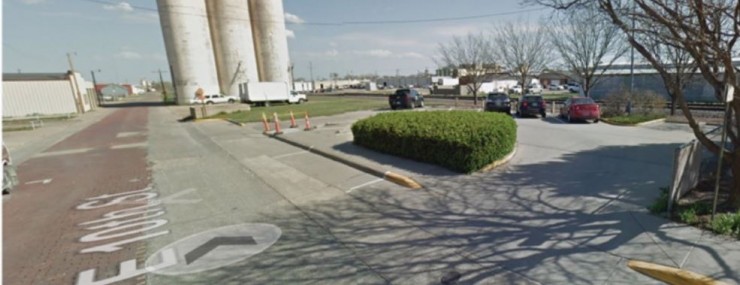
A major sticking point is a lease with Union Pacific Railroad for its property at the east end of Union Pacific Park, 10th and Main.
What was first proposed violates a city ordinance, according to Hays City Attorney John Bird.
“We have an ordinance that says certain provisions can’t be in our contracts in the city of Hays unless you have bid it or waived it ahead of time…not after the fact. In this case, UP is the vendor basically selling us the right to use their land,” Bird explained. “There are numerous provisions in it (the lease) that would violate that ordinance.”
DHDC Executive Director Sara Bloom
DHDC Executive Director Sara Bloom said her office is working with a new regional Union Pacific representative who is open to renegotiating the lease.
“He’s very open to the project and been very helpful so far. He has stated that he is willing to work with the city of Hays to revise the lease as long as he’s working with the city of Hays,” Bloom told commissioners. “If the DHDC were to be the ones to sign the lease–we’re small fries–he could care less. He’s not going to revise a darn thing. If the city of Hays agrees to this project and they say they want to take this on, the Union Pacific railroad is willing to renegotiate that lease–to what extent, we have no idea.”
“If we want this to move forward, we all need to agree (first) to the issues in the lease,” said Musil.
Hays Vice-Mayor Shaun Musil
DHDC has said the organization will pay the property lease, originally estimated at $5,244 annually. Musil is in full agreement, “no matter what the price would go up to.”
“I don’t want future commissions to have to pay for something that they didn’t have nothing to do with.”
The project total cost is estimated at $190,676 and would also include a public restroom, for which DHDC earlier said it would be gifting almost $50,000.
“The restroom facility I personally think it should be closer to UP Park. I think it would be more convenient for downtown (patrons),” Musil said. “Out of this whole project, I think this is the most needed thing in our community.
Musil wants DHDC to pay for the sidewalk construction–estimated at $10,400–with the city donating labor. “That’s similar to what we did with the Hays Dog Park,” said City Manager Toby Dougherty.
Hays City Manager Toby Dougherty
Dougherty said he would probably recommend any costs to the city for the project be paid for with the Convention and Visitors Bureau (CVB) transient guest tax.
“Transient tax dollars are used to promote the community, draw visitors to town, facilitate visitors while they’re in town, and provide amenities to visitors,” Dougherty explained. “Downtown Hays is promoted as a destination. Transient guest tax dollars can be spent on capital improvements like this. CVB has a decent contingency for something like this.”
Bloom informed commissioners DHDC has changed its timeline and decided “this will most likely be a two year project.” DHDC has been working with the Fort Hays State University Construction Management program to develop a plan for building the open-air metal roof pavilion.
Site plan for proposed downtown Hays pavilion in the east end of Union Pacific Park, 10th and Main
“So when the UPRR lease is signed and the project is approved, we would go ahead and do the smaller stuff on the property,” Bloom explained. “We would level the ground, remove the concrete pad. We can get the bathroom in right away. We could do the (safety) fence. We could do a lot of those little things that doesn’t require Fort Hays State University students to be there, so that when they do start the project in August 2017, everything is done except for them erecting the pavilion.”
No action can be taken during a city commission work session; the pavilion discussion will continue at next week’s regular commission meeting.
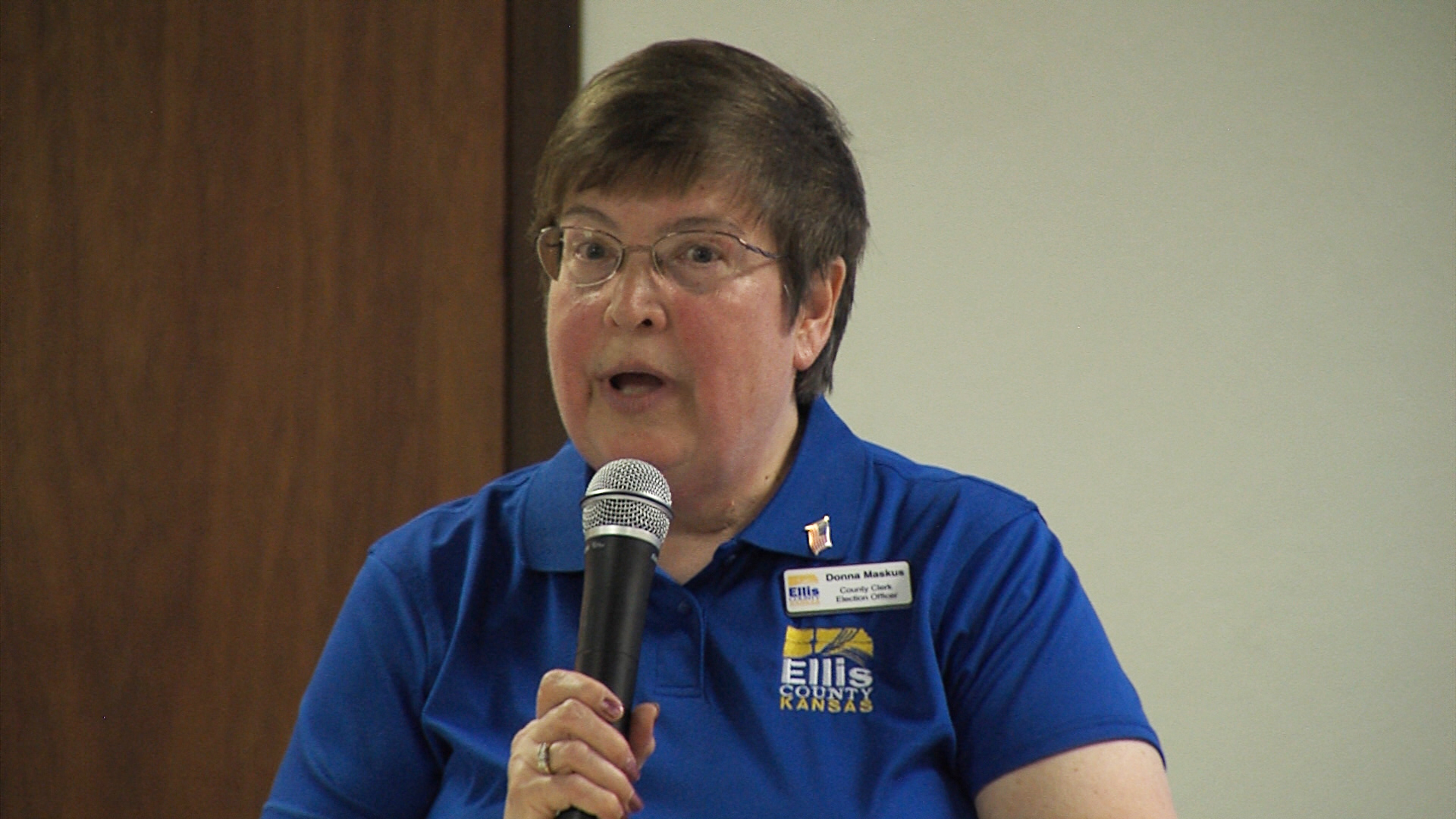
Ellis Co. Clerk Donna Maskus talks to the Hays Area Chamber of Commerce about the 2016 elections in Kansas.
By BECKY KISER Hays Post
The books close next Tuesday, July 12, to register to vote in the Aug. 2, 2016, primary election and Ellis County Clerk Donna Maskus is spreading the word.
Kansans can register in person at their local county clerk’s office, other designated sites, or online at www.voteks.org.
There are 18 locations in Ellis County where residents can register to vote. They include the city offices in each incorporated town, the city libraries, and in Hays — Fort Hays State University Memorial Union, Kansas driver’s license office, Ellis Co. Health Dept., Ellis Co. Clerk’s office and other governmental offices.
The only time you need to re-register is if you change your name, move, or you want to change your political party affiliation.
For the last election in Ellis County — the bond issue for Hays USD 489 — only two polling places were opened in “order to save costs for the school district,” Maskus explained. For the Aug. 2 primary election, all 10 polling locations will be used.
“I give high praise to the Ellis County Public Works Department,” Maskus said. “They do an outstanding job in setting up all of our polling sites each election.”
She also thanked the 40-plus election board workers, whose day extends well beyond the hours the polls are open — 7 a.m. to 7 p.m.
There are currently 17,743 qualified voters registered in Ellis County, according to Maskus — 8,213 Republicans, 4,360 Democrats, 171 Libertarians and 4,999 Unaffiliated. The numbers “change often until the voter books are closed,” she noted.
Advance voting in the county clerk’s office, 718 Main, starts Wednesday, July 13, and must be returned to the county clerk’s office by 7 p.m. election day. Maska’s office has already sent out ballots to federal service workers — 45 days in advance of the election — who can vote via the internet.
Ellis County will use some new equipment at the voting sites beginning with the Aug. 2 election. County commissioners approved the purchase of “election tablets” for poll workers, which Maskus says will “make it so much more efficient as the voters come in and getting that ballot ticket out to them, showing what that voter is qualified to vote on.”
The electronic voting booths used by Ellis County are tested regularly.
Voters may use a paper ballot booth or one of 69 touch-screen electronic voting booths.
“We go through a lot of logic and accuracy testing of those machines every five months,” Maskus said. “It’s an intense process they go through before each election so we know they can tally each vote they are given.”
Every vote is tallied, “including Mickey Mouse and Donald Duck. You can come in our office and look at those abstract books — the different votes are quite interesting. You might even find that somebody put your name down,” she said with a grin. Results are unofficial until canvassed by the Ellis County Commission.
There’s still time to file with the county clerk as an Independent candidate for a local or county race in the Nov. 8 general election. Deadline to file, which must be by petition, is noon, Monday, Aug. 1.
Voter registration books close Oct. 18 for the Nov. 8 general election. Maskus encouraged residents with any questions to call her office at (785) 628-9413.
FHSU students won’t return to campus until mid-August, with classes scheduled to begin Aug. 22.
Hays Post
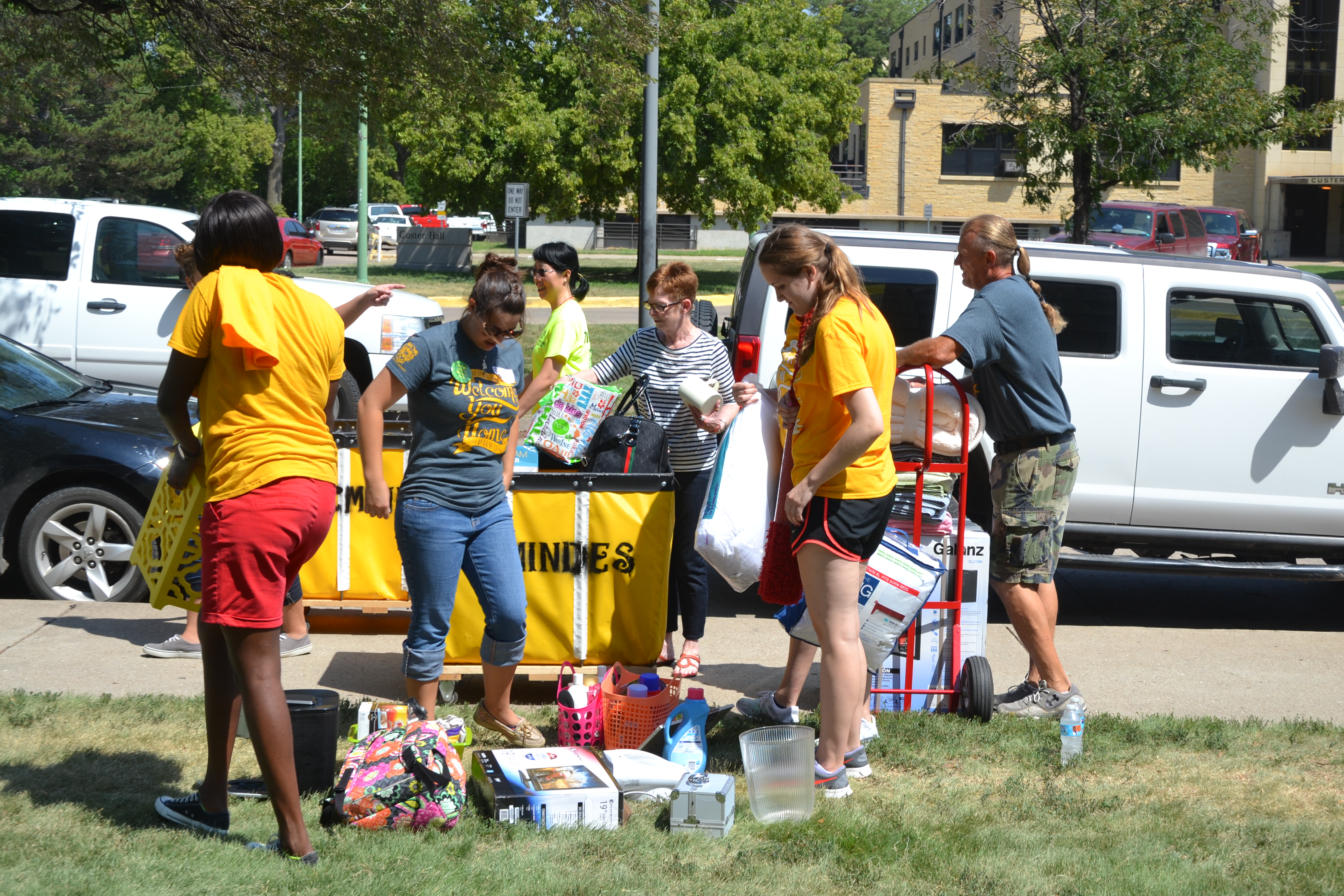
The return of on-campus students at Fort Hays State University is scheduled for the middle of August — more than a month from now. Traditional residence halls open for move-in on Aug. 18, which includes Wiest Hall, McMindes Hall, Agnew Hall and Heather Hall.
For students in Learning Communities, groups with similar academic interests that take classes together, move-in day is Aug. 17.
Residents living in Stadium Place and Wooster Hall get the biggest head start, with move-ins starting Aug. 13.
For a full list of important residential life dates, contact FHSU Residential Life at (785) 628-4245.
Members of Jackie Creamer’s Vision Dance Company • Courtesy photo
OKLAHOMA CITY — Jackie Creamer’s Vision Dance Company brought home three National Champion awards from last month’s Talent On Parade Dance Competition in Oklahoma City.
One of these awards was their production number including all 64 members. These following dancers represented the second and third National Championship Awards: Neveah Weigel, Adelyn Wagner, Shyanne Yost, Sienna Lummus, Jaci Schmidt, MyKayla Romme, and Ruby Fields.
The company also received two choreography awards and best costume award.
In addition, Vision members received four first overall, nine second overall, seven third overall, eight fourth overall, and seven fifth overall. Of those dances, 13 got to re-compete in Finals.
The dancers had a total of 49 dances in the Top Ten Awards, averaging 70 percent of their dances in the Top Ten.
Let Hays Post share the good news about your youth sports and recreation successes with the community! Send photos and details to [email protected].
More information about a proposed outdoor pavilion in downtown Hays will be reviewed by Hays city commissioners during their July 7 work session.
Commissioners heard a presentation May 5 by the Downtown Hays Development Corporation (DHDC) in conjunction with a group of Fort Hays State University students led by Asst. Prof. Kris Munsch of the Department of Applied Technology.
The city asked DHDC to further clarify the city’s expected participation, either financial or in-kind labor, in the proposed project. After providing the additional information, DHDC is awaiting further input and direction from commissioners, according to City Manager Toby Dougherty.
Also for review during the work session is a contract award for the city’s pavement condition assessment.
The meeting starts at 6:30 p.m. tonight in Hays City Hall, 1507 Main. The complete agenda can be seen here.
Some city workers spent much of their July 4th holiday repairing a major water leak near 10th and Milner.
By BECKY KISER Hays Post
One Hays resident said he noticed Monday morning “the water pressure was low” when he took a shower.
The reason? There was a major water leak at 10th and Milner, which a city water department worker described as the biggest leak he’d seen in his 15 years on the job.
“The city water tower near the Sternberg Museum of Natural History was nearly drained, with millions of gallons of water lost,” according to Hays Assistant City Manager Jacob Wood. He said employees were still calculating the total amount of water loss as of mid-morning Tuesday.
Early morning on July 4, workers at the city water plant noticed a dramatic and fast drop in the water level of the distribution system — about 5,000 gallons a minute. An alert was sent at 6:27 a.m. through the city’s Nixle notice system from Utilities Division Asst. Director Jeff Crispin to residents that workers were trying to find the leak and asking residents to curb water usage.
It took a while to find the leak.
“Usually, when you have a leak that size, it’s pretty easy to spot,” said Wood, “and people will call in telling us where it’s at. There’s water running along the curb and in the street.”
Monday’s leak caused the loss of millions of gallons of water from the Hays water tower near Sternberg Museum.
This time, however, the leak was less visible. It was in a secluded area near 10th and Milner, between the back of an APAC equipment lot and the railroad tracks.
“It was not evident right off the bat where the leak was,” Wood explained, “and it took several hours to actually find and locate.”
It was also a big leak.
“It was in a 12-inch main (line). The split was on the underside of the pipe and it was about 6 feet long — a pretty large water leak.”
Another Nixle alert was sent when the leak was found and isolated, advising residents water was shut down from Ninth to 11th streets between Vine and Pine streets, and asking residents to continue conserving water.
Nearly 12 hours passed between the time the public was first notified of the leak and then notified it had been repaired.
A final Nixle alert was sent at 6:17 p.m. alerting residents the utilities crew had fixed the leak and full water service was being restored. The city asked residents to continue conserving water through Tuesday morning.
Water still standing Tuesday morning between APAC and the railroad tracks
“During that entire time, we were losing quite a bit of water, and it takes time to build the system back up,” Wood said. By 10 a.m. Tuesday, “there should not have been any issues with water pressure or volume in the city’s two water towers.”
The pipe that ruptured was old.
“I don’t know when it was put in. It had to be quite some time ago because, in that area, there’s been stuff built up and around it and typically that wouldn’t happen. If the city put in a new water line, we wouldn’t allow you to build that close to it,” he said.
Workers were surprised there wasn’t much build-up or corrosion inside the pipeline.
“Typically over time, even though the line may be 12 inches (in diameter), there’ll be build-up and there really wasn’t very much,” Wood said.
“It’s just one of those things that happens with water lines,” Wood said, “a couple of holes that split together. It’d probably been leaking for quite some time.
“There are water lines leaking all over the city of Hays that we don’t know about, just not big or dramatic enough to impact or cause a problem with the distribution system.”
Wood said there are employees 24 hours a day at the city water treatment plant, 1200 Vine, to monitor the water distribution system. There is also a system with alarms and alerts that will send out messages if something is wrong.
Bullfighter Weston Rutkowski has been hired to work the Phillipsburg Rodeo. The Texas native grew up in a rodeo family and has been a PRCA member since 2011.
PHILLIPSBURG — A new face will make an appearance at Kansas’ Biggest Rodeo this August.
Bullfighter Weston Rutkowski will join Dusty Tuckness in the arena north of Phillipsburg.
Rutkowski grew up in Haskell, Texas, an hour north of Abilene, to a rodeo family. His mom, Glenda Gayle Chapman Rutkowski, was the 1976 Miss Rodeo Texas, and his uncles, Terry Chapman and Keith Chapman, both rode saddle broncs. Terry qualified for the 1979 National Finals Rodeo and Keith was a three-time Senior Pro Rodeo saddle bronc riding champion.
“I didn’t have a chance,” he jokes. “I’ve been a rodeo kid my whole life. I’ve been to rodeos since I could walk.”
Weston rode calves, steers, and junior bulls, but when he got to high school, his mom wouldn’t let him ride bulls because of high school sports. He went to college to play football, but when he realized he didn’t have much chance of playing, he began riding bulls again.
As happens with a lot of bullfighters, Weston’s career began in a practice pen. He was helping out a buddy who was riding bulls, and the friend asked him to step in as bullfighter. “I knew right then and there that it was what I wanted to do,” he said.
It was the adrenaline rush that did it. “There was a gap for me to step in,” during that first time in the practice pen, “to save my buddy. I stepped in there, grabbed that bull, threw him a fake out of pure reaction, not knowing what to do. That pure adrenaline rush was awesome. I didn’t get that riding bulls.”
That was in 2011, and two years later, Weston got his PRCA membership.
For a while, he worked a full time oilfield job. But after he added more rodeos, he was able to rodeo full-time.
He’s happy with the rodeos he’s been hired to work: Austin, San Angelo, Denton, Athens, Belton, and Helotes, Texas, Estes Park, Colo., West Jordan, Utah, and this year, Burwell the week before Phillipsburg, and then Phillipsburg. “I’ve been fortunate,” he says, of his schedule, “for only fighting bulls for five years. It is something I love doing, I have enjoyed it and work hard at it.” Phillipsburg will be his first rodeo to work in Kansas.
Weston loves to stay busy. “I’m so ADD, it’s not funny,” he said. “I can’t sit around.” He golfs, works out at the gym, whatever “your average, typical young man traveling the world,” would do, he said. “I sure enough have a great time, wherever I’m at. Whatever I can do to enjoy wherever I’m at. I take advantage of getting to travel.”
Weston likes the bulls Bennie and Rhett Beutler have. “Bennie is known as an old-school stock contractor. His bulls buck, and they have that old school rodeo flair. Not only will they buck but they’ll hook you, too.” The potential to be hooked keeps things exciting. “Sometimes you work (for a stock contractor) and his bulls don’t hook and you don’t feel like you’ve done anything.” That’s not the case with Beutler bulls. At a Beutler rodeo, Weston says, “You’re sure enough doing something, and you need to be there.”
Weston, like any other bullfighter, has seen a few injuries, but in typical bullfighter fashion, he considers them “bumps and bruises”: a broken nose, dislocated right hip. A Beutler bull in Austin a year ago destroyed his right ankle. “I was trying to jump one of Bennie’s fighting bulls, and dislocated my right ankle and tore all the ligaments.” He had full reconstructive surgery and is back to normal.
But injuries are part of the game. “For being in this line (of work), nobody’s making you do it. So you can’t do much complaining. Because if you do complain, you shouldn’t be fighting bulls.”
Rutkowski replaces Aaron Ferguson, who worked as bullfighter in Phillipsburg for the last four years. Ferguson, who started the Bullfighters Only organization, won’t work Phillipsburg due to scheduling conflicts with Bullfighters Only.
The Phillipsburg rodeo is August 4-5-6 at 8 pm each night at the arena one mile north of town. Tickets went on sale July 1 at Heritage Insurance and are available by purchasing them in person or with a credit card, over the phone (785-543-2448). For more information, visit the rodeo’s website at KansasBiggestRodeo.com or follow the rodeo on its Facebook page (ksbiggestrodeo) or Twitter.
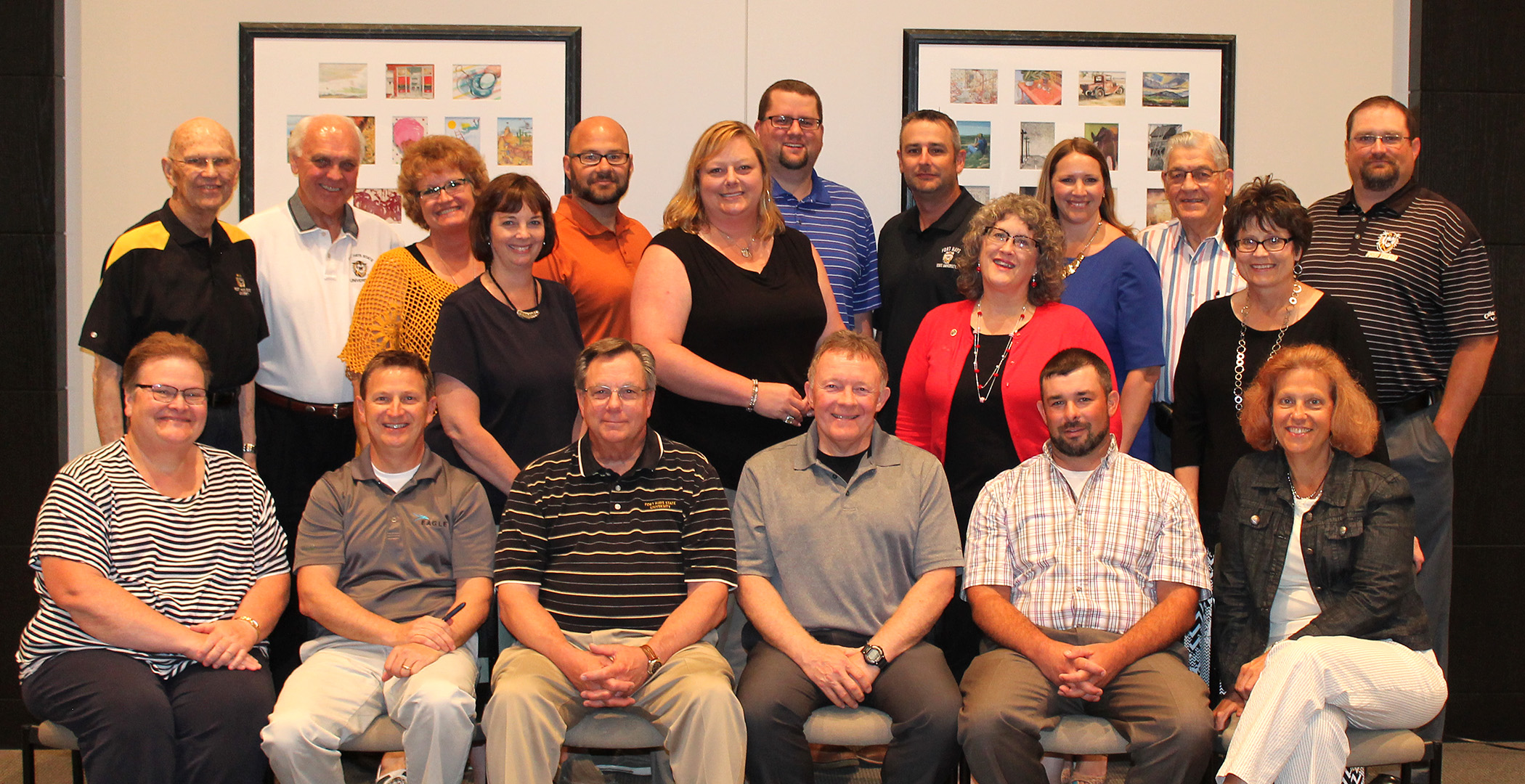
Standing (l-r): Leo Lake, Rich Dreiling, Marcy Aycock, Angela Gaughan, Eric Grospitch, Jennifer Brantley, Lance Tilton, Chad Fowler, Denise Riedel, Molly Aspan, Alan Feist, DeBra Prideaux and Ethan Harder. Seated (l-r): Lea Ann Curtis, Mike Koerner, Chuck Sexson, Dave Voss, Mitch Hall and Betty Johnson. Not pictured: Sandy Billinger, Emily Brandt, LeAnn Brown, Ken Ruder, Roger Schieferecke and Rich Sieker.
FHSU University Relations
The Fort Hays State University Alumni Association Board of Directors has announced the addition of five new board members.
They were introduced June 17 at the board’s summer meeting in Hays. New to the board are Emily Brandt, student, Beloit; Dr. Jennifer Brantley, Halstead; Treva “Betty” Johnson, Lawrence; Richard “Dick” Selensky, Shawnee Mission; and Lance Tilton, Chapman.
Brandt is a political science major at FHSU and will serve as the 2016-17 Student Government Association president. She will serve a one-year term as an ex-officio member and also serve on the Membership and Marketing Committee.
Brantley is the manager of public education at Envision Inc., Wichita. Brantley received a Bachelor of Science in biology from FHSU in 1993. She will serve a four-year board term and hold a position on the Chapter Development Committee.
Johnson, president of Betty Johnson and Associates, received a Bachelor of Arts in communication studies from FHSU in 1980. Johnson will serve a four-year board term and hold a position on the Membership and Marketing Committee.
Selensky, retired, received both his undergraduate degree in technology studies in 1956 and graduate degree in education administration in 1963 from FHSU. He is the incoming Half Century Club president and will serve a two-year board term on the Awards and Recognition Committee.
Tilton, agricultural and commercial lender with ASTRA Bank, received a Bachelor of Business Administration in marketing from FHSU in 2009. Tilton joins the board for a four-year term and will serve on the Finance and Operations Committee.
“We are fortunate to have a 24-member board of highly talented and dedicated graduates assisting us in furthering the overall success of the association,” said DeBra Prideaux, executive director of alumni and governmental relations. “All five of our newest board members bring expertise and energy to the association as we continue to strengthen the FHSU Tiger alumni family.”
The 2016-17 Executive Council is composed of Mitchell Hall, Harper, board president; Dr. Marcy Aycock, Sedgwick, vice president; Leo Lake, Salina; Denise Riedel, Overland Park; Ethan Harder, Elkhart; Mike Koerner, Hays; Lea Ann Curtis, Topeka; and Chad Fowler, Andale.
Hall, a 2005 FHSU graduate, received a bachelor’s degree in political science. He is the owner of H2O Drilling LLC, and Hall Family Land & Cattle LLC.
Aycock received a Bachelor of Arts in art education from FHSU in 1984. She is a member of the Awards and Recognition Committee and is an academy development manager with the National Academy Foundation based in New York, N.Y.
Lake, retired educational administrator, received his bachelor’s in elementary education in 1957 and master’s in education administration in 1961, both from FHSU. Lake will serve as chair of the Awards and Recognition Committee.
Riedel received a Bachelor of Arts in communication studies from FHSU in 1986. Riedel, a freelance consultant and writer, is the owner of Riedel Communication and will serve as chair of the Chapter Development Committee.
Harder, field technician and safety coordinator with Harder & Associates LLC, received a Bachelor of Arts in political science from FHSU in 2005. Harder serves as chair of the Finance and Operations Committee.
Koerner earned his undergraduate and graduate degrees in information networking and telecommunications from FHSU in 2000 and 2005, respectively. Koerner is the operations and systems manager of Eagle Communications, an adjunct instructor for FHSU’s Department of Informatics, and serves as chair of the Membership and Marketing Committee.
Curtis, director of the Advantage Center at the Washburn Institute of Technology, received her Bachelor of Science in elementary education in 1976 and a Master of Science in education administration in 1982 from FHSU. Curtis serves in an at-large position on the Executive Council and is a member of the Membership and Marketing Committee.
Fowler, compliance manager and vice president with Wells Fargo, graduated from FHSU in 1999 with a Bachelor of Business Administration in finance. Fowler will serve in an at-large position and as vice chair of the Finance and Operations Committee.
Other members of the board:
· Molly Aspan, Tulsa, an attorney with Hall Estill.
· Dr. Sandy Billinger, Roeland Park, an assistant professor at KU Medical Center.
· Dr. LeAnn Brown, WaKeeney, an assistant professor of management and human resources at FHSU.
· Rich Dreiling, Wichita, an account sales manager for CD Custom Enterprises LLC.
· Angela Gaughan, Wichita, VISTA project specialist at the Wichita State University Center for Community Support and Research.
· Dr. Emily Griffin Overocker, Edmond, Okla., director for student success at the University of Central Oklahoma.
· Dr. Ken Ruder, Petersburg, Ky., a professor emeritus at Southern Illinois University.
· Dr. Roger Schieferecke, Hays, director of the Kansas Academy of Mathematics and Science.
· Charles “Chuck” Sexson, Topeka, is retired.
· Richard “Rich” Sieker, Hays, a sales representative for Eagle Communications.
· Dave Voss, Colby, a network development manager with Centene Corp.-Sunflower State Health Plan.
Retiring board members Dr. Eric Grospitch, Overland Park; Dr. Diane Scott, Broomfield, Colo.; J. Alan Feist, Downs; and Ulises Gonzalez, 2016 graduate, Garden City, were recognized for their combined 10 years of service.
Established in 1916, the Fort Hays State University Alumni Association serves the population of FHSU graduates by identifying needs and providing solutions. More than 60,000 graduates live throughout the United States and approximately 74 foreign countries.
The board sets the policy and direction of the association in developing life-long relationships between the university and alumni.
Board nominations are accepted as positions become available. For more information, visit www.goforthaysstate.com, email [email protected] or call 785-628-4430 or toll free 1-888-351-3591.
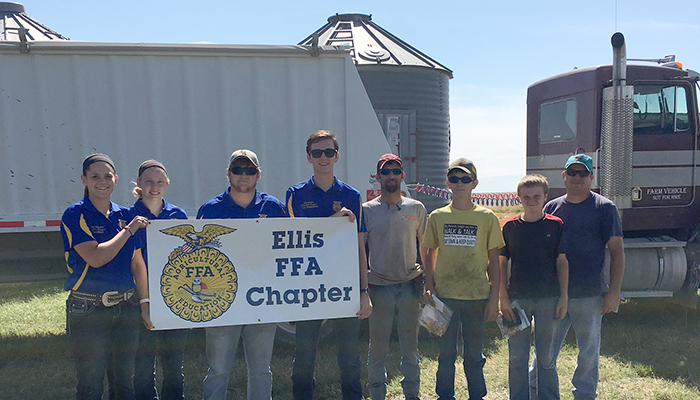
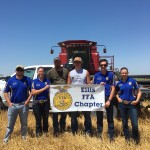
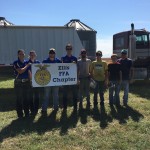
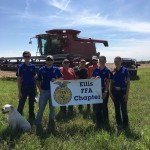
The Ellis FFA Chapter had their Harvest Appreciation Tour on Friday, June 24. Every year, FFA members plan and organize this event to give back to the farmers as a simple “thank you” for their hard work during harvest.
This community service project lasted two days, the first to cook and prepare and the second to drive across Ellis County visiting harvest crews in the fields. FFA members prepared homemade trail mix, cookies, granola bars and other snacks to hand out to farmers. Each farmer received a handful of snacks and an ice cold drink. Farmers that pre-registered also received a special Ellis FFA can koozie.
The 2016 FFA officer team set their goals high, hoping to exceed their record of 37 farmers last year. Their goal was to visit and meet around 50 farmers. This goal, however proved to be far too easy for the team. By lunch, they had already exceeded their goal, and at the conclusion of the tour had met 100 farmers and harvest crew members across Ellis County.
Chelsea Whittle, Ellis FFA adviser, is excited to see the community service project continue to grow in upcoming years.
“This was a great opportunity for our FFA members to get out in front of the community, especially to the heart of the Ellis agricultural industry,” she said. “The smiles on the farmers’ faces, and the overall experience is one that these students will never forget.”
The 2016 Ellis FFA Officer team consists of Lindsay Augustine, Lane Fischer, Jaylinn Pfeifer, Joshua Smith, Cameryn Kinderknecht, and Lane Kohl.
If you are interested in learning more about the Ellis FFA Chapter, contact Whittle at (785) 726-3151.
From left: Lane Fischer, Cameryn Kinderknecht, Lindsay Augustine and Joshua Smith.
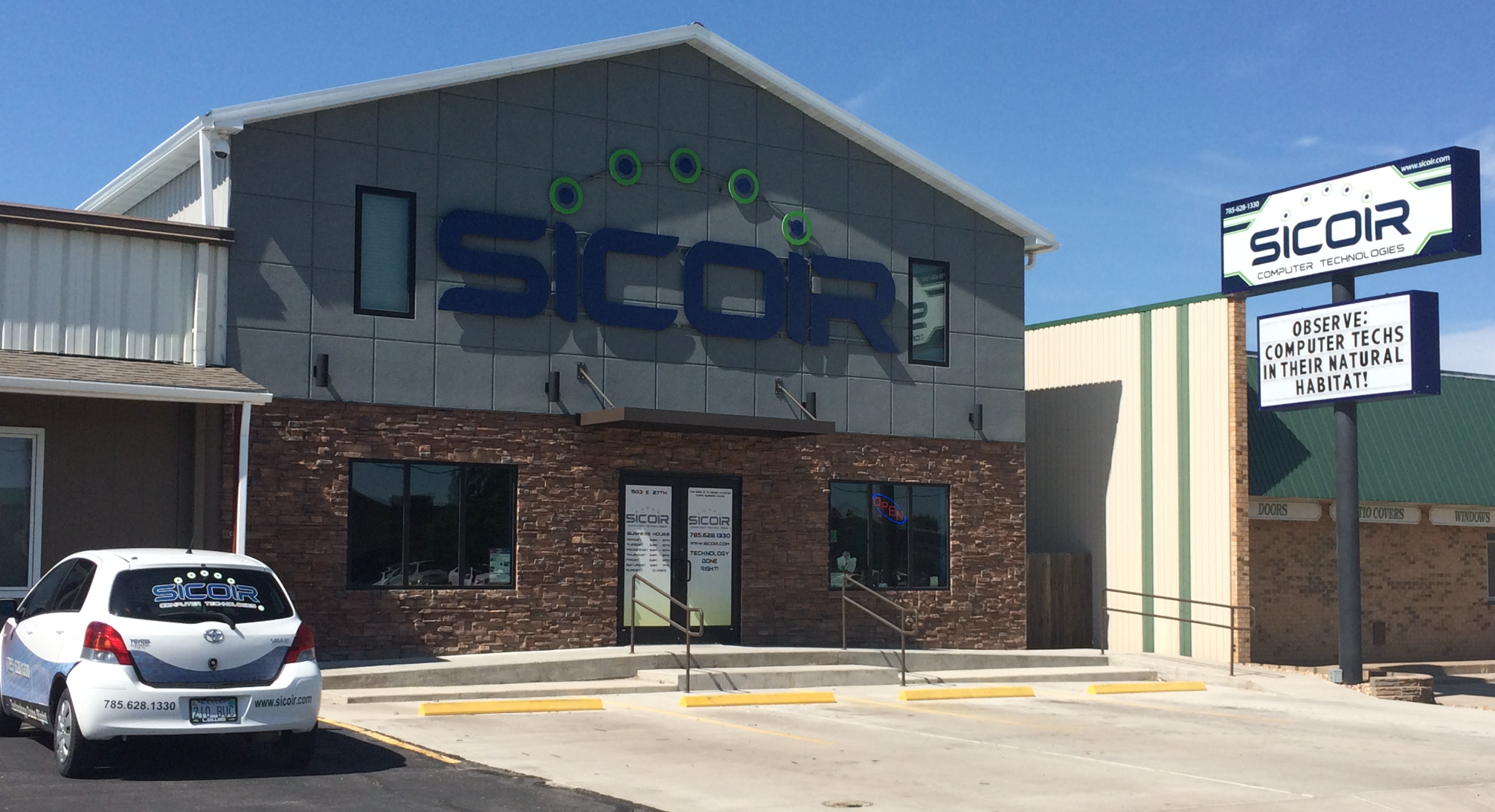
Eagle Communications continues its track record of growth with the acquisition of Hays-based SICOIR, a residential and business technology support company.
The move will create a new service team within Eagle’s growing broadband footprint — Eagle Managed Services.
Eagle Broadband General Manager Travis Kohlrus said, “The goal of the acquisition is to strengthen the Eagle Communications residential and business support offerings. By adding nine IT experts and a host of new technology tools and solutions, Eagle now will be able to better manage and support home and business needs with one call.”
The new employees will include expertise in network configuration, security, cloud services, web design, support and troubleshooting and repair of business hardware and software. Eagle’s residential support offerings will also be expanding to include computer repair, remote desktop support, email support, data recovery and spyware and virus removal.
Kohlrus continued, “This addition to our company is an important piece to better serve our customers and to exceed their needs when it comes to technology support. It allows Eagle to be a single stop for all of their home and business needs. One call, with customizable solutions that be can scaled up or down based on need or budget, with the same great service that customers expect. Throughout the years, Eagle has an excellent history of partnering with SICOIR on different projects. It is a local company built from the same values as Eagle, and it is exciting to welcome nine new Employee-Owners to the team.”
“Just like the SICOIR name implies, ‘Simple Ideas Can Often Initiate Revolutions,’ Eagle’s merger with SICOIR will continue to revolutionize the customer experience into the future and allow us to offer more products and services and reach customers in more locations,” said Dallas Haselhorst, SICOIR co-owner. Eagle’s new Managed Services team will remain located at SICOIR’s current location, 1503 E. 27th, Hays. Eagle Managed Services will continue to support its current businesses and home users in Hays, the surrounding communities, and everywhere Eagle provides service.
“At Eagle, we are proud to be one of the fastest growing employee-owned companies and we are excited to keep our communities connected with innovative technology.” said Gary Shorman, President and CEO of Eagle Communications. “The addition of new residential and business support products is just one more way we continue to serve our customers better — with local support, and people that are part of your community.”
Eagle Communications, Inc. is a Kansas-based Broadband Services and Media Company with more than 285 Employee-Owners. The company operates 28 radio stations in Kansas, Nebraska and Missouri, as well as cable TV systems in 59 Kansas, Nebraska and Colorado communities. The company also offers e-business solutions, web hosting, telephone service, high-speed internet, and wireless internet in most service areas.
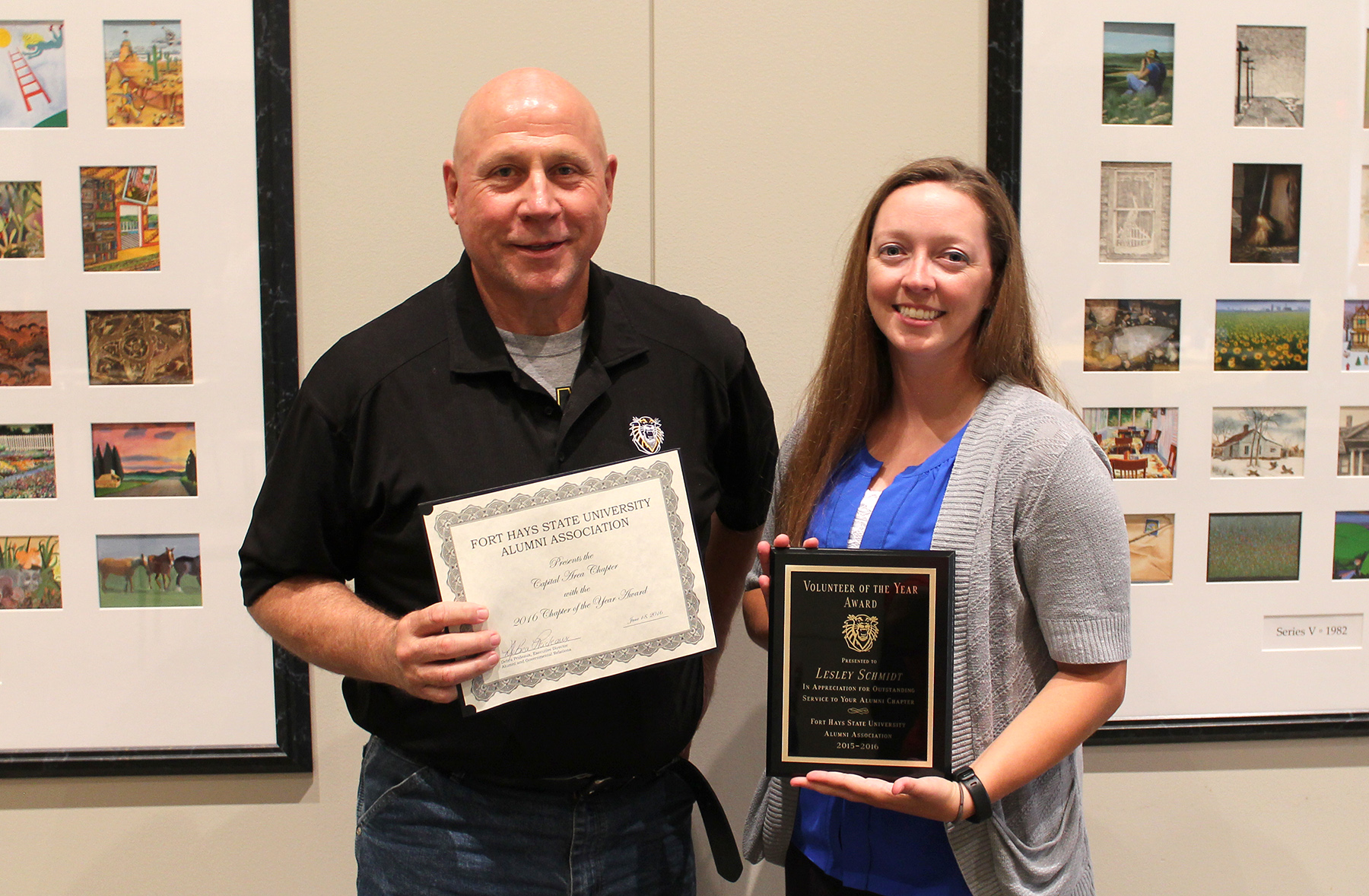
Chapter of the Year Award was presented to the Capital City Chapter (Topeka Area), Larry Mostrom ’79, Topeka, Capital City Chapter President. Chapter Volunteer of the Year Award was presented to Lesley Schmidt ’08, Park City, South Central Kansas Chapter (Wichita area)
FHSU University Relations
Chapter Volunteer of the Year and Chapter of the Year awards were announced at the recent annual meeting of the Fort Hays State University Alumni Association Board of Directors.
Lesley Schmidt, Park City, received the 2015 Chapter Volunteer of the Year award. Schmidt, a 2008 FHSU graduate, is a landscape designer and auto CAD technician with Mid-Kansas Engineering Consultants Inc., Wichita. Schmidt has served on the South Central Kansas Chapter’s volunteer leadership committee since its establishment in 2011, assisting with the development, coordination and hosting of chapter events and activities.
“Lesley joined the executive planning committee the night of her first alumni event,” said Jennifer Brantley, a 1993 FHSU graduate and outgoing SCKS chapter president. “Since then, she has effectively kept up on our Facebook page with events and other FHSU information, attended all executive committee meetings, and has offered to make contacts and to host events in that time.”
“Lesley is passionate about FHSU and the SCKS group activities,” she continued. “Her energy and youthfulness have assisted our group in connecting with a younger alumni crowd. Team up those qualities with accountability and responsibility, she has been a phenomenal volunteer and a fantastic ambassador for FHSU.”
The Capital City Area Chapter, covering the Topeka area, won the Chapter of the Year award. Established in 2011, the chapter serves FHSU alumni and friends in Shawnee, Douglas, Osage, Lyon and Coffey counties. Chapter President Larry Mostrom ’79, Topeka, accepted the award on behalf of the chapter.
The chapter hosted numerous events throughout the 2015-16 academic year, including a student send-off party, a Tiger women’s soccer pregame tailgate party, a beverage tasting event and Tiger Night at the ballpark.
The chapter award includes a $500 cash stipend to use for further chapter development.
Established in 1916, the Fort Hays State University Alumni Association serves FHSU graduates by identifying needs and providing solutions. More than 60,000 graduates live throughout the United States and in approximately 74 countries. FHSU chapters are active across the states of Kansas, Oklahoma and Texas.
If interested in participating, contact the Alumni Office at 785-628-4430, toll free at 1-888-351-3591 or by email at [email protected].
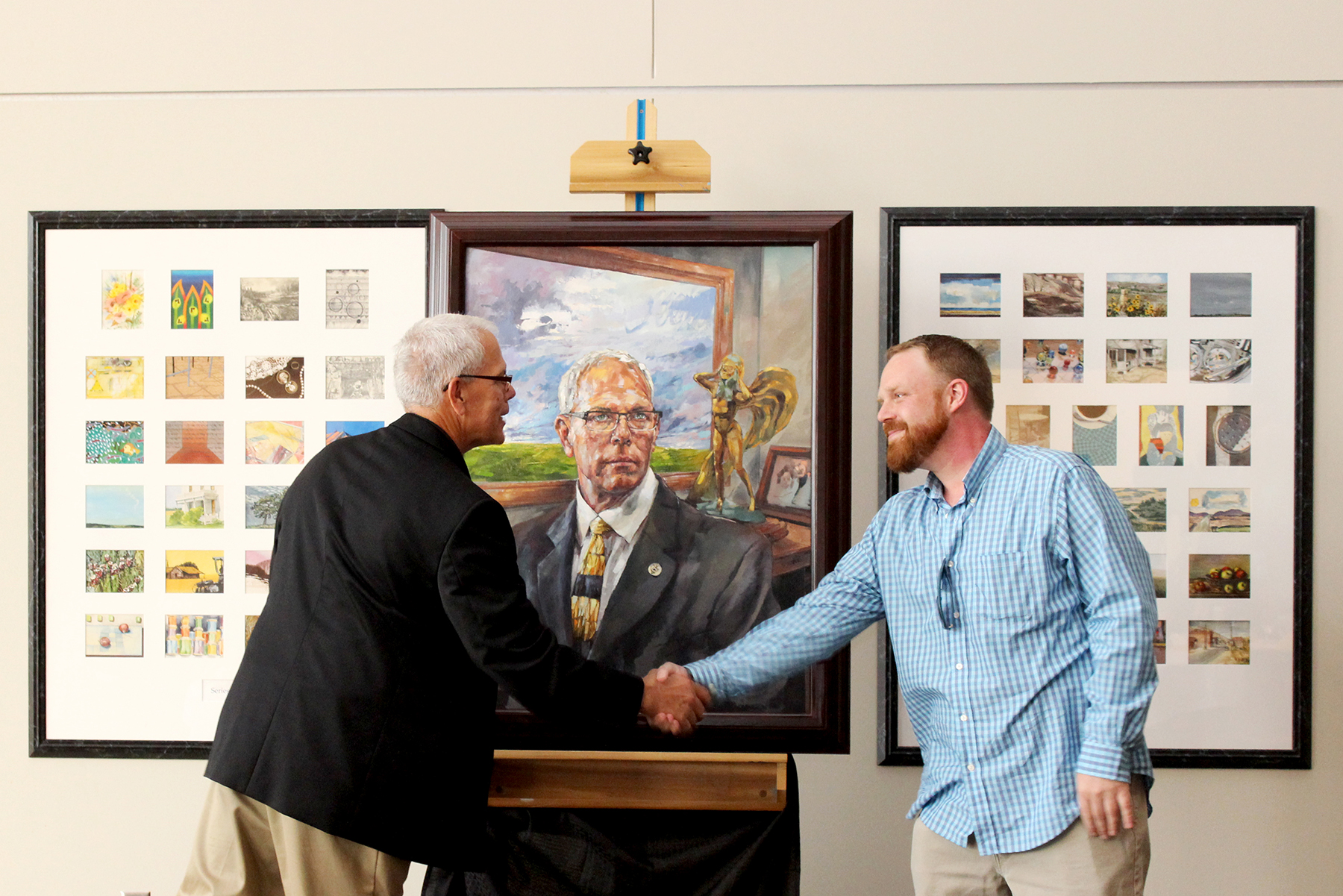
FHSU’s Tim Chapman and Joel Dugan shake hands following the unveiling of Chapman’s portrait, which was painted by Dugan.
By DIANE GASPER-O’BRIEN FHSU University Relations
Tim Chapman isn’t accustomed to being on this side of the canvas, and he admits it felt a bit strange.
So when entrepreneur/philanthropist Steve Shields from Manhattan finally convinced Chapman to commission his portrait, Chapman said “It was so humbling.” Now, Chapman calls it an extreme honor.
Chapman, stepping aside this month after 10 years as president and CEO of the Fort Hays State University Foundation, will be keeping an eye on his co-workers even in retirement.
A large painting of Chapman was unveiled at a private retirement reception last week in commemoration of his successful career.
Chapman — a world-renowned artist himself, who specializes in 2-D and 3-D mediums — said that Shields had been after him for a while to commission his portrait to hang in the Robbins Center, home of the FHSU Foundation.
“I kind of battled him on it,” Chapman said, “but when he found I was going to retire, he said he was going ahead with it with or without my consent.”
Shields, an FHSU student in the mid-1970s and long-time donor to Fort Hays State, said he thinks the portrait is a good way to continue to draw on Chapman’s leadership and that “we need to be better in our society about honoring successful leadership.”
During his tenure at Fort Hays State, Chapman launched the most ambitious fundraising effort in FHSU history — the Cornerstone Campaign, which raised more than $68 million.
“Tim is a focused, yet personable leader who transformed the organization from an Endowment Association into a robust university foundation,” Shields said. “I love to see leadership in action and have very much enjoyed watching the seeds of Tim’s leadership bear fruit during his tenure. Commissioning a portrait of Tim to be hung in the foundation building is my small way of honoring his leadership.”
Shields approached Joel Dugan, assistant professor of painting in FHSU’s Department of Art and Design, to “capture the energy of our foundation leader,” Dugan said.
Dugan said he was honored and nervous at the same time.
While this was a new role for Chapman, it was an unusual situation for Dugan as well.
“Tim is one of the few sculptors in our region who works so often from the human form,” Dugan said, “so he’s not just an everyday client. The hardest thing is ‘How often do you do portraits of artists?’ I wanted to do it justice and meet the approval of some of that skill level.”
Dugan also said he wanted to portray the entire embodiment of the man that makes up Tim Chapman.
“When executing this portrait, it was essential to me to show the multifaceted sides of Tim,” Dugan said. “A talented sculpture, academic and family man, Tim is a true embodiment of the modern Renaissance man.”
So Dugan asked Chapman to bring along some things close to him. Dugan chose one of his bronze statues in memory of his family and a photo of him and his wife, Mona.
Dugan also felt that painting Chapman’s portrait was a way of thanking him for his concern for the arts.
“As a fellow artist, Tim has been integral in highlighting the needs and achievements of our students and faculty members at large,” Dugan said.
Chapman’s last full day at the foundation is Thursday, but he will remain as a consultant to his successor, Jason Williby, and his staff, as the foundation embarks on its next campaign, “The Journey,” later this summer.
Plans are to hang Chapman’s portrait in the art gallery of the Robbins Center, so his presence will be felt long after he walks out the door for the final time.
“It is often said that some people enter our lives and leave quietly while others stay forever,” said Dr. Mirta M. Martin, Fort Hays State president. “Tim will be forever part of the fabric of Fort Hays State University, and I am very grateful he is part of my life. His portrait will bear witness to the determined, insightful and forward-thinking legacy that we have achieved under Tim’s leadership.”
Dugan agreed.
“I hope that my painting can help to capture Tim,” he said, “and highlight the dynamic individual we all know — for years to come.”
I will admit I wasn’t sure what to expect when the story idea was presented. A western Kansas farmer cutting wheat with an antique combine during harvest isn’t my normal fare. But growing up, I worked with farmers, I’ve driven a combine, and spent days in the 100-degree heat working fields, so I thought, “Why not?” and made the call.
Harvest, as I have known it, is a hectic time, rushing to get wheat cut and delivered, especially as storms are expected to move in, so I wasn’t expecting an immediate answer. Much to my surprise, after a couple of rings a strong, but friendly, voice rang out.
“Hello, this is Roger,” came across the line, slow and deliberate.
After introductions, the man on the line, Roger Kuntz, who lives in Grainfield, explained the premise behind his endeavors.
“Why not find the simplest piece of equipment ever built and enjoy them versus buying into the high-tech world where you see the preposterous gadgetry that you’re maintaining for others?” he said. “Why not make your world fit you?”
And my interest was piqued.
A time was set and a couple of days later myself and videographer Cooper Slough made the hour drive to interview Kuntz and shoot his harvest.
The farm was easy enough to find, just a quarter mile west of the little town of Quinter, with a medium-sized red barn, and a 1949 Chevy truck parked right on the side of the road.
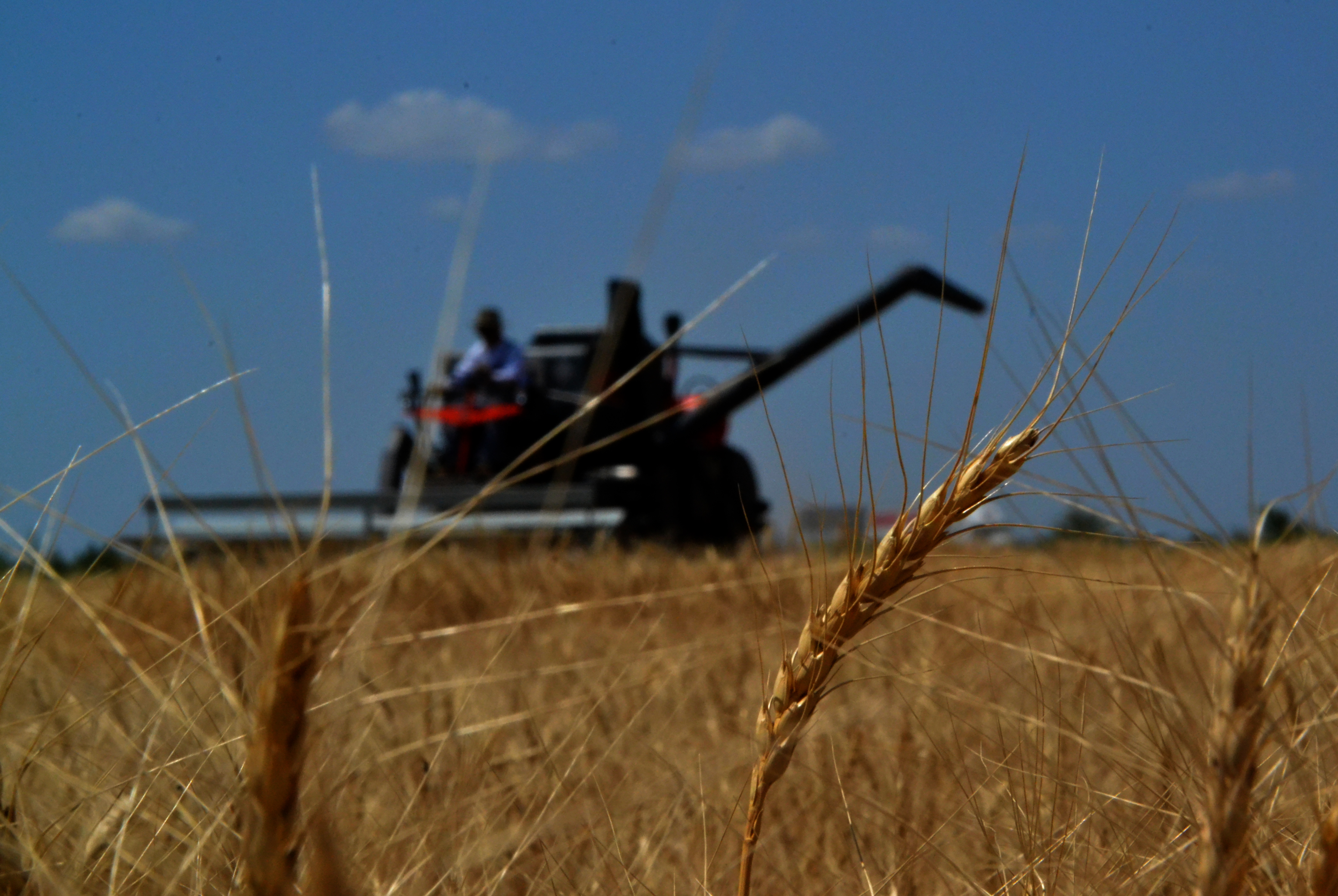
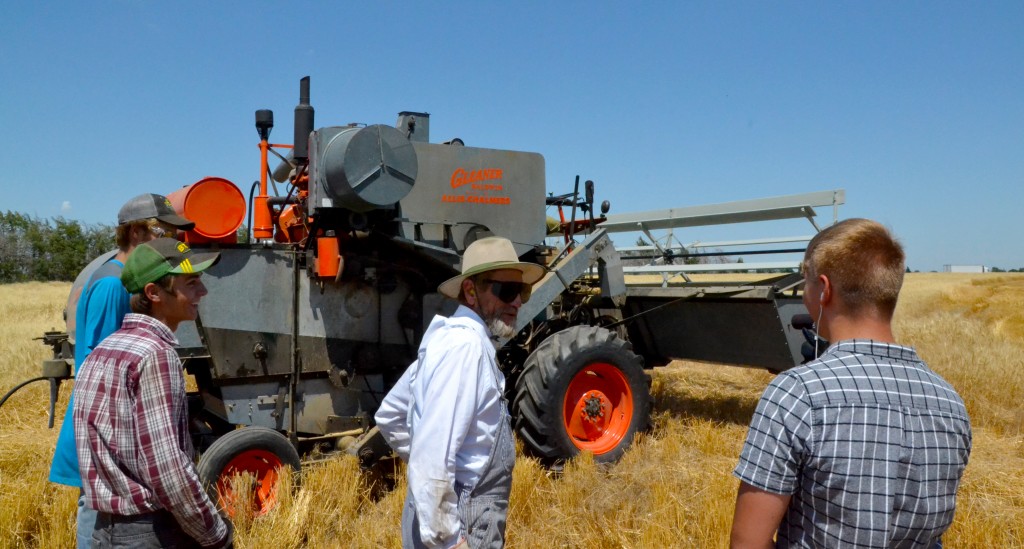
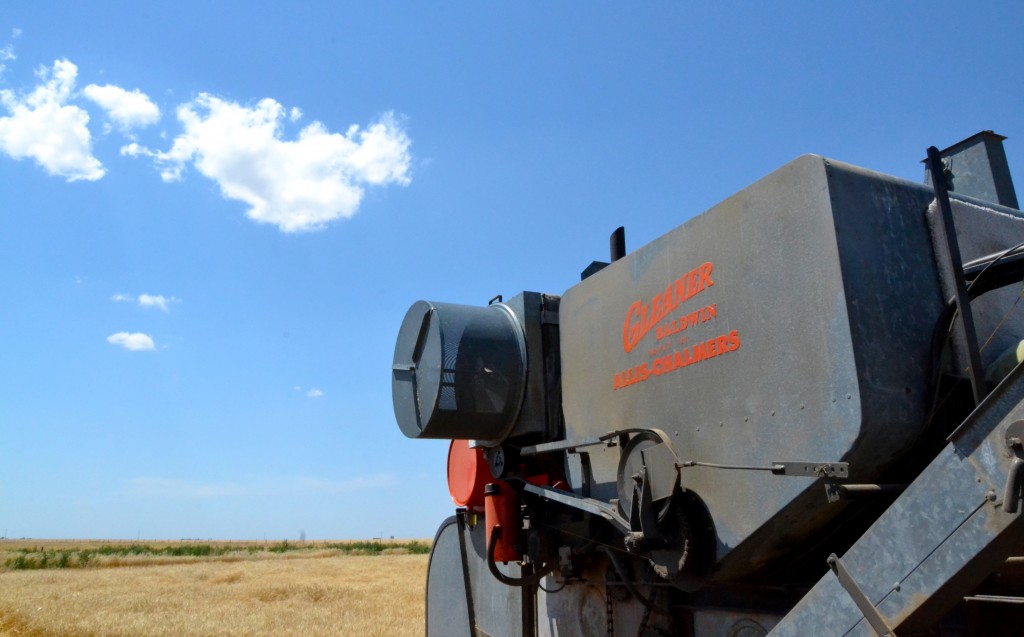
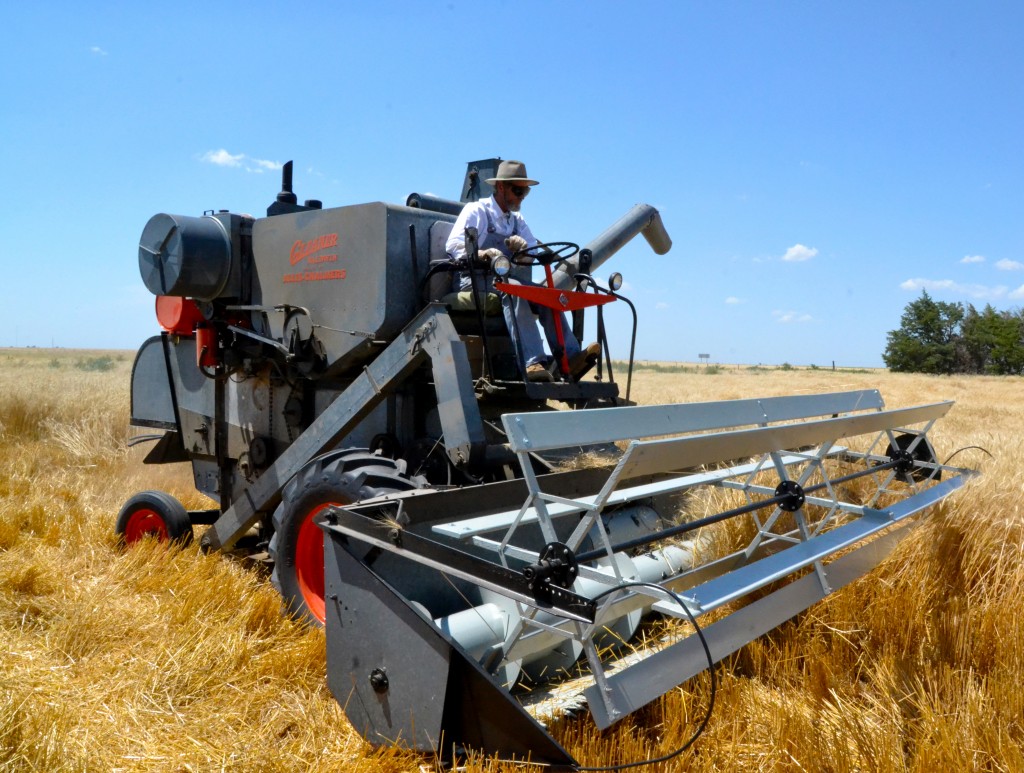
Roger Kuntz preparing to begin cutting with his 1950’s combine “Chitty Chitty Bang Bang”
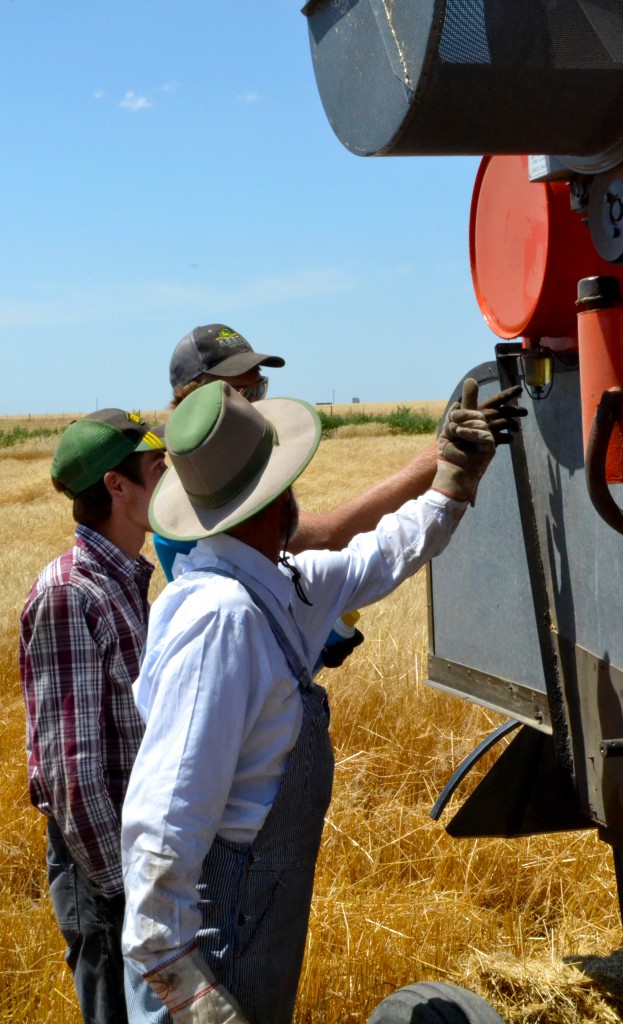
Roger Kuntz reviews repairs made by Cody and Jessie Bogart before wheat cutting begins just west of Quinter.
“Look at that,” my cameraman said as we passed the truck.
“This must be our guy,” I matter-of-factly responded.
Kuntz had told me about that truck on the phone. It had been his fathers and was still used to haul grain, 150 bushels at a time.
We were greeted almost immediately by a middle-aged woman who had the look of a farmer’s wife — Roger’s sister-in-law.
Roger wasn’t going to be immediately available, she said. The combine, the crux of the story, had apparently stopped running just before we arrived, and he was working to get it running.
We made small talk as we waited, talking about the pending storm and record wheat yields being reported in other areas of the state.
As I glanced around, I could see work being done on the combine, immediately wary that the story might require another trip, when I noticed an older man in full overalls and a hat with a full neck flap heading our way.
It was Roger Kuntz.
We talked about his equipment, his career in farming implements and why he runs his small farm in a way not seen in decades.
“The joy of being here today is the fact that we’ve come so far in getting bigger and more complex with the equipment in the 70’s until now. The joy comes from doing a small cottage farm right here at Quinter, Kansas,” he said.
After a lifetime of working with farmers, fixing implements across the world, he knows first-hand the difficulties of modern farming.
“The joy of simplicity outweighs so many other dimensions that pursuing this goal of simplicity and harmony with nature has led me to go organic with the farming. Even though I’ve walked shoulder to shoulder with the people of the ’70s who drove the Big Buds, the Versatile tractors, etc. The organic small cottage farm is a way for me to unwind and to also train apprentices,” Kuntz said.
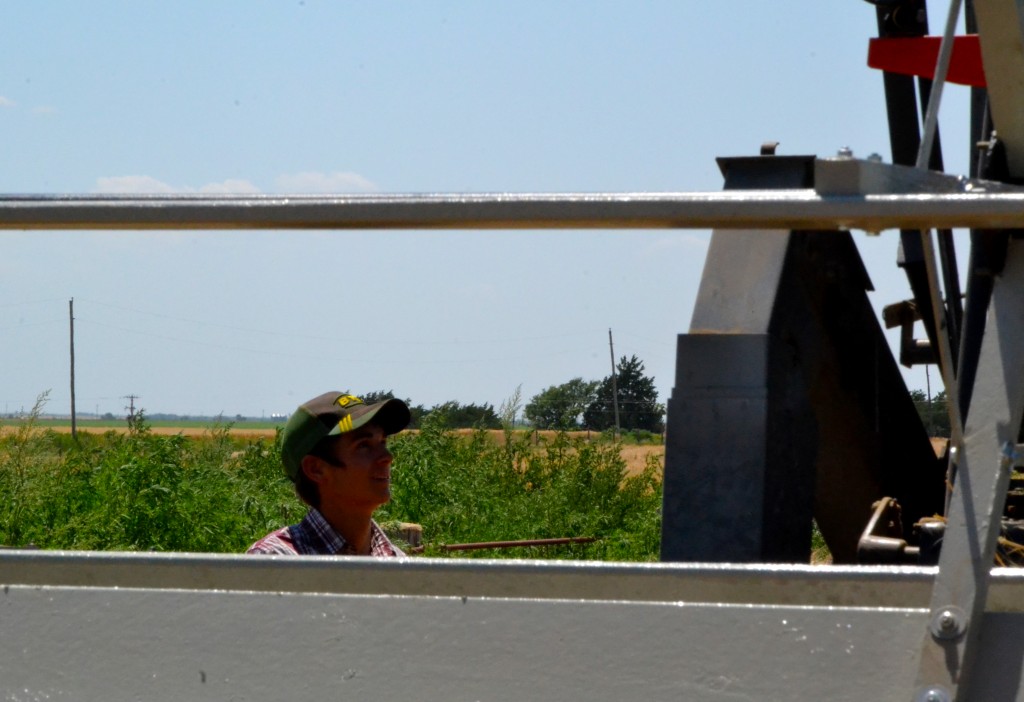
Two of those high school students, brothers Jessie and Cody Bogart, were working on the combine – affectionately named Chitty Chitty Bang Bang – replacing the fuel pump that was giving them trouble.
Both students have plans to continue the work they are learning with Kuntz after graduation, using the skills they learned — but they aren’t the first and likely won’t be the last to work with Kuntz.
“When possible, we try to help the handicapped and put them on the assembly of these parts in our cottage shop,” Kuntz said. “We also have the foster home teenagers come out when they’re available and help do some training there.”
The sense of community and the personal touch shines through with Kuntz, something he shares with pride.
The number of people Kuntz has met is hard to imagine. For decades he traveled the world, working as a service manager at K-Tech working on Flex-King tillage equipment, now traveling with Jessie helping farmers to precisely dial in their tillage equipment.
Those service trips give Kuntz an opportunity to hear stories and reflect on the lives of the modern farmer.
“That has been a big part of going out on the service trips. I tell Jessie and Cody, ‘Let’s listen to their problems before we respond.’ ” he said. “The stories of what they would do if they could do it over again are very touching.”
Kuntz’s story starts as a young student in the area, thinking beyond the classroom.
Daydreaming in school, Kuntz said, paid off as he worked in research and development and as a service department head, putting him in a position to develop relationships with farmers and the land.
“That work entwined me even further into agriculture and farming.”
But working on high-tech machinery also created a desire to get away and practice farming without the entanglements of modern technology as farms grew larger and became more complex.
“A retreat from that life was just having this small situation here with older antique farm equipment,” he said.
“We enjoy the sweat that comes off our brow, we sleep good at night and the toil and the non-high tech world has fit us very well,” he said in a poetic tone. “We enjoyed our journies, we love the land, we plan to stay here just as long as we can.”
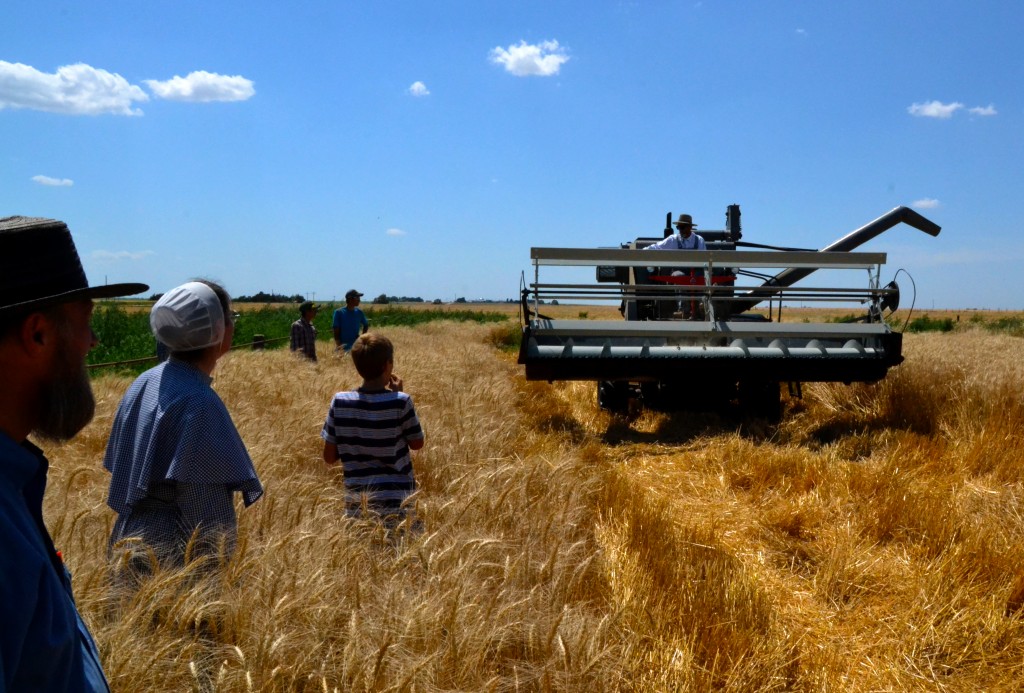
During the hours filming and exploring the farm, we paused, sitting around a small table enjoying cookies and a homemade energy drink. As we gathered for the break, Kuntz, Jessie, Cody and their parents were curious about what we do. We explained the in-and-outs of our own jobs, noting the stark contrast in web-based reporting to their work in the fields.
Then the fun began, the combine – once again operational – roared to life and we began capturing what we needed.
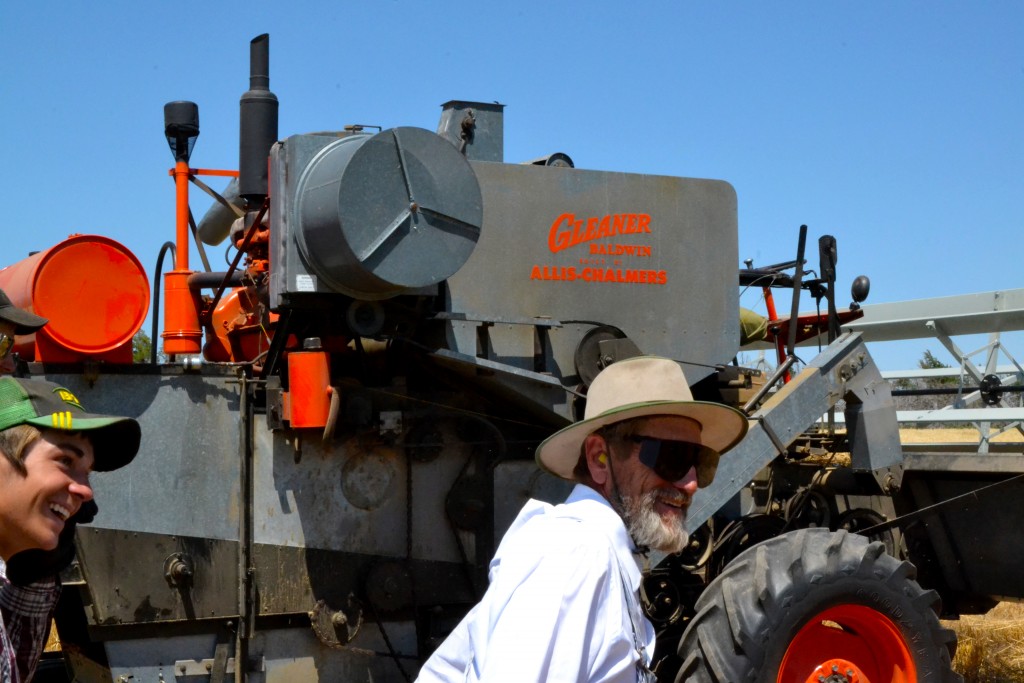
“It’s still functional. It does our job,” Kuntz said of his once-abandoned 1958 Gleaner A combine.
It was given to him, he told us, but he couldn’t just take it. He gave the farmer a donation for the machine that, without Kuntz, would likely have become scenery in a dusty field, collecting rust as an idle reflection of a time that had long since passed.
Despite the earlier hiccup, Chitty Chitty Bang Bang hummed along perfectly, albeit with a little coaxing from Kuntz. He insists singing its namesake song helps it run faster. The louder he sings, Kuntz said, the faster it goes.
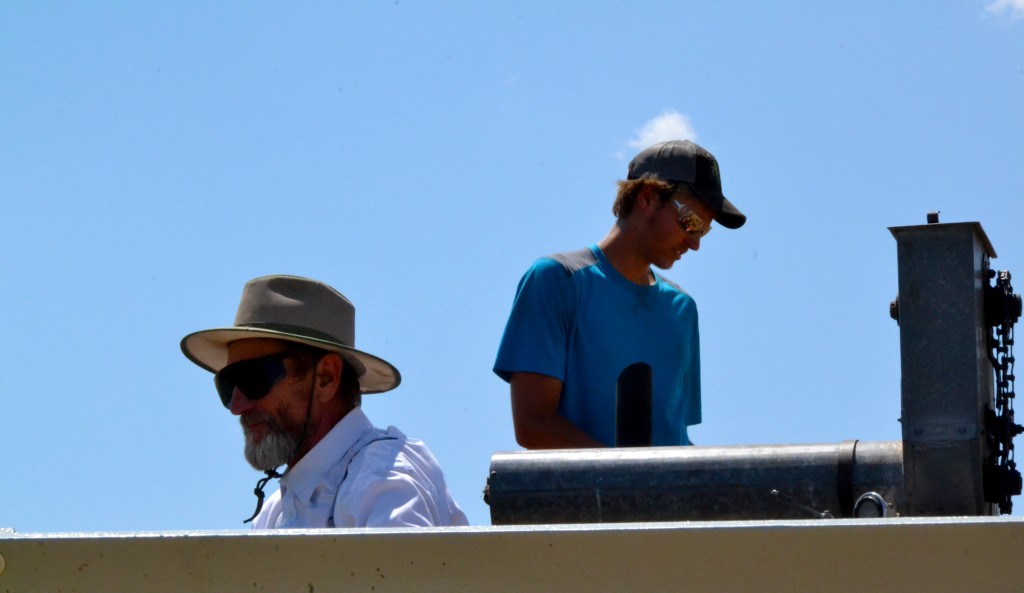
As my cameraman rode shotgun, collecting shots of the harvest, he sang as they rolled along.
I wasn’t sure it helped the machine run, but the idea made me smile.
“Our little barn, our little group of machinery, and the way we farm is a real joy as these machines that are much older than the youth operating them go to the field,” he said.
The type of farming Kuntz does, organic and small, a cottage farm he calls it, isn’t without its merits in the modern world. Kuntz said he notices a growing need to pursue tillage even as others embrace new and stronger chemical treatments.
In the ’70s, the Big Buds did their job well but then came chemicals, allowing for no-till farming to be practiced, he said.
“That came in and changed agriculture.”
But weeds are adapting and tilling the ground is making a comeback, he added, giving him more opportunity to continue precision work on modern equipment.
“Tillage that can skip the ground 2 inches deep at 8 mph and really get a good job done, that where we come in,” Kuntz said. “It’s the finesse, the finesse of making a machine work so well that it pulls one or two years easier and performs right and does a good level job clear across.”
The bulk of farmers still practice no-till farming, he said, but some tillage is returning as people try to recalibrate to solve modern farming problems.
Out here, though, those problems seem distant as Kuntz practices farming that would be more familiar to someone in the ’60s than today.
“Out here, where I do not want to spray any and I need complete coverage to prevent weeds from taking over I plant a very old variety, maybe a 60-year-old variety. The varieties of Scout, Eagle, Turkey are the wheat varieties I plant and those were available in the ’60s,” he said. “It blocks the ground, shades the ground, protects the weed growth.”
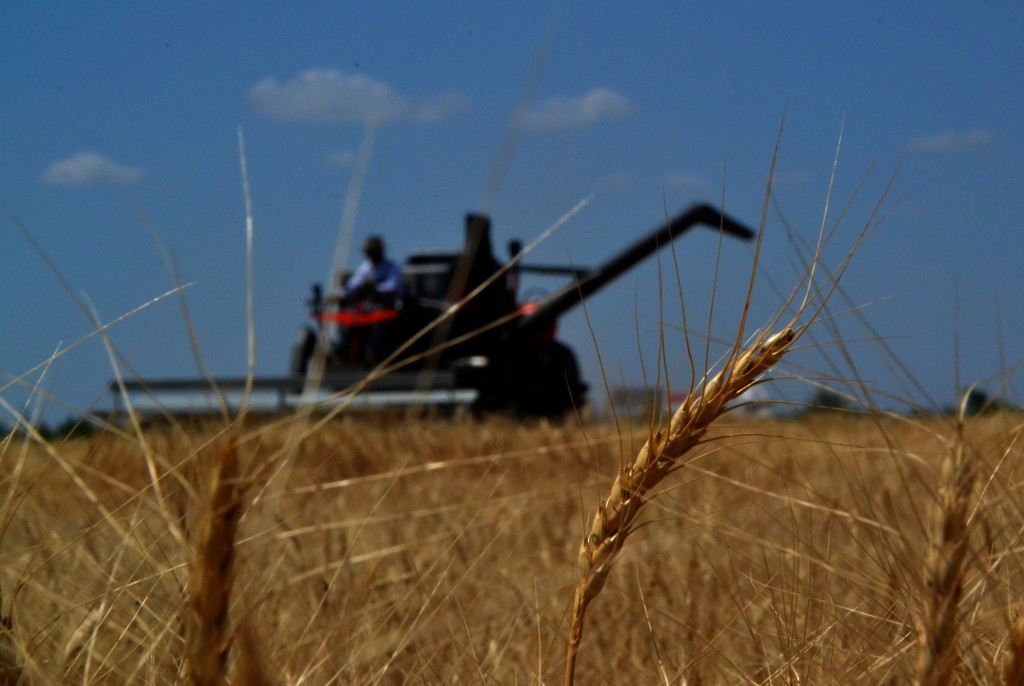
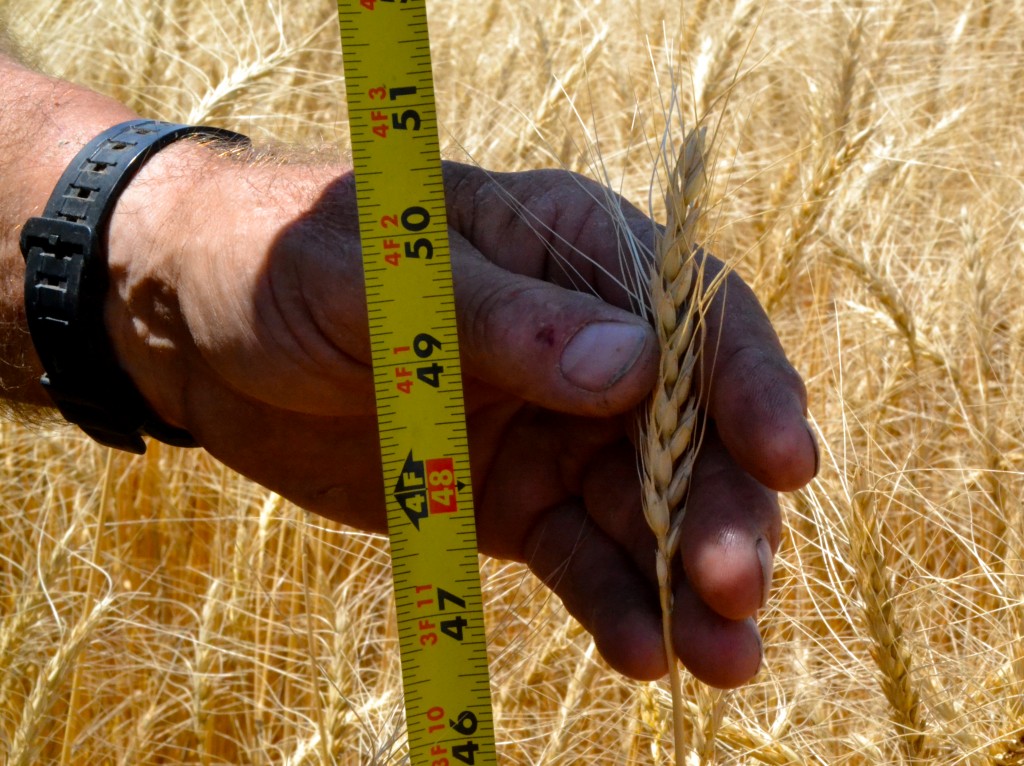
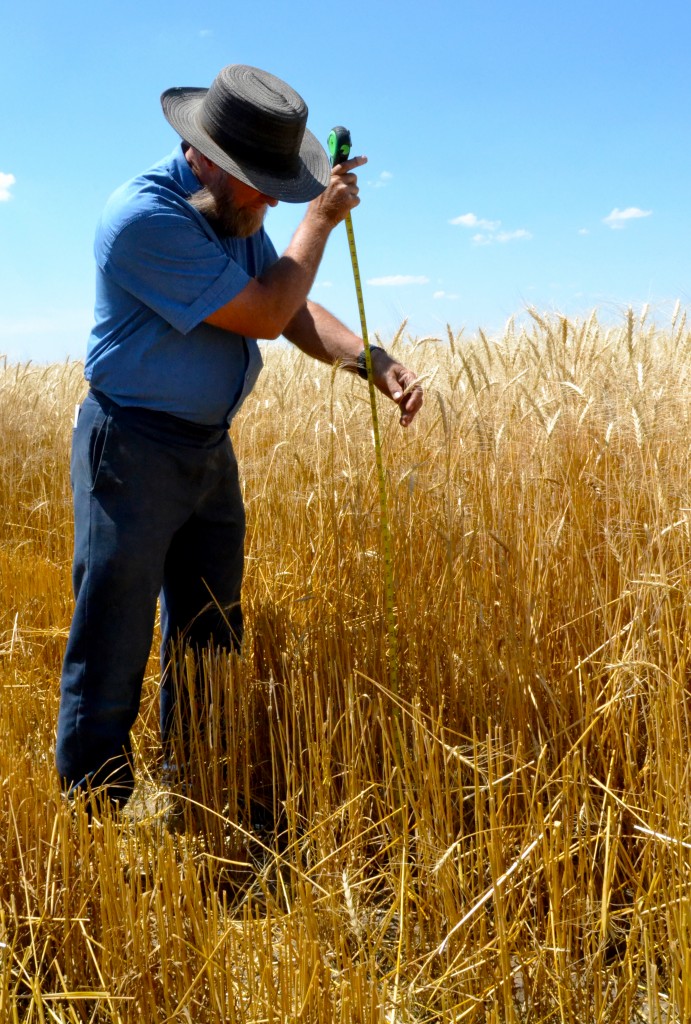
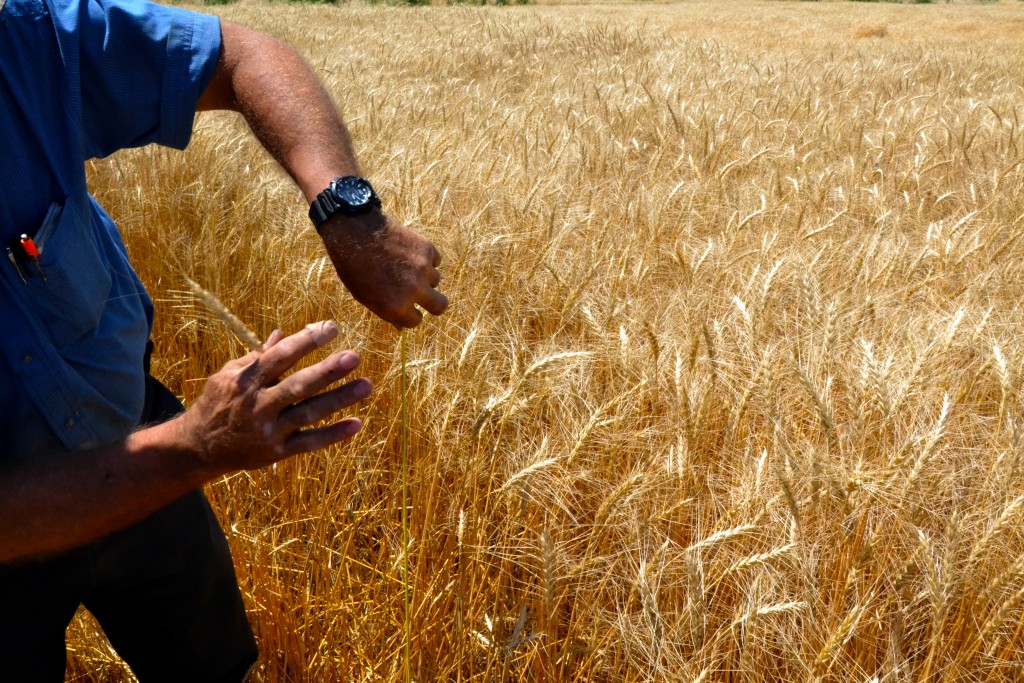
Stepping into the field, it is easy to see why – the wheat is unlike any other I have ever seen and taller than I would have believed. He had told me over the phone it was chest high. He wasn’t exaggerating.
As the day wore on, watching Roger and his young apprentices’ work, it occurred to me this labor of love is likely unsustainable. I couldn’t imagine a situation in which a profit could be made from such antiquated practices.
When I asked about profit, a small smile crept across his face.
Not only is it “a great release, it can be a profitable hobby,” he said. “There will be profit after the little combine and the 930 Case has done its job. There will be a profit in the first year.”
Without a hint of malice toward other farmers, he continued.
“Being a small farmer is profitable. It works well because you can stay so focused, so concentrated on doing a good job with little, that the returns are greater per acre because you’re hovering over it like a hen over its chicks.”
As I later sat down to compile the story, desperately looking for an angle, watching the video piece come together, I found I thought more about what he said, rather than what he was doing. Throughout the day, he had shared bits of wisdom, alluding to a simpler time.
“Go simple, go small, go now,” he told us, a quote he had collected throughout his travels.
As we traveled back to Hays, I was anxious to jump back into my digital world, scrolling through the news of the day, catching up on everything I had missed, later remembering that quote as we talked about the experience we had just had. Both the oddness of it, but also the familiarity and the kindness of strangers that is increasingly infrequent.
Because of that unexpected hospitality, I felt compelled to grant a request he made as we parted ways. He asked to share a quote by Sterling Hayden that is important to him and without hesitation I share it now.
“In the worship of security we fling our lives beneath the wheels of routine – and before we know it our lives are gone. What does a man need – really need? A few pounds of food each day, heat and shelter six feet to lie down in – and some form of working activity that will yield a sense of accomplishment. That’s all – in the material sense. And we know it. But we are brainwashed by our economic system until we end up in a tomb beneath a pyramid of time payments, mortgages, preposterous gadgetry and playthings that divert our attention from the sheer idiocy of the charade. The years thunder by. The dreams of youth grow dim where they lie caked on the shelves of patience. Before we know it, the tomb is sealed. Jessica Mitford writes about the American way of death, but the American way of death isn’t the burial ritual (silly as that is), but the way the average man lives. When you consider the beauty there is in the world, the rapture that can be known, the honest relationships, the excitement and exaltation there is for the taking – the real things to look at and feel and read…Where, then, lies the answer? In choice. Which shall it be: bankruptcy of purse or bankruptcy of life?”
A few days later, I traveled near Roger’s 80-acre farm and saw him riding high on his combine set against a bright blue sky. I smiled and began singing in my head “Chitty Chitty bang bang, Chitty Chitty bang bang, we love you,” imagining he was as well.







 By BECKY KISER


 “It’s just one of those things that happens with water lines,” Wood said, “a couple of holes that split together. It’d probably been leaking for quite some time.