Over 27 percent of eligible voters cast ballots in the vote for USD 489’s $94 million bond issue, but despite the turnout voters overwhelmingly voted against the measure.
Voters had three questions on the ballot, with all three questions failing to pass.
Proposition one called for a $85 million bond to be used for deferred maintenance, classroom expansion, renovations and safety and security upgrades. Proposition two called for a $8.9 million bond for new multi-purpose rooms at Hays High and Hays Middle Schools. Proposition three was a sales tax proposal that would help fund the bond issue through a half-cent sales tax within the city of Hays.
Unofficial advanced voting results came in at around 8:15 p.m., with voters rejecting all three propositions.
Unofficial advanced voting results:
Proposition 1: Yes 527 – No 846
Proposition 2: Yes 469 – No 903
Proposition 3: Yes 455 – No 750
Advanced voting closed at noon Monday, with 1,448 out of the 14,778 eligible voters casting ballots early.
When the unofficial result totals came in around 9 p.m. the results matched the advanced voting results, with Tuesday’s voters rejecting all three propositions as well.
Unofficial full voting results:
Proposition 1: Yes 1,749 – No 2,249
Proposition 2: Yes 1,557 – No 2,439
Proposition 3: Yes 1,551 – No 1,900
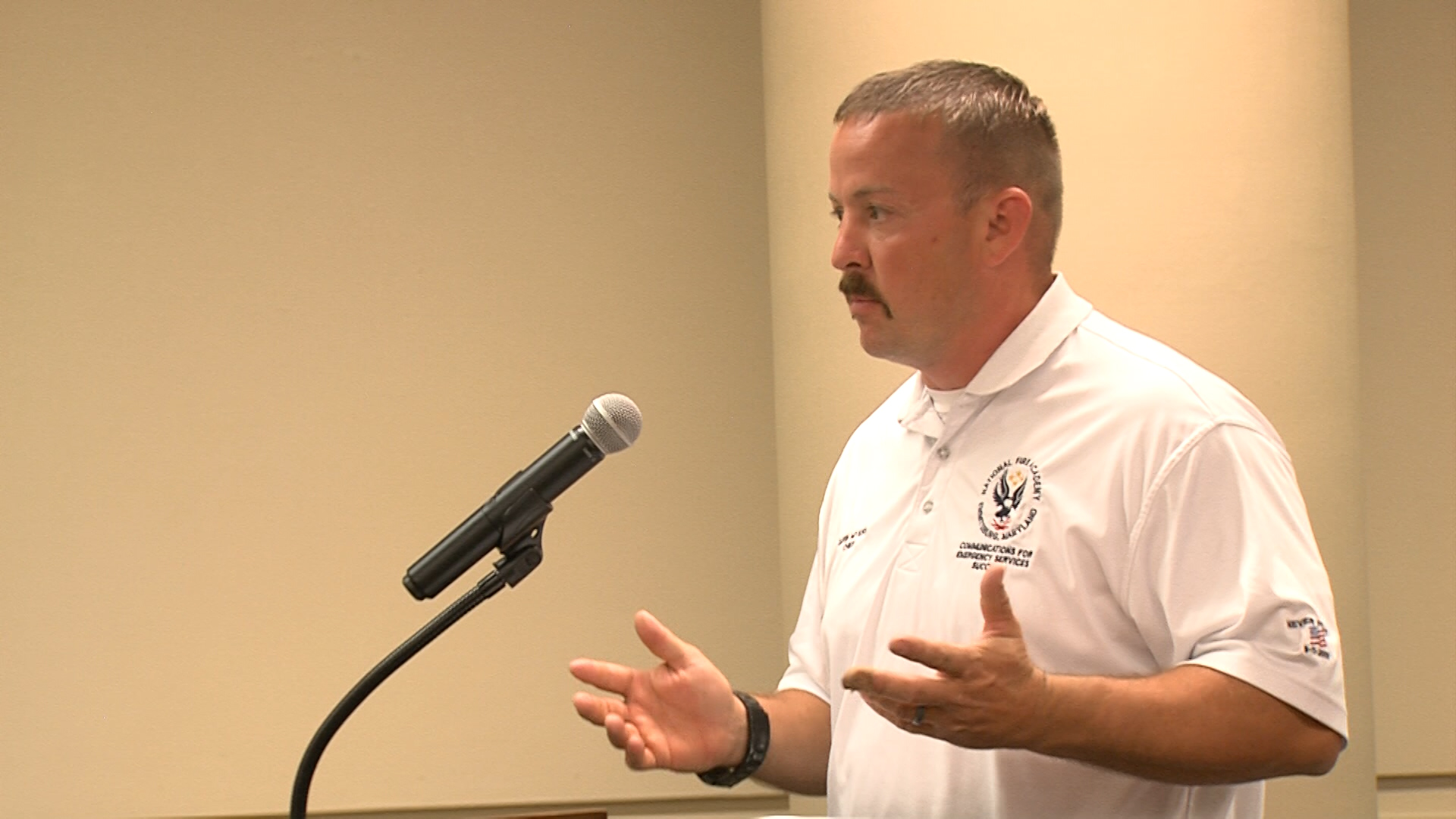
“Obviously it’s disappointing, obviously it’s not the results we are looking for,” said Lance Bickle, Board of Education president. “I think what we will do is go back, reach out to the public, get some feedback for what people want to support and move forward.”
Now that the election has passed a canvas is planned on June 13 by the Ellis County Clerk’s office to verify the results.
A national treasure dating back to World War II landed at the Hays Regional Airport on Monday. Maid in the Shade — a B-25 bomber — touched down in front of a crowd of eager onlookers just after noon as part of the Arizona Airbase Aviation Museum’s 2016 Flying Legends of Victory tour.
The goal of the Flying Legends of Victory tour is to celebrate the legacy of the men and women who flew these aircraft, and provide the public the opportunity to experience the aircraft up close.
The bomber’s volunteer crew includes Jim Swanke, Don Rader, Tom Earl, Roland Smith and Rich Petty.
Victory marks denoting number of completed missions.
Manufactured in early 1944, Maid in the Shade is a rare warbird — one of only 34 flying B-25s left in existence. It flew 15 total missions, 13 over Italy and two over Yugoslavia. According to the crew, its main role was to bomb enemy oil fields, which crippled the enemy’s ability to manufacture planes, tanks, and other mechanized vehicles.
B-25s are classified as medium bombers and have a range of 1,350 miles.
Daily tours are taking place through Sunday, June 12, from 11 a.m. to 5 p.m.
Flight times are 9, 10 and 11 a.m. and 1 p.m. Saturday and 9, 10 and 11 a.m. and noon Sunday.
Flight times are subject to change in order to fill space.
For more information or to reserve flights, contact (602) 448-2350 or [email protected]. Rides are being scheduled now.
Flight deck area seats are $650 each, and waist gunner seats are $395 each.
Despite the spring rains, Ellis County Rural Fire Director Darin Myers is not in favor of allowing the discharge of July 4th holiday fireworks in unincorporated areas of the county.
“From a safety standpoint, you can’t tell if it’s going to be 90 degrees every day for the next three weeks and dry out,” Myers pointed out. “It can be windy.”
“Firetrucks responding out in the county is a lot different than within the city–longer distances, different types of grass, different types of winds–so you’ve got to take that all in to account.”
During Monday night’s Ellis County commission meeting, the commissioners asked Myers to find out what the fireworks policy is in surrounding counties and to bring that information along with a draft resolution to the next commission meeting.
“This is the first time in how many years (since April 2011) the entire state of Kansas is drought-free,” noted Commissioner Barb Wasinger. “As much as I hate fireworks, I think we’re a little bit over a barrel on this–without having a drought designation that people will want to have fireworks.”
Last year Myers recommended against allowing fireworks but the commissioners voted in favor of it.
According to Myers, rural firefighters responded to two fireworks-related fires last July. The city of Hays is allowing fireworks from July 2-4 during the hours of 10 a.m. to 11 p.m.
Midwest Energy is investigating the cause of a Tuesday morning blackout.
According to Midwest spokesman Mike Morley, the power outage affected more than 5,600 customers, including much of Hays and west to Ellis. As of about 8:30 a.m., Morley said power had been rerouted and all customers had been restored.
Crews are at a substation north of Hays investigating the cause of the outage.
Check Hays Post for details as they become available.
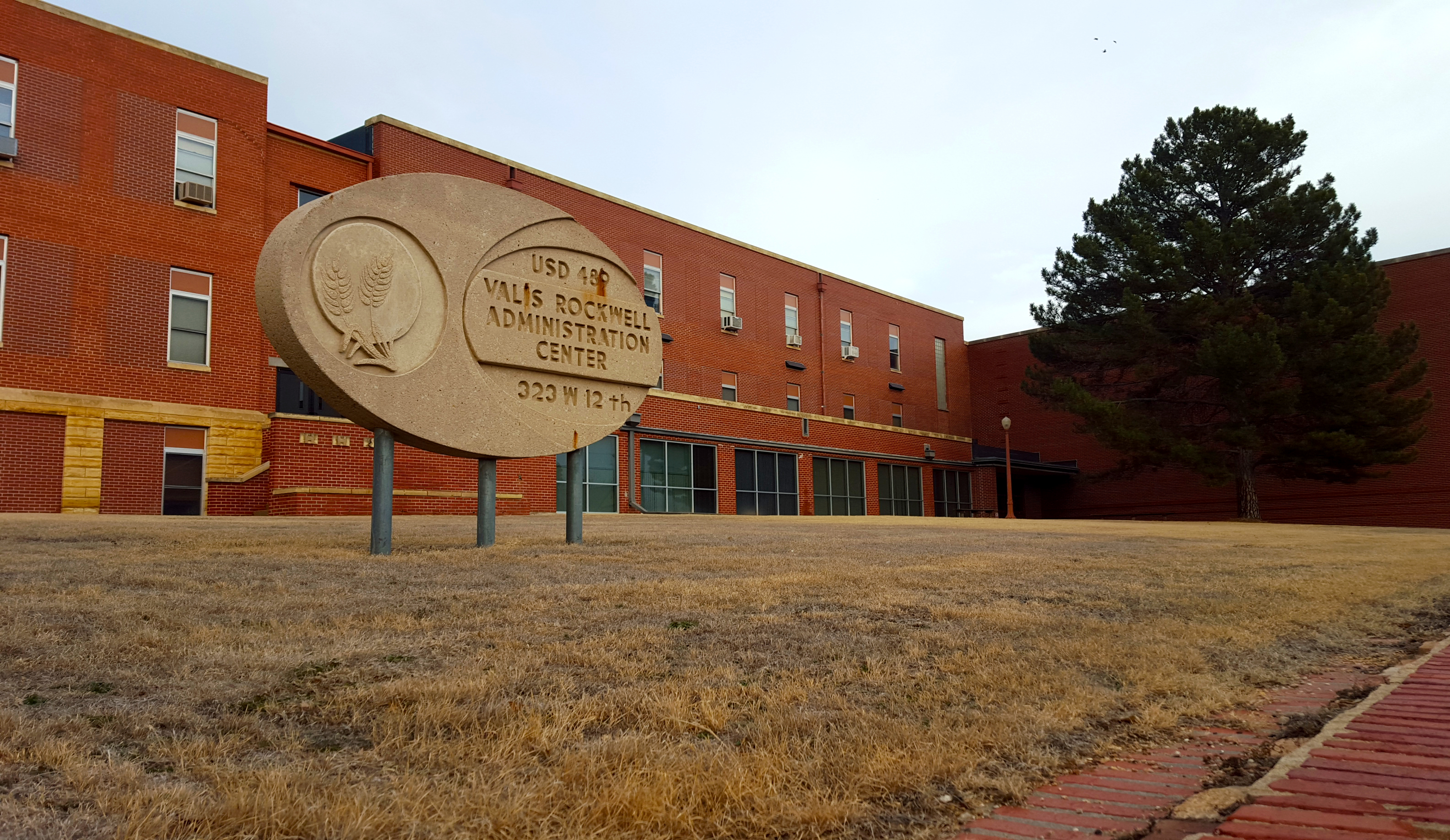
After months of planning and campaigning, the $94 million Hays USD 489 bond issue will be decided by voters Tuesday.
Early voting closed at noon Monday, after almost 10 percent of eligible voters cast advanced ballots.
According to Donna Maskus, Ellis County clerk, at the end of advanced voting, 1,448 people cast ballots out of 14,778 eligible voters.
Now that advanced voting is closed, voters will decide the outcome of the bond Tuesday at polling places open from 7 a.m. to 7 p.m.
Eligible voters will poll at one of two locations – one for qualified Hays voters and one for qualified voters from outside the city.
Hays voters will poll at the American Legion, 1305 Canterbury, and qualified voters from the district outside of the city will poll at St. Nicholas of Myra Parish, 2901 E. 13th.
Potential voters are asked to bring qualified identification in order to cast a ballot.
Ballots will have three questions: One totaling $8.9 million for new multi-purpose rooms at Hays High and Hays Middle Schools, one for $85 million to be used for deferred maintenance, classroom expansion, renovations and safety and security upgrades, and a sales tax proposal that would help fund the bond issue through a sales tax within the city of Hays.
The half-cent sales tax would only apply within the city of Hays, and if passed, would take effect next year after the expiration of a countywide sales tax that was used for county projects, including renovations at the Ellis County Courthouse and a new Emergency Services building.
The first two questions can be passed independently, but the sales tax question is contingent upon a successful bond election.
Full election results are expected Tuesday night, but will not be official until a canvas can be completed.
“Those will be official after the canvas which will be on June 13,” Maskus said.
For residents interested in the outcome – or just wanting to socialize with fellow supporters – the district has planned a watch party at the Rockwell Administration Center, 323 W. 12th St., from 5:30 p.m. to 9:30 p.m.
Dr. Brent Mai talks about the history of Volga Germans in Russia during a seminar in Hays Saturday. (Hays photos courtesy Kevin Rupp)
SUBMITTED
In 1766, there were nine Roman Catholic colonies founded along the Volga River in Russia: Degott (July 18), Graf (June 10), Herzog (July 14), Katharinenstadt (June 27), Louis (June 14), Mariental (June 16), Rohleder (June 14), Schuck (July 18), and Volmer (July 18).
To celebrate the 250th anniversary of their founding, the Center for Volga German Studies at Concordia University in Portland, Oregon, hosted a seminar series and authentic Volga German lunch in Hays Saturday, June 4, at the Rose Garden Banquet Hall.
According to Hays resident Kevin Rupp of the Sunflower Chapter of the American Historical Society of Germans From Russia, 91 people attended the event. Seven sessions were conducted by Dr. Brent Mai, director of the Center for Volga German Studies at Concordia University.
Mai’s discussions were basic introduction of the Volga Germans, Geography, 250th Anniversary of the villages of Graf, Herzog, Louis, Rohleder, Degott and Volmer, Volga Germans in South America, a day-in-the-life of the Volga German, the deportations in 1941 to Siberia and Volga Germans today. Each session ran about 45 minutes. At noon a traditional Volga German meal was served.
Wedding procession in Bauer (Photo courtesy Center for Volga German Studies)
Great Bend will be host to another 250th anniversary celebration Saturday, Sept. 17. The event will highlight the founding of the Volga German colonies of Moor, Bauer and Merkel. According to Mai, many descendants of families from these three colonies settled on the Kansas prairie in Barton and surrounding counties.
The public is invited to attend.
The Concordia University Connection
Concordia University was founded in 1905 in Northeast Portland by German pioneers to the Pacific Northwest. About that same time, Volga German immigrants to Portland began settling the nearby neighborhood called Albina and a thriving community developed. These Volga Germans and their descendants are now scattered throughout the Portland metropolitan area.
Concordia University – Portland has a special affinity with the Volga German community. Its campus in Northeast Portland is in the neighborhood where Portland’s Volga German settlement began in 1882 which eventually grew to over 500 families.
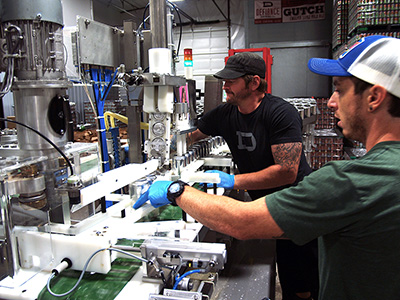
Paste Magazine recently released its top 50 most underrated craft breweries in the U.S. and Hays’ own Defiance brewing made the list as the entry for Kansas.
To find out more about why they were selected, or to see the entire list of underrated craft breweries across the country, visit pastemagazine.com.
Every family has a story — the trick is finding it.
To aid in that search the Kansas Council of Genealogical Societies, in conjunction with the Ellis County Historical Society, 100 W. Seventh St., will host a genealogy conference at 8 a.m. Saturday, June 11, in the Whiskey Creek Wood Fire Grill Conference Center, 3203 Vine.
“It’s an annual conference that the Kansas Council of Genealogical Societies holds every year,” said Lee Dobratz, ECHS director. “It’s for anybody that’s interested in researching their family.”
The ECHS serves as a local contact for the genealogical society, helping spread information about the yearly event.
This year the conference will feature keynote speaker Annette Burke Lyttle, owner of Heritage Detective LLC, who has worked as a full-time genealogist since 2012.
While the official conference begins on Saturday, events have been planned for Friday as well, to give participants a taste of Hays history.
Friday’s events kick off at noon at Old Fort Hays, 1472 Hwy 183 Alt., followed by a presentation and tour at Fort Hays State University’s Forsyth Library at 2 p.m., a tour of the ECHS museum and archives at 3:30 p.m., dinner at Gella’s Diner, 117E. 11th St. at 5:30 p.m. and a narrated tour through Mt. Allen Cemetery at 7 p.m.
Each of the Friday’s events require admission to be paid at the corresponding locations and dinner is “on your own.”
Four sessions are planned for Saturday, including social history and why should a genealogist care; a path to your next research steps; prospecting for family history in unexpected places; and turn family history facts into stories you can share.
A mini-session covering the use of vintage cookbooks for geological history is also planned.
While the conference will have a research focus, Dobratz said the event is open to anyone interested in genealogy.
“Even if you’re not interested in learning more about your family, if you’re interested in learning about history this will help provide some skills and ideas on how to go about that,” she said. “It’s really just a weekend of history and research and commiserating with other people who enjoy research.”
For more on the event or to register for the conference, visit the KCGS conference page by clicking here.
Funding requests from outside groups presented Thursday will be brought back to the Hays city commission during the 2017 budget process later this summer.
By BECKY KISER Hays Post
Representatives of seven non-profit agencies presented their requests for funding from the city of Hays in 2017 during Thursday night’s city commission work session.
The local groups provide social services, economic development and quality of life to Hays residents.
Ellis County Coalition for Economic Development–$87,550
Fort Hays State University–$125,000 ($25,000 increase from 2016)
Wild West Festival, Inc.–$9,550
CARE Council–Social Services/Special Alcohol Tax–$164,000
Downtown Hays Development Corporation–$53,655
Ellis County Historical Society–$23,000 ($12,000 increase from 2016)
Hays Arts Council, Inc.–$12,000 ($818 increase from 2016)
Together, they requested a total of $474,705 in 2017. Each of the past three years the city has funded outside agencies a total of $437,508.
Mayor Eber Phelps reiterated the presentations were for informational purposes only and the requests will be reviewed within the 2017 budget process later this summer.
A $3.3 million cut to the Kansas Children’s Cabinet budget means grant reductions across the state. The Coffeyville school district faces a $140,000 cut just before it intends to open four new classrooms to offer all-day preschool to more children. COURTESY COFFEYVILLE USD 445
Children’s programs across the state are scrambling to deal with grant cuts that take effect at the start of July.
The cuts come from a $3.3 million reduction in funding for the Kansas Children’s Cabinet, which uses the state’s share of the 1998 master settlement agreement with large tobacco companies to provide grants through the Children’s Initiatives Fund for programs for children and families.
The timing for a budget cut to early childhood programs couldn’t be much worse, Coffeyville USD 445 Superintendent Craig Correll said.
The district faces a $140,000 cut just before it intends to open new rooms in its preschool building to offer all-day preschool to more children, Correll said. The challenge is even greater because the district has only about one month to reduce expenses or find additional revenue, he said.
The Coffeyville school district will have to make cuts by July 1, when the new fiscal year starts, Correll said. It isn’t clear if the district will be able to hire additional teachers to staff the new classrooms, though cutting teachers would be a “last resort,” he said.
“I think (the cut) will be devastating to our kiddos and our community,” he said. The preschool program “was a step to moving our kids out of poverty. It’s a major step backward.”
Some programs exempt
The $3.3 million cut comes out to about 8 percent of the Children’s Cabinet budget for fiscal year 2017 of $42 million, but it won’t be divided equally among the more than 100 programs receiving funds from the tobacco settlement.
Janice Smith, executive director of the Children’s Cabinet, said the Brownback administration told her that programs using the money as a match for federal dollars would be exempt. If the matching funds were cut, those programs also would lose at least some of their federal funds.
The upshot is that instead of all programs absorbing an 8 percent cut, some are held harmless, while others now face a 14 percent cut.
The Children’s Cabinet funds more than 100 programs dealing with early childhood, Smith said, and it intends to spread the cuts equally among groups that aren’t exempt.
“Traditionally, the cabinet, in the name of fairness, has made the same reduction” for all funded organizations, she said.
Annie McKay, a member of the Children’s Cabinet and incoming president and CEO of Kansas Action for Children, said she found the decision to exempt some organizations inconsistent with the administration’s refusal to take federal money for other programs, such as Medicaid expansion.
“That’s not about maximizing what’s best for families and kids, it’s about maximizing federal drawdown,” she said.
Eileen Hawley, a spokesperson for Brownback’s office, said the administration’s policies have benefited low-income families.
“Governor Brownback continues to invest in helping families move from poverty to prosperity through a wide range of programs including the Reading Roadmap, child abuse prevention, technical education and Jobs for America’s Graduates,” she said. “In addition, fiscal year 2017 funding for the Early Childhood Block Grant is approximately $6 million more than the previous year.”
The short time frame will make it particularly difficult for affected nonprofits, McKay said.
“Those programs have 30 days to figure out where that’s going to come from before the next fiscal year,” she said. “That’s going to have an immediate impact, and these are programs serving some of Kansas’ most vulnerable kids.”
‘Not the way you want to do it’
Officials with several grantees said they weren’t sure how they would handle the cuts.
Cornelia Stevens, executive director of TOP Early Learning Centers in Wichita, said the Children’s Cabinet grant helps pay for services like mental health care for children and parenting classes for their families. About 600 children used the learning centers this year, she said, but it isn’t yet clear how many children they may be able to serve after the cuts.
“We just found out the news,” she said. “I do know that it means fewer children are going to receive services.”
Miriam Krehbiel, president and CEO of the United Way of Greater Topeka, said it partners with multiple organizations that provide children’s mental health, services for kids with developmental delays and quality child care options. The United Way won’t dictate which organizations take cuts but will bring them together to discuss who can absorb them with the least effect on children, she said.
They aren’t likely to find another grant or private donors to replace the Children’s Cabinet funds by the end of June, Krehbiel said.
A “14 percent (cut) on a $2.1 million grant is a lot of money,” she said. “It’s not like we can turn around and just find 200-some thousand dollars lying around.”
Pat Hanrahan, president and CEO of the United Way of the Plains in Wichita, said it plans to take a similar approach to making $97,000 in cuts with its seven agency partners. The United Way has faced budget cuts before, but making additional reductions is a concern, particularly in a community that wants to increase the number of children growing up to be skilled workers, he said.
“When you’ve got multiple programs that are affecting people and you have to do it (make cuts) in a short time, that’s not the way you want to do it,” he said.
Rich Minder, collaborative projects coordinator for the Success by 6 Coalition of Douglas County, said the cuts put organizations in the difficult position of having to balance meeting low-income families’ immediate needs and making long-term investments, such as improving the quality of available child care, Minder said.
The task has become even more difficult because the state has tightened access to programs like cash assistance and subsidized child care, leaving low-income families with fewer options, he said.
“The state of Kansas’ investment in families with young children has dwindled to almost nothing in the general fund,” he said. “It’s looking pretty grim here.”
Megan Hart is a reporter for KHI News Service in Topeka, a partner in the Heartland Health Monitor team. You can reach her on Twitter @meganhartMC
Since World War II, America has achieved such remarkable accomplishments that it may be the stuff of legends when world history is written 1,000 years from now.
Yet at the moment we are trapped in both antics and seemingly serious business that suggest a national collective mental illness. If this was one individual, we’d notice that personality, the ability to relate socially, reasoning, and rational decision making were negatively affected.
Dr. Mark Peterson
An individual could be treated, but can a nation experience such a disruption and recover? As a society we have retained our aggressive abilities, and our appetites for the “seven deadly sins.” What’s more alarming is the apparent ability of a good many of those who claim control over their higher mental functions (our leaders) to pander to and reinforce the baser attitudes and behaviors of those who seem to be most seriously affected by this mental disease.
Consider a few illustrations. The first example has to be the current condition of the Republican Party. Once the party of Lincoln, it focused on ending slavery, overcoming racial injustice, both subsidizing and regulating industry, and supporting universal public elementary, secondary and broadly available higher education with ample public resources. While it was never left wing or populist in its big tent approach to building an electoral majority, the GOP found ways to address popular needs while defending the public purse and working to hold down the cost of government.
The GOP always had its elements that were libertarian, nativist, anti-Keynesian, worried about subversive conspiracies or something else that would send us and the republic to socialist perdition. The moderate core, however, constituted the base of Republican power and fiscal responsibility. The first signs of center decay and fringe dominance came with Barry Goldwater’s nomination.
Then came the election of Ronald Reagan, Mr. “Morning in America.” The post-Reagan Republican history is well-known. Now we watch as the Republican Party further devolves into Donald the Bombastic and the Trumpkins. What is scarier still is to watch the parade of seemingly rational, respectable national Republican figures migrate from regarding Trump as “a cancer on conservatism,” to “I suspect I’m going to be helping him in a myriad ways.”
On the Democratic side multitudes of adult Americans endorse ideas of fantastic redistributions of other peoples’ money occurring with ease. This miraculous condition is to become real with the passage of new laws in Congress (or perhaps just the signing of presidential orders), with no effective objection in the federal court system. Instantly upon the inauguration of Bernie Sanders, free high-quality college educations; universal, no-cost-to-the-consumer healthcare for all; and a boundless supply of well-paying middle-class jobs for people who presently do not fit in our ‘post-industrial’ economy will materialize and quickly revolutionize America.
Nowhere in this fever-dream of egalitarianism is there a shred of connection with the realities of pluralist politics. These fantasies easily rival a Great Wall of the Southern Border paid for by Mexico.
Here in Kansas we’ve abandoned rational discussion about improving our state’s economy and reinstituting an effective, fair system of taxation for bluster over critical policy issues like the relocation of Guantanamo detainees to Ft. Leavenworth, the accommodation of some Syrian refugees, and most recently whether the members of the juvenile LGBTQ community can use public locker and restrooms appropriate to their identities. Our state’s leaders appear to be capitalizing on the current public mental disorder. It could be kindness.
Realistically, can a society in such perilous mental disorder be expected to make wise choices about policies and who represents them? Let us all hope the disease has not advanced as far as events indicate it has.
Dr. Mark Peterson teaches political science at the college level in Topeka.
The Fort Hays State University Foundation has issued the following statement on the judgment issued Wednesday, June 1, on the lawsuit concerning the Earl O. Field estate:
When longtime donor and fan of Fort Hays State University, Earl O. Field, passed away in 2013, the FHSU Foundation was surprised to learn of the existence of a purported change to Mr. Field’s estate plan that dropped the nonprofit Fort Hays State University Foundation as Mr. Field’s primary beneficiary. This purported change was in the form of a letter, supposedly discovered after Mr. Field’s death, that gifted the largest portion of the estate to Wanda Oborny, part-time bookkeeper and caretaker for the widower Field.
The mission of the Fort Hays State University Foundation is to support and advance the university by actively seeking monetary gifts and bequests and to receive and administer those contributions in a prudent manner in accordance with donors’ wishes. Consistent with that mission, the FHSU Foundation felt that, in this particular case, Earl Field’s estate plan and intentions were not as Ms. Oborny claimed. The FHSU Foundation contested the purported change to Mr. Field’s estate plan and letter sponsored by Ms. Oborny.
“On June 1, 2016, the Ellis County District Court Kansas Senior Judge adopted the Findings of Facts and Conclusions of Law proposed by the Fort Hays State University Foundation,” said Jeff Peier, Chair of the Fort Hays State University Foundation Board of Trustees. “We are pleased with the findings of the Court and believe that this ruling validates the Foundation’s ongoing efforts to protect the integrity of our donors’ wishes.”
Turning what could have been a tragedy into an opportunity Bling – located in Big Creek Crossing – reopened Monday after completing a full remodel of the location that has been closed since the store suffered water damage from a section of roof that collapsed last month in neighboring Payless Shoe Source.
While others may have used the incident as an excuse to leave the shopping center or Hays altogether, Bling decided instead to use the opportunity to remodel the location.
“Since we had all of that going on we decided, since we have to do it, we might as well change a few things,” said Sammy Grollmes, district manager.
Damage to the store included a total loss of merchandise and damage to walls and the ceiling.
“With everything that happened, it was devastating,” Grollmes said, but they wanted to come back with as much positivity as possible, utilizing a color scheme and fixtures that match other locations within the small chain.
“Now with our new look, it is the same color scheme that we have in our new Wichita location and also our Manhattan store,” she said. “We had the opportunity to unify our look for this space.”
While completely overhauling the 900 square foot space was a lot of hard work, she said they are pleased with the outcome.
“We’re really really happy with the new look. It brightens everything up and opens up the space,” Grollmes said.
After being in Hays for five years, moving the location was not something the chain of six stores wanted to do.
“The thing about the mall in Hays is traffic wise, this is the most visible and the best location for us,” Grollmes said. “I know the mall has its controversial issues, but what is nice is what we get to see in this space and we’re right here in the center court, I believe that we get to see and help more people in this location. That’s why we came back.”
The chain has stores in Garden City, Salina, Manhattan, Wichita and their original location in Scott City, expanding quickly after opening in 2008.
“I believe we are the largest women’s boutique clothing company in the state that is privately owned,” Grollmes said.
The size of the chain meant tackling the remodel was a little more difficult than the larger retailers that have corporate support, but the chain’s and BCC insurance covered the cost of the damage.
It also allowed the staff to continue being paid during the down time.
“We want to be able to take care of the people that work for us. That was really important and we were happy we had the stuff in place to do that,” Grollmes said.
“It’s a lot of money to come back from something like that.”
After the closure, Grollmes said their number one concern was the safety of the space, but were informed there are no current safety concerns with the roof, but negativity towards the incident was disheartening.
“It was really hard to read all the comments on the articles after this happened.”
But now they are ready to once again serve the people of Hays.
“We’re happy to be back, and be able to serve our customers,” Grollmes said.
A grand-reopening celebration is planned for Saturday, including a contest for passes to Kansas City Schlitterbahn Water Park. For details, or to find out more about Bling follow them on facebook or instagram.
 By JAMES BELL





 After months of planning and campaigning, the $94 million Hays USD 489 bond issue will be decided by voters Tuesday.


 Paste Magazine recently released its top 50 most underrated craft breweries in the U.S. and Hays’ own Defiance brewing made the list as the entry for Kansas.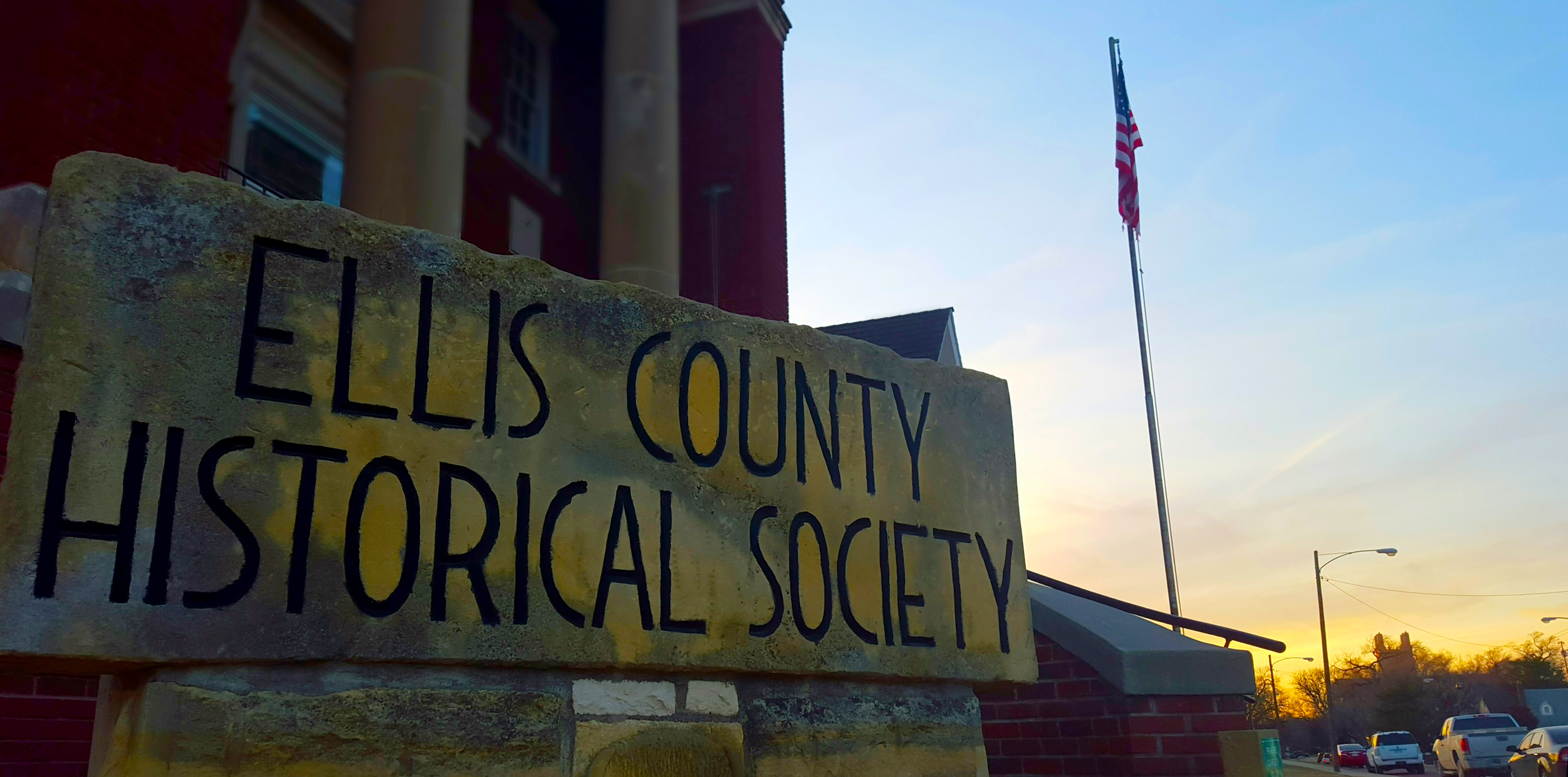
 Every family has a story — the trick is finding it.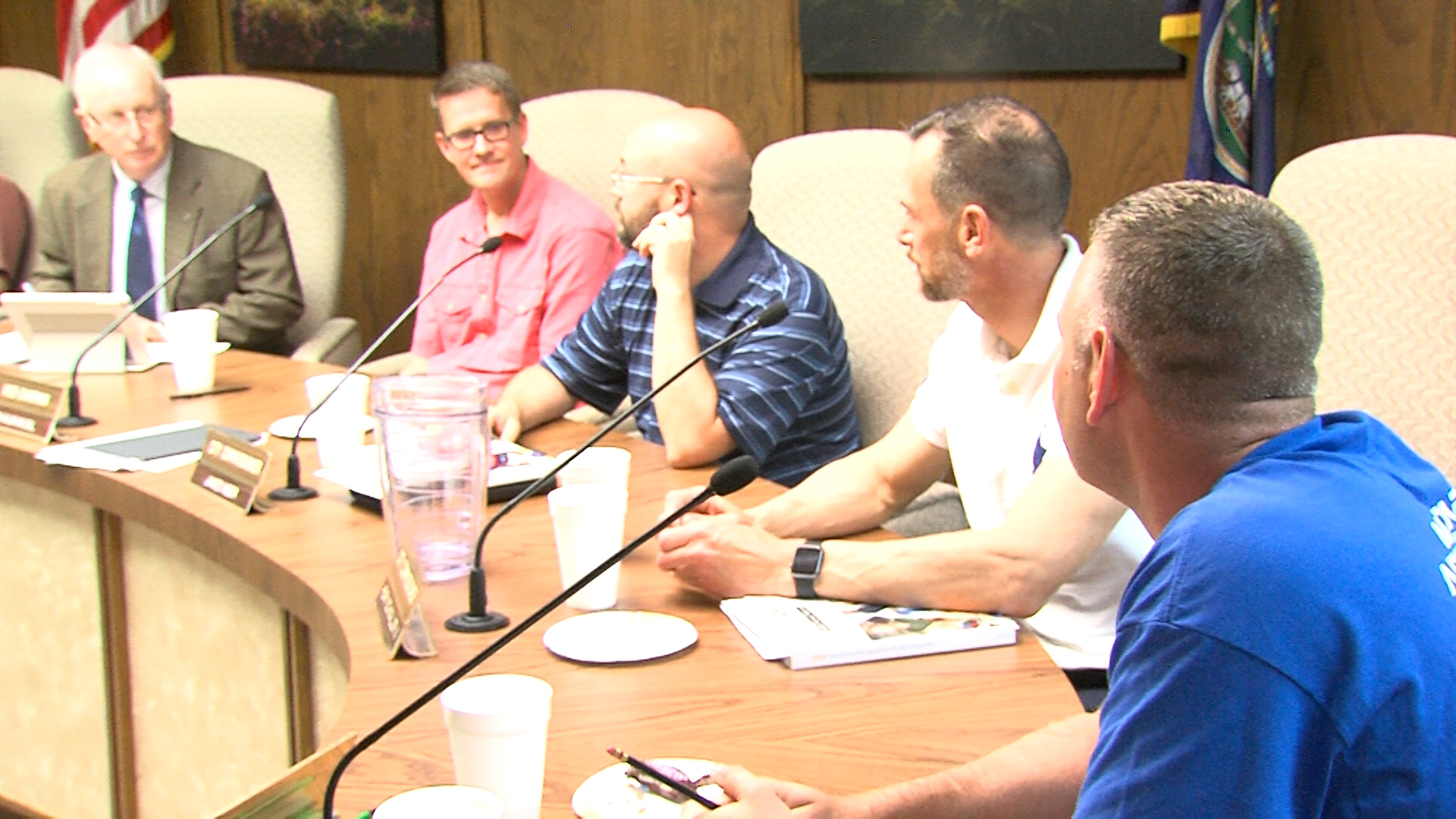






 FHSU University Relations and Marketing