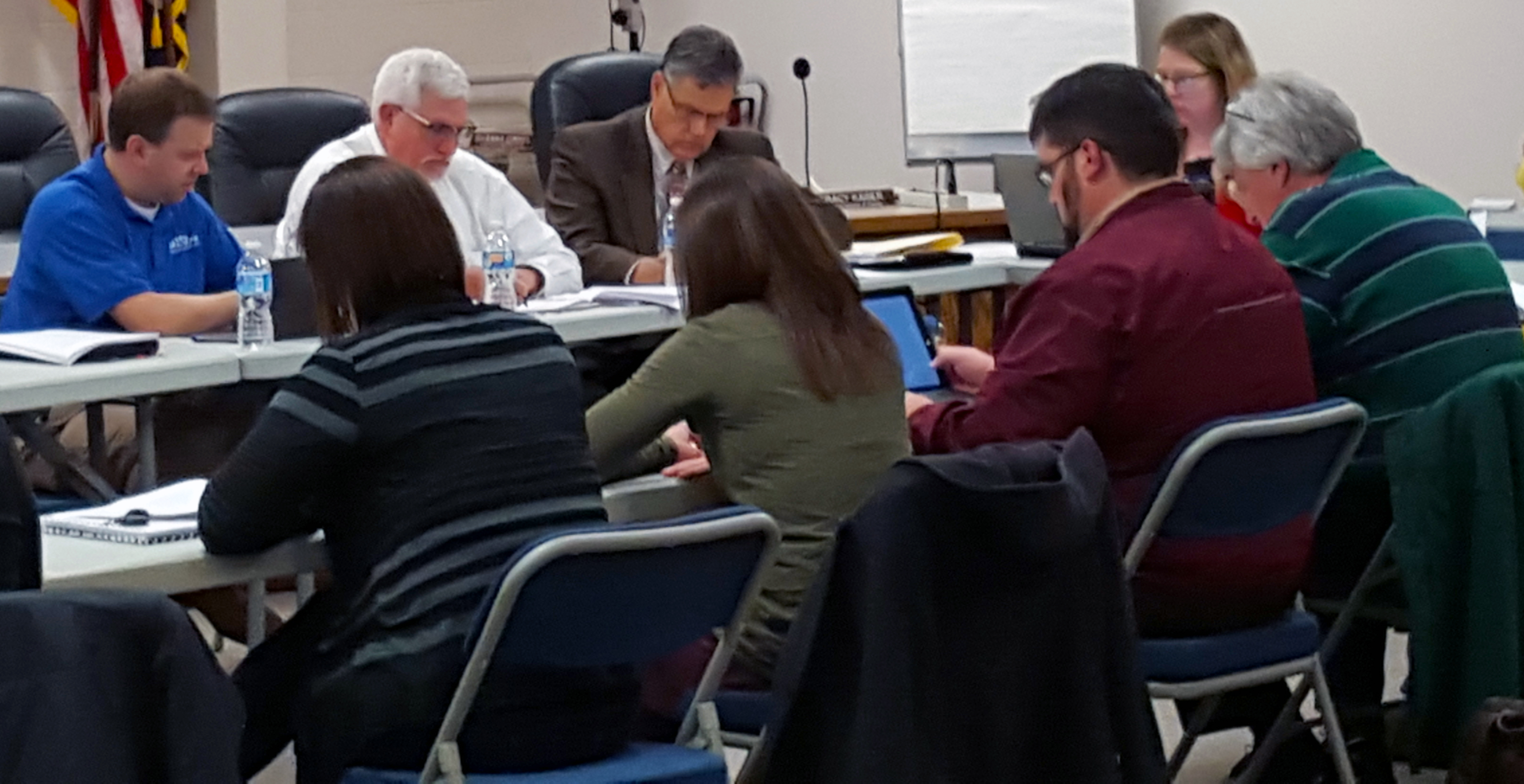
A group of Ellis County officials, including members of the county commission, got a chance to check out the current conditions of various roads and bridges throughout Ellis County Monday as part of a special commission meeting.
The group, led by interim Public Works Director Curt Hoffman got a tour some of the blacktop roads in the county and looked at approximately 12 different roads and/or bridges. Some are currently under construction, others need repair and may be candidates for future construction.
Among some of the roads and bridges the group reviewed Monday was the Highway 40 project, the bridge North of Ellis on 125th Avenue and Feedlot Road and the 230th and 55th Street Intersection.
Commission Chair Dean Haselhorst said there are a number of bridges throughout Ellis County that are in need of repair because they were build many decades ago.
“There are a lot of bridges in the county that were built in the ‘30’s that we’re going to have to look at ways to upgrade them,” Haselhorst said “They have served their live and now we are going to look at repair.”
He added that some of the bridges may need deck repairs, which he estimated will cost a couple of hundreds of thousands of dollars per bridge. The county may be forced to close others that are beyond repair. The have also used an epoxy repair, which is a cheaper option. Haselhorst estimated the epoxy repair on most of the bridges would cost around $100,000 or less and would last between 10 and 15 years.
Many blacktop roads in the county are in similar shape, according to Haselhorst. He said in they may look into shortening the blacktop surface and turn them back into a rock/sand surface.
Haselhorst said they are looking for different funding sources for repairing some of the bridges. He also said they will have to set priorities for the projects when the commission sets the county budget. But they will get with the engineers and the public works department before making any changes.
Two of the Apollo 13 astronauts and the Mission Control flight director who helped return them safely to Earth will speak about the ill-fated moon mission at 7:30 p.m. Wednesday, April 13, in the FHSU Beach/Schmidt Performing Arts Center.
The event is part of the Fort Hays State University Sebelius Lecture Series. The lecture series is named for one of FHSU’s most notable alumni, former U.S. Rep. Keith Sebelius.
James Lovell and Fred Haise were captain and lunar module pilot of Apollo 13 when it was launched on April 11, 1970. This was intended to be the third NASA mission to land men on the moon. Two days into the flight, during a routine maneuver, an oxygen tank on the service module exploded, crippling the spacecraft. Apollo 13 and its three-man crew were some 200,000 miles from Earth.
Gene Krantz, back at Mission Control in Houston, worked with the crew and a team of NASA engineers and astronauts to solve a series of critical problems on the craft, including limited power, loss of cabin heat, shortage of clean water and the need to repair the carbon dioxide removal system. Their desperate efforts were successful: Apollo 13 and crew returned safely to Earth on April 17.
A generation around the world watched the drama unfold on their televisions in 1970.
Another generation learned the story in the Ron Howard film, “Apollo 13,” that was released in 1995. In the film Lovell was portrayed by Tom Hanks, Haise by Bill Paxton and Kranz by Ed Harris. The film earned a Best Picture Oscar, and Harris won Best Supporting Actor. Apollo 13 remains popular on home video.
Lovell, Haise and Kranz will recount their experiences, explore the lessons of Apollo 13 and discuss the future of NASA and the U.S. space program during their visit to Fort Hays State.
Tickets are now available for purchase online at www.fhsu.edu/sebelius and at the Student Service Center in the FHSU Memorial Union.
Approximately 200 patrons help sponsor the Sebelius Lecture Series each year. Patrons donate $150 per person. These donations are tax deductible, less benefits received. Patrons will receive an exclusive invitation to a reception with the speaker on the day of the lecture, exclusive tickets to sit in rows A-C in the Beach/Schmidt Performing Arts Center for the lecture, and their names will be prominently placed in the event program. To become a Patron, visit www.fhsu.edu/sebelius and complete a ticket order form as a Patron.
About James Lovell
Lovell was born in Cleveland on March 25, 1928, and is a graduate of the U.S. Naval Academy, the University of Southern California’s Aviation Safety School and the Harvard Business School’s Advanced Management Program. He was a Navy jet pilot before being selected to be a NASA astronaut in 1962.
He made four space flights with NASA: Gemini 6, Gemini 7, Gemini 12, Apollo 8 and Apollo 13, logging 713 flight hours in space.
He retired from the Navy and NASA in 1973. In civilian life he was president of Bay-Houston Towing, Fisk Telephone Systems and executive vice president of the Centel Corp.
In 1994, Lovell and Jeff Kluger wrote “Lost Moon, the story of the Apollo 13 mission.” The following year the film version of the book, Apollo 13, was released. Lovell has also appeared in several segments of Tom Hanks’ From the Earth to the Moon, the HBO documentary miniseries that aired in the spring of 1998.
Today, he is president of Lovell Communications, a business devoted to disseminating information about the U.S. space program.
Lovell has earned numerous honors, including the Presidential Medal of Freedom, two Navy Distinguished Flying Crosses, NASA Distinguished and Exceptional Service Medals and the Congressional Space Medal of Honor.
About Fred Haise
Haise was born Nov. 14, 1933, in Biloxi, Mississippi. He graduated with honors in aeronautical engineering from the University of Oklahoma in 1959 and served as a U.S. Marine Corps fighter pilot, later flying with the Ohio Air National Guard.
Haise began his 20-year NASA career in 1966, serving on the backup crew for the Apollo 8 and 11 missions before being chosen as lunar module pilot for Apollo 13.
The Apollo 13 mission was not Haise’s only close brush with death. In 1973 he was involved in a crash while flying a plane during the filming of the movie Tora! Tora! Tora and was burned over 65 percent of his body. He went through 14 months of recovery and rehabilitation before he was able to fly again, but in 1977 he was chosen to fly five test missions as commander of the Space Shuttle Enterprise.
After leaving NASA Haise served as president of Northrop Grumman Technical Services, a wholly owned subsidiary company of The Northrop Grumman Corp.
His honors include the Presidential Medal of Freedom, the NASA Distinguished Service Medal, the NASA Exceptional Service and Special Achievement Awards, and induction into the Astronaut Hall of Fame.
About Gene Kranz
Kranz was born on Aug. 17, 1933, in Toledo, Ohio, and received his B.S. degree in aeronautical engineering from Parks College of Saint Louis University in 1954. He was commissioned in the U.S. Air Force in 1954 and flew high-performance jet fighters.
Kranz joined NASA in 1960 as assistant flight director for Project Mercury. He assumed flight director duties for all Project Gemini missions and continued his duties as flight director for the Apollo program, including the Apollo 11 lunar landing.
During the Apollo 13 crisis Kranz led the “Tiger Team” that successfully guided the crippled spacecraft back to Earth.
Kranz has described working on the American space program as an ultimate frontier experience: “We were working at the ragged edge of all knowledge, all technology and all experience.”
Kranz retired from NASA in March 1994. He wrote “Failure Is Not An Option” (2000), which chronicled his NASA career. The best-seller was the basis for the History Channel documentary Mission Control.
Kranz has been awarded the Presidential Medal of Freedom, NASA’s Ambassador of Exploration Award, NASA’s Distinguished Service and Outstanding Leadership Medals and was inducted into the International Space Hall of Fame.
About Keith Sebelius
Sebelius graduated from FHSU in 1941. While at FHSU, he was one of the original Lewis Field Pioneers, made up of young men who lived on campus while working a variety of jobs to pay their tuition, room and board.
Sebelius was born in Norton. He earned a law degree and returned to Norton to practice law. He served on the city council and as mayor. He also served in the Kansas Senate. He became active in the Republican Party and ran for the U.S. House seat previously held by Bob Dole in 1968. He served for 12 years and didn’t seek re-election in 1980. He died at age 66 and is buried in Norton.
His son, Gary Sebelius, is a federal magistrate judge and the husband of Kathleen Sebelius, a former Democratic Kansas governor and former U.S. secretary of Health and Human Services. His son, R. Douglas Sebelius, is a Norton County attorney.
For more information about the Sebelius Lecture Series, call Vincent Bowhay at 785-628-4664 or send an email to [email protected].
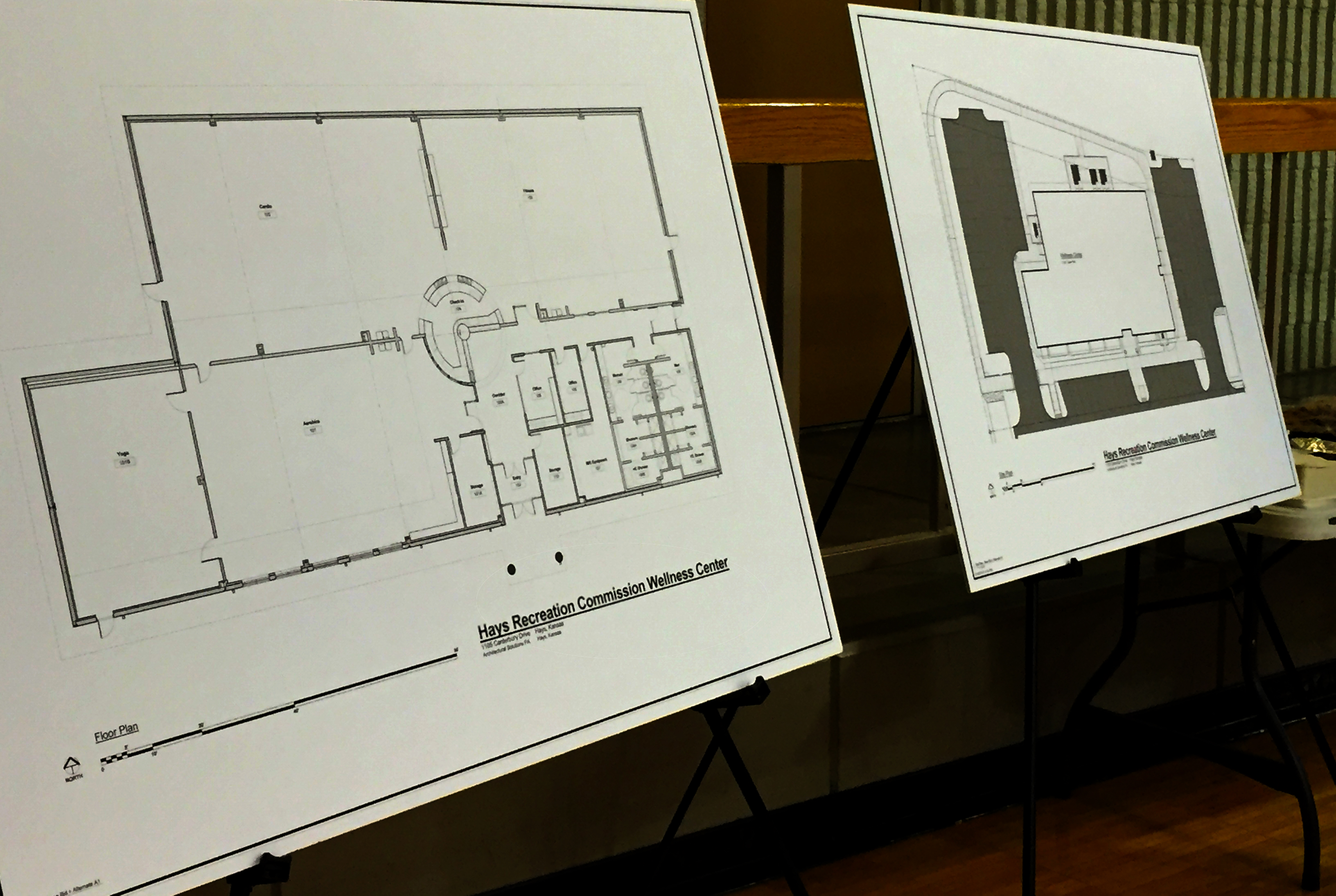
Officials prepare to dig in at the Hays Recreation Commission Wellness Center groundbreaking ceremony Wednesday.
It has been in the works for years and now the groundbreaking ceremony last Wednesday at the Hays Recreation Commission Wellness Center marks the beginning of a major facilities expansion.
“Back in 2012-2103 we started looking into a project,” said Roger Bixenman, Hays Recreation Commission superintendent.
Originally the project would have added a pair of multipurpose rooms to the existing structure, but a standalone building was decided as a better option.
“It’s an expansion of our current facility and our current programs,” Bixenman said.
The new building will expand the center from 3,600 square feet to 12,600 and will add a separate cardio and weight area, a new check-in area and add dedicated aerobics and yoga rooms.
“We looked at it as a quality of life issue,” Bixenman said, as the project will enhance wellness and leisure areas in the facility.
The new building will be constructed north of the existing building on land was bought by the Hays Recreation Center Foundation in 2001, and was gifted to the Commission in 2014.
“Because the school district levees our taxes, we had to get approval to enter into a lease agreement,” Bixenman said.
The Commission cannot mortgage property for a project like this, so they went to banks to finance the project, with the building acting as collateral during the 10 year lease.
Payments on the building will be made from operating and programing funds.
The lease total is $1.5 million, with the entire project carrying a price tag of $2.1 million.
Despite the cost, Bixenman said he hopes it will bring in more people to the facility.
“From zero to 99 we try to get people involved,” he said. “We want to get people in the gym, get them healthy, develop that healthy lifestyle, so this is one way to hopefully enhance that.”
“We’re glad it is finally here and look forward to the construction in the next 330 days.”
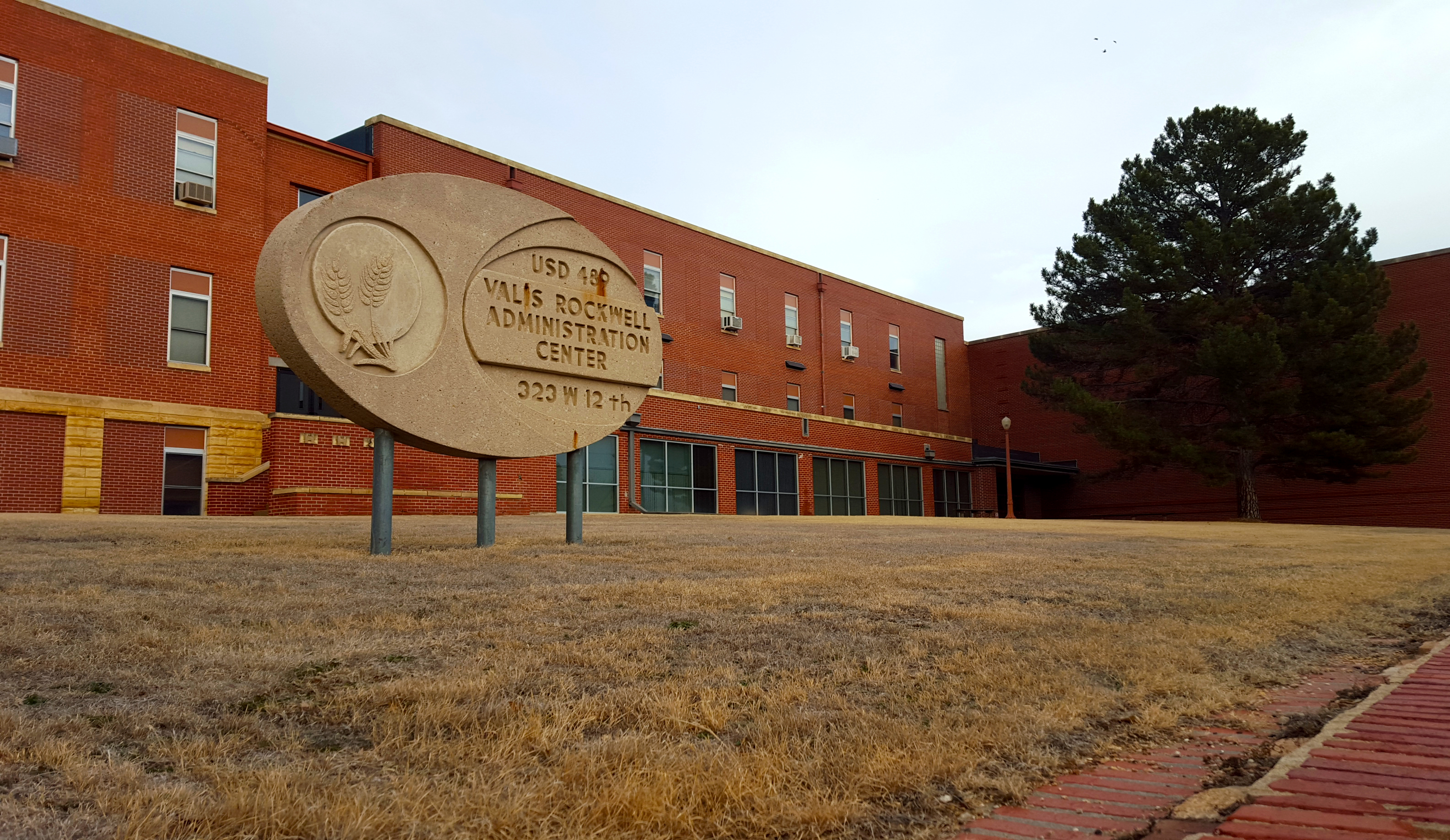
It’s decision time for the USD 489 Board of Education as the group is set to vote on a resolution calling for a bond issue election at tonight’s Board meeting set for 6:30 p.m. in the Rockwell Administration Center, 323 W. 12th St.
That resolution, if adopted, would set the $94 bond issue election for June 7.
The Board pushed back the original timeline of an election in April or May in order to collect signatures that would allow for a sales tax question to be put on the ballot at the same time as the bond question.
If passed by voters a half-cent sales tax in Hays, would significantly reduced the amount of property taxes needed to fund the bond issue.
Board members have frequently said that a bond issue election with a sales tax question included would likely be more successful.
The Commission, however, has the authority to schedule that election and will decide on a timetable at their regular meeting Thursday.
The Board hopes the sales tax question be presented with the bond issue, but the City Commission could potentially push the tax question onto ballots next year.
During tonight’s meeting the Board will also vote to approve summer school fees for the Summer 2016 term.
Anita Scheve, director of The Learning Center, spoke with the Board at their work-session two weeks ago about the best pricing structure for summer school, recommending students that qualify for the free lunch program be able to attend summer school without cost and a reduced tuition cost for reduced cost lunch program students.
Sixty-three percent of summer school students qualify for free lunch and frequently struggle to pay to tuition for the courses according to Scheve.
Further, she said, grades for summer school are left off of students’ transcripts until payment is made, causing issues for students that transfer or graduate.
The full pay schedule would require students that qualify for the reduced lunch program to pay $50 per half credit, $100 per half credit for USD 489 students and $200 for out-of-district students.
The cost to the district for summer school dropped significantly when The Learning Center took over the summer school program, so Scheve argues that the district could easily absorb the small cost that would allow for a staggered pay schedule.
The Board will also vote on the ratification of the HNEA contract for the 2015-2016 school year.
The district and Hays National Education Association negotiators successfully completed mediation after the Board declared impasse during contract negotiations. The contract agreed upon by both groups during mediation has already been approved by Hays teachers.
Tonight’s meeting will be streamed live on Hays Post and on Eagle Channel 14 by the USD 489 News team.
The Ellis County Commission will consider the annual maintenance contract with Computer Information Concepts at Monday night’s commission meeting.
CIC provides the county with financial software and has done so since 2013. With the annual agreement, CIC also hosts remote backups of county data and performs maintenance on the county’s system.
The commission will also discuss the reduction of a buffer zone around the north boundary of the landfill. The county will request the zone change to 50 feet from 150 feet.
Monday evening’s county commission meeting starts at 5 p.m. with the Public Building Commission at the County Administrative building.
The commission will hold a special meeting at 8:30 a.m. Monday to take a tour of roads in Ellis County. Interim Public Works Director Curt Hoffman said they will spend a portion of the day touring some of the blacktop roads and looking at bridges throughout the county.
Hoffman will present a summation of the tour at Monday’s regular meeting.
TOPEKA, Kan. (AP) — Republican lawmakers argue they may never be able to meet the Kansas Supreme Court’s demands for fairness in education funding.
They worry about creating yearly budget chaos as they constantly reshuffle dollars among local school districts.
The Senate could debate a bill this week that would redistribute a small part of the state’s annual aid to its 286 school districts to help the poorer ones at the expense of wealthier ones. It’s a response to a Supreme Court ruling last month that Kansas has shorted poor districts and schools must shut down in July unless lawmakers fix the problem.
GOP lawmakers said last week that they found it galling that the court rejected key parts of a law they enacted last year to make education funding more predictable year-to-year.
Sweet Southern Heat Brisket by Thomas Zimmerman, Hays
UPDATE: Round two of voting has started in the Traeger Meat Madness 2016 Hostmasters Bracket Grilling Tournament. At 11 a.m. Saturday Hays native Thomas Zimmerman is trailing 118-85 in the second round.
CVB
Hays native Thomas Zimmerman has more than just March Madness on his mind this month.
His “Sweet Southern Heat Brisket” recipe has been chosen as one of 64 recipes in the Traeger Meat Madness 2016 Hostmasters Bracket Grilling Tournament. This competition is similar to the bracket style format used by basketball leagues for March Madness.
He is in the Hostmasters Bracket, West Division, third set of brackets, pictured with his pet Weimaraner. You can vote daily for his Sweet Southern Heat Brisket. Zimmerman even shares his recipe!
The first-round voting ends Friday, March 18.
Everyone is encouraged to vote for Zimmerman each day on every device you own. Let’s help one of our native sons win this Traeger contest.
Rep. Ken Rahjes, Sen. Ralph Ostmeyer and Rep. Sue Boldra will speak at the HACC Legislative Coffee March 19.
By BECKY KISER Hays Post
The Hays Area Chamber of Commerce will host its second Legislative Coffee tomorrow, Sat. March 19, at 8:30 a.m. in the Ellis County Administration Center, 718 Main.
Sen. Ralph Ostmeyer, R-Grinnell, Rep. Sue Boldra, R-Hays and Rep. Ken Rahjes, R-Agra, are scheduled to attend and visit with constituents.
Today, March 18, is the final day during the 2016 legislative session for committees to meet. All bills need to be passed out by Friday in order to be under consideration next week.
When legislators return to Topeka Monday, they plan to be on the floor all day to deliberate and debate bills. Tuesday through Friday, legislators will be waiting on the House and Senate conference committees to discuss and consider bills, and then send those back to the House and Senate members for a vote.
Adjournment is scheduled for next Friday, March 25, with a return for the Veto Session Wednesday, April 27.
Although fundraising fell 15 percent short , UWEC Executive Director Sherrie Dryden announced Wednesday that full allocations will be made to partner agencies for 2015.
UWEC
The United Way of Ellis County formally ended the 2015 “Uniting Our Community” campaign on January 31, 2016.
Although the campaign ended at 85%, raising $415,000 of the set goal of $490,000, the UWEC Board of Directors understands the role of the economy in this year’s shortfall. The UWEC Board of Directors was able to complete a reallocation of UWEC reserves to bring the campaign goal to 100%. This allows the UWEC Partner Agencies to receive their full allocation as recommended through the CARE Council process.
A new opportunity for the UWEC Partner Agencies became available for this year when the UWEC was awarded a $50,000 “in-kind” grant through the Kansas Leadership Center. According to Sherry Dryden, UWEC Executive Director, “Unfortunately when agencies have to make cuts to their budgets, training is one of the first items to be cut. This is one way UWEC can assist the agencies ensuring their staff can still have training opportunities to promote development. We will continue to explore other opportunities for the UWEC Partner Agencies – that is what being a partner is all about – supporting each other.”
Even though the UWEC active campaign season begins in August, 2016, with the Pacesetter companies beginning in June, UWEC does take donations throughout the year. If you would like to give, please mail donations or stop by the offices at 205 E. 7th Street, Suite 106. Donations can also be processed through the “Donate” button at our website www.liveunited.us.
Hays teachers voted Friday to accept the contract agreed upon during mediation. USD 489 board members will vote on the contract March 21.
By James Bell Hays Post
Hays teachers voted Friday to accept the contract agreed upon during mediation last week giving USD 489 teachers six months of vertical pay-scale movement. It was the third vote during this year’s negotiations.
The final vote was 155 to 54.
“We weren’t asking for more money. We’re just asking people get to move into those steps,” said Kim Schneweis, Hays National Education Association Bargaining Committee(HNEA) co-chairwoman.
The vertical pay scale movement had been a contentious point during negotiations, as teachers cited the lack of movement during the first two votes as a primary reason to vote against the contract.
During mediation, the Board of Education ultimately offered six months of movement to teachers.
The vertical movement will be paid in June, but only if the Kansas legislature does not make any further cuts to K-12 education state funding.
Horizontal movement, however– agreed upon during negotiations– would remain in place even if cuts occur.
USD 489 has 12 steps of vertical movement in its pay schedule, based on years of service to the district. Horizontal movement rewards teachers for professional development, including additional college classes taken by a teacher.
A vote was held in each of the district buildings on Friday and while it passed, some teachers still had concerns with the mediated agreement.
Early feedback, Schneweis said, found teachers were unhappy with changes to early retirement benefits.
“That was an expectation and promise and it should have been honored,” she said. “We agreed upon the phase-out and that should have been followed through.”
But the lack of movement was also very upsetting to teachers, Schneweis said.
Even with the agreement, state cuts could derail the movement.
Kansas officials have made comments that there would be no further cuts to education, but recent cuts to higher ed make Schneweis feel that funding from the state is unpredictable.
“I think that is all in the air at this point,” Schneweis said.
Two state legislators suggested Tuesday that the State Board of Education should be in charge of school funding, rather than the legislature, following last month’s ruling by the Kansas Supreme Court that school funding across the state is still unconstitutional.
The Board had been hesitant to offer the movement during negotiations in part because of the cuts the state has made to education during the last few years. Funding at least some movement was a way to show the Board wanted to fund the movement, even if money to do so was not available until the end of the school year.
“We’re trying to show you we are serious in giving you this money,” said Lance Bickle, Board president, during the mediation.
The HNEA had argued during negotiations that money from attrition should be able to fund the movement, but the administration disagreed.
A full step of vertical movement was expected to cost the district $115,764. Attrition was expected to save only $56,100.
“This is just a rotation that these younger people would get to move into these spots,” Schneweis said, adding that many teachers have already reached the top of the vertical scale and would not see movement.
The Board of Education is set to vote on the contract at their next Board meeting at 6:30 p.m. Monday, March 21, in the Toepfer Board Room in the Rockwell Administration Center, 323 W. 12th St.
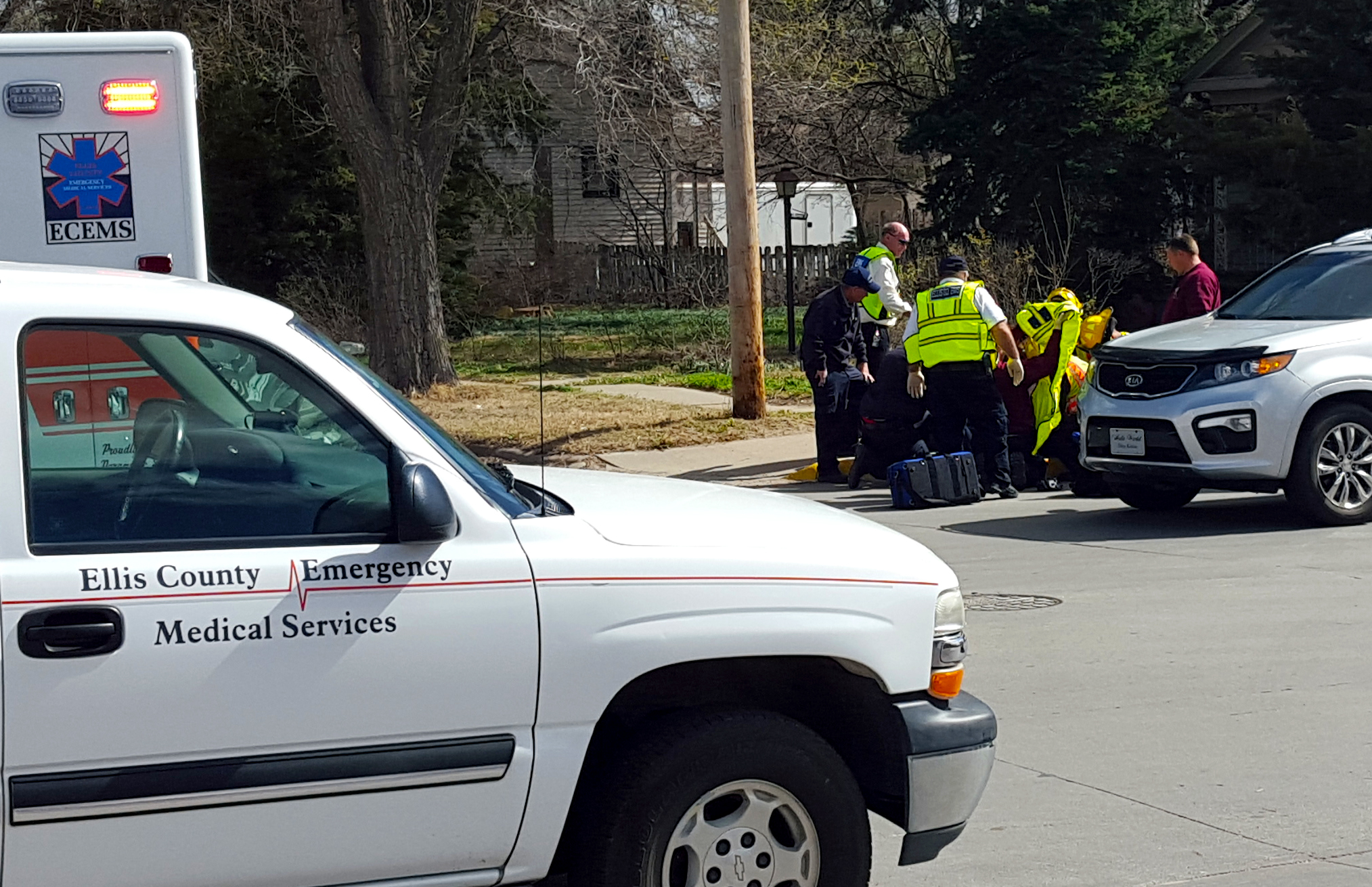
First responders help a juvenile woman who was hit by a vehicle on Main Street mid-afternoon Tuesday.
By JAMES BELL Hays Post
Main Street traffic between 15th and 17th Streets was briefly blocked Tuesday afternoon about 3:15 p.m. as the Hays Police Department and Emergency Medical Services responded to a “vehicle versus bicycle” injury accident.
A juvenile female riding a kick-scooter was struck by a vehicle while she was trying to cross Main at the 16th Street intersection.
Witnesses to the accident reported the girl failed to yield at the intersection before moving into the roadway.
Injuries sustained by the victim were not life-threatening, according to police on the scene. She was transported to Hays Medical Center.
Traffic was blocked for about 15 minutes as HPD investigated.
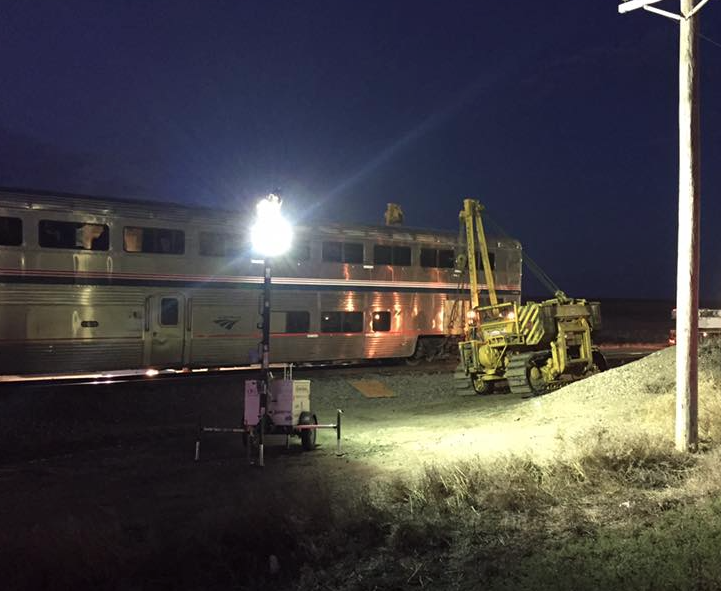
GRAY COUNTY-Amtrak officials worked all night and just before 7:30 a.m. on Tuesday, placed the last of the derailed train cars back on the track.
The NTSB continues to investigate Monday’s Amtrak train derailment. They expect to be on the scene for a few more days.
The Gray County Sheriff’s Department issued thanks to many who helped during the emergency.
Sheriff Jim Kramer thanked the emergency medical techs, the county fire department, Gray, Ford and Finney County emergency responders and the fire and life care helicopter for all the hard work and working together like a tight fit glove, according to a social media report.
Kramer also thanked his sheriff’s deputies, emergency management and issued special appreciation for the Gray County dispatchers.
Amtrak’s Southwest Chief was carrying more than 140 people when several rail cars derailed early Monday. Authorities say the accident happened moments after an engineer noticed a significant bend in a rail and applied the emergency brakes At least 32 people were hurt, two of them critically.
Local authorities are checking whether a vehicle crash may have damaged the track before the accident
Travelers sheltered at the Gray County 4H- Rec Center -photo courtesy Daniel Szczerba
——-
5:20 p.m.
A federal transportation official says the condition of the track will be the focus of the investigation into an Amtrak derailment in Kansas.
Earl Weener is part of the National Transportation Safety Board. He says it’s too soon to know what caused the derailment and that the train was traveling at the normal speed limit.
Weener says there was some initial indication of a “misalignment” on the rail. But he says it’s unclear what that was or what caused it. He also says the engineer was vigilant and noticed a variation on the track, causing him to brake.
The track was inspected last week. Investigators will also review recorded data from the train.
1:30 p.m.
Authorities say they’re investigating whether an unreported vehicle crash may have damaged the railroad tracks before an Amtrak train derailed in southwest Kansas.
Gray County sheriff’s Deputy J.G. Sharp says there was a separate vehicle accident that may have damaged the rails before the passenger train derailed early Monday outside Cimarron. A few people remain hospitalized.
Authorities are examining tire tracks leading to the train tracks and preserving the scene with crime scene tape, he said.
He says the damage doesn’t appear to have been intentional.
Investigators with the National Transportation Safety Board have arrived at scene.
12:25 p.m.
Passengers on an Amtrak train that derailed in western Kansas say they feared for their lives.
Dave Gibbs, of Colorado says he was headed to Lawrence, Kansas, for a possible chef’s job when he felt the train “rattling back and forth” early Monday. He says the shaking lasted several seconds before the train began tipping, then coming to an abrupt stop that sent a woman tumbling into him.
Fifty-seven-year-old David Tisdale, of Arizona, says he was “waiting for the worst” and was afraid he was “going to die.”
At least 32 people were injured in the derailment, which happened near Cimarron, a rural community about 160 miles west of Wichita.
Nearly all of the injured were treated and released, but two are in critical condition.
12 p.m.
Officials say two of the people injured when a passenger train derailed in western Kansas are in critical condition.
Caytie Martin, a spokeswoman for the Northwest Texas Healthcare System, says the two were airlifted to the Amarillo, Texas, hospital after the early Monday derailment near Cimarron, a rural community about 160 miles west of Wichita.
Amtrak says 32 people were treated at hospitals and nearly all of them had been released by late morning.
A hospital in Dodge City says it admitted a patient who is in stable condition and a hospital in Garden City says it admitted a patient in good condition.
The train with 131 passengers and 14 crew members was headed from Los Angeles to Chicago. An Amtrak spokesman says one crew member was treated at the scene.
9 a.m.
A passenger aboard an Amtrak train that derailed in southwest Kansas says he felt “shaking” and realized something was “definitely wrong” when it stopped.
KWCH-TV reports that Daniel Szczerba said he was in the front of the train when it derailed early Monday about 20 miles west of Dodge City. Amtrak says the train had about 128 passengers and 14 crew members on board.
He says that when he got out, he saw several trains in the back on their sides.
Szczerba says that even though emergency responders arrived quickly to the scene, it was still chaotic for passengers. He says many were wandering around searching for relatives after becoming separated from them while making their way out of emergency exits.
7:45 a.m.
An Amtrak passenger recalls feeling “shaking” before her car and several others overturned in southwest Kansas.
Twenty-one-year-old Kelsey Wilson says she was traveling on the train to return to Truman State University in Kirksville, Missouri, when she was awoken early Monday. Wilson, of Pueblo, Colorado, says she hit her head as the car became disconnected and overturned about 20 miles west of Dodge City.
She says she escaped through the top of the flipped car and then slid down the side. She said she then “passed out” and was among at least 29 people taken to hospitals for treatment. She was released with a neck brace.
Her traveling companion, 21-year-old Daniel Aiken, of Lenexa, Kansas, says he heard people scream. He said they calmed down when they realized the train “wasn’t going to blow up.”
6:50 a.m.
Authorities say 29 people have been taken to hospitals after an Amtrak train derailed in rural southwest Kansas.
Grey County spokeswoman Ashley Rogers says of the 29 people hurt, none has life-threatening injuries.
NTSB is sending a team to investigate the Amtrak train derailment
in Kansas. More information will follow when the team arrives in Kansas.
An Amtrak statement says the train was traveling from Los Angeles to Chicago early Monday when it derailed just after midnight about 20 miles west of Dodge City. Amtrak says the train had about 128 passengers and 14 crew members on board.
photo courtesy Daniel Szczerba
Rogers says she went to the scene and saw five cars on their sides and two others that were off the tracks but still standing. She says buses and ambulances have taken the passengers who are not hurt to a community building in the small town of Cimarron to wait while Amtrak makes arrangements to take them to their destinations.
4 a.m.
Amtrak now says about 20 passengers have been hospitalized after a train derailment in southwest Kansas.
An Amtrak statement says the train was traveling from Los Angeles to Chicago early Monday when it derailed just after midnight about 20 miles west of Dodge City.
Kansas Highway Patrol communication specialist Patricia Munford says five train cars are on their side.
Amtrak says about 20 passengers were brought to hospitals in Dodge City and Garden City. All others were brought to a recreation center and will be given alternate transportation to their final destination.
Amtrak says the train consisted of two locomotives and nine cars and had about 128 passengers and 14 crew members on board.
___
3:15 a.m.
An Amtrak train derailed in southwest Kansas, sending eleven people to the hospital.
An Amtrak statement says the train was traveling from Los Angeles to Chicago early Monday when it derailed just after midnight about 20 miles west of Dodge City.
Kansas Highway Patrol communication specialist Patricia Munford says five train cars are on their side.
Amtrak says eleven passengers were brought to a hospital in Dodge City. All others were brought to a recreation center and will be given alternate transportation to their final destination.
Amtrak says the train consisted of two locomotives and nine cars and had about 128 passengers and 14 crew members on board.

 A group of Ellis County officials, including members of the county commission, got a chance to check out the current conditions of various roads and bridges throughout Ellis County Monday as part of a special commission meeting.





 The first-round voting ends Friday, March 18.

 Today is the final chance to save with The Eagle Radio Auction, going on now.

 Even though the UWEC active campaign season begins in August, 2016, with the Pacesetter companies beginning in June, UWEC does take donations throughout the year. If you would like to give, please mail donations or stop by the offices at 205 E. 7th Street, Suite 106. Donations can also be processed through the “Donate” button at our website