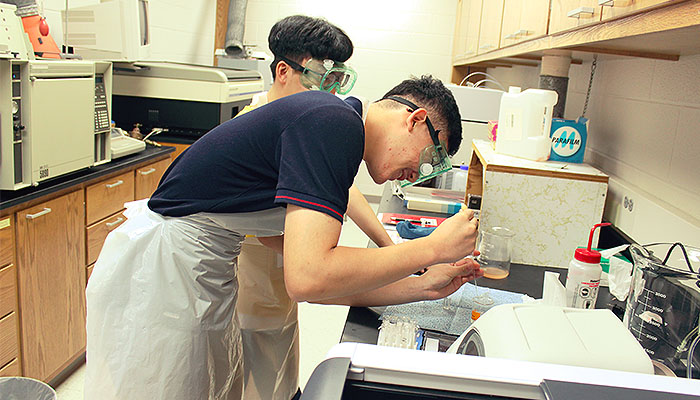
Two Korean students conduct science experiments with FHSU’s Dr. Arvin Cruz on Thursday on the Hays campus.
By CRISTINA JANNEY Hays Post
Eight students from South Korea peered into brightly colored test tubes and furiously scribbled observations during a week-long camp at Fort Hays State University.
The students are replicating experiments from research conducted by Dr. Arvin Cruz, FHSU chemistry teacher, on substances that might be used as conductors in solar panels.
The students taking part in this Kansas Academy of Mathematics and Sciences camp are 16 to 17 years old and from the Daejeon High School for the Gifted in Daejeon, South Korea.
“They are very passionate,” Cruz said during a KAYS Morning Show interview. “We started [Wednesday], and they are very dedicated and almost all of them indicated they wanted to go into some area of science as a profession.”
Cruz said this can be a recruiting tool for FHSU, but more importantly it is a way to interest more students in going into the sciences as a profession.
A KAMS volunteer assists a Korean student look for substances that could be used in solar panels during an experiment on the FHSU campus Thursday.
“A lot of this is science awareness,” Cruz said. “The future of science lies in these young kids. That is why we devote a lot of our time engaging them and having global partnerships, mainly for recruitment in STEM (Science Technology Engineering and Mathematics).”
Cruz said one student who studied with the program several years ago has now been admitted to a university in South Korea to study quantum knots, which is the subject on which the students in the KAMS program are conducting their experiments this summer.
The students in the exchange participate in a selection process, and only the best of the best are selected to come to the U.S. Cruz said he thinks that has made the program even more successful.
Students from Daejeon High School for the Gifted in Daejeon, South Korea, conduct chemistry experiments at FHSU Thursday.
Soyoung Lee, South Korean chemistry teacher and one of the students’ sponsors, said the work is allowing the students to understand chemistry’s broader effects on mankind.
She said, with fellow sponsor and English teacher Myoung Hee Choi translating, the students may continue their studies in another field, but they are learning the research process through their experiments with Dr. Cruz.
Lee said the students are not working toward a grade — they are not competing — so they can try new things and experience science just for the sake of learning.
In addition to learning aspects of chemistry and research, the students are also being immersed in the English language.
“Instead of just learning from texts, they are able to express themselves in English. They can communicate,” Choi said. “It has been a challenge even for me.”
This exchange began three years ago with chemistry students from the U.S. also traveling to South Korea. Although no U.S. students were able to go abroad this year, the South Korean students have continued to take advantage of FHSU’s hospitality.
In the evenings the students have been experiencing the Hays community, including a night out bowling. They also will tour FHSU’s Sternberg Museum and Exploration Place in Wichita.
Since all three years of the exchange have focussed on alternative sources of energy, the students last year toured Greensburg and were able to see how that community has made the transition to green energy.
“They were so excited about how it re-established itself,” Cruz said.
Both South Korean teachers said they wished to thank FHSU and everyone involved with the students for making the camp possible. The students will be headed home on July 16.
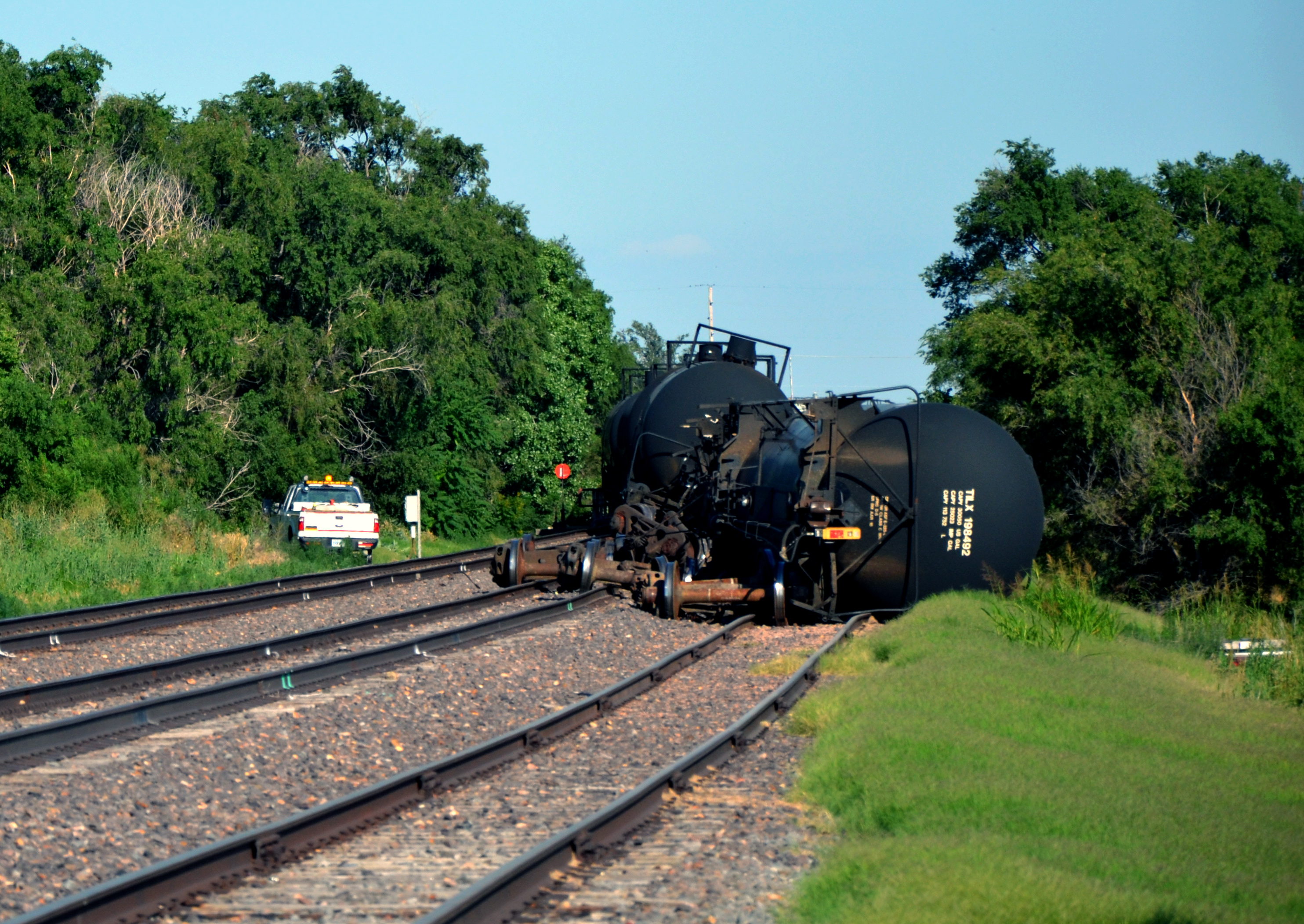
A Union Pacific train derailment in Hays caused some home evacuations and a few road closures near downtown late Sunday afternoon.
“A little after 5 p.m. dispatch received a call from Union Pacific Railroad concerning a derailment they had near the intersection of Ninth and Milner,” said Kim Rupp, Hays public information officer.
“At this time there are three tanker cars off the tracks,” he said.
By 6:30 p.m. there was no immediate danger to the public, and no injuries had been reported.
“They do contain ethanol, however, there are no leaks, so there are no hazards to the public,” Rupp said.
While there was believed to be no immediate danger, some limited evacuations of housing were immediately conducted after the derailment in the vicinity as a precautionary measure.
The fire department set up a 300-foot perimeter, but no intersections were closed by 6 p.m.
The traveling public is asked to avoid the area and observe cones and barricades while the accident is being cleared, Rupp said.
The 2019 winter wheat harvest was one for the books.
Heavy moisture during the spring and continuing wet conditions kept the wheat growing and maturing late, pushing harvest back more than two weeks from normal in some areas of Kansas. Those wet and cool conditions created heavier than average yields and generally happy producers.
According to the National Agricultural Statistics Service, winter wheat production is forecasted to be up 19 percent from last year, with 330 million bushels expected to be produced.
Across the state, the average yield 50 bushels per acre, up 12 bushels from last year, and some local producers are well above that average.
That production is also coming from less with a drop of 6.6 million harvested acres since last year, according to the service.
But those wet conditions have also created potentially long-term negative effects to the soil and future winter wheat crops.
The problems of soil compaction
When the silty loam in the Hays area is dry, soil compaction is unlikely — but this year was different. Across Kansas, producers have dealt with copious amounts of rain and, in western Kansas, the water that remains in the soil could create deep compaction up to 18 inches below the surface, the effects of which might not be fully realized until next year.
In short, compaction happens when the soil is compressed and the structure of the soil is disturbed.
Topsoil compaction is easier to see but much less of a problem for producers.
“You can obviously see some of this by driving through the fields,” said Augustine Obour, assistant professor of soil science at Kansas State University Agricultural Research Center.
But the deep compaction that occurs when heavy pressure is applied to wet soil is more problematic and a serious concern for long-term crop production.
“There is probability (there is) more compaction out there than a lot of farmers realize,” said Stacy Campbell, K-State Research and Extension agriculture agent. “It definitely is real, and probably some of that was happening this year.”
Sometimes it is not visible when the soil is at its maximum water-holding capacity, according to Obour.
“When it is near its full capacity, it is prone to compaction issues,” he said.
Chart of soil moisture at 20 cm (7.87402 in) on July 11 from the Kansas State Mesonet
Soil moisture around Hays has been decreasing over the last 30 days, but still remains higher than normal up to a depth of almost 20 inches, while the soil in other areas of the state remains almost completely saturated.
That waterlogged soil compacts when heavy loads are applied to it and generally there is little that can be done to prevent compaction outside of staying off of the fields.
“If it is deeper than 6 inches, it can be a big issue,” Obour said. “The problem is that it affects a lot of things, particularly water movement.”
With the no-till crop production that is commonly used in the area, soil compaction may be compounded as no-till fields hold more water because of increased biological matter in the soil that retains more moisture.
Generally, Obour said, those no-till practices are good, but in years with heavy rain, it means producers have to wait longer to avoid compaction risks.
“In my experience, it takes about one more week for our no-tills to dry compared to our traditional till plots,” he said.
It also makes compaction harder to remedy.
“If you get compaction in the no-till field, then it is more difficult to correct because you do not want to till those fields,” Obour said.
Tilling a field that has been developed as no-till will damage the soil structure, he said.
Outside of water flow concerns, once soil is compacted the inability of water to flow properly can impact soil nutrient rates.
Producers will commonly use seed treated with nitrogen fertilizer, but once the soil structure is disturbed through compaction, the nitrogen might not go where it needs to for ideal crop growth.
“With all of the rain that we have gotten, nitrogen does not hold in the soil, it moves, so there will be some leaching of nitrogen fertilizer,” Obour said.
To combat nitrogen loss, he recommends producers sample up to 24 inches to get a good nitrogen profile.
“This year, if you do that with all the rain, I’m afraid it may not be there,” he said.
In order to combat nitrogen loss, producers will often spray fertilizer on the crop, but with heavy rains, this could cause another problem — runoff that spreads the fertilizer into other areas, including waterways.
“It’s very unusual in this environment, but it’s possible this year you may have some of those issues,” Obour said.
Soil compaction can also impact the root system of crops.
“About any of the crops that we produce here, they can get rooted down several feet,” Campbell said. “So if you have compaction at 18 inches, those roots if they hit that compaction layer may not be able to get through that.”
“It can take more than five years to have this corrected,” Obour said.
Producers have options for prevention
Avoiding putting significant pressure on damp soil is the best remedy for issues associated with deep soil compaction, meaning for producers sometimes a difficult choice has to be made; harvest a damp field and risk compaction, or push harvest past the ideal time.
“The bottom line is you have to consider the implications of soil compaction to justify field operations,” Obour said.
It the equipment is light, it may only create surface compaction in the top few inches, but if it is heavy equipment, such as trucks in a loading area, then the high pressure can create deep compaction.
“Iowa State did some work on this and they found that regardless of (design) … once you have about 10 tons per axle of weight and if the soil is wet enough or fairly moist, it can cause deep compaction,” Campbell said.
A report in 2017 by DeAnn Presley, K-State soil management specialist, found a full grain cart can carry more than 17 tons per axle.
An empty combine can weigh over 15 tons as well, pushing into the danger zone of per axle weight when fully loaded.
“The machinery just keeps getting bigger,” Campbell said.
Before producers move equipment into fields they have options to help determine if they are at risk of deep soil compaction.
Obour said pressing soil into a ribbon can help determine the moisture content. If the ribbon does not break apart at a length of 3 inches compaction is a risk, if it is under 2 inches when breaking apart it the risk is lower.
Producers can also take steps if they must enter a field that has high moisture to reduce the risk.
“Two key points for minimizing compaction from heavy axle loads are to limit traffic when fields are wet, and to confine the majority of traffic to end rows when possible,” Presley said in the report. “Keep in mind that the first wheel pass causes 70 to 90 percent of the total soil compaction, so preventing random, unnecessary traffic routes on the field is very beneficial.”
While the risk of compaction this year is high, Obour said he believes most producers around Ellis County know of the risk and he has not heard of any issues so far this year.
A government program is also working with producers that could not work fields due to high moisture content.
The Natural Resources Conservation Service has offered an Environmental Quality Incentives Program that helps producers plant cover crops that will help retain nutrient loads in the soil and prevent soil erosion.
“Cover crops help farmers to manage soil erosion, weeds and pests and to improve soil health,” said Karen Woodrich, NRCS state conservationist in Kansas in a news release for the program. “They can also help your soil health recover after a flood or a long period of remaining wet.”
The application deadline is July 26. Producers interested in the program can call the local NRCS office at 785-625-3081.
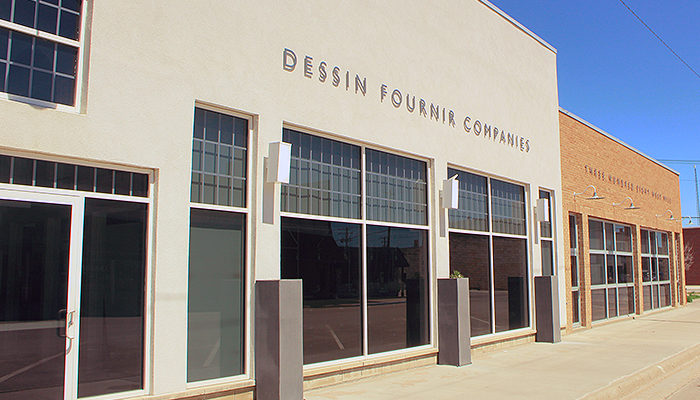
PLAINVILLE — The Dessin Fournir bankruptcy case has been dismissed from federal bankruptcy court and a sheriff’s sale has been set for Aug. 1.
Seven pieces of property with mortgages held by Sunflower Bank will be auctioned.
Properties listed in the foreclosure included 201 E. 12th St. in Hays, and Plainville properties 108 N. Main, 211 1/2 Mill, 205 N. Main, 317 W. Mill, 211 W. Mill, 221 W. Mill. All the properties listed in the Aug. 1 sale are in Plainville.
Edward Nazar, the bankruptcy attorney for Dessin Fournir and its subsidiaries, said Wednesday that Chuck Comeau, Dessin Fournir’s owner, has not been able to secure a new owner for the company.
The Comeuas own multiple properties in Plainville and Hays. Court documents indicated an $81,000 insurance payment for the properties was coming due in June, and Comeau did not have the funds to make that payment.
Dismissal of the bankruptcy case, which was ordered on June 19, will allow the foreclosure in state court to move forward, Nazar said.
Dessin Fournir and 11 other Comeau companies filed for Chapter 11 bankruptcy on April 8. The company also closed its doors and laid off its staff in Plainville. At its height, Dessin Fournir employed more than 90 people in Comeau’s hometown of Plainville.
Chapter 11 involves a company reorganizing, but the court determined Dessin Fournir did not have enough cash on hand or assets to continue with a reorganization.
Although Comeau was unable to find a buyer for the company as a whole, Nazar said there likely will be buyers of the smaller assets and product lines.
The furniture manufacturer was listed in court documents to have more than 200 creditors locally, nationally and even internationally with a total liability of more than $13 million. Some of its subsidiaries had other creditors, including companies in the trade.
The company is listed as owing more than $8.9 million in secured debt to three local banks, including $952,000 to Astra Bank, $7.5 million to Bank of Hays and $420,000 to Sunflower Bank.
Bank of Hays and Sunflower Bank filed for foreclosure on Comeau properties last year.
On March 26, District Court Judge Blake Bittel in a summary judgement ordered Comeau’s companies and other loan guarantors to pay Sunflower Bank a total of more than $420,000. A sheriff’s sale was ordered by the court on July 5.
According to court records, on June 27, FSSW LLC filed a motion for to recoup more than $1 million owed by the Comeau companies. It seeks to gain first lien on property above the Bank of Hays. Its motion seeks the authority to sell property listed as collateral to satisfy the Comeau companies’ debt.
Hays Post contacted the U.S. Justice Department, which is assigned to take media requests on behalf of the U.S. Trustee in the bankruptcy case, but no response was given as of the publication of this story.
The sheriff’s sale will be at 10 a.m. Thursday, Aug. 1, in the front lobby of the Ellis County Courthouse.
A renovation at First Care Clinic in Hays is nearing completion. The clinic added eight new exam rooms.
By CRISTINA JANNEY Hays Post
First Care Clinic of Hays is wrapping up a $1 million renovation of its Hays building and has set an open house and ribbon cutting for July 16.
The clinic has added eight exams rooms, a telemedicine room, a patient education room, a nurses station and renovated the basement into staff offices.
Bryan Brady, First Care CEO, said the renovations were necessary to meet patient demand.
In the last 12 months, the clinic has had 18,000 patient visits, which is a significant increase, Brady said. He said First Care is taking on more patients as other providers are cutting back.
“The reason why we are doing this is to fill gaps in the community,” Brady said. “We are not trying to compete with anyone. We see a need and are trying to fill that need.”
The clinic also added a patient education room that will allow it to offer shared education appointments.
Five of the exam rooms were added on the second floor in the space formerly occupied by staff offices. The other three exams are on the first floor.
The clinic offers Saturday hours, but only has one provider on call on Saturdays. Adding exam rooms on the first floor will allow all the staff working on Saturday to be on the same floor.
The clinic recently added a provider, and the additional exam rooms will allow the staff to keep up with their growing patient loads.
One room is going to be used full-time for telemedicine. The clinic had offered mental health services one day a week via telemedicine, but that had occupied an exam room that was needed for the medical providers. The clinic plans to expand its mental health services and is looking at offering other speciality medical services through telemedicine in the future.
The clinic’s unfinished basement was remodeled into offices to allow for more space on the first and second floors for exam rooms.
“When you come to our building and you are sitting in that lobby, nobody knows if you are here for dental, medical or behavioral health. They have no idea,” Brady said. “I think we don’t have that stigma that sometimes surrounds mental health.”
The clinic also hopes to use its new patient education room to offer shared medical appointments. Patients would see their provider at around the same time on the same day. After their appointments are complete, about eight patients would meet together for an education session on their shared illness.
Brady gave the example of diabetics or patients with hypertension learning about healthy diet.
“We are going to work on behaviors,” Brady said. “We have medicines that control that stuff, but sometimes we have human behaviors that get in the way.”
The First Care building at 105 W. 13th St. was built in the 1940s and has gone through a series of renovations since the clinic purchased it in 2009.
The clinic has already realized success with its nurse closer program. A CNA takes vitals and discusses the patient’s complaint. Then the patient sees the doctor. Then a nurse closer goes over doctor’s recommendations and wellness strategies.
“By the time the nurse goes over it, they have heard it three times,” Brady said. “We feel that is allowing people to have a better understanding of their health care and the goals and objectives we are trying to achieve.”
He said the clinic has seen a reduction in calls with questions with the implementation of the nurse closer program.
“In health care, it is better to have people talk to people,” Brady said. “Face to face is a good thing.”
First Care’s building, 105 W. 13th, was built in the 1940s. The clinic moved into the building in 2008 and purchased it in 2009. During the last 1o years, the building has been under almost constant construction.
In 2oo9, the clinic replaced its HVAC systems followed by the addition of dental chairs in 2011 and 2014. In 2017, the waiting room and nine exam rooms were remodeled.
The current renovation included 10,000 square feet. The basement of the building was not finished and was being used for storage.
The clinic received three grants toward its latest renovation. This includes $518,000 from the Dane G. Hansen Foundation, $100,000 from the Leo J. and Albina Dreiling Trust and undisclosed amount from the Robert E. and Patricia A. Schmidt Foundation.
“The Schmidt Foundation is proud to be a part of this wonderful project. Bob and Pat were early cheerleaders for the First Care Clinic and their enthusiasm continues today,” said Gary Shorman, president of the Schmidt Foundation. “The new facility provides an environment that truly matches the outstanding care given by the First Care team.”
The $1 million price tag for the renovation did not include equipment, Brady said.
Brady said the clinic is still trying to spread the word about its services. The clinic is a full-service medical home providing dental, primary medical care and behavior health care.
Although the clinic has a sliding fee scale, it is open to all patients.
Medical director Dr. Christine Fisher said in a written statement, “At First Care Clinic, the patient is at the center of everything we do. We have transitioned from a walk-in clinic to a family-oriented practice that offers personalized, comprehensive care. We believe in wellness, prevention and treating the whole person, including behavioral health concerns. First Care Clinic will continue to innovate and improve for the benefit of our patients and our community.”
The clinic invites the public to its open house and ribbon cutting at 11 a.m. Tuesday, July 16. Tours will be offered. Lunch will be provided and door prizes given away. Free blood pressure and vision screenings, as well as fluoride dental treatments, also will be offered.
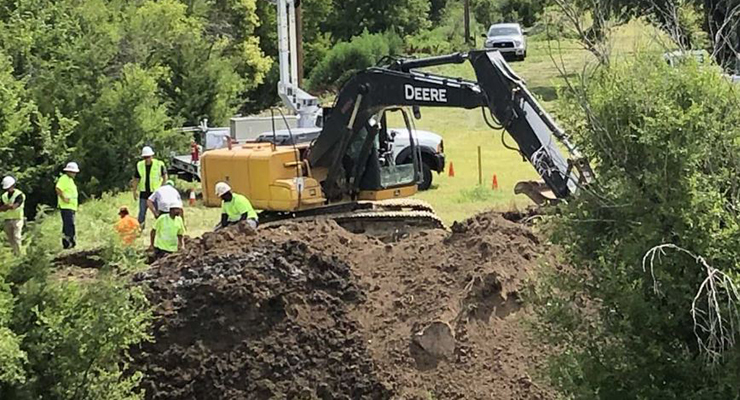
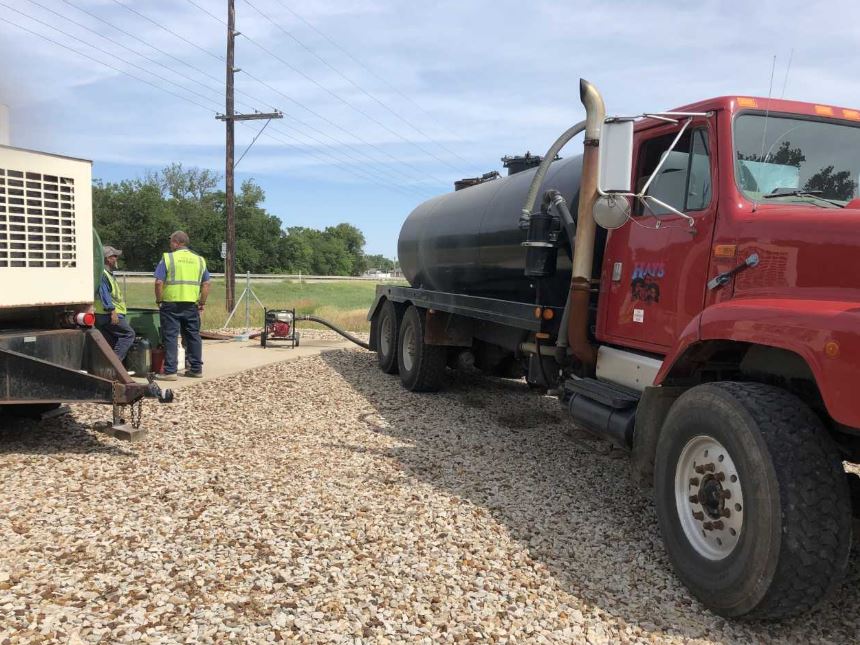
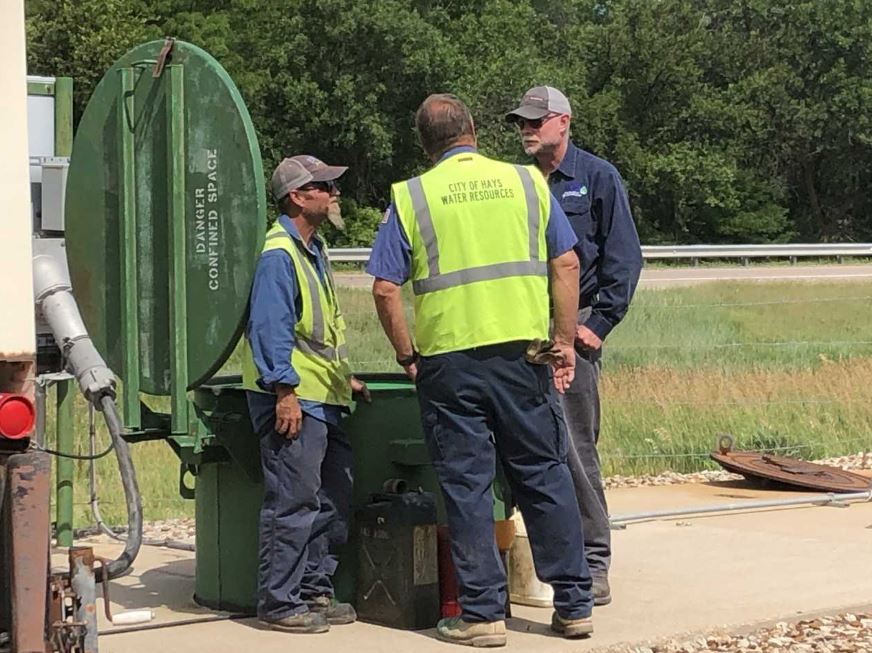
City of Hays employees check a sewer line leak Thursday morning along Big Creek at 27th and U.S. 183 Bypass.
City officials say no contamination of city water supply
By BECKY KISER Hays Post
Officials from the city of Hays are on the site of a leak in a forced sewer main line near the intersection of West 27th and the U.S. 183 Bypass.
The location is alongside Big Creek. The sewer line is buried underneath the creek.
According to Jeff Crispin, water resources director, he called the Kansas Department of Health and Environment after-hours emergency number Wednesday night as required.
Darrell Shippy, of the Northwest Kansas KDHE Water Supply and Wastewater Unit in Hays, was at the site Thursday morning for a short time, Crispin noted, as work got underway to locate the leak.
Crispin says a farmer contacted the city late Wednesday afternoon when he noticed water coming from the side of the bank of Big Creek.
City staff confirmed the water influx and immediately shut down the sewer line and the nearby lift station that serves that line.
“We notified KDHE last night,” Crispin said late Thursday morning. “We want to ensure public safety first. We’re working with them to see if something moves towards the public stream flow [of Big Creek].”
There is no contamination of the city water supply, he added, nor is there any interruption of water or sewer service to city customers.
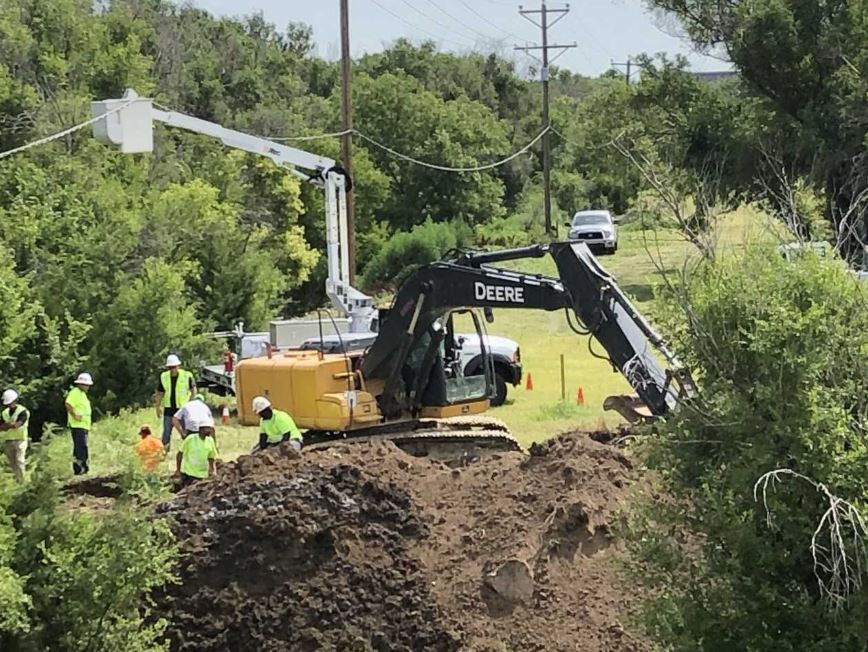
“A local contractor is currently digging to find the line. It seems there’s been a break,” Crispin said. “Once we find it, we’ll do a temporary fix and then a permanent replacement of the line.”
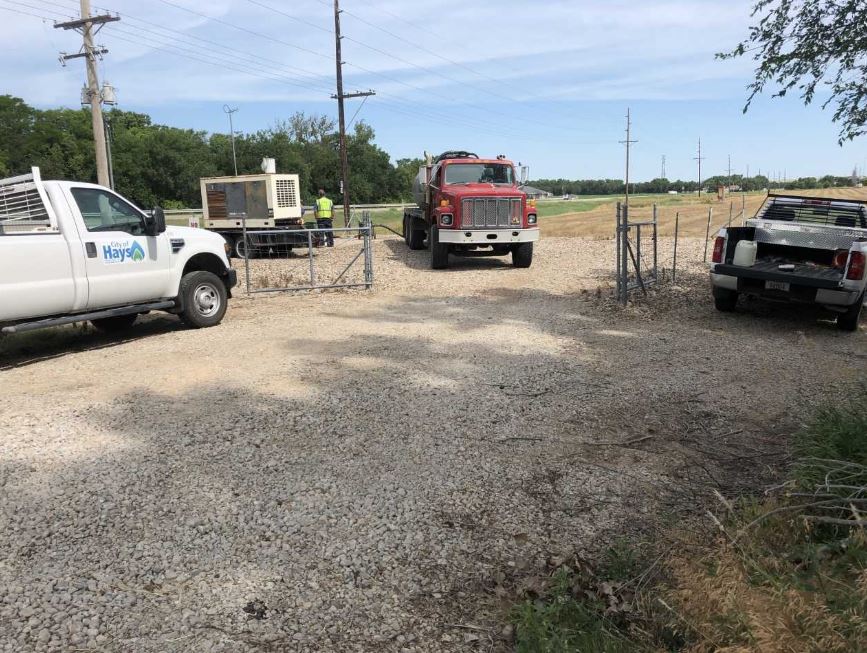
City Department of Water Resources employees are now manually pumping the sewer line contents into trucks as needed and transporting it to the city wastewater treatment plant.
Check Hays Post for more as details become available.
Looking for the leak Thursday morning
A farmer reported water running from side of the bank into Big Creek.
Waste from the nearby lift station is being manually pumped out and transported by truck to the wastewater treatment plant.
DALLAS — Dancers from Jackie Creamer’s The Dance Studio won numerous awards at the Legacy Dance Championships this week in Dallas.
Earning awards for their performances were:
First Overall Mini Duo, Hit The Road Jack: Anaya Creamer, Kenley Callahan
First Overall Junior Duo, Fabulous: Ruby Fields, Izabel Schmidt
First Overall Teen Duo, Two: Lauren Wagner, Adelyn Wagner
First Overall Senior Duo, Lay Me Down: Jenna Romme, Jillian Lowe
First Overall Mini Small Group, Expensive: Anaya Creamer, Kenley Callahan, Alexa Seib, Allie Gier, Jenny Molstad, Addison Karlin
First Overall Petite Small Group, Girls Will Be Girls: Anaya Creamer, Kenley Callahan, Delia Dixon, Alexa Seib, Arianna Ayarza
First Overall Junior Small Group, Awoo: Molly Buckles, Elizabeth Cunningham, Ruby Fields, Sienna Lummus, Lillian McGaughey, Annika Nichols, Leah Reed, Izabel Schmidt, Jaci Schmidt
First Overall Senior Small Group, Byegone: Avery Jones, Jillian Lowe, Jenna Romme, Ella Voth, Lauren Wagner, Kassidi Yost, Samantha Zimmerman
What Are You Looking At
First Overall Junior Large Group, Heavy In My Arms: Jenna Brull, Molly Buckles, Elizabeth Cunningham, Ruby Fields, Briley Haynes, Makayla Koerner, Katie Linenberger, Sienna Lummus, Lillian McGaughey, Mykayla Romme, Izabel Schmidt, Jaci Schmidt, Kyla Schmidt, Aliya Seib, Adelyn Wagner, Nevaeh Weigel
First Overall Teen Line, Game Of Survival: Hannah Durham, Ruby Fields, Avery Jones, Makayla Koerner, Katie Linenberger, Jillian Lowe, Sienna Lummus, Lillian McGaughey, Jenna Romme, Mykayla Romme, Izabel Schmidt, Jaci Schmidt, Kyla Schmidt, Adelyn Wagner, Lauren Wagner, Nevaeh Weigel, Kassidi Yost, Shyanne Yost
First Overall Teen Production, What Are You Looking At: All Company Members
These dances received the National Championship in the Showdown of the Legends.
• Mini Small Group, Expensive, National Champions
• Petite Small Group, Girls Will Be Girls, National Champions
• Junior Small Group, Awoo, National Champions
• Teen-Senior Line, Game of Survival, 1st Runner-Up
Jillian Lowe was named Miss Senior Legacy, and Adelyn Wagner was named Miss Junior Legacy.
The studio also was the Legacy Award for highest-scoring studio in both the 12 & younger and 13 & older categories.
In the Top Ten, The Dance Studio received 11 first overall, 10 second overall, four third overall, four fourth overall, two fifth overall, one sixth overall, two seventh overall, one eighth overall, one ninth overall, and one tenth overall, totaling 37 dances placing in the Top Ten in their category.
— Submitted / photos courtesy Jackie Creamer’s Dance Studio except where noted
Game of Survival / photo courtesy Jenne RommeAwoo / photo courtesy Christina SchmidtExpensive
2019 outside agency funding and 2020 requests / click to expand
By CRISTINA JANNEY Hays Post
Outside agencies that have traditionally received funding from Ellis County are feeling the county’s budget crunch this year in the form of cuts.
Although the county has not approved its final budget, commissioners recommended $124,000 in cuts for the 16 agencies that requested funds for the 2020 fiscal year.
Some of the agencies said they would attempt to raise more private funds. Others suggested they might have to cut staff or programming.
Hays Arts Council
Proposed county funding for outside agencies for 2020 with cuts
The Hays Arts Council requested $3,385, and its funding, along with the funding for the Ellis Jr. Free Fair, was cut entirely.
Brenda Meder, HAC director, said the agency’s funding from the county has been steadily decreasing over the last several years.
She said the agency has planned to make a push for more memberships in attempts to make up for the county funding cut. The HAC will also look at its reserve funds or adding a fundraiser, she said.
Meder said she was disappointed to see the funding cut completely.
“There is something to be said in being validated as a community entity that is truly there to serve the broadest needs of the community in regards to quality of life,” Meder said.
DSNWK
Two DSNWK clients weave as a part of the Collaborative Arts Project.
Developmental Services of Northwest Kansas had its funding reduced from $240,000 to $215,000. It also manages the community’s general public transportation service, ACCESS, which was cut from $60,000 to $50,000.
Because ACCESS funds are matched, the service will lose another $23,000 in matching funds.
Jerry Michaud, DSNWK president/CEO, said the agency is already stressed trying to make up the difference between the actual cost of services for community members with developmental disabilities and state reimbursement rates.
“We can’t go to the state and say we’ve lost $57,000 and can you help fill that gap,” Michaud said. “It is not the way it works. We have to figure out how do we stretch something that is already stretched. It’s a challenge.”
The agency is still required to serve the same number of people and provide the same level of services, but with less money.
Michaud said DSNWK will strive to not allow the cuts to affect staff or services.
“What we have is what we need, and [we] need more,” he said. “Potentially for crisis types of needs, we may look at donations as a way to supplement, but that’s not a long-term solution. Generally donors, I can’t speak for all, donors are not interested in paying for your light bill. They are not interested in paying for those types of things.”
Michaud mentioned in his presentation to commissioners that the agency has struggled to recruit and retain care professionals because of low wages and a shortage of workers in the labor pool. He said the county cuts will not improve the agency’s staffing challenges.
High Plains Mental Health
High Plains Mental Health received the second largest cut in terms of dollars. It received $281,646 in 2019 and will receive $260,000 in 2020 if the budget passes with the commissioners’ current recommendations.
The county is required to fund HPMH per an interlocal agreement; however, Director Walt Hill said the agreement does not specify the amount.
The county mental health agency recommends a dollar amount annually based on a formula that is in part based on the counties residents’ use of the High Plains’ services.
Hill said although the cut is significant, county funding from all of the counties the mental health agency only accounts for about 8 percent of the agency’s budget.
“One of the things we are headed to is focusing on individuals paying their share of the cost of services — making sure we focus on people paying their bills as they go,” he said. “Anymore as you go to the doctor’s office, you are asked to pay for the service for the day, and I think we may have to move more and more in that direction.”
About half of the clients HPMH sees have family incomes of less than $25,000 per year. HPMH offers a sliding-fee scale and allows clients to extend payments, so Hill said payment should not be a barrier to receiving services.
“Our budget won’t happen until December, so we will know what counties will do and then we work around what resources we have in terms of if we can give raises to staff, in terms of what we can afford in capital outlay next year,” Hill said.
Conservation District
The Ellis County Conservation District was so concerned about the effects of its cut of more than $17,000, it went back to the county commission to ask some of the funding be restored.
Sandra Scott, district manager, said the county cut would mean the district would have to eliminate a decades-long cost-sharing program that supports terracing and soil conservation efforts at local farms. The county money pays for an average of six projects per year, depending on the size of the projects.
The commissioners told district officials Monday night it would not reinstate any of the funding.
Humane Society
Humane Society of the High Plains shelter manager Betty Hansen said the Humane society was expecting the cut. It reduced its request from $4,500 to $3,000, and the commissioners recommended $2,600.
The agency will attempt another fundraiser to try to make up the difference in funding. They are planning an event with Defiance Brewing Co. in September.
“We work with what we are given is the way we look at it,” Hansen said.
The community has been responsive to the funding need. Several people have dropped donations at the shelter in a response to the news of the county cut, Hansen said.
Hansen said she was concerned about the long-term effects of funding cuts. The other alternative would be to charge for strays that are surrendered from the county.
The shelter is using the county money to pay for the care of strays. Shelter officials don’t want to charge people who surrender those animals because workers are concerned people will stop bringing in the strays, and the animals will be left to die or run wild.
“It is not that you have to pay,” Hansen said. “It is the animal needs help, and we are going to do it one way or the other. We will figure it out. If someone is kind enough to pick up puppies out of a ditch and bring them to us, we are going to take care of them.”
Although the Humane Society’s donors have been generous, Hansen said there is a limit to the amount of money any agency can raise, and all the nonprofits that requested funds from the county are being affected in the same way.
NWKP&DC
The Northwest Kansas Planning and Development Commission wrote the grant that secured $1 million in funding for a new pool in Ellis, but its funding was cut from $38,877 to $22,500.
Randall Hrabe, development commission director, said Ellis County will likely not be the only county that cuts the development commission’s funding for 2020.
He said the agency offers about $20 million in business loans across northwest Kansas as well as oversees low-income housing projects across the the region. Two homes are being prepared for sale in Hays through a development commission project.
“I would like to see everyone support it,” Hrabe said. “If Ellis County has to cut $2 million from its budget, somebody’s got to get cut.”
Grow Hays
Grow Hays did not receive any funds from the Ellis County last year. However, it requested $50,000 for 2020. Director Doug Williams told the commission, the economic development organization would no longer be able to operate after the 2019 fiscal year if it was not at least partially funded by local municipalities.
All economic development organizations in the state are at least partially funded by local governments with many of them funded 100 percent with taxpayer money.
Grow Hays requested $50,000 from the county, but the commissioners cut that to $27,500. The agency has also requested $100,000 from the city of Hays, $4,000 from the city of Ellis and $1,000 from the city of Victoria.
Williams said the agency’s budget will hinge on what the city of Hays comes back with in the next couple of weeks. He noted the city of Hays and Ellis County both provided more than $100,000 each to the the organization in the past. Those ties were temporarily cut during a recent reorganization. The organization, in the interim, has relied on reserves and private funding.
Williams said that model is not sustainable.
Williams said he thought Grow Hays is not only important to the economic health of Ellis County, but all of northwest Kansas.
“We face a lot of challenges out here in terms of population loss and trying to maintain the businesses we have and attract others. The funding of our organization to do those type of things is critically important,” he said.
Ellis County Historical Society
Area in one of the Ellis County Historical Society Buildings where plaster collapsed June 1.
Lee Dobratz, director of the Ellis County Historical Society, said she did not want to comment for this story.
However, she said during her presentation to the county commission, the historical society would have to cut a staff member if its funding was cut.
Dobratz raised concerns about the historical society’s facilities. Part of the historical society’s collection had to be temporarily moved recently when a section of plaster fell from a wall due to water damage.
She said the organization is working on a strategic plan, which could include a new building. The agency also hopes to begin fundraising for an endowment, Dobratz told the commissioners.
By JAMES BELL Hays Post
After a week of sporadic rain across western Kansas, generally warm and windy weather dried the fields enough for wheat producers to get back into their combines and begin to wrap up the wheat harvest that started the last week of June around Ellis County.
“It’s a little later than usual and with the rains, it’s a little longer than we anticipated,” said Brian Witt, Hays coordinator at Midland Marketing.
In the southern part of Ellis County, Witt said the harvest is nearly complete. North of Hays, producers have been delayed a bit longer.
He estimated Rush County was already 80 percent to 90 percent complete, with only a few producers in small areas who were hit with rain in the last few days needing to return to the fields to wrap up.
To the north, they are further behind, Witt said, with areas near Rooks County about 50 percent complete.
But with dry conditions through the area most of the day Monday and no rain forecasted past Tuesday, producers should be able to complete the harvest soon.
South of Hays, Witt said by the end of the week he anticipated producers in southern Ellis County should be able to complete the harvest, while northern parts of the county may be a day or two later, pushing through to Monday.
At the Hays elevator, received bushels have gone down drastically since Wednesday, Witt said.
“We are taking about a tenth of what we were four or five days ago,” he said, noting a significant slowdown starting after the rains that fell in the latter part of last week.
“Overall, it was a very good harvest,” Witt said. “Yields came out better than what everyone anticipated.
“It was definitely an above average crop.”
In their weekly crop report released Monday, the National Agricultural Statistics Service rated 16 percent of winter wheat across the state as excellent and 42 percent as good.
Only 4 percent of the crop was rated very poor and 11 percent poor, while the remaining 27 was rated as fair.
In the central district, around 98 percent of winter wheat was rated as mature by the service, with 76 percent harvested.
Across the state, 92 percent has matured and only 61 percent had been harvested.
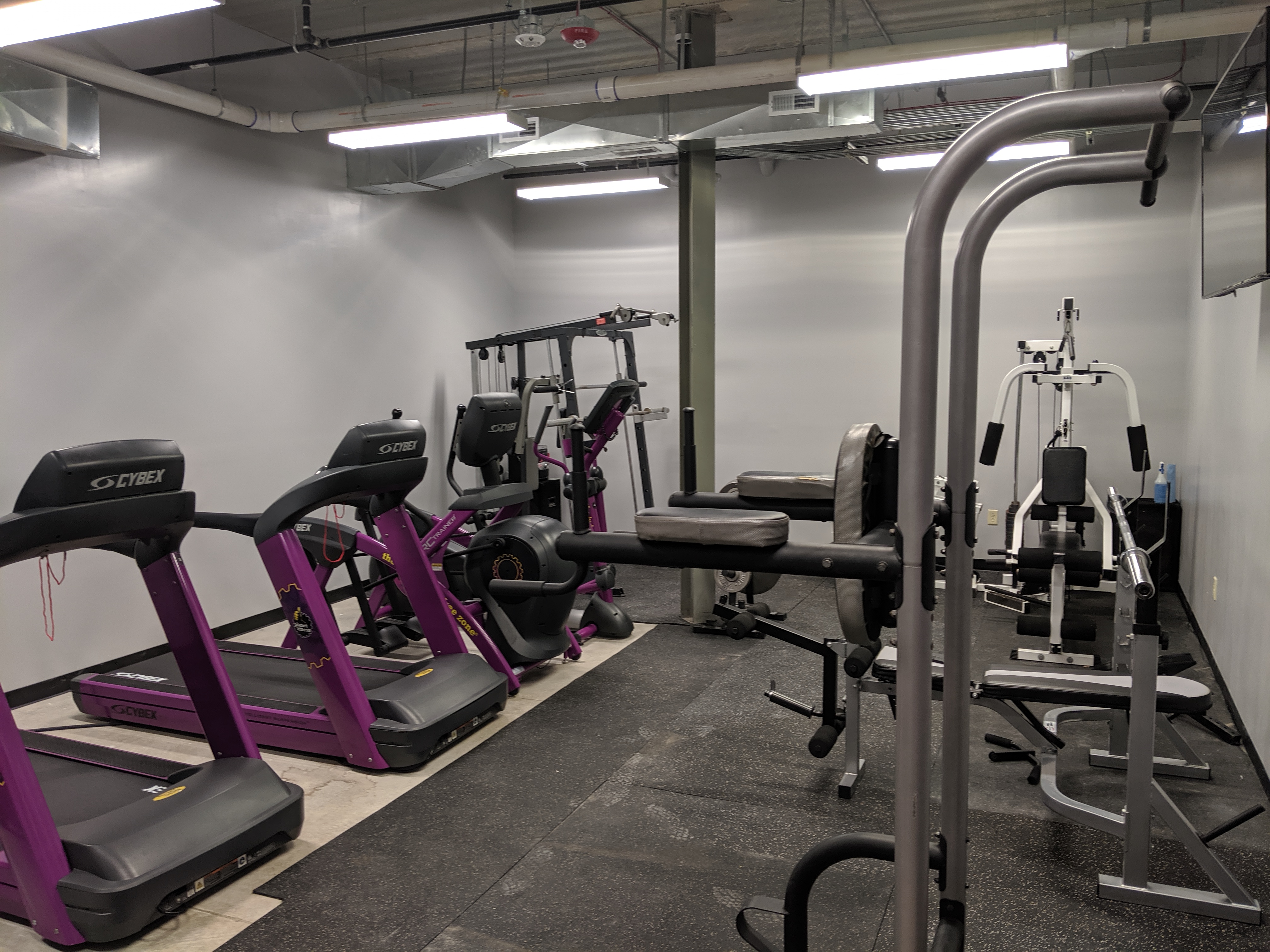
As the department focuses more on health and safety, Ellis County emergency personnel now have their own fitness room at the Emergency Services building.
A fitness room in the basement of the EMS building was in the original plans but, in an effort to reduce the cost of the project, it was scrapped. However, thanks to several donations, grants and volunteer work, the fitness room opened on June 27.
“When this building was originally designed, it had a fitness room,” Director of Fire and Emergency Management Darin Myers said. “Due to costs at the time when we first built it and opened, that room was cut out.”
He said officers within the Ellis County Fire Department began discussing ways to help the volunteers improve their health and one of the first ideas was to provide physicals for the firefighters. They also wanted a way to provide them a place to work out.
Myers said they then started to look at ways they could construct the room themselves.
After talking with firefighters who work out at Munsch Fitness, Jacob Proffitt was the first to donate equipment to the project. They also received equipment donations from the owner of a Planet Fitness franchise in North Carolina, Myers said.
Midwest Energy provided a $1,000 grant and the department received a $500 grant from State Farm agent Matt Lyon. The Ellis County Commission also approved $29,424 of sales tax funds to help pay for construction. Those funds were left over from the original building project.
After a contractor finished out the room, the firefighters primed and painted the room in an effort to save money on the project. Then, when the equipment came in, more than a dozen firefighters and their friends helped unload the equipment and take it down to the room on a Sunday.
Myers said they handed out more than 70 keycards to firefighters and members of the Emergency Medical Services and Ellis County Sheriff’s Departments also have access. He said since it opened on June 27, he has seen someone using the equipment every day.
“That’s another benefit of getting on our fire department,” said Myers. “I know some of the firefighters are paying upwards of $50 per month (for gym memberships.)”
The space before the renovation.
Company 6 Fire Captain Chris Cline said it is a great benefit for the firefighters.
“It’s amazing. It’s a huge bonus for the department and for the members,” Cline said. “Firefighting is one of the most physical jobs you can possibly do, so anything that can help me gain an advantage out in the field is a plus.”
According to Myers, over the last 10 years the majority of firefighters who have died in the line of duty were volunteers and of all deaths among firefighters the majority of them are cardiac related.
“The statics show that cardiac-related deaths … are the leading cause of way firefighters die in the United States,” Myer said. “So the strength equipment is not as important as some of the others — running on a treadmill or using a bike, elliptical or trainer.”
Ellis County Health Administrator Kerry McCue said EMS employees had previously brought in their own equipment to work out because they understood the value of preventing injuries by staying in shape.
McCue said, “Back injuries are career-enders for EMS personnel, and this is a way to protect staff.”
Now that the construction of the fitness room is complete, the new fire department policy on physicals will begin soon.
Myers said in the beginning there was some skepticism from the firefighters because of the unknowns surrounding the policy but, now that they have settled on what Myers calls and “enhanced” DOT physical, he believes the program has a lot of support.
There is a pulmonary or lung capacity test, a drug test, blood work and a physical assessment or capacity test.
“It’s a big adaptive challenge for our fire department,” said Myers.
He said the physicals, which are based on national standards, are also an effort to change the culture of the department.
“Being aware of the importance of being physically fit for your own safety but also for the firefighters (whose) lives are on the line right next to you,” Myers said.
Myers added that his No. 1 objective is to protect the firefighters, but this also helps to protect the public.
“If we can’t do our job, then we need to be finding ways to do it better – and this is one way to do it,” Myers said. “We owe it to the community, and the community expects us to provide that service for them.”
They will begin implementing the new physical policy in January with half of the department and the rest of the department the year after that in an effort to save the county money.
“It’s kind of a proud moment that they’re taking that initiative to increase their health,” Myers said. “Part of these whole physicals are not just being physically fit but the preventative measures.”
LUCAS — It was formed around 100 million years ago during the Late Cretaceous era and has been used in fencing, architecture, grave markers, art, and just about anything you can imagine in central Kansas. Now a group of people passionate about native Kansas limestone has joined together to create a coalition promoting the area.
The Kansas Post Rock Limestone Coalition was recently organized with a mission of “promoting, preserving, and protecting the history, art, and architecture of the Kansas Post Rock Limestone region through education and tourism.”
The group is comprised of businesses, economic development organizations, chambers of commerce, tourism organizations, art centers, preservationists, and private citizens interested in the native stone. Their geographic area covers 18 Kansas counties stretching from the northern border of the state (Jewell, Republic and Washington counties) flowing southwest down to the Dodge City area (Ford, Hodgeman, Pawnee and Edwards counties).
The Grassroots Arts Center in Lucas received a grant from the Russell Area Community Foundation earlier this year to establish the organization. Still in an infancy stage, the Kansas Post Rock Limestone Coalition has great plans to tell others about the region’s limestone heritage.
“For 25 years, the people living in the ‘Land of the Post Rock’ have talked about forming a unique tourism region in Central Kansas centered around the Kansas Limestone,” said Rosslyn Schultz, Director of the Grassroots Arts Center. “It’s so exciting to be finally planning various activities in the region like ‘Limestone Adventure Trails’ to share our one-of-a-kind architecture, heritage, geology, archeology and customs of this region.”
The Coalition’s new Board Chair agrees with Schultz.
“The Post Rock limestone is unique to this part of Kansas. Many of these century-old buildings have fallen into disrepair and hundreds of miles of Post Rock fences have been removed. It is our goal to raise awareness of this part of our heritage and to preserve what remains for future generations before it is lost forever,” Bradley Penka, chairman of the coalition, said.
The organization is in the process of filing for federal non-profit status and will be hosting various events throughout the year, along with educational programs to promote the area. They are working with the Kansas Historical Society on cataloging various buildings constructed of the native stone.
The area covers these Kansas counties: Barton, Cloud, Edwards, Ellis, Ellsworth, Ford, Hodgeman, Jewell, Lincoln, Mitchell, Ness, Osborne, Ottawa, Pawnee, Republic, Rush, Russell and Washington. This area is where the Greenhorn Limestone formation can be found and is where early Kansas pioneers used the native stone for multiple uses, including fence posts and building construction.
The newly-elected board members are:
Bradley Penka, LaCrosse Andy Stanton, Hays Jeannie Stramel, Lucas Terry Bailey, Beloit Christina Hayes, Great Bend Tami McGreevey, Ellsworth Lisa Goodheart, Mankato Kris Heinze, Lincoln Stacey Jackson, Osborne Charma Craven, Luray Terry Rowe, Stockton Rosslyn Schultz, Lucas
Kansas Congressman Roger Marshall, M.D., was among a group of lawmakers who toured the border with the United States and Mexico over the weekend and says the trip strengthened his belief in building a wall on the border.
Marshall, R-Great Bend, and other members of the congressional “Doc Caucus” toured the border and migrant processing centers near McAllen, Texas, on June 29. He told Hays Post in an interview this week the conditions continue to worsen at the border.
“The circumstances there today are five times worse than they were a year ago,” Marshall said. “It was a crisis, than (and) it’s almost exponentially worse today.”
Marshall toured the same area a year ago and said that while they have add more space at the detention centers they continue to deal with overcrowding.
“There just is not enough room for everybody, but the doctors, the nurses, the border patrol officers are all doing the very best they can,” he said. “They are all getting good health care screenings.
“Most the immigrants are coming in dehydrated, overheated, malnourished and stressed,” Marshall added. “They just went through 30 days of hell in the hands of the cartels.”
While the detention centers are crowded, Marshall said the immigrants at the facilities are being treated humanely and the Custom and Border Protection agents are doing the best they can with the resources they have.
“The officers are doing everything they can to enforce the law, but unfortunately our border patrol officers are spending 60 percent of their time being humanitarian workers,” Marshall said.
“Could we do better? Of course we could but until we shut the funnel off, until we slow down these refugees from coming across the border it’s just going to get worse,” he said.
Marshall added that normally immigrants only spend a few hours in the processing centers before they are transferred to Immigration and Customs Enforcement detention facilities, but ICE is also dealing with overcrowding and is refusing to take people. As a result, CBP is forced to house immigrants in the processing centers for extended periods of time.
For Marshall, the return trip to the border reinforced his belief that a wall needs to be built and Congress must do more.
“The president was right. The president is right. We have to build the wall,” he said.
Last week, Congress approved a $4.6 billion aid package to care for immigrants flowing over the southern border, but Marshall said that money is going to run out soon.
Currently, Marshall said there are about 60,000 people being held in the facilities at a cost of a $1,000 per day. That is a cost of $60 million per day, and he estimated it would last about 80 days.
“I want to do everything we can do help people, we need to be humanitarian,” Marshall said. “But even the United States has a finite amount of resources, and until we build the wall, until Congress does its job and closes the loopholes on the asylum, it’s only going to get worse.”
So is there a compromise? Can lawmakers find some common ground? Marshall isn’t optimistic.
“We had legislation on the House floor last summer that would have cured 95 percent of this problem,” Marshall said. “It had $25 billion of funding for the wall, it had significant agriculture guest worker visas, a DACA fix and it closed the asylum loophole, but Democrats would not support the bill. I couldn’t get all the Republicans to support it, so it died.”
He added he believes the judiciary committee in the House should be leading the effort to help solve the issue, but they are investigating President Trump instead.
“It’s got to be one of the biggest frustrations of my life is the solution is right there in front of us, but Nancy Pelosi is going to put politics ahead of the American people,” Marshall said.
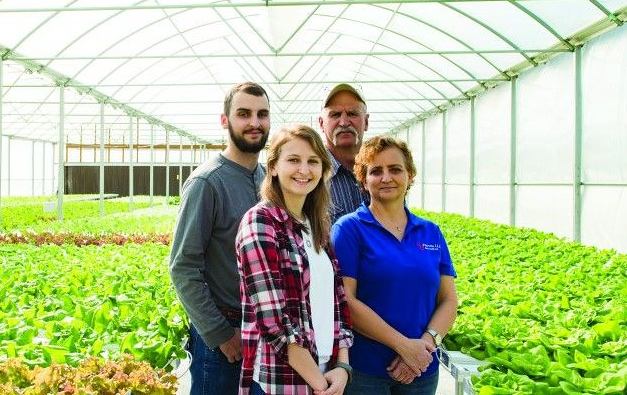
The Buck family of Grinnell, Kansas grow lettuce and herbs. From left, Wade Buck, Shayna Buck, Daniel Buck and Carol Buck.
Couple works with K-State specialists on food safety practices
K-State Research and Extension
Daniel and Carol Buck may be farming in the middle of wheat country, but they’re growing crops of a different sort in northwest Kansas. The Bucks grow lettuce and herbs for sale to grocery stores, restaurants, schools, hospitals and individuals in a hydroponic green house on their 4B Farms near Grinnell.
The couple started their produce business in January 2018 and quickly developed a market. Because they’re growing in a greenhouse, they’re able to grow year round and don’t have the problems with wildlife that other growers do. They rely mostly on Facebook and word of mouth for marketing and say they’ve taken advantage of K-State Research and Extension/ Kansas Department of Agriculture training to learn the ins and outs of Food Safety Modernization Act (FSMA) produce safety rule requirements. They’ve also participated in a Good Agricultural Practices workshop to help them prepare for GAPs audits by the U.S. Department of Agriculture.
“The food safety challenges in California and Arizona actually benefitted us,” Daniel Buck said of nationwide recalls of romaine lettuce linked to E. coli illnesses in the past couple of years. The Bucks were able to keep selling romaine because they had documented their food safety practices and could demonstrate that their romaine was not tainted. That was especially important earlier this year during a recall. The couple had just added a big customer – the Hays Medical Center, a part of the University of Kansas Health System. “We were the only supplier of romaine that could continue to sell (during the recall) to one of their hospitals.”
“With just Carol and I handling (their lettuce and herbs), it minimizes the chances of food safety problems,” Daniel Buck said.
Participating in K-State Research and Extension/Kansas Department of Agriculture workshops has helped keep basic food safety practices in the forefront of the couple’s business, they said, adding that many of those practices are common sense. One of the important things they’ve changed, however, since working with Extension Produce Safety Associate Cal Jamerson, is to stop wearing gloves as they harvest lettuce and herbs. Going without gloves is allowed in the FSMA guidelines.
“You can feel when your hands are dirty, but you can’t feel if your gloves are dirty,” Carol Buck said. In one circumstance, a customer requires gloves and when handling that customer’s produce, they comply with the buyer’s wishes. Otherwise, they harvest without them.
“We have picked Cal’s brain numerous times. He’s a lifesaver,” Carol Buck said.
Jamerson’s position with K-State Research and Extension is funded by the KDA to assist Kansas fruit and vegetable growers in improving the safety of their produce to meet the FSMA Produce Safety Rule requirements.
More information about the FSMA and GAP workshops, plus online registration is available athttps://bit.ly/2FFKDsm or contact Jamerson at 913-307-7394 or [email protected].





 By JAMES BELL













 By JAMES BELL