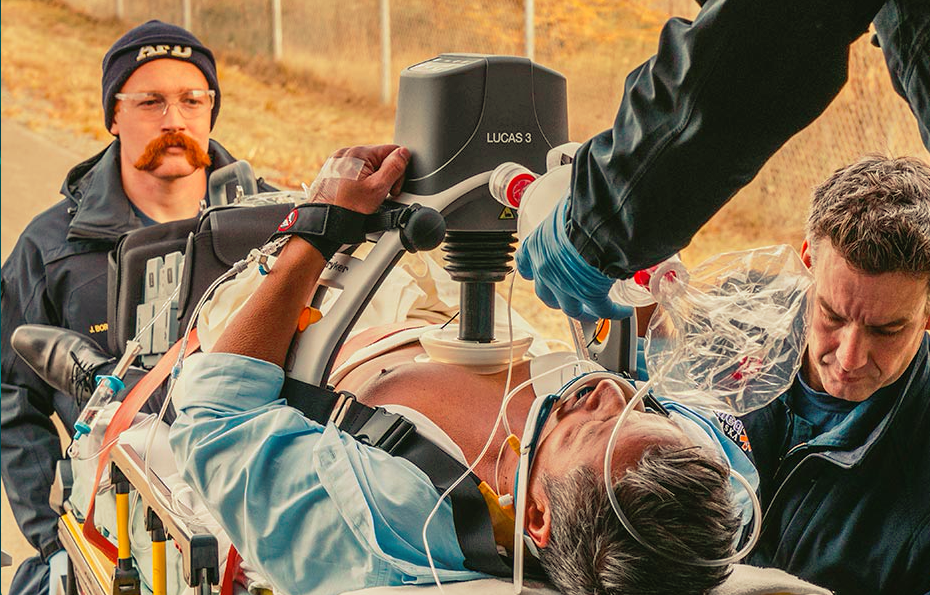
The Ellis County Commission approved the purchase of four mechanical CPR units for its front-line ambulances during its meeting Monday.
The county received a Kansas Board of EMS KARF grant to pay for half of three of the units. The commissioners opted to pay for the fourth unit on its own. The total cost to the county will be $35,472.
Health Services Director Kerry McCue said the mechanical units are superior to CPR given by a person. The use of mechanical CPR units also frees up EMS staff to monitor patient medication and heart monitors.
It also increases safety of EMS staff, because staff can seat-belted into the ambulance.
Commissioner Dustin Roths said he favored purchasing three units using the grant match and waiting to purchase the fourth unit.
However, Commissioner Butch Schlyer, a former nurse, said he favored purchasing the fourth unit now.
“CPR, it can wear you out really fast. To sustain it for more than a few minutes is really tough,” he said, adding he thought the purchase of these devices was a life-saving issue.
Ultimately, all three commissioners voted in favor of purchasing all four units.
In other business, the commission:
Approved a conditional-use permit for Nex-Tech to put up an 85-foot telephone pole for a cellular site at at 323 Pfeifer Ave. in rural Ellis County.
Reappointed David McDaniel to the Joint Planning Commission. Another position is open on the commission. Contact the county or a county commissioner if you have interest in being on the commission.
Approved Osborne County joining the Regional Household Hazardous Waste Program
Accepted a bid of $414,096 for 70,400 square yards, or about 5 miles, of cold in-place recycling of asphalt road surface.
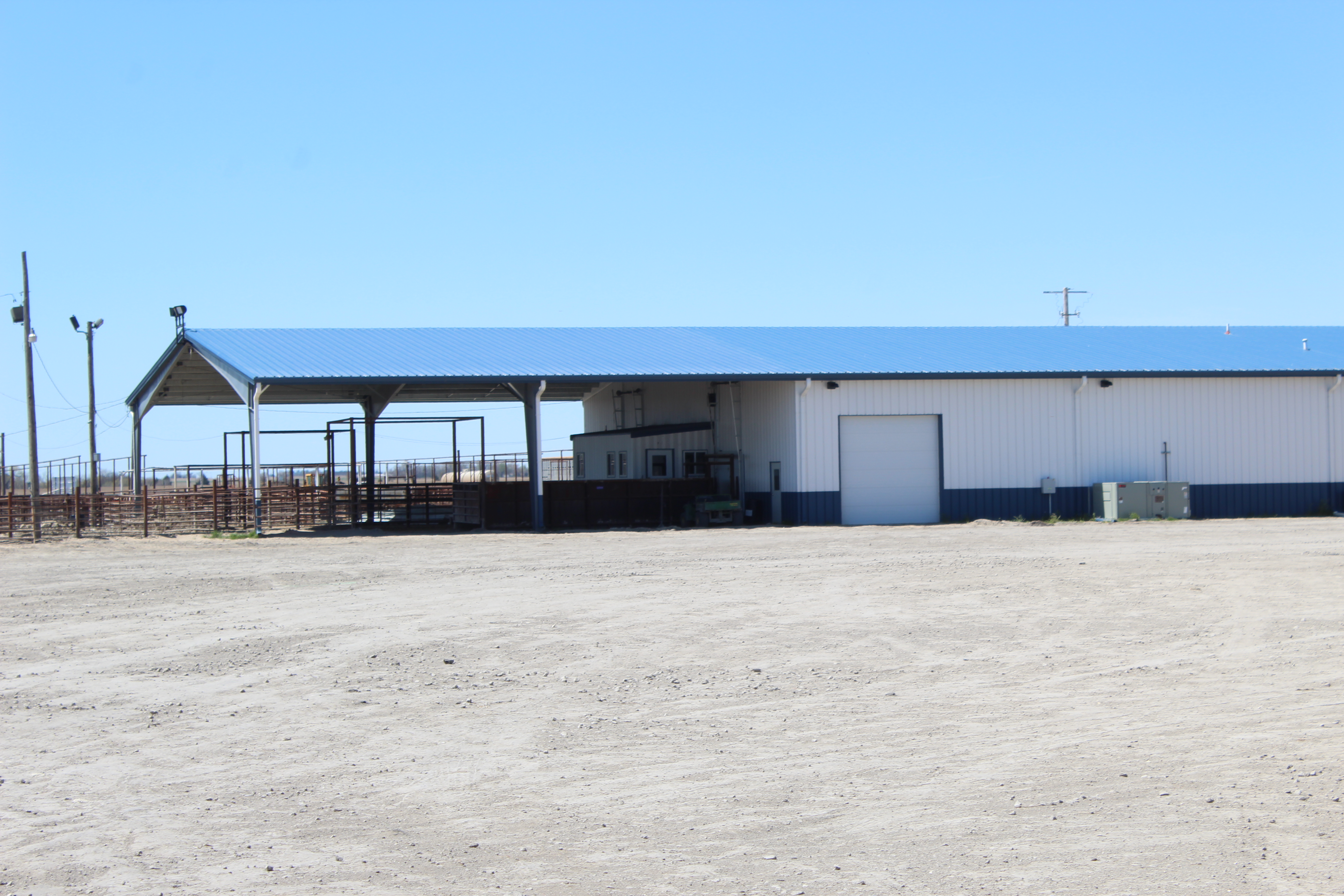
PLAINVILLE — Dozens of area ranchers are still waiting on their money after checks worth tens of thousands of dollars per producer bounced in a check-kiting scheme involving the Plainville Livestock Commission.
As the case has unraveled, ranchers have expressed shock and disappointment in the Tyler Gillum and his wife who owned the Livestock Commission, betrayal by the federal regulators who were supposed to protect the ranchers, and frustration at the legal proceeding that seem to be dragging on.
Rex Mulder of Mulder Farms in Logan said his family business has borrowed money to keep going as a result of not being paid for cattle they sold at the Plainville Livestock Commission.
He said the case has caused stress for his family and the entire ranching community.
Wes Cook, Plainville rancher, said he is hanging on for now without taking on more debt, but it has been difficult.
“I don’t know if I will ever see all of it,” Cook said of the money he is owed.
Checks from the Plainville Livestock Commission for two sales — one at the end of January and the other on Feb. 5 — bounced.
Money that was supposed to be set aside to pay cattle sellers was transferred from a custodial account to the Plainville Livestock Auction’s operating account. The Almena Bank froze both accounts, which resulted in bounced checks.
Almena Bank filed an interpleader case, which is legal action that seeks to determine to whom the money that was transferred out of the custodial account belongs.
Almena Bank has paid $916,652.29 into the Court Registry in the interpleader case, according to court records. That money is being held until the ranchers’ case is settled.
Plainville Livestock Commission declared bankruptcy on March 1. The interpleader case has been transferred from Norton District Court to federal bankruptcy court. The ranchers’ case is pending separately from the main bankruptcy proceedings and is still working its way through the court system.
“I was shocked and disappointed. They seemed trustworthy,” Mulder said of the Gillums when he had found out they had been indicted on federal charges.
The Gillums are charged with 31 counts of bank fraud, one count of making a false statement to the Small Business Administration in an application for a $1.5 million loan, and one count of making a false statement to Almena State Bank in an application for a $500,000 line of credit.
The indictment alleges investigators examined unfunded checks and wire transfers totaling more $2 billion sent by Tyler Gillum as part of the scheme.
The indictment alleges the Gillums defrauded Almena State Bank in Almena; Landmark Bank in Manhattan; Colorado East Bank and Trust in Lamar, Colorado; Astra Bank in Scandia; TBK Bank in Dallas; Guaranty State Bank in Beloit; and The Bank in Oberlin.
“I think something should be done,” Cook said of the Gillums. “They should lock him up or something.”
Mulder expressed frustration with the USDA, which regulates market agents like the Gillums under the Packers and Stockyards Act.
“The USDA failed us,” he said. “They should have shut them down. It should not have gotten to this point.”
The Plainville Livestock Commission had been cited before for not having sufficient funds in its custodial account, which by law is to hold money owed to cattle sellers.
Multiple filings have happened since the case was transferred to the bankruptcy court. Fifty-six parties to the case are listed on court records.
Parties in the case had until Friday, June 7, to object to any monetary claims filed in the case. Almena Bank did file objections on multiple claims and those people and entities have until June 21 to file responses to the objections.
James Overcash, the trustee for the bankruptcy estate, has filed a claim as a part of the interpleader case. That filings says that Overcash believes part of the money that is now being held by the court in interpleader case should be part of the bankruptcy estate.
However, other filings claim all of the money that was frozen by Almena State Bank should be used to pay unpaid cattle sellers.
The court hearing to discuss this and the other responses to disputed claims to the money that was frozen by Aleman Bank is set for 10:30 a.m. July 11.
The Ellis County Commission approved the purchase of four mechanical CPR units for its front-line ambulances during its meeting Monday.
The county received a Kansas Board of EMS KARF grant to pay for half of three of the units. The commissioners opted to pay for the fourth unit on its own. The total cost to the county will be $35,472.
Health Services Director Kerry McCue said the mechanical units are superior to CPR given by a person. The use of mechanical CPR units also frees up EMS staff to monitor patient medication and heart monitors.
It also increases safety of EMS staff, because staff can seat-belted into the ambulance.
Commissioner Dustin Roths said he favored purchasing three units using the grant match and waiting to purchase the fourth unit.
However, Commissioner Butch Schlyer, a former nurse, said he favored purchasing the fourth unit now.
“CPR, it can wear you out really fast. To sustain it for more than a few minutes is really tough,” he said, adding he thought the purchase of these devices was a life-saving issue.
Ultimately, all three commissioners voted in favor of purchasing all four units.
In other business, the commission:
Approved a conditional-use permit for Nex-Tech to put up an 85-foot telephone pole for a cellular site at at 323 Pfeifer Ave. in rural Ellis County.
Reappointed David McDaniel to the Joint Planning Commission. Another position is open on the commission. Contact the county or a county commissioner if you have interest in being on the commission.
Approved Osborne County joining the Regional Household Hazardous Waste Program
Accepted a bid of $414,096 for 70,400 square yards, or about 5 miles, of cold in-place recycling of asphalt road surface.
PLAINVILLE — Dozens of area ranchers are still waiting on their money after checks worth tens of thousands of dollars per producer bounced in a check-kiting scheme involving the Plainville Livestock Commission.
As the case has unraveled, ranchers have expressed shock and disappointment in the Tyler Gillum and his wife who owned the Livestock Commission, betrayal by the federal regulators who were supposed to protect the ranchers, and frustration at the legal proceeding that seem to be dragging on.
Rex Mulder of Mulder Farms in Logan said his family business has borrowed money to keep going as a result of not being paid for cattle they sold at the Plainville Livestock Commission.
He said the case has caused stress for his family and the entire ranching community.
Wes Cook, Plainville rancher, said he is hanging on for now without taking on more debt, but it has been difficult.
“I don’t know if I will ever see all of it,” Cook said of the money he is owed.
Checks from the Plainville Livestock Commission for two sales — one at the end of January and the other on Feb. 5 — bounced.
Money that was supposed to be set aside to pay cattle sellers was transferred from a custodial account to the Plainville Livestock Auction’s operating account. The Almena Bank froze both accounts, which resulted in bounced checks.
Almena Bank filed an interpleader case, which is legal action that seeks to determine to whom the money that was transferred out of the custodial account belongs.
Almena Bank has paid $916,652.29 into the Court Registry in the interpleader case, according to court records. That money is being held until the ranchers’ case is settled.
Plainville Livestock Commission declared bankruptcy on March 1. The interpleader case has been transferred from Norton District Court to federal bankruptcy court. The ranchers’ case is pending separately from the main bankruptcy proceedings and is still working its way through the court system.
“I was shocked and disappointed. They seemed trustworthy,” Mulder said of the Gillums when he had found out they had been indicted on federal charges.
The Gillums are charged with 31 counts of bank fraud, one count of making a false statement to the Small Business Administration in an application for a $1.5 million loan, and one count of making a false statement to Almena State Bank in an application for a $500,000 line of credit.
The indictment alleges investigators examined unfunded checks and wire transfers totaling more $2 billion sent by Tyler Gillum as part of the scheme.
The indictment alleges the Gillums defrauded Almena State Bank in Almena; Landmark Bank in Manhattan; Colorado East Bank and Trust in Lamar, Colorado; Astra Bank in Scandia; TBK Bank in Dallas; Guaranty State Bank in Beloit; and The Bank in Oberlin.
“I think something should be done,” Cook said of the Gillums. “They should lock him up or something.”
Mulder expressed frustration with the USDA, which regulates market agents like the Gillums under the Packers and Stockyards Act.
“The USDA failed us,” he said. “They should have shut them down. It should not have gotten to this point.”
The Plainville Livestock Commission had been cited before for not having sufficient funds in its custodial account, which by law is to hold money owed to cattle sellers.
Multiple filings have happened since the case was transferred to the bankruptcy court. Fifty-six parties to the case are listed on court records.
Parties in the case had until Friday, June 7, to object to any monetary claims filed in the case. Almena Bank did file objections on multiple claims and those people and entities have until June 21 to file responses to the objections.
James Overcash, the trustee for the bankruptcy estate, has filed a claim as a part of the interpleader case. That filings says that Overcash believes part of the money that is now being held by the court in interpleader case should be part of the bankruptcy estate.
However, other filings claim all of the money that was frozen by Almena State Bank should be used to pay unpaid cattle sellers.
The court hearing to discuss this and the other responses to disputed claims to the money that was frozen by Aleman Bank is set for 10:30 a.m. July 11.
Plainville Livestock CommissionBy CRISTINA JANNEY Hays Post
PLAINVILLE — An auction has been set for June 27 for the Plainville Livestock Commission’s real estate, vehicles and equipment in attempts to recoup some of almost $14.5 million in debt the business owes in its bankruptcy.
The real estate will sell at 11 a.m. and will be administered by the bankruptcy trustee, James Overcash. The equipment, vehicles and other property will be sold by Bud Palmer Auction starting at 1 p.m. at the livestock commission property at 907 NW Third in Plainville.
The Gillums are charged with 31 counts of bank fraud, one count of making a false statement to the Small Business Administration in an application for a $1.5 million loan, and one count of making a false statement to Almena State Bank in an application for a $500,000 line of credit.
The indictment alleges investigators examined unfunded checks and wire transfers totaling more $2 billion sent by Tyler Gillum as part of the scheme.
The indictment alleges the Gillums defrauded Almena State Bank in Almena; Landmark Bank in Manhattan; Colorado East Bank and Trust in Lamar, Colo.; Astra Bank in Scandia; TBK Bank in Dallas; Guaranty State Bank in Beloit; and The Bank in Oberlin.
Dozens of cattle producers were caught up in the scheme after money that was supposed to be set aside to pay cattle sellers was transferred from a custodial account to the Plainville Livestock Auction’s operating account. The Almena Bank froze both accounts, which resulted in bounced checks amounting to tens of thousands of dollars per producer.
Almena Bank filed an interpleader case, which is legal action that seeks to determine to whom the money that was transferred out of the custodial account belongs. In the interpleader case, Almena bank indicated Plainville Livestock Commission had defaulted on three loans with its bank totaling more than $3.49 million.
The interpleader case has been transferred from Norton District Court to federal bankruptcy court. That case is pending separate from the main bankruptcy proceedings and is still working its way through the court system.
According to court documents filed May 31 in federal bankruptcy court, the trustee indicated Almena State Bank has the first lien on the real property to be sold at the upcoming auction and the the second lien on the equipment.
The property consists of two tracts, one of which is 21 acres and the other 0.65 acres. The property is valued at $734,030, according to the Rooks County Appraiser’s office.
The trustee determined TBK Bank has first lien on the equipment. According to court records, TBK Bank is owed $227,238.
The attorney for TBK did not wish to comment on the bankruptcy or the pending auction, Almena Bank did not return previous calls regarding this story.
There are also secured loans on four trucks and a skid loader. The creditors that hold those liens will be paid first on the sale of those items. The claim on these items amount to more than $92,000.
The machinery, equipment, vehicles and office equipment were valued at about $542,000 with cash, equivalents and accounts receivable worth an additional $211,000 according to court records.
According to court documents, Plainville Livestock Commission debt is almost $14.5 million of which $3.7 million is secured debt. Landmark Bank of Manhattan is listed as an unsecured creditor with the commission owing $8 million.
In the time leading up to the Livestock Commission’s bankruptcy filing and the Gillums’ indictment, records show the Livestock Commission earned $2.2 million in 2017, $1.9 million in 2018 and $225,000 before the commission was shut down in 2019.
Some of the personal property to be auctioned includes office and kitchen equipment from the cafe, such as tables and chairs, computers, refrigerators, ice machine, and a grill.
Some of the stockyard equipment includes tractors, ATVs, mowers, chutes, trailers, gates, tanks, and a welder.
A representative of Bud Palmer Auction said a sale bill will be posted on the company’s website in the coming days.
The trustee has leased the sale barn to Lloyd and Judy Schneider dba Heartland Regional Stockyards, a livestock market agent with a separate license from the Gillums. They are also listed as creditors in the bankruptcy. Hays Post has also tried to contact the Schneiders about the case.
According to court documents, Heartland’s lease will be terminated within six days following the approval of the sale of the real estate by the bankruptcy court.
Any funds from the auction that are greater than what is owed to Almena Bank, TBK or other lien holders will go to the bankruptcy estate, according to court records.
Overcash is set to appear before the bankruptcy court to report on the sale at 9 a.m. June 28 or as soon after the sale as possible.
Any other remaining assets that are not listed in this sale will be sold at a separate, future sale, according to court records.
That includes trucks, a Chevy Camaro, more trailers, semi and other items.
Check Hays Post for more on this developing story as details become available.
Offers helpful suggestions in dealing with oversize loads
Phillips County Review
PHILLIPSBURG — Oversize wind turbine loads coming through the area and their related problems united virtually the entire population of Phillips County in opposition to dangerous conditions and major hassles caused by them starting around five years ago.
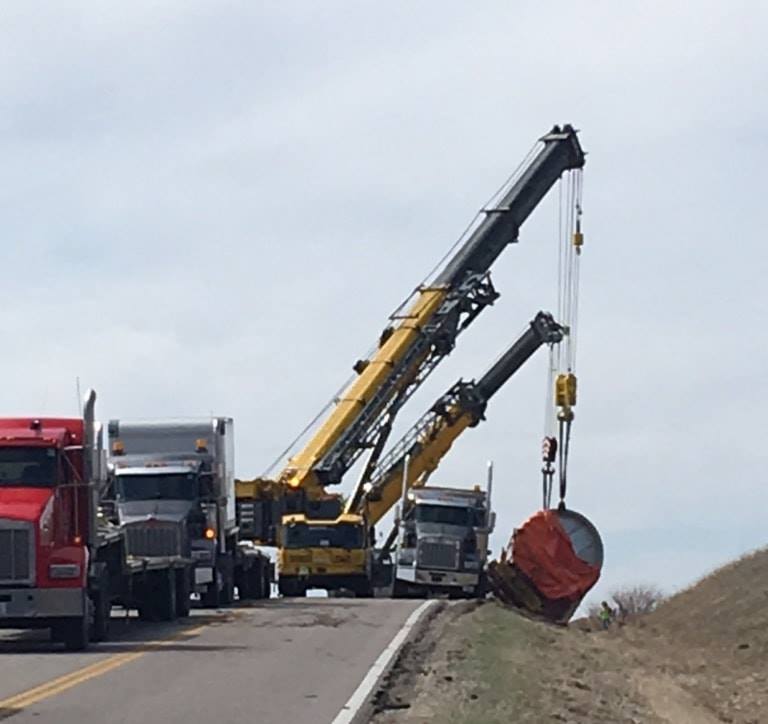
With around 4,000 such loads passing through the county in the past few years (so says the Kansas Department of Transportation), massive traffic tie-ups, destruction of roadway infrastructure and delayed travel times have been among the problems. On top of everyone’s list, however, have been complaints about pilot car drivers.
Those issues, which led to a local public uproar, resulted in a “solution” of bypassing the loads around Phillipsburg by detouring them down K-383 in northwest Phillips County. As it turns out this wasn’t a solution at all, it just moved the problems to different residents in a slightly different geographic area.
That flawed fix to the problem came to a head a few months ago when repeated oversize load accidents shut down all of K-383 multiple times the entire length of its route through Phillips County and on into Norton County.
Courtesy photo
The problem was so bad that as Phillips County Review editor Kirby Ross, who has been reporting on the oversize load controversy for several years, was sitting down drafting an editorial on the matter, yet another major K-383 oversize load accident came over the scanner.
Before long the Review received a phone call from Wanda Seyffer of Limon, Colo., who advised the newspaper that Ross’ editorial had been a “wake up call” and had gone viral inside the pilot car driver industry after it was posted on online pilot car bulletin boards nationwide.
Afterward Ross and Seyffer had a lengthy telephone conversation, during which Ross invited Seyffer to write down her thoughts on the matter.
Those thoughts are published below.
______________
Attn. Mr. Kirby Ross:
Thank you for your time today!
Oversize loads are everywhere. The movement of these loads are normally carefully planned. This involves coordinating the trucking company, pilot ar escorts, state and local county/city permits, dealing with weather and safe havens to park by sunset in most cases. Depending on the load dimensions there may be bucket trucks involved to lift traffic lights, wires and cables.
Apologies to all of Phillipsburg residents for those of you who experienced the few bad apples who crossed the center line playing “chicken” and any other antics!!!
For the most part, Pilot Car drivers are professional in warning the general public and traffic. The truck driver should give the pilots time to set up and secure an intersection without causing Starsky and Hutch moves.
The pilot should then be parking on the shoulder, getting out and stopping traffic with a stop/slow paddle and flag, then radioing the truck driver that it is clear to proceed.
When stopped it helps everyone involved to sit and be patient until the oversize load(s) pass. Abusive language and hand gestures are experienced all to often. Patience and a smile or an encouraging word helps everyone.
Amber flashing lights are what pilot cars are required to run on their light bars. When the public sees these amber lights many times they are ignored, unlike the law enforcement red and blue lights. It is always so helpful to be assisted by local law enforcement!
Public awareness of using caution, slow down, pull over or off the road and stop when directed by a pilot car keeps everyone safe. Be patient, kind and work with the oversize load elements and a smooth movement is achieved.
Respectfully submitted,
Wanda M. Seyffer
A-1 Pilot Car, LLC
Limon, Colo.
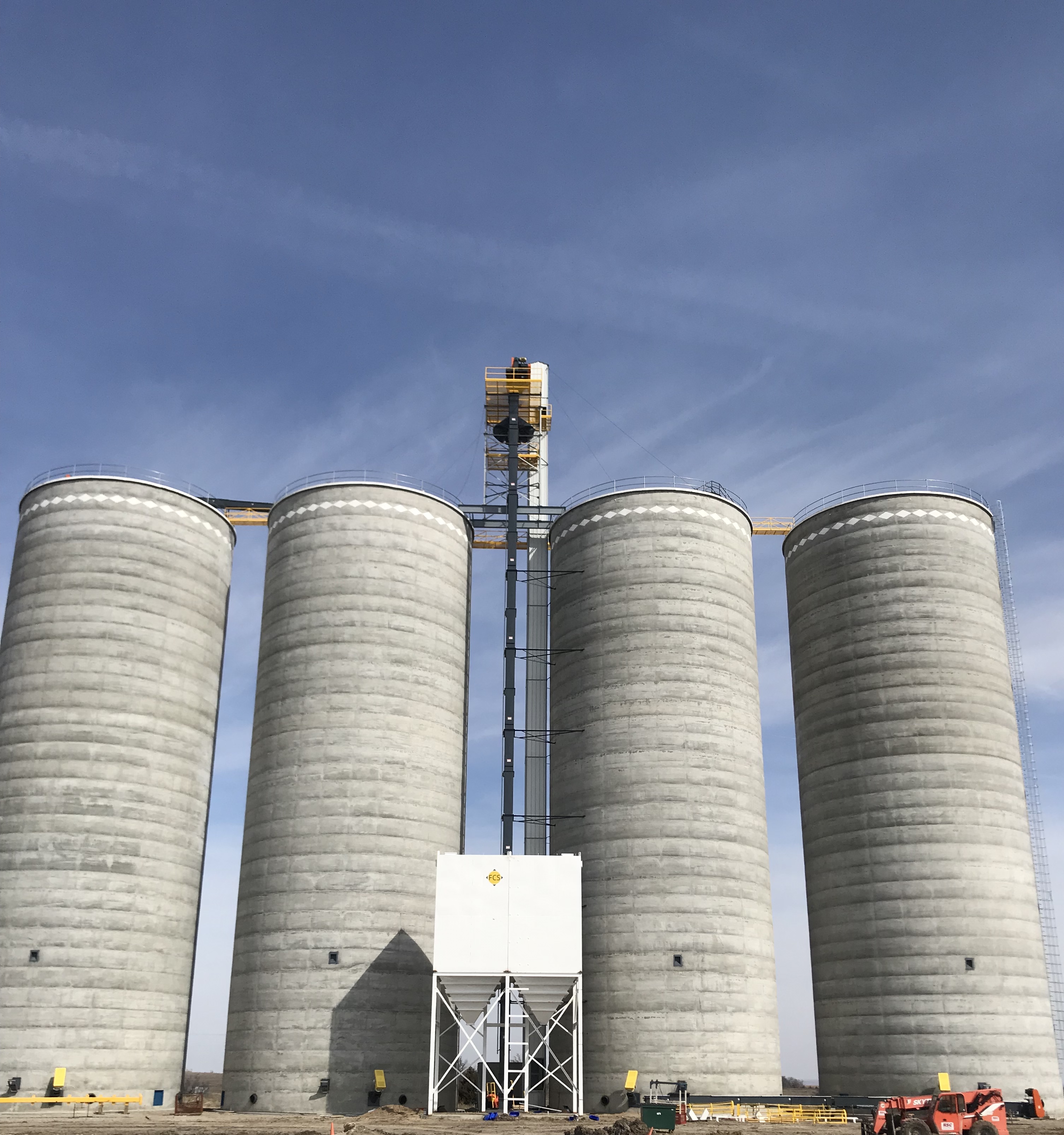
A little over a year since construction began Midland Marketing is set to open its newest grain elevator in Palco with a ribbon cutting set for 11 a.m. Monday.
The new stand-alone facility will hold over a million bushels of grain and will help the company increase its grain storage along with new technology that will create much-needed efficiencies in the rural area.
The company looked at expanding other facilities but found a new facility was the best option according to Anna Luna, Palco coordinator.
“After doing site surveys at our current facility, it wasn’t feasible for us to add on,” she said.
The new facility is expected to hold 500,000 bushels in the main elevator along with two 550,000 bushel bunkers at the site.
The land the site was built on was purchased two years ago after finding more storage was needed with area farmers diversifying their crops.
“Things have changed a lot in the farming community,” Luna said.
Up until the ’90s, farming in the area was primarily wheat, but new as new crops have become more favorable to area farmers, facilities have to change with the times.
“With that change, we found that we need to also add more storage,” Luna said.
In 2018 and 2016, the facility was forced to store grain on the ground after reaching capacity.
“That made it kind of interesting, especially last year when we piled on the ground and it was open to the rain and the snow,” Luna said. “We decided as a cooperative, our board of directors and our general manager, decided that it was time to add onto our storage.”
Generally, Luna said the company has expanded current facilities to hold more grain, but in this case building from scratch was the best option at the Palco location and the new facility will take some pressure off of other area facilities.
The need stems from a lot of grain coming from the western part of Rooks County and created a situation where milo was at on the ground at Palco after the facility at Zurich was at capacity, Luna said.
“We’re hoping to take a little pressure off that location,” Luna said, which coincidentally was the last new ground-up facility the company had constructed. “What is exciting about it, it is the first new facility that we have built since the 1980’s when we built the annex at Zurich.”
With building a new facility comes increased capacity, but they have also integrated features that will help the facility become faster and more efficient.
“We are really excited about all of the automation,” Luna said.
Courtesy Midland Marketing
“The automation will be like, someone can stand in the control room and push a button and load a truck. It frees up a couple of people to go do other jobs that we have been short-handed in being able to accomplish.”
Faster loading and unloading will also be a key component of the facility.
The elevator will be able to move 20,000 bushels an hour, compared to the current facility that is limited at 8,000 per hour.
A conveyor at the bunkers will also be able to move 15,000 bushels an hour.
“Just the speed and efficacy of getting that farmer back to field is going to be great,” Luna said.
The capabilities of efficiency and automation free up a person that they are able to go and do something else means that we can have one person instead of multiple people moving grain she added.
“That helps a lot,” Luna said, noting the difficulty in rural areas to find employees and the growing lack of interest in working in their industry.
While the new facility is exciting for the company, residents of the small town have been keen on the new construction as well.
“It brings a little bit of excitement to this small community,” Luna said.
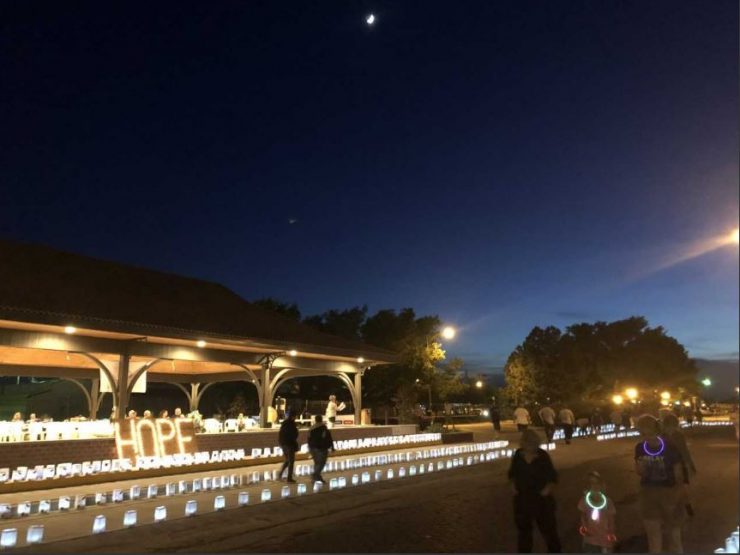
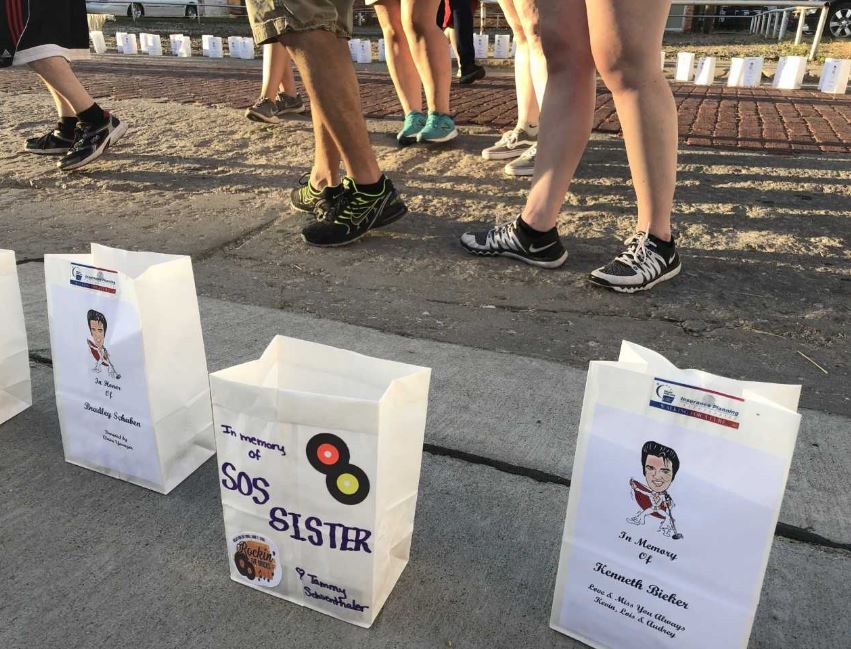
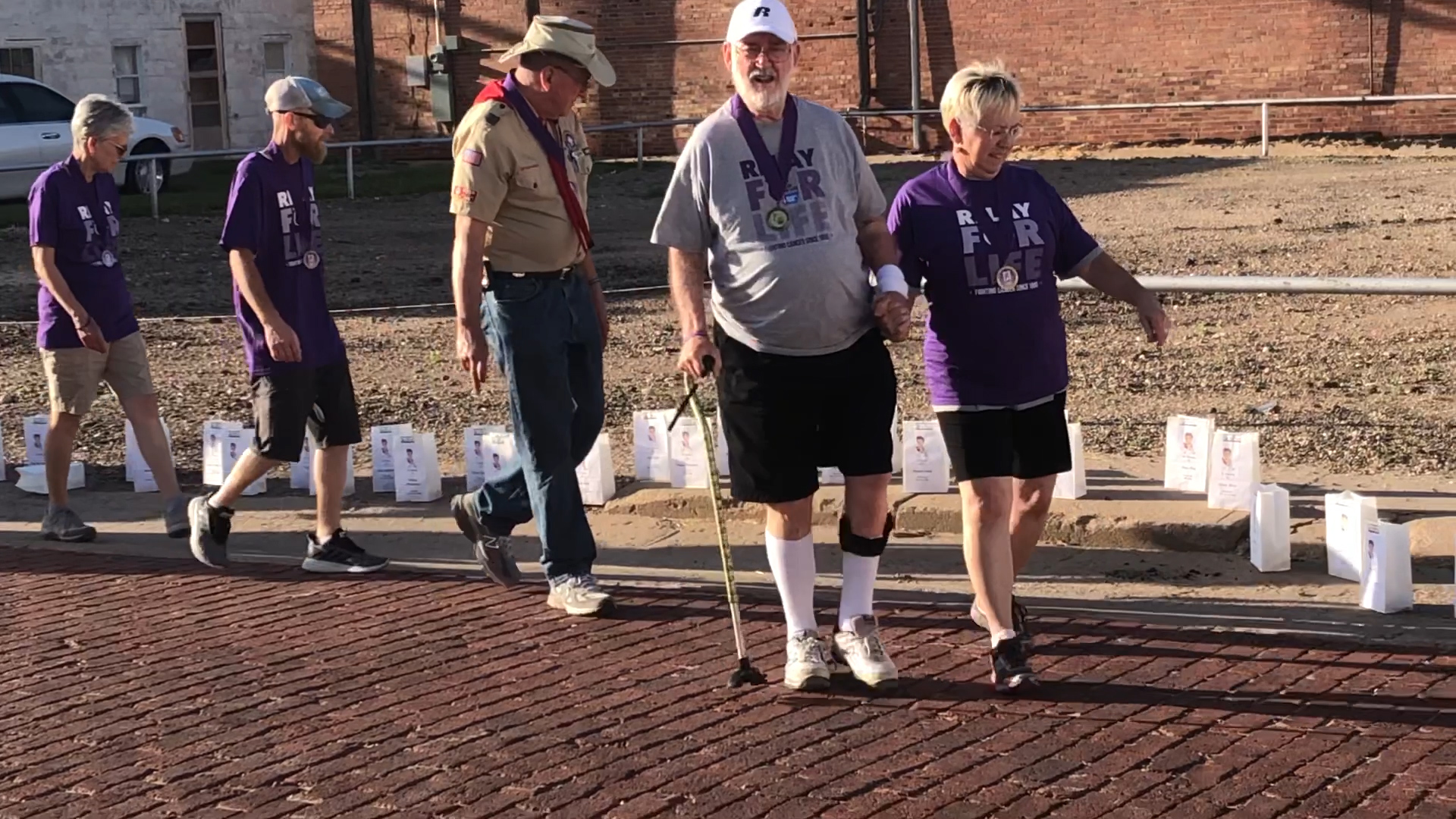
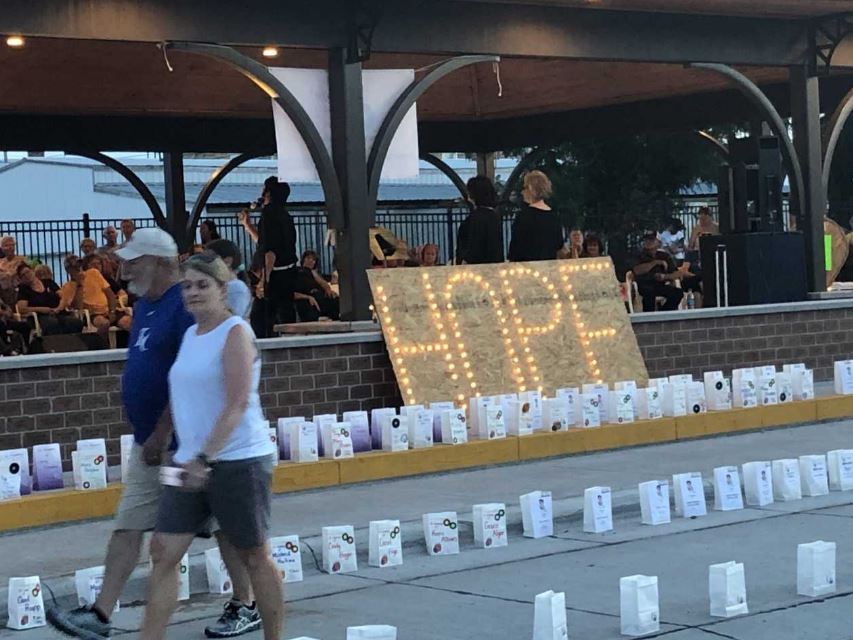
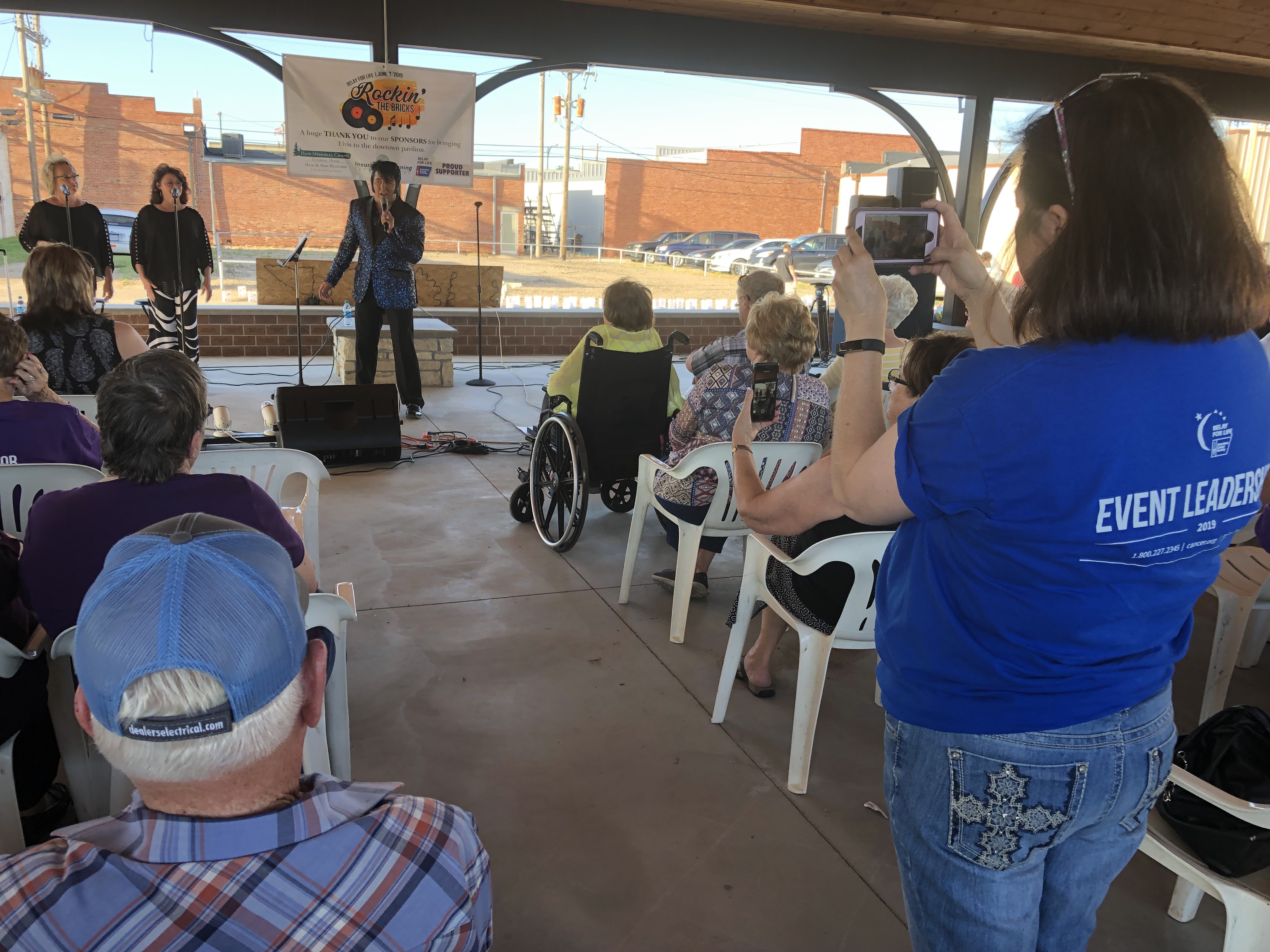
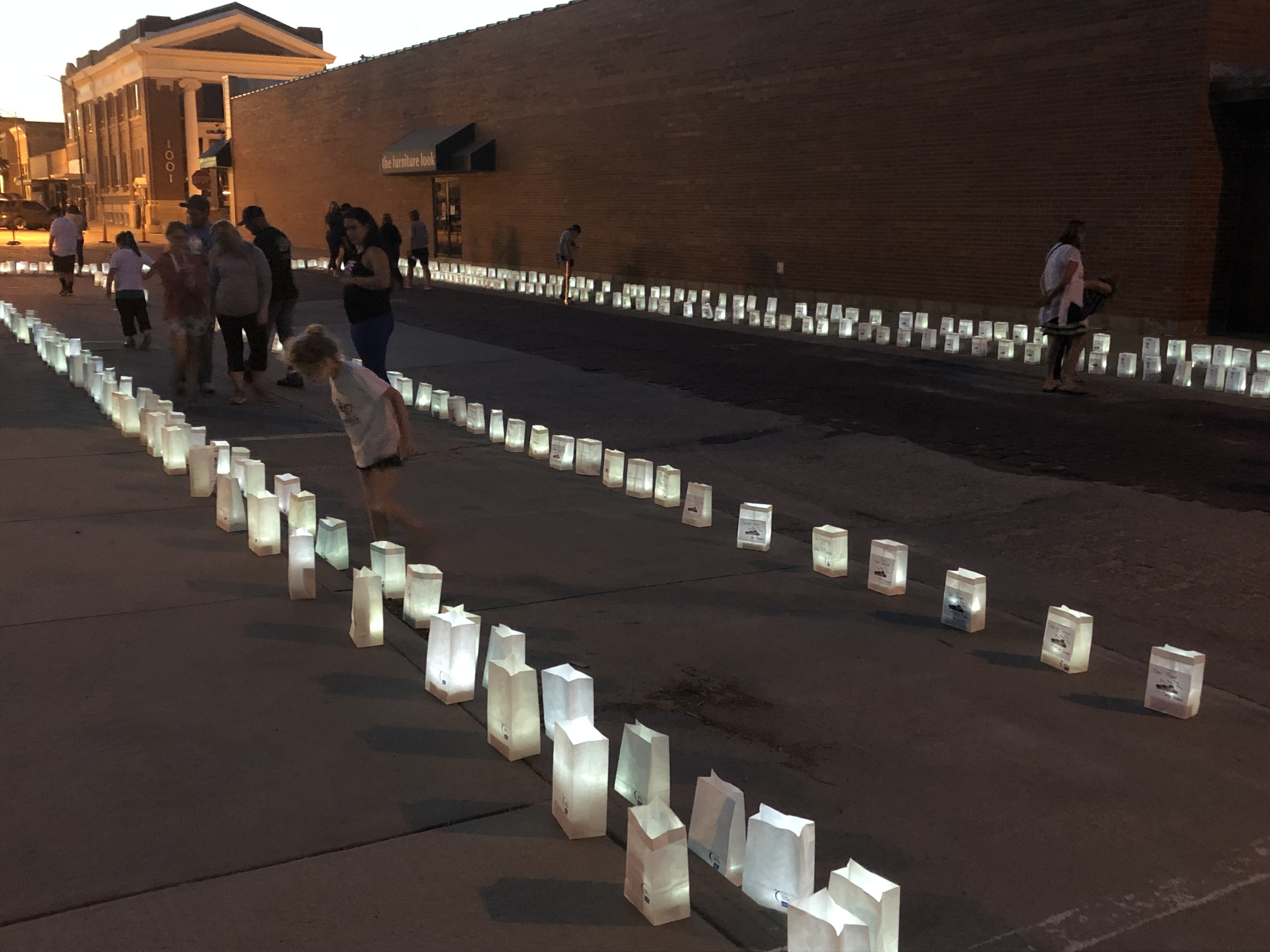
Relay For Life walkers stroll around luminaries in honor and remembrance of cancer patients as Frank Werth performs as Elvis Presley along with his backup singers in the Downtown Hays Pavilion June 7.
By BECKY KISER Hays Post
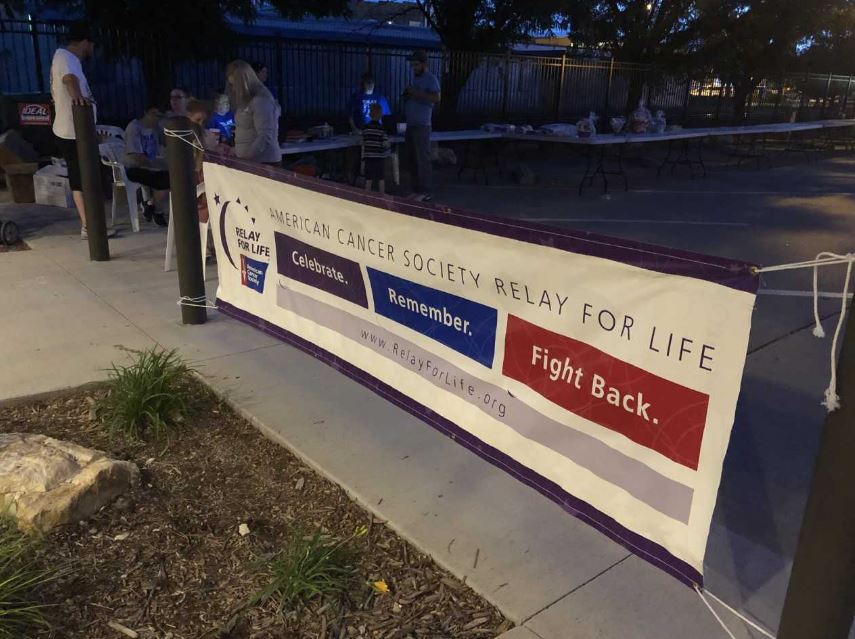
“Very, very pleased” is how Ellis County Relay For Life Committee member Mary Ann Randa described Friday evening’s event in the downtown Hays open-air pavilion.
This was the second year the annual fundraiser for the American Cancer Society was held at the pavilion and this time the committee tried something new.
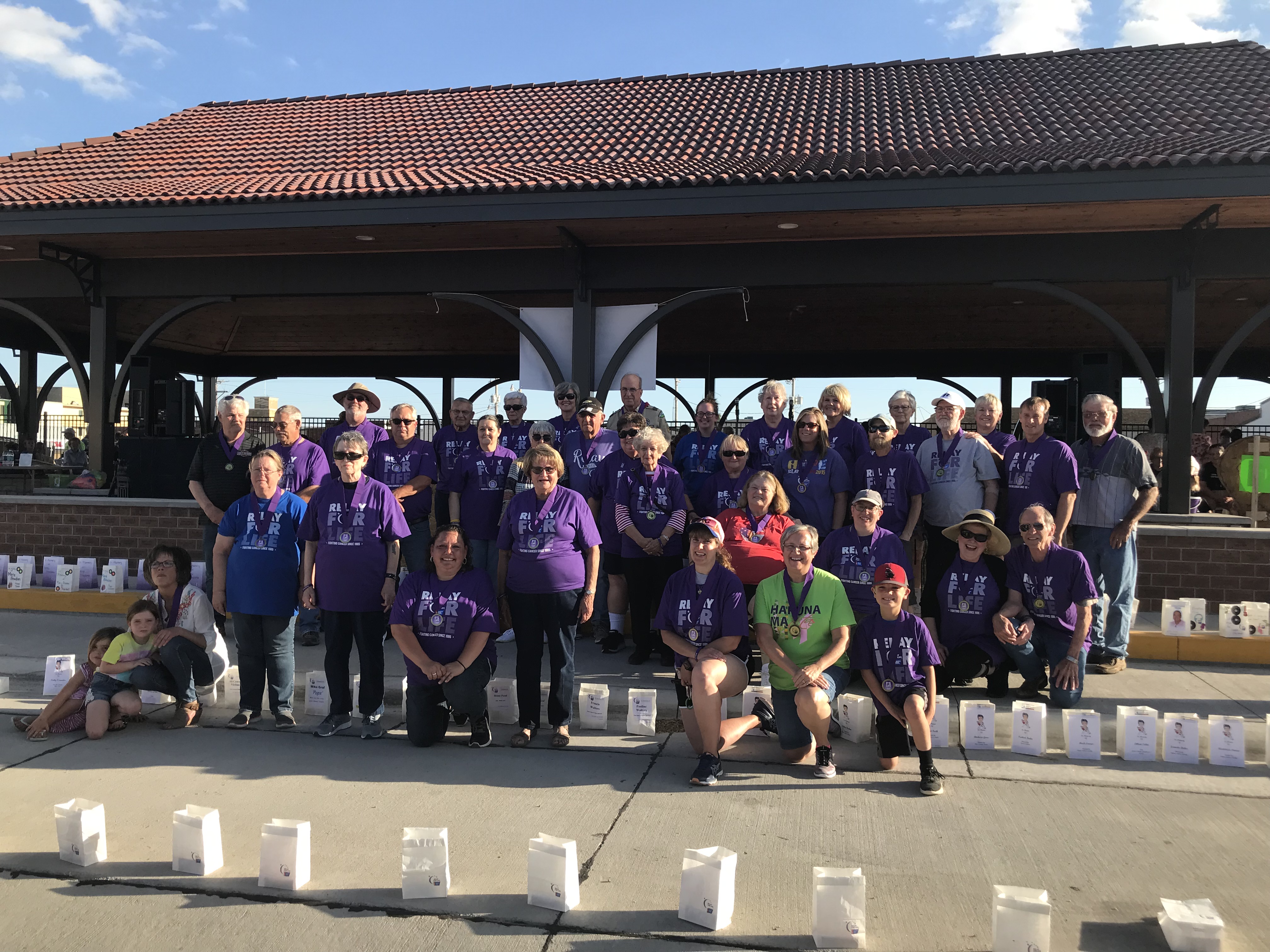
“Rockin’ on the Bricks” featured a two-hour concert by “Elvis,” also known as Schoenchen resident Frank Werth, drawing music-lovers who had never attended the local relay in its 20-plus years. Werth kicked off his concert singing “Only The Strong Will Survive” as cancer survivors clad in their purple t-shirts and wearing RFL survivor medals, walked the relay with the Survivor’s Lap.
Ellis County cancer survivors pose for a picture.
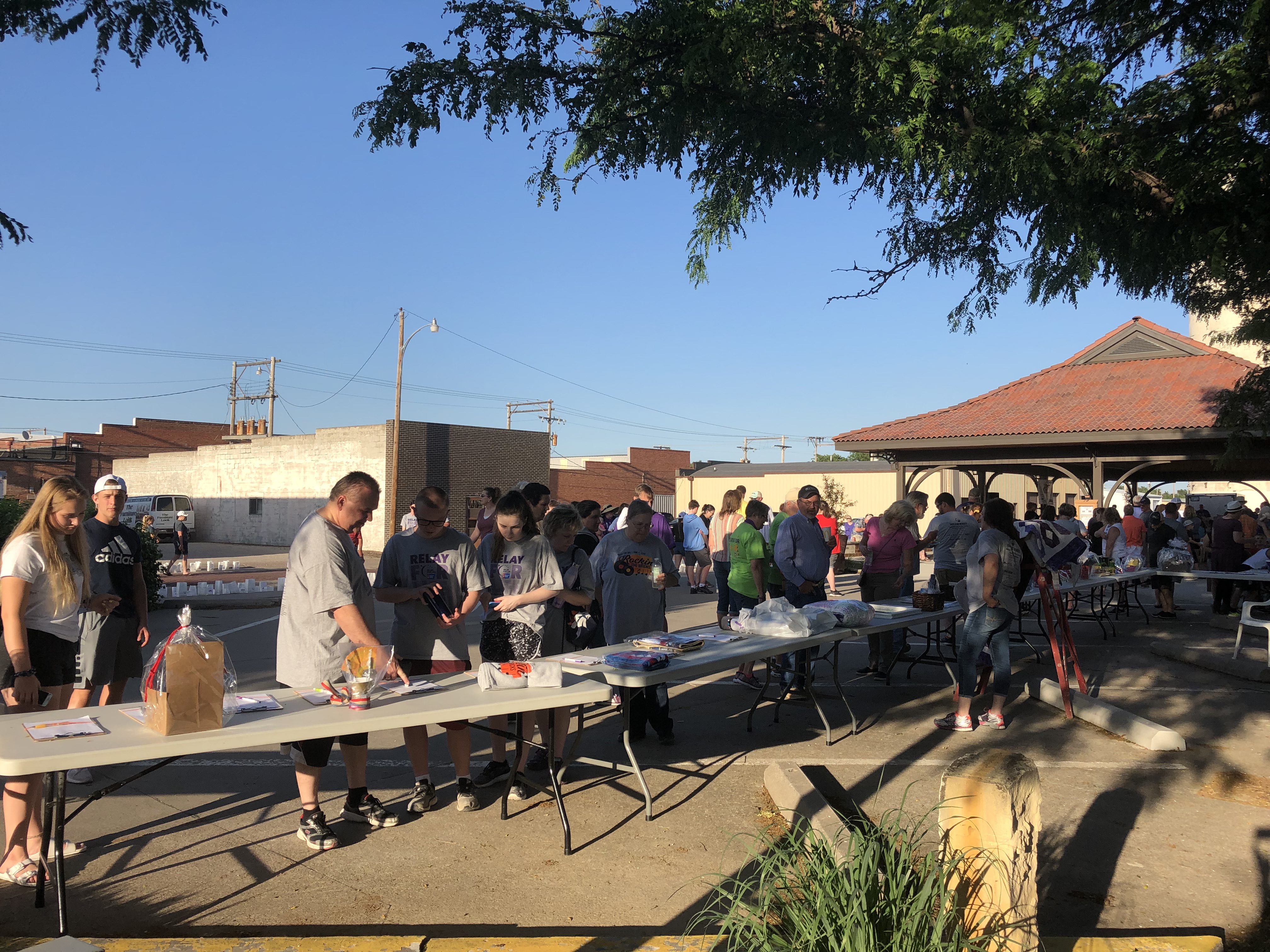
Purple donation buckets were scattered about the pavilion, adding to the money raised from a silent auction of donated gift baskets.
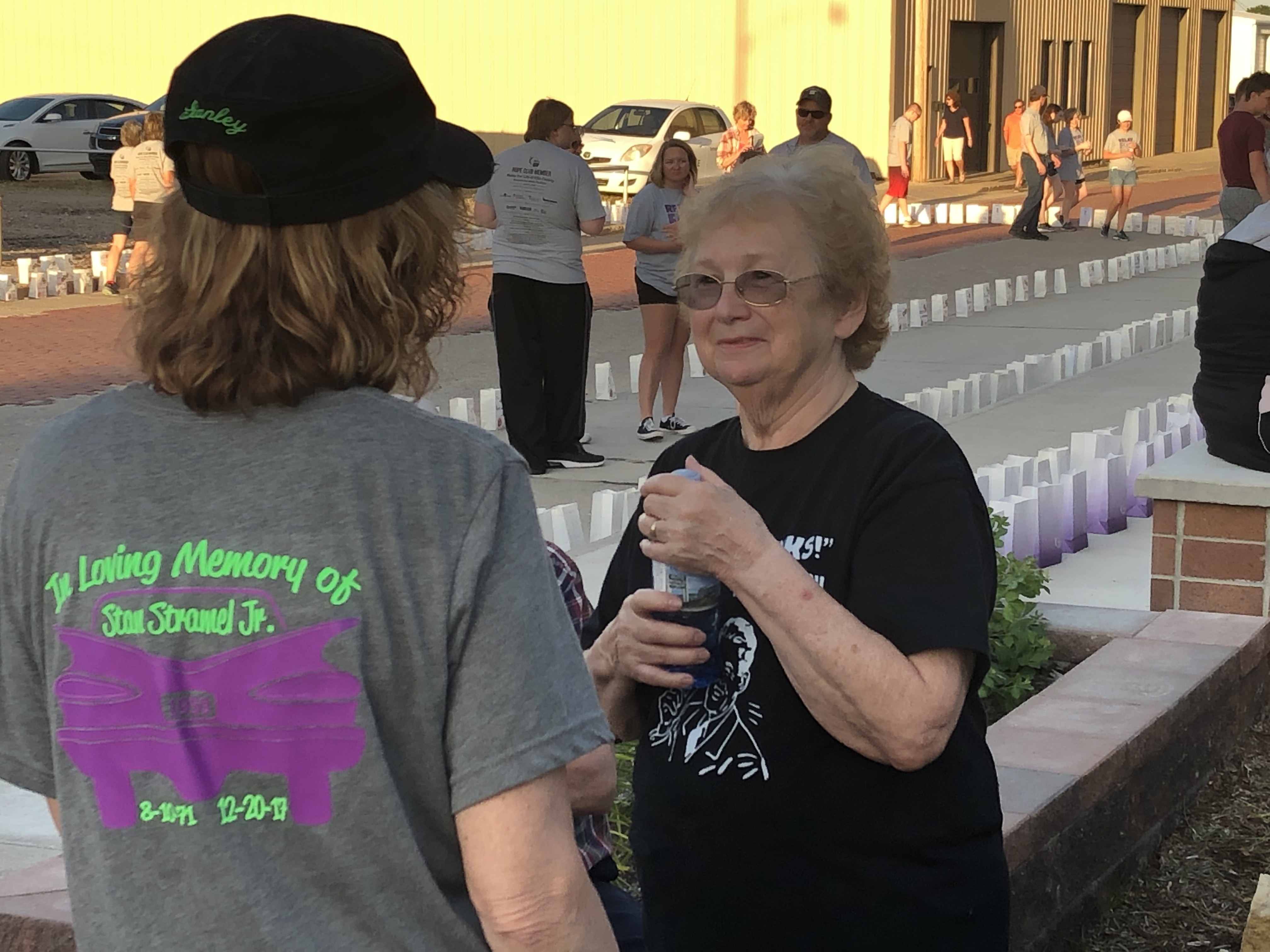
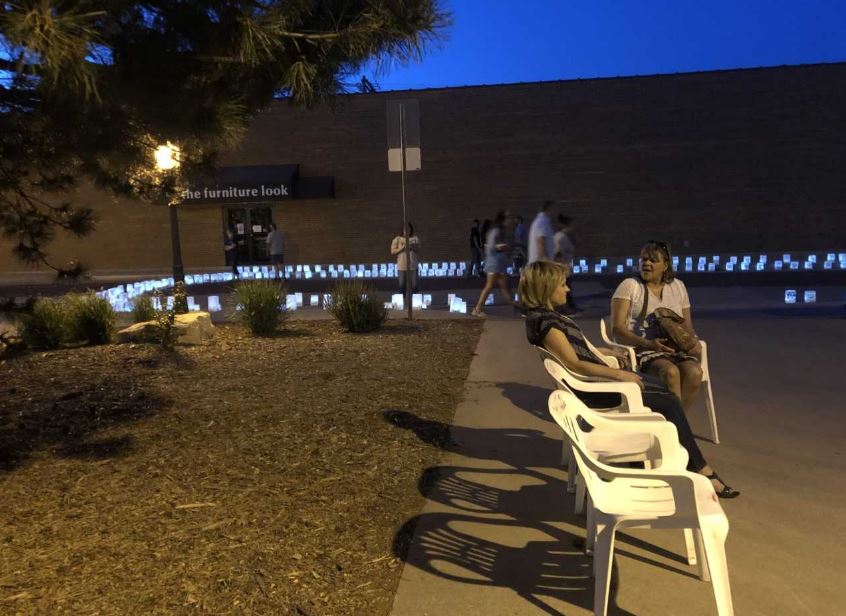
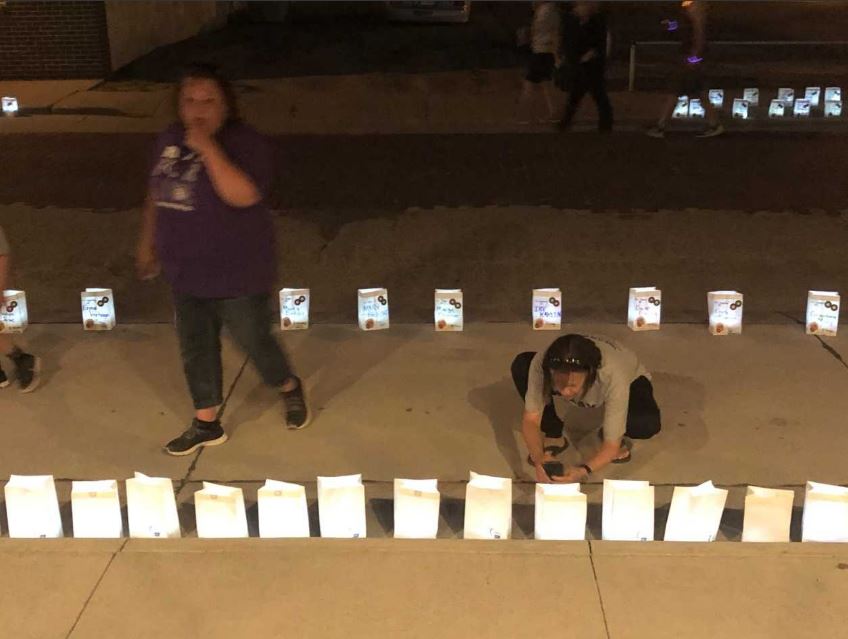
Luminaries purchased in remembrance of those who died of cancer and honoring others who are battling the disease lined 10th Street next to the pavilion.
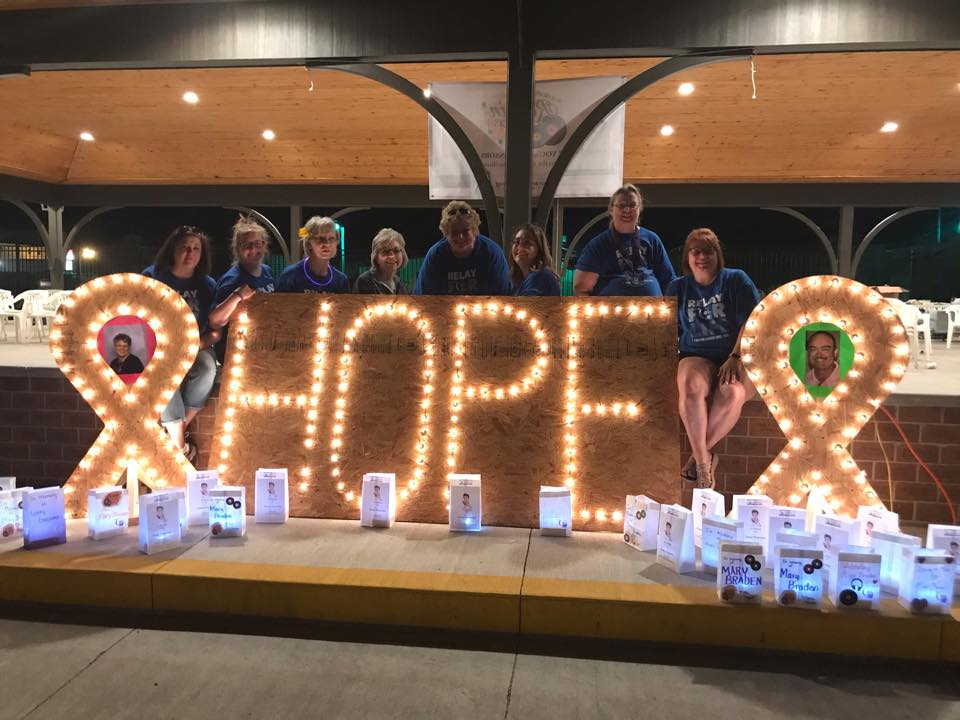
A special memorial table was graced with the faces of Hays residents Mary Braden and Lonnie Claycamp, who both died recently of cancer.
Braden started the Ellis County Relay For Life in Hays and co-founded SOS, the support group for breast cancer survivors. Claycamp was a longtime committee member and also served as chairperson. Special remembrances were presented to their families by the committee.
Also honored were longtime Hays volunteers Bob May, who purchases the survivor medals; Brenda Meder, who reads the honorees names during the nighttime luminary ceremony; and Donna Maskus, a 4-H Master Volunteer who organizes 4-H members to place the many luminaries the morning of the relay.
During a prayer offered Austin Lahman, First Baptist Church pastor, he mentioned the colorful t-shirts worn by relay participants and supporters.
The backs of one particular black shirt was emblazoned with “Cancer Sucks” in white lettering. Similar shirts worn by children had a little less harsh wording of “Cancer Stinks.”
Clint Froelich team
The family and friends of Hays resident Clint Froelich were wearing the black shirts in recognition and support of his ongoing cancer battle that began a year ago.
The front of the t-shirts features a quote by Clint, “Cancer, you make me wish I had more middle fingers.”
His mother Marie Froelich says the t-shirts have been sold to members of their large family and to others in support of Clint and for cancer awareness.
Clint thought he was having an appendix attack. The organ was removed and surgeons discovered cancer.
“It was full of cancer,” Marie said. “It’s a very rare type and he’s had about nine surgeries this last year. He’s struggling and we’re just taking one day at a time.”
Marie talked about the up and down battle Clint has faced. “He’s been through the ringer.”
His latest 9-hour surgery and chemo wash yielded some positive results.
“So far things have been clear but he needs to gain weight and get better, ” Marie reported. He also wants to regain his core strength. Clint has been unable to eat normally. Her son is working with doctors in Hays and a specialist in Kansas City.
Clint Froelich (2nd from left) joins the Relay For Life Survivor Lap Friday night.
The 38-year-old is married with four daughters and is a construction worker at Brackney Construction in Hays. The company has also been supporting Clint and his family. “Mark’s been great. He’s been very helpful. If Clint isn’t feeling good he can go home. He just has [Clint] do whatever.”
“Cancer is a scary word,” Marie said. Other family members have also had the disease, including her mom and dad who have both been cancer-free for many years.
“It’s scary how many people have it. I was shocked when I came down here to see the people [who died] that either have luminaries or are in the process – cancer survivors – and how long they’ve been [survivors.] So that gives us hope.”
Prior to the first lap, the cancer survivors introduced themselves to the crowd and said how long they have been survivors. For some, it’s been just weeks; for others, many years.
A Relay For Life fundraising golf tourney organized by Hays Eagle Radio is scheduled for Fri., June 14 at the Fort Hays Municipal Golf Course.
Ellis County cancer survivors pose for a picture.
Free massages from H2O Float Cryo Massage
Silent auction items included gift baskets and cards and a reclining sofa
Clint Froelich (2nd from left) joins the Relay For Life Survivor Lap Friday night.
Clint Froelich team
Luminaries were placed by 4-H volunteers.
Brenda Meder reads luminary names.
“Elvis” with his backup singers performed by tribute artist Frank Werth, Schoenchen.
A handmade quilt featuring the RFL purple ribbon in the silent auction.
The Relay For Life committee with the memorial tribute to Hays residents Mary Braden and Lonnie Claycamp.
(Editor’s note: Becky Kiser was the emcee for Relay For Life.)
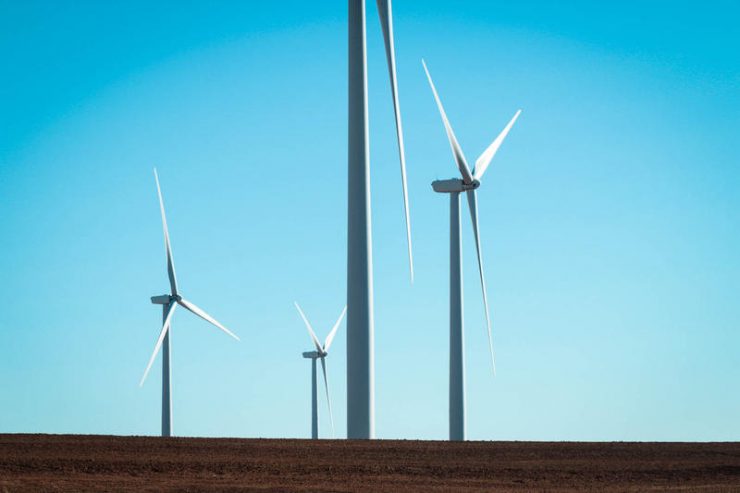
Wind farms have been sprouting across Kansas horizons for nearly 20 years, planting ever-more-giant turbines capable of transforming breezes into clean-energy megawatts and remaking the plains-and-prairie landscape.
The rules about how close those towering structures can stand to a road, to a home, or to a property line vary by project and from one county after the next.
Kansas has no statewide rulebook on the setbacks that govern how close a turbine can sit next to, well, anything. At least not yet. Legislators considered a statewide setback bill in 2019, but it didn’t get very far.
Instead, counties have been figuring out regulations as they go. That’s created a hodgepodge of agreements and regulations that range from outright prohibitions to whatever deal wind farm builders can cut with landowners and their neighbors.
Setbacks
One of the most common and hotly contested types of regulations regarding wind farms (see Reno County) has to do with what’s known as a setback. A setback is the distance a wind turbine must be from something else —roads, homes, a neighbor’s land.
Setbacks aim to protect against potential damage from ice that breaks off of the blades and to reduce the impacts of noise and shadows generated by the turbine.
Let’s take a look at how counties have been handling this so far.
No single government agency in Kansas keeps a comprehensive list. What we’re sharing here was gathered through phone calls and emails with county clerks, appraisers and commissioners in counties with operating turbines. Where possible, we’re sharing links to documents with the information. If you have more information to provide, send an email to [email protected] and we’ll update our data set.
No Setbacks
Clark County
Cloud County
Elk County
Haskell County
Kiowa County
Marshall County
These counties have no setbacks, at least any mandated by the county through an agreement or conditional use permit. They’ve left that to the landowners and the developers.
Largest Setbacks
There are several different types of setbacks, but the most common is how far the turbine must be from houses where people live. That’s also sometimes broken down into whether the house is on land that’s been leased or is on land owned by someone not participating in the project.
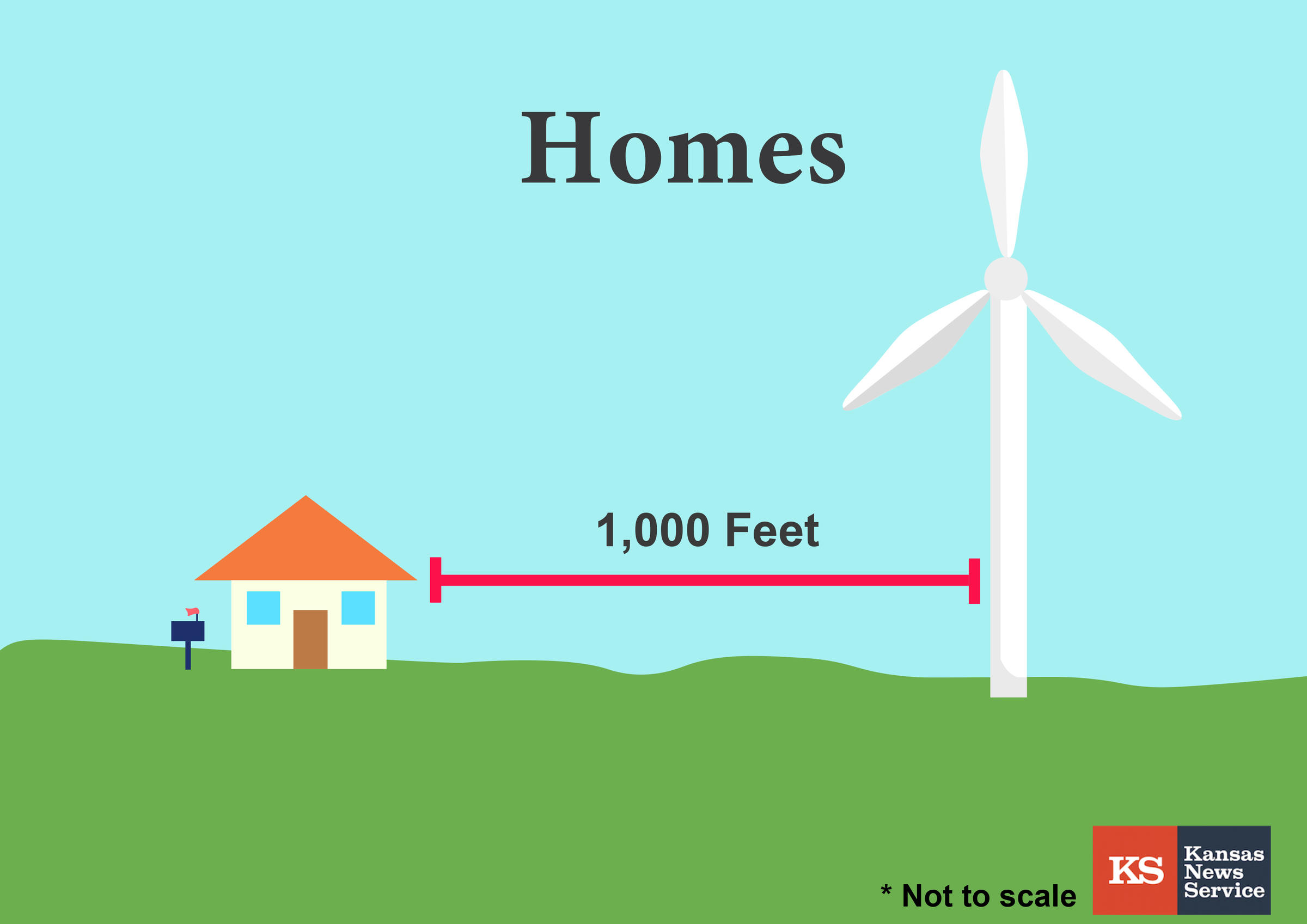
Counties have set a more standard number for houses on land participating in the project. In every county that’s set that type of regulation, it’s 1,000 feet — all except Pratt County, which sets it at 2,500 feet.
Typical Setbacks
Every county is free to set its own rules, but some consensus has emerged. While not every county with wind farms has each of these restrictions, it’s generally where most have landed.
(Tiantian Zhou/Kansas News Service)
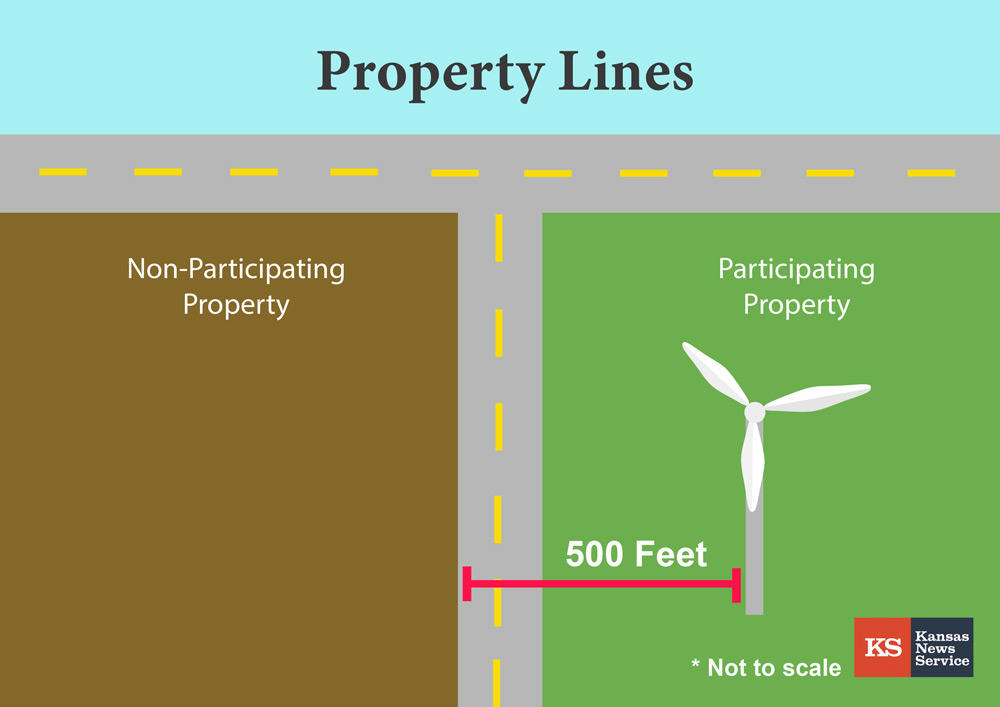
Property Lines
500 feet or 1.1 times the height of the turbine at its highest point.
To better understand the math, the average height of a wind turbine in Kansas is 417.7 feet. Multiply that by 1.1 and you get 459.5 feet.
But, new wind turbines do seem to be getting taller. One of the newest projects in the state is in Marion county. It also has the tallest turbines in the state. Each one is 492 feet tall when you include the top of a blade at its peak.
(Tiantian Zhou/Kansas News Service)
Homes
1,000 feet.
Accessory Structure
The height of the turbine plus 50 feet.
(Tiantian Zhou/Kansas News Service)
Roads
500 feet or 1.1 times the height of the turbine at its highest point.
(Tiantian Zhou/Kansas News Service)
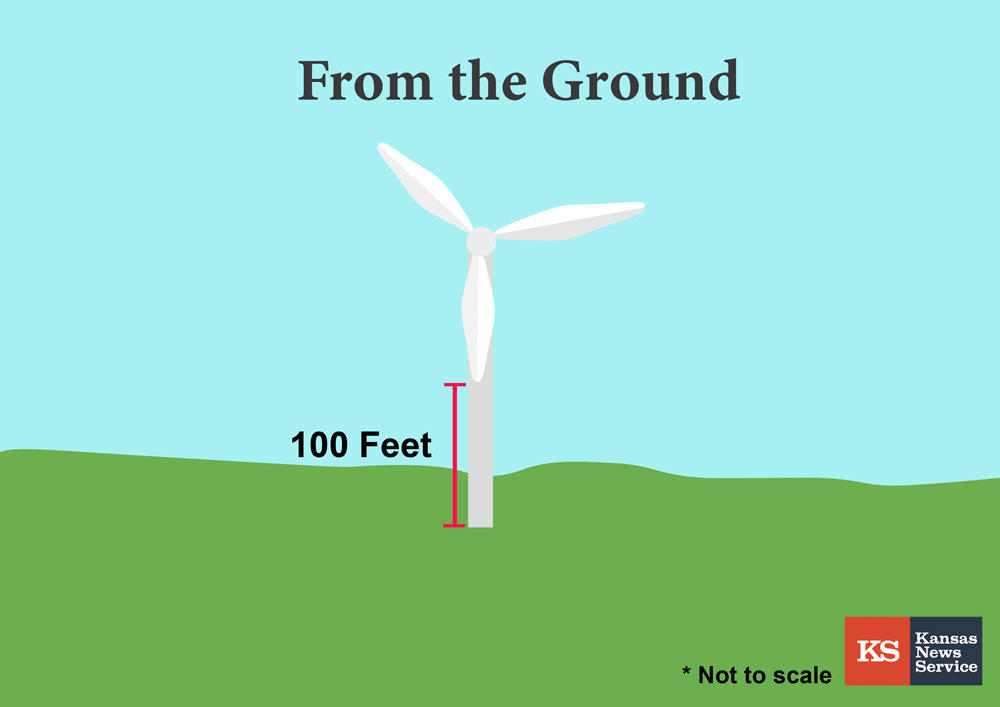
Distance of the blade from the ground
This category is more varied. Only six counties even regulate this. It ranges from 40 feet to 100 feet.
It’s also worth noting that wind developers will sometimes exceed the limits set by counties and choose to keep their turbines further away from homes and roads. They generally tend to follow the turbine manufacturer’s recommended setbacks.
Ultimately, finding the right setbacks for each location involves compromise. Developers need space to be able to build enough turbines to make a project economically viable, and the people who live nearby want to be protected from potential hazards and annoyances.
But in Kansas, that ad hoc approach has mostly worked.
While speaking to numerous county officials for this story, most seemed pretty pleased with the arrangements they’d worked out. Generally, there were very few, if any, complaints about the turbines.
Brian Grimmett reports on the environment and energy for KMUW in Wichita and the Kansas News Service, a collaboration of KMUW, Kansas Public Radio, KCUR and High Plains Public Radio covering health, education and politics. Follow him on Twitter @briangrimmett or email grimmett (at) kmuw (dot) org.
That’s when the Little Jerusalem Badlands State Park in Logan County south of Oakley is expected to open to the public after the land was purchased three years ago.
An update on the newest state park in Kansas was presented Thursday night by Laura Rose Clawson, director of marketing and outreach for The Nature Conservancy (TNC) Kansas field office, at the Hays Public Library.
“This is the first anyone’s hearing about it,” Clawson told the small but enthusiastic audience. “What I’m telling you is pretty new and there’s always something that could change. But there’s a good certainty [this] is going to be what happens.
“We need to get it open sooner than later so we’re going to do it in phases.”
TNC purchased the 330 acres from fifth-generation owner Jim McGuire in late 2016. The family was ready to sell but only if the land and wildlife were protected and public access be granted to the previously private property.
Laura Rose Clawson, of The Nature Conservancy-Kansas, told a Hays audience Thursday the Little Jerusalem Badlands State Park is expected to open this year with a standard $5 entrance fee.
During 2017, Clawson said TNC realized “we were in over our heads. We are a nature conservationist organization. We are not a visitor access organization.”
TNC started exploring options, and looked towards the public/private partnership the organization has with the U.S. National Park Service at the Tall Grass Prairie National Preserve in the Flint Hills of Chase County.
They landed on a similar partnership with the Kansas Department of Wildlife, Parks and Tourism (KDWPT).
The project next had to go through the legislative process. Then-governor Jeff Colyer signed the bill creating Little Jerusalem Badlands State Park about a year ago.
Phase 1 trail system at Little Jerusalem Badlands State Park (Click to enlarge)
Since then, work has been underway to open the park. Phase 1 is a series of designated trails.
Last Dec. 13, the KDWPT Commission approved a $50 fee that would be charged to access the trails, although a $5 fee per vehicle would allow entrance to the grounds. The Nature Conservancy was not in favor of such a high fee.
“It’s really important to the Nature Conservancy that access is affordable as possible so that as many people as possible can experience it,” Clawson said.
TNC has been working with KDWPT, she said, and “landed on what we all feel is a really good solution.”
“It’s currently in front of the KDWPT Commission. What’s most likely going to happen and what everybody wants at this point is the Kansas standard park entrance fee, currently $5 a vehicle, or an annual pass [to all state parks].”
Clawson says the KDWPT Commission will discuss the joint proposal by KDWPT and TNC for lowering the fee from $50 to $5 will be discussed at a quarterly meeting and then voted on at the following meeting. “We don’t anticipate any push back with that,” she said.
The KDWPT Commission will meet June 13 at Rolling Hills Zoo in Salina. The agenda items currently do not specifically list Little Jerusalem Badlands State Park.
The Nature Conservancy owns the property and has partnered with the state of Kansas to offer public access.
During questions from the audience Clawson reiterated the entrance fee would be $5 per vehicle, the same as any other Kansas state park.
“So you come in, however many people are in your car, you pay one [$5] fee to get in and then you can get out and go on the trails.”
Clawson said the $50 fee came from “some former state personnel recognizing how excited people are for this, and knowing what it’s going to take [to open], was trying to make up the funds for it.”
KDWPT does not get any appropriation or general funding from the state, she noted. The department funds itself by charging fees.
“Nature Conservancy was okay with a fee, not a $50 fee. We’re all on the same page now and have worked it out.”
Clawson was unable to confirm a specific date for the park’s opening.
“There are a lot of moving parts, but it’s gonna be this year the park will open. I can’t put a month to it quite yet. Too many little things that could come up.”
The plan calls for KDWPT to hire a new park ranger to start work this summer – a naturalist – who will have regularly scheduled guided walks on and off the trails. Rangers now working at Historic Lake Scott – just seven miles to the south in Scott County – are now rangers working in both parks, according to Clawson. The park manager for Lake Scott is also the park manager for Little Jerusalem.
There will also be occasional special events that would have a additional fee and different staffing. “We’re not talking $50,” she stressed. People are already requesting a night photography event to take pictures of the stars in the clear sky with no light pollution.
The parking lot, designed for 30 to 40 vehicles plus a designated bus area, has been carved out, overflow parking areas have been identified, fencing is going up, and hiking trails with a variety of views are being mapped. The trail system will be adjusted as needed.
A researcher in the Kansas State University Conservation and Parks Management Department is conducting a three-year study on the impact of visitors in the park.
“She has pictures of all the trespassers we’ve had because she’s got cameras hidden through Little Jerusalem,” Clawson laughed.
“But it also means she knows where every trickle of stream water is. And she’s going to be able to see where everybody is going off-road and going through. So maybe we need to put the trail there. Or maybe we have to do something more significant with our signage preventing people from going down there.
“We’re going to make those real-time decisions based on a combination of her scientific data and the park rangers that are going to be patrolling every day and see what’s happening.”
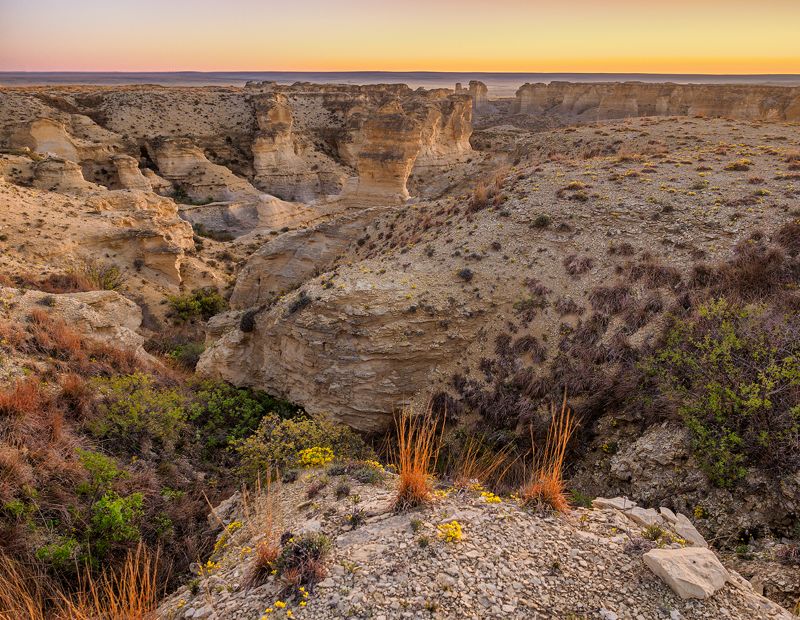
The mile-long valley of 150- to 160-foot-tall spires and cliffs encompasses the state’s largest Niobrara Chalk formations, created 85 million years ago when what is now western Kansas was under the Western Interior Seaway. Fossils can be seen embedded in the chalk.
Trails cross the historic Smoky Hill Trail territory that once saw “Wild Bill” Hickok and “Buffalo Bill” Cody pass through, and today is home to wildlife and plants rarely found anywhere else in the world.
Interpretive signage of the flora and fauna, along with information about the shortgrass prairie and the 200 acres of exposed chalk formations, will be placed along the trails.
Little Jerusalem Badlands State Park will be open 365 days a year during daylight hours, except for special night time events. Inclimate weather could force closure of the park or its entrance access, 400 Road, a dirt road maintained by Gove County.
Two staff members of The Nature Conservancy live in the area and manage Smokey Valley Ranch. “They’re sort of the first-line decision for Little Jerusalem as well,” Clawson explained.
The ranch and park are connected with cattle grazing in both areas. “That’s why we have fencing in the parking lot. It’s not so much to keep people in but to keep the cattle out,” she said with a smile.
Clawson thinks visitation will rival that of Tallgrass Prairie National Reserve, which sees up to 25,000 visitors a year. “We’ve gotten a lot of public interest about Little Jerusalem.”
Because TNC wants to limit the number of structures in the park, there will not be a visitors center.
“That’s one of the roles the new naturalist park ranger will play during the regular interpretive hikes and while meeting with school groups,” Clawson explained.
There are plans for a restroom facility.
Hays resident Jane Gilman told Clawson she would be “willing to pay $50” to hike in Little Jerusalem. She and her husband were recently on the Gove County 400 Road to pick up a piece of equipment. Gilman says she could see the tall chalk spires.
“I’m from western Kansas and I love open spaces.”
Gilman is an avid walker, three miles a day when she can. “I’m excited to go out and see this,” she said. “I picture this like my own ‘Little Grand Canyon’ here in Kansas.”
Hays USD 489’s students became astronauts Wednesday with a launch of a weather balloon into the upper atmosphere — vicariously, at least.
FHSU’s Science and Mathematics Education Institute launched a weather balloon from the Gross Memorial Coliseum parking lot as part of a four-day “Mission to Mars” themed workshop they are presenting to Hays students in Title I Part C Education Program this week.
The weather balloon carried a payload of about 15 pounds that included pressure, temperature and radiation sensors, as well as a camera to record the flight and 3-D printed astronaut versions of the students.
The payload also contained a bag of Cheetos and cans of pop. Paul Adams, dean of the College of Education and coordinator of the balloon launch, said the bag of Cheetos will probably blow up as the air pressure decreases.
In addition, carrot seeds were included in the payload. The Title 1 students will be able to take home the seeds that have been exposed to radiation in the upper atmosphere as well as control seeds that stayed on the ground. They can plant those seeds and observe if there are any differences in how the plants develop.
Adams regularly participates in weather balloon launches and collects that data for use by students in the Science and Mathematics Education Institute during the school year.
Adams said he expected the latex balloon to travel to a height of about 87,000 feet. As a result of weather conditions Wednesday, the balloon only reached about 60,000 feet. At height, the decreased pressure resulted in the balloon enlarging to about 30 feet across. The balloons become so large they pop and then the payload usually takes about a half an hour to return to earth.
Adams was not sure how far the balloon would travel while it was aloft. Adams predicted the balloon would end up northeast of Russell. The balloon was found using GPS equipment north of Russell between the towns of Paradise and Fairport.
Adams has had balloons that ended up near the Nebraska border and as far away as Wichita. One balloon was caught in the jet stream and was tracked at 183 mph.
“We have traveled as much as 100 miles away, and we have ended up only five miles away,” he said.
Before the launch, two boys in the group said they thought the carrot seeds would burst because of the changes in air pressure. They did not think the seeds would grow. If they did grow, they did not think they would be edible.
Two girls said they thought the seeds would survive, but they may grow differently than the seeds that were not exposed to radiation.
All of the students said they had never participated in a weather balloon launch.
The balloon’s sensors recorded temperature, air pressure and radiation, and the camera recorded audio, but the video recording failed. The handle holding the children’s 3-D printed astronauts broke, sending the astronauts to earth from 25,000 feet up. The carrot seeds on board were recovered with the sensors.
Although some of the 3-D figures may have ended up in the Saline River, Adams said he has had lost payloads recovered.
Last winter, Hays High School lost a payload from a weather balloon at about 70,000 feet. The students used the opportunity to calculate where the payload may have landed. About a month ago, the payload was recovered about a mile from where the students estimated the payload landed.
Although part of Wednesday’s payload was lost, Adams said this can be a good lesson for the students on engineering. All the students will receive lost in space certificates for their missing astronauts.
Adams said allowing students to see science is not just something that happens in a classroom is an important aspect of the activity.
“Learning to work together as a group is part of it,” he said. “It is also the idea that you get to see that if you do an investigation, science is not just a bench thing that you do in a classroom. You design your investigation and then other members of your class design the payload box and ‘I am going to do the testing.’ It shows to do a significant study, it requires all sorts of skills.
“There is also a workforce development element,” he said, “because it looks at the fact that it takes multiple skills and not everyone is a scientist, but ‘I like to build.’ ‘I’m an engineer.’ I think it follows along with our focus on workforce skills.”
Depending on the teacher, a weather balloon launch can focus on coding, studying atmospheric conditions or engineering the payload.
Teacher Megan Adams, Paul Adam’s daughter, of Fowler USD 225 helped FHSU students and Makerspace staff Eric and Erin Adams, also Paul Adam’s children, in guiding the 18 students through hands-on activities and experiments this week related to getting to Mars, building on Mars, communicating through space and exploring Mars.
Securing eggs for a safe four-story drop, a visit to the Planetarium, constructing a Mars community and creating rovers is providing an out-of-this-world experience and challenging students to be forward-thinking and universe ready, Starla Gano of the Kansas Title I Part C Education Program said in a news release.
Paul Adams uses a GPS to recover the weather balloon payload. Photo Courtesy of Paul AdamsRecovery of the weather balloon payload north of Russell Photo Courtesy of Paul AdamsRecovery of the weather balloon payload north of Russell Photo Courtesy of Paul Adams
Although Hays has many early childhood resources, parents are not always aware of those programs and there are gaps in transitioning children from one program to the next, said stakeholders at a meeting Tuesday in Hays with the Kansas Children’s Cabinet and Trust Fund.
Multiple state agencies collaboratively have received a federal planning grant to do a needs analysis and strategic plan for early childhood education in Kansas.
The attendees broke into small groups to discuss community strengths, visions for the future and gaps in early childhood services.
Although many of the participants were from Hays, some attendees represented other nearby northwest Kansas communities.
The groups listed a variety of strengths in early childhood support.
Early childhood stakeholders met in Hays Tuesday morning with members of the the Kansas Children’s Cabinet and Trust Fund. Governor Laura Kelly gave opening remarks.
Some of these include a safe community, low cost of living, Hays Public Library, Early Childhood Connections, an interagency committee, the upcoming Hays ARC Park, Big Brothers Big Sisters, Hays Recreation Commission, numerous quality parks, church support, Parents as Teachers, Tiger Tots and the intergenerational preschool at Via Christi.
As the discussion progressed, participants noted there is still a need for quality, affordable child care in Hays and outlying communities, especially for infants.
Although qualifying families have access to quality Headstart programs, children who are in private child care do not have the access to the same educational opportunities, participants said during group discussion.
Children’s education is left to parents, who may not be aware of the education goals their children need to reach by kindergarten or what resources are available in the community to help their children reach those goals.
One participant said this can result in children starting kindergarten unable to perform basic tasks such as being able to use scissors or grip a pencil or glue stick.
One group suggested the community offer a parent training academy to teach parents what skills their children will need to know when they enter kindergarten.
Transportation can be issue for families seeking early childhood services both in and outside of Hays, participants said.
Another group raised concerns about the availability of mental health care for children and existing wait lists in the community.
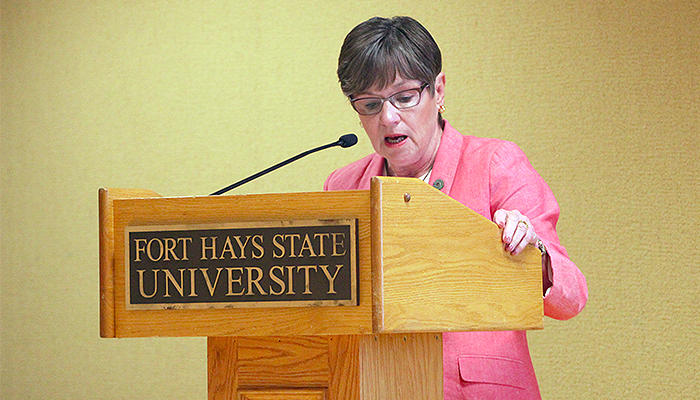
Gov. Laura Kelly attended the first portion of the engagement session and offered opening remarks.
Early in her career, Kelly worked as a recreational therapist with children.
“I learned first hand the importance of early childhood development — that it is critical to our kids’ health mentally, emotionally and physically,” she said.
“It was through my early work in the psychiatric center for children in New York and even before that when I worked in a prison for boys in Illinois. … In both of those settings, I worked mostly with adolescents, and it was very clear to me that it was too late — that we really needed to get to these kids early on, at birth, if we were really going to get them on the right track,” she said.
She said her goal as governor is to implement a robust early childhood structure across the state.
“There is no clearer reflection of the state’s priorities than the state budget,” she said. “I put my commitment to children and families front and center in my budget recommendations, but those smart investments will mean little without smart leadership steering the work of the early childhood folks.”
Despite the success of Kansas’ current early childhood community, the status quo will not propel the state forward, Kelly said.
“In today’s rapidly changing world, we must continually build on our past successes and aim even higher,” she said.
She noted research has shed more light on early childhood development since the Children’s Cabinet was established in 1999.
Children make more than a million neural connections each second from birth to age 3, she said.
“We know that those neurons form a brain architecture that sets a child’s entire life trajectory,” Kelly said. “We know that brain development is influenced by many factors, including a child’s relationships, experiences and environment. We know that these developments are cumulative and sequential for better for worse, which means our efforts to build a future workforce pipeline hinges on this early childhood period of life.”
Kelly said public/private partnerships need to be created to seamlessly transition children between early childhood education to K-12 education to technical schools and post-secondary education to the workforce.
“I am passionate about this because not only this is the right thing to do,” Kelly said, “but it reminds us that all of our futures are linked together. We all have skin in this game.”
Similar early childhood engagement sessions are being conducted throughout the state and will be used in developing a strategic plan for the state this fall. You can share your input at kschildrenscabinet.org/share.
The Hays USD 489 school board is setting its sights on a bond election in 2020.
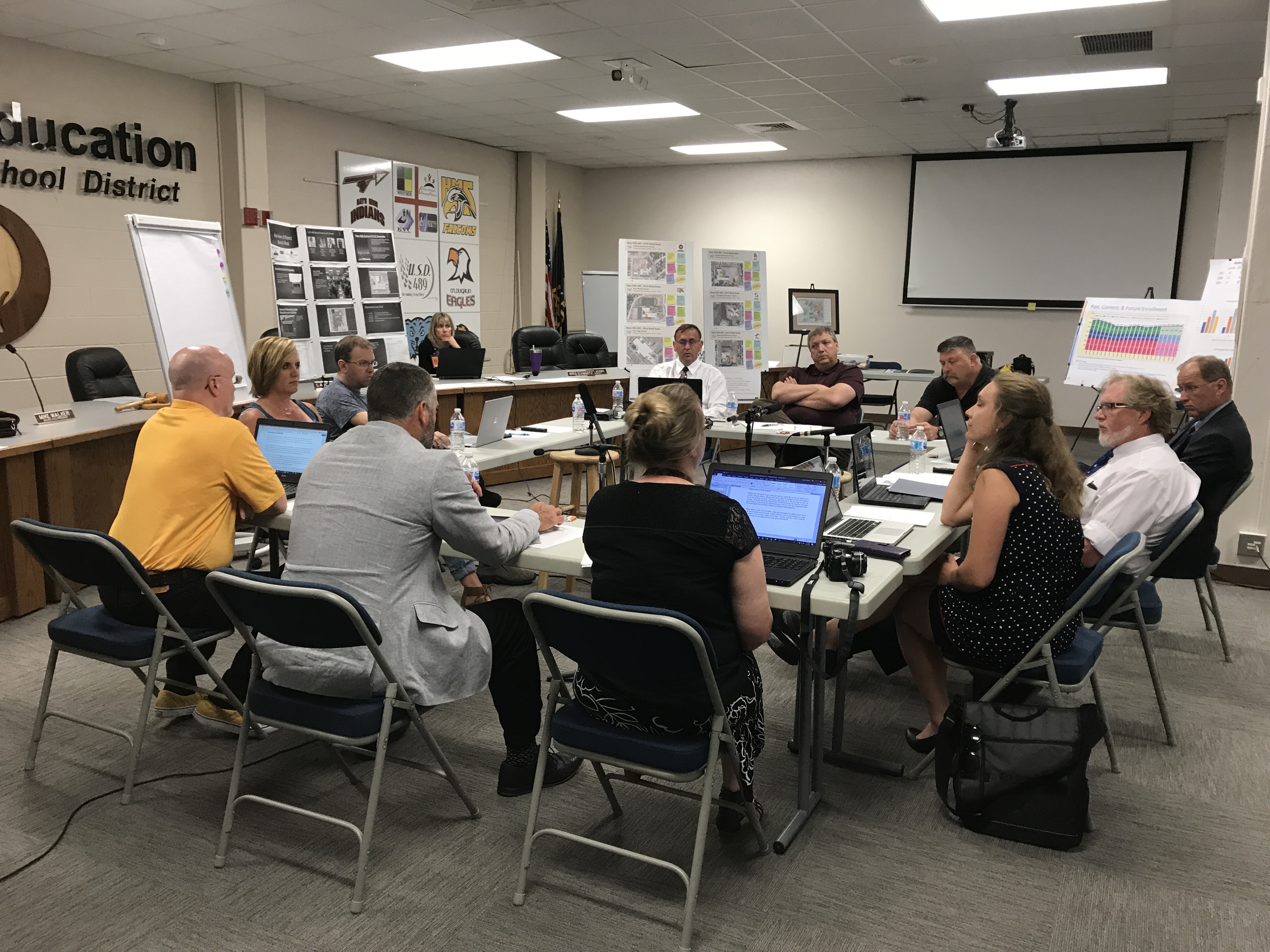
Board members directed staff during a facilities planning meeting Monday night to develop time lines for either a spring or September 2020 school bond election.
The Hays district has had two failed bond elections in three years — one in 2016 and another in 2017. The district has only had one $10 million bond in the last 40 years.
No decisions have been made as to what the school bond issue will contain, but the board continues to come back to three issues on its priority list — finish upgrades to the Hays High School HVAC system, renovate and expand Roosevelt Elementary School and expand the cafeteria at Hays Middle School.
Rusty Lindsay, USD 489 buildings and grounds director, said he receives the most complaints about the district’s HVAC systems, and those issues are spread across all buildings. He also said HVAC is an area that has the highest likelihood of a catastrophic failure.
Addressing the HVAC systems in a bond would leave more money in the yearly capital improvement budget to complete projects at other buildings, Lindsay said.
Roosevelt Elementary School is the newest of the four elementary schools. Adding two sections of each grade to Roosevelt would allow the district to vacate Lincoln Elementary School, which is more than 90 years old and has substantial infrastructure problems.
The district may also be able to reap savings from the efficiency of having three versus four elementary buildings.
The board members discussed the need to do smaller bonds over shorter time frames. They discussed trying for a 10 to 15-year bond with a tax ask of $10 to $15 per month on a $150,000 home.
Board member Lance Bickle said he still hoped the district could establish a long-range plan for what it hopes to accomplish in incremental bonds over multiple 10-year bond cycles.
However, Superintendent John Thissen said planning too far in advance could doom the bond the board is working on now. Further needs can be very different in 10 years than they are now.
“This is the first base step,” he said. “No matter what happens in the future, this needs to be done.”
He added if the district did these three base projects, it would have flexibility to move in a variety of directions in the future.
The board agreed to have time set each month on their agenda to discuss the bond issue. In July, the board will look at a timeline for the bond. Lindsay will report back to the board in August.


















 Adams was not sure how far the balloon would travel while it was aloft. Adams predicted the balloon would end up northeast of Russell. The balloon was found using GPS equipment north of Russell between the towns of Paradise and Fairport.