We have a brand new updated website! Click here to check it out!

Library launches Babynauts, early literacy programs

Children draw planets during Astronaut Training Thursday at the Hays Public Library.

By CRISTINA JANNEY
Hays Post

The new early literacy coordinator at the Hays Public Library says even before babies can talk, they can benefit from their parents reading to them.

Sara Schoenthaler, HPL early literacy coordinator, said babies learn to recognize text very early.

“Let them hold the book, and let them turn the pages,” she said. “That is so important that they know that is how a book works because when they see someone else using a book, they will know how to hold it. Eventually when they have encountered print enough, they can see it in the book and understand that ‘A’ is upside down. I need to turn the book around. Now it is right side up even if they can’t read it.”

Schoenthaler will be promoting the 1,000 books before kindergarten program starting this fall.

Research has shown children who are read to as babies, toddlers and preschoolers are better prepared to enter kindergarten and perform better later in their school years.

Astronaut Training is at 11 a.m. Mondays through Fridays at the Hays Public Library.

The library is offering storytimes throughout the week for varying ages to get some of that reading time in.

Itty Bitty Book Buddies at 10 a.m. on Wednesday at HPL is a hands-on storytime designed for infants and toddlers. Children learn skills that are the building blocks for literacy. Parents can also get tips to enrich children’s early learning.

Children ages 3-5 are encouraged to attend storytime at 10 a.m. Mondays and Tuesdays. At 10 a.m. Fridays, storytime is offered in English and Spanish.
Although the library has established programs for preschoolers and older children, Schoenthaler said she is trying to schedule more programs for babies at the library.

For parents who work and can’t make storytime during the day, HPL is trying to launch a evening program called Babynauts, which is named for the space theme of the Summer Reading Program.

The library has toys especially geared for developing fine- and gross-motor skills for infants birth to about  1-1/2 (crawlers or early walkers). Each night will also feature a special sensory experience for the babies, like bubble wrap, sand or destroying gelatin to get to a toy.

Children participating in Astronaut Training at the library will learn about the moon next week.

“Babies really learn through their play and sensory,” Schoenthaler said, “so figuring out how things work by touching them and understanding different feels and sounds and different things that those objects do — that is a big learning element.”

The babies are learning early problem-solving skills and developing social skills by interacting with other children, she said.

The program has a blow-up swimming pool so the babies can use it to pull themselves up, climb, walk around or sit inside with toys off the carpet.

“I try to, especially when I am planning for babies, do a lot of physical activity because that is a big thing they need to develop, obviously” she said.

Schoenthaler envisioned the event, which is at 6:30 p.m. every Thursdays of the month, to be a time during which parents of infants can network while also spending quality time with their infants.

To date, Babynauts has had poor attendance. Schoenthaler encouraged parents to contact the library if they have interest in this program, but would prefer the program be offered at another time or on another day.

For children who are walking, ages 2 to 5, the library offers STEM Tots at 6:30 p.m. Tuesdays. The programs are 15 to 20 minutes.

A variety of STEAM-related programs will be offered at the library this summer in conjunction with the space-themed Summer Reading Program “A Universe of Stories.”

For older children, the library has a variety of STEAM-related programs set for this summer in conjunction with its space-themed Summer Reading Program “A Universe of Stories.”

Schoenthaler is coordinating Astronaut Training for children 3-11 at 11 a.m. Mondays through Fridays in the children’s department. The program was purposely scheduled right before the Summer Lunch Program, which is being offered in the Schmidt Gallery downstairs at the library starting at 11:30 a.m. Lunch is free for children 18 and younger.

This week, children learned about planets. Thursday the children drew their own planets and told stories about those planets. Schoenthaler said the activity helped the children express their creativity and build verbal skills. The children will be learning about the moon next week.

The children will be exercising on Wednesdays during Astronaut Training, just as the astronauts have to do in space to keep up their muscle tone in low gravity. Later this summer, children will participate in a solar oven demonstration and learn about telescopes.

In the long term, Schoenthaler, who is in her first summer at HPL, hopes to do an early literacy needs analysis and develop a strategic plan for early literacy at the library. The library is conducting stakeholder meetings from 1:30 to 3 p.m. and 6 to 7:30 p.m. Monday, June 10 in the Schmidt Gallery at HPL. The public is invited to either session.

You can find a complete list of library events on the HPL website.

Also follow this link to learn more on the Summer Reading program for youth and adults.

If you have question on children’s programs or would like to offer library input, you can also contact the library at 785-625-9014.

Correction 11;47 a.m. June 4, 2019: Babynauts is every Thursday at 6:30 p.m. at the library. 1,000 books before kindergarten  will start this fall.
Wastewater released into creek at Russell to relieve overwhelmed sewer system

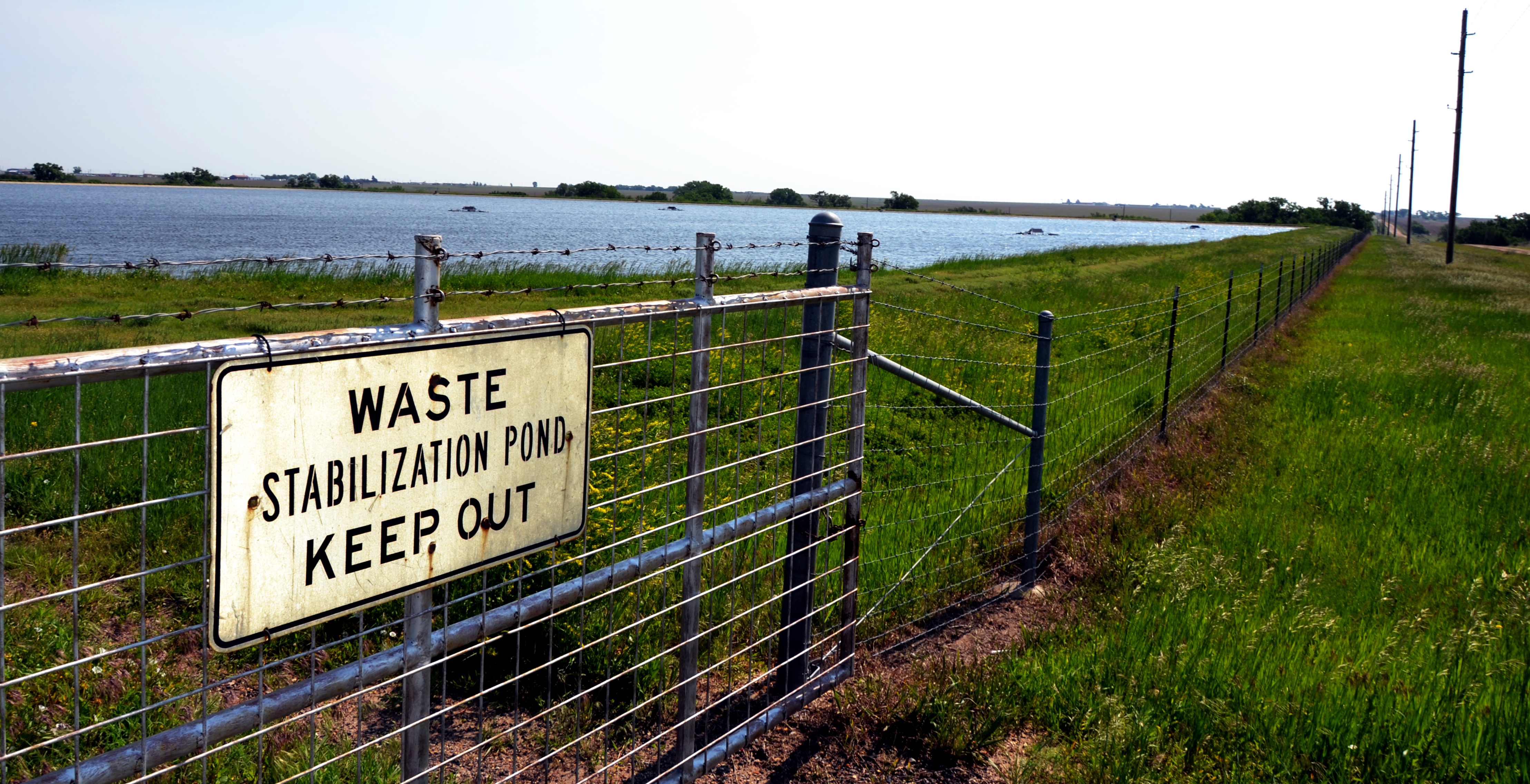
Russell Waste Stabilization Pond Thursday. Russell uses a lagoon type system for water treatment, a common choice among smaller cities in Kansas.

Several Kan. communities fighting the same problem after disastrously wet May

By JAMES BELL
Hays Post

RUSSELL — Heavy rainfall has overwhelmed many sewer systems across Kansas pushing the Kansas Department of Health and Environment to monitor the release of untreated wastewater into nearby creeks, including by the city of Russell.

Rich Krause, Russell public works director, said the release was necessary last week as water continued to overwhelm the sewer system and homes were being flooded with water from the sewer system.

While water bypassed treatment systems, Krause said it was pumped from a manhole on a city street and would have been mostly rainwater.

Russell is not alone when it comes to this problem.

“Great Bend and McPherson dealt with some issues with their collection systems with the additional rainfall,” according to Jeff Crispin, Hays director of water resources.

The Kansas Department of Health and Environment regulates municipalities when a wastewater bypass is necessary and was involved in the decision in Russell and other systems that have been overwhelmed across Kansas.

“The extensive rainfall has forced many communities and industries to bypass since the week before Memorial Day,” said Tom Stiles, KDHE bureau of water assistant director.

“The city has the authority under (the National Pollutant Discharge Elimination System) to make such a bypass if it is unavoidable, there are no feasible alternatives, and it’s requested to KDHE. … These emergency bypasses are intended to protect the wastewater system from damage, as well as keep sewage out of people’s basements or off their property.”

The bypass in Russell followed protocols and the KDHE is awaiting a bypass report, Stiles said.

But there are dangers related to water that bypasses normal sanitation systems, including gastrointestinal distress, skin rashes, infections that could become serious, and exposure to bacteria and viruses, according to Stiles.

Because of those dangers, the KDHE issued a general warning across the state this month to avoid streams and waterways, but individual stream monitoring is not required unless the bypassing continues after creeks return to normal flows.

“The Smoky Hill River is currently (discharging) at 1,880 cubic feet per second, it reached a high of 7,400 cubic feet per second last week, which effectively masks the individual impact of this bypass,” Stiles said. “If the bypass continues once dry weather sets in, we would issue a specific stream advisory and require Russell to monitor conditions until such time that we can rescind the stream advisory.”

While this bypass was in place, some in the city of Russell believed a boil order issued in a rural part of Russell County was due to the bypass, but Krause and the KDHE confirmed it was unrelated.

“Russell does not supply (Rural Water District) number three. The RWD gets its water from Otis and had low water pressure, which triggered the Boil Water Advisory,” Stiles said.

Moving forward, the Russell water treatment system is being evaluated like many others in Kansas.

“The city has an order from the (Environmental Protection Agency) and a state-funded project to search for ‘defects’ or leaks in the sewer system.  When the study is complete we should know specifics.  However, the sheer magnitude of rains the past week has overwhelmed many wastewater systems throughout the state,” Stiles said.

The city of Hays has a different type of wastewater system and was not forced to do a bypass.

“Stormwater and wastewater systems are separate, they are not combined in the city of Hays, but when you are overwhelmed as far as wastewater, stormwater does get into the sanitary sewer system, such as where manholes may be underwater,” Crispin said. “We did take on extra water, but we were never over the capacity of our plant. … Our system handled the flows just fine.”

Crispin attributed this to the larger system in Hays.

“Our system is designed to handle a lot higher flows than we receive on average,” he said.


🎥 Nebraska racer beats national champ for the money at RPM

By CRISTINA JANNEY
Hays Post

The mud flew this week at Rolling Plains Motor Speedway as IMCA stock car racers from around the region came to Hays to compete for a $5,000 grand prize in the 1st Class Chassis Stock Car ShootOut.

Tornadoes briefly touched down north of the speedway Tuesday, but did not detour racers and fans on the first night of the races. Spectators were urged to temporarily take cover as the sirens sounded.

This was the inaugural year for the ShootOut at RPM presented by 1st Class Chassis Race Cars, Hoisington.

Drivers from nine states, including Colorado, Iowa, Minnesota, Nebraska, North Dakota, Oklahoma, Utah, Wisconsin and Kansas registered for the races.

Jordan Grabouski of Beatrice, Neb., beat national stock car champion Mike Nichols of Harlan, Iowa, for the IMCA Stock Car feature win.

Nichols is an eight-time National Stock Car Champion and has over 700 career wins in nine states and one Canadian province.

The pits were packed with racers eager to vie for the $5,000 or one of the other prizes up for grabs Tuesday and Wednesday nights.

Jason Rogers, Selden, has eight track titles at RPM. He had a start in the 11th position for the feature and ended the race in seventh.

Rogers has been racing for 18 years and races most weekends at the Hays track. He said the competition keeps him coming back for more.

“I just try to be as consistent as I can be and be there at the end every week,” he said.

When he is not racing, he farms. His son is now old enough he is racing in the hobby stock class.

Angel Munoz, 33, Lamar, Colo., is also a regular racer at RPM. He started in the 10th position Wednesday in the IMCA stock car class and finished fifth in the 2M car.

Munoz, who works for a small trucking company, said RPM usually has plenty of cars and tough competition, which is why he likes racing at the track.

“You just get a rush out of it you can’t get anywhere else,” Munoz said of racing.

Dominic Ursetta, 31, of Denver, was hoping for a good finish Wednesday after securing the fourth position in the IMCA stock car class, but did not finish the race.

“I don’t know if a can explain it. It is some kind of drug or something,” Ursetta said of why he races. “It is something with motors and winning. We like to win.”

Friends Tyler Tipton, 26, Weskan, and his father, Randy Tipton, regularly race at the Hays track. Tyler was unable to start his feature race Wednesday night in the stock car class.

Randy raced for 25 years until Tyler was old enough to race, and now he wrenches on the car while Tyler drivers. Tyler said as a kid he spent his weekends fetching tools for his dad in the pits.

“He grew up in the grand stands watching me, so now I figure it’s his turn,” Randy said.

Tyler said now racing is like a second full-time job.

“I get off work and go back to work [on the car],” he said.

See results of the feature races below or on the RPM website results page. Also learn more about RPM on its Facebook page.

Indictment: Plainville couple stole millions in check-kiting scheme

Plainville Livestock Commission

TOPEKA — The owners of the Plainville Livestock Commission in Rooks County have been charged with carrying out a check-kiting scheme that cost banks millions of dollars, U.S. Attorney Stephen McAllister said Thursday in a news release.

A grand jury in Topeka returned the indictment Wednesday. The indictment can be seen here.

Tyler Gillum, 47, and his wife, Camden Gillum, 50, both of Plainville, are charged with 31 counts of bank fraud, one count of making a false statement to the Small Business Administration in an application for a $1.5 million loan, and one count of making a false statement to Almena State Bank in an application for a $500,000 line of credit.

The indictment alleges the Gillums defrauded Almena State Bank in Almena; Landmark Bank in Manhattan; Colorado East Bank and Trust in Lamar, Colo.; Astra Bank in Scandia; TBK Bank in Dallas; Guaranty State Bank in Beloit; and The Bank in Oberlin.

RELATED: Cattlemen affected by Plainville bankruptcy likely in for long wait

The indictment alleges investigators examined unfunded checks and wire transfers totaling more $2 billion sent by Tyler Gillum as part of the scheme. That included 409 wire transfers and 7,584 checks. Tyler Gillum, formerly a loan officer for Montezuma State Bank, owned and operated with his wife Plainville Livestock Commission. In advertisements for the business, they said: “The sale barn facility was first established in 1950 and is situated in the heart of Cow-Calf Country. We pride ourselves in offering individualized attention to marketing your livestock.”

The indictment defines check kiting as a form of check fraud that takes advantage of the time between presentment of a check and the actual receipt of funds (“the float”) to make use of non-existent funds in a checking or other bank account. The purpose of check kiting is to falsely inflate the balance of a checking account in order to allow written checks to clear that otherwise would bounce.

Investigating agencies included the U.S. Department of Agriculture – Office of Inspector General, the FBI, the Federal Deposit Insurance Corporation – Officer of Inspector General, the Federal Housing Finance Agency – Office of Inspector General and the U.S. Small Business Administration – Office of Inspector General. Assistant U.S. Attorney Rich Hathaway is prosecuting.

In all cases, defendants are presumed innocent until and unless proven guilty. The indictments merely contain allegations of criminal conduct.

— Office of U.S. Attorney Stephen McAllister

Check Hays Post for more as details become available.

RELATED: Producers try to recoup losses after Plainville Livestock Commission drains account

RELATED: Plainville economy trying to recover after two bankruptcies in a month

RELATED: Kan. Livestock Assoc. issues advisory on Plainville Livestock Commission

NCK Tech students ‘beaming with joy’ as Beloit farmer wins house auction

By JAMES BELL
Hays Post

On May 21, NCK Tech, 2205 Wheatland, held a public auction of their latest student-built home.

“It was a good auction,” said Doug Marrs, NCK Tech instructor of construction and cabinet making, who served as the general contractor for the project. “It’s the most we have sold one for on this campus in the last seven or eight years.”

The students involved with the construction were happy to see their work generate interest from the community.

“Just from watching the students that were present, they were so excited during that bidding process to see how high the bidding was going for something they worked on,” said Sandra Gottschalk, NCK Tech dean of the Hays campus. “They were beaming with joy.”

After bidding from four serious buyers, Marrs said the final price was $160,000, but for Ron Tice, Beloit area farmer, supporting the college and getting a custom-built home the price is money well spent.

Tice has connections to the Beloit NCK Tech campus, where he attended just after the college began operating. He has also employed a number of individuals from the Hays area.

“For years, I have always gone through those houses,” Tice said. “I always watched them build them and knew they did a good job.”

Once again, he was interested in the house built in Beloit and put in bids for the house built on his local campus, but in the end, the Hays house was a better fit.

“This year I liked the one in Hays a little better,” Tice said, despite the higher final price.

The layout of the Hays house will work better with the plot where he plans to move the home near Beloit, he said. He was also a fan of some of the features incorporated into the Hays house, including the fireplace, integrated Bluetooth radio, Ring doorbell and masonry work on the outside of the house.

“It was more of what I actually wanted,” he said, adding he thought the quality of both homes was exceptional.

The sale will sustain the program for another year, something all parties involved are pleased to see continue.

“That’s the whole point of the program,” Marrs said.

And Tice is happy to help.

“It’s a nice program for the kids, and we have always supported the technical college,” he said.


Historic Fort Larned closed due to flooding

By JAMES BELL
Hays Post

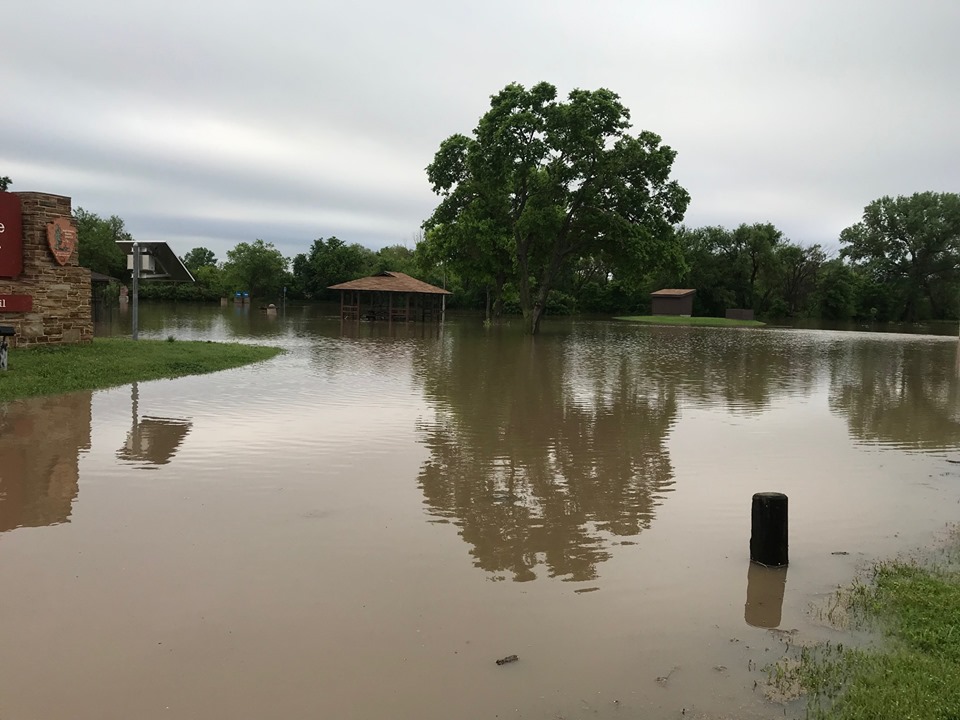
LARNED — Due to flooding of the only access road, the Fort Larned National Historic Site is currently closed, but the levee system protecting the historic site is currently holding keeping the buildings and grounds safe.

Fort Larned flood
Photos courtesy Celeste Dixon, Park Ranger Fort Larned National Historical Society

“The historic buildings are not flooded,” said Celeste Dixon, park ranger.

She said the closure is an effort to keep drivers safe as water from a nearby field is flowing over the entrance road.

Currently “there is no damage or water in the historic court at all,” Dixon said.

“Right now, everything is still within the parameters of protection within our levee system,” said William Chapman, facilities operations specialist.

But he said monitoring of the system will continue as more water is moving down the Pawnee River, which flows near the site.

Water at the Rozel monitoring station is just dipping below flood stage and that water is approximately a day away from the site according to Chapman.

“So it may be tomorrow afternoon before we can open up,” he said.

But with more rain in the forecast over the coming days, the reopening may be pushed back.

“If the water rises that may change the story,” Chapman said.

The site will post updates to Facebook as the situation changes.

Youngers donate land in memory of son to benefit HHS FFA

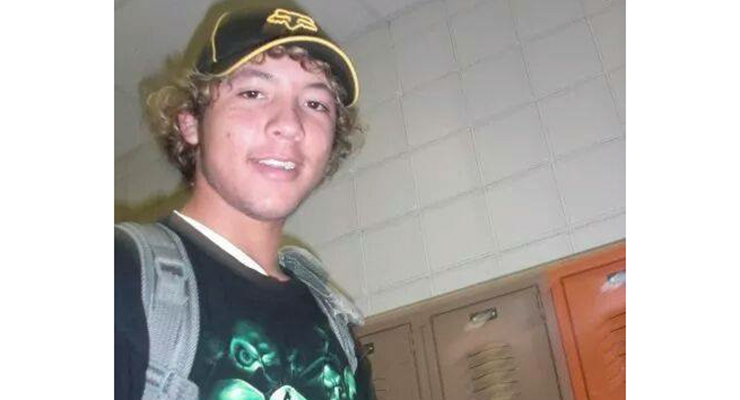
Cody Younger

By CRISTINA JANNEY 
Hays Post

Carolyn and Neal Younger have donated 160 acres of farmland southeast of Ellis to the Hays High School FFA program in memory of their son, Cody.

Cody died 10 years ago in a tragic vehicle accident when he was a student at HHS. Cody was active in FFA, and Neal is also an HHS FFA alumni as is his daughter.

“This way, they can get hands on and get their hands dirty,” Neal said of the FFA students.

The gift was announced May 6 at the HHS Academic Awards night.

The land that has been donated has been in the Younger family since 1901. It was purchased by Neal Younger’s great-great-great grandfather from the Union Pacific Railroad for $1 per acre.

Cody was to have been the next generation to farm the land, and Neal Younger said this is a way for the property to be preserved for agriculture use in the Younger name.

About 30 acres of the property, which is near Vineyard and 150th Avenue, is in cultivation with the remaining acreage in grazing pasture. There are also two metal utility sheds on the property. They are painted in Cody’s favorite colors — red and black. One of the buildings has a message, “In loving memory of Cody Younger.” The Youngers keep the message lit at night.

There is a spring-fed pond on the property. Neal fondly remembered stocking the pond with fish when Cody was only about 3 years old.

“He was right there at the water with me releasing those fish,” Neal said.

Neal estimates the value of the land at $1,800 to $2,000 per acre.

It is the Youngers’ hope the land can eventually be used by FFA students to gain practical farming experience as well as generate an income to support the two $500 scholarships the Youngers established in Cody’s name for FFA students. A scholarship has been awarded to a HHS FFA male and female student every since Cody’s death.

“It will give FFA students a hands-on, eyes-on [experience],” Neal said. “They can either farm it or they can get somebody else to.”

Currently Neal picks up side jobs to help fund the annual FFA scholarship, but he said he and Carolyn wanted to have a means to continue to fund the scholarship after the couple retires.

“It’s overwhelming,” Carolyn said. “I questioned about how we were going to go about doing it, but I am glad we are doing it.

“When things like this happen, good comes out it. It makes us feel good, but it hurts because if he was still alive, this wouldn’t be happening. I am just glad we can do something good out of losing him.”

The Youngers said FFA sponsor Curt Vajnar, HHS Principal Marty Straub and HHS secretary Tammy Stewart have all been very supportive of the family since Cody’s death, and they wanted to make the gift before any of those three staff members at the high school retired.

The Youngers have consistently supported HHS FFA, Vajnar said, donating to the FFA auction in addition to Cody’s scholarship.

“They have been generous to our organization,” Vajnar said.

Vajnar said proceeds from the land could also be used to support HHS students attending leadership conferences and national conventions. The national FFA conference in Washington, D.C., that students can attend every other year costs $800 to $900 per student.

“It will allow kids to do things they have never been allowed to do before,” he said, “due to not being able to afford things. I have kids now who won’t go to things because they don’t want to ask their parents for the money that it takes to go on trips where we go out and eat for a couple of days.”

The details of the gift are still being worked out with the school district’s and the Younger’s attorneys.

First female correspondent accredited by U. S. War Department was from Marshall County

Caitlin O’Toole

By CAITLIN O’TOOLE

Numerous historical figures come to mind when considering the continuous movement towards gender equality in the United States.

Susan B. Anthony and Elizabeth Cady Stanton fought for women’s suffrage. Amelia Earhart became the first woman to fly across the Atlantic Ocean. Harriet Tubman led more than 300 slaves to their freedom through the Underground Railroad. These women not only left a permanent and distinct mark on history, but inspired future women to challenge societal expectations and reach their full potential.

In the field of journalism, Nellie Bly is still a renowned historical figure known for her undercover time in a mental institution and her writings on her experience. While she remains one of the United States’ most famous journalists, her work also inspired a young Kansas native to become the first woman accredited as a war correspondent.

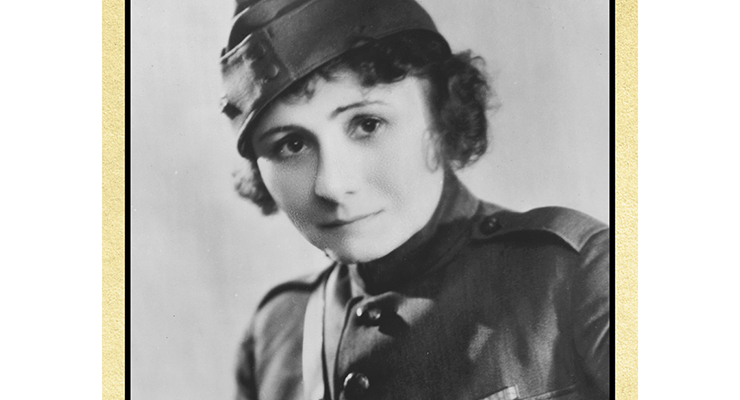
Henrietta Eleanor Goodnough Deuell was born December 30, 1889 in Bennington, Kansas, and grew up in Marysville. She began to go by ‘Peggy Hull’ after she wed her first husband, George Hull in 1910. Peggy was a rambunctious child who had sparse interest in the typical ‘feminine’ activities expected of a young lady at the time. She much preferred the company of the boys in her community.

Although she applied for a reporting job at the Junction City Sentinel at the age of 18, she was offered a typing job on the condition that she would not worry about her fingernails.[1] Peggy excitedly accepted the job and relocated to Junction City knowing she might work her way up to be a reporter. In an attempt to move West, Peggy took a job at the Chronicle-News in Colorado only to move to the Denver Republican shortly after she made the acquaintance of the owner’s brother. This seems to be a theme throughout Peggy Hull’s life. Her charisma and determination were strong tools used to help her career and even get herself out of sticky situations.

Peggy Hull (Photo courtesy Peggy Hull Deuell Collection, Spencer Research Library, University of Kansas Libraries)

Peggy moved to Cleveland, Ohio in 1916 where she attempted to obtain funding to report on the Ohio National Guard in New Mexico. Almost a year prior to the United States officially joining World War I, Peggy witnessed the training of officers at Camp Willis in Columbus, Ohio. It was there that Major Harold Bush, the commander of the artillery camp told Peggy, “A military camp is a matter of war – not friendship – and it’s no place for a woman.”[2] The unique challenges she experienced as a female at the military camp only further motivated Peggy to continue on and tell the world of her adventures.

One of her greatest tests of will came as she convinced a commander to allow her to join 20,000 soldiers on a fifteen-day hike into New Mexico. She later recalled, “I had a terrible time convincing him I could stand the hardships. When I finally gained his consent, I knew my military career depended upon [that] hike.”[3] Despite a myriad of physical and mental obstacles, Peggy powered through by imagining all the “women of [her] profession envying [her] trip”.[4] Impressed by her sheer will and determination, she received a promotion to the rank of first lieutenant.

Once the United States officially entered World War I, Peggy asked to be sent to France as a war correspondent, to which her editor exclaimed, “How perfectly ridiculous!”[5] Peggy was determined and persuaded her editor to sponsor her Paris travels. She was able to get a passport and visa despite the disbelief of those around her. As she was in route, Peggy knew her “whole future was staked on that trip to England”.[6] She received a good deal of attention for the work she was doing, and her columns were incredibly popular.

By 1918, Peggy had set her sights on full accreditation as a war correspondent. Peggy was met with opposition by men who believed a woman would never become accredited. Captain Carl Ruth was flabbergasted when Peggy presented a letter from a past acquaintance, General Peyton C. March, who demanded that Peggy not be denied accreditation due to her gender. She officially became the first woman accredited by the War Department as a war correspondent and headed to Siberia.

Peggy Hull continued to face setbacks during her time as an accredited war correspondent, but nothing could take away from the fact that she was the first woman to be accredited in a male dominated field. She was expected to fail numerous times throughout her career, and through hard work and determination, she changed the game for female journalists. In an article published in the Cleveland Plain Dealer in 1944, Peggy reflected on the unique challenges women often face saying, “Our presence in various fields is bitterly resented by the men we compete with. Overwhelming obstacles are frequently set up to prevent us from working and yet, odd though it may seem, women must live.”[7]

After divorcing her first husband later in life, Peggy married an Englishman in Shanghai, which nearly resulted in the loss of her United States citizenship. She lobbied against this law that targeted women who married non-United States citizens and managed to avoid deportation. A few years later she divorced the Englishman and married her third and final husband, Harvey Deuell, a longtime acquaintance from her early reporting days. She decided to retire from journalism only to return as a war correspondent during World War II. She struggled continuously with alcoholism and died of cancer at the age of 76.

Despite her accolades, the name ‘Peggy Hull’ is practically unknown today. Regardless, her impact on journalism paved the way for future women in the field. She proved to the men throughout her life that she was not one to be underestimated.

Peggy Hull is included in the Kansas mural painted by Hays artist Dennis Schiel on display outside the office of the Kansas Lieutenant Governor.

Peggy Hull’s picture and a brief description of her accomplishments can be viewed in the Lieutenant Governor’s office in the Kansas Capitol. There hangs a massive 10-panel mural, painted by Hays artist Dennis Schiel, complete with historical events and figures with Kansas origins.

Peggy Hull, born and raised in northern Kansas, paved the way for women in journalism and has forever left her mark on Kansas history. In a letter written in 1937, Peggy expressed her early motivations in the journey to become a war correspondent, writing, “I did not go to war because I liked the excitement or what my colleagues sometimes erroneously refer to as the glamour. I went because I was not a man and could not carry a gun and do something for my country.”[8]

From the rambunctious child who rose above what was expected of her as a young lady, to the first accredited female war correspondent, Peggy was the epitome of a strong woman. Just as Nellie Bly had once inspired a young Peggy Hull, her accomplishments will one day inspire numerous young girls to not allow themselves to be limited by their gender.

Caitlin O’Toole is a 2019 Legislative Intern for Sen. Elaine Bowers, Senate District #36. O’Toole graduated from St. Teresa’s Academy in 2016 and currently is a junior at KU majoring in Political Science and Communication with a History minor. She will be applying to law school next fall.

The Kansas Legislature Internship program is open to any student who is enrolled in a secondary or post-secondary education institution. Interns are required to attend a minimum of 12 days during the legislative session, attend the intern orientation, submit an evaluation of their internship and complete an evaluation of their legislator. One additional requirement is to submit a project assigned by their legislator. This year’s project was a research paper on a Kansan from the Senate District.

Youngers donate land in memory of son to benefit HHS FFA

Cody Younger

By CRISTINA JANNEY 
Hays Post

Carolyn and Neal Younger have donated 160 acres of farmland southeast of Ellis to the Hays High School FFA program in memory of their son, Cody.

Cody died 10 years ago in a tragic vehicle accident when he was a student at HHS. Cody was active in FFA, and Neal is also an HHS FFA alumni as is his daughter.

“This way, they can get hands on and get their hands dirty,” Neal said of the FFA students.

The gift was announced May 6 at the HHS Academic Awards night.

The land that has been donated has been in the Younger family since 1901. It was purchased by Neal Younger’s great-great-great grandfather from the Union Pacific Railroad for $1 per acre.

Cody was to have been the next generation to farm the land, and Neal Younger said this is a way for the property to be preserved for agriculture use in the Younger name.

About 30 acres of the property, which is near Vineyard and 150th Avenue, is in cultivation with the remaining acreage in grazing pasture. There are also two metal utility sheds on the property. They are painted in Cody’s favorite colors — red and black. One of the buildings has a message, “In loving memory of Cody Younger.” The Youngers keep the message lit at night.

There is a spring-fed pond on the property. Neal fondly remembered stocking the pond with fish when Cody was only about 3 years old.

“He was right there at the water with me releasing those fish,” Neal said.

Neal estimates the value of the land at $1,800 to $2,000 per acre.

It is the Youngers’ hope the land can eventually be used by FFA students to gain practical farming experience as well as generate an income to support the two $500 scholarships the Youngers established in Cody’s name for FFA students. A scholarship has been awarded to a HHS FFA male and female student every since Cody’s death.

“It will give FFA students a hands-on, eyes-on [experience],” Neal said. “They can either farm it or they can get somebody else to.”

Currently Neal picks up side jobs to help fund the annual FFA scholarship, but he said he and Carolyn wanted to have a means to continue to fund the scholarship after the couple retires.

“It’s overwhelming,” Carolyn said. “I questioned about how we were going to go about doing it, but I am glad we are doing it.

“When things like this happen, good comes out it. It makes us feel good, but it hurts because if he was still alive, this wouldn’t be happening. I am just glad we can do something good out of losing him.”

The Youngers said FFA sponsor Curt Vajnar, HHS Principal Marty Straub and HHS secretary Tammy Stewart have all been very supportive of the family since Cody’s death, and they wanted to make the gift before any of those three staff members at the high school retired.

The Youngers have consistently supported HHS FFA, Vajnar said, donating to the FFA auction in addition to Cody’s scholarship.

“They have been generous to our organization,” Vajnar said.

Vajnar said proceeds from the land could also be used to support HHS students attending leadership conferences and national conventions. The national FFA conference in Washington, D.C., that students can attend every other year costs $800 to $900 per student.

“It will allow kids to do things they have never been allowed to do before,” he said, “due to not being able to afford things. I have kids now who won’t go to things because they don’t want to ask their parents for the money that it takes to go on trips where we go out and eat for a couple of days.”

The details of the gift are still being worked out with the school district’s and the Younger’s attorneys.

Paraprofessional serves as link to Hispanic families; HMS student named Best of Best

Maria Lozano, a kindergarten and ELL paraprofessional at Lincoln Elementary School, was honored Monday with the staff Best of the Best Award for May.

By CRISTINA JANNEY
Hays Post

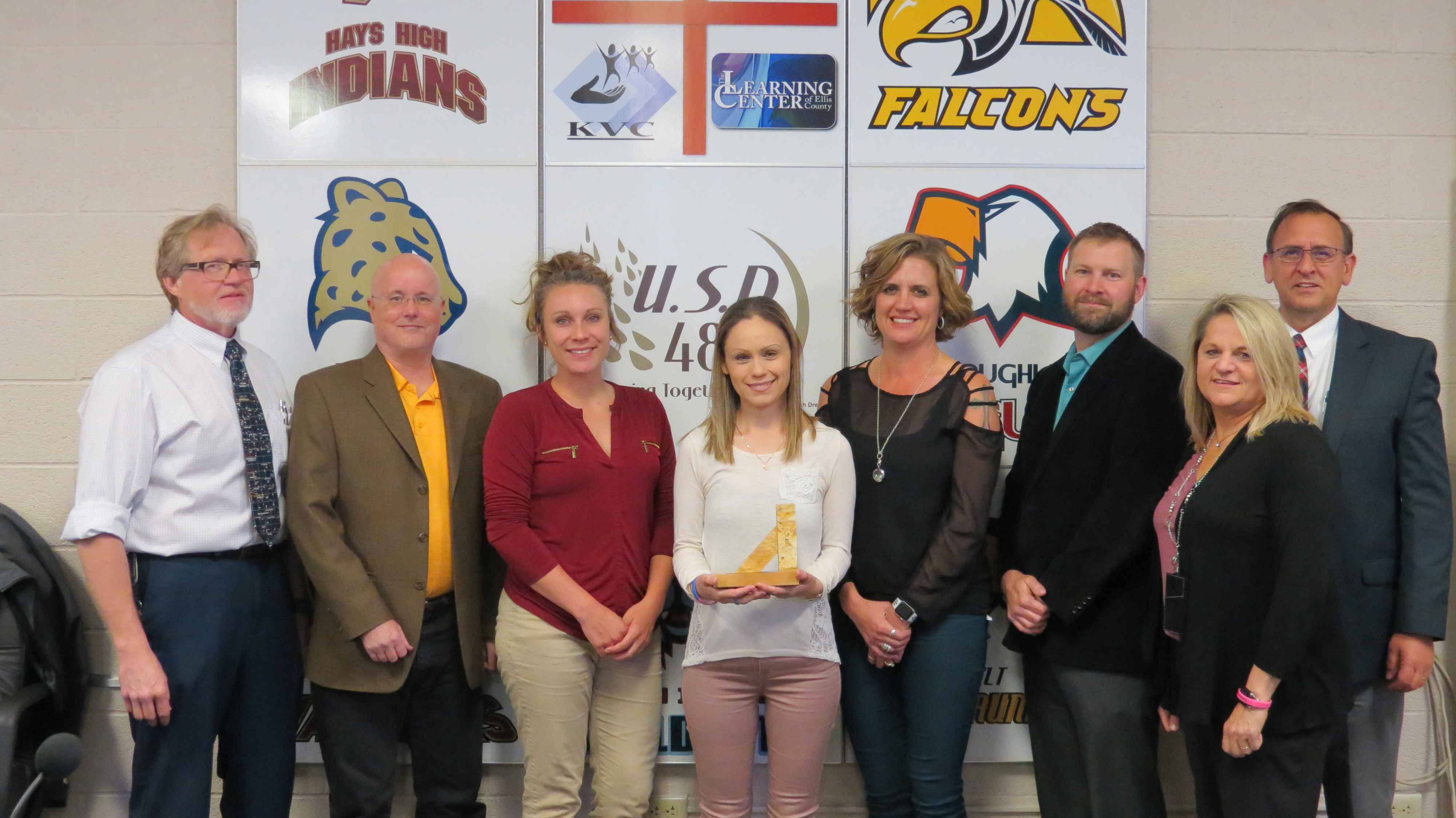
Maria Lozano, a kindergarten and ELL paraprofessional at Lincoln Elementary School, was nominated as the staff Best of the Best for May by Lincoln Principal Kerri Lacy.

Lozano is also a translator for USD 489. She has been with the district 10 years.

“Every day, Maria can be seen giving hugs and holding hands with our little ones,” Lacy said at the school board meeting Monday. “Maria is our connection between school and our Hispanic families. Any time we need someone to communicate with our Spanish-speaking families, Maria comes to the rescue.

“Maria knows so much about our families when a little one is not feeling well, she not only knows who to call but where to call,” Lacy said. “No matter what is going on in her life, Maria always has a smile on her face and is dependable and willing to help, no matter what we need.”

Joelene Vitztum, Lincoln kindergarten teacher, sent in her compliments of Lozano after she heard she had been awarded Best of the Best.

“I just wanted to say Maria is truly the Best of the Best,” Vitztum wrote. “She goes above and beyond with her work with children. She is patient, kind and loving to each child in the classroom as well as the students outside of the kindergarten classroom. She is just simply a wonderful coworker and a friend to all.”

Lacy concluded by saying Lincoln and USD 489 are lucky to have Lozano.

Hays Middle School student Seth Sumaya was nominated by Jerry Braun, gifted teacher, for the student Best of the Best Award.

Sumaya was not present to receive his award.

“I have been Seth’s teacher for the last three years, having the opportunity to watch him grow and mature into an amazing young man,” Braun wrote.

Braun wrote Sumaya‘s transition to middle school was challenging and stressful.

“Upon his return after that summer, a new Seth emerged, matching the qualities that we knew existed within him. Seventh grade was a new start, and he was blossoming. His achievement improved. His motivation was intrinsic and his social circle grew.

“He became a leader among his peers and a friend to all. A kind spirit and giving nature emerged from a ounce sullen adolescent,” Braun wrote.

“His eighth-grade year is a magnificent extension of his progression,” Braun wrote. “Seth continues to succeed academically and continues to be a model student in the classroom. His artistic talents have been showcased both in and out of school. His dedication and determination to improve, not only his classroom experiences, made him Best of the Best.”

FHSU student gets backup from senator on rescuing lost toddler

Photo credit: Jack Kelly, Josh Martinez

Hays Post

A potentially tragic moment was averted at about noon Friday when a Fort Hays State University student helped a toddler find her way home.
Holly Sieving said she was traveling on 13th Street at the intersection of Allen when she saw a “not-even-3-year-old” accompanied only by a dog and running into the street.

The toddler was running in and out of the street oblivious to oncoming traffic at the busy intersection, she said.

“Holly Sieving put herself in harm’s way to save an infant life,” said Josh Martinez, her co-worker at KVC Wheatland. “(The) infant was walking down 13th about to walk into a heavily trafficked road.”

Sieving parked her car crossways in the street to block traffic, called the police and she and Martinez went to rescue the child.

A truck also stopped and two men joined in the effort.

“I just started running after the girl … and she kept running,” she said. “The dog kept trying to bite me. “The gentlemen were trying to keep the dog off me.”

About seven minutes later, Sieving said she was able to coax the girl close enough to pick her up, while the two men followed the dog in hopes of it leading to the child’s home.

Around the same time, police arrived as well as a “panicked” father.

The girl was then safely returned to her father.

“I had no clue who the gentlemen were,” she said. “I shook their hands and asked their names.”

“Jerry Moran,” one said.

It took a moment to register, she laughed.

“Who are you again?” she said.

“United States Senator Jerry Moran,” she said he replied.

“We just kind of debriefed. It was a really traumatic thing to go through for anyone,” she said, admitting she was a little “starstruck.”

“All four of us .. helping someone who was more vulnerable than us … that child just needed help,” she said.

Sieving is a native of Silver Springs, Nev., who has lived in Hays for about five years.

“Together, Ms. Sieving and U.S. Sen. Moran, located the baby’s dwelling as well as notified authorities,” Martinez said. “This just goes to show that you can be a politician as well as a good human being.”

Hays Police Chief Don Scheibler later confirmed the 2-year-old has safely returned to her family at their residence on the 1400 block of Milner and the department’s investigation has concluded.

Summer Lunch Program moves to Hays Public Library

By CRISTINA JANNEY
Hays Post

Due to Early Childhood Connections moving, the Hays Summer Lunch Program will be at the Hays Public Library.

The program is free and open to children 18 and younger. Hot meals will be served in the Schmidt Gallery from 11:30 a.m. to 1 p.m. Mondays through Fridays May 28 through Aug. 2. No meal will be served on July 4. Adults can eat with children for $3.75 per meal.

Children do not have to live in or attend USD 489 schools to participate.

USD 489 will offer its snack program at the library again this year. Healthy snacks will be available free for children from 3:30 to 4:30 p.m. in the children’s department on the second floor of the library.

In previous years, the program served meals to between 100 to 200 children and five to 20 adults per day. The snack program served 60 to 80 children per day last year.

Jessica Younker, USD 489 nutrition services director, said she is anticipating more children will participate in the program now that it has been moved to the library. Not only is it in a central location, but the library is coordinating some of its children’s programs around the lunch program’s hours.

“I think we can both benefit from this,” Younker said of the school/library partnership. “More importantly, the kids will benefit from having it all in one place at one time. We both want to serve the most number of kids we possible can, and we thought coming together would be the best option for both us and for the kids.”

Also new this year, USD 489 is trying to work with local growers to provide fresh produce. Younker attended the kick off meeting for the Hays Downtown Market. Prices and quality must be comparable to what the program can buy through its current suppliers.

For more information on becoming a supplier, contact Younker at 785-623-2400.

The library has added an Astronaut Training Academy at 11 a.m. weekdays for the children who come early for lunch. The program is for youth ages 3 to 11 and will include exercise, math and star charting.

Meagan Zampieri, children’s librarian, said the library tries to educate the whole child. For small children this includes working on fine motor skills. Older children work on not only literacy, but STEAM skills.

This summer’s reading program is space themed and is titled “Universe of Stories.”

During lunch, the library is providing small activities for children who may need to wait for a sibling or adult to finish eating. This will include books and coloring. The Friends of the Library is providing some free books for children to take home and keep.

The library moved its children’s afternoon activities to coordinate with the afternoon snack. Activities for elementary-age children will be at 3 p.m.

Zampieri also said she hoped the reading program and other library programs will grow with the partnership with the lunch program.

“I am excited, because I know how many kids are physically hungry in the summer,” Zampieri  said. “They rely on free school lunches during the school year. Their parents aren’t making enough money in order to feed them three whole meals. That money doesn’t increase in the summer, but the kids needs increase. I am just really happy I was able to say yes and the team here was as excited about saying yes as I was.”

The Summer Reading Program already has 800 children signed up. The reading program for young adults kicked off Friday and the kickoff for younger children was Tuesday morning.

You can find a complete list of summer activities for both children and adults on the Hays Public Library website.

114-year-old St. Joseph’s Church steeple in Liebenthal gets facelift

By CRISTINA JANNEY
Hays Post

LIEBENTHAL — A crew from Roofmasters is working more than 150 feet in the air to repair the steeple on the 114-year-old St. Joseph’s Catholic Church in Liebenthal.

Roofmasters Roofing and Sheet Metal workers have begun removing the copper from the steeple, which is 167 feet at the top of its highest cross. The company estimates the work will take about a month to complete.

St. Joseph’s was established by Volga Germans in 1876, and the current church building was was dedicated on May 28, 1905. Although the steeple has had repairs many times over the years, it has not had a major renovation for 55 years.

In March 2018, the steeple sustained significant storm damage, and the parish immediately began fundraising for a major overhaul.

In addition to water-damaged wood, the church was gutted by fire in 1917 and 1959. Some work will also likely need to be done to the steeple’s masonry.

The wood as well as the cooper covering will be replaced. The old copper that is being removed will be recycled.

There are four copper crosses on top of the tower that holds the church’s single steeple. Project foreman Andy Littrel will handcraft duplicate crosses to replace the originals that have been damaged by years of harsh Kansas weather.

The church is still fundraising for the steeple project. Insurance only paid $13,000 of the $80,000 needed for the copper work. The church was able to raise another $19,000 through donations, memorials and fundraisers.

The church continues to fundraise in hopes it will not have to dip into its savings to finish the project, Judy Hoffman, church secretary, said.

“I don’t know what we can do next because you fundraise your people to death,” she said.

The congregation is small, with only 50 registered individual parishioners and families. A typical Sunday Mass attracts 70 to 90 people, Hoffman said.

The parishioners had to dig deep into their pockets for the amount that has been raised thus far for the steeple renovations. This was on top of a costly renovation in 2014 during which the interior walls were restored and repainted. Leaks in the steeple have been dripping into the choir loft and damaging the latest interior renovation and paint.

Students from the Fort Hays State University Nursing Department threw a potluck fundraiser for the church’s steeple project last year, raising $200.

“That might not sound like a big deal, but to me, it was big. To us, it was big,” Hoffman said. “It was somebody outside the parish who cared enough to put some effort in to helping us fund this project. Those kinds of things are welcome if anyone wants to try that.”

St. Joseph’s has managed to stay open as many other small, rural Catholic churches have closed, including Loretta, Pfeifer and McCracken.

“Many of those people have come over to our church, and even if they haven’t registered, they are in the pew fairly often,” Hoffman said.

Hoffman attended St. Joseph Catholic Church in Hays as a child, but started attending the church in Liebenthal when she moved back to the area as an adult.

“Oh, I really love it there in Liebenthal a lot,” she said.

Anyone wishing to donate to the steeple project can do so directly through the church’s website. Go to rushcountycatholicchurches.com and click on the St. Joseph Parish Giving icon.

Copyright Eagle Radio | FCC Public Files | EEO Public File