We have a brand new updated website! Click here to check it out!

DCF secretary highlights progress despite criticism during stop in Hays

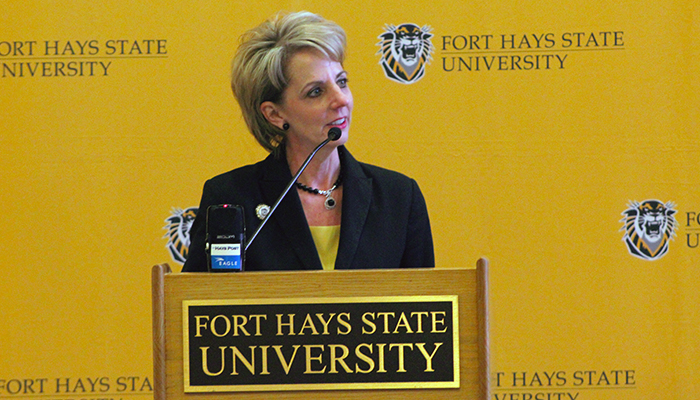
DCF Secretary Laura Howard speaks to the media Tuesday during a stop in Hays.

By CRISTINA JANNEY
Hays Post

Kansas Department for Children and Families Secretary Laura Howard remains focused on agency process, despite recent criticism from child welfare advocates who are pushing for more rapid reform in the agency.

Howard made a stop Tuesday morning at the Hays DCF office.

One of the recommendations from the Child Welfare Task Force was to increase recruiting for foster families.

“Placement stability is one of our top priorities as an agency as we come on board with a new administration,” Howard said. “There is no doubt that kids have been placed too far from home, and they move around too often. We are doing a number of things in that regard.”

The agency has new foster care management contracts starting, and the agency will have individual contracts with child placing agencies. Additional funds will also be available for foster family recruitment.

The agency is starting a practice called Team Decision Making, where the agency is able to bring more resources to the table for kids and bring other people who have connections to the child into the process.

“What the evidence tells when we do that from other jurisdictions that use this model is that children are more likely be placed with a relative and be placed in their home community, and they also reach permanency more quickly,” Howard said.

The new contracts begin Oct. 1. The Team Decision Making model will be phased in over the next 12 to 18 months and will be launched in the Kansas City area.

Kansas has 7,300 children in the foster care program, which is high compared to other similar states. The agency is looking at prevention programs to help children and families, so children do not have to be removed from their homes.

These can include parent training, early childhood services, Parents as Teachers and mental health services.

DCF also will be using the federal Families First program, which will bring federal funds into the state that can be matched with state funds.

“Part of my goal is to reduce the number of youth we have in foster care,” Howard said. “Our system has a lot of strain today, but as we are successful in diverting children safely on the front end to preventive services, we will have less demand than we have today as we have fewer kids actually in the foster care system.”

She said Kansas initially saw more children coming into foster care during the recession. Other states saw their numbers decrease as the economy recovered. Kansas has not.

“I attribute it to a couple of things. I can’t prove these things, but I at least see a correlation between policy changes that were made about safety net programs in Kansas,” she said, “and there were policy changes made in Kansas in the last few years to reduce eligibility for the TANF cash assistance program down to a two-year lifetime limit. There were other changes made to really limit family access to cash assistance, to child care assistance.”

The governor has recommended an additional 52 workers per the recommendation of the task force. Twenty-six workers would be added this year and 26 next year. These would primarily be social workers in field offices. The Legislature is close to approval of at least the first round of these new employees.

The agency is also trying to take advantage of social work practicum students and is working to reduce requirements for social workers coming from other states to work in Kansas.

Task force members said in a recent letter they have “deep concern” lawmakers have only made minimal progress and have made no progress on most recommendations, according to the Associated Press.

See related story: Advocates frustrated with pace of fixes to Kansas foster care system

The agency has also been criticized in recent years for several high-profile deaths of children after DCF became involved with the families. In the latest case in Wichita, a 3-year-old boy was found dead in his crib and a 4-month-old boy was removed from the home and hospitalized in critical condition.

Howard said she could not comment on that case specifically, but said DCF is investigating.

See related story: Police: Kan. welfare agency had reports on couple whose toddler died

Howard said some reforms will need to be enacted by the Legislature, but other actions can be done internally within DCF.

She said the task force’s tier one recommendations are being met, including new staff, aggressively pursuing Families First, $13 million in new funding (half federal, half state funding) and improvements in the agency’s information systems.

“I am actually really pleased that the governor and the Legislature have prioritized those tier one recommendations,” she said. “There are more recommendations, but many of those recommendations we are already making progress on administratively.”

DCF is working with the state’s managed care organizations that control Medicaid to help youth in foster care more timely access health care, health care screenings and mental health care.

“It is important to understand that some things require legislation. Some things require new funding. Some things just require us to change how we do our business or practice and our practice models,” she said.

Howard said she has walked into some agencies that do not have the resources they need, but she said she was pleased in the progress that has been made in the last 100 days.

“What I would say is that agencies have really been hollowed out over the last few years based on the state’s challenge with financial resources,” she said. “I have agencies that don’t have enough staff, and they don’t have enough resources. We won’t get out of that overnight. It is going to take some time to dig out of that.”

FHSU grad who bought out Payless heading to ‘Ellen’ show

Addy Tritt, FHSU grad, stands in the Hays Payless with some of the shoes she bought for Nebraska flood victims.

By HANNAH BRANDT
KSNT

A Kansas woman got viral attention for donating 204 pairs of shoes to Nebraska flood victims after buying all the remaining shoes at a Payless store that was closing.

On Wednesday, Addy Tritt will be featured on “The Ellen DeGeneres Show.” A show spokeswoman said that while Tritt generously gives back to her community, she is actually in debt herself with student loan and even relies on family support to buy groceries.

Tritt, a Fort Hays State graduate, said she wanted to help others because so many people have helped her in the past. When the price at a Hays store dropped to $1 per pair, Tritt negotiated with the business to buy the remaining shoes for $100.

They included 162 pairs of baby shoes, two pairs of men’s shoes, and the rest were women’s shoes.The retail price of the shoes would have been more than $6,000.

— Republished with permission

Tritt’s story, which was originally published by Hays Post, went viral, being distributed by news outlets globally.

“The Ellen DeGeneres Show” is scheduled to air at 4 p.m. Wednesday on Eagle Cable on CBS Chs. 10 and 610.

Hays Toy Show delights collectors young, old

Jason Lamb, 43, Hays, mans his booth Saturday at the Hays Toy Show.

By CRISTINA JANNEY
Hays Post

Whether it was a grandma buying a replica of the tractor she remembered using on the farm or a child buying their first action figure, Saturday’s Hays Toy Show had something for young and old.

The annual event was at Big Creek Crossing this year and drew about 30 vendors from the around the region.

Jason Lamb, 43, Hays, has been collecting toys since he was a kid. He said selling toys was an natural progression.

He first caught the collecting bug as a kid when he figured out he could earn some extra money by shoveling snow.

“That Christmas, I came home with money in my hand, and I don’t remember what I got for Christmas that year, but I remember that I could work and figure out a way to buy my toys on my own. I was about 7 or 8 years old.”

He took his shoveling earnings to Woolworths and bought G.I. Joes.

He particularly likes the gross toys and puppets from the ’80s — the Madballs and Boglins.

“I love when kids come by and you can actually see their eyes light up when they get a good deal,” he said. “I actually bring toys to give away to kids sometimes, cheap ones. There is something even about adults when they see a toy they haven’t seen in 20 years, it brings them back to that place in their mind when everything was innocent and life was just fun.

“Because when you are a kid, that is your main objective is just having fun. You get up every day and I just want to play with toys and have fun. That is why I love toys. It brings me back there.”

Sam Oyler  of Garden City works on a semi replica Saturday at the Hays Toy Show.

Sam Oyler of Garden City also tries to connect with buyers who are trying to connect with their past. He creates custom farm trucks and pickups.

He uses a 3-D printer to create the tiny custom parts needed to make a stock toy look exactly like the vehicle the buyer once owned.

“It feels really good when someone walks up and says that is exactly like what we had on the farm or that is exactly like what we use today,” he said. “It is nice when you hit the right color or the right model or something like that.”

He said he also enjoyed the camaraderie at the shows.

“It more about seeing your friends and talking to other vendors is what most all of us have more fun doing and chit-chatting and giving each other ideas,” he said.

Pay Mayo’s antique marionettes.

Pay Mayo of Lawrence is a nurse by day, but as a hobby restores antique marionettes.

“They are colorful, and they are unique. People don’t do puppet shows, including myself, but some of them are 60 and 70 years old. It is kind of a history thing,” he said.

Most of the marionettes are in bad shape, with strings cut. Mayo takes a couple of weeks to restore the pieces and mounts them with artwork so they can be displayed on a tabletop.

“They are colorful and neat,” he said. “It is just something from childhood.”

.


🎥 Project Director: 43rd St. reconstruction should be done by Memorial Day

By BECKY KISER
Hays Post

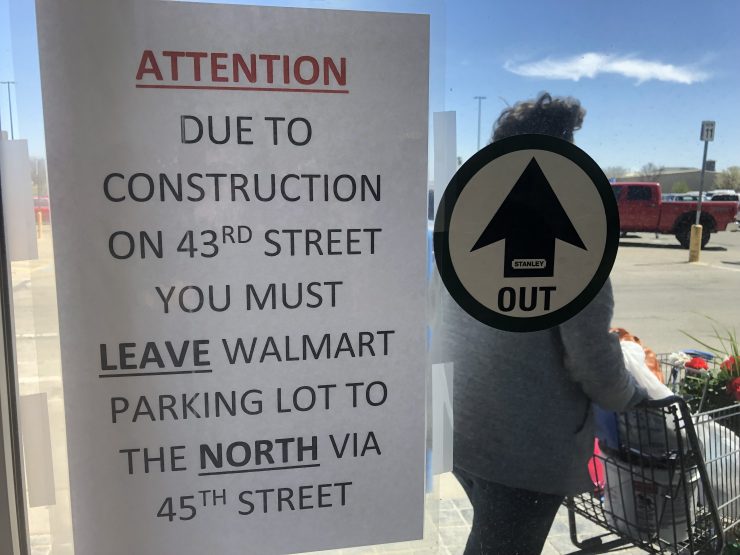
In Oct. 2018, 45th Street was reconstructed on the north side of the Hays Walmart by the project general contractor Vogts-Parga, Newton.

Work was stopped over the winter and resumed March 18 on 43rd Street on the south side of Walmart.

“They started busting out the old concrete and found out the base underneath was in bad shape, which we expected,” according to John Braun, Hays public works director. “It was really wet. The weather didn’t help a whole lot in getting it dried out quickly.”

A subcontractor, M&D Excavating, Hays, has been working diligently to prepare the base, and it’s now ready, Braun told Hays city commissioners Thursday.

Vogts-Parga began pouring sidewalks Friday.

This week crews are scheduled to pour concrete in the north lanes of 43rd near Wolf Furniture Galleries on Monday and Tuesday.

Wednesday and Thursday, the west end of 43rd, which is completely torn out, will be poured.

Next week traffic control will shift; the next few weeks, work will shift to the south lanes of 43rd in front of Wendy’s restaurant.

Braun anticipates the project will be completed before Memorial Day.

The sections of 45th and 43rd Streets adjacent to Walmart were approved for reconstruction due to pavement failure.

The pavement reconstructions are separate from the planned extension of 43rd Street by developers to serve the forthcoming Hilton Garden Inn and convention center west of Walmart.

Poor People’s Campaign addresses social injustice during stop in Hays

By CRISTINA JANNEY
Hays Post

The Poor People’s Campaign made a stop in Hays last Sunday advocating for rights for the disabled, affordable health care and an end to the war economy.

Nathan Elwood, Fort Hays State University librarian and Poor People’s Campaign volunteer, introduced speakers who were local residents and from the national movement.

“We are here to talk about poverty. We are here to talk about economic and social injustice,” he said.

“These aren’t easy comfortable topics to talk about. In fact, from a young age we are taught not talk about these things. We are told it is impolite to talk about money. We are told if we are struggling, we should grin and bare it. We are told not to burden others, but avoiding discussions of the problems we face as a community won’t make those problems go away.”

In Hays, 19.5 percent of residents live below the poverty line, which is higher than the 13 percent national average. Indicators predict the poverty rate will continue to rise despite low unemployment in the area, Elwood said.

Claire Chadwick, a campaign volunteer, is a pastor with a master’s degree, but she is a low-wage worker. She has been poor all of her life. Her father was homeless for a time and they lost their home in the mortgage crisis.

“The reason that I got involved with the Poor People’s Campaign is because it taught me that losing our house in the mortgage crisis — that being a low-wage worker even with a master’s degree — that it wasn’t something that I was doing wrong.

“There isn’t something inherently the matter with me. It is not a character flaw. It is not an accident, but it is a part of a larger system.”

Work can be way out of poverty for disabled

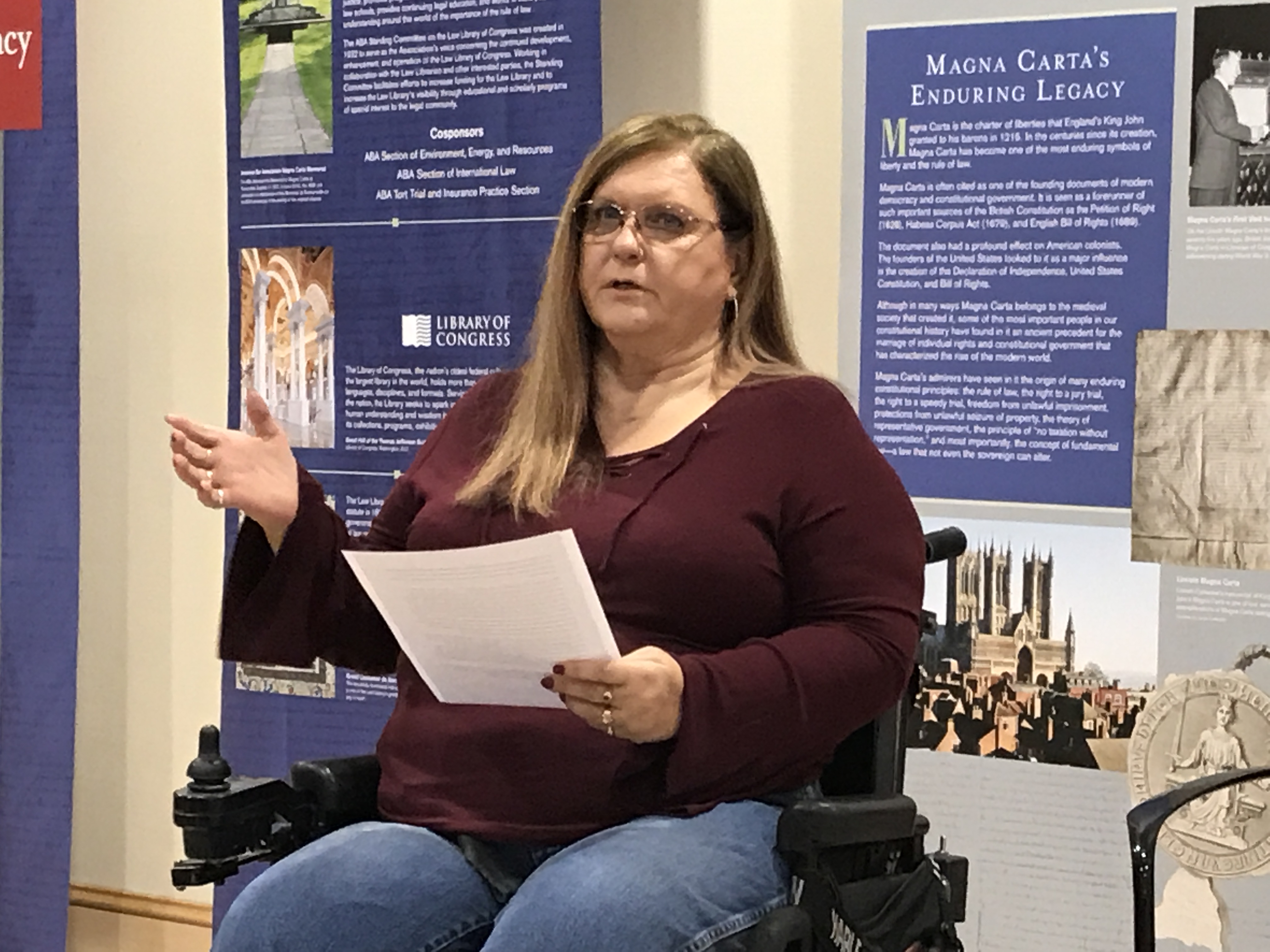
Ellis County resident Lou Ann Kibbee said society needs to give disabled citizens more incentives and support to work.

Ellis County resident Lou Ann Kibbee was disabled 42 years ago. She now works as an advocate for the disabled at the local, state and national levels. She is currently employed at the Skilled Resource Center.

For the first 16 years after her injury, Kibbee received a variety of assistance from government agencies, including Medicare, Medicaid, HUD and Social Security Disability.

“I learned early on that society did not expect me to become employed, because I have a disability” she said.

She was discouraged repeatedly from seeking employment, even by government workers who warned her she would lose her benefits if she got a job. Yet, her disability check was only $570 per month.

Her medical care was not equal to that of private insurance, and although most people on disability also receive food assistance, it is not enough to eat healthy, she said.

Yet, she compared leaving disability for a job to jumping out of a plane without a parachute.

“But I did go to work, because I knew that was my only possibility of getting out of poverty,” she said. “I knew that I needed a pretty good paying job to support myself and a college education to do that and compete with other applicants.”

Today, it takes Kibbee and her husband’s combined income to pay her extensive medical expenses. She pays $14,000 per year alone for attendant care services.

Not surprisingly, as of 2017 only 46 percent of disabled Kansans of working age were employed.

“We try to continue to educate people with disabilities about going to work, but there needs to be more incentives, so that they can afford to make that move,” Kibbee said. “Employers in communities need to be educated more about the capacity of people with disabilities to become employed in integrated competitive employment.”

Thousands of people with disabilities are in nursing homes or institutions waiting for in-home services, because in Kansas in-home services are optional.

“It should be a civil right for anyone with a disability to live in their homes and communities just like anyone else,” she said. “When we live in the community, we are able to earn and spend money, get educated, have families, pay taxes and contribute to our communities.”

Skyrocketing medical expenses

Laura Allen, whose son had to have a heart transplant, said the boy’s medication cost $10,000 for a single month.

Laura Allen, First Call for Help client services specialist, talked about her personal experiences struggling to pay for medication for her son. Allen is a single parent of three children. Two years ago, her son had to have a heart transplant because of a congenital heart defect.

After his last round of rejection, he came home on two kinds of insulin. The bill for less than one month of insulin was $6,500. His anti-rejection medication was another $4,000.

Vera Elwood, a FHSU master’s student, said she and parents planned from the time she was 12 years old and was diagnosed with diabetes to provide for her insulin when she graduated college. The fear was that she would be without health care until she could find a job.

When the Affordable Care Act passed, which allowed young adults to stay on their parents’ health insurance until they are 26, Vera’s whole family cried together. Today, Elwood is covered under her husband’s health insurance. However, she said affordable health care and insulin is still a matter of life or death for her.

“All of these changes that are coming up — getting rid of pre-existing conditions, getting rid of mandatory health care, not expanding Medicaid — these things have real, real impact on 12 year olds who are planning to not die when they graduate college,” Vera said.

Allen added doctors told her if her insurance would not cover the cost of her son’s anti-rejection medication, the doctors were unwilling to do the transplant.

“Because it was a wasted organ without the money and medications to go along with the transplant,” she said.

Working and uninsured

People gathered at the Hays Public Library Sunday to hear speakers from the Poor People’s Campaign.

Twenty-four-year old college student Heather Letourneau is an attendant care worker in Hays. She has no health insurance. It is not provided by her job regardless of the number of hours she works.

“From the outside looking in, it appears that I should have no trouble paying for health care because I make well above minimum wage. When I was working 40 hours a week, I was only getting $1,200 a month, which paid my bills. It did not pay for groceries or gas,” she said.

She noted she cut out all non-necessities and still struggles to pay her expenses.

Letourneau advocated for higher wages and Medicaid expansion to help her and other attendant care worker who do not have insurance.

Veteran against the war economy

Christopher Overfelt served in the Topeka Air National Guard for nine years as an aircraft mechanic and now advocates for a reform of U.S foreign policy and a reduction in military spending.

Christopher Overfelt served in the Topeka Air National Guard for nine years as an aircraft mechanic. During that time, he deployed to Iraq and Turkey.

Overfelt, who is member of Veterans for Peace in Kansas City, spoke about how the U.S. military policy harms poor people in the U.S. and around the world.

“In 2009, I deployed to Turkey and Qatar, and participated in the destruction of two sovereign nations — Iraq and Afghanistan. In Qatar I repaired and maintained the aircraft that refueled the bombers on their way to sew death and destruction in Iraq,” he said.

“Neither of these countries will likely recover from that devastation in my lifetime,” he said. “Nothing I can do will make up for the hundreds of thousands of Afghan and Iraqi men, women and children killed in these wars.”

He said he had no idea when he joined the military that the Department of Defense has never completed an internal audit of its spending despite it being mandated by law.

“It doesn’t know how much money it is spending and how it is spending it,” he said. “It is a black hole for money.”

A 2016 inspector general report indicated the Pentagon could not account for how it spent $6.5 trillion during the last two decades, Overfelt said.

The $600 billion the Pentagon receives does not include additional funding for classified operations by the CIA and NSA. However, Overfelt said insiders estimate this secret budget pushes military spending over $1 trillion per year — a third of the U.S. budget.

“It is no secret there is always enough money for a bigger military and more jails, but never enough for education and the poor,” he said. “Instead of this money going to health care and education for our citizens who so desperately need it, it goes to padding the pockets of weapons manufacturers on Wall Street.”

Overfelt said most of the military funding does not go to fight wars, but to secure American capital across the world.

“Around the world the State Department supports corrupt governments to ensure our access to their resources,” he said. “We take their resources and bring them into our country, and then we build walls to ensure they cannot come here and participate in the wealth we have taken from them.”

Overfelt offered a three-pronged approach to demilitarization including slashing the military budget and reinvesting in health care and other programs, ending the war on drugs, and stopping the war on immigrants.

“The war on immigrants has nothing to do about crime or safety,” he said, “but is purely about ensuring cheap laborers around the world cannot leave the systems they are trapped in. The money flows across international borders, but the workers can’t follow the money.”

For more information on the Poor People’s Campaign, see its website at www.poorpeoplescampaign.org.

Cattlemen affected by Plainville bankruptcy likely in for long wait

By CRISTINA JANNEY
Hays Post

Roger McEowen, Kansas Farm Bureau professor of law and taxation at the Washburn School of Law, talks to cattlemen Friday in Stockton.

Cattlemen affected by the bankruptcy of the Plainville Livestock Commission should receive most of their money back, but it could be months more before they see any of their money.

In early February, the Plainville Livestock Commission issued checks to more than 40 producers for sale of their cattle.

On Feb. 12, Almena Bank froze two of Plainville Livestock Commission’s bank accounts. When the bank froze the accounts, tens of thousands of dollars worth of checks owner Tyler Gillum had written to area ranchers who had recently sold cattle at the Plainville Livestock Commission bounced.

On March 1, the Plainville Livestock Commission filed for bankruptcy.

See related story: Producers try to recoup losses after Plainville Livestock Commission drains account

The Rooks-Phillips County Extension hosted Roger McEowen, Kansas Farm Bureau professor of law and taxation at the Washburn School of Law, Friday in Stockton to talk about the process of recovering funds for cattlemen after the bankruptcy of a livestock market agent.

The cattlemen’s money is protected under the Packers and Stockyards Act.

The market agency is supposed to hold funds from the sale of cattle in a custodial account until all the sellers are paid. Someone allegedly transferred the money in the custodial account into the Plainville Livestock Commission’s general operating account, according to court records.

At that time, the bank holding the funds, Almena Bank, froze the Livestock Commission’s accounts.

McEowen said in a bankruptcy filing the unpaid cattlemen’s claims take priority over other creditors in accordance with the Packers and Stockyards Act.

There are deadlines to file claims under the Packers and Stockyards Act. Cattlemen can bring a reparation proceeding within 90 days of the sale. They need to file the proceedings with Secretary of Agriculture through the Grain Inspection Packers and Stockyards Administration, which is within the USDA’s Ag Marketing Service. There are specific forms available through the GIPSA to file the action.

“This is a process that is going to take months,” he said.

GIPSA does not have enforcement authority. If GIPSA finds a cattleman is owed money, the cattleman has to have the payment enforced by federal court or a district court that has jurisdiction within a year.

“The point is, if you understand the process, you are going to understand how long this is going to take to shake out,” McEowen said. “The cattlemen will get paid, maybe not 100 percent of their claim. They will be paid something, but it is not going to be tonight. It is not going to be tomorrow or next week. It is going to take some time.”

The impact on the community is going to be great. For every dollar that the cattlemen are owed in this case, that equals $3 to $4 that is not available to be cycled through the local economy, he said.

In this case, it equals millions of dollars.

“We don’t want the cattlemen to fail. They are going to get paid. We want them to get back on their feet at some point in time,” McEowen said. “Probably the majority of the funds they are owed they will recover, but what is going to happen in the meantime?”

He encouraged the cattlemen to evaluate their own personal situation, for the cattlemen to work together and the community to support the cattlemen who have been affected.

“The domino effect on this is the potential really bad situation,” he said. “That needs to be avoided so we don’t have a whole community that really suffers because of this.”

The U.S. bankruptcy court in Wichita on Thursday, indicated the cattlemen do have a priority to funds being held by the bank. Judge Roger Nugent ordered the money that is being held at Almena Bank continue to be held there in a segregated account, but he said he needed more time to consider the case.

The bankruptcy case has been continued to 10:30 a.m. May 9.

In the meantime, attorney’s have broad subpoena power under the Packers and Stockyards Act to do a legal “fishing expedition.” The investigation of the finances of Plainville Livestock Commission could draw the case out, McOwen said.


Hays High’s Career Technical Education enrollment up 42%

By CRISTINA JANNEY
Hays Post

Hays High School saw a 42 percent increase in students taking Career Technical Education courses between the 2017-18 school year and this spring.

The student/seat time at the HHS went from 702 in 2017-18 to 998 this spring. CTE contact minutes also jumped from 30,186 in 2017-18 to 42,914 this spring.

John Linn, HHS assistant principal, presented the information to the school board at its meeting Monday night.

“It has made a dramatic increase, and I think that is going to continue to go up,” Linn said.

He said the increase is consistent with state- and nationwide trends as more emphasis is placed on connecting K-12 education with post-secondary education and careers.

State statistic indicate CTE students are more academically successful than their peers.

Ninety-nine percent of Kansas CTE high school students graduated compared to the state-wide average of  86 percent. Ninety-three percent of high school CTE graduates in Kansas enrolled in college, enlisted in the military or were working within six months.

HHS has nine Career Clusters with nine Career Pathways.

The Career Clusters include:

  • Arts, A/V tech, communications
  • Information technology
  • Marketing
  • Finance
  • Agriculture, food and natural resources
  • Hospitality and tourism
  • Human services
  • Architecture and construction
  • Manufacturing

Both female and male students are utilizing the CTE Pathways, according to state and national statistics.

Linn said an emphasis by counselors and the use of Career Cruising program, which helps students explore and plan for careers, have both led to more students enrolling in Career Pathway courses. Students take an interest inventory beginning in the eighth grade as part of Career Cruising.

The Strengthening Career and Technical Education for the 21st Century Act (Perkins V) was signed into law by President Trump on July 31. This measure reauthorizes the Carl D. Perkins Career and Technical Education Act, which provides $1.3 billion annually in federal funding, administered by the U.S. Department of Education, for CTE.

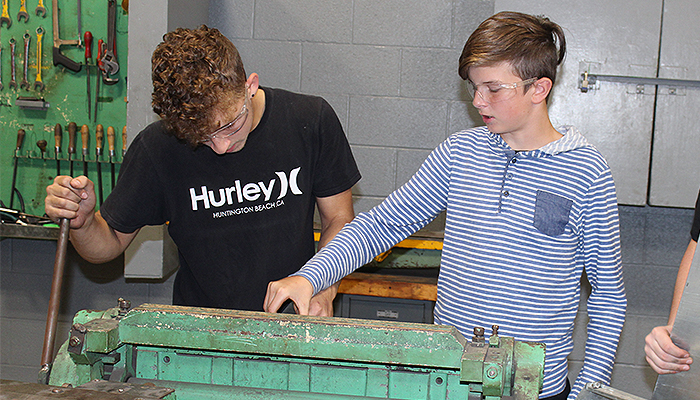
The district received two Perkins grants this year including a $1,550 grant to purchase a drone for the ag program and $29,431 grant to purchase a plasma cutting system for the manufacturing program.

Just last Friday, HHS learned it received grants to purchase a multi-process welder and a large format printer for AutoCAD.

Linn said HHS’ goals include increasing student enrollment in CTE courses. However, most of HHS’ classes are full.

“We have turned kids away at younger ages,” he said. “Obviously they have opportunities as they get older, but we have to turn younger kids away, because we are full in a lot of our CTE classes.”

HHS is also seeking to add pathways in high-need areas, including teacher training, and health and bio science.

“That is one goal of mine as we progress through next school year is to find the resources that we need to add a couple more Pathways to our program,” Linn said. “That again will increase our numbers in Pathways.”

Linn said the CTE program needs more instructors. The manufacturing program is down to two instructors from three. Classroom space is available if a half- or full-time instructor could be added.

Linn also said he is working with NCK Tech and FHSU on articulation agreements to add Pathways.

🎥 After 3-year battle, Blue Sky Acres developer can move ahead with project

Blue Sky Acres plat 2.5 miles south of Hays on the west side of Highway 183

By BECKY KISER
Hays Post

It was more than three years ago when the Hays City Commission took the first step towards creating a new residential subdivision south of Hays.

On January 14, 2016, the commission approved rezoning of the property from agricultural to residential suburban. On April 18, 2016, the final plat was reviewed and approved 6-1 by the Hays Area Planning Commission.

Following a battle among Ellis county commissioners, a lawsuit filed in December 2016 by developer Mary Alice Unrein against the county and Commissioner Marcy McClelland, and the November 2018 election of two new county commissioners, the 20-acre Blue Sky Acres final plat was unanimously approved by the Ellis County Commission last month on March 18. Hays city commissioners unanimously approved the plat Thursday night.

“It’s been a long haul,” said James Meier, city commissioner. “I think this has been a holdup for people wanting to develop in the county for a long time and I think it’s a fine example of elections mattering, especially in this particular instance at the county level.”

“I’m glad it’s finally happening,” Ron Mellick said. “I think this a good deal.”

Sandy Jacobs nodded her agreement.

Mellick was at the county commission meeting in which the final plat was approved. He said residents from the adjacent Vonfeldt Subdivision, comprised of seven residential properties platted in 1977, asked questions.

“It seemed to me the county had addressed a lot of them and were continuing to address other ones,” he said.

(Click to enlarge)

Blue Sky Acres, 2.5 miles south of Hays on the west side of Highway 183, is comprised of six lots ranging in size from 2.5 to 3 acres slated for residential development. Access is from the highway using existing entrances. The plat includes dedication of road and alley right of way. The two roads will remain private and will be built and maintained by the developer and adjacent lot owners.

“There is no plan for the property to be annexed at this time or in the near future,” Public Works Director Jesse Rohr told the city commission.

The property is within 3 miles of the Hays city limits — the Extra Territorial Jurisdiction — in which the city has authority over the zoning and must approve all plats, according to Jacob Wood, assistant Hays city manager.

The plat was also reviewed by the Hays Utility Advisory Committee with no issues found.

Mary Alice Unrein, developer of Blue Sky Acres south of Hays.

Unrein was in the audience alongside local real estate agent Errol Wuertz. She smiled and said “thank you” to the commission following the vote.

Commissioner Shaun Musil was absent from the meeting.

Fort Hays State announces the largest single gift in university history

Earl and Nonie Field

FHSU University Relations

Memories of Earl and Nonie Field, and their gift to Fort Hays State University – the largest gift in university history – were celebrated today in a news conference in the Memorial Union, attended by almost 200 people.

The Fields, childhood sweethearts, lifelong citizens of Hays and devoted alumni and supporters of Fort Hays State, made an extraordinary gift to FHSU in their estate plans.

“Nonie passed away in 2009 and Earl in 2013,” said Jason Williby, president and CEO of the FHSU Foundation.

“At the time of Earl’s passing, their estate gift to Fort Hays State University was valued at approximately $20 million. Their gift is unequivocally life-changing for our students, but it is also the largest single gift ever made to FHSU,” he said.

“The Fields Estate gift will be counted toward FHSU’s Journey campaign and will support student scholarships in perpetuity for the areas of art, athletics and music.”

FHSU President Emeritus Edward H. Hammond told the story of the Fields’ love for each other and for the college they attended.

FHSU President Emeritus Edward H. Hammond told the story of the Fields’ love for each other and for the college they attended, which became Fort Hays State University. It was the love story he learned during the 26 years that he knew the Fields.

“Higher education was always a very high priority for the Fields,” said Hammond. “Earl graduated in 1937 with degrees in economics and business and married Nonie a year later.”

The Fields started their adventure in life together with Earl as a teller for First National Bank of Hays and Nonie as a teacher. One of their true loves became Fort Hays State University, which Earl served as board member and president of the FHSU Alumni Association and a leader of the Tiger Half Century Club.

Hammond recounted that Earl Field, with Nonie’s support, built the Field Abstract and Title Co., Hays, and operated it from 1946 until he retired in 1979. He also served as chairman of the board for Heritage Savings Association and Heritage Financial Corp., Hays, and was president and chairman of the board for Farmers State Bank.

Together, Hammond said, they received the university’s Distinguished Service Award, served as members of the university’s first Capital Campaign Committee, were members of the Tiger Athlete Difference Makers, and in 1991 were inducted into the Tiger Sports Hall of Fame.

RELATED: Court rules in FHSU’s favor; bookkeeper denied millions in Field will case

“Earl and Nonie did most things as a couple, but a couple with different interests,” said Hammond. “For Earl it was athletics, and for Nonie it was art and music.”

“It’s difficult to put into words the impact the Fields have had on the Hays community and Fort Hays State University,” said Curtis Hammeke, FHSU director of athletics.

“Earl and Nonie loved this university and realized that scholarships were the lifeline for the future. They didn’t anticipate that tuition and educational costs would do anything but rise over the years, and they wanted to assist in providing scholarships that would keep pace.”

Adam Flax is one of 164 students who have already benefitted from Fields scholarships.

Adam Flax is one of 164 students who have already benefitted from Fields scholarships.

“I was born and raised right here in Hays, Kansas, and am currently finishing my senior year as a music education major,” said Flax. “I have been fortunate to live in a community that holds music and the arts in great esteem – Fort Hays State University being no exception. I would like to thank the Fields on behalf of myself and so many others for allowing us the chance to not only grow and share our talents, but to keep music and the arts as an integral part of Fort Hays State University.”

Current FHSU President Tisa Mason wrapped up the conference by touching on the Fields’ monumental act of generosity and the beautiful legacy that they have left at Fort Hays State.

“We could not be more appreciative and delighted to honor the lives of Earl and Nonie Field,” said President Mason. “The impact that their charitable gift will have on the lives of current and future Tigers at Fort Hays State University is incredible. Earl and Nonie are giving educational opportunity to students in need, to students who often must work multiple jobs, and to students who might not otherwise be able to afford to attend college.”

“I only wish that Earl and Nonie could see the faces and genuine joy of the students who will benefit from their gift,” she said.

Gifts to Fort Hays State University are 100-percent tax deductible. To learn more about the Fort Hays State University Foundation, and how you can support FHSU, visit https://foundation.fhsu.edu/ or contact the office at 785-628-5620 or by email to [email protected].

TMP students to perform ‘You Can’t Take it with You’ this weekend

Essie (Sycamore) Carmichael, played by Madelyn Seiler, and her husband Ed Carmichael, played by Aidan Normandin,  a xylophone player,

By CRISTINA JANNEY
Hays Post

Thomas More Prep-Marian students will perform “You Can’t Take It With You” Friday, Saturday and Sunday in the TMP-M Dreiling Theater.

Travis Grizzell, director, described the play’s plot.

“The plot is a look at two contrasting families and a young couple trying to navigate their place in the world, being from two totally different ways of life,” he said. “We have a very straight-laced, by the book businessman and his family whose son is in love with a girl from a very eclectic, care-free, live-in-the-moment family. The story progresses into a message about what ultimately matters in life.”

Ben Pfannenstiel as Martin (Grandpa) Vanderhoff

The Pulitzer Prize-winning play dates back to the 1930s with a film version, which won the Academy Award for Best Picture and Best Director, that was released in 1938. The film adaptation stared Jimmy Stewart.

“… there are definitely some time period things that we had to explain to the kids (and me even). But much like many classic plays or Shakespeare, the human elements are timeless and relatable to most everyone,” Grizzell said.

Despite a setting 80 years in the past, Grizzell said he thought modern audiences will be able to relate to the themes in the play.

“I think we’ve all had to deal with awkward family members and maybe been a little embarrassed by them. There’s also the father-son dynamic that a lot of families can relate to,” he said. 

Penelope “Penny” Vanderhof Sycamore, played by Abby Peeler, is a writer of adventure- and sex-filled melodrama plays, and is married to Paul Sycamore, played by Hunter Flax.

Grizzell said the TMP students bring their own interpretations to the characters in the classic play.

Sometimes the difference in generations can bring a very entertaining approach to characters like these,” he said. “The kids definitely bring some different things to these characters than I anticipated while reading the script. There’s always a little bit of the actor in each character, which makes a show like this that’s done so often unique to each cast and performance.”

Grizzell said he selected the play because it allowed many students to participate.

“The writing is great, and the story has held up so well over time. These authors also have so many good, entertaining characters in their plays,” he said.

Tony Kirby, played by Dylan Werth, is in love with Alice Sycamore, Penny Sycamore’s daughter. He is meeting Alice’s mother for the first time here.

Performances will be at 7 p.m. Friday and Saturday and 2 p.m. Sunday.

Cost of tickets are $8 each and can be purchased by clicking here or by calling the Fine Arts Ticket Line at 785-621-5478.

Below is the cast list:

  • Sam – Sarah Braun
  • Joey – Morgan Olmstead
  • Frank – Maggie Baalmann
  • Dean – Maggie Brull
  • Gay Wellington – Annie Wasinger
  • Grand Duchess Olga Katrina – Jasmine Robles
  • Miriam (Mrs.) Kirby – Alexandra Herrman
  • Rheba – Whitney Befort
  • Donna – Kaitlyn Burd
  • Essie – Madelyn Seiler
  • Alice – Hailey Casey
  • Penny – Abby Peeler
  • Henderson – Nick Helget
  • Mr. DePinna – Lucas Kraus
  • Ed – Aidan Normandin
  • Paul Sycamore – Hunter Flax
  • Boris Kolenkhov – Paul Brull
  • Anthony (Mr.) Kirby – Aakash Patel
  • Tony Kirby – Dylan Werth
  • Martin (Grandpa) Vanderhoff – Ben Pfannenstiel

Hays High announces 2019 Prom royalty

Front row: Kallie Leiker, Savannah Schneider, Shyann Schumacher, Cori Isbell, Alexandria Hagerman, Mattie Hutchison
Back Row: Josh Norris, Connor Teget, Braiden Meyers, Mason Ibarra, Kreighton Meyers, Creighton Newell

Hays High School has announced the court for the 2019 Prom.

The event is scheduled from 8 to 10:30 p.m. Saturday at Fort Hays State University.

Candidates are:

Front row:  Kallie Leiker, Savannah Schneider, Shyann Schumacher, Cori Isbell, Alexandria Hagerman, Mattie Hutchison

Back Row:  Josh Norris, Connor Teget, Braiden Meyers, Mason Ibarra, Kreighton Meyers, Creighton Newell


Lt. Gov. Rogers advocates for Medicaid expansion during visit to HaysMed

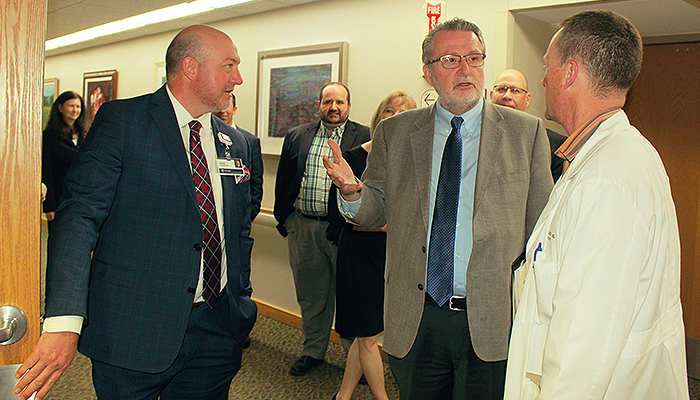
HaysMed CEO Edward Herrman, Lt. Gov. Lynn Rogers and Dr. Jeff Curtis talk during a tour of HaysMed on Tuesday.

By CRISTINA JANNEY 
Hays Post

Lt. Gov. Lynn Rogers said Medicaid expansion is not just an economic issue, it’s a moral issue, as he made a stop at HaysMed Tuesday morning for a discussion on health care.

Medicaid expansion legislation has passed in the Kansas House, but has yet to pass in the Senate. Medicaid expansion was a central piece of Rogers’ and Gov. Laura Kelly’s campaign platform.

In Ellis County, Medicaid expansion would insure 731 more residents, create 20 new jobs and have an economic impact of almost $4.9 million.

Rogers, as well as local health care professionals, gathered for a group  discussion. The majority agreed Medicaid is needed to provide preventive health care for rural Kansans and maintain rural hospitals and health care clinics.

“We know Medicaid expansion won’t necessarily save a hospital, but we know it is one of the major indicators that has created problems,” he said.

About 30 Kansas hospitals are on a very vulnerable list, two rural Kansas hospitals have closed in the last 45 days, and two more have closed in the last year.

“Really what this does is Medicaid expansion takes 150,00 Kansans away from the highest cost medical service — emergency care— and puts them into preventive care, where they can have many of their services paid for in advance,” Rogers said.

“We see it as a very budget neutral situation now that we have a $25 per person per month fee and what it saves us in other state agencies it could really mean some really good things for the state of Kansas.”

The fee for families for Medicaid expansion would be capped at $100. These fees would generate about $20 million to $25 million of the $30 million cost to the state of Kansas for Medicaid expansion. The federal government currently pays 90 percent of Medicaid expansion. The House bill also stipulates if that federal match would be eliminated, the state would end Medicaid expansion.

HaysMed CEO Edward Herrman and Lt. Gov. Lynn Rogers and Dr. Jeff Curtis talk about health care during a tour of HaysMed on Tuesday.

Walt Hill, executive director of High Plains Mental Health, said Medicaid expansion would be a great boon to preventive mental health care. High Plains sees 6,000 patients per year in its coverage area. Out of a $10 million budget, $1 million a year is services provided to the uninsured.

“We have to find alternative sources of funding,” Hill said. “We often provide services on the backs of our staff who are very difficult to recruit and retain in the area.”

Rogers said in looking at mental health services in the state, the Sedgwick County jail is the third largest provider of mental health services only behind the two state mental health hospitals.

“We as taxpayers are spending $10 to $12 million on mental health services that probably would be covered under Medicaid,” he said.

Rogers and Hill both noted competition is high for health care recruiting. As Nebraska expands Medicaid, there is concern that qualified health professionals will continue to move out of state for more competitive wages.

Edward Herrman, HaysMed CEO, said although the amount rural hospitals would receive from Medicaid expansion doesn’t seem like much, it may be the difference between those hospitals breaking even.

Health care providers and local leaders gather for a discussion on health care with Lt. Gov. Lynn Rogers at HaysMed on Tuesday.

“I can tell you that we know for sure that there are a few facilities that even if it is only $100,000 or $150,000 in benefit they would see, that is literally what they are missing in having a margin. …

“There are more people in the larger areas, but the actual impact is much larger in the rural areas. $100,000 in bottom line revenue means a heck of lot more to a Rush County hospital than $1.5 million on the bottom line for a St. Francis or the University of Kansas hospital.”

Herrman also noted during polls, three-quarters of Kansans said they are in favor of expansion.

Kansas is one of 14 states that has not expanded Medicaid. Kansans pay taxes to support Medicaid expansion, but the funds go to other states, he added.

“Most importantly, it is 150,000 Kansans who are falling in the gap and we are not even providing basic primary care for them,” Herrman said. “They do end up showing up in our ER in the most expensive place you can possibly receive care as well as many times not the appropriate place to receive your care.”

Bryan Brady, First Care Clinic CEO, said the clinic takes care of about 7,000 patients — 1,600 of those are uninsured. The clinic estimates about 1,000 of those patients would qualify for health insurance under Medicaid expansion.

“That would mean about $400,000 to our facility directly,” he said. “That is a huge amount. What we do is keep those patients out of the emergency room — the most expensive method of care.”

Dr. Heather Harris, family medicine provider with HaysMed, said a lack of insurance results in individuals waiting to get care until a health problem is acute and costs more to treat.

“Not only do they not come in for acute things, but they wouldn’t dream of coming in for anything preventive,” she said. …

“They come in late. They can’t afford the medicines. We have trouble giving them the education they need about food and exercise and smoking. If you can treat the parents, you can hope you will have healthier kids. It is just this continued trend. You can barely get them well for their acute things. You are never going to get them preventive care.”

Rogers said keeping people healthy, productive and employed benefits the state of Kansas.

First Care Clinic Medical Director Christine Fisher said Medicaid expansion would help the working poor.

“These are productive people, God help them, who are trying really hard, but they just need that extra bit of help that will make them even more productive members of society,” she said. “By making them healthier, you will only increase productivity and what you gain from the health care aspect will be very far reaching. If you give a person insurance, they will get their preventive care done, and if you don’t, they simply will not.

“If you don’t do primary care and preventive care, health care is extremely expensive down stream.”

HaysMed Cardiologist Dr. Jeff Curtis described himself as a “red doctor,” but he said he supports Medicaid expansion as a people issue and a patient issue.

“In the short term, I am in favor of Medicaid expansion, not just for our hospital, but for everything in western Kansas. It is a Band Aid  until we can figure something else out. If we don’t get it and we don’t have it and we see all the other states around us getting it, that means people in our state are suffering.

“If we have it, we can expand the services in our bigger hospital — new equipment and new services — so patients don’t have to go to Kansas City, Wichita, Denver or Kearny. It helps us attract high quality health care workers, which is a challenge out here.”

“We need it to survive,” he added.

FHSU provides campus visits for students early in their high school careers

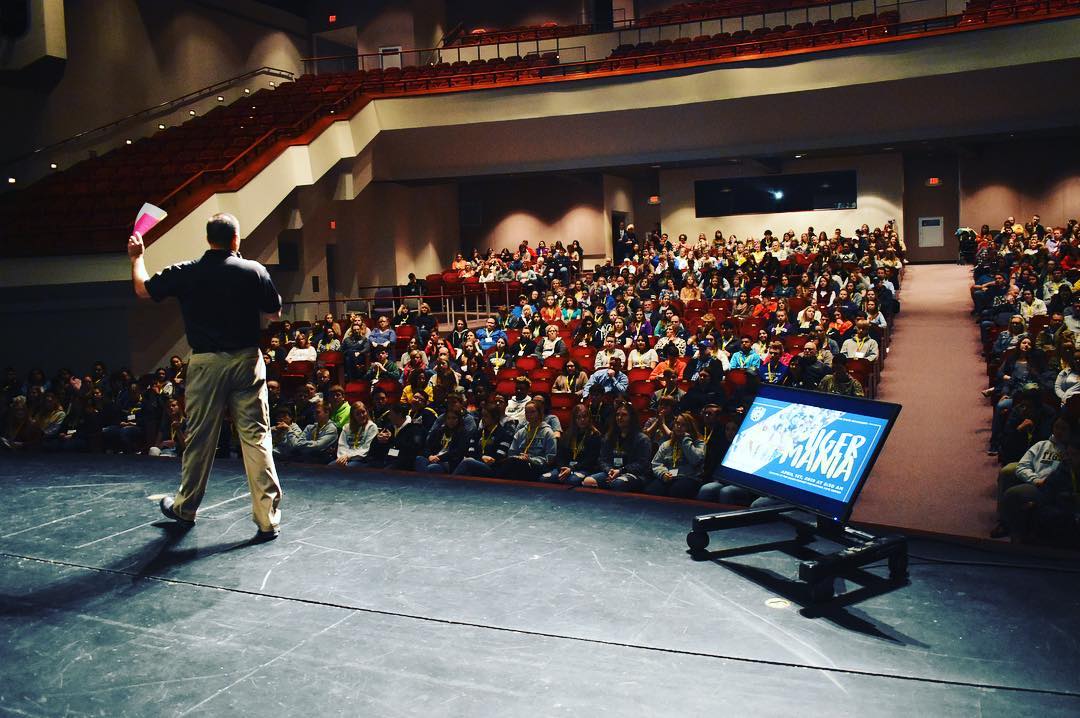
Jon Armstrong, interim director of admissions at Fort Hays State University, addresses a record-breaking crowd at last week’s visitation day for high school sophomores and juniors.

By DIANE GASPER O’BRIEN
FHSU University Relations and Marketing

About three years ago, the Kansas State Board of Education adopted an Individual Plan of Study for every student, beginning in the middle grades, as an aid to plan for success after high school.

Fort Hays State University is taking an innovative approach in helping students begin career exploration early in high school, providing organized campus visits long before their senior years.

Last week’s Tiger Mania, a visitation day designed exclusively for sophomores and juniors to explore FHSU, broke the all-time attendance record with 249 students and about 200 guests, such as parents, teachers and other school staff. That number is up considerably from just two years ago, when 143 students attended. Attendance increased by 42 students last year, then ballooned by nearly 65 more this year.

Fort Hays State also sponsors similar events for juniors and seniors, and it started adding sophomores to that list a few years ago.

“I think a lot more students are taking the opportunity as juniors, and even sophomores, to prepare themselves for college,” said Hugo Perez, assistant director of Admissions. “Tiger Mania was a great opportunity for us to peak their interests.”

Students from all across the state, as well as some from Colorado and Nebraska, attended.

Phillipsburg High School brought its entire sophomore class of more than 40 students to take part in the event.

Suellyn Stenger, a guidance counselor at Hays High School, said that research shows it’s about their sophomore year in high school that students’ post-secondary education interests start jelling.

“I think it’s a very good thing that students are exploring their options early,” said Stenger, who has been in the education field for 30 years, including 11 as an HHS counselor. “Visiting colleges used to be more of a focus for their senior year. Then colleges started having junior days. Providing this for sophomores is great.”

“The best decision is an informed decision,” Stenger continued. “If students can be getting that information now – early in their high school years – to help them make decisions, I’m all for that.”

Jeanne Isbell, a parent of two Hays High School students, said she thinks “it’s really important to do college tours.”

“The sooner, the better,” Isbell said. “This is a fantastic idea.”

Isbell said she thinks the opportunities students gain while attending college are “endless.”

“And I don’t just mean getting a degree,” she said. “The experiences you get with the people you meet in college help with how you think about life. Some kids don’t think they can flourish in college, but they are so helpful here in pointing out they will help anyone who is interested in going to college.”

Isbell was accompanied by her daughter, Judith, a junior, and her son, Jesse, a sophomore.
Isbell’s older daughter, Cori, is a senior at Hays High and has her heart set on attending college in California.

“I took Judith with me to some of Cori’s college visits,” Isbell said. “It’s good to compare, and we’re really impressed with Fort Hays State.”

So, too, is Woodson Corbett, a junior at Ellinwood High School.

Corbett was all smiles as he left the table featuring the Department of Art and Design. What he learned confirmed what he had from others.

“I heard good things about Fort Hays State from friends who go here and people in the graphic design field,” he said. “This is what I want to do.”

The Admissions staff told the students it’s OK to change their minds even if they do have their mind set on a certain major.

“I had a plan, and it all changed the first semester,” said Katie Hindman, admissions counselor for the eastern part of the state. “You will find what you’re really good at.”

“Your life is going to change,” added Kyle Stacken, admissions counselor in charge of recruitment in Ellis County and central Kansas. “Embrace those changes, and Fort Hays State will help you succeed in whatever you choose in your life.”

Representatives from the Admissions Office pointed out advantages of attending Fort Hays State, such as the most affordable tuition among state universities, small class size, numerous scholarship opportunities and ways to get involved on campus.

A panel of three FHSU students answered questions from the audience. Several $1,000 scholarships were awarded throughout the morning – some for winning trivia contests about Fort Hays State and others for simply locating a Tiger logo under a chair. And every student got a tour of the campus, including a residence hall and one of the dining cafeterias.

Keith Sides, a business teacher at Phillipsburg High School, accompanied the large contingent from his school and said he thought “it was a really good thing for our kids.”

“We can talk about Fort Hays State, but until they get on the campus and see more of it, it doesn’t mean as much,” Sides said.

Stenger agreed.

“It’s as important to find out what you don’t like as it is to find out what you do like, and to actually see what you read about the colleges,” she said. “From my personal experience, when I did on-campus visits when I was in high school, it was the deal maker or the deal breaker. Seeing in person all the good things that Fort Hays State has to offer could be a deal maker for a lot of kids.”

Copyright Eagle Radio | FCC Public Files | EEO Public File