We have a brand new updated website! Click here to check it out!

🎥 ARC Park design adds parking lot, features increasing cost to $2M

Sarah Meitner, volunteer for the Hays ARC Park project

By BECKY KISER
Hays Post

Plan designs for the new Hays Accessible Recreation Complex have been updated and a proposed groundbreaking pushed back since the fundraising campaign officially kicked off a little more than a year ago.

Volunteer Sarah Meitner, the mother of a special needs son, briefed Hays city commissioners on the project Thursday night, along with Kathy McAdoo, Arc of Central Plains exec. director and Brent Kaiser, Arc activities director and director of the local Special Olympics program.

The biggest change to the ARC Park to be located in Seven Hills Park, 33rd and Hillcrest, is the addition of a $180,000 parking lot and drop-off area, pushing the total project cost up to approximately $2 million.

The layout locations of a baseball field, playground equipment and splash pad have not changed.

“I know we’ll end up with school buses of kids here, along with baseball teams,” Meitner predicted.The parking lot is 43 stalls – plenty of handicapped parking – plus a drop-off area that will have benches around it. We think that will alleviate the flow of traffic and the street parking.” An entrance and exit will be installed both on 33rd and Hillcrest.

Meitner, Kaiser and McAdoo have gone to door-to-door meeting nearby residents. They each said they have heard nothing negative about increased traffic from neighbors.

“I’ve talked to several of those people and even received a donation from one,” McAdoo told commissioners.

Commissioner Eber Phelps said he knows a family with a special needs child who travels in a motorhome because of the accessibility issues. “You could have people come off Interstate 70 that know about  this. I hope that happens.”

Families seek out such facilities when a child just can’t handle a busy restaurant, according to Meitner. “They pack picnics even for small road trips because they know they’re going to have to find a park to play at.”

The Hays ARC Park can be recognized as a sensory-friendly and accessible playground on Google maps, which the group found out from an interested parent. “That’s what they search for.”

Groundbreaking is now projected for April 2020 for the Hays ARC Park as fundraising continues for the project in Seven Hills Park.

Now also planned for the park is a we-go-round, a wheelchair accessible, multi-generational merry-go-round.

The zipline will be extended to 60 feet. “It’ll be a fun showpiece that those kids without disabilities will say this park is pretty cool.”

A low hammock can be stood on for balance or used lying down by someone who is soothed by the back and forth motion.

A new sensory feature – similar to an oversized “Simon” game – will add another component to play particularly for children with vision or hearing impairments.

More shade structures and benches will added and other enhancements will have an artistic component.

She noted the accessible playground will also be important to parents who are in wheelchairs or have mobility problems. “They can be right there with their kids.”

The baseball field will have a scoreboard and bleachers.

“As we’ve done our research into the lack of baseball fields in our region, we know that we’ll have (Special Olympics) teams wanting to come and play at it.” Meitner suggested teams from Colby and Great Bend could meet in Hays to play each other.

So far, slightly more than $480,000 has been raised for the park with donations coming from about 500 individuals and businesses. Donors have included all Hays civic organizations and most of the schools.

“We’ve even gotten Girl Scout cookie money from three different troops,” Meitner said with a smile.

As fundraising enters a second year, donations are anticipated again from organizations in their 2020 budgets.

Several fundraising events are scheduled through the end of the year including a freewill offering barbecue  Sunday sponsored by Trinity Lutheran Church and Downing-Nelson Oil at Hays VFW Post #9076, 22nd and Vine, from 11 a.m to 2 p.m.

At least $80,000 has been secured in quantified in-kind donations.

“We’re nearing the $600,000 mark, which isn’t quite enough, but remarkable for a year’s time.”

Now that there is money in the bank, the project is pursuing grant funding from outside the community, including national foundations.

Meitner is hoping for a donation surge around the upcoming Christmas holiday through a mailer with the goal for a spring 2020 groundbreaking.

“At this time we’re trying to get the baseball field and playground up concurrently this spring. The phase three splash pad may have to be postponed back to 2021 which is disappointing but we have to remind ourselves how far we’ve come.”

Originally, construction was anticipated to begin this month. Meitner said a flyer was recently mailed to all Ellis County residents explaining the delay.

Commissioner Sandy Jacobs is executive director of the Heartland Community Foundation, which awards grant monies to non-profit groups within Ellis, Trego and Rooks counties.

“It is wonderful how you are able to maintain your level of enthusiasm,” Jacobs praised the group. “I know it’s really, really difficult when things don’t come through the way you expect them to come. You have to keep that energy up. It’s probably driven by your passion.”

“I can’t say enough about all the work that you’ve done so far,” Phelps added. “I don’t think we can even imagine the impact the park is going to have.”

Hays USD 489 school board candidates discuss health insurance during debate

By CRISTINA JANNEY

Hays Post

Candidates for the Hays USD 489 school board discussed how the school district spends its money, specifically on health insurance and transportation, during a debate at FHSU Tuesday.

Nine candidates are running for school board for four open positions. This includes incumbents Paul Adams and Luke Oborny and newcomers Lori Hertel, Cole Engel, Tammy Wellbrock, Alex Herman, Allen Park, Jessica Moffitt and Craig Pallister.

The forum panelists were asked about the district’s health insurance policy and if they thought a $3,500 deductible is too much.

The teachers and the school board are at impasse for the second year in a row. Both sides have said teacher pay and health insurance are the stumbling blocks to reaching an agreement. The two groups are scheduled to meet with a federal mediator Thursday night. Teachers have said they are unhappy about the district’s leaving state’s Blue Cross Blue Shield program for Aetna.

The board has also proposed putting a dollar cap on how much it will pay toward family plans. At present, the district pays a percentage.

Engel said he does not know much about the current program.

“I know a compensation package, not only salary but health insurance, is a big deal for the employees in the district. I think that certainly needs to be analyzed and a decision needs to be made as to whether moving away from the state plan or the plan we currently have if that was a good decision or not,” he said.

Herman said he has spoken to teachers who said they were upset about the switch to Aetna insurance.

“The school board has a duty to make sure the money for the school board is properly spent,” he said. “At the same time, the school board also has a duty to make sure that our students are properly educated. They’re going to be properly educated when we keep the best teachers—when the teachers are properly compensated and when we have a health insurance plan for the teachers that makes them want to stay in the district.”

Hertel said she would like to improve the overall compensation package that is offered to teachers, which includes insurance.

“I think they would be happier,” she said. “I think they would respond better to the school board if that was the case.”
Oborny said.,”The state plan was not good for us at that point. We were going to take a $1.5 million increase, and at that point we really needed to find another option because the budget just wouldn’t support it at all.”

He said Aetna looked comparable. He said he supports a committee to look at other health insurance options.

“As long as the cost doesn’t dramatically increase, I don’t care who we go with,” he said.
Pallister said he is hearing from teachers that Aetna is not a better plan.

“It allowed the district to spend money it was spending on insurance in different ways,” he said.

He continued, “More and more our district needs to look into getting insurance for all our employees. Right now we have a lot of paraeducators, a lot of secretaries that don’t qualify for a fiscal reason. Health insurance is a need of families so we can get the best personnel working for this district.”

Park said “I think the cap is a concern. In one year, there could be a 13 percent increase, and that is just another stress for teachers not to know where that money is going to come from.”

Wellbrock said she would like to see the resurrection of the insurance committee.

“I think [health insurance] is certainly something the next board will need to look further into,” she said. “I believe the board thought it was doing what it thought was best at the time. Many of the people expressed to me, there are generating issues. It isn’t always just about the out-of-pocket expenses, but the quality of service issues that are becoming realized. That is certainly a concern.”

Adams said considering the increase the district was facing with Blue Cross Blue Shield, the board made the best decision fiscally at the time. There were some savings initially that were returned to the teachers.

He said the district is now finding some flaws with that system. Now the the district can shop around and bring the insurance committee in on that process. The cap sets a amount the district would pay and help the district with budgeting.

Moffitt, a health educator, said “With health insurance, price is a key determinant of what you are getting. I believe there may have been some excitement in the programs that Aetna offered for the ability for discounts to be [capitalized] on for certain individuals by participating in certain health incentives  that made the plan look like it was really awesome, but the reality of  the situation is that it is a huge financial impact on the teachers and thus on our community members.”

Current board members were asked why the school district needs 13 Suburbans.

Adams said having the Suburbans has to do with the quality of education the school district offers its students.

“It’s the Quiz Bowl or sending kids out to Colby to participate in the science lab night or it’s the football team going somewhere or the soccer team,” Adams said. “There are co-curriculars that we all just said we all value in our students. To achieve that, it does mean that we have to get kids there.

“If you start looking at the number of activities and the number of things our students are going to, those are going out, and they’re in use, and they are in use effectively.”

Oborny said, “A lot of it is economics. It is cheaper, and I think Dr. Adams alluded to this, it is cheaper than to run a bus. Sometimes you have just a few students. It’s a lot cheaper to have a suburban and run them round than the cost of a bus.”

Suburbans can also be driven by teachers and volunteers who don’t have CDLs, he said.

“I believe what my district is telling me, and my director is telling me that there is a need for them,” he said.

Moffitt said she saw the opportunity the suburbans gave to students to participate in a career pathways event at HaysMed. She added maintenance is minimal compared to buses.

“The impact it has on helping our community prosper and grow and help business individuals develop their businesses and expand, personally I can say it was a wonderful experience. For that I am appreciative of the Suburbans,” she said.

Engel said he did not know how many Suburbans the district needs, because he has not looked into the travel budget. He said he believes students need the opportunity to travel. He added he thought the question was more a management question rather than a governance question.

Herman also said he did not know if the district needs 13 Suburbans. He said he agreed in some cases using suburbans made more sense compared to using buses. He said how many vehicles the district needs would need to continue to be looked at by the board.

Hertel said she believes the district needs to be fiscally responsible.

“I don’t know if we need 13 Suburbans or not, but we do need our students to be participating in activities,” she said. “I think if that allows them to, it is a good fiscal decision on the part of the school district.”

Pallister said, “From my past days with the middle school, yes, there were days that we didn’t need all 13 Suburbans throughout the district, but there were a lot of days that we did. It is hard to tell a group of first-graders they can’t attend something, when another group of high school students are attending something else. A lot of our students need the transportation daily to get form one school or one training area, so it is very important that we run the Suburbans.”

He said he was told that operating three suburbans was the equivalent of operating one bus. Suburbans are also used for staff and teacher training.

Park said the transportation department must work within its budget.

“As a parent it is very important to me that we have a fleet that is safe and reliable and they don’t get down to Dodge City and there are issues,” he said.

Wellbrock said, “The board’s role is obviously fiscal oversight of this budget that maintains USD 489. I think a question of this nature flirts a little bit with the aspect of micromanagement …”

NW Kansans among winners in Ranchland Trust photo contest

“Herding History” by Nichole Conard

Winners have been announced for the eighth annual Ranchland Trust of Kansas (RTK) photography contest, which concluded Oct. 14.

Each summer, RTK invites amateur and professional photographers of all ages to submit photos that showcase the mission of RTK and Kansas’ ranching heritage. The mission of RTK is: “To preserve Kansas’ ranching heritage and open spaces for future generations through the conservation of working landscapes.”

Nichole Conard of Wichita was the grand prize winner in this year’s contest. Her photo titled “Herding History,” was taken during the 150th Chisholm Trail Drive south of Mayfield in Sumner County. She spent the day following the herd and this was her favorite image.

“Thank you so much for choosing my photo as grand prize. This is the first contest I’ve ever entered, so it is an honor knowing the hard competition I was against,” said Conard.

Marisa Rose Betts, Russell

Amy Robben of Fall River won the Fan Favorite category by receiving 570 votes on RTK’s Facebook page. Her winning photo, titled “Summer Red Angus”, was taken in the Flint Hills.

Robben said, “I live on a 10,000 acre cattle ranch in the Flint Hills. There are about 100 Red Angus heifers out on this pasture. This picture displays the beauty of summer in Kansas and the beauty of the livestock industry.”

A record number of photographs were submitted to the contest this year. The panel of judges narrowed the selection down to a top 30 for the Fan Favorite category voting on Facebook. All other category winners were chosen by the panel of professional photographers, along with RTK and Wolfe’s Camera representatives. The Facebook album was able to reach over 30,000 Facebook users and nearly 6,000 votes were cast for the Fan Favorite category. Thank you to all who viewed and voted for these beautiful Kansas photos.

Additional winners in each category were: Landscape – Sheryll Marks, Wellington; Livestock – Tony Ifland, Cedar; People – Mike Scheufler, Augusta; KLA Member – Marisa Rose Betts, Russell; Youth – Lily Judd, Pomona; and Honorable Mentions – Stacey Rhoades, Newton; Callahan McIver, Council Grove; and Crystal Socha, Augusta. Socha’s honorable mention photograph was the first photo taken with a drone to be entered in the contest. All winning entries can be viewed on RTK’s Facebook page.

Tony Ifland, Cedar

Prizes, sponsored by Wolfe’s Camera of Topeka, are awarded to the top 10 winning photographers. The photographs will be used, with permission of the photographers, to promote Kansas’ ranching heritage and open spaces.

RTK will have photo stationery cards for sale throughout the year featuring the 10 winning photos. Printed on premium cardstock, the folded cards are blank inside and come in packs of 10 with white envelopes. The card packages can be purchased for $20 by contacting Samantha Weishaar at 785-273-5115 or [email protected].

Crystal Socha, Augusta

🎥 In 36 years as a Hays real estate agent, Stull’s business ‘keeps revolving’

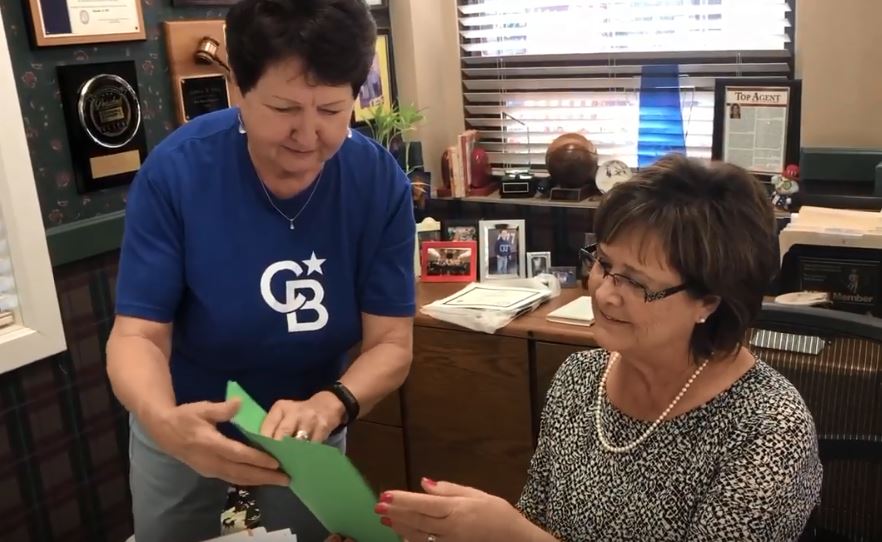
Patty Stull recently sold her Coldwell Banker franchise to independent Hays real estate agent Robert Readle. Stull is still listing and selling real estate as she’s done the past 36 years. Jane Brady has been her administrative assistant for 15 years.

By BECKY KISER
Hays Post

Patty Stull has been a Hays real estate agent for nearly 36 years.

She recently sold her Coldwell Banker corporation to independent real estate agent Robert Readle.

Now there are two Coldwell Banker Real Estate sites in Hays — Readle’s location at 22nd and Vine, and Stull’s longtime office in downtown Hays at 1001 Main. Readle is the supervising broker while Stull is an associate broker.

At age 72, Stull will continue to list and sell real estate. It’s her favorite part of the job.

“I’ve been blessed with so many opportunities to help people find their dreams,” Stull said, “and when they find their dream, it becomes my dream.”

Since 1984, Stull has sold houses, commercial properties and land to area residents and businesses. Some transactions were small, less than $30,000. Her most expensive home sale was $1.2 million.

One of the smallest deals is one of her most memorable.

“The one I love the most is this little two-bedroom house in Victoria I sold to a couple. It didn’t have a basement. They had two little babies. They didn’t have a lot of money.

“And we made it. They were able to close on that house and they went into my arms and wept,” Stull recalled. “Pretty sure they might not have got it, except I was able to help along the way.

“They came back to me years later and said, ‘Thank you. We were really at the lowest point in our life and you helped us have a dream. It may not be a big dream to many, but it was our dream.’ ”

Readle called Stull “a titan in the community.” She’s been selling real estate long enough that it’s come full circle.

“I may start when they’re young and buying their first home. Twenty-five years later, their children return to settle in Hays and come to me to buy their own house. Then the parents become older and buy a different home or a second home,” Stull said. “It keeps revolving and you get to have this family connection.”

Over the years, she’s received many cards and flowers as a thank you for matching people with their dreams.

“A home is an emotional decision. You have to be able to wrap yourself around that situation because it is a big decision and it’s done with the heart. Commercial and land is not done with the heart. It is a business decision.”

Stull started her work life as vice-president of First Federal Savings and Loan in Beloit and as loan manager for a Russell bank. She moved to Hays, without a job lined up, and was approached in 1984 with an offer to buy the Coldwell Banker franchise by owner Robert Finch’s son-in-law.

She hesitated. “Those guys upset me a lot over the years when I was making them loans. I didn’t even really like them. And that’s pretty well what I told him.”

The Finches talked her into “giving it a try.”

The divorced mother with three young daughters decided to pursue her dream, although her self-employed father, Ralph J. Werth, advised against it. ” ‘Please don’t do that,’ he said to me in German. ‘It’s going to be a hard life.’ ”

“You got to remember back in those days women were not supposed to be in authority. When I came into this city as a broker/owner, the other five were all male owners. I had a lot of bad times. They just couldn’t believe a woman was doing this and wondered why I was doing it.”

One of the male broker/owners did support Stull. “Dean Ellner stood by me. He helped me and taught me.”

A Dean Ellner agent, Lana Whitney, helped Stull buy a house.

“Unbeknownst to Lana, I admired her so much and she became my ‘silent’ mentor as I eventually decided I wanted to be just like Lana. I want to help people. I’m going to do a huge volume of real estate. And one day, it happened and one day, I went past Lana. But I’m not taking anything away from her. She’s an amazing woman and a very, very good real estate agent.”

Stull got her business loan from Golden Belt Bank to buy Coldwell Banker. “I don’t know how they ever believed in me. If I hadn’t had Golden Belt Bank by my side, I wouldn’t be here today.”

Less than 30 days after Stull acquired that loan, a major employer, Travenol, closed its doors and the Hays economy slumped into a 10-year recession.

“There were over 800 houses on the market. The houses I sell today at $135,00 sold for $33,500 then and people could not afford to buy a house.” It would be 11 years before her new business was in the black.

“Those were very, very hard years but there are always hidden blessings and struggles. It makes you become strong, makes you look for different things in your life.

“Out of it all, I evolved and I hope I’m the best I can be and look forward to every single day being even better.”

Stull credits her religious faith and the support of a large family for her success.

“My mom and dad taught us faith. That was the foundation of our home. And they taught us how to work hard, to not expect anything, to go and earn it … to have ethics, honor, and to be truthful.”

Stull is the oldest of 16 children, eight boys and eight girls.

She finds it interesting that she has been self-employed – just like her dad – for more than 30 years and many of her siblings are also self-employed. “We’re independent. We grew up that way.”

Her father died at the age of 64.

Her mother, Martina Werth, is 91 years old and has 109 grandchildren and great-grandchildren and is expecting the first great-great grandchild next year.

“She is the matriarch, our queen. Our mother to this day is so sharp. She has a lot of pain but she does her own checkbook. She’s an amazing cook in the kitchen and she’ll beat you up in any game of pinochle. Every day, she’s in a chair embroidering something to make somebody happy.”

There are a number of step-siblings in the close-knit family.

“So many people ask why our family is so close. We grew up near Catharine and we only had each other. In those days, you didn’t drive to town because you were bored and you wanted to go swimming, or whatever,” she laughed. “Mom and Dad made sure we had plenty to do. At an early age we learned how to clean, how to cook — lots of cooking.

“I’ve been extremely blessed in my life. Sure, there have been struggles in many ways, but I’m no different than anyone else.”

Stull has four daughters. “One is in heaven,” she says. “Wendy passed away in 1997 when she was 23. It broke all of our hearts.”

Her husband of 11 years, Rich Sieker, has two married children and four grandchildren. Stull has eight grandchildren. “We love them all.”

Stull’s grown daughters have their own businesses and she didn’t expect them to have her same passion for the real estate business. Stull missed a lot of her daughters’ activities, including school sports, as they grew up. “They understood my passion but as I look back I wish I could have been there.”

Teaming up with Readle was the answer to her prayers.

“I believe in Robert and I’m going to mentor him and his growth. I no longer am a supervising broker but I will always be a broker. The thing that’s changing is I don’t have to worry about the whole operation. The only thing that you’re going to see different is that I’m not signing the checks,” she laughed.

“You’re gonna see a lot of smiles on my face. I may have the opportunity to go play some golf, go see my grandbabies and participate in their sport lives.

“We only have today,” Stull reminds us.

“Find a reason to smile, tuck the sadness in your heart where it belongs. The past makes you who you are today.”

🎥 Chetolah Creek WRRF completed after 28 months and $30.2M

Aerial comparisons of the wastewater project (Photo courtesy city of Hays)

By BECKY KISER
Hays Post

“Finished early, under budget, and it exceeds performance expectations. That doesn’t happen every day, but it happens with good leadership.”

That was Hays Mayor Henry Schwaller’s summation of the newly renovated Hays wastewater treatment plant during Thursday night’s city commission meeting.

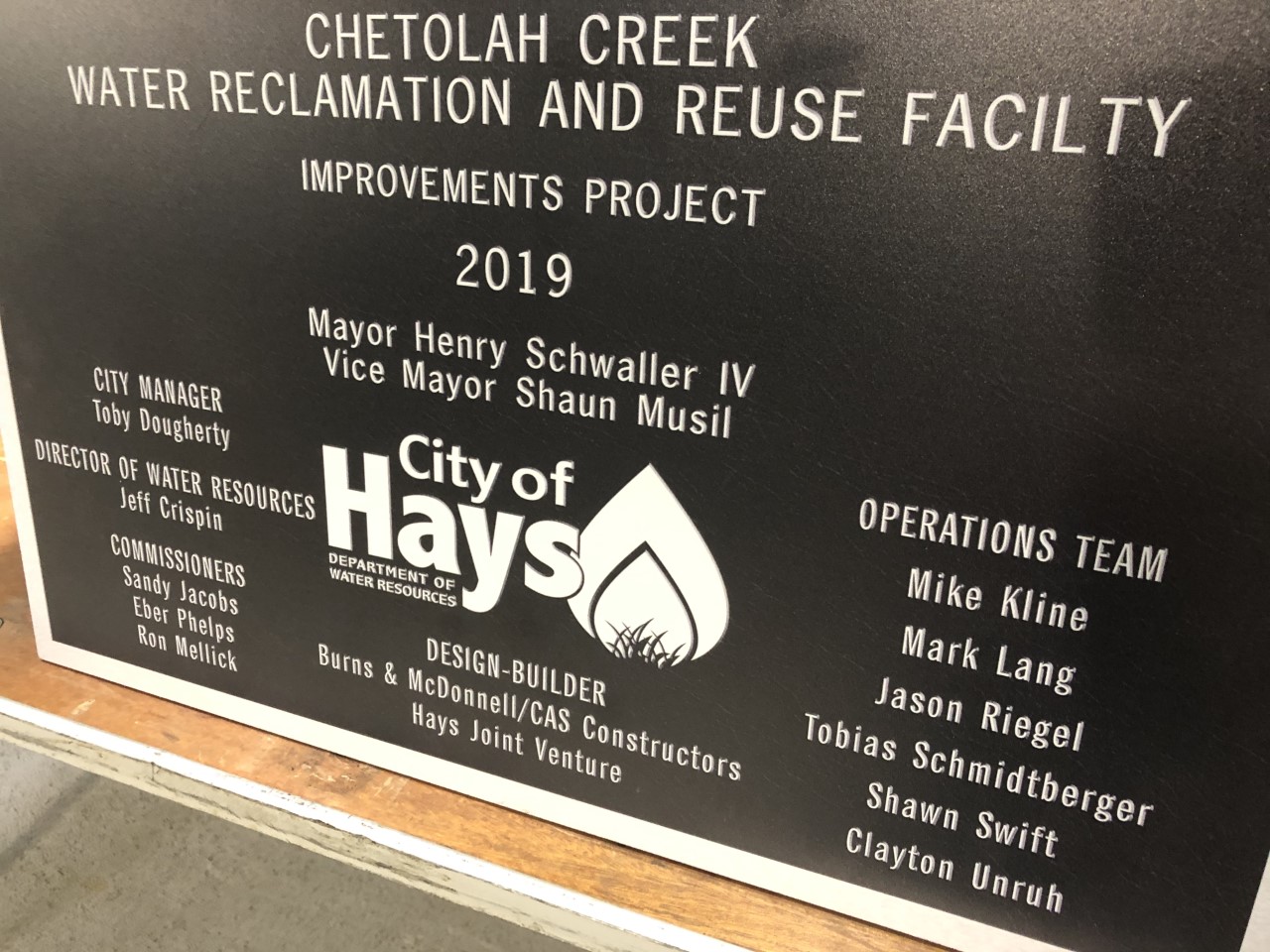
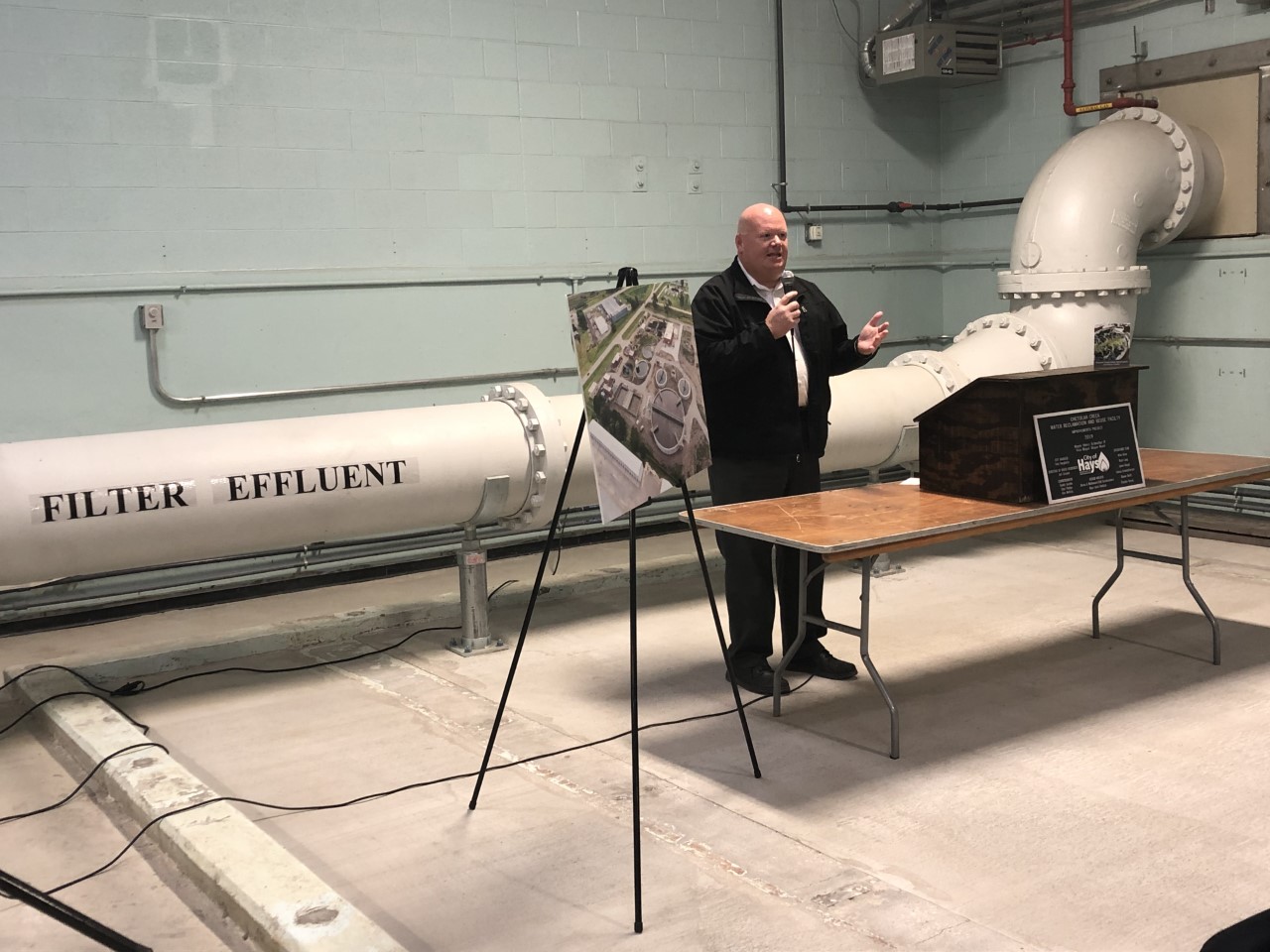
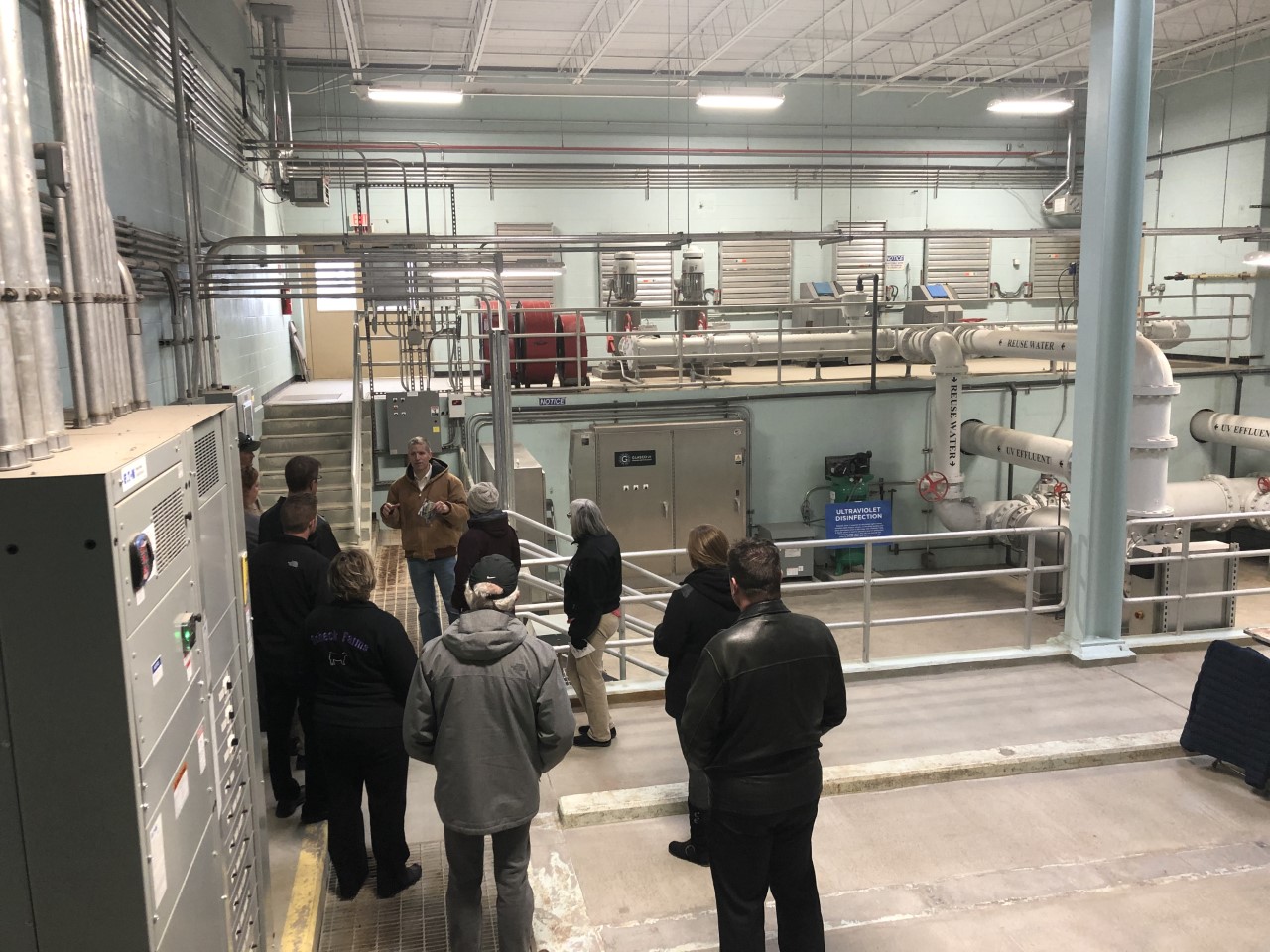
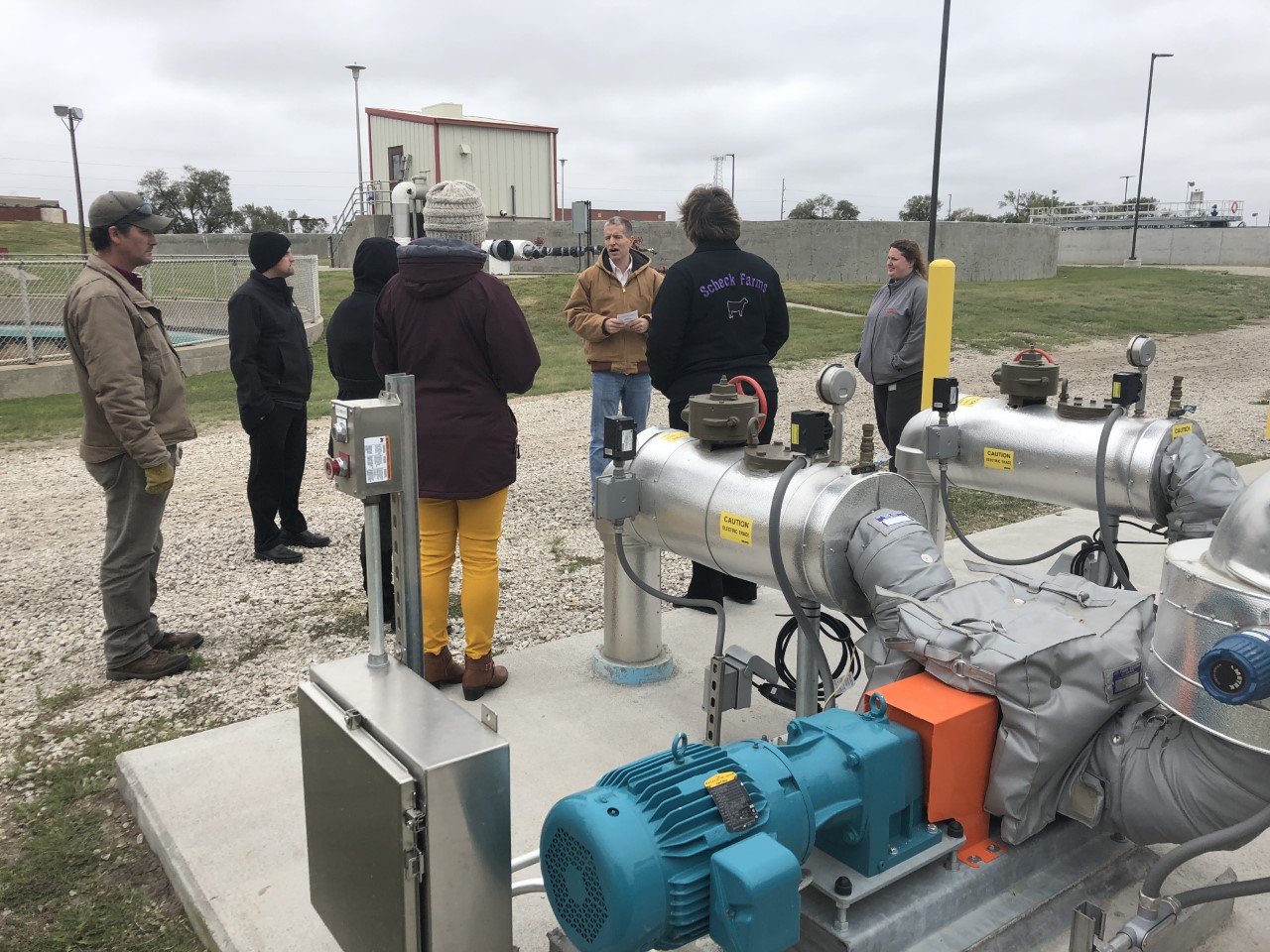
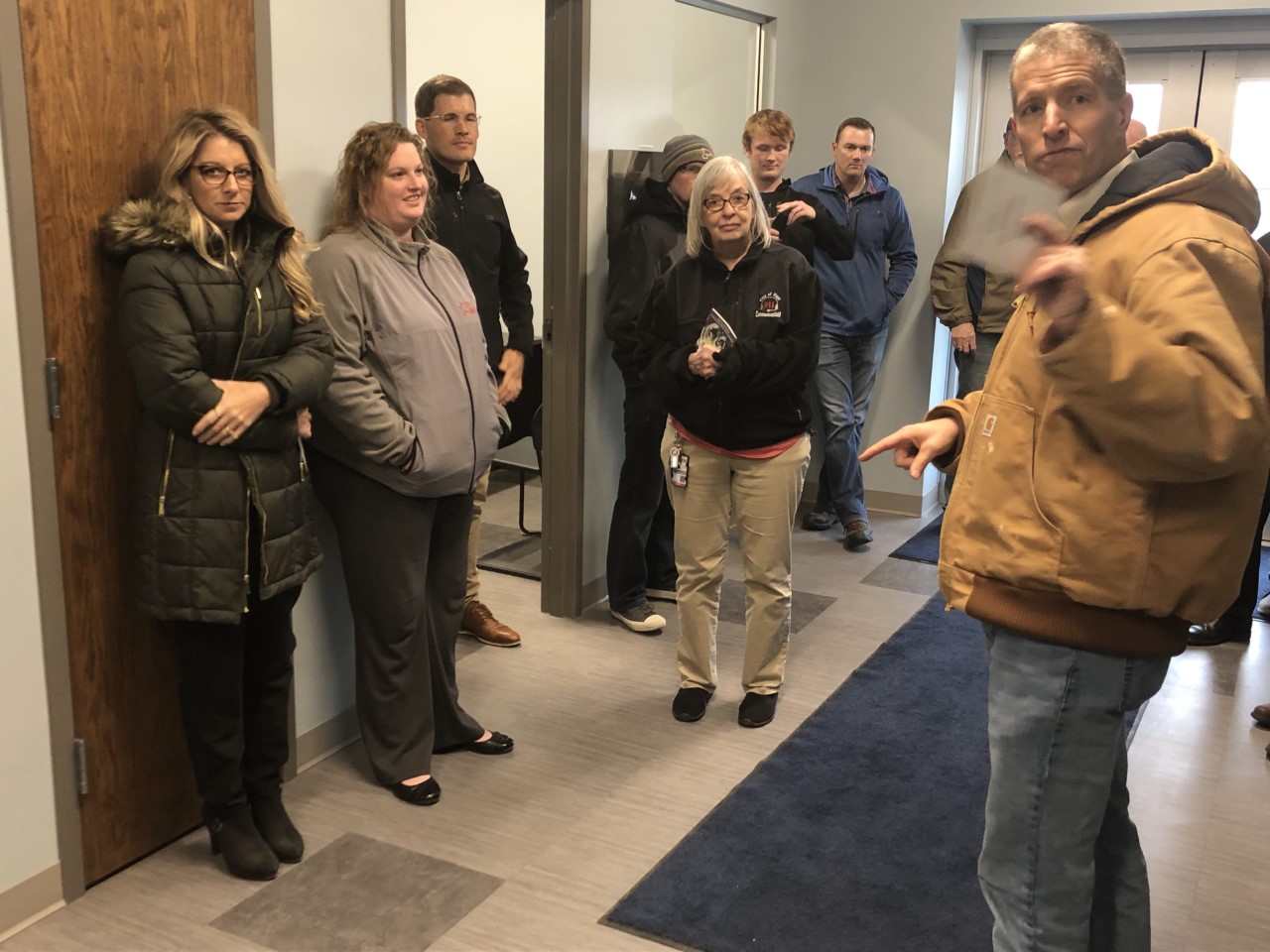
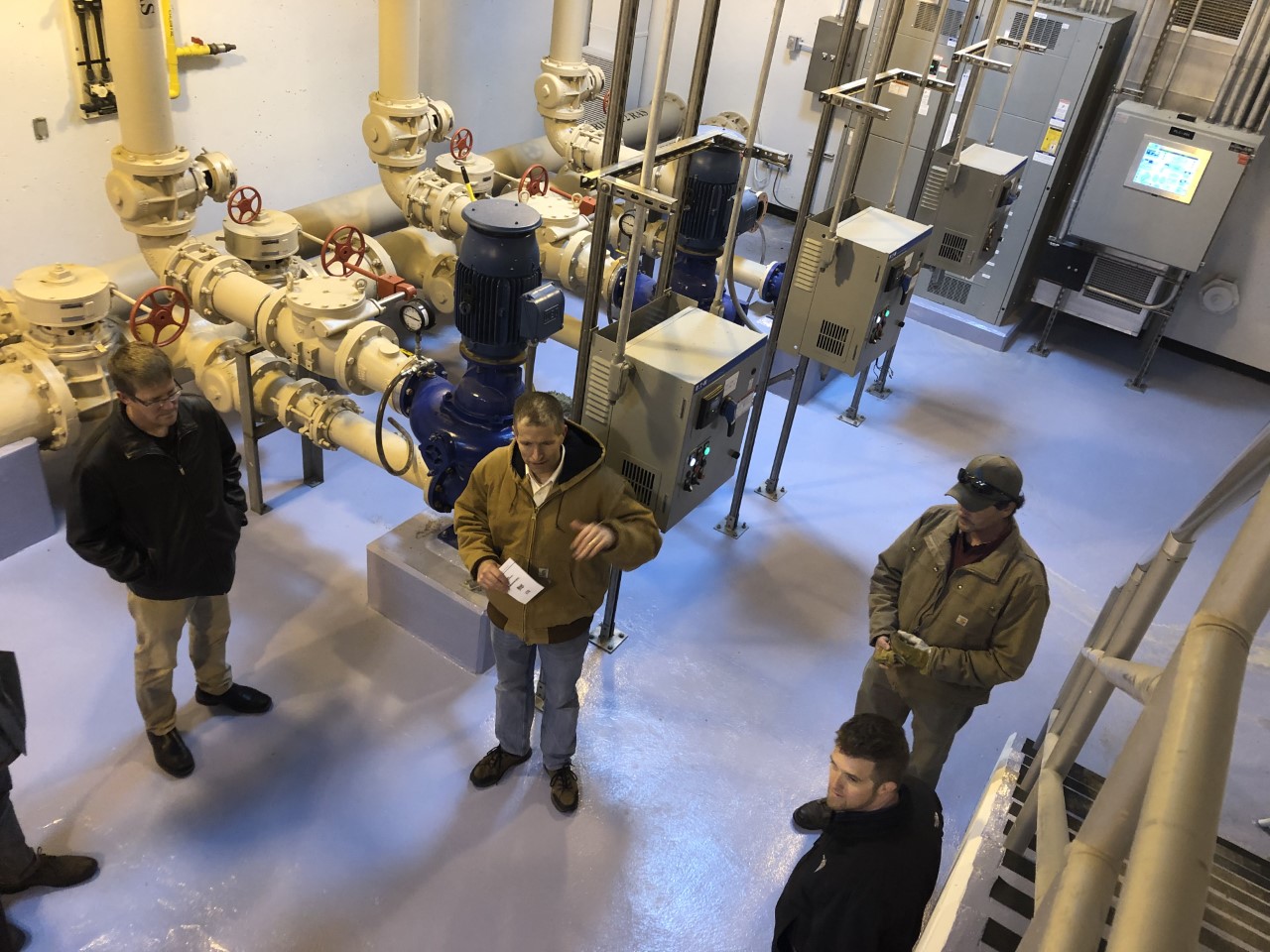
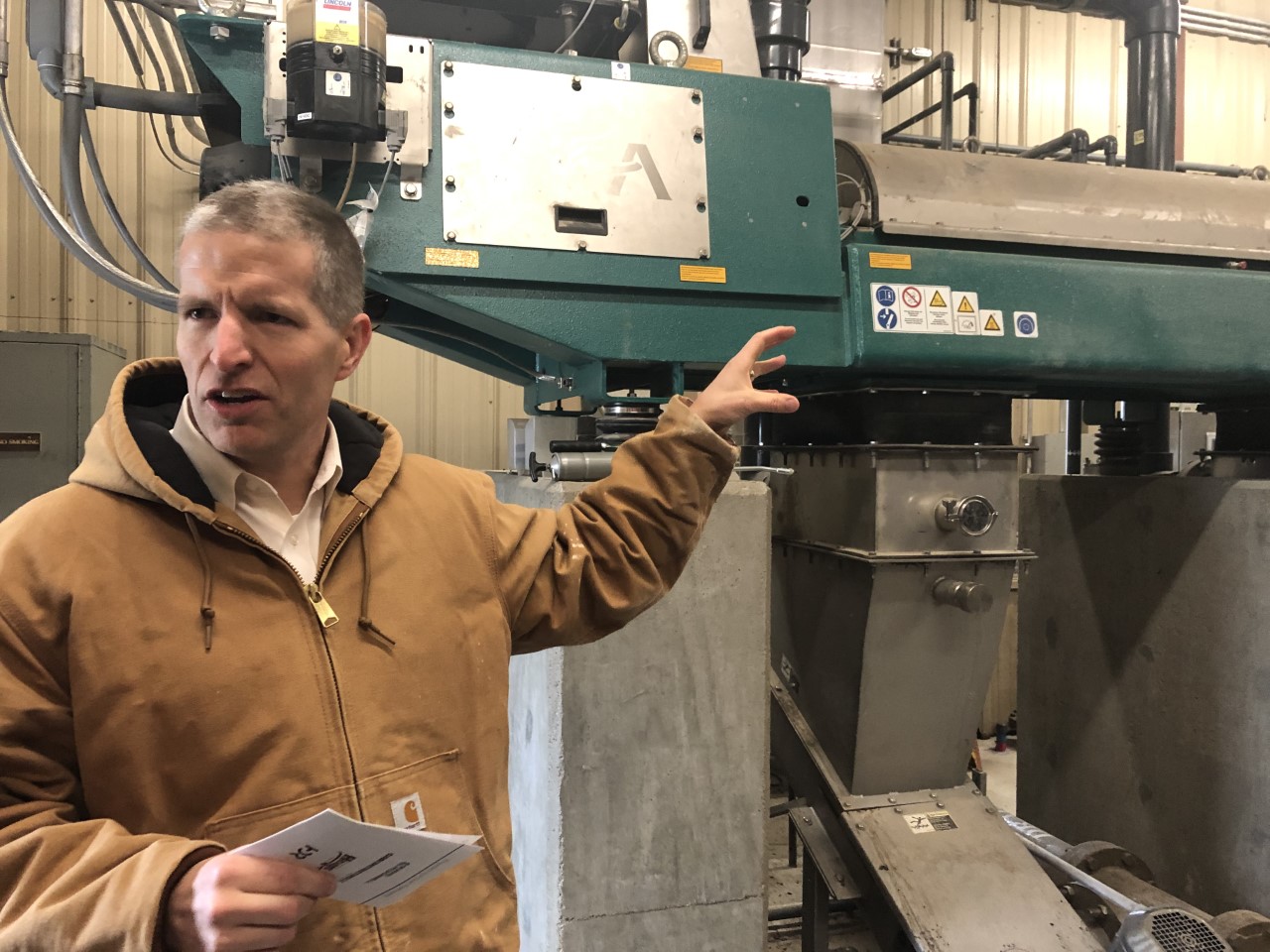
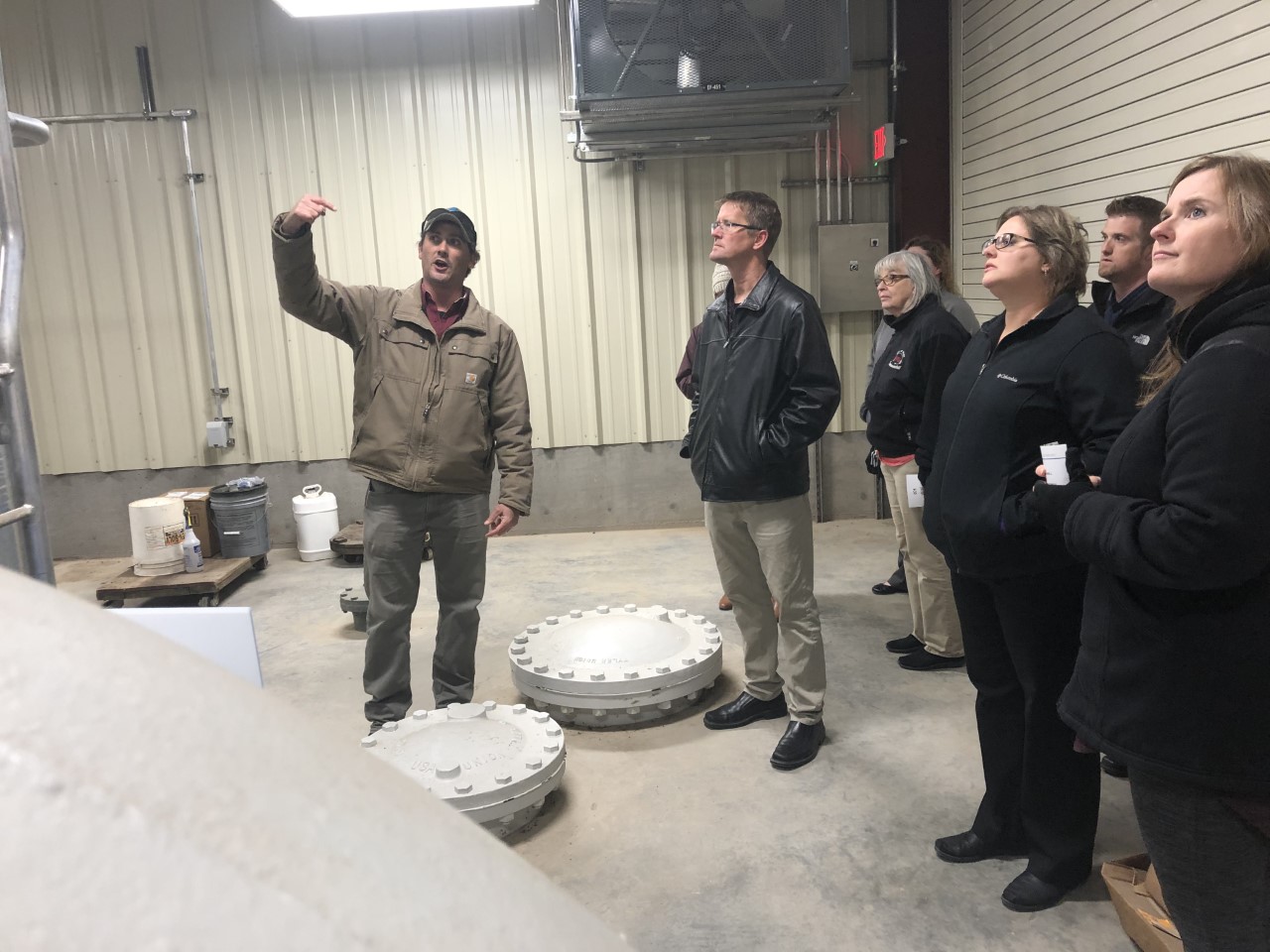
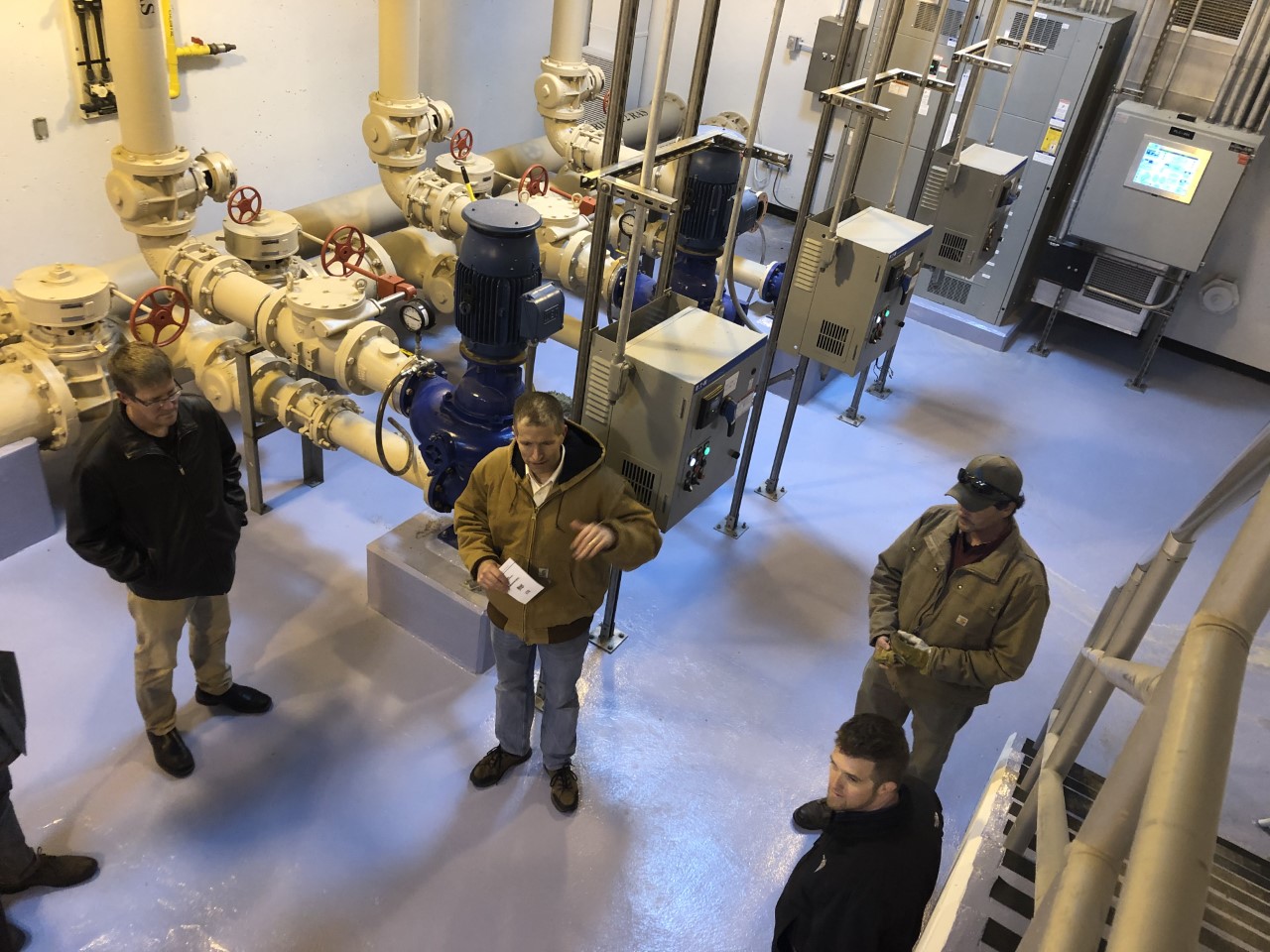
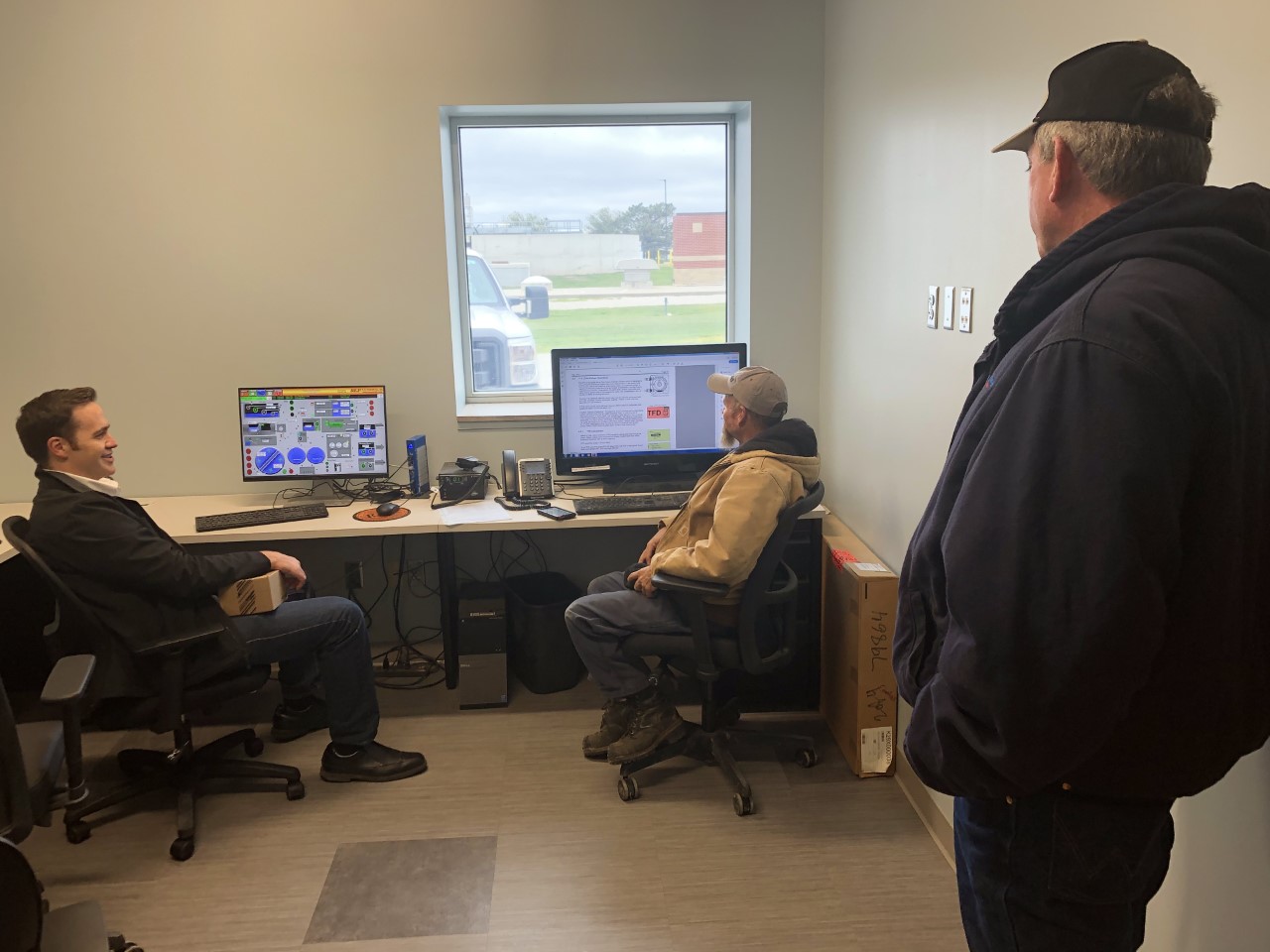
Commissioners, city department heads, KDHE representatives and project principals from Burns and McDonnell and CAS Constructors, the design/build team, and owner’s representative HDR toured the $30.272 million water reclamation and reuse facility earlier in the day.

The work began May 31, 2017, and was completed Sept. 15, two months ahead of schedule with no change orders and no injuries to workers or employees. It was also $400,000 under budget.


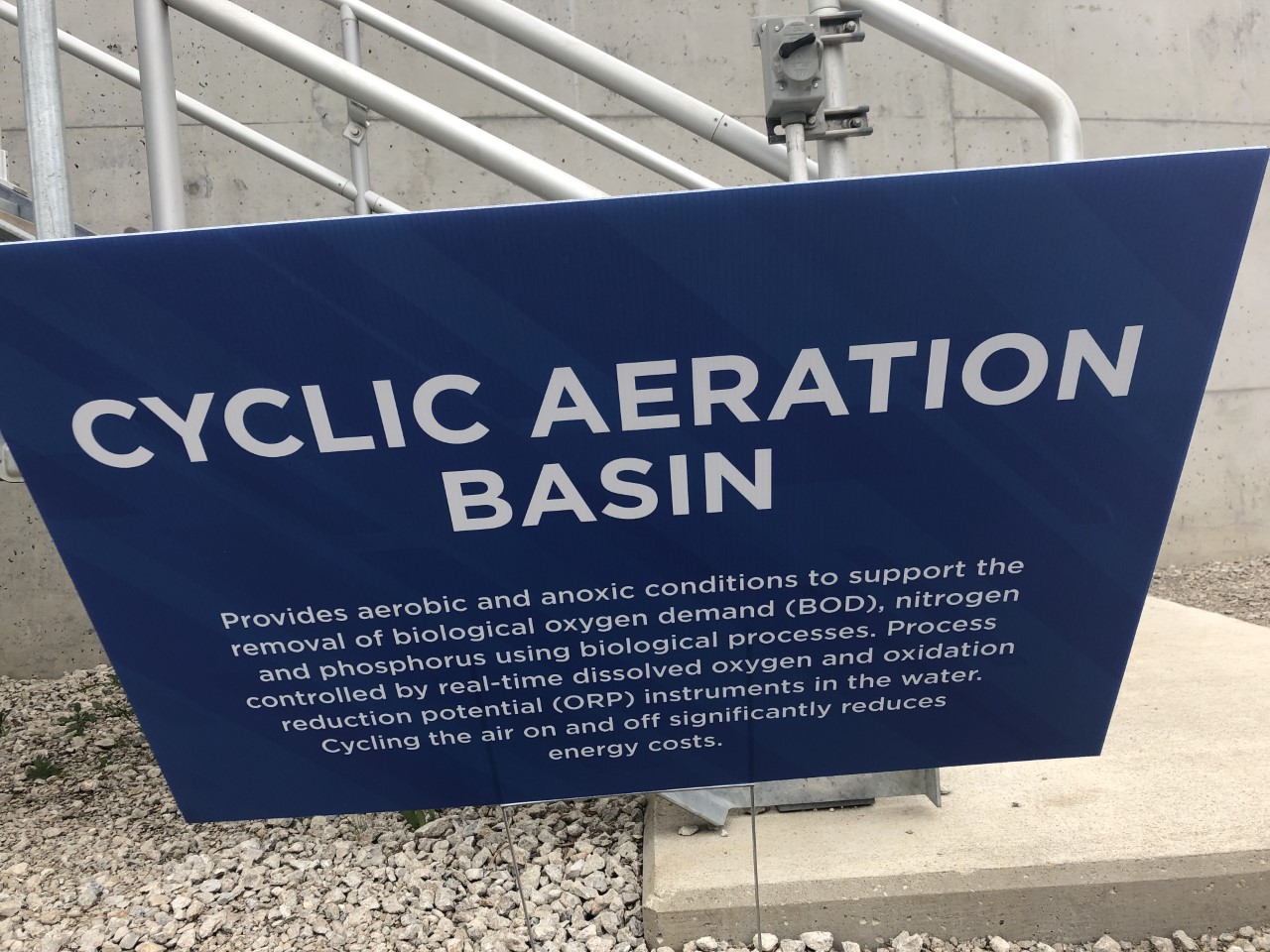
Tests of average nutrient discharge levels conducted since April are much improved compared to the old plant.

“The limit of 10 on nitrate and nitrite has been running at about 1.4, ammonia is less than half  and phosphorus is right at the limit,” reported Stan Christopher of HDR Engineers, the city’s owner-representative on the project. The phosphorus system was pushed hard during performance testing, dropping the level to 0.167 percent.

“That’s likely to be considerably below any future limit you’re going to see during the life of this plant,” he added. “That’s state-of-the-art numbers.

“I think you can be proud that this is going to give you a sustainable future for many years to come.”

KDHE issued a two-year permit Sept. 1 for the new plant. EPA will make no changes to the effluent discharge allowable levels during the life of the city’s 20-year loan for the project, according to City Manager Toby Dougherty.

The city was fined $18,000 in 2012 by the EPA for excessive levels of phosphorous and nitrate.

“We have fought for years to meet those regulations,” said Commissioner Ron Mellick, “and now we can kind of sit back and enjoy that we don’t have to worry about that from certificate to certificate.”

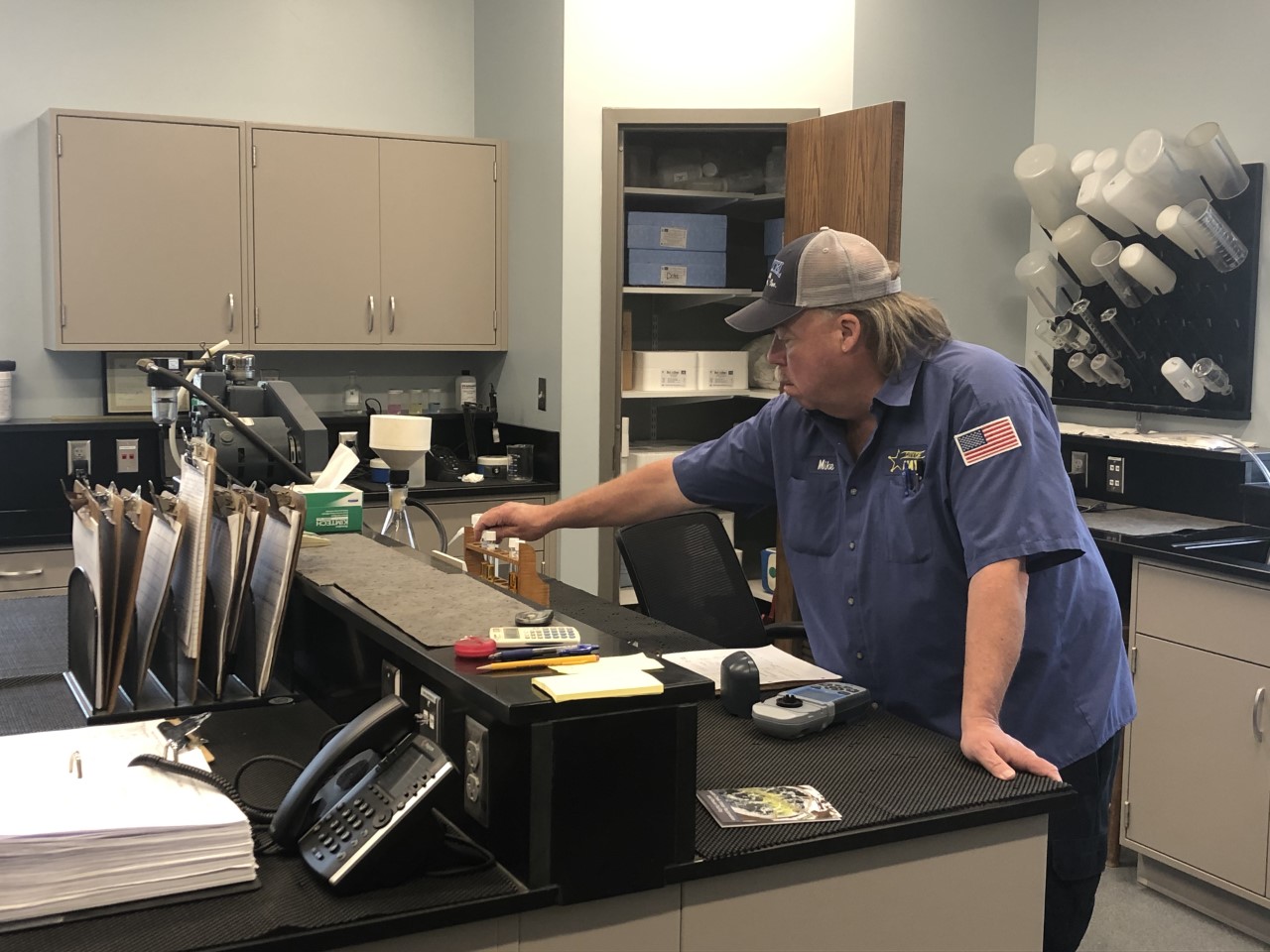
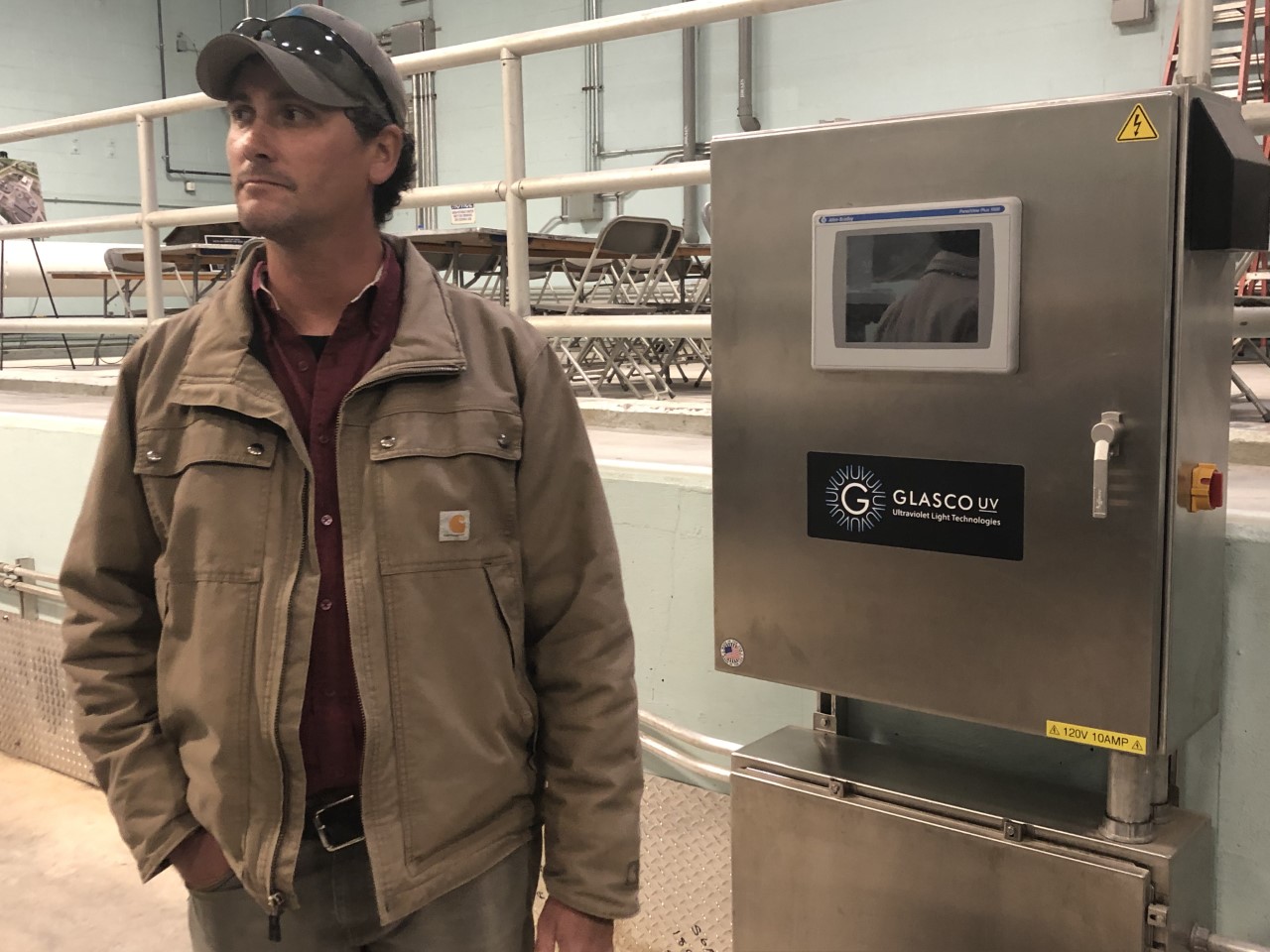
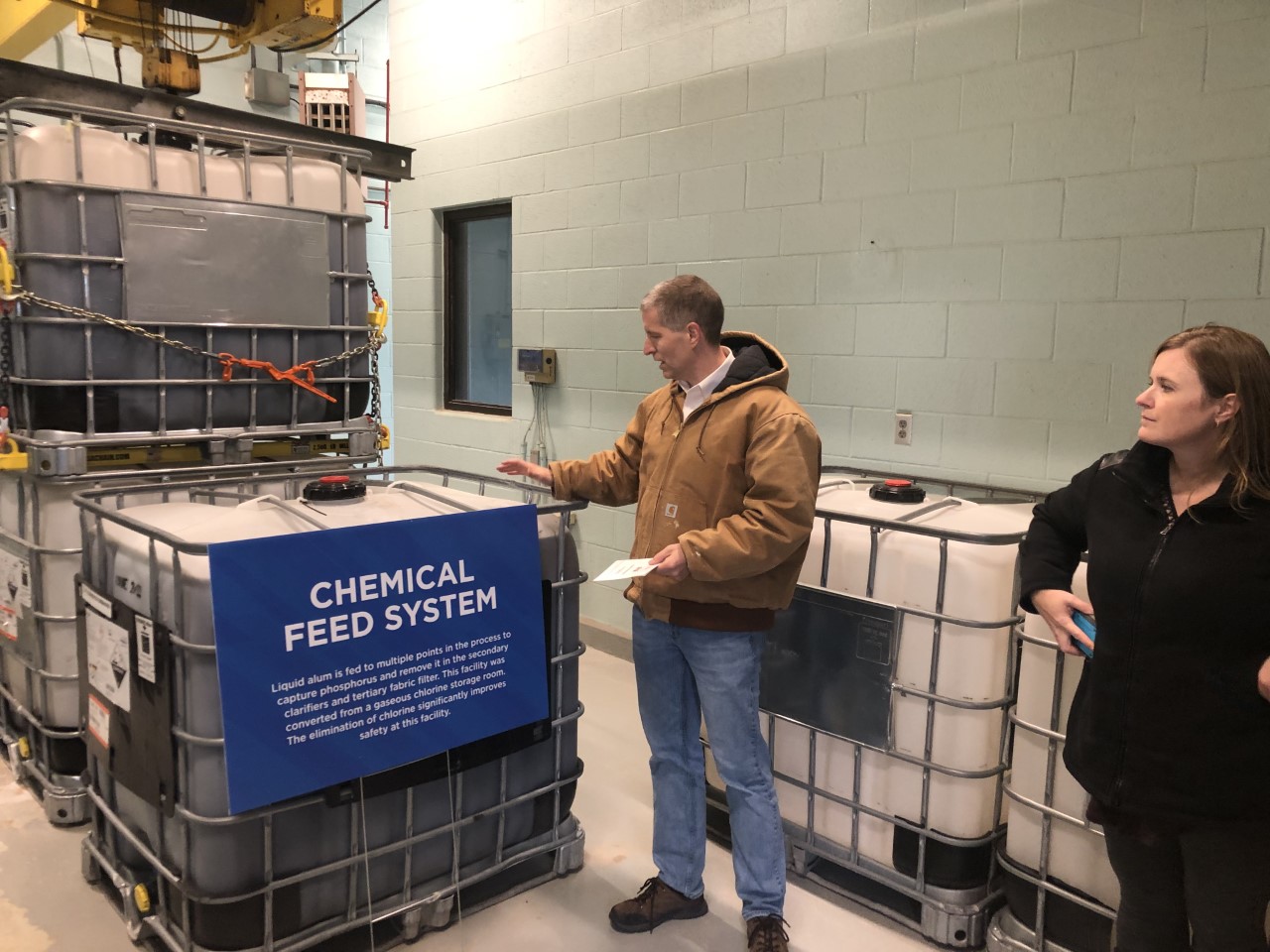
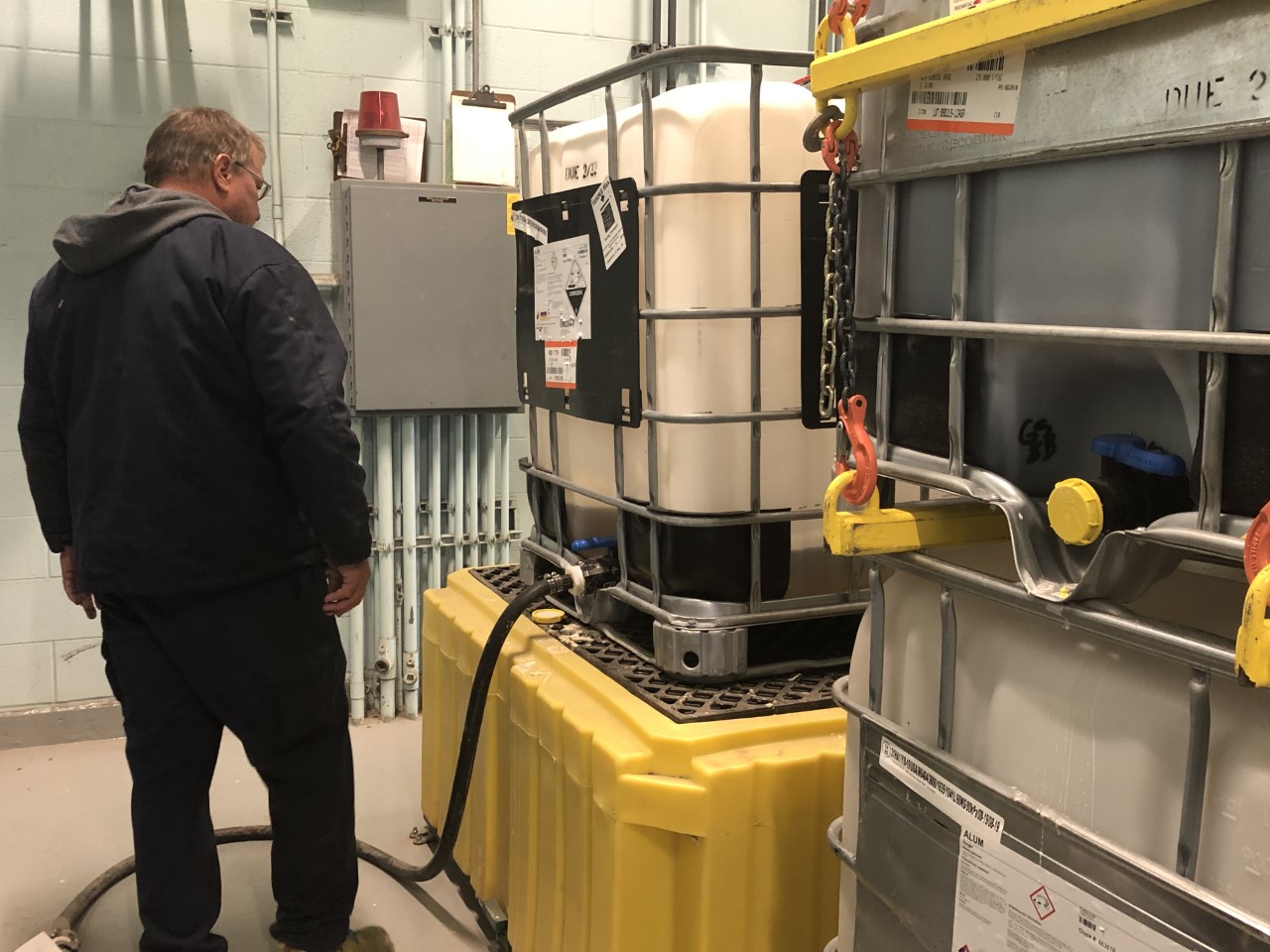
Energy consumption at the plant, which now uses ultraviolet disinfection rather than toxic gaseous chlorine, has decreased about 20 percent, according to  Jason Riegel,Water Reclamation and Reuse superintendent.

The plant, with a new entrance at 755 General Custer Road, also has a new name — Chetolah Creek Water Reclamation and Reuse Facility.

“We used to call them wastewater treatment plants or sewer plants,” said Jeff Keller of Burns and McDonnell engineers.

“I think this name is a nice statement, especially in an area of Kansas where water can be scarce,” Keller said to the commission. “Having that recognition you’re doing the right thing, that you’re recovering the water. You’re not just putting it back into the environment cleaner than it started but you’re making it available for all sorts of beneficial uses. It makes this whole project a green solution.”

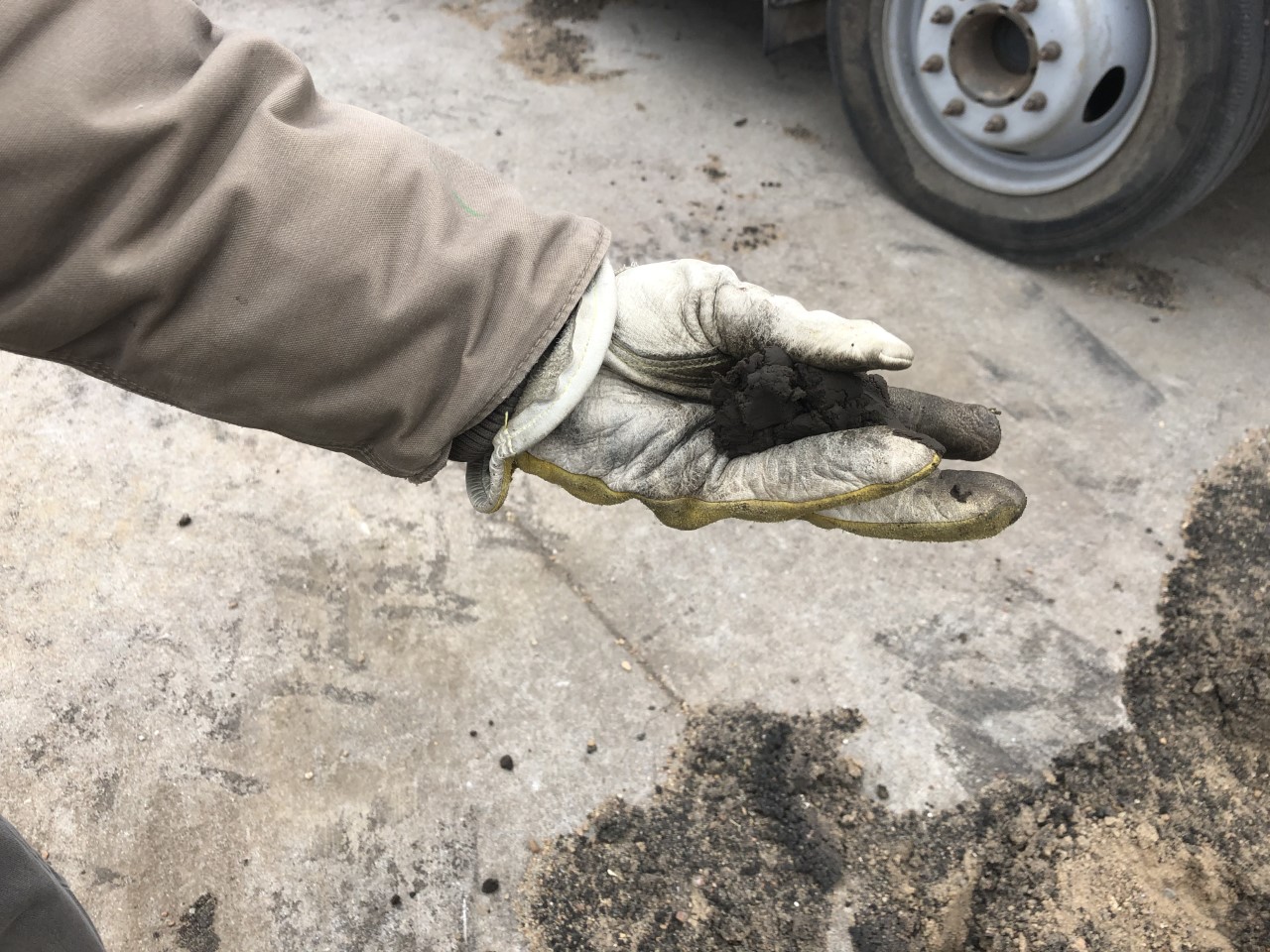
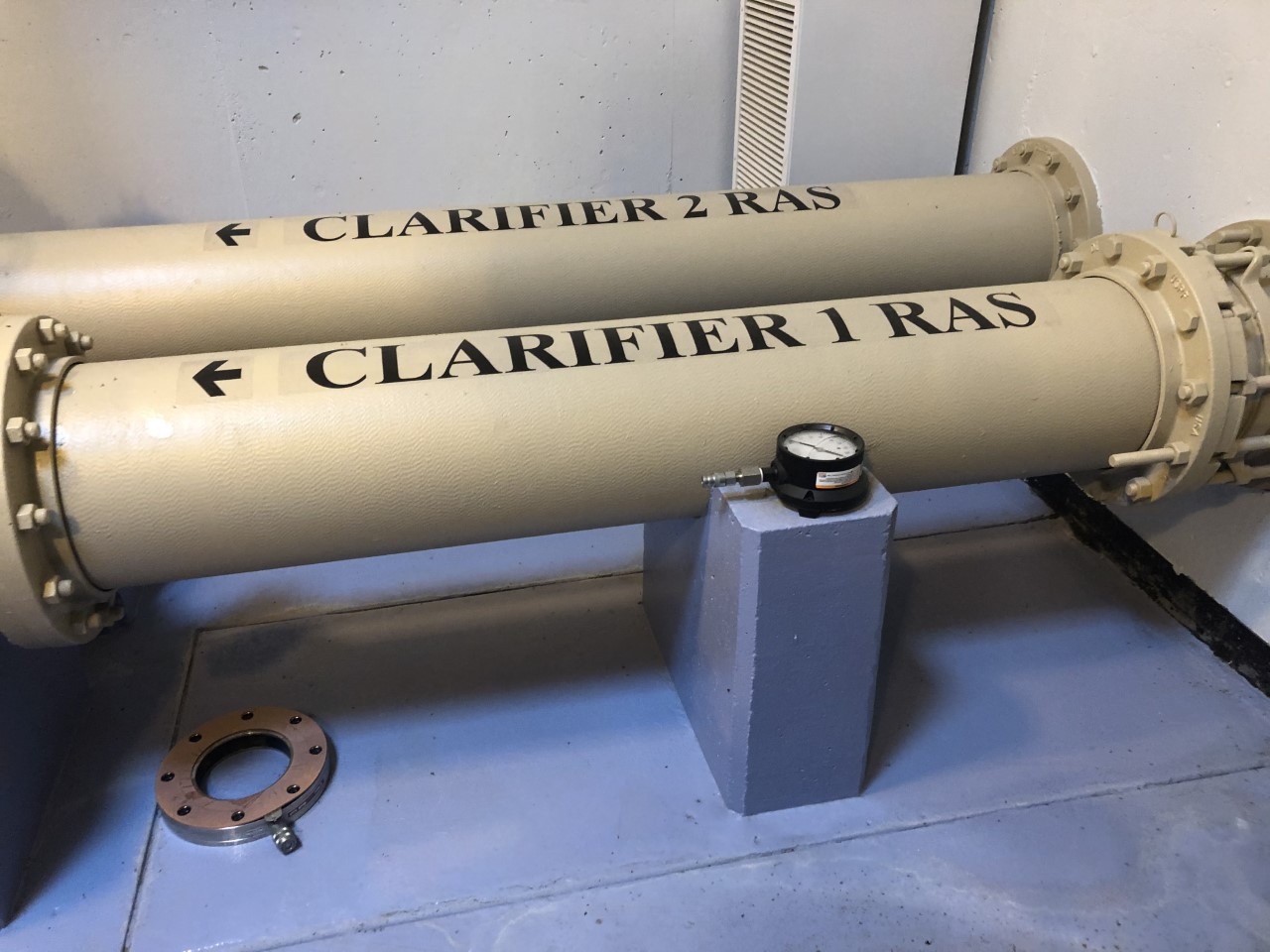
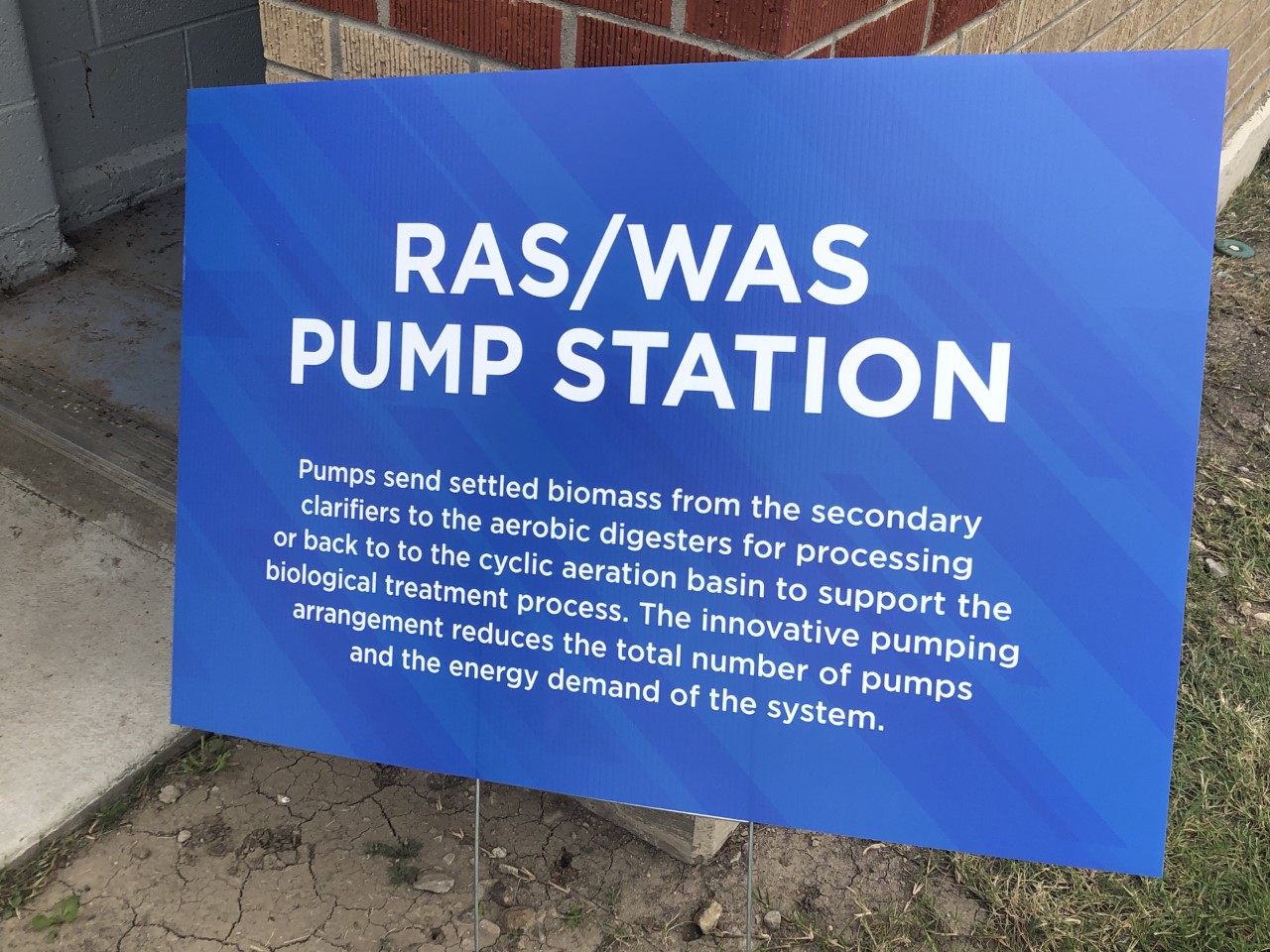
Water reuse is expanded with an additional 750,000 gallons of reclaimed water storage basins. Treated effluent is reclaimed for irrigation at sports fields and the municipal golf course. Effluent water is also available to the community through an adjacent fill station.

“After touring the plant today — and I hope the community gets to see it at some point — seeing all the reuse, the recycling and reclamation that goes on there, that in itself ties in to our whole mission that we’ve had in this community for 20 some years now as far as our water conservation goes,” said Commissioner Eber Phelps.

“You’re getting dramatically cleaner water, dramatically improved environment, much safer plant for your employees and for your community, and 20 percent less in operating costs,” Keller pointed out. “A lot of that has to do with new technology that got implemented.”

This is the biggest public works project ever completed by the city of Hays and the first time it used the design/build process.

“No change orders is unbelievable on a project this size with that length of time,” commented Commissioner Sandy Jacobs, “and that’s really impressive.

“We know how good our staff is here, we know how good of a job they do. What they’ve done with you and you with them, this collaborative effort, has been something to really enjoy watching and seeing how well you all worked together,” Jacobs added. “I’m extremely proud of all of you and thank you very much for that.”

The Hays wastewater plant was originally constructed in 1953, expanded in 1967, and last improved in the early 1990s.  It remained open and operating normally during the recent 17-month renovation.

The plant had to be overhauled to meet future nitrogen and phosphorus limits mandated by KDHE and the Environmental Protection Agency.

In August 2015, the Hays City Commission approved tripling the sewer rate over a six-year period to help pay for the plant upgrade. The city has 20-year, $30.26 million loan agreement through the KDHE  Kansas Water Pollution Control Revolving Fund Loan to pay for the project.

Adopt-A-Cop creates positive relationships between officers, kids

By CRISTINA JANNEY
Hays Post

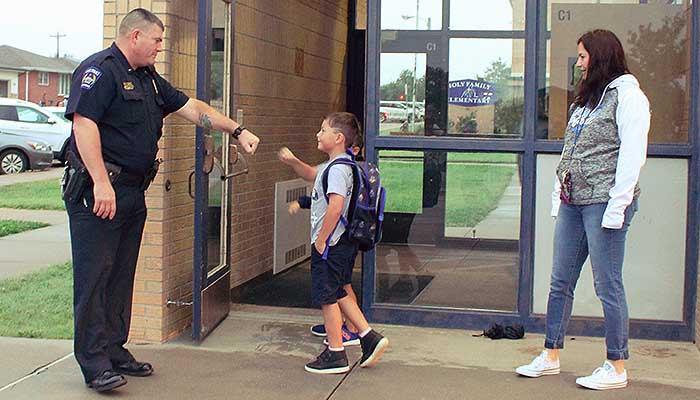
Lt. Tim Greenwood stood outside Holy Family Elementary School on a recent drizzly, gray morning, opening car doors for kids and giving high-fives and fist bumps.

It only takes about 15 minutes out of his day, but he said he thinks it is important for kids to see a police officer as one of the good guys.

Greenwood was part of the Adopt-A-Cop program when it began in Hays in 1998. The program was temporarily discontinued, but was resurrected about five years ago. Every school, public and private, in the city has at least one officer assigned.

“It is great when I am there and the kids smile and wave,” he said.

In addition to the welcomes in the morning, Greenwood periodically gives presentations to school on safety topics. Greenwood is also a veteran and the school invites him to lunch once a year to celebrate Veterans Day.

“I’m somebody those kids can look up to as a role model and not be afraid to reach out and say. ‘Hey, Officer Greenwood, how are you this morning?’ and develop a conversation or rapport that has served us professionally later on.”

The relationships he builds with the children has been useful as he has been called to tragedies and been able to calm a child because that child knew him from school.

Greenwood said Adopt-A-Cop has been one of his best assignments as a police officer.

“A young lady came up to me and asked if I remembered her, and I didn’t. It was a third grader that 20 years later had grown up and she still remembered I was her Adopt-A-Cop,” he said.

Sgt. Jason Bonczynski is assigned to Wilson Elementary School.

“I think the program has some really tremendous benefits for the kids” he said. “When I first started going, no one wanted to talk to me. There was a cop over there. They didn’t know what was going on. ‘He looks a little bit spooky.’ Once the kids realize I am there for the kids, they’re having fun and I’m handing out stickers and visiting and playing, they almost run me over for a sticker in the morning.

“Some kids have had experiences with law enforcement that might not pose us in the most positive light because we took a law enforcement action. They might be fearful of us. We have the opportunity to turn around those perceptions and let them know we are here for community service and to keep people safe.”

In his 21 years as an officer, he said there is nothing that puts a smile on his face and is more positive than being an Adopt-A-Cop.

“Who doesn’t like hanging out with kids?” he said.

HPD Deputy Chief Brian Dawson said the response to the program from schools, officers and the community has been positive.

“It helps build a rapport between the young people at schools and the officers as well as school staff and parents,” he said.

The HPD at one point had school resource officer program in Hays schools, but that program was discontinued.

“Silly Selfie” of some Wilson Elementary students and their Adopt-A-Cop Sergeant Jason Bonczynski. Courtesy of HPD Facebook

The current program amounts to 40 officer hours per year across the entire program. However, officers and the school officials said they thought the program offers maximum benefit for the amount of resources dedicated to it.

Lincoln Elementary School has two officers assigned to its school.

Lincoln Principal Kerri Lacy said having the officers welcome students in the morning one to three times per week has helped the children and parents feel more at ease with the officers. They have also visited the school and had lunch with the children.

“I think another benefit is our parents knowing we have Adopt-A-Cops,” Lacy said. “They see them out front in the morning and know we are keeping our school safe. Having the presence here is a great benefit.”

Lacy said she thinks the program helps change the kids’ perceptions of police officers.

“Our kids just think officers are scary, because that is all they know, so it is a good way for them to know officers are here to hep them if they need it and they are nice people and they are familiar with the school,” she said. “That way if they see an officer walking in the school they are not thinking, ‘Oh my gosh, there’s something wrong.’ They are here to be helpful.”

Tom Albers, Hays Middle School principal, said the idea behind Adopt-A-Cop is to have a police officer connected with the school.

The two officers assigned to the middle school open doors for students in the morning and greet them. They also walk the halls during the first part of the day, which is the school’s “Falcon time.”

Albers said he at times calls on the officers to give words of encouragement to students.

“They walk the building just talking to kids,” Albers said. “They are visible. They’re available for kids if they want to speak to them. They have very positive interactions with our students. It allows our kids to feel secure.”

Hays High shares CTE needs, looks toward renovation

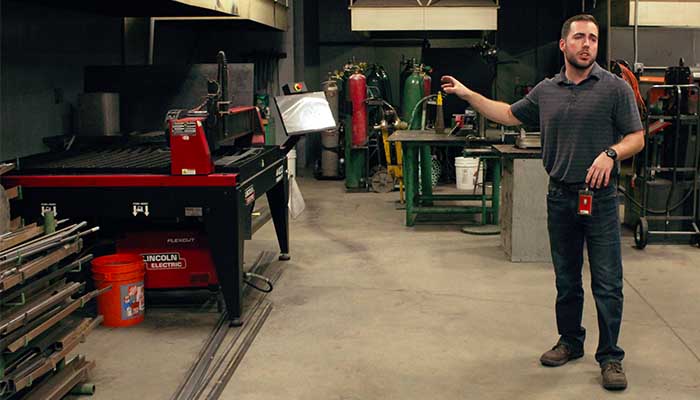
Alex Ford, HHS metals teacher, discusses the school’s new computer numerical control (CNC) machine during a school board tour Monday night.


By CRISTINA JANNEY
Hays Post

The Hays school board and guests toured the Career and Technical Education wing of Hays High School on Monday night, learned about some of the needs of the programs and discussed hopes for a renovation of the program’s space.

As Hays High sees an increase in enrollment, the demand for CTE classes is also increasing. However, the school is limited in adding more course offerings by both staff and space.

For the fall semester of 2019-20, HHS has 888 students (seat-time) in its CTE programs.

From left, school board members Paul Adams and Mike Walker and HHS Principal Martin Straub look at a hydroponics experiment that one of the HHS ag students is preparing to plant. The HHS greenhouse was repaired this summer after being damaged in a hail storm.

Martin Straub, HHS principal, said he would like to double the size of its health care pathway. A room that used to be occupied by a preschool program is now being used used by a NCK Tech teacher to offer allied health classes.

The preschool program was moved to the former Oak Park Medical Complex with the Early Childhood Connections program.

Straub said he would like to be able to have a health pathways instructor on staff, but the shared instruction is working for now. HaysMed recently donated hospital beds for that program.

Although it is not related to CTE, there is a transitional living room in the CTE wing. The room is set up like an apartment. Students in functional special education learn life skills in that program, such as cooking meals, cleaning, budgeting and shopping.

The addition of this room means students don’t have to go off campus to learn these skills. The class averages about 20 students.

Metal shop

The metal shop recently added a new lathe and computer numerical control (CNC) machine. However, metals teacher Alex Ford said the program lacks the space and the equipment to teach all of the skills he said he thinks students need to be prepared for the work world.

Chris Dinkel, CTE instructor, said the department would like to knock down one of the walls and expand the shop into the adjacent room. The program would also like to put in an overhead door on the back of the shop so students could bring in larger projects like trailers, which now have to be worked on outside.

“His student-to-equipment ratio — you have 20 students in here and you have two lathes,” Dinkel said. “That’s a problem. You count the number of machine shops we have within a five-, six-county area, it’s well over a dozen. There is an employment issue too.”

Ford said, “I have one mill. It’s a great machine, but I have 20 students. I can’t teach anything on it. I can’t have 20 students on one machine. I actually need two or three of them. I need four lathes if I want to really teach my students. I have all the welders I can ask for, but I don’t have the machining capability.”

He continued, “CNC is the biggest push right now. I have one CNC machine. I would like to have two or three more. I would like to have classes just on that.”

Lathes cost $5,000 to $10,000. A mill can cost $15,000 to $20,000.

Dinkel said High Plains Machine Works has a large mill it would like to donate to the program, but the high school has no place to put it.

Radio/TV

HHS has an award-winning radio and broadcast program. However, Dan Balman, broadcast instructor, said the classroom space doesn’t fit the program. Balman also teaches American government. When his broadcast students need to shoot video, they have to move all of the desks out and set up the green screen and all of the audio and video equipment.

He would like to see a room that is adjacent to the program’s radio studio reconfigured into a broadcast studio. The room is currently being used for storage. The school board has already approved construction of a metal storage building for HHS, but that building has yet to be constructed.

What is now being used by Heath Meder for the graphics arts program could be converted into an editing classroom for the broadcast program. The CTE program would like to add a door between the two rooms that would be used for the broadcast program. Graphic arts could be moved to what is now being used by Allied Health.

Art

HHS art teacher Heath Meder explains more space is needed at HHS for the jewelry program to protect the safety of students.

Art teacher Heath Meder offers a jewelry making course. The space is shared with the ceramics program. Meder said the space is so tight it is unsafe for students.

The CTE program would like to knock out a wall to expand the jewelry program’s space into an adjoining classroom. They also are proposing adding a dividing wall between ceramics and jewelry.

Jewelry is a popular class. It has about 60 requests per enrollment period, but only 20 spots are available.

HHS art program’s new gas-fired kiln.

The student learn lost-wax casting. Students who may not take any other shop classes learn to use drill presses and buffers.

“It is a [class] we are talking about math, science, metallurgy. They are using things that I don’t think they will if they don’t have an opportunity in a class like this,” Meder said.

Meder found an aluminum foundry that has been at the school since it was built. Meder said he would like to use foundry in his art classes. A new shed was added outside of the ceramics studio for a new gas-fired kiln, and that area could be used for the foundry.

Jennifer Younger, art teacher, said other art classes, including art exploration, drawing and painting also are usually full, and the department has had to turn away students. The program does not have a dedicated room for painting, so the students can’t leave their art pieces out.

Younger said the art department would like to have a dedicated art exploration teacher, so she and Meder could concentrate on their specialities. Straub said HHS at one time had three full-time art teachers, but that position was cut.

“Right now, we are stretched pretty thin,” Younger said. “We are trying to teach everything. Students want to be in here. It kills us to have to turn away, but we are full, and there’s only two of us.”

Wood shop/drafting

Woods teacher Chris Dinkel discusses equipment needs in the wood shop during a school board tour Monday night.

A surface plainer and a table saw were recently replaced in the wood shop. However, Dinkel said the school needs a CNC machine for woods to prepare students for what they will experience in the work world.

“What does CNC do for us in here?” Dinkel said. “That is what many shops are doing. You go to Westlake in Salina or you go to Kansas City to these big cabinet manufacturers, once that piece of material runs through the process, especially when it comes to the finishing, a hand does not touch it. It is all on conveyor— sanding, the finishing, the staining process, the drying process.”

In order to make a place for a CNC, machine, the shop will need to be reconfigured. The CNC machine would need to be placed where the student projects are now being stored towards the center of the shop. Those projects would need to be moved to a storage room, but that space would need to be adjusted to allow enough room for both storage and a set of stairs that go to an upper wood storage space. That set of stairs right now butts up against a wall.

This would require a wall being removed and a support beam being added. The stairs could be extended out into the shop area.

Dinkel also teaches drafting. He said the monitors that the students are using are old and small for the large house plans they create.

Ag

HHS ag teacher Curt Vajnar displays a drone used in the ag program.

The glass for the greenhouse that is used by the ag program was recently replaced. The greenhouse was damaged in a hail storm and insurance covered the cost.

Curt Vajnar, ag teacher, said he now has his drone license and is teaching students drone applications in the ag industry.

He also has students involved in ag research. One student is studying water needs of various grasses with the help of Holly Dickman, City of Hays water conservation specialist. Another student is preparing for a hydroponic experiment and yet another student will be working on a hatching experiment.

The group did not tour the business and marketing or the culinary arts programs.

High school officials hope the renovations to the CTE wing could be done in phases with the total cost of about $150,000.

When the renovations to the CTE wing would be complete is uncertain at this time. The work is contingent on approval of the school board.

HHS Assistant Principal John Linn said work could begin on the renovations as soon as they are approved by the school board.

Racks sell Northwestern Printers to longtime employee

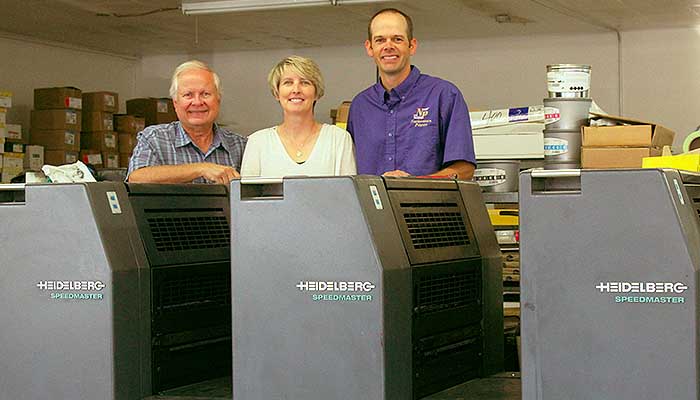
From left Marvin Rack Jennifer Rack, former Northwestern Printers owners, and Josh Zweifel, new owner, pose behind a printing press at the print shop in Hays.

By CRISTINA JANNEY
Hays Post

After 38 years in the printing business, Marvin Rack and his wife, Jennifer, have sold Northwestern Printers, to a longtime employee.

Josh Zweifel, 40, has been an employee at the company for 22 years. He took ownership of Northwestern Printers on Aug. 1.

Marvin, 61, said he and his wife have been considering selling the business for at least a couple of years. They had discussed a sale with Zweifel and were slowly allowing him to become more involved in the management of the business.

“It’s a good business,” Zweifel said. “A lot of people in town rely on this business. I think if it wasn’t here, it would put many people into a bind, trying to find somewhere to have their printing done because print shops are getting to be less and less.”

Zweifel said he had no immediate plans for major changes within the business. He said he hopes to continue the success the business achieved under the Racks and continue the business’ community involvement.

He said he would like to increase the business’ presence online. He envisions designs for some invitations or business cards could be done online.

Marvin said Zweifel has enthusiasm.

Printing was not Zweifel’s intended career. He received his degree in elementary education from FHSU. He worked at the print shop, starting when he was a freshmen in college. He completed his student teaching, went back to the print shop and never left.

The Racks and Zweifel said the transition thus far has been smooth. No employees nor customers have been lost in the transfer of ownership.

Marvin said although neither he nor his wife are quite to retirement age, now was the right time to transition the business.

“We have been in business since 1981, and we have a very good, needed business here in Hays. The last thing we would have ever wanted to do even in 10, 15, 20 years is close the business,” Marvin said.

The Racks have children in college and one still in high school, and they wanted to be able to spend more time with their family. The couple regularly worked seven days a week at the shop.

The Racks are slowly pulling away from the business. Although they are still coming in regularly, that should start to slow within about a month.

Zweifel said, “Marvin and Jennifer stopping in or being able to call them has been priceless.”

“All we needed to do was provide Josh the opportunity, and he took it,” Marvin said. “He had a lot of confidence and a lot of knowledge. It was easy and it was natural.

“Josh had a very good concept of the working parts of Northwestern Printers. He knew the jobs. He knew how to get them done.”

A history in downtown Hays

Marvin purchased the printing business from Northwestern Business Systems when he was only 23.

He had been working in sales. When the print shop was left without a staff, he found himself spending evenings printing his own jobs as well as those of other salesmen. He said he soon discovered he enjoyed the printing more than sales and, as a certified diesel mechanic, had an interest and knack with the machines used in the process.

“It was just like art class,” he said. “It was fun to build this stuff and make it.”

Rack spent many long hours in the print shop, doing the printing and running the business side of the company.

In 1981, the printing process still involved film.

“It was a long series and a very technical series,” Marvin said. “It took a lot of talent to make sure everything was straight and everything was correct and all the halftones were perfectly shot. We were probably one of the lucky print shops that saw that if we didn’t follow the technology, we’d get so far behind we couldn’t afford to keep up with it.”

Northwestern Printers hasn’t had a dark room in a couple of decades. Today, jobs are designed on a computer and printed to a plate setter that is similar to a copier. Those plates go directly to the press.

Jennifer came on board in 1994 and computerized the shop’s hand-written order process.

“At that time, we were still doing everything manually,” Marvin said. “We were still writing up job tickets by hand. We were still filing by hand. We had a card Rolodex that had every customer in it. Jennifer got us on the computer, and that made us the big jump.”

Jennifer, Marvin and Zweifel all said keeping up with technology in the printing industry has been what has kept the business competitive.

“With us having progressed with technology or advanced with technology, we probably kept our customer base strong,” Marvin said. “We kept our employees challenged because I think one of the biggest things in a job is to learn the technology and get good at it.

“When you buy a piece of equipment that is thousands and thousands of dollars and has an instruction book that is 2 inches thick, you sit there and say, ‘I had the old process down so well and felt so comfortable with it and now look at what I got.’ It kept them thinking, and I think that’s why we kept them as we did because it was always exciting.”

The Racks feel their 12 employees are family. They have monthly potluck lunches at the shop.

“Everybody brings food and everybody sits down over lunch and eats and visits,” Marvin said. “It is that type of camaraderie that I think we have always inspired or talked about and encouraged. I think that has helped us keep some of our employees as long as we have had them.”

Hays once had four or five print shops — today Northwestern Printers is the largest print shop in the region. They also complete jobs for customers as far away as Texas, Colorado and Nebraska, Jennifer said.

In addition to quality service, the Racks said giving to the community has also been important.

“We knew in order to be successful, we had to give back to the community,” Marvin said. “I think both of us have always been very kind hearted, and so we have always shared what we’ve made — not just downtown, but with Hays and northwestern Kansas as well.”

Jennifer said stepping away from the business after so many years has been difficult.

“It is definitely a change,” she said, “but it’s exciting, and we are looking forward to something different.”

“But we know it is in good hands,” Marvin added.

The couple is still planning what they will do in retirement, but they said they hope to continue to stay connected to the community.

REALTED STORY: Homegrown businesses: Northwestern Printers

🎥 Cold temp, wind can’t keep away Oktoberfest revelers

By BECKY KISER
Hays Post

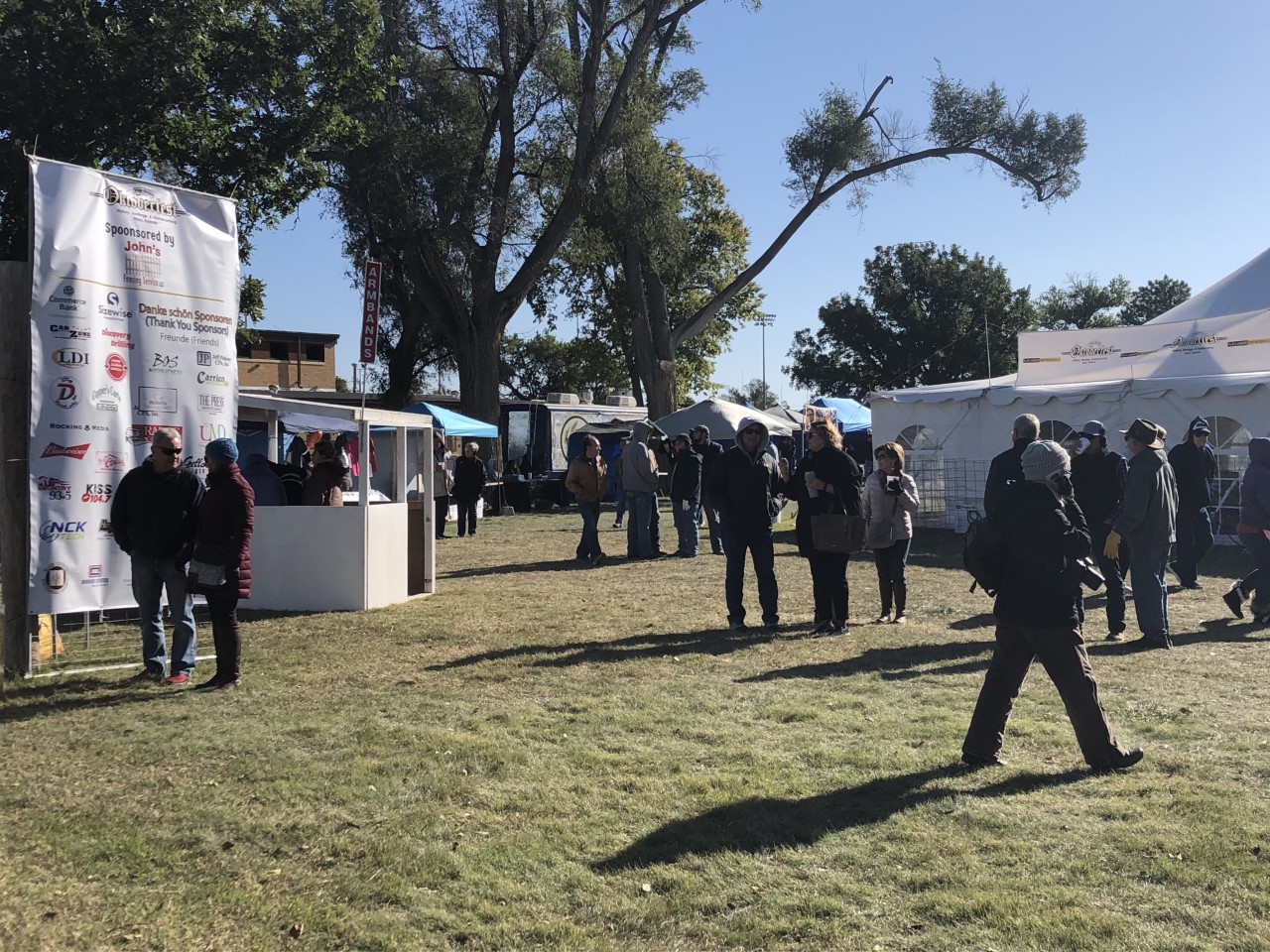
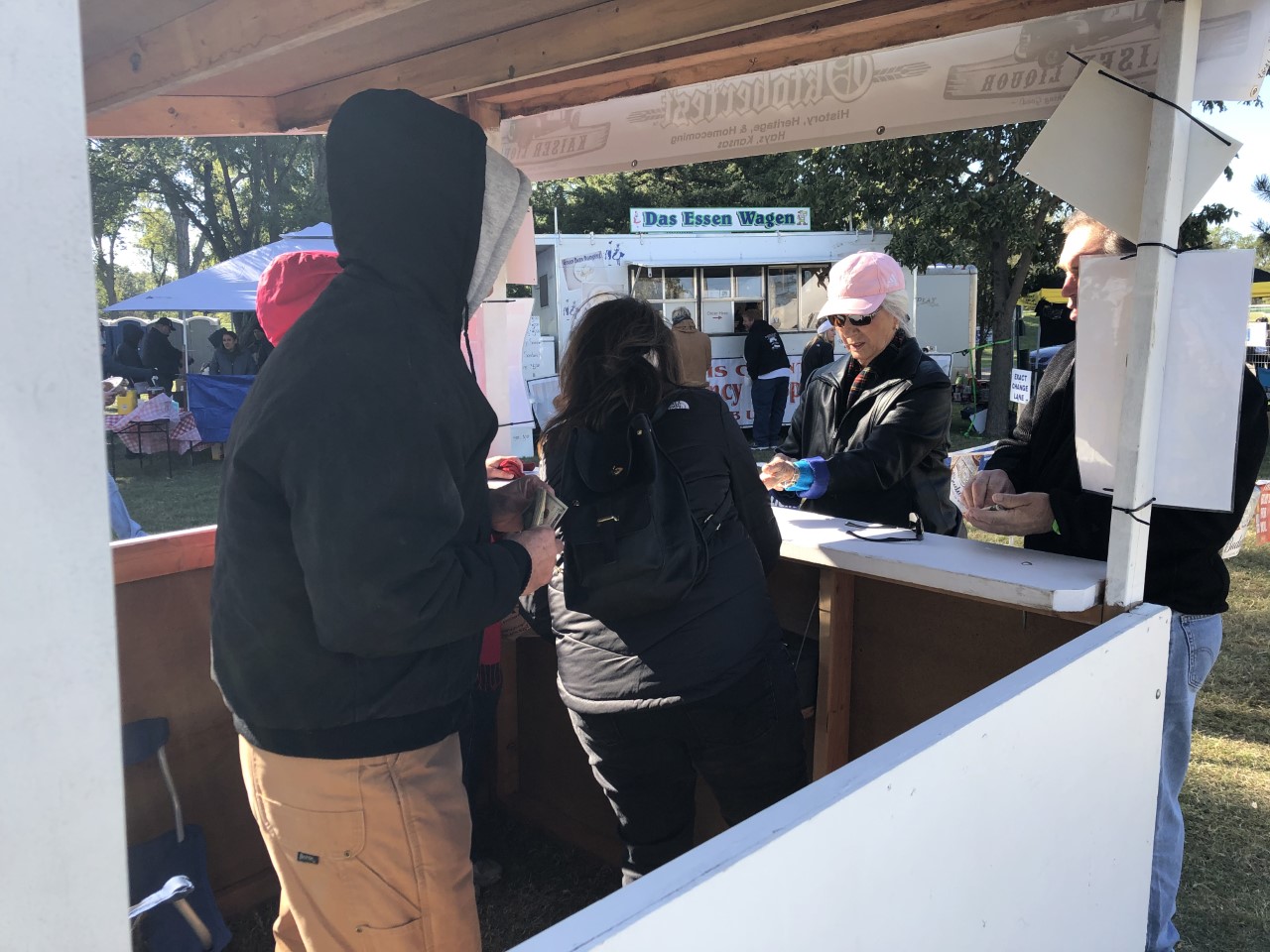
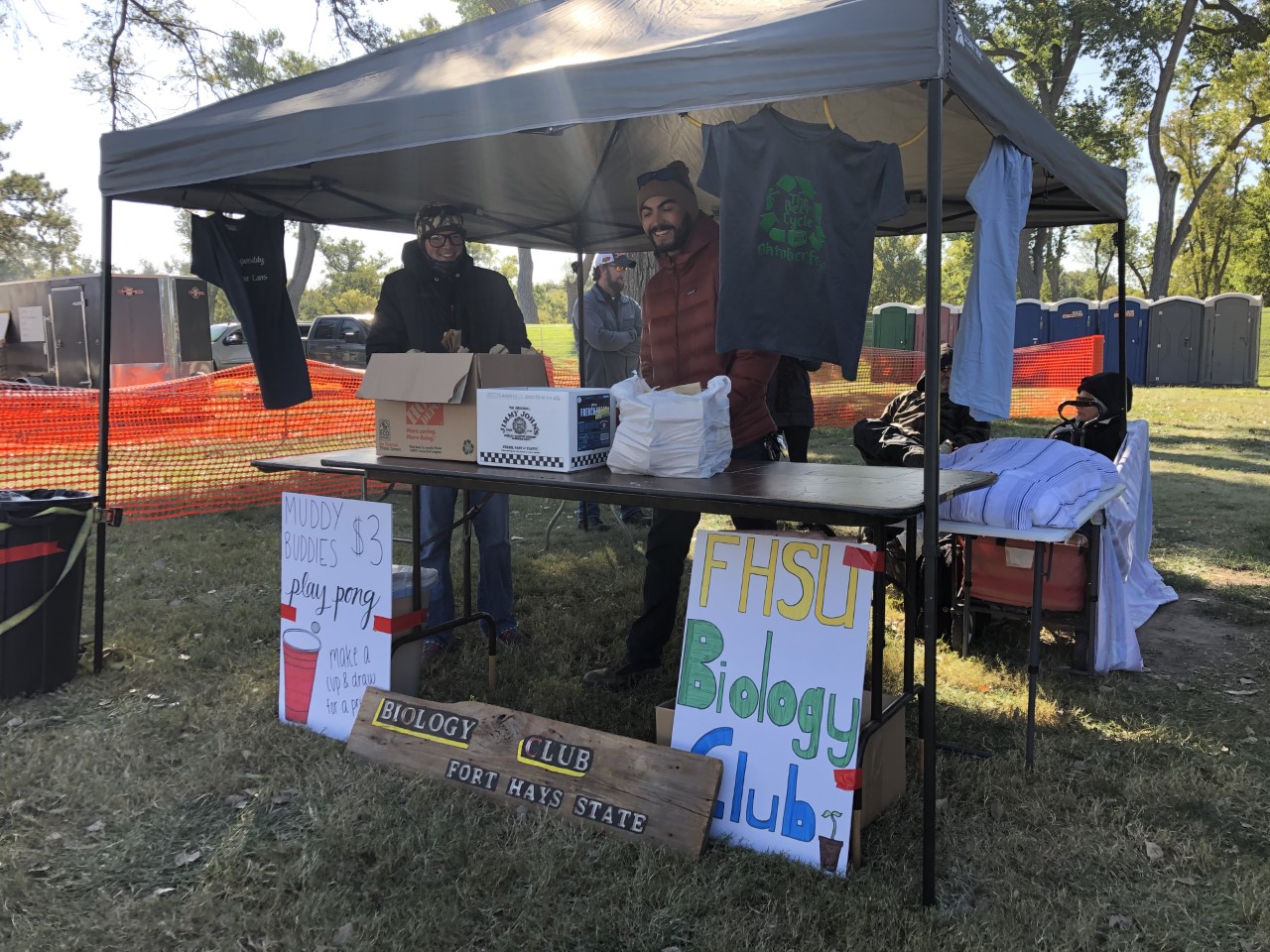
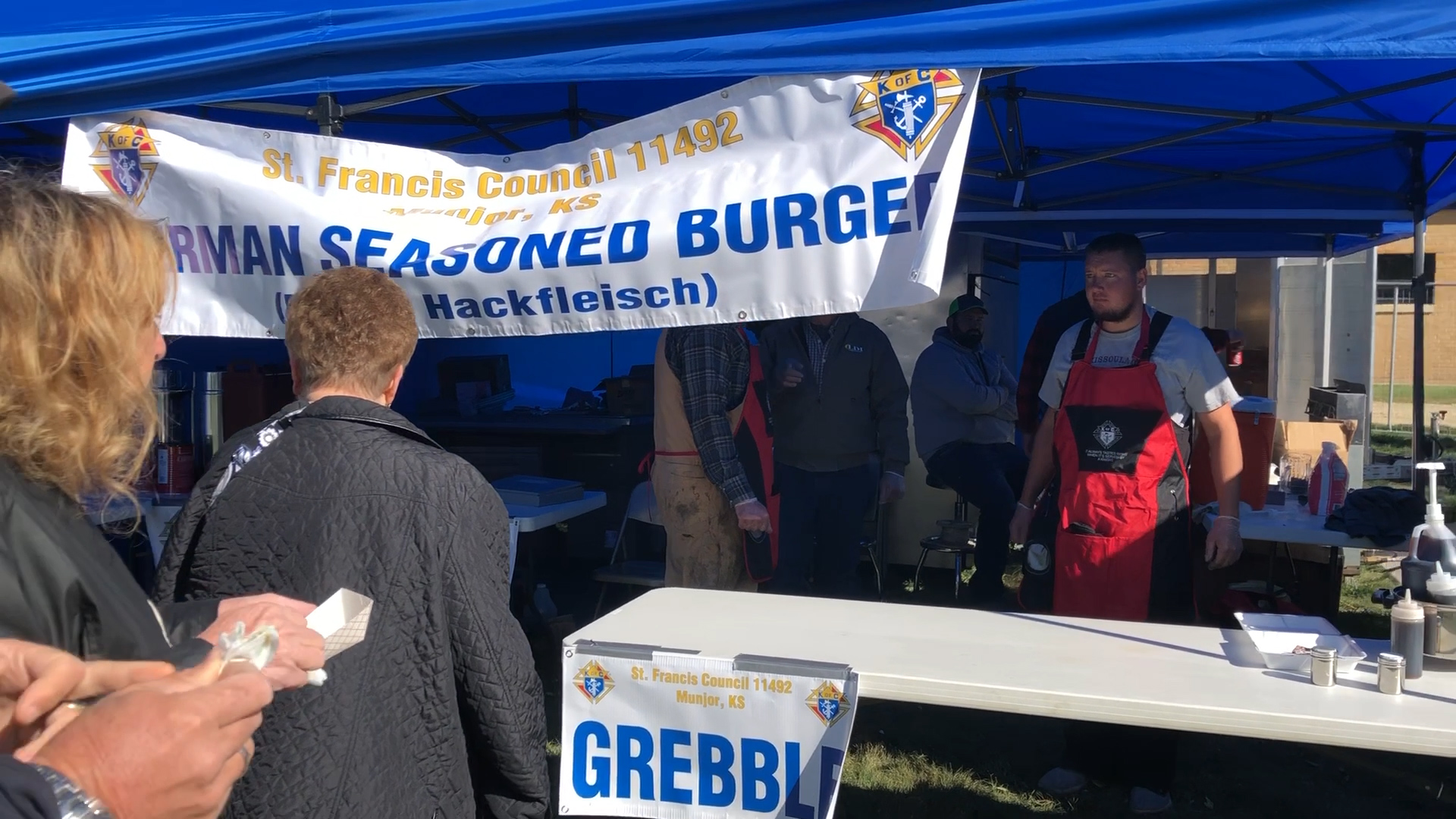
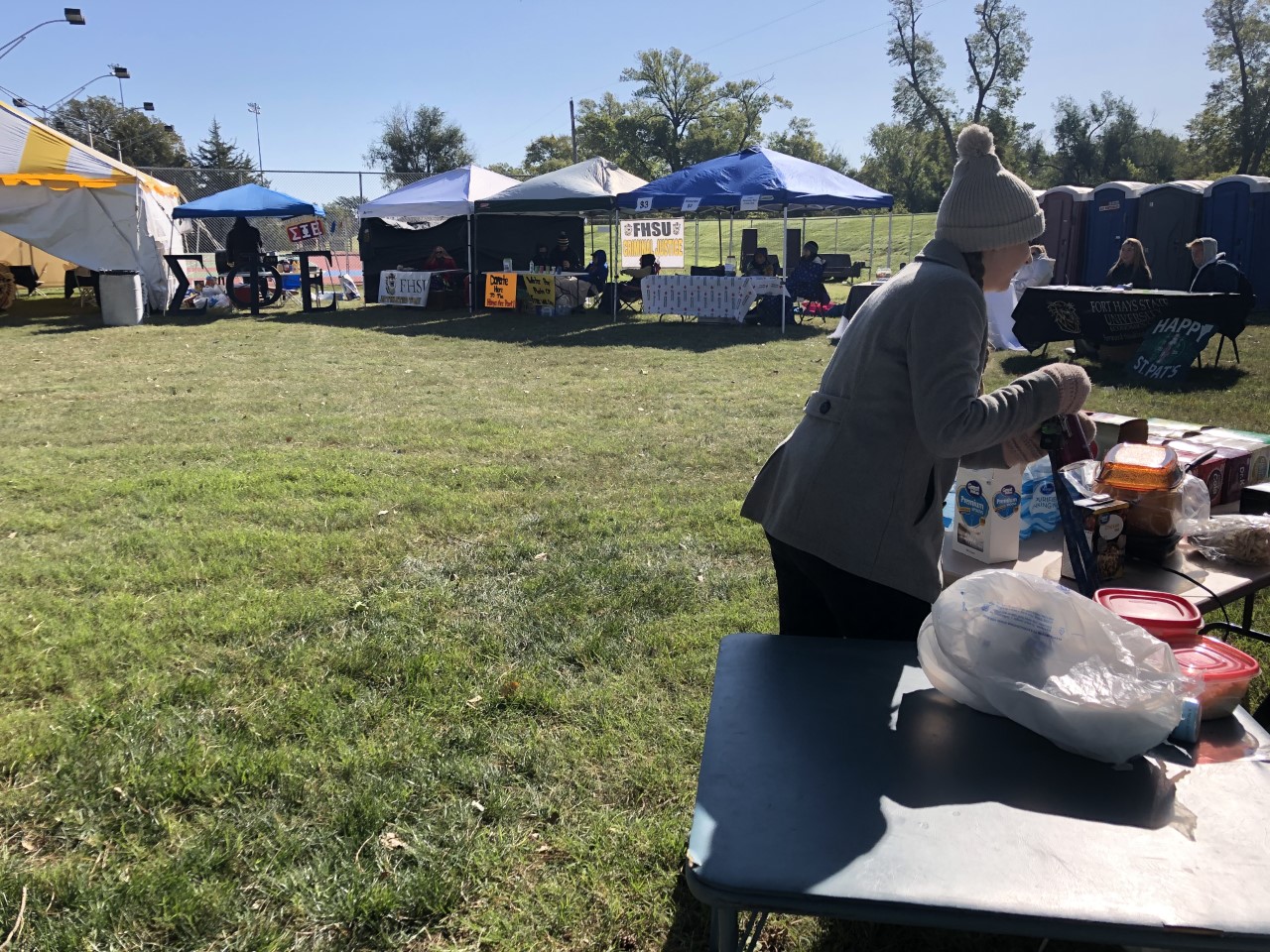
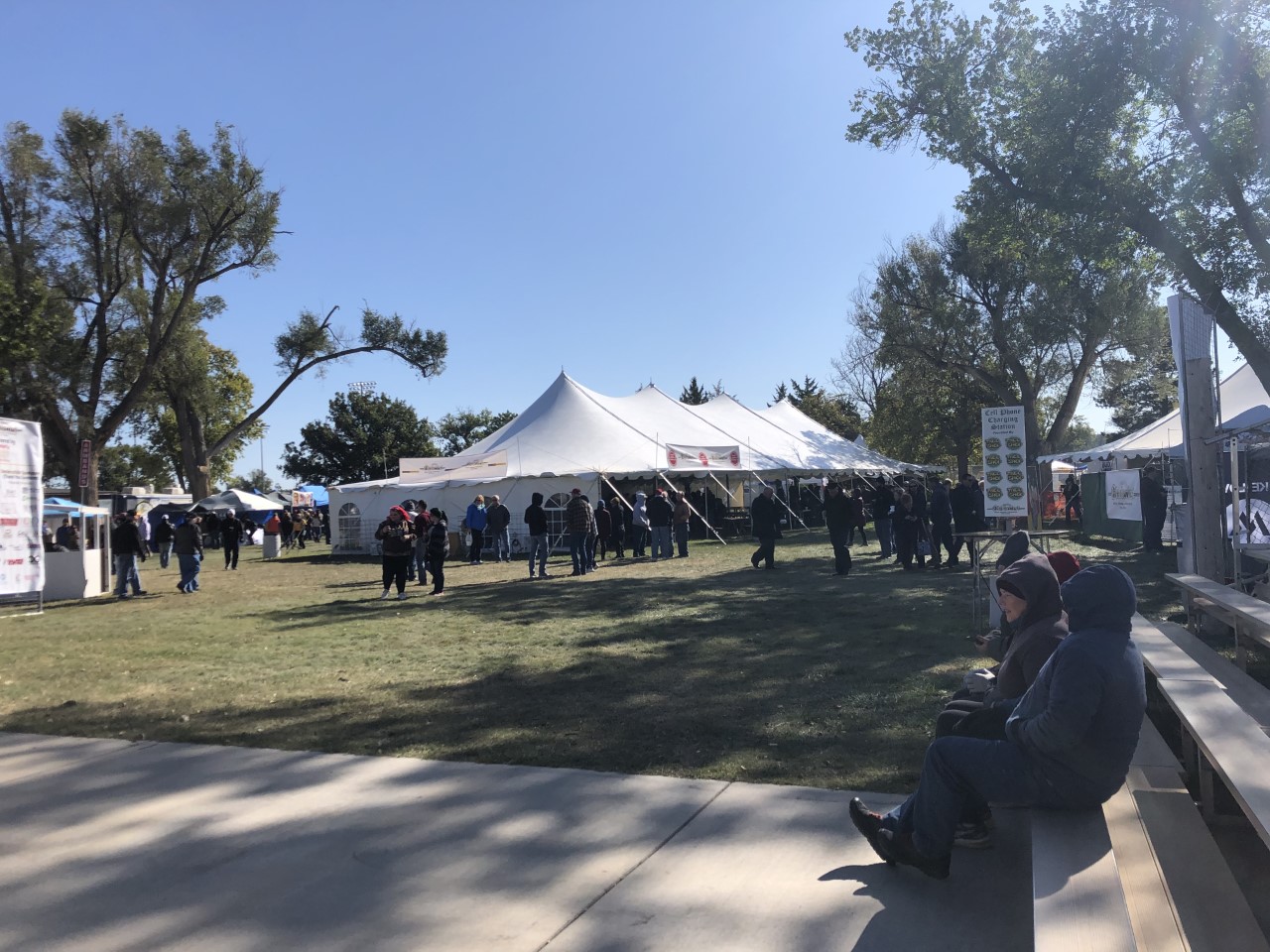
The sun was shining brightly this morning for the opening of the 47th annual Hays Oktoberfest, despite a brisk northwest breeze and a wind chill of 26 degrees.

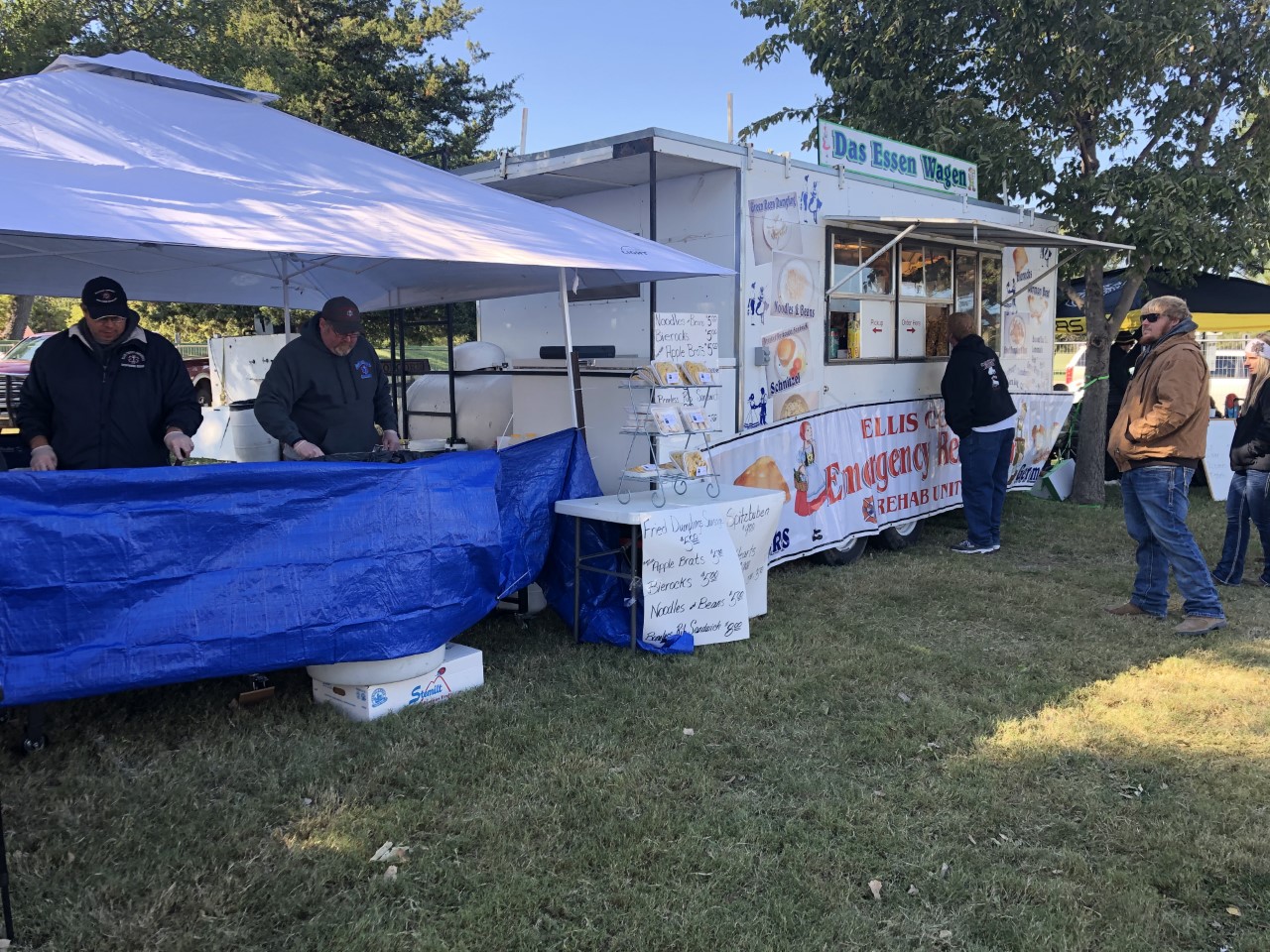
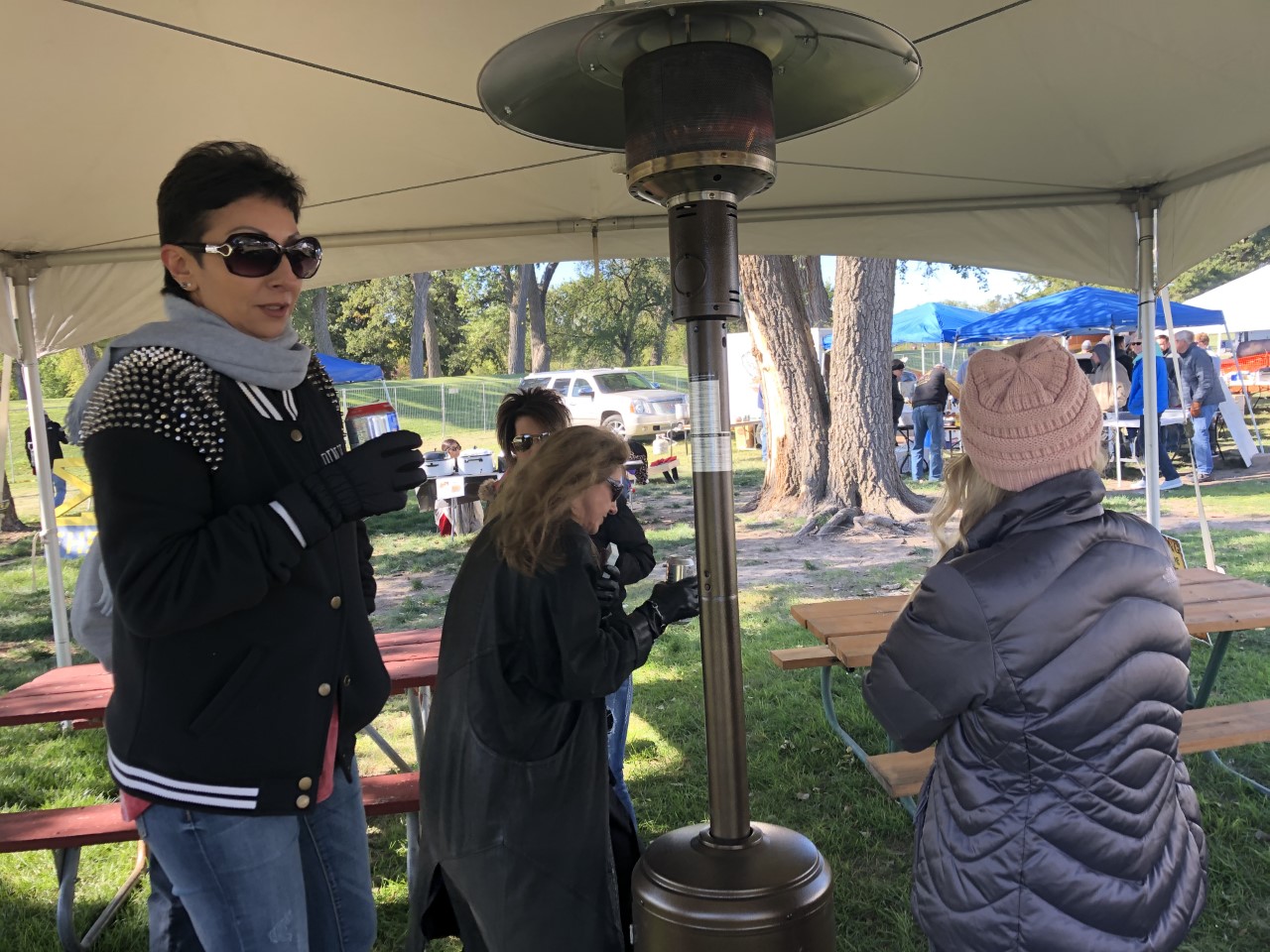
Organizers were prepared for the drastic weather change and had set up propane heaters in nearly every booth and tent dotting the Municipal Park grounds.

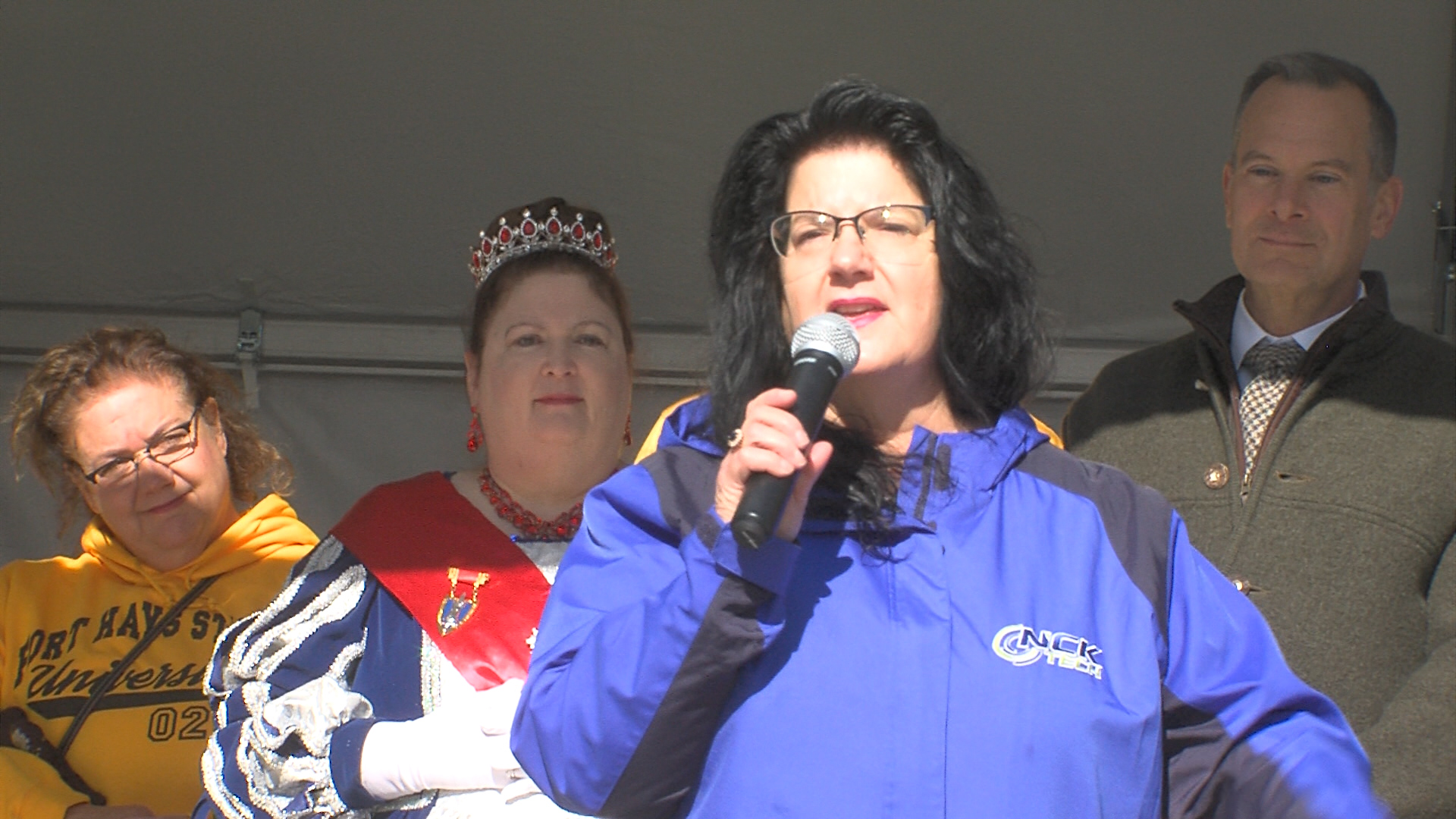
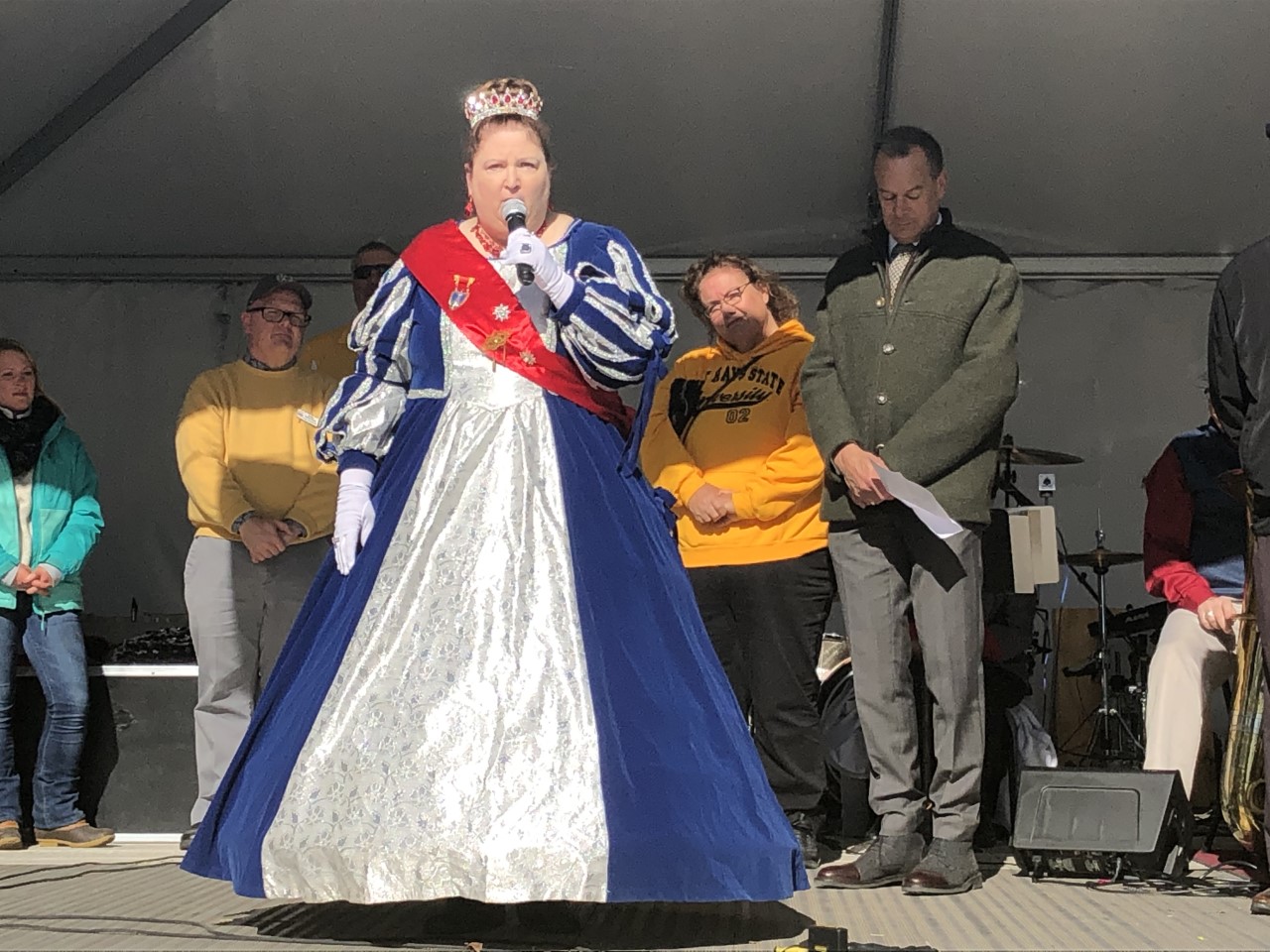
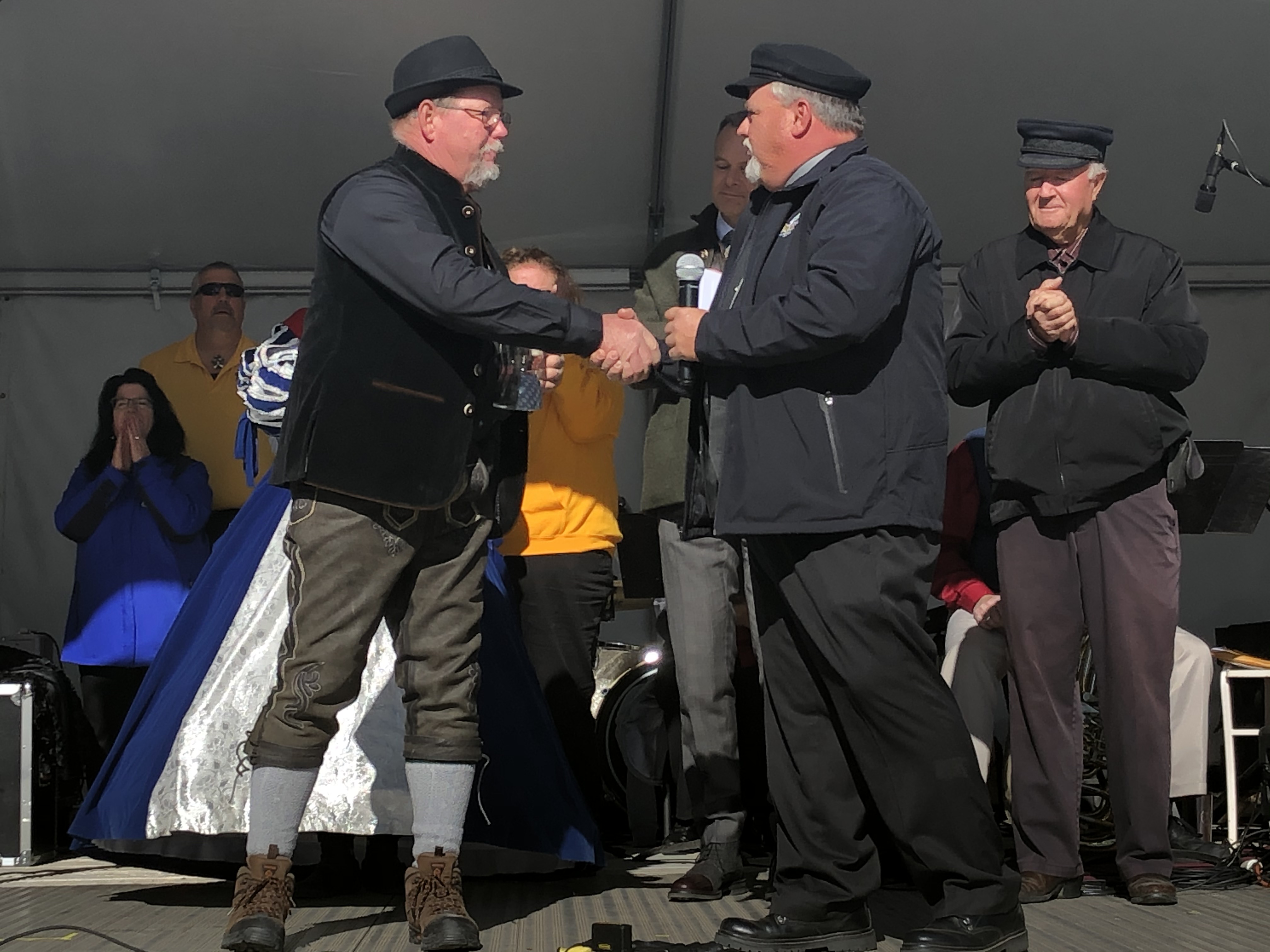
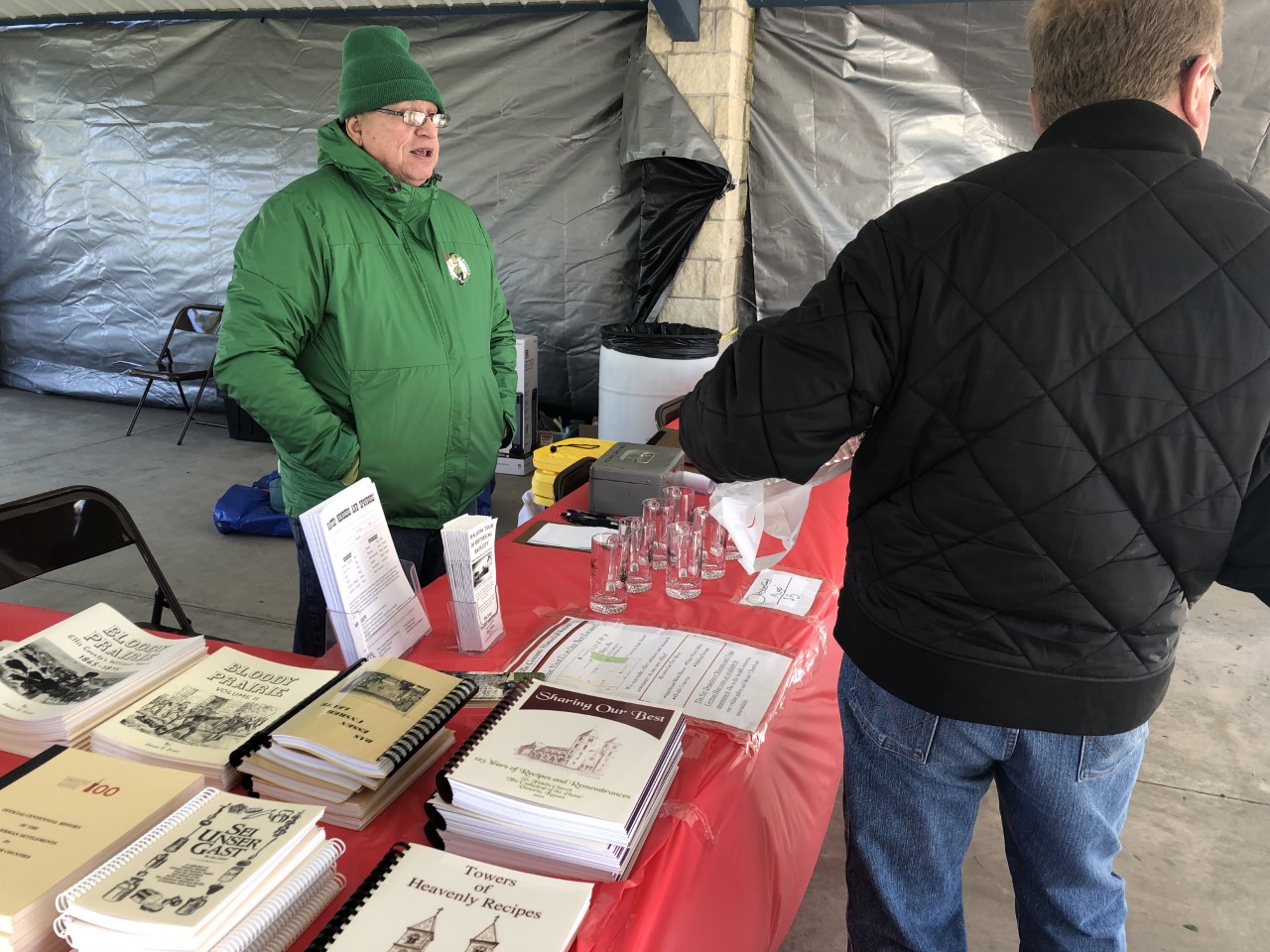
The opening ceremony included a welcome from members of the local Volga German Society, Nick Werth and Tom Haas. Hass noted the Volga German immigrants who settled in Ellis County from Russia approximately 150 years ago kept their town names the same.

“We wouldn’t be here without them,” declared Hays Mayor Henry Schwaller IV, who is of Volga German descent.

Oktoberfest is a shared celebration with Fort Hays State University’s homecoming.

FHSU student Leon Dammert is from southwest Germany, near Frankfort. He talked about how friendly Hays is and “something you should be proud of.”

“It’s the same for FHSU. They really welcome the international students,” Dammer said. “Oktoberfest for me is a fest for family and friends to have fun.”

Werth presented $500 scholarships from the Volga German Society to students Kreighton Meyers, NCK Tech and Alexandra Herman, FHSU.

For the first time, Oktoberfest has been expanded to a two-day celebration. The grounds will close at 7 p.m. tonight.

Saturday morning will feature a German Market during the Downtown Hays Market in the Union Pacific Pavilion 7:30 a.m. to 11 a.m.

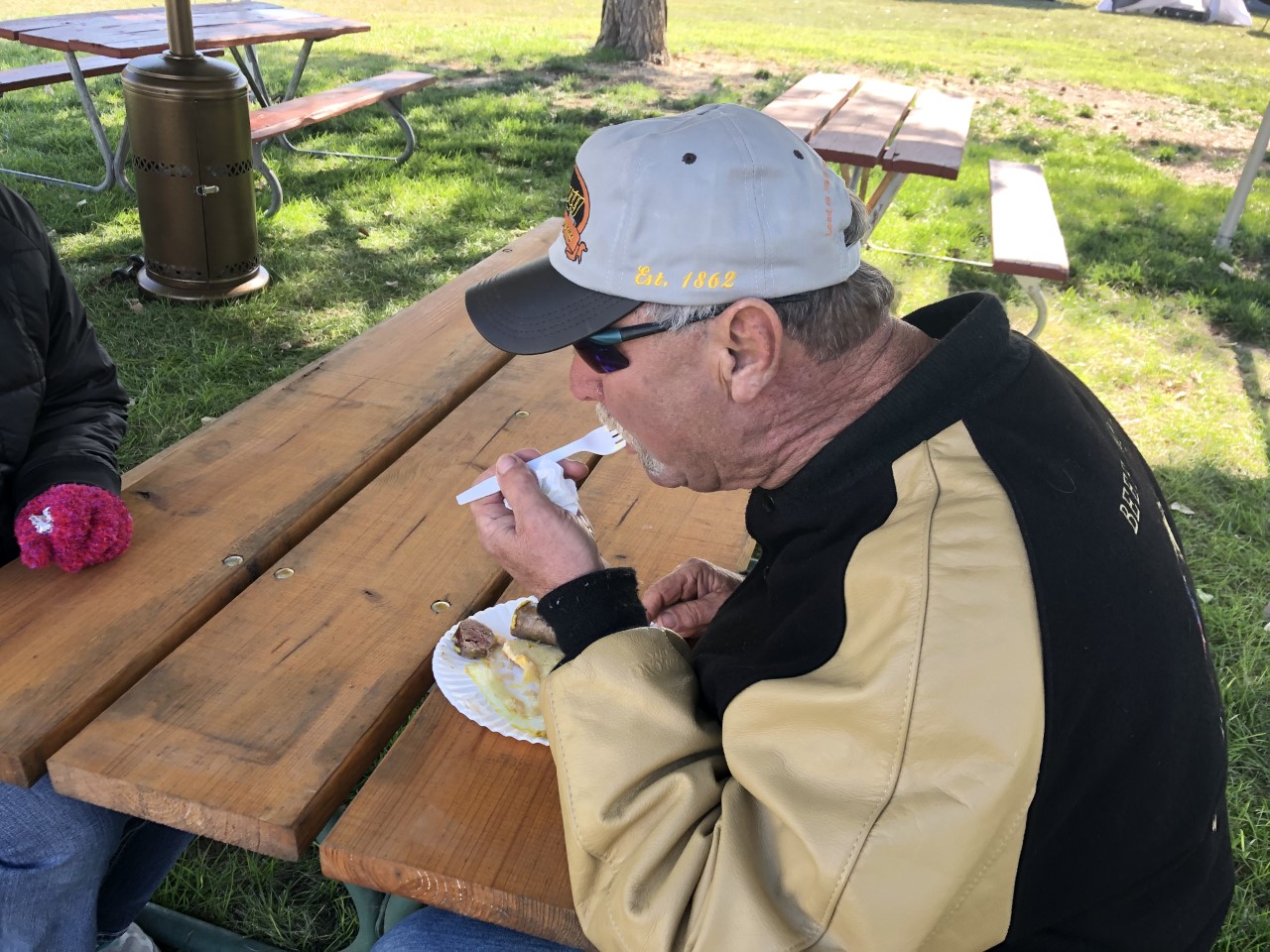
Following the FHSU Homecoming Parade, the fun gets underway again in Municipal Park with family-friendly games, more polka music, and of course, homemade German food. Oktoberfest will end at 4 p.m.

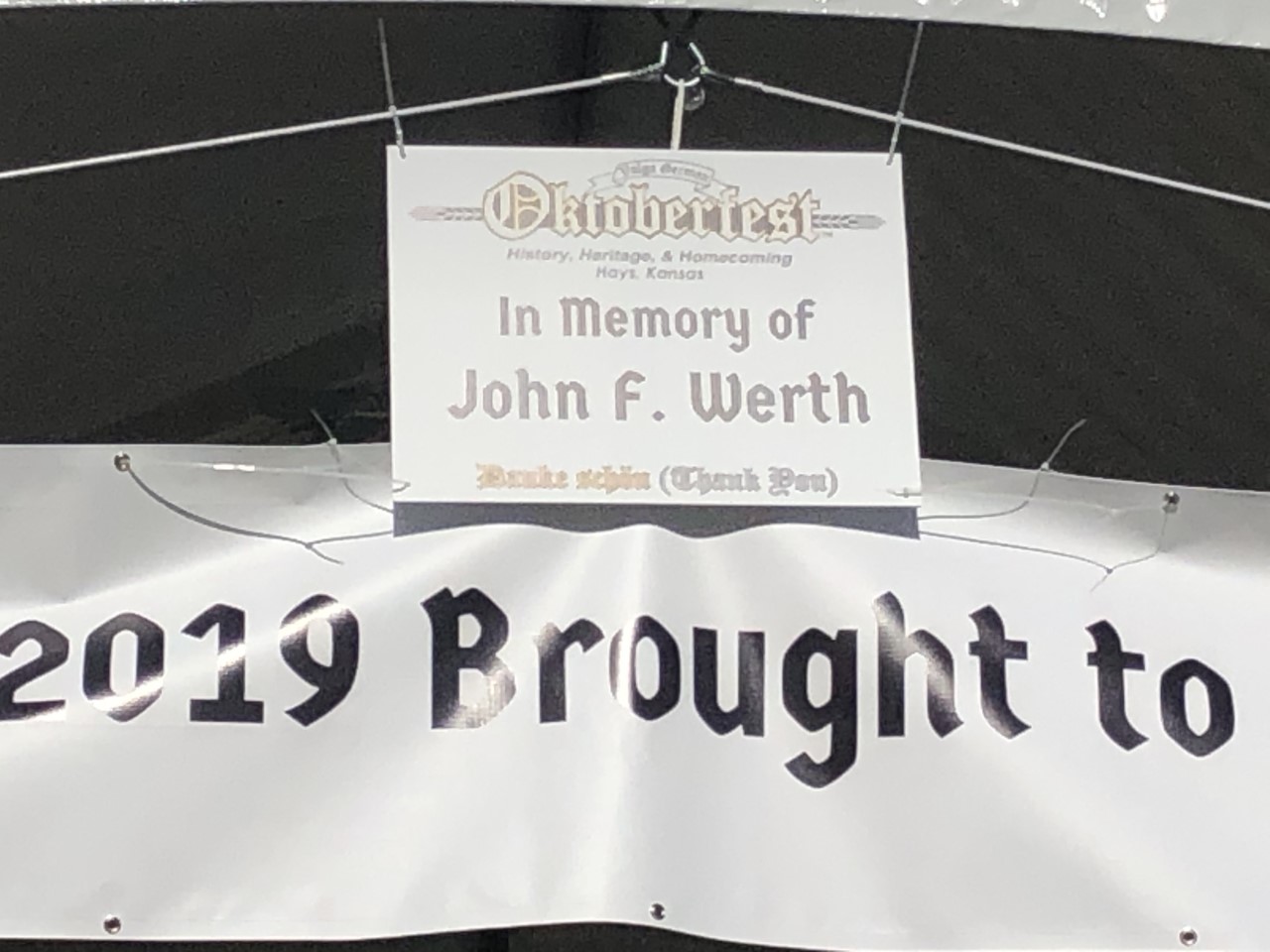
This year’s event was dedicated to the memory of Schoenchen resident John F. Werth, who perished in a cropdusting airplane crash in August. Werth was a leading member of the local Volga-German Society.


Local filmmaker brings history of Fort Harker alive with new documentary

Photo courtesy Post Rock Studios of Kansas

By JAMES BELL
Hays Post

Area historical military forts are an important part of Kansas history, and a local filmmaker hopes his new documentary will shine a light on the lesser-known, but equally important Fort Harker in Ellsworth County.

“It’s a documentary on Kansas history, specifically a frontier military post called Fort Harker,” said filmmaker and owner of Post Rock Studios of Kansas Steve Stults. “A lot of people have heard of Fort Hays, Fort Larned, Fort Dodge, Fort Riley and Leavenworth, but very rarely do people ever talk about, or have even heard of, Fort Harker.”

It was an important military post during the American expansion west, he said and like Fort Hays provided escorts along the Santa Fe Trail.

“It turned out to be a very important supply depot,” Stults said serving as a way station for convoys between Fort Riley and Fort Larned and a supply depot for forts west of the Mississippi River, especially in Kansas.

“It was a major supply hub for the area,” he said. “It was an incredibly important military post.”

As such an important center for military activity in the post-civil war area, the fort had many notable military figures.

“Custer was there, Wild Bill Hickok was there and a lot of other big generals,” Stults said. Philip Sheridan also spent some time at the post.

The fort shares a similar history to Fort Hays, starting as Fort Ellsworth, a flood forced the fort to relocate to higher ground and was renamed in honor of General Charles Garrison Harker, who died in the American Civil War.

“The documentary starts at the very beginning,” Stults said, taking viewers from before Fort Ellsworth was even built and showing the American expansion west.

The film also shows the Native American side of the conflict, as they were pushed west and began to fight back.

“It encompasses everything,” Stults said.

The film was commissioned by the Ellsworth County Historical Society, which oversees three of the remaining four buildings left from the 83 that comprised the fort in what is now the town of Kanopolis.

Greg Heller, Fort Harker historian, wrote the script.

“It took two years,” Stults said, from conception to final product, with many script edits and filming that took Stults and volunteers to historical reenactments at other forts.

Those forts all have connections to Fort Harker, he said.

He hopes his film can raise Fort Harker into the upper echelon of historical forts that are much better known by the public.

“If you like Kansas history, then this is a documentary for you,” he said. “It not just Fort Harker, but it’s central Kansas and all of Kansas and into Colorado as well.”

A presentation of “Fort Harker: Gateway Post to the Frontier” is set for Sunday, Oct. 13, at 3 p.m. at Messiah Lutheran Church, 2000 Main.

Another presentation will be hosted at the Ellsworth Jr./Sr. High school performing arts center on Oct. 20.

The film is currently available on DVD online here or can be purchased at the Ellsworth County Historical Society.

More information about Fort Harker can be found at the Ellsworth County Historical Society’s website, www.ellsworthcountykansashistory.org.

Photo courtesy Post Rock Studios of Kansas

Photo courtesy Post Rock Studios of Kansas

Photo courtesy Post Rock Studios of Kansas

Author returns to Hays after round-the-world journey to promote book

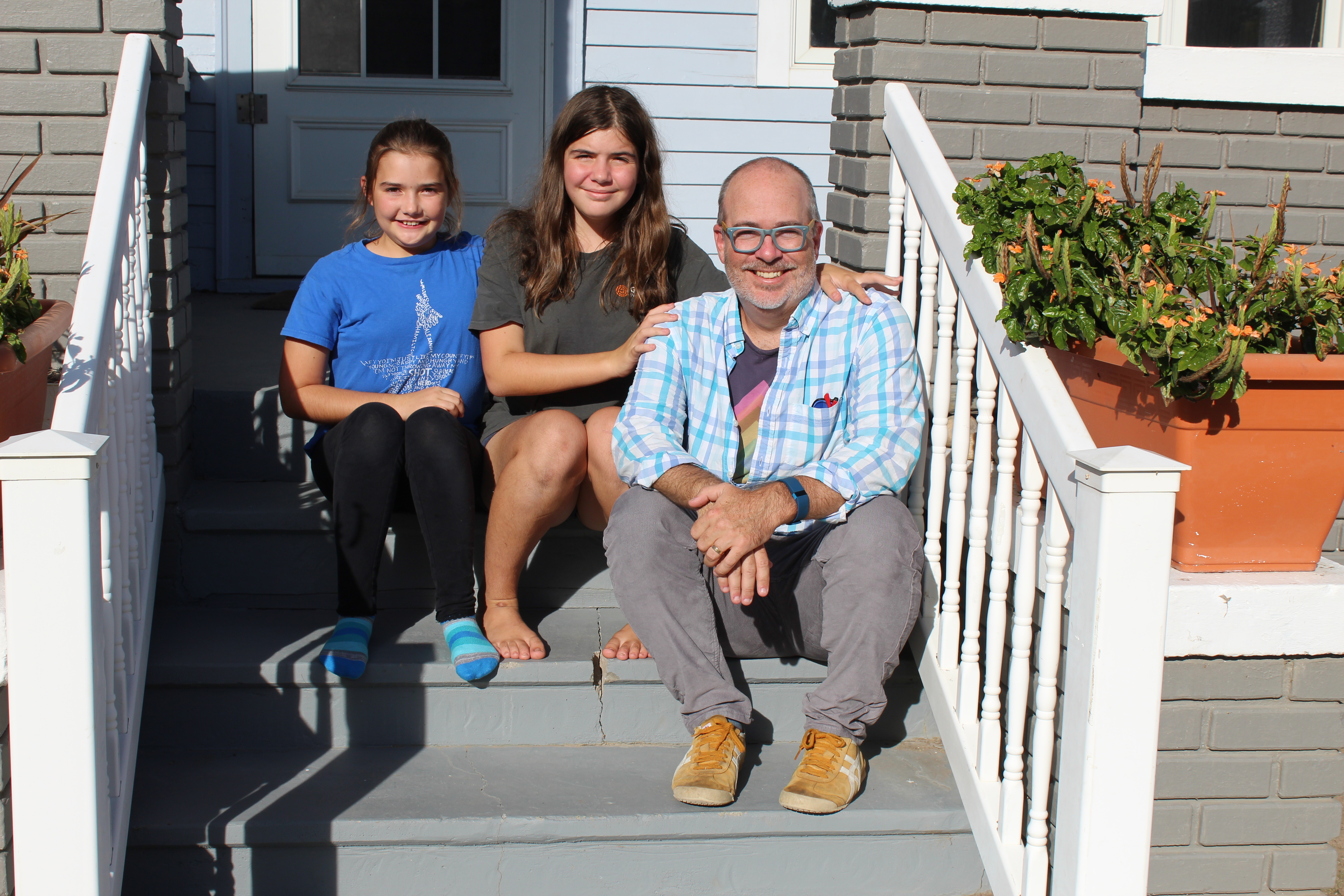
Author Dan Kois and his two daughters, Lyra and Harper, during their three months living in Hays in fall 2017.

By CRISTINA JANNEY
Hays Post

After spending three months in Hays as part of an around-the-world trip to learn new ways to be a family, author Dan Kois is back to promote his book “How to be a Family: The Year I Dragged My Kids Around the World to Find a New Way to Be Together.”

Kois, accompanied by his daughter, Harper, will speak and sign books at 6 p.m. Thursday at the Hays Public Library.

Kois, an editor for Slate magazine, his wife, Alia Smith, and two daughters, Lyra and Harper, left their home in Arlington, Va., for the grand experiment on being a family.

They also spent three months each in New Zealand, The Nertherlands and Costa Rica before ending their journey with a stint in Hays, America.

“The book is about our epic 2017,” he said. “As the title suggests, we spent time in four different countries to try to shake ourselves out of our family rut, our parenting rut, to see what family living was in places other than where we lived before, which was Arlington, Va., a suburb of D.C.”

The Koises chose Hays in part because they wanted to learn a different way to be American parents. They are also friends with playwright and Hays resident Catherine Trieschmann, who Dan knew from college.

“We were looking for the real small-town experience,” he said. “Where we live, it is a suburb of a big city. It is very stereotypically fast-paced. Our kids are over-scheduled, and we are overworked. We thought a kind of closeness of community and a more deliberate pace of life might be great for us to experience.”

Kois said he did find that to be the case in Hays.

“We immediately made a lot of friends. We became very involved in our community in our three months here in service and in church and in neighborhood activities,” he said. “We really did find we were a lot more relaxed and chilled out here than we found ourselves to be in Arlington.

“Our kids found school a wonderful place with great friends, and we found the pace of everyday life just a lot more manageable than what we had been previously doing.”

The final quarter of the book is about Hays in which Kois talks about the glut of parades the family experienced in the fall and how it immediately gave them a sense of community and belonging.

He also describes the showing of the French documentary of “A Quiet America,” which was filmed in Hays in April 1976.

He writes about the Hays Symphony’s Halloween performance, where his daughters were drafted to act alongside the symphony with other children and adults.

Kois said he learned from his family’s international travel there is no one way to do things.

“You can go to New Zealand where kids have enormous amounts of independence and kids are encouraged to take huge risks with their bodies and their educations,” he said. “You can go someplace like The Netherlands where the entire society is built around cycling and cars aren’t used by most families and where children are prized for their independent thought, but just coincidentally all behave the same way like very traditional Dutch people.”

In some cases, the Koises found the communities in which they lived had things they can bring back and use in their family, and in other cases they found they didn’t fit in at all.

“In The Netherlands, our older daughter had a huge problem fitting in and never really felt completely at home,” he said. “Our younger daughter fit right in and immediately transformed herself into a tiny Dutch woman.”

As a parent, Kois said he brought home a lot of humility from the experience.

Some aspects of the trip turned out just as he imagined. Other aspects were so difficult he wondered why they ever attempted the trip.

“I also think both me and my wife have found a real new closeness with our kids and a sense that all four of us, all of us as team can really set out and accomplish things that we might never have thought we otherwise could do.

“One of the big problems we had that I hoped we could address on the trip was this sense that each one of us in our family lived our lives in sort of separate little pathways or lanes. We each had our things that we were worried about. We each had our school or work or home or whatever that was our concern, but we rarely all four of us got out in the world and challenged ourselves and challenged each other in ways we had to overcome all together. A year on the road definitely gives a chance to do that.”

Lyra and Harper both weigh in on the adventure in the book. Lyra at the end of the book is asked about how her dad portrayed her in the book. She answered she thought he was wrong.

Kois said the girls, who were fifth and seventh graders at the time, say in the book there were some very challenging times during the trip, but they grudgingly admit it was kind of cool.

“I’m going to take that as a huge win for me,” Kois said.

The family has moved back to Arlington, and they are trying to apply the lessons from the trip to their old life.

“In big ways and small, it is making our old life feel a little bit better and a little bit easier and a little bit new. Taking for example the lessons I learned about community here in Hays—the way that people in this smallish city make this the city they want to live in.”

He gave the example of Cathy Drabkin, who learned how to bake bread and now has her own bread business and Catherine Trieschmann, who wanted more theater in Hays, so she created pockets for that to happen.

“We’ve taken those lessons and tried to bring them back to our big community to make Arlington the place we want it to be instead of complaining about the things that it isn’t,” he said.

Kois’ book is available anywhere books are sold. They will be for sale at the signing. The Hays Public Library has copies for checkout pending availability.

Strategic Doing group begins crafting the Ellis County of tomorrow

Facilitator Betty Johnson talks with Guy Windholz about an intergenerational facility.

By BECKY KISER
Hays Post

Designing a strategic plan for the future of Ellis County drew the biggest interest and group during Tuesday night’s meeting of the Strategic Doing Re-Start for Ellis County.

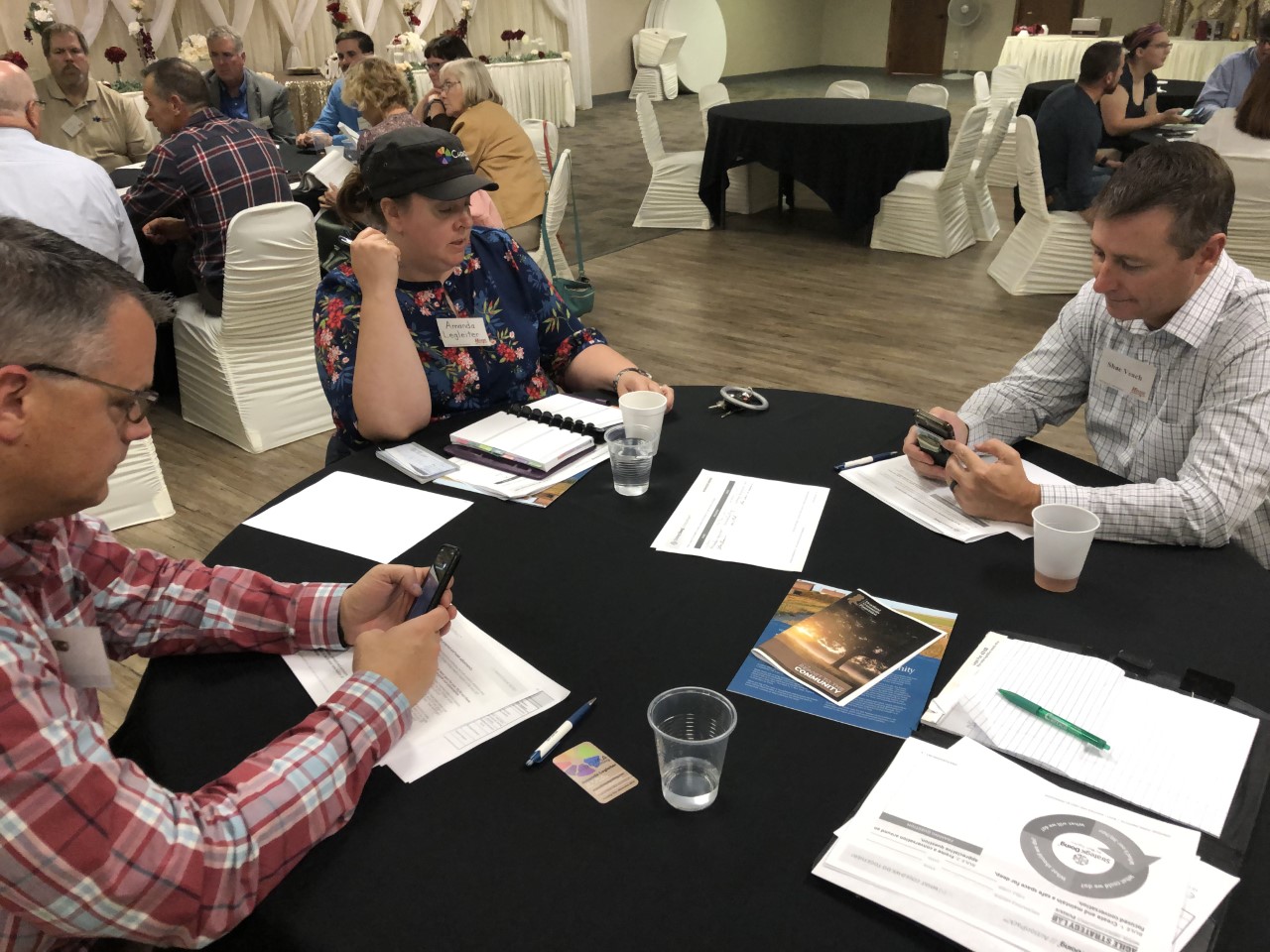
Volunteers gathered at the Rose Garden Banquet Hall in Hays to winnow down the number of project ideas for community improvements generated at a meeting last month.

As attendees enjoyed bierocks and green bean dumpling soup, facilitator Betty Johnson, Lawrence, polled the group for their top topics. Many of the people had been at the first meeting and others were there for the first time.

The voting yielded eight more areas of interest.

• More after-school activities for middle and high school students
• Decreased domestic violence and human trafficking
• Increased volunteerism in Ellis County
• Reaching out with help and understanding of mental health and anxiety
• More childcare providers
• Improved cultural diversity
• A multi-generational center
• Mentoring young entrepreneurs.

The nine groups spent more than two hours talking about what they could do. Discussions began with broad suggestions and then narrowed to specific action items with deadlines.

A spokesperson from each group explained the purpose of their project and the plan to move it forward.

The group working on a strategic plan for the future of Ellis County.

“Our next steps through April of 2020 is to create a visioning process,” said Henry Schwaller, referring to the Ellis County strategic plan. “It will begin with a large meeting to get as many (residents) to the table as possible to tell us what they want this community to look like over the next five years.”

A much smaller group of three people is working on providing fun hands-on STEM learning projects after school for students in sixth grade through high school.

Many students participate in sports after school, but there’s a gap in other activities, according to the group, and they want to help fill the void.

“We want to ask kids if they’d rather learn how to build a video game instead of just playing them,” said Alan Wamser. As the IT manager at HaysMed, Wamser has a vested interest in the project.

“If we can get a college intern with IT experience and bring them in, they’re the most successful,” he said.

Alan Wamser, Amanda Legleiter and Shae Veach coordinate the date for another group meeting within 30 days.

“And kids love to make YouTube videos and podcasts,” added group member Amanda Legleiter

The career exploration opportunities would involve teaching by local IT professionals as well as students and instructors at Fort Hays State University and NCK Tech.

“It could be similar to 4-H with the older kids or students teaching the younger ones,” Legleiter said.

“With mentoring, the kids may go on to FHSU to major in computer science or graphic design,” said the group’s spokesman, Shae Veach, HaysMed vice president of regional operations. “STEM activities can lead to scholarships, empower these students with confidence and possible local careers.”

The trio also tossed around ideas for funding and sustainability of the program as well as who will be stakeholders.

MacKinzie Foster outlines “Can We Just Talk?”

The group interested in mental health issues is working on “Can We Just Talk?,” bringing together people who are willing to listen and people who need to talk about their problems.

Kansas has had a record number of domestic-related homicides, according to Shaelin Sweet, community advocate for Options, who spoke for the group wanting to curtail domestic violence and human trafficking.

“That’s not a record we want to be breaking. The ultimate goal is for domestic homicides to go down and that will happen through education of law enforcement in the community,” she said.

Hays Police Chief Don Scheibler is a member of the group.

Strategic Doing is coordinated by the Heartland Community Foundation of Ellis, Trego and Russell counties with a grant from the  Dane G. Hansen Foundation in Logan.

Sandy Jacobs, HCF executive director

“I’m walking around this room and the focus in these groups is just amazing to me,” said Sandy Jacobs, HCF executive director. “We want to be all the resource to you we can. If you need help finding meeting sites, if you need help getting information out, anything you need just call our office.”

By 8:30 p.m. each table had talked through and filled out a Strategic Doing Action Pack from Purdue. The university’s Agile Strategy Lab offers training and certification in Strategic Doing.

According the to university’s website, Strategic Doing enables people to form action-oriented collaborations quickly, move them toward measurable outcomes, and make adjustments along the way.

Johnson is a certified facilitator in the Strategic Doing process.

“It’s been tried and proved. It’s used globally. We have used it in so many large, large operations as well as small,” she told the crowd. Johnson’s position is funded by the Hansen Foundation.

Erin Hughes, HCF assistant, looks at the plan from the mental health/anxiety awareness group with Jayne Inlow and Patrick McGinnis.

Erin Hughes was hired in June as a part-time assistant to Jacobs. Hughes will compile information completed by the groups. The results will be presented and project work updated at the next Strategic Doing meeting six months from now.

In the meantime, the nine groups are to meet every 30 days or so to review their progress.

Jacobs also encouraged the groups to invite other Ellis County residents to join their causes.

“If you know people that want to get involved after you begin talking about it in the community, for goodness sake, bring them into your group and get it started,” she urged.

“That’s how these things grow and win.”


Students who once needed food volunteer during Trick-or-Treat So Others Can Eat

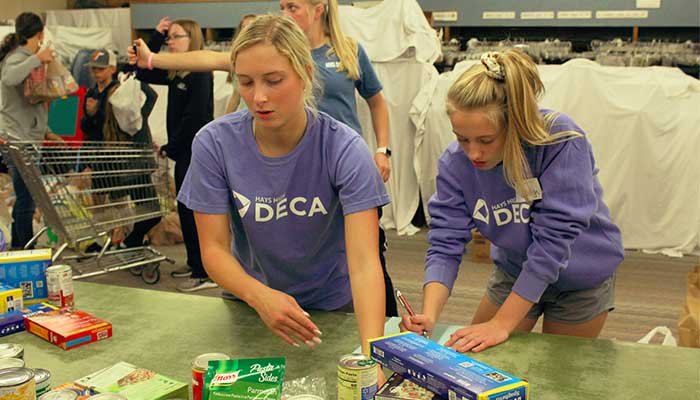
Hays High School DECA volunteers sort food Tuesday during Trick-or-Treat So Others Can Eat. The event benefits the Community Assistance Center in Hays.

By CRISTINA JANNEY

Hays Post

Hillary Newell, 33, hands food to Daisy Girl Scouts Gracelyn Inlow, Kendrie Randa and Claire Miller, all first graders at Holy Family Elementary, Tuesday night during Trick or Treat So Others Can Eat.

Students from Hays High volunteered Tuesday night for the annual Trick-Or-Treat So Others Can Eat because they know what it means to be in need.

Mercedes Nuss, a HHS senior, said when she lived with her mother, her family regularly came to Community Assistance Center for food. The family also received help during the Thanksgiving and Christmas holidays.

“It helped out a lot because we didn’t have the money to provide for our family like we wish we would have,” she said. “They helped us a lot, so it feels good to pay it forward and help others who are in the situation I was when I was a kid.”

Nuss collected food door to door for the CAC with fellow students in the HHS JAG-K program. JAG-K helps students who have risk factors that could contribute to them not graduating from high school.

“It is really comforting to know that people care about it as much as they do,” Nuss said of the food drive. “I know when I was a kid, it helped out a lot. It meant a lot to me and my family.”

Volunteers sort food at the CAC Tuesday night.

JAG-K sophomore Ashton Herrman’s family also used a food bank when he was younger.

He said he volunteered, “because we lived in Colby, and we were really poor. We had to go to a friend’s house for hot water. We did [use the food bank]. Now that we are doing better with money, I feel it should be my job, because I have been through it to know how much this helps people.”

“This place is really beautiful. I am really glad the community cares for this. It just warms my heart.”

Daisy Girl Scouts Marci Brunner, Nora Denton and Nora Pinkney, all first graders at Holy Family Elementary School, collect food during Trick-or-Treat So Others Can Eat. Flowers by Frances donated roses, which the girls distributed to donors as “random acts of kindness.”

Twenty-seven organizations collected food across the city. Some of these included Girl Scouts, Boy Scouts, 4-H, FHSU groups and church groups. HHS DECA students, Lions Club, CAC volunteers and church group volunteers helped sort food at the CAC.

Theresa Hill, CAC co-director, said the pre-Halloween food drive is the largest donation event of the year. The food bank shelves were bare leading up to the event, and the center was using monetary donations to fill food needs.

The CAC serves about 5,500 people annually. Between 80 and 100 families receive food from the CAC monthly.

CAC volunteer Karie Younger stocks shelves at the CAC Tuesday night.

Last year the food drive brought in about 16,000 food items. Organizers were hoping for about 20,000 items this year. The CAC also accepts cash donations during the event.

Shaina Prough is the sponsor for HHS DECA, which helps organize the event. She said Tuesday night collections were looking good. Warm weather seemed to be aiding in collection.

53-year-old Bonnie Werth’s involvement with TOTSOCE goes back to the beginning of the event in 1983, when she and her sister, Connie Haselhorst, began collecting food. The sisters helped make the school-sponsored event through DECA in 1985.

DECA volunteer Paige Polifka-Denson, HHS senior, helps sort food at the CAC.

As the food cans clanked and piles of incoming food grew, Werth said watching the event was an “Aha moment.”

“This has really grown to be more than just people from the high school doing it,” she said. “They are seeing the need for having canned good and how it is really benefiting a lot of needy families and people who need help.

“It makes me teary-eyed. It makes me excited to know a lot of people benefit from something that started small and got larger.”

Not only has Werth been participating since the program’s inceptions, she is passing on a passion for giving and volunteerism to younger generations through 4-H and her grandchildren. She collected Tuesday with the Big Creek Astro 4-H Club.

A Boy Scout volunteer unloads food at the CAC Tuesday night.

“Giving of your time is what is most important—selflessness,” she said, “and teaching them sometimes we need to take time out of our day, even if it busy, to give something to somebody else.”

She added, “I am just in awe of how many volunteers help now with getting the canned goods moved for the Community Assistance Center.”

The CAC will continue to receive food through this week, so Hill said she didn’t anticipate having a total on food collected through the event until Monday. The CAC hopes the food collected this week will last until the next major food drive sponsored by mail carriers over the Mother’s Day weekend. The food collected during TOTSOCE is also used in the CAC’s annual holiday food baskets.

Gracelyn Inlow, Daisy Girl Scout, giggles as she waits for a door to be answered with Kendrie Randa, center, and Claire Miller, right.
Junior Girl Scout Troop 11268 delivers food to the CAC Tuesday night.
Copyright Eagle Radio | FCC Public Files | EEO Public File