TOPEKA – The National Association of State Park Directors recently honored The Nature Conservancy of Kansas with its 2018 President’s Award. In 2016, TNC bought a 330-acre tract of land in Logan County that encompasses 250 acres of Niobrara chalk formations. The property adjoins the Smoky Valley Ranch which is owned by TNC. In 2018, the Kansas Legislature formally designated the chalk formations as Little Jerusalem Badlands State Park. The park is projected to be opened by summer 2019. The Kansas Department of Wildlife, Parks and Tourism and TNC are collaborating to design access to the park and build trails to protect the fragile formations and unique ecology of the area.
The Niobrara chalk formation is a layer of rock deposited about 85 million years ago. It is composed of a chalk-like sediment that settled at the bottom of an inland ocean called the Western Interior Seaway which covered most of central North America roughly 140 to 70 million years ago. The rock was exposed and eroded over time, creating the tall pillars and rugged canyons that characterize the Little Jerusalem badlands.
In addition to breathtaking views, Little Jerusalem is also home to wildlife – from bats and ferruginous hawks to snakes, toads and lizards – and plants found nowhere else in the world.
“Without the help of the Conservancy staff, Kansas would not have this beautiful landscape as a part of its state park system,” said Linda Lanterman, NASPD president and Kansas state parks director. “TNC and KDWPT are committed to making this property accessible to visitors, while ensuring that the fragile terrain is protected.”
Prominent members of The Nature Conservancy of Kansas who have worked especially diligently to protect and make the Little Jerusalem badlands accessible include Rob Manes, Kris Knight and Matt Bain.
Although everything that can happen seems to happen to poor Junie B. Jones, she manages to maintain the utmost optimistic attitude.
“Junie B. Jones, The Musical” is the feature of this year’s Paula Huser Children’s Theatre.
The Paula Huser Children’s Theatre is an annual production that showcases child actors ages 7 to 14. Older students are mentored as directors and to manage lights and costumes. Huser was a founding member of what later became Hays Community Theatre and was known for her work with children, said Wendy Richmeier, “Junie B. Jones” director.
Performances will be 7 p.m. Friday and 1 p.m. Saturday at Celebration Community Church. Tickets are $5 and are general admission. Attendees are asked to bring a non-perishable food item. Tickets can be purchased at the door or online at www.hctks.com. Doors open 30 minutes before each performance. The musical lasts about an hour.
This year’s performance has more than 40 cast and crew members.
“Junie B. Jones, The Musical” is based on the book series by Barbara Park that bares the same name. Although the stories in the musical come from the book series, the musical does not follow any one book exactly.
The books are intended for a second-grade reading level, but many older children will likely remember the stories, Richmeier said.
The audience will join Junie B., played by Jordan Aschenbrenner, on her first day of first grade. Junie B. has a rough start to grade school when her best friend from kindergarten, Lucille, doesn’t want to be her bestie anymore. However, she makes friends with the new kid at school, Herb, on the school bus.
Junie B. is also disappointed to learn from her teacher, Mrs. Scary, that she has to get glasses after she struggles to read the chalkboard during class.
Junie B. keeps the details of all her travails in her “Top-Secret Personal Beeswax Journal.”
Correction: For time on Saturday for performance, which is at 1 p.m.
Sec. of State candidate Brian McClendon visits with Hays residents Allen Schmidt, a former state senator, and Joe Edwards.
By BECKY KISER Hays Post
The Ellis County Democratic Party headquarters officially opened Monday night in Hays at 1502 Vine.
Party chairman Henry Schwaller IV, who is also the Hays vice-mayor and a business professor at Fort Hays State University, welcomed supporters, which included local Democrats, three Democratic candidates and, perhaps surprisingly, a sprinkling of Republicans.
“This is the year that we have to take control,” Schwaller told the crowd in his opening remarks. “There can be no more tinkering and experimenting with the Kansas economy. We’ve seen the results of it. Trickle-down economics really doesn’t help anyone at all. It destroys our economy, it destroys education, transportation and everything we take for granted as Kansans.”
Democratic candidates attending the opening were incumbent 111th District State Rep. Eber Phelps of Hays, Secretary of State candidate Brian McClendon from Lawrence, and Ellis resident Chris Rorabaugh, who is running for Ellis County Commission District 1.
Incumbent Rep. Eber Phelps, Hays, talks with Bogue resident Bob Hooper.
Phelps characterized his last two terms as “a lot of communication, a lot of cooperation, and a lot of collaboration … Obviously, we turned the Brownback experiment around and got our state back on solid footing.”
Phelps will face another Hays resident in the November general election — Republican Barbara Wasinger, who currently serves as an Ellis County commissioner. Rorabaugh, a city of Hays employee, will take on Republican Butch Schyler, retired Ellis County health administrator, and independent candidate John Walz, Ellis, who works for the Ellis County Sheriff’s Office.
The enthusiasm of young Kansans and their voter participation is important, Phelps reminded the group, as he singled out Connor Montford, president of the Fort Hays State University Young Democrats.
“We’ve been trying to do a big push on helping students realize it’s their future that’s at stake and that they do have a say in what goes on in the state,” Montford said.
Montford is a political science major from Colby. When he was a freshman at FHSU, there were just four students involved in the meetings of the Young Democrats group on campus. Now in his senior year, Montford says the group has grown considerably.
“We’re going to be doing a lot of phone banks, a lot of canvassing. We have some great volunteers that’ve been helping out,” added an enthusiastic Montford. “We’re going to be very busy up to the election trying to get good Democrats elected.”
For many years, Ellis County was a Democratic stronghold in a traditional Republican state. Voter registration and winning candidates have gradually shifted to the Republican Party.
Brooklynne Mosely, Kansas Democratic Party Deputy executive director, lives in Lawrence, a longtime Democratic stronghold.
“I’m super excited to see the turnout for this event,” Mosely told the crowd. “I think people in Lawrence think they have the monopoly on what Democrats look like in Kansas. We actually have great Democrats across the state,” she said with a big smile.
Earlier in the day, McClendon spoke to the local bar association and to FHSU students on campus.
McClendon likes to point out he made his childhood home in Lawrence, Kansas — the center of Google Earth. A former Google vice-president of engineering, he later returned from Silicon Valley to work as a research professor at his alma mater, the University of Kansas.
He said his tech experience made him want to run for secretary of state. He’s built the online voter registration program “KS Votes” to make the process easier.
“KS Votes has registered over 8,000 Kansans in nine months so far,” he said.
The recently updated version is in Spanish and also sends requests to county clerks for mail-in ballots.
“And this is something that’s really important to me because I believe if we could vote by mail, if we could sit at home, read about all the candidates, study them carefully and make good decisions, then the candidates we pick would not be so much about party and could be much more about person,” McClendon said.
He also talked about the importance of ensuring election reporting systems can’t be hacked, which he said mostly involves training the people who run them.
“We have very good candidates, but it does require getting all your friends, not just your Democrat friends, to vote,” urged McClendon. “We need unaffiliated voters and Republicans to change their opinions about party and look at all the candidates on the ballot.”
“This is the strongest Democratic ticket we’ve had since maybe back in (Joan) Finney’s day,” agreed John T. Bird, a lifelong Hays Democrat. “If you don’t have candidates, you’re defaulting.”
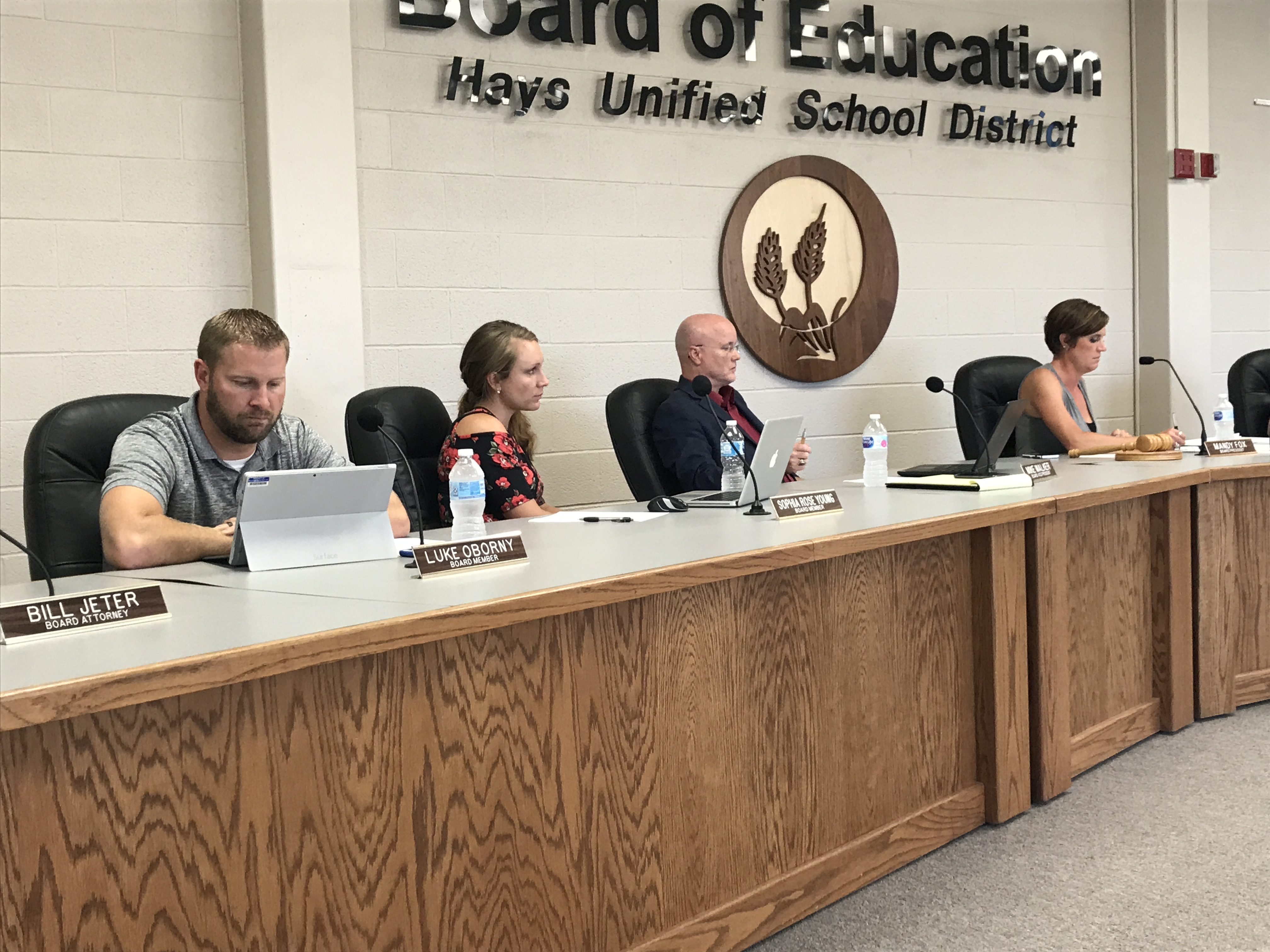
The Hays USD 489 school district head count is stable and in good shape, said Superintendent John Thissen Monday night.
A report heard by the school board Monday night shows enrollment at 3,033 students compared to an audited count of 3,006 last year.
Superintendent John Thissen said once the enrollment figures become official, he anticipated they will be close to the audit numbers from the previous year.
The district’s official count date is Sept. 20. Those figures are then audited in spring.
However, the district is showing a slight increase over the last seven years. Audited enrollment during the 2012-13 school year was 2,916 students.
Assistant Superintendent Shanna Dinkel said that enrollment trend may continue. The district’s largest class is the incoming kindergarteners, and the smallest classes are the juniors and seniors. As the smaller classes graduate, enrollment may see a slight bump, she said.
Base state aid for schools is based on enrollment. However, school districts receive additional funds for various factors.
The head count also includes students who go to other area schools, but receive services through the Hays school district for special education. The district enrollment may vary depending on how many hours of the day the auditor determines these students are receiving services from the district.
District goals
The board further refined its goals during its meeting Monday.
The board settled on three goals:
• Design a stable financial structure that allows the district to accomplish its educational mission.
• Create an educational improvement guide utilizing the Kansas Educational Systems Accreditation process.
• Develop a plan to prepare the district for the future.
Each of these goals have multiple objectives, which will be refined in the coming weeks.
Crisis Drills
The board also discussed changes to its Administrative Handbook that were required to conform with new state rules for crisis drills.
The Kansas Fire Marshall’s Office increased the number of required crisis drills, reduced the number of fire drills and stipulated school districts statewide could only give five minutes notice of a drill to the public. State officials suggested giving more notice might lead to someone taking advantage of the drills to harm students or staff.
Wilson playground
Thissen also reported work has begun on installing new playground equipment at Wilson Elementary School. The work should be complete by the end of next week.
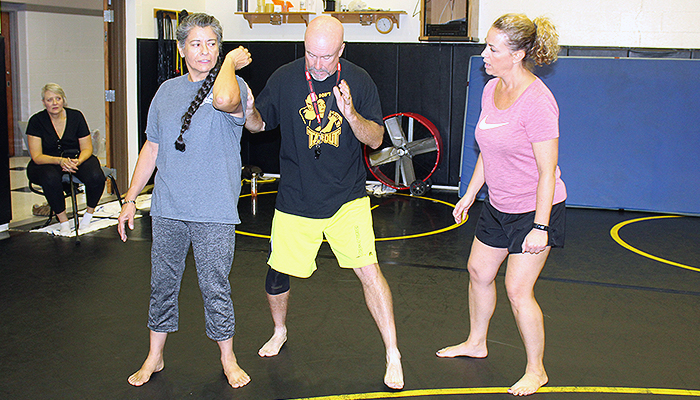
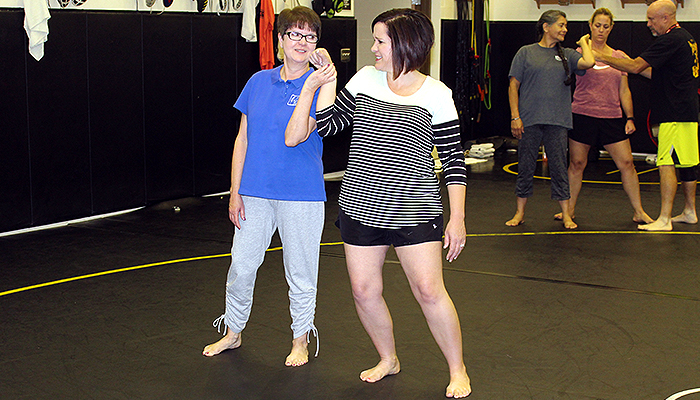
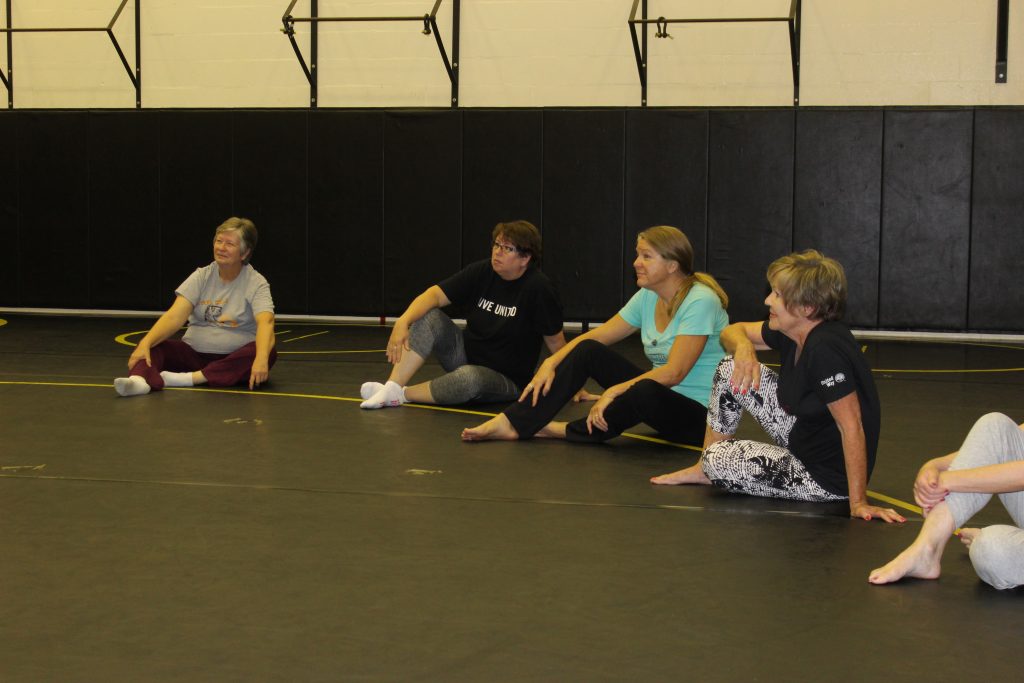
The United Way’s Wonder Women League sponsored a self-defense class for women Saturday at the Gross Memorial Coliseum.
Trainer Kenton Russell told the women that if they are being attacked, their most important tools are their voice to call for help and their feet to run way.
He also told the women there are no rules in a fight for your safety.
Russell with the help of FHSU Self-Defensive Tactics Club members guided the women through hands-on exercises to learn and practice self-defense and escape maneuvers.
He also told the women always to be ready to defend themselves and be aware of their surroundings.
He demonstrated how simply having your hands in your pocket can make you more vulnerable to attack.
More than 500 fans of the mega sci-fi saga Star Wars joined Stormtroopers, Jedi masters and even R2-D2 at the Sternberg museum on Saturday for Star Wars Day.
In addition to the museum’s usual interactive exhibits kids, many in costume, eagerly waited in line to make slime.
Camdyn Armbruster, 7, of Hays, said he likes all the Star Wars movies. He is a fan of Darth Vader because he can move stuff with his mind. Of course, so can Yoda, so he said he likes Yoda too. Armbruster wasn’t born when “Return of the Jedi” was released, but he said he has seen the monster that ate R2-D2 and spit him back out. He laughed. He thought that was pretty cool.
Evan Betz, 9, of Hays, said he came out to the museum because, “I love Star Wars so much!” Evan’s sister, Eva, 6, was dressed as Princess Leia, who is her favorite character. Both kids were anxiously awaiting their turn to make slime.
Brecken Otte, 10, and his sister, Camdyn, 6, also attended the Star Wars Day.
“I am a super big ‘Star Wars’ fan,” Brecken said. “I have liked it for about three years now, and I have seen every single movie. We always go with our neighbor to the new movies. I have liked it for quite a while.”
Otte thought for a moment when asked about his favorite character, but finally settled on Kylo Ren, Darth Vader’s grandson and latest dark side villain.
Camdyn became a Star Wars fan because her birthday falls on May 4, a day celebrated by Star Wars fans worldwide as a play on words of the Jedi mantra, “May the force be with you.”
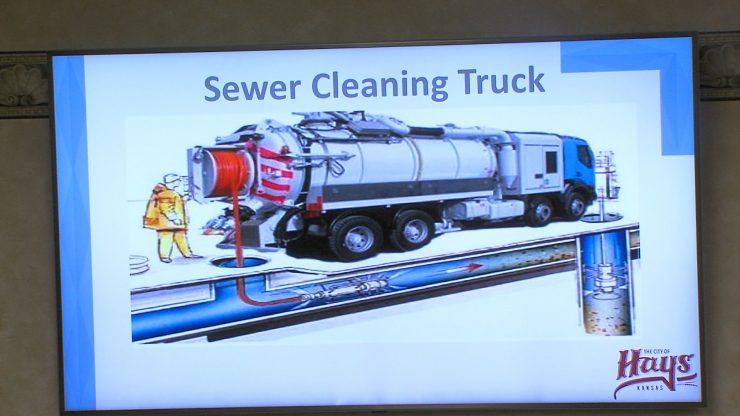
Sewer cleaning planned for 2018 (Click to enlarge)
By BECKY KISER Hays Post
To ensure proper operation of the Hays sewer system, the Department of Water Resources has a multi-year program to clean sewer lines, about 20 miles per year.
If the collection system is not maintained, there can be sewer backups, manhole overflows, public exposure to raw sewage, and regulatory fines levied on the city.
City commissioners reviewed a low bid Thursday by Professional Pipe Services, Denver, for light cleaning ranging from $.91 a linear foot for 8-inch pipe to $1.31 a linear foot for 30-inch pipe. The work, not to exceed $150,000, would also include video inspection and some moderate to heavy cleaning as needed.
Professional Pipe Services was awarded a similar contract in 2016 and “staff was very pleased with their performance,” according to Jeff Crispin, Director of Water Resources.
“The cleaning nozzle is pushed with a jet of water through the pipe from manhole to manhole and the debris is collected at one of the manholes and disposed of at the water treatment plant. So that debris is not pushed down the system,” Crispin explained.
The video inspection is required as part of the contract.
“This helps us provide early detection of flaws and allows repairs before a catastrophic failure would incur. We use this information to adjust our maintenance route as well as make decisions on repairs on our sewer system.”
He noted the city employees do emergency sewer backup removal, root removal and regularly clean certain problem lines as part of a maintenance plan.
This is the sixth year of the sewer cleaning program.
Manhole rehab
Crispin also presented a low bid for manhole rehabilitation from Utility Maintenance Contractors, LLC of Wichita, not to exceed $60,000.
Manholes allow access to the sewer lines and require rehabilitation because of acidic environments, low pH, erosion, age, and storm water infiltration.
The Hays project focuses on manholes in acidic environments where cements react with the acidity causing the structure to literally crumble away. The work includes lining manholes with 100 percent calcium aluminate cement.
Cost of rehabilitation for each manhole is between $2,500 and $3,000 and should last 50 to 60 years. Full manhole replacement is much more costly at approximately $15,000 each.
Hays has nearly 2,000 manholes.
City commissioners will consider awarding both bid recommendations at their meeting Thur., Sept. 13.
St. Mary’s Catholic School students on their first day of classes in their newly renovated classroom.
By CRISTINA JANNEY Hays Post
ELLIS — St. Mary’s Catholic School in Ellis opened for classes earlier than expected Thursday after a July 25 storm ripped off a portion of the roof, damaging the gym and many of the school’s classrooms.
In mid-August, volunteers were still scraping damaged floors and painting walls.
“Without their help, we would not be open today, so we are very grateful” Peggy Seibel, fourth-grade and head teacher, said of the many volunteers who helped with the repairs.
A portion of the school’s gym collapsed during the storm. That has been repaired, but work still needs to be finished before the gym can reopen to students. School officials now anticipate work on the gym should be done by Nov. 1.
St. Mary’s Catholic School students on their first day of classes in their newly renovated classroom.
The permanent roof still needs to put on and other projects are still in the works. Repairs also are still ongoing at the rectory next door.
However, Father Dana Clark said he has been amazed at the progress.
“I have been really impressed how many people volunteered and got done in six weeks what some people thought would take three months to complete,” he said. “It’s been amazing to get the work done that needed to get done.”
Students were set to return to classes on Monday, but repairs were completed ahead of schedule. Students started school with new flooring, new coats of paint on most of the walls and new school materials, as many items in the classrooms received water damage when the high winds damaged the roof in July.
“It’s great,” Seibel said of the school’s new look. “The kids are excited to be back. The little extended holiday was not actually as appealing as they thought it might be. They were happy to get back to see their friends. They are really liking the new look in the classrooms and happy to be here.”
A portion of the school’s roof rests beside St. Mary’s Catholic Church in Ellis on July 25.
School hours have been changed to make up for the late start. Students will begin classes at 7:55 a.m. Students will also be attending on days that had been designated as in-service and snow days.
Monetary donations can still be made to the school through Equity Bank, Attn: St. Mary’s, PO Box 255, Ellis, KS 67637.
Have you ever gone to the grocery store to buy kale and ended up with a box of Twinkies in your cart? A local health educator might have a program to help put you on the right track to eating better.
Jessica Moffitt, Prospectively Healthy certified health education specialist, is offering Grocery List Assist.
For a fee, Moffitt teams with her client to create menu plans and then helps the client use Dillons’ online Grocery Pickup service or another online grocery shopping app to select the groceries needed for the week.
Dillons Grocery Pickup, formerly known as ClickList, has been offered in Hays since July. Moffitt is just getting Grocery List Assist off of the ground.
Moffitt
Moffitt said many of her clients said they struggled with grocery shopping.
“One of the things I hear a lot from my clients is not necessarily the difficulty to eat healthier but the difficultly in knowing what to pick out at the grocery store or how to get quality produce that is going to last or just (having) the time commitment to do so,” she said.
Moffitt establishes a menu plan with input from her client. She then goes into an online grocery shopping account and puts all the items into their grocery list. The client checks the cart to make sure they don’t already have items on the list, then the client arranges for grocery pickup and payment through the app.
Dillons Grocery Pickup app allows customers to arrange for pickup up to three days in advance. You have an hour window to pick up the groceries. Dillons will load the groceries in your vehicle for you. Right now, Dillons is offering the first three pickups free with a charge of $4.95 per pickup after that, according to its mobile app. Pickups are available from 8 a.m. to 9 p.m. at the 1902 Vine store in Hays.
Dillons has hundreds of digital coupons available through its app, but paper coupons can also be used at pickup. Dillons currently is unable to accept government benefits (including WIC and SNAP) as payment, according to its website. You also can’t add prescriptions to Grocery Pickup at this time, but Dillons said it is working to add this feature. See Dillons website for more details on the service.
Grocery List Assist services start at $40 per week. Although Moffitt lives in Hays, she said she will work with any grocery app in any location.
Moffitt will cater her meal plans to specific dietary restrictions and preferences such as low-salt or vegan. She also tries to work with few ingredients, minimal prep time and simple kitchen utensils. However, if you have a slow cooker or pressure cooker and like to use those tools, she will work those in also.
She also works to reduce waste, so if you have leftover ingredients, she will work with you to incorporate those into future menus.
“I also like taking things that we all like to eat like macaroni and cheese. I have an amazing recipe for macaroni and cheese that I love to start people out with,” she said. “You can still do things like macaroni and cheese and hamburger and lasagna, and you just make better choices in that recipe to make it a little bit healthier.
Moffitt sends a PDF copy of the recipes to clients and then touches base by phone with the client once a week to discuss how the meals went.
Moffitt recommends meal planning for anyone trying to get a better handle on their eating and diet.
“It is a really helpful tool I use in my home to make sure we have the meals ready for the week and we know what we are going to cook and we have all of the groceries,” she said. “It also reduces impulse purchases and convenience store shopping, which is great for saving time and money for the client themselves. I also think it helps us make healthier choices just because of the structure that comes from it rather than making decisions based on convenience or mood or emotions that we are feeling at the moment.”
Grocery List Assist and its menu planning feature can help clients make necessary diet changes for health reasons.
“I think the biggest thing people need to consider when they are faced with obstacle — when they are faced with a prescreening diagnosis or a full-blown diagnosis like diabetes or hypertension is to understand you have to make a lifestyle change. It is not a diet that is going to end in six months or a year. It’s a commitment you are going to have to make for the rest of your life.
“With that commitment, I think it is easier to make one better choice at a time. It might be in the direction of total health rather than trying to do everything all at once or overnight.”
One month, she might talk about reducing sugary beverages, and the next month she might help you work on decreasing sugar in desserts.
Moffitt noted Grocery List Assist can be a temporary tool. Once you have a library of recipes, you can create your own menu plans.
“Hopefully, it is just a stepping stone to move them in the right direction, so they can make these choices themselves and their own meal plans,” she said.
Moffitt will be offering cooking demonstrations and health lectures again this fall and winter through the Hays Recreation Commission. She offers classes for adults and children 3 through 7.
For a complete list of classes, see her webpage or check out Prospectively Healthy on Facebook.
The Ellis County Housing Rehabilitation program seeks to fill a need for medium-income housing in Hays, but officials acknowledge it is not operating at capacity.
The program was started in 2016 by the Ellis County Economic Development Corp., which is now Grow Hays. The program was originally funded through a grant from the Dane G. Hansen Foundation.
“The theory is to provide funding to contractors, Realtors or handymen to be able to buy a home that is in need of repair and to make those repairs to it and upgrades and then to resell it at a maximum price of $145,000,” Doug Williams, Grow Hays interim director, said.
The community benefits because the recipient takes a dilapidated home and turns it into a habitable home and improves the neighborhood, Williams said. It provides housing in a segment of the market that is affordable. It allows the person renovating the home to make a profit, and most of the materials for the rehabs are purchased in the community, which also helps the local economy.
“It’s a win-win deal,” Williams said. “We provide funding for 100 percent of the project at no interest.”
Brady Reed and his brother rehabed a home at 300 E. 25th St., and Brady is under contract on a second home on Willow Street. Reed is a real estate agent by day, but he and his brother did some of the work on first the home themselves.
The house on 25th Street sold for a couple thousand dollars shy of asking price and was on the market less than two months. The brothers made money on the project, Brady said.
“I would absolutely recommend the program,” he said. “I know you are trying to get the word out about it. I bring it at work to clients, and a lot of people don’t know about it. I think if more people knew about it, it would get used. I think it is a fantastic program.”
For applications to be accepted, developers have several requirements that must be met: a minimum of $10,000 in renovations, the project has to be completed in nine months, and the home selling price is capped at a $145,000. The houses have to be single-family homes and can not be used as rentals.
“I don’t talk to any community in Kansas or anywhere else that does not talk about affordable housing,” Williams said, “so it is not unique to us.”
A housing needs study conducted in June 2017 by the Fort Hays State University Docking Institute of Public Affairs for the city of Hays indicated housing costs in Hays are the highest in western Kansas. Hays residents also pay a higher percentage of their income on housing, the study said.
The study also indicated Hays has a high percentage of older homes. Forty-three percent of its housing stock was built before 1970. Fewer new homes are also being built. Only 0.1 percent of the homes were one year old or less.
The study also indicated even a small growth (0.25 percent) in the Hays population would further worsen the housing shortage.
Yet at the same time, landlords in the last year have expressed concerns about an overabundance of open rentals in the city.
“It’s a great program for someone who has a set of skills, who can do some of the work themselves and can manage a project. It is a good opportunity,” Williams said of the housing rehab program.
Williams, who is also a real estate broker, said Hays is seeing more opportunities to take advantage of the program.
“Because we have softened in the market, and certain price ranges have become softer, the opportunity to buy a home and make some improvements and resell it, I don’t think has ever been better. I think it is a really good time to do it. The market remains strong, but the low end has softened, so there are some bargains out there.”
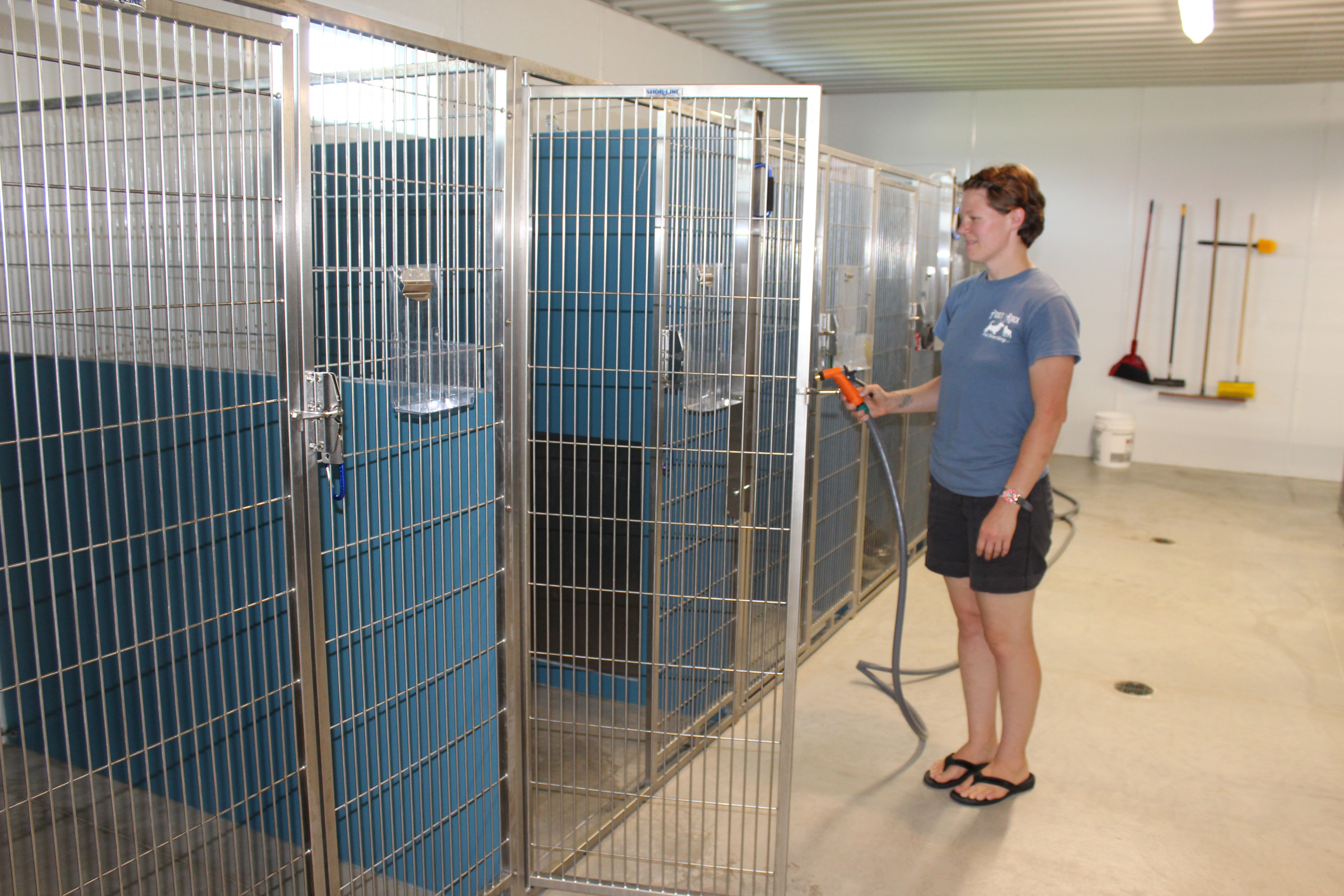
Kylie Sander, co-owner of Post Rock Pet Boarding, prepares to spray out one of the kennels at the facility.
By CRISTINA JANNEY Hays Post
Two young entrepreneurs launched their new pet boarding business in Hays with the help of the E-Community Loan program.
Kylie Sander and Heather Holliman-Pope received $30,000 toward the $300,000 cost of their new Post Rock Pet Boarding facility on East 13th Street in Hays. The business opened in May.
Post Rock Pet Boarding has space for 45 to 60 pets for overnight or day boarding. The business also offers bathing, nail trims, ear cleaning and anal gland expression.
Sander and Holliman-Pope said the loan and the help of Grow Hays made getting their business off the ground much easier.
“I think they did a great job. (They had) just a lot of knowledge and a lot of information, and they were always there to answer questions, so I think it is a great resource base,” Holliman-Pope said.
Ellis County is one of 60 counties in the state to participate in the E-Community Loan program.
The program, administered by Grow Hays, helps entrepreneurs start or grow their businesses or purchase an existing business.
Ellis County has $100,000 available per year in low-interest loans. Grow Hays has eight loans worth $168,800 outstanding to local business currently. The loan amounts range from $4,800 to $45,000.
The program does not have enough capital to make an impact on a large business.
“This is the small guy who is wanting to grow or is wanting to start something, a new business, pursue a dream maybe. That’s who this is targeted to,” Doug Williams, Grow Hays interim director, said.
The E-Community Loan program is designed to provide gap financing, he said. Typically, a bank makes a loan for the bulk of the financing, and the E-Community Loan program makes up the rest, as down payment can be a problem for small businesses.
In Ellis County, some of the other businesses that have taken advantage of the program are Sake2Me Sushi & Seafood Grille, Hickok’s Steakhouse and Thirsty’s Brew Pub & Grill.
The loan can be applied to a variety of uses for for-profit businesses, including working capital; purchase of land, real estate, inventory or equipment; or purchase of an existing business. Funds can be used to renovate a building or storefront if it is for use for a specific business.
Grow Hays is working with a business owner right now to finish her basement to accommodate her business, Williams said.
The loan money that is repaid goes back into a regional account to be loaned to other businesses. The original funds for the statewide program came from tax credits.
Generally, a business will work with the Small Business Development Corporation at Fort Hays State University to develop a business plan and then complete the application for the E-Community Loan program.
These plans will include a projection for sales and amount of startup capital the business will need. Generally, applicants go to the bank to apply for a primary loan. Then Grow Hays becomes involved through the bank or the client for help with gap funding.
Grow Hays has a committee specifically designed to review the loan requests.
The interest rate on the loans run 3.5 to 5 percent.
“We typically try to stay right around the prime rate, which is a good rate typically for gap financing,” Williams said. “Most of the time they would not find that favorable of a rate with a bank or financial institution for the money they need to bridge the gap of what the bank is going to loan them and what they are going to come up with.”
The program benefits the entrepreneur because it forces them to go through the process of developing a business plan. It also makes available what essentially is a 100 percent loan, Williams said.
“Banks are typically not going to make a 100 percent loan, so we bridge the gap and provide that financing that they need to actually be able to purchase something or start something where they wouldn’t be able to otherwise because they didn’t have the funds,” he said.
Although Sander and Holliman-Pope put in some of their own money for a cash down payment, most of their startup capital came from the their bank loan and E-Community Loan.
The Post Rock Pet Boarding owners said they could have started the business without the loan, but it would have been much more difficult.
“We would have had a much smaller facility, and not been able to do as much as we wanted to,” Sander said.
Sander and Holliman-Pope said Post Rock Pet Boarding has been very busy this summer. They both said they would recommend the E-Community Loan program to other entrepreneurs trying to get their businesses off the ground.
Because of the nature of this type of financing, there is a higher rate of default. The program can ask a business to put up collateral for the loan. Grow Hays is not financially liable if a business defaults. The E-Community Loan program has the discretion to pursue collection or legal action, at their expense, and if funds are recovered, they are to be returned to the E-Community regional bank account, according to the NetWork Kansas website.
Williams said economic growth is the ultimate benefit from the E-Community Loan program.
“It allows people who may not otherwise be able to start that business, buy that business, grow that business to do that, provide jobs for people and provide economic growth in the region and in the state,” Williams said. “That is why the fund was put in place, and that is what it does.”
Veterans left to right Dave “Spud” Richardson, Leonard Kern and Jim Dinkel receive Quilts of Valor Saturday at RPM Speedway. Kansas Grateful Stitchers Connie Haselhorst, Jamie Werth, Bonnie Werth, and Nicole and Kylie Dreiling helped with the project. Courtesy photo
Staff Sgt. Leonard Kern did not receive the welcome home from war he thought he should have received, but he received a gift Saturday that honored him in a way he did not think possible.
Four servicemen were honored by Quilts of Valor during the RPM Speedway races on Saturday. Quilts of Valor makes quilts for both veterans and active service personnel who have been affected by war. Those men who received quilts were Kern, David “Spud” Richardson, Jim Dinkel and Stan Dreiling. Dreiling was not able to attend the ceremony Saturday.
Staff Sgt. Kern, 41, of Hays served from 1995 to 2009. He served a two-year deployment overseas. He was first deployed to Korea, but once his unit was set to come home, they were rerouted to serve another year in Iraq.
Most service personnel are deployed for no longer than a year. The extra time overseas was taxing on the soldiers. Kern said he was lucky. He came home unscathed and so did all the men under his command. Others in the 503rd Infantry Regiment were not so lucky.
Twenty men in the command of 600 died and 150 were injured. Some of the soldiers who came back to the states with him had received three Purple Hearts.
“When we came home, our family and friends were there,” he said. “There was no parade. … There damn should have been.”
The long deployment took with heavy action in Iraq took its toll on the men when they returned home as well.
The group had a high rate of domestic violence and DUI.
Leonard Kern receives his quilt. Courtesy photo
Kern comes from a long line of military men. He never wanted to admit to PTSD but said he knows he brought home some of his experiences from war. He said he is not always the man he wants to be.
“I have heightened awareness,” he said. “I walk into a room, and I judge people. I am looking for where the threats are. I had that before, being in the military, but being in combat heightens that.”
Receiving a quilt from the Quilts of Valor program was the honor he felt he and his fellow soldiers should have received when they came home from Iraq. He said he was elated to receive the quilt.
“I think it was the coolest thing that has happened to be since I got back,” he said. “It made me happy. I was very impressed.”
Kern’s boss’s daughter nominated the group of men for quilts and her aunt helped her sew them.
“I gave her a hug, and then I gave her another hug,” he said. “It was awesome.
Kern, who now works as a mechanic, said his experience in Iraq has resulted in him not taking life for granted.
“I just take one day at a time, because every day could be your last,” he said.
David Richardson
Despite some of the ugliness Sgt. First Class David Richardson has seen in the world, he said his service made him see other cultures in a new light and gave him optimism for change.
David Richardson receives his quilt. Courtesy photo
Richardson served in the Army from 1989 to October 2015. He served in different roles, but his most recent duties were in artillery. He had multiple overseas deployments including Germany, Bosnia, Desert Storm, Iraq and Africa.
Each theater gave him a unique perspective into the people of those regions.
Richardson, 47, Victoria, was part of the peacekeeping mission in Bosnia after the brutal civil war ravaged in that region. The country split on ethnic lines when it declared independence from Yugoslavia in the early 1990s. An estimated 100,000 people were killed in the war, and 2.2 million people of all ethnicities were displaced.
During his first deployment to Bosnia, Richardson was part of security forces attempting to separate the Bosnians from the Serbs. When Richardson reached the region for the second time, the fighting had calmed, but the destruction was evident.
“In Croatia and some places in that area, you could see the destruction, especially in downtown Sarajevo,” he said. “There is sniper alley. You could see where the Serbs had just sat up on the ridge line and pounded the town, the buildings and Olympic stadium. You did not have to look far to see the damage.”
Richardson said he took satisfaction in helping the people of Bosnia rebuild after the war.
“When you work with people who have been, so to speak, beat down and have no idea how to rebuild from there, they always need help,” he said. “To be a part of something like that — to rebuild a nation, to rebuild a country — it is a wonderful feeling because at the end of the day, you have that sense of accomplishment.
“We tend to go places and people back home don’t understand why we are in theaters. As a soldier, you get to see those things,” he said of the rebuilding, “and you get to see the day-to-day changes. It always gives you that opportunity to see that change is possible. I believe in myself that it makes you a better person to see how fortunate we are back home as a people versus how some of these people live in other countries.”
Richardson was only deployed during Desert Storm for six months. He said the deployment was so short and focused that he had little time to soak in what was happening around him.
Iraq, however, was a whole different story.
Richardson was the team leader of a six-member quick reaction force. His group’s mission was to respond when a convoy encountered an improvised explosive device or enemy ambush. They engaged the enemy and helped the convoy reach safety.
“Iraq was more ramped up,” he said. “Every time you went outside of the wire, your head was on a swivel. You were looking around. You were making sure, first of all, that your team was going to be safe and you are going to be safe and you are keeping the routes and the convoys safe.”
The city’s especially were hotbeds of enemy activity. Quiet and calm was not a good sign.
“One day, you are driving through a city and it is business as usual and then, the next day, it is quiet, so it was kind of an eerie feeling,” he said. “Yesterday, you went through that town and everyone was playing and business as usual. Then you roll through the next day, and no one is around. It was like ‘OK, something bad is going to happen.’ Not all of the time did it happen, but most of the time it did whether it be an IED or ambush or something like that. Most of the time we were able to push through it and just keep going.”
Despite the violence Richardson experienced in Iraq, he urges others to judge people as individuals instead of stereotyping.
“I think you are going to have bad people and you are going to have good people no matter what you do, no matter what theater, whether it is in the United States or a foreign country,” he said. “There are people who there is no way to convince them there is something outside of hate and discontent. Then there are people who are there who actually need the help.
“I think throughout my experience it helped me to read people better. You never judge a book by its cover. You have to get through the first chapter or least the first couple of pages to understand how things are and how these people live on a day-to-day basis. You can’t go out there and say I don’t think this of this guy or these people because of this or that. It is just wrong. You have to speak to these people, see how they act, how they react, how they think.
“If you ever get a chance to go over to a foreign country and see how they run things versus the way we do things here, I think a lot people’s eyes would open up. It is not what most people think it is.”
Richardson’s last deployment was to Monrovia, Liberia, a coastal nation in West Africa. Liberia has suffered through two civil wars during the last 40 years. More than 250,000 people have been killed. Although peace was reached, the conflicts wreaked havoc on the country’s economy. Eighty-five percent of the Liberian people live below the international poverty line, which was calculated by the World Bank in 2015 to be $1.90 per day. Richardson’s mission in Liberia was to train Liberian troops.
“By the time I left, there were several people throughout the Liberian army who I had become friends with,” he said, “and I still talk to via Facebook. I like to check up on them and see how things are going. It is a sense of accomplishment. It is something that made me feel like I did something, and I did something right.
“It is not about me doing something for myself. It is about me doing something for my country. If we can better our country, then [we] can teach these other countries this is how we do things to better ourselves. It is not that hard. It does take time. It doesn’t happen over night.”
Richardson, who is now the parts manager at Dreiling Field Service, said he was pleased to receive a quilt, but said he thought others were more worthy.
“I am very thankful I am being honored with this and for this, but I guess my biggest thing is that even if I am getting something, there is more we can do for our soldiers who are out there and veterans who are out there,” he said. “I think we need to recognize those soldiers also.”
“People who have not served in the service do not understand the sacrifices a soldier makes, nor do they understand what sacrifices the families make. It is not just the soldier who is deploying. In a sense the soldier’s spouse, children and family, they are deploying too. They have to change their lifestyle because that soldier, sailor or airmen is not going to be around for a year, eight months, six months. It is very hard. It is not easy for people to make change like that. They also need recognition.”
Jim Dinkel
Jim Dinkel receives his quilt. Courtesy photo
Spec. Fourth Class Jim Dinkel, 69, Hays, was drafted during the Vietnam War, but served as part of the U.S. forces in Korea from 1968 to ’70.
He entered the military as an infantryman, but because of a lack police, he was given on-the-job training to become an MP. He and his peers patrolled the Second Infantry Division, which was roughly the size of Ellis County.
Although Dinkel was never in combat, tensions were running high along the DMZ at that time.
“The North Koreans intimidated back then, just as they do now,” he said.
During Dinkel’s time in Korea, the Pueblo incident occurred. The North Koreans captured a U.S. naval vessel and held U.S. service personnel hostage.
On a Sunday in August 1969, North Koreans shot and killed eight UN command soldiers who were repairing a demarcation line tape at the DMZ.
Anti-military sentiments were prevalent during and after Vietnam, but Dinkel said he was spared much of this because he had been stationed in Korea instead of Vietnam.
“The guys coming from Vietnam, they went through hell,” he said.
Dinkel said his time in Korea made him more thankful for the advantages he has an American.
“I complain about a lot of foods we ate,” he said. “You go oversees and see a little farmer growing vegetables in a ditch. It had a pretty positive effect on me.”
Dinkel, retired, has been a longtime member of the VFW and a member of the VFW Honor Guard.
“It is an honor for me to get it,” he said of his Quilt of Valor, “but I think there are probably more people more deserving than me.”
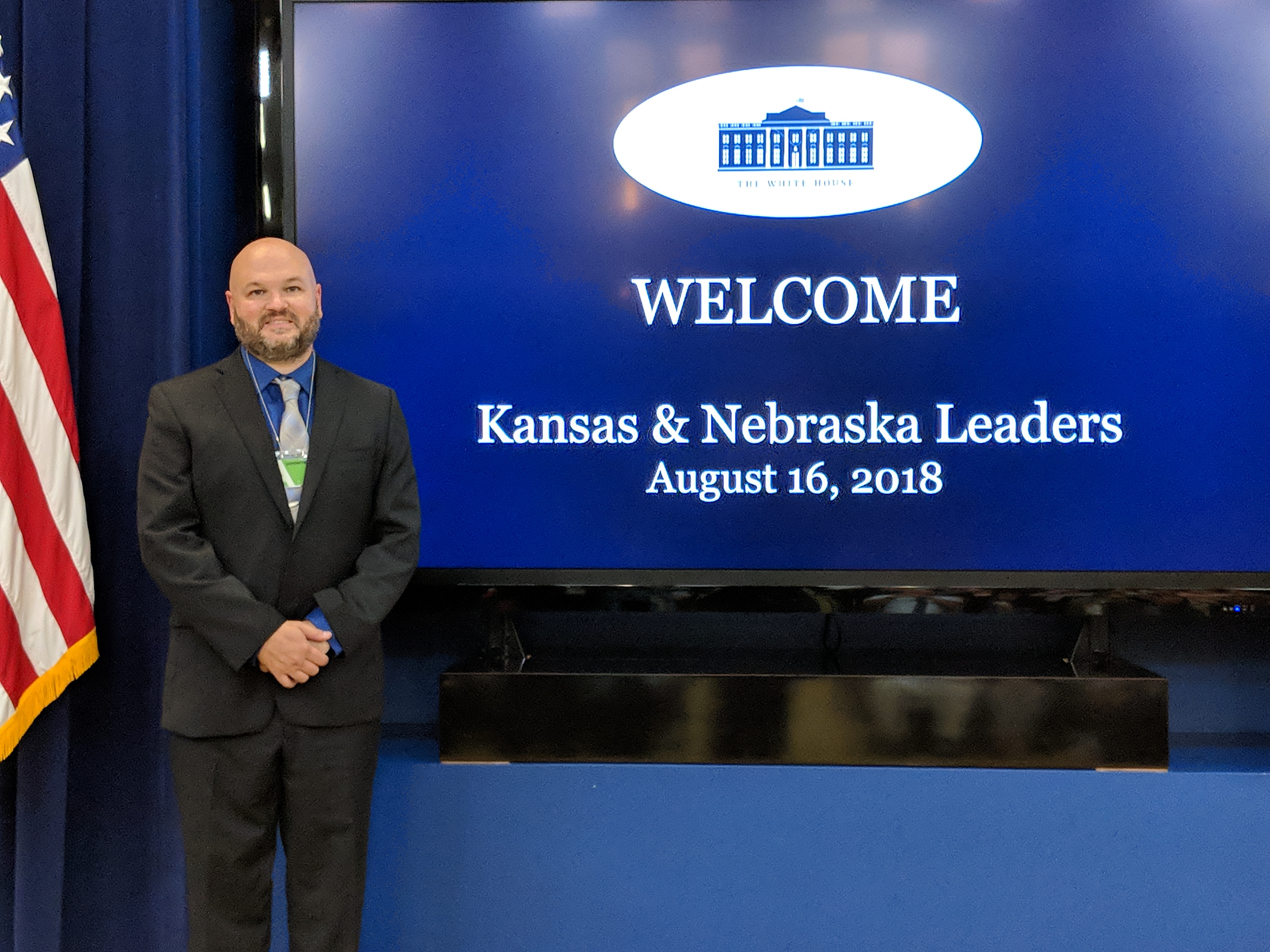
Hays Mayor James Meier at a conference for local leaders at the White House.By CRISTINA JANNEY Hays Post
Hays Mayor James Meier attended a White House conference for Kansas and Nebraska mayors and county officials on Aug. 16.
He heard from Cabinet-level leaders about issues facing local governments.
Although he thought the experience was a good networking opportunity, he said on one point the speakers did not go far enough—that was the opioid crisis.
Trump adviser Kellyanne Conway spoke to the group on the opioid crisis.
Although the Conway acknowledged the growing epidemic of opioid abuse and its effects on local government, Meier, a pharmacist, said Conway fell short of admitting the federal government’s culpability in the rise of the crisis.
“They had a good message. They realize the federal government has to get involved. The state government has to get involved. The local governments have to get involved,” Meier said. “They had a good message, and I think they realize that there is not a magic bullet. There is not one plan that is going to fix everything. But I think it is important to recognize why it is happening, so we can plan appropriately.”
He explained during the 2000s, the medical community encouraged providers to treat pain as a sixth vital sign.
“You were supposed to go into a patient’s room and say, ‘OK, rate your pain on a scale from 1 to 10,” Meier said. “If a patient said 10, even if they outwardly had no signs they were in any pain, you were supposed to treat them as if their pain was a level 10 and treat the pain because nobody should ever be in pain. That was the whole mantra.”
This was a part of health care accreditation process.
If a patient ranked their pain as a 8 or 9, they knew they were going to receive opioids, Meier said.
“We hear about the opioid crisis, but we never hear about why it’s happening,” Meier said. “I think the federal government has a real part to play in why this is happening in the first place. … What I did not hear was that the federal government was part of the problem to begin with, and I think they need to recognize they were a part of the problem.”
Conway gave the example of someone going to the dentist for a chipped tooth and receiving seven days of opioids and all of a sudden they are hooked. Meier said those things do happen.
Because of the crisis, the pendulum has started to swing back the other way. Doctors are afraid to prescribe opioids for anything for fear patients will become addicted, Meier said.
Meier works with cancer patients.
“I am really scared that five or 10 years down the road, people who really need opioids will not be able to access them,” he said.
Meier said he wanted to hear the federal officials say they are trying to work toward a happy medium.
“There are probably some commonsense things that we need to be putting in place to ensure that doesn’t happen, and I think those will be put in place,” he said of people becoming addicted. “We have to have a happy balance between those people who need short-term pain control from the dentist or for a broken arm and those people who have cancer that has metastasized to their bones and they need very high doses of morphine throughout the day just to be able to function.
“I don’t have an answer,” he said, “It just seems we are going from one extreme to another.”
The conference was organized by the Office of Intergovernmental Affairs. Other speakers at the conference included Ben Carson of Housing and Urban Development, a representative of the Department of Agriculture, assistant director for the Department of Education, representative of the EPA, and a representative from the International Trade Administration.
“I do think that this group that is in the White House right now is interested in ensuring local control,” Meier said. “I do think that is a theme that came through (the conference) that they think local control is best.”
Meier also was able to meet Vice President Pence.
“You got to shake the vice president’s hand. It doesn’t matter who it is, that is kind of neat thing to say you did,” Meier said.
Meier said he also benefited from being able to speak to mayors from other Kansas and Nebraska communities. The Kansas group visited Sens. Moran and Roberts during their time in D.C. He said he thought it was important to attend to give northwest Kansas a voice in Washington. He passed on information on the R9 Ranch water project.
The group also discussed a bill in Congress that would allow telecom companies to put infrastructure in local right of way without consulting the local municipality or paying a franchise fee. This has become an issue in the Kansas City area where companies are trying to upgrade to 5G.
Meier said the bill would be very applicable to Hays as well.
“Any city wants to be able to control its right of way and be sure things are being placed in an appropriate place and there is a fair playing field as far as paying franchise fees and things like that,” he said.
The senators also talked about commodity prices and trade, but had no details about how and when the president’s $12-billion aid package to farmers was going to be distributed.