We have a brand new updated website! Click here to check it out!

McClelland: Budget, ongoing projects priorities if re-elected to commission

Marcy McClelland, Ellis County Commissioner

By JONATHAN ZWEYGARDT
Hays Post

Unfinished business and the support of voters are the driving forces behind Ellis County Commissioner Marcy McClelland’s re-election bid.

First District Commissioner McClelland was elected in 2014 and has been a part of a commission that has overseen more changes than almost all of the other commissions.

“I think we have made some progress and I wanted too see more of the projects through. That was my goal in 2014,” McClelland said, “and we are almost at the goal.”

Since 2014, Ellis County has completed construction of the Emergency Services building in Hays, completed remodels of the jail and Law Enforcement Center, the Administrative Center in Hays and purchased and remodeled the new Health Department building at 2507 Canterbury.

The county also combined the Health Department and Emergency Services into one department and Rural Fire and Emergency Management into another.

“This necessitated a lot of critical thinking, but I know it saved the county a lot of money,” McClelland said.

She said she would like to see the completion of the remodel at the Cottonwood Extension District office at 601 Main and a new or remodeled shop for Public Works completed if she were to win another term.

But her current term has not been without controversy.

With fellow Commissioner Barb Wasinger recused because of a conflict of interest, McClelland was the dissenting vote against the final plat for the Blue Sky Acres residential subdivision south of Hays.

That vote has McClelland and the county in a lawsuit with landowner Marcy Alice Unrein.

McClelland took the stand in May at a bench trial and defended her vote against the plat, citing potential water issues. She says she stands behind her vote.

“I still feel like it was a discretionary vote. I feel like I have the right to vote how I see things,” she said.

During the bench trial in May, Commissioner Dean Haselhorst claimed that development was being hindered by the lawsuit, but McClelland disagreed with that notion.

“The effect on development is the economy,” McClelland said. “Let’s face it, ag is down (and) oil is down.”

According to information presented each month to the Ellis County Commission, there has not been a noticeable change in the number of wastewater permits submitted to the environmental office in the 19 months since the lawsuit was filed.

“I know the state statues were met, but I was thinking of the 29,000 people of Ellis county,” McClelland said.

While she stands by her vote and will not change it, she said if the judge rules that the development can go forward she will accept that decision.

“But I don’t want anyone coming back on the county because of the decision that they made,” McClelland said, adding that she doesn’t want the county to have to buy seven homes if the water becomes polluted and no one can live in the Von Feldt Addition, which is next to the proposed Blue Sky Acres.

McClelland said she has had good support from Ellis County voters and has not had anyone say that would not vote for her because of the lawsuit.

“In fact, it’s the other direction,” McClelland said. “The support (on this issue) is another reason I decided to go ahead and run.”

She also understands that any criticism she faces is simply part of being a commissioner.

“You are on the hot seat when you’re up there, and I’m open to that,” McClelland said. “You have to make decisions of, by and for all of the people not just a few.”

If re-elected, McClelland said the budget will again need to be a focus.

She said as a taxpayer the goal is too keep the mill levy low but, “I desire services, so there’s two ways too look at it.”

McClelland applauded county employees for the efforts in keeping their budgets low.

“I don’t think they overspend. Just because its in the budget doesn’t mean they spend it,” said McClelland.

With the 0.5 cent sales tax that was used to pay for the remodeling of the Law Enforcement Center and jail and the construction of the Emergency Services building set to sunset later this year, McClelland said she would be open to the idea of keeping that tax in place to help pay for infrastructure.

“In some ways, I am in favor for keep that and putting that into a fund for roads and bridges because its almost time for bridge inspections and most of the bridges in Ellis County are over 75 years old,” McClelland said.

McClelland said she also aims to be a voice for the people of Ellis.

“The people of Ellis need to have a voice over here (in Hays), just like the other people, sometimes people forget that the county is the whole county and not just the city of Hays, and there is a lot of difference between the county and the city,” McClelland said.

McClelland faces Butch Schlyer in the Aug. 7 primary.
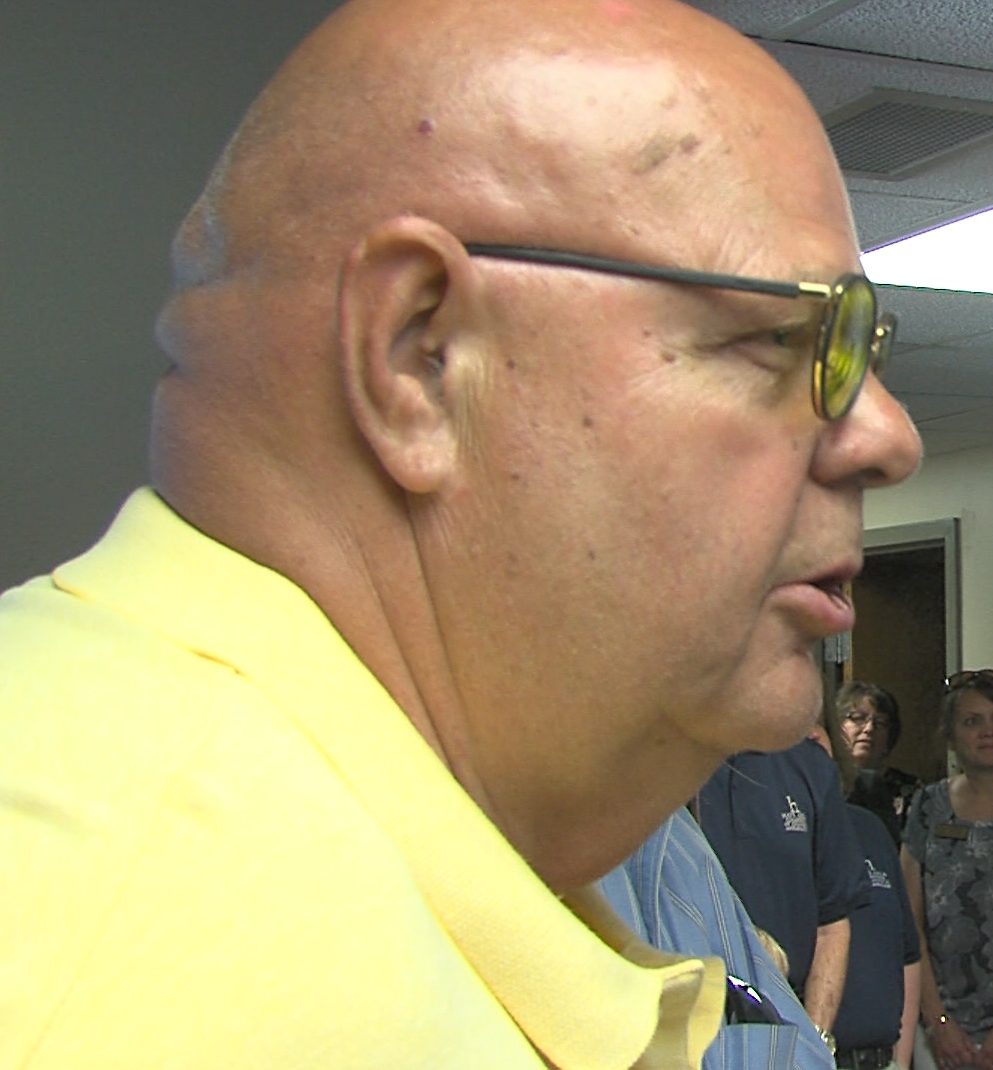
Schlyer touts experience in race for Ellis Co. Commission

Former Health Administrator Butch Schlyer

By JONATHAN ZWEYGARDT
Hays Post

A lifelong Hays resident and former county health official said knowledge of how county government makes him uniquely qualified to serve on the Ellis County Commission.

Robert “Butch” Schlyer retired in 2016 after serving as the Ellis County Health Administrator for 23 years and said he always wanted to run for county commissioner and, now that he is retired, he is able to do that.

“The experience I have with the county is one that no other candidate has,” Schlyer said. “There’s no other candidate that has been a department head and sat on the other end of the table while the county commissioners dictate the policies and the budgets.”

Schlyer said that while he was a county employee he had to manage a department so he had employees who worked for him. He also had to hire and fire people and resolve conflicts. All traits he said will help him if elected to the commission.

“I understand the department heads when they try to run their operations, given the issues and difficulties that brings,” he said. “I also understand the community since I’ve been here forever.

“I think I can have a better understanding of that whole picture, its just not a detriment when you know both sides of that whole issue its easier to make decisions based on fair observations and judgements,” Schlyer added.

While working through the 2019 budget process department heads and county staff were forced to make a number of cuts, in an effort to avoid raising the mill levy and Schlyer thinks it could get worse.

“When we look at the outlook for Ellis County, we’re not going to see any big influx of revenues coming in,” Schlyer said. “The only thing we have is the ad valorem tax, the oil tax and it’s just not going to increase.”

Schlyer said that leaves future commissions with two options — raise taxes or cut services.

In departments where the majority of the budget goes to employee salaries, he said tough decisions might have to be made.

“At some point, you are going to either lose personnel, which could impact services, or you’re going to have to provide more money for the services,” Schlyer said. “Its just going to have to come to that. Hard decisions are to come in the future, much harder than they are now.”

The 2019 budget is the third in a row that does not include an increase in the mill levy, despite an increase in spending.

Schlyer said no one wants to see an increase in the mill levy but it may need to be done.

“You always have to look at what services are we providing, what quality of the services are we providing, do we want to compromise that or do we want to provide the money for those services,” Schlyer said. “Your conclusions are going to have to come from that.”

If elected, Schlyer said he does not have an agenda, instead he will be looking at the issues that are raised and make “good decisions based on objective judgement so the county can operate in the quality it has in the past.”

Schlyer is running against incumbent Commissioner Marcy McClelland in the Aug. 7 primary election. He said he likes McClelland and did not have anything bad to say about her.

McClelland and the county are currently involved in a lawsuit over the final plat of a residential subdivision south of Hays, the Blue Sky Acres.

Schlyer said he believes McClelland “was well within her authority” to vote against the final plat.

“I understand Marcy’s concern, because she had concerns with water, especially for those folks who are already living near that development area,” Schlyer said. “Having said that, when you have a comprehensive plan which layouts the benchmarks one needs for a development and one meets all those benchmarks, if you’re going to deny it, what good is your comprehensive plan?”

He added that he would not be in favor of the county appealing the ruling if the judge were to rule in favor of the owner of the Blue Sky Acres.

Schlyer said he knows that the commissioners have a tough job and he believes he can step right in a do the job.

“I have excellent critical thinking skills. I don’t think they’d be matched by anyone running for the commission at this point in time,” Schlyer said.

Schlyer is one of four people running for Ellis County Commission First District. Schlyer faces incumbent Marcy McClelland in the Aug. 7 primary. The winner will face Democrat Chris Rorabaugh and Independent John Walz in the November general election.

Hays USD 489 works with foundation to install buzz-in security systems

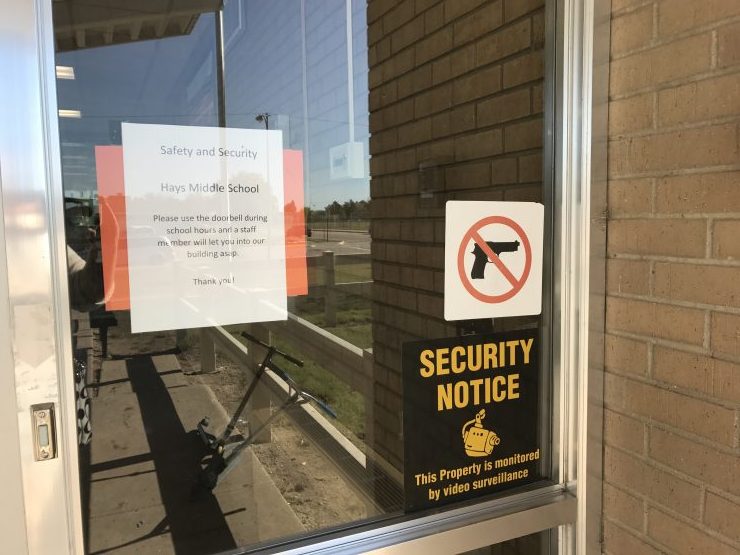
A security notice at Hays Middle School directs visitors to ring a doorbell so someone in the school’s office can let them in.
By CRISTINA JANNEY
Hays Post

Hays USD 489 is completing upgrades this summer on its security systems at all district schools.

A new buzz-in system will be in place by the beginning of the school year.

When a visitor or parent comes to a school during school hours, they will have to ring a doorbell at the front entrance. This will alert staff in the office who will ask the person who they are and their business at the school. The school staff will be able to observe the front door from cameras in the office.

The person will be buzzed in and will need to check in at the office.

Although some schools in the district have already installed buzz-in systems, not all of them have.

The front doors of schools will be unlocked as normal when children are coming and letting out for the day.

“It is that press in the whole nation of trying to be as safe as you possibly can,” Superintendent John Thissen said. “You turn on the TV and see ugly things have happened even in small communities. We are just trying to be in line with the safest procedures you can do.”

Some of the district schools’ offices do not have a direct line of sight to the front doors of the buildings. One example of this is at Lincoln Elementary School.

“Unless someone is really looking at the monitor, they would have free rein of the building,” Thissen said. “At least now through the day while kids are in school, someone in the office should have accountability of everybody who walks in that building.”

Thissen said the security upgrades not only protect against a terrorist, but can protect children and staff from issues with non-custodial parents.

Thissen said the district will not be on the cutting edge, but is catching up to what other districts have been doing for years.

The estimated cost for the project will be $50,000. The USD 489 Foundation for Educational Excellence has slated a dinner and auction for Nov. 3. The proceeds from that auction will go toward reimbursing the district as much as possible for the buzz-in system. The foundation has set a goal of $50,000 in hopes covering the complete cost of the project.

The district has also received $57,700 from the state toward a $250,000 project to upgrade all of the interior locks in the district. The district will have to match the $57,000 with money from the general or capital outlay funds. The district had asked for $125,000. However, Thissen said he was thrilled to have received what it did with so many districts vying for limited money — $5 million.

See related story: Kansas to give out $5M in security funds to schools

The lock system will be standardized with master keys for administrators and more limited access for teachers. Hundreds of locks, including classroom door locks and some padlocks would be changed.

Some of the district’s buildings are so old that non-secure doors such as closets still have skeleton key locks. Other locks are worn out. The new key system requires keys that can’t be replicated at a standard key replacement station.

The district is also issuing new ID/key cards. The cards will be color-coded by building. Although the district eliminates key code access to cards when staff leave the district, the staff IDs have not been updated in years.

The district would also like to make the high school more secure by renovating its main entrance so all visitors would be funneled through the school’s office. That project won’t be finished this summer, but it could be finished before the end of the school year, Thissen said. This project would cost an additional $30,000 to $50,000. Ultimately, Thissen said having all schools with this type of entrance would be preferred.

Long term, the district would like to devote funds to upgrading security cameras, most of which are 15 to 20 years old. Some newer camera systems have the option of allowing police to have direct internet access to the camera feeds.

Thissen said, unfortunately, he believes all schools will be dealing with security issues and investments for many years to come.

Foundation dinner and auction
The Foundation is accepting donations for its silent auction, is seeking businesses sponsors and selling advertising for the auction catalog.

Sponsorships start at $250. Ads are $25 for a business card size ad, $50 for a half page and $100 for a full page.

Tickets will be $75 per person or $500 for table of eight and will go on sale Sept. 1. The Unrein Building, which is were the dinner will be conducted, holds a maximum of 500 people for this type of event. You may purchase raffle tickets at the time you purchase event tickets. You do not need to be present to win. The raffle prizes have yet to be announced.

Tickets can be purchased at the superintendent’s office at Rockwell Administration Center, 323 W. 12th, or by phone at 785-623-2400.

The dinner will be at the Unrein Building at the Ellis County Fairgrounds. Doors will open at 4 p.m. for a preview party. Elvis entertainer Frank Werth and The Vibrations will be the evening’s entertainment. Dinner will be served at 6 p.m. Alcoholic beverages and snacks are included in the price of a ticket. The silent auction booths will begin closing at 6 p.m. and the live auction will begin at 7 p.m. USD 489 nutrition services will serve an evening snack of cinnamon rolls and juice at the conclusion of the live auction.

Volunteers are needed for the auction. People will be needed to set up the silent auction, as cashiers, bar tenders, runners, silent auction booth workers, raffle ticket sellers and for the cleanup crew.

“Probably the most important thing is what the auction proceeds will go to,” Sarah Wasinger, foundation board member, said. “We decided to do something that would impact all of the schools in the district.”

For more information on the dinner and auction, contact Wasinger at the superintendent’s office at 623-2400 or by email at [email protected].

Ellis County Desert Storm veteran receives Quilt of Valor

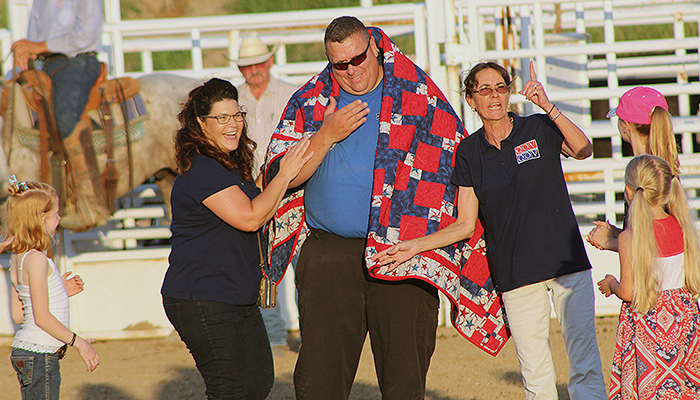
Children from the 4-H quilters group along with Connie Haselhorst, middle left, of Quilts of Valor, award Scott Wasinger of rural Ellis County with a Quilt of Valor Wednesday night at the Ellis County Fair rodeo.

By CRISTINA JANNEY
Hays Post 

Veteran Scott Wasinger, in front of packed stadium at the Ellis County rodeo Wednesday night, had a special quilt in bright red, white and blue colors draped over his shoulders.

He patted his heart before the cheering crowd to signal how it had touched him.

Wasinger said he was surprised and humbled by the gift and did not know his sister-in-law had nominated him to receive the quilt to honor his military service. His niece helped sew the quilt as part of a 4-H quilters group project.

Wasinger, of rural Ellis County, entered the Army Reserve in 1986. He was called to active duty during Operation Desert Storm. He earned the rank of sergeant and left the service in 1996.

Scott received the quilt through a joint project with the 4-H quilters and the local chapter of Quilts of Valor, which makes quilts for both veterans and active service personnel who have been affected by war.

Quilts of Valor just started a new chapter in Hays, and this was the first quilt the group awarded.

Quilts of Valor is a national organization that was founded in 2003 by Catherine Roberts whose son, Nat, served in Iraq.

Roberts, who was a quilter saw the gifts as a means of healing for those veterans who had been affected by war. Almost 192,000 quilts have been given to veterans and active service personnel since the organization’s inception.

Connie Haselhorst, Kansas Grateful Stitchers Chapter organizer, was in 4-H with Scott. Scott has been active supporter of 4-H and a member of the fair board.

Haselhorst said Scott was very humble about his service both in the Armed Forces and to the community, but was very deserving to be honored with a quilt.

“He is quiet, laid-back guy, who never takes the front seat” Haselhorst said. “He is always there helping but never wants any glory. This will be a little different for him.”

The Kansas Grateful Stitchers became involved with the 4-H quilters group, a group of about 12 youth, because of Haselhorst’s background in 4-H. Scott’s, niece, Marisa, 11, was one of the youth in the 4-H quilters group. Amy Wasinger, Marisa’s mother and Scott’s sister-in-law, nominated Scott to receive the quilt.

“I think the reason why he came to my mind is that he is pretty humble and he doesn’t think he deserves a lot of credit, but he served for 11 years in a difficult, high-stress combat situation,” Amy said. “He has always been in 4-H, so I thought it would be neat for 4-H kids making a quilt for someone who had been in 4-H himself, and it was our family.”

Marisa said of why she thought her uncle should receive a quilt, “He was in the Army, and I am proud of him.”

The 4-H quilters group made quilt blocks and then sewed those together to make Scott’s quilt, but women in Kansas Grateful Stitchers each individually work on a full quilt for someone who has served. Haselhorst said she was very impressed with the work the children did on Scott’s quilt. When they completed it, they all signed the quilt in one corner.

The other 4-H quilters said they wanted to repay Scott for his service.

“I think it is a nice thing to do because they gave to our country, and we should give back to them,” said Mariella Dreiling, 10.

Eva Betz, just 6, said of making the quilt, “It was fun, and it was nice.”

Keeli Kimzey, 10, said, “I just think it would be nice. They do a lot for us, keeping us safe and stuff, so I think we need to do something to show our appreciation for them.”

Haselhorst has been a long-time quilter and thought Quilts of Valor would be a way to give back.

“I love to quilt, and I think that if everybody does just a little bit, you know the worlds just gets a little bit better,” she said. “A friend of mine was telling me about this Quilts of Valor, and I thought this would be a great way to do more for everybody.”

Haselhorst urged other families to nominate friends and loved ones for quilts. If a veteran or active duty service person lives in another community or state, someone from a chapter in that area will be charged with making a quilt. The Kansas Grateful Stitchers serve Ellis, Rooks, Rush and Russell counties.

To nominate someone for a quilt, go to the Quilts of Valor national page and click on Request a Quilt of Valor under the Take Action tab. You can also donate using credit card or PayPal through the website.

Money for the materials for the quilts, which are usually done in patriotic patterns and colors, are purchased with locally donated funds.

The Kansas Grateful Stitchers chapter will be awarding more quilts during the RPM Speedway Military Appreciation night on Aug. 25.

If you would like to join the group, you can connect with the Stitchers on Facebook. They meet once a month on a Monday at Quilt Corral in LaCrosse. The group is looking for a second location to meet once a month on a Saturday.

Purchase for grandchild sparks former farmer’s toy collection

By CRISTINA JANNEY
Hays Post

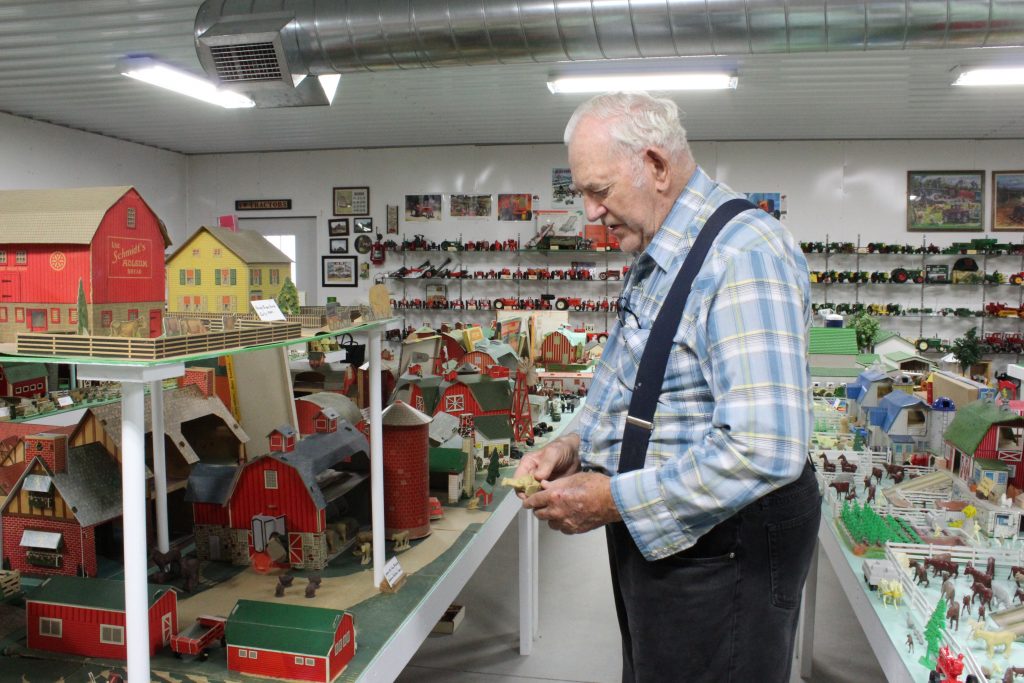
PFEIFER — In a nondescript metal building in rural Pfeifer is a child’s dream.

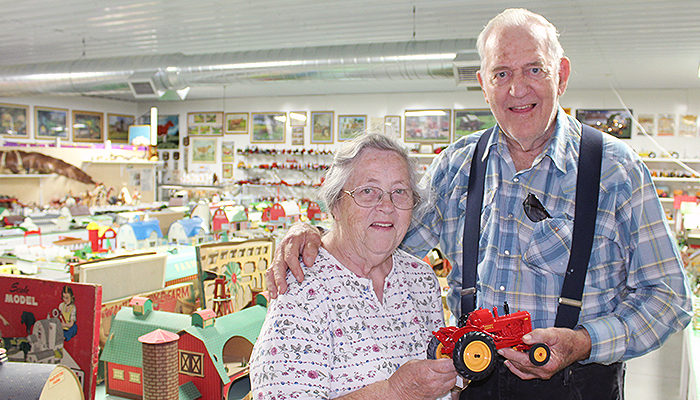
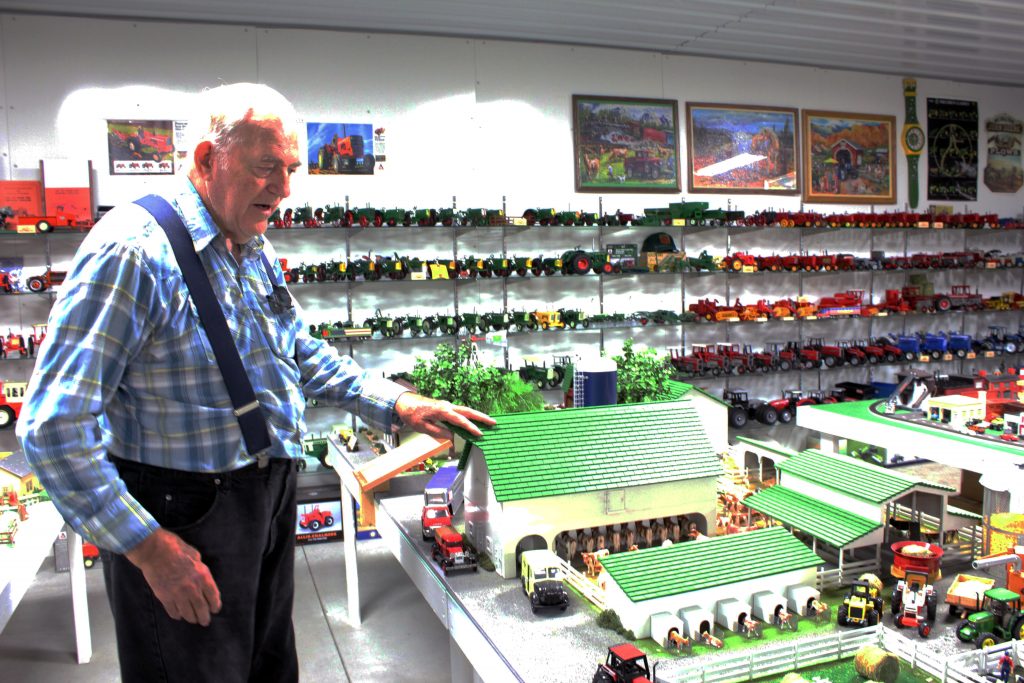
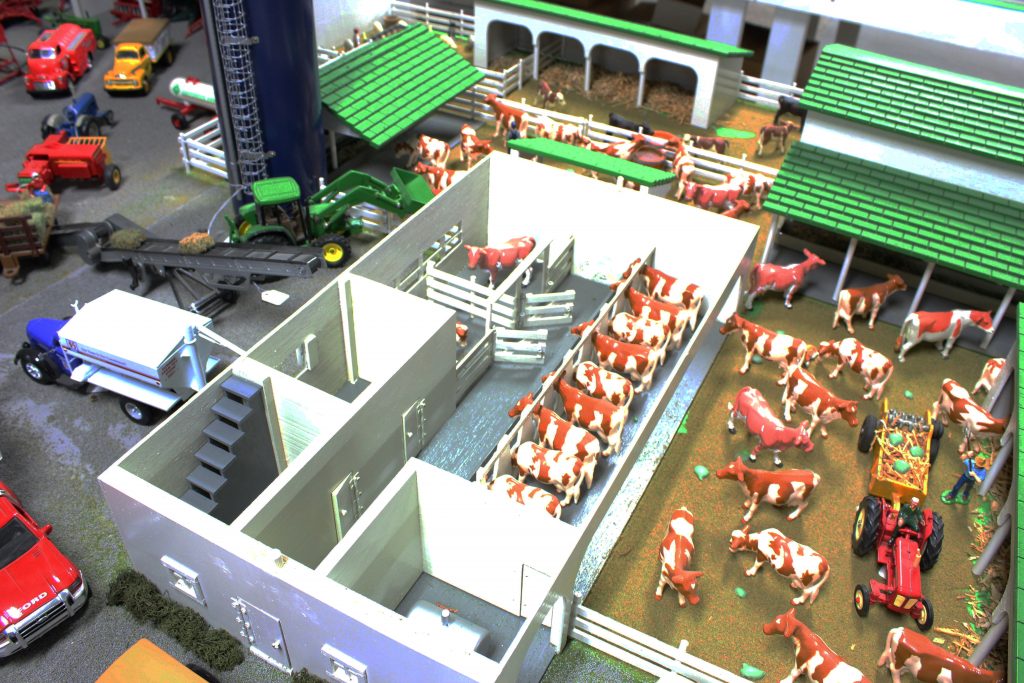
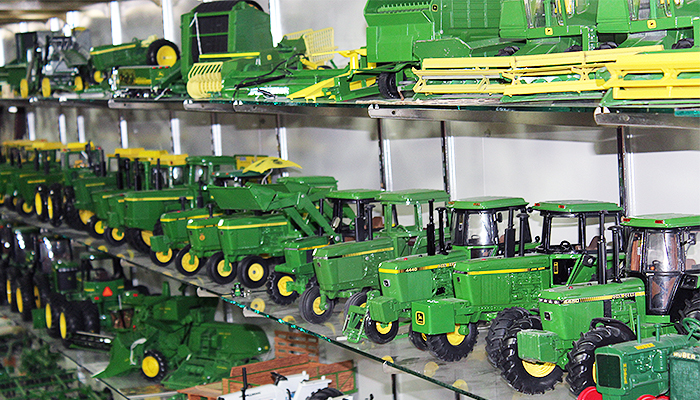
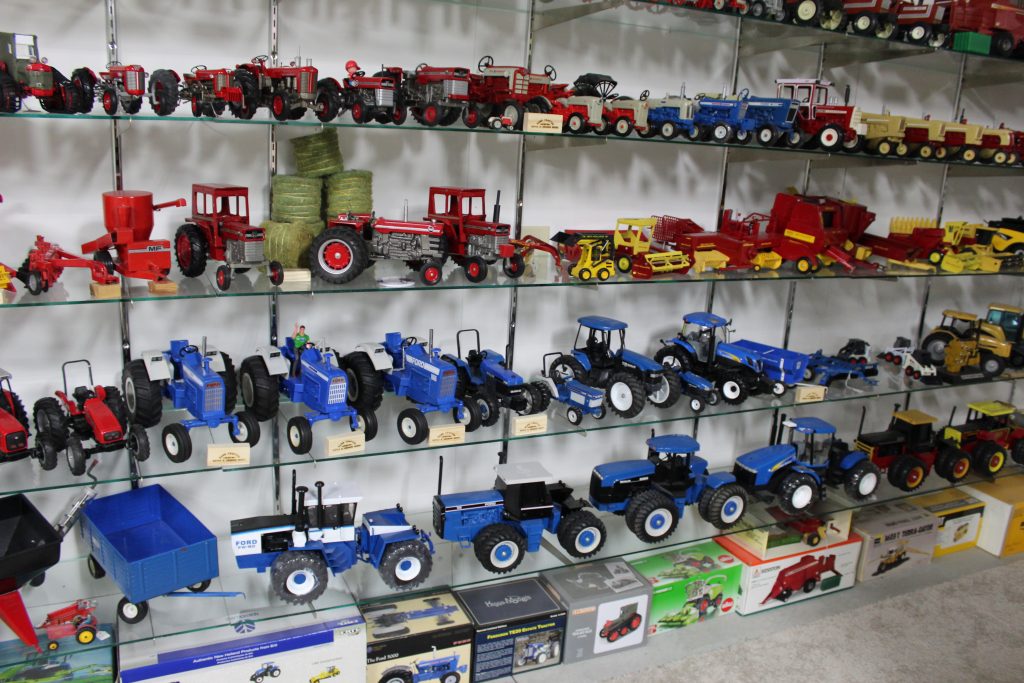
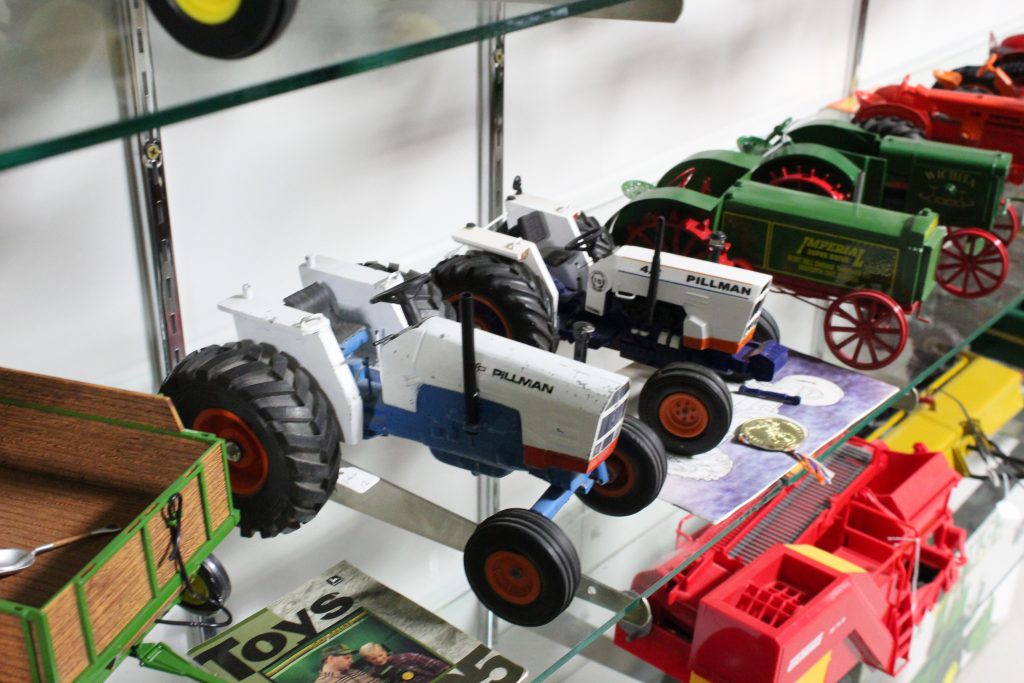
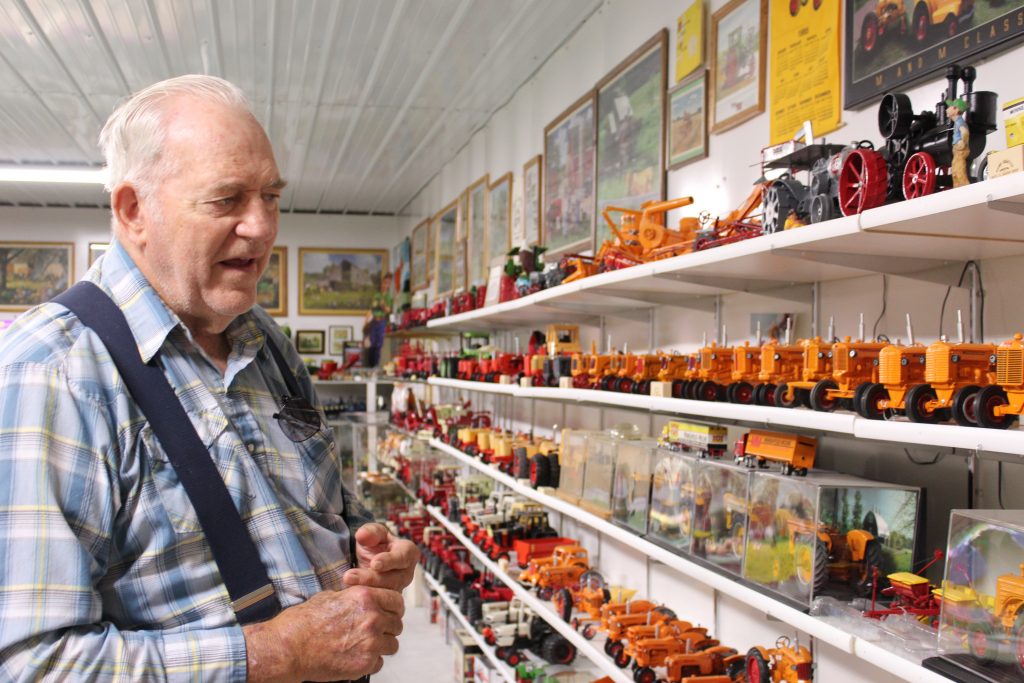
Doyle Neher’s Harmony Toy Farm Museum has more than 1,000 toys — 900 tractors and more than 100 farm sets. The collection has been accumulated over almost three decades.

Behind every toy in that collection, some hand crafted by Neher, is a story.

Neher, 81, started collecting in 1991 when his oldest grandchild was 3 years old.

Doyle Neher, 81, talks about some of his toy tractors at his Harmony Toy Farm Museum in Pfeifer.

“We were discussing what to get them for Christmas, and I thought that every kid needed a toy tractor. We went to Tractor Supply and picked them out a tractor. We went to Tractor Supply, and they had an A-Farmall model in there. That was the first tractor my dad bought, and the tractor that I learned to drive first. I was standing there looking at it, (my wife) says, ‘If you want it, go ahead and buy it.’ I bought a toy tractor in 1991, and this is what has happened since,” Doyle said motioning to the room filled floor to ceiling with shelves lined with toy tractors of all makes and models.

Doyle grew up on a hatchery and dairy near Oswego and then ran a dairy farm near Hutchinson until his retirement in the 1990s. He had toy tractors when he was a kid, but those are all long gone.

In honor of a lifetime of farming, he create a model of his father’s farm and his and his wife’s Sharon’s home in Hutchinson.

A replica Neher built of the dairy farm he grew up on.

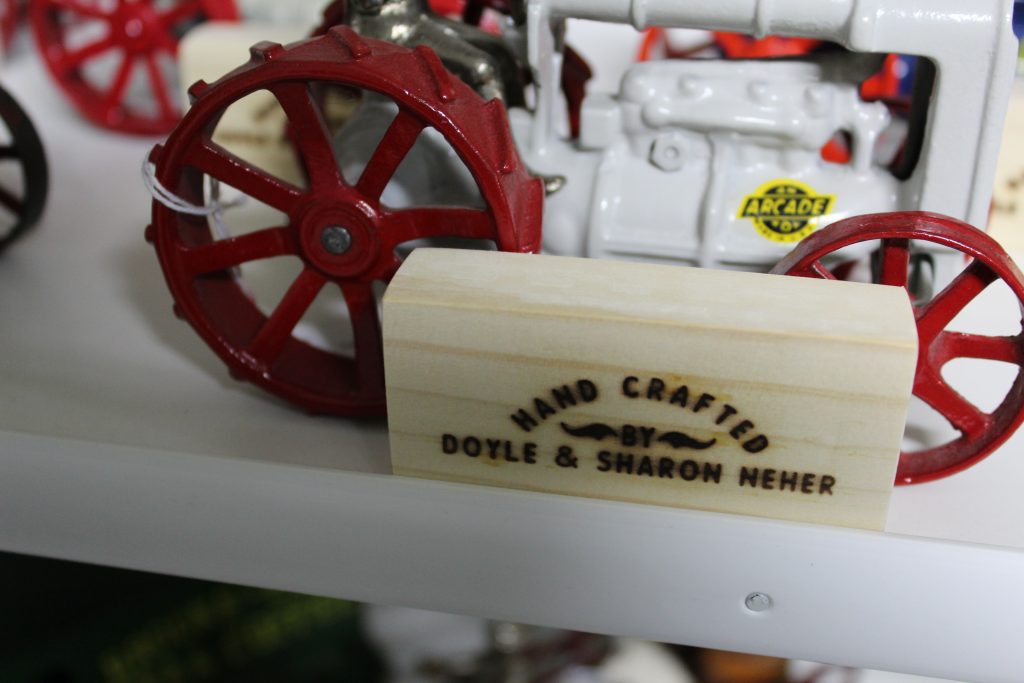
Doyle as a farmer was used to working with machinery and working with his hands. If you visit the museum, you will see dozens of toys with small wooden blocks in front of them. All of these toys, mostly tractors, are ones that he made, restored or customized. In many instances, he took toy tractors that were mass manufactured and altered them to look like the life-size equipment that ran in the fields. He made multiple copies of some of these original models and sold to other toy collectors.

“My favorite part is finding old tractors and restoring them and making them look nice,” he said. “I have restored over 100 pieces in here. … The second thing would be meeting the people.”

As Doyle has gotten older, his wife has helped him with some of his work on the toys. She helps place small pins and screws that Doyle doesn’t quite have the dexterity to manage anymore.

Of his collection, Sharon said, “I just tell him to go for it.”

However, Sharon acknowledged she was pleased Doyle had his own building to house the toys and her house is no longer taken over by the collection.

Doyle has a small workshop in the rear of the museum where he still works on the tractors, constantly making new creations.

One of his latest projects is to add a second railroad track to the H-O gauge he has in a farm scene displayed in the middle of the museum.

Neher finds his tractors and farm sets all over. He goes to garage sales, auctions, flea markets, antique stores and toy shows.

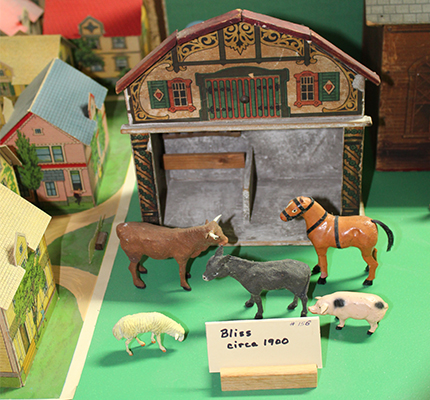
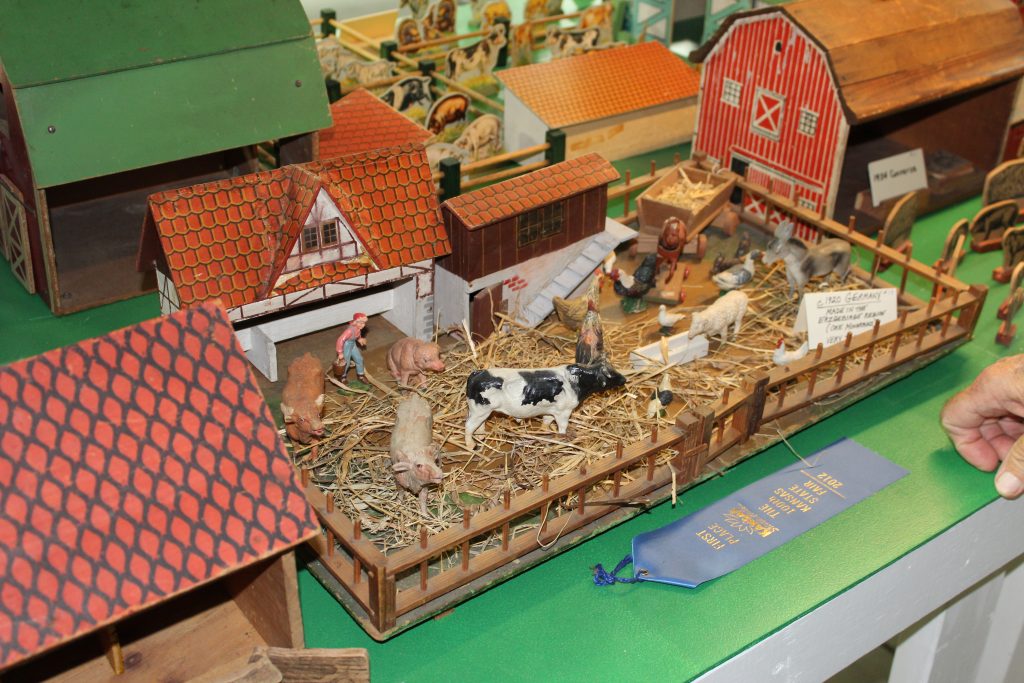
His oldest farm set was built in about 1900. He found the set at an antique store in Iowa.

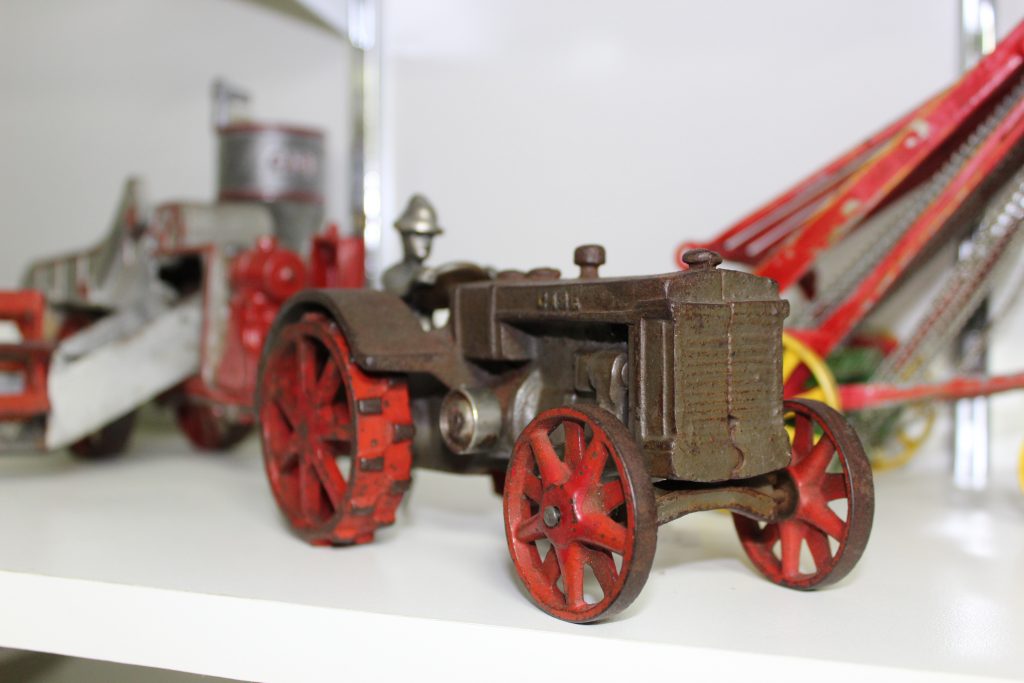
A cast iron tractor from the 1920s.

Another set was made in Erzgebirge region of Germany in 1920. Neher had a friend from McPherson who was visiting his daughter in Maryland. The friend saw the farm set in an antique store during the visit and sent a picture to Neher. He called the antique store, made a deal and secured the set for his collection.

He has a paper set that came as a reward in 1948 Quaker Oats puffed rice and puffed wheat cereal. Eight cards were available to collect in the set.

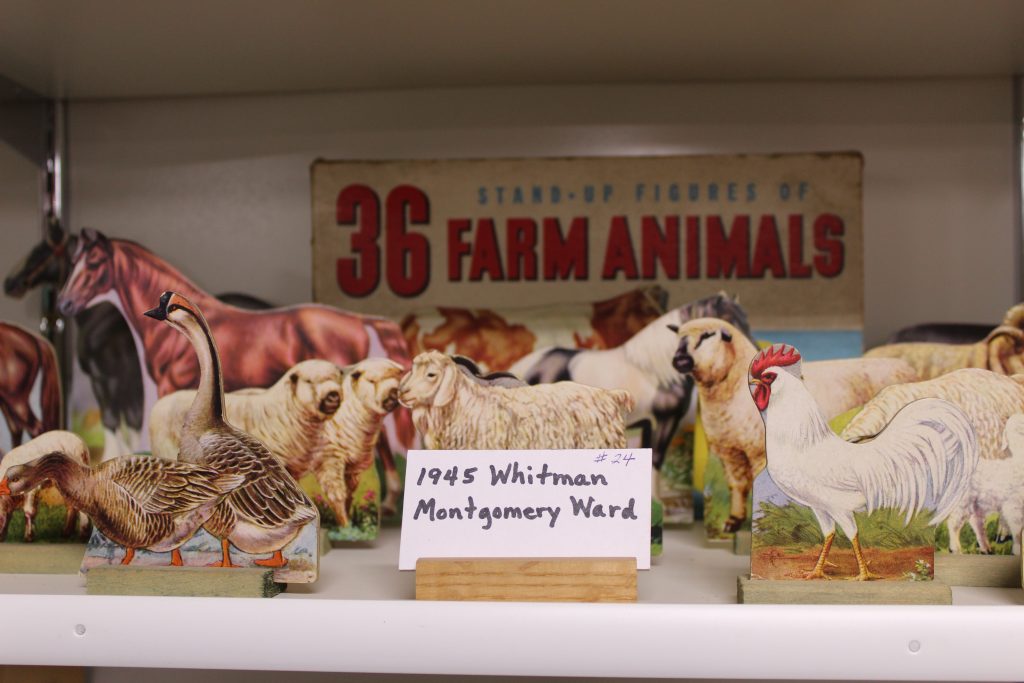
One of his favorite farm sets is a 1945 Whitman set that was sold by Montgomery Ward. The 36 cardboard figures each had the description of the animals printed on the back. He collected many of these sets and sold them at toy shows.

A toy farm set from the 1920s.

The first farm sets were made out of wood. Animals in the 1930s were made from rubber. When World War II broke out, the animals were made from the same molds but out of clay because rubber was essential to the war effort. After the war was over, they went back to rubber. In the 1950s, the barns started being made out of tin.

The early tractors were made of cast iron. His oldest toy tractor dates back to the 1920s. After searching for years, he drove to Kansas City to buy this rare tractor from a flea market vendor. Neher said he went into a garage in a nice residential area, and it was packed floor to ceiling with boxes. With great anticipation, he made his way through a narrow path to a table in the back of the garage where the toy was sitting. He made the deal and took home the tractor.

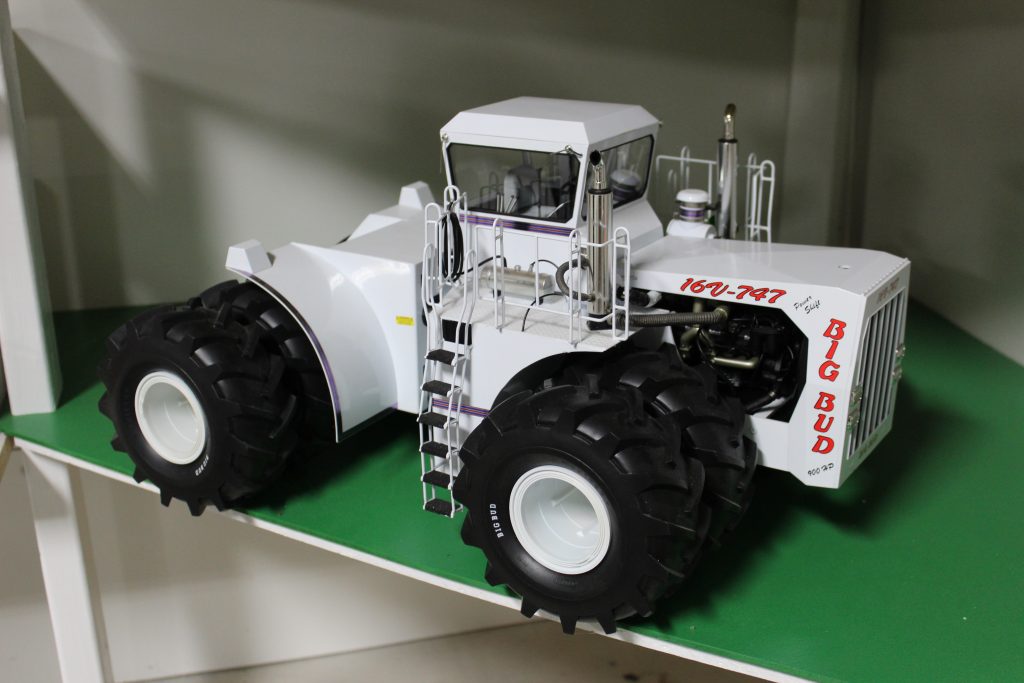
Neher also has a scale replica of the largest tractor every made — Big Bud, which was powered by a 16V, 747 engine. During a rebuild, the tractor was increased to 900 horsepower. Only a limited number of the toys were manufactured. The life-size tractor is currently on display at a museum in Clarion, Iowa.

A replica of Big Bud, the largest tractor built.

Neher shared a little bit of tractor trivia as he surveyed his collection of Ford tractors. The first mechanical farm equipment was driven by steam. Henry Ford came out with a smaller, less expensive gas-powered F-series tractor to replace the bulky steam-powered implements. The F-series was very popular with farmers, so General Motors bought the Sampson Company and came out with a tractor similar to F-series.

GM couldn’t beat Ford on price. They tried to make the tractors less expensive, but the product was so bad, almost all the tractors that were manufactured ended up back with GM on warranty. Neher has a couple of models of these rare tractors in his collection.

“That was the end of General Motors being in the tractor business,” he said.

Doyle and Sharon have met many friends through Doyle’s toy collecting through toy shows and selling and farm sets and tractors.

Neher voice began to shake and his eyes began to gloss over with tears as he talked about a particular tractor he received from a man he never met.

The man was from Pennsylvania, and he sold him a couple of farm sets through the mail.

“He kept writing back, saying that when he got better he was joining to do such and such and when I got a mate (toy) I’ll send you one,” Neher said. “Well, he never got better. He died. I got that tractor in the mail one day from his wife. She said he wanted you to have that tractor. … That is something really special for someone to give you something — something from someone you never met.”

A rare model of a Ayrshire cow that Neher restored.

Another woman from Vermont sent an Ayrshire cow model to Neher. The models are rare. They were awarded at the state fair for grand champion cow. However, the Ayrshire headquarters burned down and it is unknown how many of the models were manufactured before the fire.

Neher searched for 10 years for the model. The woman from Vermont found the prized cow model in a box of things she bought at a garage sale. He restored the cow, which had one ear, both horns and the tail broken off.

Another long table in the museum is hung with dozens of blue and purple ribbons from the livestock the Nehers showed at fairs. The family stood first in the class over 300 times and was premier breeder and exhibitor 20 times at the state fair. They had a reserve national grand champion in 1978. In 1985, they had a best breed cow known exhibitor at the national show in the 2-year-old and 3-year-old category.

Doyle and his son, Jeff, also collected baseball cards at one time. They have sold all of them except one complete set from 1953. This includes Satchel Paige, Willie Mays, Mickey Mantle and Jackie Robinson.

In addition to this set, he also has a card for a pro player who was born in 1922 in Pfeifer — Monty Basgall. He was a second baseman for the Pittsburgh Pirates. Later in his career, he was a coach for the Dodgers under Tommy Lasorda.

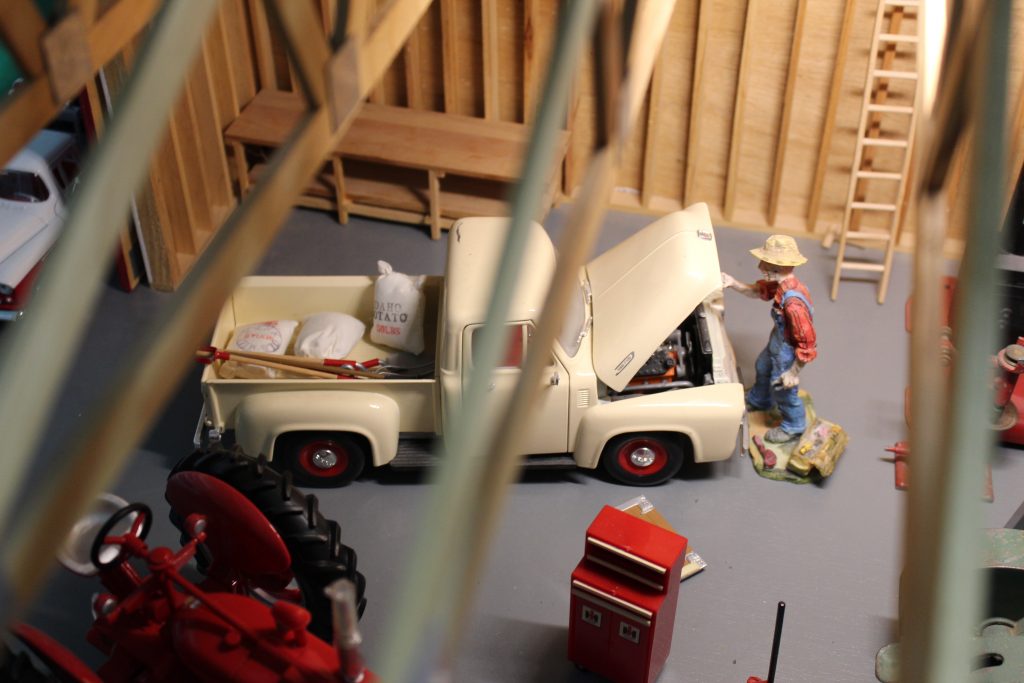
Jeff is a pastor and is busy with a large family and a goat farm in Pfeifer. However, Jeff had a role in his dad’s collection. One Christmas break when he was home from college, the farther and son made a farm shed equipped with an old truck and farm tractors. The set even has a tiny jack, air compressor and mechanic’s tool box.

Doyle said his older grandchildren, who are teenagers, are not interested in the toy collection anymore, and Jeff is too busy to be very involved. Doyle and his wife made a little carpeted corner in the museum where the smallest grandchildren, Joshua, 4, and Tucker, almost 2, can play with some of their own less collectible toy tractors.

Doyle said he is not sure what will happen to his collection, but he hopes the youngest grandchildren will eventually take interest in the toys and catch the collecting bug.

“It will be our children’s problem,” Sharon said.

The Harmony Farm Toy Museum is open for tours by appointment. Call 620-662-7592 or email [email protected].

Tractor Supply Co. eyeing Hays for new retail store

By BECKY KISER
Hays Post

Hays could soon be home to a new Tractor Supply Company retail store north of Interstate 70.

A public hearing for rezoning property in the Crawford Addition, located on the northwest corner of 48th and Roth, and the final plat of Crawford Addition were approved unanimously June 18 by the Hays Area Planning Commission.

(Click to enlarge)

Property owner Crawford Supply Co. has requested  annexation into the city limits and connection to city services, along with a zoning change from agriculture (A-L) to commercial general district (C-2).

The property abuts existing property zoned C-2.

According to information from Curtis Deines, Hays PIE Superintendent, the property has been used for agriculture production for many years. In May, the property owner began the process for developing the property.

“The property is currently being planned for development by Tractor Supply Company. City staff has been working with the developer for several months,” according to the city administrator’s memo to the Hays City Commission. “The annexation, rezoning, and plat have all gone through the Planning Commission with no issues.”

The annexation, zoning and platting will be reviewed by the Hays City Commission during its July 19 work session.

Other agenda items another review of the 2019 draft budget with specific discussion of funding to outside agencies.

During their first budget review, commissioners Sandy Jacobs, Ron Mellick and Mayor James Meier supported full funding – $100,000 – of the Fort Hays State University city scholarship program request.  The draft 2019 budget calls for $90,000 which was the amount funded in 2018.

Commissioners will also review a proposed bid award for a tower at the new fire/rescue training facility under construction in south Hays.

They will also discuss maintenance procedures of the city’s stormwater drainage system at the request of Vice Mayor Henry Schwaller.

The complete agenda is available here.

The work session begins at 6:30 p.m. Thursday in Hays City Hall, 1507 Main.

Rodeo raises funds for cancer patients in Phillips Co., surrounding area

The Boyington family: son John Charles, John, Donna, and daughter Brooke pose at a pro rodeo event in 2015, when John was recognized as the 2015 PRCA Veterinarian of the Year. Donna is facing her second battle with cancer and has received donations from the Hope in the Heartland fund. The Phillipsburg rodeo raises money for Hope in the Heartland.

PHILLIPSBURG – Special funds gave two Phillipsburg women hope and help for the future.

When cancer struck Donna Boyington and Joanne Niemczyk Ceman, monies from the Hope in the Heartland fund helped them with extra expenses.

Boyington, the wife of John and co-owner of Crossroads Veterinary Clinic in Phillipsburg, was first diagnosed with endometrial cancer in late 2014. She had a hysterectomy to remove the tumors. After radiation and chemotherapy treatment in 2015, doctors told her there was a very good chance the cancer would not return. She was diagnosed with her second bout in July of last year. Doctors repaired organs damaged by the cancer and removed more tumors, which had spread to her abdomen.

Ceman was diagnosed with breast cancer in August of 2016. She did chemotherapy once a week for eight weeks, then radiation treatment every day for nearly a month, driving to Hays for treatment.

Both women received funding from Hope in the Heartland, an organization which provides funding for cancer patients in the Phillips County and surrounding area. Hope in the Heartland’s main fundraiser is Kansas Biggest Rodeo, which raises money through its Tough Enough to Wear Pink night, held on the first Thursday of the rodeo each year. Fans at pink night (this year, August 2, 2018), are asked to wear pink to bring awareness to cancer. For every fan wearing pink to the rodeo that night, the Phillipsburg Rodeo Association donates one dollar to Hope in the Heartland funds. Voluntary donations are picked up through the grandstands that night, and local businesses also donate.

Ceman used the donation mostly for travel expenses. “It helped a lot,” she said. “We used it for traveling to Hays.” She is employed at Witmer Drug Store and Crossroads Vet Clinic, and her bosses were understanding. “The people I work for were really good,” she said. “I worked as much as I could. If I needed to sit for a few minutes and catch my breath, they were good about it.”

On days of treatment, Ceman worked half-days, scheduling treatments for the morning so she could be back to work in the afternoon.

Joanne Ceman has battled cancer and received funding from Hope in the Heartland. Her husband Chris and sons (from left) Tony, Chris, and Zach stand with her.

Ceman had her last radiation treatment in May of 2017, and her cancer is in remission. Her husband, Chris, is facing his own battle. He was diagnosed with prostate cancer in 2013 and because of complications, has kidney failure. He is on home kidney dialysis.

Boyington worked at Crossroads Veterinary Clinic full time but during treatment did a lot of the paperwork from home. She and John’s daughter Brooke, the 2014 Phillipsburg Rodeo Queen, returned home to help her parents after graduating from Kansas State University last spring. “She has been a true blessing,” Donna said. “We’re so thankful, because she’s so helpful. She’s helped (John) as much if not more than me.”

Ceman and her husband Chris moved to Phillipsburg from Minnesota in 2001 with their three boys, Tony, Zach and Chris, and have gone to the rodeo several times. Before she had cancer, it wasn’t on her radar like it is now. “It’s amazing how many people are affected by it or have had some kind of it,” she said. The Hope in the Heartland money was appreciated. “It was wonderful. We were really grateful for it.”

Boyington was appreciative of the funds, too. She and John traveled to Kansas City frequently for treatment, as well as to Hays every three weeks, so the funds went towards travel expenses. Her final chemo treatment was in February.

Boyington has a unique tie to the Phillipsburg rodeo. She competed in college rodeo in the barrel racing, breakaway roping and goat tying and did some professional barrel racing as well. Her husband steer wrestled at the Phillipsburg Rodeo and serves as the official veterinarian for the rodeo. He won the 2015 PRCA Veterinarian of the Year award. They rarely miss a night of rodeo.

Both women are thankful for the friends, family and community that have supported them through their ordeal. Even though her husband’s health isn’t the best, Ceman looks on the bright side of it. “There’s always somebody who is worse off than we are.” Boyington appreciates the community. “It’s wonderful to live in a town like Phillipsburg. People are so thoughtful and we really appreciate it.”

“It’s nice to live in a place where people care.”

The Tough Enough to Wear Pink campaign started at the Phillipsburg rodeo in 2006; since then, more than $83,000 has been raised. Several Phillipsburg businesses match the rodeo’s donation: Prairie Horizon Agri-Energy, McClain Seed Sales, Rodgers and Associates Insurance Co., and Farmers State Bank.

The Phillipsburg rodeo is August 2-4. Performances begin at 8 pm each night, and tickets range in price from $11 to $18. Tickets can be purchased at Heritage Insurance in Phillipsburg (785.543.2448) and at the gate. For more information, visit the rodeo’s website at www.KansasBiggestRodeo.com.

🎥 Registration open for Market to Farm Fun Run; Bazaar on Bricks July 28


Courtesy photo

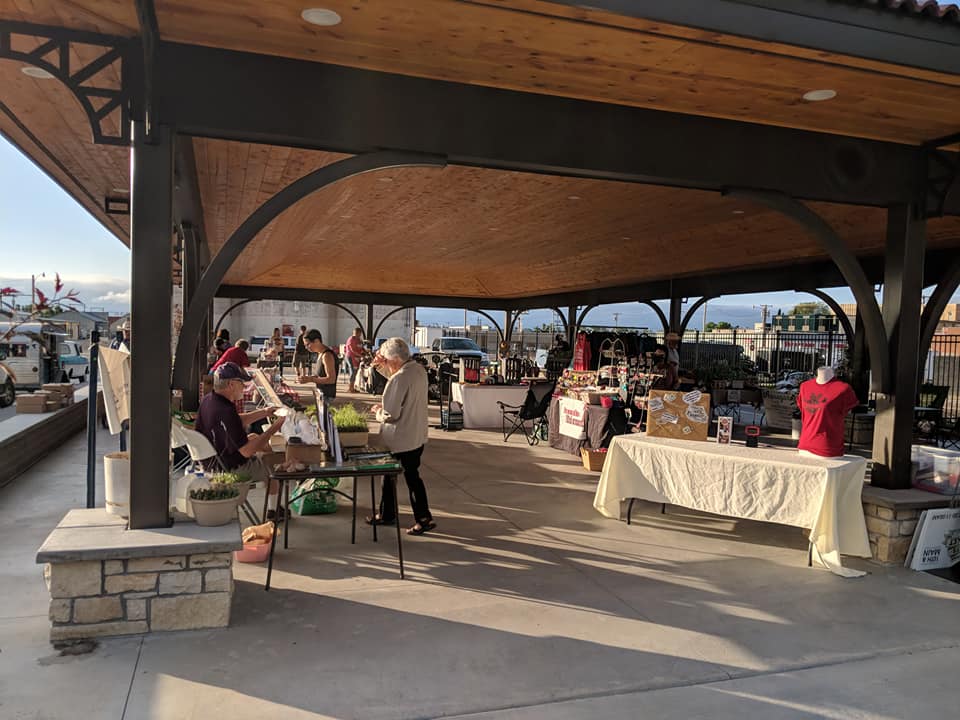
Bethesda Place and the Downtown Hays Market have partnered to create a 4-mile fun run like no other on Saturday, July 28.

The Market to Farm Run is the only run that feeds you a campfire fresh breakfast as soon as you cross the finish line.

The delicious post-run menu includes campfire scrambled farm fresh egg burritos, zucchini tomato tarts, cherry danishes and pumpkin apple coffee cake with plenty of coffee and ice water to go around.

All of this, as well as a free race shirt is included with registration. Registration is 6:30 to 7:15 a.m. The run/walk starts at 7:30 a.m. at the Downtown Pavilion.

Race, walk or stroll 4 miles from the home of the Downtown Hays Market, the downtown pavilion, to the Bethesda Place Farm. Although this route is not all blacktop, bikers, strollers, walkers and runners will have no problem reaching the end.

Registration is just $25 up until the event. On the day of the run, the fee increases to $30. Online registration is available at downtownhays.com or swing by the Downtown Hays Visitors Center at 106 W. 12th St. to register in person. All proceeds from the fun run will benefit Bethesda Place and the Downtown Hays Market.

To recognize this partnership, Kacey Dannels, Joseph Reed and Noalee Augustine from the Kansas Special Olympic team will kick off the day. Dannels and Reed recently competed at the Special Olympics USA Games in Seattle. Augustine was selected as a coach for the Kansas team that traveled to compete.

See related story: Hays Special Olympics athletes bring home honors from nationals

Event participants will have the opportunity to explore the farm and to cool off in the pool before returning to town. Shuttles will be available to take the participants back at 8:30 a.m. and 9:30 a.m. Before heading home, make sure to enjoy the annual sidewalk sale, Bazaar on the Bricks from 7 a.m. to 1 p.m. The sales span Main Street from Eighth to 12th Street.

Over 60 vendors are already signed up. Thousands hit the Bricks for the biggest bargains of the year from our Downtown merchants as well as their favorite Downtown Hays Market vendors. New this year, made possible by Aikido of NW Kansas and A2Z Escape, there will be a free ninja obstacle course and kids crafts under the Pavilion. Since activities are under the Pavilion, farmer’s market vendors will be on Main Street.

It is not too late to sign up to be a vendor for Bazaar on the Bricks. You can sign up on the DHDC website, calling the DHDC office or stop in. Vendor cost is $75. There is no cost for nonprofits.

There will also be carnival games, face painting and street fair food. For a full list of vendors and activities, visit www.DowntownHays.com. For more information, contact Downtown Hays Development Corp. at 785-621-4171 or [email protected].

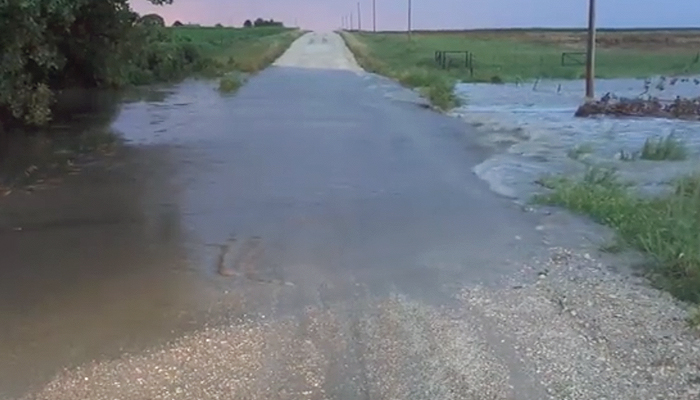
🎥 Northeast Ellis County sees flash flooding after 5 inches of rain


2300 block of Feedlot Road Courtesy video

By CRISTINA JANNEY 
Hays Post

Northeast Ellis County experienced flash flooding Monday morning after a storm dumped 5 inches of the rain on the area.

Bill Ring, Ellis County public works director, said he was called out about 4:30 a.m. by deputies who reported water running over roads in the county.

Ring and the sheriff’s office said as of 9 a.m. the water was quickly receding. No roads were reported closed, but some portions of roads could be blocked with cones.

Ring said drivers should continue to be cautious as streams could still cause problems as runoff funnels into waterways. He also said some roads could be damaged because of the flood waters. He urged local residents to call the county public works department at 785-628-9455 to report damage.

No major property damage was reported and no one was injured, Ring said.

The official rain report for the last 24 hours for Hays from the K-State Research and Extension station was a trace of rain.

Ring urged drivers to continue to always follow the motto, “Turn around, don’t drown.”

Summer experience a boon for FHSU teaching hopefuls

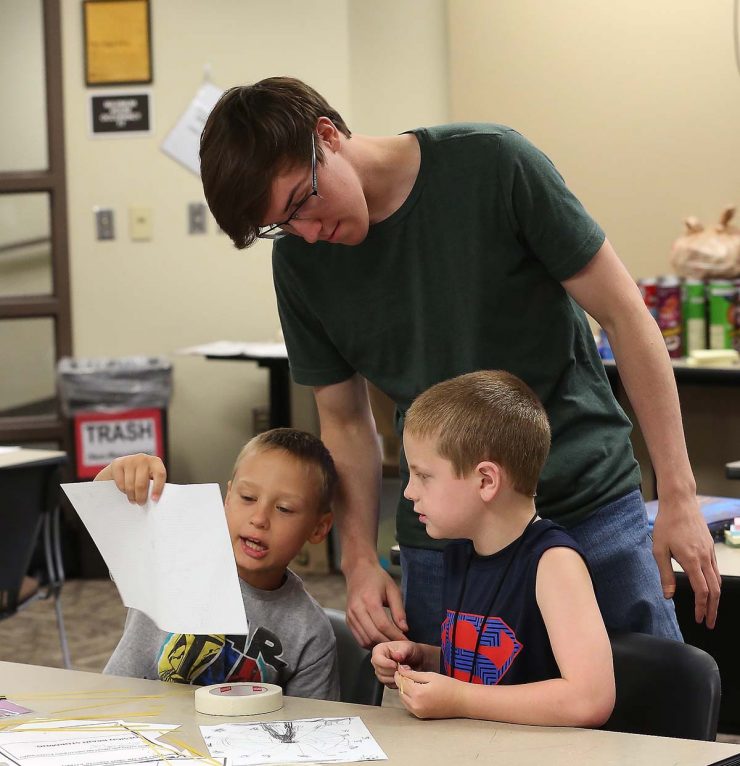
Josh Stark with SMEI youth camp attendees at FHSU

By DIANE GASPER-O’BRIEN
FHSU University Relations and Marketing

Josh Stark was learning about science on a day-to-day basis before he even started kindergarten.

Now a junior in college, Stark is passing on to other youngsters his passion for learning all he can about science while working toward a bachelor’s degree in chemistry education.

Stark is one of five Fort Hays State University students who were named Noyce Summer Scholars to help with FHSU’s Science and Mathematics Education Institute (SMEI) youth camps this summer.

The Noyce Summer Scholars, as well as the Noyce Teacher Leader program, is made possible because of a large grant from the National Science Foundation. In addition to being chosen for the summer scholars program, Stark also was one of eight Fort Hays State students awarded a $13,000 Noyce Teacher Leader scholarship, given to junior or senior students majoring in a science or mathematics field of study.

Stark is the middle sibling of five children of Dr. Bill Stark, FHSU professor of biological sciences. Stark came to FHSU in 1998, when Josh was only a month old, and Josh remembers a lot of teaching moments even in his early years.

“My dad has been a really good role model for me all my life,” the younger Stark said. “He would always take us on field trips whenever he could. He was always pointing out what certain things were.”

Stark – whose mom, Bev, has a degree in secondary education from FHSU – was firmly set on teaching at the high school level. That is, until he worked with the elementary school children this summer.

“I used to think there was no way I would teach middle or elementary school. I wanted to work at the high school level,” he said. “But now, I think I could teach middle school. I realized you learn a lot from these kids. You never know what’s going to work with them, so you’re always thinking ahead.”

Fort Hays State has been offering these camps for youngsters entering second through eighth grade for more than a decade with the goal of sparking an interest in the fields of science and math.

Several of the camps include sets of siblings, including the “Building with Math” camp where students learned about George Washington Ferris Jr. Ferris created the original Ferris Wheel for the 1893 Chicago World’s Columbian Exposition.

Hays residents Agoni Smolarkiewicz, 10, and his younger brother, 7-year-old Kiros, tried an SMEI camp for the first time this summer, attending the “Building with Math” section.

“They weren’t sure what to think the first day, being their first time,” said the boys’ father, Jared. “But by the time they got to the constellation day, they were all into it. This is a great opportunity for kids. The more hands-on you make math and science, the better they will learn.”

Ann Noble, financial administrator for SMEI, said her granddaughter looks forward to coming to the camp from Olathe each summer. This year, 8-year-old Laney Velleca brought along her younger brother, 7-year-old Cooper, to the “Building with Math” camp.

“What I like the best is when I pick them up from camp, they tell me what they learned that day,” Noble said. “It’s such a fun environment, they don’t even realize they are learning.”

On Day 1 of the “Building with Math” camp, FHSU’s Kate Westerhaus read the students a story on Ferris’ life. They then split up into small groups and built small Ferris wheels of their own.

“This is so awesome; I finally get to teach,” said Westerhaus, a junior biology major from Junction City.

Westerhaus is one of the Noyce Teacher Leader scholarship winners for the 2018-19 school year along with Stark. And like Stark, she has family in education. Her dad, Matt, is athletic director at Junction City High School, and her mom, Gretchen, is a second-grade teacher.

Westerhaus is majoring in biology and was going to go the medical route because “biology has always been my passion.” However, she changed her major to education early in her college career and hasn’t looked back.

“I like doing anything with kids, and I fell in love with education,” she said.

Westerhaus in particular liked the idea of reading to the children first to give them some history of the project they were about to tackle.

“We like to do a lot of incorporating children’s literature in math,” said Dr. Janet Stramel, associate professor of teacher education, who was in charge of the “Building with Math” camp. “It makes math fun.”

“When I taught in the classroom, I taught using projects that we use every day because it makes sense,” Stramel added. “If you can see it in the real world, it makes it more interesting, and you can understand it better.”

“I got to put to use so many basic skills here,” Westerhaus said. “I love teaching.”

It’s a win-win situation for all involved, Noble said.

“The young students coming to the camps can be in a fun learning environment having a good time – but learn something, too,” she said. “They soak up so much information.”

Other subjects during the “Building with Math” camp week included building suspension bridges, geometry in the night sky, and designing and building a playground.

Other camps this year ranged from building robots with Legos and programming those robots, to making DNA models to learning about crime scene investigation, and experimenting with engineering and nanotechnology.

The need for science and math teachers is at an all-time high in a lot of districts in Kansas. The Noyce Summer Scholars program is open to any freshman or sophomore in the Peter Werth College of Science, Technology and Mathematics “to give them the opportunity to see if they might want to be a teacher,” Noble said.

“We have had some of our students change their majors to teaching after the summer program,” she added.

Other Noyce summer scholars this year were Jaxon Crawford, a physical education major from Kit Carson, Colo.; Ethan Shippy, biology education, Hays; and Lauren Zerr, math education, Larned.

Noble meets with the Noyce scholars every week during the five-week SMEI summer program.

“It was so exciting to hear Ethan Shippy say every week, ‘I learned something from the kids,’ ” Noble said. “It was a lot of fun for me to watch those five students grow and interesting to hear what they learned, too.”

Hays Herb Study offers tips on organic gardening

Herb Haus

By CRISTINA JANNEY
Hays Post

For hundreds of years, the human race has used organic farming practicing, fertilizing with manures and manually pulling or hoeing weeds from gardens. Within the last 100 years, farmers and home gardeners have turned to chemicals to control weeds and pests to what a local herbalist argues is the detriment of wildlife, pollinators, plants and people.

Pam Herl, a local herbalist, recently presented a program to the Hays Public Library Herb Study group on organic gardening.

“They had very strong work ethics,” Herl said of historic home gardeners. “They worked in their gardens. Whereas today, we tend to reach for the bottle of Roundup or 2,4-D instead of bending over and pulling the weed. We spray and then we go to Curves or the health center and exercise. You get a lot of exercise [in your garden].”

You can burn about 300 calories for one hour of gardening, depending on the type of work and your body type. It is the equivalent of one hour of intensive work in a gym.

Hoeing can help cut down on grasshoppers, Herl said. The insects lay their eggs in the top layer of the soil. If you turn over the soil with a hoe, it exposes the eggs to sunlight and heat and kills them.

Dangers of chemicals

“It has polluted our food source, it’s polluted our air, it’s polluted our water source, and yet we are still reaching for that bottle of chemicals for spraying insects, for fertilizing, for spraying weeds,” Herl said. “We are constantly reaching for that bottle.”

Use of pesticides has increased by 50 percent over the last 30 years, Herl said. 2.5 million tons of commercial pesticides are used annually in the U.S., according to a study published by the American Institute of Biological Sciences.

“That is a lot of money we are pouring into an industry that is killing us spray by spray,” Herl said.

The chemicals can leach into ground water or run off into watersheds such as streams, rivers and lakes, all sources of drinking water and places were people swim and enjoy water sports.

“Every time you see someone spraying that bottle of 2,4-D,” Herl said, “I can guarantee it is going to go down in the water and the ground and the water source and it is going to end somewhere it is not supposed to be.”

Pesticides and herbicides can kill beneficial insects along with ones that would destroy crops. Less than 1 percent of the world’s insects are considered pests to farmers. The rest play a vital role in our food chain, Herl said.

Herl expressed concerns about how the use of pesticides is affecting pollinators. Despite her use of organic gardening practices in her herb garden in WaKeeney, she has seen a marked reduction in the number of bees and butterflies.

Herl said chemical fertilizers can disrupt beneficial bacteria and fungi in the soil. They also may not replenish trace elements plants need. Chemicals can also negatively affect the pH in the soil.

Herl called out some specific chemicals of concern to her.

Glyphosate, a chemical found in many herbicides, is affecting butterflies, Herl said.

Neonic, a chemical used to treat corn seeds, has been linked to bee kills and been found in honey. 80 percent of the 92 million acres of corn in the U.S. were treated with the chemical as of 2011.

Herl said there are a few exceptions of invasive plant species that are very difficult to kill unless you use chemicals or a weed torch. These include bindweed and puncture weed. Weed torches are not recommended when conditions are very dry as they could ignite wildfires.

Weeds that are not weeds

The group talked about the classification of plants as weeds. Some plants that are categorized as weeds, such as dandelions have benefits, produce nectar for pollinators and are used by some for medicinal purposes.

“It depends on the person and the location of your garden,” Herl said. “If you have a pristine formal garden, any of these are going to be a weed. They don’t want them in their garden. Now if you have a cottage garden like mine, they would be welcome. I had a lady who was there for the garden tour and she said, ‘Oh, you have a dandelion in your garden.’ I said, ‘I have a lot of dandelions in my garden because this is a herb garden. It is not a flower garden, so there is a lot of dandelions in my garden. There sure is.”

Herl also has wild lettuce in her garden. Other gardeners chimed in and said they had yarrow, lamb’s quarters, hog weed and dock in their gardens, all of which are categorized by some as weeds.

“These are all that people spray,” Herl said. “They spray these. These are all used medicinally, and they spray them. We are a chemically enhanced generation. We are all about chemicals. We want the fast fix whether it is an antibiotic, an insecticide or fertilizer. It is all about the fast fix. We are worried about today and not tomorrow and we are killing ourselves, slowly but surely. We won’t be around to see it, but our kids or grandkids probably will.”

Even if you want to take your garden or your farm organic, it is difficult to get away from all the chemical use around you, Herl said. Land has to lay fallow for seven years to certify crops on it organically grown, Herl said, and then the land is periodically checked to make sure there are no chemicals in the water or land.

“You would have to grow that whatever crop you want certified organically on an island in the middle of the ocean because you can’t control what goes in your groundwater,” she said. “You can’t control what a neighbor three miles from you has a crop duster spray and the wind blows your direction. You can’t control what the county worker is doing when he is driving a truck down the road spraying the ditch with Roundup. How can you grow anything certified organically grown?”

Natural pest repellents

Herl gave some examples of plants and natural substances that can be used to repel animals and unwanted insects:

Recipe for animal repellant

2 T of powdered red pepper

1 gallon of water

6 drops of soap

• Rabbits can be repelled with powdered aloe vera.

• Aphids, white flies and beetles can be repelled with garlic spray. Use a bulb of garlic in four teaspoons of mineral soap and let it set overnight. Strain the garlic, add two pints of water and one teaspoon of Dawn. Use as a spray.

• Botanical sprays can be purchased over the counter. Rotenone, which is derived from the derris root, kills aphids and grasshoppers. Sabadilla powder, liquid or seeds are used against grasshoppers, corn borers, codling moths, squash bugs, aphids, web worm and cabbage loopers.

• Toads and frogs can be beneficial to garden as insect-eating machines. One toad can eat up to 10,000 insects in three months. They eat crickets, grubs, rose beetles, caterpillars, squash bugs, potato beetles, flies and slugs. They just need shelter, water and light. A solar light in the ground near water will attract insects for the toads. However, toads and frogs are very sensitive to chemicals in the environment.

• Some flowers also have insecticidal qualities, including aster, mums, cosmos, coreopsis, nasturtiums, and French and Mexican marigolds. You can dry the flowers and turn them into powders. You can also use the green flowers, soak them in alcohol, strain, add Dawn, add a little oil and use as a spray. Planting marigolds in your garden can help repel nematodes, which attack vegetables’ root systems.

• Cornmeal spread at the base of roses can prevent black spot.

Natural fertilizer

Herl also discussed the use of natural fertilizer, including animal manure. Cow manure contains high amounts of nitrogen, phosphates and potassium, as well as calcium, magnesium and sulphur. Herl also uses fish fertilizer.

“You have to remember, this is free,” she said. “You can go out in the country and you can get a lot of cow manure yourself. Just let it dry. You get free exercise, and you get to go out into the country for a good drive.”

Earthworm castings are excellent for gardens as well.

Attract worms to your garden by taking newspaper, laying it flat on the ground, wetting it and spreading mulch over the top. It will prevent weeds from growing, it breaks down naturally and earthworms will love it, Herl said.

ARC rolls out plans for new accessible recreation complex

By CRISTINA JANNEY
Hays Post

The ARC of the Central Plains announced its goal of creating an accessible recreation complex in Hays during a Hays Area Chamber of Commerce event Friday.

The complex would include a playground, splash pad and baseball diamond.

The proposed $1.6 million project would be paid for through a fundraising campaign that will ramp up this fall, and the organizers hope to break ground on the first phase of the project by mid-2019. The first phase would be the playground, then the ball diamond and then the splash pad. Start and completion of the project is contingent on fundraising.

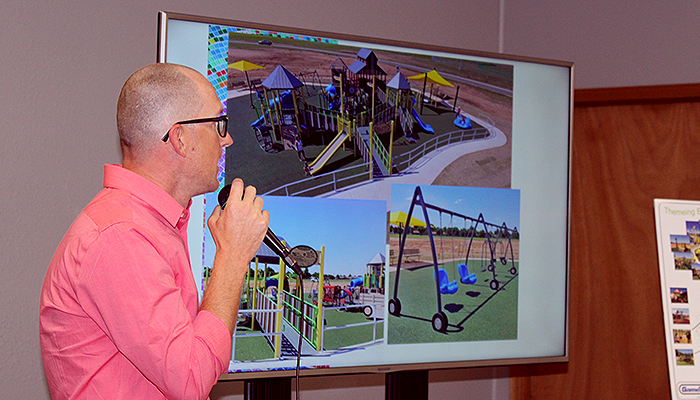
Brent Kaiser, ARC activities director, goes over features of a proposed accessible recreation complex in Hays during a Hays Area Chamber of Commerce Chamber Chat Friday morning.

The ARC is working with the city parks department on the project and will likely present to the city commission in the coming weeks. They are suggesting two locations for the park—one at Aubel Bickle Park and the other at Seven Hills-Optimist Park, which is in northwest Hays. Seven Hills is the ARC’s preferred location. It already has a shelter house and bathrooms. However, they do not know if parking would need to be added. The current park only has on-street parking.

No tax dollars will go toward this project. The ARC has set up a separate fund for its fundraising efforts for the project under its non-profit status. The group developing the park hopes to eventually gift the park to the city of Hays when it is completed.

The cost quoted for the park includes a turnkey facility. This includes landscaping, cost of equipment and labor.

Sarah Meitner of the Northwest Kansas Down Syndrome Society and mother of 4-year-old Abe who has Down syndrome, has been a champion of the project.

When Abe was a toddler, his physical abilities mirrored those of his peers. However, now Abe, who has hypotonia, has difficulty moving his muscles. His brain sends signals to his muscles about how and when to move, but sometimes those signals are delayed or he retains stiffness. He does not have the core strength to climb and swing like his peers.

Abe Meitner, 4, and his sister, Julia, 13, of Hays in a face-to-face Expression swing at an accessible park in Wichita. (Courtesy photo)

“What we would like to create is something that he could explore independently and feel that sense of empowerment while doing so and play collaboratively with his siblings or with other kids who are there,” Meitner said. “They won’t necessarily notice that he is a little bit slower and he is jumping a little bit lower.”

Abe is not alone. There are about 1,400 people with disabilities in the community who could also use this park.

“The impact of play is not just for fun,” Meitner said. “The impact for [Abe] when he plays, it is gross motor skill development, it’s cognition development, it’s fine motor [development] and therapy uses. There are really a host of benefits that can make this even more important.”

The recreation complex would be the only one of its kind in western Kansas and on the Interstate 70 corridor between Kansas City and Denver. Brent Kaiser, ARC director of activities, said he envisioned the park being a destination spot for people from all over the area who come to Hays to shop, do business and for recreation.

All the parks in Hays have wood or rubber chips, which are considered ADA compliant, but Meitner noted they can be difficult for people who use wheelchairs or walkers or who have limited mobility to maneuver in. The playground will have a rubber pad. The ball diamond will have turf with bases level with the ground to prevent tripping hazards for people with limited mobility.

Last year, the ARC started a co-ed softball team, but Kaiser said some ARC participants can’t play because of the uneven fields. The choice was made to use turf so all players in the community could use the space for games and practices.

“I would like to reach as many people as possible in this community, and an inclusive baseball field would be a big part of that,” Kaiser said.

The recreation complex would not only have accessible surfaces, it would have ramps, shaded areas, sensory elements and a shaded quieter area for children who have autism and may be easily over stimulated by sound and bright lights.

Example of an accessible splash pad in another community.

“We want to reiterate this complex is not just for children and adults with disabilities,” Meitner said. “This is for children and adults with all abilities, so they can play together. We don’t want anyone to feel excluded. We don’t want whoever in their house to say, ‘We don’t need a park for those people with disabilities.’ That is not it. This is bringing something new and exciting to our community for the whole community.”

The group is looking at using an ag and oil theme in the park to promote Hays. Kaiser talked about some of the features the group is seeking to install in the park. Some possibilities include slides with rollers and overhead hand holds to allow someone to slide without friction, a disabled accessible merry-go-round, monkey bars that are height accessible for people in wheelchairs and various types of swings for people with physical limitations.

Kaiser showed three types of swings: a harness swing, a disc swing in which someone can lie down, and a face-to-face swing. The group is shying away from wheelchair swings, because people can be injured if they are hit with the swing, and they can be pinching hazards.

Other features will generate light or music.

Examples of accessible sensory equipment.

Various features can be built side by side with features for able-bodied peers, such as monkey bars or swings. Side-by-side play has been found beneficial to children with disabilities, Kaiser said.

The splash pad will use recirculated water to preserve water resources.

Any amount will be taken as a donation for the recreation complex. However, sponsorship opportunities are available. They start at $500 and go up from there. The ARC will also be seeking letters of support for the rec complex to submit as they apply for grants and go before the Hays City Commission for approval.

If you have questions on the recreation complex or wish to donate, email [email protected]. You can also follow the Hays Accessible Recreation Complex on Facebook.


Copyright Eagle Radio | FCC Public Files | EEO Public File