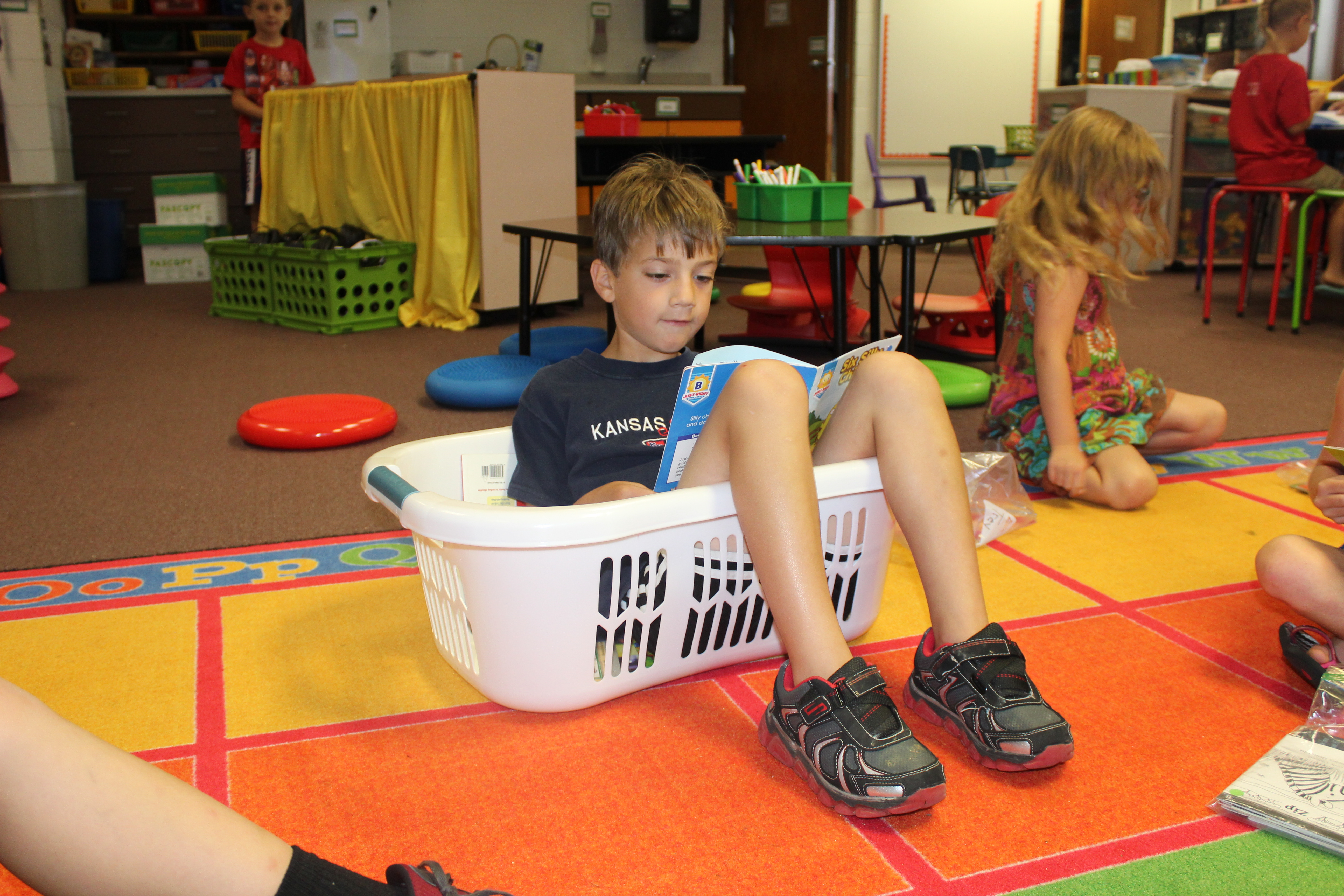
Mandy Meagher, Wilson kindergarten teacher, works on a project with one of her Summer Reading Camp students.
By CRISTINA JANNEY Hays Post
Thanks to a grant, 120 students in the Hays school district were able to shore up their reading skills during the summer.
A grant from the Dane G. Hansen Foundation allowed USD 489 teachers to choose 10 students from each school in grades K-2 for a free Summer Reading Camp. The students attended classes two hours per day three days a week through the month of June.
Free transportation and snacks were also offered to the children.
The children practiced independent reading, read in groups, had an author visit, went on trips to the Hays Public Library, worked on phonics and practiced writing skills.
One of the goals of the program was to help all the children in program get their own library cards, so they could go back to the library and check out their own books.
A student takes advantage of individual reading time.
Teacher Aubrey Brooks of Roosevelt Elementary School said students tend to lose some of their skills during the summer.
“A lot of times during the summer the kids slide a little,” she said. “They slide back a little. We really think this is going to keep what they have done during the school year — to keep up those skills and move forward a little bit.”
Brooks said she has seen growth in children — some increasing their skills by a reading level. Practice is the best way to learn reading, and Brooks said the program has created an environment for the children to do that.
“The problem with the summer is children aren’t always reading and practicing their skills, and this is a way to make sure that is happening,” Brooks said. “This makes sure they are still using those skills and practicing their reading and their writing.”
Mandy Meagher, Wilson kindergarten teacher, said she is also trying to promote reading and writing practice among her students.
Students work on a writing assignment during Summer Reading Camp.
“It takes lots and lots of practice. Reading and writing are both skills you have to learn just like riding a bike or playing the piano,” she said. “The more you use those skills and practice those skills, the better you become. Just giving these kids that extra opportunity to practice those skills with a little bit of guidance will help them continue (to grow) and help them for first grade.”
Meagher said she thought the smaller groups and individual approach has helped the children in the program grow their skills. She said she wished the district could offer it for every child.
This is the first year for the program, and Brooks said she and the other teachers hope they receive the grant next year.
“This has been really wonderful for the kids,” she said. “The kids love it. They really want to come. We make it engaging for them. Our philosophy is that we want to make it exciting — reading and writing we want to make it exciting for the kids, so it is something they want to do.”
Brooks suggested parents continue to encourage their children to read and write during the summer.
“A blank piece of paper and a pen is enough,” she said. “It doesn’t need to be guided writing—just whatever they feel to get used to it and get comfortable with it. And to find a love of reading. That is something through this program and through the school year we try to get children to do so that they feel like they can go on an adventure and make reading exciting and see it in a positive way.”
Students take a survey about what they liked about the Summer Reading Camp.
Meagher said she agreed.
“The best thing you can do from the time they are a baby to the time they are older is to read to them because hearing those words and the fluency and the vocabulary helps them gain. Hearing those books is very important for their development and for them to be ready for school.
“I told my kindergarten class three things I wanted them to do everyday before they left. I wanted them to read a little bit. I wanted them to write a little bit, and I wanted them to have fun and be safe. If they spend just a little time everyday, it will continue that growth because both of those skills just need continual practice.”
By DIANE GASPER-O’BRIEN FHSU University Relations and Marketing
University campuses are hotbeds for a variety of camps and other youth activities during the summer months. An event the third week in June at Fort Hays State University is unique in Kansas.
Nearly 80 students heading into their junior or senior years of high school visited Fort Hays State for the third annual Hispanic College Institute. Students of either Hispanic or Latino origin from three different states learned a little about the ins and outs of college life.
FHSU is the only school in Kansas that conducts such a program, which is a free, four-day preparation for high school Hispanic students to enter and succeed in higher education.
Breakout sessions during one day focused on foundations for success and social change models and the process of applying for college and financial aid. One evening was highlighted by a speech by Dr. Rigo Ramirez, a native of Mexico who grew up in Great Bend.
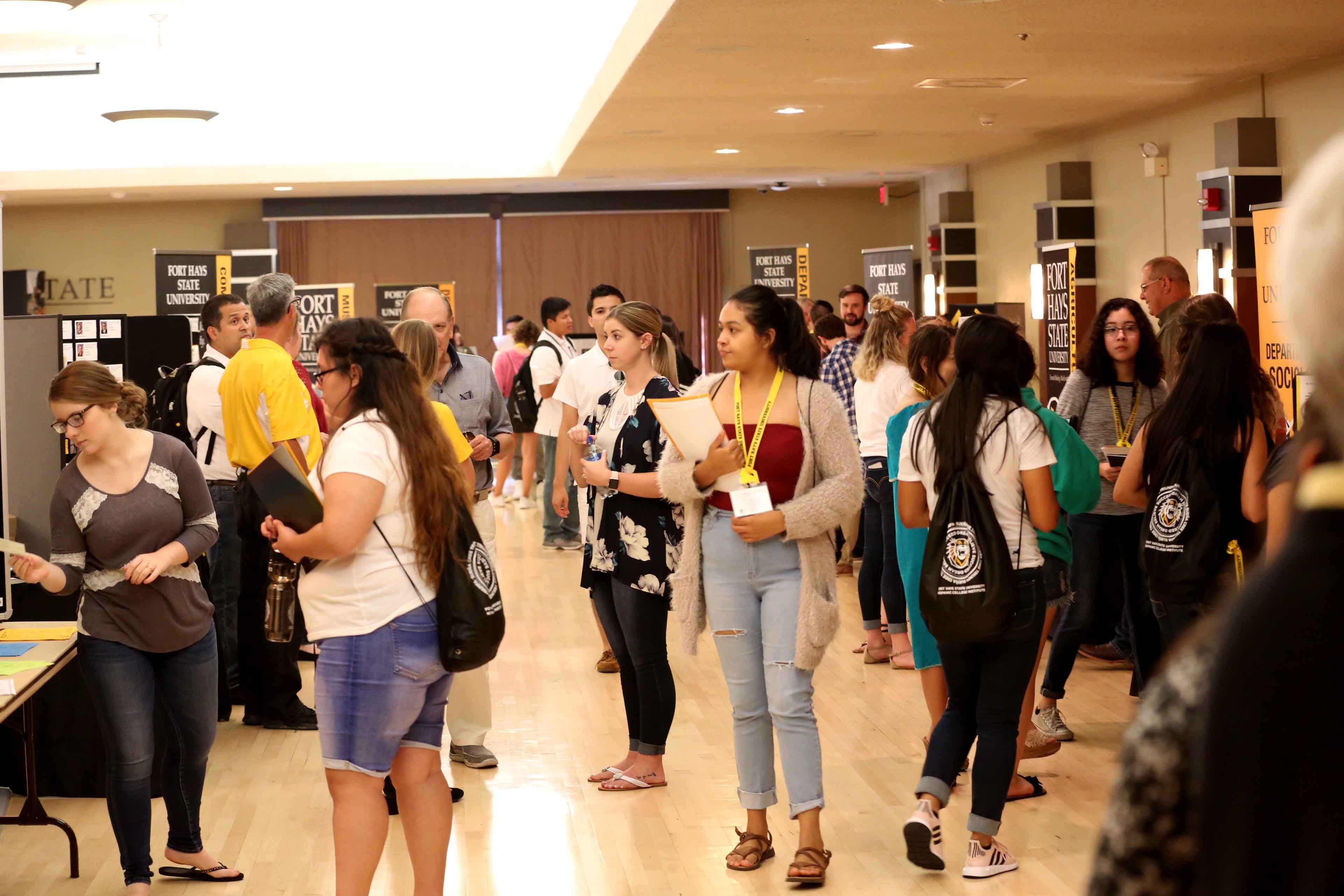
Sandwiched in between were breakout sessions, preparation for the always popular lip sync battle, and a resource fair where students got the chance to visit with faculty from various departments across campus. The week also included inspirational talks from Hispanic Stars, successful Hispanic men and women who shared their stories.
Ramirez, a 2003 graduate of Fort Hays State, was able to relate to the students firsthand, telling his story of growing up in Great Bend. Neither his father or mother attended high school. His father had an eighth-grade education and his mother seventh-grade, and Ramirez said he wanted more.
“There were two ways I could approach this,” he said. “I could throw my hands up and not go to college or learn from the experience and try to turn it around and do something positive.”
He chose the latter. Ramirez told the students how he turned a low grade point average into a 3.94 (on a 4.0 scale) at FHSU, where he served as student body vice president. At graduation, he won the Torch Award, given to a student who is nominated by faculty on the basis of classroom excellence, participation in professional organizations and involvement in student or civic activities. He now is completing his final two years of his training in Clinical Cardiac Electrophysiology at the St. Luke’s Mid America Heart Institute in Kansas City, Mo.
Another guest speaker was Sonia Esquivel, also a native of Mexico, who moved to Garden City with her family when she was young. Esqivel received both her bachelor’s and master’s degrees from Fort Hays State, studying and working as a single mom. She went on to earn her Ph.D. and now works as an assistant professor and counselor at the United States Air Force Academy in Colorado Springs.
While hearing how Hispanic FHSU alumni have succeeded was impressive for the students, the opportunity to interact with current Fort Hays State students was impactful, too, said Taylor Kriley, one of the HCI directors.
“What makes it successful is creating the experience for these students coming to our campus,” said Kriley, director of inclusion and diversity excellence at FHSU. “And our own Fort Hays State students help us facilitate that experience.”
Seventeen FHSU Hispanic and Latino students served as “leads,” who act as counselors at the institute.
“My overall favorite part of the entire program is our leads and all our staff who help our students realize their potential to go to college and that they can be successful in college,” Kriley added.
One of those leads this year was Denice Lastra Blanco from Fort Collins, Colo., who attended HCI as a high school student.
“I had never heard of Hays, Kansas, before I got a postcard in the mail,” she said. “Then I heard about HCI, and I knew I was interested in the conference.”
Lastra Blanco attended the inaugural HCI at Fort Hays State in 2016, and it made a lasting impression.
“I was timid when I got here,” Lastra Blanco said. “But the first day, I was inspired by my lead. By the end of the night, I felt I was in the right place.”
When it came time to make a college choice during her senior year, Lastra Blanco decided on Fort Hays State. An organizational leadership major, Lastra Blanco now is well entrenched in college life and is looking forward to her new job as resident assistant at McMindes Hall for the 2018-19 school year. She got a hint of RA life at HCI.
“I loved being a lead,” she said. “It’s really awesome to see all these young students here,” she said. “It’s like seeing myself all over again.”
One of the many workshops the HCI participants attended during the day focused on financial aid and how to go about applying for college. Erica Meneses Corona, an admissions recruiter at FHSU, gave a step-by-step demonstration on how to fill out an application for college.
“That was really helpful,” said Lucy Lozano-Alba, a senior-to-be at Dodge City High School who hopes to be filling out one of those applications in two years.
Because of family commitments, Lozano-Alba plans to stay close to home and attend Dodge City Community College her first two years of college. But she already has her heart set on where to transfer in the fall of 2021. She became familiar with the FHSU campus three years ago while attending the annual high school art show .
“We toured the campus, and I really liked it,” said Lozano-Alba, who then revealed what has really drawn her to FHSU to earn her degree. “I’ve wanted to be a teacher since I was a little girl, and I know how respected the teacher education program is here.”
Kriley said the HCI team already is making plans for next year and is entertaining the idea of expanding the institute to include a separate program for returning students.
“That would give students the opportunity to come back and stay connected to their dream of going to college,” Kriley said, “to keep those close relationships they form and that support network they can use to stay focused on their dream. We would love to have over 100 students together in both programs next year.”
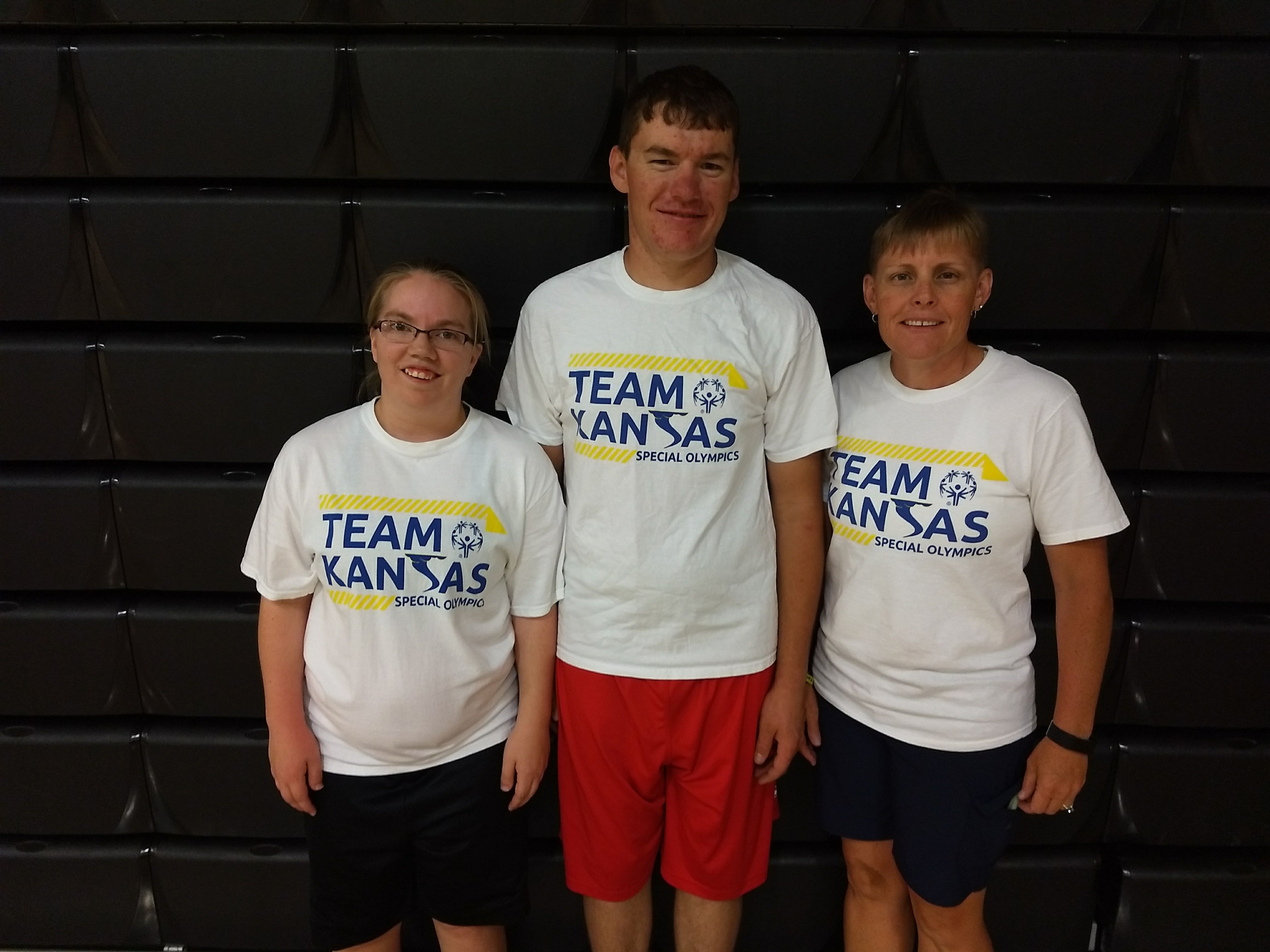
From left: Special Olympics track athletes Kacey Dannels and Joseph Reed along with coach Noalee McDonald-Augustine, all of Hays, will travel to Seattle Sunday to compete in the USA Games. Courtesy photo
By CRISTINA JANNEY Hays Post
The ARC of the Central Plains has the rare honor to send two athletes and a coach Sunday to Seattle for the Special Olympics USA Games.
Kacey Dannels and Joseph Reed, both of Hays, will compete in track and field events and Noalee McDonald-Augustine will be the track and field coach for the Kansas team.
Forty-two athletes were selected from Kansas to participate in the Seattle games July 1 to 6. The athletes must complete a lengthy application to be considered to compete. Both Hays athletes also raised money toward their trip costs.
The national summer games are only conducted every four years. The athletes will stay in an “Olympic Village,” watch other athletes compete, watch firework and do limited sightseeing.
Brent Kaiser, ARC programs and activities director, said it was unusual for a community to have two athletes as well as a coach selected for a games.
“These two have been a huge part of our program and all of the different activities that we do,” Kaiser said. “They show up to practice all of the time and, for the most part, on time. They do a good job of being leaders on our team, so it is really cool to be able to see them be able to move on and compete at the next level.”
Dannels, 25, has participated in athletics through the ARC for five years. She will compete next week in the javelin, 100 meters, shot put and 4X100 meter relay.
Reed, 20, has participated in ARC athletics for two years. He is a distance runner and will compete in the 10,000 meters, 5,000 meters, 3,000 meters and 4X100 relay.
Dannels said she enjoyed participating in Special Olympics because she has the opportunity to spend time with her friends and see people with disabilities do what other people get to do.
Reed said, “I like to hang out with friends and help other people too.”
McDonald-Augustine said both Reed and Dannels have been dedicated to track and other sports through ARC.
Dannels also participates in bowling, volleyball, basketball and softball. Reed plays volleyball, basketball, softball and soccer.
Both athletes also participate in the ARC’s 5K club, which is coached by McDonald-Augustine. Dannels was one of the athletes who requested the club be formed.
A group of about 12 athletes plus volunteers run or walk three times a week, training year round. They participated in the Susan G. Komen, Dash for Disabilities, Turkey Trot, Wild West, Eisenhower Prairie Fire and Bill Snyder runs, among others.
“It is not like any other sport where they have a season,” McDonald-Augustine said. “They practice once a week, and then they’re done. They are really committed.”
McDonald-Augustine said she tries to start participants at whatever level they are at, even it is walking, and encourages them to build on their times and distances. Reed has been working in the 5K Club toward participating in a half marathon.
“You can certainly see a difference,” she said. “When we have new members who join the 5K Club or people who are thinking about it, they’ll say, ‘I can’t run that far’ or ‘I can’t walk that far,’ ‘How long is a 5K?’ I will say 3.1 miles. ‘Oh there is no way I can do that.’ We will say, you don’t have to do that today. All you have to do is the workout we give you today. We will build from there. When they compete and actually finish their first 5K, they say, ‘Yeah! I didn’t think I could do it. I finished!'”
Reed and Dannels also each have practice at least one time per week for the sports they are involved in when they are in season.
The sports and 5K Club help promote physical fitness among the athletes, but McDonald-Augustine said Special Olympics is important for the athletes in other ways as well.
“It gives them the opportunity to one—compete against other individuals of similar ability levels,” she said. “It allows them to have social interaction with not just individuals within their own community, but athletes from around the state. They learn competition. They learn hard work, the value of practice. And it is just a good time. They love meeting up with friends from various towns and being able to catch up with them and see what’s happening.”
Both Reed and Dannels also have jobs. Dannels works at McDonald’s and is cross-trained at a variety of work stations. Reed has a small lawn mower business.
McDonald-Augustine has been a Special Olympics coach for 27 years. She coaches every sport the ARC offers and is an ARC board member. This will be her first time coaching at nationals.
McDonald-Augustine, educational consultant for the Smoky Hill Education Service Center, first became involved in coaching Special Olympics when she was attending college at Fort Hays State University. A couple of students in her residence hall who were already volunteers asked her if she would scrimmage with the ARC’s basketball team.
She strongly encouraged others to volunteer to coach Special Olympics. She said you don’t have to play or know how to coach a sport to be a volunteer.
“We’ll train you,” she said. “It is really about being there and being a friend and getting to know the athletes. It is well worth the experience and your time for sure.”
For more information on volunteering for ARC of the Central Plains, click here.
Ron Mellick, seen here during a March 2015 Hays city commission meeting, has been appointed to fill an unexpired term on the city commission.
By BECKY KISER Hays Post
A former Hays city commissioner has been called back into public service.
Ron Mellick was unanimously appointed by the city commission Thursday night to fill the seat recently vacated by Chris Dinkel, who will be moving to New York City.
Mellick last served as a Hays city commissioner in April, 2015, after serving two terms.
That experience is why Vice-Mayor Henry Schwaller made the nomination to appoint Mellick for the unexpired term.
“In the next 18 months, we will complete and begin $100 million in infrastructure projects,” Schwaller pointed out and then noted “we don’t have to borrow the money. We have the money.
“When I first served with Ron Mellick in 2009, I didn’t know him very well. … He’s an amazing commissioner. He asks the right questions. You know where he’s going to stand on an issue, although he’s very flexible. He listens to others. He certainly has a strong opinion from time to to time.
“Given the enormity of these decisions we’re going to be making – the four of us – we need a fifth who’s been here,” Schwaller concluded. “It’s good to have someone join us who’s been here for awhile, not that the other candidates aren’t great. But given the scope and the learning curve, that’s why I made that motion.”
The current commissioners thanked those who contacted them about filling the vacancy and encouraged them to run during the next city election.
“We need good people to run. I believe we need new blood,” said Commissioner Shaun Musil, who also served with Mellick. “But I also think with what we’re going into with the budget season and with water, I think the person we’re picking is the right one.”
According to Hays City Clerk Brenda Kitchen, Dinkel’s unexpired term ends in 2020.
An appointment is to be made June 28 to the city commission seat vacated by Chris Dinkel.
By BECKY KISER Hays Post
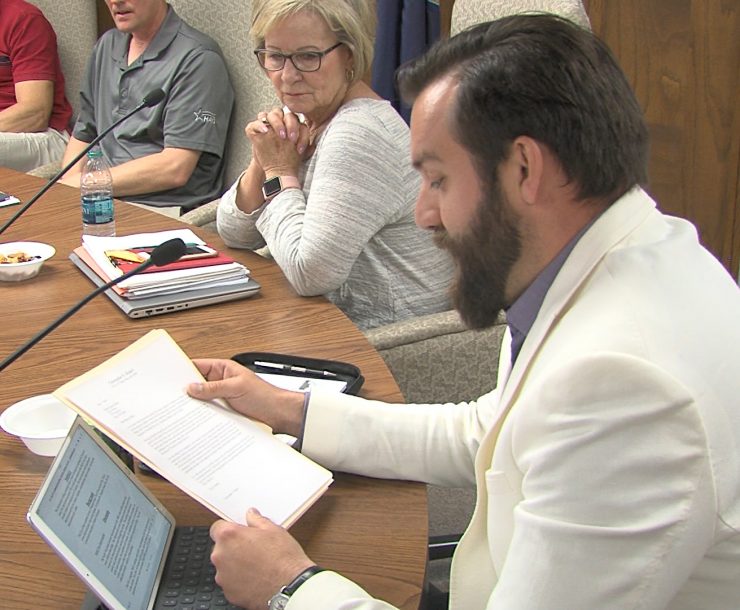
The appointment of a new Hays city commissioner is scheduled to be announced Thu., June 28, during tonight’s regular commission meeting.
A seat opened earlier this month when Chris Dinkel announced his resignation. He and his family will be moving to New York City where Dinkel will attend Columbia Law School this fall.
Dinkel said he was announcing his resignation early so the new commissioner could be involved in the 2019 budget review. According to Hays City Clerk Brenda Kitchen, Dinkel’s term ends in 2020.
Persons interested in filling the vacancy were urged to contact a Hays city commissioner.
Other agenda items include a proposal to purchase the Elevations aquatic feature for the Hays Aquatic Park (HAP) for $185,000 from the Pool Reserve Funds.
During last week’s work session, commissioners discussed whether a more extensive plan should be in place to revitalize HAP and increase attendance.
King’s Gate Addition (Click to enlarge)
Commissioners will also consider authorizing the city manager to execute a $75,000 contract with Covenant Builders, Hays, for construction of King’s Gate Park improvements. All costs will be assessed to the benefit district. The 10-year assessment would begin upon project completion.
King’s Gate Addition is located north of 41st Street and just east of the Highway 40 bypass. It was platted and began development in 2010.
The small neighborhood park at the north end of the development will include a basketball court, shelter house, play structure, swing set, a BBQ grill, and benches. Sidewalk will be placed in various areas throughout the park.
King’s Gate Park will be at the north end of the addition. (Click to enlarge)
The project was bid with an alternate for wood or rubber mulch. Commissioners last week said they prefer the rubber mulch, which was a higher bid of $94,000.
Parks Director Jeff Boyle told the commission his department is “trying to convert city parks play areas over to rubber if we can afford it.”
Although the initial cost for rubber mulch is more, wood chips “turn into dirt,” he explained. “They decompose and then you have to go in and remove all the dirt and wood chips after about six to eight years and start over. If it gets dry enough, the wood much turns into splinters. We’ve had complaints about that.”
The parks department began changing to the rubber mulch about five years ago. “It doesn’t deteriorate. It doesn’t go anywhere unless the kids throw it and then you just rake it back in,” said Boyle. “It’s a little more costly upfront but it never goes bad.”
According to Boyle, Aubel-Bickle Park, 30th and Sherman, and the Hays Rotary Club Park in east Frontier Park have already been converted from wood chip to rubber mulch playgrounds. Lincoln Elementary School has also changed its playground cover to rubber mulch.
The commission will also:
Vote on a ordinance amending the Hilton Garden Inn and Conference Center CID Start Date and Development Agreement to reflect a new CID start date of July 1, 2020. The developer realized the 22 year clock on the approved CID would begin prior to his
project completion.
Authorize the city manager to renew the 2018/2019 commercial insurance coverages with MPR
Hear an update on the reconstruction of the wastewater treatment plant
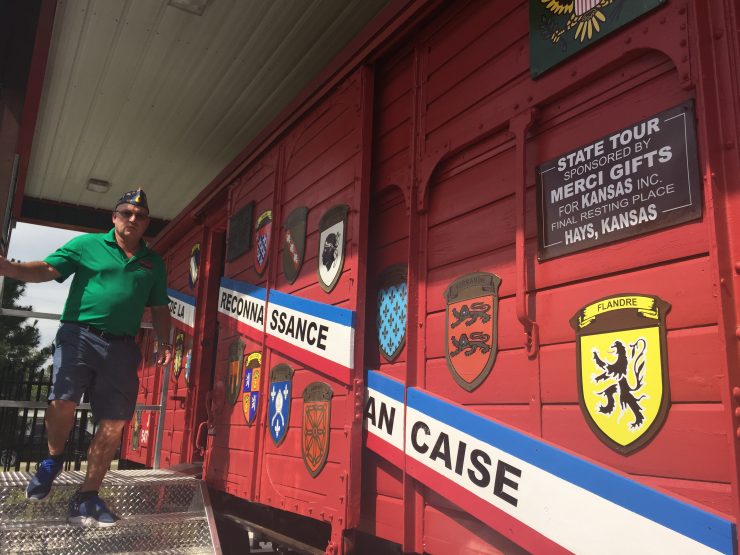
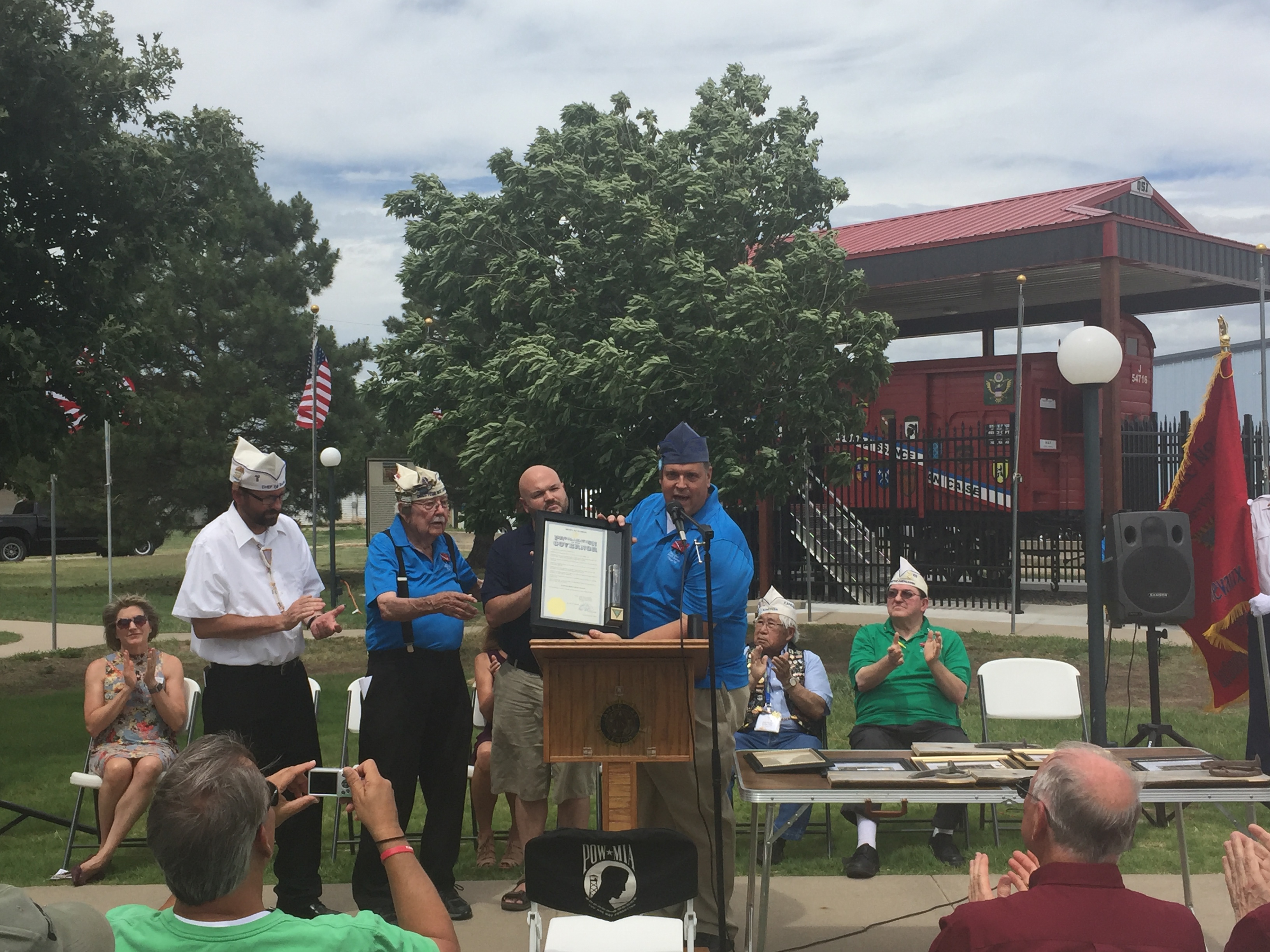
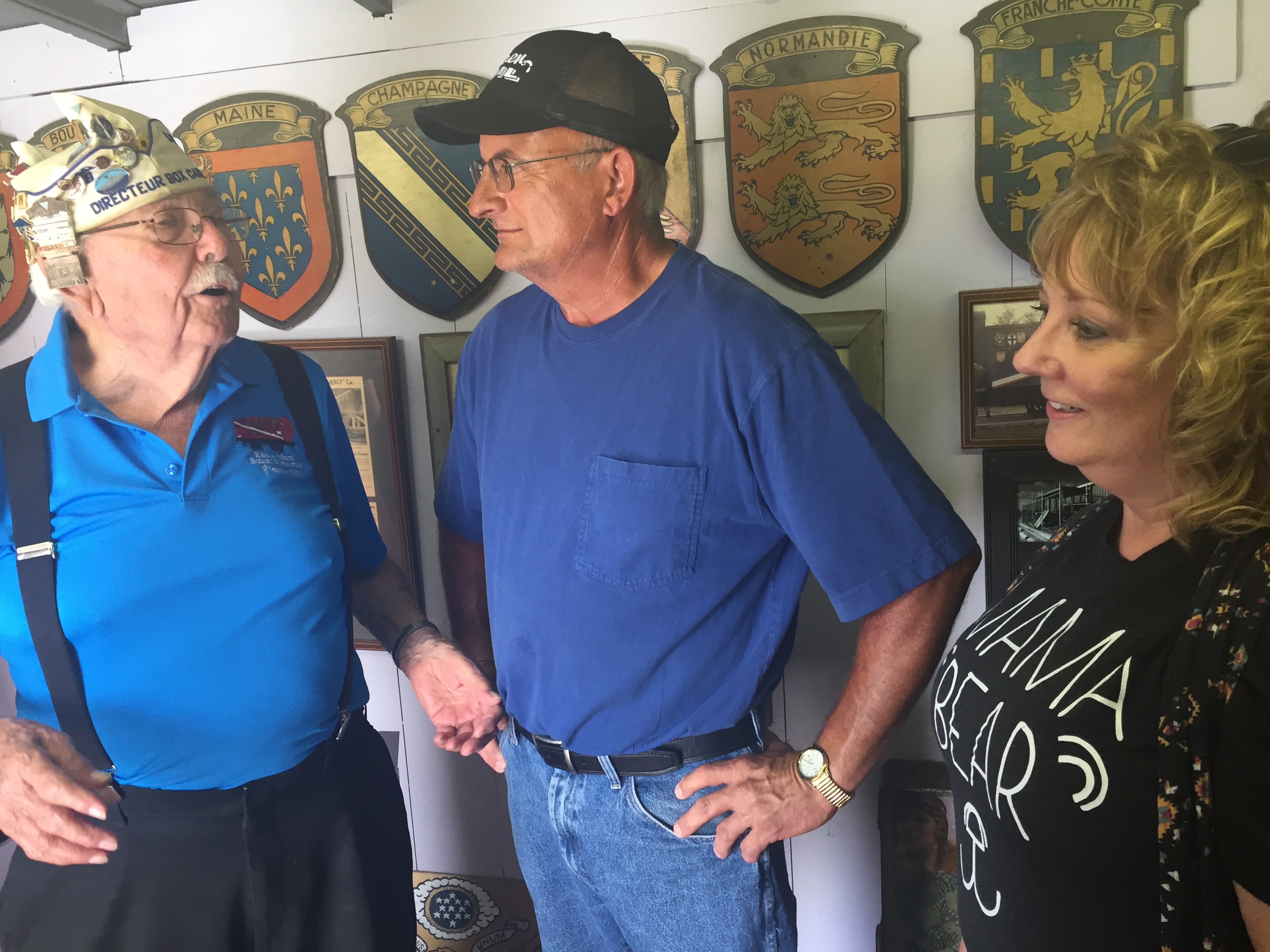
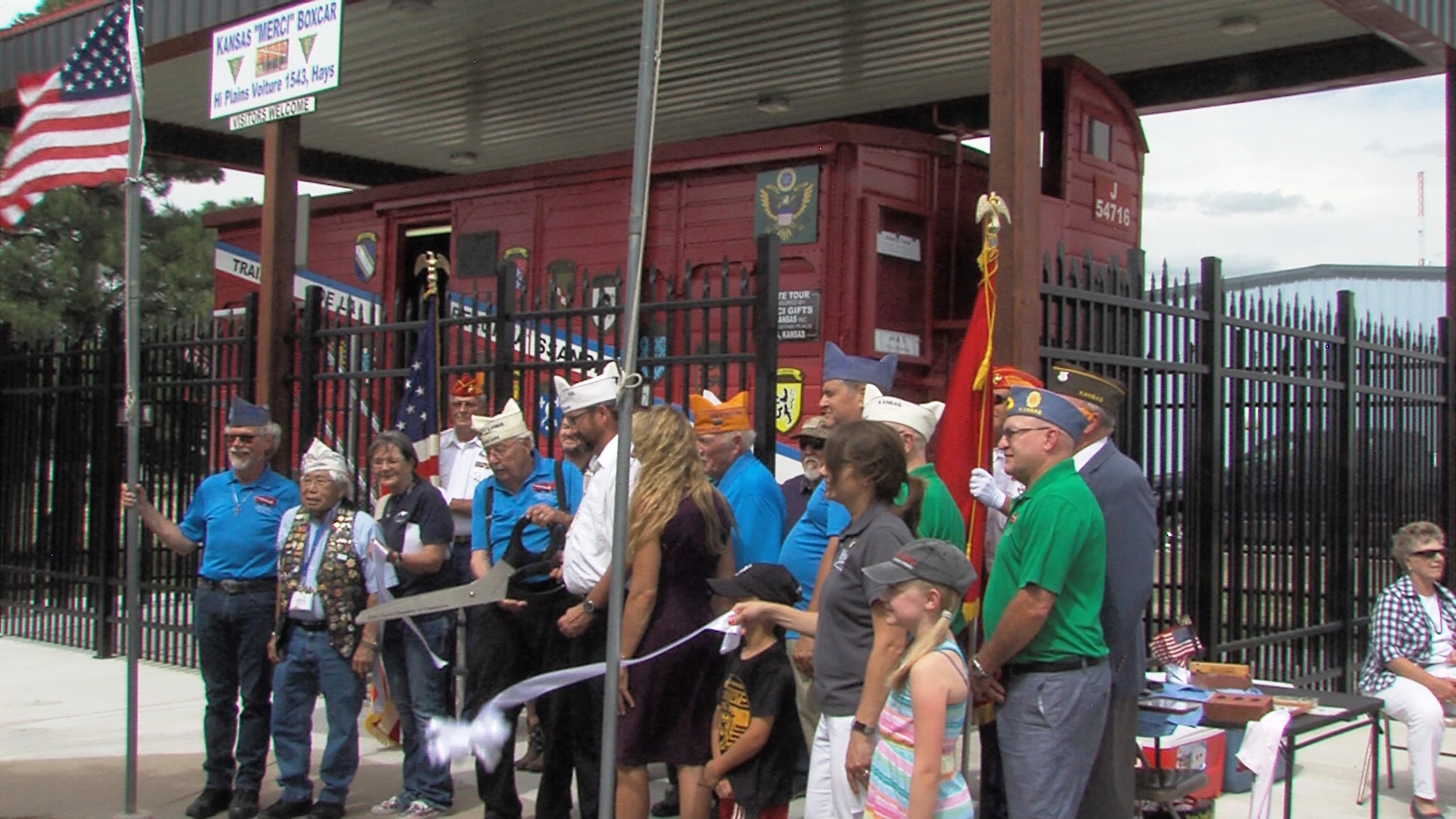
The Kansas Merci Boxcar was rededicated June 16 in its new permanent Hays home.
By BECKY KISER Hays Post
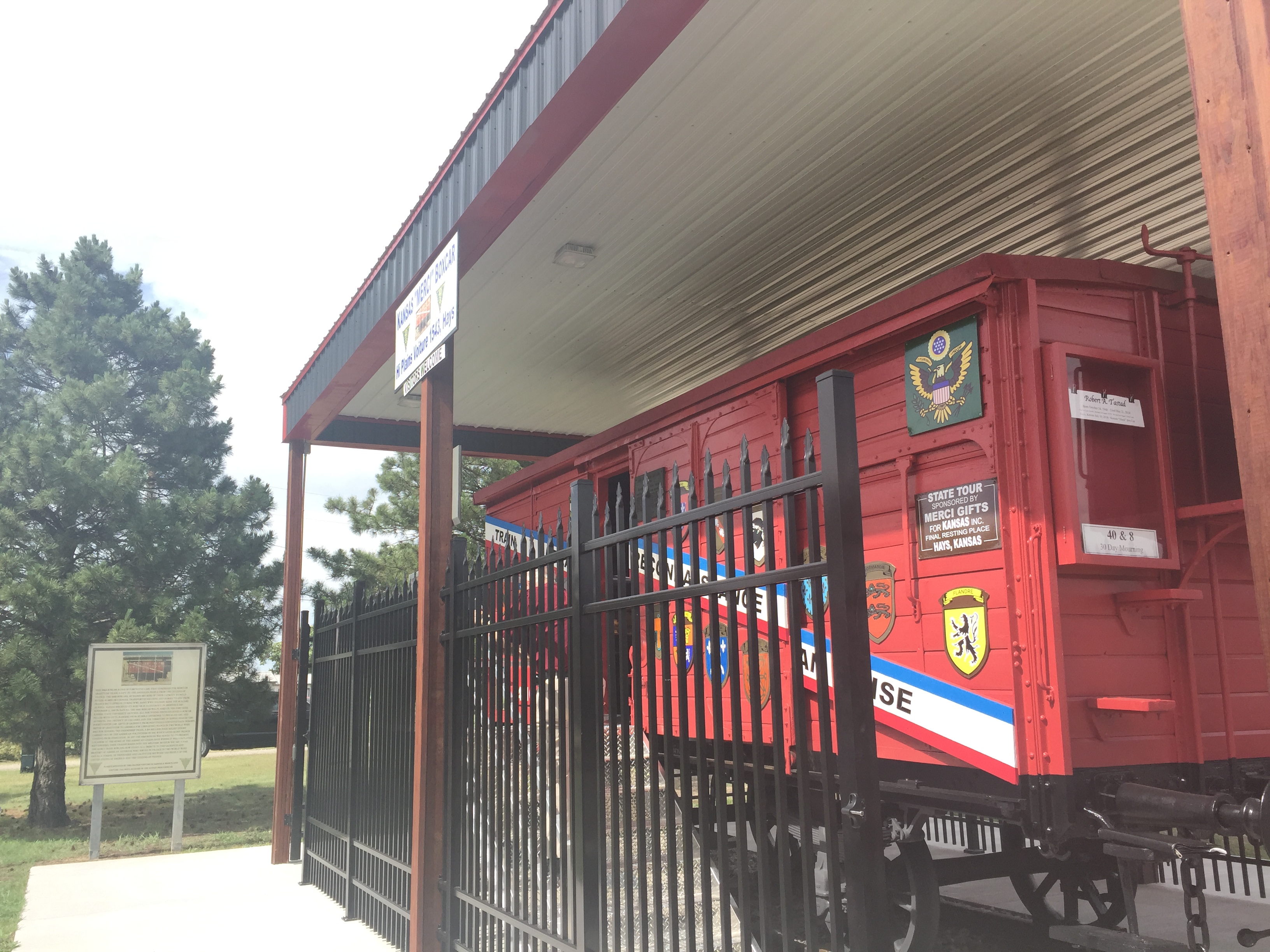
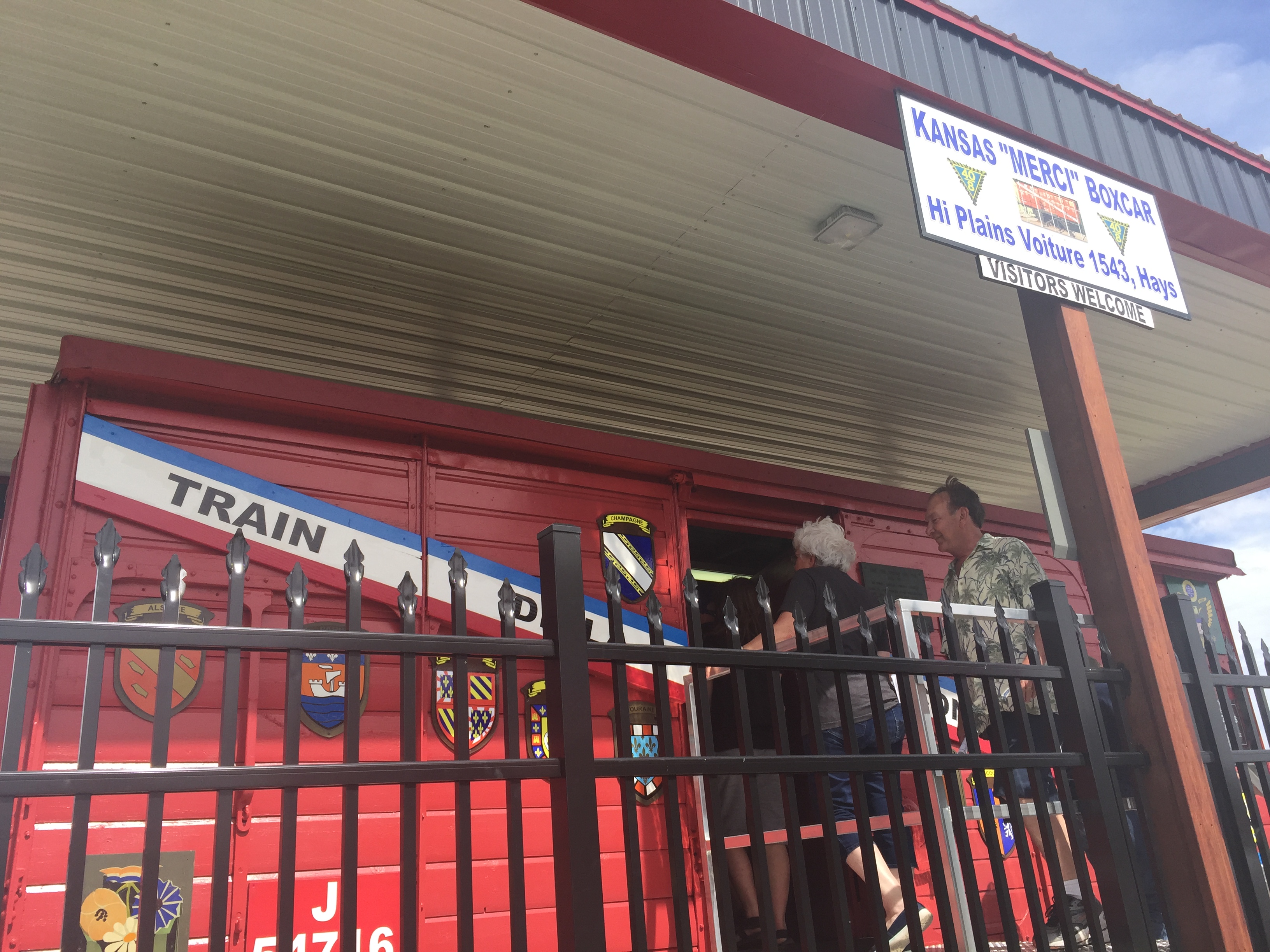
The Kansas Merci Boxcar, located in Hays, was rededicated recently in its new permanent home in the Hays Veterans Memorial Park, 1305 Canterbury, with a ribbon cutting by the Hays Area Chamber of Commerce to mark the occasion.
The 40 and 8 railroad boxcar was relocated with the help of the city of Hays, and the Parks Department in particular.
Vance Chartier, 40 and 8 Chef de Train and director of the relocation process, thanked Jeff Boyle, Director of Parks, for his support.
“When we started this process, we started talking with the city parks manager Jeff Boyle. He helped guide us through the process, to get it though the city commission and then the process of getting a quality structure around the boxcar and not just another chain link fence,” Chartier told the crowd.
“In recognizing Jeff, we’re truly recognizing the entire Hays Parks Department because much of the work that was done here – the concrete that was laid, the staining of the posts, and a lot of other work was done by city workers,” Chartier added. “I can’t say enough how much we appreciate what they’ve done.”
A proclamation by Gov. Jeff Colyer of June 16 as “Kansas Merci Boxcar Day” was presented to Hays Mayor James Meier.
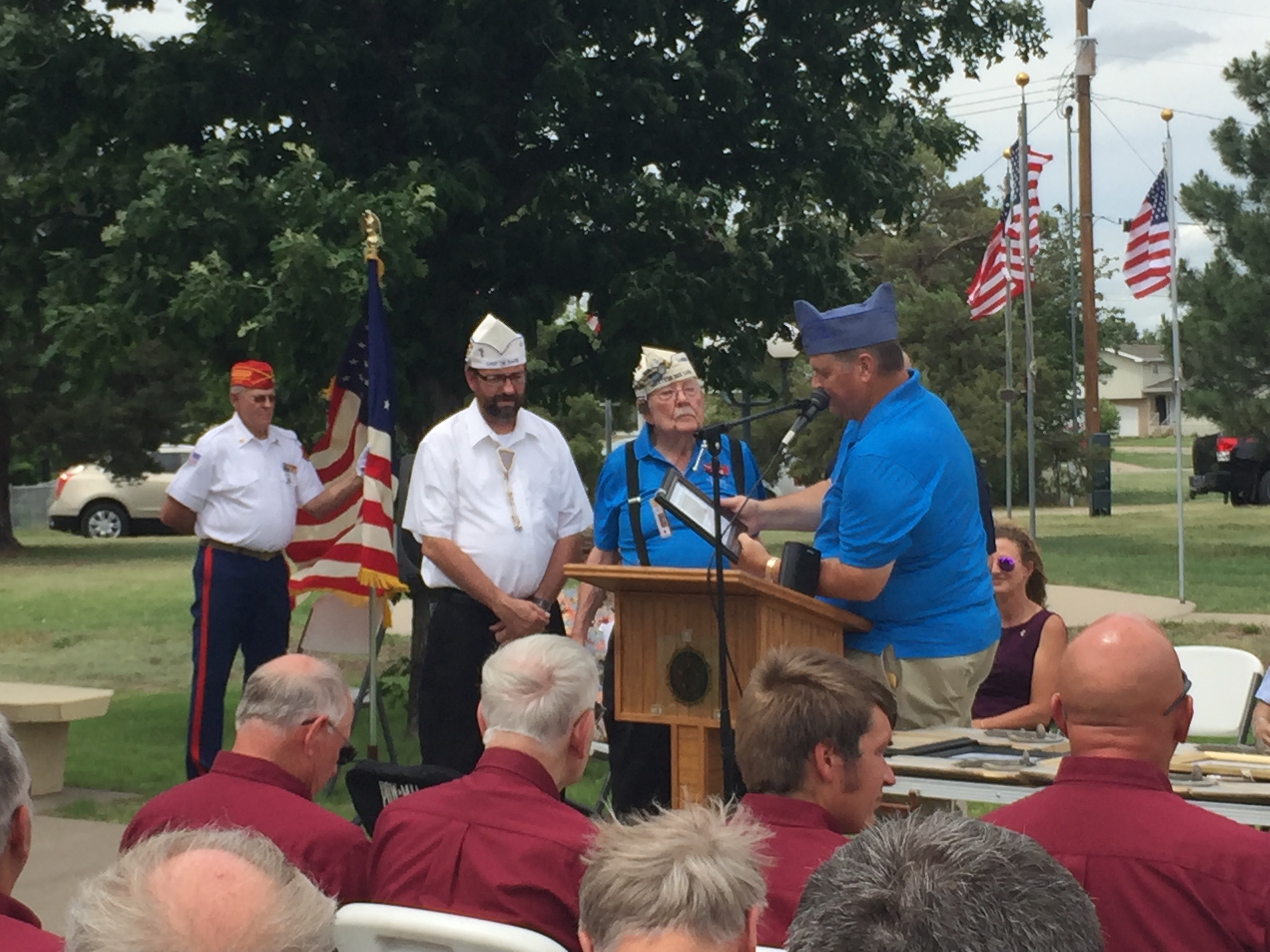
Ed Holzmeister, grand director of the Kansas Merci Boxcar, former commander of the Hays American Legion Post 173, former district commander, and a Korean War Navy veteran, read a history of the boxcar and the 40 and 8. The 87-year-old was then recognized for his support of the project by Chartier and Kansas Grand Chef De Gare Tim Russell.
The local 40 and 8 society raised about $11,000, with in-kind donations to move the historic boxcar from the front of the former American Legion to the adjacent park. City commissioners agreed to match $13,000 to build a protective shelter and fencing.
Among those recognized was Jennifer Shukar, Lincoln, Neb., who donated the money to build a metal non-slip staircase leading up to the boxcar. As a nursing student at Fort Hays State University, Shukar received a scholarship from the Hays 40 and 8.
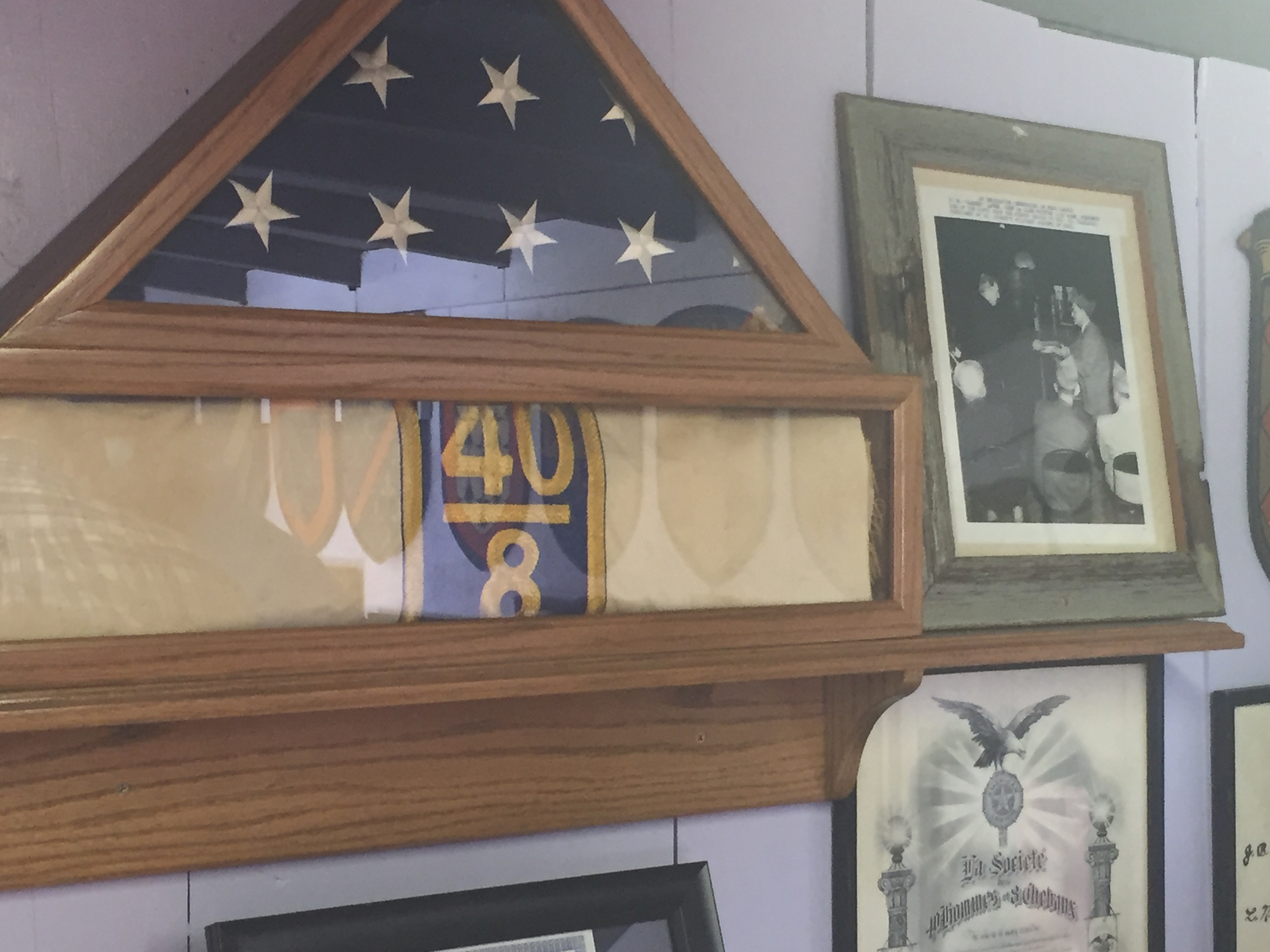
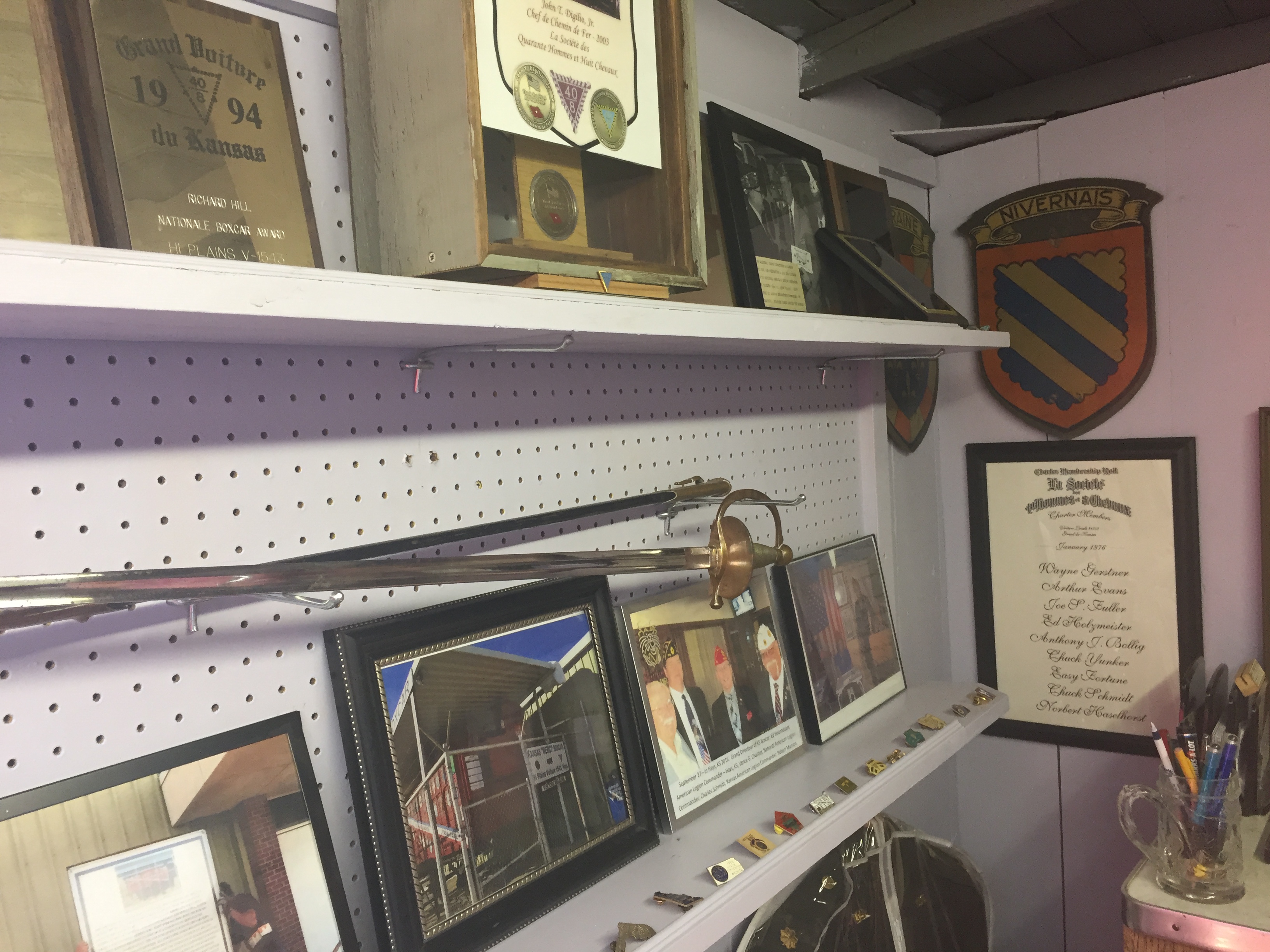
The 40 & 8 boxcar is one of 49 from France donated in 1949 to thank Americans for sending much-needed supplies to the French at the end of World War II. The Kansas boxcar, which settled permanently in Hays, is considered one of the top five of the 39 that remain in the nation.
To schedule a tour of The Kansas Merci Boxcar and Museum, call Chartier at 785-623-6747 or email [email protected]. Check out the group’s Facebook page for more details.
The Kansas Merci Boxcar was rededicated in Hays June 16.
Hays Mayor James Meier is presented with the Kansas Merci Boxcar Day proclamation made by Kan. Gov. Jeff Colyer.
Ed Holzmeister of Hays, grand director of the Kansas Merci Boxcar, is honored for his support.
A metal shelter and fence protect the boxcar.
Jennifer Shukar, Lincoln, Neb., donated the money for a metal staircase leading up to the boxcar.
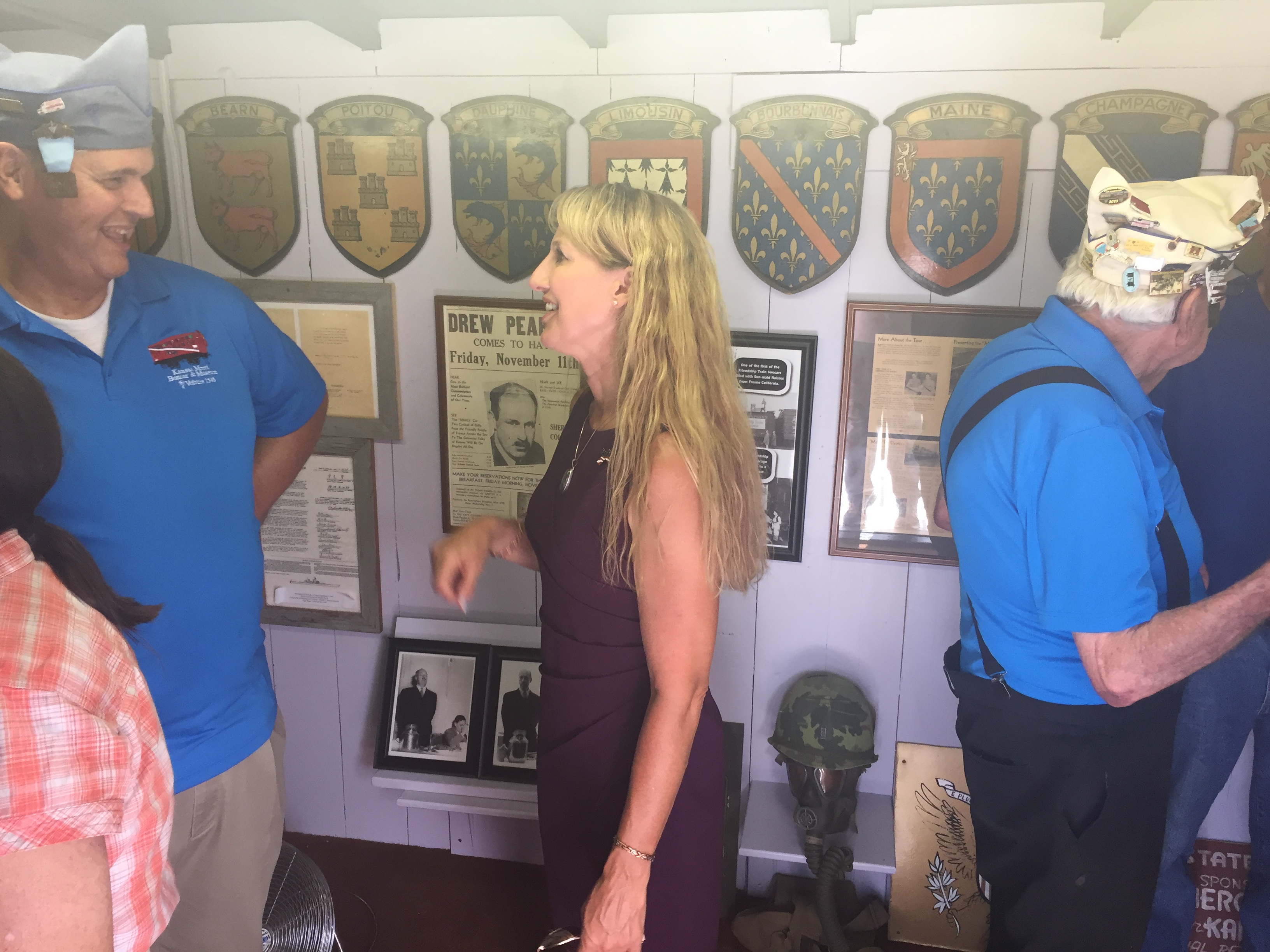
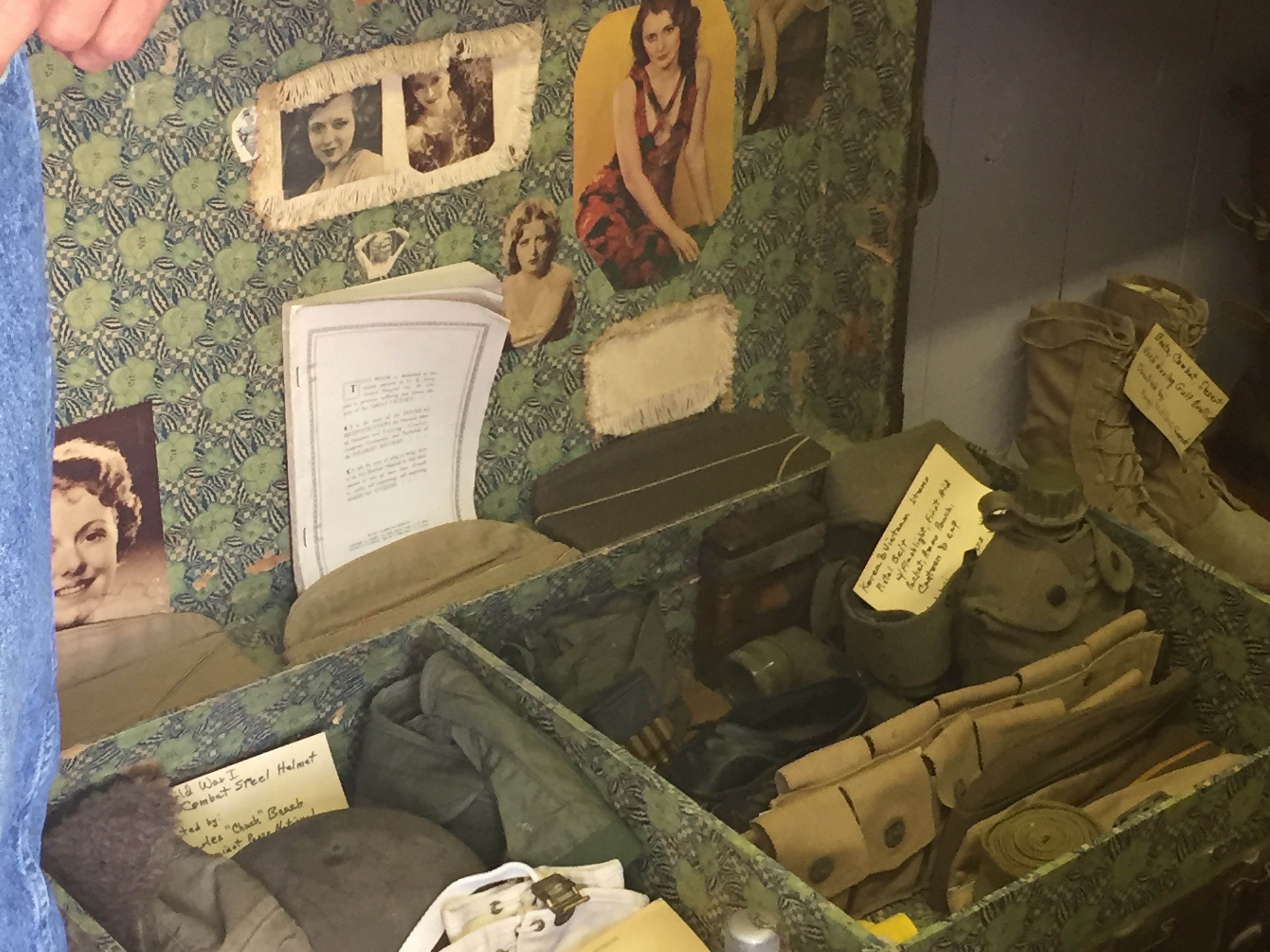
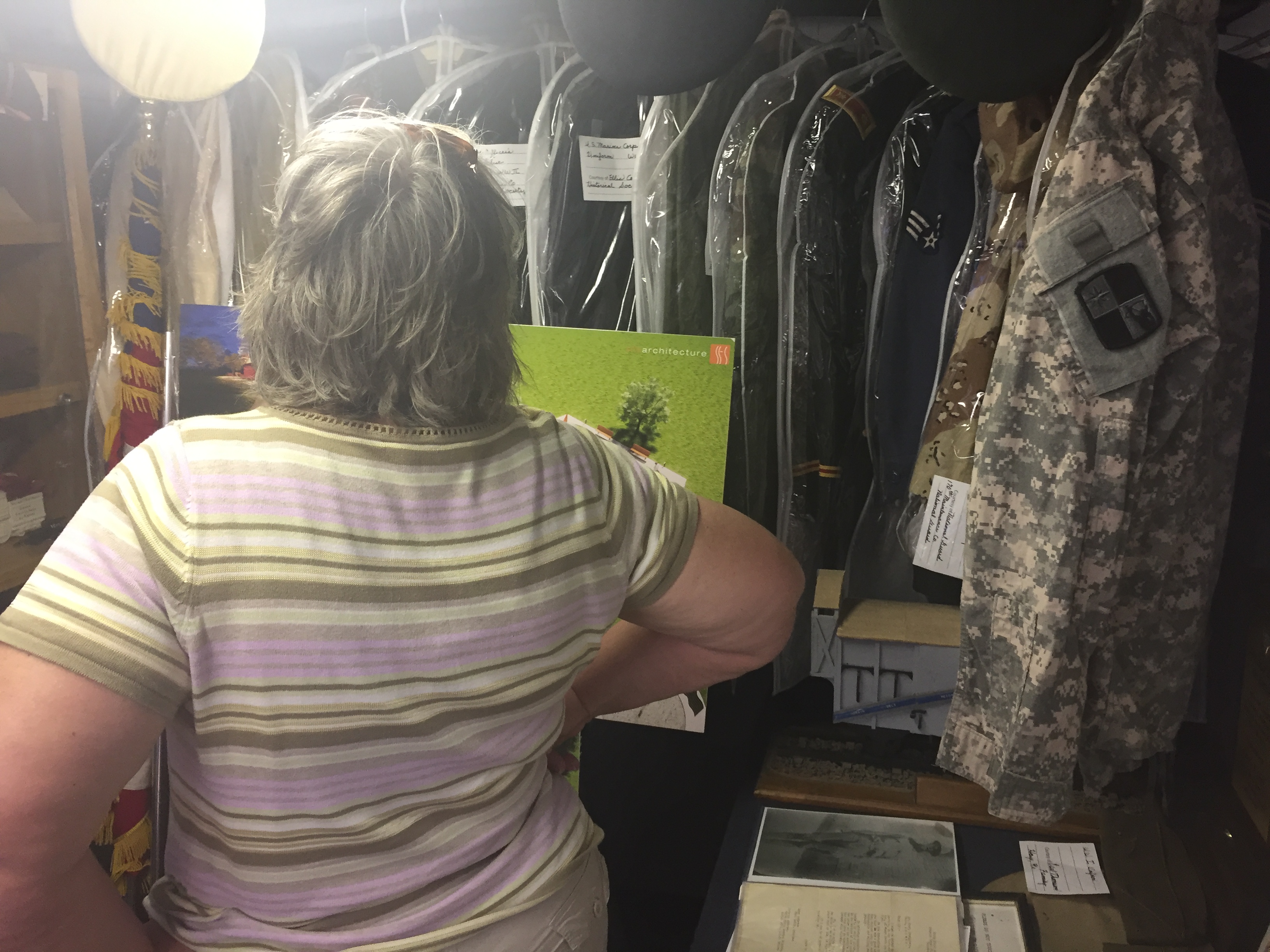
Military items and memorabilia are arranged in chronological order in the museum.
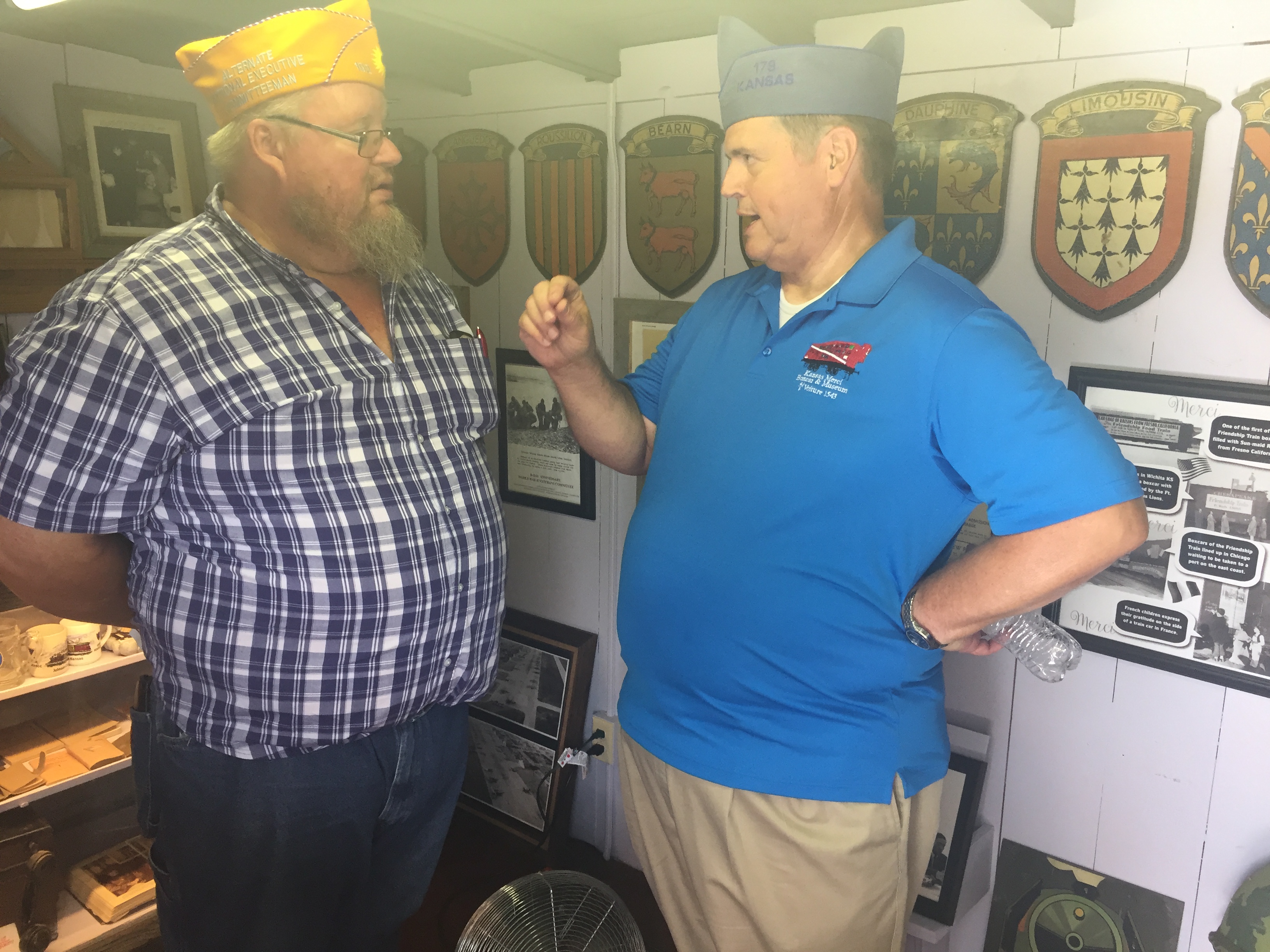
40 & 8 Chef de Train Vance Chartier greets museum visitors.
Kansas Grand Directeur Ed Holzmeister, Hays, offers tours of the museum.
The Hays school board voted Monday to delay action on a third bond attempt until January.
The board has been discussing for months what a third bond attempt should look like after bonds failed in 2016 and November.
The board was supposed to decide Monday night about the composition of a committee, which would develop several bond plans to present to the board. The board was also set to define parameters for what those plans might look like.
However, the board was unable to come to a consensus. Ultimately, on a 4-3 vote, with board members Paul Adams, Mike Walker and Luke Oborny in opposition, the board voted to table any further decisions on a bond until January.
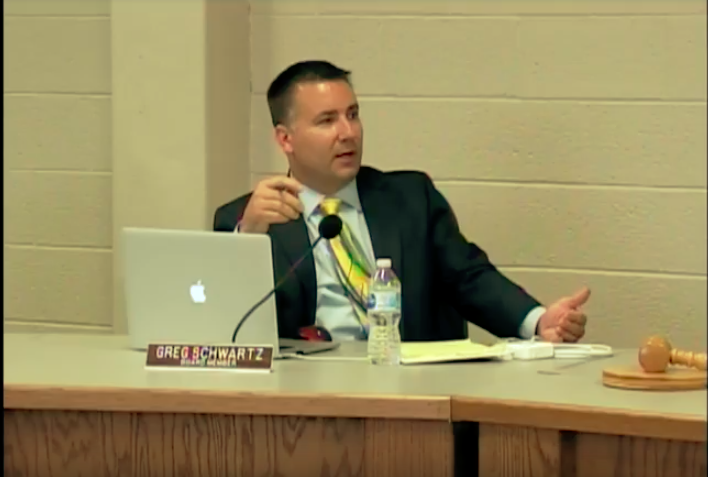
Board member Greg Schwartz discusses delaying any action on a bond during the Hays school board meeting Monday.
Board member Greg Schwartz proposed the move to delay. His first motion was to delay action for a year, saying he did not think the community supported a bond at this time.
Fox said she agreed with Schwartz and added if the board is not unified on a large decision such as a bond, the perception in the community would not be positive.
“I am a person who likes to keep moving forward and not necessarily stand still and keep checking the boxes. In this particular case and the feedback I have received and us not being in a strong consensus, I feel some waiting time … I am not sure a year is where I want to go, but I do feel we need to take our foot off the gas for a little a bit,” she said.
Board member Sophia Rose Young said she supported delaying action on a bond, but wanted to continue to discuss consolidation of schools, especially elementary schools. The board, in its debate leading up to the vote last night, had discussed moving to two or three elementary schools instead of four. However, all of those plans included a new elementary school or an expansion of one of the existing schools, which would have to be financed with a bond.
Adams spoke in opposition of the motion and presented an alternative motion to form a committee and set parameters that had been proposed by administration at a meeting in May. He said if the board charged a committee with creating bond plans it would likely be six months to a year before the school board made any decisions on a bond.
He said was concerned a delay would likely result in increased construction costs due to inflation. He said the new tariff’s levied on steel by the Trump administration also might drive up the cost of construction materials.
“Are we shrugging our ultimate responsibility?” Adams said. “Are we doing the right thing for the students? At the end of the day, the students are there and the board of education does its part. At the end of the day, it is what are we doing to improve the students. … I know we have fiscal responsibilities, but ultimately are we doing the right thing for the education of students?”
Walker said he agreed with Adams. He said the board has already been talking in circles for six months, and it is time to put a committee together and get things moving.
Oborny said the board did not need to rush into another bond, but said he supported the creation of a committee to continue to work on bond plans.
“At some point, safety becomes a factor,” he said. “I am not talking about secure entrances like everybody thinks. I am talking about the buildings falling in around them—46 years on an AC. At some point, that has to start affecting education value. Just the facilities are falling apart.”
In other business:
• The board discussed a pilot study on the use of Chromebooks at the Learning Center and elementary and middle school levels. The board is set to vote on the pilot program at its next meeting.
• The board approved property insurance and workers compensation insurance contracts
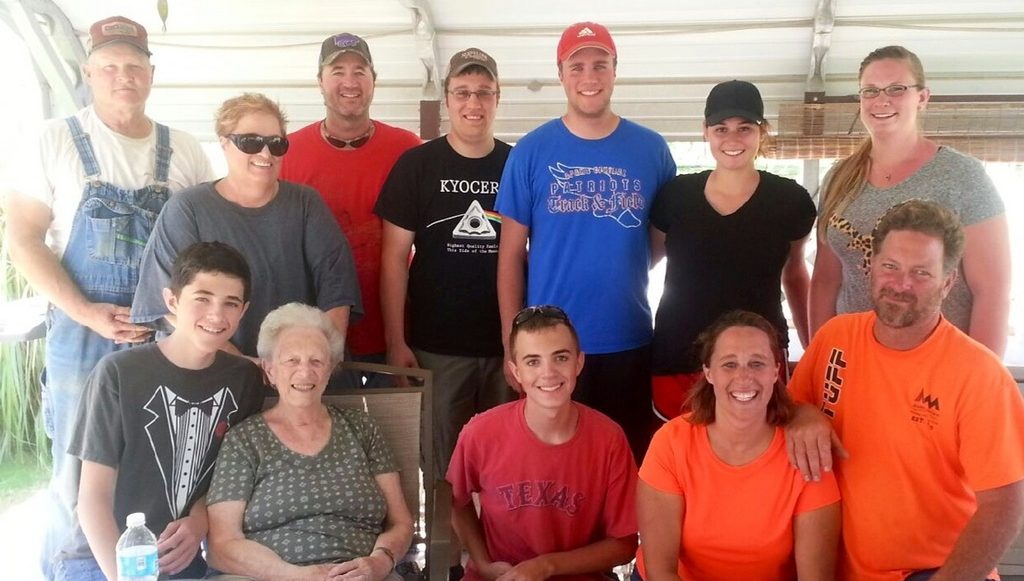
The family of Blaine and Diana Hanchett gather for a picture at the Phillipsburg rodeo. The family has gathered for the last thirty years over rodeo weekend for a family reunion, and Diana stands in line on the day tickets go on sale to buy for the family. Diana stands, second from the left, wearing sunglasses; her son Michael Johnson stands next to her (third from the left). Her daughter Michelle Brown is seated, second from the right. Photo courtesy Michelle Johnson Brown.
PHILLIPSBURG — Diana Hanchett doesn’t mind standing in line.
And every July, usually on the first day of the month, she gets out of bed early to stand in line, to buy Phillipsburg rodeo tickets.
The Phillipsburg native makes sure she’s towards the beginning of the line at Heritage Insurance in Phillipsburg on the first day that ticket sales start. She’s rarely been lower than fourth in line, although last year, she was sixth.
She usually doesn’t have to take a chair; she’s early enough to sit on the bench outside the business, located at 685 Third Street in Phillipsburg.
Hanchett has gone to the rodeo since she was a kid, but for the last thirty years, she’s never missed a year of it, going to the Saturday show and sometimes the Friday show, and always sitting in the same seats.
Her family joins her: husband Blaine and their kids Michelle Brown and Michael Johnson plus Michelle’s boyfriend Marvin Fehlman, Michelle’s two sons and Michael’s daughter and twin sons. Of Hanchett’s five grandkids, two are married and the others have had boyfriends and girlfriends, who have come to the rodeo as well.
Rodeo time is the perfect time for family reunions, and Hanchett’s family gathers in Phillipsburg. Michael and his family come from San Antonio, Texas and Hanchett’s sister, who lives in New Hampshire, makes the trek to Phillipsburg every four or five years. Hanchett’s brothers, both Coloradoans, also make the trip. Required school and sports obligations have occasionally kept a few grandkids from the rodeo the last few years, but Hanchett says, “being at grandma’s is required,” she laughed.
The family gathers for the parade on Saturday as well, putting up a canopy and setting up chairs along the parade route. Then they gather for a barbecue before heading out to the rodeo grounds for the final performance. The reunion often includes friends and other relatives.
When she was in high school, Hanchett worked as an usher at the rodeo, wearing rodeo shirts provided for them by the rodeo association. “We took tickets and made sure everybody found their seats. It was a lot of fun.”
Her mom, Betty Murphy, who turned 86 this year, also comes with the group.
Hanchett’s favorite part of the rodeo is the barrel racing, the bull riding and the clowns. The clowns “make” the rodeo, she said.
There’s protocol for the Phillipsburg rodeo ticket line. People know who is in line ahead of or behind them, so if they get out of line to sit in their cars, their spots are saved when the office open at 8 am.
And while she’s in line getting her tickets, there’s time to visit, make new friends and renew old acquaintances. The people in line are usually the same people, “people I know,” she said, “but sometimes the only time I see them is (in line), and it’s a really good place to catch up. You have the chance to visit, so it helps the time go by.”
And on July 2, Hanchett will be back in line again, waiting for the office to open, visiting with fellow ticket buyers, and buying rodeo tickets for the family.
Tickets for Kansas Biggest Rodeo go on sale July 2 at Heritage Insurance. Heritage Insurance is open from 8 am to 5 pm and closed from 12 noon to 1 pm each day. All reserved seats are $18 for adults and $14 for kids ages 3-12. General admission for Thursday, August 2 is $15 for adults and $11 for kids ages 3-12. General admission for Friday, August 3 and Saturday, August 4 is $16 for adults and $12 for kids ages 3-12.
Tickets can be purchased over the phone with a credit card by calling Heritage Insurance at 785.543.2448.
By DIANE GASPER-O’BRIEN FHSU University Relations and Marketing
Changes will abound for the Kansas Academy of Mathematics and Science at Fort Hays State University when students begin classes for the 2018-19 school year in August.
Until then, Dr. Jeanne Sumrall and Sherri Matlock can be assured the summer portion of the KAMS operation is being well taken care of.
Sumrall is taking over as interim director of KAMS for the departing Dr. Roger Schieferecke, and Matlock will be the assistant director in charge of the international piece of KAMS. Several international students have attended the premier high school program on the FHSU campus each year. From now on, they will have their own identity and be known as IAMS.
Sumrall
Before those 100-plus students converge on campus, the focus this summer is giving prospective KAMS students a taste of life on a university campus.
Several of the six different sessions normally reach the maximum number of 30 students entering grades 9 and 10.
While his year’s “Windmills and Gases and Coal: Oh My!” camp featured a small group of six, those half dozen students said they learned a lot while spending four days with Dr. Hendratta Ali, associate professor of geosciences, and Dr. Gary Andersen, assistant professor of advanced education programs.
Activities in the windmills, gases and coal camp included visiting Greensburg, a small town in south central Kansas that totally rebuilt green after a tornado demolished virtually the entire town in 2007; an ethanol plant, Western Plains Energy, in Oakley; and FHSU’s wind turbine farm and the Akers Energy Center on campus.
The two teams of three each reached a competitive level as they gave presentations on the last day of a project where they designed a city energy plan. They took turns asking and answering tough questions from the opposing team members.
Ali squelched any hard feelings among the students, encouraging healthy competition.
“It’s not about winning, but about learning,” she said. “You have all done a good job of thinking on your feet.”
The students were all ears the day before when Keith Dreher, director of energy management at FHSU, threw out huge numbers such as 130 feet long (each blade of the wind turbine), 250 feet (height of the turbine tower) and 160,000 pounds (the weight of the box at the top of the turbine that houses the electrical and mechanical components of the turbine).
One of the most popular camps this summer was the “VEX Robotics and Engineering Design” session in early June.
Ellie Bultena attended the robotics camp and also returned for the windmills, gases and coal camp, which she said she enjoyed as well.
Bultena will be a freshman at Sublette High School this fall and said she already is “interested in attending KAMS” in two years.
“I am definitely looking at KAMS as an option,” said Bultena, who learned about KAMS in middle school.
One of Bultena’s teammates on the city energy plan project was Maya Dorantes, a freshman-to-be at Wichita County High School in Leoti. Dorantes is a returnee to the FHSU campus after two years of attending the university’s music camp annually held the third week of July.
Dorantes, who plays the French horn, said she plans to be back on campus next month for the 2018 music camp.
“I really like the campus,” she said. “I’ve liked both the music and (KAMS) camps.”
Each fall semester, KAMS administrators reach out to faculty members in the Peter Werth College of Science, Technology and Mathematics, asking them to submit proposals if they want to teach a camp the following summer. A selection committee goes through the proposals and chooses a variety of six subjects.
“One of the greatest things about these camps is that the students get to work with Ph.D. faculty, and that’s not very common for summer camps,” said Ann Noble, financial administrator for KAMS. “The professors who choose to teach at these camps get to teach something they are passionate about. It’s fun for them, and it’s fun for the students.”
Noble was part of the administrative team that helped bring KAMS to Fort Hays State in 2009. The summer camps are in their fourth year.
“President Hammond thought the camps would be a great recruiting tool for KAMS,” Noble said of Dr. Edward Hammond, then president of FHSU. “It’s a way to bring the students onto campus and let them enjoy campus life during the summer. Give them a taste of what it would be like to come back to KAMS their junior year.”
On the map: Salina, Kansas Distance from Hays: 97 miles Drive time: 1 hour and 28 minutes
SALINA — For many in northwest Kansas, Salina is the “big city.”
It’s not. It is a small town, in many ways similar to Hays.
I lived for a few years in Salina right out of college. There are places here I have been frequenting for years, and yet I often find new places to explore.
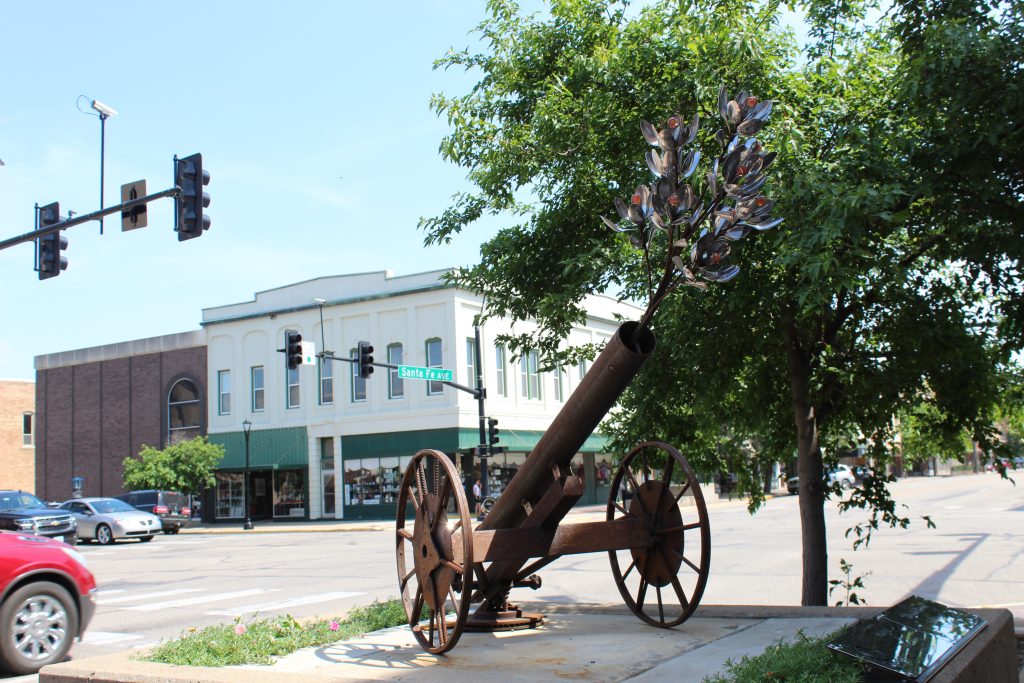
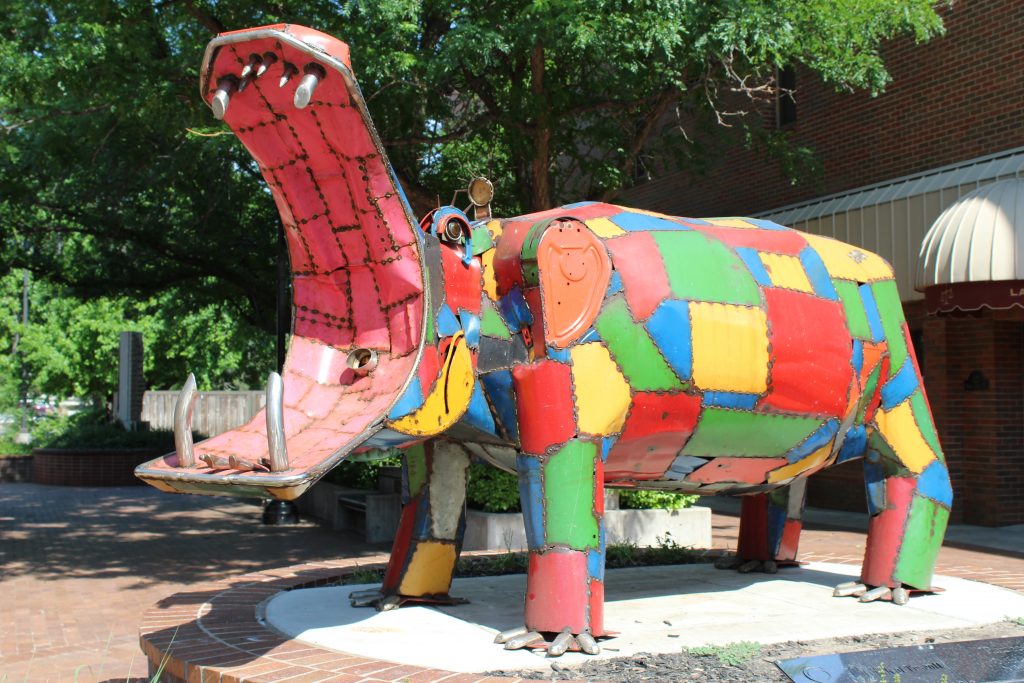
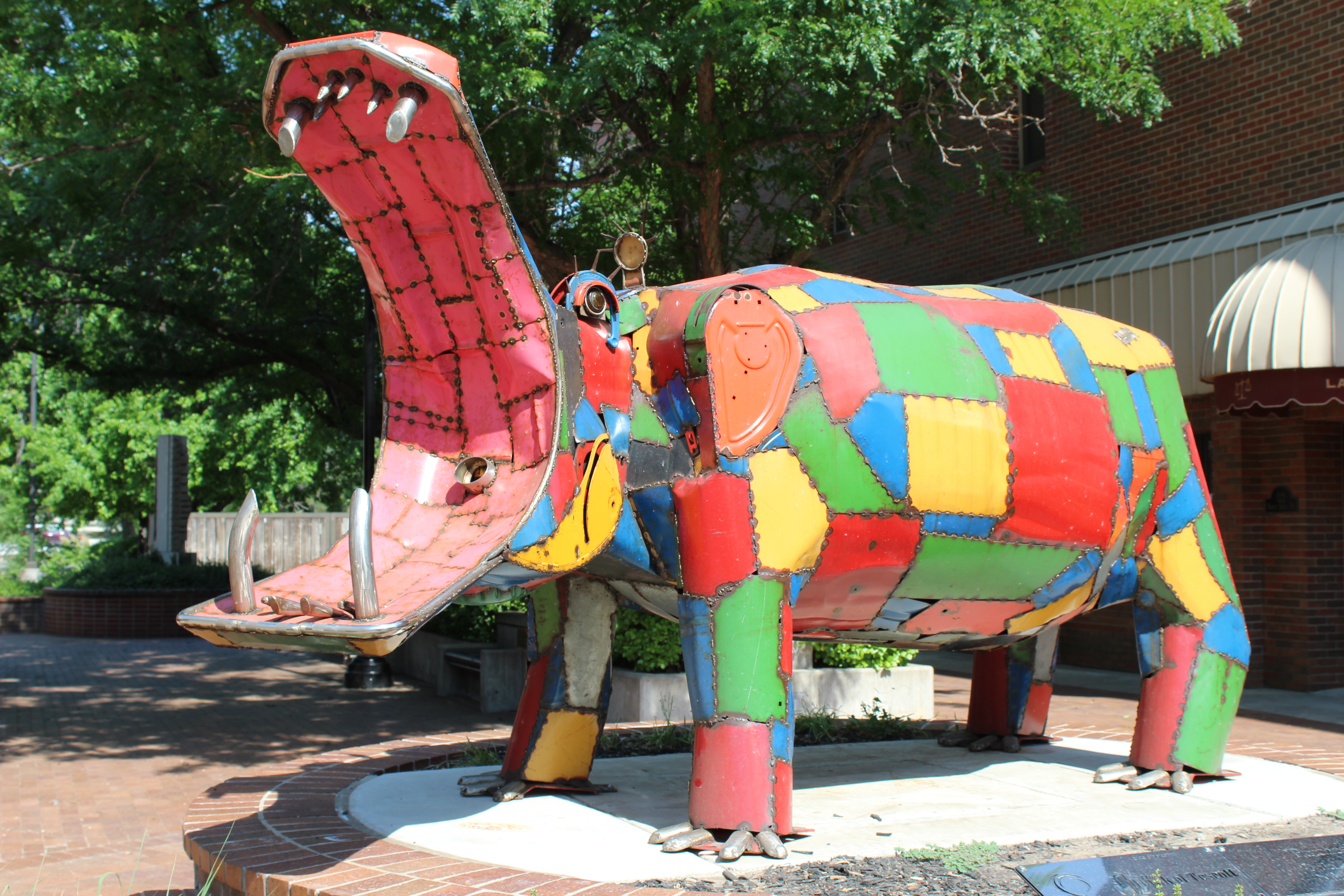
“Patches” is part of the 2018 ScultpureTour Salina and is found on Santa Fe Avenue in Salina.
The south Ninth Street corridor has grown significantly since I lived in Salina in the mid-1990s. I try to resist its big-box store allure when I visit. Instead, I go to where I feel more at home — downtown.
My most frequent stop in Salina even if is for just an hour on my way to see family is Martinelli’s Little Italy, 158 S. Santa Fe. My sister has driven 115 miles to just eat at this restaurant. My family likes the simple spaghetti and meatball. I say meatball, because one of their meatballs is a little smaller than tennis ball. I am not exaggerating.
Across the street from Martinelli’s is the Stiefel Theater, a beautiful art deco movie theater that was opened in 1931. The theater was designed by the Boller Brothers. If the name sounds familiar, it should. They were the same architects on The Dream Theater in Russell. The Stiefel is also on the National Register of Historic Places. Today, the Steifel is primarily a live-performance venue.
The Stiefel Theater, 151 S. Santa Fe, a beautiful art deco theater, was opened in 1931 and is on the National Register of Historic Places.
Tony’s Pizza Events Center is the other major venue in Salina. It hosts concerts and trade shows, among other events. It will host the Salina Comic Con July 7-8.
If you want to do dinner and a show at the Stiefel, there are other downtown dining options. I recently tried Blue Sky Brewery and Eats. These guys will put about anything on their wood-fired pizza. I had the Big Lebowski, which has pasta as a topping. I didn’t think this would work, but it did. Some other recent pizzas of the week, included Crab Rangza and Uncle Morty reuben pizza. Check out their Facebook page for weekly special.
I am not a beer person, which I know is heresy in Hays, but the night I was there, some of their craft beer selections were Crankcase IPA, Watermelon Crawl, Jalapeno Cream Ale, Fire Engine Red and Dirty Ol’ Stout.
I prefer ice cream over beer, so here are a couple of great places in Salina.
A Dagney’s employee is ready to serve up the shop’s homemade ice cream.
Dagney’s Ice Cream, 105 E. Iron, is a newer establishment downtown. Salinans Ken and Dagney Stromberg make their ice cream in store. I had the Speculoos, which tastes like a snickerdoodle, but for the young or young-at-heart, they also have fun flavors, such as Fruity Pebbles and Captain Crunch Berry.
I have been going to Bogey’s for more than 20 years. The small ice cream shop and burger joint was founded in Salina 32 years ago. Carole Sperling, owner with her husband and son, was a big fan of old movies and named the restaurant after Humphrey Bogart.
If Blue Sky will put anything on a pizza, Bogey’s will put anything in a shake. Their slogan is, “Shaking over 101 ways,” but the manager insists they have well more than 100 shake combinations. If you are buzzing through on I-70, they have a drive-through.
The Salina’s culinary history goes even further back. The Cozy Inn, 108 N. Seventh, has been operating in Salina since 1922 and is one of the 8 Wonders of Kansas Cuisine. You can buy chips and a drink at the Cozy, but that is all. It is all about the burgers. Its greasy onion-laden burgers are nationally known. The burgers are slider-sized and most people buy them by the bag takeout because the Cozy is one of the few remaining last six-stool diners in the U.S.
The Cozy Inn has been serving up their burgers by the bag from the same grill for 96 years.
The legend goes the secret to the Cozy burger is the grill, which is the same grill that has been used at the burger joint for 96 years. One of the owners of the Cozy decided they would upgrade, so they sold their old grill and purchased a new one. Cozy regulars complained the burgers didn’t taste the same. The owners had to track down the original grill and repurchase it.
If you are at the Cozy, turn around, because down the street is a beautiful relief sculpture on Sacred Heart Cathedral. The church was built between 1951 and 1953 and combines Greek styles with something that is reminiscent of a Kansas grain silo. The limestone sculpture depicts Christ on the Cross with a turned head looking down upon a processional lead by a Kansas farmer and his family.
Sacred Heart Cathedral, 118 N. Ninth St.
If your belly’s full, downtown has plenty of boutiques, gift shops, antique shops, a you-paint ceramic studio (On the Pot), quilt shop, free-trade store and an organic and local produce market, Prairieland Market.
One of my newer favorites is Ad Astra Books and Coffee House. It is a frequent hangout for local artists and entertainers. It carries a wide selection of used books and a section of new books by Kansas writers.
I have always seen Salina as a culture and arts haven on the prairie. Like Hays, Salina has a strong arts commission. The Salina Arts and Humanities Commission was created in 1966 and is a department of the City of Salina, which means it has been influential in public works projects and public art installations.
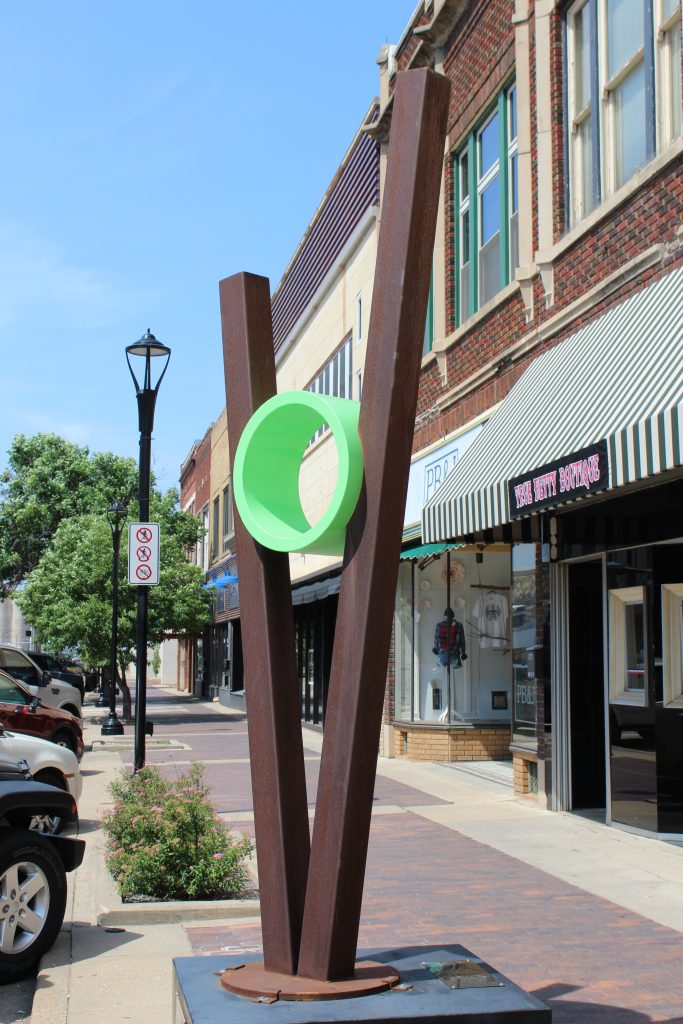
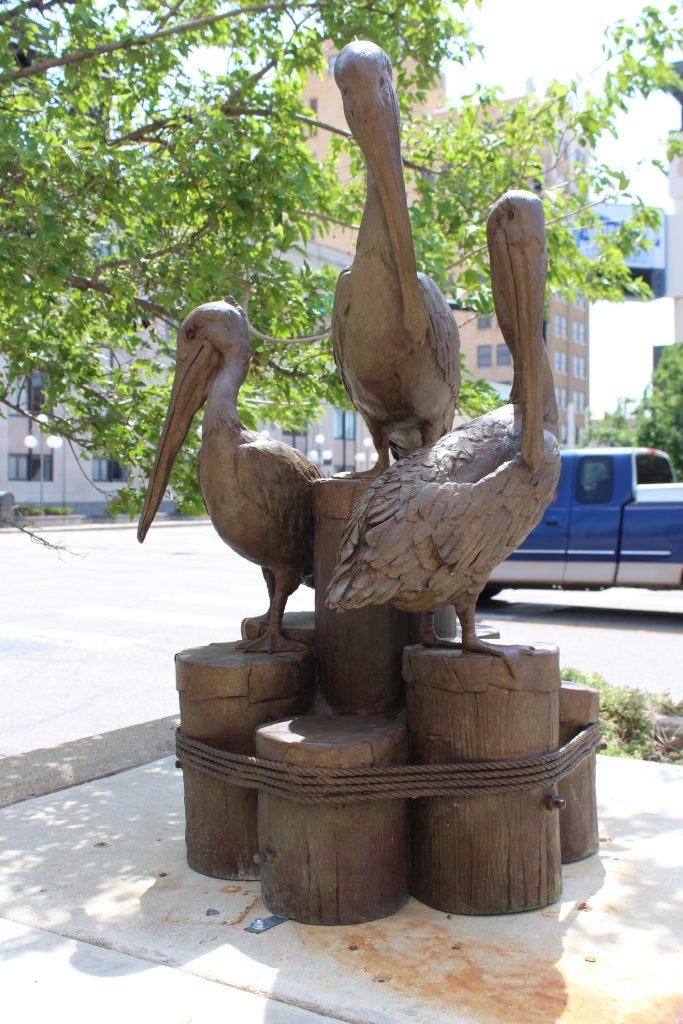
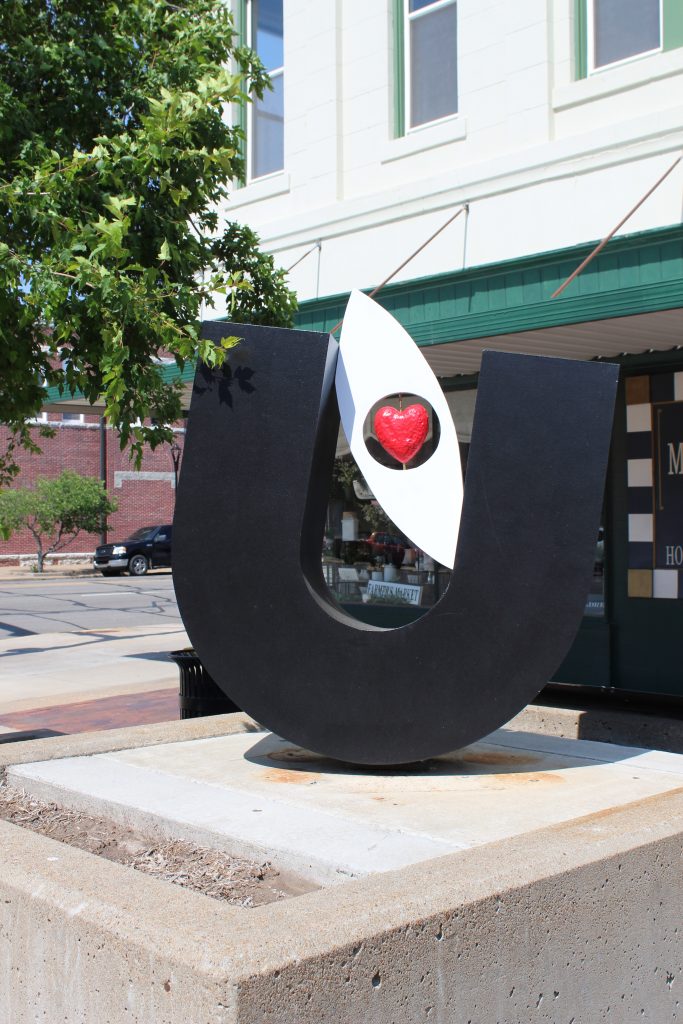
Santa Fe, the main drag downtown, is lined with ScultpureTour Salina. The Arts Commission rotates in new art every spring.
Permanent installations and murals dot the city in public places and parks. The colorful “Waiting in the Wings” by David Lowenstein graces an outdoor stage off Santa Fe downtown. Oakdale Park, the home of the Smoky Hill River Festival in June, boasts “Kansas Blues,” an almost patchwork quilt on the former Carver Pool floor. Also in Oakdale Park “Under Cottonwood,” columns of recycled newspaper, are a commentary on decay and formation of land.
The Salina Arts and Humanities website has photos, locations and a list of artist names to guide you on your sculpture tour around they city.
At the heart of the arts commission is the Salina Art Center. This a space similar to the Hays Arts Center that hosts rotating exhibits. “Anthony Hawley: Fault Design” and “Birdless” will be featured in the gallery through Aug. 26. Admission is free.
Fault Diagnosis by Anthony Hawley is the current exhibit at the Salina Art Center. Photo Courtesy of the Salina Art Center
“Fault Diagnosis“ is a multimedia performance event and exhibition that explores what happens when things we think we know so well break down and fail us, according the art center website. “Birdless“ explores themes of hoarding, collecting and the spam of our lives.
Just down the street from the art center on Santa Fe is the Salina Art Center Cinema. The theater shows foreign films, documentaries and other films that the big movie houses in rural America are probably not going to dedicate space to. Most shows run for only a week and showtimes are limited.
You can sign up for the Salina Art Center email list at the art center to receive weekly updates about exhibitions, lectures and classes at the art center and movies showing at the cinema.
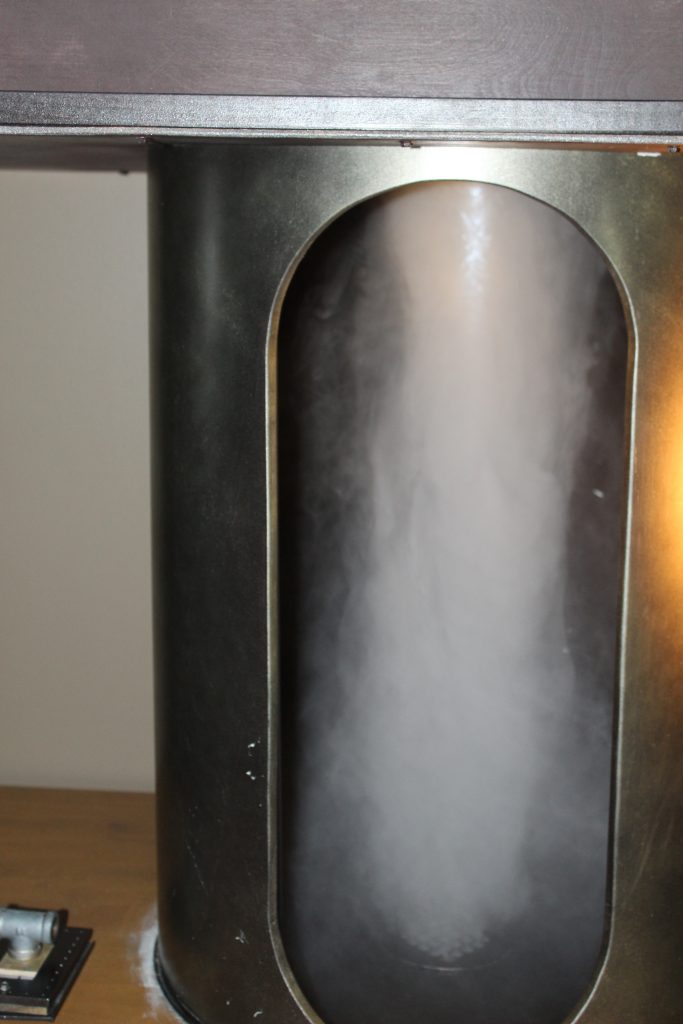
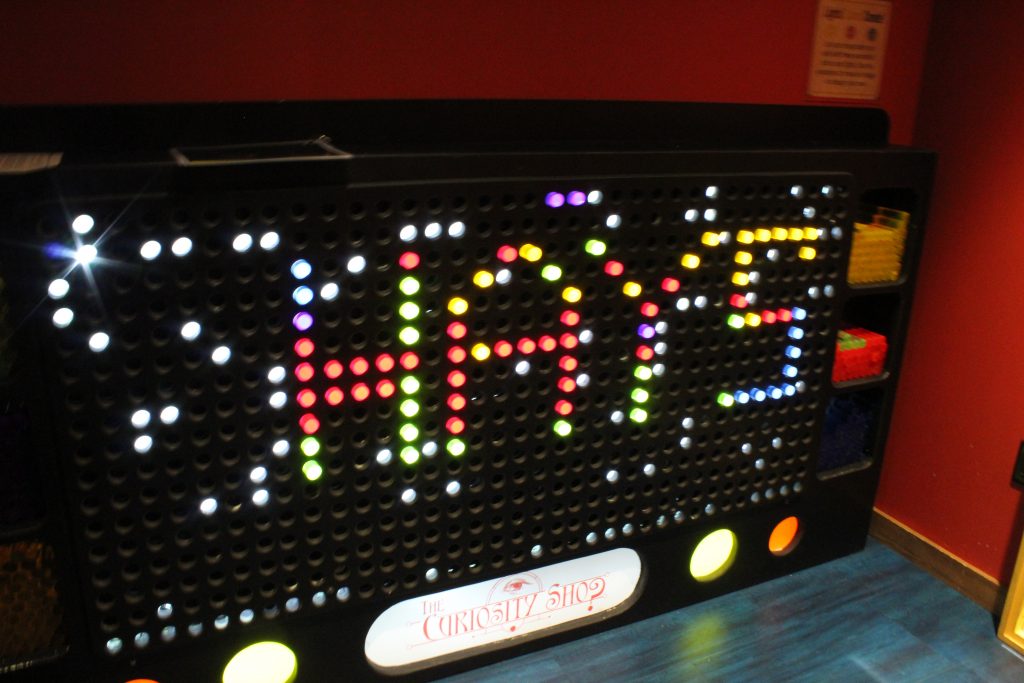
Salina offers plenty of family fun. The Smoky Hill Museum has a new area for kids called the Curiosity Shop. You can make designs on a giant peg light board. An area is dedicated to tornado education in which you can create your own vortex as well as experience a tornado in a wind tunnel.
I was lured into a few free games on their mechanical pinball machine. I am a little bit rusty.
A quiet nook in the rear of the Curiosity Shop offers a place to play board games; games are provided. The museum offers plenty of education opportunities, including several exhibits on Salina’s agrarian history. Children are free to touch and play with items in a dugout model.
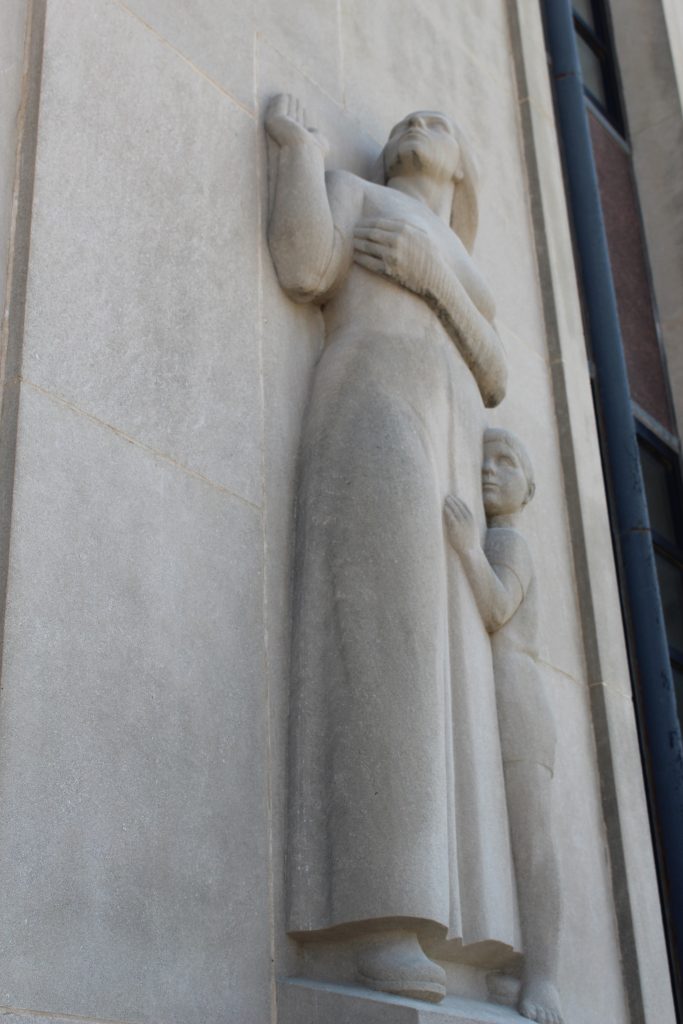
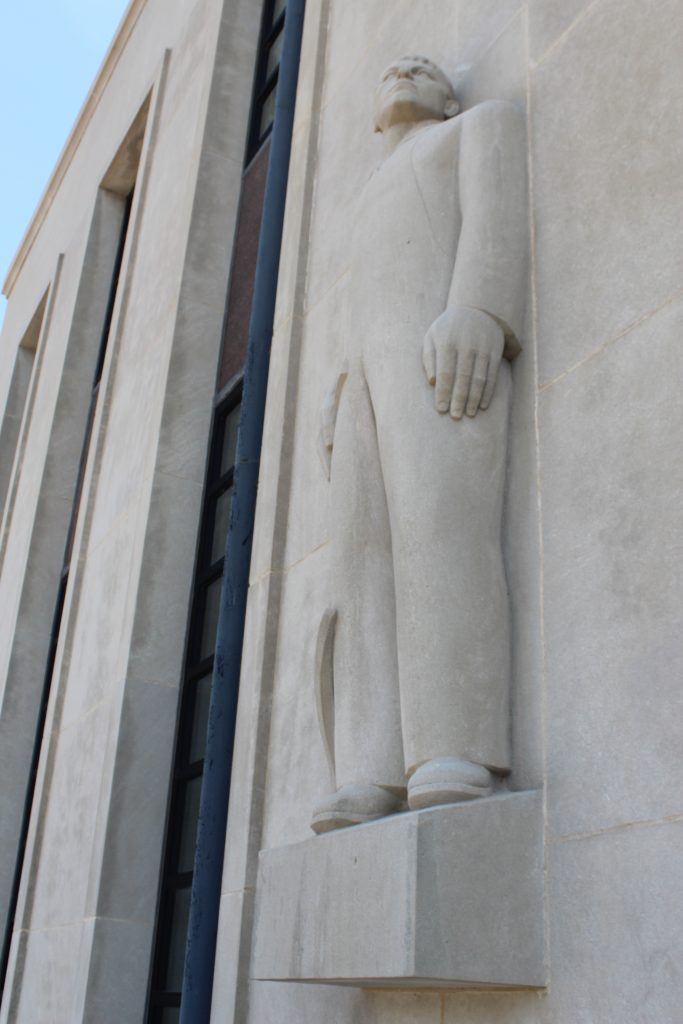
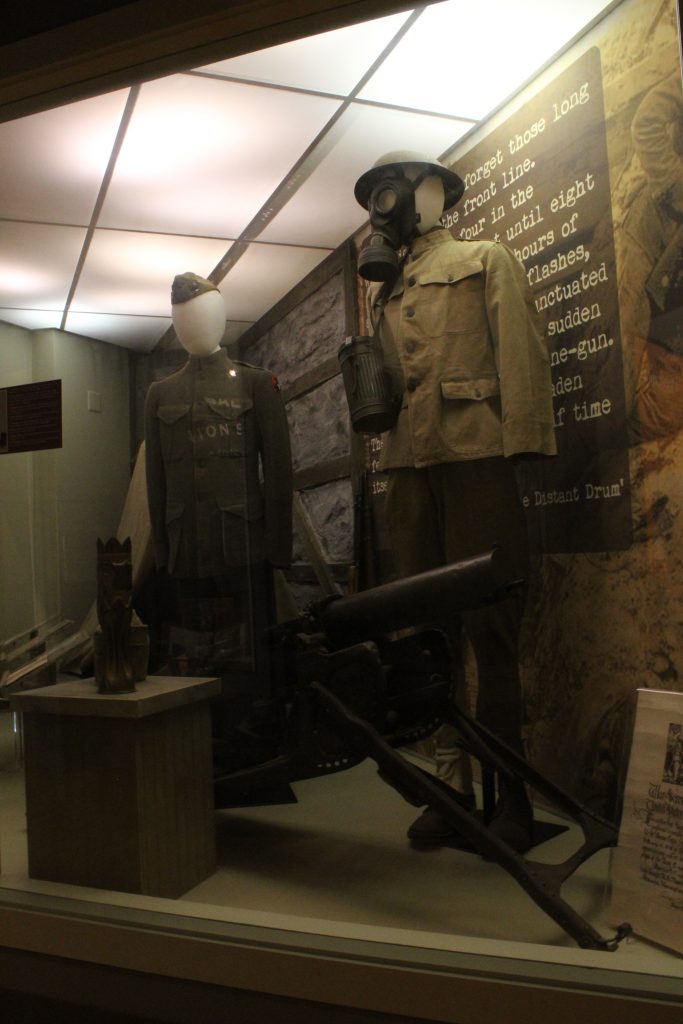
The museum currently has a temporary exhibit, “In the Trenches with Company M,” which depicts the journey of Salina’s Company M during World War I. Those interested in military history can also view artifacts from Salina’s closed Schilling Air Force Base. The museum itself is a former art deco post office and is on the National Register of Historic Places. It too has relief sculptures on its exterior. They were carved by Carl Mose and Jon Johnson. Admission is a free-will donation.
Kenwood Cove Aquatic Park Photo Courtesy of the City of Salina
My nephew had fun last summer at Kenwood Cove Aquatic Park. Philip particularly liked the park’s 1,400 feet of slides. Kenwood also has a lazy river, wave pool and children’s area. Kenwood offers affordable passes: $4 for children through age 17 and $6 for adults.
Salina has many beautiful parks, but one of my favorite recreation areas in the city is Lakewood Park. Nature trails wind around a small lake with plenty of trees and shade. It’s a nice walk on a summer evening. The park also has a discovery center that is open during the week with a lot of displays on native wildlife for kids to explore. Lakewood also has a disc golf course.
Salina Masonic Center, 335 S. Santa Fe Avenue
There are 24 miles of walking trails in Salina. See walksalina.com. One of these tours is “When Houses Became Homes Tour,” which takes you from about Ninth and Iron streets to Ninth and Prescott streets.
H.D. Lee of Lee Jeans founded a garment factory in Salina in 1911. The home in which he lived, at 200 S. Seventh, is on the historic homes tour and is on the National Register of Historic Places. Although not on the NRHP, the Salina Masonic Center on Santa Fe is necessary stop for those interested in local architecture. It was completed in 1927 and is framed by columns and carved gargoyles.
When Philip was younger, he liked to visit Rolling Hills Zoo, which is 6 miles west of Salina off of Interstate 70. The zoo is particularly known for its white rhinos, but you can ride a tram or walk to see more than 100 species.
In the heat of the day, Rolling Hills offers an air-conditioned museum with mounted animals specimens from around the world. At the rear of the museum is a children’s area with lots of hands-on play. The museum hosts traveling exhibits and is currently featuring “The Art & Science of Arachnids” through Sept. 3. See the Rolling Hills website for hours and admission.
One attraction I have yet to get to in the Salina area is Prairie Lavender Farm, which is about 9 miles north of Salina near Bennington.
Prairie Lavender Farm, north of Salina. Photo Courtesy of Prairie Lavender Farm
The Bennington farm was established in 2002 and has 4,600 plants representing 15 varieties.
The lavender is blooming and being harvested now. The farm operates a small shop that sells lavender products. Lavender, which is a member of the mint family, has long been revered for its healing and relaxing properties. In addition, to the lavender, the farm has fairy, flower and herb gardens and plenty of room for children to run and play. Now through September, the farm is open 9 a.m. to noon. Admission is free, but a 45-minute tour will cost you $5 per person for anyone 6 and older. To set up a tour, call 785-488-3371.
I know that is a lot, and probably way more than you could do in a day. Pick and choose what fits your tastes and family.
I’m out to far western Kansas this week, so see you on the road!
Other links to check out while you are planning your trip:
The red outline show where a new play feature may be installed at the Hays Aquatic Park to replace the current “starburst.”
By BECKY KISER Hays Post
The Hays Recreation Commission (HRC) and the city of Hays want to make improvements at the Hays Aquatic Park (HAP) and draw more patrons.
Just adding one new recommended water play feature may not be enough to increase attendance.
The pool is not intended to be a money maker. “It’s a quality of life issue,” according to City Commissioner Sandy Jacobs, “but that doesn’t mean we can’t work to reduce the amount of money we’re losing.”
Jeff Boyle, Hays Director of Parks
City commissioners heard a proposal during their Thursday night work session from Director of Parks Jeff Boyle for a new water play feature to replace the aged “starburst” in the zero-depth entry area.
During the annual joint meeting of HRC and the city earlier this year, staff presented various options that could be added to HAP to enhance the facility. Commissioners liked the idea and directed staff to search for a multi-play aquatic feature not to exceed $185,000.
Boyle reported the $185,000 play feature from RJR Enterprises, which allows more patrons to participate at one time, was city staff’s unanimous recommendation. The monies would come from the Pool Reserve Fund which stands at $321,558.
Commissioner Sandy Jacobs and Mayor James Meier both liked the idea. “My kids and wife are excited about it,” said Meier. Vice-Mayor Henry Schwaller was not impressed.
“Given the small balance that remains in the fund that is used for maintenance, to maintain the boilers, which we know will have a short life, I hesitate to use the funds for this,” Schwaller said. “If we’re going to make any improvements to the pool, we should talk to the community. What do they want to see at the pool? Why aren’t they using it and how much will they pay?”
“I think any new improvements will bring in more people,” Jacobs said, “but for how long?”
The recommended new multi-play aquatic feature for the Hays Aquatic Park
Boyle added that dump buckets are now one of the most popular water features.
Schwaller suggested hiring the Docking Institute at Fort Hays State University to conduct a survey of Hays residents about the aquatic park.
“Let’s find out why people aren’t going to the pool, where they’re going instead, and if they are going to HAP, what new features do they want to see and how much are they willing to pay.”
Meier made a comparison to the improvements at the Fort Hays Municipal Golf Course, which now draws more golfers, although it is still a money-loser for the city.
“We had a plan and we fixed it,” Schwaller interjected. “It loses money but not as much as it did and we get rave reviews about the quality of the course. We spent the right amount of money to fix the irrigation system. Jeff’s worked on those greens like nobody’s business, and fixed all the drains. We did it right. We had a plan.
“We don’t have a plan for the aquatic park. We just said ‘go get us some stuff.’ Just because we gave the wrong instructions doesn’t mean we’ve committed to this.”
The potential purchase of the new aquatic feature will be discussed further next week at the June 28 city commission meeting.
Commissioner Shaun Musil was absent from Thursday’s work session.
There is a vacant seat on the commission which was recently vacated by Chris Dinkel. Commissioners intend to appoint his replacement during the June 28 meeting.
Hays city commissioners will begin review of the 2019 budget tonight as they hear funding requests from the first three of several outside agencies.
Fort Hays State University is requesting $100,000 for its scholarship program, an increase of $10,000 from last year. The Downtown Hays Development Corporation (DHDC) is asking for the same amount, $53,655.
There is no request from the former Ellis County Coalition for Economic Development, now known as Grow Hays. The group announced last year it would no longer depend on financing from the city or from Ellis County. Both entities cut their funding to the group by 50 percent for 2018.
Another agenda item addresses summer fun.
During the annual joint meeting of the Hays Recreation Commission and the city earlier this year, staff presented various options that could be added to the Hays Aquatic Park to enhance the facility. Commissioners liked the idea and directed staff to search for a multi-play aquatic feature to replace the existing “starburst” in the zero-depth entry area.
Proposed new feature for Hays Aquatic Park
Three proposals were received ranging in price from $176,250 to $185,000.
The $185,000 play feature from RJR Enterprises, which allows more patrons to participate at one time, is being recommended by staff. The monies would come from the Pool Reserve Fund.
Other agenda items include:
A bid for a small pocket park in the King’s Gate development which would be funded by the benefit district with no cost to the city.
Renewal of the city’s commercial insurance to include increased premiums
Ordinance amending the Hilton Garden Inn and Conference Center Community Improvement District (CID) state date from April 1, 2019 to July 1, 2020, to accommodate a changed construction schedule
The complete agenda for the June 21 work session is available here. The meeting begins at 6:30 p.m. in Hays City Hall. 1507 Main.
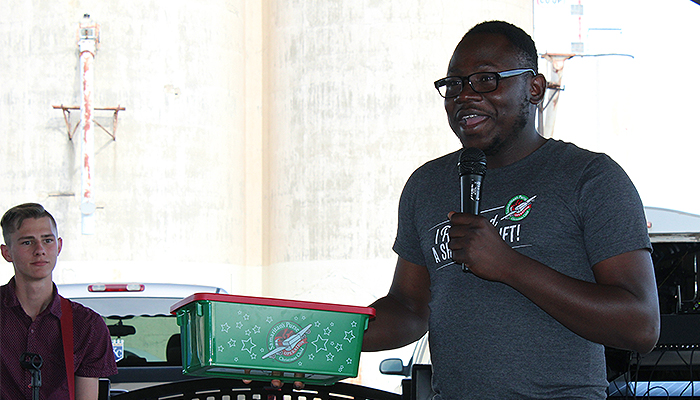
Désiré Nana, who was born in West Africa, holds an Operation Christmas Child box. Nana received a box of toys and school supplies when he was 8. He told his story Saturday to a group in Hays.
Désiré Nana had never received a present in his life and neither had any of his friends.
He lived in the impoverished community of Burkina Faso, West Africa.
Nana’s village did not have electricity and he walked 3 miles one way to school. His parents couldn’t pack him a lunch, so he picked mangoes along the way.
“Our parents were doing the best to feed us, so we did not have toys,” he said.
When Operation Christmas Child came to his school when he was 8 with boxes of toys and school supplies for him and his fellow classmates, it was calamity. Nana, now 25, spoke to a group of Hays residents Saturday at the Hays Downtown Pavilion about his experience with the program.
“I want you to think about it. There are these boxes,” he said. “Children have never received a box. ‘What is going on?’ There is commotion everywhere. There was a team from the United States there. ‘Why are we having people from the United State here? Are we in trouble? I think we are getting gifts.’ ”
Before the children were given their boxes, they were given a booklet in their native French called “The Greatest Gift.”
A minister gave a lesson from the book.
However, the children were rife with anticipation.
“‘Everybody was ‘Oh, my goodness when are we going to open the box!’ The preachers is preaching about Jesus dying on the cross, but I was not listening. I was all about the box. ‘Wrap it up so I can open the box!’ He kept talking and talking. I was thinking, ‘When are you going to wrap it up so we can open the box?’ ”
Finally the children were allowed to open the boxes. It was chaos. Children were ripping into the wrapping paper with their teeth. The children peered into their boxes. Some began to cry. Others screamed with excitement.
That initial sermon may not have completely sunk in with Nana, but he took home and read the booklet, which told of Christian creation, the Gospels and the crucifixion of Christ. He would not fully understand how that shoebox of trinkets would affect his life until he was 12.
Nana received a toy truck, school supplies and a toy he was not sure what to do with. He also received girl’s hair accessories, which he initially didn’t understand. Nana was the only child of his seven-person family to receive a box. Some people who pack boxes account for this and pack items for both boys and girls so the child who receives the box can share items with brothers or sisters.
He did not open the mystery toy for two weeks until one day he dropped it and it lit. His mother “freaked out.” She insisted he open it right away. “Don’t burn the house,” she said. “What is that?” She was scared. Désiré was scared.
It was a light-up yo-yo.
No one else in the village had one. He became famous in his neighborhood.
Désiré Nana talks about the booklet, “The Greatest Journey,” a Christian study guide that accompanies the Christmas boxes.
“People would ask me if they could play with it. I would say, ‘Take it easy, man. That is my toy from the United States.’ ”
There were no lights in his neighborhood, so the children would come and watch him play with his yo-yo. Eventually, he let other children borrow the toy.
Nana said the box and the truck and the yo-yo showed him someone who he did not even know loved him. They did not just say it. They made it tangible with the Christmas box.
Nana came from a Christian home, but his parents did not attend church before the Christmas boxes arrived. The nearest brick-and-mortar church was hours away. After Operation Christmas Child came to his village, his family started attending church together.
When Nana was 12, he organized a children’s ministry in his neighborhood. Two hundred children came. His ministry eventually grew to largest children’s ministry in his country.
“I remembered something about my yo-yo,” he said. “Just like the yo-yo lighted up your dark neighborhood, so are you the light of your neighborhood. According to Jesus, you are to spread out the unconditional love that has been given to you.”
He worked with Operation Christmas Child to train mission workers to accompany boxes.
“The box is just the beginning of the journey,” he said. “In two months, they won’t have the box. They will forget the box, but it is to keep Jesus in their heart. That is the whole point. We do discipleship and multiplication. … We are giving people the opportunity to hear the Gospel.”
After the boxes arrive, children can take a 12-week class guided with another booklet, “The Greatest Journey,” which is also in their language. At the end of the course, the children are given a Bible in their language, and they have a graduation ceremony.
Children don’t have graduation ceremonies in West Africa. Their parents may not know what they are studying in school and likely never attended school themselves.
“That is another opportunity for us to share the Gospel — to tell them somebody loves you and cares about you,” he said.
Churches that were planted in Burkina Faso because of the Operation Christmas Child program when Nana was a child are still operating today.
“I want to say thank you for packing boxes and making a difference,” he said. “You don’t just touch those children’s lives. You transform their lives. If you touch, it would be just for three months. But if you transform them, they know Jesus as their Lord and Savior.
“When people ask me what is the most important thing to put in my box. That is my answer — prayer. The most important thing you put in a box is not the toy that you buy. A flashlight is going to break down. They are not going to use it for eternity. They are going to forget about the box. Your prayer is going to make a difference. I believe the woman who packed my box (She did not put her name or picture in the box, so I do not know who she was.), but I know one thing — she prayed over the box. … That lady prayed I would be a disciple.
“You are actually doing something that has an impact and turning people around. You pray for people to become a disciple or a disciple-maker like me.”
Nana has been studying in the United States for two years. He recently received a scholarship to Oral Roberts University in Tulsa. He hopes to earn a degree in business and ministry. He also has a goal working to establish a hospital in Africa. He has already received a donation of medical equipment toward that goal. He hopes to fight malaria, which kills many children on the continent.
Operation Christmas Child is a branch of the nonprofit Christian mission organization Samaritan’s Purse International Relief. The organization has been led by Franklin Graham since 1979.
Operation Christmas Child encourages volunteers to pack shoeboxes with simple gifts of toys, hygiene items and school supplies. The boxes are sent to children like Nana in countries with extreme poverty or that have been stricken by war.
2.7 million children graduated “The Greatest Journey” course in 2017. 1.9 million of those children made decisions for Christ.
This year’s collection week will be Nov. 12-19. There will be two collection locations in Hays: Messiah Lutheran Church and CrossPoint Church. In 2018 Hays volunteers hope to collect 3,200 shoeboxes to contribute toward the global goal of reaching 11 million children.
If you wish to volunteer or for more information on Operation Christmas Child in northwest Kansas, contact Rachel Albin at [email protected].













 By CRISTINA JANNEY