We have a brand new updated website! Click here to check it out!

ARC needs volunteers to keep up with growing programs, thrift store

Volunteer Marianna Dinkel and ARC Thrift Shop manager Morgan Hart sort through donations at the store. The thrift store needs volunteers.

By CRISTINA JANNEY
Hays Post

The ARC of the Central Plains is growing its programs thanks to its expanded thrift store in downtown Hays.

But with that growth comes growing pains. The ARC needs not only more volunteers to work in the thrift store but also volunteers to work with developmentally disabled individuals in activity programs and as a coaches for Special Olympics.

At the end of 2015, ARC moved its Thrift Store from a space on 11th Street to a 30,000-square-foot building at 600 Main.

The new building expanded the store’s retail space by three- to four-fold. It also provided for expanded workspace, so more donations could be accepted and stored.

Morgan Hart, the Thrift store manager, said the increased space has helped the store better organize and display its products. This has increased sales, but Hart said the store needs more volunteers to keep up with all the new customers.

The day the Hays Post visited, a line of customers with shopping carts full of merchandise were waiting to check out.

Hart said the store especially needs cashiers to work on Fridays and Saturdays. However, the store also needs volunteers to sort and price donations and stock merchandise.

No experience is required. The store will provide on-the-job training. Work schedules are flexible, and volunteers need only be able to volunteer as little as an hour at a time.

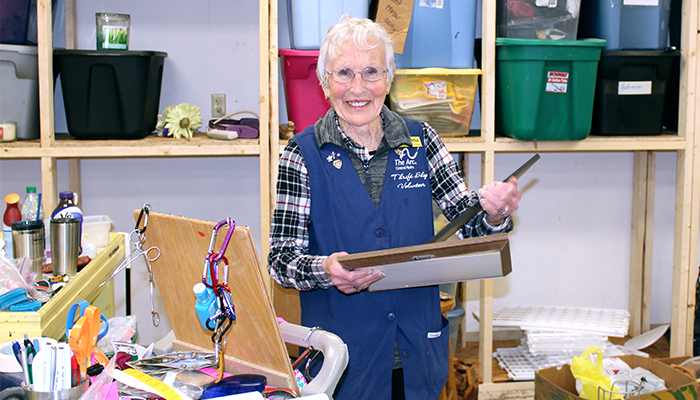
Clara Korbe has volunteered at the ARC Thrift Store for more than 47 years.

“I have been able to meet a lot of good people,” she said. “I guess I am nosy. I like to see what people donate.”

Clara Korbe shows off a pair of novelty glasses that were donated to the ARC Thrift Shop. After 47 years as a volunteer, Korbe said she still has fun.

She pulled out a pair of rose-colored glasses that were shaped like playing cards, a recent donation to the store. Korbe, who manages the seasonal donations, laughed recalling a donation of fake human butts that were donated to the store. Another volunteer piped in, saying the store sold the items.

After a volunteer works for 30 hours, they are eligible for a 50 percent discount at the store. Korbe said she definitely takes advantage of her discount. She she is probably one of the store’s best customers. She recently found a Harley Davidson bicycle for her grandson and often finds brand-name clothing or items in nearly new condition.

The ARC Thrift Store is the main source of revenue for the ARC program. With increased business at the store, ARC has been able to add more programing and is looking to add even more. ARC’s programing is offered at no cost to the participants.

The ARC has added two new sports to its athletics program—soccer and softball. Co-ed softball started last year with 25 athletes and is a Special Olympics sport, and soccer will be a local sport. In total, ARC sponsors seven sports with 70 athletes. The athletes are currently in track season.

Brent Kaiser, ARC activities director, said you do not have to have any experience as a coach or athlete to be Special Olympics volunteer.

Arc Thrift Shop volunteers box up merchandise for a customer. The shop is in most need of volunteer cashiers.

“You just have to have a passion for people with intellectual or developmental disabilities—a drive to help them improve their quality of life,” he said. You don’t have to be well-versed in sports. I have volunteers who have never played a sport in their lives.”

The program has about 10 core volunteers who volunteer for multiple sports, but Kaiser said he could use two to three more volunteers per sport. Kaiser said he would like to recruit some younger volunteers.

The time commitment is about an hour per week for practice. Each season the athletes have one regional meet on a Saturday and a three-day weekend state meet in a larger community such as Wichita or Kansas City.

When the ARC moved into the new building on Main Street, it began using one of the rooms for activities.

With additional revenue coming from the expanded thrift store, ARC was able to add a co-ed softball program last year. Photo courtesy of the ARC.

ARC has already used the space for dances, bingo, Lego building and a special needs Boy Scout/Girl Scout troop. ARC officials hope to use that space to add more non-athletic activities, and the group is looking for volunteers to lead those classes.

This could be classes such as sewing, basic cooking skills, financial literacy or crafts. The ARC provides all materials. ARC officials have also discussed adding a gym program for young children. Right now Kaiser is the only person ARC has available to lead these types of activities

Kaiser said the ARC’s goal is to provide opportunities for those who have disabilities to be able to thrive and improve their quality of life.

Kathy McAdoo, ARC executive director, said the group is trying to offer more opportunities for people with intellectual and developmental disabilities without duplicating services offered by groups such as the Hays Recreation Commission and Developmental Services of Northwest Kansas.

If you wish to volunteer for an activity or coach ARC sports, you can contact Kaiser at 785-628-8831 or email him at [email protected]. Those volunteering directly with developmentally disabled individuals will need to pass a background check and complete several short online courses.

Those who wish to volunteer at the thrift store can also call 785-628-8831 and speak to McAdoo or Hart. The store is open 9 a.m. to 4 p.m. Mondays through Saturdays.

Connect with the ARC on Facebook at The Arc of Central Plains Programs and Activities or The Arc of Central Plains Thrift Shop.
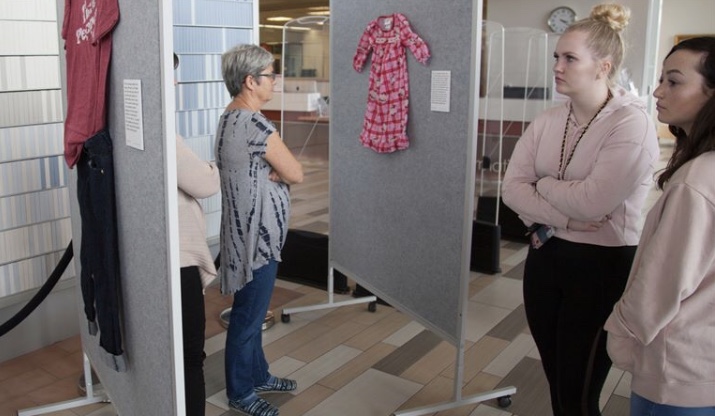
‘What Were You Wearing?’ exhibit takes aim at sexual assault myth

Submitted

“What were you wearing?”

Photos provided by Jana’s Campaign

It’s a question people ask survivors of sexual violence all too often—a question wrought with victim-blaming and an implication that, maybe, the survivor could have prevented their assault if they had worn something less revealing, less sexy.

To spotlight National Sexual Assault Awareness Month, three local organizations—Options Domestic and Sexual Violence Services, Jana’s Campaign, and the Fort Hays State University Women’s Leadership Project—have worked together to bring this Survivor Art Installation to Hays.

“We want students, or anyone, to view the show and to see themselves reflected in the outfits,” said Christie Brungardt from Jana’s Campaign. “…and put the blame where it belongs which is on the rapist, the person who’s caused the harm, rather than the victim.”

The Survivor Art Installation displays a collection of articles of clothing worn by sexual assault victims. Each story represents what each victim was wearing at the time of their assault. None of those outfits invited the people wearing them to be sexually assaulted.

Photos provided by Jana’s Campaign

This installation will be available for viewing from 11 a.m. to 4 p.m. Wednesday,  April 18 through Friday April, 20 at the Hays Arts Center Annex, 1010 Main St. in downtown Hays. The following week, the installation will be available for viewing from 9:30 a.m. to 5 p.m. Tuesday, April 24 and Wednesday, April 25 at FHSU in Forsyth Library, main floor on the west wall.

The National Sexual Violence Resource Center reports one in three women and one in six men in the United States have experienced some form of sexual violence in their lifetimes. On U.S. campuses, 20 to 25 percent of college women and 15 percent of college men are victims of forced sexual contact during their time in college.

Moran urges Trump to reconsider position on foreign trade

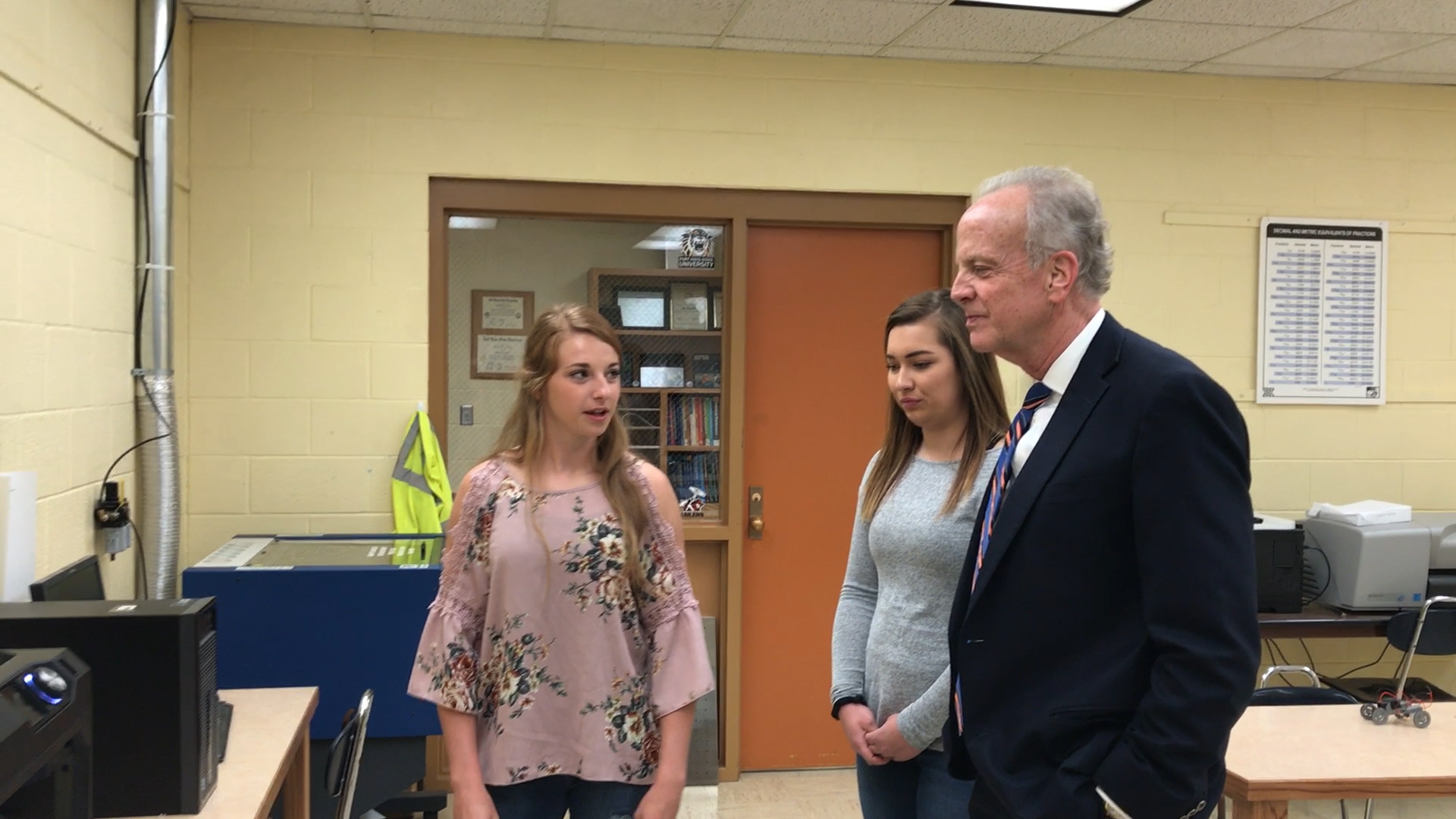
Ellis High School students Abby Burton and Haley Reiter talk to Sen. Jerry Moran, R-Kan., about the school’s 3-D printer during a school tour Friday. Moran will be back at EHS on May 12 to give the school’s commencement speech.

By CRISTINA JANNEY
Hays Post

Sen. Jerry Moran, R-Kan., said a trade war with China would be harmful to Kansas agriculture and urged President Trump in meetings Thursday to reconsider his position.

Moran met with the president in an agriculture round table Thursday at the White House. He talked about trade issues during a tour of Ellis High School Friday. Moran was in town to tour EHS in advance of speaking at the school’s commencement on May 12.

Trump seemed to soften Thursday on trade, directing his advisers to revisit the Trans-Pacific Partnership, a trade agreement between 11 Pacific countries. Trump spoke against the trade agreement during has campaign and withdrew the U.S. from the agreement negotiations last year.

Trump has instituted tariffs on Chinese steel, with China retaliating with sanctions on U.S. ag products including pork. China has suggested it may expand those restrictions to soybeans, an important Kansas crop.

Moran emphasized Friday the importance of foreign trade to the Kansas ag economy.

“Trade is important. Exports matter to us. We make a living in Kansas based on what we sell around the world. It is particularly true in agriculture, and with the difficult circumstance of commodity prices, lack of rain, the drought that we are in, we need more markets not less. I have been very vocal with my colleagues in the Senate and to the administration about the importance of maintaining a trade agreement called NAFTA and not getting in a tariff war with other countries.”

Moran said pulling out of the TPP negotiations was a mistake. Moran also said the U.S. needs to deal with China’s misdeeds against the U.S. economy, but a trade war is not the way to accomplish that.

“I think there is a need to deal with China,” Moran said. “They do not play by the rules. They steal our secrets. They take our technology. They attack us in cyber security ways. In my view, those things need to be much more targeted than just tariffs.”

The U.S. can isolate China if it engages with other countries, and Moran said TPP is a perfect example of this.

Moran told the president farmers need reassurance.

“There is a lot of uncertainty out there generally in agriculture, but you add not knowing if world markets are going to be available. … Here is a way, Mr. President, that you can reassure farmers that markets are going to be available to them even as we engage with China,” Moran said.

The U.S. needs to continue to work with Canada and Mexico through NAFTA and the European Union, he said.

Moran said Trump seemed receptive to opening up a dialogue on TPP. However, Moran added, “We need to make sure the administration pursues what they indicated yesterday.”

Some Kansans may prefer to not engage globally, Moran said.

“I respond to that by saying, ‘What 48 percent of Kansas do you not want to plant in wheat?'” Moran said. “We can produce more than Americans can consume, and the only way we can continue to be farming communities like Ellis and the surrounding area is when we have access to world markets. We need more markets not less.”

The president said at the roundtable Thursday if farmers are injured in a trade war, the federal government would find a program to compensate them for their loses.

“It was always communicated to the President, ‘Mr. President our farmers don’t want another check from the government. They want to earn their livings in the markets,'” Moran said. “My point would be don’t create a problem through lack of trade and try to figure out how to spend money to solve the problem. Just don’t create the problem in the first place.”

Moran also commented briefly on the House Farm Bill that was released Thursday. He said he continues to have concerns about maintaining crop insurance and getting payments to farmers in a timely manner, saying some farmers have waited as a long as a year for federal payments.

The earliest the Senate is likely to pass its version of the Farm Bill is May. The current Farm Bill expires in September.

Moran was invited to speak at graduation by senior Haley Reiter. Reiter and Abby Burton, fellow senior, with the EHS principal Corey Burton and Ellis superintendent Bob Young led Moran on school tour.

Moran talked to teachers and the students about the importance of technical education in Kansas’ ag economy. Moran toured the woodshop and machine shop as well as visited the tech room where students had used a 3-D printer to construct remote-controlled cars.

Ellis also offers college-credit courses through an agreement with NCKTech, and the students discussed the use of technology to take online courses, including Intro to Business and Spanish.

🎥 City pays for option to purchase land for development; realtors not happy

Hays real estate broker Doug Williams

By BECKY KISER
Hays Post

“It’s not the role that city government should be playing,” believes a longtime Hays real estate broker.

When Doug Williams heard from an acquaintance the city of Hays was considering paying for an option to buy land at 27th Street and Commerce Parkway, he “told them they were crazy, that the city would never get into the real estate speculation business.”

“Turns out, I was wrong.”

Tami Norris, Advanced Real Estate

Williams and Tami Norris of Advanced Real Estate spoke against the idea Thursday night prior to the Hays city commission’s unanimous vote in favor of the option. Several other local realtors were in the audience but did not speak.

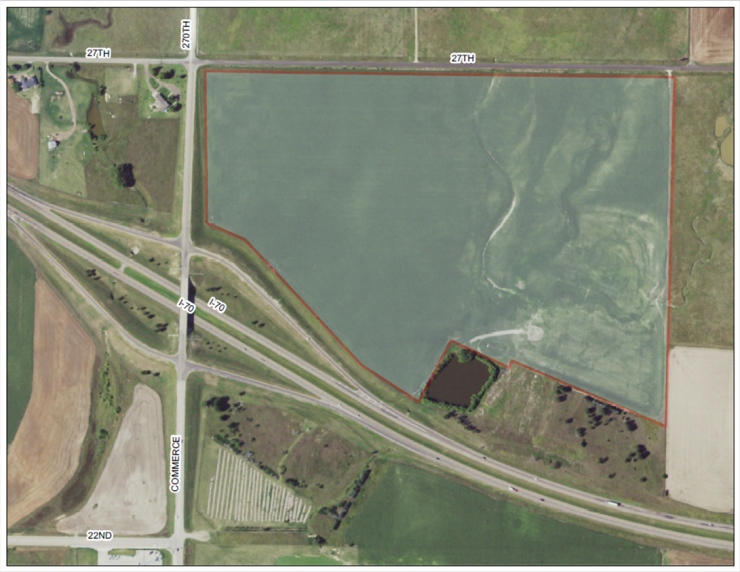
The city has been offered an exclusive 18-month option of $50,000 to purchase 93 acres at the northeast corner of 27th Street and Commerce Parkway north of Interstate 70. The land purchase price is $800,000.

Noting a sizable amount of empty retail space in town and the city’s support of infill over new development, Williams told commissioners he was “baffled” why the city would consider such a concept.

“This land is for sale for anybody to purchase. Why would the city buying it make any difference?” asked Williams.

“We’ve heard over and over that land prices are high. And as soon as anybody is interested in it – look at the (former) Ambassador Hotel – the land price triples. These have been consistently quoted to us by several developers as the things that are stopping development,” answered Commissioner Chris Dinkel.

“Sure. We’d like someone else to just go buy this property from the current owner and develop it…The city can get this land and have it developable for a minor fraction of what everyone else is asking for land. If land prices are truly what is keeping the town from developing, then this will develop. If this does not develop in 18 months or nobody’s on the line for it in 18 months, then land prices aren’t the issue and we need to start looking at another direction and another way to stimulate development.”

City commissioner Shaun Musil explains his support of a potential city land purchase for development.

“If land prices really are the issue, this is an excellent and affordable experiment in testing that logic for why we’re not growing,” Dinkel concluded.

Last month commissioners hired Retail Strategies of Birmingham, Alabama, to conduct a retail gap analysis and then recruit new businesses to Hays. “If the city were to have title to this piece of property, it could more easily facilitate the location of future retail in that area,” City Manager Toby Dougherty said recently.

The city would have the choice of extending nearby infrastructure and marketing the property or to work with a developer for the property.

“This is a matter of things falling in place at a certain time,” said Commissioner Sandy Jacobs. “I’ve been involved in retail all of my career and I understand development. This is a well-priced piece of property. There’s some housing area out there that could be developed. It’s another back door into the north Vine business corridor.

The city of Hays will pay $50,000 for an option to purchase 93 acres of land just north of I-70.

“I don’t want the city getting involved in this kind of thing any more than anybody else does. But I think this is an opportunity, not from a political standpoint but from doing what is right for the community of Hays, that we take this chance. And there is risk. We admit that. But it’s a small risk in terms of what the reward could be.”

Williams thinks “there’s a lot better chance to fill the 150,000 square feet of empty building space and some north Vine Street property” than the city’s possible land purchase.

“We built a street (Commerce Parkway) and created an industrial park. We created a non-profit entity that developed land for a scaffolding company, a call center, Glassman Corporation, the Army Reserve Center.

“The city has been in the real estate business for 50-some years,” Schwaller said. “So this isn’t new.”

The option money will be paid from the Commission Capital Reserve Fund, as would the land purchase.

Record-setting effort highlights national runner-up finish for FHSU Shotgun Team

Team has members from Colorado, Nebraska, California, Wisconsin, Kansas

By DIANE GASPER O’BRIEN
FHSU University Relations and Marketing

When his team finishes in the top five at nationals for 10 consecutive years, a coach tends to have high expectations for post-season action.

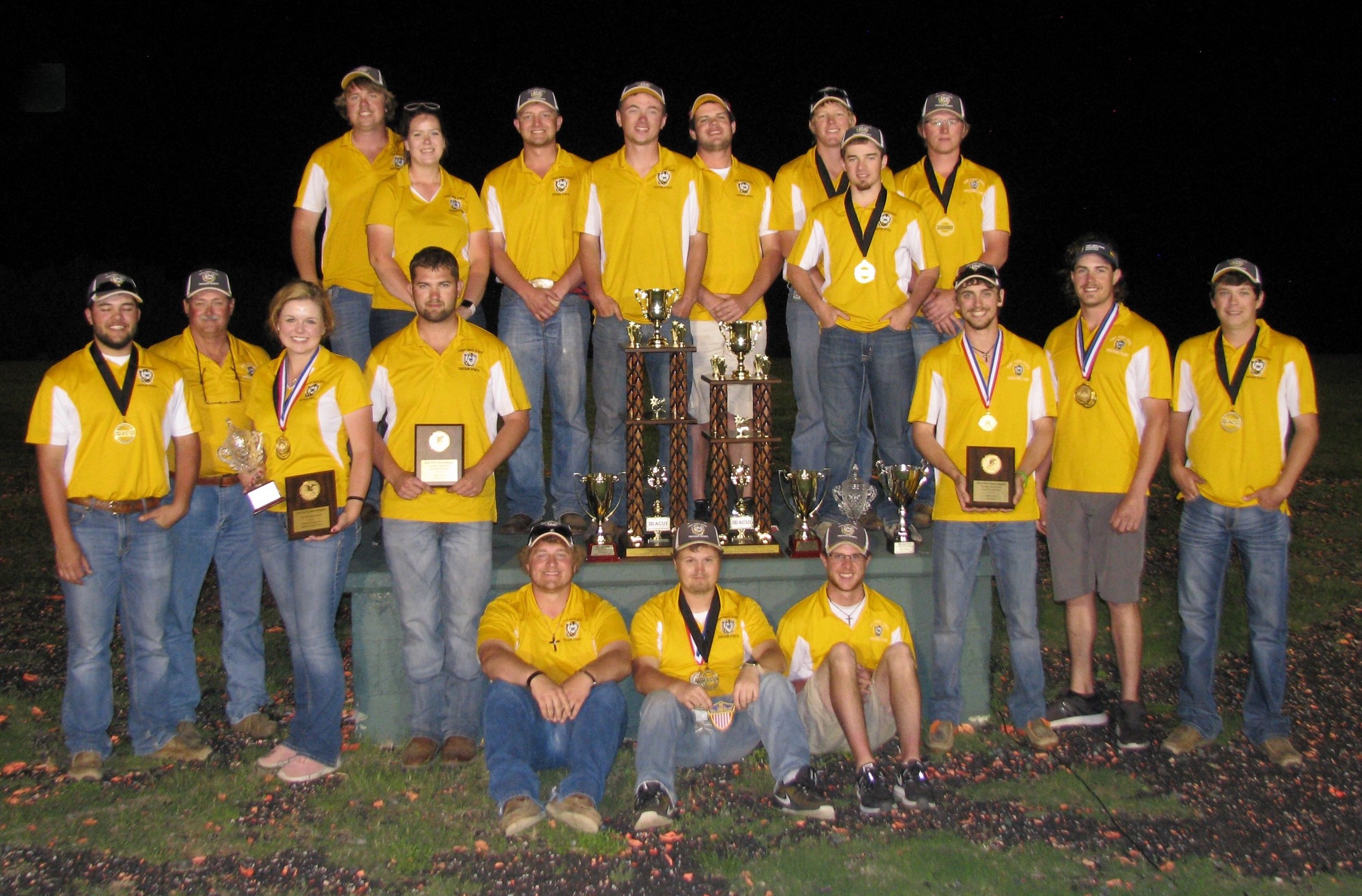
The Fort Hays State University Shotgun Team didn’t disappoint Dr. Duane Shepherd the last week of March at the Association of College Unions International (ACUI) Collegiate Clay Target Championships in San Antonio.

The team of American Skeet shooters recorded a near perfect score of 499 out of 500 to win that event. That set a tournament record and also is FHSU’s best score in the history of the sport, surpassing the club’s previous best mark of 496.

That performance propelled FHSU into second place overall among Division II schools. It marked the fifth runner-up national finish for Fort Hays State since 2011 to go along with three national titles. Two of those national championships have come in ACUI competition, while the other came in the fall of 2016 at the Scholarship Clay Target Program (SCTP) season finale.

Shepherd, an assistant professor health and human performance at FHSU who is in his 13th year of coaching the team, calls this his deepest squad ever.

“We have kids all across the board putting up big numbers,” he said. “We’ve had several shoot 100s, but the thing is can they all do it at the same time?”

They did last week in American Skeet when Michael Saint, Wyatt Pursell, Riley Ross and Austin Svoboda all shot perfect 100s, and Cody Escritt was just one point shy of perfection with a 99.

“I’m really not too amazed at anything these kids accomplish,” Shepherd said. “The great thing is, not only are they quality shooters, they are quality young men and women.”

The majority of the FHSU squad is made up of men, but one of the women on the team records some of the top scores on the team.

Heather Gordon, a sophomore from Pine Valley, Calif., was part of two first-place teams and recorded the highest overall (HOA) score for women in trap events. Svoboda, a senior from Burwell, Neb., also earned HOA honors in combined American events for men. In all, Svoboda was part of three championship teams at nationals and helped two others place third en route to earning first-place All-America honors.

Ross earned second-team All-America honors, while Escritt and Saint made the honorable mention list. Ross, a freshman from St. Paul, Neb., brought home one of the top individual honors by winning the long target contest.

It was the fifth All-America effort in as many tries for Svoboda. But he is quick to give the entire squad credit for FHSU’s success.

“It’s fun because we haven’t had this deep of team until this year,” he said. “We’re all pretty well best friends and have the same common interests, so it makes the trips fun. I get to do what I love with friends.”

The trip to San Antonio was the second fun, and successful, one to that city in an eight-week span for Svoboda and Co. In February, FHSU swept all three events en route to winning the ACUI Lower Midwest Conference Championship in San Antonio.

Four weeks later, Fort Hays State won all six events at the ACUI Clay Targets Western Super Shoot in Tucson, Ariz. FHSU was led by Svoboda and Gordon, who won HOA honors in both International and American events for male and female shooters, respectively.

That meet then was followed by another impressive showing at nationals.

“It’s been a great spring for sure,” Svoboda said, “but everyone’s a little bummed how we did at nationals. We thought we could have done better and won it all.”

Students are able to compete in shooting sports six years in college, so Svoboda is looking forward to his final collegiate competition during the 2018-19 school year.

“We’ll have the same team next year, so we’ll be hungry,” said Svoboda, who is set to graduate with a degree in construction technology this December.

Svoboda knew he wanted to participate in either football or shooting sports in college after growing up with both – he played football since grade school and participated in shooting sports as a youngster in 4-H, then in high school as well. After he was injured in football during his senior year of high school, he decided to look for a school that offered construction technology degree and a solid shooting sports team as well. He found both at Fort Hays State.

“That’s the way it works for a lot of our students,” Shepherd said. “They’re looking for a college that has a good reputation in their major field of study and a good shooting sports team. We’re very blessed to have the number of degree programs that we offer here at Fort Hays State and that we have the opportunity to compete at the highest levels in shooting sports, too.”

Following are the names of students who competed at nationals and the regional meet in meet – and the results from both events.

National and Regional Super Shoot competitors
Akron, Colo. (80720): Jenny Schoenecker, junior (nationals)
Aurora, Neb. (68818): Lane Sorensen, freshman (nationals)
Burwell, Neb. (68823): Austin Svoboda, senior (both)
Cambridge, Neb. (69022): Jake Whipple, junior (both)
Crete, Neb. (68333): Caleb Scholz, senior (nationals)
Colby (67701): Keegan Morgan, junior (both)
Cole Ziegelmeier, freshman (nationals)
Jay Ziegelmeier, Colby (both)
Janesville, Wis. (53548): Luke Heinzen, sophomore (both)
Jewell (66949): Michael Saint, senior (both)
Minneola (67865): Jerrod Lies, senior (both)
Pine Valley, Calif. (92036): Heather Gordon, sophomore (both)
Pleasanton (66075): Hunter Secrest, freshman (nationals)
Pleasanton, Neb. (68869): Cody Escritt, senior (both)
St. Paul, Neb. (68873): Riley Ross, freshman (both)
Topeka (66610): Wyatt Pursell, sophomore (both)
Yoder (67585): Cordell Waggoner, freshman (nationals)

FHSU national results
(ACUI Collegiate Clay Target Championships)
Individual awards
• Gordon – third, American trap (women) and third, Olympic ISO ladies bunker; HOA combined trap events (women).
• Svoboda – NRA first team All-American; HOA combined American events (men).
• Ross – First, long target contest; second, American Skeet; NRA second team All-American.
• Escritt – NRA honorable mention All-American.
• Pursell – third, American skeet.
• Saint – NRA honorable mention All-American.
Team awards
• HOA (highest overall) – second, Division II.
• American skeet – first: Escritt, Pursell, Ross, Saint, Svoboda (499 of 500).
• American trap – first: Gordon, Morgan, Secrest, Svoboda, Waggoner (492 of 500).
• International trap – first: Gordon, Lies, Svoboda.
• International skeet – third: Pursell, Saint, J. Ziegelmeier.
• Sporting clays – third: Escritt, Lies, Pursell, Ross, Svoboda.
• Super shoot – third: Escritt, Lies, Saint, Ross, Svoboda.

FHSU regional results
(ACUI Clay Targets Western Super Shoot)
Individual awards
• Escritt – first, super sporting; second, sporting clays; third, international skeet.
• Gordon (women’s division) – HOA female International and American events; first in trap, skeet, sporting clays and international trap; second in super sporting; third in international skeet.
• Lies – third, skeet and super sporting.
• Svoboda – HOA male International and American events; first, sporting clays and international trap; second, trap.
• J. Ziegelmeier – second, skeet and super sporting; third, trap and international trap.
HOA team awards
• International skeet – Escritt, Lies, Ross, Svoboda, Whipple.
• International trap – Lies, Pursell, Ross, Svoboda, J. Ziegelmeier.
• American trap, skeet and sporting clays (combined) – Gordon, Lies, Saint, Svoboda, J. Ziegelmeier.

Hays superintendent: Capital funds not enough to meet building needs

By CRISTINA JANNEY
Hays Post

The Hays USD 489 superintendent said the capital outlay budget is not enough to keep up with the district’s building needs in a report to the school board Monday.

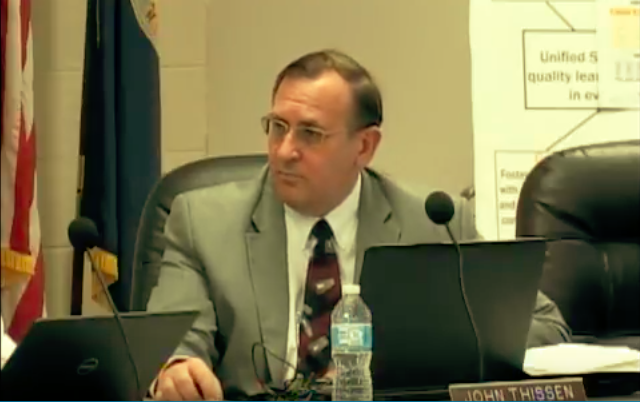
Superintendent John Thissen said the district has not neglected maintenance, saying the district simply does not have enough money to make all the needed repairs.

“The district this size with the number of buildings it has and the age of the buildings, you can’t conceivably tend to those needs with $2.5 million on a yearly basis. We disappoint our principals on a yearly basis because we can’t tend to what needs to be done because we are the ones trying to prioritize what is most important,” he said.

The last bond election for a new building was almost 40 years ago for Hays High School. Two bonds have failed in the last two years.

Thissen said there is a public misconception about the building needs in the district.

“When I first came in two years ago, people said there was a mistake that was made in this district of not fixing the needs every year as they came up. I would go so far as to say they have,” he said. “They have fixed things and made things work. It is actually very admirable you have people over time who have made the buildings work as they are and try to do it as effectively with the dollar amount as you possibly can.”

Thissen said a district of Hays’ size probably would have had another new building in that 40 years since the last major bond.

“We are at a spot that seems very dire. We are always talking about having a bond election to try to make some improvements, but I assure you it is not different from the districts I have come from. …

“The difficulty is there are some who think we can end up running our district on just the money that comes from the state. What is sad is that I don’t believe that is true. There is a push that (schools are funded) locally including the local option budget … and bond elections as well,” Thissen said.

The school district has estimated capital outlay revenue of $2.51 million in fiscal year 2018 and $2.85 million in 2019. With carry over, the available balance in the capital outlay fund would be about $5.66 million in 2018 and $4.48 million in 2019. Carry over numbers are estimates and may be reduced by unforeseen repair needs.

USD 489 capital outlay budget for FY2018 and FY2019

Thissen said he thought keeping a balance in the capital outlay fund is important in case of unforeseen expenses. A prime example is a recent water main break at the high school. The break closed school for a day last week.

The school is currently operating on one water source instead of two. The district plans to replace the broken main this summer. Thissen said he is unsure of the exact cost of the project, but was sure it would exceed the $20,000 mark the district has set to send projects out for bid. Insurance might pay part of the cost.

The district is also facing significant problems with plumbing at Roosevelt Elementary School and issues with windows at Wilson that have not been budgeted.

Among some of the larger line items in the capital outlay budget, $910,000 is budgeted in 2018 and 2019 for building repairs, parking lots, roofs, HVAC repairs and lighting. The budget has dedicated $520,000 in 2018 for repairs to the Hays High School HVAC system. Transportation will account for $317,000 in both 2018 and 2019.

If the district receives more funding under the state’s new funding plan, it could move $284,000 in salaries and benefits for maintenance staff from the capital outlay budget to the general fund budget. This would free up that money to be used on more deferred maintenance projects.

Board member Greg Schwartz asked Rusty Lindsay, buildings and grounds director, to give a broad estimate of the district’s deferred maintenance. Lindsay said he thought it was about $20 million.

Schwartz said, “Right now, it seems like we are trying to plug a few holes here and there and we are constantly behind, and I understand that we have tried to sell two bonds that have failed. If they continue to fail, we continue to be in that same boat. It just doesn’t seem like we make any progress.”

The board discussed technology spending Monday night as well, including a $335,750 expenditure on new computers for Hays High students. The district technology committee has recommended buying Dell two-in-one laptops. However, Schwartz and board president Lance Bickle have advocated purchasing Chromebooks, which would be cheaper than the Dells. The administration and the tech committee have argued the Chromebooks don’t meet the educational needs of he students.

“We have always been on the cutting edge, and some would argue the bleeding edge, of technology expenditures for the last 13 years,” Schwartz said. “I think one of the new areas that is coming in technology is bring-your-own device, but we don’t want to be on that. We don’t look at spending on a Google Chromebooks instead of a Dell.”

Schwartz said either plan could result in substantial savings, which could go to building projects or transportation.

The board is set to vote on the computer purchase at its next meeting on April 30.

The board approved a $42,541 bid from American Electric Co. to replace lighting at Roosevelt Elementary School. The district hopes to save on electricity costs and replacement bulbs by going to longer-lasting LED fixtures. Lindsay said he also hopes to purchase and install light controls, which will allow the district to use the networking capability of the lights. This will allow the school to use timers to dim the lights and use sunlight as much as possible for a further savings.

Lindsay bid specific lights that matched the lights that have been replaced at the high school and other buildings. He said he has attempted to standardize as many fixtures in the district as possible because it requires the district to keep fewer parts on hand and provides for more speedy repairs.

Bickle voted against the purchase, saying the district bidding specific parts and brand names has led to the district paying more for equipment. He favored the district using one of the other vendors who bid for the project, but who were disqualified because they did not meet specifications. Bickle argued some companies can’t meet bid specs because brand name parts are being requested.

The lights are set to replaced at Roosevelt this summer.

The district also heard a report on a bid for roof repairs at Hays Middle School. Staff is recommending the low bid with alternates of $189,204 from High Plains Roofing of Hays. Roosevelt and HMS are the oldest roofs in the district and where the district is experiencing the most roof leaks, Lindsay said. This repair would fix the roof over the classroom areas.

The board is set to vote on the bid at its next meeting.

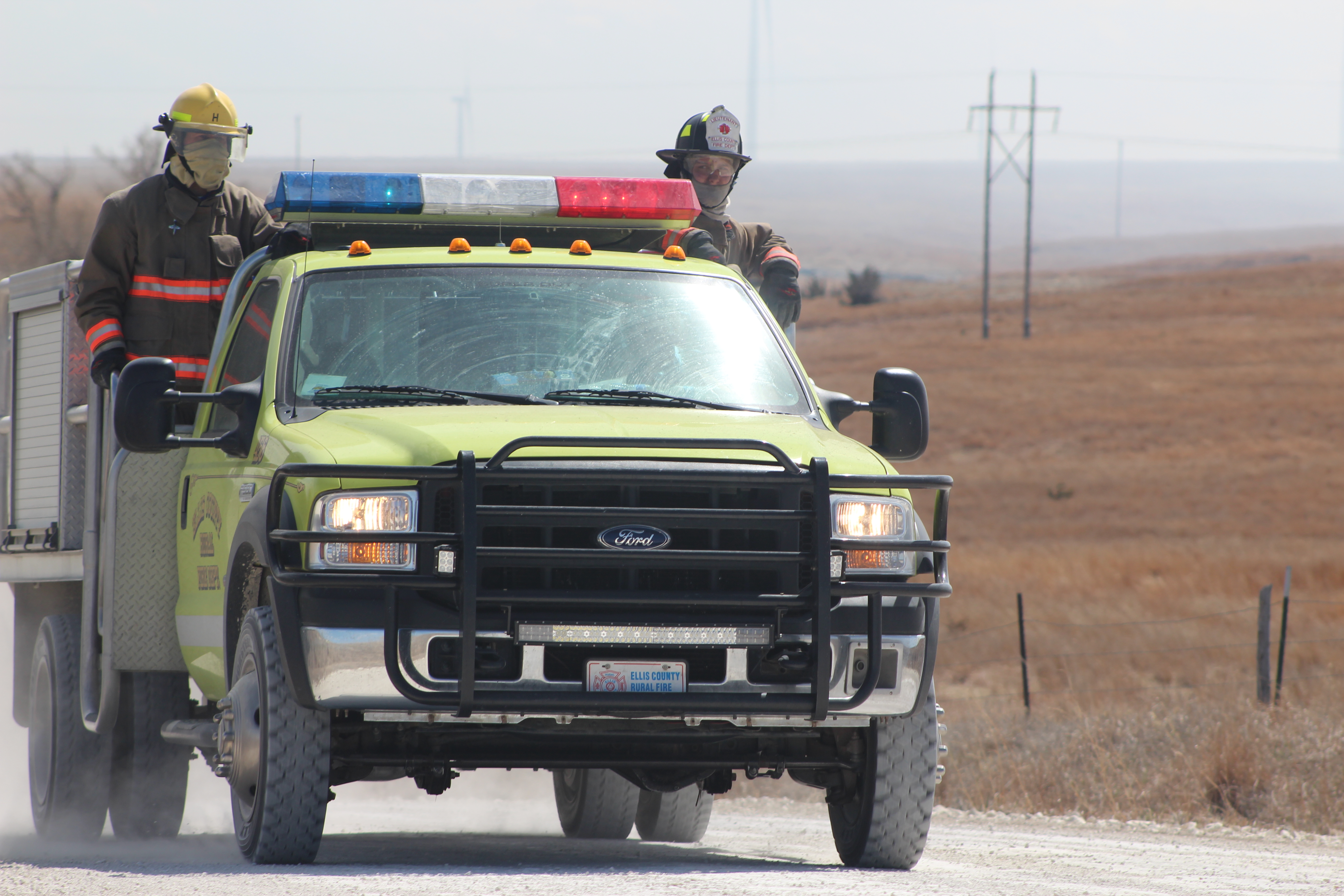
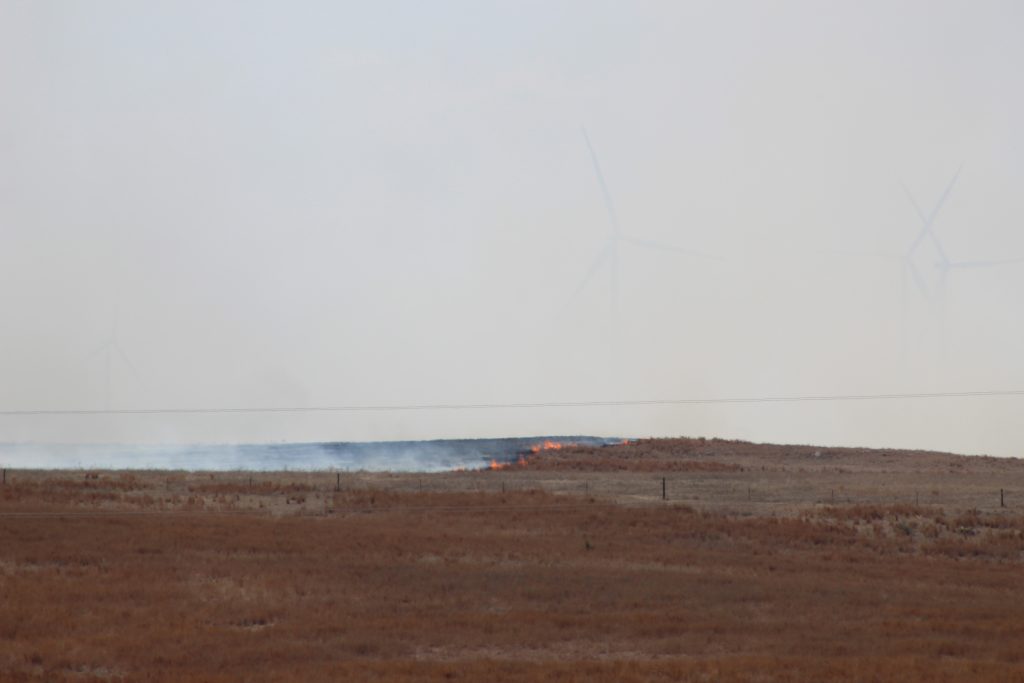
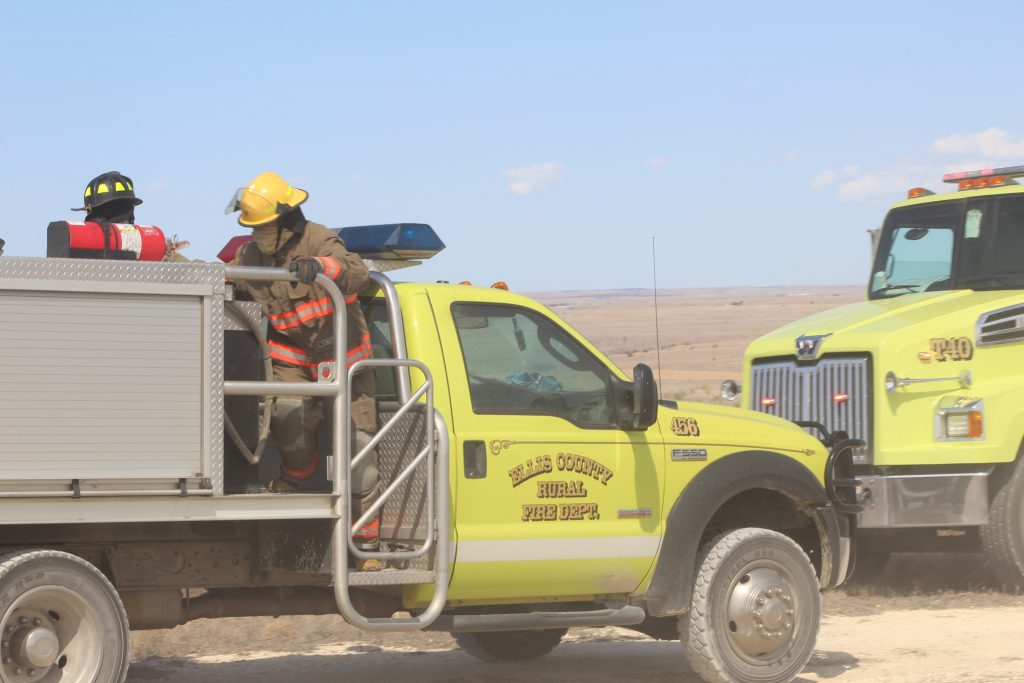
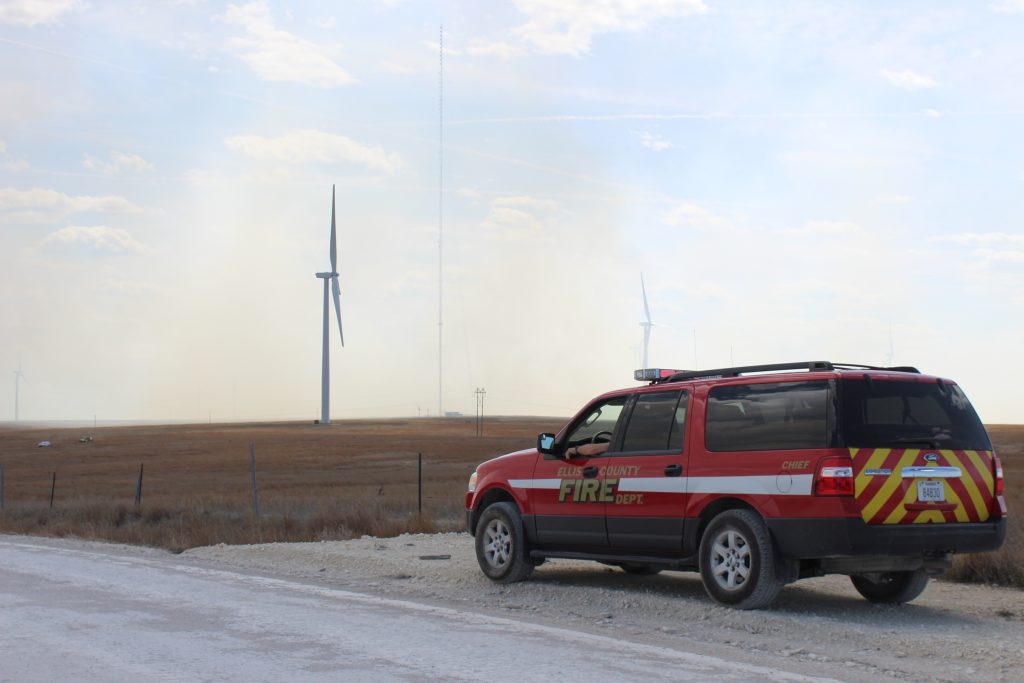
UPDATE: Fire crews fight grass fire in northwest Ellis County

UPDATE 7:18 a.m. – Fire crews remain on scene Wednesday morning monitoring flare ups after a large grass fire in northwest Ellis County.

According to Ellis County Director of Fire and Emergency Management Darin Myers, the fire started near construction equipment crews working near 150th Avenue and Severin Road.

The quickly became out of control and traveled about 4.5 miles to the east where fire crews finally got it stopped at Yocemento Avenue. Crews battled rough terrain and limited roads in the area as well as high winds and very dry grass.

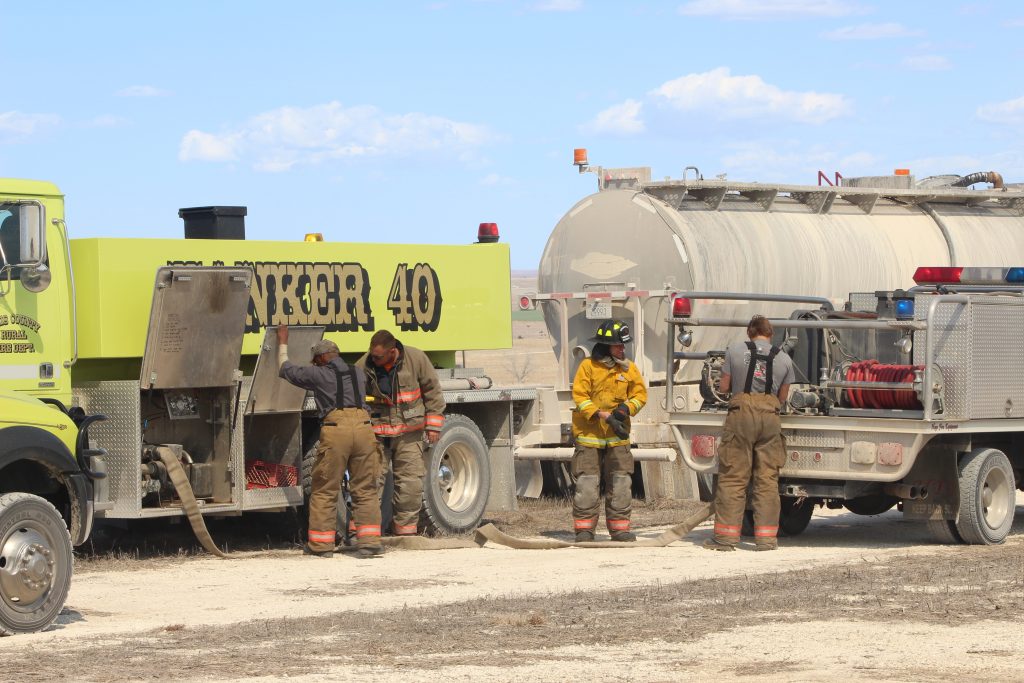
Crews from Ness, Trego, Graham, Rooks and Russell counties, along with the Hays Fire Department, provided mutual aid. The Red Cross, Ellis County Sheriff’s Office, Public Works and EMS also assisted.

They also received local support from farm implements and businesses hauling water.

Myers said one firefighter was injured and taken to Hays Medical Center for evaluation. He has since been released.

The majority of the fire crews were released around 3 a.m.

Myers said Ellis County crews will most likely return throughout the next several days to clean up hot spots.

————–

By CRISTINA JANNEY
Hays Post

Area fire crews are on the scene of a large grass fire in the northwest section of Ellis County as of about 3:45 p.m., the fire was in the area of St. John/St. Andrew Road and 170th Road.

It is unknown at this time if any structures have been affected.

Area residents are asked to stay clear of the area at this time.

The fire was being fanned by wind gusts of 24 miles per hour. Dry conditions persist in the area. Hays has received only 1.41 inches of moisture since January.

🎥 Hays students ‘Treasure Our Water’

6th grader Hailey Klein, a second place winner, is congratulated by Hays city commissioners.

By BECKY KISER
Hays Post

Students in Hays are learning to “Treasure Our Water” and can even earn rewards for promoting the concept.

Under requirements of Hays’ Municipal Separate Storm Sewer System (MS4) permit from the Environmental Protection Agency (EPA), the city is required to provide educational offerings to the community about the value of improving water quality.

The past four years, a water quality poster contest has been offered by the city in partnership with Kansas State University Big Creek Middle Smoky Hill River Watersheds for school children and young adults in grades pre-K through college.

“Everything in the water in Hays drains into Kanopolis Reservoir, a federal water supply,” explained Stacie Minson, KSU Watersheds Specialist, WaKeeney.

“Several years ago, we looked at how we could get young residents engaged and looking at water, how they can conserve it and how they can protect it. That’s how the water poster contest came into play.”

Payton Stoppel, FHSU, 3rd place

There were 201 entries this year. The artists had to use the “Treasure Our Water” theme as the poster title and explain two important issues about water. Entries were judged on their water conservation/quality message, visual effectiveness, originality, and universal appeal.

“They could focus on water quality, addressing things such as picking up pet waste and knowing how to fertilize lawns correctly. Water conservation could also be used featuring things like water barrels, shutting off the water when you brush your teeth, and knowing when it’s the right time to water the lawn,” Minson told Hays city commissioners last week.

“Our students are picking these things up. They’re eventually going to become the leaders of the city of Hays so it’s important that we engage them.”

Thomas Schleicher, 1st grade, 2nd place

Many of the winners were present at Thursday’s commission work session to be recognized and shake hands with the commissioners.

They were rewarded with Chamber Cheques from the Hays Area Chamber of Commerce, good for spending at more than 500 local business members. Creators of the first-place posters also won a food party for their respective classes.

The monies are funded by the city/KSU Watersheds collaboration.

KSU Watersheds Specialist Stacie Minson shows placemats made from previous water poster designs.

The first year of the contest, the winning posters printed as wall calendars. The winners’ posters in 2016 and 2017 were made into paper placemats and distributed to Hays businesses. The placemats are still available by contacting Minson.

This year’s 201 winning posters will be displayed during the April 27th Hays Arts Council Spring Art Walk, with the location yet to be determined. They will also be displayed at the Ellis County Fair July 14-21.

Minson and Holly Dickman, Hays Water Conservation Specialist, gave a big thanks to Hays teachers for incorporating the contest into their curriculums.

Isabelle Jones, 5th grade, 1st place

“This would not be possible if the teachers didn’t share this with their students in school and encourage them to participate,” Minson said.

“Several teachers let Holly and me come into their classrooms and present issues tied to water quality and water conservation so the kids have a better understanding.”

Minson then turned to the crowd behind her in the packed commission chambers. “And for you as parents, hopefully they’re bringing those messages home to all of you as well,” she said with a big smile.

A complete list of the contest winners is available by clicking on 2018 Water Poster Entries Summary.

Hays school board considers purchase of new student computers at HHS

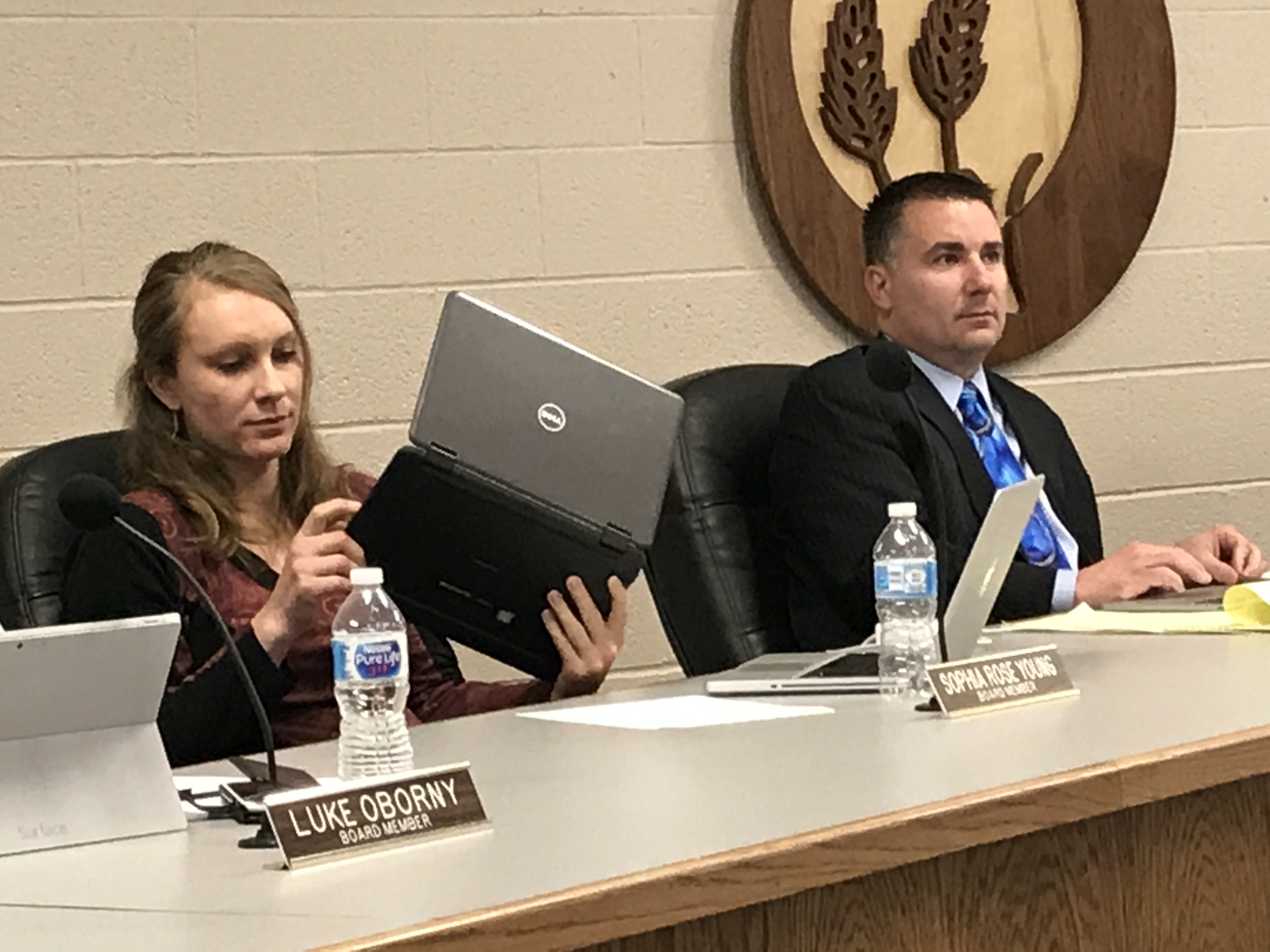
Hays school board member Sophia Rose Young looks at a Dell laptop that the board is considering to replace student computers at Hays High School.

By CRISTINA JANNEY
Hays Post

The Hays USD 489 school board continued its debate over spending $335,750 on laptop computers for students at Hays High School at its meeting Monday night.

The district’s technology committee is recommending selling its current Microsoft Surface tablets in favor of purchasing Dell Latitude 3189 two-in-one laptops. Sale of the Surfaces would reduce the cost of the project to an estimated $258,000.

Scott Summers, technology director, said the district has had problems with the Surfaces and had to send many back to Microsoft for manufacturing defects. The warranty on the Surfaces runs out at the end of the year.

Some board members questioned the choice of device and asked why the committee had not considered Chromebooks, which are less expensive.

Board member Greg Schwartz wanted to know how the recommended computers with their touch-screen capability integrated into classroom instruction.

“I have an iPad and I use it to take notes on too, but it is a very expensive notepad,” he said. “That is my concern is that is if that is all we are doing is taking notes on it and it doesn’t integrate into education, that is approximately $200,000 of money we are spending on a device that we could be spending on deferred maintenance or other items. (We could) still be giving the kids the opportunity to have the technology in their hands, but maybe not the latest and greatest and best, but something that is adequate and fits their needs.”

HHS Principal Martin Straub said the Dell laptops were the best device for the price that meets the teachers’ and students’ needs. He said the computers fit how the students are learning and engaging with technology.

Board member Paul Adams, who has children in high school and volunteers with high school students, said he has seen the students seamlessly switching between text mode and tablet mode. He said students are using the devices to put together videos and PowerPoint presentations for extracurricular activities that are important to the civic engagement piece of the new state assessment standards.

Schwartz came back to the issue of money.

“It is difficult to understand how we are going to justify asking the taxpayers to spend more on a monthly basis when we aren’t willing to look at sacrificing anything,” he said.

Schwartz went further to suggest the district have a bring-your-own device policy. Families who could not afford a device would be provided a device such as a Chromebook.

Adams said he thought the board should trust the committee of educators who have researched the needs of the students and teachers.

Assistant Superintendent Shanna Dinkel said the technology committee considered Chromebooks when it made its first purchase of computers but determined they did not meet students’ educational needs. Therefore, the committee did not consider the Chromebooks in this round of purchasing.

Board president Lance Bickle argued technology has become web-based, and Chromebooks would satisfy the needs of students today.

“Going through the budgets, every little bit counts,” he said. “If we can save $50,000 or $100,000 here that can go toward (other things) … it is hard to argue. $200,000 is $200,000, and it could be used for other needs in our district. I hope people keep that in mind that we have to look at all aspects not just technology.”

He also said he would like to look at the five-year capital needs review that is coming up at the board’s April 30 meeting before making a decision on the computer purchase.

Board member Mandy Fox asked Straub if the computer purchase is the top capital need at the high school.

“I don’t think we can sacrifice instruction, because we have great building needs,” Straub said.

He added the money being budgeted for computers would not solve all of the maintenance needs in the district.

Straub noted the school has had two of the highest ACT scores the school has ever had in the last two years. Increased scores can’t be attributed entirely to technology, but he said the computers play into how teachers teach and students learn.

The board asked the technology committee to bring back information about why Chromebooks were not considered to its next meeting. The board is set to vote on the computer purchase at its April 30 meeting.

🎥 Hays enthusiasts rally for return of horseshoe pits

The proposed 18 sanctioned horseshoe pits at Bickle-Schmidt Sports Complex.

By BECKY KISER
Hays Post

“If you build it, they will come.”

Hays resident Jim Mortinger is an avid pitcher – not of baseballs, but of horseshoes.

In front of a standing-room only crowd last Thursday, Mortinger and other horseshoe enthusiasts from across the state urged the Hays City Commission to build an 18-pit horseshoe field at the Bickle-Schmidt Sports Complex.

They would be the only sanctioned pits in Kansas west of Salina.

Former horseshoe pits near the dike in Frontier Park

A local sanctioned horseshoe pitching league was established in Hays in the 1980s. They played at nine horseshoe pits in Frontier Park. The pits were removed by the city in 2004 during expansion of the Wild West Festival grounds and never relocated. Back then, there were about 150 members of the Hays club, some of whom lived in other communities, according to Mortinger.

This will be the 32nd year Mortinger participates in the Kansas Horseshoe Pitchers Association state tournament which is held in various locations across Kansas over Labor Day weekend. He figures it’s time to bring it home to Hays.

“The two to three day event in September generally draws about 135 pitchers and their families. They usually spend the night. They eat, they shop and spend time sight-seeing.”

Salina hosted the state tourney in 2015, with an estimated $60,000 spent locally, according to city statistics cited by Mortinger. Salina was also the site of the 2016 state tournament.

Clubs in Kansas generally hold local tournaments once a month. Mortinger said he usually goes to Salina five times a month to play, and also drives to Lawrence and Topeka for games.

Mortinger also wants a new Hays Horseshoes League to work with Fort Hays State University and the Hays Recreation Commission to conduct training and lessons for all ages.

“Parents and grandparents can share this great outdoor recreation with their kids, spending quality time together,” Mortinger said. “Horseshoes is a dynamic sport for all ages, genders and physical abilities and has been a part of our heritage for many generations.” He’s pitched with families who have three generations of active players.

Cadets start at age 6 and pitch half the length of the regulation 40-foot court. Mortinger estimated there are currently between 30 and 50 Cadets in the area.

Natoma native Ted Allen

Kansas has a wide reputation in the sport of horseshoes. Mortinger talked about Natoma native Ted Allen, a 10-time world champion horseshoe pitcher who manufactured his own brand of pitching shoes. Allen died in 1990.

The desired location at the sports complex is adjacent to the concession stand. Plans also call for lighting, fencing and two pits designed for handicap accessibility. “We think this would be a wonderful asset to the city of Hays,” said Mortinger.

The project was championed by the 2016 Leadership Hays class. Using research done in 2015 by Mortinger and other local players, the cost estimate for 18 horseshoe pits was $67,463.

He knows prices will have gone up. “Today, we’re probably looking at somewhere between $100,00 and $200,000 for a turnkey job.”

If the city approves the project, Mortinger said the Hays Area Horseshoes Association would be formed to gain official sanction of the pits from state and national governing bodies for state and local tournaments.

“This reminds me of our Frisbee golf course in Frontier Park,” said Mayor James Meier. “I don’t think people know how many people that thing brings to town. I see this as kind of the same thing.”

“It’s also a quality of life issue,” added Commissioner Sandy Jacobs. “I think this is a really cool deal. I had no idea there were so many people pitching horseshoes.”

According to Finance Director Kim Rupp, the Parks Department budget still has more than $1 million in reserve from the sports complex sales tax. “If we look at the Special Parks budget instead, I think we’d have to drop off some of our other projects to make this happen,” said Parks Director Jeff Boyle.

Vice-Mayor Henry Schwaller, who was approached by the local group, wants them to help finance the project.

“Let’s handle this as we did the Hays Dog Park,” Schwaller suggested, “saying we endorse and support it, and the city will maintain it. But we need their help and give them a window time, say 24 months, to raise the money and make it happen.”

Schwaller thinks the city should contribute a “significant amount to the cost, but I want to see what they can do.”

“I think our grant prospects are still out there,” Mortinger replied.

The issue will be added to the agenda of an upcoming regular city commission meeting.

Labor study: Local workers willing to switch jobs for better opportunities

By CRISTINA JANNEY
Hays Post

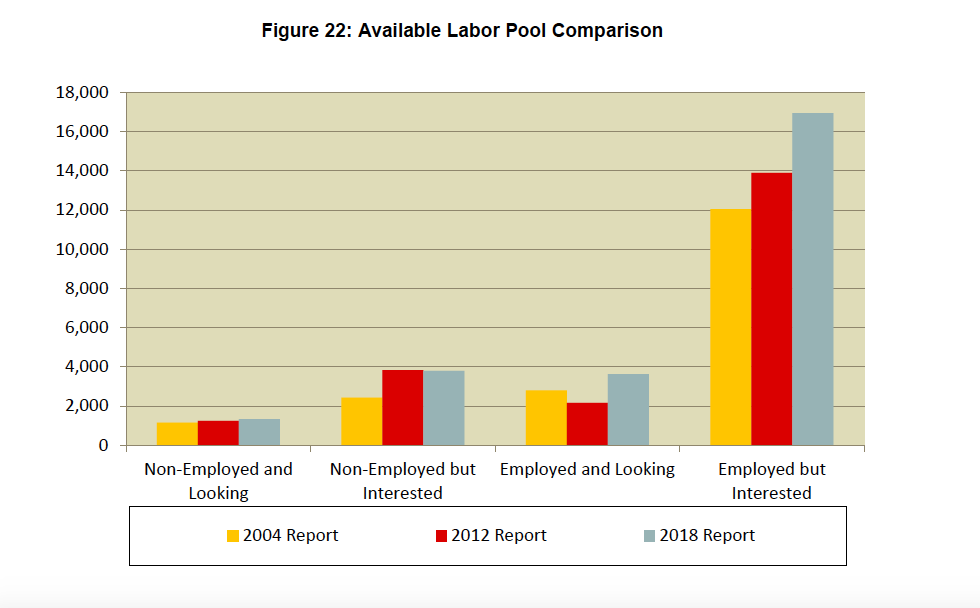
A recently released labor study for the Ellis County area shows the labor pool has increased despite a decrease in the area’s population.

With unemployment rates hovering in the low 2 percent range, the demand from is there. Employees with the right skills need to be matched with the right employers, said Ellis County Coalition for Economic Development Director Aaron White.

More people in the labor pool, which encompasses nine counties around Hays (Barton, Ellis, Graham, Ness, Osborne, Rooks, Rush, Russell and Trego) say they would be willing to take other employment, compared to similar studies done in 2004 and 2012. The labor pool is defined as those people within a 45-minute, one-way commute of Hays.

The population of the labor pool went from 83,669 in 2004 to 82,830 in 2018, but the labor pool jumped from 18,420 to 25,697 during the same time period.

White said the increase could be a reflection of the number of people who are willing to make career changes.

Low unemployment numbers continue to be a challenge to growth in Ellis County, White said. Hays is at about 2 percent unemployment and the labor basin has ranged between 2 percent to 4 percent since 2004. The federal government considers 4 percent of the population unemployable, which means Hays is employing what might be considered the unemployable, White said.

“Existing companies look at that and look at expansions and realize that we have such a tight labor pool they may look at expanding elsewhere or holding off expansions and turning down work because they can’t meet the labor requirement,” White said.

“Companies that are looking to locate to Hays may see low unemployment numbers as an automatic concern for recruitment of a workforce,” he continued. “Employers who are already here may see incoming companies that are expanding this way as competition for the same workforce, so it makes it a very challenging environment for expansion.”

Wages tend to stagnant across a workforce if unemployment numbers remain low because there is not an influx of new companies or expansion of existing companies, White said.

About 28 percent of the those surveyed said they consider themselves underemployed. About half of those employees came from the service and retail sector, according to the study, which was generated by the Docking Institute of Public Affairs at Fort Hays State University.

Area manufacturers have a demand for production employees and other skilled laborers, White said. These jobs could be filled from employees in the service sector, but they would need training.

“We still see our biggest employment segment, and it has been this way for all three reports, across the labor basin is the service and retail sector,” White said. “It also includes some of the lower-paying jobs.

“These are positions that are not necessarily ideal for long-term careers, so those folks become ideal candidates. … for us to look at what skill sets do we need to provide, what training can we offer to the public? That trains up some of those lower-paid employees so they can pursue a career with greater wage, greater benefits and greater opportunity. It is more of a career track as opposed to just a job.”

Local manufacturers are willing to provide on-the-job training.

“Some employers even tell us there is an advantage to hiring somebody who maybe doesn’t have a strong background in manufacturing because they don’t have to break bad habits,” White said. “They train them up to do a particular skill set exactly how they want them to do it for their company. There can be an advantage to that.”

When the Coalition finds a gap in skilled employees, it works with NCK Tech and Fort Hays State University to create training programs to fill those gaps, White said. The Coalition is working with NCK Tech on a training program on basic production skills that will make local employees more appealing to local industry, White said.

The area is also seeing a high demand for commercial drivers. White said his last estimate was 200 openings for CDL positions in Ellis County. Ellis County does not have a CDL training program, and the nearest programs are in Beloit or at Barton County Community College. The Coalition is working to try to bring a CDL program to the area.

Perception is also a problem, White said.

“We created a short-course welding program a few years ago. We ran three classes through that — about 32 students attended that program,” White said. “One of the feedbacks that we got from these students is that when they read advertisements saying, ‘No training necessary. No experience necessary. We’ll train on the job,’ they didn’t necessarily think that it applied to them.”

Woman make up 56 percent of the Ellis County labor pool. However, White acknowledged some women struggle to see themselves in manufacturing.

“I had a local manufacturer who told me one of their very best welders is a young woman who had no experience before she went to work for them and turned out to be an exceptional welder when trained by the company. Women are starting to realize across all industries not just locally, the trade skills are not just a domain for guys and that women are every bit as capable of performing trades and skilled labor — welding and machinists — as the men can.

“I have even had trainers in some cases say working with women is easier because the guys they work with assume they already know it. It is trying to break bad habits. Women are more open to learning the process the way the company wants them to learn it. (They have) better attention to detail in many ways.”

For a section of workers, child care continues to be an issue. Only about 2 percent of the labor pool indicated they needed child care and could not access it. Although the percentage is low, this accounts for 895 people, which is more children than the child care system can absorb, White said.

White said the Coalition specifically asked the Docking Institute to address child care because it believed stay-at-home mothers could be a pocket of untapped labor. Those needing child care was smaller than White expected. White said the regulations to open a child care facility can be burdensome. The ECC has worked in recent years with several operators in attempts to bring child care facilities to the area, but the costs were so great the operators could not operate at a profit.

Manufacturers may consider offering alternative work schedules to tap into this portion of labor pool. One manufacturer in the area has offered a schedule specifically tailored for moms. The schedules start after parents drop their children off at school and releases early enough for the parents to pick up children after school.

Among those who categorized themselves as underemployed, the largest group, about 24 percent, said they were underemployed because of education. More than 35 percent of this group had bachelor’s degrees. Employers have high demand for science, engineering and math graduates, whereas demand for college graduates in the humanities has declined, White said.

“Another thing that kids going to college need to think about is where the demand is,” he said.

A student may be able to make more money in a trade with shorter training time and less or no student loan debt. White said capturing students who attend some college, but don’t graduate with a degree is also a goal. According to the National Center for Education Statistics, 41 percent of college students will not have completed a four-year degree within six years of starting college.

Better yet, communities can start engaging with students in high school or even middle school about the benefits of technical training or entrepreneurship programs.

“I think one of the areas you really have to promote is educating parents about opportunities,” White said. “You will still see a lot of parents when they are talking to guidance counselors or at career nights, it is the parent who is saying, ‘No, my son or daughter is going to go to college.’ Whether that student is truly suited to complete a university degree, that is where they are going. It is almost like they don’t have an option.”

They don’t realize they have some very good trade school, tech options for students that can provide very well for their long-term future.”

TMP to present mystery/comedy ‘A Family Reunion to Die For’

Hays Post

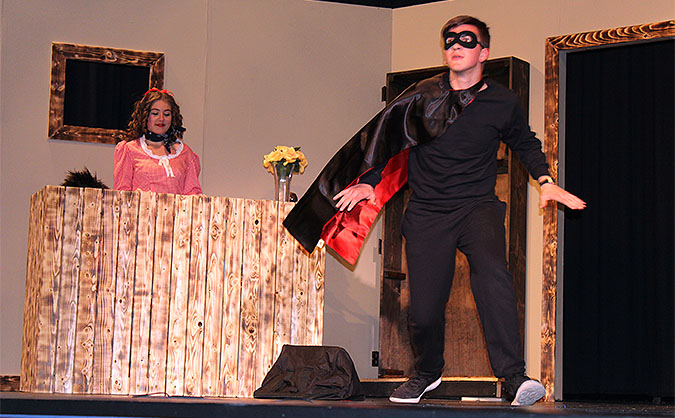
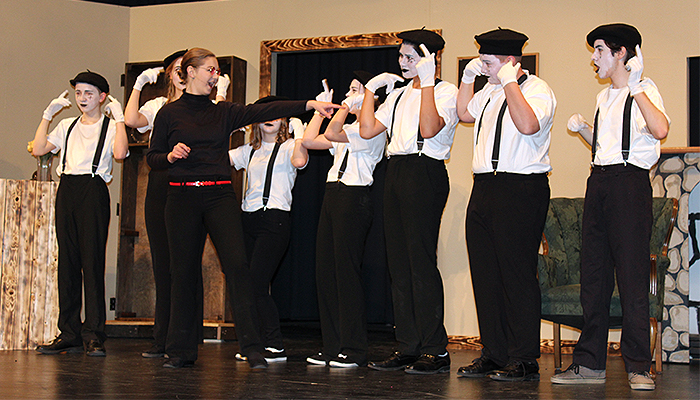
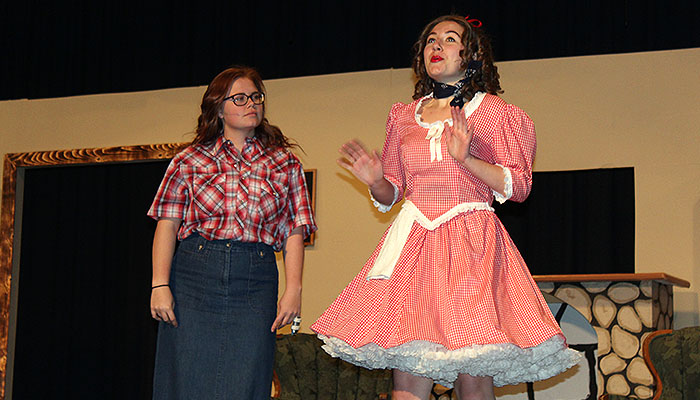
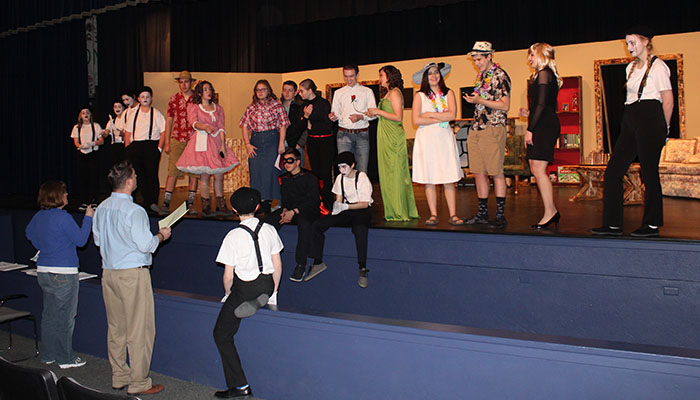
Thomas More Prep-Marian will present the murder mystery/comedy “A Family Reunion to Die For” as its spring play  7 p.m. April 13, and 14 and 2 p.m. April 15 in the TMP Dreiling Theater, 1701 Hall St.

Travis Grizzell, director, said on the KAYS Morning Show Friday after the complex musical “Into the Woods” in the fall and Shakespeare last year, he and the students were ready for something a little goofy.

The play is set in a country western bed and breakfast in the Virgin Islands.

“We got a troupe of mimes, we’ve got a comic-con guy who shows up in a different costume in every scene. We have a few characters from all walks there,” Grizzell said.

Christine Franklin intends to show off her new husband, Freddie, at the Knotting Family Reunion. She hasn’t seen her relatives in years. However, the reunion turns tragic when Aunt Gretchen, Cousin Rachel and Cousin Stefan are murdered. Christine fears for her life.

Freddie, a mall security guard, tries to solve the case. Possible suspects include squirrel-hunting hillbilly sisters, a knitting former Vegas showgirl, a inept maid, a grouchy cook, a bitter journalist and a troupe of mimes.

The three dead relatives return and enlist the audience’s help to assist Freddie to find the real killer.

About 40 students are involved in this production, Grizzell said.

“You see the kids bloom in every show,” he said, “—the young ones or the ones who are finally coming around to fit into their own. It is a great process to see.”

Tickets are $8. Book tickets online by clicking here.

Tickets can also be reserved by leaving a message at the Fine Arts Ticket Line: 785-621-5478 or purchased at the door.

Copyright Eagle Radio | FCC Public Files | EEO Public File