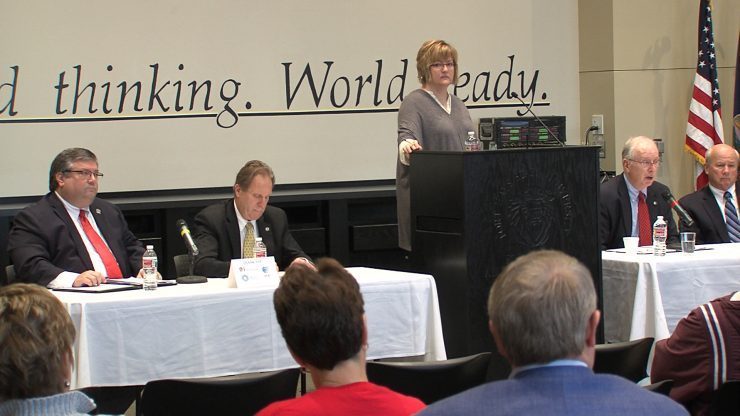
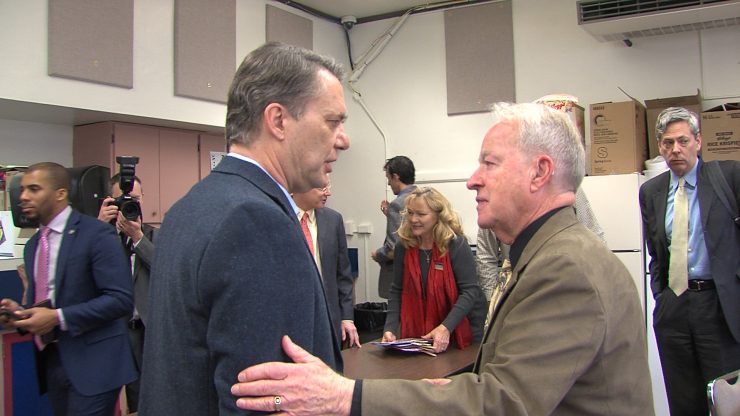
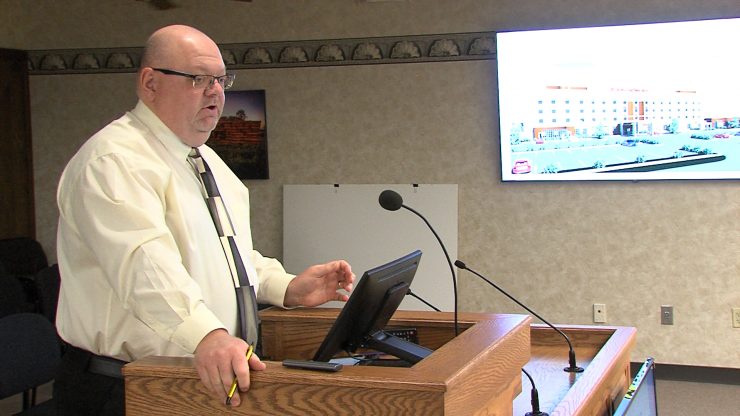
City Finance Director Kim Rupp speaks during a public hearing for the establishment of the Hays Hotel Hilton Garden Inn TIF district.
By BECKY KISER Hays Post
There were no comments during the public hearing nor from Hays city commissioners Thursday night as they unanimously approved an ordinance establishing the Hays Hotel LLC Hilton Garden Inn Redevelopment (or TIF) District.
City Finance Director Kim Rupp first reviewed the developer’s economic incentive requests for the hotel and convention center project on West 43rd Street just west of Walmart.
“The developer is requesting tax increment financing (TIF), a community improvement district (CID), and a rebate of the city’s five percent transient guest tax (TGT) generated by the project,” said Rupp.
The public hearing and ordinance were the next steps on the process required under state law to approve TIF financing for the project. The TIF district is also known as a redevelopment district.
“The primary effect of passing the ordinance tonight is locking in the base year assessed valuation of the project site. After the ordinance is effective, any future increase in property tax generated within the TIF district boundaries will accrue to the TIF fund,” Rupp explained. The TIF fund will be held separately by the city in order to reimburse the developer for TIF-eligible project costs on a pay-as-you-go basis.
The proposed hotel/convention center TIF district is in red. (Click to enlarge)
The developer estimates the TIF would generate approximately $3.7 million in revenues over a 20-year term.
Rupp told city commissioners the “developer has indicated they cannot complete the improvements without the TIF.”
The Hays USD 489 school district and Ellis County both have the right to veto the TIF district within 30 days by a resolution stating the district would have an adverse effect on their taxing entities.
Assistant City Manager Jacob Wood has met with the school board and county commissioners. Neither group is expected to object to the TIF.
The next steps would include negotiation of a TIF project plan and a project plan with the developer. Those would be subject to commission approval at later meeting.
Phase One of the project involves construction of a full-service four-story Hilton Garden Inn with 100 rooms, an 8,400 square foot conference center/event space, a restaurant and lounge, and infrastructure improvements required to serve the site, including water, sewer, street, utilities, and pedestrian infrastructure. The developer will finance costs of 43rd Street improvements.
Phase Two of the project involves construction of a new restaurant and/or other commercial retail on the two outparcels of the project site. There is no specific time frame set for Phase Two.
The Kansas Statewide Homeless Coalition gathered agencies Tuesday to talk about homelessness in northwest Kansas.
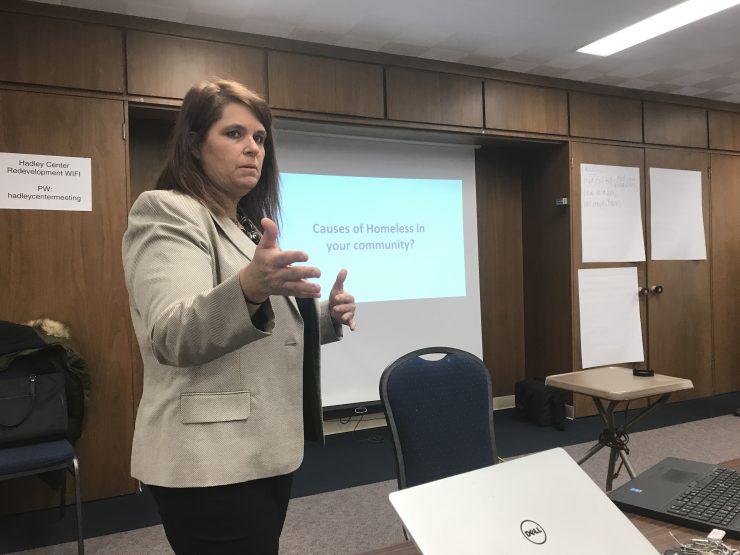
The Coalition has hired Amazing Traditions to do a needs assessment for the region, and representatives were in town to talk about the need for services, causes of homelessness, possible solutions and barriers to solutions during a meeting at the Hadley Center.
The Kansas Statewide Homeless Coalition is the lead agency in the continuum of care for homelessness. The lead agency provides education, structure, support, decision making and program evaluation. It is the overall umbrella for care services through HUD.
Kerri VanMeveren of Amazing Traditions talks to participants in a Kansas Housing Coalition focus group Tuesday in Hays.
The needs assessment helps the coalition understand where the greatest needs are and where they can provide the most support.
“It is really to get a temperature for the feeling in the community,” Kerri VanMeveren of Amazing Traditions, said of the focus group Tuesday. “Some communities have the not-my-backyard or a you-build-it-and-they-will-come mindset, which is important to understand what your community will accept. If there are great needs in the community and there is great disparity between need and the opportunity, are there some other things that need to take place before you put money in there, before it’s ready to be accepted?”
The Coalition applies for funding on behalf of a variety of agencies in the state. Currently there are no grant awards in the northwest region, said Linda Mills, director of First Call for Help and regional coordinator for the Coalition.
People in the Ellis County can apply for HUD programs, but Mills said most of the people who are seeking help from First Call for Help don’t meet the federal standards for assistance. To qualify for rapid rehousing funds, a federal housing program, a person or family has to be living on the street.
Many of the people in the community who do not have permanent housing in Ellis County are referred to as “couch homeless.” They may not have a permanent address, but are doubling up with other families on a temporary basis. Hays USD 489 Superintendent John Thissen said these families who are “couch surfing” are counted as homeless per state definition even though they are not considered homeless by federal standards.
The Kansas Statewide Homeless Coalition gathered regional agencies Tuesday to talk about homelessness in northwest Kansas.
Mills said when she first started with First Call for Help, the agency applied for emergency shelter grant funds, but the agency was unable to secure those funds for anyone, because the rental the person is applying for has to be at the fair market value set by the federal government. First Call couldn’t find any rental housing at or below the federal market value. Some rentals were as close as $10, but because it was over, the application was denied.
The fair market rent for a two-bedroom unit for Ellis County for 2018 is $710 a month. That includes all utilities.
Getting someone into a new home can be difficult. Section 8 housing has a long list. Hays Public Housing Authority has a waiting list of 60 to 70 with a waiting time of about a year. Mills said she can access resources for rental assistance, but not for a deposit and first month’s rent. First Call for Help had to refer out 187 people this year because of these barriers.
The group first discussed causes of homelessness in the region.
Sarah Wasinger of the Hays school district said high medical bills among family members have caused some students’ families to become homeless. Others acknowledged individuals and families struggle to qualify for Medicaid in Kansas.
Amy Bird of High Plains Mental Health said her agency has clients who fall in an insurance gap. They make too much to qualify for Medicaid but too little to buy insurance on the health insurance exchange.
Mills said Ellis County has a low unemployment rate, but workers still lack a living wage. Other jobs don’t provide enough hours or employers may lay off workers when work is slow, creating an inconsistent income for employees.
Thissen said Hays residents have a misconception there are no homeless individuals in the community because they don’t see people living on the street.
Mills said the community does have a homeless camp and last year there were eight individuals living there.
One reason, the community doesn’t see street homeless is because the community has no shelter, Bird said. Those individuals who are on the street are moved to communities, such as Wichita or Salina, where shelters exist.
Marqueia Watson of Amazing Traditions documents need for services, cause of homelessness, possible solutions and barriers to solutions during a meeting Tuesday at the Hadley Center.
A lack of affordable housing was also listed as a cause for homelessness in the community. The median home price in Hays is $195,000, according to Zillow.
Dennis Wilson of First Call for Help said substandard housing makes it difficult for those trying to buy homes to qualify for HUD funding.
Although there are an estimated 150 open rental units in the city today, finding quality rental housing and a good landlord can be difficult, said Sherry Dryden, executive director of the United Way of Ellis County.
Dryden said it is difficult for renters and agencies to know which landlords are good to work with. She said she had worked with a family whose floor fell out of their rental, and the landlord charged them to fix the floor.
Mills said she had worked with a family with water running inside the walls of the rental and they had little recourse to get their landlord to fix the problems.
“It is hard for us to advise them, because the city doesn’t really have any rental inspection, which I’m not necessarily saying we need to have that. I know that it would be hard for the city to enforce,” Mills said. “What is their (renters) route to get these problems fixed without the landlord taking retaliation on them and raising their rent or evicting them?”
Dryden said a lack of awareness among community members that homeless exists in the community can be a cause for homelessness in the community.
“You stated at the very beginning there are those communities that, I am not going to be politically correct, that basically have their heads in the sand and say we don’t have it—a homeless problem—or we want to make sure they go through (town) so we don’t have a homeless problem. So, to me, one of the causes is being naive and being in denial,” Dryden said.
Wasinger said, “They don’t think it is an issue because they don’t see them on the streets every day. It is not visible. They don’t think about those families that are couch surfing as being homeless. Yet, they are more susceptible to worse things happening to them because that person can say at any time, ‘Leave.'”
Mills said there is also a perception that the homeless need to just get jobs, but most of the people who First Call for Help sees are employed.
The group also discussed other issues that lead to homelessness, including generational poverty, substance abuse, criminal records, mental health issues, transportation costs and lack of awareness of services.
The group discussed services in the community where people are accessing help. Some of these include First Call for Help, Salvation Army, food banks, churches, Catholic Charities, Community Assistance Center, Harvest America, the school system and High Plains Mental Health. The group especially had high praise for the work of law enforcement in the community.
Among the solutions the group discussed were parenting classes, financial classes, support for those being released from jail or prison, a landlord rating system, Circles, case management, transitional housing, free community transportation with regular routes, medical insurance/expanded Medicaid, affordable day care, increased mental health funding, rental assistance and community education.
Mills said those in need don’t always know how to access service and they may not have the transportation to go all over town to seek help from multiple agencies. She said she would like to see better collaboration and communication between the community agencies.
The group said they would like to see case management offered to people who were homeless or at risk of being homeless. Bird said High Plains Mental Health offers case management, but clients have to be mentally ill and meet strict requirements for those services.
VanMeveren said case management has proven to be crucial for individuals in other communities to get back on track.
The group talked about the Circles program, which is a national program that provides volunteer mentors for people living in poverty, helps them set and reach goals, and access community resources. Mills said she has looked into the program.
In addition, funding is a challenge for all the organizations, the participants said.
Chris Dinkel of High Plains Mental Health and a Hays city commissioner, said the resources at High Plains are drawn very thin. High Plains covers a 20-county area and has seen an increase in demand for services every year for the last 10 years, but has seen a cut of 15 percent in state funding. Many clients are waiting three weeks or more for services.
The group noted there is a disparity in the amount of funding allocated for support services in western Kansas compared to eastern Kansas. Mills added lawmakers don’t account for the added cost of providing services over large rural areas. Many of the social services for northwest Kansas are centered in Hays, which is good for local residents, but makes access difficult for outlying communities.
The Kansas Room recently made a large portion of its collection of books on Kansas and the Midwest and from Kansas authors available to the public for checkout.
By CRISTINA JANNEY Hays Post
The Kansas Room at the Hays Public Library is making its collection more accessible to the public.
Marissa Lamer, Kansas Room librarian, took the reins of Kansas Room two years ago and has been working to reorganize the collection.
Although some older and more fragile items from the collection will still have to be viewed within the confines of the Kansas Room, a selection of non-fiction and fiction that relate to Kansas and the Midwest will now be available for checkout.
The library has added an assistant for the Kansas Room, which has allowed the library to increase the hours staff is available to help library patrons do research. Research assistance will now be available 9 a.m. to 5 p.m. Mondays, 9 a.m. to 8 p.m. Tuesdays through Thursdays and 9 a.m. to 6 p.m. Fridays.
Marissa Lamar
“We are here to help, whatever it is,” Lamar said. “I love problem solving, and I am here as a resource.”
The fiction collection includes titles written about Kansas and those written by Kansas authors.
The nonfiction section includes books on the history, environment, politics and famous figures of Kansas and the Midwest. The collection even includes a section on Kansas crime, such as the infamous BTK serial killer.
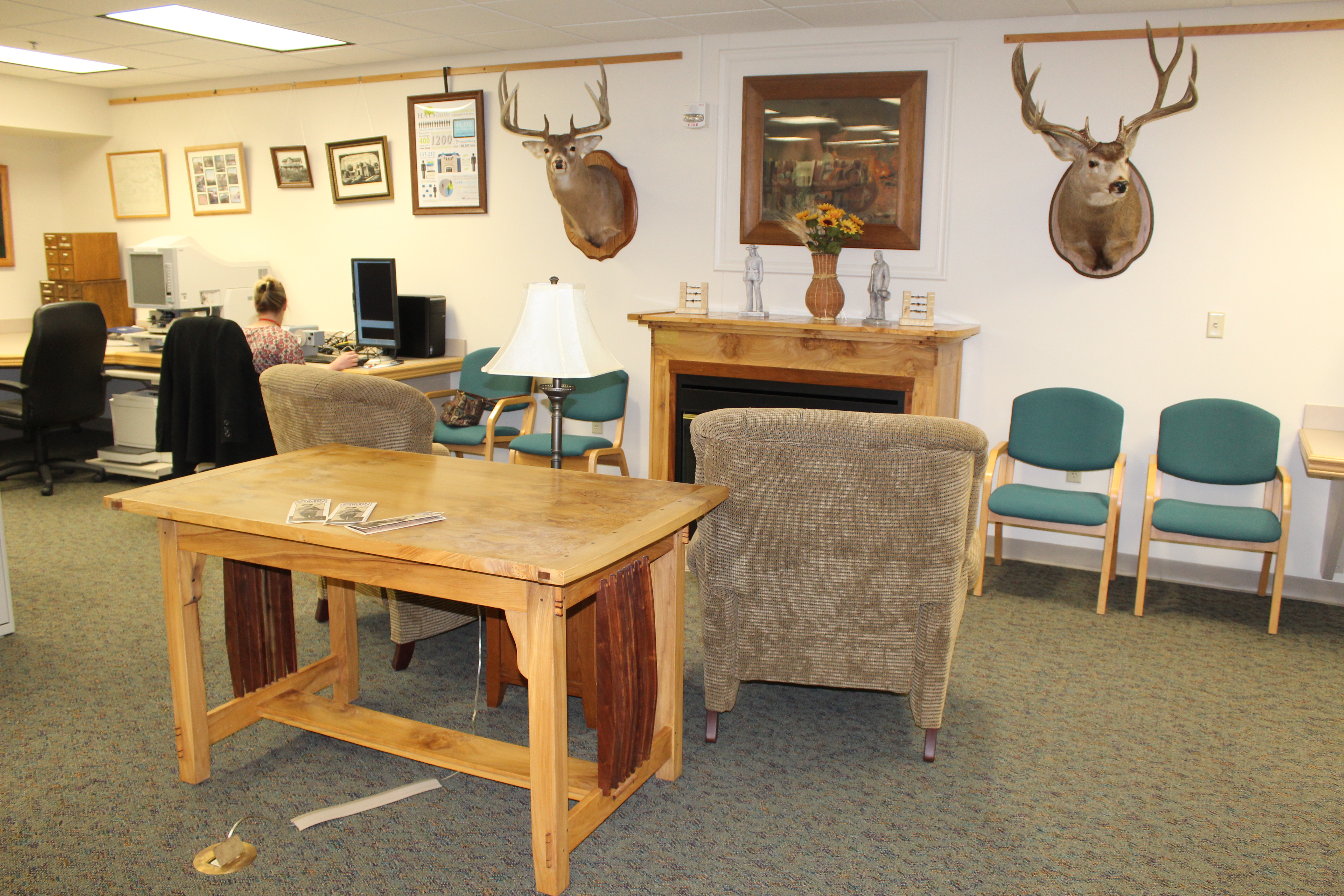
This copy of an early map of Elis and Rush counties hangs on a wall in the Kansas Room in the basement of the Hays Public Library.
The library subscribes to a variety of periodicals on the Kansas history and the West.
In addition, the Kansas Room has a complete microfilm library of the Hays Days News plus other publications that predated the Daily News or had references to Ellis County or Fort Hays.
The earliest book in the collection dates back to the 1860s, but the Kansas Room also has a variety of first editions that were popular in the early 1900s.
Lamer said she would be happy to help local residents research family histories. A number of families have donated copies of books on their family histories to the library.
“You may want to start with us first so you don’t have to reinvent the wheel,” she said. “Someone may have already done a lot of the work for you.”
The Kansas Room also has books on the Volga Germans and census records from the Russian village from which the early Ellis County residents immigrated. These records have been translated into English. In addition, the library has a subscription to Ancestry.com, so you can research a variety of documents online that would normally cost you to access.
This copy of a land transfer signed by John Quincy Adams was donated to the Hays Public Library and now hangs in the Kansas Room.
“I really wanted to expand it,” Lamer said of the Kansas Room collection. “I didn’t want it to just be history. I wanted anyone who wanted to do a book report on the prairie environment or any research related to Kansas to be able to come here.”
Lamar said she has more projects ahead. She said she would like to better organize a collection of negatives donated from the Ekey family, who owned a photography studio in town. She estimated the negative collection spans from the 1930s through the 1980s. She said she hopes to get these photos entered into the library’s database, so they can be accessed easier.
Lamar also wants to further research a collection of Howard C. Raynesford letters and papers. Raynesford mapped trails in the area for the Butterfield Overland Dispatch, which ran wagons from Atchison to Denver.
The Kansas Room continues to accept donations of historical documents and photos and other Kansas-related materials. If you wish to make a donation, contact Lamar at 785-625-9014 or at [email protected].
A local knitting circle donated hats and scarves to the Fort Hays State campus.
By DIANE GASPER-O’BRIEN FHSU University Relations and Marketing
Shane Keller grew up in the south central Kansas town of St. John and was well aware of how unpredictable Kansas weather is.
Nonetheless, Keller – now a senior at Fort Hays State University – admits that he doesn’t always know when to carry a stocking cap, what with Hays temperatures varying from 50 degrees early in the week to single digits just a few days later.
So he knows there are students from other parts of the United States such as California or Arizona, and other countries as well, who can get caught without proper headgear while walking to class on any given day.
That’s why Keller – a student employee at the Tiger Food Exchange at FHSU – was excited when he learned a local knitting circle wanted to donate hats and scarves to the Fort Hays State campus.
An avid knitter, Andrée Brisson got the idea from the “I’m Not Lost” project in Anchorage, Alaska, where knitters placed colorful scarves and hats in trees near a park. That project was a spinoff from the international “yarn bombing” movement where knitters around the world wrap yarn around trees as a creative way to use their leftover and unfinished knitting projects.
“Knitters have projects, and we get done and we have leftovers. Those leftovers are very easily knitted into a scarf or hat,” explained Brisson, who is part of the knitting group that meets once a week at the Quilt Cottage in Hays. “This is a useful way to get rid of our leftover yarn.”
So Brisson suggested donating items to Fort Hays State, where her husband, Dr. Greg Farley, is dean of the Peter Werth College of Science, Technology and Mathematics.
“Some of the Fort Hays state students come from other countries and don’t have warm clothes we need for our climate,” Brisson said. “I saw the ‘I’m Not Lost’ article, and I thought, ‘wouldn’t this be a great way to help students.’ It’s a great Fort Hays State-community bond, too.”
Bob Duffy, co-chair of FHSU’s Food and Hunger Initiatives committee, said the committee decided the best place to display the knitted materials would be the Food Pantry.
Brisson delivered a couple dozen scarves and hats to FHSU’s Food Pantry late last month. Each bore a tag that read “I’m Not Lost.” Within only a few days, there were only four hats left, and about a third of the scarves also had been taken.
“I think this is an awesome gesture on the part of the knitting club,” Duffy said. “Students sometimes struggle financially, and something like this can remove some of the stress about how to stay warm, which in turn can make it easier to succeed academically.”
Yeyette Houfek, a knitting instructor for the Quilt Cottage Knitters, said that “knitters love to knit,” and her local group is thrilled to be able to help.
“This is a wonderful project. Our knitters have donated blankets and scarves to other organizations, and this provides them another outlet to do what they love,” Houlek said. “It’s nice that this ties in with a national movement, too, and we hope as the need goes, we can share more with the Fort Hays State community.”
FHSU’s Food Pantry, located on the first floor of Forsyth Library, is well stocked with canned goods from donations in addition to fresh vegetables from Victor E. Garden on the university campus and a small supply of meat (mostly raised at the University Farm.)
The Food and Hunger Initiatives began at FHSU in 2012, and in 2014 a Healthy Living Grant from the Kansas Health Foundation provided funds for the infrastructure; the program has remained viable even after the grant money was exhausted in 2016.
The pantry is open any time the library is open, and the committee asks that people who take an item leave a tally mark on a sheet on the desk.
“When they first started this, they visited other universities, and it seemed like they had rigid hours, like only two hours a week,” Keller said. “It just seemed like it should be more flexible, and I think we get a pretty good turnout of people. We consistently get about 3,000 tallies per year.”
The goal was to create an educational environment in which students, faculty and staff could readily access healthy food as well as nutrition information. Along the way, toiletries have been added, as well as laundry items.
Now, there are knitted hats and scarves, too.
“I think this is really cool to be part of the Tiger Food Exchange and see things happening that are helping our campus community in various ways, especially like this in the cold weather,” Keller said. “Seeing one of the ‘I’m Not Lost’ tags lying around in the library tells me that people are using the scarves and hats – and staying warm.”
Back Row (L-R): Trace Patee (FR), son of Terry & Dena Patee; Brady Frickey (FR), son of Stacy & Brad Frickey; Jaryn Wildeman (FR), son of David & Tara Wildeman; Rylee Werth (SO), daughter of Rodney & Cristi Werth; Cameryn Kinderknecht (JR), daughter of Tim & Rhonda Kinderknecht; Cassie Waldschmidt (JR), daughter of Pete & Sandy Waldschmidt; Geoffrey Soneson (SR), son of Rob & Donna Soneson; and Lane Kohl (SR), son of Lance & Marnie Kohl.
Front Row (L-R): Camryn Frickey (FR), daughter of Brian & Michelle Frickey; Maggie James (FR), daughter of Wesley James and Alice James; Abigail North (FR), daughter of Travis & Ava North; Breonna North (SO), daughter of Travis & Ava North; Lauryn Becker (SO), daughter of Chris & Brandy Becker; Kaylee Hernandez (JR), daughter of Amber Hernandez and the late Ricky Hernandez; Sierra Schmidt (SR), daughter of Dick & Shannon Schmidt; Aiden Johnson (SR), daughter of Kip Johnson and the late Celeste Johnson; and Shelby Werth (SR), daughter of Rodney & Cristi Werth.
The annual KAY Snowball Dance will be on Saturday, February 10. Promenade will be at the Ellis Good Samaritan Nursing Home from 6:00 to 7:45 p.m. Pictures start at 7:30 p.m. & the dance begins at 8:00 p.m. Crowning for Snowball Royalty will be at approximately 10:00 p.m.
Saturday’s legislative coffee featured Rep. Ken Rahjes (R-Agra), Sen. Rick Billinger (R-Goodland), Tammy Wellbrock, Hays Area Chamber of Commerce Exec. Dir., Rep. Eber Phelps (D-Hays) and Rep. Leonard Mastroni (R-Lacrosse).
By BECKY KISER Hays Post
The 2018 Kansas legislative session has just completed its fourth week and the state has a new governor.
Four area legislators updated constituents Saturday morning during a legislative coffee presented by the Hays Area Chamber of Commerce in the Fort Hays State University Robbins Center.
Sen. Rich Billinger (R-Goodland, 40th Dist.) and Reps. Eber Phelps (D-Hays, 111th Dist.), Leonard Mastroni (R-Lacrosse, 117th Dist.), and Ken Rahjes (R-Agra, 110th Dist.) agreed the legislature must focus on K-12 education funding. The state faces a Supreme Court ruling determining the funding formula to be unconstitutional and inadequate.
“The Gannon decision that is in front of the Kansas Supreme Court right now is really the big emphasis and we have to have something done by April,” said Mastroni. He thinks the revenues coming into the state which have been increasing since late last year will help fund schools, “not that those revenues couldn’t decrease.”
“We’ll probably be looking at a multi-year plan,” Phelps predicted. “The first year of $150 to $200 million, we’re on track with the revenues coming in where they are now, in addition to what’s already been budgeted, that’s $200 million additional going in this year. If the trajectory of revenues keeps coming in above estimates, I think we could legitimately put together a three to four year plan. It would still have to be approved by the Supreme Court.”
Rahjes is not as optimistic and feels there are “so many unknowns. The goal right now is to keep schools open and that means working with the judicial branch as well,” he said. “My guess is, regardless of what we do in the legislature and submit to the court, the court probably won’t agree and so we’ll be back in the summer to get something done under the gun that everybody will agree to keep schools open. I hope I’m wrong but finding the number of votes we need to move things forward is going to be a challenge.”
“It’s a balancing act,” said Billinger. “Education is important but we have to balance how much money we have and where it can go.”
“Raising taxes won’t happen,” Rahjes promised.
Instead, if revenues happen to decrease, budget cuts will be implemented. There’s been talk of an 18 percent across-the-board cuts for every state department.
“If we did that, three prisons would have to be closed,” Billinger said, “and nobody wants criminals back on the streets. The Department of Corrections would have to be pulled from that plan, leaving everybody else looking at a 30 percent budget cut. There are no easy choices.”
“I noticed Judge Glen Braun (23rd Judicial District Chief Judge) in the audience cringing when the senator mentioned the 18 percent cut,” Mastroni said later. “That’s because 97 percent of the budget for the judiciary is for employee paychecks. That would shut down our courts for around 90 days, creating a backlog and all kinds of chaos.” Mastroni is a former District Magistrate Judge.
Rahjes, a member of the House Taxation Committee, is encouraging Kansans to “shop local. We need to participate in our own economy.”
One written question from the audience was about the possibility of implementing sales tax on Internet purchases and whether Kansas would urge Congress to take such action.
The issue came up last week in the Taxation Committee, according to Rahjes. “It’s a simple matter of fairness to the Mom and Pop bricks and mortar stores,” he said. Rahjes proposed such a bill last year which did not move out of committee.
Kansas has the highest food sales tax in the nation. A Senate committee last week proposed the state sales tax on food would drop to 4 percent in 2019 and 2 percent in 2020. Local sales tax decisions would still remain the business of city and county politicians.
Rahjes said he plans to introduce a similar proposal this week, with the food sales tax gradually declining to zero.
Another audience question was about hemp production in Kansas. A bill has been passed out of the Senate Agriculture Committee (SB 263) that would allow the Department of Agriculture to conduct research with the state’s universities for industrial hemp production, and also permit some pilot programs.
Billinger is a member of the ag committee. He said the bill recommended Russell County as one of the pilot project participants.
“We had a lot of folks come in and testify to just let folks loose and start planting it. Then we had others concerned there was no way we could just turn them loose. It’ll take a little bit of time, but at least we’re getting started down that road. There’s many, many things that can be made from industrial hemp.” Phelps has talked to the staff at the K-State Agricultural Research Center in Hays and said the “dryland station would be an ideal place to test hemp production.”
Sponsors for the event were Midwest Energy, AT&T and the FHSU Foundation. The next legislative coffee will be in April.
By DIANE GASPER-O’BRIEN FHSU University Relations and Marketing
The Department of Leadership Studies at Fort Hays State University has historically offered an international class to students late in the second semester or during the summer months.
This year, in a new twist, the department decided to give an intersession experience a try and add Virtual College students from around the country as well. The experiment was a success.
A total of 22 students, including six who take classes exclusively online, traveled to London in early January. Four faculty members also participated in the week-long trip. In addition to Leadership Studies, students from two other departments – Psychology and Criminal Justice – took part, as well as some in other discipline.
“The three main departments participating in this trip have large virtual student populations,” said Kaley Klaus, instructor of leadership studies who coordinated the trip. “It was important for us to give them the opportunity to participate in this once-in-a-lifetime opportunity.”
Klaus is in her third year of teaching at Fort Hays State and was assigned the task of planning this year’s trip. Leadership Studies offers a short-term study abroad experience and extends requests to other departments to participate to offer an interdisciplinary course for as many students as possible.
When the Criminal Justice and Psychology departments decided to participate in the 2018 class, representatives from those disciplines brought up the idea of including Virtual College students.
“When you talk to virtual students, you get them on the opposite end of the spectrum – some aren’t as interested in the college life part, and others want to know as much as possible about what’s happening on campus,” Klaus said. “I was more than happy with the response from our virtual students and am delighted some were able to join us on the adventure. It’s a good start.”
One Virtual College student, Robert Austin, joined the group from Myrtle Beach, S.C.
Austin, a criminal justice major, said he took advantage of the opportunity because “being a virtual student, I don’t really get to participate in the college experience.”
Austin was delayed a few hours because of a major winter storm in the Southeast, but once he joined the FHSU contingent, he said, it was worth the wait.
“The class was very diverse with students from the three different majors going,” Austin said, “and the tours were set up in such a way that all three majors were able to experience London.”
Students and faculty explored the history of London, ranging from its constitutional monarchy and historical figures to historical sites that included houses of Parliament, Westminster Abbey, the Tower of London, the Old Bailey Central Criminal Court, Buckingham Palace and the Sigmund Freud Museum.
They also toured the Whitechapel district, home of the infamous Jack the Ripper murders, and met with retired law enforcement and government officials to discuss the country and city justice systems and political structures.
“I’m not a criminal justice major, but I thought it was really interesting to see the differences and similarities between our countries,” said Hays freshman Grace Wasinger, an on-campus student who also takes online classes.
Klaus said it was difficult to separate the on-campus students from those in the Virtual College.
David Coachman, Lawrence, who is working on an organizational leadership degree online, said he was worried about fitting in with the on-campus students but really wanted to go on the trip because he had never been to London.
“My fears were relieved once we got to the airport,” Coachman said. “I felt accepted and included from the start, and as the trip went on, I became friends with everyone in our group.”
Ditto for the on-campus students.
“This was a really diverse group, including non-traditional students,” said Hays freshman Grace Wasinger, a pyschology major who had never been out of the country before this trip.
“I think these trips not only teach you a lot about other country’s belief systems and culture,” she added, “but you learn a lot about yourself and the other people traveling with you, too. I learned a lot more from this trip than a classroom setting or even from an online classroom setting.”
Dr. Jennifer Bonds-Raacke, who was chair of the Psychology Department when Klaus began planning the trip, said she “appreciates the diverse and varied backgrounds that virtual students bring with them to the classroom.”
“We strive to provide our virtual students with the enriched educational opportunities and high impact teaching techniques,” said Bonds-Raacke, now dean of the Graduate School. “Therefore, we could not envision a study abroad experience without virtual students.”
A complete list of students and faculty who participated in the intersession class follows. Students are listed alphabetically, followed by their major and hometown. Virtual College students are marked with an asterisk.
• Students
Keri Asche, psychology, Burrton
Robert Austin*, criminal justice, Myrtle Beach, S.C.
Devin Blackwood, music education, Garden City
Jacy Buchholz, organizational leadership, Ogallah
David Coachman*, organizational leadership, Lawrence
Hannah Dehn, psychology, Deerfield
Jamie Deuel*, psychology, La Crosse
Steven Hoyt, psychology, Garden City
Amanda Hurla, criminal justice, Topeka
Spencer Kochanowski, psychology, Salina
Jacob Korte, general studies, Gem
Jordan Larzalere*, psychology, Salina
Sarah Mick, psychology, Ellis
Allison Muth, organizational leadership, Great Bend
Raenee Patterson, organizational leadership, Norton
Anneka Sundell, criminal justice, Salina
Kyle Switala*, psychology, Fenton, Mich.
Taya Thornburg, psychology, Quinter
Justice Voss, psychology, Phillipsburg
Grace Wasinger, psychology, Hays
Collette West*, organizational leadership, Centerville, Utah
Samantha Whisenant, psychology, Liberal
• Faculty
Kaley Klaus, instructor, leadership studies
Dr. Jennifer Bonds-Raacke, dean of the Graduate School, psychology professor
Dr. John Raacke, chair and associate professor, criminal justice
Dr. Trey Hill, interim chair and assistant professor, psychology
Roosevelt Elementary School wrapped up a week of events Friday that celebrated the school’s 50th anniversary with a sock hop.
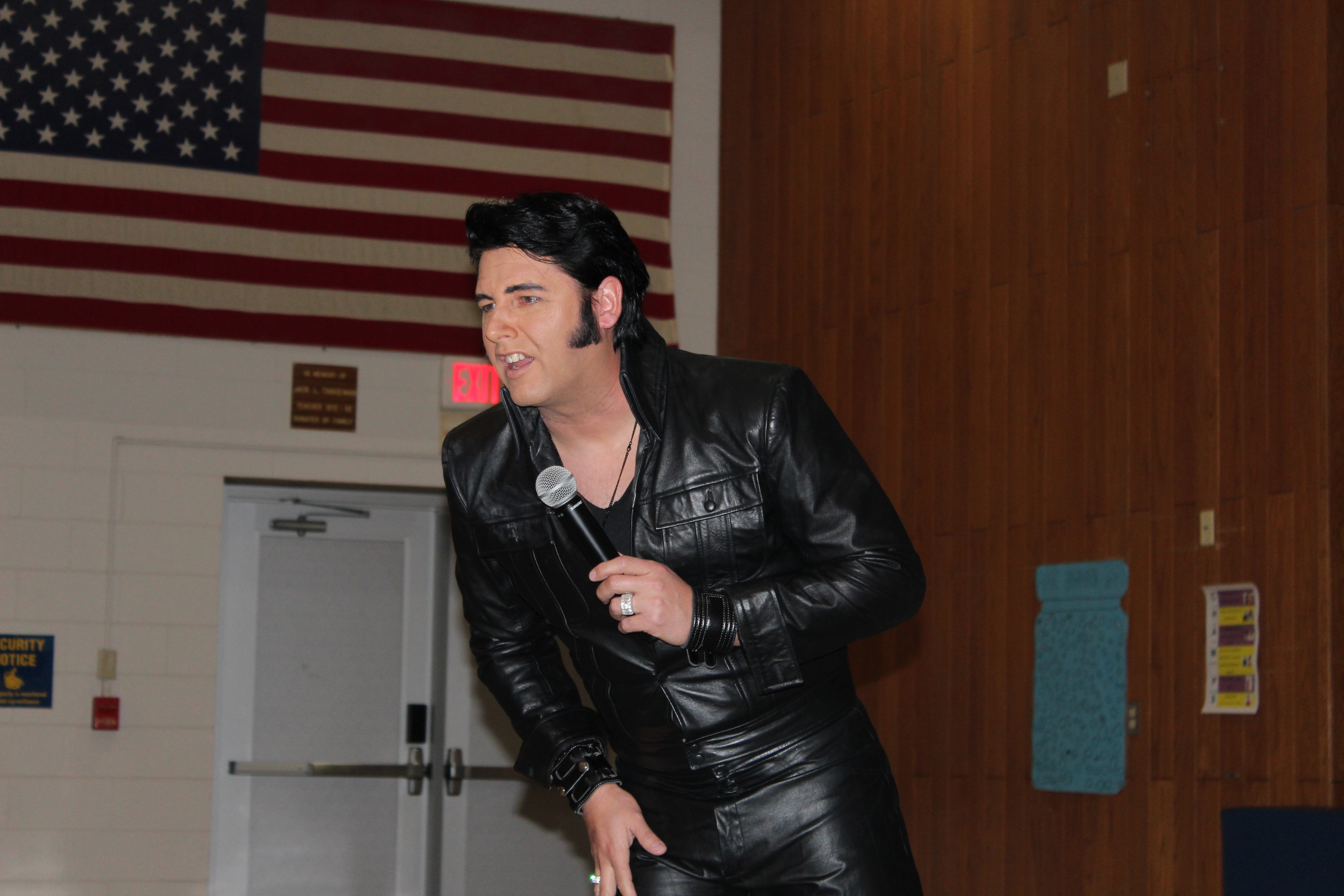
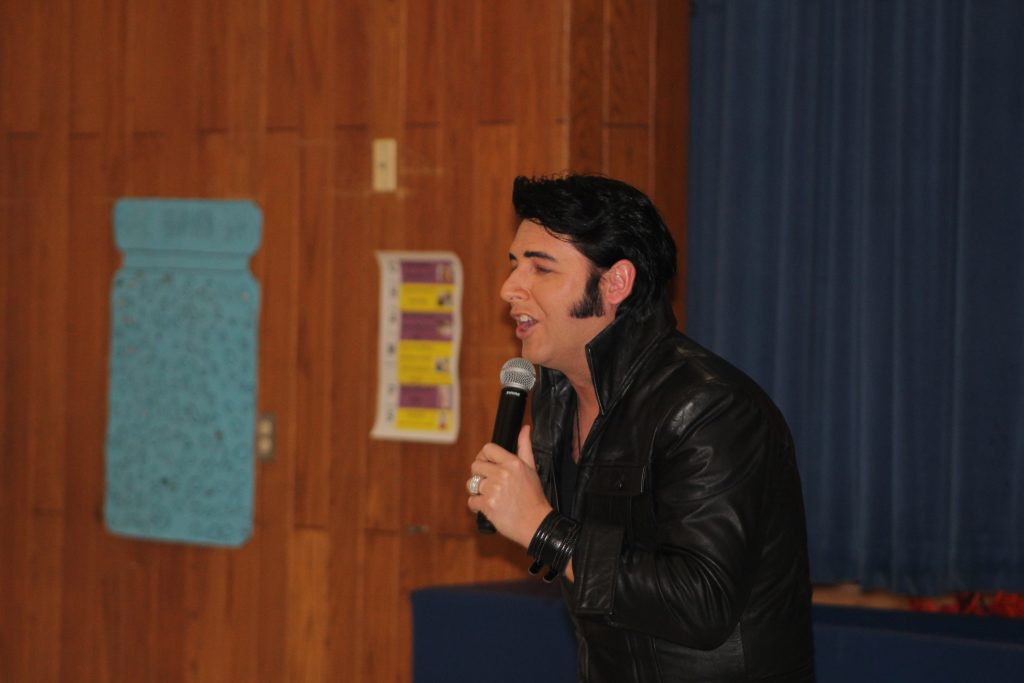
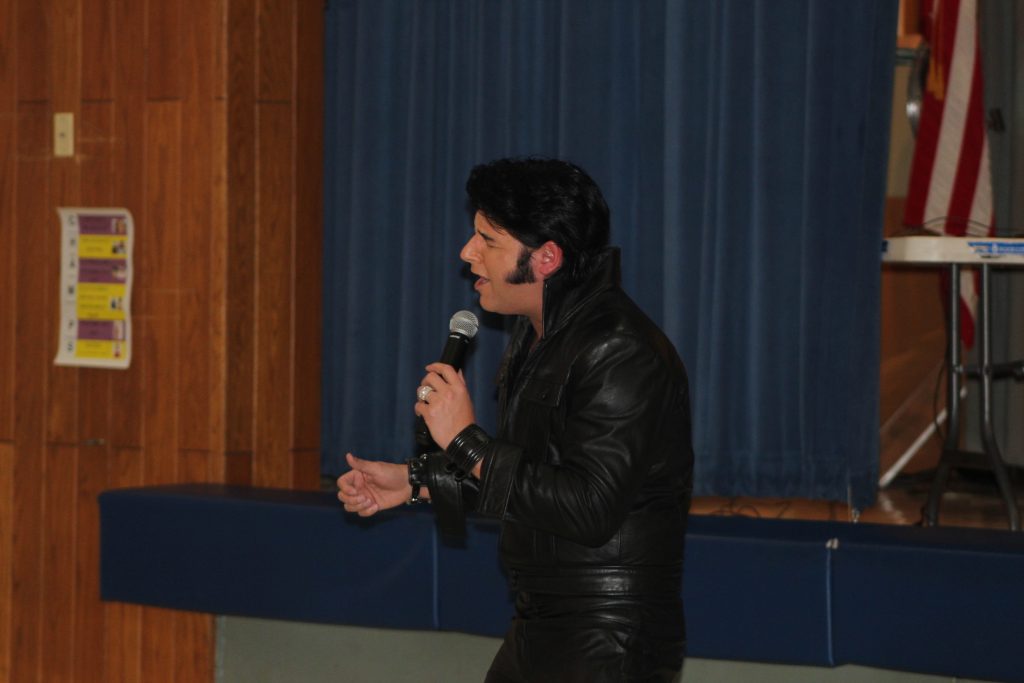
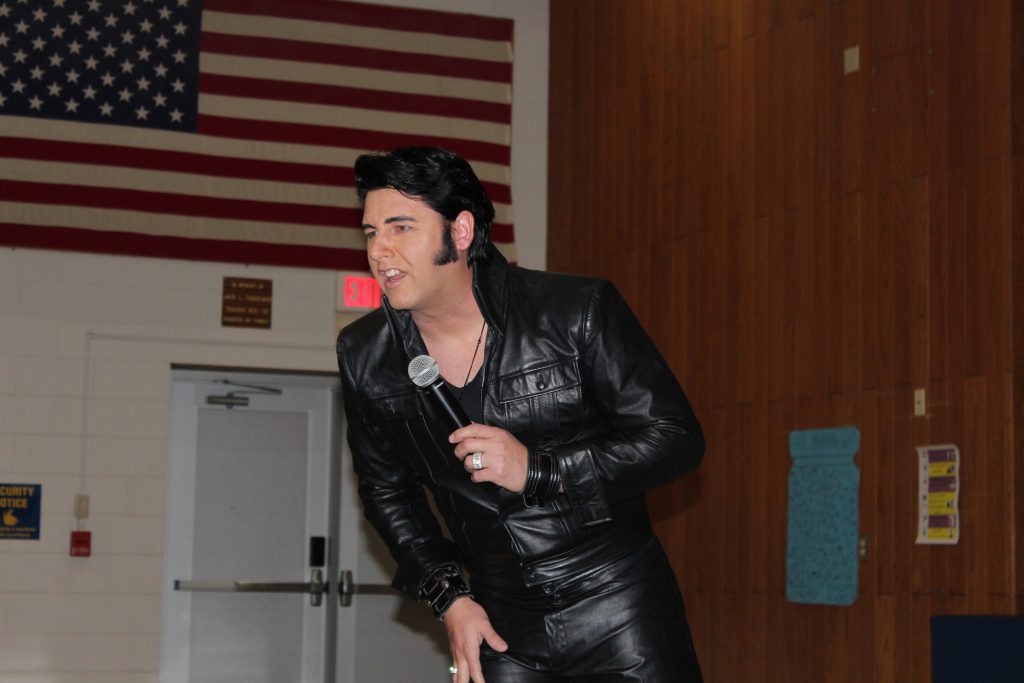
The students were entertained by Elvis tribute artist Frank Werth, who is a native of Hays and also attended Roosevelt as child.
After the Werth’s performance, the children danced in their socks in the gym to and ’60s music.
Roosevelt Sock Hop
Roosevelt Sock Hop
Roosevelt Sock Hop
Roosevelt sock hop
Roosevelt sock hop
Roosevelt Sock Hop
Roosevelt Sock Hop
Roosevelt Sock Hop
The children concluded their day with ice cream sandwiches donated by Freddy’s Frozen Custard and Steakburgers.
At the beginning of the week, the teachers and staff decorated hallways representing each decade the school has been open. The school also had dress-up days for each era.
On Wednesday afternoon, former teachers and staff returned to the school for a reunion.
Katie Schmidt, a fifth-grader, said her favorite portion of the weeklong celebration was seeing Werth perform as Elvis.
Her grade dressed in ’90s style earlier in the week. She wore overalls and a plaid shirt tied around her waist and high heels. She said she really didn’t know what all that meant and neither did her mom. The two had to research the outfit online.
Schmidt said she enjoyed attending Roosevelt and was proud to be a Roadrunner.
Roosevelt Elementary School was opened in January 1967, during the beginning of the second semester of the school year.
Roosevelt was built in response to population growth in the city, especially to east of Vine Street.
Roosevelt housed grades kindergarten through sixth until the 1981-82 school year, after which it became a K-5 school.
Some past principals include Manley Higgins, Bob Collins, Ione Buchheister, Dale J. Koerner and Gary LeCount. Principal Lee Keffer retired in spring 2017 and was replaced by current principal Paula Rice.
Notable events from the historical archives on the school indicate the school first starting using a computer in 1982, an Apple II Plus that was used to help students improve their math skills. At that time, there were only seven computers in the entire district — a far cry from the one-to-one technology program the district has today.
In 1994, $849,000 from a district bond issue was used to complete a classroom addition at the school. For a time, the school had used modular classrooms at the site due to overcrowding.
The records also indicated a long history of Roosevelt’s Home and School organization being actively involved in the school, including $50,000 raised in 2003 by the organization for new playground equipment.
Below are some photos from the current decade at Roosevelt:
Roosevelt 5th graders in Mrs. Leikam’s class
USD 489 school board member pose with students at Roosevelt Elementary Tuesday as they deliver cupcakes
Roosevelt students enjoy watching Mr. Keffer kiss the pig at this morning’s assembly.
Roosevelt Elementary School Principal Lee Keffer and the pig
Hays Mayor James Meier (left) shares his frustration with fellow commissioners about the slow regulatory process by the state in the R9 water project.
By BECKY KISER Hays Post
Hays Mayor James Meier is frustrated.
He’s also disappointed the incoming Kansas governor, Jeff Colyer, who visited his hometown of Hays Wednesday, did not meet with city officials.
“We do have something going on that does involve the governor’s office and that’s the R9 water project, which has been slow in getting regulatory approval,” Meier said Thursday evening during closing comments of the city commission work session.
“We filed the change applications with the Division of Water Resources (DWR) nearly three years ago.”
The cities of Hays and Russell are co-owners of the R9 Ranch in Edwards County, purchased in 1994 as a long-term solution to water needs for the towns. Hays owns 82% of the ranch; Russell owns 18%.
Meier acknowledged the state’s Water Transfer Act has never been triggered and Hays is the first entity to make such a request.
“In order to get to that point of discussion, the change applications have to be approved. I think DWR has had ample time to really fetter out this project. It started long before any of us were here.”
“We’ve looked everywhere (for a long term water supply) and this is the best option moving forward for the town. This is a project that needs to be supported for the local community and the region. It needs to be ushered through the bureaucratic process,” Meier stressed.
“The chief engineer at DWR works for the governor, indirectly. It’s become clear to me proper resources have not been allocated to our change application process at DWR.
“I personally was somewhat disappointed the governor came to Hays to kick off his governorship and we were given no opportunity to discuss R9 or our change application process with the governor.”
Meier said the city has “used its local lobbyist to try several times to set up a meeting with the governor and have been unsuccessful in doing so in order to discuss our needs and our challenges to get this through the bureaucratic process.”
Meier actually knows the DWR Chief Engineer, David Barfield, who lives in Lawrence. Meier attended the same church as Barfield when he was a student at the University of Kansas in Lawrence.
“He’s a good guy,” Meier quickly noted. “While I’ve never met Governor Colyer, everything I’ve heard and seen about him says he’s a person of character. I believe they both want to do the right thing.
“But it needs to be pointed out that this is the right thing to do. The resources need to be allocated. This is a priority for the city of Hays and the region, and they need to be ushering this through the bureaucratic process sooner rather than later.
“More than two years is long enough, if you ask me. If we don’t have water we’re not going to grow.”
Meier added he hoped Colyer would “listen to local officials, the community, and to the needs that we have” as the new governor and as he campaigns for re-election.
In an email to Hays Post following the commission work session, Meier recalled a meeting last year in Washington, D.C., between city commissioners and federal representatives. Senators Jerry Moran and Pat Roberts, as well as Congressman Roger Marshall “personally met with us for the sole purpose of discussing the R9. They took time out of their very busy schedules to make us and the R9 project a priority.
“For over a month we’ve been unsuccessful in arranging a meeting with the then-Lt. Gov. to discuss the R9 regulatory delays, so I just find it troubling that he would come to Hays for a photo op and yet not find time to discuss an issue that will affect our community for the next 50 years.”
While in Hays Wednesday morning, Colyer attended Mass at TMP-Marian, his alma mater, held a roundtable discussion with team members at Westside Alternative School, and then ate lunch at Al’s Chickenette. He was back in Topeka for his swearing-in ceremony at 3 p.m.
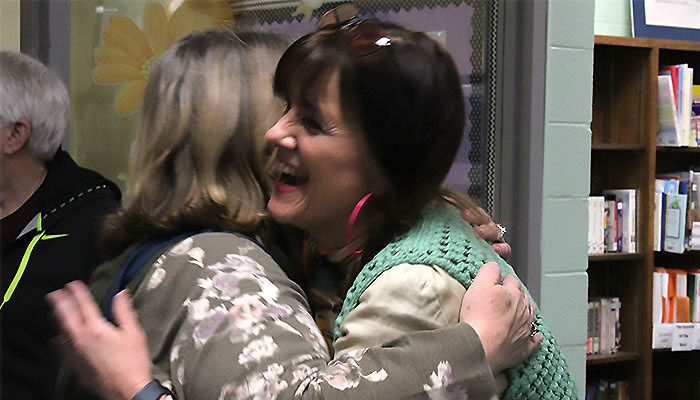
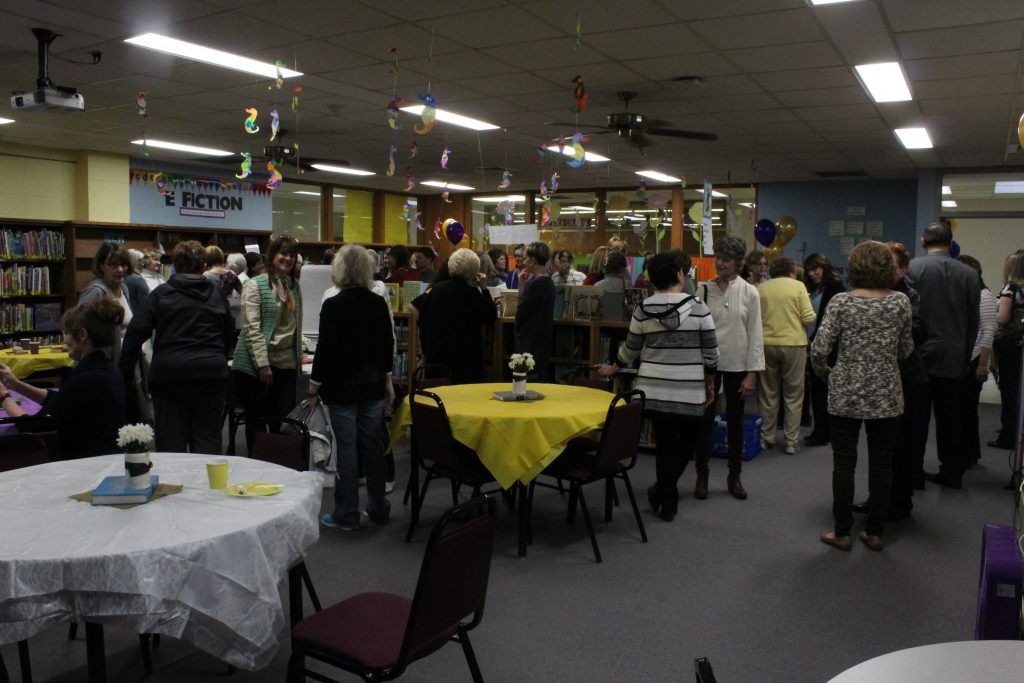
Former teachers and staff came back to Roosevelt Elementary School on Wednesday afternoon to celebrate the school’s 50th birthday.
The teachers and staff hugged, caught up and reminisced about their time at the school.
Pat Schumacher was a special education teacher at Roosevelt from 2005 to 2013. Schumaker’s sister was in one of the first classes to graduate Roosevelt, and Schumaker’s children also attended the school.
“You know this is a good school. It really is,” she said. “They are very cohesive. The staff is very supportive, especially when you are a special ed teacher, you tend to be a little more isolated from some of the classrooms, but we have some wonderful teachers who embrace the kids with special needs and made them feel a part of the classroom.”
Schumacher said she enjoyed seeing the students’ art displayed in the halls as she came in.
“There are some good memories, and I see the artwork from the art teacher and that reflects not just their ability to express themselves in art, but their ability to have free expression,” she said.
Donna Stehno, 80, was a school nurse for the Hays school district for 17 years, seven years of which was at Roosevelt in the early to mid-’80s.
“It was just a good time, great staff and great students,” she said. “It was a good time.”
She said she especially remembered potlucks in the teacher’s lounge.
Joanne Wasinger started teaching kindergarten at Roosevelt in 2006 and left two years ago.
She fondly remembered the students in her class getting eggs in the spring and hatching chicks.
“It was a spring thing. Every year, it was something that the kids looked forward to, we did it, and it was tradition here,” she said.
Former Principal Lee Keffer, who retired last school year, also attended the school reunion.
“It is nice to come back and see the staff members, and if kids are around it is nice to see them,” he said.
Paula Rice, current principal, said the students have been celebrating the decades the school has been open with decorations in their hallways, dress-up days and special activities that help them learn about the last 50 years of history.
Monday the fifth-grade celebrated the ’90s, Tuesday the fourth grade celebrated the ’80s, Wednesday the second and third grade celebrated the ’70s, today is kindergarten and first grade celebrating the ’60s, and on Friday all of the students and staff will wear 50th anniversary T-shirts that the home and school organization bought and participate in a sock hop. The sock hop will include an Elvis impersonator and donated ice cream from Freddy’s Frozen Custard & Steakburgers.
“The staff has gone out their way to decorate to help the kids vision the era,” she said. “The fifth-grade hallway has a lot of ’90s out. The teachers brought with them pictures of them from the ’90s. They have put up TV shows from the ’90s and a lot of ’90s slang— the same with fourth-grade hall and the second- and third-grade hall.”
Rice has used slang from the different eras during the announcement, such as valley girl for the ’80s. The school is also playing some of the biggest hits from the decades of the day over the intercom as the students go to and from classes in the morning.
“Hays being that hometown that it is and still having that strong family feeling and hopefully always will,” she said, “there are so many past Roadrunners that may leave to go to college and come home, so their kids and their grandkids can be Roadrunners.
“I think it is important to understand why that legacy, why that tradition is so important. Is also important for them to understand what their contribution to society and what their contribution to school is. It is a two-way system. The school educates you, but you help the school educate everybody else.”
The students are also learning about history. The fourth-grade recently finished a novel about Martin Luther King Jr. Another class watched “Remember the Titans.”
“Not only did it take them back to the time period, but they were fully immersed in the conversations. They learn there were positive and not just struggles and there were struggles with all the positives. It is a good conservation for them and then they take that to their real life,” Rice said.
Hays native and soon-to-be Kansas Gov. Jeff Colyer (R) talks with team members at Westside Alternative School in Hays Wednesday morning.
By BECKY KISER Hays Post
Although they say you can’t go home again, Jeff Colyer did.
He was back home in Hays Wednesday morning before he was sworn in this afternoon as the next governor of Kansas.
The Hays native started the day with a 9 a.m. Mass at TMP-Marian, where he attended Catholic high school. Several of his former classmates were able to join him.
“That was very special,” said Colyer.
Mass was celebrated by priests who had been Colyer’s teachers.
“Fr. Mike Scully was my calculus teacher and also taught religion,” Colyer noted, “and he will also give the invocation at my swearing-in ceremony in Topeka today.
“I also had Fr. Gilmary Tallman who taught Shakespeare, Fr. Earl Befort who taught economics and Fr. Blaine Burkey, who was the yearbook and journalism adviser. To have those very special men come back and spend a little bit of time with us was important.”
Colyer graduated from TMP in 1978. He also attended John F. Kennedy Middle School, which is now closed. He describes himself as a “fifth-generation Hays kid who never imagined he would become the governor.”
Living in Hays and being a student at TMP is where Colyer says he got his sense of service.
“You got idealism, and that was the great secret here in Hays. You wanted to serve to make a difference in people’s lives. I decided I wanted to be a doctor and I also got interested in public policy.”
Colyer is a Johnson County plastic surgeon who has traveled to war-torn countries to fix the battle wounds of children.
As lieutenant governor, Colyer has recently been touring mental health facilities and programs in the state. While in Hays, he visited Westside School, 323 W 12th St., an alternative mental health center for severely emotionally disturbed K-12 students in Hays USD 489.
The Westside program was just the second in Kansas when it began 25 years ago.
“We identified these kids who were being placed in foster care outside the community,” explained Walt Hill, High Plains Mental Health Center executive director.
“They couldn’t stay at home, couldn’t stay in school. We wanted to do something locally to keep kids at home and coordinate intensive services for them, along with educational support,” Hill said. “We also provide support for the parents as well. The program started as and remains a partnership of the Hays schools, the local courts, HPMHC, and the state child welfare department.”
During a roundtable discussion that included Westside Program Coordinator Mark Dinkel, USD 489 Superintendent John Thissen, Ellis County Attorney Tom Drees, and 23rd Judicial District Chief Judge Glen Braun, Colyer was told Westside would expand its 30-student population if space became available in the district.
Colyer toured a couple classrooms and met several students and invited them to “come visit me in the state capitol.”
“This is one of the great things that is happening in Kansas, thinking outside the box to help kids with mental health issues,” Colyer said after his tour. “I really like the concept that ‘local problems need local solutions,’ and you guys did that. This is an amazing program.
“As you know, I’m serious about solving problems and empowering people to do so. I think these are ways we can tackle tough problems. It takes a long time, but there’s a lot of commitment in the state.”
Joining Jeff Colyer (right) at Al’s Chickenette for lunch were Hays residents Ron and Elaine Adams, along with Errol Wuertz (back to camera).
Following his stop at Westside, Colyer and his entourage ate lunch at Al’s Chickenette. Front of the House Manager Jessie Frasier served up his fried chicken, fries and corn. Colyer joked he “needed another plate,” adding that “my daughters will be really jealous I got to eat here.”
Colyer’s lunch companions included Hays residents Elaine and Ron Adams, along with Errol Wuertz. Elaine Adams chairs the Ellis County Republican Party. The three were also invited to greet Colyer at Westside, where they held signs that read “Welcome Home, Governor Colyer!” and “To the Next 5 Years, Gov. Colyer!”
Before departing Westside, Colyer reflected on this important day.
“In the path that has led me to governor, I grew a lot. I see great things happening in the state. Being in Hays today was a way for me to say thank you to a lot of friends and highlighting just what a great state we are.
“I had to come home today and just touch base,” he ended with a smile.
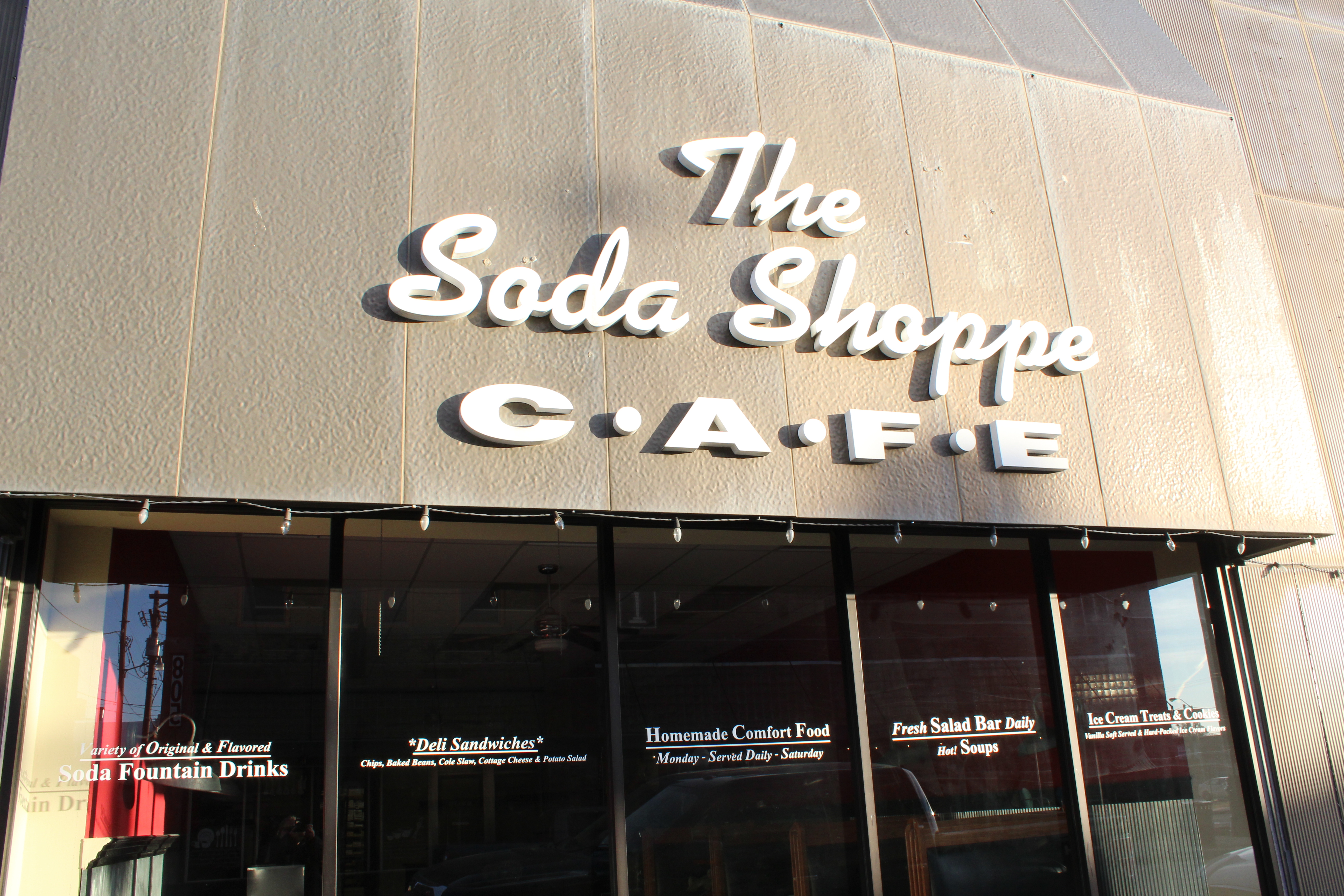
The Soda Shoppe Cafe, 800 Main, is closed temporarily for remodeling, but will reopen soon with most of your same favorite food offerings.
Jim Keller, owner, said after 25 years of business, much of the equipment was wearing out and needed to be replaced.
The old soda fountain needed to be replaced, and he said it was impractical to try to keep the business open during the remodel. The old fountain was so large, when it was originally installed in the building, the front windows had to removed to place the counter.
During renovation, the fountain was removed through the front doors, but Keller said it still was a massive undertaking.
The renovation includes a new soda fountain, new equipment and new decor.
Keller said he was unsure when the business will reopen, but he was aiming for the beginning of March.
“It is going to be exciting,” he said. “We will be all brand new.”
The Soda Shoppe is known for its traditional hand-mixed soda drinks, including a variety of ice cream flavors, specialty sundaes, old-fashioned shakes, malts and floats, as well as handmade sandwiches, wraps, hearty soups, garden fresh salads and desserts.
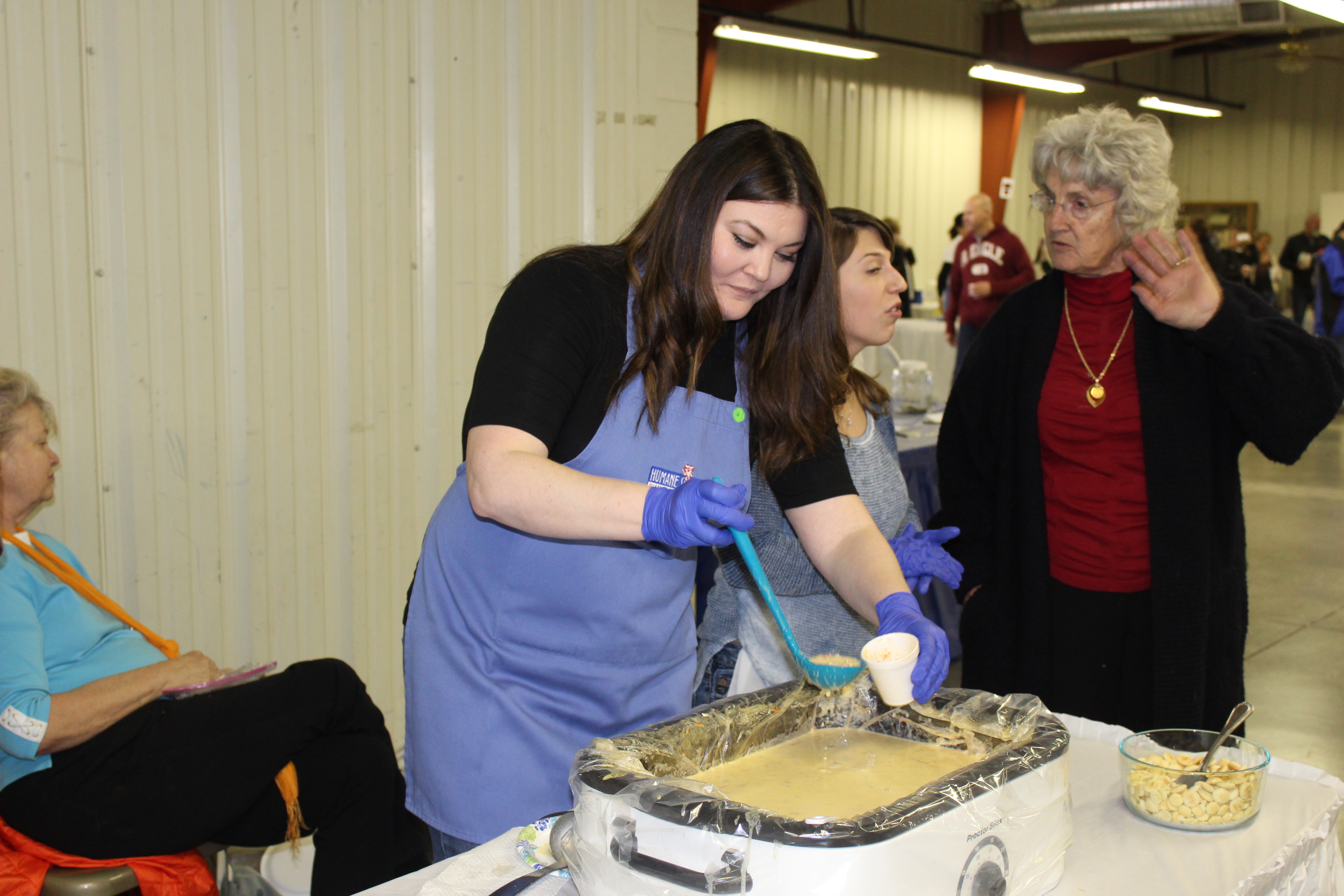
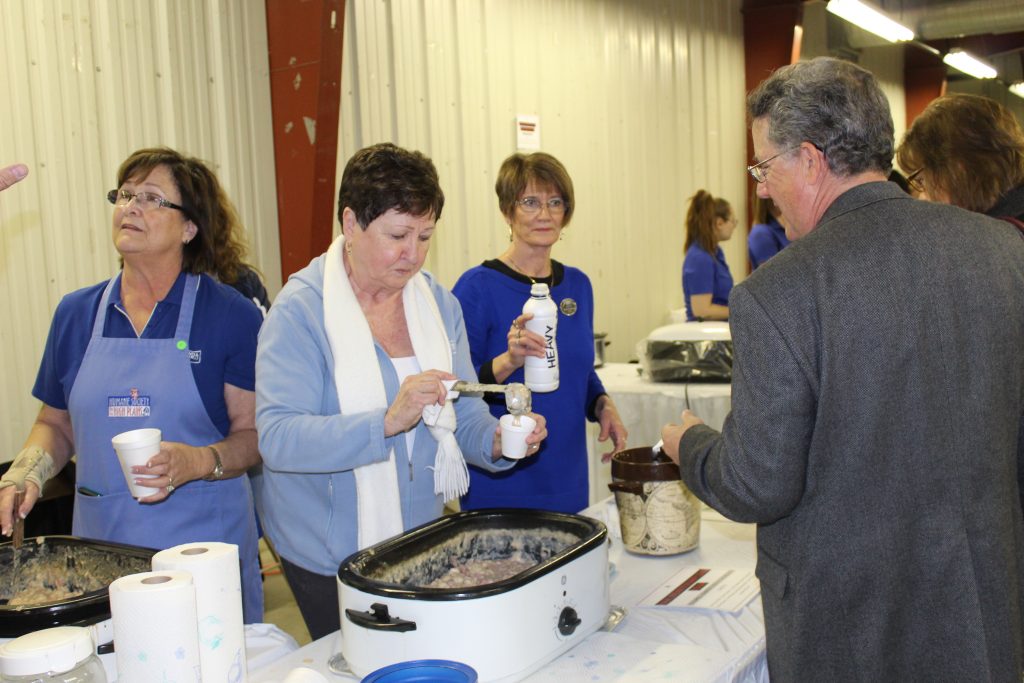
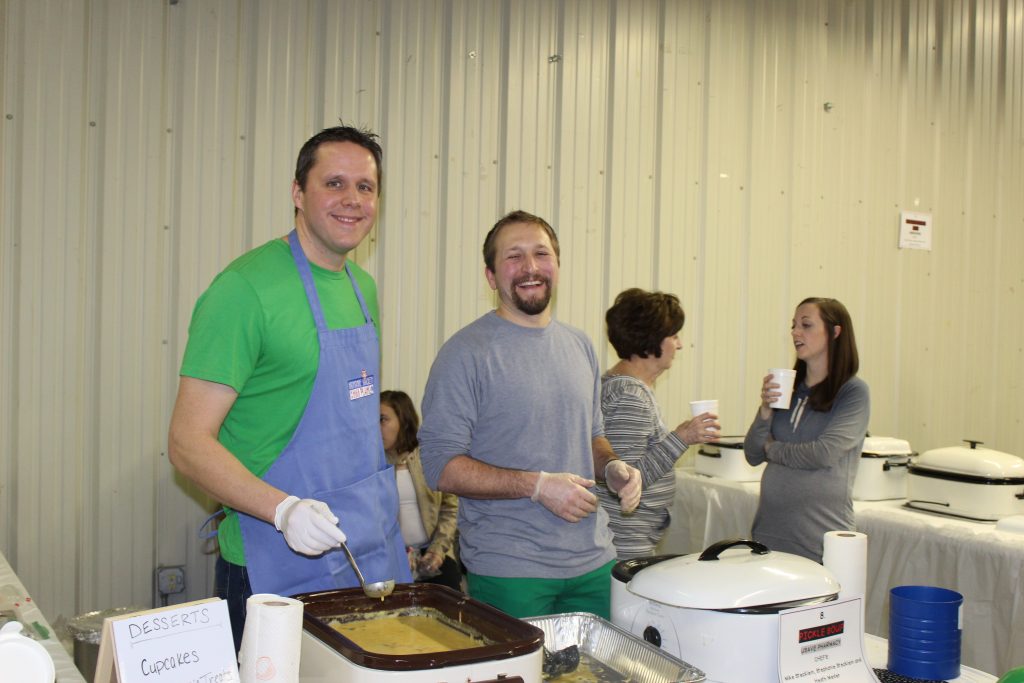
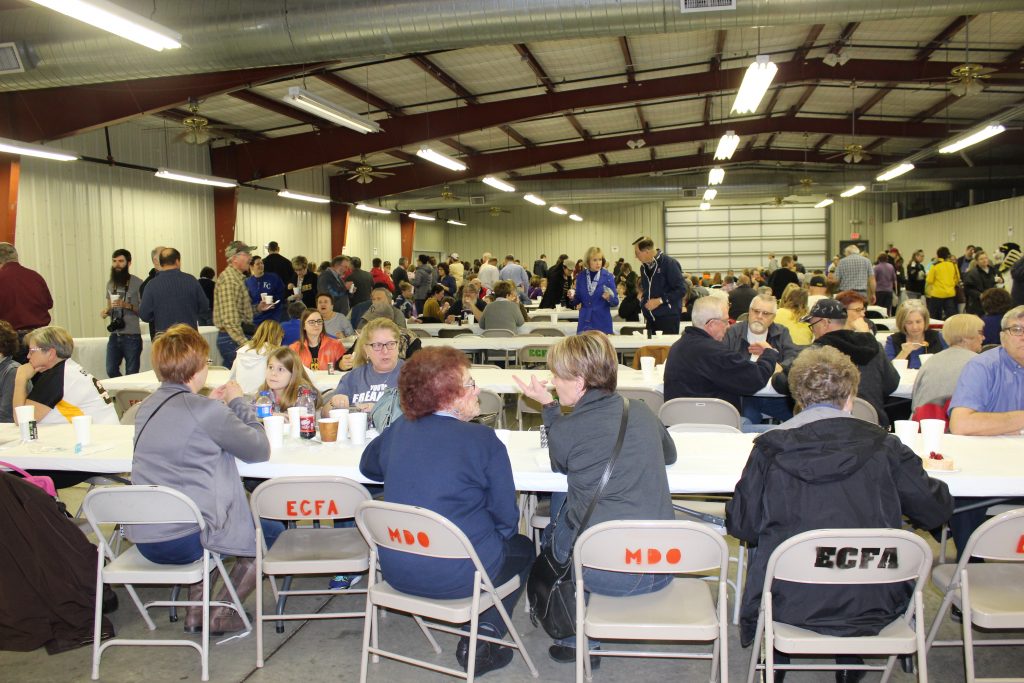
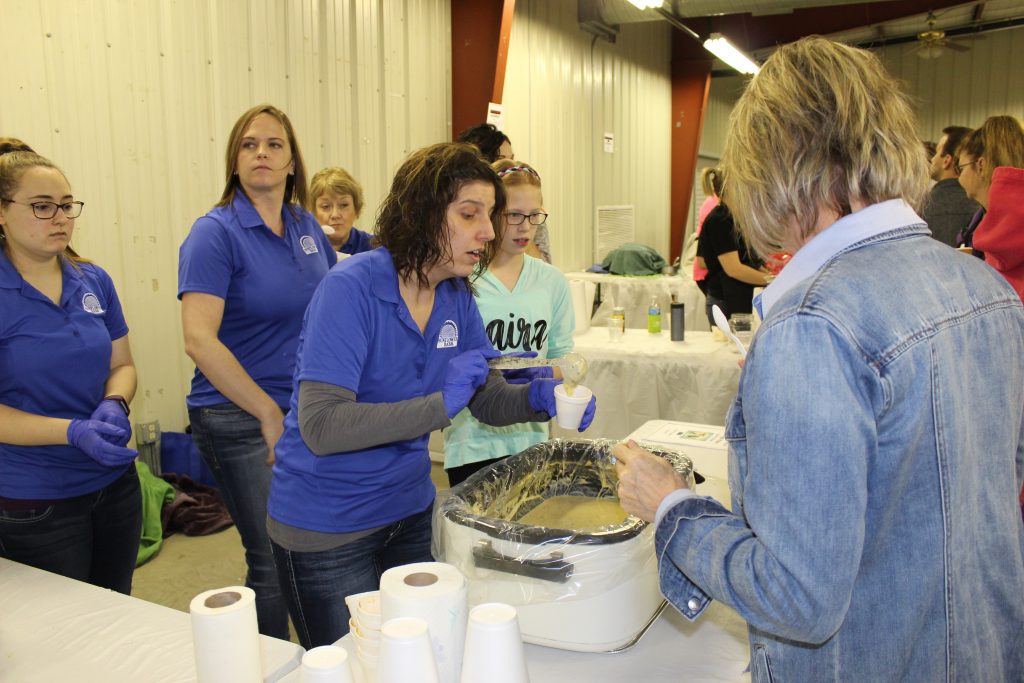
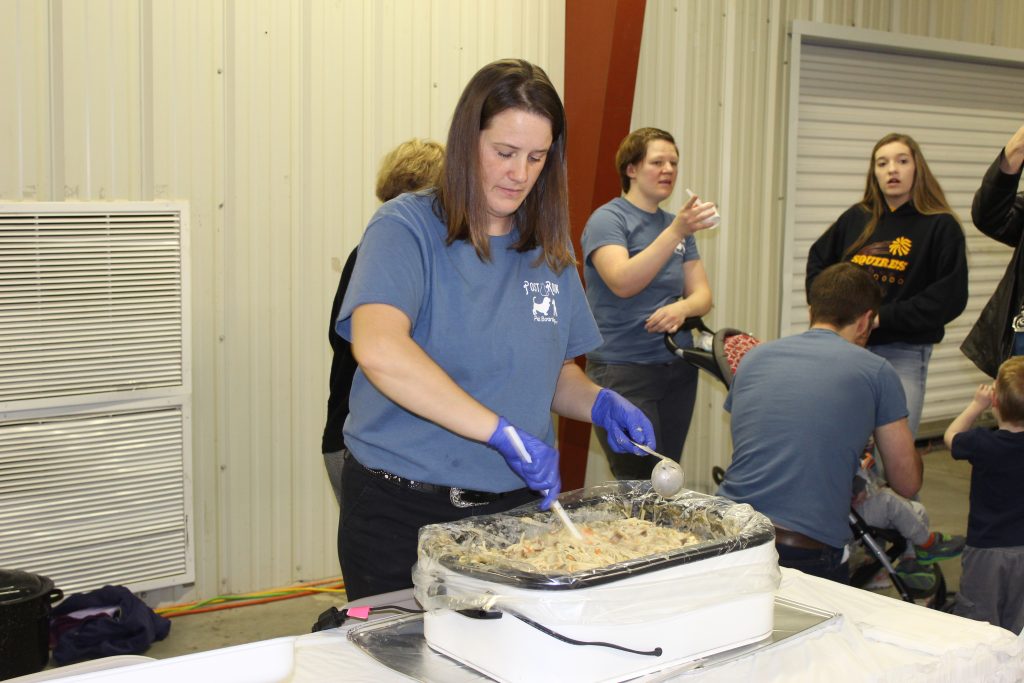
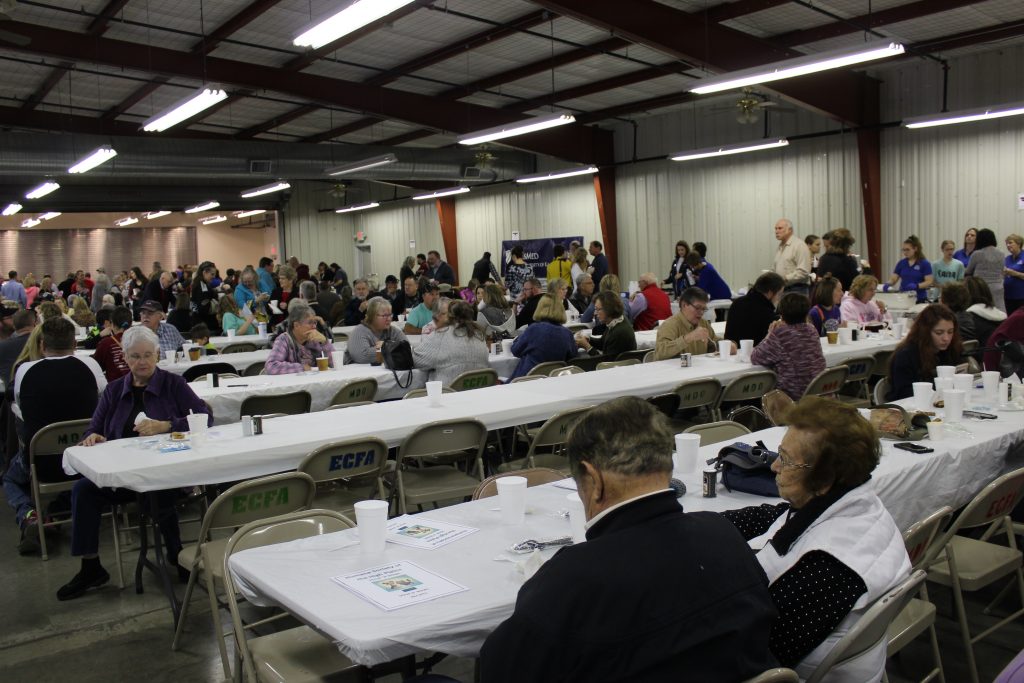
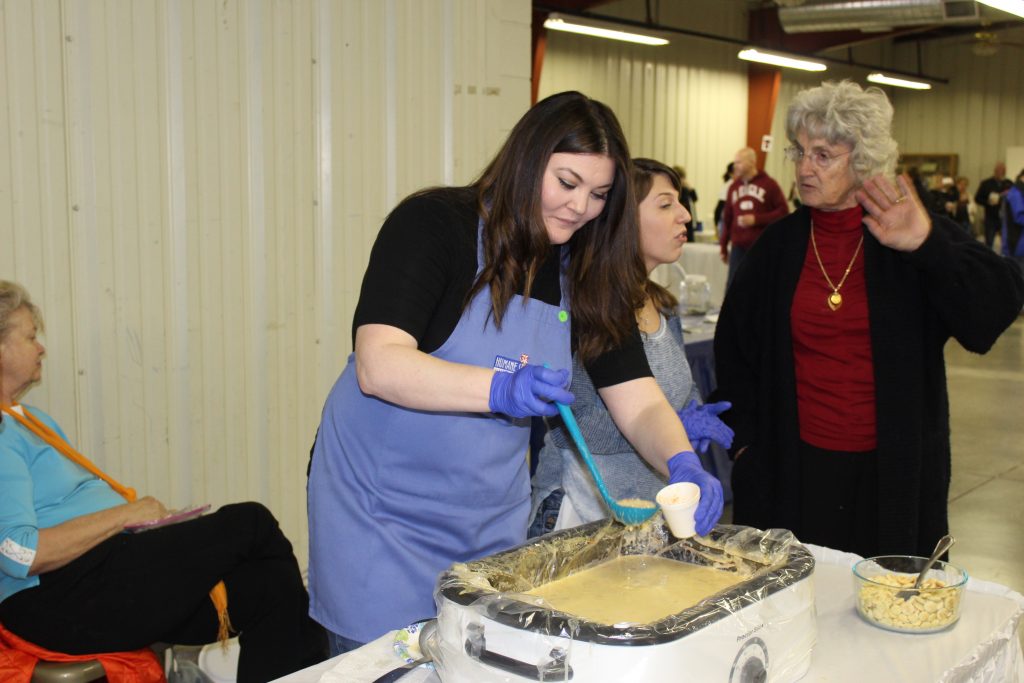
Hundreds gathered Sunday at the Ellis County Fairgrounds for the Humane Society of High Plains Soup ‘R Bowl.
The Soup ‘R Bowl is the main fundraiser for the Humane Society with all the proceeds going to the care of the animals.
Twelves businesses and organizations served soups and chilis to event goers, who paid $7 each for tasting kits. Each kit contained tickets to vote for their favorite dish.
The winning business this year was Fur is Flying Pet Grooming with chef Bunnie Bowen, who made a Creamy Reuben Soup. Bowen will be the keeper of the Golden Ladle for the next year.
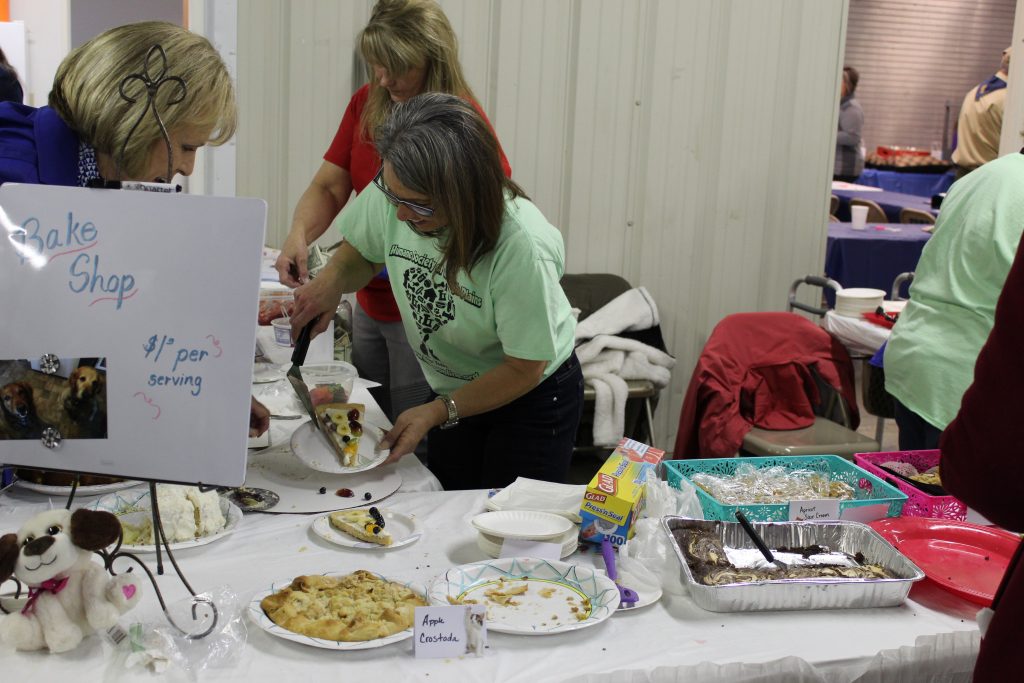
The event also offered a large variety of desserts, door prizes and a raffle drawing. The Humane Society produced a cookbook with all of the soup recipes, which sold out.
Final fundraising totals and a head count won’t be available until later in the week. However, Alicia Tripler, board member, said she was pleased with the turnout.
About 600 people attend the event last year, and Tripler said she hoped the event would reach at least that threshold again this year.
She said she wanted to thank all the people and organizations who helped with this year’s event, especially Fort Hays State University.
The university baseball team help set up for the event, Alpha Kappa Psi members volunteered, Victor E. Tiger was on hand, and the Athletics Department donated football tickets and provided green bean dumpling soup, which ran out before the end of the event.


 Phase One of the project involves construction of a full-service four-story Hilton Garden Inn with 100 rooms, an 8,400 square foot conference center/event space, a restaurant and lounge, and infrastructure improvements required to serve the site, including water, sewer, street, utilities, and pedestrian infrastructure. The developer will finance costs of 43rd Street improvements.