We have a brand new updated website! Click here to check it out!

Hays FFA student experiences South African culture, wildlife

Marie Reveles of Hays traveled to South Africa over her winter break with a FFA group to experience the country’s culture and religion.

By CRISTINA JANNEY
Hays Post

Marie Reveles of Hays spent her winter break on the plains and mountains of South Africa.

Reveles, 19, a freshman at Kansas State University, and other FFA students traveled to South Africa from Jan. 4 through 15 to experience the culture, religion and agriculture of the African nation. Reveles, who was a state FFA officer when she was at Hays High, applied to participate in the trip.

“The culture there was amazing, and it was so amazing because I think it did remind me of my hometown of Hays, Kan. The people there are very, very generous. Even if they don’t have a lot to share, they will share what they can. They are always there to help people out,” she said.

The group’s tour guide told the FFA students he once lived in a neighborhood in which a man lost his home and everything he had. The neighbors rallied to his aid and helped him with anything and everything he needed until he could get back on his feet.

Reveles said she was most affected when she visited a poor community. The residents had no running water. Two wells served the village of 15,000 people. The homes were made of sheets of metal propped up against each other. The ground looked like a gravel parking and was very difficult to grow anything in. Only 400 students in the community can attend school.

“It was a very eye-opening experience,” she said. “It grounded me that this was not a vacation, but it was a learning experience too. When we visited there, we saw some very sad situations, but they were very happy people. It was very interesting to me that community thrived because they help one another whenever they need it.”

The residents greeted the students, sang, danced and acted out stories.

“We saw these two little boys. They were playing tag, and they were laughing so loud. The youth were singing and dancing. That was my favorite part. I started tearing up,” she said. “I have never seen such passion and energy and excitement in what they were doing. It reminded me that you don’t need a lot of things — material things — to be happy. Because those people basically had next to nothing, and they were the happiest people I have ever seen in my entire life.”

Marie Reveles and her fellow students were able to come within 10 to 12 feet of this cheetah mother and her cubs at Kruger National Park in South Africa.

Reveles had a close encounter with Africa wildlife at Kruger National Park. The students were on a safari when their guide spotted fresh cheetah tracks. Within five minutes, the group spotted a mother cheetah with her three cubs. The students were able to leave the confines of their vehicle and walk 10 to 12 feet from the big cat and her cubs. Although some of the students were eager to regain the safety of the vehicle, Reveles stood firm.

“I was really not frightened. I was really excited,” she said. “Things like that intrigue me.”

While visiting the preserve, Reveles tried roasted wildebeest for the first time. On the trip, the group sampled other native dishes, including ostrich steak springbok, blesbok, calamari and a variety of fish dishes.

Reveles visited a variety of farms on their trip. The South Africans grow a great deal of corn. Farmers there grow both yellow and white corn, but there they eat the white corn and feed the yellow corn to livestock. Corn was an important staple for poor families in Africa, especially during Apartheid. Today South Africans have developed both sweet and savory corn dishes and serve these dishes at breakfast, lunch and dinner.

South Africa has a warmer climate than Kansas, so the country also grows nuts, citrus fruit, bananas and avocados.

The South African farmers struggle with many of the same issues that American farmers do, including water shortages and pests. In the warmer climate, fruit growers use nets or bags to cover fruit to prevent sunburn. Just like in the U.S., South African farmers find it more difficult to market blemished fruit to consumers.

The FFA students visited a banana plantation. The farmers use sacks, like this blue one, to cover the bananas to protect them from pests and sunburn.

South African Farmers use organic farming methods as well herbicides and pesticides. Farms can be small family farms or large corporate operations; however, in South Africa, what is grown is largely dictated by the government.

The students visited a farmer’s market in Pretoria, which Reveles compared to a mini-carnival or state fair. In addition to fresh fruit, the market featured local arts, crafts and coffee stands.

In addition to the farming operations, the students visited several points of interest in the county. These included Table Rock Mountain, the Cape of Good Hope, the most southern point on the African continent, and an area that was home to African penguins.

Reveles was so inspired by her ag teacher at Hays High, Curt Vajnar, she has decided to major in ag education and hopes to eventually teach agriculture at the high school level. She hopes she can share her experiences in FFA, including her trip to South Africa, with other young people.

“My adviser, Mr. Vajnar, was so influential to me,” she said. “Without him, I would not be where I am today, and I would love to be that person for hundreds of students.”


Teacher of the Month: Dreiling brings love, laughter to her classroom


By CRISTINA JANNEY
Hays Post

Pam Dreiling loves to laugh. She loves laughter in her classroom, and her peers often say she is as silly as the 3- and 4-year-olds she teaches.

“I am not afraid to show them that I have made a mistake or do something silly,” she said.

The kids help Dreiling in a constant comic hunt for her glasses. They tell jokes and funny stories.

“There is a lot of laughter in my classroom,” she said. “We try to have a lot of fun, but it is never laughing at anyone. It is laughing together. We try to have a lot of fun. If I can’t have fun with my kids, I don’t want to be doing this.”

Dreiling, 50, has been teaching for 25 years and is January’s Hays Post Teacher of the Month. She is in her 11th year of teaching Head Start preschool for Early Childhood Connections and is currently based in an Ellis classroom.

Makenzie Henman said in her nomination, “Pam is so compassionate about her job. She goes the extra mile to make sure that children are learning, and she really builds a bond with the kids. She is an amazing teacher and it is hard to find teachers like her these days!”

Tammy Wellbrock, Dreiling’s sister, said, “Pam is truly a walking hug and children love her. The student population she serves is in a lower-income bracket and many of the students are from broken homes or involved in complicated domestic situations. Pam is the perfect person to provide them a safe, nurturing, encouraging classroom while also meeting their academic needs.”

Dreiling is Tia Miller’s former teacher, and she said in her nomination, “Pam is the most outgoing, loving, dedicated teacher I have ever met. She taught me when I was 5, and I am now 21 and still keep in touch with her. If that doesn’t say something as a teacher, I don’t know what does. She’s amazing!”

Dreiling has spent most of her career teaching 3- to 6-year-olds and said she really enjoys helping younger children discover their world.

“I really like when they are excited about learning something — when they are excited and you can just see it in their faces, ‘Whoa I get that! That’s cool!’ — that discovery by them. They discover something, and they are interested, and it piques their interest, and they want to learn more,” she said. “(I like) when it is just starting to all come together.”

When Dreiling was in high school, she swore she would never be a teacher. She tried teaching Bible school in the summer, but she became frustrated when the children acted up.

However, Dreiling found teaching was a calling she couldn’t escape.

“It was almost if I always knew I should be a teacher,” she said. “My mom has always compared me to my grandma in my personality. It was just what God wanted me to do. You know you were just born to do something. I know that is where my heart lies.”

Her grandmother Helena Duus was a teacher for 29 years in the Sylvan Grove area and was quite strict. Dreiling said she was ornery as a kid, and to some extent still is. Grandma Helena never let her get away with the same things her other grandparents did.

However, she said she still sees ways in which she and her grandmother are similar.

“God puts us on this earth and has a plan for us,” she said. “and I think my grandma knew that being a teacher was also the plan God had for her, and I think that was true for me. It is not a job as I look at just being a job. I take it very seriously. I am forming the future of these children or helping them to form their future, so I can’t let them down. I can’t just go clock in. There is a lot at stake. Their little lives are at stake. I take that very seriously.”

Even though Dreiling works with the smaller children, she stops in the hall and gives the older children hugs. She said she has always has been drawn to the underdog and seeks out those children who need a little extra attention and encouragement.

Dreiling enjoys her breaks and off times, but even then, she seems to be drawn to children. She has three children of her own and one grandchild.

“At this point in my life, it is sometimes hard to differentiate between being a teacher and being a mom,” she said, “and now that I am getting older, it is being a grandma. Sometimes I feel like I am a mom to the parents. A lot of the parents are around my daughter’s age. I feel like a mom to them and a grandma to the little ones.”

If there is anything she would like to impart to those parents, it is you don’t have to do elaborate and exciting things with your kids. Just read to them, talk to them and help them discover and help them to grow.

“If they do those things as a rule, love their kids, then they will do just fine in school,” she said.

Dreiling said her classroom runs like a family with family values.

“We all have importance,” she said. “We all have a job. If someone is missing for the day because they are sick, we wish them well. We try to develop a family because families have each other’s backs, and that is what I am trying to teach the kids is to have each other’s backs, to be friends, to use kind words.”

One of the best things Dreiling said she has done in her classroom is ask the children if they want a toy to tap the other child on the shoulder and ask for it. It seems simple, but Dreiling said it has been amazing how well the technique has worked.

Learning to get along with others is the most important skill children learn in preschool, she said. The second is teaching children to self-regulate their emotions.

Dreiling still gets frustrated when the children act out, just like she did when she was a teenagers, but she has found taking care of herself by getting enough sleep and deep breathing helps her get through rough spots.

She teaches the children the same deep breathing exercises to help them deal with their own frustrations. It is part of ECC’s conscience discipline program. She puts the smaller children in her lap and exaggerates her own breathing so she is breathing with them. She said she wishes she would have known these techniques when she was a young mother because she would have used them.

“It is really pretty amazing when a child is really upset, and you start breathing with them,” she said. “Of course, they fight you at first. They don’t want to do it because they are mad. When you finally get them to breathing, it is as if their eyes soften and you can tell they are back to rational thinking again. It really is pretty amazing.”

After 25 years, Dreiling said she has good days and bad days. She doesn’t look to retire any time soon, put looks forward to a time when she can spend more time on herself.

“If I start getting down, I will have a good day, and it sucks me back in,” she said. “Those good days are like a drug.”

She described a good day.

“No big behavior problems, and a day where we laughed. We got our work done. The lessons went well. People were listening. Children were engaged. That is a good day for me, and there is laughter. There’s got to be laughter. I do not want to work in a place where there is not laughter because, again, I am kind of ornery.”

🎥 Allen Street bid $2M under budget; city to pay cash

(Click to enlarge)

By BECKY KISER
Hays Post

The bid awarded for reconstruction of Allen Street by Hays city commissioners Thursday night was nearly two million dollars under budget. Mayor James Meier was very pleased with the $2,386,808 low bid from Hays contractor Paul Wertenberger and pointed out the city will pay cash for the project.

“I think that it’s another example of why we should continue to have discussions about doing more of these projects now versus later because the bidding environment is very good just as it was last year as we discovered when we did 8th Street,” Meier said.

Allen is classified as a major collector street, carrying between 2,000 and 4,000 vehicles per day, according to Projects Manager John Braun. The reconstruction, between 8th and where it intersects with Vine Street at 24th, has been in the Capital Improvement Plan since 2011.

Commissioner Sandy Jacobs voted against the measure. She preferred the alternate bid, also from Paul Wertenberger, which would have included some brick paving for an additional $100,000.

(Click to enlarge)

“I spent a lot of time considering this and also read information from Strong Towns about streets and the aesthetics of neighborhoods,” Jacob told her fellow commissioners. “That’s a wonderful neighborhood down there. All of the streets that come up to Allen south of 13th Street are all brick. I would have liked to have seen that be the end spot.

“I certainly understand the $100,000 savings (by not using brick.) But after seeing 13th Street and wishing it had been brick, I’ll be voting no”.”

Commissioner Chris Dinkel disagreed about the aesthetics of using bricks. He drives the street every day and said he had “really thought about it this last week.”

“Part of it is 12th to 8th and you’re leaving a block off to 13th. You’re going from concrete to concrete. Also, having new brick for this small portion of the road would look really patched together,” Dinkel said. “If this was a discussion about brick all the way through or no brick at all, that would be one thing. But having this little section that’s kind of off in a residential area that’s not really part of the downtown district, I don’t think the aesthetics make sense. It would actually look odd.”

Work is scheduled to begin March 5th and be completed in November. The project includes new pavement and curb and gutter, replacement of most of the sidewalk with correction of any ADA (Americans with Disability Act) issues, and upgrade and replacement of the water main and water services north of 10th Street.

Otter Juice Co. to offer clean beverage option

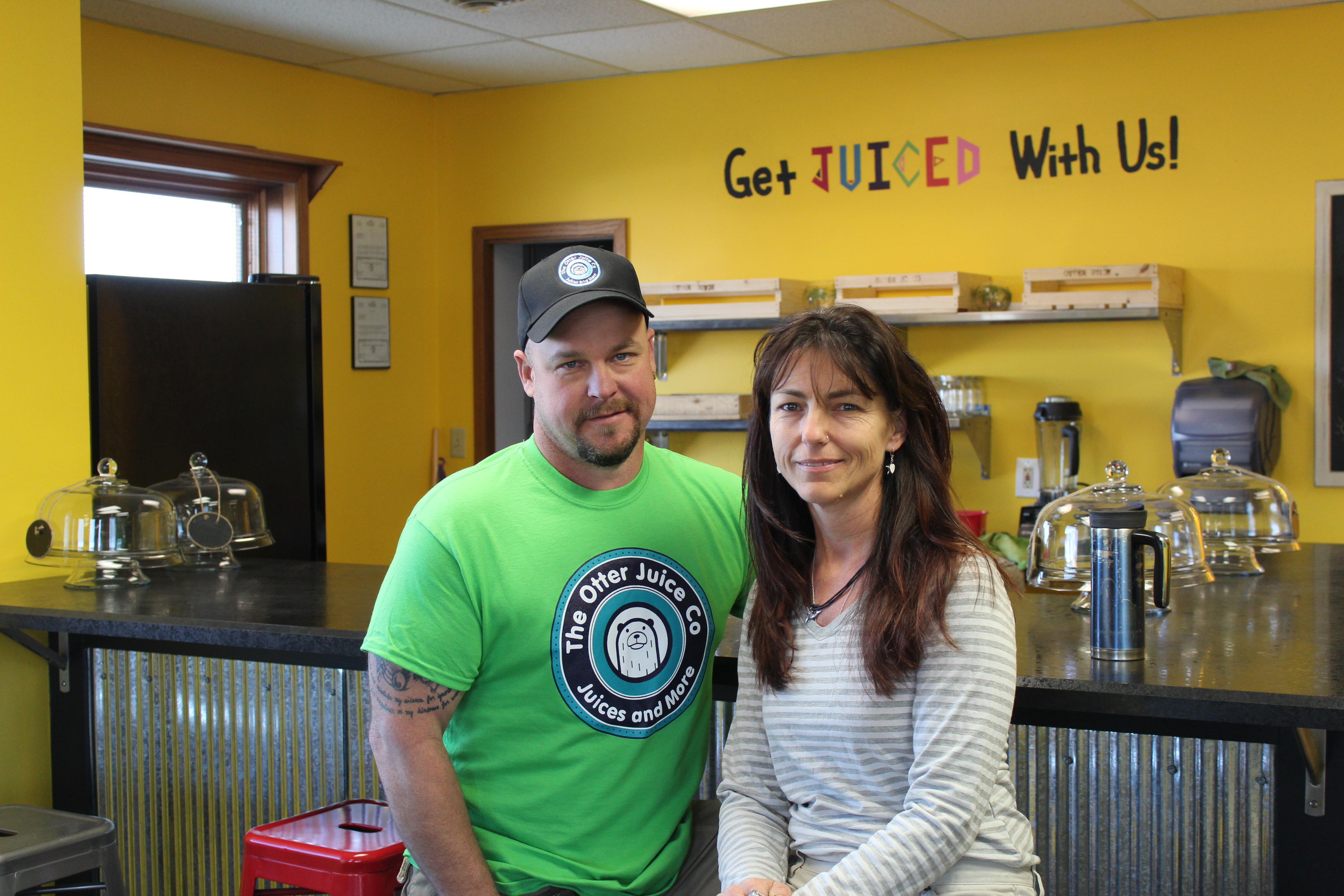
Curt and Jess Braun, owners of Otter Juice Co.

By CRISTINA JANNEY
Hays Post

The Otter Juice Co. is set to open next Thursday, Feb. 1, at 2306 Vine in Hays.

Jess and Curt Braun, owners, will offer 10 juices plus a make-your-own option. The juice bar will also offer a weekly smoothie option, coffee and an assortment of pastries.

Both Jess and Curt juice for their health and are excited to offer a clean eating/drinking option in Hays. All the ingredients in the beverages will be fresh. Jess even makes her almond milk from scratch.

“I am passionate about two things — animals and clean eating — and there is no place to eat clean here,” Jess said. “We love to juice. It is so healthy. We juice everyday.”

Most of us don’t get enough fruits and vegetables, and juicing is an easy way to get the nutrition your body needs, she said.

Jess said juicing is a good way to lose or maintain weight as well.

Unlike cooking vegetables, juicing preserves the nutrients, Curt said. No sugar is added to the smoothies or juices.

The Brauns insist getting your daily serving of fruits and vegetables doesn’t have to be chore.

Take, for instance, the Red Otter, one of the juice bar’s drinks. It contains beets, pineapple, apple and ginger. This is one of Curt’s favorite drinks, but he normally hates beets. You can’t taste the beets over the sweetness of the pineapple and apple, he said.

If you want something savory with a little kick, the Sassy Otter contains cucumber, celery, carrots, jalapeno, parsley, tomato and spinach.

Jess said juices can be a way parents can sneak some vegetables into kids’ diets.

Jess used the example of the Funky Monkey smoothie, which will be the Otter’s first smoothie offering next week. It has peanut butter and chocolate almond milk in it.

“When my daughter was doing the sign for me, she gets down to the peanut butter and said, ‘What else did you say?’ I said kale and spinach and she goes, ‘Oh, you just ruined it.’ I swear you cannot taste the kale and spinach in there. That is a kid-friendly smoothie right there even for kids that don’t like veggies because you cannot taste them.”

Jess said she hopes to eventually offer a juice flight, which will allow customers to try a variety of juices so they can see what they like.

The pastries, which will include bagels, scones and muffins will be made from scratch and will be all plant based, which means no eggs or butter.

That doesn’t mean they aren’t good, Jess said. Her baked goods have a handful of natural, fresh ingredients compared to a supermarket bagel, which might have a list of 20 ingredients, including preservatives.

Jess uses both hemp seed and chia seed in her muffins and bagels. Hemp seed is a good source of protein and omega fatty acids, and chia seed is a good source of protein and fiber.

Otter Juice will be open from 7 a.m. to 7 p.m. Mondays through Saturdays. The Brauns have made an agreement with Sake2Me, which is next door, so dinners in the that restaurant can order juices and smoothies if they wish.

Otter Juice has a Facebook page and is developing an ap. Customers will be able to order through the ap and have their orders delivered curbside. The Brauns had hoped to have a drive through, but that is not possible at their present location.

A 10 percent discount is offered with student ID, and customers can buy reusable Otter jars that will earn them a 50 cent discount on beverages.

Most juices will run $6 each, which fresh orange juice $4, smoothies $5 and coffee $1.25. Pastries will be $2 to $3 each.

The decor in the building is a happy yellow. The Brauns used reclaimed and recycled materials as much as possible. The tables were made from old pallets and are painted with rainbow colors and encouraging sayings. On the walls are pictures of cute otters.

The straws and cups will be compostable.

Why otters? Jess, who is also a vet, said, “Otters are just so cute. I love otters. … Otters are fun, and they are carefree and are super cute.”

Once the business gets up and going, the Brauns would like to give a portion of the proceeds from the juice bar to an otter conservation organization.

🎥 WWL: ‘Affecting change in the community’ with new Born Learning Trail

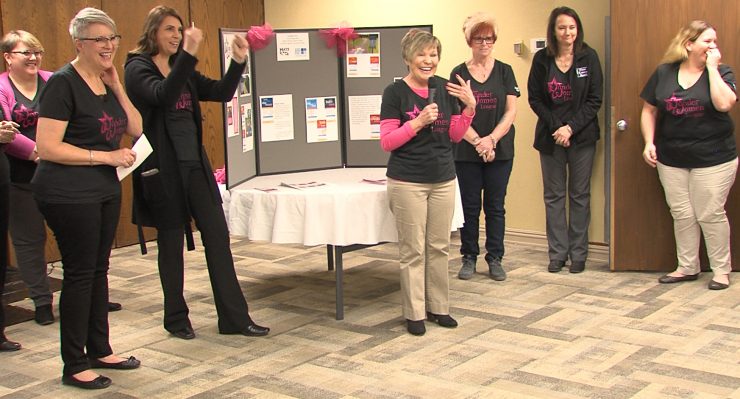
Advisory Committee members of the Wonder Women League announce installation of the Born Learning Trail in Sunrise Park.

By BECKY KISER
Hays Post

Members of the new Wonder Women League (WWL) in Ellis County plan to “inspire and empower women to affect change in our community.”

Their first project is installation of a “Born Learning Trail” in Sunrise Park, 19th and MacArthur. The park is adjacent to Roosevelt Elementary School. The trail will be built in the middle of the park.

The announcement was made last week by the WWL Advisory Committee in partnership with Adams, Brown, Beran and Ball Financial Services, Hays.

WWL operates under the auspices of the United Way of Ellis County (UWEC) and is comprised of women donating to the WWL “above and beyond” their annual United Way contributions.

“Our goal is to complement the United Way, never to compete with it,” said WWL co-chair Nancy Jeter, who served as the 2017 UWEC campaign chair.

She and her husband Bill are regular United Way donors. “I got to thinking about it,” Jeter told the audience. “There are women, like me, who have the time, the talent and the resources who could do so much more, but they don’t really know where to go or how to help their community be a better place.”

After talking to Sherry Dryden, executive director of the United Way of Ellis County and Erica Berges, administrative assistant, the Wonder Women League was created. “You know when you get a group of women together, they’re pretty powerful,” Jeter said with a big smile on her face. She also sported bright pink eyeglasses and nail polish matching the color of the WWL logo on her shirt.

“Not getting anything done can really drag down a group,” added co-chair Rhonda Meyerhoff, “so we decided to get something done and we are excited. We know every day is a learning situation for kids. Sometimes they’re in a situation where they can have a lot of learning and sometimes not. Sometimes parents have the tools to help their kids learn and sometimes they don’t.”

The Born Learning Trail, a United Way initiative in many other communities, is a series of 10 interactive signs describing fun learning activities to be done along the trail by children along with their families and caregivers.

“The best part about is, it’s free,” Meyerhoff said. “We’re hoping this helps with pre-literacy, gross motor skills, and problem-solving skills. They can learn more each time they go there.”

Jude Fox, Meagan Wellbrock and Brenda Bickle of Adams, Brown, Beran & Ball Financial Services, Hays. Fox is a current UWEC board member and Wellbrock is a former board member.

“Trying to find a community service project for 54 people to do together can be challenging. So, we are going to help maintain this trail,” said Brenda Bickle, Financial Services Coordinator for Adams, Brown, Beran and Ball. “When the hopscotch layout needs to be repainted, or things need to be fixed,  we’ll take our Adams, Brown crew out there and get it done so the kids can keep learning. It’ll be a great thing for the community.”

The city of Hays will donate labor to install the signs which will sport the Ellis County United Way logo.

There are more than 750 Born Learning Trails throughout the United States. “It’s high time Hays and Ellis County have one too,” Meyerhoff declared.

(Disclosure: Rhonda Meyerhoff is an employee of Eagle Communications which owns Hays Post.)

Abuse survivor trapped inside house by fear seeks funds for service dog

By CRISTINA JANNEY
Hays Post

Kathylea Wolf has an overwhelming fear of leaving her apartment.

She only leaves to go to doctor’s appointments and once a month to go grocery shopping with her mother, and sometimes the anxiety is so intense she can’t even do those two things.

Even those trips can be excruciating. She looks around corners and carefully plots her way through aisles to have the least contact with other people. She has memorized stores so she can spend the least amount of time in them. If she hears a couple fighting, she freezes and goes numb. She starts saying she is sorry repeatedly even though she is not involved in the fight. She becomes terrified if she hears a child screaming.

She won’t even go outside to pick up her mail.

Kathylea, 43, is a survivor of years of physical and sexual abuse from the time she was 3 years old in addition to domestic violence as an adult. She has PTSD and suffers from agoraphobia, severe anxiety, panic attacks and night terrors.

Kathylea has applied for a service dog that she hopes will give her the confidence and stability to regain her independence and take back her life. But on disability, Kathylea does not have enough money to pay for the dog. Her insurance refused to pay for the dog, so she needs $3,500 to pay for the dog and another $2,000 to travel to Concordia and stay two weeks for the training.

Kathylea has been on the waiting list at CARES of Concordia for two years. She is hoping to have the funds by this summer.

She has started a GoFundMe page in attempts to raise the money. However, Kathylea’s isolation means she has no friends. As of Tuesday morning, she had only raised $30 toward her goal. Her GoFundMe account is listed under Kathylea’s name under Medical “PTSD trauma service dog needed.”

Kathylea had a dog before that helped her with her intense anxiety. His name was Stormy, a Burmese mountain dog. Stormy was not a certified service dog, but she did have him trained to help her through her intense anxiety. She would take Stormy for walks in the park, and if Kathylea became startled, Stormy would help ground her.

“He gave me comfort. He gave me something to concentrate on other than the people,” she said. “He could tell in an instant if I was starting to heighten. He would nudge me. If that didn’t work, he would leap on me. I had him on- and off-leash trained. He would turn and walk away, and if I didn’t follow, I would lose my dog. He had me trained as well.”

However, Stormy became so sick she had to put him down.

CARES has placed more than 1,400 dogs in the last 25 years for people with a variety of disabilities. This includes service personnel and rape and domestic violence survivors with PTSD. Sarah Holbert, CARES CEO and a trainer, could not speak specifically about Kathylea’s case, but discussed other examples of dogs the organization has trained for trauma survivors.

People who have suffered traumatic situations can be triggered to have flashbacks by everyday noises or sounds. For a veteran, this could be fireworks or a car backfiring, Holbert said. In that moment, the person is taken back to that traumatic moment in time. They freeze and are unaware of their current environment. Holbert explained this can be very dangerous for a person in public.

The dogs are trained to nudge the person in attempts to help coax them back to the present. For a person having a panic attack or night terror, the dogs are trained to provide gentle pressure, nudge them or lick them. Most of the dogs CARES trains for this type of service work are Labrador retrievers, due to their calm and friendly temperament, Holbert said. The exact training for the dog, however, will depend on the needs of the client.

CARES maintains a foundation that helps defray the cost of training the dogs. The national average cost for a service dog is $18,000, but CARES’ average cost is $5,000. For more information on CARES and its foundation, see its website.

After Kathylea’s dog Stormy died, she became more secluded, was more fearful and had more night terrors. She sleep walks, and often wakes up with cuts and bruises.

She became homeless for a time in 2012, before finally landing a place in state subsidized housing in Hays in 2014. At that point, she stopped going out.

Kathylea also has intense panic attacks, and Stormy helped comfort her during times when she had these attacks. She said her heart pounds, she hyperventilates and she cries uncontrollably. Kathylea described an anxiety attack.

“There’s an elephant that sits on my chest,” she said, “and then your skeleton is trying to vibrate out through the top of your head.”

Stormy gave her something else to concentrate on and comforted her.

“I could just sit there and smooth his face and look into his eyes,” she said, “and it was very nurturing. He was there for me, and you could see in his eyes that it hurt him to see me like that.”

Kathylea’s high anxiety came from years of physical and sexual abuse. Her stepdad sexually abused her and eventually involved her in sex trafficking. He kept her quiet by threatening to sexually abuse her younger sister and force her into prostitution.

Her mom’s next husband was physically abusive and his son molested her.

“That was the first time I started sleeping with a knife under my pillow,” she said. “When I informed them about it, they wouldn’t do anything about it, so I ran away when I was 15.”

After this Kathylea was in a series of violent relationships. She had two children by the time she was 17.

Her last husband was extremely violent and controlling. She couldn’t have friends. She wasn’t allowed to go to a doctor. She was only allowed to have a job until she started to make friends or enjoy herself, and then he made her quit.

Kathylea pointed to a scar on her forehead where her ex-husband hit her in the head with a hammer, another scar on her neck where her ex-husband held a knife to her throat and her gnarled hands from him smashing her fingers with hammers.

Her son was also violent, putting her in the hospital multiple times before he was 12. She wanted to get her son psychological help, but her husband refused.

Her last straw came when her ex-husband threw an office chair at her face and missed her by inches.

“The only thought that went through my head was which one was going to kill me first,” she said, “and that is when I knew I had to leave.”

When she tried to divorce her husband, he refused, giving her the address of a vacant lot to send the divorce papers. She waited four years, before the court granted her a divorce without her husband’s signature.

Even though it has been almost eight years since she left and her ex-husband doesn’t know where she lives, Kathylea still is very fearful he will find her.

“I still live in fear of being hit by him,” she said.

She still carefully spaces the hangers in her closet equal distance apart, because he would beat her if they were not. Every item in here medicine cabinet is also equally spaced and all facing front, and even the tabs on medicine bottles are aligned as her ex-husband used to demand.

“He doesn’t live here,” she said, staring into the row of neatly spaced hanger. “I shouldn’t fear being hit or anything else, but I still live my life like he is right behind me.”

Kathylea yearns for independence.

“A dog would help me integrate into society and help me learn how to adapt to people. Inside my house, he would help with night terrors, but he also would be a companion and help me feel safe so maybe I could feel as if I was not living in that shadow all the time.

“I would like to be able to go to store on my own,” she said. “I am almost 44 years old. I would like to be able to go shopping by myself. I would like to be able to take walks around the park and start exercising and just enjoy life — go see a movie, go out to dinner, even if its McDonald’s.”

Her mother likes to go out to dinner when she is town. Kathylea can only stand to spend five minutes in a restaurant—long enough to quickly eat her food, and then she leaves and sits in the car.

“My entire life is ruled by absolute fear,” she said. “It is not like the fear of a monster under your bed. It is a crippling fear. I get nauseated to the point where I will get physically ill. I break down in tears. I hyperventilate. People say you have two responses to a situation — flight or flight. There are actually three — fight, flight and freeze. I have a really good grasp of flight and freeze. I would like to find my fight.”

Tigers In Service packages 15,000 meals during Alternative Winter Break

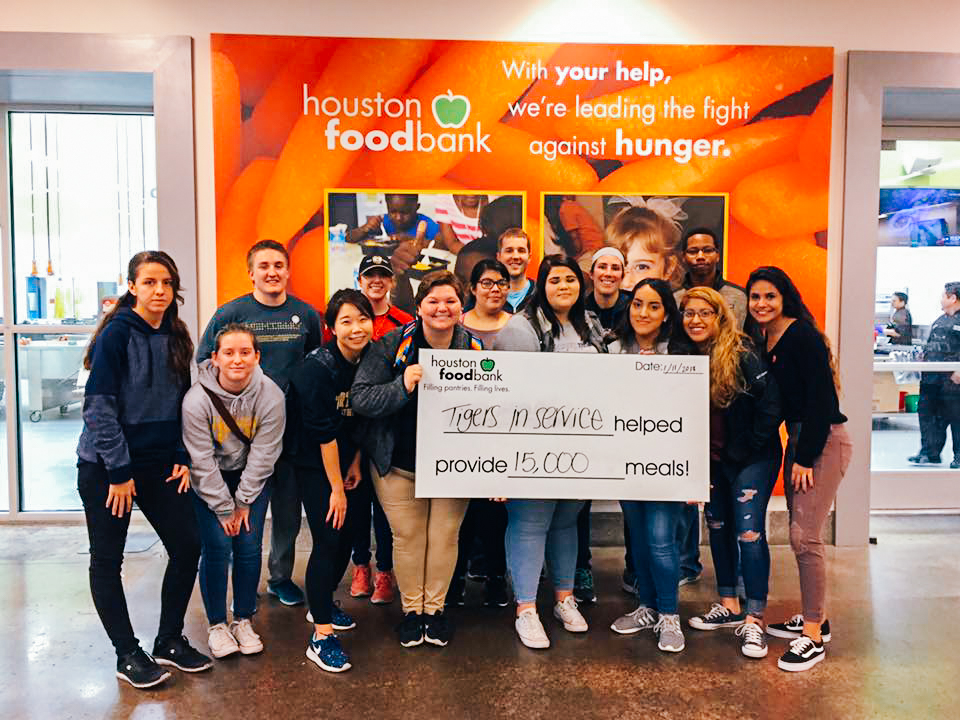
Courtesy photo
FHSU University Relations

Sixteen volunteers from Fort Hays State University’s Tigers In Service recently traveled to Houston, Texas, for an alternative winter break focused on community service.

Over the course of four days, students performed a combined 448 hours of service at the Houston Food Bank by preparing food, packaging meals, packaging emergency care kits and assisting with clean-up. The 15,000 meals packaged by Tigers In Service will be distributed to soup kitchens, meal sites and the Backpack Buddy and Kids Café programs.

The Houston Food Bank is a non-profit organization that collects and distributes food to hunger relief charities. As one of the largest food banks in the nation, it played a significant role in Hurricane Harvey relief efforts.

Tigers In Service, an initiative in FHSU’s Center for Civic Leadership, is a student-operated program that acts as a clearinghouse for college students who want to participate in community service activities.

Students with hometown and major are listed alphabetically.

Kialani Brooks, Kansas City, is a sophomore.

Chase Buntain, Great Bend, is a senior majoring in biology and German.

Fatima Contreras, Salina, is a sophomore majoring in graphic design.

Morgan Contreras, Hays, is a sophomore majoring in organizational leadership and communication studies.

Alexandra Depew, Wichita, is a sophomore in the Kansas Academy of Mathematics and Science.

Kailee Gibson, Ozawkie, is a senior majoring in chemistry.

Katherine Hernandez, Liberal, is a junior majoring in medical diagnostic imaging and Spanish.

Roy Koech, Russell, is a junior majoring in criminal justice.

Zane Littell, Hugoton, is a senior majoring in chemistry.

Carla Parra-Martinez, Garden City, the student coordinator for Tigers In Service, is a senior majoring in communication studies.

Amanda Ray, Norton, is majoring in nursing.

Ali Sedbrook, Thornton, Colo., a graduate student pursing a Master of Professional Studies, is a graduate assistant in the Center for Civic Leadership.

Samantha Stewart, Abilene, is a freshman majoring in biology.

Jasmine Turley, Beloit, is a junior majoring in biology.

Yuchen Wang, Xi’an, China, a graduate student pursing a Master in Liberal Studies with a concentration in digital cinema design, is a graduate assistant in the Department of Communication Studies.

Students were accompanied by Brittney Squire, coordinator of student involvement.

🎥 City continues water conservation rebates in 2018

By BECKY KISER
Hays Post

The city of Hays is well-known as a leader in water conservation.

Part of the success in encouraging less water use is a combination of rebates available to water customers, both residential and commercial, encouraging installation of water-saving devices and appliances.

You can even get free low-flow shower heads and faucet aerators.

Water Conservation Specialist for the city of Hays, Holly Dickman, explains the incentives and how to qualify for the rebate programs.

“The faucet aerators are free in the City Finance Office in city hall to Hays water customers. Just walk in and pick them up any time,” Dickman said

Showerheads are also available with the exchange of your old showerheads.

“There are seven models. Three are free and the other four are just five dollars. They’re very good quality showerheads. We think you’ll be pleased with the choices.”

The washing machine rebate is $100 on the purchase of a new high-efficiency (HE) washing machine.

“The qualifying models must have an integrated water factor of 3.7 or below. To find a list of models, go to the city of Hays website, www.haysusa.com, under the Water Conservation tab where you’ll find all the details.

“Another popular rebate program is for low-flow toilets. If you replace a high water-using toilet with a water-efficient toilet, it must have a gallon-per-flush of 1.28 or less. You can receive $50 to $150 back depending on how low that gallon-per-flush is.” More detailed information is also available on the city’s website.

The urinal rebate program is primarily for commercial customers, including businesses, offices, restaurants, schools and churches.

“You can get $300 back on the cost of a new efficient urinal with a gallon-per-flush rate of 0.13 or less.”

Customers can receive more than one toilet or urinal rebate.

“As long as you have the qualifying information and the qualifying models, it’s only limited by the funds available in that rebate program,” explained Dickman.

“The Turf Conversion Rebate Program will also be offered again in 2018,” she added, “with the details still to be finalized.”

All of the rebate forms have been newly updated and are available online along with information about each program.

If you have any questions, call Dickman at 785-628-7350.


🎥 State Sen. Kelly campaigns for governor in Hays, Colby

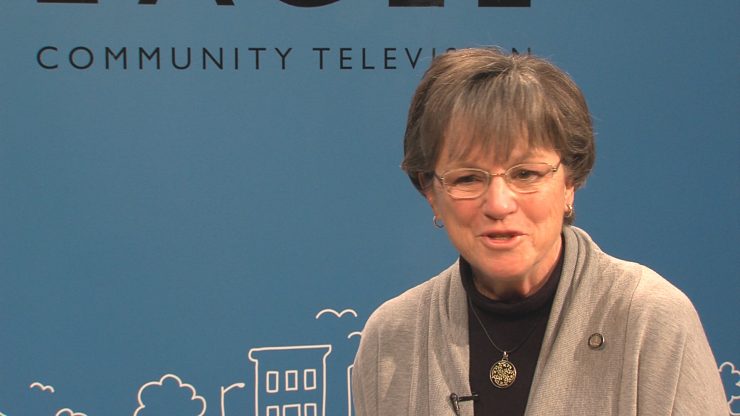
Sen. Laura Kelly (D-Topeka) is a candidate for Kansas governor.

By BECKY KISER
Hays Post

Kansas state Sen. Laura Kelly (D-Topeka) knows she must run fast in her campaign to become the next governor of the sunflower state.

Kelly, 67, announced her decision just a month ago, Dec. 15., the first female candidate in a field of 22 contenders.

The four-term senator and Minority Whip, made stops in Hays and Colby Saturday.

Saturday morning Kelly held a “Meet and Greet” hosted at the Hays home of former State Sen. Janis Lee. Then she traveled west on I-70 to Colby for Saturday afternoon’s Democratic gubernatorial candidate forum sponsored by the Thomas County Democratic Party.

Kelly told supporters she’s “been fighting a variety of things the past seven years and now I want to take the opportunity to lead Kansas out of those problems.”

“I have watched the Brownback tax experiment basically devastate our state revenues and therefore, basically most of our infrastructure in this state,” Kelly said. “We’ve seen cuts to our schools that have forced class sizes to increase. We’ve seen decreases in access to healthcare, even rural hospitals closing down. We have the highest sales tax on food in the entire country.”

Kelly believes Kansans sent a “very loud, clear message” in 2016 that “they wanted us to turn things around” with the election of many new and more moderate legislators. “We started that with the 2017 bipartisan repeal of Brownback’s tax experiment and then we actually overrode his veto to maintain that. So we’ve begun down the path toward restoration but we have a long way to go.”

The repeal included income tax exemptions for more than 300,000 business owners enacted in 2012 and 2013 by Brownback allies, resulting in budget instabilities.

The state budget and funding of K-12 education, up against a state Supreme Court ruling, will be the legislature’s priority once again in 2018.

Kelly is somewhat optimistic about the battle.

“We’re on the road to solvency and now actually exceeding expectations of the incoming monthly revenues. I think we’ll be able to look there to meet the court mandate. I expect we’ll know more in April and be able to make a better forecast. Things are looking pretty good right now and I’m expecting in April we’ll be able to balance things out.”

Kelly, whose husband Dr. Ted Daughety was medical director of the HaysMed Sleep & Neurodiagnostic Institute for a number of years, is an “ardent supporter” of Medicaid expansion. “We have left over $2 billion back in Washington that should have been coming here to help our hospitals and healthcare providers and to help our citizens. It would be my goal as governor, if the legislature doesn’t get it passed this year, to make sure we expand Medicaid and give them the resources they need.”

After 14 years serving in the senate, Kelly says she has a reputation of “someone who can easily work across the aisle to work with folks in the other party to promote good public policy.” She doesn’t believe her gender is much of a factor in the gubernatorial race. “I believe it’s my unique qualifications for the position of governor.”

Kelly is proud to have been a part of the legislature’s “concerted effort” over the past decade to streamline students through high school and technical school, making it possible for people to get well-paying jobs without needing to necessarily attend a four-year school. “They can get into one of our technical colleges, get a certificate and get into the work force.”

She previously worked as executive director of the Kansas Recreation and Park Association.

Kelly will face House Democratic Leader Jim Ward of Wichita and former Wichita mayor Carl Brewer, along with former state representative and Kansas agriculture secretary Josh Svaty, in the Democratic primary in August.

🎥 Fire training facility to be built in Hays

(Click to enlarge)

By BECKY KISER
Hays Post

Firefighters in Ellis County will have their own training facility in the near future. The closest such center is in Great Bend.

The location became available as the city of Hays began renovation of the wastewater treatment plant near the former Frank Stramel Softball Fields, Old U.S. Highway 40 and Chetolah Creek. “We’ve had to reduce some of the ball diamonds that were in that area,” Asst. City Manager Jacob Wood said, “and have set some of that property aside for a fire training facility.”

The city fire department is working in cooperation with the county fire department to create a joint training facility that will also be used by Ellis and Victoria fire departments.

Hays Fire Chief Gary Brown updated city commissioners Thursday about the project. It’s something he’s wanted to do for many years.

“This year we’re looking at installing a water main and fire hydrants out there. The Water Resources Department will do that,” Brown said.

The Hays Fire Department has some “seed money” in its budget that could be used for a low-cost training tower but they have a plan for purchasing a better quality tower.

Hays Deputy Chief Ryan Hagans and Ellis County Fire Chief Darin Myers are working together on a grant application to the Dane G. Hansen Foundation, Logan, for $300,000.

The grant would be used to fund a training tower made of engineered steel shipping containers, a concrete pad, and a classroom.

“You can’t just stack up shipping containers and say ‘we’re good.’ They have to be engineered because people will use it for rope rescue. There’s going to be loads put on it, and wind. It has to be done right.

A firefighting training facility is being built on the site of the vacated Frank Stramel Softball Fields, Old Highway 40 and Chetolah Creek. The  concession stand has been converted to a breathing apparatus maze.

“We have a small breathing apparatus maze that we’ve built in the former concessions building. The area will be big enough for training in vehicle rescue and for car and dumpster fires. This will really enhance our training program,” Brown told the commission. Currently, firefighters must go off-site or out of town for multi-level fire training or high-angle rescue experience.

City Commissioner Sandy Jacobs, executive director of the Hays-based Heartland Community Foundation offered assistance in the grant application process. She also suggested the application include letters of support from area governing bodies.

The project work will be done in several phases.

“It’s not something that’s going to happen overnight,” Wood said. “Chief Brown has wanted to do this for a really long time and this year we have a little bit of money in the budget to kind of get things started.”

Most communities have fire training facilities, according to Brown. During the recent Public Fire Protection Reclassification for Hays, the city earned just 13 percent of the possible credit in that category.


🎥 Sternberg Museum debuts new mineral collection

By CRISTINA JANNEY
Hays Post

The Sternberg Museum of Natural History is showing off a new exhibit of minerals from around the world, recently donated to the museum from a private collection.

Geologist Richard Green and his wife, Pam, of Missouri decided they wanted to share a portion of their mineral collection with the museum. The 84 minerals that were donated are estimated to be worth $100,000, Christina Byrd, Sternberg collections manager, said. The minerals come from five continents, 19 countries and nine states.

Although the Sternberg has had a mineral collection on exhibit for some time, the new minerals are higher quality than what the museum has been able to showcase in the past, Byrd said.

Stilbite

Some of the minerals are rare and others are unusual examples of more common minerals. Some of the more rare minerals are prehnites, zeolites and aphopholites. The exhibit also includes examples of more common minerals such as quartz, calcite and fluorite.

Some of the minerals are more colorful such as malachite, which is a deep green, and azurite, which is a royal blue.

Byrd said she hoped the exhibit will tell a story about the minerals.

“I hope visitors learn a different lesson from each case,” she said. “From one case, I hope they will learn about mineral names and what the names of these mineral groups mean, where do they come from and why do we call things the way that we do?

“I hope they will learn that minerals come in many different colors even though they are called the same thing. Quartz can be clear, purple, pink, smoky, but it is all quartz.”

Azurite

The exhibit has two examples of azurite. One has fine crystals and is a royal blue. The other has much larger crystals and looks almost black in the case. Byrd said the second example is more rare and, in the right light, exhibits a brilliant blue color.

Byrd said there are seven different ways minerals get their colors. If you know your elements, the chemical makeup of the minerals will often give you clues about where the color of the mineral came from, Byrd said. Copper is often responsible for the blue in minerals or iron for a red hue.

Another case will talk about how minerals can have different shapes and sizes. Yet another case will talk about the practical uses for minerals.

“Some minerals are very important in our day-to-day lives,” Byrd said, “be it in the devices that we’re using —cars, cell phones are full of different minerals — be they quartz, which is in glass or the metals that make up our phones. Those metals are all minerals. So I hope people walk away with a greater appreciation for what minerals are and how they impact our daily lives.”

The exhibit has an example of fluorite, which contains fluoride, which is also found in toothpaste. Rutile is used as a whitening agent in products such as liquid paper correction fluid and very small amounts in the filling in sandwich cookies. Other minerals in the exhibit are used in makeup.

This sample of galena weighs about 100 pounds.

The heaviest mineral in the collection is galena, which is a lead sulfide. The specimen is smaller than a soccer ball, but weighs over 100 pounds.

The museum is working with a mineralogist at Fort Hays State University on cards that will further tell the story of the minerals, but the minerals are currently in cases and available for viewing by the public. Currently, each mineral is displayed with a card that contains its name, the chemical composition of the mineral and the place were the specimen was collected.

The full exhibit should be completed in the next two to three weeks.

🎥 Victoria native finds passion in baking

Haley Robben, owner of Bakeology in Victoria, poses in her kitchen with some of her latest creations.

By CRISTINA JANNEY
Hays Post

VICTORIA — Surrounded by German chocolate cake, homemade truffles and puff pastries, 21-year-old Haley Robben said she has found her passion — baking.

Robben started a baking business — Bakeology — in her hometown of Victoria in 2017. Her shop is on 10th Street across the street from the grade school where she also works part-time as a paraprofessional.

She tried a semester at the University of Kansas studying political science, but she was just not into her classes. She talked to her adviser, who encouraged her to seek her passion.

Robben remembered spending hours with her grandmothers making all kinds of baked goods, especially her favorite pumpkin pies.

“Both grandmothers would have counters covered in sugar cookies and all different kinds of holiday cookies for everybody to eat when people came over to our houses,” she said.

Her adviser suggested the culinary arts program at Johnson County Community College.

Robben’s skills spread via word of mouth. She started a Facebook page for Bakeology and is now taking regular orders via social media.

With a brisk business and her family nearby, she said it was an easy decision to move back to Victoria. Today she is busy with orders from sugar cookies to elaborate wedding cakes.

Robben’s most popular item is her decorated sugar cookies. She can put just about anything on a sugar cookie and has had some interesting requests from clients wanting cookies for bachelorette and bachelor parties. She also regularly makes cookies for birthday parties at the school, which she hand delivers across the street when she heads over to work for the day.

Robben said she is always up for a challenge.

“I get so into the motion of sugar cookies and decorated birthday cakes, which is so fun and I like the versatility of that,” she said, “but I really love when someone gives me a weird flavor or something they are interested in. I just recently did a pink champagne cake, and I thought that was something different. I had never made one before.”

Robben said she enjoys the precision in baking. She has had to take both baking and cooking courses in culinary school. Cooking often requires the chef to season to taste. A lot of science goes into baking. Individual ingredients like baking soda help pull the baked goods together.

“I love that it has to be super precise and you have to get that exact amount in or it probably is not going to turn out the way you want it to,” she said. “I think I am kind of a perfectionist, and think that is where that really plays in really well for me. I just want to get it exactly right.”

Robben is not immune from baking disasters. She said she has had wedding cakes she started, threw out and started over the day of the wedding.

“Just today, I was making cinnamon rolls, and I didn’t set the timer,” she said. “I came back 20 minutes later, and they were totally charred. I guess no cinnamon rolls today. It happens all the time, and I think it is important to know that just because I have some schooling, doesn’t mean that everything I make is going to turn out perfect.

“It shouldn’t discourage people from trying to bake because they have one thing that goes wrong. It doesn’t make you a bad baker. If it did, no one would be a good baker.”

For the home baker, Robben strongly encouraged reading and following the recipe. There are reasons the recipe is telling you to take those steps, she said. Take your time, and don’t skip steps.

Robben has one more semester left in culinary school, which she is completing online. She said she is unsure about her long-term plans, but Bakeology is thriving. She said she hopes someday baking will be her only job.

“This is going pretty well for me — the made-to-order — because it seems to give me the chance to make a lot of different things and not really limit myself. I think when you have a set menu and you don’t really want to veer from that, you get so caught up in the same things and you never really adapt and change to all the new trends. I love that I can do that pretty easily this way.”

To order, customers can send a direct message on the Bakeology Facebook page or text Robben at 785-735-4474. Sugar cookies start at $15 a dozen and costs vary from there depending on complexity and the ingredients.

KC Wolf will make a stop at Fort Hays State for Tiger basketball this week

FHSU Athletics

KC Wolf will be at Gross Memorial Coliseum for the Fort Hays State University basketball games on Thursday against Missouri Western. The women’s game starts at 5:30 p.m. with the men’s game to follow.

KC Wolf will be out amongst the crowd during the second half of the women’s game through halftime of the men’s game taking pictures, giving high five’s, shaking his belly, and handing out signed pictures of himself. One lucky fan will even get to come out on the court and shoot free-throws against the Kansas City Chiefs mascot at halftime of the men’s game.

For those unfamiliar with the lone NFL mascot in the Mascot Hall of Fame, here are a few facts about KC Wolf as listed on chiefs.com:

Title: Mascot “Director of Shenanigans”
Birthday:- August 20th, 1989
Height: 7’2″
Weight: None of your business 🙂
Shoe Size: 22
Home: Basement of Arrowhead
Favorite Cologne: FurBreeze
Favorite Book: Little Red Riding Hood
Favorite Colors: Red and Gold
Favorite Movie: Dances with Wolves
Favorite Song: Hungry Like the Wolf
Favorite Quote: “Laughter is like changing a baby’s diaper. It won’t change anything permanently, but it will sure make things more bearable for a while.”

— Submitted

Copyright Eagle Radio | FCC Public Files | EEO Public File