U.S. Secretary of Education Betsy DeVos on Thursday recognized 362 schools as National Blue Ribbon Schools for 2019. The recognition is based on a school’s overall academic performance or progress in closing achievement gaps among student subgroups.
“We recognize and honor your important work in preparing students for successful careers and meaningful lives” said U.S. Secretary of Education Betsy DeVos in a video message to the honorees. “As a National Blue Ribbon School, your school demonstrates what is possible when committed educators hold all students and staff to high standards and create vibrant, innovative cultures of teaching and learning.”
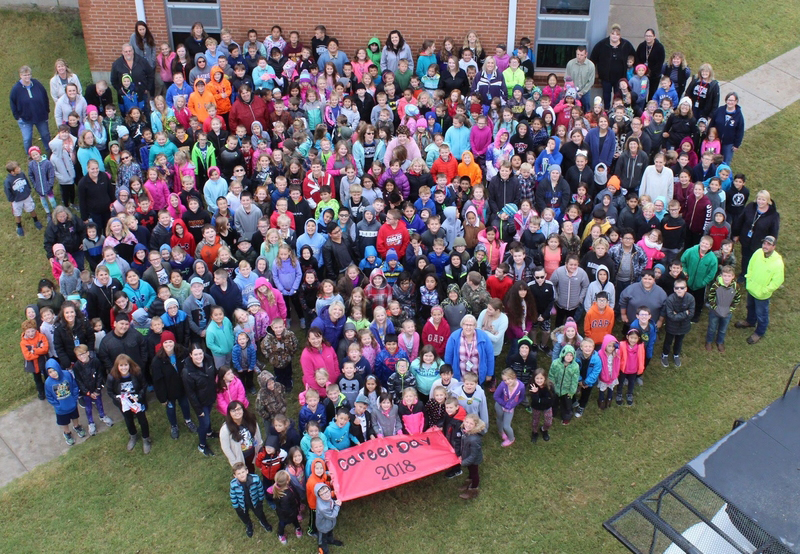
O’Loughlin Elementary School, 1401 Hall, was among the honorees in the exemplary high-performing schools category and one of only six Kansas schools receiving the designation.
The other Kansas schools are Central Plains Elementary School, Holyrood; Clear Creek Elementary School, De Soto; Corinth Elementary School, Shawnee Mission; Lakewood Elementary School, Blue Valley; and Holy Rosary-Wea Catholic School, Bucyrus.
The coveted National Blue Ribbon Schools award affirms the hard work of educators, families and communities in creating safe and welcoming schools where students master challenging and engaging content.
Now in its 37th year, the National Blue Ribbon Schools Program has bestowed recognition on more than 9,000 schools. On November 14 and 15, the Secretary and the Department of Education will celebrate with 312 public and 50 non-public school honorees at an awards ceremony in Washington, D.C.
The Department recognizes all schools in one of two performance categories, based on all student scores, student subgroup scores and graduation rates:
Exemplary High Performing Schools are among their state’s highest performing schools as measured by state assessments or nationally normed tests.
Exemplary Achievement Gap Closing Schools are among their state’s highest performing schools in closing achievement gaps between a school’s student groups and all students.
Up to 420 schools may be nominated each year. The Department invites National Blue Ribbon School nominations from the top education official in all states, the District of Columbia, Puerto Rico, the Virgin Islands, the Department of Defense Education Activity, and the Bureau of Indian Education. Private schools are nominated by The Council for American Private Education (CAPE).
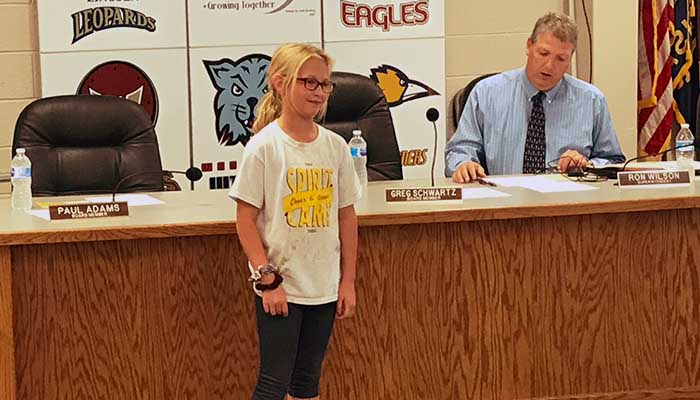
Shyanne Hughes, fourth grader at Roosevelt Elementary School, was honored with the USD 489 Student Spotlight Award for showing kindness to a fellow student who was struggling.
By CRISTINA JANNEY Hays Post
Shyanne Hughes, fourth grader at Roosevelt Elementary School, was honored Monday with the USD 489 Student Spotlight Award.
Superintendent Ron Wilson said at Monday’s school board meeting one of the guidelines for success at Roosevelt is compassion.
“Shyanne has compassion — has it in spades,” Wilson said.
Early in the year, Hughes noticed her counselor working with a kindergarten student, who was struggling to regulate her emotions each morning. When she saw her counselor being drawn in many directions, Hughes jumped in. She offered to help the student and take her to breakfast.
“Not only did it work, but breakfast with Shyanne has become a daily ritual, which helps the other student have a better day every day,” Wilson said.
Wilson thanked her for being such a great student.
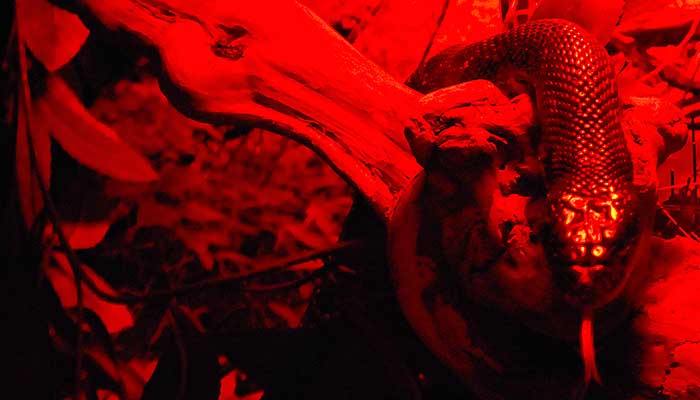
A western rat snake in its new habitat in the Nature at Night exhibit in the Sternberg Discovery Room.
By CRISTINA JANNEY
Hays Post
New habitats in the Sternberg’s Discovery Room.
The creatures in the Sternberg Museum have new homes thanks to a grant from McDonald’s.
The renovated space opened to the public Saturday.
The tanks were custom built for the animals they are holding.
The old tanks lids had to be secured with bricks. All of the new tanks have secure lids, which has allowed the staff to add a venomous copperhead to the main Discovery Room display area. Copperhead venom is used to study and treat breast cancer, Alicia Gaede, Sternberg naturalist, said.
Mice and a big brown bat, Buffy, were added to the Nature at Night exhibit. The main Discovery Room exhibit is focused on animals found on the prairie. Buffy was captured in a motel in Hays and could not be returned to the wild. Buffy has regular opportunities to fly in one of the Sternberg rooms that has no outlets for her to escape, Gaede said.
Gaede said she was hoping to add more small Plains mammals to the exhibit soon.
“It is a nice way for people to see what we have here in Kansas,” Gaede said.
A copperhead that is now on display in the Sternberg Discovery Room peaks its head out from underneath a leaf.
The staff used grant money to add photographs in the backgrounds of the tanks that resemble the native prairie habitats in which the animals live. New faux plants were also added.
New lights were added to the main exhibit areas, so the animals receive the correct UVB light.
New red lighting was added to the Nature at Night exhibit, which is better for the animals. The animals in the Nature at Night exhibit are nocturnal. They can’t see the red light. The crew at the Sternberg turns on the regular lights in that exhibit area at night. This switches the animals’ activity cycle, so they are active during the day when visitors are at the museum and are not active at night.
Alicia Gaede, Sternberg naturalist, holds a Great Plains rat snake at a Sternberg open house on Friday.
The most important aspect of the renovation is that the habitats are better for the animals.
“So far, they are loving it,” Gaede said of the animals. “They have been so active. They are rearranging stuff, digging holes and making new hiding spots.”
She added, “I think it is definitely better for the creatures, especially because they are getting bigger cages and good light that is going to keep them warm during the winter. They are also getting proper light to help them grow, which is sometimes an issue for animals in captivity.”
In the new configuration, some of the snakes have “roommates.”
“You wouldn’t really think of them needing social interaction, but it is one of those enrichment things. They smell each other, and it makes them react more, so it doesn’t stress them out as much. … If it is it is the opposite sex as well, they like that even if they are not mating. It is still just the pheromones that help them out to thrive better in captivity.”
Friday night the Discovery Room renovation was unveiled to museum members. Several animals were available for hands-on meet and greets. This included hissing cockroaches; pretzel, a Great Plains rat snake; Oreo, a California king snake; and Red, the American toad.
David Wolfe, volunteer, holds Red, the American toad, at a Sternberg open house on Friday.
The American toad and Great Plains rat snake are both native to Kansas.
“I hope people enjoy it,” Gaede said of the renovation. “We put a lot of work into it. It took us about a month to get them done. We did it seeking that our animals had a better life.”
Further renovation of the Discovery Room are planned using the rest of the $10,000 McDonald’s grant. Gaede said she hoped to divide the room into sections based on what lives underground, in a river and in the trees of the Plains.
Future additions may include a tree display, fish tank and ant farm.
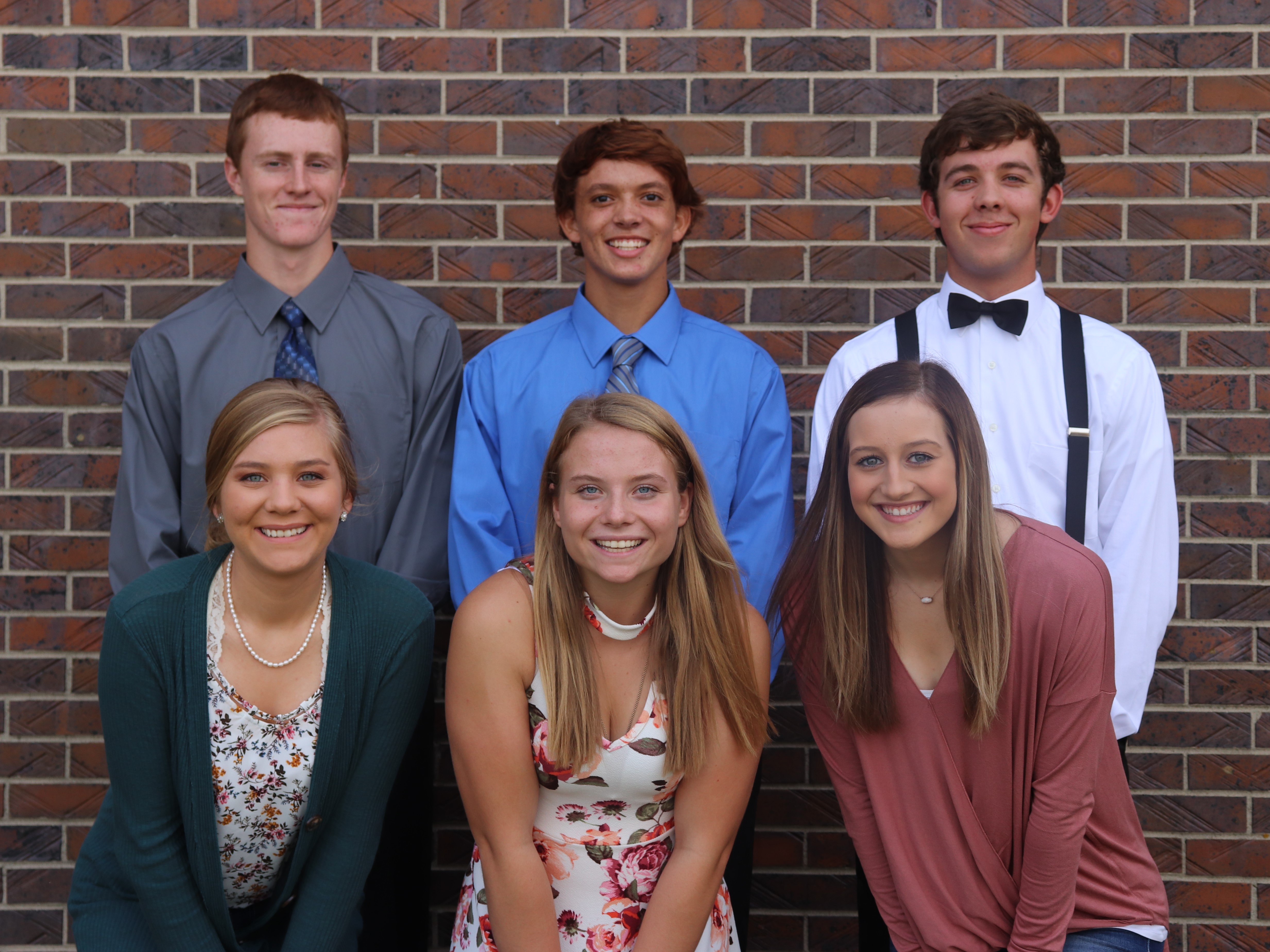
Back Row (L to R): Zachary Eck, son of Mark and Sarah Eck; Jake Eck, son of Geoff and Mindy Eck; Landis Fischer, son of DJ and Julie Fischer. Front Row (L to R): Breonna North, daughter of Travis and Ava North; Clara Crawford, daughter of Kimberly Andries and the late George Crawford; Rylee Werth, daughter of Rodney and Cristi Werth
ELLIS — Ellis High School has announced its 2019 Homecoming candidates.
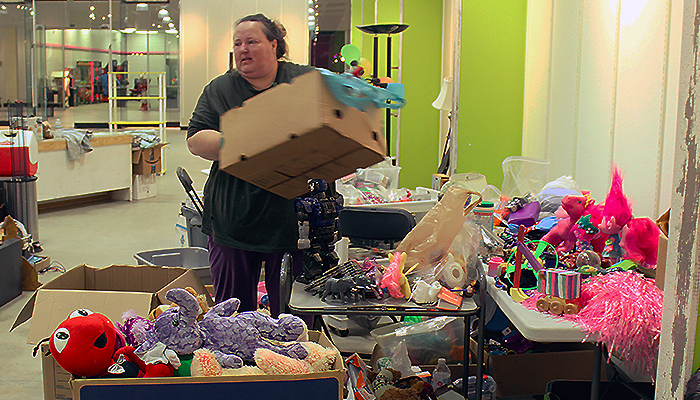
A volunteer works in the Pay It Forward Store at Big Creek Crossing last year.
By CRISTINA JANNEY Hays Post
The Pay It Forward Store will be back in December for its fifth year — with some changes.
Founder Angela Horn has passed the leadership for the store to volunteers Heather Gray and Vickie Purdy.
The store will still take monetary donations and gifts of new and gently-used items, which families can take home for free to give as Christmas gifts.
In the past, the store has had items for both adults and children, but Gray said this year the store is going to focus on gifts for children and teens. That is what has been most requested and where the store has seen the greatest need.
The store is also hoping to raise $500 in order to apply for its official 501(c)3 nonprofit status. This will allow the group to more easily accept monetary gifts and donations from businesses.
Any money the store receives or raises in excess of the $500 will be used to purchase gifts to be given away at the store.
Gray said the store receives many toys for small children, but receives fewer items appropriate for teenagers, both boys and girls. Cash donations are used to buy gifts for this age group or to address specific needs for families.
The group will have a hot dog feed fundraiser from 3 p.m. until sold out Sunday, Oct. 20, in the parking lot of Professional Cargo Services, 724 E. Seventh. A freewill donation is requested.
The store will begin taking donations Friday, Oct. 4, at Professional Cargo Services, where they will be kept until the store opens in December in Big Creek Crossing.
Donations will be taken at that location from 4 to 7 p.m. Mondays and Thursdays, and 4 to 9 p.m. Fridays until Dec. 15, when setup will begin at the mall.
The store is looking for toys, baby items, gaming systems, electronics, makeup, nail polish, jewelry, hair items and anything else that might be an age-appropriate gift for a child younger than 18.
Last year, the store was open though the month of December, but this year, the hours are being shortened. The store will be open 10:30 a.m. to 9 p.m. Dec. 20 and 21, 12:30 to 5 p.m. Dec. 22, 10:30 a.m. to 9 p.m. Dec. 23 and 10:30 a.m. to 5 p.m. Dec. 24.
All gifts from the store are free. Freewill donations are accepted to help support the store. Those who use the store do not have to fill out any paperwork or meet income guidelines.
Volunteers will be needed to help with the hot dog feed, to accept donations, to set up the store and to assist at the store when it is open in December. A volunteer meeting will be at 6 p.m. Thursday, Oct. 3 at Professional Cargo Services.
The Pay It Forward Store was started by Horn in honor of her brother, Tim, who passed away. Horn was helping individual families, but she saw a need beyond what she could do on her own.
Gray said as a volunteer she has seen many families helped through the store.
During a previous holiday, a grandmother, who had recently been granted custody of her grandchildren, was brought to tears when the store was able to provide her with a keyboard to give to her grandson for Christmas, Gray said.
“The holiday seasons are always so hard for people,” she said. “With our economy the way things are, a lot of people can’t afford to pay their bills. The holidays come around, and the little kids don’t know the difference yet. They don’t know the true meaning of Christmas, so they look forward to all of the toys and gifts.
“It gives the moms and dads and grandparents an opportunity to be able to afford all of these things … to be able to put their mind at ease and come to our store, which has open arms, and be able to make their children’s days for Christmas.”
Gray said those in need also come from surrounding counties for help.
“We don’t turn down anybody,” she said. “Anybody in need, we want them to come.”
Those who want more information about the store, volunteering or need to arrange a special drop off time for donations, can reach Gray at 785-432-3377 or through Facebook.
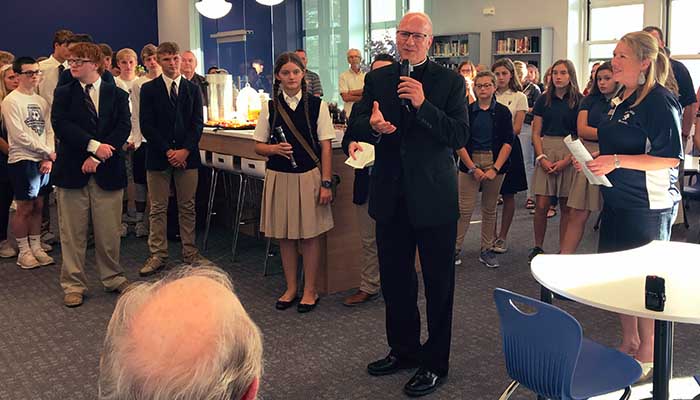
Bishop Gerald Vincke acknowledges Fr. Blaine Burkey during the dedication of the new TMP Learning Commons, which is named for Burkey. Burkey is a former TMP teacher.
By CRISTINA JANNEY Hays Post
Thomas More Prep-Marian unveiled its new Learning Commons during a Hays Area Chamber of Commerce ribbon-cutting ceremony Friday.
Principal Chad Meitner said the school is undergoing a complete renovation of its interior, and this is just one stage of what will be a lengthy process.
School officials realized, he said, the school’s old library was antiquated and not being used by teachers or students.
Fr. Blaine Burkey prepares to speak at the dedication of the new Learning Commons at TMP that was named for him.
“We realized that we needed to do the space differently,” he said, “organize it and stack it with flexible furniture, with materials that are meaningful for what the students are needing to research and learn and study. That required a complete new beginning and a new space.”
The new 3,600-square-foot space on the main floor of the building, includes shelves full of books, study areas, a conference room and a pull-down screen for multimedia presentations.
Students are being asked to work more in groups, give presentations and do more in-depth research than just a Google search. Meitner said he thought the Learning Commons would be a space conducive to that type of learning.
You can still check out a book, but also receive help with digital research, Meitner said.
“It’s a space for others too,” he said. “If there is a group that would like to reserve it because they have a reception or a speaker and they want to have a good, conducive setting to have an event, let us know. … We are open to listening to how we can share it with others.”
The Learning Commons ribbon cutting.
The former library on the third floor has been renovated into a junior high classroom and high school study hall.
The commons was named for Fr. Blaine Burkey, who served at TMP-M for 27 years. As the director for the Center for Research, he believed in the value of the written word and significance of preserving historical knowledge. He now resides at a friary in Denver, but was on hand Friday for the dedication.
“The word ‘commons’ means it is a place for everybody — learning for everybody,” Burkey said. “I thought that was pretty good.”
Bishop Gerald Vincke was also on hand to bless the commons.
“We listen to the news, and there is so much bad news,” he said. “This is great news. This is the desire of the Lord for this to happen. We are thankful to God for this day and this opportunity to bless this Learning Commons.”
A new study area in the Learning Commons doubles as a serving table during its dedication.
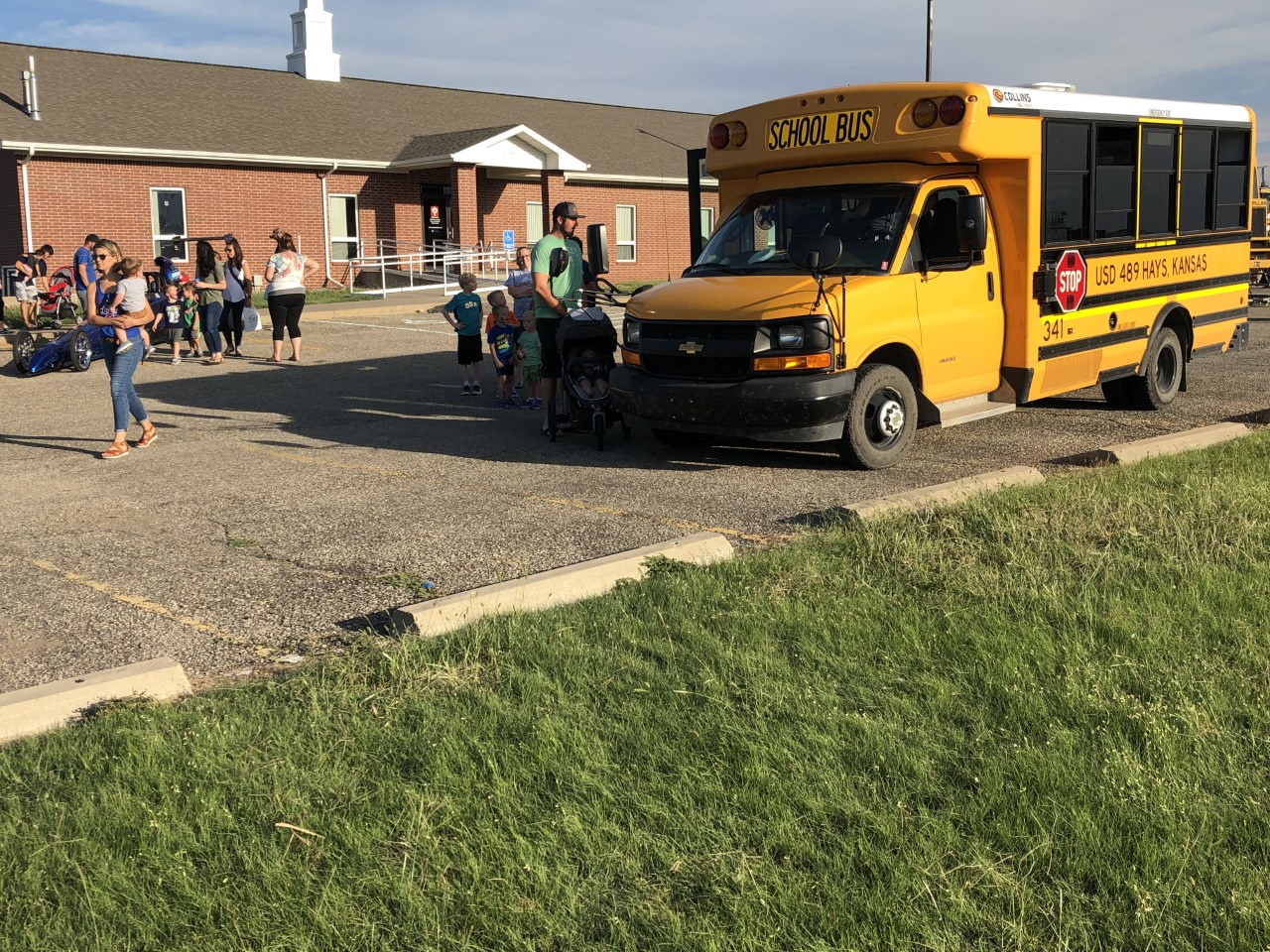
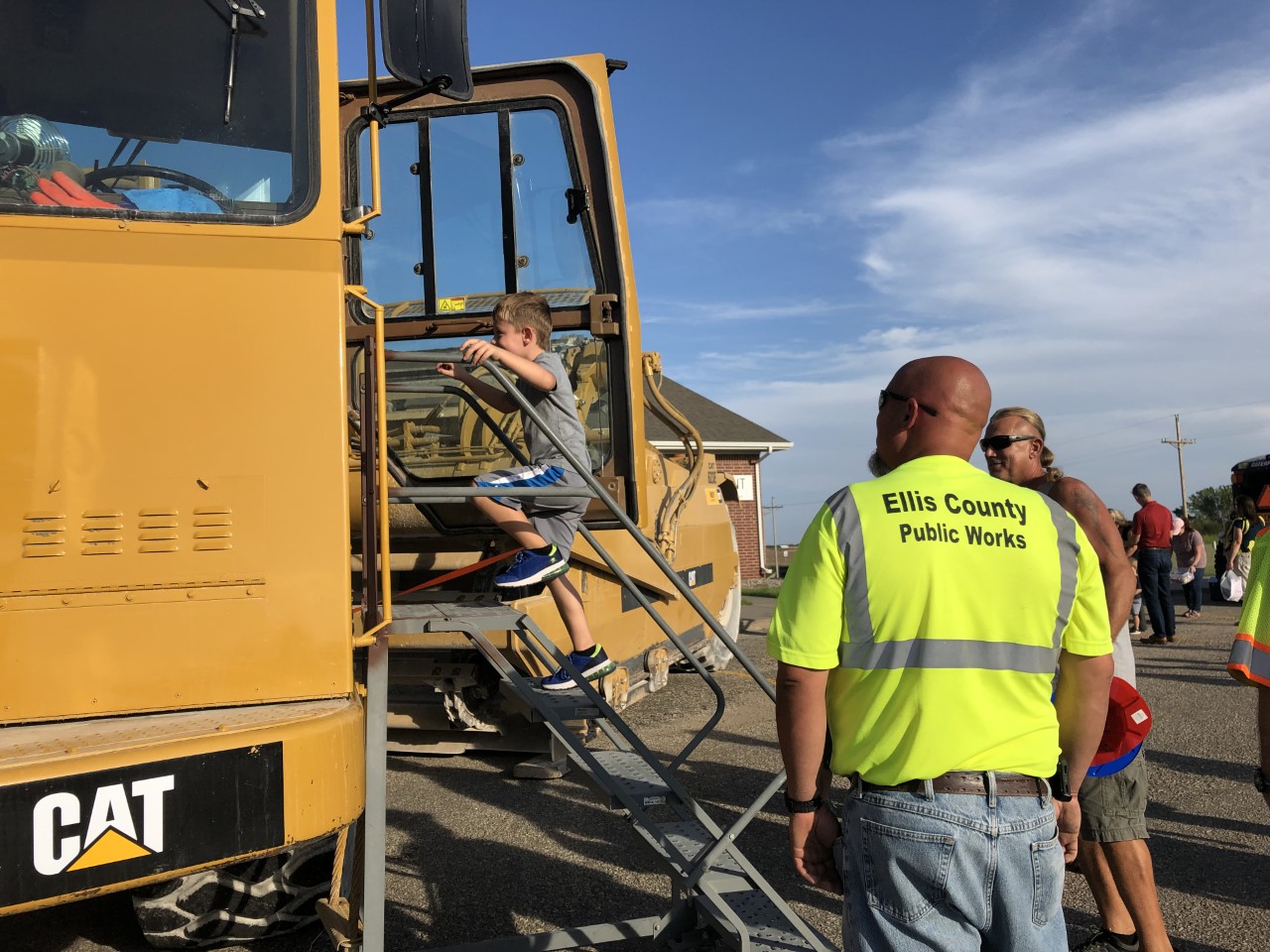
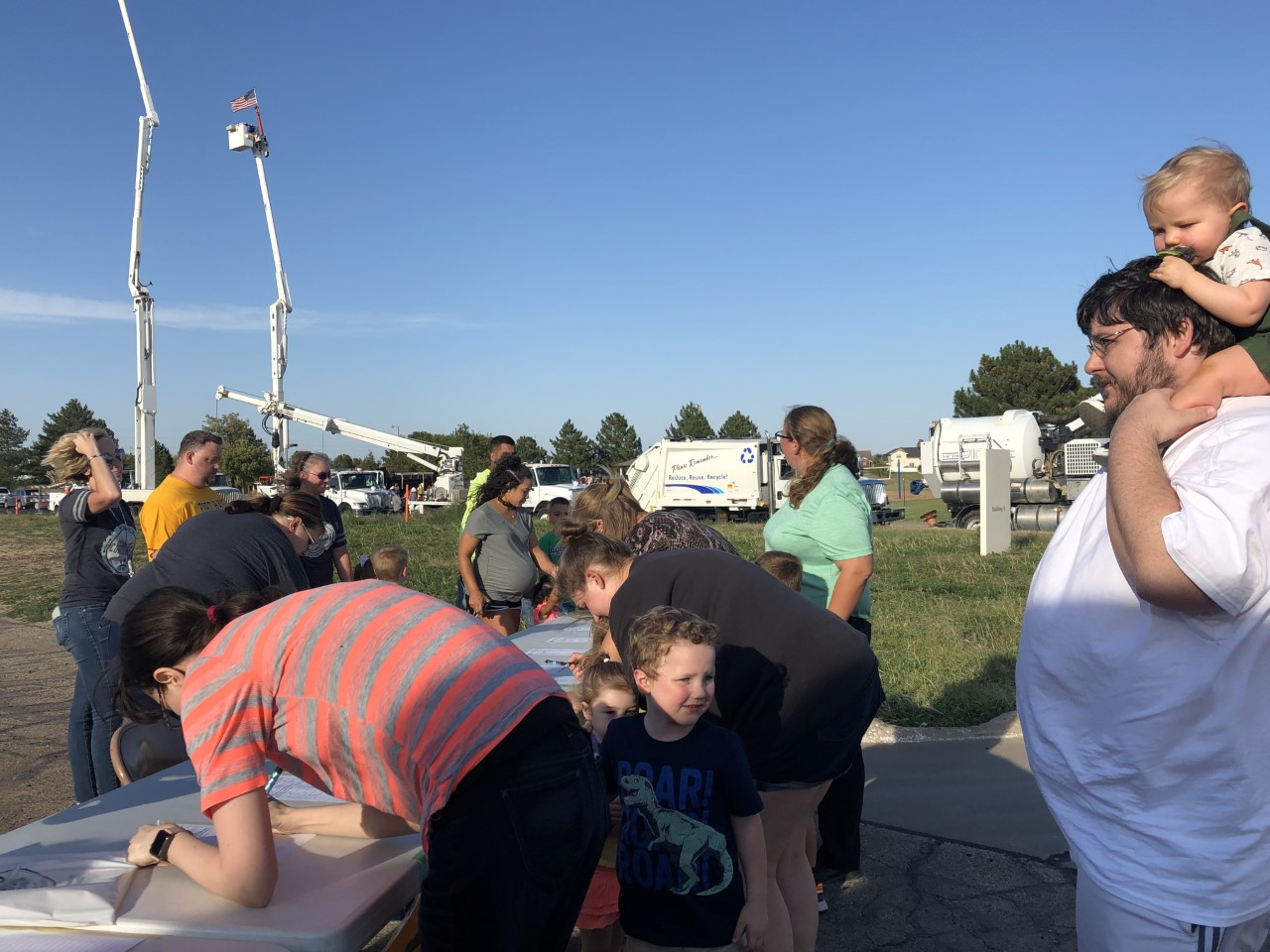
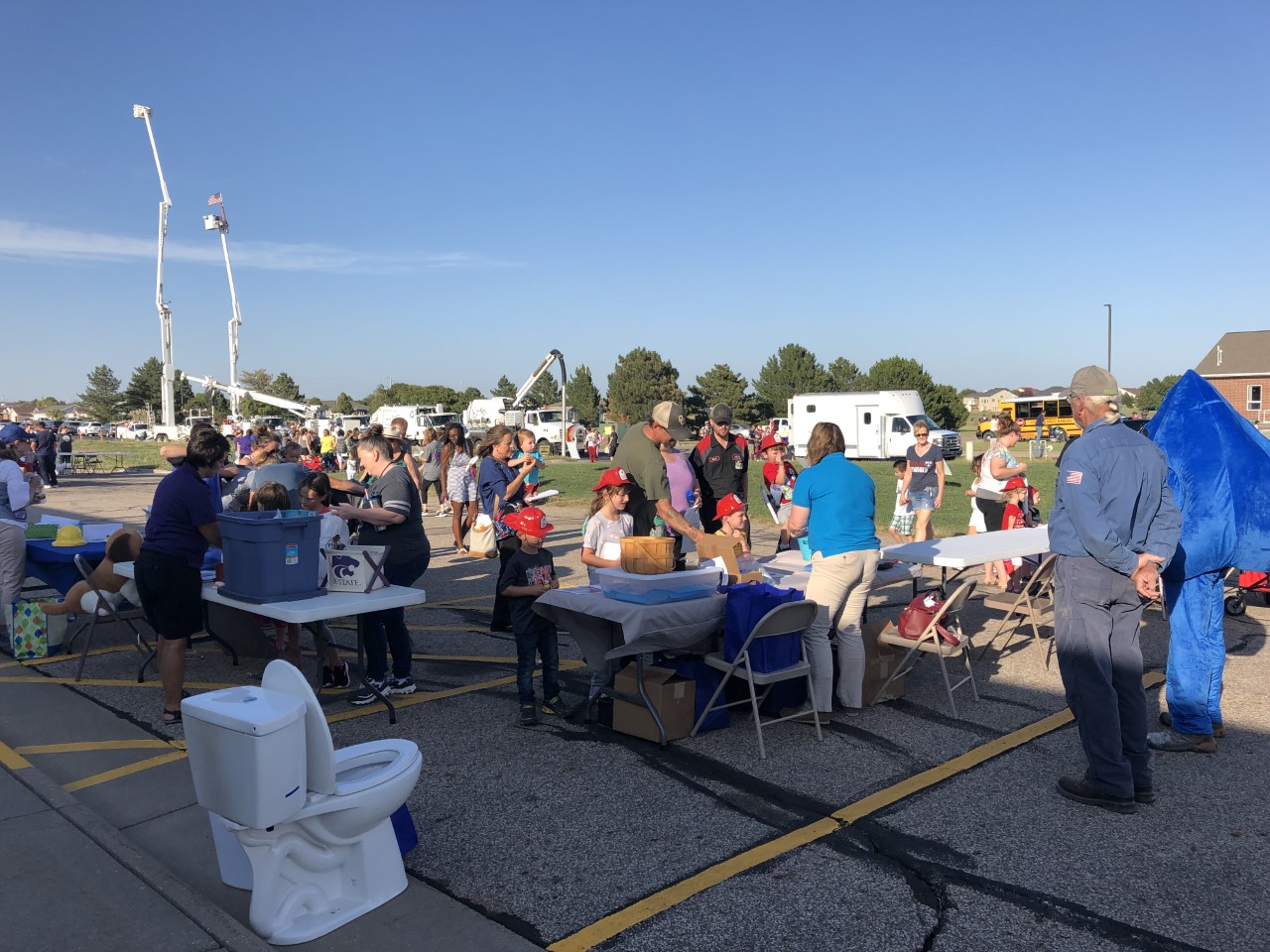
The parking lot was full and overflowed to neighborhood streets for Thursday’s Go Truck Go in Hays.
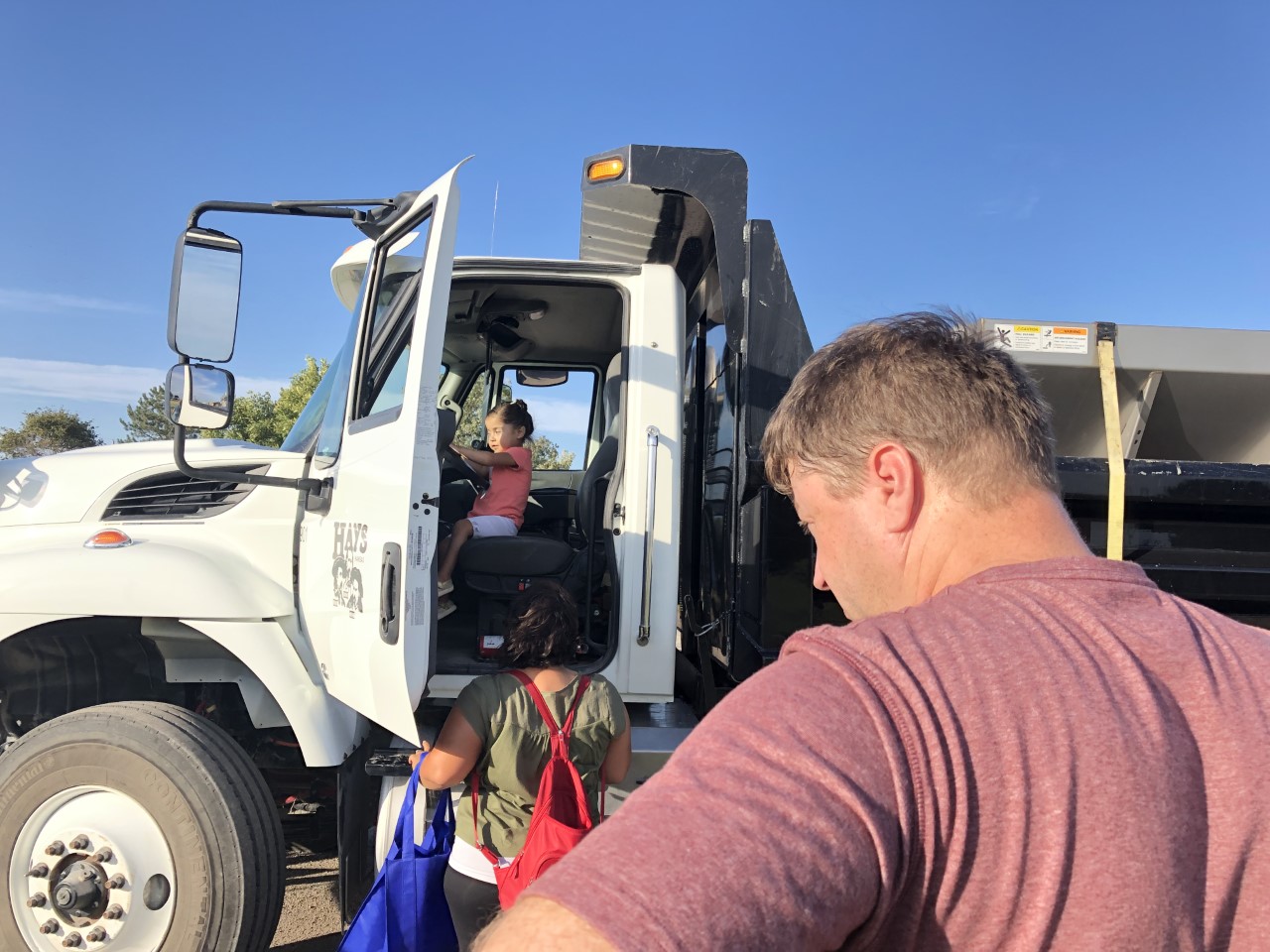
Children and their parents were invited to the popular annual event sponsored Hays USD 489 Early Childhood Connections for a closeup experience with large work vehicles — and their drivers — used in and around Hays.
The two-hour event was held for the first time at the former Oak Park Medical Complex, 2501 E. 13th, now home to all of the school district’s early childhood programs. The Hays school board will consider suggested new names for the four-building complex at its Monday meeting.
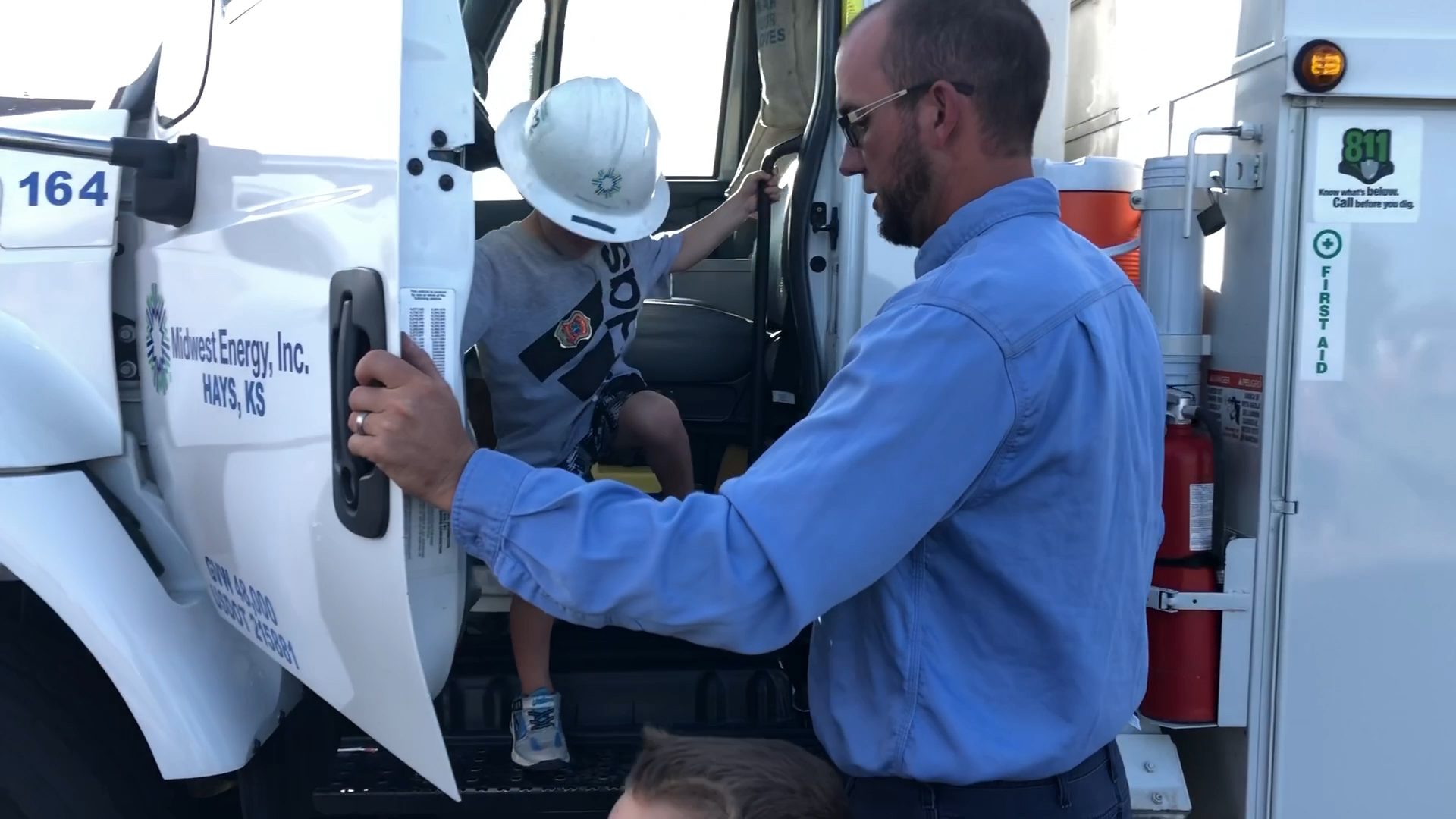
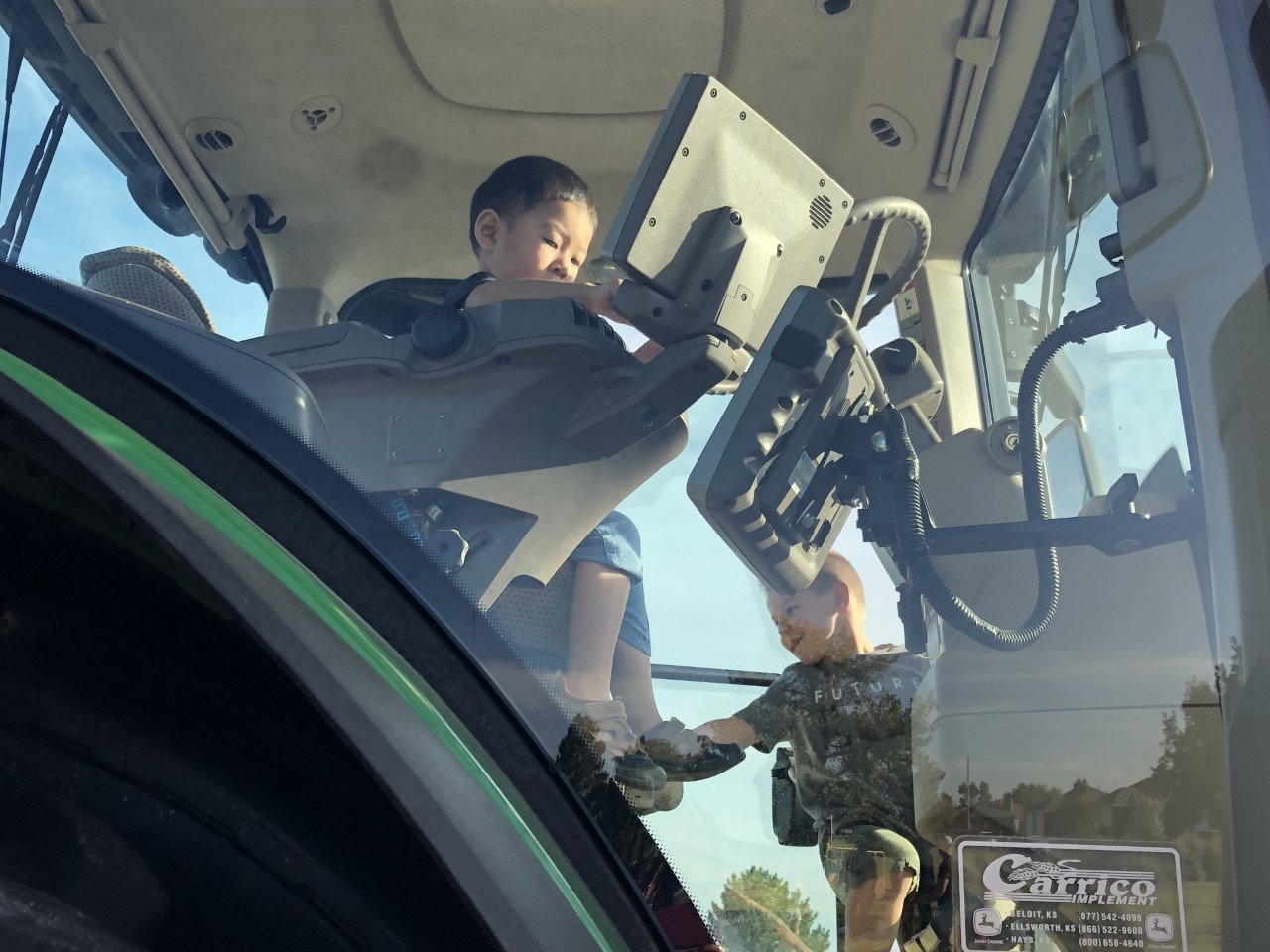
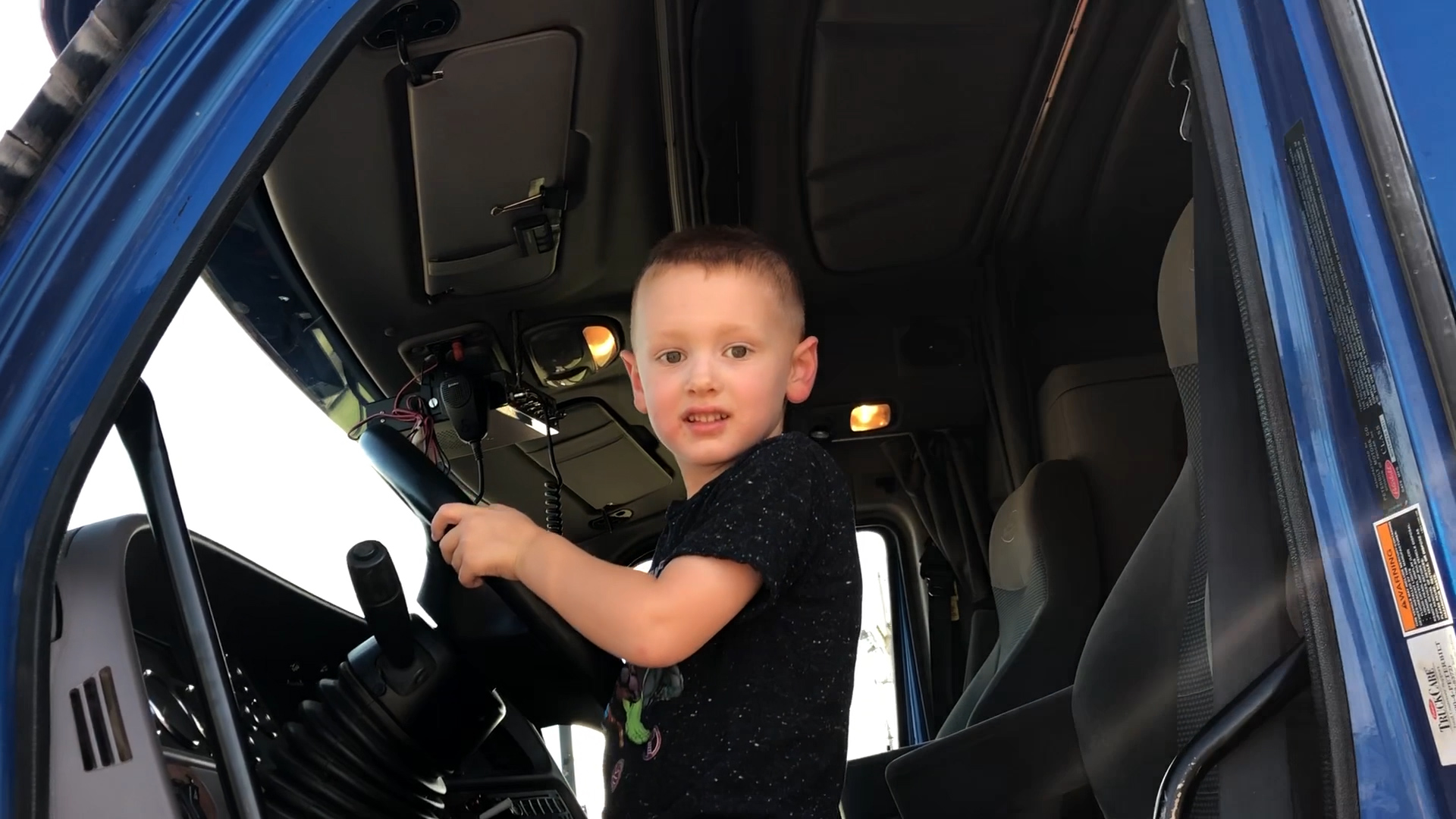
Youngsters got up close and personal with the operators of the huge vehicles who lifted the smallest kids up into high cabs while talking about their job and how the vehicle is used. Other children took pride in clambering up by themselves and posing for pictures taken by their parents.
The vehicles were parked on the east side of the school complex.
Walking alongside the vehicle lineup was also a lesson in learning colors as parents pointed out the bright red Hays fire truck, a yellow USD 489 school bus near a yellow Ellis County Public Works road grader, the John Deere green tractor from Carrico Implement, gleaming white Midwest Energy bucket trucks, and a blue semi from Simpson Farm Enterprises.
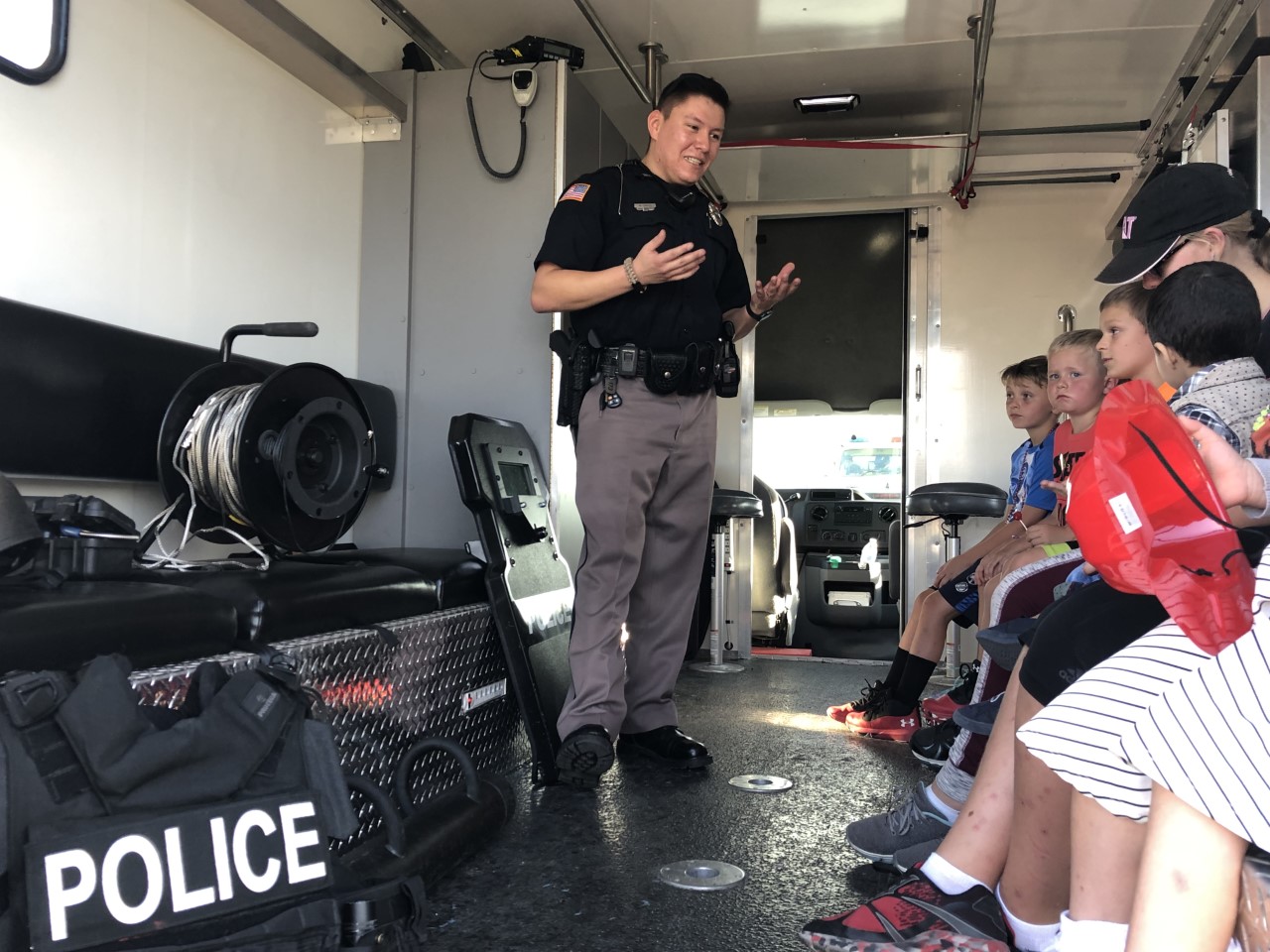
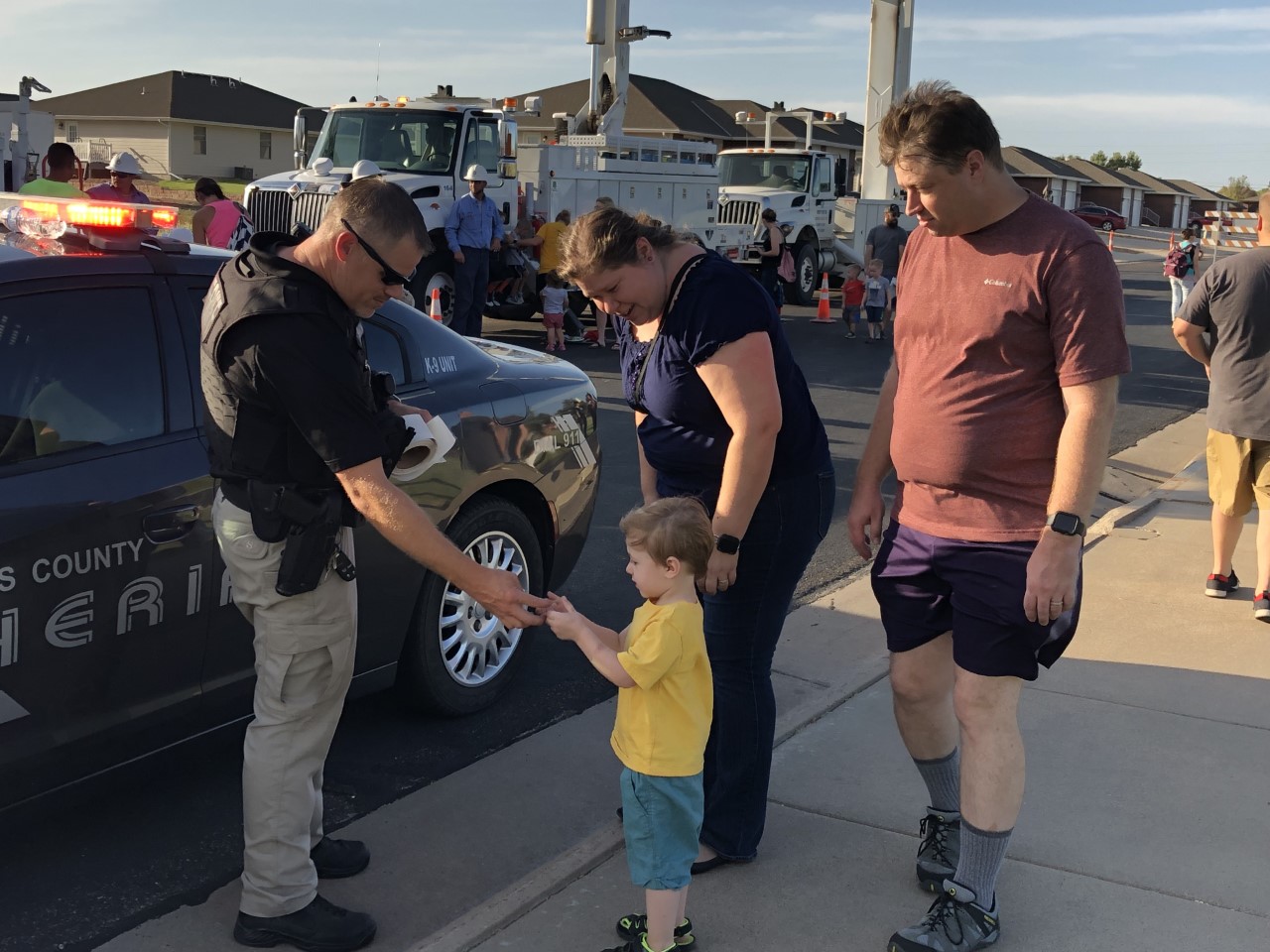
First responders from Ellis County showed curious youngsters the equipment aboard their fire truck, ambulance, and police and sheriff’s vehicles.
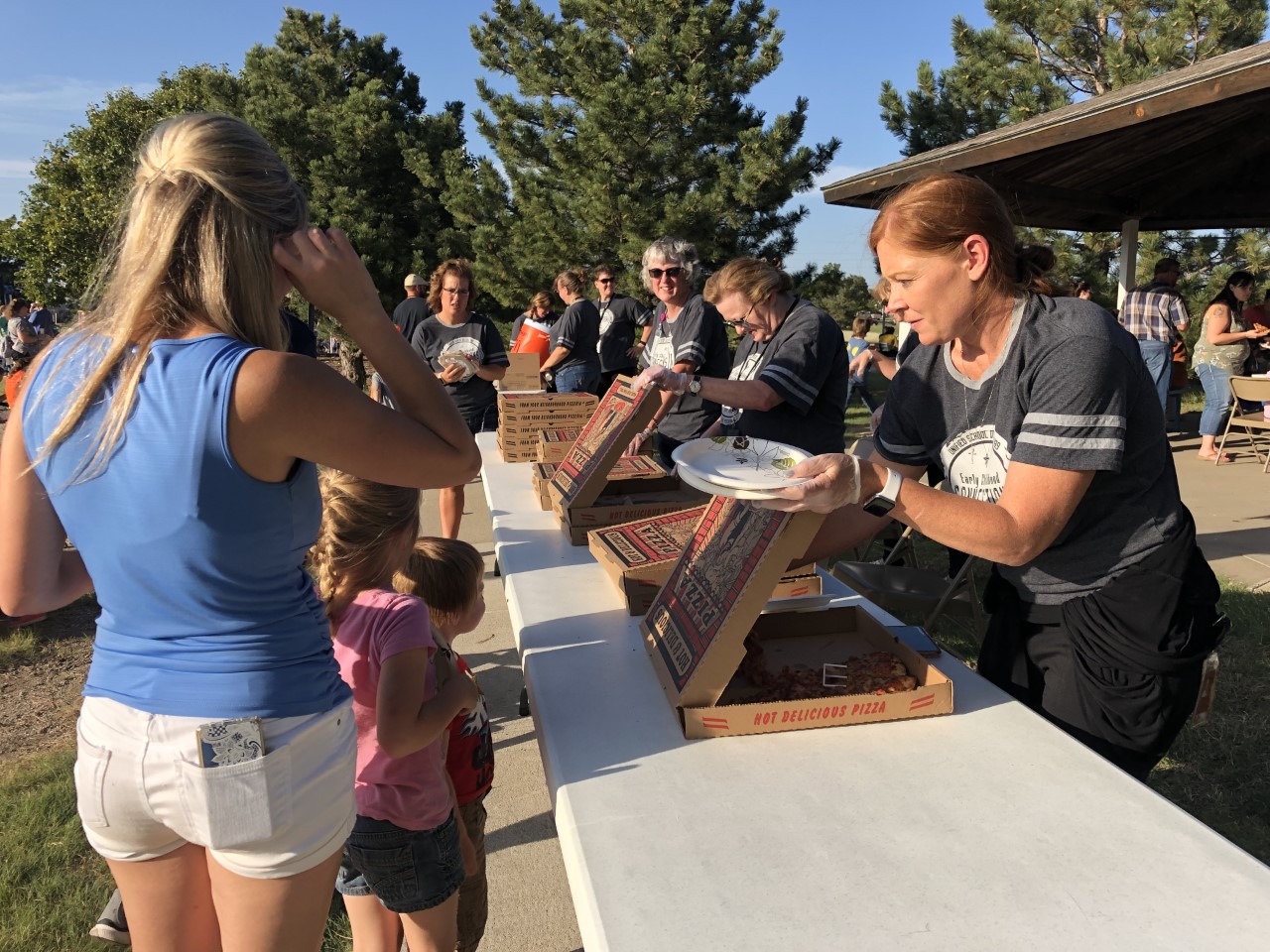
Free food and drinks were also available for the families, many of whom took advantage of the adjacent Kiwanis Park to enjoy a picnic.
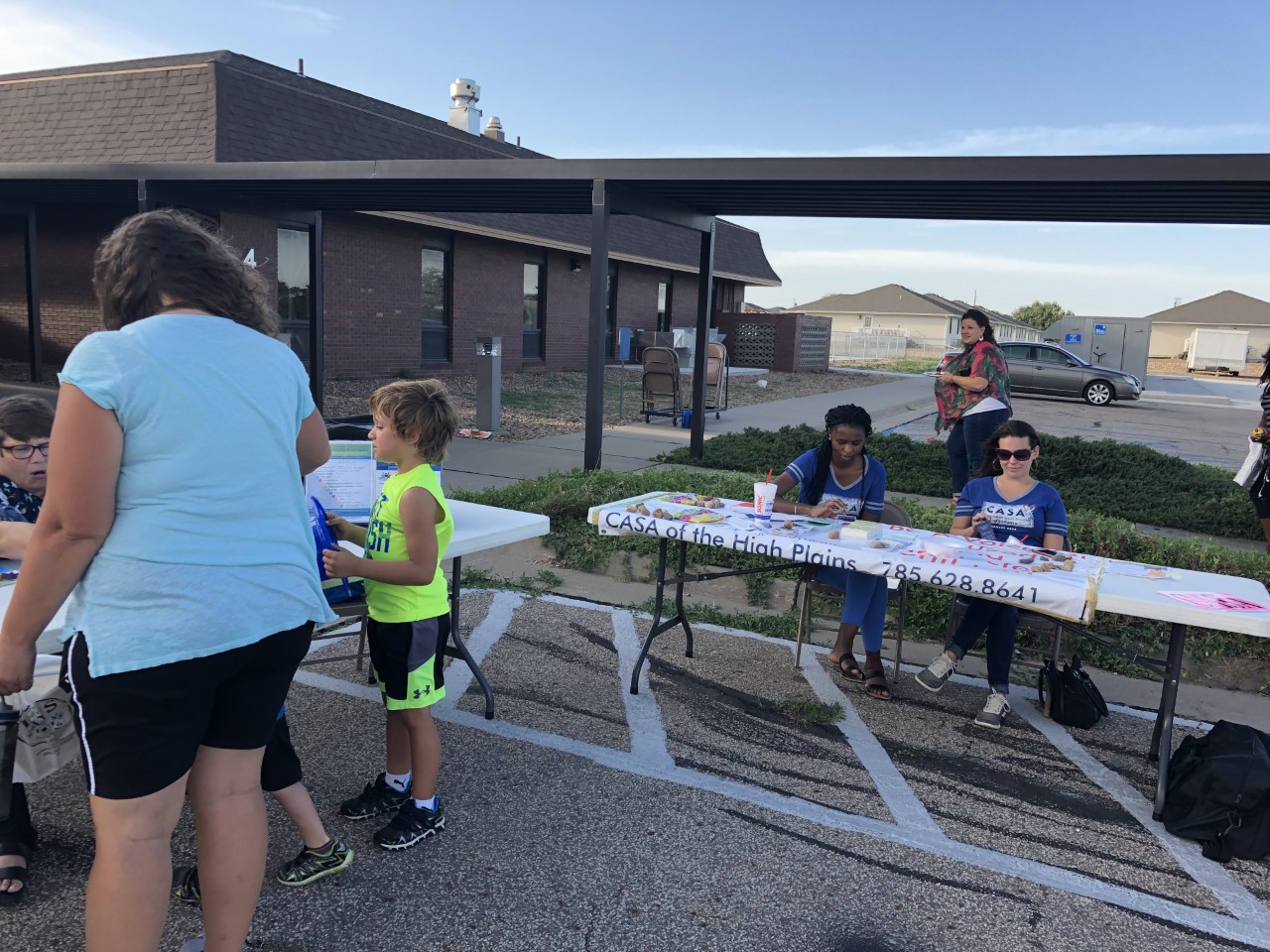
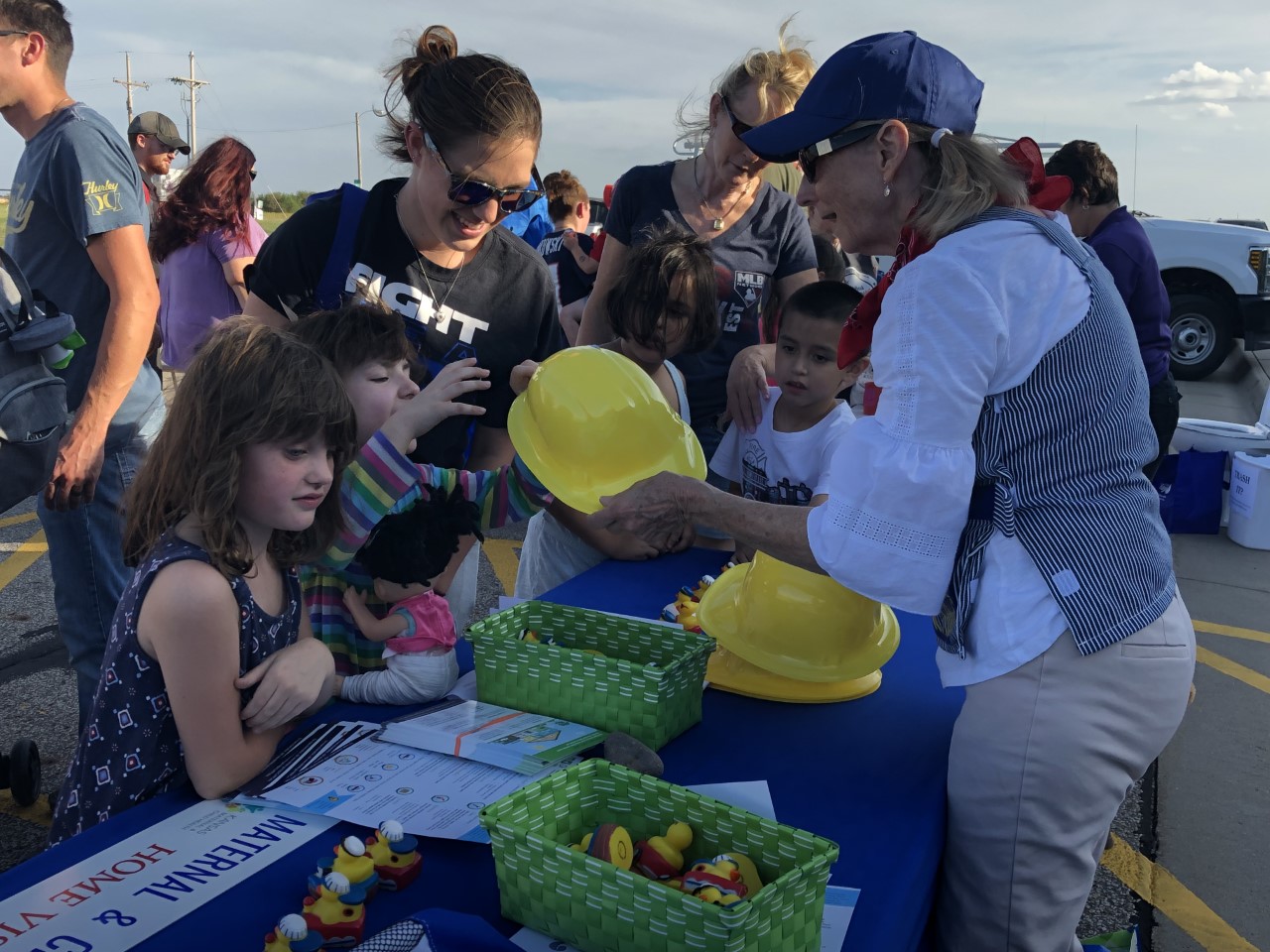
Several agencies provided information and giveaways from their groups including Girl Scouts, CASA of the High Plains, Cottonwood Extension District and the city of Hays Water Resources Department.
New business in Hays offers fresh, ready-to-eat food crates, directly from chef to consumer
By JAMES BELL Hays Post
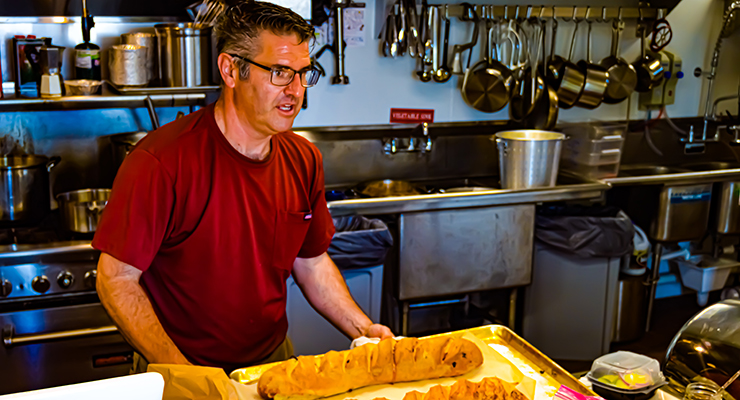
Owner Tim Pfannenstiel calls what he serves “vintage western Kansas cuisine,” offering a taste of the past in a very out-of-the-box concept at his new location, Chef’s Crate, 501 Vine.
“The business is based on a concept to provide meals ready to eat for families and individuals that are preservative-free, made locally and put together with the mentality of healthy, local, natural,” Pfannenstiel said.
He calls the food “retro” but he does not mean old recipes — rather he offers meals that are hard to find in a world of food that is over-processed, over-cooked and shipped globally.
Retro, he said, is simply “the way people used to eat.”
“This is incorporating a style and a way of eating, and a lifestyle more than a fad term that describes a time period and a mood,” he said. “What your grandma made in 1972 is what is here. This type of food has a purpose.”
Creating simple, but delicious food starts with using the best products available, Pfannenstiel said.
“I buy the best base ingredients I can get, and by doing that, no matter what I put out it is of the highest quality because what I am buying at the beginning is of the highest quality,” he said.
From those ingredients, he creates meals from scratch, mixing together elements of restaurants, food manufacturing and grocery stores.
“Everything is made here,” Pfannenstiel said.
He grinds meat, makes dressings and does something truly rare using a signature Kansas product — bakes fresh bread with Kansas grown and milled wheat.
“I’m one of the only places in western Kansas that makes fresh bread every day from wheat that is grown and milled in Kansas,” Pfannenstiel said.
He uses flour from the Stafford County Flour Mills, one of the few independent, locally owned mills left in the U.S., nationally known for their Hudson Cream Flour brand — from a mill that has been in operation since 1914 and powered almost exclusively with renewable wind energy.
“That’s why I have to use their flour or it doesn’t work,” Pfannenstiel said.
“I make meals that are coordinated for nutrition and for people who are too busy to cook,” he said, calling the food “heat and eat.”
Customers purchase a “crate” from the location that includes enough food for two people for over a week at a price of $100.
He has also been creating samplers of four items for $20, giving people an opportunity to try out the service before committing to a full package.
“It’s a learning thing for people,” Pfannenstiel said. “They can see what is available, and what it is about before committing to a one-week deal.”
“People want to eat better and my goal is, when they come back for the second week, they say they feel better,” he said, noting the nitrates and salts that used in most foods consumed in the U.S. are absent from what he offers.
His desire to deliver fresh meals free of those preservatives means, unlike most meal crate services, he does not ship or deliver his products. Food in those crates come from a variety of sources and change hands several times and go across the country two or three times, creating opportunities for the food to become compromised, he said.
“By someone coming to me and purchasing food, we are cutting out about eight to 10 people in the middle that usually either compromise the quality of the food or compromise the price,” Pfannenstiel said. “That’s why I don’t ship, I don’t deliver. I like when people come here and they know exactly what they are getting.”
Using Facebook for orders dates back to before the location’s opening when Pfannenstiel created meal crates from his farm near Yocemento.
He ran the farm for nearly a decade, creating meals from food grown on the property, before moving into Hays and starting this new outlet.
“It just works out better,” Pfannenstiel said.
Opening the new location also allows him to work full time as a chef, but unlike his previous positions, this operation is entirely his. During his career, he opened 15 food operations, including a period of serving as the executive chef at Fort Hays State University before opening Gella’s Diner and Lb. Brewing Co.
While working with food remains the same in the new venture, without a full restaurant, and the complexity that comes with it, Pfannenstiel gets to connect directly with his customers.
The lack of a restaurant operation also means he can operate from a much smaller space, and the new location is a perfect fit, he said. Using fresh food helps as well — the operation only uses one small freezer, no microwaves and has only one staff member.
“In this situation, you don’t need a ton of help,” Pfannenstiel said, but when needed he has support from former employees, friends and acquaintances.
The building itself, while not a large space, and definitely a bit off the beaten path, fits his mission of becoming a destination business.
“It’s perfect, it’s everything you need,” Pfannenstiel said.
Prior to opening, the building was totally gutted and everything is brand new. Space outside also offers an area to expand and try new directions for the business in the future.
“There are a lot of things I can do here,” he said, and already has ideas of adding a greenhouse or hosting cooking classes in the location. “There’s a lot of possibilities.”
In whatever he is doing, he said he wants to give his customers what they want, not what he thinks they should have.
“Whatever works I do, I don’t do what is cool, or neat or fun. If it works, let’s do it,” Pfannenstiel said. “As a chef, you cannot dictate or tell what somebody should or should like to eat or drink. That’s offensive.”
Instead, he said a chef for research and learn to make what the customer wants to buy.
“Once you do that, things become much simpler,” Pfannenstiel said.
And based on reviews, Chef’s Crate has received so far he must be getting it right.
Wonder Women League Co-Chairs Rhonda Meyerhoff and Nancy Jeter speak at a League event Tuesday.
By CRISTINA JANNEY Hays Post
The Wonder Women League is looking forward to several projects that will help children.
The nonprofit, which is affiliated with United Way of Ellis County, had a member drive luncheon Tuesday.
The Wonder Women League hopes to partner with HaysMed to buy stainless steel wagons and/or remote controlled cars for children who are patients at the hospital, Rhonda Meyerhoff, League co-chair, told the group.
“Mom or dad can take the child for a ride, and it is another way of transport,” she said.
The remote-controlled cars, can be a way a child can ride to surgery.
“I didn’t really think about it, but the impact on a child who is really, really scared …,” Meyerhoff said. “They want to cling to mom or to dad because they don’t know what is going to happen. They are scared. What we are told is if they can get the child into one of these motorized vehicles and into surgery, they have accomplished a lot with this child because the child is not going to fight them now.”
The Wonder Women League is a nonprofit that raises money for and implements projects that help children, families and the community.
HaysMed has approved the project, and it will be up for a vote in front of the Wonder Women in October. The group meets every other month on the second Thursday of the month for about an hour.
The group is trying to organize a cyber security program that could be presented to children in schools, the group also hopes to discuss this project at its next meeting.
The group also hopes to partner with the Fort Hays State University veterans organization to assist in its annual sports equipment drive. That could happen as soon as this fall.
“We know there may be children whose parents can’t afford the athletic equipment that they need to even do Hays Rec or some other team,” Meyerhoff said. “I don’t know about you, but it seemed every year I was having to buy new sizes of shoes for my kids for what they were going through because they had grown that much and the old pair just kind of got dumped.”
New equipment can be donated, but gently used equipment like basketballs, footballs, soccer balls or baseballs could also be donated.
The group has also discussed a long-term goal of creating a woman’s scholarship fund.
The League continues to participate in Matthew’s Gift in cooperation with HaysMed. The project provides bags with necessities, such as toiletries, bottled water, a lap blanket and snacks, to families who have loved ones who have to be transferred out of Hays on an emergency basis. The project was named for 3-year-old Matthew Wellbrock, who died as a result of an accident on his family’s farm.
Nancy Jeter, League c0-chair, said Matthew’s father and mother received a similar bag when Matthew was in the hospital. Matthew’s father told Jeter the bag was invaluable to the couple, because neither one of them wanted to leave Matthew’s side when he was in the hospital. They lived out of that bag until Matthew passed away.
Tammy Williams, HaysMed emergency department nurse, said the families who have received the bags have been very grateful. About three dozen bags have been distributed since the program began in the spring.
Meyerhoff said, “In my heart, when we give them that bag, I think we give them some love from Ellis County to go with them.”
Other projects Wonder Women have supported since the group launched two years ago included a self-defense class and Sunrise Park’s Born Learning Trail, which is a walking trail that includes interactive learning activities for children.
Prior to the event Tuesday, the group had about 35 members.
The group has changed its membership structure. The minimum contribution to become a member is $50. You can pay using check, cash or credit card. You can register online using a credit card.
You can volunteer for events or be on committees, but the League also offers a donor only option.
Registration is good for one year, and the money raised goes to support Wonder Women League projects. The group also accepts contributions from corporate sponsors. Although the League is under the United Way’s nonprofit umbrella, the funds raised through this organization are kept separate for League projects.
The exception is the annual Power of the Purse event, which jointly supports the League and United Way.
Front row, left to right: Avery Jones, daughter Paul and Steph Jones, and Elodie Jones; Maddie Lohmeyer, daughter of Joe and Misty Lohmeyer; Yesenia Maldonado, daughter of Lacho and Patty Maldonado; Madelyn Waddell, daughter of Josh and Tina Waddell; Cassidy Prough, daughter of Brandon and Shaina Prough. Back row, left to right: Ben Boland, son of Roger and Camber Boland; Nathan Erbert, son of Greg and Lisa Erbert; Tommy Brooks, son of Matt and Krista Brooks; Derrick Aragon, son of Inez Gutierrez; Carson Ackerman, son of Jeff and Kelly Ackerman.
Hays High School has announced 2019 Homecoming candidates and unveiled this year’s schedule of events.
Homecoming Week activities begin this weekend with a color run and float building. The crowing of the king and queen will take place at halftime of the varsity football game against Garden City, which is scheduled to kick off at 7 p.m.
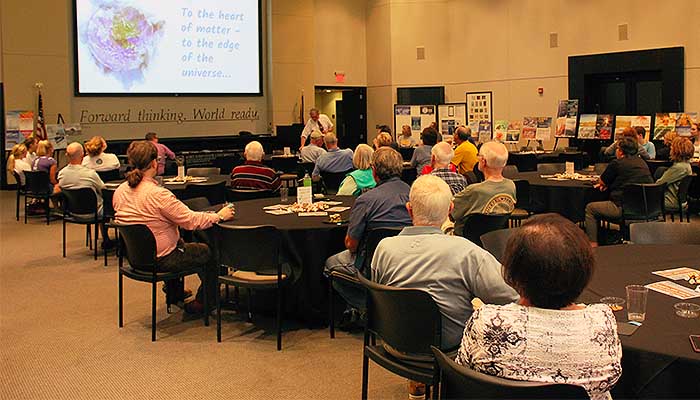
Fort Hays State University celebrated its 100th Science Cafe on Monday night by encouraging audience members to become citizen scientists.
Dr. Paul Adams, director of the FHSU Science and Mathematics Education Institute, presented the lecture at the Robbins Center Monday looking back on the last 99 lectures, looking forward to future lectures and offering suggestions on how every day people can become involved in science.
“What I am asking you to do and to take the challenge with me is to get more engaged in the scientific enterprise — be part of the science ecosystem in our area,” he said. “That means to become a citizen scientist.”
Adams said science educators when working with children will ask them to draw a picture of a scientist.
They often draw a picture of a white person, wearing glasses, in a lab with test tubes or an older man with a beard looking at the stars. Adams said as a science educator, he is trying to change that perception.
Dr. Paul Adams gives the 100th Science Cafe lecture Monday at the Robbins Center.
“It is not them,” he said. “The idea is that science is done by other people for others. It is not doing science for ourselves. This is a challenge for you. How can you be part of this? How can you be a scientist?”
Citizen science involves non-scientists, includes scientific processes and research standards, and has a goal of advancing scientific knowledge.
Citizen science is not new. The Chinese have records for 3,500 years of locust outbreaks. The royal courts in Japan have 1,200 years of records when the cherry blossoms bloomed. The French have 640 years of records of grape harvest data. The United States has a long record of citizens who keep track of weather data and harvests.
These records weren’t kept by scientists or the government. They were kept my citizens, Adams said.
In recent years, citizen science has improved with the aid of technology.
There are more than 1,000 choices available through clearinghouses online you can choose from to be a citizen scientist. Adams highlighted a selection of these during his talk on Monday. Most of these projects can be accessed online or through apps.
An early online citizen scientist project was Galaxy Zoo.
“This is taking images from deep space. Nobody has seen them. You can be the first person to tell if it is a bar or spiral,” he said. “Computers can’t read these. Computers can’t interpret it.”
What are now called green pea galaxies where discovered using crowd sourcing such as this.
“They found these galaxies no one had classified before, and we learned our models weren’t right because of the science citizen scientists did,” Adams said.
Globe at Night asks citizens to make a monthly reports on what stars and constellations are visible from their locations. This global initiative is gathering data on light pollution. You don’t have to have a telescope. You make your observations with the naked eye. The app has a constellation ID tool. Training takes only a few minutes. Adams said this is a great app to use with students.
Adams said he tells his students,”Don’t worry about getting it right, because we don’t know what right is.”
Some of these programs use large number of observers to report data, and then they pinpoint what statistically most of the observers report. If the observers can’t agree, then scientists may need to look more closely at what is being observed to determine if there is an anomaly present. This is how the green pea galaxies were discovered.
Journey North asks citizens to help track migration patterns for birds, monarch butterflies and other creatures.
Budburst ask users to track when flowers start to bloom, which is also an indicator of climate change.
Global Explorer asks users to look at satellite imagery to determine if archeological sites have been looted.
Stall Catchers is a game that is used as tool in Alzheimer’s research.
eBirds looks at bird populations; iNaturalist asks you to take pictures of different species of animals in your area.
Dust Storms asks you to take picture of dust storms and report their location. This data is also being used to monitor climate change, which scientist believe is going to spark more dust storms.
If you are interested in social sciences, there are projects that ask people to transcribe works from contemporaries of William Shakespeare or notes from U.S. Supreme Court justices. Look for more projects on Zooniverse.
Computers can’t interpret some data, such as handwriting. That is why scientists use crowd sourcing.
“Satellites work, but they aren’t perfect. They need people to validate, interpret and understand,” Adams said. “On Globe Observer, you can do clouds. You can do trees. You can do mosquitoes. You can do dust storms. The reason you do this, and this a direct quote from a scientist, ‘Satellites don’t see mosquitoes.’ Even though the technology is good. Even though they can read license plates in Russia, we are told, they can’t see mosquitoes.”
Knowing more information on mosquitoes helps to track the spread of diseases such as West Nile and Zika.
“A satellite can tell us where it is wet, but it can’t tell if the mosquitoes are going crazy,” Adams said.
He said he would like to see the residents of the Hays come together to do a citizen science project as a community, and he said he is entertaining ideas of what that project could be.
Science Cafe is supported through private donations. The lectures are free and open to the public.
The next Science Cafe will be at 7 p.m. Monday, Oct. 14, at The Venue at Thirsty’s in Hays. You can order food or beverages at your own cost from Thirsty’s.
Keri Maricle, biology instructor at the North Central Kansas Technical College, will present “Importance of Scientific Education in Western Kansas.”
Holly Dickman, water conservation specialist for the city of Hays, will be back this year to talk about water conservation. Another speaker will discuss virtual and augmented reality. Adams said someone had suggested bringing in a speaker to talk about cultured meat (lab grown not from animals), and he has also considered giving a lecture on fire walking, which he used to participate in.
Videos of some of the previous Science Cafes are available online. If you wish to learn more about the lecture series or suggest a topic for an upcoming lecture, contact Cari Rohleder at [email protected] or 785-628-4743.
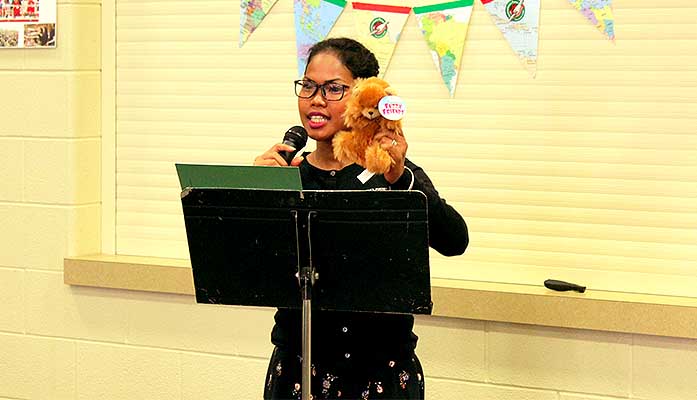
During a lecture Saturday in Hays, Boun Thorne, formerly of Cambodia, holds a stuffed animal similar to the one she received in her Operation Christmas Child box.
By CRISTINA JANNEY Hays Post
A group gathers Saturday at Messiah Lutheran Church to learn about Operation Christmas Child. This year’s shoebox collection week is Nov. 18-25.
Boun Thorne, who had an abusive childhood in Cambodia, said an Operation Christmas Child gift changed her life and help her accept God’s love.
Thorne, who now lives in the U.S., spoke to a group Saturday at Messiah Lutheran Church in Hays about her experiences growing up and her Operation Christmas Child gift.
Operation Christmas Child is a project of Samaritan’s Purse, an international relief agency headquartered in Boone, N.C., and led by the Rev. Franklin Graham. Every Christmas, thousands of individuals prepare shoeboxes filled with small toys, school supplies and hygiene items, which are then delivered to needy children around the world.
This year’s shoebox collection week is Nov. 18 to 25.
Thorne’s family was very poor when she was growing up. She grew up on a boat in a floating village. Her father was a fisherman, but he was also an alcoholic. Thorne’s father would fish to earn money, but he would spend his money on alcohol, leaving his family with nothing.
“Because of that we never had money to buy food from the market,” she said. “Growing up, we would eat anything we could find around us. Fish and rice was our basic food three times a day, and we would eat the leftovers for breakfast. There would be special occasions when my dad would catch a snake or a monkey and that was when we got to eat something different than fish.”
There was no electricity, no school or hospital.
Throne’s father was abusive when he was drunk. He regularly beat Thorne’s mother. After a particularly brutal beating, her mother passed out and Thorne thought she was dead. Thorne and her siblings would swim to a neighbor’s boat to hide from him, but they weren’t always successful in getting away.
When Thorne was about 6 years old, she became very ill. Her mother asked her father to take Thorne to the hospital.
“My dad told my mom, ‘Just let her die. If she doesn’t survive, we will just make more babies,'” Thorne said. “When I heard that, I felt like my dad didn’t love me at all. I thought maybe I am not his daughter.”
Thorne survived her illness. She decided then she wanted to some day be a nurse or doctor so she could help children who were sick.
She went to her father and asked if she could go to school. He said no, she didn’t need to go to school. She was told she would eventually marry and stay home with her children.
When she was 8, she left her family and her village to live with her aunt so she could go to school. She had to help her aunt make and sell Cambodian cookies to pay her way.
Thorne woke up at 3 a.m to help her aunt cook. After school, she would be sent in to village to sell cookies. If she did not sell all the cookies for the day, her aunt told her she was lazy and sent her to bed without diner.
“No matter what happened. No matter what my dad did to us, my mom would make sure I had food in my tummy before we went to bed,” she said.
After two years, Thorne said she could no longer bear her aunt’s abuse, gave up on her education and moved home with her parents.
During a Cambodian holiday, her father became so drunk he couldn’t fish for the family. Thorne’s mother sent her to fish with her uncle, so the family would have something to eat. Her uncle abused her on that trip.
Her mother wanted to report the crime to the police, but she couldn’t do it that day because of the holiday. By the time her mother could report the crime, her father had alerted her uncle, and her uncle fled the area to avoid the authorities.
Because her village elder thought Thorne might be in danger from her uncle, a couple months after the abuse incident, Thorne moved to a Rapha House, an international mission aimed at ending sexual exploitation and sex trafficking of children.
She would have to leave her mother and siblings again, but she would get to go to school.
“My house mother showed me where I was going to get my food,” she said. “There was a table with a lot of food on it. We never had desert or anything like that, but on the table there is a lot of desert. I was just standing there crying because I really wished my siblings and my mom would get to eat all of this food with me.
“Then she showed me I had a bunk bed. I had my own bed with my own mattress. I never slept on a mattress before. At home we slept on a mat on the floor. I just wished my mom and my siblings could experience this all with me.”
One of her counselors told her about Jesus Christ. She told her that God wanted her to forgive her uncle and her dad, but Thorne said she was not ready to forgive.
“It didn’t make sense to me,” she said. “My dad didn’t love me. Why do I have to love him? My uncle didn’t love me. Why do I have to love him? It hurts me.”
Thorne regularly went to church, but she said she went to be with her friends, because she could sing and dance and they served snacks.
When she was 13, her teacher told her they had special gifts for the children. It was boxes from Operation Christmas Child. This was the first gift she had ever received. Christmas and birthdays are not celebrated in Cambodia. They were told these were gifts from the people who love God and they wanted to bless the children with these gifts.
The children were told they were supposed to wait until all the children received their boxes before they opened their gifts, but Thorne couldn’t wait.
Inside her box was a new pair of flip flops. This was special because the students at the school only received one new pair of shoes each year. At home, she and her family always went barefoot. The box also contained a stuffed animal.
“I never knew something like this existed. I never knew they could make an animal like this, so soft,”she said. “It’s new and smells good. I used to eat all kinds of animals, growing up, but I never knew there was an animal that I didn’t have to eat that I could snuggle with and smelled better than the real animal.”
She said the shoebox helped her fall in love with God more deeply and have a relationship with God.
“I realized that God was so big that he could make impossible things happen,” she said. “He can make someone who doesn’t even know who I am to love me and send me this gift. I realized what my teacher told me that God loves me and he wanted me to love my uncle and to forgive him.”
She added, “Even if my earthly father didn’t love me, there is a father in heaven who loves me, and he is way better than my earthly father.”
Her young brothers came to visit her while she was living in Rapha House, and they fell in love with her stuffed animal. She decided they needed it more than she did, so she gave her toy to them. Her mother later told her that her siblings often fought over the toy.
One day, the stuffed animal fell off their boat into the water. The children saw this and came crying to their mother that their stuffed animal was dead. Because they knew other animals floated when they were dead, the stuffed animal must also be dead. The toy was dried and fluffed, and her siblings exclaimed that their toy had been brought back to life.
Thorne, 25, eventually married an American, who she met when she was working as an interpreter in Cambodia. She is working toward her U.S. citizenship. Today, she lives in Oklahoma and is attending college to become a nurse. In the future, she hopes to periodically return to her home country to offer medical assistance.
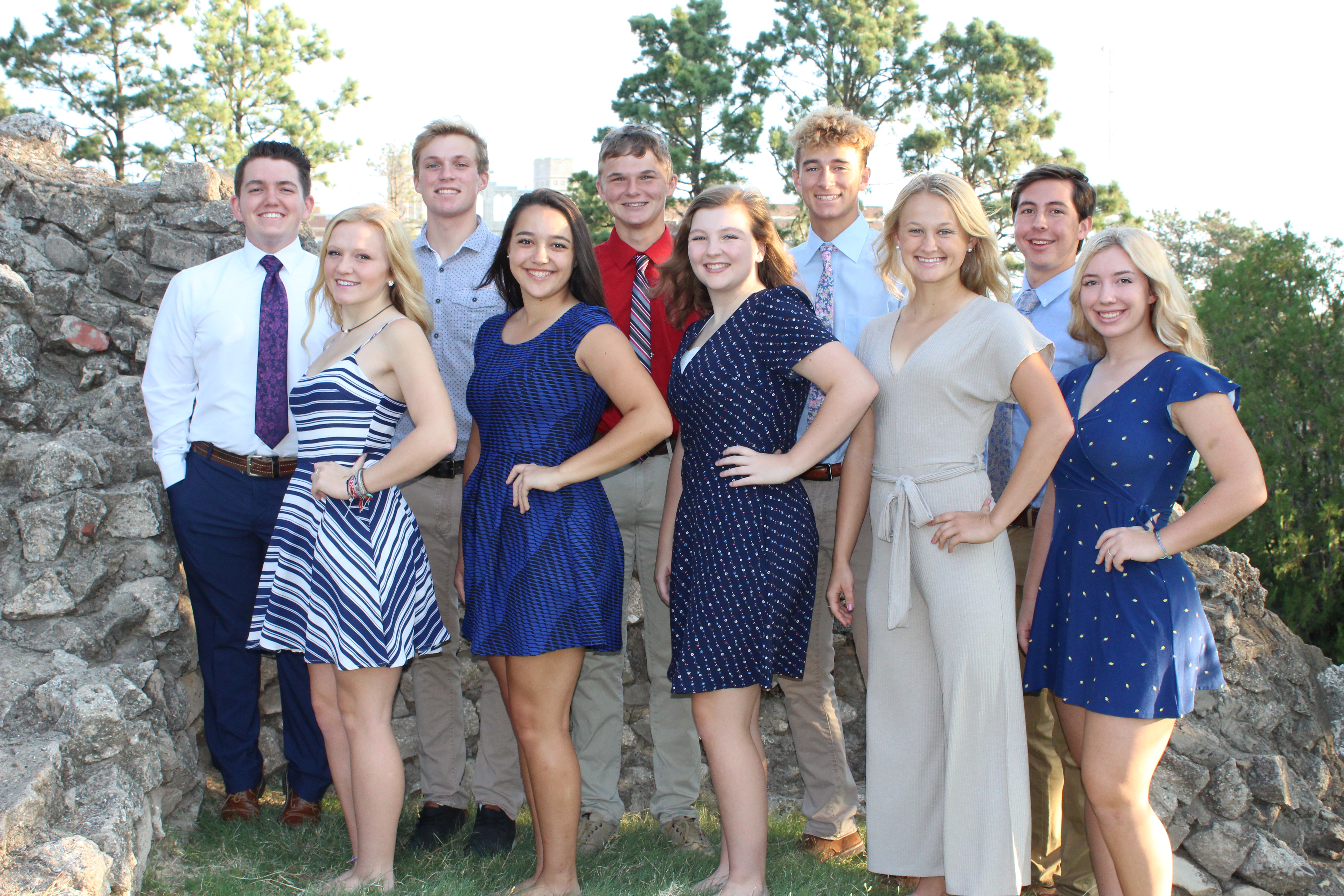
Thomas More Prep-Marian has announced 2019 Homecoming candidates.
The annual Homecoming parade is scheduled for 5:30 p.m. Friday, with the football game against Plainville set to kick off at 7 p.m. Friday. The Homecoming dance will be at 8 p.m. Saturday.
Click HERE for the Homecoming Week calendar of events.
Candidates are:
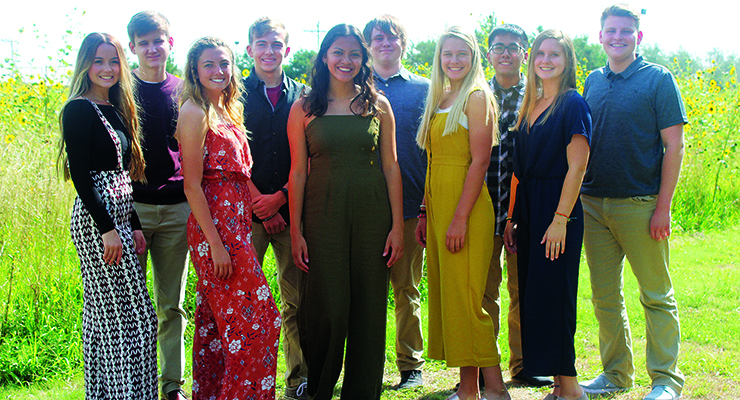
Ethan Brummer and Adell Riedel – Ethan is the son of Stephen & Judy Brummer and Adell is the daughter of Don Riedel and Kay Riedel.Blayne Riedel and Maggie Speno – Blayne is the son of Darran & Lori Riedel and Maggie is the daughter of Tim & Jessica Speno.Tyson Dinkel and Madison Rohr – Tyson is the son of Mark & Jeana Dinkel and Madison is the daughter of Chad ’89 & Karen ’88 (Feauto) Rohr.Brandon Karlin and Katie Hale – Brandon is the son of Craig & Lisa ’86 (Dinkel) Karlin and Katie is the daughter of Steven & the late Amy Hale.Lane Werth and MaryKathryn Dwyer – Lane is the son of Greg (Class of 1988) & Shannon Werth and M.K. is the daughter of Phil Dwyer & MaryPat (Class of 1980) (Blum) Dwyer.