Quinter Elementary School student Dashiell Brown was recently named as one of three northwest Kansas winners in the Kansas Department of Transportation’s 2017 Put the Brakes on Fatalities poster contest.
Brown was selected as the winner of the 11 to 13-year-old age division and was awarded a bicycle and helmet from Safe Kids Kansas during a presentation held on Oct. 23 at Quinter Elementary School.
Dashiell Brown and Trooper Tod Hileman
A total of 1,048 kids across Kansas ages 5 to 13 took the time to think about safety and participated in the contest. Put the Brakes on Fatalities Day is a nationwide effort to increase roadway safety and reduce all traffic fatalities and is recognized annually on Oct. 10.
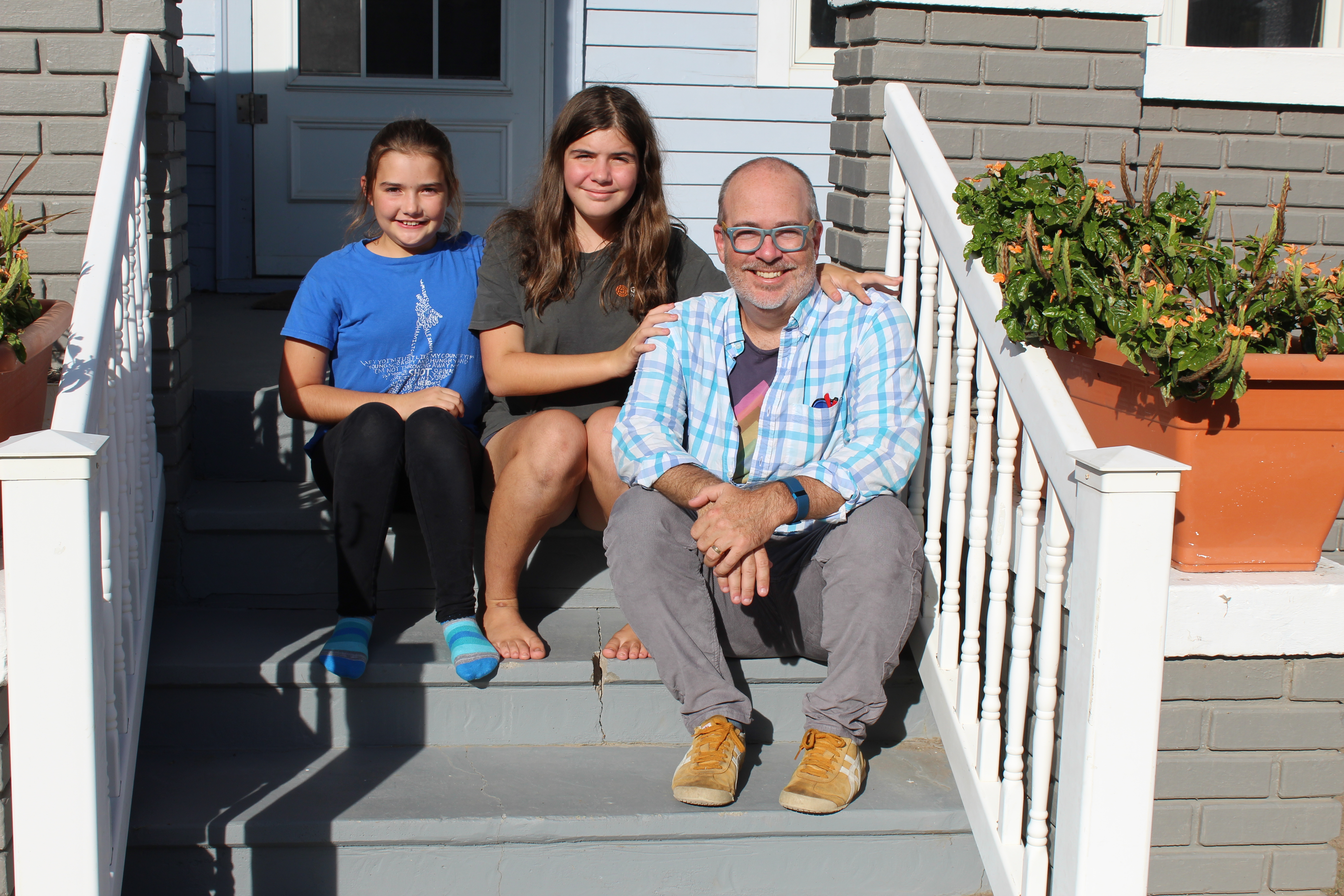
Nine months ago Dan Kois and his family left their life in a Washington, D.C., suburb to tour the world and experiment with different ways of being a family.
For the next three months, Dan, his wife, Alia Smith, and two daughters, Lyra and Harper, will live in a quiet neighborhood in Hays learning about family life in the Midwest.
Kois, an editor for the online magazine, Slate, and a contributor to New York Times magazine, and his family were feeling the pressure of suburban life and wondering if there were different parenting styles that could bring the family closer together.
“Living there was feeling a little off to us,” Kois said of Virginia. “We thought surely there were other ways we could be living our lives that would make us feel more connected to our kids, make us feel like we were raising the kids we would like to raise and having the kind of family life we would like to have, so we decided that we would try an experiment.
“The experiment was to travel around the world for a year and live in four different places and learn the most we could about how family life worked in each of those places,” he said.
The family selected New Zealand, the Netherlands, Costa Rica and Hays as places they would live for three months each to explore different types of family life.
Each of the locations was selected, because it represented a lifestyle and locale that was different from what the family was used to and frankly Kois said parenting styles that the Kois’ were just bad at.
Kois thought a look at family life would not be complete without a closer look at American family life. Kois grew up in Milwaukee, and although that life in a Midwest city is different from life in Hays, it also was very different from what his children were experiencing in Virginia.
“It seemed crazy to think about and write about different ways of being a parent and not think about the different ways there are to be an American parent — that our way of doing things on the east coast is not the only way to be a family in America,” he said. “So to explore a place that we could give ourselves a totally different life right here in America seemed really appealing and interesting.”
The Koises chose Hays because they are friends with playwright and Hays resident Catherine Trieschmann, who Dan knew from college.
The Koises were concerned about being able to break into the social world of a small town, and thought having someone here they knew might ease that transition. Dan said thus far that fear has been overblown.
“It just seems to be an entire town of people who seems to be devoted to being nice to us all of the time,” he said of Hays.
Harper, 10, who is in fifth-grade at O’Loughlin Elementary School and Lyra, who is in seventh grade at Hays Middle School, had mixed feelings about the adventure. They were excited about traveling and the prospect of getting their own YouTube channel to document their trip, but angry they had to leave home and friends behind.
“Those two emotions of being excited about the adventure and being annoyed about how difficult it could be — they have teetered on both of those emotions on the trip,” he said. “So there have been times it seems to me they have loved the places we have been and delighted in meeting new people and experiencing new things, and there definitely times we have just said, ‘God why can’t we just be back were we know how everything works and where all our friends are and things feel easy and not hard.'”
The family started their trip in New Zealand, where a family of non-outdoorsmen, enjoyed hiking and camping in the country’s spectacular national parks. They landed in a neighborhood with lots of children and families in a country that has been known to be very welcoming to newcomers.
“People were totally happy to meet strange, new people from the United States and immediately go out for a beer with them and ask them questions about Donald Trump,” he said.
Kois said parents in New Zealand do not keep track of their children every minute of the day. They are allowed to roam the neighborhoods freely.
“It reminded me of my childhood,” he said. “Letting my children roam without consequences, I really found refreshing.”
The Kois spent their next three months in Delft, Netherlands, which is north of Rotterdam.
Parents in the Netherlands use the polder method of parenting. Without the dam system in the Netherlands, the country would be underwater. The control of the water is a great matter of concern and negotiation. That spirit of negotiation carries over to the family dynamic. Children are encouraged to participate in family decisions and negotiate with and question their parents.
Kois said this type of parenting was a point with which he and his wife struggled.
“I found that I liked being an autocrat. I liked being in charge,” he said.
Like in New Zealand, the safe and secure environment in Delft allowed the Koises to give their daughters more independence and freedom. Transportation in the Netherlands is primary via bicycle. The girls’ new mobility led to more independence.
Kois said the family’s whole lives revolved around this new mode of transport. The family made more grocery trips, because they bought only what they could carry in a bicycle basket. Family outings were a bike trip to one of the local parks.
“It narrowed our world, but we were able to explore that world at our own pace,” he said.
Although the vast majority of people in the Netherlands also speak English, Intimate relationships and friendships are in Dutch, which Kois said made it very difficult for his family to break into social network of the community.
With the Koises move to Costa Rico, another language barrier arose. None of Koises were fluent in Spanish. The Koises were there over summer break, but the girls spent time in language classes.
Living in Costa Rica was not only a study of the traditional Costa Rica family structure, but also the structure of American ex-pats living in Costa Rica.
The life of the Koises peers in Costa Rico were revolved around the ocean.
“You swam in the ocean. You smelled the ocean. The weather was dictated by the ocean. Family activities were centered around the ocean,” he said.
Life in Costa Rico is very relaxed, and residents there have a deep appreciation of the environment and the natural world, which is embodied in the phrase Pura Vida.
Many Americans settle in Costa Rica because of its tropical setting, inexpensive cost of living and safe communities.
However, the country does not necessarily have all of the amenities the Koises were used to in Virginia. The electricity and the Internet access was often spotty. The water was not always drinkable and the mosquitoes were oppressive.
The children also witnessed a different standard of living and poverty among for some of Costa Rico’s citizens.
The Koises have only been Hays two weeks. Kois said he is reserving a judgment about Hays and its parenting style until he spends more time in the city.
“This feels more like home,” he said. “We know this will end in a few months and it is not as foreign as our time in Costa Rica.”
Lyra described the typical struggles of middle school life, but said she loved the Hays Public Library.
Harper excitedly talked about a recent trip to the Sternberg Museum of Natural History and getting to see its famed fish within a fish.
Kois’ book, “How to be a Family,” is set to be released in fall 2019. However, Kois said he hopes his family has gained something more than a book out of their year-long adventure.
“When our kids are adults and they are asked what their childhoods were like,” he said, “I feel quite certain this is the first thing they will say. I hope this has created an origin story for them.”
The annual fall alley cleanup in Hays starts Oct. 23.
By BECKY KISER Hays Post
“This is a very good time to clean up your yard, the basement, clean out your garage or your attic,” according to Marvin Honas, solid waste superintendent for the city of Hays.
Hays refuse customers may begin setting out their unwanted items, those not picked up in normal trash collection, for pick up during the Oct. 23 annual alley cleanup.
“It’s a free service for Hays customers and it’s been a very, very successful program,” Honas said.
The cleanup will consist of one sweep through the city starting with residential curbside customers Oct. 23. Alley services will after curbside collections are completed. “The number of employees committed to the task may vary from day to day, so we are unable to predict when crews will be by a residence,” said Honas. “City crews have a time limit of 20 minutes per residence,” he added.
Most years, the citywide clean up is usually finished in six to eight days, according to Honas.
Waste should be placed in four separate piles:
1.Tree limbs and brush (no longer than 12 feet in length or 6 inches in diameter); all yard and garden waste must be bagged.
2.Construction and demolition debris, i.e., lumber, drywall, bricks, sinks and bathtubs, wires, fencing, etc. (Please pull or bend over nails and place small quantities of concrete, bricks, and plaster in containers.)
3.White Goods/Metals, i.e., guttering, siding, washing machines, dryers, refrigerators, metal swing sets, etc.
4.Municipal Waste (all other items), i.e., furniture, carpet, TVs, computers, Styrofoam, etc.
The city will not pick up tires, batteries or household hazardous waste. Tires should be disposed of at the Ellis County Transfer Station, 1515 W. 55th. There is a disposal fee. Batteries and household hazardous waste items should be taken to the Ellis County Hazardous Waste Facility, 1515 W. 55th, where there is no disposal charge. Call 785-628-9460 or 785-628-9449 for detailed information.
Free disposal of large tree limbs is available for Hays residents at the Ellis County Transfer Station Monday through Saturday, 8 a.m. to 6 p.m.
Honas recommends tagging or removing ‘treasured items’ from residential collection areas to avoid wrongful pick up.
For more information, call the Hays Public Works Dept. at 785-628-7350.
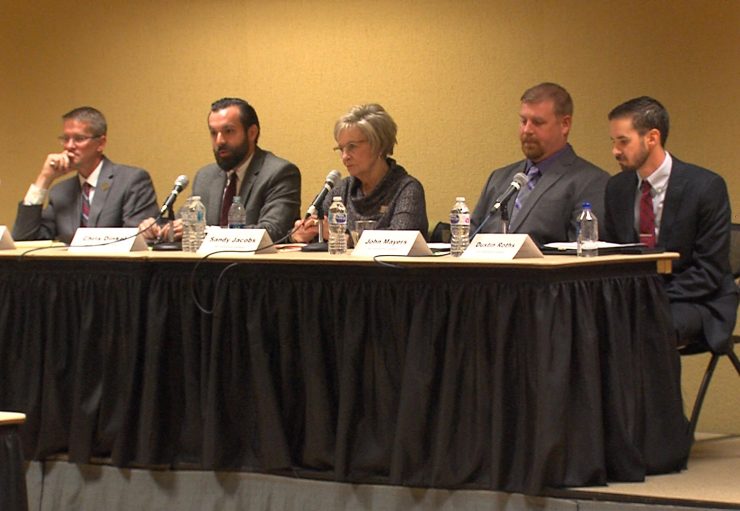
City commission candidates Shaun Musil, Chris Dinkel, Sandy Jacobs, John Mayers and Dustin Roths at the FHSU SGA forum.
By BECKY KISER Hays Post
Hays City Commission candidates talked about the most pressing issues facing the city, how to create more jobs, and the strengths they each would bring to the commission table if elected, during Tuesday’s forum at Fort Hays State University.
The event, hosted by the FHSU Student Government Association, Hays Area Chamber of Commerce and Midwest Energy, drew an audience of about 65 people who submitted their own questions to the candidates.
There are five people running for the three open positions on the Hays city commission in the Nov. 7 general election.
The candidates are Chris Dinkel, marketing coordinator for High Plains Mental Health Center and an adjunct history professor at FHSU; incumbent Sandy Jacobs, executive director of the Heartland Community Foundation; John Mayers, a realtor with Landmark Realty and an employee of Westhusing’s, Inc., Stockton; incumbent and current mayor Shaun Musil, owner of Paisley Pear Wine Bar, Bistro & Market; and Dustin Roths, owner of Diamond R Jewelry. This is the first time Dinkel, Mayers and Roths have run for a political office.
Three main topics dominated the forum–the need for affordable housing, declining sales tax revenues and economic growth. The city’s general fund is financed solely by city sales tax receipts. Hays is the only city in Kansas to operate that way.
Moderator Emily Brandt, SGA Pres. with Brent Hirsch, SGA Vice-Pres. and timekeeper
Moderator Emily Brandt, SGA president, asked the candidates how they would develop opportunities to attract more people and businesses to invest in Hays and remain in the community.
“It’s difficult to do that while actually sitting at the commission table,” answered Jacobs. “I think we need a serious case of collaboration in this community.
“We need collaboration between the university, HaysMed, the city and Ellis County. I truly believe if you put all those people behind the door and don’t let them come out until they can be ‘shoulder-to-shoulder’, I think you’ll come up with some amazing solutions. I’ve seen it happen over and over again.
“What the city can do is look at everything that comes to the table, every deal on its own merit. If it requires incentives to make it happen, we look at the plan. As a commission we can continue to encourage people to come to the table and consider our community, especially our quality of life here,” Jacobs added.
During a later question, Dinkel suggested representatives of the city, county and Hays USD 489 “attend each others meetings. Nobody knows where the other is coming from,” he contends.
As a longtime community volunteer, Jacobs said she knows how to “build consensus” and knows “the right people to help make that happen.”
“Most of the businesses that we’re going to recruit are going to ask for something from the city,” said Mayers, “things like tax abatements, TIFs (Tax Increment Financing), free infrastructure. So the big thing is, the community would need to be behind that. They would have to agree to give up something.
“I don’t believe in a blank check,” he emphasized. “It’s got to be on a case-by-case basis. You need to ask they questions like whether they have a valid business plan, how many employees are they going to hire and what kind of wages are they going to pay. What will we as a community get back out of out? Does it fill a need?”
Mayers previously worked in the oil field but was laid off when oil prices began a dramatic downward trend and there were fewer hours of work available to him. He wants to represent the “middle-class, blue-collar worker who lives paycheck to paycheck” on the Hays city commission. He describes himself as a “realist.”
“I think there’s opportunities out there, and I think there are opportunities we missed out on. The city may be ‘inviting’ but there’s only so many times we can turn down those opportunities before you don’t get any more,” Mayers concluded.
Roths opened his jewelry store six years ago. It’s now in a third, larger location in downtown Hays. He puts some of the blame on the state’s economic policies.
“I feel like the state of Kansas has made it tough on us for job creation in Hays over the last legislative session,” Roths said.
“I feel like the best way to bring business people to Hays, to give them a reason to be in Hays in general, is to figure out a way to lower their tax burden,” he contends. “Whether that comes from TIFs or CIDs (Community Improvement Districts), these are taxes they put on their customers, at least a consumption tax.
“Sometimes it’s just about being in a ‘good economic atmosphere.’ “If we can make the ‘atmosphere’ seem like you can be successful in Hays and that we have a workforce that’s ready to go to work, I believe businesses will come here and help diversify our economy.”
Roths is a conservative and supports less government along with limited spending.
“Otherwise, if we can’t figure out a way to make their tax burden less than other communities our size, the only other reason to be in Hays is how great our people are,” Roths said, “and we can’t rely on that for everything.”
Incumbent Mayor Musil believes the city “does a poor job of selling ourselves to others.” He looks for more marketing of the town’s assets and its convenient location.
As a new small business owner, Musil said he has “learned how to adapt and go on.” Musil has been a part-time Uber driver for some time, most often picking up airport passengers.
“People from all over the country come to Hays and talk about how great our town is, how clean it is, and how nice we are.
“I think sometimes we stumble over ourselves, complaining about what we don’t have. If we would just step up and say ‘look how good we really are,’ and keep doing that, I think you’d be amazed how many people want to come here.
“Our CVB (Convention and Visitors Bureau) does a tremendous job. The Chamber does a great job,” Musil acknowledged. “Being a downtown owner now it just blows my mind how many people just stop here off the Interstate. To me, that’s a huge asset for our community.”
Dinkel was the final candidate to answer Brandt’s question.
“I think part of the problem with this is we hear the same things over, and over, and over again, yet we haven’t figured out ways to actually address them.
“We’ve heard that real estate is just too high,” Dinkel said, “and we can’t offer enough tax incentives to get businesses like those locating in Garden City because the Hays land prices are absurd. Or that we’re losing people to other cities because housing is too expensive.
“We need to start getting creative in the incentives that we offer. Maybe we figure out ways to incentivize selling, to make it more worthwhile to these landowners sitting on these outrageously priced parcels of land to actually get rid of it,” he suggested.
“Maybe we need some sort of incentive to build houses people can actually afford. We don’t need to drop real estate price across the board to be able to do that. We need inventory in that cost area where people can buy a first home. People aren’t going to come here and rent for 30 years.
“These problems aren’t going away,” Dinkel said, and added “We need to figure out ways to address the root cause of them.”
The two people with the highest number of votes will be elected to four-year terms. The person with the third highest vote total will serve a two-year term. The mayor is selected by the commission members.
Advance voting begins Mon., Oct. 23 in the Ellis County Administrative Center, 718 Main, Hays, through noon Mon., Nov. 6. Polls for the Tue., Nov. 7 general election are open 7 a.m. to 7 p.m. throughout Ellis County.
Hays USD 489 school board candidates were asked Tuesday night about a proposed $78.5 million school bond that will be up for a vote Nov. 7.
A candidate forum was hosted at the Fort Hays State University Memorial Union by the Hays Area Chamber of Commerce and the FHSU Student Government Association. The four participants are vying for three open seats on the board.
Kevin Daniels, a minister at the Hays Christian Church and a write-in candidate, focused on the importance of storm shelters and secure entrances that would be added if the bond passes.
“To not have storm shelters at our schools is unacceptable,” Daniels said. “I heard someone saying earlier today only one student has ever died at a school during a tornado. That is appalling to me because what if that was your student? What if that was your child? We need storm shelters in our schools.”
Daniels also noted the schools need to be Americans with Disabilities Act compliant. Roosevelt Elementary School has a storm shelter, but it is in the basement, which makes it inaccessible to children in wheelchairs.
“We have to make sure we are providing an equal education to all students regardless of their abilities,” he said.
Daniels also said schools need to hope for the best and prepare for the worst and that means secure entrances at all schools.
Mike Walker is the director of the Docking Institute for Public Affairs and was a member of the Community Vision Team that created the current bond issue. He noted the Hays school district has not had a successful bond issue since 1992 when a small bond was passed for repairs and HVAC upgrades for several schools.
“While nobody wants to increase their own taxes,” he said, “I think we have to realize that is time for a new bond to be passed.”
Walker said this bond is totally different from the $94 million bond that failed in 2016. This is a 30-year bond with improvements that will last 40 to 50 years, he said.
Lance Bickle, current school board president, said the most important part of the bond is the education piece.
“As Mr. Walker alluded to — taxes. Nobody likes them, and I am right there with you. I don’t like taxes any more than the next person. I also think we need to look at this as a long-term investment in our community,” he said.
Bickle also noted Hays has not had a bond in many years, whereas peer districts have had two, three or four bonds.
The vision team that put the bond together listened to input about school needs from community members, parents and teachers, he said.
Sophia Rose Young is a parent of two and the donor communications manager at Developmental Services of Northwest Kansas.
“I really believe the district does need a bond,” she said. “What that bond looks like … if this is the bond or not, I don’t know. That is up to the community vote. I think the board made the right decision to put it in front of the community and let them decide because the Vision Team did put a lot of energy into it.”
Young noted the state has placed a limit on amount of bond debt that can be issued in the state each year. Hays is exempt from that law for this bond because it has been more than 25 years since its last bond issue. The bond is large, but the district might not be able to secure funding in the future if the district split the work into two or more smaller bonds.
The candidates were also asked what they thought the board should do to address facilities needs if the bond does not pass.
Walker said the board is already taking steps to address some facilities needs separate from the bond issue.
“If the bond does not pass, there are going to have to be some hard decisions what to do because the money will have to come out of capital outlay,” he said.
One of the issues the bond would address would be more classroom space. An alternative to building expansions could be temporary classrooms. The cafeteria at the middle school will still need to be expanded because it was constructed to handle a great deal fewer students than it is handling today.
When Bickle was elected to the board four years ago, he said his priorities were long-range planning, budgeting and maintenance. He said the board is addressing maintenance issues and will continue to do so if the bond fails.
“I did not think it was responsible from a board perspective to think that we were going to pass a bond or if it failed that it was just going to fix all our problems,” he said. “I really felt we needed to get a maintenance plan in place and to begin working on things regardless of what happened with the bond and proving we were fiscally responsible with the taxpayers’ money.”
Some of the projects the board has approved were upgrades to the middle school HVAC system and upgrades to LED lighting at the high school.
“Having said that,” Bickle added, “there is a long list of things that need to be addressed in this district, and we can eventually get to them, but I can’t tell you when that will be because we only have so much money each year to go around to do that. We need to put that toward the most dire needs possible. I think that is something we are continuing to do, and I think we need to continue to do regardless if (the bond) passes or not.”
Young said she believes, if this bond fails, the district would come back with another bond. She said the district would have to re-evaluate maintenance if the bond fails, because some of the needs are tied to the bond at this time.
Daniels said if the bond fails, the district needs to get in a room with people who voted no and ask them why they didn’t vote for the bond.
“If we keep coming up with these great plans, and we try to communicate the benefits of the bond and all the benefits of the things that we are trying to do without actually listening to people and listening to the voters,” he said, “we are going to be in the same boat a year down the road and a year down the road and a year down the road every time we bring up a bond.”
The general election is Nov. 7. Advance voting will begin Oct. 23.
See one-on-one video interviews with the school board candidates Thursday through Saturday on the Hays Post.
Midwest Energy’s Hays Journeyman team, of Shawn Slaubaugh, Butch Hamel and Brian Legleiter, discusses an upcoming event with a judge at the International Lineman’s Rodeo in Bonner Springs, Oct. 14.
BONNER SPRINGS — Midwest Energy’s linemen made a strong showing at the 2017 International Linemen’s Rodeo, held Oct. 14 in Bonner Springs, with the Journeyman Senior’s team taking 3rd overall against the best line crews from some of America’s largest utility companies.
The Senior Team was comprised of Bill Nowlin, Line Foreman from WaKeeney; Mike Stremel, Training Manager from Hays; and Cliff Townsend, Lineman Serviceman from Great Bend. They completed their events with a score of 396 points out of 400, and a time of 47:24. Teams are graded first on deductions, then by speed of completion. The first place team, from Southern California Edison, completed events with zero point deductions, and in under 30 minutes.
“This year’s competition was very intense, as they raised the Seniors age from 45 to 50, so you have linemen with decades of experience being very deliberate to not get any deductions,” Stremel said. “The teams that beat us were very good, and very fast. They had practiced their events quite a bit, and it showed.”
Great Bend Journeyman team members Alex Breeding and Nathan Stryker work on replacing a wire tie at the International Lineman’s Rodeo in Bonner Springs, Oct. 14.
Midwest’s other Journeymen teams also fared well, both earning 396 points out of 400. The Hays Journeymen team, comprised of Shawn Slaubaugh, Butch Hamel and Brian Legleiter, placed within the top third, ranked 73rd of 238 teams. The Great Bend Journeymen team, comprised of Alex Breeding, Nate Stryker and Chris Traylor, was also in the top third and just five spots behind.
The Apprentice Linemen had a good showing as well, with Great Bend’s Benn Kirmer placing in the top quarter of 313 competitors in key safety events like the Hurtman Rescue. Hays’ Brock Morgan scored in the top half of the Apprentice Written Test.
Midwest Energy’s Senior Team, of Bill Nowlin, Line Foreman from WaKeeney, Mike Stremel, Training Manager at Hays, and Cliff Townsend, Lineman Servicemen at Great Bend, took 3rd in their division at the International Lineman’s Rodeo in Bonner Springs, Oct. 14.
“You learn a lot about safety and technique at these events,” Kirmer said, with the 3rd Year Apprentice noting his performance improved greatly over his rodeo debut last year. “I did a lot better than last year, and will have to work on my knots to get even better next year.”
Commissioners toured the Ellis County Dispatch Center at the Law Enforcement Center on Monday.
By JONATHAN ZWEYGARDT Hays Post
The Ellis County Commission approved the creation of two new positions within Rural Fire Company 5 at Monday’s commission meeting.
According to Fire Chief Darin Myers, Company 5, based in Hays, is the largest company within the Ellis County Fire Department with 25 firefighters. There are also a number of interested applicants, but the department has put a hold on accepting applications until they can form a better leadership structure.
“We are having somewhat of an anomaly compared to the rest of the United States, where we have an increasing number of volunteers, within Ellis County, wanting to be on the department,” Myers said. “With that good problem to have, we need to have a proper hierarchy, leadership management above them.”
Currently, there are two captains among the six appointed positions within Company 5 giving the company a ratio of approximately one captain to 10 firefighters, according to Myers.
Commissioners toured the Ellis County Dispatch Center at the Law Enforcement Center on Monday.
The addition of one captain and one lieutenant will reduce that ratio to one to six.
Myers said the extra captain will create three squads which make it easier to delegate duties, prepare training assignments and other responsibilities.
The addition also increases the probability of an officer responding on the first emergency unit that arrives, according to Myers.
The commission voted to approve the promotion of Jared Shelton to Fire Captain, John Vaughn to Fire Lieutenant and Trevor Stipe to Fire Lieutenant.
Each January the commission appoints fire company officers.
Myers said they have seen an increase in firefighters in all six fire companies within Ellis County.
In other business, Hays City Manager Toby Dougherty updated the commission on the city’s policy for lot size within the extraterritorial jurisdiction, or 3-mile zone.
Last week, the city commission adopted a policy that states developments within the 3-mile zone must be at least two acres. Two acres also coincides with state statute that requires any property outside city limits on septic tank must be two acres, according to Environmental Sanitarian Karen Purvis.
The lots can be bigger, but Dougherty said the developments will still need to be planned so that if the city grows in that area it can fit within the city.
The city would oversee the zoning and platting of the development, but the county would be responsible for code enforcement. The city also does not provide electric, gas or water infrastructure for any development that is not contiguous developments.
Commissioner Marcy McClelland said she was glad to see that the city commission decided on the minimum of two acres.
Commission Chair Barb Wasinger said, “I don’t see anything happening in the near future because of the litigation going on.”
The county continues to be locked in a lawsuit with developer Mary Alice Unrein after the commission failed to pass the final plat of a purposed subdivision south of Hays. The vote was 1-1 with Commissioner Dean Haselhorst voting in favor of the measure while McClelland voted against it. Wasinger recused herself because of a conflict of interest.
In other business, the commission approved the purchase of a new CERT trailer for $2,700 after trade-in from Advantage Glass Plus.
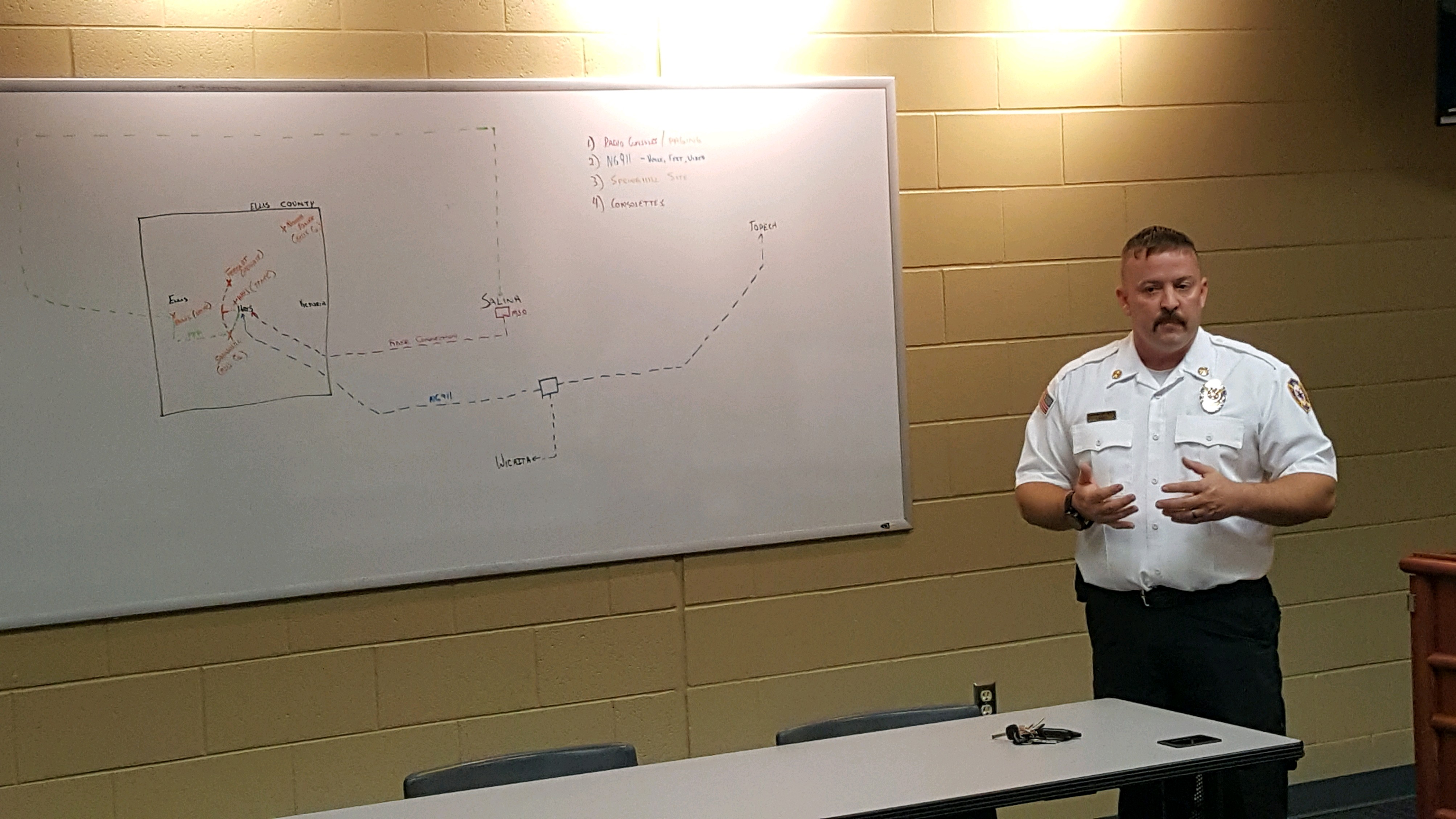
The commission also toured the Ellis County Dispatch Center at the Law Enforcement Center. The county has spent nearly $800,000 upgrading the system over the past year. The upgrades, paid for through the 911 surcharge on cell phone bills, include new dispatch consoles in the dispatch center, a new recording device for radio traffic and phone calls, installation of the new Next Generation 911 system and upgrades made to the Springhill tower site infrastructure.
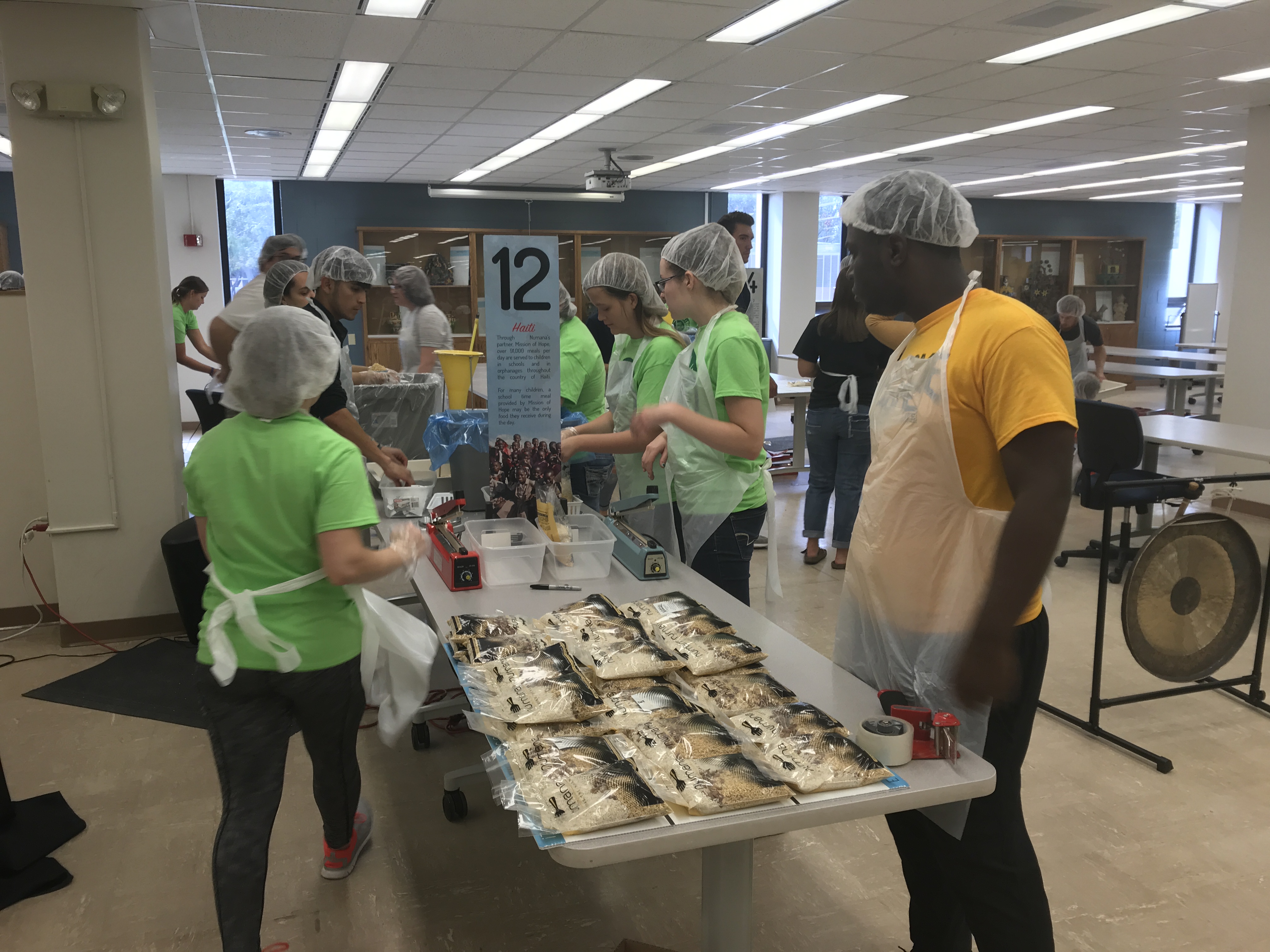
Fort Hays State University students and community members packed more than 30,000 meals bound for Puerto Rico during the Numana Swipe Out Hunger event Saturday.
Based in El Dorado, Numana, is a nonprofit formed in August 2008, as an international hunger relief organization. Since then, it has packaged over 37 million meals across the United States with the help of over 197,000 volunteers.
Organizers estimated 120 people, mostly students, volunteered to pack meals on Saturday at Forsyth Library. This is the sixth year Numana has packed food with Fort Hays.
Numana partners with an organization called Convoy of Hope, which ships the food to areas in need. Numana already sent a shipping container full of 285,000 meals to Puerto Rico, which was hit hard by Hurricane Maria.
The meals packed Saturday will be in the next shipment to Puerto Rico, which will likely make it to the island in the next three to six months.
Numana also has regular partnerships with relief organizations in Haiti and Africa.
The volunteers Saturday helped pack a special meal bag that contains precooked pinto beans, soy and a vitamin packet. Each meal bag can feed up to six people. There are 36 bags in a box and 216 meals in a box.
The meal bags might not look like much, but the contents are designed for nutrition and ease of cooking.
Volunteers pack one of the last boxes of food during a Numana packing event Saturday at FHSU.
Ashley Burns, event manager, said the meal packs are often mixed with local ingredients to make a stew or casserole.
“We sometimes get a hard time because they are so bland, but in Haiti they add chicken and fish and hot sauce. In Africa, they add vegetables and things they grow in their own harvest,” she said.
Reilly Franek, one of the student coordinators of Global Leadership Project at FHSU, helped organize the event.
“Really, we want to put a focus on how students can make an impact even from here in Kansas on global issues around the world and acute hunger issues around the world,” she said. “Numana provided us with an avenue to do that and get a large amount of students involved at the same time.”
Franek said the sorority Alpha Gamma Delta partnered with Numana and the Global Leadership Project to host the event, and Sigma Sigma Sigma also provided a group of volunteers for the event.
Ashley Templeton, a graduate student in the higher education student affairs program, said she became involved through one of her sorority sisters.
“This is an annual event, and we always want to support (it), and of course, this is a really important cause,” she said of why she came out to volunteer Saturday.
Rachel Ashbaugh, senior in business management, said, “I feel that it is important to give back to others. I wanted to be a part of what is going on today. With everything that is going on with natural disaster, I think it is important not to forget who needs help.”
Sierra Eichman, freshman in biology and pre-med, said “I have helped with something like this with other organizations, and I have seen how this can help other people in other countries.”
Numana packed food with the Hays Rotary this spring and is already planning for an event next year at FHSU.
If you wish to donate to Numana or volunteer for a future event, visit its website at https://numanainc.com/.
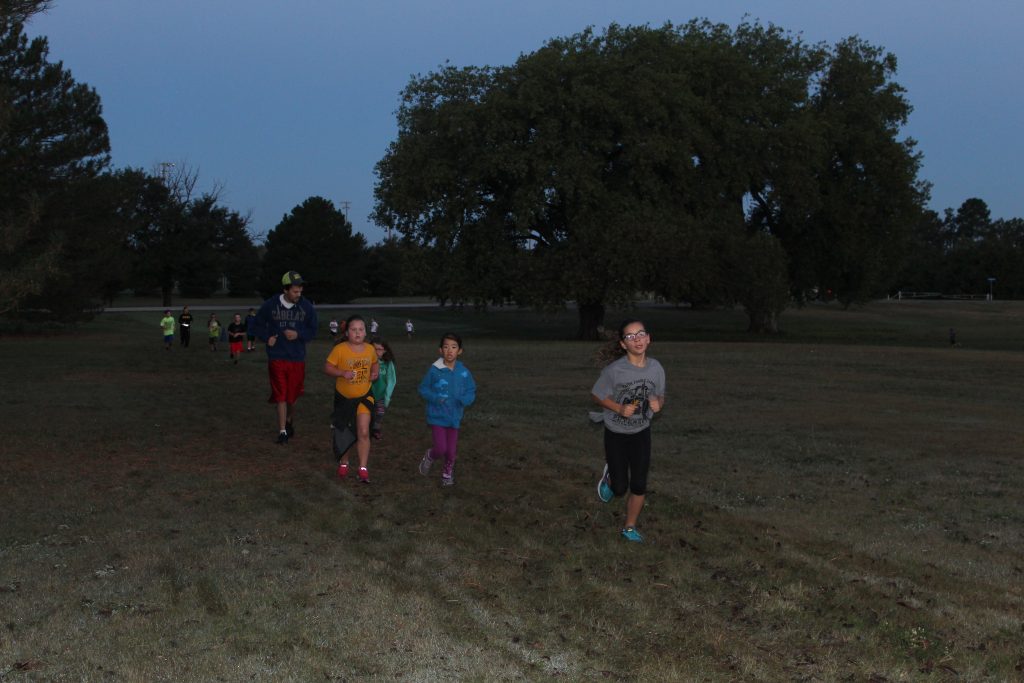
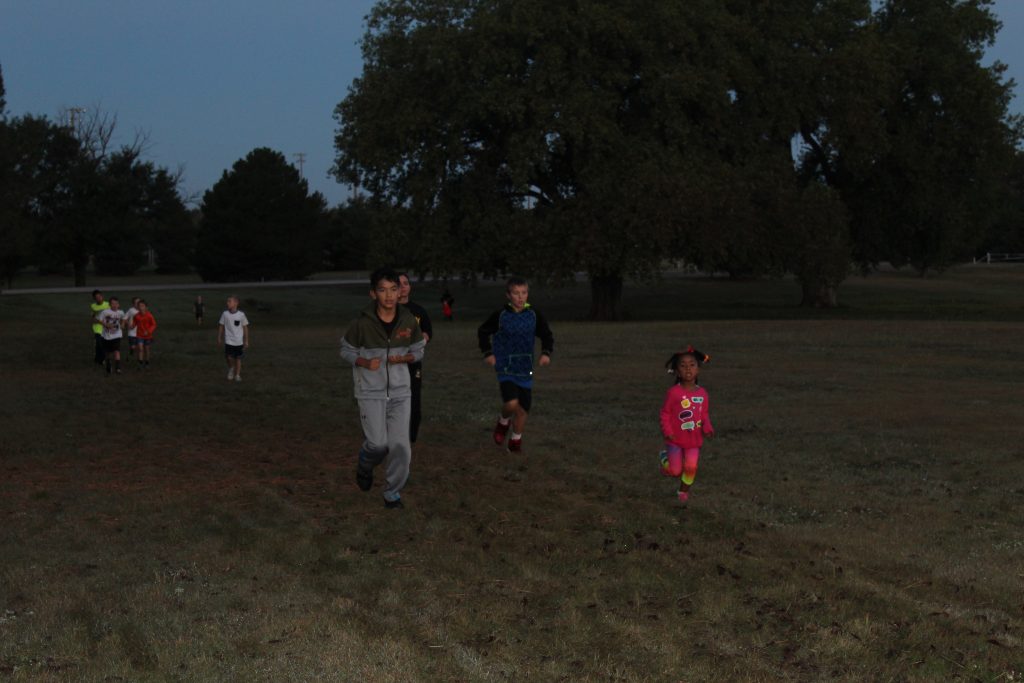
The dark sky was slowly lightening into morning over Hall Street as a group of kids from O’Loughlin Elementary School took to the dewy field outside their school to run.
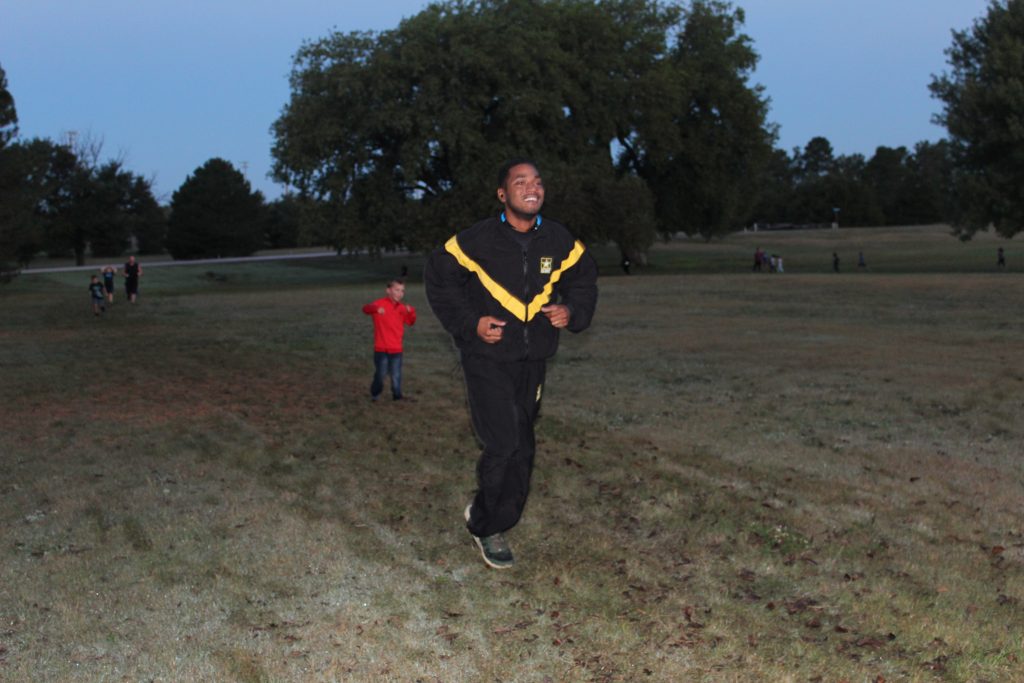
Local Army reservists and parent volunteers shouted encouragement as the children passed the starting line. Children, with their arms and legs flailing with fun in motion, earned brightly colored popsicle sticks for every lap, which they clutched tightly like tiny trophies.
Members of the 388th Multi-functional Medical Battalion, which is based in Hays, recently partnered with O’Loughlin to create the Morning Mile program. Lt. Johnathan Clark and his wife recently moved to Hays from Florida and duplicated a program they started there.
Children run laps in the field between O’Loughlin and Thomas More Prep-Marian on Tuesday and Friday mornings. When the weather is bad, they run inside in the gym. Every 30-minute session, which starts at 7:15 a.m., begins with warm-ups.
Clark said the collection of the lap sticks can be pretty competitive. It helps encourage the kids to get just one more lap in before they go in for school. At the end of the school year, the battalion hopes to conduct an awards ceremony and honor the girl and boy in each grade who ran the most laps.
The goal of the program, which includes kindergarten through fifth-graders, is to build healthy minds and healthy bodies.
Clark said he was inspired by a book titled “Spark” by John Ratey. It discusses what cardio aerobic activity does for the brain.
It highlighted a project in Indiana, which linked physical activity with improved test scores.
The school had unranked test scores, but a running program helped increase the students’ scores to some of the best in the world in math and science. The Indiana program is very similar to the O’Loughlin program, except the Indiana program had heart monitors.
“I think it is a great opportunity for myself and the community,” he said. “It gets the kids moving. It teaches them healthier habits and it gets their brains going in the morning. I’ve got a super-energetic kid, and I see a complete 180 in my son whenever we do this program.”
After five months of the Clarks doing the program in Florida, the student runners’ test scores improved 16 percent from the previous year. The testing was first thing in the morning when they could reap the most benefit from the physical activity, Clark said.
“What I try to do is push the kids hard and get their heart rate up and get them breathing hard, and then if their first few classes were their hardest classes, they would excel the most in those,” he said.
The physical activity can help children who struggle with depression or ADHD. The program helps children who are high energy or hyperactive get their energy out and focus during the day.
Vicki Gile, O’Loughlin principal, said she is very pleased with program in the short time it has been at the school and is already seeing results in the students.
“I think there are multifaceted benefits to that. Research has shown kids are not getting the same amount of exercise as they used to,” she said. “The physical health piece is great. Not only are those kids really getting an outlet for energy, they get focus to the day. It is a great start for the day.”
The program also gives the children the opportunity to participate with a group of their peers and have positive interactions with adults, Gile said.
Parent volunteer Matt Dumler has been coming out to the Morning Mile to participate with his son, Bryson, who is in the third grade. The reservists and parents both run with the children as well as track their laps and give encouragement.
“It prepares them for the day. It gets their blood flowing,” he said.
Dumler, a former cross country coach, grew up running and so did his wife. He said engaging the kids early to physical activity can help them develop a lifelong fitness habit.
Clark started in the Army as an enlisted man, but worked to become an officer so he could work on community-involvement programs like the Morning Mile.
“This gives our battalion a great opportunity to interact with the public and promote the Army in the way we want the Army to be perceived,” he said.
Children can still sign up for the program. Permission slip forms are available in the school office.
BUNKER HILL — Eating at the Bunker Hill Cafe isn’t like having a burger and Coke in plastic seats off the interstate. When you come to the cafe, you are taking a seat at Tom and Janet Taggart’s family table, from the hand-breaded catfish to filet mignon sourced off the Kansas prairie.
Tom and Janet Taggart will close the iconic Bunker Hill Cafe on Nov. 4 after more than 43 years in business.
The cafe has been recognized multiple times in national publications. This has included “Roadfood and Goodfood,” which has been through multiple printings since 1986. On occasion, travelers stop in the cafe, eat and ask Tom to autograph copies of the book.
The cafe has been featured in the “Kansas Guidebook for Explorers,” by Merci Penner as well as “Off the Beaten Path: A Travel Guide to More Than 1,000 Scenic and Interesting Places Still Uncrowded and Inviting.”
The Taggarts’ daughter, Lacy, has helped the couple make a splash on social media, which has helped the out-of-the-way cafe connect with locals as well as travelers.
When asked what is the secret of the cafe’s food, Janet point to her husband saying, “The secret to the food is right here. The same guy cooks your food every time you come.”
Tom added it is the consistency of the product.
The cafe has much of what you might think you would find on a traditional Midwest cafe menu, including twice-baked potatoes, homemade sides, homemade dressings, chicken and steaks.
One of Tom’s specialities is catfish, which he said has always fascinated him because of its conversion to protein. The breading is Tom’s own special recipe as is the fish sauce.
Through its history, the cafe has made forays into other dishes, including quail, bison and elk steaks, but Tom said the traditional tried and true offerings remain the best sellers.
When you eat at the Bunker Hill Cafe, you definitely are going to get a bite of Kansas. Tom sources locally when he can.
The antibiotic-free beef comes from Creekstone Farms in Arkansas City, which Tom touts as being some of the best beef around. It is cut by a local butcher in Wilson. Organic flour for the cafe’s homemade honey raisin bread comes from Heartland Mills in Marienthal. Honey comes Labertew Apiaries in Sylvan Grove.
Tomatoes, which are grown locally, only appear at the cafe in the summer when they are in season. Occasionally during the summer, the cafe can get fresh greens from local residents, but it is hard for local gardeners to keep up with demand, Tom said.
“Are you hungry yet?” Janet joked.
Tom Taggart bought the limestone storefront at Sixth and Elm streets four decades ago because he loved the old stone building and thought it would be well-suited for a cafe. Janet said she just happened to fall in love with a guy who owned a cafe, and so their fledging business and family began.
The cafe building was constructed in 1916. It was originally a drug store with a soda foundation. The druggist lived upstairs. Some of the old wooden cabinets from the original drug store are still in use in the dinning hall of the cafe today. The building also at one time had a dentist and doctor’s office on the second floor and was a pool hall before Tom purchased the building in the ’70s.
“We thought if we had good food, we would do all right,” Tom said. “We didn’t realize how much work it was going to be, but we have maintained our quality over all these years. People appreciate it, so we have been here 43 years now.
“We’re tired. We are ready to call it quits,” he said.
When the Taggarts opened the Bunker Hill Cafe, Bunker Hill, which is located just off of Interstate 70, 37 miles east of Hays, was a thriving community. Today the only two businesses left on the town’s main drag are the cafe and the Smoky Hill Public Television building across the street. As of the 2010 census, there were 95 people living in Bunker Hill.
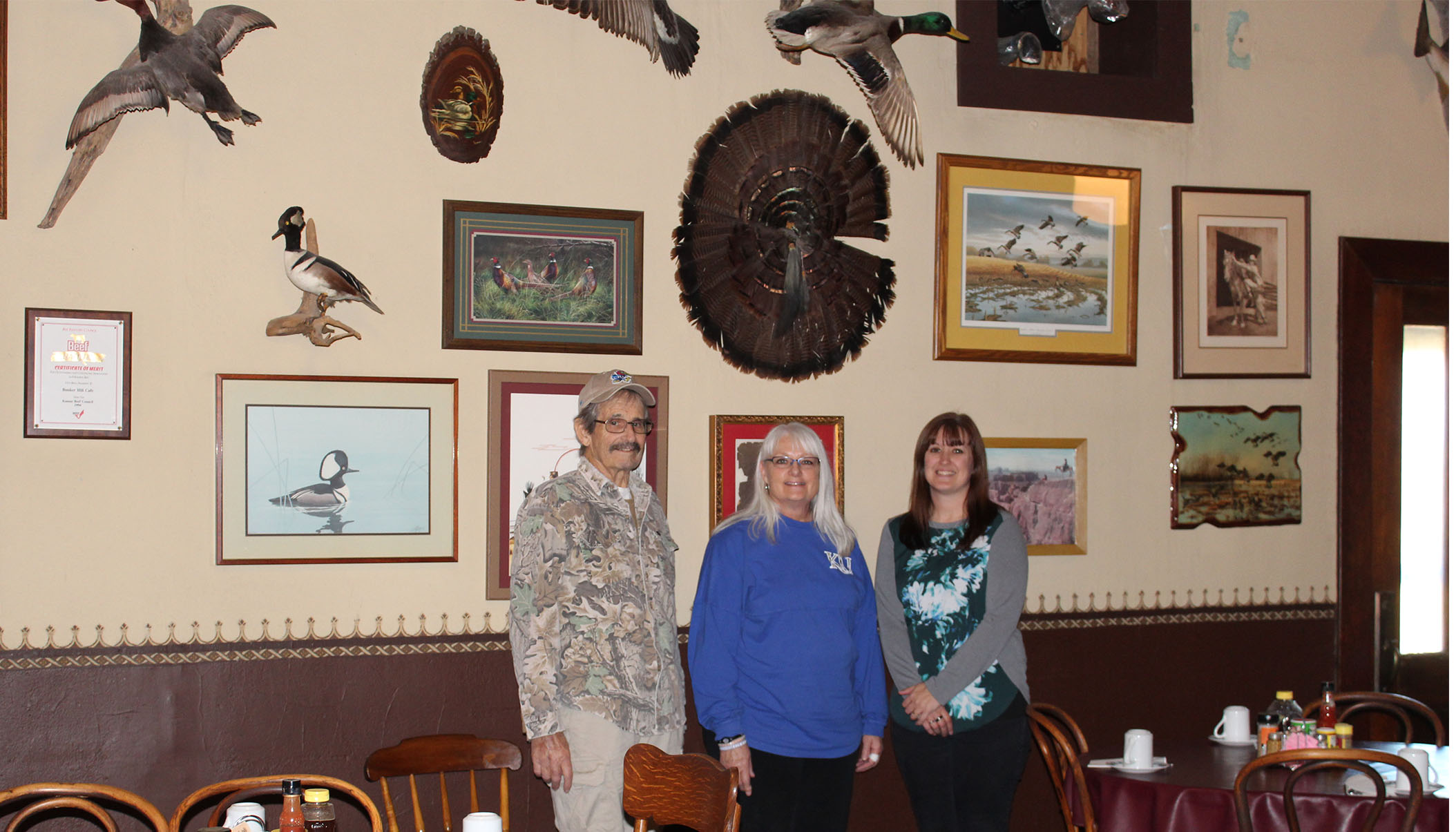
Much of the cafe’s floor-to-ceiling decorations suggest western Kansas prairies landscape and culture with taxidermied birds that Tom shot himself flying above diners, a bison head from a local ranch (which sometimes frightens children), elk, deer antlers, turkey feathers in full fan, and prints and photographs of other local wildlife.
Also adorning the front lawn of the cafe and other nooks and crannies inside are metal junk sculptures of a fish, dinosaur and hunting dog, created by Johnny Scott, who is from Bunker Hill.
The Taggarts said the best memories they have of the cafe are all the people who they have worked with over the years and all the people who they have fed.
“I think most of my favorite memories involve the people I have gotten to know, and a lot of them have been longtime customers. We have gotten to know them, their children and now their grandchildren. I think that is the thing I will miss the most. We’ve gotten to know a lot of really nice people here.”
People have eaten at the restaurant from both coasts. They have a priest from Boston who likes to stop in when he is in the area and eat a filet with fried rice. A couple of weekends ago, the cafe had a couple from New York who stopped at the cafe for dinner. The couple was on a coast-to-coast trip and had read about the cafe in “Roadfood and Goodfood.”
The cafe crew has as been a family.
Joyce Scott, who works at the cafe, has been with the business for 38 years. The Taggarts’ daughter, Lacy Hammack, is a teacher in Russell and works at the cafe on the weekends. Her daughter, Caitlyn, also worked at the cafe before she headed off to her first year at Wichita State this year.
Employees and the family all eat together when they are done with work in the evening.
Lacy said the cafe has been her second home. The Taggarts started bringing Lacy to the cafe when she was a baby. In kindergarten, the bus picked her up at the cafe.
“Some of my first memories were sitting on a chair in the back while Mom and Dad were working,” she said. “It was just part of my life, you know? All the people who worked here became family, and I had a bunch of moms here.
“It’s been a good thing to grow up here,” she said. “I’ve seen my parents work really hard and build this business. They taught me to work hard.”
Lacy started working out front bussing tables in her early teens and later as hostess and waitress. When she got back from college, she started working at the cafe again and continues to help her parents when they need her.
“I just love it. Just like they said, the people who come in and have been coming in for years and years, I have gotten to know them too. This is the only place I see a lot of those people. It is kind of fun. It doesn’t feel like it’s coming to a job. It’s just a good place to be.”
Many people have asked Lacy if she was going to take the cafe over, but Lacy, who teaches first-grade, said she has a passion for teaching and couldn’t imagine doing anything else.
Although Janet and Tom said closing the cafe has been a hard decision, Janet said she was happy her daughter has followed her dream to be a teacher, a dream she had since she was a little girl.
The Taggarts have been trying to find a buyer for the cafe, but have not been in luck yet. Tom said it is hard to find someone who is willing to put the work in to run a mom-and-pop store like the cafe anymore.
“It’s one business that fails 80 percent of the time, and there a few noticeable exceptions, and we’ve been one,” Tom said and broke into a smile.
When the cafe closes on Nov. 4, Tom said he thought they will be missed by local residents.
Janet said, “Main Street will be quieter in the evenings.”
Janet and Tom said they have no big plans for retirement but look forward to having Friday and Saturday nights off for the first time in four decades. Tom said he looked forward to going to his grandkids games.
Since the Taggarts announced the cafe’s closing, they have kept a journal, which friends and customers can sign and recount memories. Janet said she looks forward to reading it after the last meals are served.
“It’s been fun since we made public the fact that we were gonna close,” Janet said. “We have heard from so many people, and many of them are making an attempt to get here before we close.”
The cafe will be open 5 to 9 p.m. Fridays, Saturdays and Sundays through Saturday, Nov 4. The cafe accepts walk-ins or reservations. If you would like to make a reservation or are interested in buying the cafe, call the cafe at 785-483-6544. You can also connect with the cafe through Facebook.
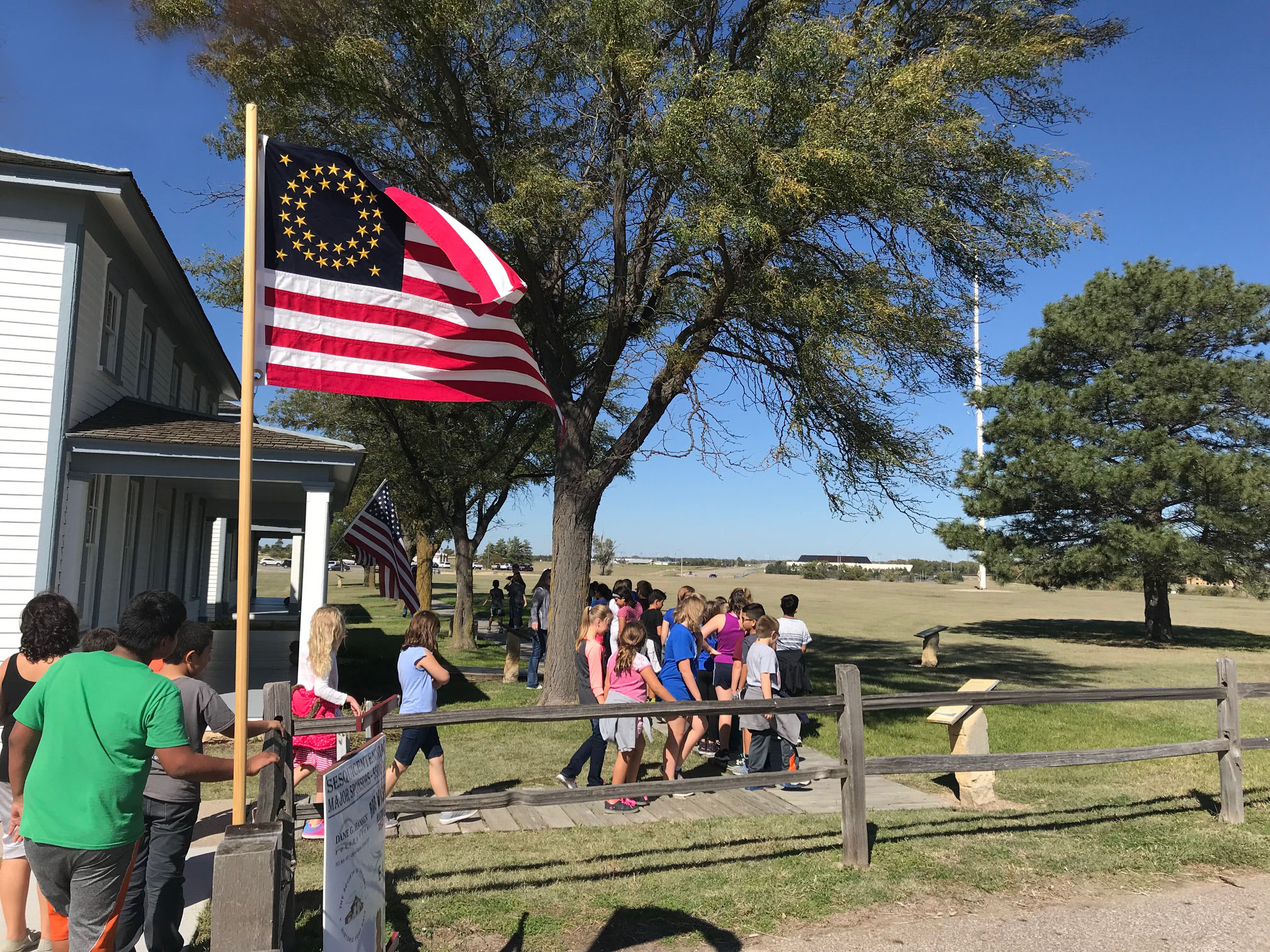
Fort Hays Site Administrator Tammy Younger welcomes Lincoln Elementary students.
Fort Hays Site Administrator Tammy Younger and volunteer Jay Burns give a presentation to Lincoln Elementary students in the Fort’s Visitor Center.
Volunteer Jay Burns tells Lincoln Elementary students the history of the Fort Hays grounds.
Lincoln Elementary students tour officers’ houses at the Fort Hays State Historic Site.
Hays CVB
While it’s common to see school buses bringing field trips to the Fort Hays State Historic Site from neighboring communities, as of late, Hays schoolchildren have been absent.
The Kiwanis Club of Hays and the Hays Convention and Visitors Bureau are working together to change that.
On Thursday, two fourth grade classes totaling 43 students from Lincoln Elementary toured Fort Hays free of charge, courtesy of a generous donation from Kiwanis. All third and fourth grade teachers in the USD 489 school district are encouraged to make arrangements for a free tour for their students by contacting the Fort.
“We can’t have our local kids – the future of Hays – growing up not knowing the history of our Fort,” said CVB Executive Director Melissa Dixon. “Our staff is always looking for ways we can support the Fort, and in this case, it was just a matter of making a few phone calls. Then the school district helped us get the word out to each school.”
Anna Schonthaler and Lisa Kruse, fourth grade teachers at Lincoln, were the first to sign their classes up for the field trip.
“I was really excited when I saw the email from our principal about it,” said Kruse.
Kiwanis members had worked with Fort Hays in the past to cover the admission of local elementary school students, and were more than willing to pick up the partnership again.
“We have visitors from all over the world, but most of our local students have never been here,” said the site’s administrator, Tammy Younger. “We are grateful for the help of our CVB and The Kiwanis Club of Hays for their support. Our local students have a wonderful opportunity to learn the history of Fort Hays and the town they call home.”
The Fort Hays State Historic Site is located at 1472 U.S. 183 Alternate and is open Wednesday–Sunday, 9 a.m.–5 p.m. For tour information, contact Tammy Younger at 785-625-6812.
Fort Hays is funded by the state through the Kansas Historical Society. The site is also supported by the Society of Friends of Historic Fort Hays.
Upcoming free events at Fort Hays include “Graveside Conversations” on Saturday, October 28 from 7-9 p.m. and “Presenting Elizabeth Polly, the Blue Light Lady” Sunday, October 29 at 2 p.m.
The Hays Convention and Visitors Bureau is located in the Hays Welcome Center at 2700 Vine Street. For information about the CVB or community events, call 785-628-8202 or go to www.visithays.com.
Theresa Hill, Community Assistance Center co-director
By BECKY KISER Hays Post
The shelves are no longer bare at the Community Assistance Center (CAC) in Hays.
“We’re still trying to find room for it all,” CAC Co-Director Theresa Hill said Wednesday. “It’s full.”
Tuesday night’s annual “Trick Or Treat So Others Can Eat” canned food drive, spearheaded by the Hays High School DECA Club, brought in much needed non-perishable commodities donated by Hays residents.
“Summer cleans us out with kids out of school,” Hill explained, “and we’re getting more people, too.”
CAC also recently increased the number of times food may be picked up, from four to six boxes in a 12-month period.
“We’ve got a lot of people we feed. We also help the elderly and DSNWK clients. We’ve got 5,500 people coming in each year.”
Hays High senior Madison Key (right) confers with HHS DECA sponsor Shaina Prough as Boy Scout Troop 101 begins to bring in their collected food donations.
The DECA students have been involved in the project since 1985, according to teacher Shaina Prough.
This was the second year for volunteer Madison Key, a Hays High senior. She was a DECA member last year but “this year I didn’t really have room in my class schedule to be in DECA but I still like to help.”
Key was keeping track of which volunteer groups were coming through the door with their food donations.
Some volunteers walked in with the food still in plastic grocery bags which they had plucked from the porches of residential donors. Cardboard boxes were also lugged in, filled to the top with heavy canned food. Male members of DECA helped unload vehicles and move the donations inside the CAC with a grocery cart and a flatbed truck. The Girl Scouts, with the troops working together, wheeled their collection inside using wagons.
Girl Scouts pull in wagons filled with food.Emma Brungardt, HHS DECA Jr., and Analyse Claude, HHS DECA Sr. , help with Trick Or Treat So Others Can Eat at the Community Assistance Center Tuesday night.
In addition to 34 Hays High students signed up to work, other volunteers came from church groups, civic groups, Fort Hays State University students and the Boy Scouts.
It’s all appreciated although “the best things are something you can use to make a lot of it,” Hill suggested.
Karyl Ferguson shelves a flat of green beans handed to her by Kay Davis in the CAC pantry.
One item the CAC doesn’t get a lot of is canned salmon.
There was an ongoing debate Tuesday night as volunteers helped restock the pantry shelves whether salmon is “too expensive” or “just doesn’t taste good.”

 KDOT
KDOT