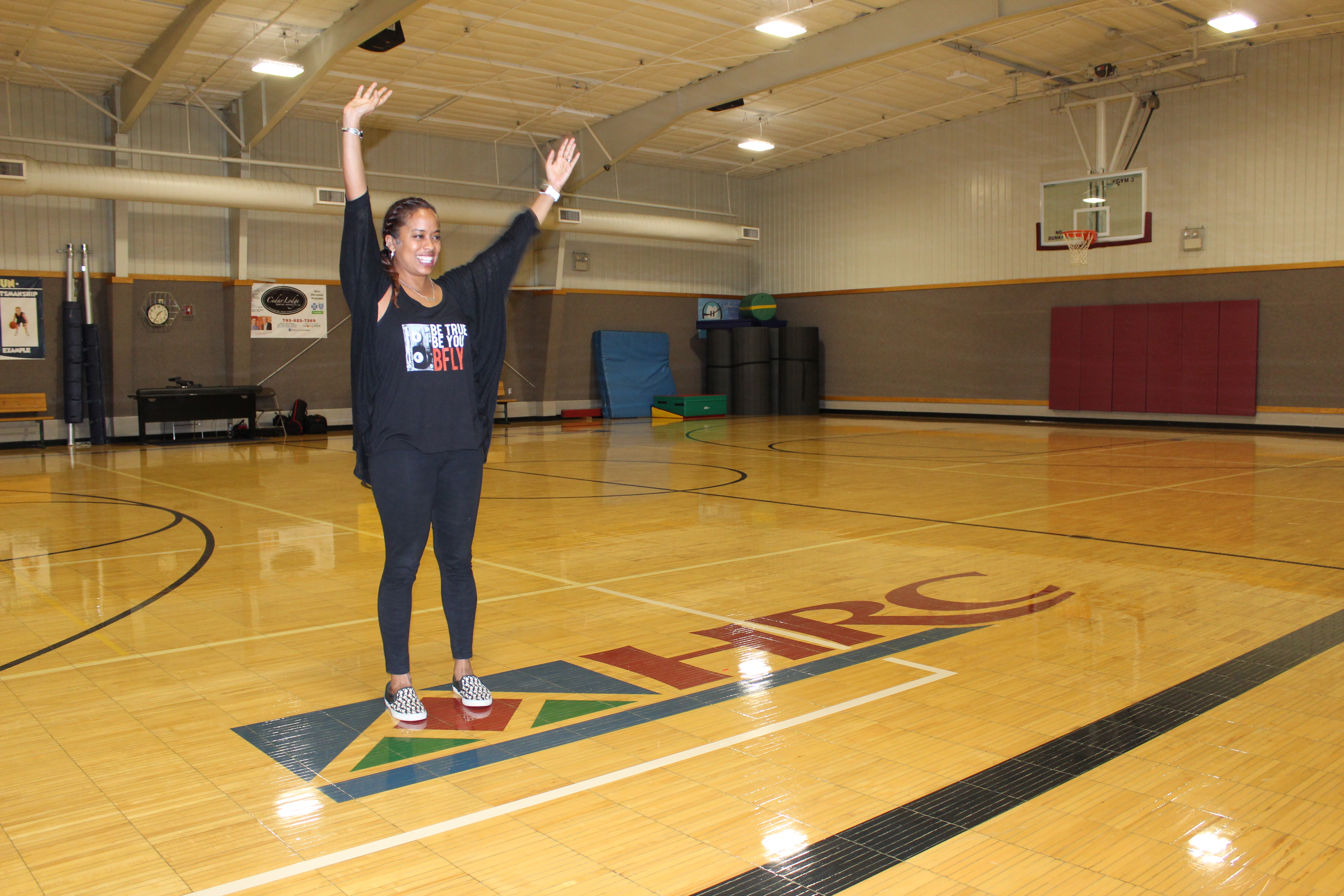
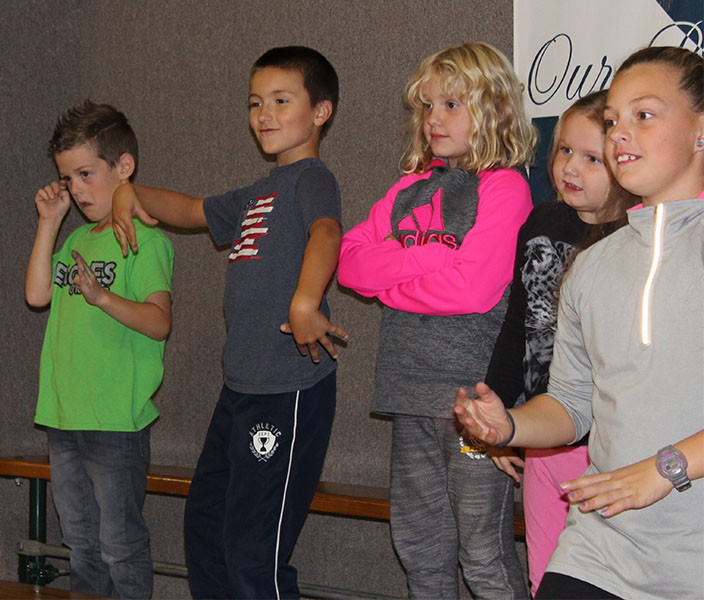
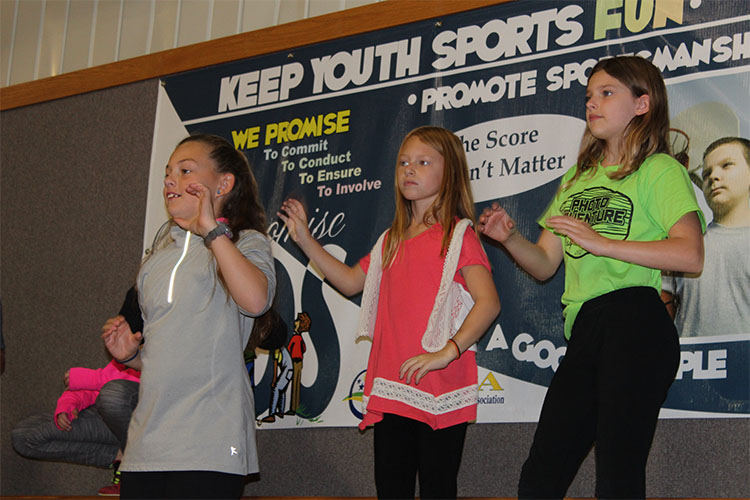
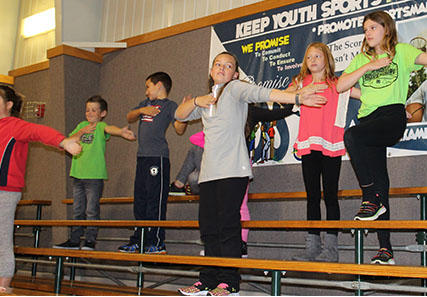
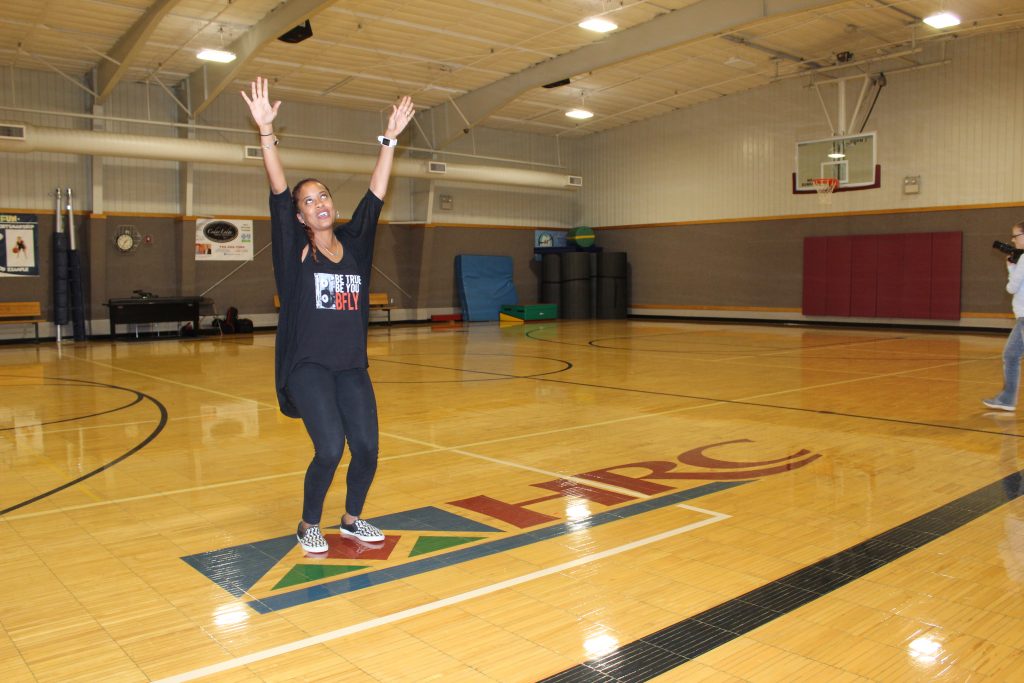
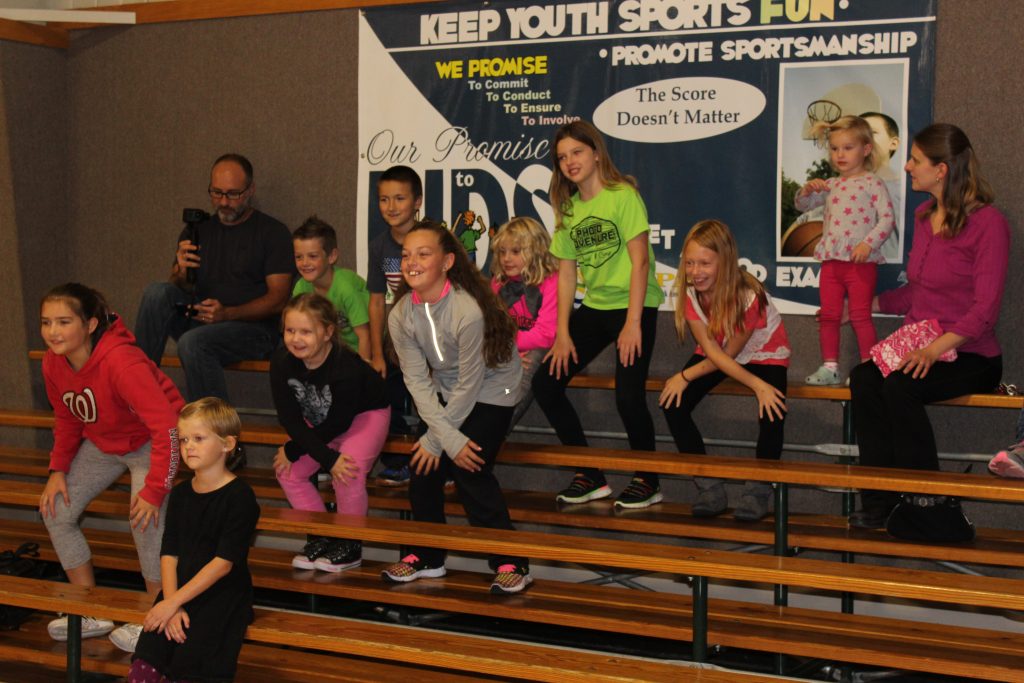
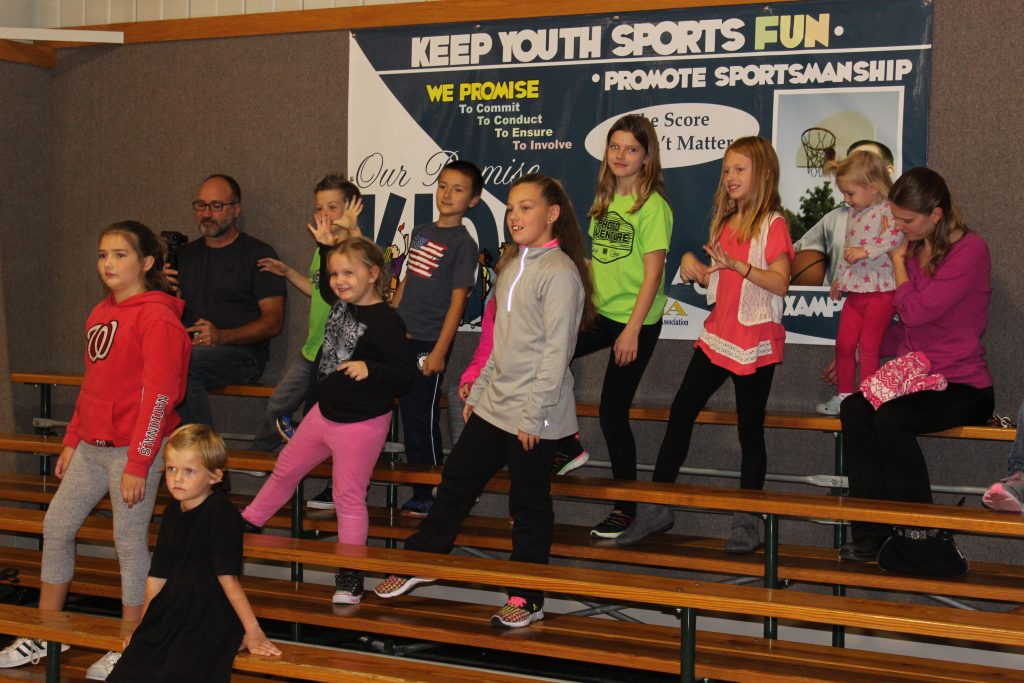
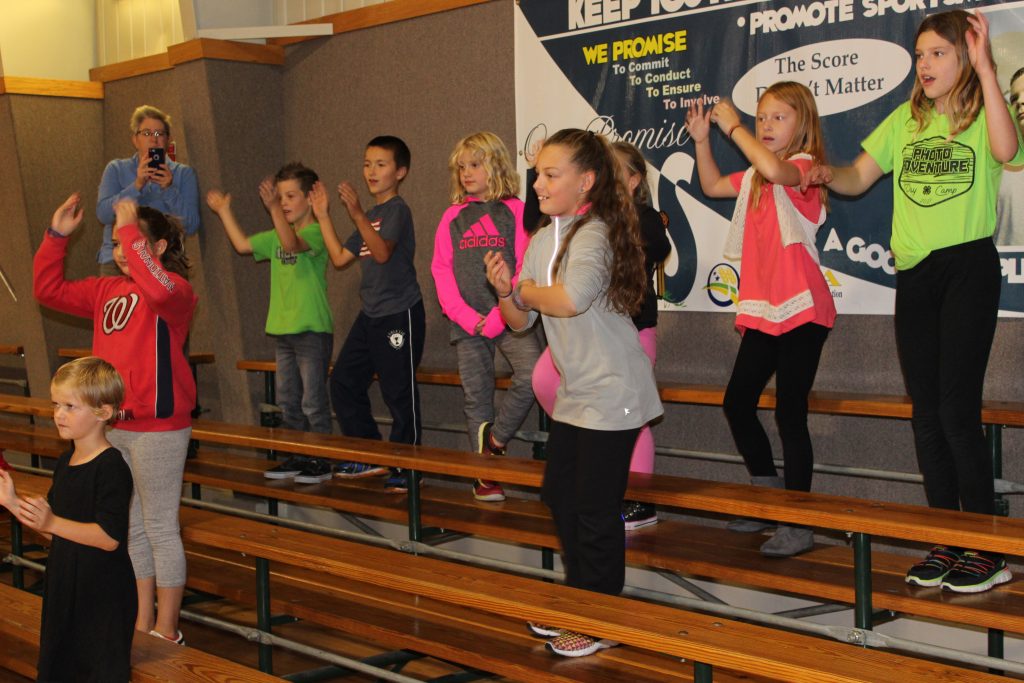
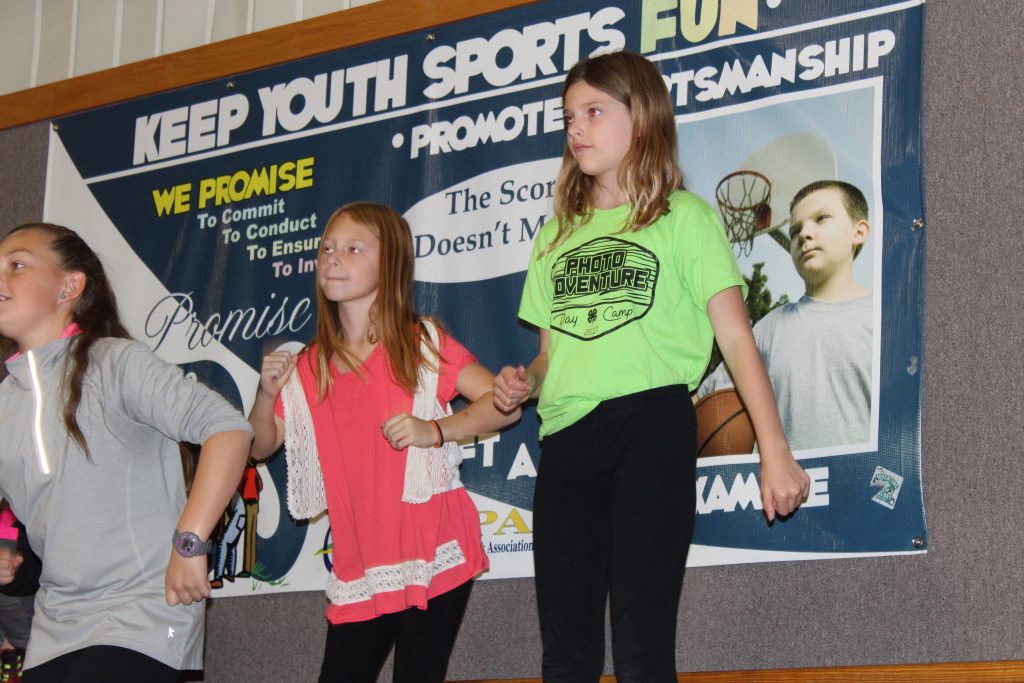
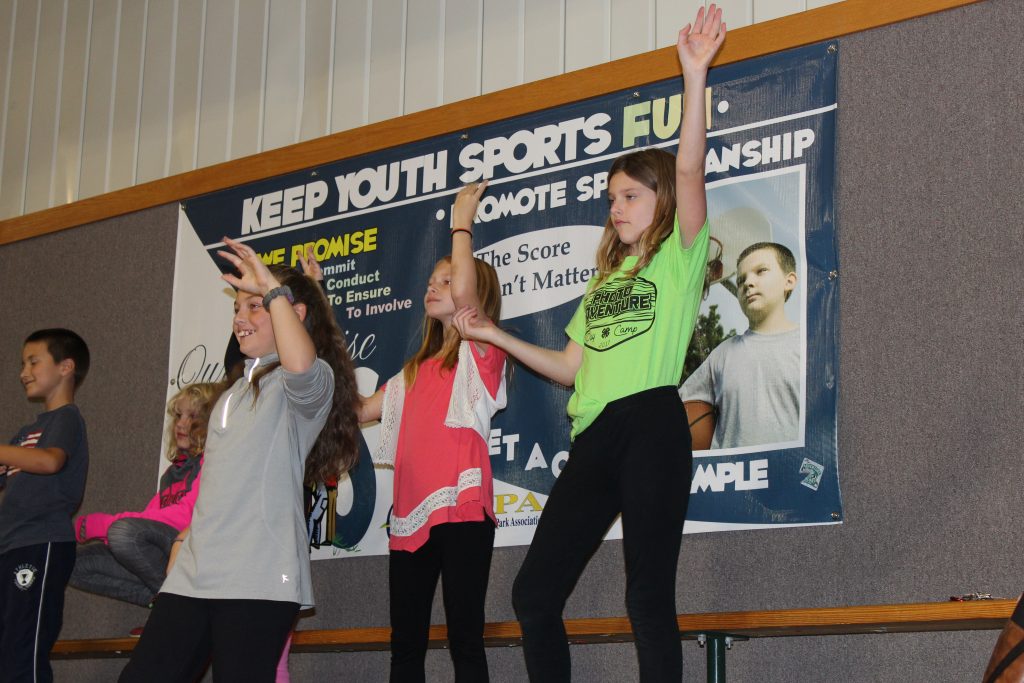
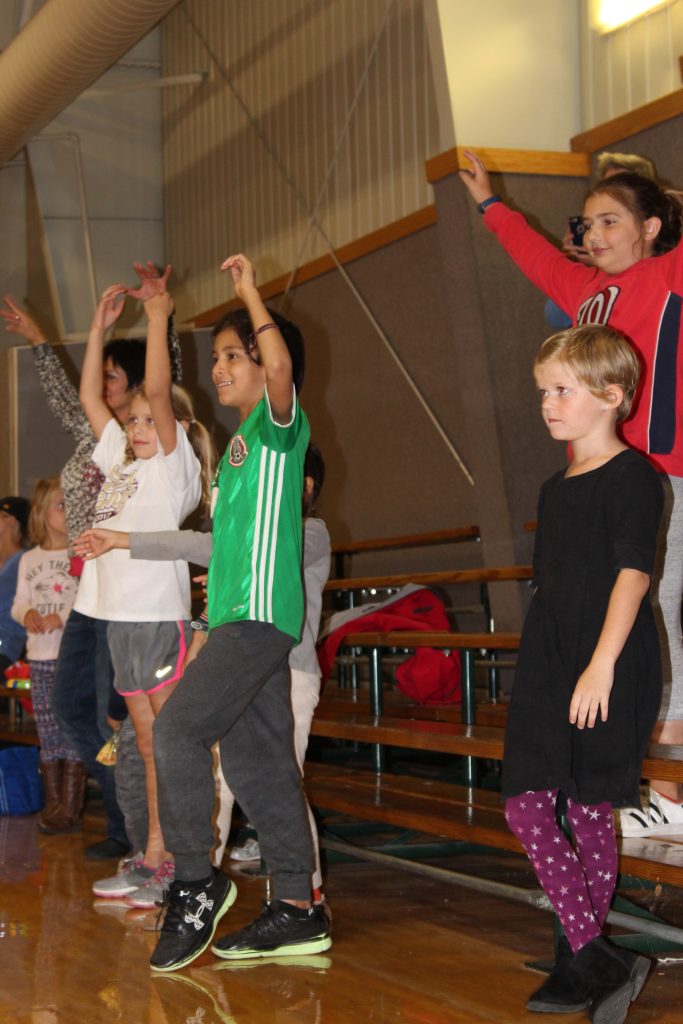
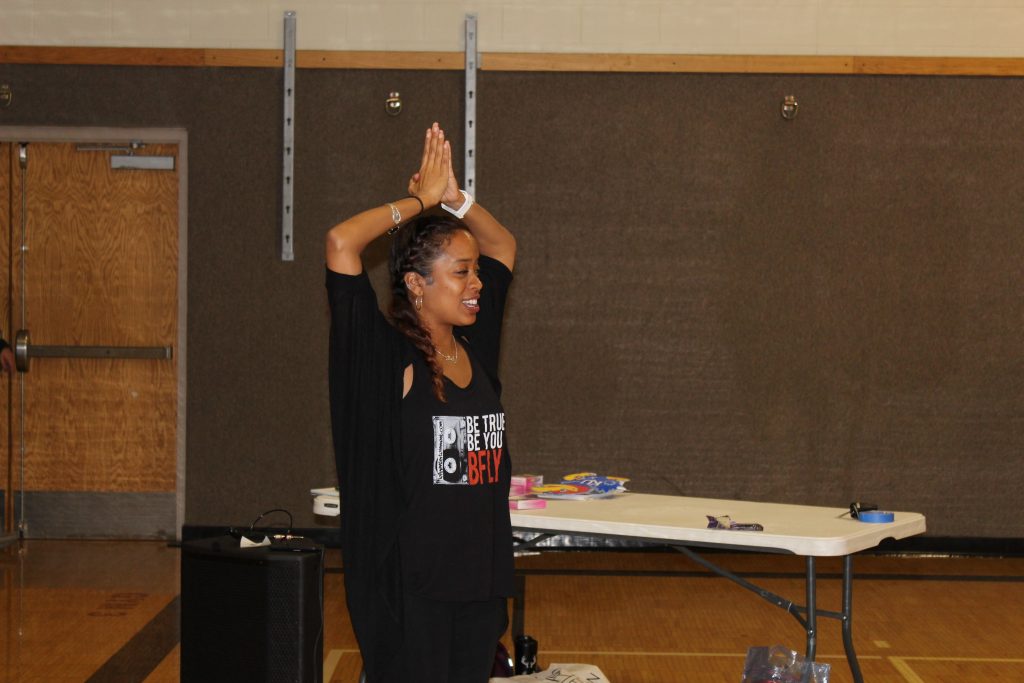
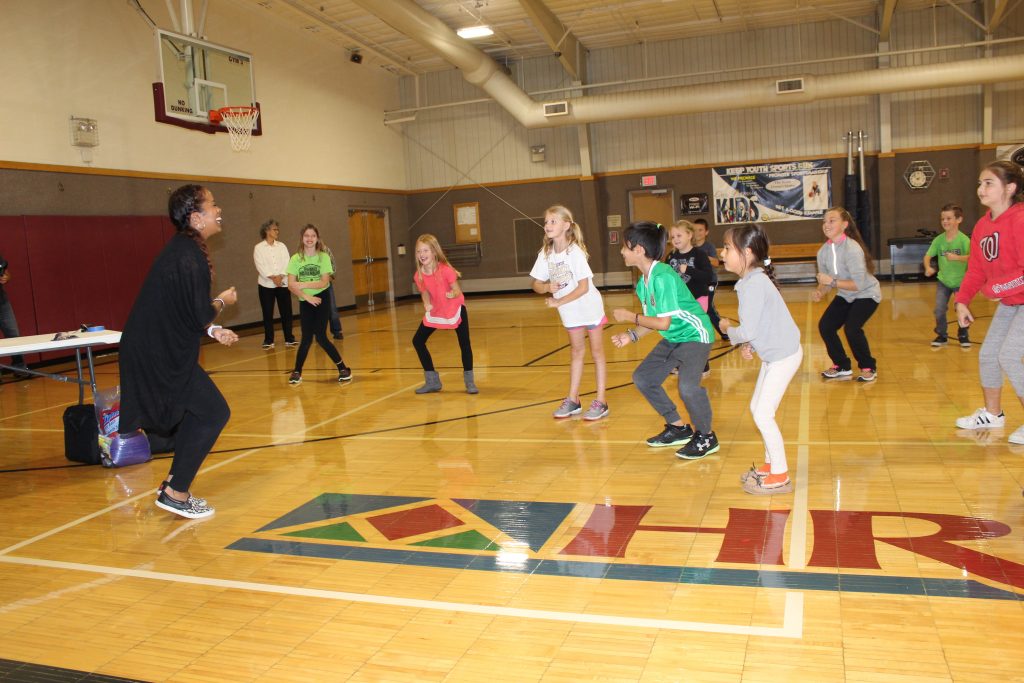
Paige Hernandez put a little salsa in some children’s day today at the Hays Recreation Center.
The elementary children practiced their letters, numbers and shapes and learned about Cuba while doing a little rap, hip-hop and salsa dance.
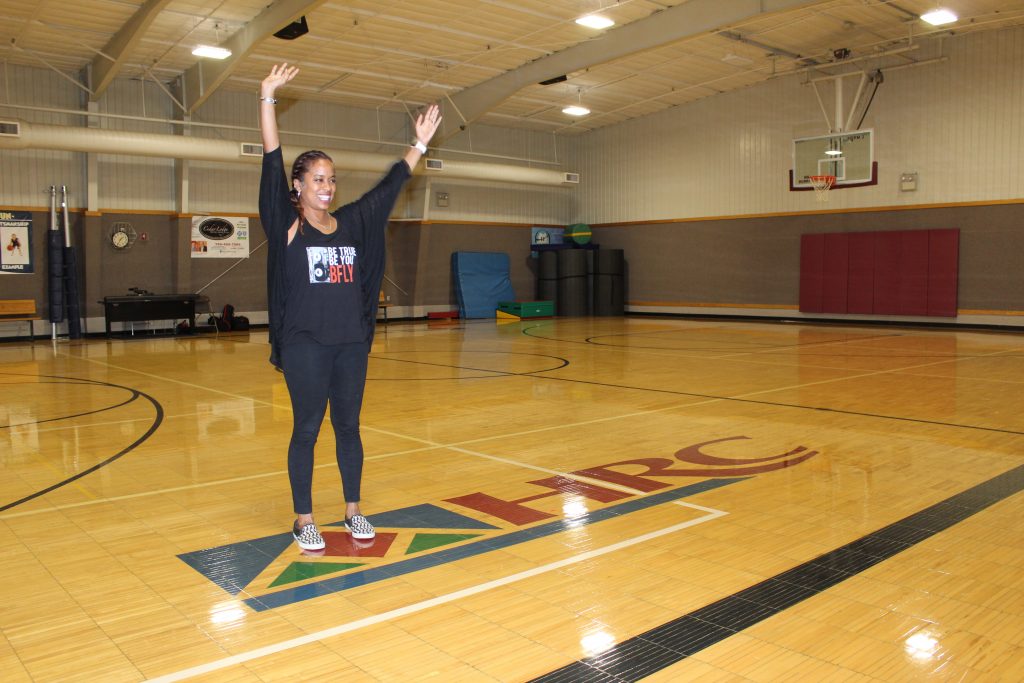
International performing artist Hernandez rapped and danced with the children as a part of the Lied Across Kansas Program. Multiple sessions included children from ages preschool to high school.
The aim of the program is to expose children in partner communities across the state to the fine arts who may not be able to make it to Lied Center of Kansas in Lawrence to see a performance, said Anthea Scouffas, Lied Center engagement coordinator.
“There are so many studies from an education perspective that fine arts education opens a whole world for children,” Scouffas said. “We want children to have as many opportunities and experiences with the arts as they can.”
Hernandez and Baye Harrell will perform “All the Way Live!” at 7 p.m. Saturday at the Lied Center. Those who can’t attend the performance in person can watch it live-streamed on the web by visiting the Lied website. Click here for the link.
The duo uses hip-hop elements to “remix” lessons on creativity, respect, understanding, cooperation, effort and self-care. “All The Way Live!,” co-commissioned by the John F. Kennedy Center for the Performing Arts, uses an audience-powered boom box to help children tune into the frequency of positive thoughts and feelings.
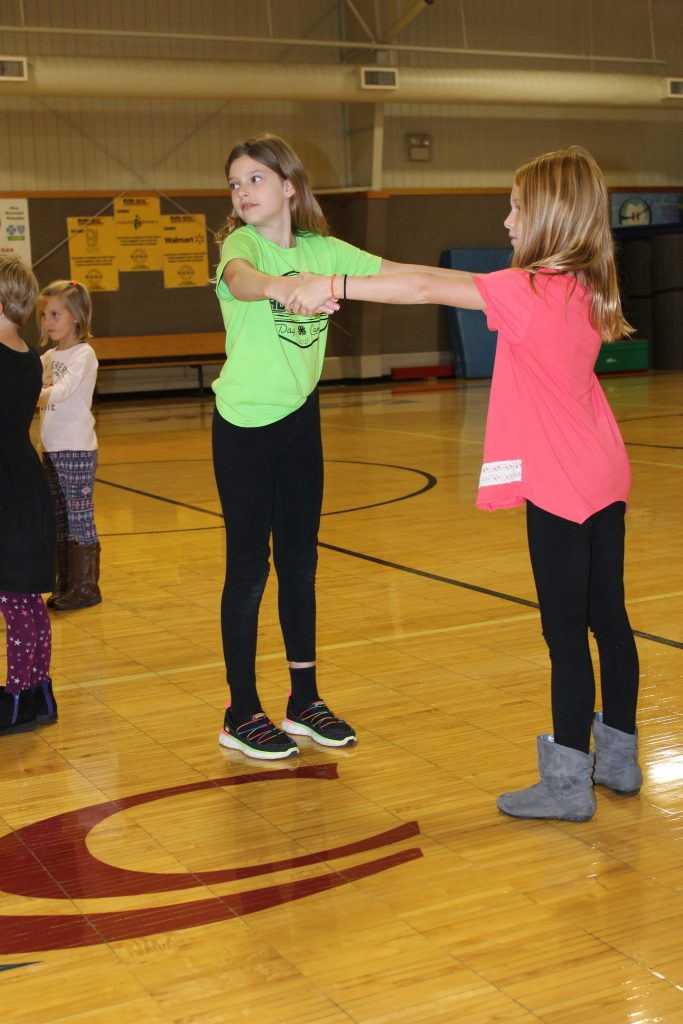
Hernandez said she hoped the Hays children today would find a new avenue to express themselves. She said her workshops help children be more physically active and encourages them to be more social, as she has the children partner for the salsa.
Hernandez, originally from Baltimore, was a debate student before she started studying theater. Her teachers suggested she try theater because of her expressiveness, which lead her to a performing arts high school and later to study theater in college.
According to her website, as a master teaching artist, Hernandez has taught throughout the country, to all ages, in all disciplines. To date, she has reached about 10,000 students, from pre-K through college, in over 100 residencies, workshops and performances.
Hernandez also performed this week in Russell, Sabetha and the Ell-Saline school district.
The Kansas Merci Box car was a gift from France to the United States following World War II.
By BECKY KISER Hays Post
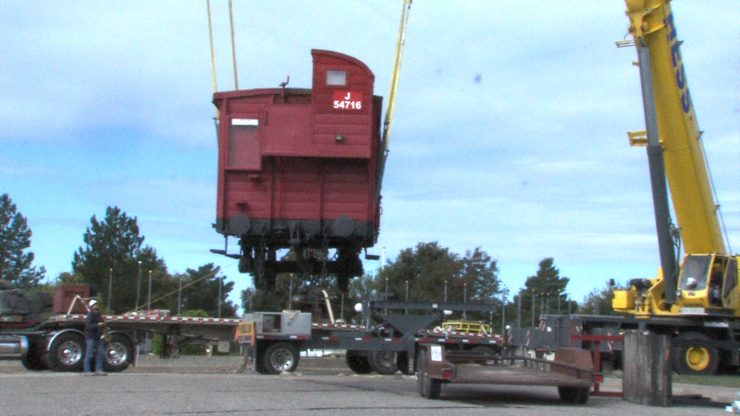
The historic Kansas Merci Boxcar, which sat in front of the former Hays American Legion building, 1305 Canterbury, was moved late Tuesday morning to its new home in the adjacent Veterans Memorial Park, owned by the city of Hays.
The new owner of the building is working on the exterior and the attached railroad car and awning had to be moved.
Larry Brin, Hess Services, guides the load from the ground with a rope as crane operator Jeremy Farber moves the 1-ton Kansas Merci Boxcar into Veterans Memorial Park Tuesday.
A two-man crew from Hess Services, Hays, utilized a tall, yellow hydraulic crane with special lift ropes and chains to hoist the 21,000 pound railroad car up into the air and slowly swing it a few hundred yards west, then gently lower it onto a short railroad track in the northeast side of the park.
The process, watched by Hays city officials and interested onlookers, took about two and a half hours, after some pre-planning.
“We figure the load, the radius, the rigging first,” explained Larry Brin, crane supervisor. He and crane operator Jeremy Farber attached the ropes and chains around and under the railroad car. Farber then climbed up into the crane cab to carefully watch hand signals from Brin on the ground to start moving the one-ton load. The crane is capable of moving 275 tons.
“Makes things like this pretty easy,” Brin said with a smile. “This was good.”
Ed Holzmeister and the Hays “High Plains Voiture” 1543 are the caretakers of the Kansas Merci Boxcar. Holzmeister takes a picture of the car before it is moved.
One of the interested bystanders was 87-year-old Ed Holzmeister, grand director of the Kansas Merci Boxcar, former commander of the Hays American Legion Post 173, former district commander, and a Navy veteran of the Korean War.
“We’re glad we’re finally getting it moved over to the Veterans Park, which I think will be an asset to Kansas and Hays,” Holzmeister said while taking numerous photos of the process. “We waited quite a while to do this, but it’s finally coming to a close today.”
The Hays boxcar is one of 49 that toured each state, the District of Columbia and Hawaii in 1949.
They were all filled with gifts of cultural significance from the people of France in thanks to Americans who sent needed supplies to France after World War II. The boxcars were able to hold 40 men or 8 horses which is the origin of the name Society of 40 Men and 8 Horses.
Kansas car from French Merci Train
According to information provided by Vance Chartier, 40 and 8 Chef de Train, the Kansas boxcar toured 120 cities, ending in Hays on Nov. 11, 1949. After it was paraded through town during the Armistice Day parade, it was placed at Fort Hays Kansas State College (now Fort Hays State University) for display and awarded to the local 40 and 8 chapter to maintain and preserve for the state. In 1975, it was moved to the American Legion where it was rebuilt and turned into a museum.
Michael Windholz, Hays park technician, welds the boxcar wheels to the railroad tracks.
Now literally welded onto the tracks in its new home by Michael Windholz, Hays park technician, a canopy will be built over the boxcar museum to protect it from the weather. The railroad tracks, ties, rocks and other material for the site were donated by Union Pacific railroad, according to Hays Parks Superintendent Chris Smith.
Fencing will be placed around the area with a locked gate which will be opened for tour groups.
People on those tours often donate items for display inside the boxcar.
“We get a lot of things from tourists who have stuff at home they didn’t know what to do with,” Holzmeister said. “You can donate to us. We’d like to have old World War I and World War II equipment, helmets, canteens, anything from a 20th century war that we can display inside the boxcar,” said Chartier. The two men and other volunteers regularly update the exhibit with different items and maintain the boxcar. “I’m proud to be associated with this,” Chartier added as Holzmeister quickly agreed.
Settling in at Veterans Memorial Park, 13th and Canterbury
Total cost of the relocation project is estimated at $35,000. So far, $14,000 has been raised by the non-profit local chapter of “40 and 8,” according to Chartier, who was also on hand to watch today’s move.
Donation boxes are located at The Press restaurant in the Hadley Center, Vanderbilt’s, Heartland Lumber, JD’s Chicken and Dairy Queen. Big Creek Crossing is hosting a special storefront display about the boxcar’s history, and donations can also be made there.
The city of Hays has offered to match a portion of donations made to the project. A new roof structure and permanent fence will be installed at a later date when additional funding is available.
“This belongs to our veterans,” Holzmeister said. “It’s so easy to forget this history. We just need to remember it and keep it alive for another generation.”
A free showing of the 1976 documentary on Hays, “A Quiet America,” will be part of the 50th anniversary celebration of the Hays Arts Council on Saturday night.
By CRISTINA JANNEY Hays Post
The Hays Arts Council will celebrate its 50th anniversary Saturday with a free showing of the documentary on Hays, “A Quiet America,” at Beach-Schmidt Performing Arts Center.
The film was produced in April 1976 in Hays by French-language Swiss public television.
Hays was chosen to represent the rural Midwest when the United States was celebrating its bicentennial. Prior to the showing of “A Quiet America,” the HAC will show a short statement by the journalist Marc Schindler, who worked on the first film, and a documentary he produced in 2015 titled “Back to Hays.”
Doors to the theater will open to the public at 6:30 p.m., and there will be on display historical photos of Hays and the area, including copies of an article with photos from a story on Hays in the April 1952 edition of National Geographic magazine.
The program will begin at 7 p.m. with “Back to Hays,” followed by an intermission and the showing of “A Quiet America,” which will start at 8 p.m. and run about one hour and 23 minutes.
“Back to Hays” is in French and will have subtitles. The HAC will be showing the international version of “A Quiet America,” which will be all in English with the original voices of the subjects that were interviewed.
For several weeks, Jean-Jacques Lagrange, director of “A Quiet America,” met with civic leaders, farmers, businessmen, law enforcement and artists and interviewed them about American life.
Hays artist Pete Felten sculpts a pioneer family in Victoria in 1976 for the centennial celebration of the Volga Germans coming to this area.
Hays artist Pete Felten was interviewed for both “A Quiet America” and “Back to Hays.” In 1976, Felten was carving the pioneer family that stands in Victoria, as 1976 was the 100th anniversary of the Volga-Germans settling in the area.
Harold Kraus was also interviewed in both documentaries and talked about the agriculture economy of the region.
Other prominent Hays residents interviewed at the time included Frank Flax, who owned the International Harvester dealership; Mark Evans, the jailer; Mike Cooper of the Party Line; and Errol Wuertz of KAYS Television.
Brenda Meder, executive director of the Hays Arts Council, said the filmmakers tried to show a full scope of life, from business on Main Street to weekend cruising on Main Street, a wedding and even church on Sunday.
Children sing during church in 1976 in the documentary “A Quiet America.”
“It was who are the people who live here and work here and have a history here and their ancestors who settled here and are running the farms and the businesses, so it was the community and its heritage and history at this point in time,” she said.
The crew went to a Rotary Club meeting, a women’s auxiliary group and a Methodist quilting group and to the St. Anthony Hospital.
“What they did is go into some of these different churches and showed these individuals here. They were working and talking about what their lives were like and then they were in the beautiful churches,” Meder said.
Immaculate Heart of Mary, First United Methodist, First Presbyterian Church, and Messiah Lutheran Church were all featured.
“Scotty” Philip being interviewed in Philip hardware for “A Quiet America” in 1976.
“There are really some fascinating things on there,” Meder said. “It is really a time capsule treasure. You can go to the Historical Society and see things in photographs, but it is different seeing it on film, seeing the cars actually drive and hearing people talking and going inside Philip Hardware and seeing Scotty Philip who had been there for years and years and years and been a former mayor of Hays and his family had been early Scottish settlers of Hays.”
The soundtrack from “A Quiet America” might stir nostalgia in some as well with songs that came from the music of the time, including Olivia Newton John and Judy Collins.
Meder said she thought the historical documentary will have something for the young and old, and lifelong residents as well as new arrivals.
Cruising Main Street Hays in 1976.
“I think for somebody that is younger just, ‘That is what downtown Hays looked like! Oh, I remember my folks talk about dragging Main. That’s what it looked like.’ It is still very clearly Hays,” Meder said. “It’s not like I don’t even recognize that place. It’s like the home you grew up in and someone’s pulling out pictures of what it looked like before you were born. You are still intrigued by that.”
See more on the documentary and the HAC event on Facebook.
Another new building was dedicated Saturday morning on the campus of Fort Hays State University.
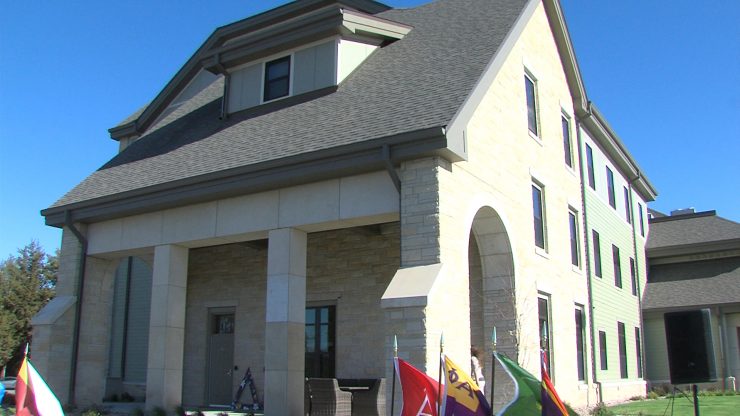
Tiger Village is the new home to two sororities, Delta Zeta and Sigma Sigma Sigma, the Sigma Phi Epsilon fraternity and the Second Year Experience Learning Community for sophomore students.
During Saturday’s dedication as part of Fort Hays State homecoming, an announcement was made by Dr. Joey Linn, vice-president for Student Affairs on half of the Sigma Phi Epsilon national headquarters. Reading from a letter, Linn told the crowd the FHSU fraternity has received the national Cornerstone Award from Sigma Phi Epsilon.
“The award is given to both the alumni and the undergraduate chapter together. With the leadership of the university, they found a creative solution to their local housing needs,” Linn read.
“During the 2011 Sig Ep conclave in Phoenix, Arizona, several alumni discussed the situation and realized that the model learning community being developed by the university was closely aligned with Sig Ep’s ‘Balanced Man’ program and residential learning community concept. The alumni were seeking to build a chapter house that would be a substance-free home with a dedicated study space that administrators, alumni, parents and students could all be proud of.
The audience at the dedication of FHSU Tiger Village included local sorority and fraternity members, Greek alumni, and regional and national officers.
“The brothers, many of who happened to be faculty, staff and administrators at this great university, approached the FHSU officials, donors and alumni who also saw the parallels between their goals and the fraternity’s. And so the groups decided to partner to develop a new facility.
Steve Shields, Manhattan, co-chair of FHSU Journey fundraising campaign and member of Sigma Phi Epsilon fraternity.
“A few of the Sig Eps at Fort Hays State that were instrumental in turning this dream into reality were then-university-president Ed Hammond, Foundation President Jason Williby, former director of the Center for Student Involvement Vince Bowhay, and Steve Shields, co-chair of the Journey Campaign.
“Sig Ep is proud to be a valued partner in higher education and is honored to be partnering with Fort Hays State University. It is important to Sig Eps of all ages that new housing projects be substance free and conducive to upholding our core values of virtue, diligence and brotherly love. This facility reinforces that we are not ‘Animal House’, but through the ‘Balanced Man’ program we are building values-driven young men into community leaders,” Linn concluded.
Hammond, Williby and Shields were in the audience for the dedication.
Dane Murzy, Denver
Sophomore Dane Murzy, Denver, is majoring in organizational leadership and is a member of the Sigma Phi Epsilon. Murzy spoke to the crowd, saying the new house has made him and his fraternity brothers better.
“Not only has it made us grateful for the generous donations and work that helped make this building a reality, it has helped us live our virtues to a greater extent and therefore become better ‘Balanced Men.’ My brothers in my chapter have shown this by helping with services projects with the sororities in our building, and by being gentlemen when involved in campus activities, among other things.”
Murzy explained some brothers in the house are “tasked with room checks, making sure we are as tidy as we can be,” which drew a gentle laugh from the audience. “And we make sure to remind each other to clean and put away the dishes after each use.” The crowd laughed again. “That last example may need some work,” Murzy admitted with a smile, “but we have constantly been improving.” The Sig Eps also have study nights in the house.
Raenee Patterson, Norton
Other student speakers were Raenee Patterson, a Norton sophomore majoring in organizational leadership, who is a member of Delta Zeta; Reilly Frank, Elbert, Colorado, a junior majoring in social work and political science and a member of Sigma Sigma Sigma; and Liberal sophomore Preston Pittman, a criminal justice major, and member of the Second Year Experience Learning Community.
The flags of each Greek community were flying behind the speaker podium. “Why don’t we have a flag?” Pittman joked as he began his speech.
Each of the four communities has a private entrance, lounge, kitchen, beds for 24 residents, private bathrooms and storage space. All residents share meeting rooms and laundry facilities.
Preston Pittman, Liberal
Tiger Village is located on the south end of Lewis Field Stadium.
TOPEKA – Through the work done in a dental lab at Topeka Correctional Facility (TCF) in conjunction with Kansas Safety Net Clinics, medically underserved Kansans are having their dental prosthesis needs met at a price they can afford.
Kansans without insurance or the financial means to meet their need for dentures are finding that through medical “safety net clinics” around the state, they have access to high quality products that Kansas Correctional Industries (KCI) is producing in the TCF Dental Lab at the women’s facility in Topeka at a reduced cost.
KCI, a subsidiary of the Kansas Department of Corrections (KDOC), teaches offenders new skills, and allows them to earn wages in preparation for life outside of a correctional facility. Among the programs overseen by KCI are some service enterprises such as the Wild Mustang Project, Inmate Canteen, Print Shop and the dental lab.
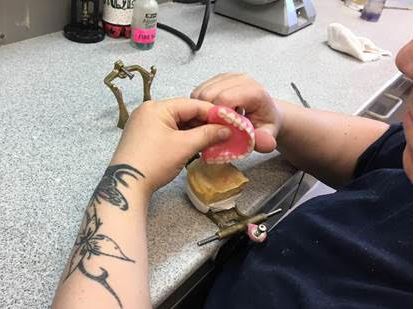
The KCI dental lab at TCF produces all the dentures and partials needed by offenders in KDOC facilities – several hundred per year. Additionally, the lab turns out about 150 dentures for needy Kansans as part of the mission of the Kansas Association for the Medically Underserved (KAMU).
Dr. Tomas Co spoke in Salina Thursday.
Dr. Tomas Co, the supervisor/instructor of the KCI/TCF Dental Lab since 2012, spoke Thursday at the Oral Health and the Safety Net dental directors training in Salina sponsored by KAMU. Dr. Co told the dental directors, clinic managers, executive directors, and dental and clinical staff from Kansas and Nebraska gathered for the training about the impact the lab is having on the medically underserved population in Kansas.
“If you are compassionate and you care, you can make a difference.” Dr. Co said. “In the work you are doing to help those in need in your clinics, you can know you are also making a difference in the lives of the women in the dental lab at TCF. You are contributing to these women having a sense of worth.”
People who visit one of the many Safety Net Clinics around Kansas and are identified as needing a dental prosthesis will have x-rays taken and impressions made of their mouths. Then the clinics will send the impression to the KCI/TCF Dental Lab which then will make a wax version of the denture. They will then send it back to the clinic for the patient to try in and to see if any adjustments need to be made. The wax set up is then sent back to the dental lab, where the final product is made and shipped back to the clinic.
The impact of these dentures on the recipients is often expressed to the women in the lab via thank you cards and photos.
“One of them even cried with joy,” one dentist wrote to the women in the lab. “Thought you’d like to know what a difference your work is making!”
Melody Martin, Director of Development and Training for KAMU, said she wanted safety net providers in Kansas and Nebraska to have a chance to meet Dr. Co and to hear from him about the service provided by the KCI/TCF dental lab.
“For a lot of the people who are treated in the clinics, they haven’t had access to oral health services for years,” Martin said. “For many of them, having access to high quality, affordable dentures can be life changing.”
Women at TCF who qualify for the dental lab program begin with classroom work and hands-on training before they begin working on products for actual use. The program, which takes about five years to complete, equips the participants to become competent dental technicians – a trade in high demand currently in Kansas and across the U.S.
“The lab is giving me the skills I need so that after my release, I can take apply for jobs at dental labs,” said one participant in the program. “They will help me make contacts and get placements to transition successfully. I will be able to develop a career and have a productive life.
“We do a good job and are needed by the people we are helping,” she added. “It makes me feel so much better about myself that I’m providing something to the community that I’ve taken so much from before.”
The annual fall alley cleanup in Hays starts Oct. 23.
By BECKY KISER Hays Post
“This is a very good time to clean up your yard, the basement, clean out your garage or your attic,” according to Marvin Honas, solid waste superintendent for the city of Hays.
Hays refuse customers may begin setting out their unwanted items, those not picked up in normal trash collection, for pick up during the Oct. 23 annual alley cleanup.
“It’s a free service for Hays customers and it’s been a very, very successful program,” Honas said.
The cleanup will consist of one sweep through the city starting with residential curbside customers Oct. 23. Alley services will after curbside collections are completed. “The number of employees committed to the task may vary from day to day, so we are unable to predict when crews will be by a residence,” said Honas. “City crews have a time limit of 20 minutes per residence,” he added.
Most years, the citywide clean up is usually finished in six to eight days, according to Honas.
Waste should be placed in four separate piles:
1.Tree limbs and brush (no longer than 12 feet in length or 6 inches in diameter); all yard and garden waste must be bagged.
2.Construction and demolition debris, i.e., lumber, drywall, bricks, sinks and bathtubs, wires, fencing, etc. (Please pull or bend over nails and place small quantities of concrete, bricks, and plaster in containers.)
3.White Goods/Metals, i.e., guttering, siding, washing machines, dryers, refrigerators, metal swing sets, etc.
4.Municipal Waste (all other items), i.e., furniture, carpet, TVs, computers, Styrofoam, etc.
The city will not pick up tires, batteries or household hazardous waste. Tires should be disposed of at the Ellis County Transfer Station, 1515 W. 55th. There is a disposal fee. Batteries and household hazardous waste items should be taken to the Ellis County Hazardous Waste Facility, 1515 W. 55th, where there is no disposal charge. Call 785-628-9460 or 785-628-9449 for detailed information.
Free disposal of large tree limbs is available for Hays residents at the Ellis County Transfer Station Monday through Saturday, 8 a.m. to 6 p.m.
Honas recommends tagging or removing ‘treasured items’ from residential collection areas to avoid wrongful pick up.
For more information, call the Hays Public Works Dept. at 785-628-7350.
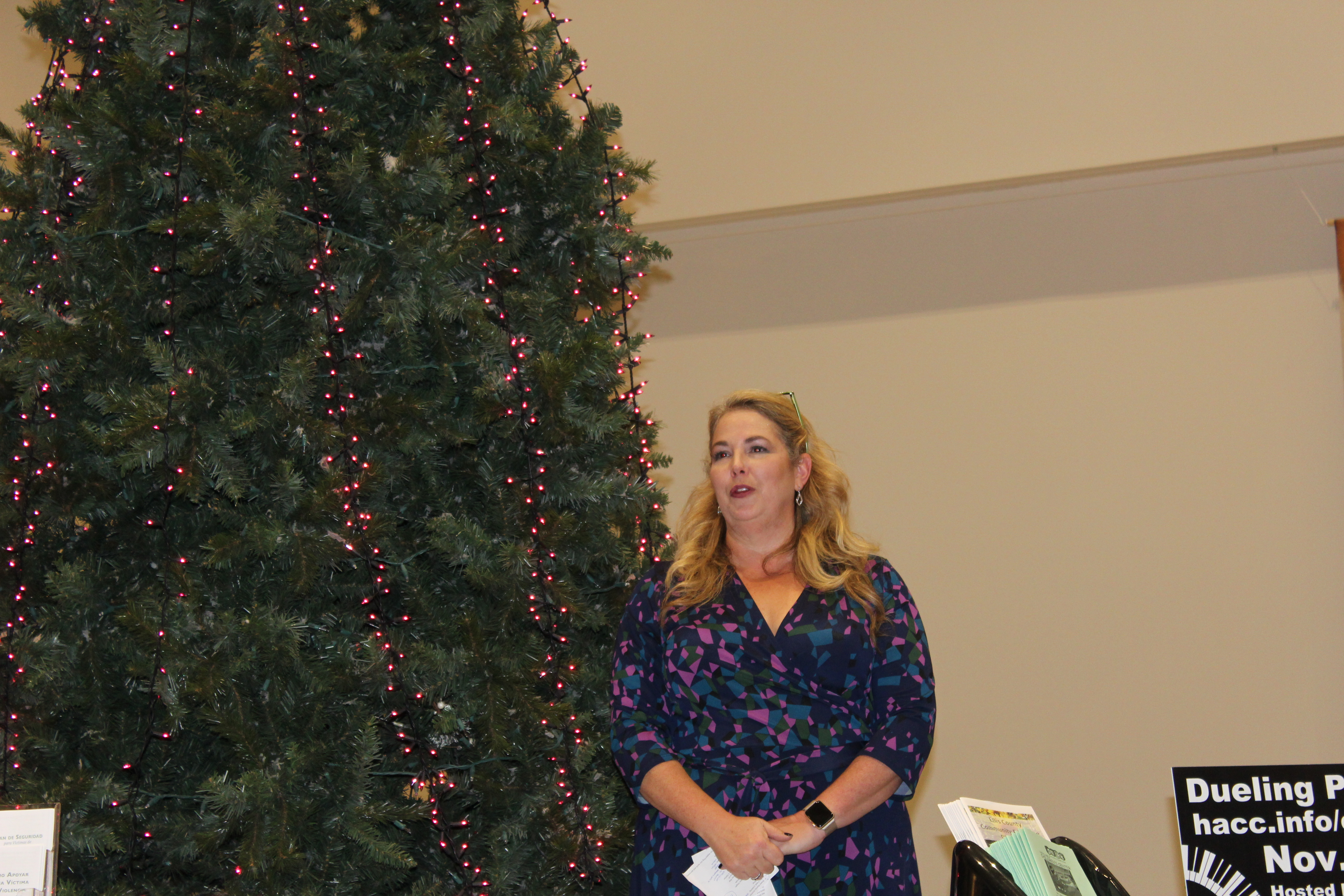
Options Domestic and Sexual Violence Services remembered victims of domestic violence Thursday night with its annual Purple Light Night.
The event happened at a time when the demand for domestic violence services has dramatically increased in the Hays community.
October is Domestic Violence Awareness Month, and Options has encouraged the community to place purple lights in outside light fixtures in honor of those who are suffering from domestic violence, those who escaped and those who have died at the hands of their abusers.
Options covers an 18-county area, but Jennifer Hecker, Options executive director, said the majority of Options’ calls for service come from Ellis County, in a part because of the population density.
“We started doing the Purple Light Night event because we wanted to bring attention to the silent scourge of our community, and that is domestic violence,” Hecker said. “Eighty-five percent of domestic violence incidents happen behind closed doors. No one knows that it is going on in our community.
“The idea behind Purple Light Night is to bring hope to those people who are still living in abusive situations, to remember the people who have lost their lives to domestic violence, and to support those who are survivors and have come out on the other side healthy and whole and happy.”
There is a domestic violence incident every 23 minutes in Kansas, there is an arrest every 45 minutes, but there is also a murder due to domestic violence every 12 days.
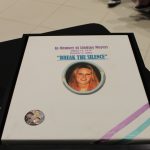
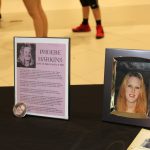
A banner stands as a silent witness to domestic violence. This banner honors Lindsay, 25, of Ellis County who was beaten and suffocated to death in her home by her boyfriend.
Surrounding tables with face painting, games for children and tables for people to chat over chili and cinnamon roles were silent witnesses.
Banners displayed the names of people who had lost their lives to domestic violence in Northwest Kansas.
The Options safehouse provided shelter to 80 men, women and children in the last year. That is 44 percent higher than the previous year. Options provided 3,896 domestic violence services in the last year, which was up 151 percent, and its crisis hotline received 389 calls, which was up 267 percent.
Children in homes in which domestic violence is occurring are also greatly affected, Hecker said. Nine out of 10 children in these homes are direct witnesses to the domestic violence. These children can suffer with regression, anxiety, attachment issues, depression and self blame.
Witnessing domestic violence can make children more likely to experience domestic violence as teens and adults and can impair their ability to partner and parent.
Options newest program, called Building Strong Families, seeks to combat the cycle of domestic violence and build resiliency in children who experience domestic violence.
So far this year, Options has provided 413 services to children affected by domestic violence, which is up 160 percent over the last two years.
Hecker encouraged members of the community to ask and act when they suspect someone is being affected by domestic violence.
“Another thing you can do is when someone discloses to you, believe them,” she said. “Resist the urge to minimize the abuse from the abuser even when it is someone who you know. Hold the perpetrator accountable and never ever blame the victim by asking them what they did to cause the abuse.
Ask instead why the abuser is abusing. That is the question we should be asking. Not why hasn’t she left, but why he doing that in the first place.”
Hays Police Chief Don Scheibler said as a community, we can stop the cycle of violence.
Ellis County Ed Harbin said Options employees were angels to many people in the community.
Mayor Shaun Musil was on hand and thanked all the Options employees and volunteers for what they do to combat domestic violence in the community. Fort Hays State University Police Chief Ed Howell also addressed the crowd.
Looking back to the site of the former FHSU Davis Hall
By BECKY KISER Hays Post
Friday morning’s dedication of the new Fort Hays State University Center for Applied Technology started with a nod to the old.
Master of Ceremonies Jon Armstrong, FHSU Foundation director of development, asked the audience to “shade your eyes and look to the east across the street” at the former Davis Hall. The building is being razed after the programs and classes held there for many years moved into the new CAT building just in time for the start of the fall semester.
“I want you all to remember that the past sets us up and allows us to embrace the future,” said Armstrong. “One of the most important times in Tiger history is today.”
Kim Stewart, FHSU Dept. of Applied Technology chair
“Welcome to the journey,” said Kim Stewart, chairman of the Department of Applied Technology as he began his remarks. “For me, this has been a personal journey.”
Stewart recalled his conversation years ago with Dr. Fred Ruda, then chairman of the Technology Studies Department in Davis Hall.
“I walked in, sat down and asked Fred if he thought Applied Technology would ever have a new building. He looked at me and said, ‘it’s up to us.’
“He went on to tell me that if we update our program of study, if we add new curriculum, if we create new partnerships, and if we recruit more students, we will have a Technology Center. Little did I know that day just what and who was included in ‘it’s up to us.'”
“Since that first conversation that I had with Fred Ruda, our faculty have added a STEM curriculum, they’ve updated course work, they’ve added programs of study, we’ve added a second-year welding program and we’ve increased the student population,” Stewart said. “In 2012, we had 105 students. Today we have 181 students. I think that’s pretty awesome and I think you’re going to be impressed with what’s inside this building, our home.”
The department is nearing an outside accreditation process, according to Stewart.
“We had a site visit from the Association of Technology Management and Applied Engineering. That site visit went awesome. We have a thumbs-up from the site visit. Our faculty are headed to the national conference where we’ll get to sit in front of the national board. We are pretty positive about the outlook for having outside accreditation for our industrial programs.”
Stewart listed and thanked the many groups, businesses, and individuals “who are among our partnerships and supporters.”
“Jeff and Marla Copper have asked to be the lead sponsor on naming the atrium,” Stewart announced. After a long pause, he resumed, with a slight catch in his voice. “We’re going to name the atrium ‘The Fred Ruda Gateway to Technology Education.'” Ruda was chairman of the Industrial Technology department at Fort Hays State University for 33 years.
Karrie Simpson Voth, FHSU Dept. of Art & Design chair, stands in the entrance to the sculpture program.
In the absence of sculpture professor Toby Flores who was out on an iron pour with students, Karrie Simpson Voth, chair of the Department of Art and Design, talked about the impact of the new 12,000 sq. ft. sculpture facility.
“Of all the art and design media, sculpture is the broadest in terms of scale, materials and processes,” Voth explained. “The program has a long history and is a rich learning environment where students find their own voice and are now able to do so without limitations of space and resources thanks to this amazing partnership.”
FHSU student Jose Vital, Garden City
Jose Vital, a student from Garden City, told the crowd “Davis Hall was my home. Now this is my brand new home, our home.”
“The Kansas Board Regents have focused out higher education system on achieving results that benefit our students, business and industry, and the future of our state,” said interim FHSU President Dr. Andy Tompkins. “This Center for Applied Technology has been designed to meet that vision.”
The atrium gateway will be named after Dr. Fred Ruda, chair of the Technologies Studies Dept., who was killed in a 2012 traffic accident.
The Center for Applied Technology is a 58,000-square-foot, two-story facility housing the Department of Applied Technology and the Department of Art and Design’s Sculpture program.
Construction of the $16.5 million building began in the spring of 2016 and the project was complete in August 2017.
The exterior incorporates the traditional limestone of other campus buildings along with classic industrial elements. Inside there are labs for CAD, instruction and graphics, STEM, woodworking, metalworking, plastics, power and energy, robotics and construction management; studios for sculpture and metal foundry; seminar rooms; and departmental and faculty offices. A large atrium area and a cafe nook offer an inviting space for students to gather.
As part of FHSU homecoming activities, Applied Technology students and others will offer guided tours of the CAT building Saturday afternoon from 2:30 p.m. to 4:30 p.m.
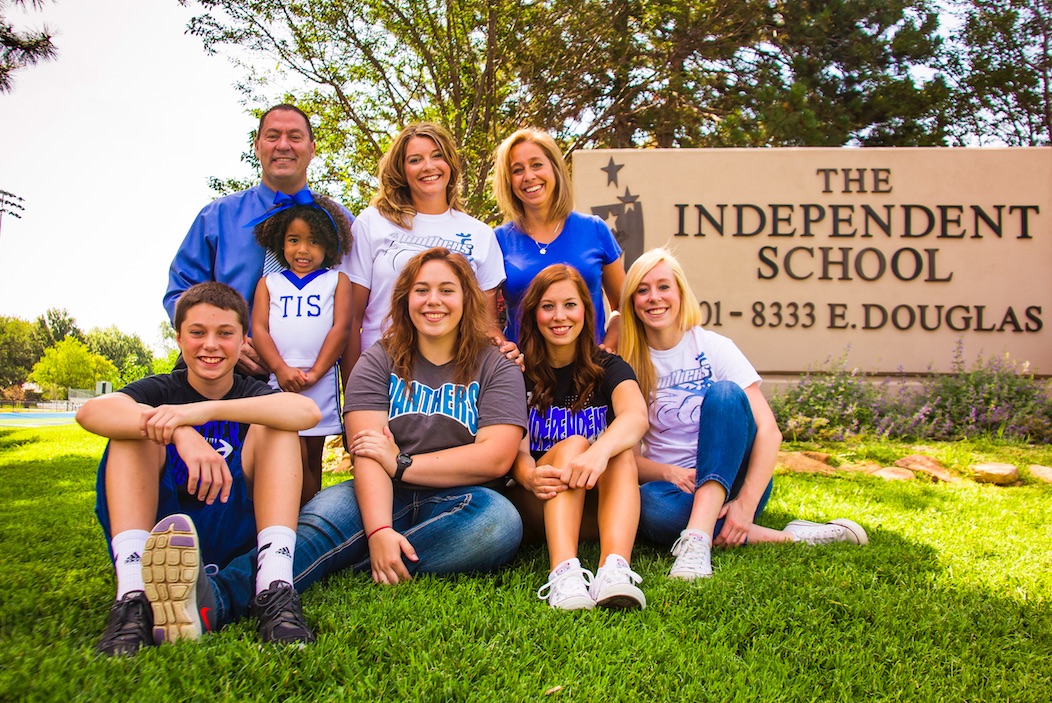
FHSU Honorary Alumni Family of the Year: Milt and Marti Dougherty and their children.By DIANE GASPER-O’BRIEN FHSU University Relations and Marketing
The Milt and Marti Dougherty family has been involved with Fort Hays State University since the reign of the first president in school history.
So it seemed only natural for Danielle Dougherty Durham, a fifth generation FHSU graduate, to throw her family’s name in the hat for Honorary Family of the Year recognition, a new award sponsored by the FHSU Alumni Association.
The Doughertys and their ancestors and extended family seemed the perfect choice for the selection committee as well, what with one of their family members dating back to FHSU’s second graduating class in 1905.
Thus, the Doughertys, who live in Wichita, were chosen to receive the inaugural award and will serve as parade marshals for the 2017 FHSU Homecoming parade Saturday. The family will be recognized at halftime of that evening’s Homecoming football game between FHSU and Pittsburg State University at Lewis Field Stadium.
“The Fort Hays State Alumni Association is pleased to honor the Milt and Marti Dougherty family as the inaugural family of the year,” said Debra Prideaux, FHSU executive alumni director.
“With five generations of Tigers spanning the entire history of the university, they are an ideal choice for this new award,” Prideaux added. “Their family’s commitment to Fort Hays State University is representative of multitudes of families whose FHSU pride runs deep through many generations.”
About 25 Dougherty family members will be on hand, following Milt and Marti down Main Street in Hays for the 1 p.m. parade. Most, if not all, will be wearing black and gold.
“That’s a pretty common Christmas present, something to do with Fort Hays State, when you have kids who have been going there for some time,” Milt said.
Included in group in the parade will be all four of Danielle’s grandparents, Charles and Evah Dougherty from Logan and Max and Marge Meuli from Ashland, three of whom attended FHSU.
Starting with Dr. H.R. Turner, class of 1905, family members have attended school at FHSU during the reign of eight of FHSU’s 10 presidents during a time span of more than 100 years.
While earning numerous degrees from Fort Hays State, Dr. Turner’s descendants participated in interscholastic sports, intramurals, music, student government and theater.
The family has continued to support FHSU long after graduation as both sides of the family have created scholarships to benefit Fort Hays State students.
Danielle said that stories during family get-togethers usually involve something about Fort Hays State. She said one of her favorite stories was one from her grandfather, one she finds hard to believe.
“My Grandpa Charles always brings up the fact that when his dad (Walter Dougherty) was going to school, they were working on building student housing, so for a while they slept in a tent. I just can’t imagine.”
In addition to reminiscing about the days of old, Danielle and her husband, Jacob Durham, can talk about the Fort Hays State of today.
Between them, Jacob and Danielle have earned three FHSU degrees since 2014 and are passing along the legacy to Danielle’s four younger siblings, two of whom are current FHSU students. Danielle’s oldest sister, Deidra Tweedy, also has taken classes at Fort Hays State, while younger sister Reagan is currently a senior exercise therapy major, and Jacki is a sophomore organizational leadership major.
Jacki is set to participate in a foreign exchange program to Ireland next semester.
“We’ve pretty much spanned the entire Fort Hays State experience, from living in a tent to living overseas,” said Milt, who earned his bachelor’s and master’s degrees from FHSU and now is head of The Independent School, a private school that serves students from preschool through grade 12 in Wichita.
Independent also has franchised two private schools in China, similar to the model used by Fort Hays State, which serves students at two Chinese universities.
“Fort Hays State continues to impact how I do things,” Milt said.
The Dougherty sisters’ youngest sister Naomi, a 7-year-old second-grader, already says she is following in her older sisters’ footsteps in 10 years. Their only brother, Matt, a junior in high school, has yet to decide where he will attend college.
“We’re working on him,” Danielle said with a laugh.
Danielle got her taste of FHSU firsthand, early and often. She grew up and attended school in Little River, home of the legendary prep girls’ basketball program that won 91 consecutive games and four straight state championships during the mid-1990s while competing at the Class 1A state tournament at FHSU’s Gross Memorial Coliseum.
Nearly the entire town followed the Redskins, including the Dougherty family.
“We would walk around the coliseum upstairs and look at the photos,” Danielle said. “My great grandpa Pete (Meuli) is in one of the basketball pictures – pretty cool.”
Danielle said she decided to attend community college out of high school because Hutchinson is only about 30 miles from her hometown. While deciding where to move on to a four-year college, FHSU kept popping up on Danielle’s radar.
In addition to all the family history, Danielle said she felt comfortable with familiar surroundings.
“My parents never pushed me to go there,” she said. “I knew I didn’t want to be in a classroom with 400 other people. I had been to Fort Hays State so much growing up, it already felt like home.”
Such was also the case for Danielle’s dad after he graduated from Logan High School in 1982.
“That’s where everyone went, and that’s where all my family had gone,” Milt said. “It never really crossed my mind to go anywhere else. And it’s been a good choice – for all of us.”
At FHSU, Milt met his future wife, Marti Meuli from Colorado, again following a similar track as Marti’s parents and grandparents, who also met their future spouses at Fort Hays State. Marti’s grandparents were introduced to each other by Alex Francis, for whom the track at FHSU’s track and field complex is named. Francis graduated from FHSU in 1931 and went on to become a legendary cross country and track and field coach at his alma mater.
Marti’s FHSU degree was in elementary education, and she now teaches kindergarten at The Independent School.
Her step great-grandfather was H.R. Turner, who was senior class president and was one of nine in the second graduating class of the Western Branch of the Kansas Normal School in 1905. Marti’s parents and grandparents all attended FHSU, most of them earning education degrees. Numerous other members of the Doughertys’ extended family have either attended FHSU in the past or are current students.
Still, Milt said he doesn’t think his family is all that different from a lot of Tiger families.
“I think we are kind of the typical Fort Hays State family,” he said. “We went to school, worked our way through college, had a family and have contributed to society. There are lots of representative families like that of this great school. We just happen to be one of them.”
With two daughters currently attending Fort Hays State, Milt has been able to watch the university’s progress as it continues to update with new facilities and the latest technology. He said he is impressed how his alma mater has been able to “maintain that western Kansas supportive atmosphere while also having a global presence.”
Danielle said she is looking forward to showing her grandparents around campus and watching their surprise at nearly every turn.
“Even since I’ve been there, there are so many new buildings,” Danielle said. “What’s really cool is that a lot of the buildings are named after people my grandparents knew back when they were in school. Fort Hays State is so ingrained in our family, so this is such an honor. My grandparents are still so connected to Fort Hays State, so this award is a nice nod to them.”
Troy Wade, of the district’s architectural firm, DLR, and members of the Community Vision Team, talk Tuesday night about a proposed $78.5 million USD 489 bond issue.
By CRISTINA JANNEY Hays Post
About 50 people gathered at Wilson Elementary School on Tuesday night for a tour and Q &A session related to a proposed Hays USD 489 $78.5 million bond issue.
The cost for the 30-year bond will be $16.43 per month for a $150,000 home.
Teachers talked about the small spaces they have in the Wilson building, about 650 square feet for most of the classrooms.
“Once you get 24 desks in there, it is pretty crowded,” Anita Scheve, Wilson principal, said of the classrooms.
The bond proposal would build two new elementary schools and renovate Roosevelt Elementary School. A new elementary school would be built adjacent to existing Wilson school, and the old school would be torn down when the new school opens. The Wilson pool will remain in place.
John Thissen, USD 489 superintendent, Tuesday says the district has only had $5 million in bonds since the 1980s compared to more than $100 million for some schools the district competes against in athletics.
Scheve said the new classrooms would be closer to 900 square feet and 1,000 square feet for kindergarten.
Some teachers, including Betsy Forinash, have done away with their own desks to make more room for student activities. Her classroom has a sink, which is important for science projects, when it works. Her room had a sewer line break recently while children were in the room, and they had water all over the floor.
Amy Wasinger, an O’Loughlin Elementary teacher and also a member of the Community Vision Team that helped create the bond proposal, said the rooms are not conducive to modern teaching techniques.
The reading workshop encourages students to get on the floor or other comfortable positions to read. The students also are gathered in small groups to work on science and other projects.
Wasinger said there is just nowhere to put the students or files or classroom libraries.
The Wilson boiler is original to the building when it was constructed in 1959. The district can no longer buy parts, and it often keeps rooms as hot as 85 degrees in the middle of the winter.
There is also no common space for children. The gym is also used as a cafeteria and auditorium, which means it is constantly booked. Children have an average of about 12 minutes for lunch due to the tight scheduling for this space.
Wilson elementary was built in 1959 and has the original boiler system. Once the boiler is on for the season, it can’t be shut down. Some rooms are as hot as 85 degrees in the middle of winter.
Wilson also has no storm shelter. Children have to shelter in the hallways, which have skylights. The school has also had problems with these skylights leaking when it rains.
Scott Summers, technology director, said technology has been challenging in the district’s older buildings. The building materials used in 1959 when Wilson was built are not compatible with computer networks. Wilson has to have an Internet connection in each room because the signal will not pass through the walls.
One attendee asked why the district chose to build new elementary schools rather than renovate. Wilson is valued at $5.9 million. The cost to renovate would be $16 million, and a new building will cost $21 million. Based on the value of the building and the cost to renovate compared to the cost of a new building, the architects recommended a new building.
Wilson Elementary School has no storm shelter, and students have to shelter in this hallway, which has skylights. This hallway also has a steep ramp, which makes mobility difficult for students in walkers and wheelchairs.
Amber Beverlin, of the district’s architectural firm, DLR Group, said the district will save about $200,000 per year in operational costs by going from four elementary schools to three. This does not include other savings that can be reaped by eliminating travel between schools for some staff and other efficiencies gained with the new schools.
All three of the elementary schools will be able to accommodate five sections of kindergarten and first grade and four sections of second through fifth grades. This means that the schools will have room for anticipated growth. In the short-term, the district has a goal to reduce class sizes.
At the middle school, the bond would enlarge the cafeteria and add a new gym for physical education. Both facilities at HMS were designed to hold about 300 students. Today, they are serving 700 students. In addition, the kitchen at HMS prepares food for another 400 students at Wilson.
Jessica Younker, nutrition director, said the food service equipment is stored throughout the cafeteria because there is limited storage.
Valerie Wente, Community Vision Team member, said as many as 100 students have to use the gym space at one time for PE. If there are any events scheduled in that space, all those students have to be moved into the hall for their class time.
At the high school, the district will add an auditorium, which had been a dream for the district since the high school was built in 1981. Classrooms will be added and enlarged and the Career Tech Education classrooms will be renovated.
Secure entrances would be added to all schools.
In addition, O’Loughlin Elementary will be renovated to accommodate the Westside Program, Learning Center and the Early Childhood Center.
The district considered breaking the bond into several smaller bonds over time, but Troy Wade of DLR said he district stands to save tens of millions of dollars by doing the 30-year bond. Interest rates are at record lows, which can save the district at least 1 percent. The inflation rate for construction is 3 percent to 5 percent.
Mike Walker, of the Community Vision Team, talks Tuesday night about a proposed $78.5 million USD 489 bond issue.
If the bond does not pass, the problems with the buildings do not go away, and the district does not have enough in capital outlay to address all the issues, Shanna Dinkel, assistant superintendent, said.
The district would have to come back with yet another bond proposal.
Should that happen, Wente said the best scenario is a new bond project would cost millions more. The worst scenario would be a school would have to be closed because of structural or mechanical issues and there would be nowhere to put the students.
Ana Unsworth, a parent who has students in high school and elementary school, said she thought she could get behind the school bond plan.
Members of Nabholz Construction, the construction manager at risk, Paul Wertenberger Cosntruction, and Shanna Dinkel, assistant USD 489 superintendent, talk about the bond construction process. Ground could be broken within a year if the bond passes, and new elementary schools could be open another 12 to 18 months after groundbreaking.
“Will I vote for it? Probably,” she said of the bond. “They have put a lot of good work into it, and they answered all the questions I had and my major questions were put at ease.”
If the bond passes, groundbreaking could occur on the new schools within a year. Construction could take between 12 to 18 months. Some projects would be done simultaneously with the new elementary schools likely being the first projects started and finished.
The deadline to register to vote is Tuesday, Oct. 17. Advance voting is set to start on Oct. 23, and the general election is Tuesday, Nov. 7.
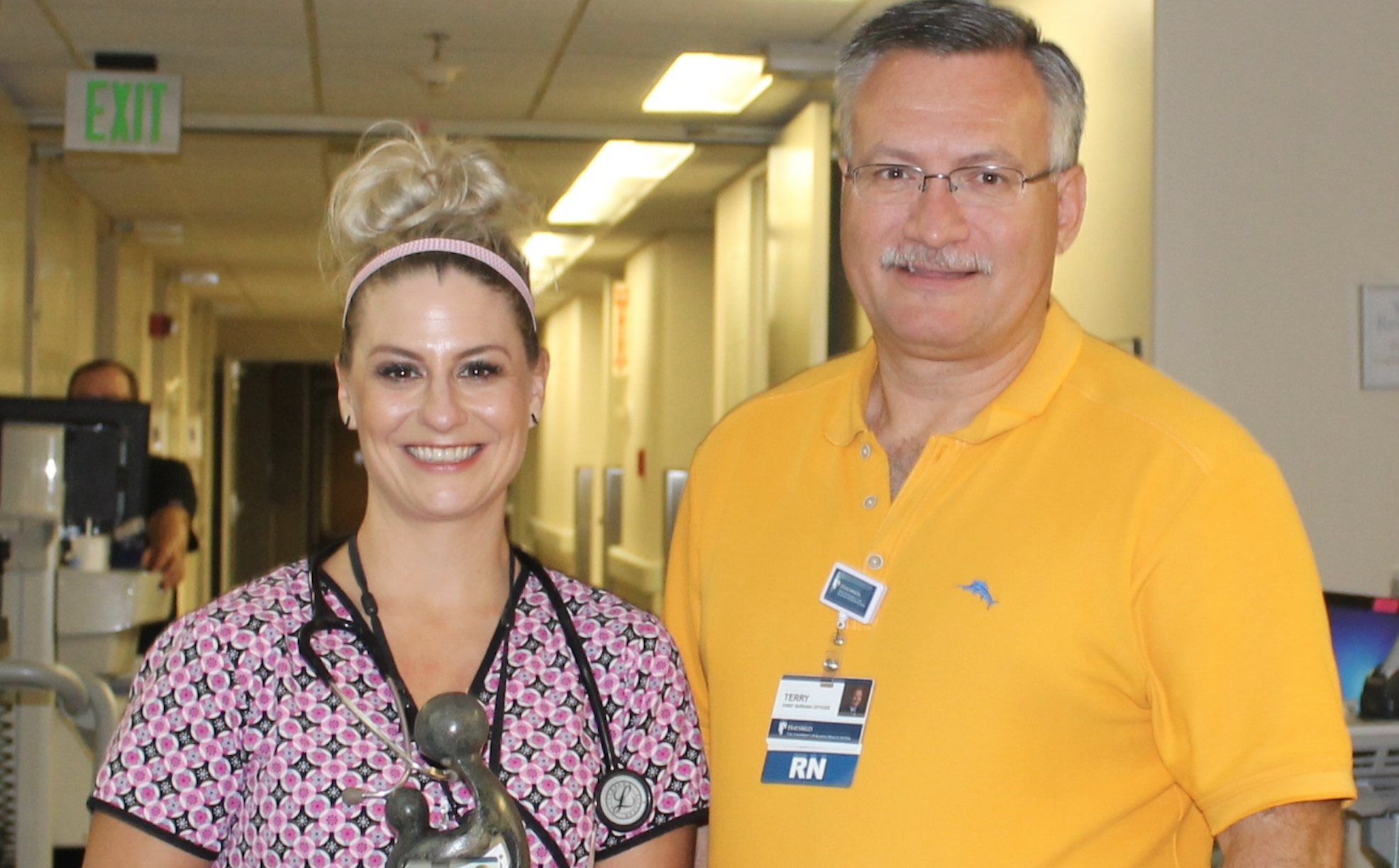
Thompson and SiekJade Thompson, RN, Acute Care Unit is HaysMed’s newest DAISY Award Winner.
Thompson was selected from a group of blinded nominations voted on by the HaysMed Practice Committee. The Practice Committee consists of Staff and Supervisors from a variety of departments across HaysMed. Nominations are received from patients and family members, physicians, volunteers and Associates for nurses in inpatient, outpatient and clinic settings.
“Her nomination epitomizes teamwork, leadership and customer service,” said Terry Siek, VP of Patient Care Services and Chief Nursing Officer at HaysMed. “We are so fortunate to have nurses of her caliber and dedication working at HaysMed.”
The DAISY Award is a nationwide program that rewards and celebrates the extraordinary clinical skill and compassionate care given by nurses every day. HaysMed is proud to be a DAISY Award Hospital Partner, recognizing one of our nurses with this special honor every quarter.