In 2013, a broken leg caused Jarett Gross to figure out how he was going to make income during his time off work. He ended up turning a trailer into the Snowcone Express, where he would sell snowcones to customers while parked in the Big Creek Crossing parking lot.
Gross ended up making more income with his snowcone business than with his old job, so he decided that the Snowcone Express was going to be his new occupation. With the mobility of the trailer, Gross would also move his business around town, posting up at various events and parties to sell treats.
“I moved around so much while doing events of things for people that the regulars at the mall would call me asking where I was at,” said Gross. That kind of showed me the need for a inline store and, after talking with Big Creek Crossing, I ended up moving the trailer inside the mall in 2015.”
By the time Gross had moved the trailer out of the mall and renovated the indoor store, he had caught the entrepreneurial bug.
“I set goals for myself,” he said. “My goals were to get the Snowcone Express trailer established, get the store inside the mall finished and then open up an ice cream truck. I saw a need for it. There’s a certain nostalgia behind an ice cream truck.”
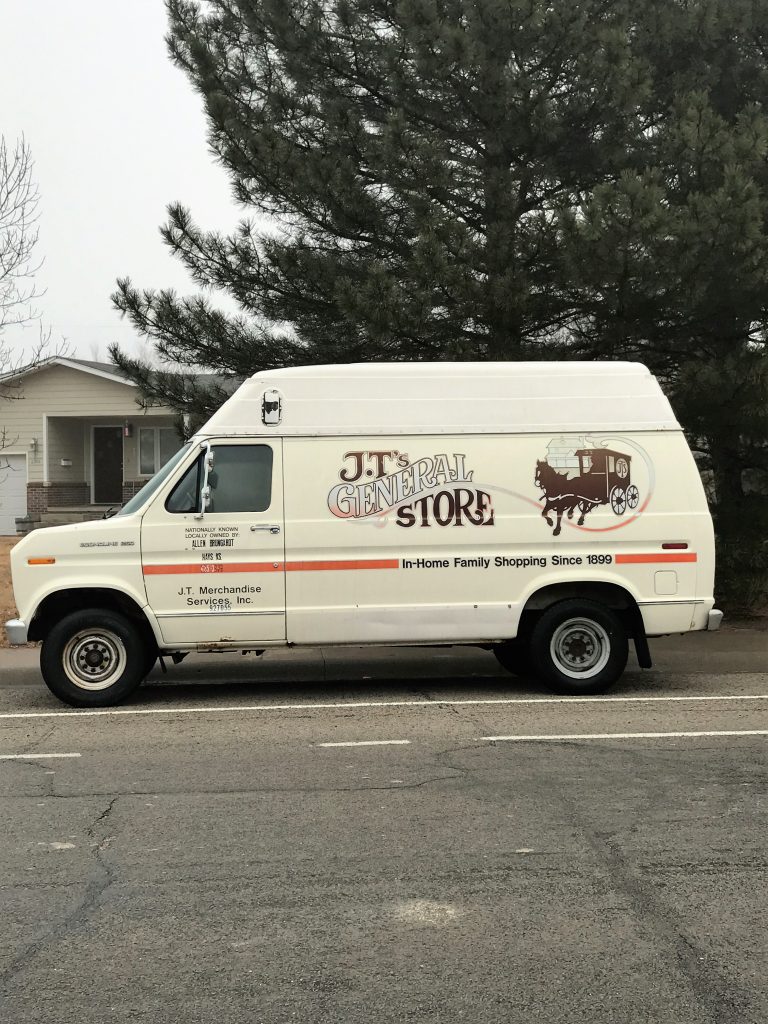
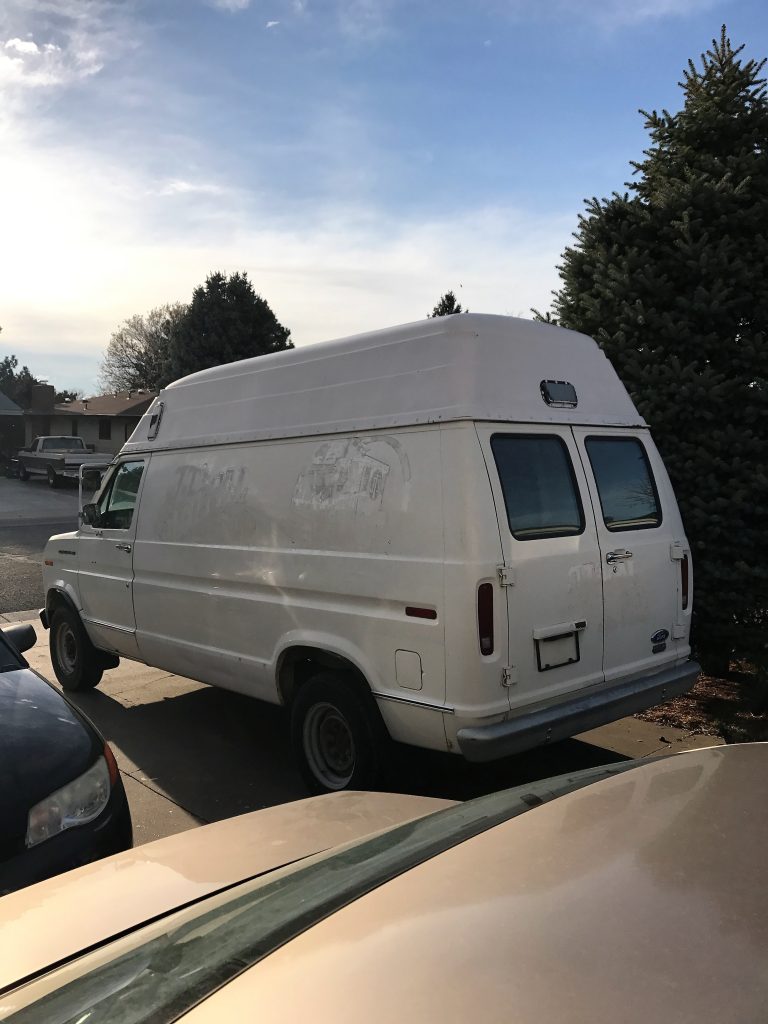
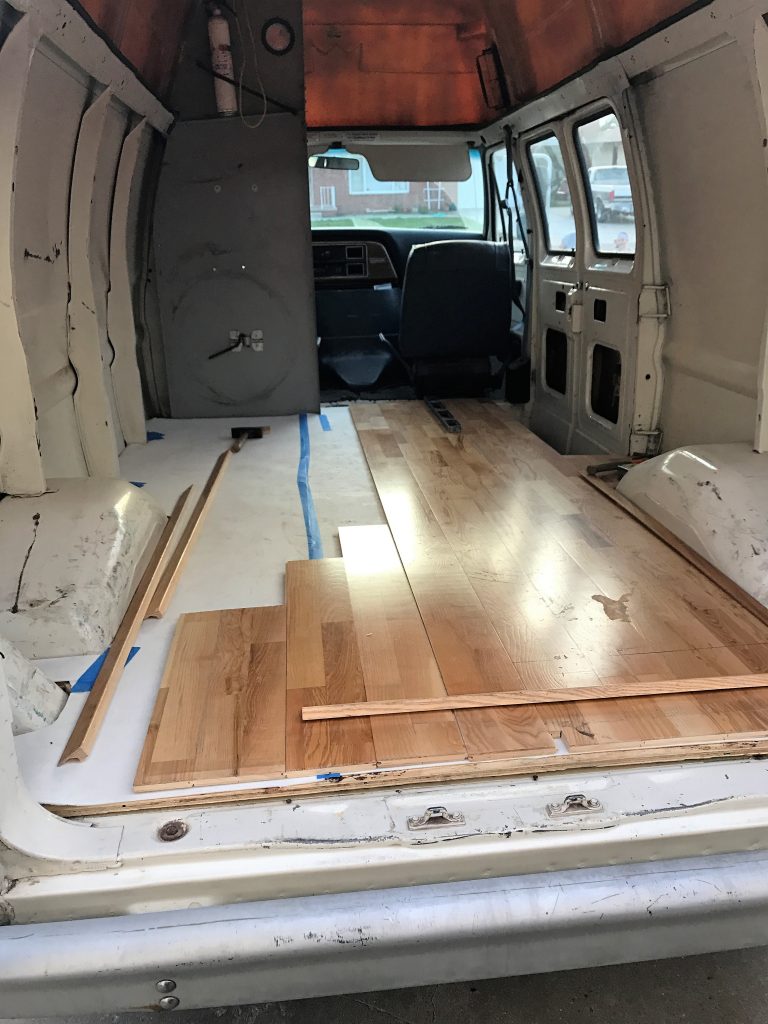
Gross bought an old J.T. General Store van in March from Allen Brungardt and promptly began transforming the old van into an ice cream truck. Gross still plans to use the Snowcone Express trailer for birthday parties, events, the Ellis County Fair, etc. Despite his personal success, Gross reiterated that he could not have done all this on his own.
“I have definitely not done it alone. I have had a lot of help from my family, and local business owners that are friends of mine have given me encouraging words,” Gross said. “Just having a business has been learning and trial and error. That’s the only way you can do it.”
Ice Cream Express is officially up and running and can be reached at (785) 639-7669.
It will be open Tuesday-Sunday from 11am-5pm for job sites and curbside delivery, and 6:30-9:30pm for neighborhood cruising. Permanent routes will be determined over time.
Most Midwest Energy customers have the lights back on as Thursday’s thunderstorm continues, according to the Midwest Energy outage viewer. At one point, more than 750 customers in the Hays area were without power.
Click HERE to view the latest outages from Midwest Energy.
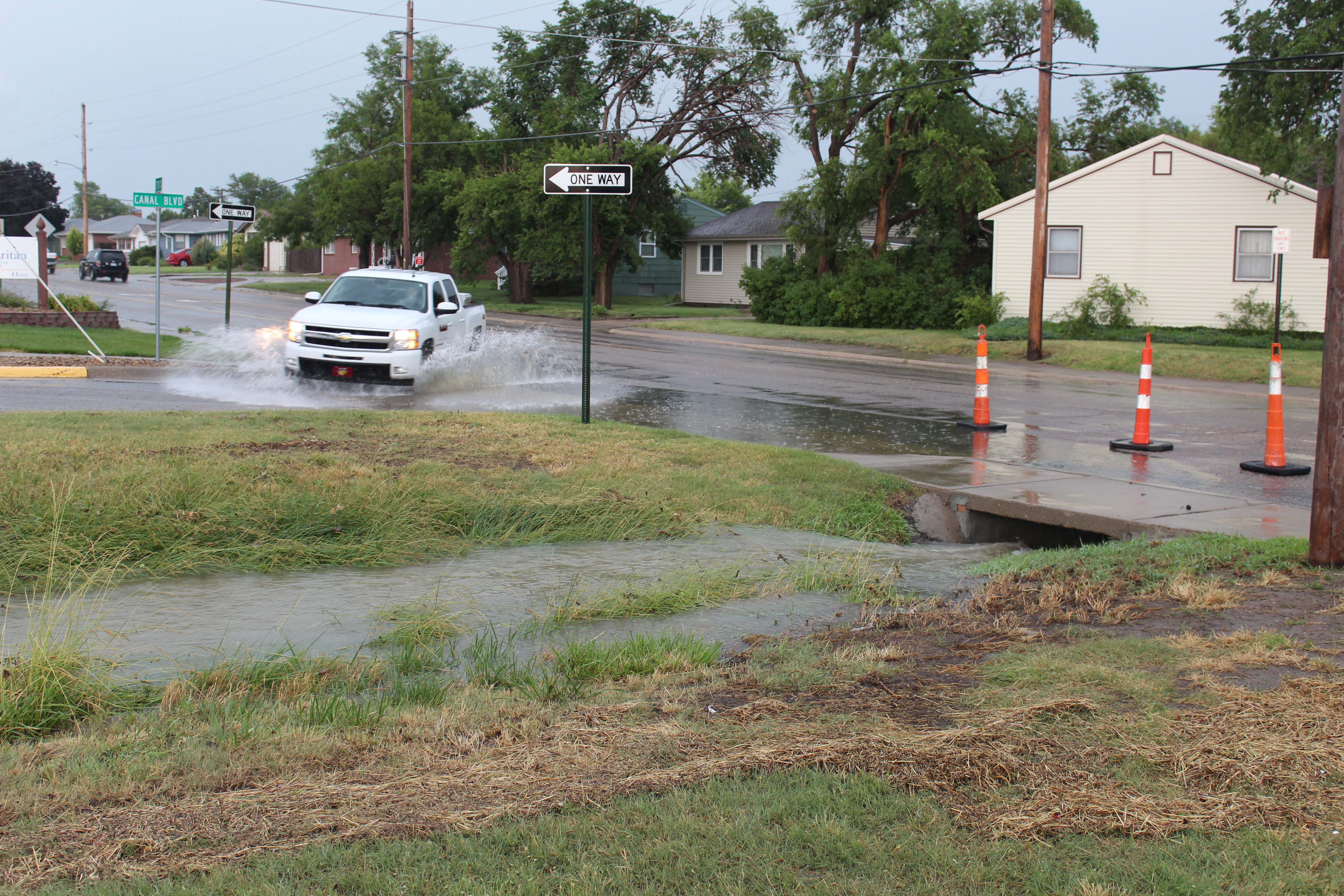
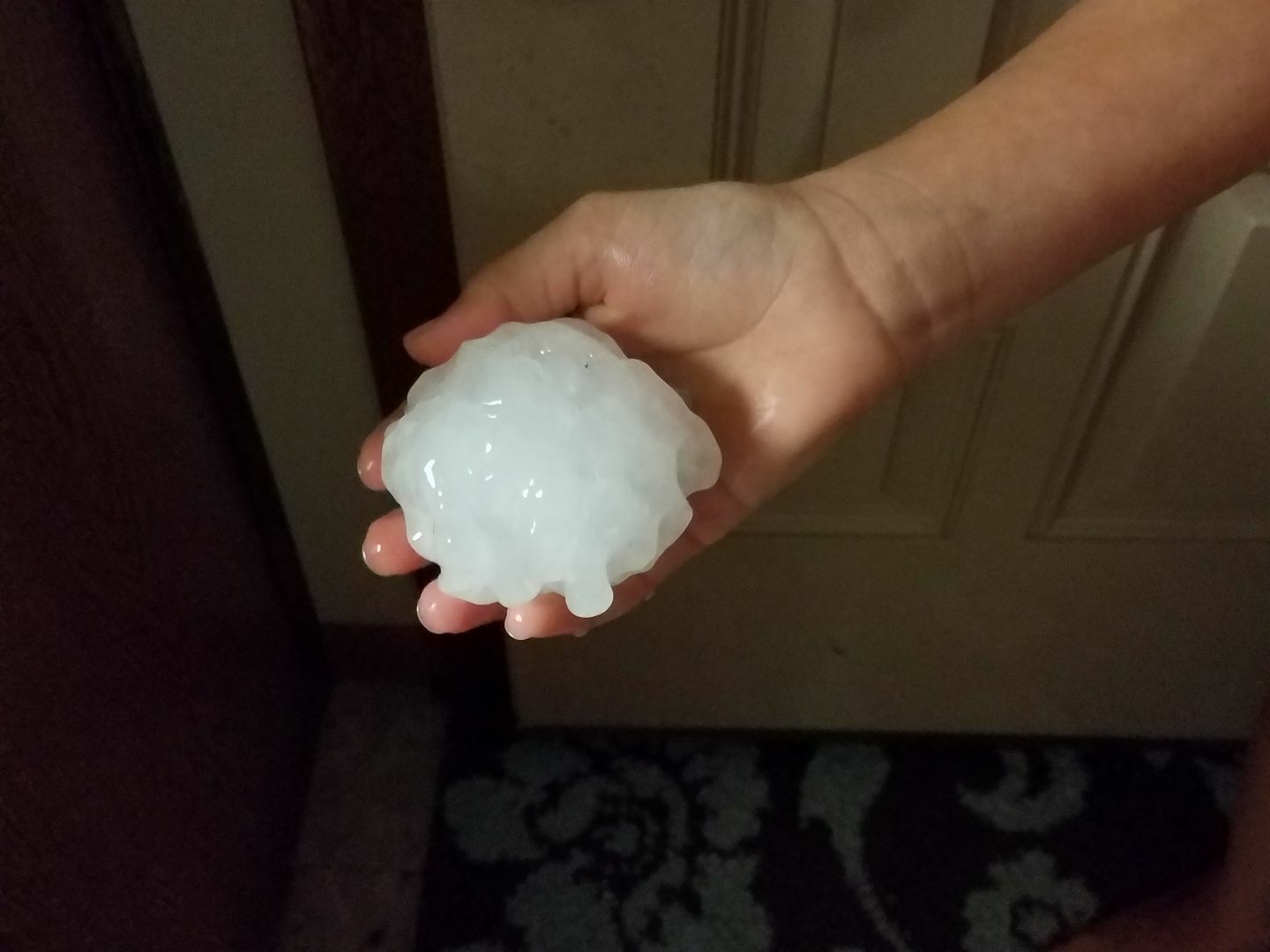
There were reports of baseball size hail 2 miles south of Riga, west of Ellis. There were also wind gusts in excess of 70 mph reported at about 3 p.m. and reports of high water on the streets at the intersection of 27th Street and Thunderbird.
SCOTT CITY — No cattleman ever wants to lose a single calf, yearling or momma cow. When a handful perish, the pain and anguish multiply. And when hundreds of cattle die in a late spring blizzard, it’s catastrophic.
Such a weather event occurred during the last weekend of April in southwestern Kansas. With snow moving into their ranch northwest of Scott City at daybreak, Jan and Kim Wilkinson rose from their beds with apprehension in the air.
They just turned out nearly 1,000 head of momma cows, calves and yearlings on summer grass in five different pastures. The nearly 4,000 acres of contiguous grass was located 40 miles south of their homestead on a place the Wilkinsons call the “ranch.”
Shortly after noon on Sat., April 29, Jan arrived at the ranch and found the cattle all present and accounted for. Although the wind and snow still swirled and pummeled the cattle, approximately 10 inches had fallen by the time he headed home that afternoon.
By sunset the next day, the flat western Kansas landscape looked quite different. The wind finally stopped, but now nearly two feet of heavy, white snow blanketed the ground.
Monday morning this unstable situation moved into utter chaos. Jan headed back to the cattle in his 4-wheel-drive pickup. His father-in-law was already on his way by tractor loaded with hay. Moving at a snail’s pace, the trip seemed to take forever.
When they arrived, snow drifts covered the four-wire fences and the cattle walked across pushed in a southerly direction by the wind. The cattle were scattered for miles.
During the next few days, the only way they could maneuver in the deep snow was by tractor or horseback. The pickup kept getting stuck.
“Those were long, frustrating days,” Jan recalls. “Every move we made seemed to take forever.”
Warm weather followed the blizzard. Most of the snow melted in less than a week. During this period, Jan counted 14 yearlings and three calves dead.
The cattle piled together during the teeth of the storm suffocating and trampling the younger stock. Another 300 head were unaccounted for.
“A few days later we learned the cattle had wandered more than 20 miles south and ended up north of Garden City,” Jan says. “A nearby farmer rounded them up and put them in a pen with water.”
They hauled feed to these cattle for a couple of days until they found time to haul them back to the ranch. With the livestock safely back at home, the Wilkinsons doctored some of them with antibiotics for pneumonia and snow blindness.
Six weeks after the blizzard the cattle continue to improve. Once the cattle were turned out on the grass they immediately turned from being dirty, rough and half sick to healthy stock again.
“I’ve heard it said that good green grass is the best medicine for livestock,” Jan says. “Cattle are resilient. With all the moisture from the snow, our grass is as lush and green as I can ever remember.”
Some of the aftermath of the blizzard still weigh on the Wilkinsons. Picking up the remains of the cattle that perished is never an easy task. Still, they count themselves lucky compared to some of their stockmen friends.
“We were blessed,” Kim says. “When we look back at what happened, it could have been much worse. Some lost so many cattle.”
After working 12- and 14-hour days for 10 days straight after the blizzard, some cattlemen ask themselves, “Why am I in this business?” Jan says.
“You run cattle because you love the animals,” he continues. “You can’t do this because it’s an easy job.”
One of the greatest rewards remains the help and support of others who helped them through the crisis without being asked.
“It’s just what they do,” Kim says. “Friends and neighbors helping each other when they’re in a bind. This spirit picks you up and puts you on your feet again. We couldn’t have made it without them.”
During the first weekend of June a “We survived the blizzard” party was held in Scott City. This event included livestock events like team roping and a dinner for all those who pitched in to help livestock producers after the blizzard.
“It’s our family’s small way of saying thank you,” Kim says. “No one will take money for helping us out. We appreciate all they did.”
The Wilkinsons and other stockmen hope they won’t have to experience such a weather event any time soon. Jan’s hoping the next will occur in about 30 years – if it must happen.
“I’ll be old enough then to let my sons and others handle it,” he chuckles.
Fat chance of that happening either. If there’s a blizzard and he’s alive, he’ll help.
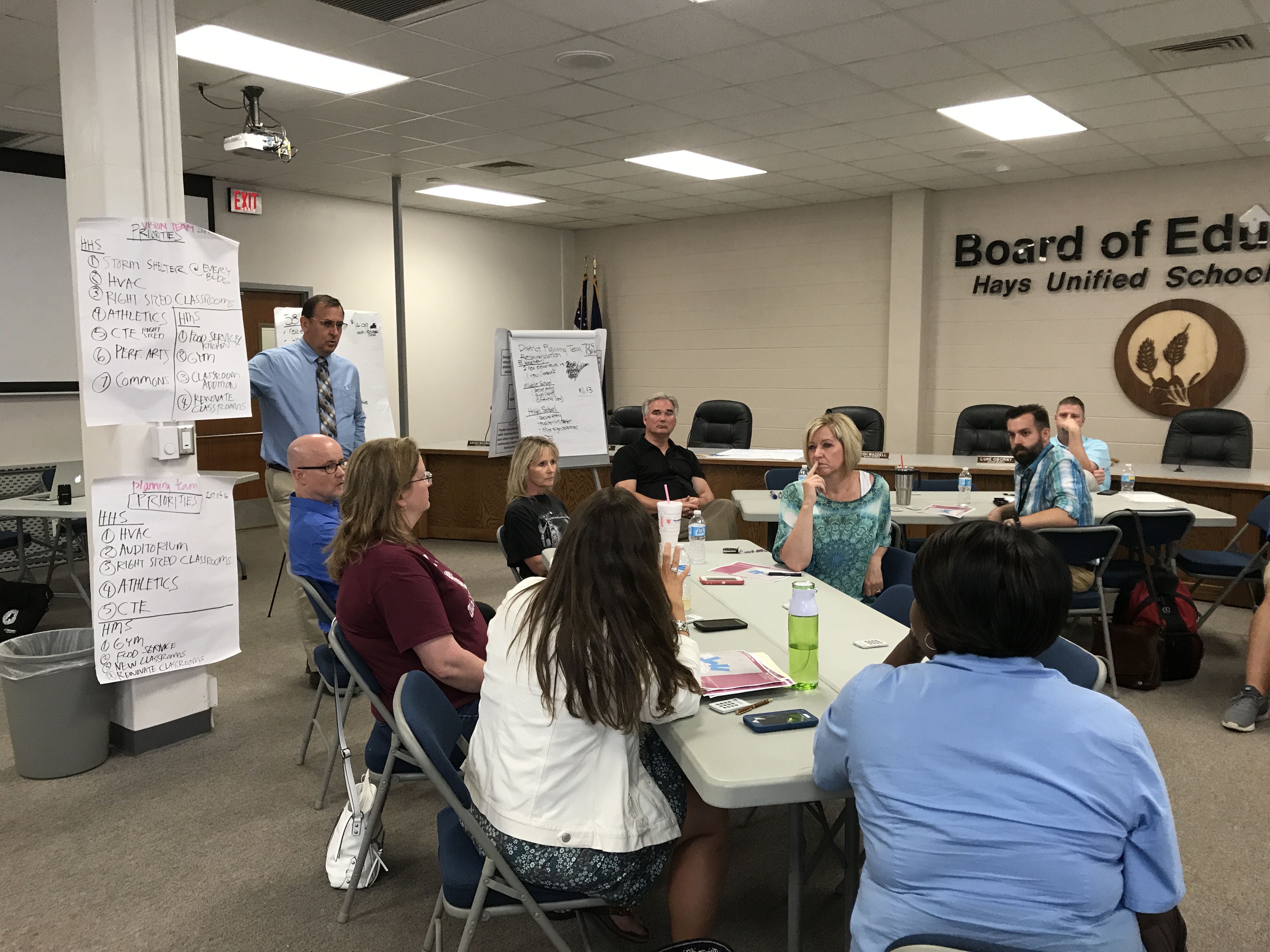
The Hays USD 489 Vision Team discusses a possible bond issue Tuesday night.
By CRISTINA JANNEY Hays Post
The Hays school district Vision Team will be recommending a $78.5 million bond to the school board at its June 26 meeting.
The bond would be paid for through a 30-year mill levy that would equal a tax increase of $16.43 per month on a $150,000 home.
The district is proposing to drop its capital outlay mill levy by 2 mills to decrease the burden on taxpayers.
The proposed bond project would include the following:
Elementary schools
• Two new elementary schools
• Renovation to Roosevelt Elementary School including a new secure entrance
• Renovation of O’Loughlin Elementary School for use by Early Childhood Connections, the Westside program and the Learning Center.
Middle School
• New secure front entrance
• Build a new gym to accommodate physical education programs
• Renovate and expand the cafeteria and kitchen space
High School
• New secure entrance
• New auditorium that would double as a storm shelter
• Larger classrooms to accommodate modern learning practices. This would include renovation of the career and technology education classrooms
Wilson, Lincoln, Westside, Washington and Munjor would be vacated. Munjor would go back to the Catholic Church.
Provisions would be made in the bond to sell, demolish or find other uses for the vacated schools.
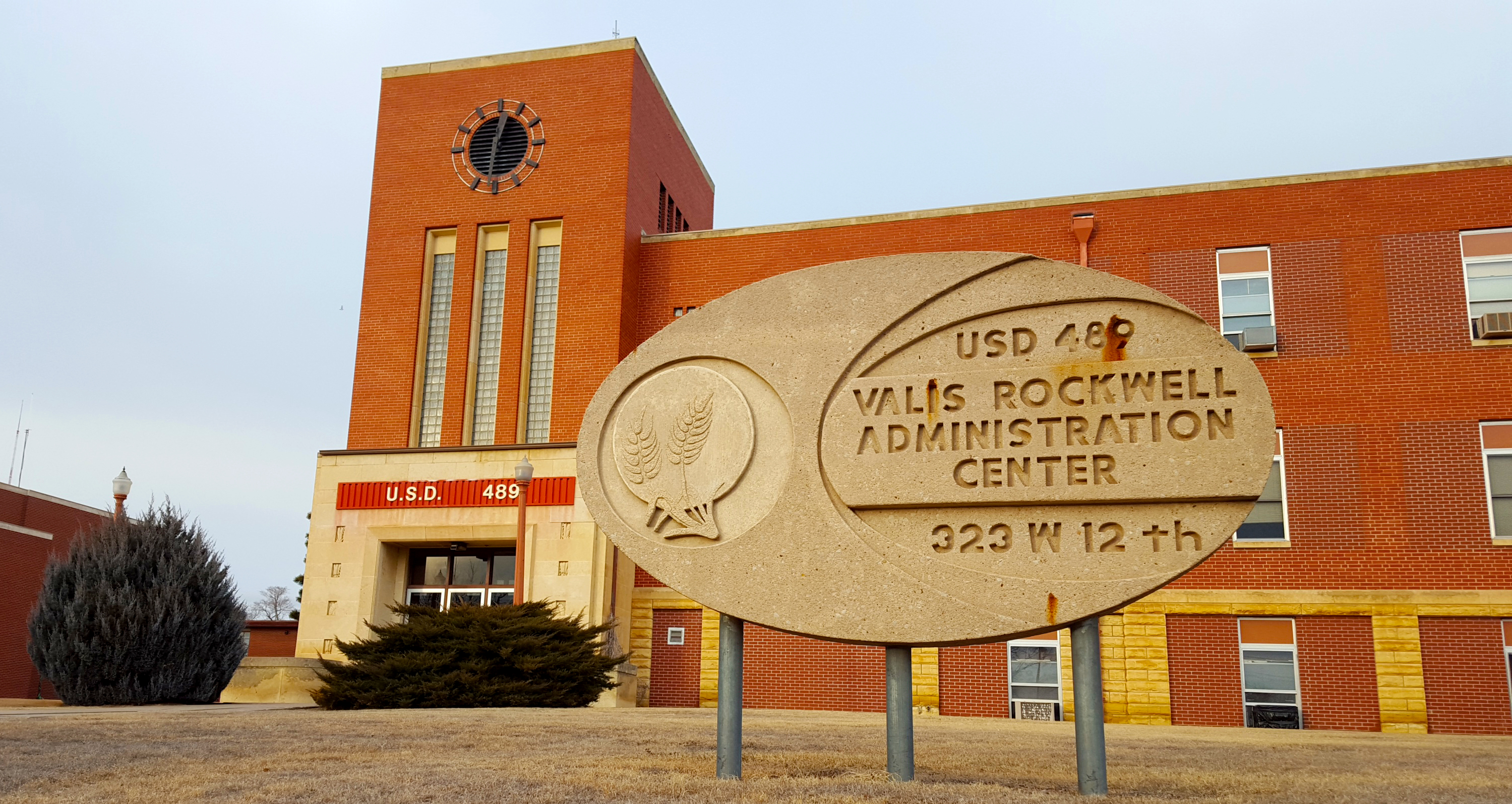
Superintendent John Thissen said Rockwell is not a part of the bond issue, but the district would eventually address the Rockwell building and housing of administration.
“We wanted the bond to focus on students,” he said.
The Community Vision Team, administrative team and executive team all debated Tuesday the need for the second new elementary and all three decided that closure of Wilson was the best option financially.
Wilson is a 56-year-old building. It is worth about $5.9 million, but would cost about $15.6 million to renovate. A new building will cost $21 million.
“It is scary,” Chris Dinkel, team member, said of the second elementary school. “It is a pretty big ask.”
Renovating Wilson would not eliminate some of the needs for maintenance associated with an older buildings, members of the DLR, the district’s architectural firm, said.
Because of the cost ratios to a new building and the building’s worth, DLR did not recommend renovating the building.
The bond teams considered various funding options for the bond Tuesday but decided the option they choose would allow the district to maximize its investment while minimize the impact on taxpayers.
Some team members expressed concern about the funding mechanism for the bond, including the extension of the bond to 30 years and the shift in the levy from capital outlay to a bond.
However, DLR staff noted that by restructuring the bond, and adding 1 mill, which equals $18 per year on a $150,000 property, the district can accomplish all of its key priorities, including the second new elementary school.
The district had considered using a countywide sales tax to support the bond issue, but the Hays City Commission indicated it would not support a sales tax.
The Vision Team will present the bond proposal to the school board at its next meeting on June 26. A timetable for its approval or calling for a bond election has not been set. It could be as early as the November election, but Thissen said that does not have to be the timeline.
“You have a good plan that will touch every school and every child,” Troy Wade, DLR consultant, told the group. “You are taking next steps and making a 25-year plan.”
Although the school district may receive more state funding this year, it won’t likely be a big windfall for the district.
A school funding package that would increase funding to the state’s school districts by $284 million during the next two years has been passed by the Legislature but is setting on the governor’s desk waiting for a signature.
He has until Monday to sign the legislation, veto it or allow it to become law without his signature.
The legislation then must go to the Kansas Supreme Court for review. The court ruled state funding is inadequate after a number of school districts sued the state.
The Supreme Court had given the state until June 30 to come up with an alternate funding plan or it would stop school funding.
District staff told the school board Monday that it is already down $90,000 due to additional expenses and cuts to federal funding. Those cuts have come in the form of federal Title funding and Medicaid.
The district has been able to save money on other line items, including insurance costs.
Superintendent John Thissen said any additional funding this year will likely fill gaps that have been created by years of underfunding.
“Individuals may view this as new dollars,” Thissen said, “We are not looking at this as new dollars, but this is money we have done without. Individuals may look at this and say, ‘What are you going to do with all these new dollars?’ We are going to pay raises that haven’t been given in some time.We are going cut some of the fees. We raised fees tremendously a number of years ago.”
Tracy Kaiser, finance director, said there may be some restrictions on where additional funding might go, including technical education or at-risk funding.
The district is ending its year in positive financial shape. It froze spending in anticipation that the Legislature might come back for more cuts for the 2016-2017 school year. It did not. That means staff is recommending transferring $330,000 into reserve, leaving the total in reserve at $661,000.
Kaiser said this is a very low amount for a district Hays’ size.
Thissen said the district has a budget plan but will have to wait and see what happens with the legislation in Topeka before it can bring concrete numbers on its 2017-18 budget to the board.
Three Bronzes by Tim Chapman sit in front of a mural by Dennis Schiel at the Hays Arts Center.
By CRISTINA JANNEY Hays Post
The Hays Arts Council will focus its coming exhibition around the Ellis County and City of Hays sesquicentennial.
The exhibition will kickoff during the Summer Art Walk from 6:30 to 9:30 p.m. Friday.
The Hays Arts Council is also celebrating its 50th anniversary this year.
The exhibition at the Hays Arts Center will be in two pieces and will run through Aug. 5.
The first will be in the Exhibition Hall Gallery and will be called “
A Place in Time.”
It is featuring work by Tim Chapman, Dennis Schiel, Bruce Burkholder, all local artists and Charlie Norton of Leoti.
Norton creates bronzes that deal with historical subject matter.
Dennis Schiel produced a large mural of the state of Kansas that now hangs in the state Capitol outside of the office of the Kansas Attorney General. A full-size reproduction of that mural will be in the Hays exhibit.
“It literally does show our place in the timeline of the state. Since that mural depicts such a broad scope of our state in such detail, it is a wonderful pictorial history of our state. But of course, Hays is lovingly addressed by Dennis with historical accuracy and detail,” said Brenda Meder, executive director of the Hays Arts Council.
Schiel also did the large piece that is on the side of Hays’ historical Fox theater, and a reproduction of that mural will be a part for this exhibit.
A reproduction of Burkholder’s mural titled “History Holds the Future,” which is in the Fort Hays State University Memorial Union, will also be a part of the exhibit.
Tim Chapman is the former director of the endowment at FHSU and did the “three amigo” bronze busts of Cody, Custer and Hickok at the Beach Schmidt Performing Arts Center at FHSU. Historical bronzes by Chapman also will be a part of the “A Place in Time” exhibit.
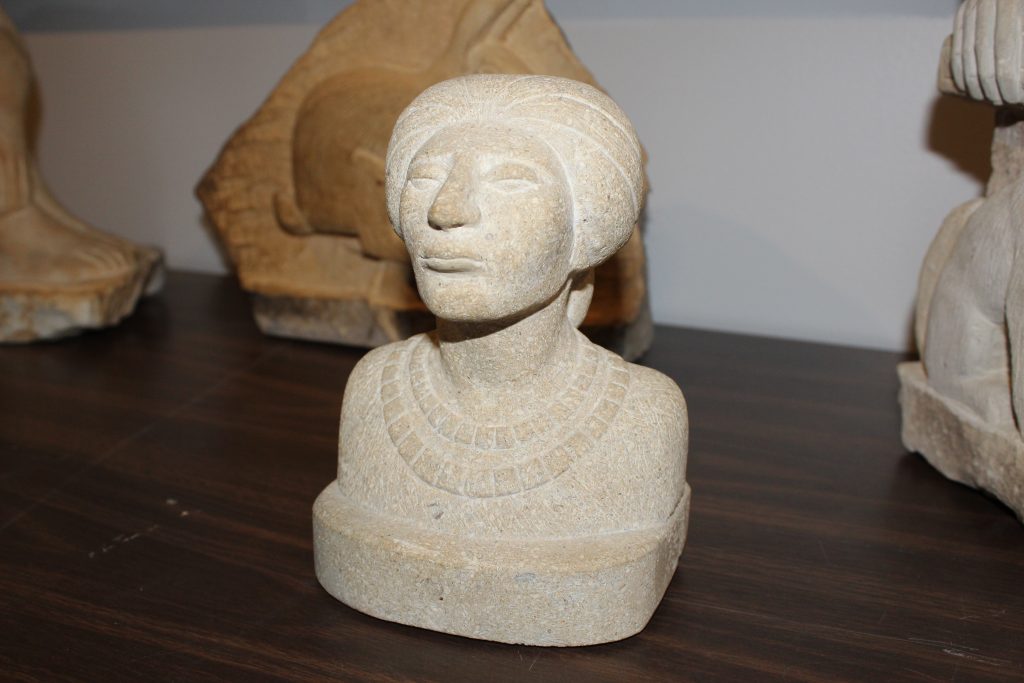
In the founder’s gallery, the HAC will have a tribute to Pete Felten titled “Carved in Stone: The Legacy of Pete Felten.”
That will consist of small plaster models of some of the statues that are around town, but also non-commissioned, non-historical limestone sculptures from private collections. This includes female and animal figures.
“It is an exhibit that not only is meant to capture the historical element of our community through Pete Felten’s maquettes, but the historical icon that Pete Felten is for our community,” Meder said.
Historical Fort Hays will be open from 5 to 7:30 p.m. and will have an exhibit by Jerry Thomas, including the unveiling of his new historical painting “One Perfect Day” that depicts George and Elizabeth Custer.
Maria Matkin and Steve Alexander, who posed for the portrait, will be guests at the fort this weekend and will dress as the historical couple during the fort’s sesquicentennial celebration.
The Hays Public Library will have four exhibits. “Hays in Photographs” from the HPL Kansas Room Collections and Ellis County Historical Society Archives and “Memory Jars” will both be in the first floor gallery.
The Teen Art Exhibit will be in the Davies Room on the second floor, and the Children’s Art Exhibit will in the Children’s Department on the second floor.
The Community Assistance Center will have a fundraising art sale from donations the center has received. Both original and reproductions will be offered.
Gella’s Diner will have live music by Blake Ruder from 9 to 11 p.m. There also will be live music by Randy Mader at the Ellis County Historical Museum, and the Community Acoustic Jam Session will be at Union Pacific Park at 10th and Main streets.
BIG BOW — Too much moisture on a wheat farm in southwestern Kansas in late April?
That never happens. Out here conditions are usually bone dry. When farmers don’t harvest a wheat crop it’s often because of too little moisture.
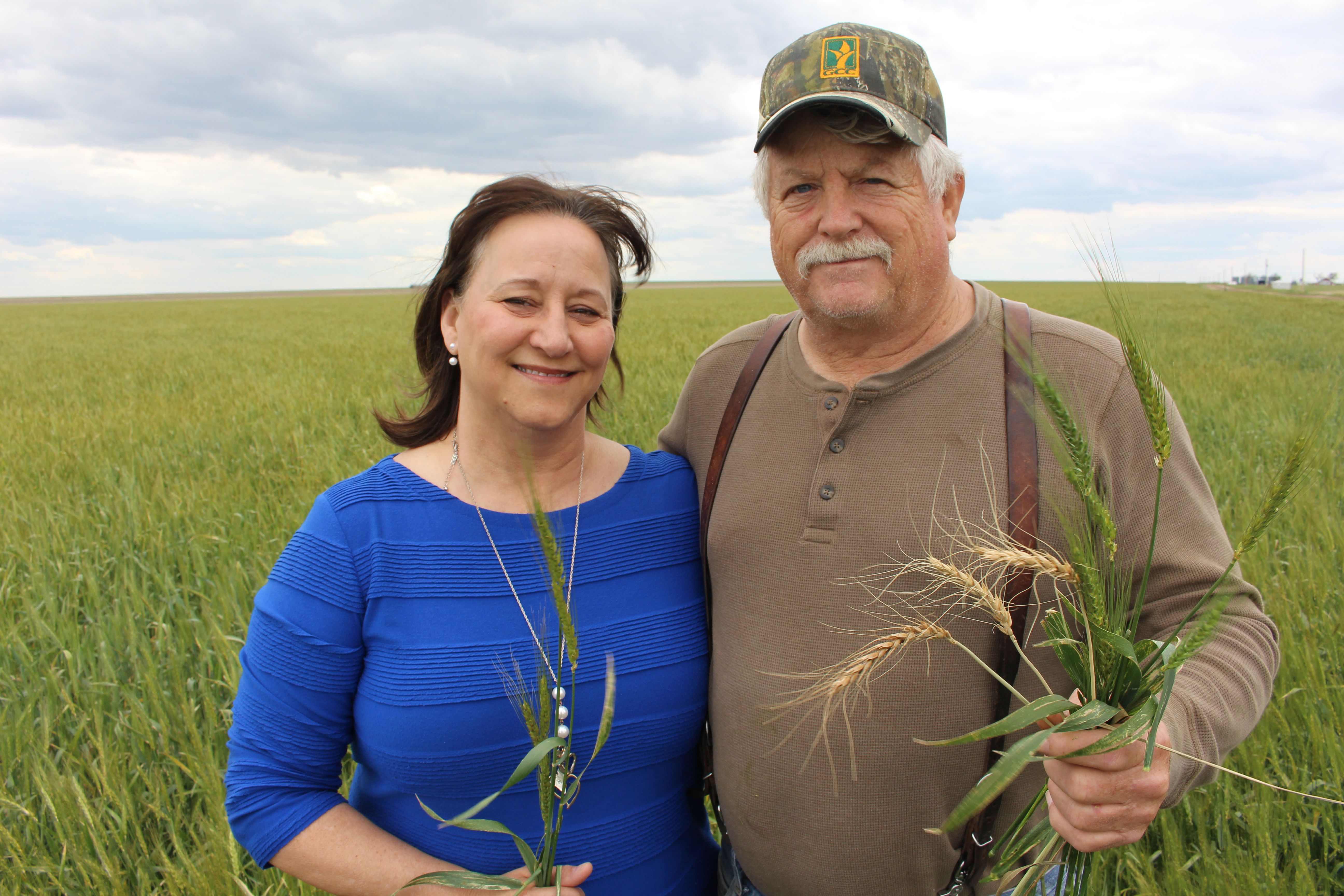
Tom and Marieta Hauser farm a couple miles from Big Bow between Ulysses and Johnson. The blizzard that blasted this region of Kansas in late spring delivered another blow to their fragile existence on the great High Plains.
On the early afternoon of April 29, the storm blew in with a vengeance and blanketed some of Grant County with as much as 20 inches of heavy, wet snow. A blizzard of this magnitude seems to hit western Kansas just about every 30 years. The last one occurred in 1987 and the one before that swept in during the tail end of winter in 1957.
Marieta recalls what happened this year. Before the snow ever started that afternoon, more than two inches of rain fell.
“Out here you have to prime the pump, before moisture really starts coming,” she says. “It snowed and the wind howled for nearly two days. In the middle of the night the electricity went out.”
When the snow stopped late Sunday afternoon, the sun came out and the sky turned a deep blue. On the ground, nothing but beautiful white snow. Underneath the snow, that was a different story.
“The first day after the blizzard, you couldn’t see the wheat,” Tom recalls. “The crop was buried under the snow. When I saw that I didn’t hold much hope for a crop.”
Day by day as the snow melted, the wheat picked itself up from the ground as if to say, “I still have some life left.”
Still, the 2017 wheat crop didn’t look as bountiful as before. As Tom continued to visit the fields and check on the status of the crop, he found a bit of frost damage with crocked heads containing white beards.
The Grant County farmer also found some hail damage and the weight of the snow broke some of the wheat stems about six to 12 inches from the ground. Not all the wheat laid over by the snow stood back up. Touches of yellow in the crop indicated mosaic wheat virus.
As May moved into June, the wheat continued to head out and fill. Weak spots in some of the stocks broke off and fell to the ground.
What happens to this year’s wheat crop will be determined by the weather. If it remains dry, farmers may be able to harvest downed wheat with a pick-up header.
What will the Hauser wheat crop make this year?
If it stays standing, Tom believes he could harvest 25-bushel wheat. Before the blizzard he hoped to harvest a 40-bushel crop, maybe even some 50-bushel wheat.
Last year Tom harvested the best crop since he started farming back in 1975. This bumper crop averaged better than 50-bushels-per acre.
“We broke even after raising the best crop in more than 40 years farming,” he says. “The price of wheat continued to decline.”
This year he faces the same depressed commodity prices coupled with escalating debt.
“I love farming,” Tom says. “It’s the best life I can imagine – raising food for people. Despite this rough period, I’m in it for the long run.”
An ace-in-the-hole that helps the Hausers keep farming remains Marieta’s off-farm employment. She’s worked since they were married except when their children were small.
She currently serves as the Ulysses chamber director. The down-turn impacts Mainstreet as well as farmers and ranchers in this region of the state.
Before last year’s bumper crop, the Hausers experienced approximately five years of drought. While they insure their crops, each year costs more and yield averages continue to decrease.
The Grant County couple has discussed on more than one occasion how far in the hole they want to go before they pack their bags and leave farming.
“How many disasters beyond our control can we handle and still continue?” Marieta asks. “I know one thing for certain, without our off-farm income the Hausers probably wouldn’t be farming today.”
The farm couple hasn’t hit that point yet. They understand that agriculture remains a difficult vocation. Commodity prices go up and down. International trade can be a fickle friend.
Still the tradition of western Kansas farmers and ranchers is steeped in the traditions of adversity. The dust bowl years of the Dirty ‘30s. Drought. Too much rain. The white combine (hail). Wind and tornadoes. Tumbleweeds that take on cars and trucks and leave their mark.
“It’s either feast or famine out here,” Tom says. “Most of the time the famine outweighs and lasts longer than the feasts.”
Still, farm couples like the Hausers love the life they live.
“I guarantee you this,” Marieta says. “At night when I drive home and I see the sun setting and all the beautiful colors of orange, pink and purples and the wind has finally died down – oh my goodness – it’s like no other place on earth.”
And like the others who inhabit this isolated, rural land and communities, everyone pulls together. Neighbors help each other and understand out here, farming bonds people and community together.
“Times will turn around,” Tom says. “We’ll cut wheat this year.”
Yes, wheat harvest in Grant County will soon begin and finish almost as quickly.
Dry weather will return. But, such an event as the blizzard of 2017 will remain the center of conversation for quite some time.
Such talk reverberated inside the Wagon Wheel Café and Bakery located near a spot in the road known as Hickok just the other day.
“Where’ve you been hiding?” Marieta asked Ethel Evans, a local cattle woman.
Anthony Guzman, eighth grader, Andrian Salas, seventh grader, and Alan Apodaca, eighth grader, write code for a robot Thursday during a STEM camp.
Students intently studied lines of code to move a small robot a matter of inches. Others combed instruction manuals trying to make a box of blocks into something that would move.
Students from the Hays USD 489 school district migrant program participated in a STEM camp this week.
The students in grades preschool through 11th grade focused on science, technology, engineering, mathematics and reading.
The student built small robots, programmed robots to move through mazes, programed robots to draw shapes, and manipulated small origami frogs through a computer program.
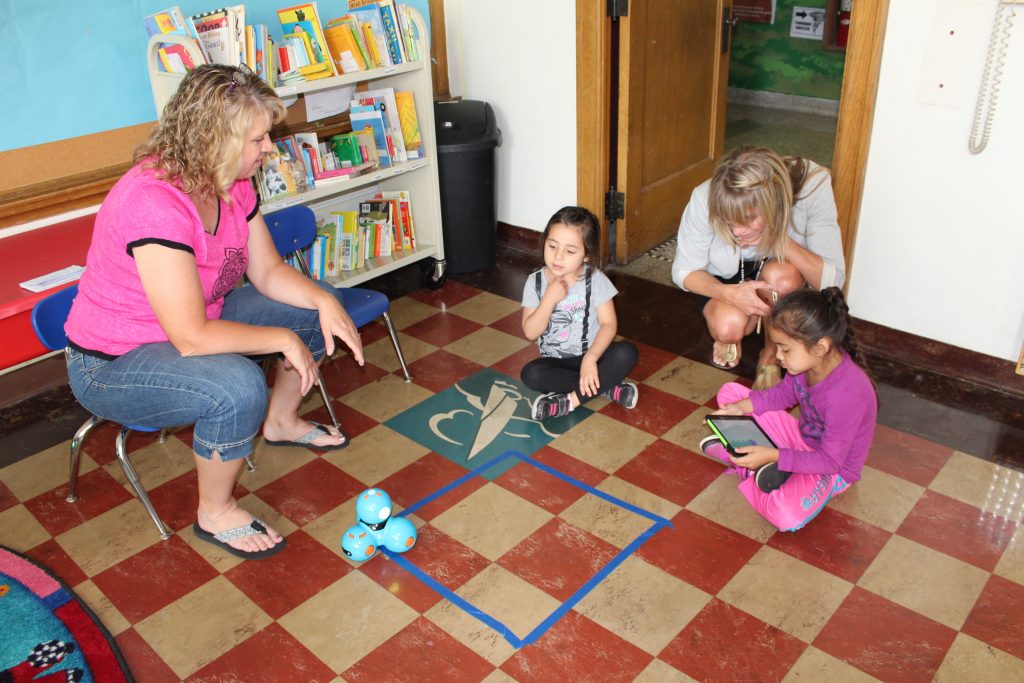
Younger students also learned basic programming skills to move colorful robots on paths of tape.
The purpose of the program is to keep students engaged during the summer in order to minimize losses in learning.
“It is a federally funded program,” Shanna Dinkel, assistant superintendent, said. “There is always a concern that there will be a loss of academics during the summer for all kids. It is really important to make it fun and approach it in a different way to make sure they stay engaged and they don’t lose some skills.”
In addition to the week-long camp, the students will be given tablets to take home that are loaded with learning software. This will be followed with home visits and visits to the library to participate in its reading program.
Younger students were equipped with school supplies, including crayons, flash cards and numbers.
Hays eighth-grader Anthony Guzman said of a coding project, “At first it is confusing and then it gets really fun.”
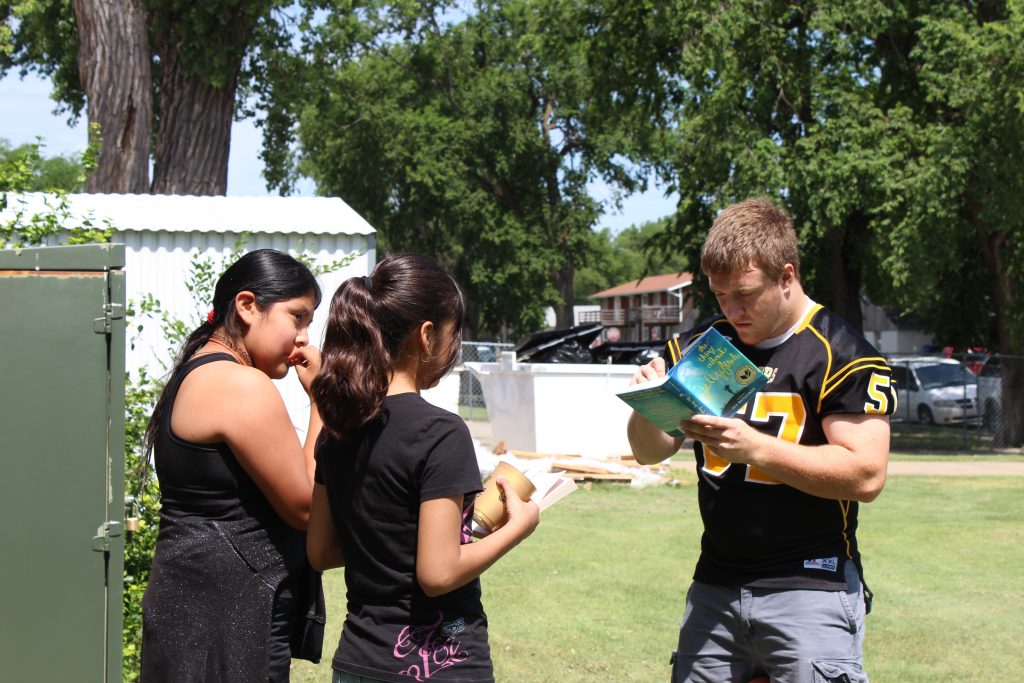
The students also participated in the first of a series of book giveaways that were sponsored by the Kansas Health Foundation and Midwest Energy.
The program will give out $5,000 worth of books to students of all kinds throughout the summer.
The program also seeks to help students retain learning over the summer.
Valerie Zelenka, professor in the College of Education at Fort Hays State University, helps coordinate the program.
Research has indicated students who do not have books in their homes develop a larger learning gap during the summer that those who do have books, she said.
“We are trying to get books in the hands of kids,” Zelenka said.
Further, students who have English as their second language or who come from low socioeconomic backgrounds also tend to struggle over the summer with reading.
FHSU athletes as well as Paul Adams, dean of the FHSU College of Education and USD 489 school board member, were on hand to help hand out the books.
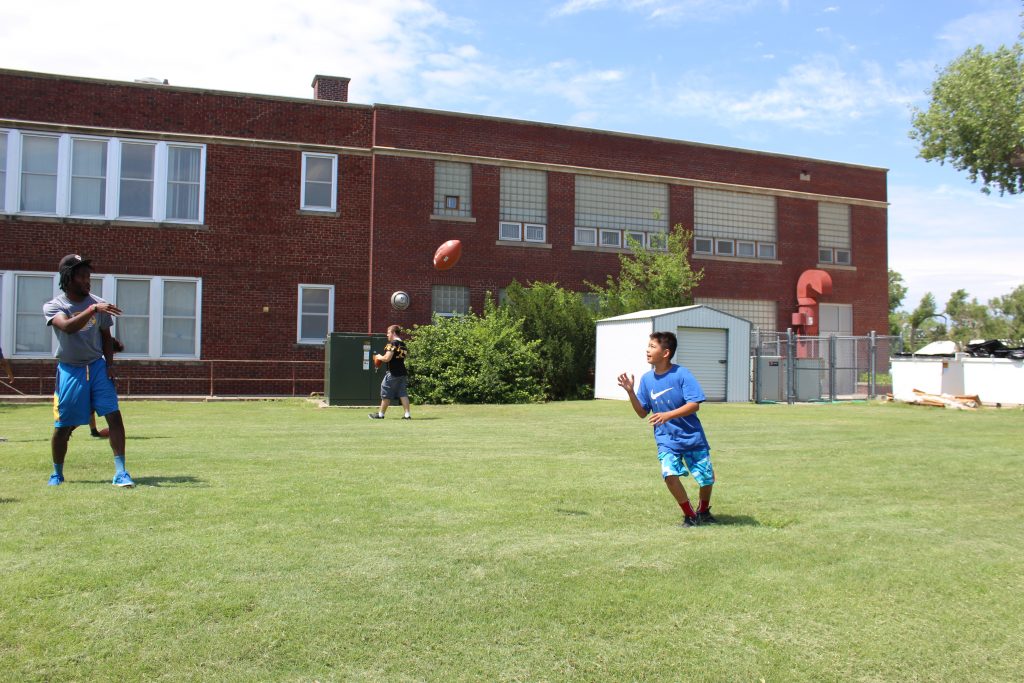
The athletes autographed the books and played basketball and football with the students.
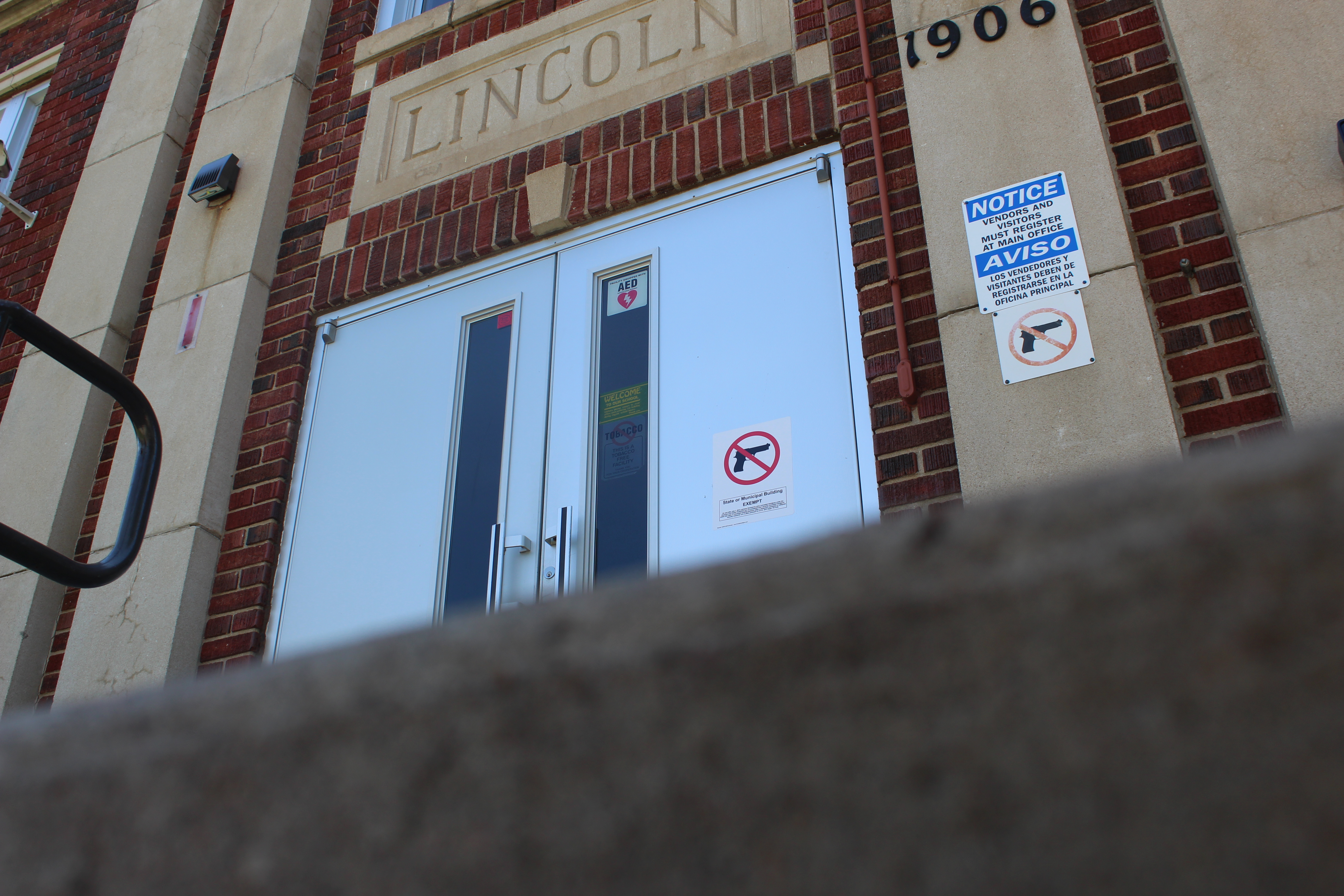
A view from the bottom of the stairs at the front entrance of Lincoln Elementary School.
By CRISTINA JANNEY Hays Post
Imagine being a small child. You are excited to go to your neighborhood school.
But you can’t.
Why? You can’t even get to the front door.
The Americans With Disabilities Act was passed 27 years ago, but the Hays school district has several schools that lack basic accommodations for students with disabilities.
There are only two buildings in the district that are considered fully ADA compliant — the high school and middle school.
Most of the buildings have stairs, small classrooms that are difficult to maneuver in a wheelchair and bathrooms that don’t meet modern ADA standards.
The Hays school district is looking at ways it can bring more schools into compliance with the ADA with proposed bond issue that will likely go to the school board for consideration later this month.
The district has placed an emphasis on elementary schools in its bond planning. It hopes to include a new elementary school in the bond.
This in part would replace Lincoln, which is not handicap accessible and would be very difficult to retrofit to meet modern education needs.
No children with significant mobility issues can be placed at Lincoln.
The building has stairs at its main entrance and stairs that lead to its cafeteria in the basement, which also doubles as a storm shelter.
“The issue is money,” Superintendent John Thissen said. “If it had not been for money, something would have been done to it 20 years ago or 30 years ago. Most of our buildings were built before handicap accessibility requirements came into affect.”
Special education programs have been placed at Wilson and Roosevelt elementaries for this reason.
However, Roosevelt also uses its basement as a storm shelter and must be accessed by stairs.
The district would like to add more accessible storm shelters on the ground floor of the older buildings that could double as classroom or gym space.
Early Childhood Connections at the former Washington School and the Westside program both have limitations on how space can be used because of stairs.
At Washington, all classes have to be conducted on the ground floor because of Head Start requirements. There are upper-level offices, but they have to be accessed by stairs.
“ECC is not handicap accessible,” Thissen said. “If we hired someone with a disability, they couldn’t get to their office upstairs. I don’t know what we would do. We would have to make arrangements.”
The Westside program conducts classes for younger students on the lower floor and classes for older students on the upper floor.
Although this program is typically for students with emotional disabilities, Raj Sharma, special education director, acknowledged having a student in that program with a mobility problem would be an issue.
Stairs at the main entrance to Rockwell Administration Center.
The district’s offices at Rockwell Administration Center have to be accessed by stairs. If a parent or guardian with a mobility issue needs to have a meeting with administrators, the meeting has to be moved to the lower floor of the building.
The Learning Center students with mobility issues have to use an alternative entrance, which Thissen said can be very inconvenient for the students.
At this point, the district is making accommodations for students, staff and visitors with mobility issues. The district is meeting the legal requirements of the ADA, but the accessibility issues create challenges.
“We have to maneuver and make changes every year,” Sharma said.
If the district would embark on renovations or new construction, the facilities would have to meet modern ADA requirements.
What Sharma envisions for the new construction is universal design, which takes into consideration the needs of all students.
Instead of isolating children with special needs, Sharma would like to see more opportunities for inclusion.
This means not only making buildings and bathrooms accessible for students with mobility problems, but making cafeterias friendly for autistic students. It could mean including a push-button door opener that could be used by students of all abilities.
“It is all about inclusion in the mainstream with their peers. They should be able to use the same gym, cafeteria or football field,” Sharma said. “I think we need to think universal and have a universal model.”
Accessibility is an issue that needs to be brought to the attention of the wider community, Thissen said and is “the right thing to do.”
“A lot of people think very little about this until it is their child or mother or niece or nephew that is affected,” Thissen said. “Then it becomes very real.”
Pictured from left are: Dakota Derstein, Jetta Smith and Katelyn Unruh.
By DIANE GASPER-O’BRIEN University Relations and Marketing
College students are sometimes quite creative, coming up with interesting activities to fill their summer months — whether for pleasure or work.
Three Fort Hays State University students are experiencing some of both this week at the 2017 Miss Kansas Pageant in Pratt.
Jetta Smith, Dakota Derstein and Katelyn Unruh will conclude their two-day preliminary competition today in an attempt to make the finalist list. The top 10 contestants from the preliminaries will compete for numerous scholarships Saturday night in Dennis Lesh Sports Arena.
While their sashes will represent a preliminary pageant which they won to advance to the Miss Kansas Pageant, Smith, Derstein and Unruh said they are honored for the opportunity to also represent Fort Hays State in competing for the ultimate prize — the Miss Kansas crown.
It is the third consecutive year that FHSU has had at least one student competing for Miss Kansas. Derstein participated two years ago, and last year, two Fort Hays State students participated.
This year’s trio makes FHSU’s list of participants second only to Kansas State University and Wichita State University, which each have four students in the pageant.
“I think that is so awesome that we have three from Fort Hays State,” Derstein said. “I think that gives one of us a shot at getting in the finals.”
Smith, like Derstein, already has the experience of competing in a state scholarship pageant. Smith, now 21, was crowned Miss Black Oklahoma Teen as a 17-year-old.
But this will be Unruh’s first time competing at the state level after being crowned Miss Cowboy Capital in January. In fact, the Miss Kansas event will be just Unruh’s second pageant, period.
“There was a lot of really good competition in Dodge, so I was pleased to get one of the crowns,” said Unruh, a 22-year-old elementary education major from Copeland.
Unruh is no stranger to participating in front of crowds, however; she cheered and danced at Montezuma-South Gray High School. She said she became interested in competing for a pageant title after watching other young women in the area participate.
Her platform is “Beautiful YOU: Motivating & Encouraging Women to Be Who They Were Created to Be.”
“That’s something I’m passionate about, helping other people find what they’re passionate about,” she said. “Life is meant to be exciting.”
Derstein, a 21-year-old wildlife biology and zoology major from Dodge City, hopes this trip to Miss Kansas is even more exciting than two years ago when she participated as a 19-year-old.
Derstein, who also is a member of the Tiger Deb Dance Team at FHSU, did not participate in pageants last year.
“It is quite the process,” she said, “so I decided to take a year off to better myself and grow in maturity.”
Even though she did not make the finals two years ago, Derstein considered it a rewarding experience.
“I got a lot of personal growth out of it,” she said. “You meet so many wonderful people, and I gained a lot of insight and perspective.”
As Miss Cottonwood, Derstein has chosen as her platform “MADD (Mothers Against Drunk Drivers): No More Victims.”
“I’ve had family and friends who have been deceased or very harshly injured in drunk driving accidents,” she said. “I think about that every day. So I think teaching people my age and younger how to be responsible for your actions will benefit the state of Kansas.”
Smith said the Miss pageant competition is a little different than the Teen level, but she still hopes her experience gained in Teen pageants will benefit her this week.
After earning her state title in Oklahoma in 2013 as a high school student in Oklahoma City, Smith went on to claim third runner-up honors at Miss Black USA Talented Teen in Washington, D.C.
She played basketball at Colby Community College for two years, then transferred to Fort Hays State on academic scholarships while pursuing degrees in journalism and political science.
Smith was crowned Miss Boot Hill in January to advance to the Miss Kansas Pageant .
“It’s nice to come into it with a little bit of pageant knowledge,” Smith said. “It’s good to know how it all works, having a basic understanding of pageants in general.”
Smith’s platform “No Means No” is personal as she was physically assaulted by a parent at a basketball game the summer before her senior year in high school.
“I got to college and started researching safety of schools,” she said. “The more I researched, the more I realized how big of a problem it is for women to be sexually assaulted while they are in college … a very worthwhile subject.”
More about the Miss Kansas Pageant and this year’s contestants can be found online at misskansas.org.
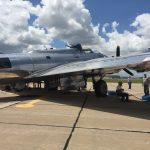
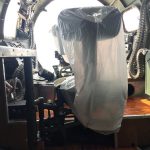
Last weekend’s air show at the Hays Regional Airport was a special event for many — but none more so than Hays veteran Earl M. Schaeffer.
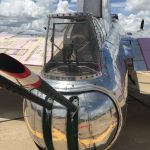
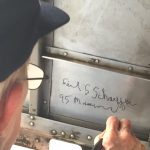
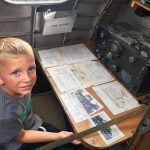
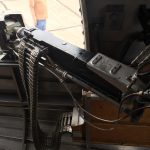
Schaeffer, 95, flew 95 missions on a B-17 similar the the “Sentimental Journey” B-17 that was part of the air show. His family took him to the airport to reminisce about the plane and his experiences.
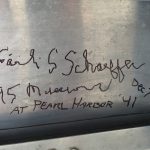
Schaeffer, who was a master sergeant and a Pearl Harbor survivor, is a decorated war hero, who flew as a radioman and gunner on 95 combat missions. He is the recipient of a Silver Star, Distinguished Flying Cross with Oak Leaf Cluster and Airman’s Medal. He also served on Midway Island, Guadalcanal and the Solomons — some of the most important areas in the Pacific Theater during World War II.
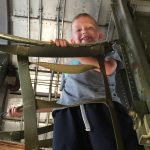
Schaeffer is a Pennsylvania native who now lives in Hays. He was accompanied to the B-17 visit by son Gary and wife Becky Schaeffer; grandson Jordan and wife Sarah Schaeffer; daughter-in-Law Jolene Schaeffer; and three great-grandchildren — Noah, Tyler and Maci Schaeffer.
Major fire hits sweeps through hog complex
One man injured, thousands of hogs destroyed
By KIRBY ROSS Phillips County Review
LONG ISLAND — Husky Hogs, a major economic force in Phillips County, was hit by a devastating fire shortly before noon on Tuesday, June 6.
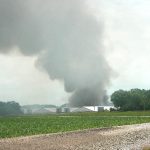
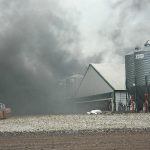
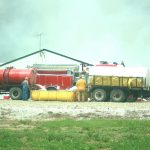
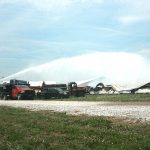
The blaze tore through three hog barns in an eight-barn farrowing complex, which is located 2 miles southwest of Long Island and 20 miles northwest of Phillipsburg. Raging for several hours, it was fought by fire departments from Phillipsburg, Long Island, Norton and Almena in Kansas, and Orleans, Stamford and Alma in Nebraska.
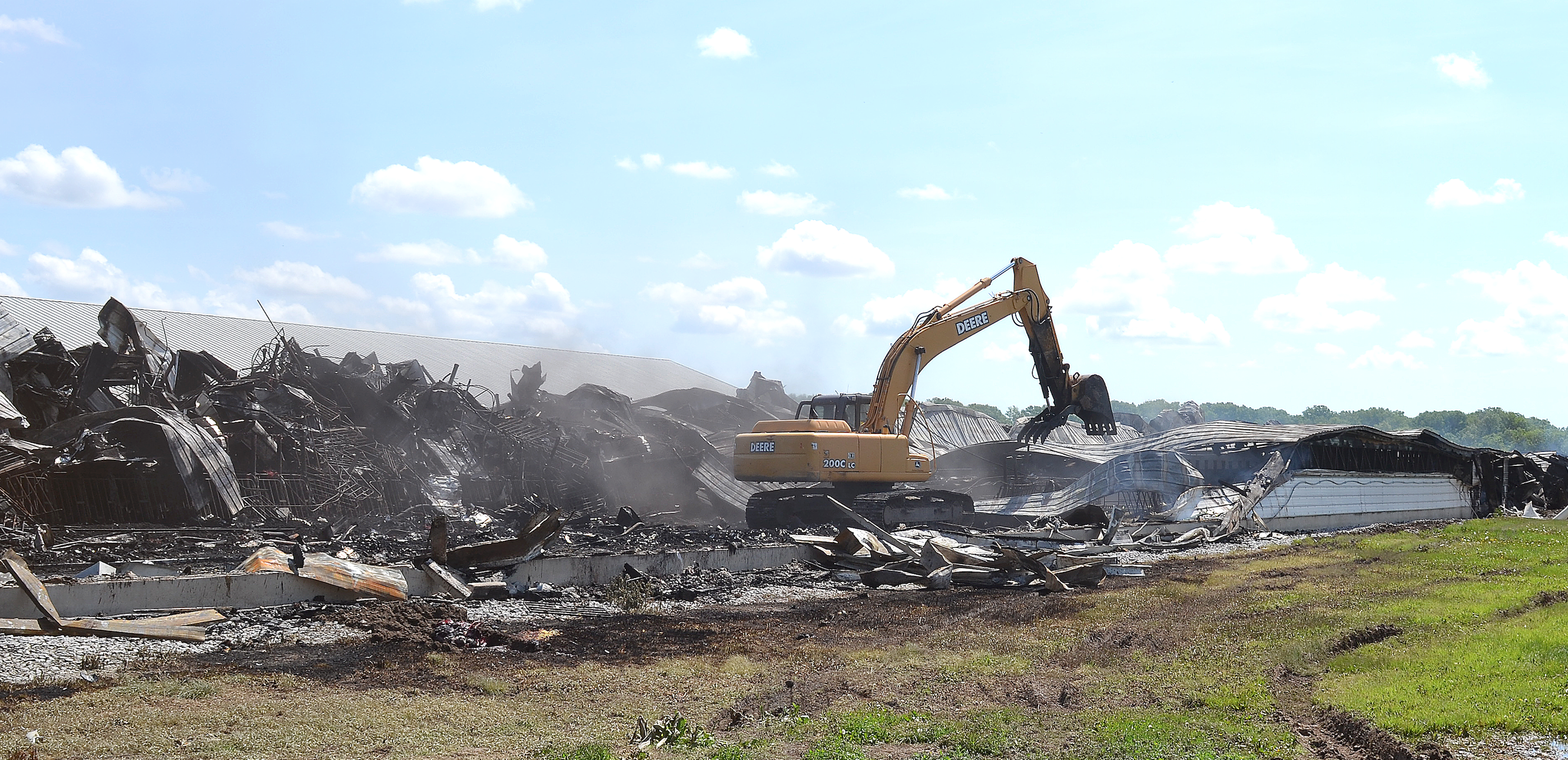
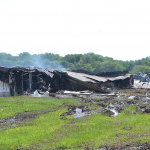
One of the destroyed hog buildings was over 400 feet long, while the other two were 300 feet and 130 feet. The loss is estimated to be at least $3.5 million, and resulted in the destruction of over 2,000 sows and 7,000 piglets.
With the call coming in around 11:30 a.m., firefighters were initially unable to get at the fires in the barns because of the enclosed nature of farrowing structures and the extreme temperatures that had built up inside.
Starting in one of the barns, the flames quickly enveloped two additional structures. With the flames threatening to spread to the entire complex, at substantial risk to himself, Husky Hogs CEO Terry Nelson climbed aboard a D6 Caterpillar that was on site and forcibly ripped into the structures, opening them up to firefighters.
Once the barns were opened, the blaze was soon brought under control. Nelson and his crews immediately afterward went to work clearing debris to get to the destroyed hogs and remove them to a pit. A number of surviving but injured hogs had to be put down.
The cause of the fire is as yet undetermined, and is currently under investigation by the Kansas Fire Marshal and the Phillips County Sheriff’s Department. Foul play is not suspected.
It is noted that construction work was taking place at the time, and that one of the construction workers received burns to his arms and legs. He was transported to Via Christi Hospital in Wichita, where he is being treated. His burns are not thought to be life-threatening.
On June 7, Terry Nelson spoke briefly to the Phillips County Review, and stated that he intends to rebuild.
He also issued a statement thanking all those who helped during the fire and in its aftermath, saying “the emergency management teams, friends, neighbors and members of the community who gave their time, resources and kind words were invaluable during our time of need. We could not have kept the fire contained without all of you and we are so grateful for your help and support.”