Tickets are on sale now for the FHSU rodeo. Courtesy photo
FHSU University Relations and Marketing
About 500 competitors from 25 colleges and universities across Kansas and Oklahoma will converge on Hays the weekend of April 21-23 to participate in the 51st annual Fort Hays State University NIRA College Rodeo.
Action in the Central Plains Region event will begin at 7 p.m. Friday, April 21, at Doug Philip Arena. The arena is located at the corner of 230th Ave. and Golf Course Road, about a half-mile west on Golf Course Road off U.S. Highway 183 Bypass.
Saturday’s performance also is scheduled for 7 p.m., with participants trying to quality for Sunday’s championship round at 1 p.m.
Participants will compete in bareback riding, saddle bronc riding, bull riding, tie-down roping, breakaway roping, goat tying, barrel racing, steer wrestling and team roping. They earn points in regional competitions throughout the season, vying for a top-three spot in the region to qualify for nationals.
The Fort Hays State rodeo team has several members still in contention to earn a berth to the 2017 College National Finals Rodeo, set for June 9-17 in Casper, Wyo.
Tickets for the Fort Hays State event are available for purchase at several locations in Hays: the Student Service Center in the FHSU Memorial Union; the FHSU rodeo office, Albertson Hall, room 213A; Orscheln Farm and Home Center, 2900 Broadway Ave.; and Vanderbilt’s Inc., 2704 Vine St., Suite A.
Prices for advanced ticket sales are $8 for adults and $4 for children ages 6 to 15. Tickets also can be purchased at the gate for $12 (adults) and $8 (children). Children 6 and under will be admitted free, as will FHSU students (with their Tiger ID card).
After reviewing the pros and cons of using asphalt or concrete to reconstruct a portion of 8th St. during their April 6 work session, Hays city commissioners last week went against staff’s recommendation of asphalt, and instead, voted for concrete paving from Milner to Vine.
It was also the low bid, coming from Morgan Brothers Construction of LaCrosse for $1,497,225.69. APAC-Kansas, Inc., Hays, submitted a bid for the asphalt paving option of $1,516,288.61.
Assistant Public Works Dir. John Braun pointed out the asphalt option would be completed in 20 fewer days than the concrete option and 25 fewer days during the phase that would most impact access to businesses.
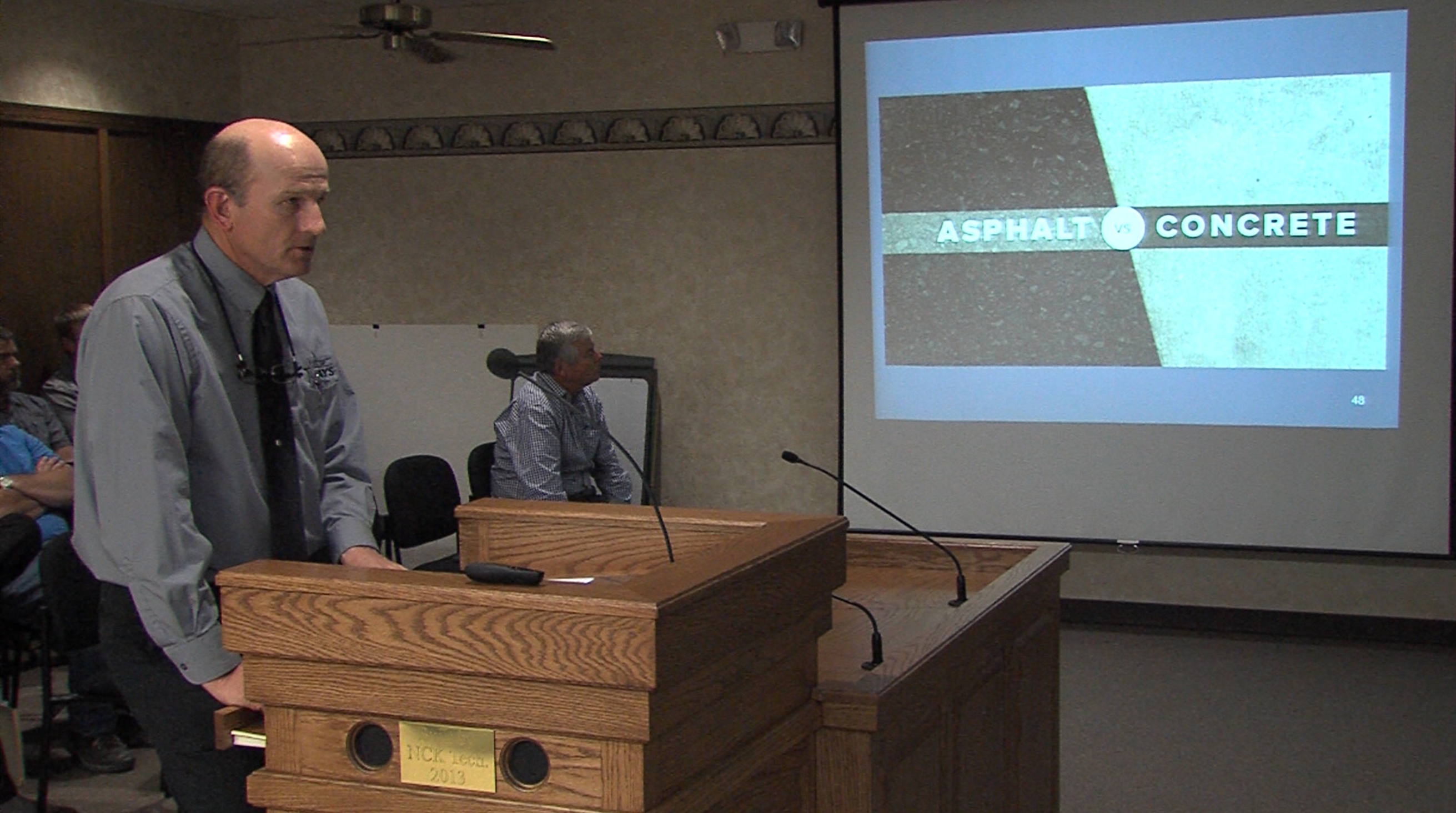
John Braun, Asst. Hays Public Works Dir., explains the benefits and disadvantages of asphalt and concrete paving.
“Because of the shorter project timeline and the lack of a definitive answer to why some new concrete pavement in Hays has been warping and prematurely failing, staff is recommending the asphalt pavement option,” Braun said, repeating the same explanation he had given in the earlier work session.
Research is underway by an outside entity to determine why 43rd and 45th near Walmart are deteriorating and a short section of 27th east of Vine is warping.
The city has predominantly built concrete collector and arterial streets for the past 15 years.
When comparing total lifecycle costs, the long lifespan of concrete streets typically makes it the more affordable option when prices are similar to asphalt as they are now. However, when the lifespan of a concrete street is shortened, those lifecycle costs tip toward asphalt, Dougherty explained in an earlier memo.
Both Braun and City Manager Toby Dougherty were quick to say either option would be acceptable. “It’s pretty much a 50/50 proposition,” Braun said.
Eighth Street was constructed in 1947 out of concrete pavement and today endures more than 7,000 vehicles a day, many of which are heavy trucks.
“I was a little upset by this presentation because I think it focuses on elements with a very low probability,” said Commissioner Henry Schwaller.
“We’ve installed a lot of concrete streets–8th, 13th, 22nd, 27th, 41st, Hall, residential streets–none of them failed. Some of them are more than 20 years old.
“We also had to redo Vine Street. One of the business owners on Vine reminded me that they were shut down twice because we did a mill and overlay with asphalt, before Toby’s tenure, and then we had to come back and do it again in concrete.
“There is a probability of concrete failing and Toby wanted us to be aware of that,” which Schwaller said he appreciated.
“You were right by giving us that option,” Mayor Shaun Musil said to Dougherty. “We’ve complained about 27th Street and we haven’t been able to solve it yet.
“I think we should keep 8th Street concrete. I think it looks great,” Musil said.
Vice-Mayor James Meier said he had two major concerns, “the taxpayer getting the most bang for their buck and the accesses to the businesses. But a perfect example is Vine Street with an asphalt overlay, and then concrete and getting shut down twice.”
“Some of the businesses I talked to on the north side of 8th Street preferred concrete. Some businesses didn’t care,” Meier reported. “One business really wanted asphalt due to the shortened project timeline. So, again it was kind of a toss-up.”
The project will include removing and replacing the three driving lanes, curb and gutter, sidewalk, ADA ramps, driveways, replacing storm sewer inlet tops, resurfacing the sidewalk along the Montgomery ditch bridge and waterline replacement at Riley.
A public information meeting about the reconstruction will be held Mon., April 24, at 5:30 p.m. in Hays City Hall, 1507 Main.
A proposed amendment to the Hays Neighborhood Revitalization Plan (NRP) would increase considerably the size of the area–from 209 acres in the downtown area to 1,628 acres primarily north and east of downtown. Individual properties in the NRP would increase to 4,126.
The city hopes the area’s expansion would encourage more redevelopment in older neighborhoods.
According to Greg Sund, Hays public works director, the proposal includes properties that reflect the build-out of Hays as of 1965. “It would establish a standard of 50-year old properties in the NRP giving the city a bellwether for amending the area from time to time in the future,” Sund wrote in his memo to city commissioners.
More than 45 properties have benefited from the NRP since its inception in 2002. Property owners receive a rebate on their property taxes which go up due to increased property value. The rebate is not based on the amount invested in a project.
City staff is recommending residential projects be rebated the same as commercial projects which is a 95 percent rebate of increased property value each year for 10 years. The minimum investment for each property type would also be increased, from $5,000 for Residential to $25,000 and from $15,000 for Commercial to $50,000.
At their April 13 meeting, city commissioners voted unanimously to schedule a public hearing during their April 27 meeting to amend the NRP.
Commissioner Henry Schwaller favors keeping commercial tax rebates bigger than residential rebates.
“We have more commercial vacancies than we have commercial tenants,” Schwaller said, “and the threshold for commercial rehab and redevelopment is much higher than residential. But when it happens, then you bring something on the (Ellis county) tax rolls that’s worth a lot more.
“It creates long-lasting jobs because now you have new businesses and offices, retail and restaurants occupying otherwise vacant structures.”
Schwaller described the current Hays housing marketing “a little soft right now” but added “people are always buying houses to flip them. If someone sees a house and they think they can make a profit on it, whether they’re going to live in it or not, they’re going to do it.
“I really believe the focus should be on commercial,” Schwaller said. “Most of the commercial properties in this area have been unchanged since they were built in the late ’50s and early ’60s. I’d like to see us incentivize that change.”
Mayor Shaun Musil agreed.
“We have a lot of houses being torn down, being rebuilt, but we don’t have a lot of the commercial (activity). I would probably lean towards the commercial.”
Commissioner Lance Jones favors equal rebates.
“If you put $100,000 into your house, your house may only go up $50,000 in assessed value,” Jones said. “There are certain things you do on the inside of your house that are not going to raise your assessed value. That’s why I would keep it the same 95 percent rebate for both residential and commercial.”
“But again, it’s only what the market will bear,” countered Schwaller. “If you’re making improvements to the home that don’t affect the assessed value, we’re not incentivizing you. You won’t get the incentive, so 95 percent is of no help.”
“Correct,” Jones nodded in agreement.
“There’s a hard cap on what a residential home is worth per square foot, so it doesn’t matter whether the incentive is 95 percent or 65 percent. If I paint the house green and do all this great stuff that nobody’s going to want, then it’s not going to affect the assessed value,” countered Schwaller. “That’s an argument for a future meeting, but point taken,” Schwaller said to Jones.
Both the Ellis County commission and the Hays USD 489 school board would also have to approve resolutions supporting the amended NRP.
Commissioner Sandy Jacobs was absent from the meeting.
Salina — Seminarian Andy Hammeke’s spirituality was something that grew over time. During his fourth year of college, he moved into a house directly across from the Comeau Catholic Campus Center in Hays.
“I’d come home from baseball practices and see people walking into daily Mass,” Hammeke said. “I didn’t have anything better to do and (seeing students go to daily Mass) started playing on my conscience, so I started going (to daily Mass) more regularly.”
Hammeke will take another step in his vocation when he is ordained a transitional deacon April 22.
The ordination begins at 10 a.m. at Sacred Heart Cathedral, 118 N. 9th St., Salina. All are invited.
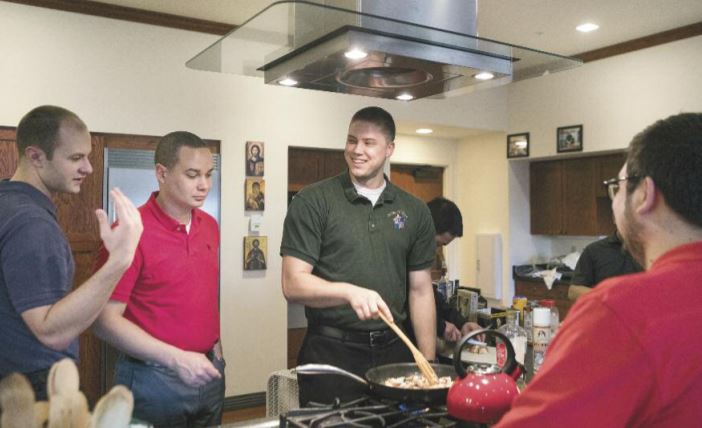
Seminarian Andy Hammeke, center, learns to prepare healthy meals with classmates during January Interterm classes at Saint Meinrad Seminary and School of Theology. (Photo courtesy of Saint Meinrad Archabbey)
Hammeke has been studying at Saint Meinrad Seminary and School of Theology in Saint Meinrad, Ind.
Typically, a seminarian has one year of school left after being ordained a transitional deacon before his ordination to the priesthood.
A Hays native, Hammeke began his studies in 2012 after earning a bachelor’s degree at Fort Hays State University.
Hammeke, 27, is the son of Curtis and Annette Hammeke of Hays, the grandson of Denis and Arlene Stastney of Dwight, Neb. and the late Norman and Jolene Hammeke.
He grew up in Immaculate Heart of Mary Parish in Hays and attended Thomas More Prep-Marian Jr.-Sr. High School. Upon graduating from TMP, Hammeke attended Fort Hays State University, playing baseball for the university.
When he began weekday Mass attendance during his fourth year of college, Hammeke said his teammates started asking questions about God and faith. He took those questions to the Wednesday night discussions with Father Fred Gatschet at the campus center.
“I learned a lot by answering the questions of my friends,” he said. “That’s what sparked my whole curiosity for the faith. I really fell in love with the truths of the faith.”
He spent two years at Conception Seminary College in Conception, Mo., studying philosophy. Hammeke is finishing up his Theology III year at St. Meinrad, which has included more parish ministry work.
“It’s been good practice being in the local parishes,” he said. “It’s good preparation for diaconate ordination.”
Hammeke is a familiar face around the diocese, as a previous staff member of both Totus Tuus and Prayer and Action.
“I was able to meet youth and parents and leaders from across the diocese,” Hammeke said of the summer programs. “It was also the best opportunity to meet priests from throughout the diocese. I’ve always been proud of my hometown, but it was during those summers I fell in love with the diocese as a whole.”
The summer of 2016 was one of Spanish immersion for Hammeke at Pittsburg State University in Pittsburg. During the 2015 summer, he was in Wichita at Wesley Medical Center working as a chaplain.
“(Wesley) is not a Catholic hospital, so I had to learn how to minister to all different denominations,” Hammeke said. “It was the hardest thing I’ve done thus far.”
He said he is thankful for all of the support he’s received from across the diocese during his formation.
“I’m looking forward to making promises to give myself to the diocese and serving the people,” Hammeke said.
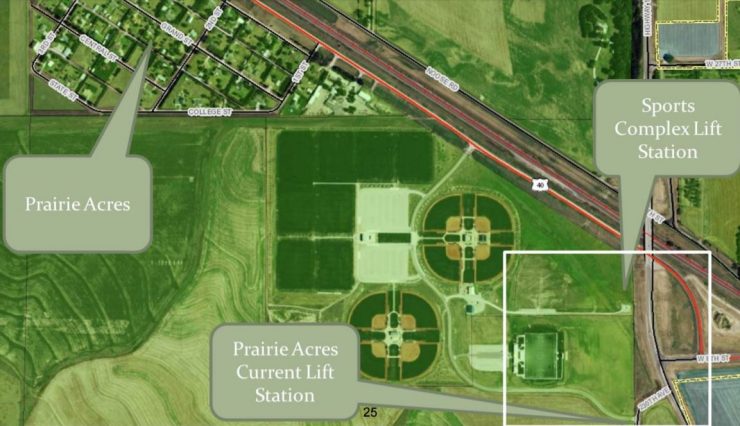
Prairie Acres current lift station location (Click to enlarge)
By BECKY KISER Hays Post
After years of discussion, the city of Hays and Prairie Acres, a residential development Just west of the city limits on old Highway 40, have reached an agreement to tie the private Prairie Acres sewer lift station into the city’s lift station.
Prairie Acres is a private sewer district. The system connects with the city’s sewer system and has been treated at the wastewater treatment plant since 2004.
The aging Prairie Acres meter has resulted in difficulties for city staff to determine accurate billing. It’s also become very time consuming for the city clerk’s office, according to Jeff Crispin, interim director of water resources.
“Waste water is typically very difficult to measure,” Crispin explained to city commissioners Thursday night. “Due to issues with their meter, staff has been estimating flows and billing quarterly based on ‘outside city’ rates.”
According to Crispin, when the Bickle-Schmidt Sports Complex, 1376 U.S. Highway 183 Bypass, was built in 2011, it was designed to receive Prairie Acres’ sewage and eliminate the Prairie Acres lift station. Staff recognized an opportunity assist Prairie Acres and negotiated a new agreement that brings their system up to date with the city’s current billing practices and rate structures.
105 ft. of sanitary sewer pipe will tie the Prairie Acres sewer system into the sports complex lift station. (Click to enlarge)
The project will require installation of 105 ft. of sanitary sewer pipe and a tie-in of the Prairie Acres sewer system to the sports complex lift station.
“The city is able to pay for this project upfront and Prairie Acres will be billed for the improvements as part of their regular bill. We have a 20-year time frame for payback by Prairie Acres, estimated at about $460 per quarter,” Crispin said. The project was included in the 2016 budget with $30,000 set aside in the Sewer Capital line item.
There are 51 homes, 51 sewer accounts, located in Prairie Acres, 28 of which are on rural water from Trego County.
“Within the last couple of weeks, Trego County Rural Water District has installed automated readers out in Prairie Acres,” Crispin announced. “That allows for all their data to be collected via cellphone tower and submitted into Trego County.”
Commissioners unanimously approved the low bid of $37,352.65 by APAC of Hays.
APAC indicated they would begin work in April and complete the project within five working days. No service interruptions are anticipated during this project.
City Commissioner Sandy Jacobs was absent from the meeting.
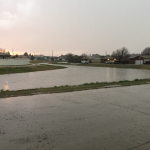
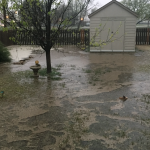
A flooded back yard Wed. night in south-central Hays.
Big Creek
Big Creek
Draw west of Caseys on 27th Street
Draw west of Caseys on 27th Street
Courtesy photo
Photo courtesy Devin Blackwood
Photo courtesy Devin Blackwood
Hays Post
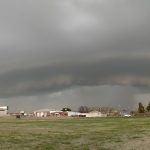
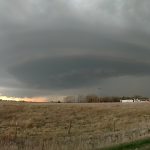
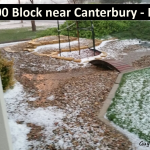
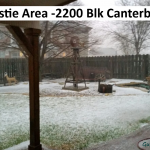
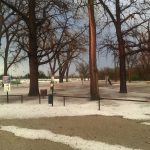
A nasty front that rolled across northwest Kansas on Wednesday evening brought a mix of long-lived hail and heavy rain to Hays and Ellis County.
There was also one unconfirmed report on social media of a funnel cloud that did not reach the ground.
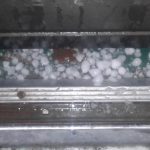
Motorists dealt with flooded streets, and there was at least one vehicle that stalled due to high waters. Most of the hail ranged from pea to marble sized.
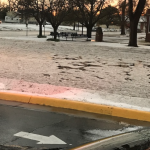
Lincoln Draw, as well as the draw west of Casey’s on 27th Street saw significant flooding. The hail lasted nearly an hour in portions of Hays, while other parts of the city saw short-lived hail and heavier rain.
Official precipitation reports will be available Thursday morning. Reports from the south side of Hays were 2.2 inches of rain in the gauge.
Send your storm photos and videos to Hays Post at [email protected].
Crews are scheduled to resume demolition of the former Ambassador and Conference Center, 3603 Vine, this week.
Carl Britz, co-owner of American Wrecking Services, Kansas City, Mo., said crews were shut down for the second time earlier this year because they found asbestos. He said they are scheduled to begin work again Wednesday.
As a demolition contractor, Britz said he works closely with the Kansas Department of Health and Environment. Whenever his crews come across environmental concerns, they stop demolition.
“I don’t care what the job looks like. Where it’s at, I’ll stop.” Britz said. “I will generally pull equipment off until environment issues are cleaned up and taken care of and that’s exactly what we did there.”
Britz said the hazardous material was found in sheet rock in a few rooms crews were stripping before demolition. He said it was not a result of something they did and that it was “nothing major.”
Britz said crews come across asbestos during almost every job and an environmental company was brought in to clean up the hazardous material, approximately 10 trash bags full. They had the company complete a sweep of the building to make sure there is no asbestos left in the building and do not expect any more issues with asbestos.
People can expect to see crews working in that area again this week, according to Britz, and he said people will see, “more demo, more cleanup and more of a mess.
“It gets worse before it gets better,” he added.
When they began working, they had a timeline of five weeks, but the two delays pushed that timeline back. Britz said he now wants to be done with the demolition and cleanup by the middle of May.
11U Hays Expos went 5-0 over the weekend to bring home the First Place Trophy at the USSSA Manhattan Golden Glove Championship Turf Tournament in Manhattan.
Back row: Joe Sanders, Scott Roe, Lane Lummus
Middle row: Cooper “Tiger” Johnson, Daniel Giebler, Corbin Werth, Lex Lummus, Camden Sanders, Nolan Dreher
Front row: Charlie Roe, Gunner Cox, Will Linenberger, Cooper Sanders, Braxton Banker
Spring sports season is here! Submit photos and information on youth tournaments to [email protected].
Gov. Brownback with Weber’s parents, Sen. Billinger and Rep. Ken Rahjes. Office of the Governor
By JONATHAN ZWEYGARDT Hays Post
TOPEKA – Kansas Gov. Sam Brownback officially signed Joey’s Law on Friday at a ceremony at the Kansas Statehouse.
The bill, aimed at protecting drivers with cognitive disorders was created in honor of Joey Weber. In August 2016, Weber was shot and killed by a Hays police officer during a brief struggle following a traffic stop.
The law issues a placard to a person that “needs assistance with cognition.” State Sen. Rick Billinger, R-Goodland, introduced the measure in the Kansas Senate and said the goal of the law is that something like this never happens again.
“Hopefully, this will be another tool for law enforcement that they will have a heads up ahead of time, to know that there’s a special-needs issue here,” said Billinger.
The law also allows for a notice on a license plate, a driver’s license or vehicle registration. It is voluntary to provide that information, and individuals can choose any option they would like.
Billinger said members of the law enforcement community, as well as groups representing those with autism and developmental disabilities, testified on the bill on Topeka.
He also said he hopes this will help spread awareness and understanding surrounding cognitive diseases.
“Not only to the law enforcement community,” Billinger said, “but also just the general public. Be kind to these folks that have cognition issues. If you have ever see anyone having a struggle with this or that, help them.”
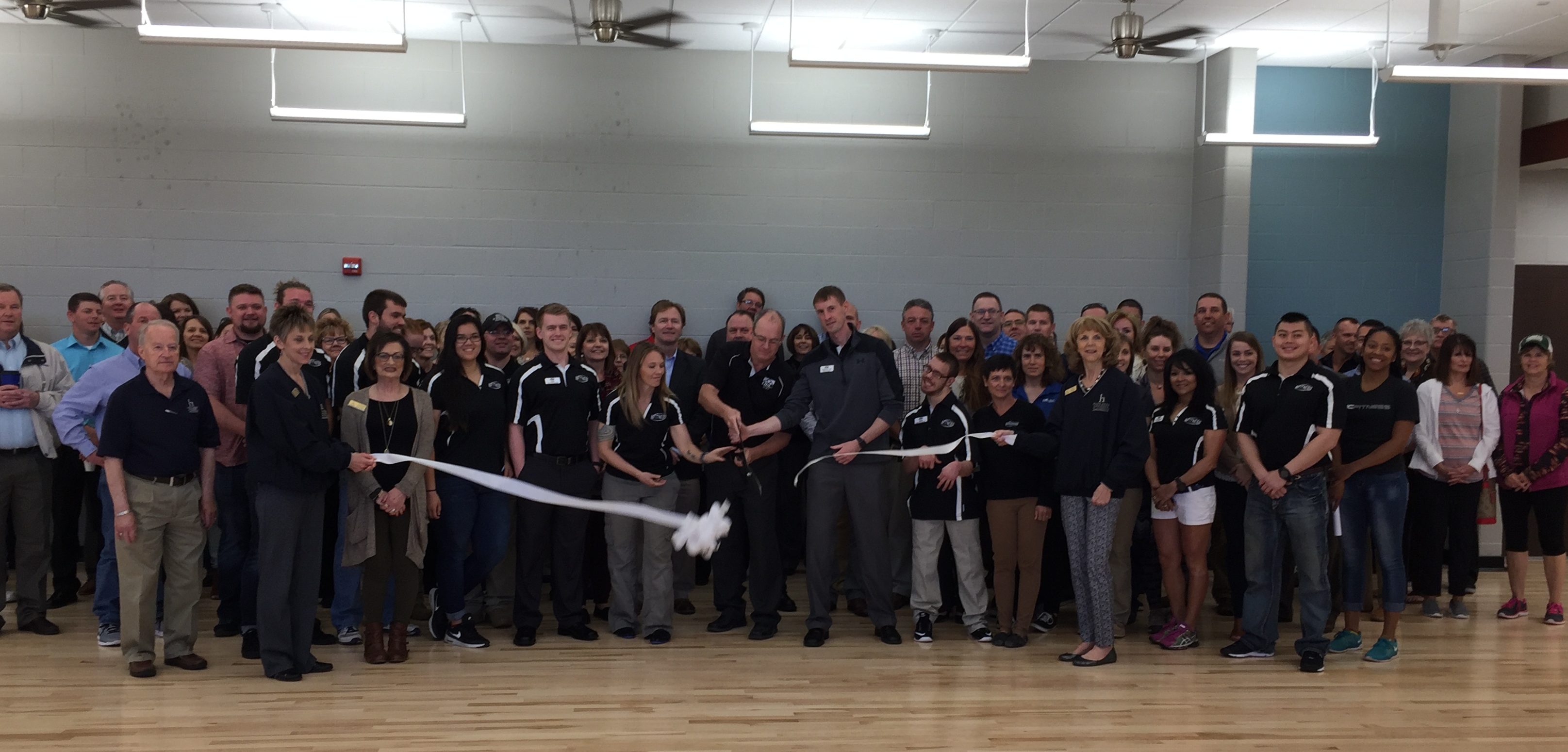
HRC Superintendent Roger Bixenman said the new facility will help increase the quality of life for the people of Hays.
“We’re getting more people out and getting them more active,” Bixenman said. “Everybody that has walked in our doors since we’ve been open have been really excited about the new layout and new equipment.”
The new facility has also extended its weekday hours to 10 p.m. and opens at 4:30 a.m. for early birds looking to get in before work.
For more information on rates or to see a list of offered programs, visit the HRC website here.
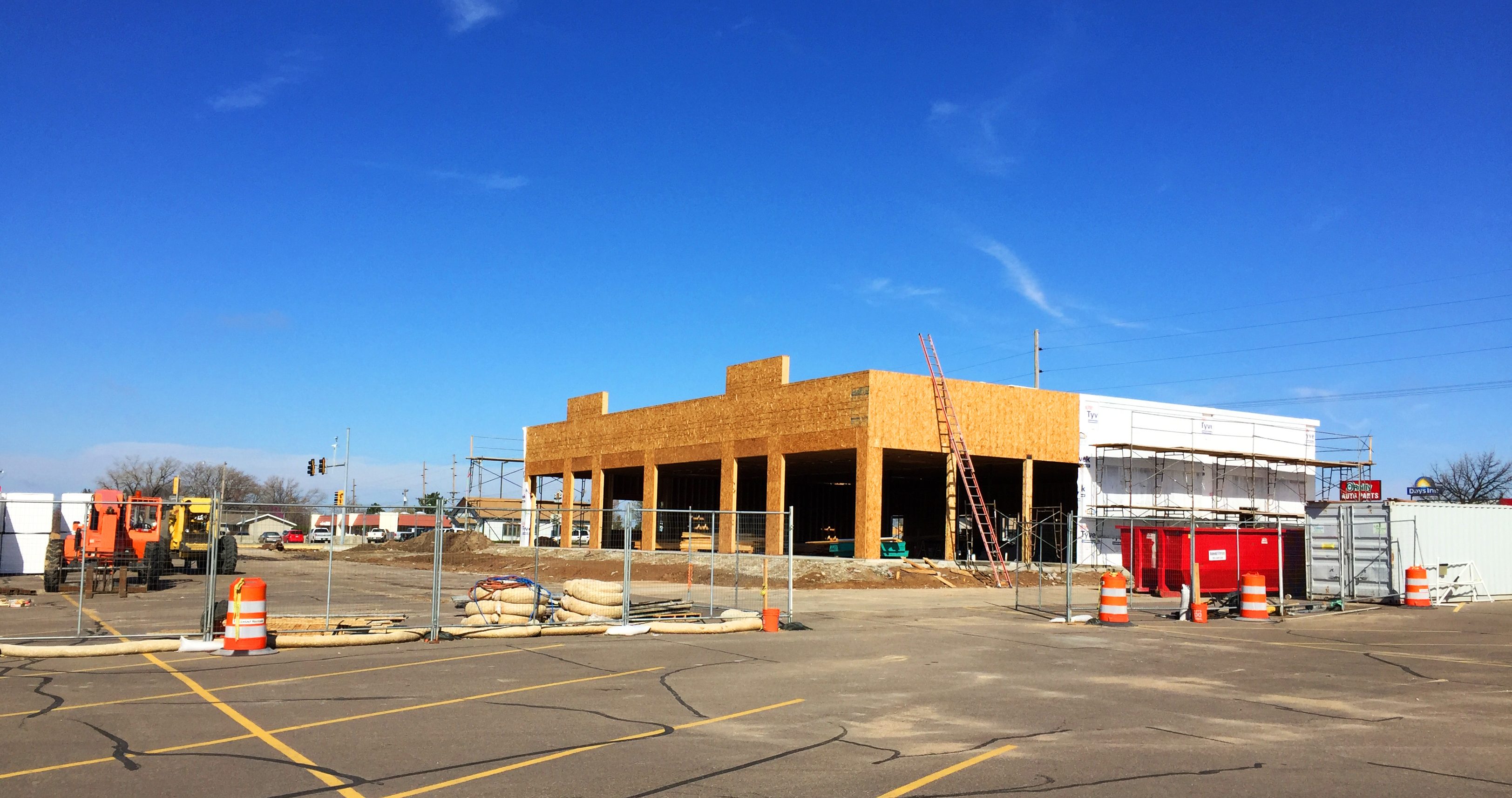
A new HaysMed Convenient Care Clinic and a Starbucks Coffee is under construction on the northwest side of Big Creek Crossing.
Hays Post
Construction of a new convenient care clinic and coffee shop in Hays is on schedule, according to the property manager of Big Creek Crossing, 2918 Vine.
“It’s really coming together,” said Steve Toth of DP Management. “The shell of the building should be completely enclosed and ready for the tenants’ finish in mid-May, on schedule.”
The outbuilding at the northwest corner of the mall property will be home to a new HaysMed Convenient Care Clinic and a Starbucks Coffee.
HaysMed anticipates the clinic will be open later this summer.
Toth said progress at Big Creek Crossing has been positive, noting the harsh retail environment in 2017.
“We retained J.C. Penney, that’s a huge step,” he said. “There are a lot of malls in similar size and markets that are scrambling trying to find a replacement for J.C. Penney.”
J.C. Penney last month announced it was closing 138 stores nationwide. Hays will keep its Payless shoe store, as well, after that retailer announced its bankruptcy and plans to close 400 stores nationally this month.
Stage also continues to be a strong tenant, Toth said.
Stage recently acquired select assets of the Gordmans chain, as well.