We have a brand new updated website! Click here to check it out!

Hays USD 489 board to decide on new architectural firm for the district

By GARRETT SAGER
Hays Post

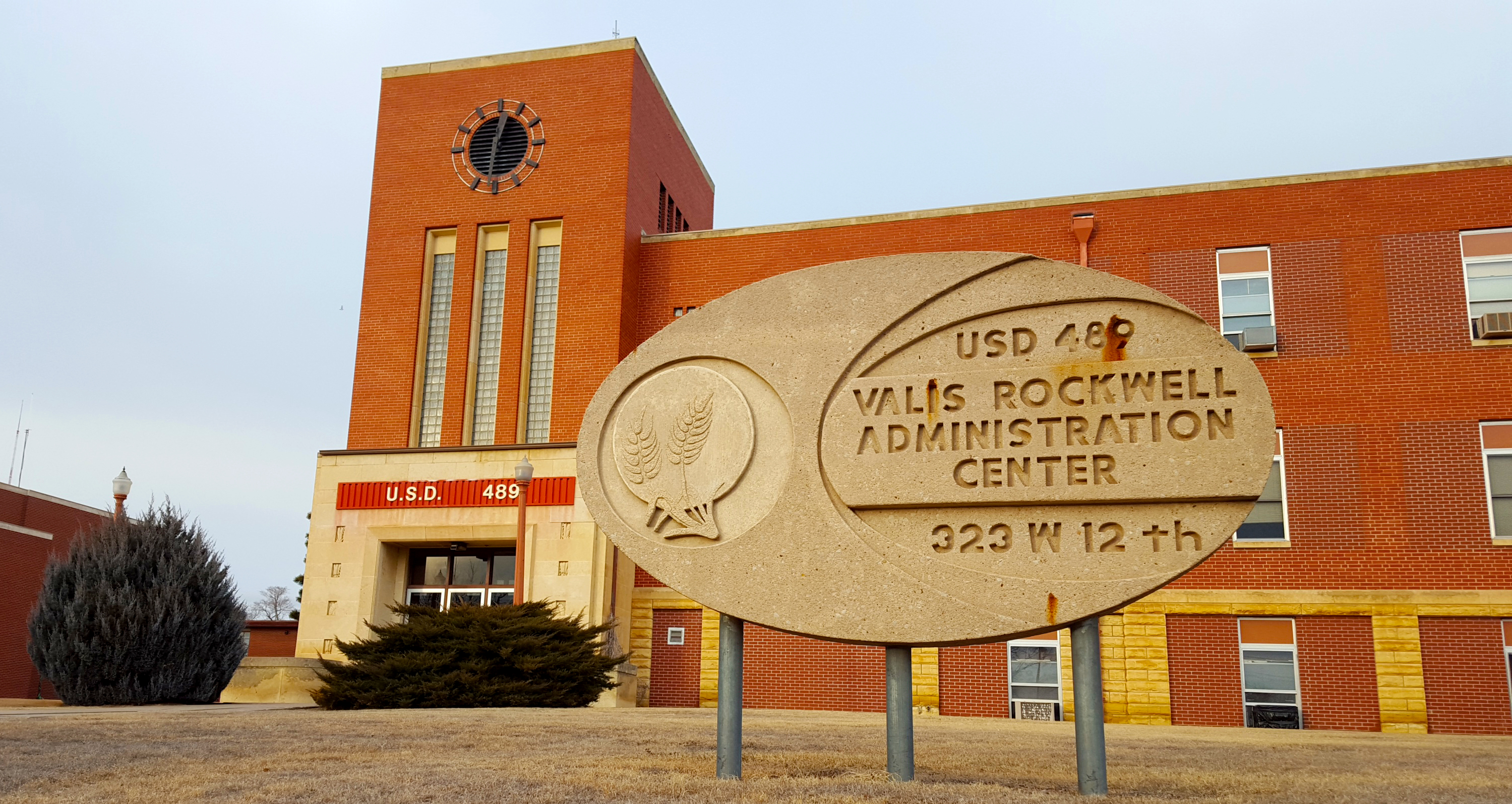
At 5:30 p.m. Monday at the Rockwell Administration Center, the Hays USD 489 Board of Education will make a selection on which one of the architectural firms to use for the district capital outlay plan.

Firms the district will choose from are Hollis and Miller, Schafer; Johnson, Cox, Frey Architectural Firm; and DLR Group.

Hollis and Miller, a firm out of Overland Park, is 100-percent focused on education with three sectors to its firm — Public K-12, Private K-12 and Higher Education.

Wichita-based SJCF is a more diverse firm that handles many projects, but has still handled 26 bond issues in the last 10 years.

DLR Group is the only of the three firms that has worked a successful bond election in western Kansas.

Recently, DLR Group completed award-winning work on the bond election in Garden City.

Board President Lance Bickle and Superintendent John Thissen spent Dec. 7 in the Kansas City area visiting DLR Group, and Hollis and Miller and reported back to the board on their impressions at the board meeting last Monday.

UPDATE: Business, police seek information about Monday ATV theft in Hays

By JONATHAN ZWEYGARDT
Hays Post

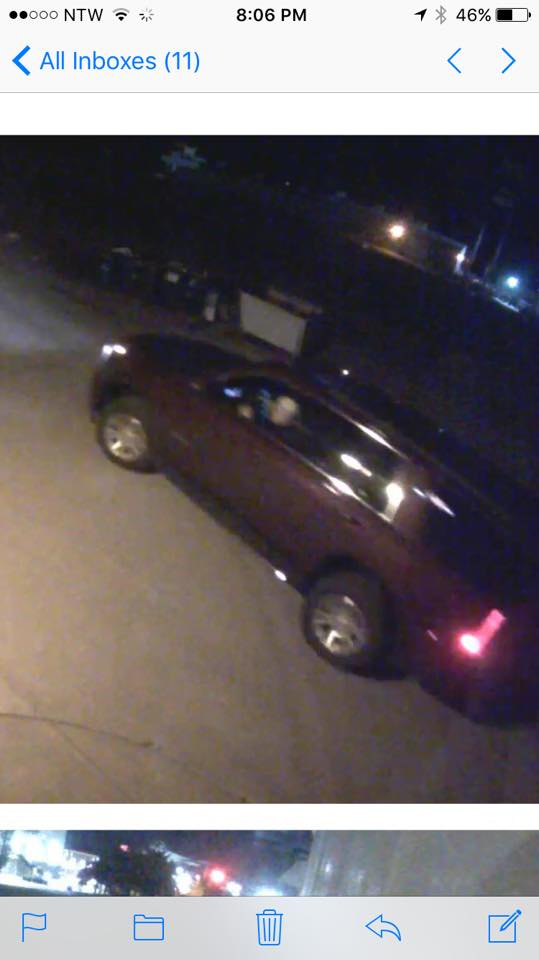
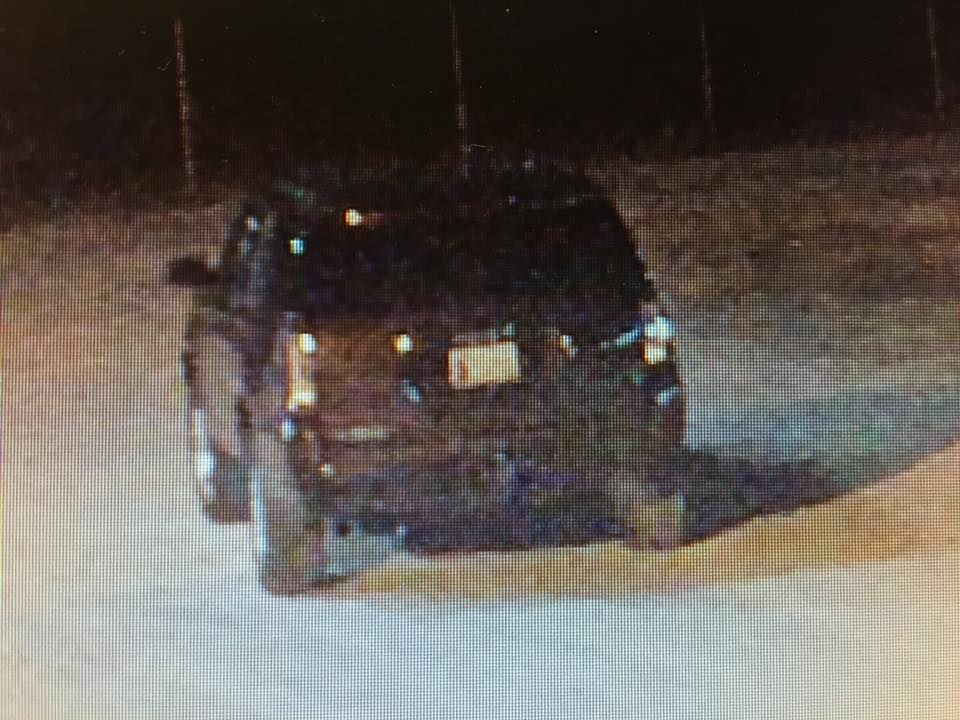
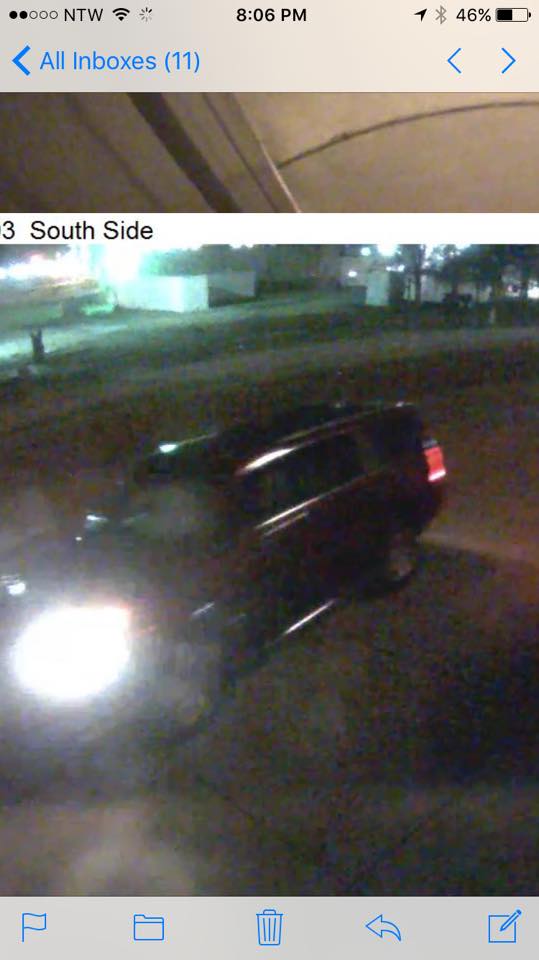
bos-suspectUPDATE:

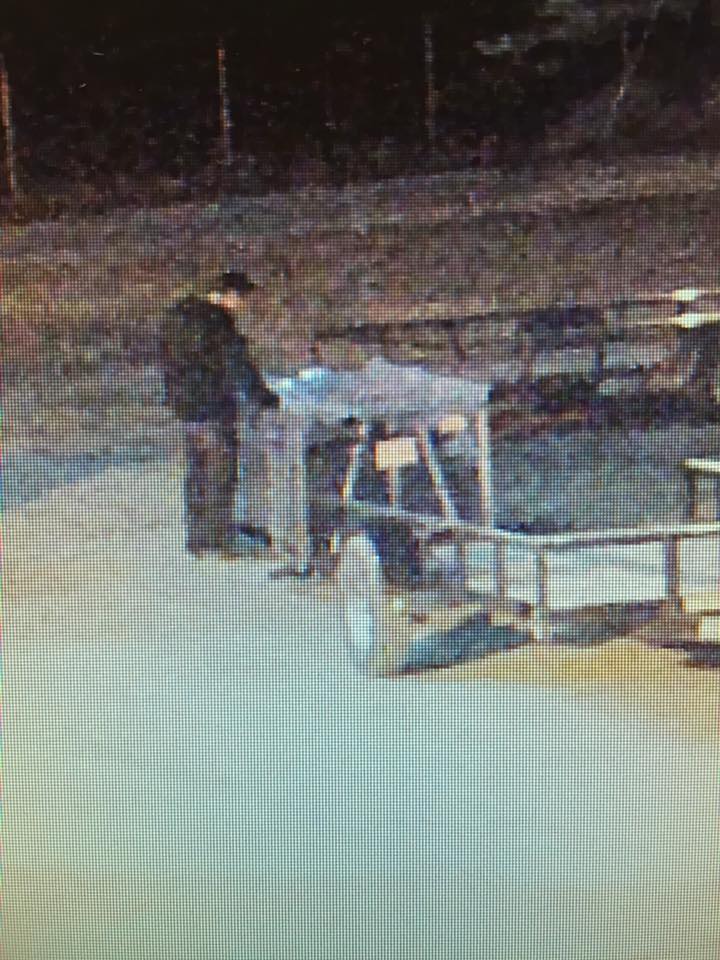
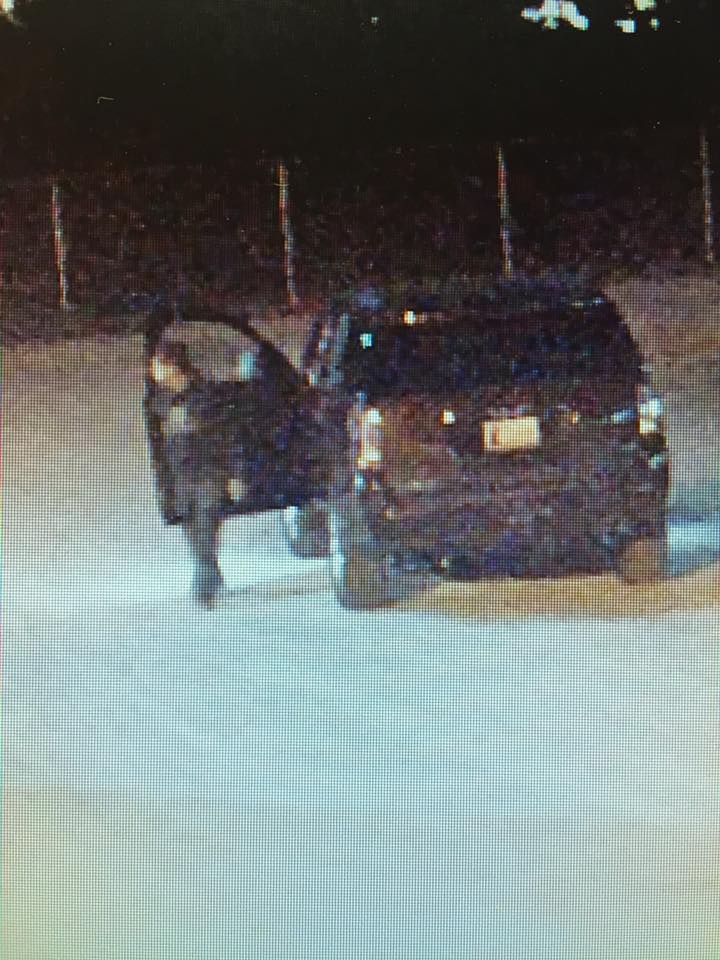
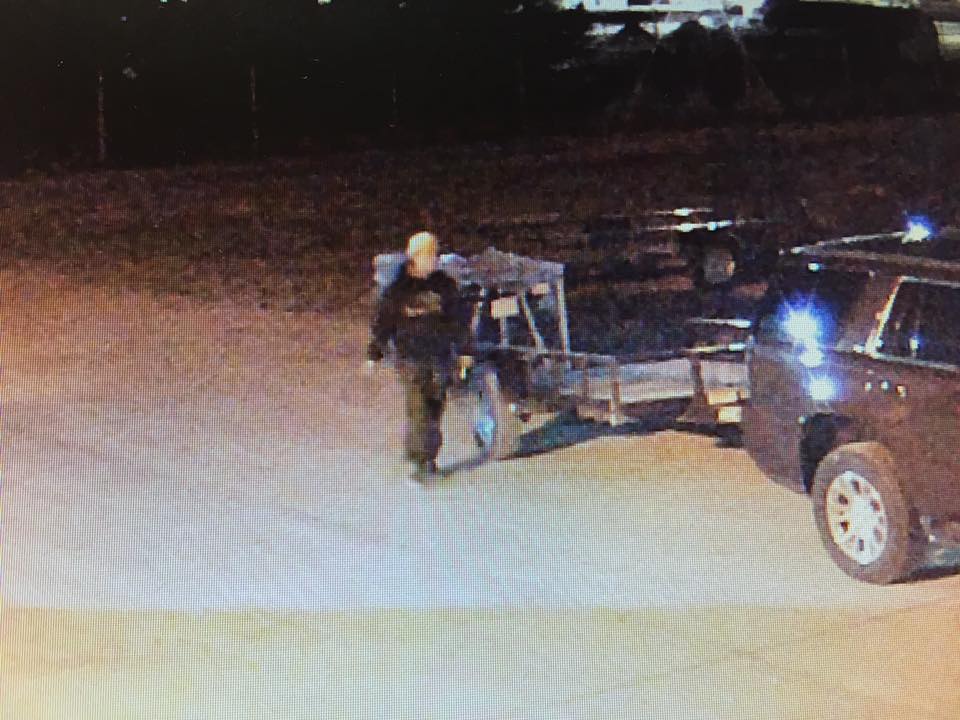
The Hays Police Department has released the photo of an individual they believe is connected to the theft at BOS Motorsports Monday night.

BOS Motorsports said the picture was taken at another business in the same area in north Hays.

They are asking that if anyone recognizes the individual in the picture to contact law enforcement.

——

A Hays business and local law enforcement officials are asking the public’s help in locating a stole ATV.

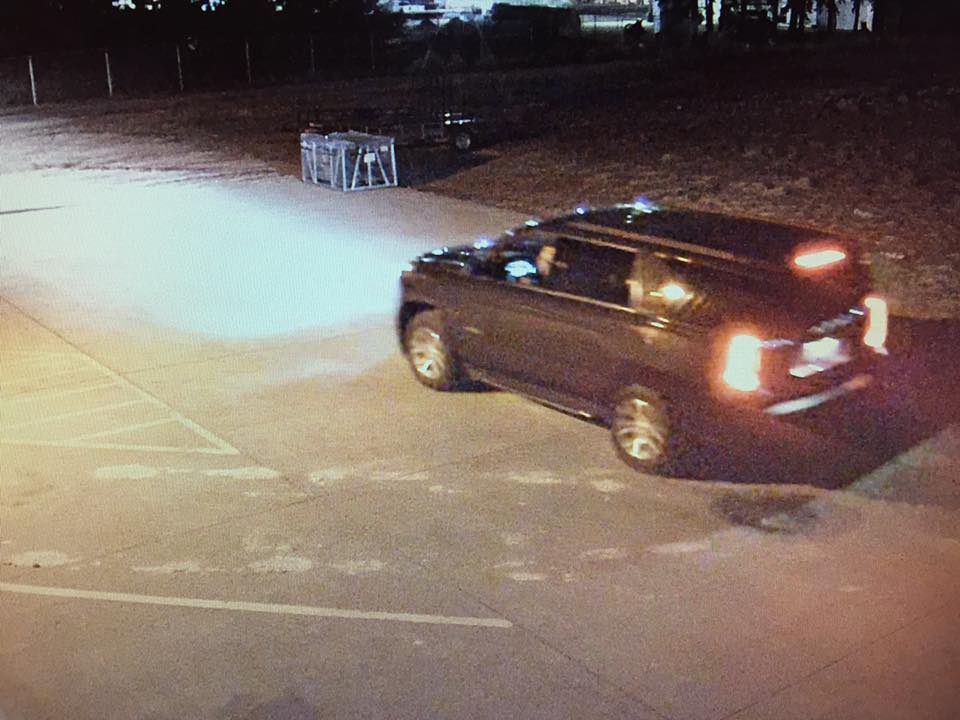
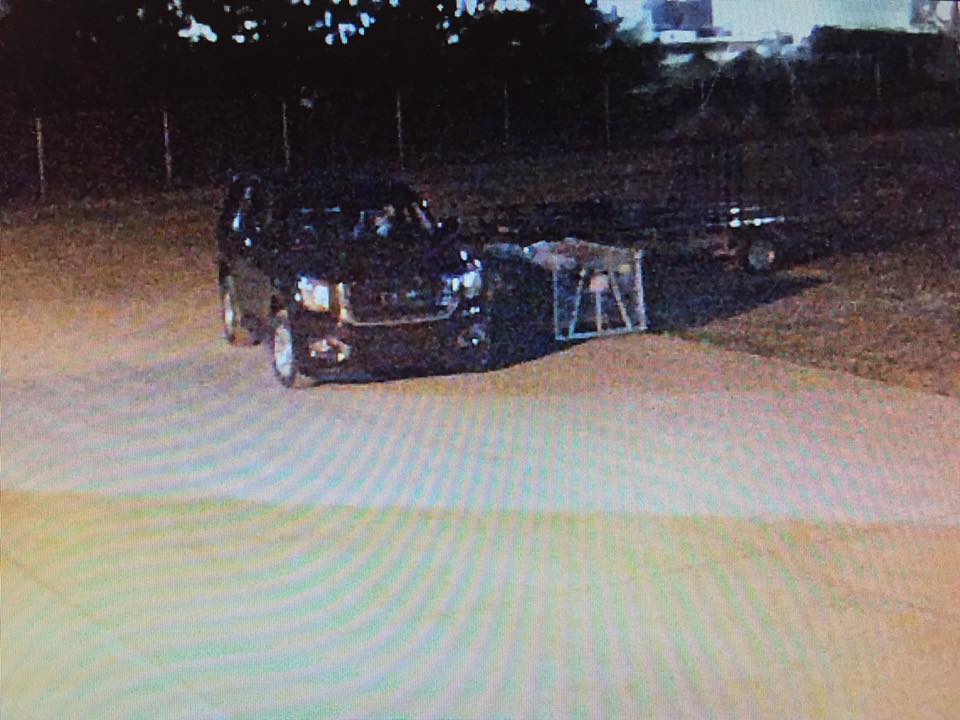
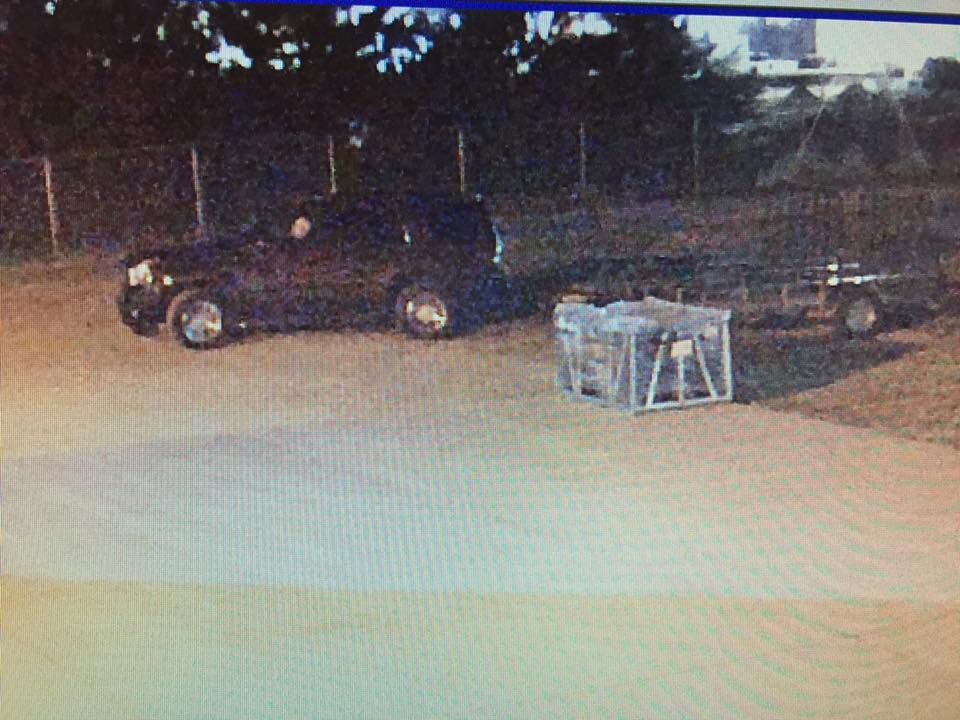
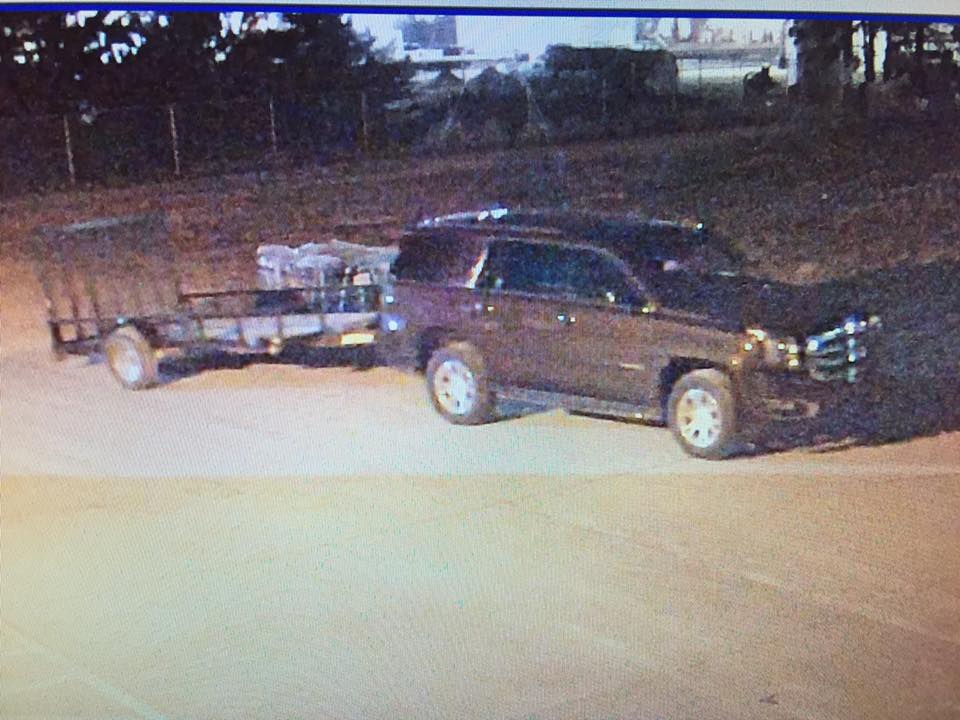
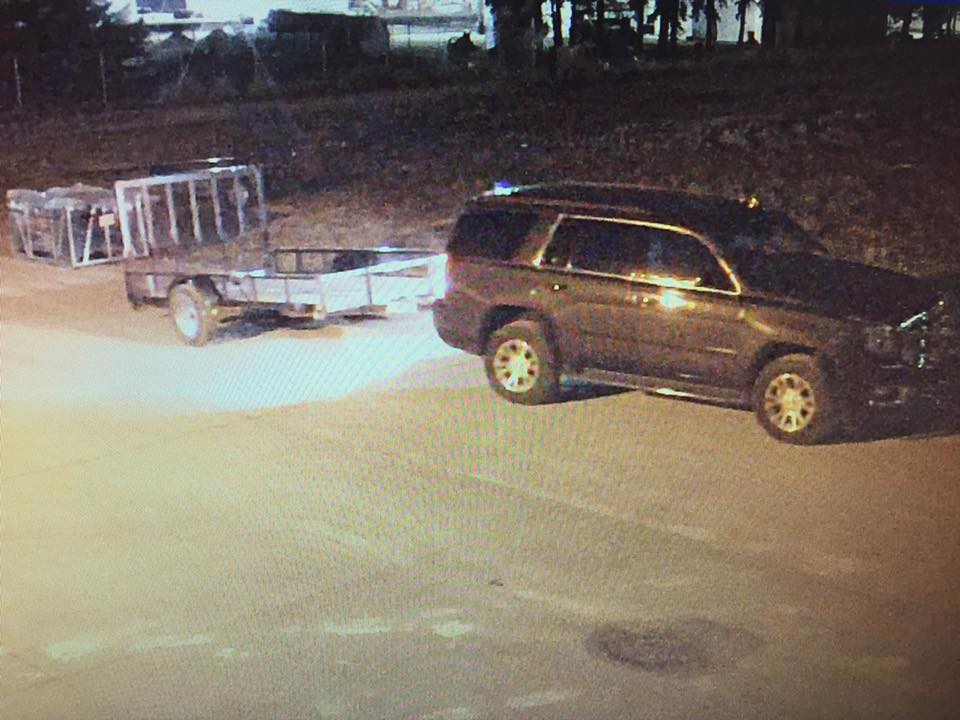
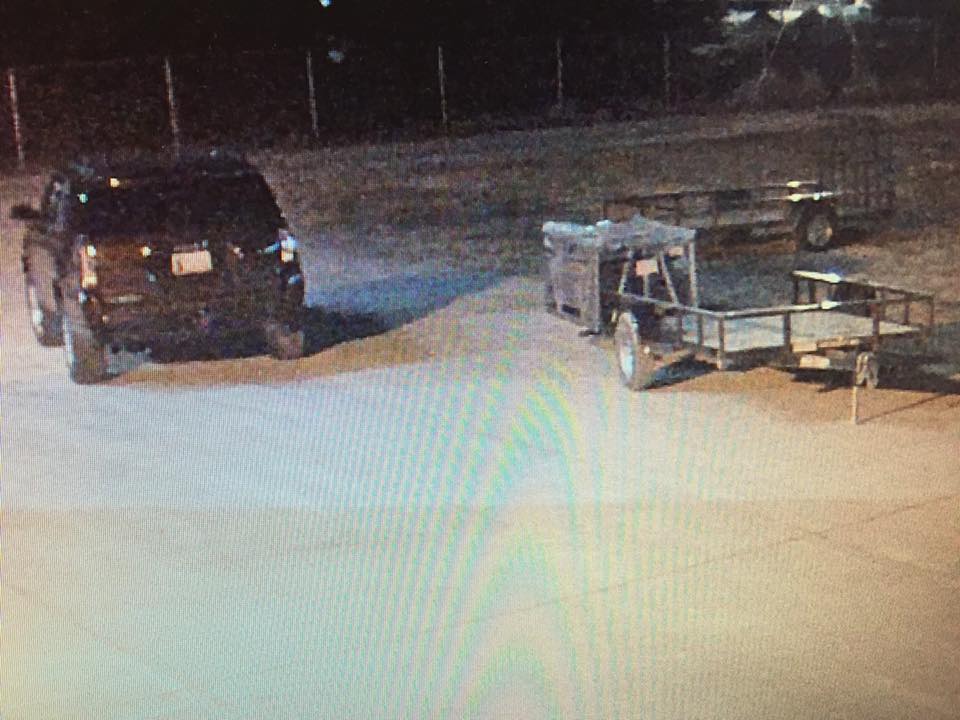
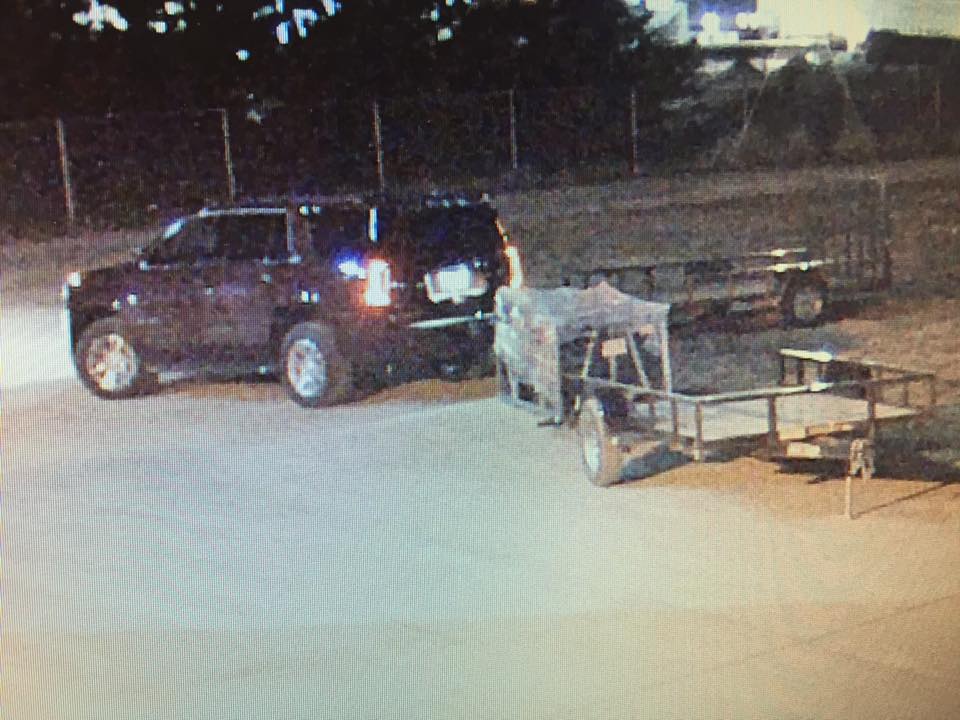
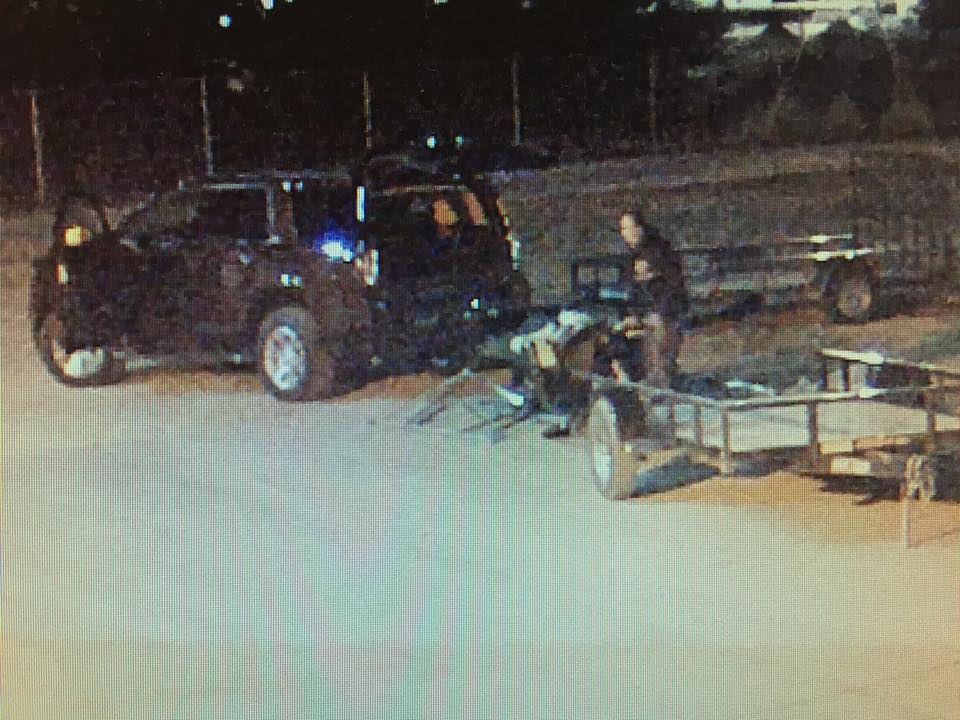
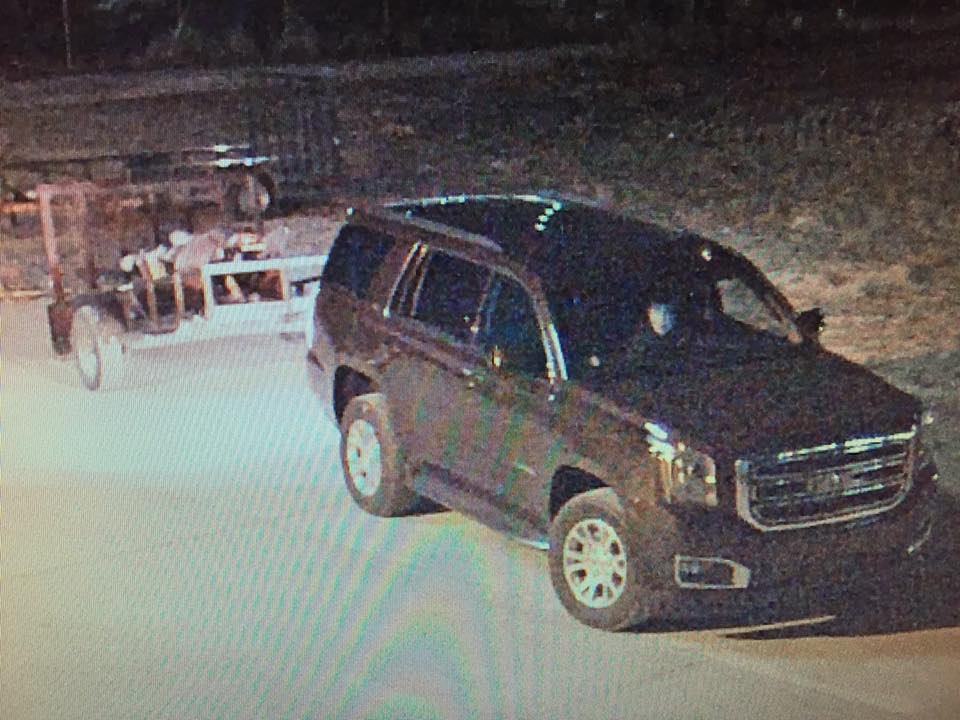
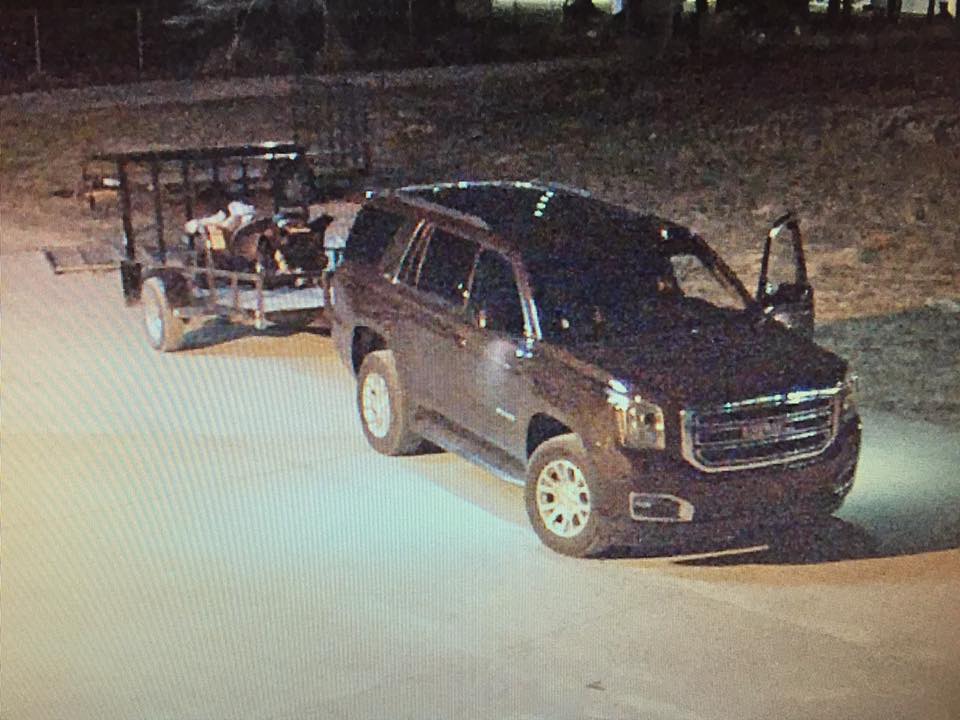
According to BOS Motorsports’ Facebook page, at approximately 7:50 p.m. Monday, the driver of a GMC Yukon took a trailer and a new four-wheeler from their lot at 1210 East 43rd.

The suspect’s vehicle is a maroon or burgundy newer model GMC Yukon. Surveillance video showed the vehicle drive through BOS’ lot at approximately 6:15 p.m. and then return to steal the four-wheeler and trailer.

The suspect is a white male with dark hair. It is also believed he is also a smoker.

The four-wheeler is a gray 2017 Polaris Phoenix 200. The trailer was located Wednesday in Trego County.

Anyone with information on the theft or if anyone recognizes the suspect or the vehicle is asked to contact BOS or law enforcement authorities.

🎥 Proposed property purchase may lead to future fire station

fire-station-map-1
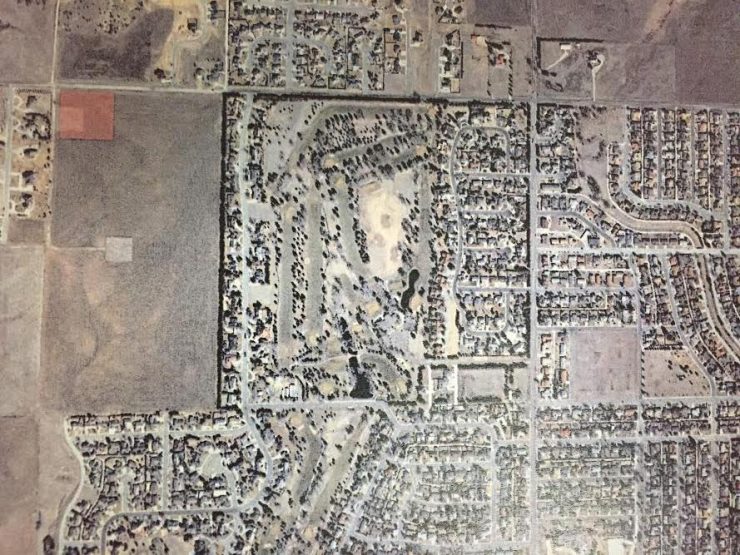
The city may purchase 4 acres of land in northwest Hays to protect its water wells from future residential development and possibly build another fire station.

By BECKY KISER
Hays Post

The city of Hays is considering purchasing a four-acre tract of land in northwest Hays to protect a water production well and access to it from encroachment by future development.

The land, south of 41st Street and west of Covenant Drive, may become home to another fire station.

According to Hays City Manager Toby Dougherty, the city has two water production wells and three monitoring wells on an 80 acre tract of property owned by Philanco West LLC, and pays a monthly lease for the wells.

“We know at some point this is going to develop, most likely in a residential manner,” Dougherty said to city commissioners during their Thursday night work session. “We’re always cognizant of protecting the wellhead and the ability of the well to keep producing.”

For several years, the city has also wanted to purchase property in the northwest part of town for the future location of a fire station. The Hays Fire Department has done significant reviews and determined this property is “an excellent location” for a second fire station. It has quick access to the current and future residential development in the north and western parts of Hays.

The property owner is asking for $200,000 for the four acres.

“Right now we pay the land owner $1,043.99 for leases for access and to have the (water) facilities on this property. In addition to the $200,000, the landowner has requested the lease payments go from a thousand dollars down to $700 a month. So we would capitalize $343 a month on the property. Over 20 years, it comes out to roughly $120,000 just in lease savings–a direct monetary benefit–plus protection of the well,” Dougherty said.

City staff suggests buying the property with $120,000 coming from water sales taxes and $80,000 coming from City Commission Capital Reserve which are General Fund monies.

Dougherty said the city “could use a fire station in that area right now if we had the money.” The main fire station is located downtown at 15th and Main Streets. The airport fire station in southeast Hays can be expanded with two bays and living quarters to house firefighters around the clock.

“Fire Chief Gary Brown, I think, tries to get no more than a 9-minute response time (to emergency calls.) Some areas are getting outside of that time. This location also provides quick access to the Vine Street commercial corridor north and south of I-70. Assuming development at Exit 157, you come out right here at the Highway 183 Bypass.

“The fire department always has to pay attention to the train schedules if there is a fire on the south side of the railroad tracks. Their alternate route is to cut over to 13th Street and then go over the Bypass if there is a train coming through. This new location would allow access to the southern part of town and Fort Hays State University if a train is coming through.

“The way the city’s laid out, you could serve it with that 9-minute response time with the three fire stations. This does position us in the future to cover Hays very efficiently,” Dougherty said.

The land purchase recommendation, which was an add-on to Thursday’s city commission work session agenda, will be moved to a future city commission meeting for possible action.

🎥 High Plains Farm Credit celebrates 100th anniversary with gift to FHSU

farm-credit-slider
High Plains Farm Credit board members (Photo by Mitch Weber)

By DIANE GASPER-O’BRIEN
FHSU University Relations and Marketing

Farm Credit has been devoted to agricultural financing for 100 years.

High Plains Farm Credit, which covers 22 counties in central Kansas, celebrated its milestone anniversary in style with a $250,000 donation to Fort Hays State University.

The gift will be divided in half between the Department of Agriculture and the Department of Economics, Finance and Accounting.

mccartney-placque-1
One of four bronze relief plaques depicting the early history of Kansas agriculture adorning the High Plains Farm Credit Lobby in FHSU McCartney Hall. The artist is J.R. Hahn.

The donation was announced at a news conference Wednesday, Dec. 14, in the High Plains Farm Credit Lobby in McCartney Hall. The area, named in honor of High Plains Farm Credit, features large displays with the organization’s history on the north and south ends of the first-floor lobby, as well as four bronze reliefs depicting a Kansas farm through its first 100 years.

Members of the FHSU community gathered to thank High Plains Farm Credit for the donation, which will help provide scholarships and services for Fort Hays State students.

“This will be utilized to increase scholarship opportunities for our students and allow us to provide state of the art agriculture technology for our production and management students,” said Don Benjamin, interim chair of the Department of Agriculture. “It will be utilized greatly within our department.”

The majority of the gift will be used for scholarships — $80,000 to each department — with the remaining $90,000 ($45,000 each) supporting the departments’ unrestricted accounts.


(Video by Becky Kiser, Hays Post)

“Unrestricted funding is very valuable,” said Mark Bannister, dean of the W.R. and Yvonne Robbins College of Business and Entrepreneurship.

“It can be used to purchase equipment or fund new initiatives,” he said, adding that it is especially valuable with anticipated state budget cuts.

Marissa Bland, a senior agriculture student from Lucas, talked about how scholarships helped her make her way through college without any debt.

“That has been attainable because of generous donors like you,” she told the group of High Plains Farm Credit board members present at the news conference.

For years, High Plains Farm Credit has funded two scholarships for Fort Hays State students, but this is by far its largest one-time gift.

Doug Thurman from Larned, president and CEO of High Plains Farm Credit and an FHSU alum, is proud of the fact that “one-third of our employees are Fort Hays State graduates.”

“I’m proud that out of 36 employees, all were born in western Kansas, ” Thurman said. “Our roots are really deep in western Kansas. ”

“This will help solidify the bond between the Farm Credit and the university even more,” board member Tim Benoit from Damar said.

Benoit also is an FHSU graduate, as is his wife and daughter. His son, Alex, will graduate from Fort Hays State this week and return to the family farm.

Benjamin said there are 299 agriculture majors on campus and 19 online this year. That was an overall increase of about 25 from a year ago, and currently show about an 8 percent increase in applications for next year.

FHSU photographer Mitch Weber takes official photos of the High Plains Farm Credit donors.

He said the additional scholarship opportunities for agriculture majors will be invaluable to a growing program. Benjamin cites two major reasons for the increase: Price point and experience.

He used as an example one agriculture major from Colorado who “drives through Fort Collins, Colo., to attend Fort Hays State because it’s less expensive to go to school here. To her, it’s economics.”

He also said the experience on the university farm that students receive is priceless.

“We can teach them the theory behind the subject in the classroom,” Benjamin said, “but we can’t teach them the experience.”

Bland agreed.

“The college is blessed to have such a great college farm to work with and instructors who work tirelessly to help students learn and achieve their goals,” she said. “Your gift will allow the farm to improve some of the facilities and equipment.

“The agriculture department as well as the business department are very thankful of your donation and your confidence in Fort Hays State University to continue to grow and excel.”

Former Pres/CEO of Kansas Board of Regents named interim president at Fort Hays State

Tompkins
Tompkins

Kansas Board of Regents

TOPEKA – The Kansas Board of Regents on Wednesday announced the appointment of Dr. Andy Tompkins as Interim President at Fort Hays State University.

“There is no one in the State of Kansas who has more experience as a leader in education, or who is more qualified to assist in this capacity,” stated Zoe Newton, Chair of the Kansas Board of Regents. “I appreciate the opportunity to work with Dr. Tompkins again. The Board is confident he will be able to successfully oversee Fort Hays State, especially because of his extensive knowledge of FHSU.”

Dr. Andy Tompkins became president and CEO of the Kansas Board of Regents on June 1, 2010, and retired from the position on June 30, 2015.

Throughout his career, Dr. Tompkins served at all levels of public education, beginning as a high school English teacher in 1969 and continuing on to work as a high school principal and district superintendent. In 1994, he was hired by Pittsburg State University as Chair and Associate Professor in the Department of Special Services and Leadership Studies. He then went on to serve as Interim Dean for the College of Education at Pittsburg State (1995-1996), a position he returned to as Dean from 2007-2010.

In 1996, Dr. Tompkins was asked to serve as the Commissioner of Education for the Kansas Department of Education, a role he continued in through 2005. Afterwards, he served as an Associate Professor at the University of Kansas, teaching in the Department of Educational Leadership and Policy Studies, before returning to Pittsburg State.

Dr. Tompkins was selected as Kansas Superintendent of the Year in 1992, was inducted into the Kansas Teachers Hall of Fame in 2001, and received the Governor’s Award presented by the Kansas State High School Activities Association in 2002. He was the recipient of the Leadership Kansas Alumnus of the Year Award (2002), received the University of Kansas College of Education Distinguished Service Award in 2004, and was given the Emporia State University Distinguished Alumni Award in 2005. He earned his undergraduate degree in English at East Central State University in Ada, Oklahoma. He earned his master’s degree from Emporia State University and his doctorate from the University of Kansas in Educational Administration.

The appointment was made necessary after Dr. Mirta M. Martin resigned her position as FHSU president in November.

Misinterpretations, lack of context plague embargoed FHSU faculty survey

By GARRETT SAGER
Hays Post

Lost in the confusion at Fort Hays State University that followed the resignation of Dr. Mirta Martin from her post as president is a survey sent out to many of the faculty and staff at FHSU — a survey that may of played some role in her departure.

Since pieces of it were used to demonstrate dissatisfaction in Martin’s leadership at a October meeting with the Kansas Board of Regents, the survey, which was delivered to Hays Post by an anonymous FHSU employee, since has been shut down by an internal panel and a gag order has been placed on discussing its contents.

Dr. Carl Miller, FHSU Faculty Senate president and associate professor in the philosophy department, said he used the meeting with the Regents as an opportunity to “alert the board that we were aware of some troubling information about the administration.”

In November, the Institutional Review Board at FHSU ordered all copies of the unredacted and redacted survey and data it contained be destroyed.

But the survey played an instrumental role in the controversy leading up to Martin’s resignation on Nov. 23. During that October Faculty Senate meeting, Miller told the Regents the survey showed a “broad range of discontent” among faculty and staff.

Miller told the Regents the Senate had conducted a survey, and it said that 66 percent of the respondents indicated they would be likely to leave FHSU if they could find another job.

But that interpretation lacked context, according to the senator assigned to conduct it. Dr. Gary Brinker heads up the university’s Docking Institute, but was acting in his role of faculty senator during the investigation.

The survey given out to faculty members in October only covered Martin’s proposed change to the caps and overloads policy and how the policy would affect the individual faculty members from a personal and financial perspective. The survey was not intended to seek opinions on Martin’s overall competency as president, Brinker contends.

RELATED: Regents expected to name interim president this week.

The Faculty Senate would reject the proposal of caps and overloads and pass a resolution that the university wait to implement until at least the fall of 2017.

In the 56-page document given to Hays Post, faculty members were asked to answer six questions — all of which dealt with a proposed change to the FHSU caps and overloads policy — and then provide personal testimony to why they answered the way they did.

Brinker, a professor in the sociology department, said that, based on the information presented, there have been many false conclusions made about the survey’s findings.

“They’ve absolutely been misrepresented. It’s been falsely misinterpreted, in my opinion” Brinker said. “When you interpret survey results, the context is very important.”

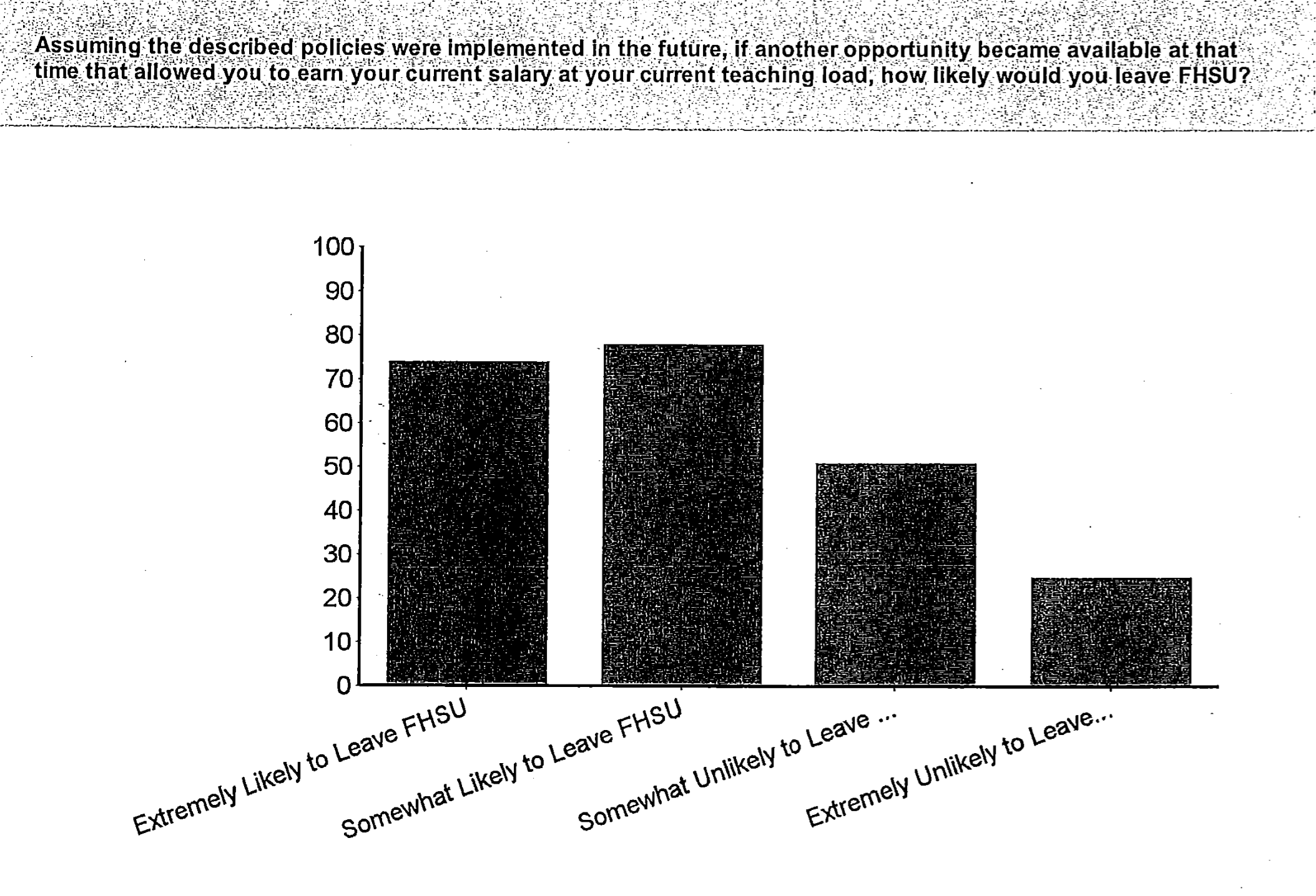
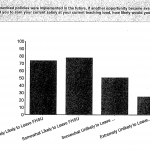
The data Miller used originates from the survey, but the question presented in the survey was: “Assuming the described policies (caps and overloads) were implemented in the future, if any opportunity became available at that time that allowed you to earn your current salary at your current teaching load, how likely would you leave FHSU?”

Miller said he was misquoted in early media reports and that he tried his best to explain to the Regents it was only if the polices were implemented that the faculty would consider leaving.

“I tried very hard to not make the statement that two-thirds of people are looking for work,” Miller said.

Brinker denied that Miller made any attempt in explaining the findings of the survey to the KBOR.

While Miller says he was misquoted, he still believes the 66 percent figure reflected negatively on Martin’s leadership.

The data shows 32.46 percent said they were extremely likely to leave FHSU if the caps and overloads policy was changed, while 34.21 percent said somewhat likely to leave FHSU. The proposed change to the caps and overloads policy would transfer teaching duties to overload classes to adjuncts, which would have meant a loss of income for professors currently teaching those classes.

The data presented to KBOR and reported in the local media was out of context, Brinker said.

“To interpret survey results, you have to give all the context that was given to the respondent when you are interpreting it, or it can be misleading,” he said.

Brinker could not comment specifically how the data was misinterpreted, as it would be a violation of the gag order on the survey.

“I believe I cannot do that because, in order to do that, I would have to refer to the results of the survey. But I will say that anyone who has a copy of that report can read it, and you don’t have to be a rocket scientist to interpret the degree in which it does not provide support for the allegations against Martin,” Brinker said.

Click HERE to view the survey, including comments.

According to Miller there’s been no false interpretations of the survey, adding the KBOR is in possession of the survey.

“If I misrepresented the data, I would then be misrepresenting something I then gave to the Regents,” he said. “They are in possession of it. For me to say something that the survey does not show would be foolish, and I would lose all credibility.”

Miller said he urged the Regents to read the comments section, which he said showed widespread dissatisfaction with Martin.

“I told the board that there was 50 pages of comments that showed dissatisfaction and that they can read them and characterize them for what they are,” he said.

Miller said the comments section does support the notion of a broad range of discontent and dissatisfaction with Martin.

“I’m not sure how you can look at the comments and say that they are overwhelmingly positive like Dr. Brinker believes,” Miller said. “The comment section expresses everything that has been said to me in my discussions with department chairs and various other faculty members that they are displeased with Martin’s leadership.”

The IRB held a special meeting just before Martin’s resignation to discuss the survey. In the short meeting, according to Brinker, IRB panelists asked him if he believed the subjects were harmed, and Brinker said they were not.

Following that meeting, Brinker said he was left with the impression that he IRB would allow him to clarify misinterpretations presented to KBOR, but the opposite turned out to be true.

“I was shocked,” Brinker said. “At the time, I had no idea that President Miller intended to use the study in the way that he did. … The whole purpose of the IRB is to protect the human subjects of my study and they weren’t in danger until the embargo because now the public believes that this survey shows widespread dissatisfaction with Martin, and all these faculty members wanted President Martin fired. If this survey provides no evidence of malfeasances or negative behavior of President Martin, by suppressing that information, you are damaging all these faculty members.”

Brinker thought Miller would use the survey internally to show the Senate whether the faculty did or did not support the a change to the caps and overloads policy.

“I was totally shocked when he (Miller) cited the survey supporting widespread dissatisfaction with President Martin,” Brinker said.

Miller does not recall making any statements of how the survey specifically shows widespread dissatisfaction.

“I tried to be as narrow as possible in presenting the survey. It simply did not show dissatisfaction with Martin’s presidency because that’s just not how it was devised. But, in the comments if you read them, that is where you find the widespread dissatisfaction,” Miller said.

Although he came up with the questions for the survey, Brinker said he suspects the survey was devised to be a tool that would be used in a campaign to smear Martin.

“It appears that’s what it was used for, and I can only assume that’s how it was devised,” Brinker said. “The scope of how the survey was used was beyond what I thought it was going to be used for.”

Miller disagrees with Brinker’s comments and acknowledged the survey was not designed to discern general satisfaction with Martin and her leadership.

“I tried not to use it in that way,” Miller said. “I tried to use it very specifically for the two policies and show that faculty did not support the policies. It did not measure a general dislike.”

Brinker recently resigned from the Faculty Senate because the Senate did not object to how Miller presented the survey.

“I was very upset with what President Miller did,” Brinker said. “He basically used his position as president as a bully pulpit.”

KBOR has acknowledged that they did receive Brinker’s email expressing how the content of the survey was misrepresented by certain individuals at the October meeting. However, KBOR declined to comment on the specific findings in the survey or if they played a role in Martin’s departure.

Because of the nature of the survey, Miller does not believe that the survey played any role in KBOR’s investigation into Martin and could not even say with complete certainty that the Regents even looked at the survey.

“In the end, it had nothing to do with her leaving. It had zero importance,” he said. “The board had it, but they didn’t make any decisions on the survey and she didn’t resign because of the survey. At most, the survey is embarrassing to her. All the survey shows is that faculty were not satisfied with the policies and the comments do take jabs at her, but our letters to the boards meant more than this survey.”

What the survey does show

The survey shows the faculty largely opposed the Martin’s proposals to increase the cap size to 50 students per class and overloads.

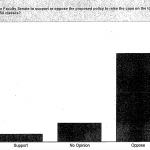
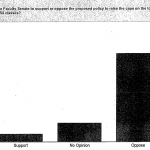
The survey showed 76.52 percent of the faculty opposed the policy to raise the cap size of the classes and showed 73.80 percent of the faculty opposed the policy to shift overload classes to adjuncts.

In the narrative comments section of the survey, several faculty members said the policy of shifting overloads away from full-time faculty to adjuncts would affect them financially because they have “become accustomed to the pay” and because of a lack of base wage increases in recent years. Most of the narrative comments spoke directly to the question of the caps and overloads policy, although some faculty members did express frustration with the addition of new administrative overhead put in place by Martin.

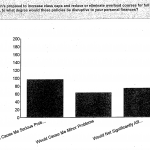
According to the survey, 41.45 percent of faculty said if the overload policy was implemented it would cause “serious problems” to their personal finances, while 26.92 percent cited “minor problems,” and 31.62 percent said it would not significantly affect their personal finances.

Furthermore, the faculty cited that the quality of education would affect the students greatly if the two policies were passed because adjuncts are not as qualified as full-time faculty. Some said adjuncts are not as “invested” in the university as full-time faculty.

Other faculty members pointed the increase of caps decreasing the quality of education for students because of the extra time it would take to grade the work of the students, adding the larger student-to-professor ratio would limit the number of students they would be able to help.

Many faculty members said their salary is well under the national average for someone with their qualifications and to ask them to do more work with no pay increase would be wrong.

Why was the survey shut down?

Before the gag order, Brinker was not aware the IRB had the authority to shut down a survey.

“I was not aware the IRB had the kind of power to do a thing like that,” Brinker said. “I have absolutely have never had the IRB have issues with my research before, and I have been teaching for 25 years.”

In an email sent to Hays Post by Dr. John Raccke, chairman of the Justice Department and chairman of the IRB, he said the IRB followed FHSU IRB Policies and Procedures, which were approved March 10 by the university, stating the survey met all three of the criteria to be deemed a unanticipated problem.

Those factors included: “unexpected (in terms of nature, severity, or frequency) given (a) the research procedures that are described in the protocol-related documents, such as the IRB-approved research protocol and informed consent document; and (b) the characteristics of the subject population being studied; related or possibly related to participation in the research (in this guidance document, possibly related means there is a reasonable possibility that the incident, experience, or outcome may have been caused by the procedures involved in the research); and suggests that the research places subjects or others at a greater risk of harm (including physical, psychological, economic, or social harm) than was previously known or recognized.”

The IRB determined the survey caused a situation that has the potential for adverse effects of psychological and financial harm.

The IRB also cited a conflict of interest by Brinker because, as director of the Docking Institute, he answers directly to the university president.

Brinker denied the conflict of interest because he said he was acting as a faculty member when creating the survey and simply used Docking Institute software because it was convenient.

“I only work half-time as the Docking director. The other half, I am a faculty member in the department of sociology,” he said. “I was the faculty representative, and I did my role as a faculty member in conducting the survey.”

Miller has since apologized for the way he presented the survey by calling it a Docking survey.

“I initially said the survey was created by the Docking Institute,” he said. “I was wrong. It was created by Gary Brinker and not through the Docking Institute and I have since corrected that. I did not intend to give it false authority. I was not aware that there was a distinction.”

Brinker said he attempted to make the point of acting as a faculty member to both the IRB and Regents, with whom he was able to share how he assessed the misinterpretation.

“Before the embargo, I was able to scrutinize the survey, and I did send KBOR my assessment to the degree on how the assertions of President Miller were misrepresented,” Brinker said.

The conflict of interest is pointed in the wrong direction, said Brinker, who believes the IRB and members of the Faculty Senate had a conflict on interest because members of both teach overload classes.

“In my mind, anyone on the IRB who teaches overloads should have excused themselves from decision. Is that not a conflict of interest?” Brinker asked. “My concerns have been left unanswered. The IRB is damaging, which is why I believe they are being driven by self interest.”

According to an online listing of classes taught, many members of the Faculty Senate and IRB do indeed teach overload classes. Some members of the faculty would have lost thousands of dollars in wages if Martin’s proposed overload policy was implemented, a fear referenced frequently in the comments portion of the survey.

Typical class load for a professor at FHSU is four classes, or 12 hours. According to a faculty search, 20 of the 44 teach overload classes. Two of the eight IRB members teach overload classes.

“What I see is an unusually high number of courses taught by the faculty senators, including two members of the IRB,” Brinker said. “This is a strong indication of a conflict of interest.”

About two-thirds of faculty at FHSU teach overload classes, and the survey showed about 68 percent of the participants in the survey teach overload classes with ranges from one to seven or more, according to the survey.

“Im not sure you could find a Faculty Senate member that did not teach overloads because most faculty do,” Miller said. “It’s almost unavoidable.”

Not all overloads are paid, however, as it does not take into consideration the independent classes.

Independent classes are classes that show they are being taught by a chair of a certain department, but in fact the chair is just the instructor on record and the duties of teaching are completed by another professor who then provides the grade to the chair.

For example, Raacke, who is the chair of the Justice Department and one of the IRB members teaching overload classes, is listed as teaching seven overload classes, but only gets paid for two of the classes.

“There’s false conclusions on the overloads. Some have these big numbers and you are led to believe that they are making large sums of money off these overloads, but that is just not true,” Miller said.
Area dentists say reversing Kansas Medicaid cut a priority going into session

By ANDY MARSO
KHI

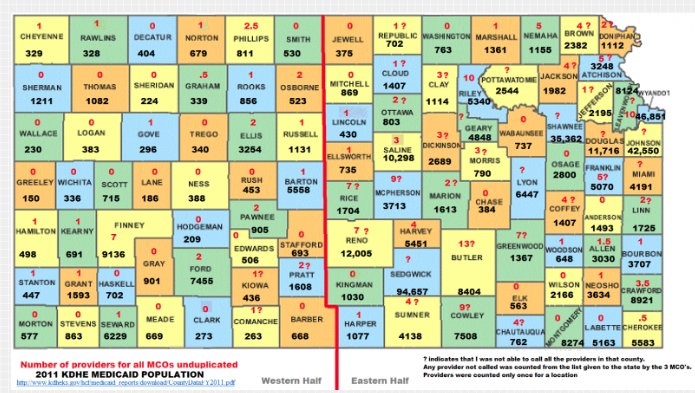
As Medicaid reimbursements drop in Kansas, fewer dentists are accepting patients and some are leaving the program. Melinda Miner, a dentist from Hays, compiled a map showing more than 20 western Kansas counties without a dentist who accepts Medicaid. The map includes the Medicaid population in each county as of 2011 in black and the number of dental providers she was able to contact who still accept Medicaid, which in Kansas is called KanCare, in red. Miner said she did not attempt to contact all the providers in high-population eastern Kansas counties like Johnson, Wyandotte, Shawnee and Sedgwick.

At 59 years old, Bill Miller is starting to have neck and back problems. Thirty-two years of bending over to check patients’ teeth and gums will do that, he said.

Miller is the only dentist in Hill City, a community of about 1,500 people northwest of Hays. He has treated Medicaid patients his entire career, even as reimbursements increasingly have lagged the cost of providing care.

Earlier this year the state cut those reimbursements another 4 percent as part of a host of emergency budget-balancing measures. Miller said that has him seriously considering dropping out of the Medicaid program.

“I realize the state’s in a world of hurt right now as far as their budget, but it’s a big problem,” he said. “I don’t know how it’s going to be solved.”

As the Legislature prepares to reconvene Jan. 9, Gov. Sam Brownback and lawmakers have a few ideas for restoring the 4 percent cut but have yet to agree on any specific plan amid larger budget problems.

Meanwhile, medical providers are weighing whether to continue seeing Medicaid patients — decisions that have the greatest impact in specialties like dentistry, and in rural places like western Kansas where many patients already drive hours to find care.

“It certainly is something that I am seriously considering not participating in in the future,” Miller said. “Just the economics of it — there’s no way to make it work and be profitable at all.”

Different ideas for restoring cuts
It’s not the first time Medicaid reimbursements have been cut in recent years.

Gov. Mark Parkinson, a Democrat, slashed them by 10 percent in 2009, when the state was trying to weather the Great Recession. But he and the Legislature restored the cut within months by passing a sales tax increase.

Brownback said in August that the 4 percent cut could be reversed if the Legislature agreed to increase a hospital tax, which would pull down more federal Medicaid money. Last month he reaffirmed that remains his preference.

“We still would like to do something like that,” Brownback said.

Legislators have been cool to that idea so far. Rep. Dan Hawkins, a Republican from Wichita who chairs the House Health and Human Services Committee, said that wasn’t the right way to find the $40 million needed to restore the cuts.

“Basically you’re going to tax the hospitals to give back to the hospitals,” Hawkins said. “Yeah, you’re going to pull down some federal dollars with that, but really we’re taxing them to give back to them. And why would we do that? I’m not sure that makes much sense.”

Instead, Hawkins suggested increasing a fee levied on the three managed care organizations (MCOs) that administer Kansas Medicaid, or KanCare.

That fee increase also draws down federal money — in this case, Hawkins said, enough to both pay back the MCOs and restore the $40 million cut.

“I think that’s a place we could look at that would not really affect anybody,” Hawkins said.

Melinda Miner, a dentist from Hays, says the dental provider networks in western Kansas are close to collapsing in many communities.

MCO tax also has consequences
That particular fee, though, also applies to private-sector insurance companies that run managed care plans, including health maintenance organizations, or HMOs.

The Legislature passed a bill last year that gave those companies the ability to sell HMO-like plans without paying the fee, but Hawkins said a couple of them —Blue Cross and Blue Shield of Kansas and Aetna — still sell the traditional HMO plans that would be subject to the fee increase.

Brownback said that should be taken into account, but he didn’t rule out including Hawkins’ idea as part of a plan to restore the 4 percent cuts.

“We’d have to see what kind of mix to do and its impact on the MCOs, but there is a way to do this and that’s what we proposed even at the end of the last legislative session,” Brownback said. “I think we ought to do something like that, and we’ll see if the Legislature is open to it or not.”

“It’s not just the 4 percent cut. It’s been drastic underpayment for a long time.”– Bill Miller, a dentist in Hill City, on low Medicaid reimbursement rates for dentists

Mary Beth Chambers, a spokeswoman for Blue Cross and Blue Shield of Kansas, said her company would be less affected by a fee increase than some other insurers, because it only sells the HMO plans on the individual market and they make up a small part of the total business.

“Our stance is that any time taxes or fees are put on insurance companies, those costs, as administrative costs, get passed on to those buying the insurance,” Chambers said. “So we would caution legislators to keep that in mind.”

Hawkins said another option is to repeal a provision of Brownback’s signature 2012 tax plan that exempted about 330,000 business owners from paying any tax on “pass-through” business income.

That idea was part of a budget-balancing bundle promoted last week by a coalition of advocacy groups at the Statehouse.

Hawkins said repealing the business tax exemption would bring in about $260 million, of which $40 million could be diverted to restore the Medicaid cuts. But the state faces a budget gap of about $350 million in the current fiscal year and about $600 million in the next fiscal year, which begins July 1 — and that could swallow new tax revenue.

Brownback has opposed proposals to roll back the 2012 cuts in the past. His office has said it is working on a budget plan to be released soon.

Dental coverage waning
The 4 percent Medicaid cut hit a variety of providers: hospitals, nursing homes, psychiatrists and others.

But opposition has been particularly strong from dentists, who have not seen an increase in their Medicaid reimbursement rates since 2001. Even before the 4 percent reduction, Medicaid paid about 40 cents on the dollar compared to private dental insurance.

Nick Rogers, an Arkansas City dentist and president-elect of the Kansas Dental Association, told the Robert G. (Bob) Bethell Joint Committee on Home and Community Based Services and KanCare Oversight last month that the cut was likely to be a “final straw” for dentists who were leaning toward getting out of Medicaid.

He said access to dental care was already an issue for people on Medicaid in his part of the state — especially for Kansans with disabilities.

“These patients have the most complex needs, consume a disproportionate amount of our time — clinically and administratively — and have the lowest reimbursement,” Rogers said. “At some point in the near future, regardless of my social responsibility, we will be forced to discontinue our involvement (in Medicaid).”

Rogers said his practice was getting referrals for patients with special needs who live more than two hours away. His testimony echoed comments made months earlier by John Fasbinder, a Prairie Village dentist who also treats disabled Medicaid patients.

Melinda Miner, a dentist from Hays, told the committee that the dental provider networks in western Kansas are close to collapsing in many communities.

After contacting dentists throughout the region, Miner compiled a map showing more than 20 western counties without a single dentist who accepts Medicaid.

In an email to KHI News Service, Miner said she is among two dentists in Hays who have decided to stop taking it. She provided the names of two other dentists, one in Leoti and one in Great Bend, who she said have also dropped out of the program and eight more western Kansas dentists who she said are considering dropping out.

Miller, the dentist from Hill City, is one of them.

“I think everybody is,” he said. “And it’s not just the 4 percent cut. It’s been drastic underpayment for a long time.”

Getting out
Craig Sandlin is the office manager for his wife, Joanne Brown, the Leoti dentist. He confirmed that they stopped taking Medicaid patients as of the end of November.

Joanne Brown, left, works as a dentist in Leoti, and her husband Craig Sandlin, right, is her office manager. Sandlin confirmed that they stopped taking Medicaid patients as of the end of November after a recent cut to reimbursement rates.

Sandlin said the move affected more than 2,500 people and he’s not sure how far they will have to travel to find a dentist who takes new Medicaid patients.

“The problem is there’s nobody in western Kansas anymore,” Sandlin said. “Everybody has gotten out.”

Michael Jones, a dentist in Russell, said he’s limiting his intake of new Medicaid patients to “very, very few” and is strongly considering not taking any more.

As the only dentist in a county of more than 6,000 people, Jones said he has all the patient load he needs and, at 57, is “no spring chicken.”

He said he treats Medicaid patients at a financial loss, but does it as a service to the community. A young dentist just starting out, with potentially more than $100,000 in student debt, would not have that option, Jones said.

He said it would be tough to find someone to replace him when he retires.

“Selling the small, rural practice is very difficult,” Jones said.

Sandlin said that once dentists get out of Medicaid, it will be hard for the state to bring them back, even if the reimbursement rates do increase.

He and his wife are paring staff now, and it would take more than a restoration of the 4 percent cut to convince them to rehire — in fact, it would take a substantial increase.

“That’s the problem they’re not realizing,” Sandlin said of state policymakers. “Once these doctors are out, you’re going to have to put a big carrot out there to get them back in. Because we’ve staffed to be out.”

Andy Marso is a reporter for KHI News Service in Topeka, a partner in the Heartland Health Monitor team. You can reach him on Twitter @andymarso


Hays High FFA chapter packages meals for needy

img_1872By RANDY GONZALES
For Hays Post

Working together with The Outreach Program, the Hays High School chapter of Future Farmers of America reached out Saturday morning to help those in need in the Hays community.

About two dozen members of the Hays High FFA chapter packaged 8,000 meals of fortified macaroni and cheese in the HHS cafeteria. The meals were to be distributed to local assistance organizations, including the Community Assistance Center and the St. Joseph Food Pantry. As well, some meals will be reserved to give to students.

This is the first year the local FFA chapter packaged meals. Chapter vice president Laura Montgomery, a senior at Hays High, went to a leadership conference in Washington in the summer of 2015. She helped package meals there, through Outreach, a national organization devoted to ending hunger.

“That kind of sparked my interest to want to help out my community by packaging these meals,” Montgomery said.

Rick McNary, vice president of private and public partnerships for Outreach, brought the meals to Hays from Wichita for the students to package them on Saturday. He showed the students how to package them before they were put in boxes. There are six meals in a package and 36 packages in a box. There is a choice to package one of four fortified meals: macaroni and cheese; pasta with a tomato base; rice and beans; and cinnamon apple oatmeal. McNary said the students usually decide which meal to package.

img_1874

McNary added agricultural production needs to increase by 75 percent over the next 35 years to feed nine billion people.

“The solutions to hunger longterm comes from agriculture,” McNary said. “These students are going to be part of that solution.”

The Hays High FFA chapter divides activities into different pods. Freshman Kenna Pfannenstiel is in Montgomery’s pod, which was in charge of Saturday’s event. Pfannenstiel didn’t mind getting up early on a cold, weekend morning.

“It was worth it, knowing that you’re helping someone else have a meal on their plate when we have so much and they might not,” she said.

The local FFA chapter received $1,000 from Midwest Energy Inc., and $500 each from the national FFA and the local FFA chapter to pay for the cost of the meals.

Pfannenstiel said they were looking at doing this again next year.

“I think we’re going to keep doing it every year,” she said. “We’re going to keep doing it to help people.”

🎥 Hays may again explore allowing Sunday liquor sales

City Commissioner Lance Jones (right) asks City Attorney John Bird about the possibility of Sunday liquor sales in Hays.
City Commissioner Lance Jones (right) asks City Attorney John Bird (left) about the possibility of Sunday liquor sales in Hays.

By BECKY KISER
Hays Post

Proponents of Sunday liquor sales in Hays, which was voted down by residents several years ago, said a policy change would help increase the amount of sales taxes collected in Hays. Sales tax revenues have been on a downward trend and Hays uses that money to finance its general fund — the only city in Kansas to do so.

City Commissioner Lance Jones has asked City Attorney John Bird about the history of Sunday liquor sales in Kansas and how to make it happen in Hays.

“I think with sales tax declining and finding new ways to increase revenue, I think this is something we ought to look at,” Jones suggested during Thursday night’s city commission meeting.

Bird said he had done some research about the issue.

“Ellis County was one that did not opt to be a dry county way back when Kansas came out of Prohibition in the 1940s. In the 2000s, there was a movement to allow Sunday liquor sales. Up until then, counties that were wet still could not have retail sales of liquor on Sundays and on some holidays. Liquor stores were mandated to be closed.

“Following public interest, the city of Hays passed an ordinance to allow Sunday liquor sales. The ordinance allows for a petition to be filed if signed by 5 percent of the residents who voted in the last general election. It’s then put on the general ballot.

“A petition succeeded during the April 2004 election, and they overturned that ordinance.

“There is not a prohibition against doing it again. If a commission decided to pass that ordinance, there’s no legal reason you cannot do that. It would then be subject to petition again and, potentially, another election,” Bird explained.

Sunday liquor sales are allowed in incorporated areas of Ellis County, including Ellis and Victoria.

“I know we don’t lose a lot of revenue to Victoria or Ellis in Sunday liquor sales, but to me it’s kind of hypocritical that you can go into Gella’s in Hays and come out of there with a growler or keg of beer, but you can’t buy it at the liquor store,” Jones said.

He asked City Manager Toby Dougherty to put the issue on a future work session agenda for discussion.

The city of Great Bend just approved Sunday liquor sales in late October.

State law bans the sale of 3.2% alcoholic content beer on Sundays by grocery and convenience stores.

🎥 More UP crews begin more extensive railroad work today

rr-tie-work-2
Union Pacific equipment waiting to replace railroad ties Tuesday in Hays.

By BECKY KISER
Hays Post

Union Pacific railroad crews began replacing worn and damaged railroad ties in Hays last Friday, working between Ash Street and Yocemento, just east of Hays.

A separate crew will begin more work today.

“They’re going to start at Commerce Parkway, do four separate railroad crossings and totally rebuild them,” according to Public Works Director Greg Sund. “In one case, they’ll even replace the rails.”

Sund gave an update of the project to Hays city commissioners during their meeting Thursday night. The other three crossings scheduled for improvements beginning Friday, Dec. 9, are Main Street, Elm Street and Ash Street.

The work will take two to three days per railroad crossing.

“We have to cut out some concrete and asphalt at each one of the crossings and then replace it. Those four will take a little more time than just pushing in new ties in,” Sund said, which has been the scope of work the past week.

Train traffic and signals will operate from the time repair crews end work each day until they start on the next.

INSIGHT KANSAS: Taking legislation seriously

This past Monday, Kansas legislators elected their leaders for 2017-18. We should all wish them good luck, because they will need it.

Leadership elections are inside baseball contests, shrouded in secrecy, but the results often offer indications of how the upcoming legislature will operate.

In the Senate, two results stand out. First is Susan Wagle’s (Wichita) solid (23-7) victory over Andover’s Ty Masterson, giving her four more years as Senate President and demonstrating her strength within both the GOP caucus and the entire chamber. Second is the selection of Jeff Longbine (Emporia) as Senate Vice-President and Jim Denning (Johnson County) as Majority Leader. Longbine’s moderation and Denning’s reality-based conservatism should be real assets in moving the chamber toward effective policies.

Burdett Loomis
Burdett Loomis

In the House, Ron Ryckman, Jr.’s (Olathe) convincing 58-27 win over moderate Russ Jennings (Lakin) provides some evidence for continuing conservative strength among Republicans. But more significant, perhaps, was the 44-41 victory by prominent moderate Don Hineman (Dighton) to become Majority Leader. This was probably a more accurate test of the moderate-conservative balance in the GOP caucus, although that will shift from issue to issue.

Finally, in a battle of Democratic veterans, Wichita Representative Jim Ward narrowly unseated Kansas City’s Tom Burroughs, signaling a desire of the now-40 minority members to provide more aggressive and forceful opposition. Still, with enhanced numbers, Democrats can productively engage in writing laws, and Ward will need to act accordingly.

Along with returning Senate Minority Leader Anthony Hensley (D-Topeka), these individuals have their work cut out for them.

The Legislature’s many challenges stem directly from the disastrous taxation policies enacted in 2012. Indeed, searching for spending cuts and revenue enhancements (the polite term for “more taxes”) to address almost a billion dollars in shortfalls is a beyond-daunting task, made potentially more difficult by an impending Supreme court school finance ruling.

Rep. Don Hineman, R-Dighton, 118th Dist.

Making this job especially tough is that for the past six years the regular legislative process has largely been abandoned in Topeka. Rather, both chambers have operated under the control of a close-minded, far-right majority that simply saw no the need for the open, ordered deliberation that can produce well-considered legislation.

Committee hearings dwindled in number and importance, while legislative leaders and committee chairs pushed forward legislation without adequate (or sometimes any) discussion.

In short, deliberation and compromise haven’t been necessary in recent years, given the overwhelming GOP majorities in Topeka. Exhibit A, of course, is the 2012 tax cut legislation, which the governor admitted was imperfect, even as he signed a jury-rigged bill that has produced dire consequences for the state and its citizens.

In the coming months, Kansas legislators must roll up their collective sleeves to address revenue problems, and the attendant policy implications – for schools, roads, health care, mental health, and welfare, among other subjects.

All this must be done with 165 legislators who have relatively little effective legislative experience. Indeed, only 12 of 40 senators and 24 of 125 representatives will have served in both 2009-10 (the last moderate-conservative session) and 2017-18. And among majority Republicans, just 12 representatives and six senators will have had such tenure.

In short, a lot of “legislative learning” must occur, especially for new committee chairs, who will preside over many complex and contentious issues. The pressures to address revenues and other concerns will be great, but legislators should not act in too much haste. They must take legislating seriously — in committee rooms, in caucus meetings, and on the floor — to slowly turn the Kansas ship of state.

Professor Burdett Loomis of the University of Kansas is the author of “Time, Politics, and Policy: A Legislative Year,” which examined on year in the Kansas Legislature.

Sheriff investigates after cow found shot dead in Russell County

15420845_10154804703554810_5517304420764767903_n
Courtesy photo

RUSSELL COUNTY — Law enforcement is investigation the shooting of a cow in the southeast portion of the county earlier this week.

According to Undersheriff Andy VanDerWege, deputies were called to the area of 204th and Michaelis Road near the Barton/Ellsworth county lines just after 9:30 a.m. Wednesday.

Upon arrival, the deputy met with rancher Ted Schepmann at the scene, where a cow was found dead.

VanDerWege said the incident remains under investigation.

“We don’t know if it was intentional, accidental,” he said. “With deer season in full swing, we can’t rule that out either.”

Schepmann said he checked the cows Monday, and didn’t noticed the dead animal then, finding it when he returned for another check Wednesday morning.

He said the cow was shot — “a perfect shot, right through the lungs” — and there also appeared to be other bullet holes near the rear of the cow.

Schepmann said he doubts the shooting was accidental.

“I don’t know how you accidentally shoot something six times,” he said. “It sure looked like someone shot her just to watch her die.”

While that animal was not covered by insurance, Schepmann said he covered the rest of his herd yesterday after the incident.

“We’ve just never had anything like this happen before,” he said.

Anyone with information on the incident is asked to call the Russell County Sheriff’s Office at (785) 483-2151.

15181519_10154804705419810_8114300746672604803_n
Courtesy photo

🎥 On anniversary of attack, WWII vet in Hays recalls his time at Pearl Harbor

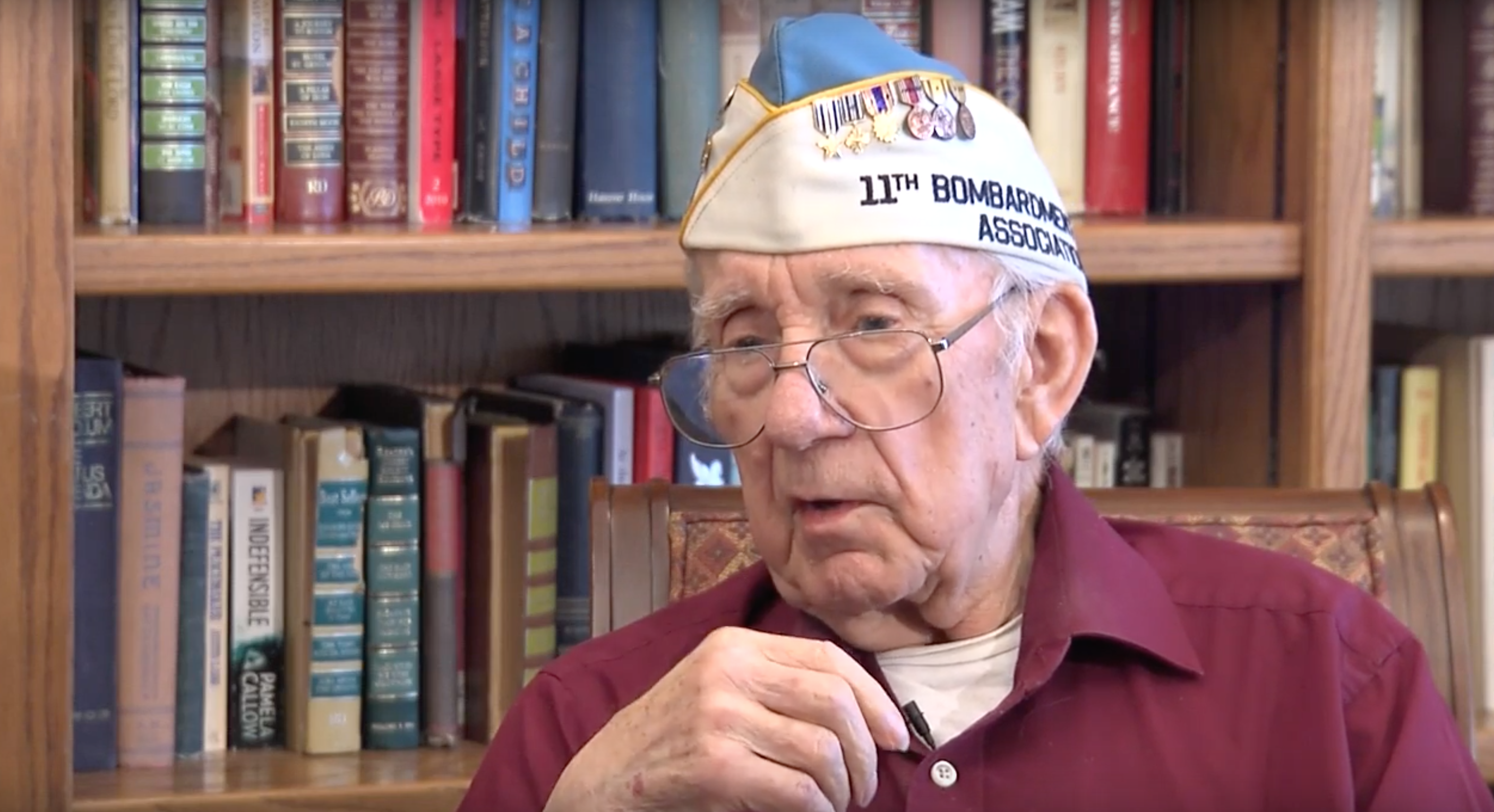
Earl “Michael” Schaeffer sat down in 2014 with Mike Cooper to share tales from his time in the military — focusing on the Dec. 7, 1941, attack at Pearl Harbor. Schaeffer was stationed at the U.S. naval base that morning, and wound up being aboard one of the two planes still able to fly after the attack.

Earl “Michael” Schaeffer

Schaeffer is a decorated war hero, who flew as a radioman and gunner on 92 combat missions. He is the recipient of a Silver Star, Distinguished Flying Cross with Oak Leaf Cluster and Airman’s Medal. He also served on Midway Island, Guadalcanal and the Solomons — some of the most important arenas in the Pacific Theater during World War II.

Schaeffer, a Pennsylvania native who now lives in Hays, and Cooper discuss the experiences of World War II, including many harrowing, near-death experiences.

Copyright Eagle Radio | FCC Public Files | EEO Public File