We have a brand new updated website! Click here to check it out!

National tribute to post-9/11 military to be in Plainville

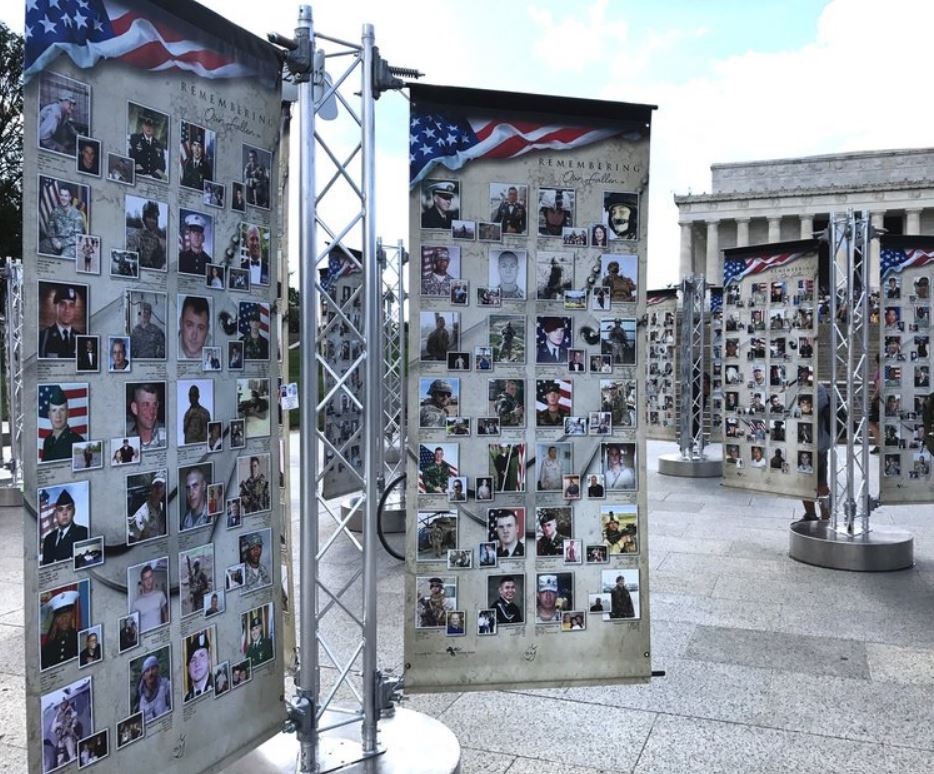
The national “Remembering Our Fallen” military tribute display will be Plainville Oct. 18-20.

PLAINVILLE – “Remembering Our Fallen,” a national traveling display in honor and memory of those military personnel who have died in the line of duty, in training, and as a result of PTSD since 9-11, will be in Plainville, Kan. October 18-20, 2019.

This will be the first time since the debut of the national display at the steps of the Lincoln Memorial in Washington, D.C. in the fall of 2017, this basketball court-sized pictorial display has traveled this far west of Kansas City in the state of Kansas.

This traveling memorial originated with Bill and Evonne Williams, Omaha, Neb., the parents of four sons who have voluntarily served in the military. Their hope is to preserve the memory of those who have made the ultimate sacrifice. The Nebraska couple were inspired to develop this project after reading an article in the Omaha World-Herald about the father of Sgt. Joshua Ford. The younger Ford had died in Iraq and his father’s pain and grief were greater even after four years had passed. There was the fear his son would be forgotten. This display is an attempt preserve and honor the memory of those soldiers.

“We were in Philadelphia for the Army-Navy football game this last fall and just happened to walk past this display at Independence National Park,” explained Sheila (Selbe) Hachmeister.

Sheila and her husband Ken of rural Natoma have two sons serving in the military. Jared is a 2017 graduate of the United States Naval Academy currently stationed in Pensacola. Seth is currently a West Point cadet at the United States Military Academy.

“When we entered the display and realized exactly what was represented, we were so moved,” Sheila said.

CW2 Bryan Nichols

“We found Bryan Nichols’ picture, a local hero who is on the towers, and then several West Point Cadets. It just touched us.” (Hays native Nichols Bryan Nichols, a 1998 graduate of Thomas More Prep-Marian High School, was killed August 6, 2011, one of 30 American troops killed in Afghanistan when their  Chinook helicopter was shot down.)

Sheila, in true Selbe spirit, asked questions about the display and gathered information, knowing this would be a display and project perfectly aligned with Plainville’s tradition of honoring our military.

With information gathered, she enlisted the help of her sisters, Susan Stahl and Lora Weigel, along with members of the Plainville Ambassador Club to pursue discussion concerning the viability of this project becoming a reality in Plainville. Soon Sheila’s passion for this project spread among the core group of organizers.

Since the first of several meetings, funding is being secured and Plainville now appears on the national tour schedule, October 17-20, 2019.

The display will arrive in Plainville on the afternoon of Thursday, Oct. 17 escorted by the American Legion Patriot Riders. With the help of local volunteers, along with the fire department and high school organizations, the display will be assembled at Andreson Memorial Park, adjacent to U.S. 183. The display will be admission free 24/7 until it is disassembled Sunday afternoon, October 20, again by volunteers.

Families who have lost their soldier have been designated as “Gold Star” families. To date more than 80 Kansas families have felt and share these losses. The display contains the photos of more than 5,000 soldiers that have paid the ultimate sacrifice. A Gold Star mother accompanies the display throughout the national tour and is available to answer questions.

CW2 Bryan Nichols, with Palco connections, is among those soldiers honored. Nichols’ parents, Doug and Cynthia Nichols, live in Palco.

The opening ceremony for the display will be at 10:30 a.m. on Friday, October 18 at Andreson Park. Kansas Gold Star families will be honored guests. Personnel from Fort Riley, Kansas Army National Guard, along with national, state, and local officials will be among recognized guests. Students from Rooks County and surrounding school districts will be invited to tour the display. VFW and American Legion Posts, and National Guard armories within the state will be contacted with regional and state promotion of this display. Organizers are anticipating more than 1,000 to several thousand individuals taking advantage of the national display in this portion of Kansas.

There will be both guided and self-guided tours. Parking for the event will available at the school and pre-designated areas in the community with shuttle service available. Restrooms and seating will be provided on site. Students will be available to assist individuals with mobility needs.

Additional details concerning specifics of the ceremony and the events of the three-day display will be made public nearer to the date. Plans have been made in the event of inclement weather to move the display, ceremony and all events to the Plainville High School gymnasium.

Specifics concerning the national display can be found at patriotproductions.org.

Local information may be found through Plainville Ambassador Club Facebook page, or by emailing [email protected]. Volunteers are always welcome and needed. A hospitality tent will be available to Gold Star families. If anyone is interested in helping supply refreshments or help with the purchase of beverages your help is certainly welcome. Stop by and visit with us at our booth at the Rooks County Free Fair, August 11-17 in Stockton.

The Plainville Community has long been known for honoring those who have served our country. The Plainville Ambassador Club (PAC), an organization formed out of the 1988 Plainville Centennial celebration, has and continues to spearhead numerous veteran-related events throughout the year on an annual basis.

– SUBMITTED –
Braun among three chosen to serve on Kan. justice reform committee

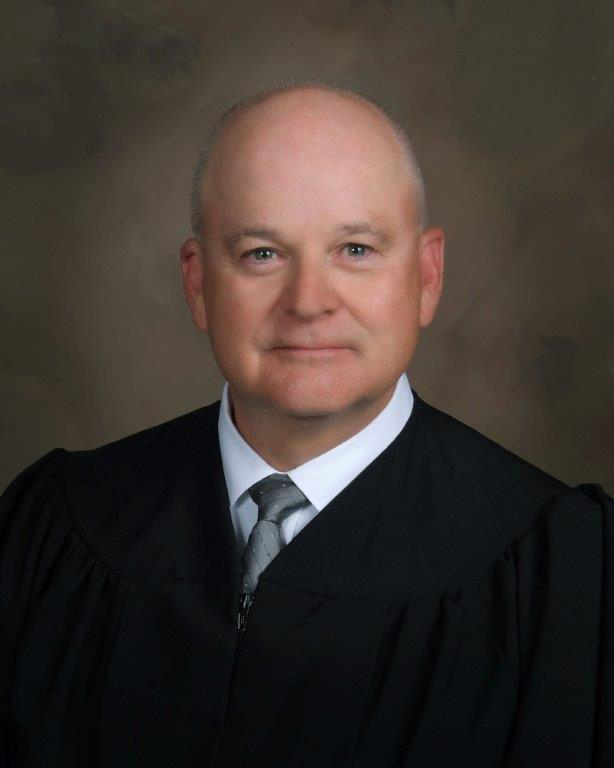
Braun

TOPEKA—Three representatives from the Kansas judicial branch have been appointed to serve on the Kansas Criminal Justice Reform Commission.

Under authority granted by state statute, Chief Justice Lawton Nuss appointed Chris Mechler, court services specialist in the Office of Judicial Administration.

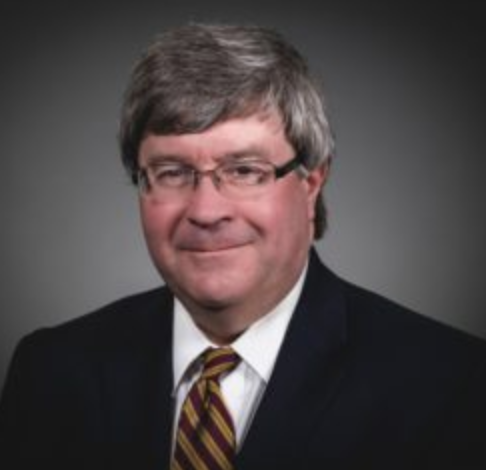
Also under statutory authority, the Kansas District Judges Association appointed Chief Judge Glenn Braun and the Kansas District Magistrate Judges Association appointed District Magistrate Judge Marty Clark to the commission.

Braun serves in the 23rd Judicial District, which is composed of Ellis, Gove, Rooks, and Trego counties. Clark serves in Russell County of the 20th Judicial District.

The 2019 Legislature created the commission to study the criminal justice system as a whole and make recommendations about sentencing, diversion programs, specialty courts, specialized correctional facilities, offender supervision, criminal justice data management, and other matters identified by the commission.

Other commission members represent the legislature, law enforcement, prosecution and defense counsel, law schools, addiction and health care professionals, and the faith-based community.

Six northwest Kansas teens hospitalized after SUV rolls

RAWLINS COUNTY – Six people were injured in an accident just after 8:30p.m. Saturday in Rawlins County.

The Kansas Highway Patrol reported a 2001 Chevy Blazer driven by lean G. Hemel, 17, Atwood, was southbound on County Rd 24 seven miles northeast of Atwood.

The driver lost control on the sand on the roadway. The SUV entered the east ditch and rolled.

Hemel and passengers Omar D. Sanchez, 15; Will C. Rudenell-Stokvis, 13; Jose G. Paz-Barraza, 16; Alex Paz-Barraza, 17, all of Atwood, were transported to Rawlins County Medical Center.

Lastat Chessmore, 16, Atwood, was transported to Swedish Medical Center in Denver. All were properly restrained at the time of the accident, according to the KHP

Lang joins Sister Cities of Hays board

Stacey Lynn Lang

Welcome to our newest Sister Cities of Hays board member Stacey Lynn Lang.

Lang is the current Study Abroad & Student Travel Coordinator for Fort Hays State University and was formerly a high school Spanish and ESL teacher.

She graduated from Grinnell, Kan., and earned a degree in Spanish Education from FHSU. She and her family have lived in Hays since 2000.

Lang loves to travel, be outdoors, garden, and explore new cultures.

– SUBMITTED –

Court rules against KCC on Franklin Co. injection well

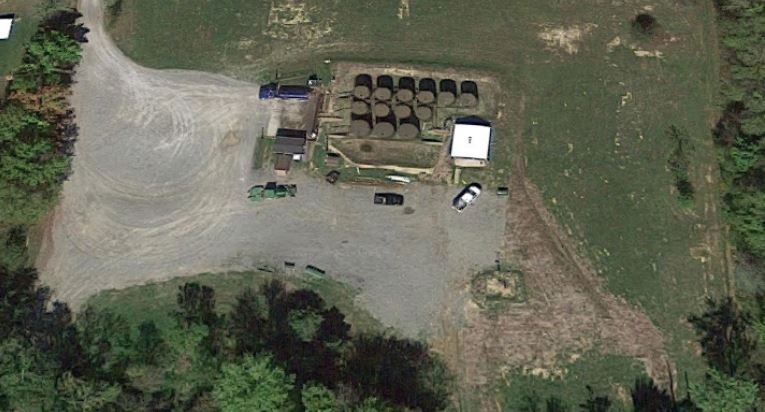
Injection well site (Google Maps photo)

By SCOTT YEARGAIN
Kansas Sierra Club

Judge Franklin Theis, Third Judicial District, Topeka, Kansas, ruled on July 3rd in favor of a petitioner who protested an injection well in Franklin County, Kansas.

Injection wells in Kansas are of two types – saltwater disposal wells and flooding wells. Both inject fluids, frequently with high saline concentrations and chemicals, into underground geologic formations.

The ruling involved a flooding well, a hole drilled, in this case, into the earth to 658 vertical feet. The purpose is to extract the hydrocarbons (oil or gas) remaining in a production zone in an oil lease.

The petitioner argued that the Kansas Corporation Commission had dismissed him without an evidentiary hearing, which when sufficient evidence of risk is offered, is afforded by Kansas law. The well, located in the Cox lease in northeast Franklin County, is surrounded by a watershed which flows to the Marais des Cygnes river below Ottawa, Kansas.

The petitioner, Scott Yeargain, a member of the Sierra Club, was nominated by Elaine Giessel to the governor’s 50-year Water Planning Commission.

The problem with the Utah Oil’s application Yeargain argued, is that the KCC had not completed a thorough survey of old abandoned wells in the environs of the proposed injection well.

There were 8 original protesters in this docket, all of whom were dismissed by the KCC. They filed petitions for reconsideration and were dismissed again.

On July 27th, 2018, Yeargain filed a civil suit in the 3rd Judicial District, Shawnee County, the home county of the Kansas Corporation Commission. On July 3, 2019 Judge Franklin Theis entered a Memorandum Opinion and Entry of Judgment. Yeargain stated that the KCC erroneously dismissed him prior to an evidentiary hearing notwithstanding that he had offered prima facie evidence that permitting the Cox #9 well in the Cox lease in extreme northeast Franklin county would present an unacceptable risk due to known abandoned wells in the environs of the Cox lease. The tributaries of the Marais des Cygnes river drain the Cox lease.

A Kansas Source Water assessment report for Franklin County Rural Water District #6 by Burns and McDonnell Engineers and Consultants had indicated in March of 2004 that this public water supply is at high risk for volatile organic compounds. These compounds are the productions of oil and gas exploration, extraction, and refining. The intake pipe for Franklin County Rural Water Six is downstream from where the tributary which drains the Cox lease runs into the Marais des Cygnes river.

Only Yeargain’s case is mandated back to the KCC for a hearing because only he filed for judicial review. The court costs which Yeargain paid will now have to be paid by the commission. Yeargain, along with many other protesters, have three other civil suits waiting judgment in the 3rd Judicial District, all of which involve injection wells and the risk they pose for fresh and usable water in the Marais des Cygnes watershed.

Yeargain, along with two protesters, are Sierra Club members.

Liebenthal’s Saint Joseph steeple nearing completion

The restoration on the Saint Joseph Catholic Church Steeple in Liebenthal is nearing completion.

By CRISTINA JANNEY
Hays Post

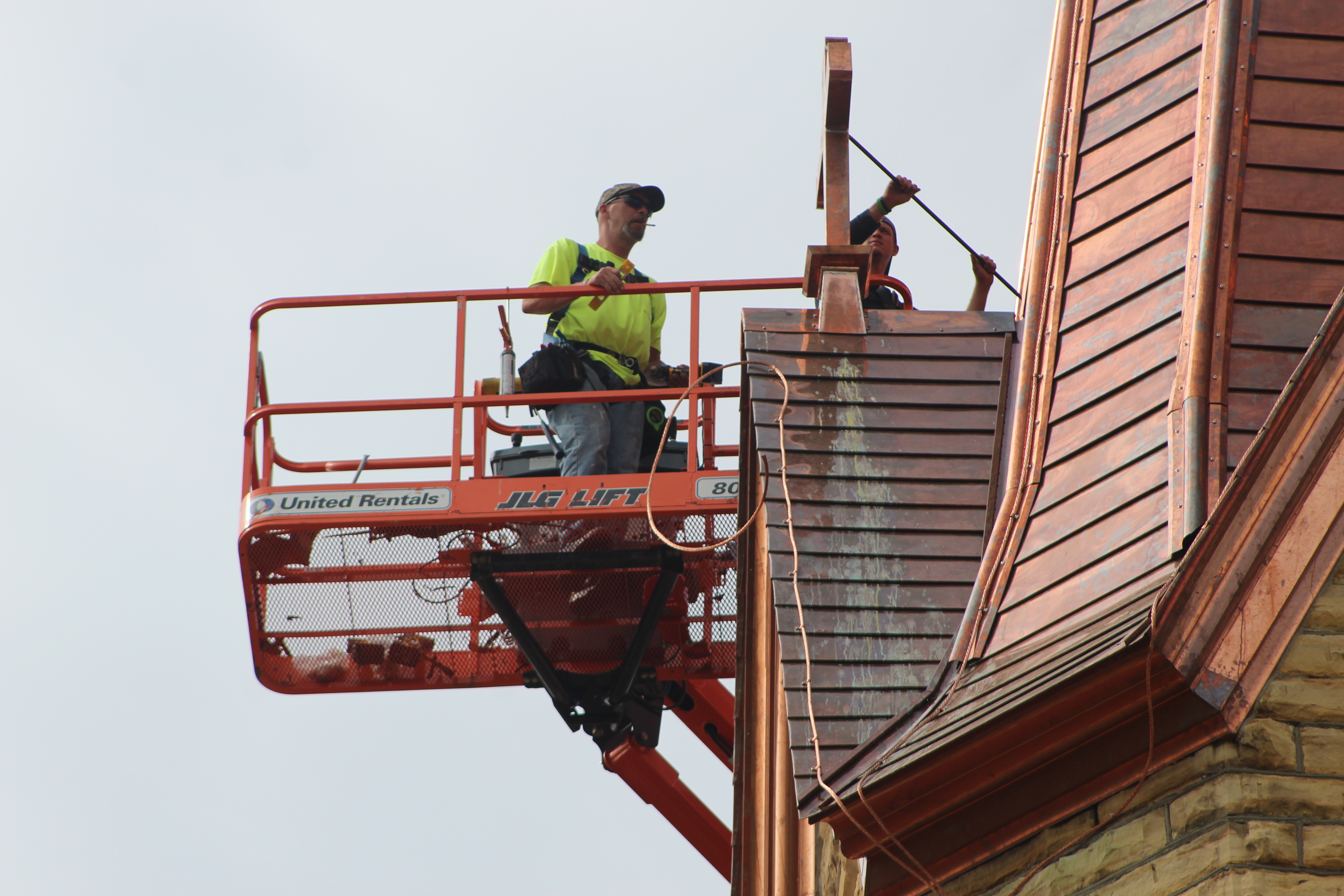
Andy Littrel, project foreman, with one of four copper crosses that he reconstructed by hand for the Saint Joseph steeple.

LIEBENTHAL — The new copper glinted in the summer, prairie sun as four handcrafted copper crosses were placed Thursday on the base of the Saint Joseph Catholic Church steeple in Liebenthal.

The cross installation was one of the final projects on a two-month restoration by Roofmasters Roofing and Sheet Metal of the church’s steeple, which reaches 167 feet at the tip of its spire.

“They are all very excited about it and proud that we have managed to do this … to accomplish this … to take the bull by the horns and to get the job done to last and stay pretty true to the original construction,” Judy Hoffman, Saint Joseph church secretary said of the parishioners.

RELATED STORY: 114-year-old St. Joseph’s Church steeple in Liebenthal gets facelift

Saint Joseph was established by Volga Germans in 1876, and the current church building was was dedicated on May 28, 1905. Although the steeple has had repairs many times over the years, it has not had a major renovation for 55 years.

The steeple was damaged over time by Kansas wind, rain and hail. In March 2018, the steeple sustained significant storm damage, and the parish immediately began fundraising for a major overhaul. The church estimates the cost of the project will be about $100,000, and only a fraction of the repair cost will be covered by insurance.

The church has raised about $50,000 toward the repairs, and the rest will come from its emergency fund. The church continues to raise funds for the project. Some donations have come from passersby who have admired the work being done on the historic church this summer, many in small amounts of $50 or $100.

But Hoffman said every dollar has been important to the small congregation of only 50 families. The church has had a Mass said for the donors and they continue to keep them in prayers, she said.

New copper has been installed on the exterior of the steeple, the wood gables were replaced, and extensive work was done to the framework of the steeple. The project required three pallets of 20 ounce copper sheeting.

The old copper that was removed from the steeple was recycled.

Four new copper crosses were installed at the base of the Saint Joseph Catholic Church steeple on Thursday.

Andy Littrel, project foreman, said the steeple, with its new cooper, can be seen from up to 6 miles away.

Hoffman said Roofmasters has done excellent work on the project.

“You can see it from a distance,” she said of the steeple. “If you are approaching from an angle where the sun is bouncing off of it, my gosh, it is just so stunning. It just makes you proud that you were able to do that … to dare to do that.”

Littrel handmade the new copper crosses for the steeple. Each cross is almost 5 feet tall.

“Well what I did was take one of the old crosses back to my shop and copied it piece by piece,” he said.

The old crosses had received a lot of hail damage and had big dents in them. Each cross took a full day of work to complete.

Workers from Roofmasters have spent two months making repairs to the steeple at Saint Joseph Catholic Church in Liebenthal. The steeple is 167 feet at the top of it spire.

The new crosses are being secured with copper braces, so they will not move so much in the Kansas wind.

One of the old crosses is being displayed in the entryway of the church. The church has considered auctioning one or two of the remaining old crosses to raise money for the repairs. Church officials have also considered dismantling one of the crosses and selling the pieces also as a fundraiser.

Littrel will make a lid for an existing hatch for the steeple, and the crew will be adding lightening protection, and then project will be complete. Littrel said he hopes the church will get another 50 years out of the renovation.

“It is stronger now. All of these gable ends are rebuilt. They are stronger than they ever were to begin with,” he said. “The copper is heavier than the original steeple was. The design is a little bit different, but it’s solid. It should be able to take a lot of wind and a lot of punishment. It should be able to last for a long time.”

The church hopes to have a celebration to honor the completion of the steeple project. No date has yet been set, but it likely be scheduled for this fall.

“It is inspiring when you top the hill and you can see Liebenthal by the church steeple,” Hoffman said. “That’s our landmark, as far as I’m concerned. And I know a lot of people when they see that, they know they are almost home.”

Anyone wishing to donate to the steeple project can do so directly through the church’s website. Go to rushcountycatholicchurches.com and click on the St. Joseph Parish Giving icon. Donors can also send checks to 202 Main St., Lienbenthal, KS 67553.

Arial photos courtesy of Joshua Hunter/Roofmasters


Six northwest Kansas teens hospitalized after SUV rolls

RAWLINS COUNTY – Six people were injured in an accident just after 8:30p.m. Saturday in Rawlins County.

The Kansas Highway Patrol reported a 2001 Chevy Blazer driven by lean G. Hemel, 17, Atwood, was southbound on County Rd 24 seven miles northeast of Atwood.

The driver lost control on the sand on the roadway. The SUV entered the east ditch and rolled.

Hemel and passengers Omar D. Sanchez, 15; Will C. Rudenell-Stokvis, 13; Jose G. Paz-Barraza, 16; Alex Paz-Barraza, 17, all of Atwood, were transported to Rawlins County Medical Center.

Lastat Chessmore, 16, Atwood, was transported to Swedish Medical Center in Denver. All were properly restrained at the time of the accident, according to the KHP

TALLMAN: Impact of student and family income on student success

Mark Tallman. Photo courtesy Kansas Association of School Boards

By MARK TALLMAN
Kansas Association of School Boards

Differences in academic success among Kansas student groups are receiving attention this year. 

In the Gannon school finance lawsuit, the Kansas Supreme Court ruled Kansas school finance was not constitutionally adequate because too many students were not meeting state standards, and those students were disproportionately poor, non-white or disabled. The court approved a multi-year funding plan passed by the Legislature to address those students, shifting the focus to how schools are using those funds to improve results. 

The State Board of Education’s “Kansas Can” goals are centered on getting more students to complete high school and go on to earn a postsecondary credential to meet the state’s economic needs and earn a higher standard of living. Many students are at-risk of failing to meet those goals. 

Finally, the Kansas Legislature has commissioned its Post Audit Division to study how Kansas provides extra funding to school districts to help students at risk of poor academic performance or dropping out of school, which could result in changes in the $415 million program. This follows a study of special education funding last year, and a future audit will look at bilingual education funding. 

This series looks at the major issues in the “achievement gap” between different groups of students, how current programs are working to address those differences, and issues under study. 

Part 1 – Impact of student and family income on student success

Lower income students are more likely to struggle on educational measures like test scores and graduation rates than higher income students.

On Kansas state assessments, over 70 percent of all students score at the what the State Board of Education has defined as “basic” ability to understand and use the mathematics and English Language Arts skills and knowledge needed for college and career readiness. However, less than 60 percent of free/reduced lunch eligible students are at that level, compared to over 80 percent of higher income students.

Likewise, about one-third of all students scored at the “effective” level, which is considered “on track” for postsecondary success, in mathematics and 37 percent in English. But only 19 percent of free and reduced lunch eligible students scored at that level in math and 23 percent in English, compared to 45 and 50 percent for non-low-income students.

The four-year graduation rate for all students is 88 percent but only 80 percent for free/reduced meals eligible students graduate “on time”, compared to 95 percent of higher-income students.

These differences are not unique to Kansas, or to public schools. On the 2017 National Assessment of Education Progress (NAEP), which tests a sample of students at fourth and eighth grade on reading and math skills in all states, Kansas had a 22.6 percent gap between free and reduced meal eligible students and not eligible students at the Basic level, compared to 23.6 percent for all states and 24.7 percent for Kansas overall peer states (most similar to Kansas in student and population characteristics). Kansas had a 28.4 percent gap at the Proficient level, compared to 27.7 in all states and 27.9 percent for states.

The five non-public school systems that participate in Kansas State Assessments (Lutheran schools and the Catholic dioceses of Dodge City, Kansas City, Salina, and Wichita) have gaps between free and reduced meal eligible and non-eligible students of 10 to 20 percent at the Basic level and 20 to 30 or higher at the Effective level.

Reasons for the income-achievement gap

A number of reasons have been advanced for these differences (here is a chapter from a report presented by the ASCD, formerly the Association for Supervision and Curriculum Design). The conclusions are that students from low income or impoverished families experience more stress that negatively affects their development, begin school with fewer resources and therefore start behind their more advantaged peers, and have less home support and more disruption throughout their years in school.

Specifically, lower income students are more likely to lack adequate food and health care. They are more likely to live  in single-parent (or grandparent) households, with one or more parents absent or incarcerated. They are more likely to be homeless. They are more likely to experience “trauma” or “Adverse Childhood Experiences” that affect their development. While there are many exceptions, they are more likely to start school with smaller vocabularies, less socialization and basic skills.

Lower income parents are more likely to have unstable employment and housing, which leads to more frequent moving from home to home, school to school. They have less reliable transportation and parents may be working multiple jobs at hours that make it more difficult to monitor student attendance and progress, and be involved in school activities.

Finally, these families are less able to afford enrichments such as home computer and internet access, travel and vacations, sports, clubs and other activities. In other words, more of these families simply lack the resources to support their students at the same level as higher income families.

Because income is now so closely linked to education level, lower income families are likely to have parents who did less well in school and have less postsecondary education themselves. Therefore, their students may receive less guidance, understanding or even support for educational attainment as a priority. In fact, school leaders say some parents may actually discourage students from further education, concerned they may “lose” their children if they pursue education that leads to employment away from home.

The result is a difficult cycle to break. Students from lower income families are less likely to complete high school and college; as a result, they are more likely to have lower income as adults and their children with face the same challenges.

Of course, this does not mean all lower income students are failing; nearly 60 percent of these students score at least at basic on state tests and 80 percent graduate on time; and nearly one in five higher income students are below basic and five percent do not graduate from high school, at least within four years. The data is clear, however, that lower income students are much more likely to be behind on academic standards, fail to complete high school and be unprepared for postsecondary education.


Mark Tallman is the associate executive director for advocacy and communications for the Kansas Association of School Boards.

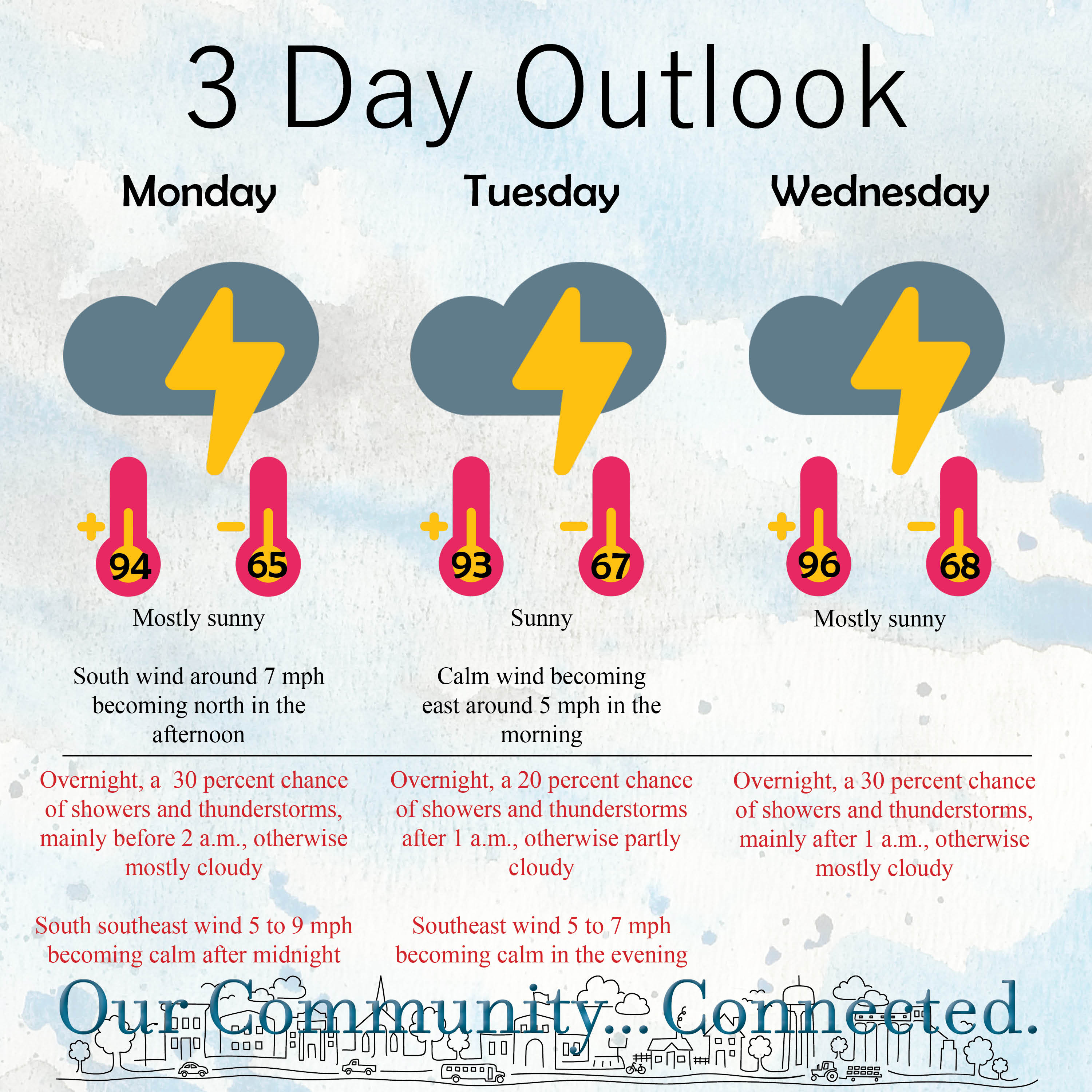
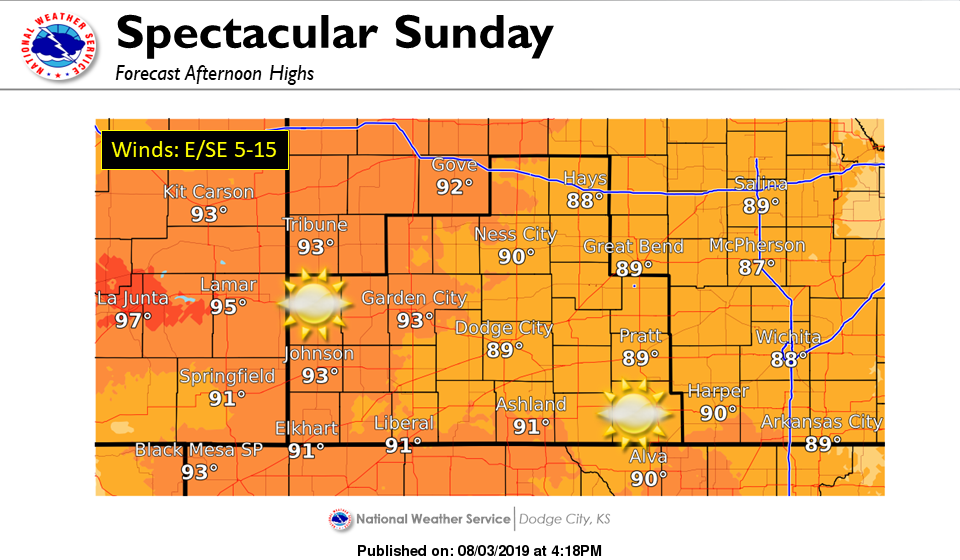
Sunny, dry Sunday

Today
Patchy fog before 9am. Otherwise, mostly sunny, with a high near 87. East southeast wind 5 to 8 mph.
Tonight
Partly cloudy, with a low around 66. East southeast wind 5 to 9 mph.
Monday
Mostly sunny, with a high near 92. Calm wind becoming south 5 to 9 mph in the morning.
Monday Night
A 30 percent chance of showers and thunderstorms. Mostly cloudy, with a low around 66. South wind 5 to 10 mph becoming light after midnight.
Tuesday
Mostly sunny, with a high near 89. Calm wind becoming south around 6 mph in the morning.
Tuesday Night
Partly cloudy, with a low around 65.
Wednesday
Mostly sunny, with a high near 93.
Wednesday Night
A 20 percent chance of showers and thunderstorms. Partly cloudy, with a low around 69.
Thursday
Mostly sunny, with a high near 93.

FIRST FIVE: Are religious people really ignorant about religion?

Benjamin P. Marcus

By BENJAMIN MARCUS
Freedom Forum Institute

The United States is exceptionally religious. Americans pray and attend religious services more than adults in other developed countries and they assign a higher value to religion in their own lives. Nearly three-quarters of Americans affiliate with some religious group.

Does this religious fervor correspond with a religiously literate public? On July 23, the Pew Research Center announced the results of a major survey of religious knowledge and found that Americans, on average, correctly answer fewer than half of questions — many of which were intended to represent some of the “basics” about various religious traditions.

Americans fare only slightly better when asked about their own religious traditions. Christians, for example, answer about 59 percent of questions about the Bible and Christianity correctly.

So are Americans both religious and religiously ignorant about religion, as some claim? The answer to that question depends entirely on what we think it means to know about religion — especially our own.

When we compare the results of Pew’s survey with a study led by political scientists Robert Putnam and David Campbell about the importance of religion in people’s lives, we notice a surprising pattern: America’s least religious groups earn the highest scores on Pew’s religious knowledge survey and some of America’s most religious groups answer the fewest questions correctly. When Pew published the first iteration of the study with similar results in 2010, major news outlets focused on a perceived inverse correlation between religiosity and religious knowledge. “Survey: Atheists, Agnostics Know More About Religion Than Religious,” blared one headline.

We should pause when we hear the claim that Americans who are religious — people who gather in religious communities frequently, who ground their sense of self in religion, who find religion important in their daily life — know less about religion than people who are not religious. Echoing the philosophy of religion scholar Thomas A. Lewis’ astute question: If religious people lack religious knowledge, does “religious” mean the same thing in both halves of the sentence? What type of knowledge are we measuring?

Take a look at what religious knowledge means on the Pew survey. Of the 32 questions asked in 2019, roughly 22 — depending on how you classify them — measure knowledge about scriptural narrative (e.g. “Which biblical figure is most closely associated with saving Jews from murder by appealing to the king?”) and doctrine (e.g. “Which is one of Buddhism’s four ‘noble truths?’”).

Here’s my interpretation of the results: Being religious often has little to do with content knowledge about scriptural narrative and doctrine — of our own or others’ religious traditions. If that is correct, then how we talk about religious knowledge should change.

We should first acknowledge that religious individuals are capable of expressing their religious identity fluently in their own religious communities. Being able to express oneself religiously — and to understand the religious self-expression of a co-religionist — is its own type of religious knowledge. I have studied religion formally for years, but I know that, as the son of a Roman Catholic and humanist Jew, if I were to step into an evangelical church I would lack the vocabulary for communicating my religious identity clearly to folks in the pews. In other words, religious knowledge includes a skill — communicating religious identity — and not just content knowledge.

As religious studies scholar Vincent Lloyd argued after the release of Pew’s 2010 survey, there is a difference between “knowledge-that” and “knowledge-how.” The Pew survey measures the former, whereas religious individuals have plenty of the latter. Religious folks know how to be religious just as someone riding a bike knows how to balance on two wheels, even if they can’t explain the physics. We learn from the results of Pew that knowing how to be religious does not necessarily require knowledge about scriptural narrative and doctrine. So what does it entail?

We might better understand what it means to know how to be religious if we recognize three buildings blocks of religiosity: belief, behavior and belonging. Drawing on decades of sociology, anthropology and psychology research — including the work of social psychologist Jonathan Haidt — I have elsewhere explained how the beliefs people hold, the behaviors they manifest and the communities to which they belong mutually constitute people’s religious identities. Knowledge about beliefs need not be the primary focus of our religious lives. Growing up I could not name the five books of the Torah, but I knew how to tell Yiddish-inflected jokes over matzo brei while visiting my Ashkenazi grandparents in New York for Passover. In the eyes of my grandparents, my biblical illiteracy did not make me any less Jewish.

Religious individuals and communities need not know the dictionary definitions of their beliefs, behaviors or communities of belonging in order to know how to be religious and express that religious identity in their private and public lives.

And that brings us to a second type of skill, one that is academic and not devotional: the ability to analyze and contextualize religious expression. If religious individuals’ knowledge-how is akin to fluency in a religious language, then the conceptual knowledge of religious studies scholars is akin to linguistics. The religious studies scholar asks how religious expressions communicate meaning and establish relationships in specific times and places. The American Academy of Religion, the world’s largest professional association for scholars who study religion, defines religious literacy — a type of conceptual knowledge about religion — as the “ability to discern and analyze the intersections of religion with social, political and cultural life.” This conceptual knowledge helps a scholar analyze lived religion and religious identities, not memorize content.

So what does Pew’s survey tell us about Americans’ religious knowledge?

The results show us that Americans lack content knowledge about religion, especially scriptural narrative and doctrine. This should concern us, because content knowledge about multiple religious traditions is important. Stephen Prothero, an adviser to Pew and the author of the 2007 bestselling book “Religious Literacy: What Every American Needs to Know — and Doesn’t,” makes a compelling case for why we have a civic responsibility to teach children facts and figures about the stories and beliefs found within religious traditions.

Pew’s survey does not tell us whether Americans are religiously literate as defined by the American Academy of Religion, though I suspect they are not. We do not know what conceptual knowledge Americans have to analyze the role of religion in public life, but recent evidence — statements that Islam is not a religion, a political cartoon showing Israel’s Prime Minister Benjamin Netanyahu as a dog, or claims that Buddhism is inherently peaceful — suggests we need to improve religious literacy education. Fortunately, the National Council for the Social Studies has taken an important step by releasing guidelines for teaching about religion academically and constitutionally in American public schools.

The Pew results emphatically do not tell us that religious people are ignorant about their own religion. Religious individuals and communities know how to be religious — and that type of insider knowledge is profound.

Benjamin P. Marcus is religious literacy specialist at the Religious Freedom Center of the Freedom Forum Institute. His email address is: [email protected].

Copyright Eagle Radio | FCC Public Files | EEO Public File