

By JAMES BELL
Hays Post
On Aug. 1, the Hays Police Department will host the fourth annual Community Night Out from 5 to 8 p.m. at the Hays Aquatic Park as a way to show thanks to the community for their support of the department.
“We have always stressed community involvement,” said HPD Chief Don Scheibler. “It’ an opportunity for us to say thank you and an opportunity to interact with the community in a positive way.”
During the event, the department will provide hot dogs and hamburgers for the first 1,000 attendees.
Scheibler said between 800 to 1,400 people have attended previous events, which allow the community to have fun with the officers and engage with them in an informal setting.
“It gives the opportunity to see the police officers, not as guys in uniform who are enforcing the law and writing tickets, but to see officers down there in T-shirts and swimsuits,” he said.
The event allows the HPD “to give thanks to the community that supports us and give them an event where they can come down and feel appreciated and have a good time,” he said. “We have a great community that gives us a lot of support throughout the year and it’s one way to give back to them or appreciate them or recognize them for that.”
Having a good relationship with the community helps the department to serve that community, Scheibler said.

“The officers take care of the community and in our time of need the community will take care of us,” he said. “That kind of mentality, trying to be involved in all different levels has always been a priority of the Hays Police Department.”
The event is sponsored by the City of Hays, Walmart, Hays Recreation Commission, Pepsi, Heartland Building Center, Fraternal Order of Police Hays Lodge 48, Phaze 2 and Nex-Tech.
“We have numerous community partners,” Scheibler said, noting that the department is approached by local businesses and community organizations each year to continue hosting the event.
“I’m really appreciative of the of the city commission and the city manager’s office for supporting us in this venture and recognizing the importance of community police and the relationship between our citizens and the police department,” he said.
The department also funds a portion of the event.
“The community really comes together to help us do this, but there are some expenses that we pay for out of our budget,” Scheibler said.
The Community Night Out is a part of a number of community events hosted by the department through the year, including Coffee with a Cop and Cookies with a Cop, along with the department having a presence at other community events such as the March to Main and the Ellis County Fair.
“It’s a community effort, we are only as good as the community that helps us out, and we have a great community,” Dawson said.
“Building those relationships, with the young especially, those are the future of the community and they should have a positive outlook and positive view of their police department,” Scheibler said.

The U.S. Supreme Court last month said we can’t see certain kinds of information we may well need to participate in democracy as self-governing citizens. To paraphrase a line from “Network,” the movie and play recently on Broadway, we should be “mad as hell” about it.
The court ruled, 6-3, in Food Marketing Institute v. Argus Leader Media, the that the Freedom of Information Act (FOIA) does not provide the public with access to records from private companies given to a federal agency if the agency obtained the information with a promise to keep it secret.
In the decision, the court voided a decades-long practice — supported by lower court decisions — that such “confidential” information could be released unless it caused “substantial harm” to the business, with an eye to toward disclosures in the public interest related to safety concerns, or to the exposing of waste, fraud or abuse, among other points.
Justice Neil Gorsuch wrote in the majority opinion — agreeing with a grocery trade group — that current law provides that agencies and private companies don’t even need to have a specific reason for secrecy — just a company tag on records it considers “confidential” justifies denial of an FOIA request.
The decision is likely to decrease public access to vital records, such as information about private companies that receive federal funds. It will hamper — if not stymie — the obtaining of information the public can use to determine things like fraud, overcharging and the quality of work. The decision also comes as it’s ever more likely a private company will be contracted to carry out government projects or duties.
In the case at hand, the Sioux Falls, S.D., Argus Leader newspaper sought information in 2011, through an FOIA request, on the number of in-state stores participating in the federal food stamp program, as well as store-by-store data on the amount of purchases made using food stamps.
Argus Leader news director Cory Myers said after the decision that “this is a massive blow to the public’s right to know how its tax dollars are being spent, and who is benefiting.”
Justice Stephen Breyer disagreed with the decision, saying the “the whole point of the Freedom of Information Act — first signed into law in 1966 — is ‘to give the public access to information it cannot otherwise obtain.’”
Breyer said that given public and private sector tendencies to treat all information as private if not required to be disclosed, “the ruling … will deprive the public of information for reasons no better than convenience, skittishness or bureaucratic inertia.”
Whatever the reason the Supreme Court saw for supporting non-disclosure under FOIA based on a company’s self-designation, a democratic republic based in the ultimate authority of an informed and engaged electorate requires the highest degree of government openness and transparency.
We cannot decide how our government is doing if we don’t know what our government is doing — and that holds true for those places where government intersects with business.
Gene Policinski is president and chief operating officer of the Freedom Forum Institute. He can be reached at [email protected], or follow him on Twitter at @genefac.
By JAMES BELL
Hays Post
After about a year of redevelopment, the Grow Hays housing rehabilitation program is getting up to speed, according to Grow Hays Executive Director Doug Williams.
The program was started in 2016 when the organization was named the Ellis County Coalition for Economic Development.
“It has been a really good program, we have done five completions so far,” Williams said. “We actually have three going right now, one in Hays, one in Ellis and one in Victoria.
“Our attempt is to have three or four going at one time,” he added. “We have a limited amount of funds, so we can’t do any more than that at any given time.”
Funding for the program comes from the Dane G. Hansen Foundation.
Williams said the organization hope to complete five rehabs a year and the program is an asset for the community with the main goal of providing more affordable housing in Ellis County.
The effect on the neighborhood and the local economy is important as well.
“It turns a blighted home, perhaps, and turns it into something nice for the neighborhood,” he said, which creates increased tax revenue along with the purchase of construction materials that benefit local retailers. “A lot of people win in this program.”
The program includes all of Ellis County and is open to anyone with experience with home rehabilitation, including contractors and real estate agents.
Getting into the program is similar to a regular home purchase.
An interested party finds a home in need of rehabilitation, will secure a sale contract subject to financing from the Grow Hays rehab program — just like financing from a bank — and then submits an application to Grow Hays.
That application provides Grow Hays with the information needed to decide if the home is eligible for the program.
“Which includes some information about what they want to do with the property, what their anticipated budget is for the rehab costs, then a market analysis,” Williams said.
Homes sold through the program are capped at a sale price of $145,000 after the rehab, Williams said, but have few other limitations, including age or condition.
“We have primarily homes that are older,” he said, generally because of limitations to the final price.
“Most have been purchased in the $70 to $80 thousand price range in Hays,” Williams said.
Homes in the program are also limited to a nine-month window from contract to final sale.
Money loaned from Grow Hays for rehabilitation is interest-free, but a $2,500 fee is assessed at the time of sale.
For more information about the program visit the Grow Hays website here.

KWU
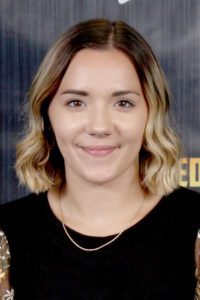
Kansas Wesleyan University has selected Bailey Brenn to serve as the new competitive dance coach for the Coyotes.
Brenn takes over for Kelsey Kieborz, who left KWU in April to focus on her dance studio, Revolution School of Dance.
“Our committee was impressed with Bailey’s experience at Colby Community College and her vision for the program,” said Mike Hermann, vice president and director of athletics. “With her background, I’m confident she’ll continue the momentum within our dance program.”
“I’d like to thank Mr. Hermann, (KWU President) Dr. (Matt) Thompson and members of the search committee for giving me this opportunity to lead the Kansas Wesleyan Dance program,” Brenn said. “My goal is to continue building the team to be one of the top competitive programs not only the conference, but in the region.”
Brenn comes to Kansas Wesleyan after serving as an assistant for the Colby Community College cheer and dance programs for the last two years. While at Colby, she was responsible for team choreography and had a significant role in recruiting.
“I am excited to be part of a new team, learning what each member of the team and what they have to offer and how we can make that a part of the performances,” Brenn added. “I am excited to see the bond between the team members and to see them become more of a family.”
She also served as a dance instructor for Ashly’s Dance Center in Colby for the last three years.
The native of Junction City was a member of the Junction City High School cheer and dance teams. She also was a member of the Colby CC Trojans cheer and dance teams and the Kansas State University Classy Cats dance team. She was a member of the 2016 NJCAA Region 6 championship teams at Colby.

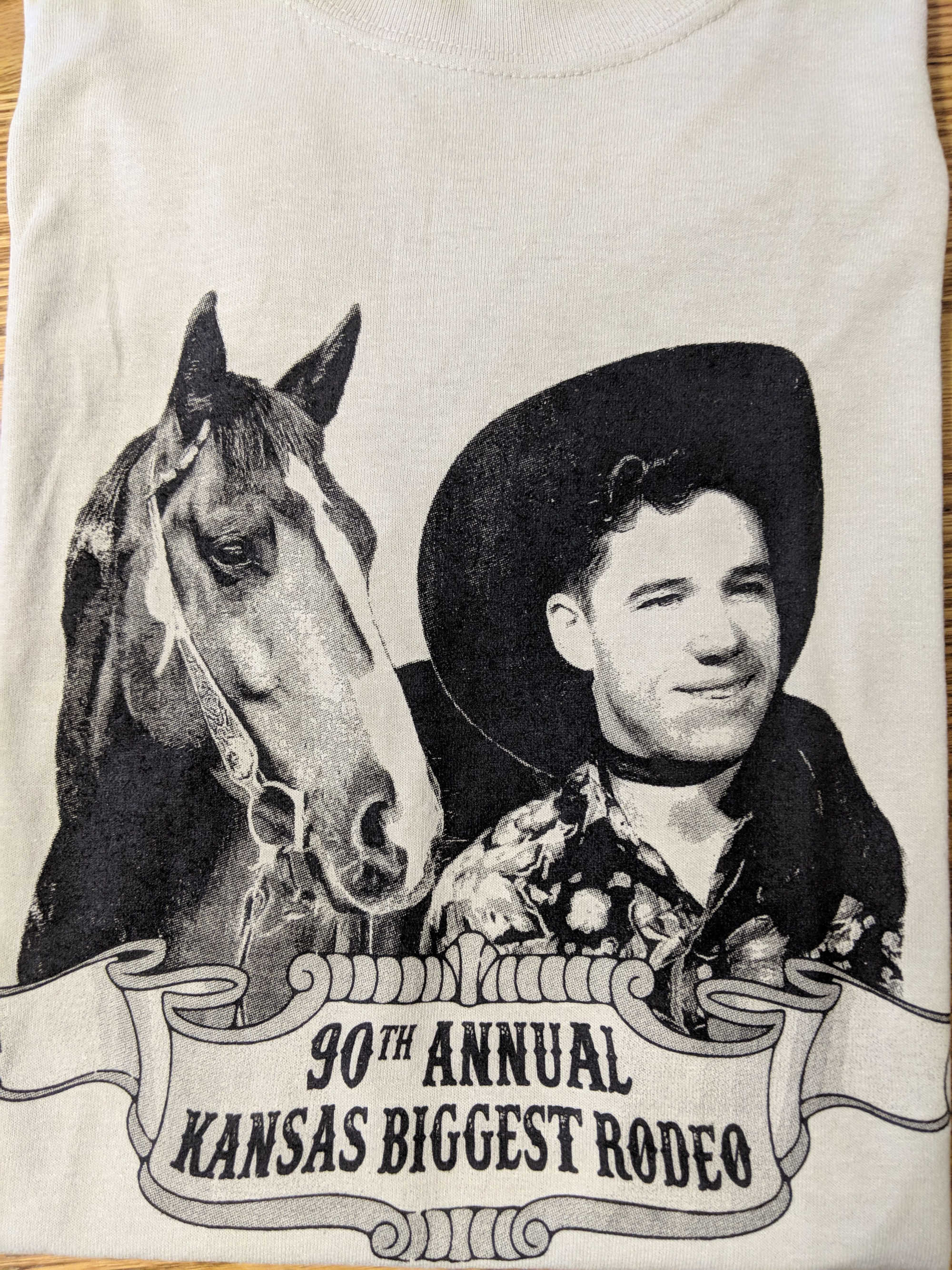
PHILLIPSBURG – Three people with ties to the Phillipsburg Rodeo are immortalized on rodeo T-shirts.
Nat Berney, Bud Forell and Wanda Bandt are all pictured on the fronts of t-shirts produced by the Phillipsburg Chamber-Main Street office.
All three have competed at the Phillipsburg rodeo.
Nat Berney, who was born in 1921, was a bareback rider, calf roper and bull rider who competed in Phillipsburg and across the Great Plains. He was a Phillipsburg Rodeo Association shareholder and served as rodeo secretary. After he quit competition, he worked as a rodeo judge for Little Britches and pro rodeos. Berney passed away in 2002. His wife Betty lives in Phillipsburg; the couple had three children.
Bud Forell, born in 1931, competed in every event in rodeo: steer wrestling, saddle bronc riding, bareback riding, calf roping and bull riding, but steer wrestling was his forte.
After graduating from Phillipsburg High School in 1949, he served in the U.S. Army in Germany from 1951-1953.
He competed at Kansas Biggest Rodeo numerous times and was a committee member, helping with maintenance and welding.
He and his wife Artyce married in 1954 and had two sons and four daughters. Eldest daughter, Deb Christy, who is a barrel racer, remembers her dad’s outlook on life. There were “never any excuses,” she said. “You had no excuses, and you never gave up. He had a tremendous work ethic.”
Forell died in 2005 at the age of 74.

Barrel racer Wanda Bandt was raised on her family’s farm near Kensington and won the barrel racing at the Phillipsburg rodeo in 1971 and 1974. She grew up riding horses, and as a young woman, worked as an airline stewardess. But after a time, she tired of it and quit. She was in Minnesota and had no way to get home, so she and two girlfriends sold all they had and bought horses, which they rode all the way back to Kansas.
Bandt was known for riding without using her stirrups, and daughter Tamra Griffey wonders how her mom stayed in the saddle. Polyester pants were in style then, and Bandt would have had trouble staying in the slick saddle with polyester on.
The two times Bandt won the Phillipsburg rodeo, she was riding her famous horse Copper. Competing at the regional level, Bandt and Copper won 51 consecutive rodeos in the late 60s and early 70s.
Bandt was also skilled at sewing and leather tooling and was an artist, talents her daughter Griffey uses in her work. Bandt sewed nearly all her own clothes, making bright colorful outfits like blue jumpsuits, in style at the time, with western belt loops, and a red jumpsuit, paired with a red hat and red checkered boots. Griffey said her mom sewed without patterns.
Bandt died in 1983 at the age of 46 of a brain tumor, and Griffey’s daughter, who never knew her grandmother, has a motto that conceptualizes her grandma’s gumption and talent: “If Wanda can do it, I can do it.” Bandt’s husband Layton served on the Phillipsburg rodeo committee for three years.

Berney, Forell and Bandt have connections to each other. Berney’s wife Betty traveled with Bandt to rodeos, keeping her company. Forell’s daughter Deb Christy babysat for Bandt’s children at rodeos, and as a teenager, was mentored by Bandt as she competed alongside the older woman.
T-shirts are available for sale through the Phillipsburg Chamber of Commerce/Main Street, Blossoms and Butterflies, White’s Foodliner, and Curly Willow II, all in Phillipsburg.
The Phillipsburg rodeo runs August 1-3 beginning at 8 pm each night. Tickets start at $11 for children and $15 for adults. They can be purchased at Heritage Insurance in Phillipsburg (785.543.2448).
Thursday, August 1 is Family Day at the rodeo; all children ages 10 and under are free with the the purchase of an adult ticket.
For more information, visit www.kansasbiggestrodeo.com.

BY RON WILSON
Huck Boyd National Institute for Rural Development
Where do bibles and rifles connect? That unlikely combination can be found in the history of Kansas, and particularly in one historic rural community church. This church is continuing to serve its members and its historic legacy.
Don Whitten is a member of the Beecher Bible and Rifle Church in Wabaunsee. He told me this remarkable history. It all began in the 1850s era of Bleeding Kansas, when the people of the territory were involved in a vicious debate over whether Kansas would become a slave state or a free state. Advocates for both sides flooded Kansas territory. For example, abolitionists in Connecticut raised money to send a group of free-state colonists west.
A famous New York preacher, Henry Ward Beecher, raised money for the cause and sent crates of rifles and bibles to the colonists. According to legend, the rifles were covered with bibles so as to get through the pro-slavery state of Missouri.
In 1856, the Connecticut colonists came to Wabaunsee. In the following year, they organized the First Church of Christ there. A new stone church was dedicated in 1862. This became the site of one of the most influential Congregational churches in Kansas.
By the 1930s, population had fallen, church membership dwindled and the church closed. In 1950, it re-opened. Today, the Beecher Bible and Rifle Church is an independent, non-denominational church which still meets in the original but remodeled stone building. Services are held each Sunday at 9:45 a.m. with Pastor Lynn Roth officiating.
Local residents George and June Crenshaw actively supported the church. Friends of theirs named the Thompsons donated funds for a new building and education center next to the old stone church building. The new building was dedicated in 1993.
Don Whitten has compiled the history of the church. He is a career military man who retired from Fort Bliss, Texas and moved to Wabaunsee, Kansas. He and his wife arrived in Wabaunsee in 1971 in the middle of a big snowstorm. When a neighbor, Inez Drake, learned of their situation, she thoughtfully alerted a snowplow crew to clear the streets before the Whitten’s moving truck arrived the next day.
Another neighbor, Mrs. Morgan, came over and invited them to her church at Wabaunsee. “We turned her down because we didn’t even have our clothes here yet,” Don said. Mrs. Morgan persisted in following weeks. “After the third or fourth time, I told my wife, `Let’s go to that church and get that old lady off our back,’” Don said. “We came to that church the next Sunday and we’ve come ever since.”
The Whittens appreciated the warm welcome of the congregation and the preaching, fellowship, and rich history. It was the first inter-racial Congregational church in Kansas. The late Mrs. Morgan herself was African-American and a long-time member. Her picture is displayed inside the church entrance.
Another long-time tradition at the church is Old Settler’s Day, held annually on the last Sunday of August. On Sunday, Aug. 25, 2019, a potluck lunch will be held at the church, followed by a historical program. This year, that program will be presented by me. The public is invited to attend at no charge.
This church and the community and region which it serves are rich in history. The building is listed on the National Register of Historic Places. It is located along the Native Stone Scenic Byway and along the route of the Underground Railroad which ran through the Kansas River valley.
That’s a lot of history to be found in a rural community. Wabaunsee is an unincorporated town with a population of perhaps 100 people. Now, that’s rural.
For more information, look for Beecher Bible and Rifle Church HERE.
Where do bibles and rifles connect? In this case, they connect with Kansas history in a rural community church. We commend Don Whitten, Lynn Roth, and all those involved with the Beecher Bible and Rifle Church for making a difference by serving the community and honoring this history. I hope both the bibles and the rifles hit their mark.
Audio and text files of Kansas Profiles are available at https://www.kansasprofile.com. For more information about the Huck Boyd Institute, interested persons can visit https://www.huckboydinstitute.org.
————————————————
The mission of the Huck Boyd National Institute for Rural Development is to enhance rural development by helping rural people help themselves. The Kansas Profile radio series and columns are produced with assistance from the K-State Research and Extension Department of Communications News Media Services unit. A photo of Ron Wilson is available at https://www.ksre.ksu.edu/news/sty/RonWilson.htm. Audio and text files of Kansas Profiles are available at https://www.kansasprofile.com. For more information about the Huck Boyd Institute, interested persons can visit https://www.huckboydinstitute.org.
 Today
TodayUPDATE 11 a.m. Saturday:
The Hays Police Department has canceled a Silver Alert for a Hays woman reported missing since Friday evening.
The HPD has reported Gail M. Thal has been located and is home safe with her family.
“The Hays Police Department and her family would like to thank everyone for their assistance,” the HPD said in a news update.
———————
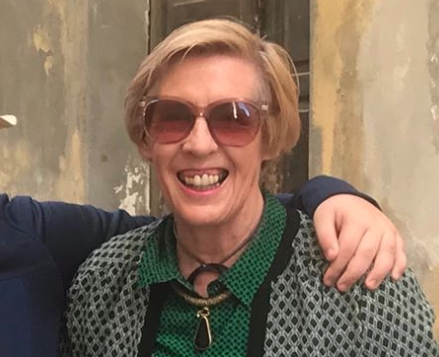
 The Hays Police Department is requesting assistance in locating Gail M. Thal.
Gail is a 77 year old Hays resident that was last seen at 7:00pm in the area of the 200 Block E. 16th in Hays. She has been reported missing by her family.
Gail is 5-foot-4 and weighs 140 pounds. She has blonde hair and blue eyes. Last seen wearing a white jacket, blue shirt, and dark pants.
Please contact the Hays Police Department at (785) 625-1011 if you have any information.

ABBB
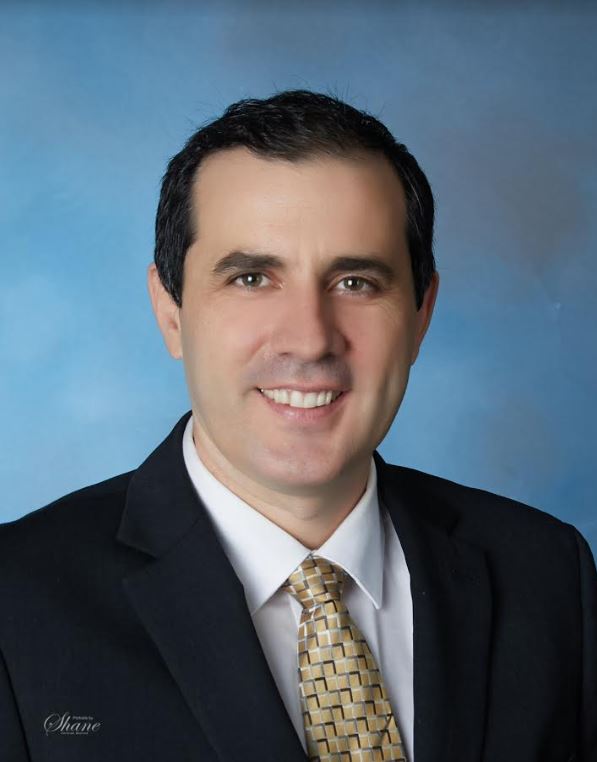
GREAT BEND – The certified public accounting firm of Adams, Brown, Beran & Ball, Chartered (ABBB) is pleased to announce the addition of Milan Simic to their professional team.
Simic joins the firm in a newly created role, Strategic Solutions Advisor. In this capacity, he will focus on developing CFO-level service strategies for clients in the oil & gas and manufacturing industries. His responsibilities include defining tailored solution sets as well as identifying industry enhancements, joint ventures, and potential merger and acquisition targets for clients.
“Welcome to the ABBB team, Milan! His energy and passion for our clients will help drive these new initiatives within the firm,” said Brian Staats, CPA, CGMA, managing partner of ABBB. “Our clients will benefit greatly from the new relationship and revenue opportunities that this position opens up to them.”
In 2001, Simic graduated from Stephen F. Austin State University with a bachelor’s degree in finance and accounting. He spent five years as an internal auditor at a large oilfield service company and two and a half years as a business risk services consultant with a Big Four accounting firm. Before joining the firm, Milan served as the president of a family office operation. In this role, he was responsible for growing the business, including overseeing seventeen different oil and gas project acquisitions which ranked in the top 300 operators in Texas. Simic lives in Hoisington with his wife Sarah and their three daughters, Sofia, Mila, and Ana.
Adams, Brown, Beran & Ball, Chartered provides a wide range of traditional and non-traditional CPA and consulting services to clients throughout Kansas, including agriculture organizations, construction companies, feed yards, financial institutions, governmental and not-for-profit organizations, manufacturers, medical practices, oil and gas companies, professional service firms, real estate companies and small businesses. Founded in 1945, today the firm maintains 13 office locations throughout the state. For more information about Adams, Brown, Beran & Ball, please visit www.abbb.com.

By Corinne Boyer
Kansas News Service
GARDEN CITY — Three years ago, rancher and farmer Jay Young got intrigued by a YouTube video.
A North Dakota farmer championed the idea of cover crops — plants that would be considered weeds in many other contexts — as robust plants for his cattle to graze on.
Young applied the cover crop strategy – rotating rye, radishes, turnips, oats and barley – to his land just east of the Colorado border. The plants held the soil in place, trapped nutrients in the ground and made the ground nicely spongy.
Partly as a way to prop up farmers who lost crops to flooding this spring, and partly as a way to protect the soil, a federal farm program now offers farmers in 67 flooded Kansas counties from $30 to $45 an acre to put down cover crops.
Meantime, a fledgling private effort is beginning to offer another cover crop bonus: payments intended to capture more carbon in the soil and reduce greenhouse gasses that contribute to climate change.
This spring, heavy rainfall destroyed crops and delayed the planting season throughout the state.
By comparison, some farmers who used cover crops like Young fared relatively well. Less ponding, more absorption. That’s paying off now when he needs to irrigate the land.
“If I … use less water because I’m utilizing cover crops and capturing more water that is coming out of my sprinklers,” he said, “then I’m being a better steward of the water.”
Karen Woodrich, a state conservationist with the federal Natural Resources Conservation Service, said planting cover crops helps restore soil nutrients.
“Standing water, it might have killed what was already there and kind of pulled the nutrients right out of those fields,” Woodrich said.
Through photosynthesis, plants grab carbon from the air and store it in the soil through their roots.
“Every time you till the soil, you actually are releasing carbon back into the atmosphere,” said Steve Swaffar, the executive director of the No-Till on the Plains.
If plants continuously cover the ground, the root system creates porous soil. Swaffar says healthy soil resembles cake.
“It’s full of small holes. It holds together when you hold it in your hand,” he said. “That allows water to infiltrate down through that soil and then be stored in the soil.”
The plowing of cropland crumbles that cake-like dirt. That prevents water from seeping into the ground. Swaffar says once tilled soil dries out, it’s almost like dust.
“When you get a rain on top of that, you essentially, in the first half inch, seal that structure,” he said. “It just creates kind of like a mud that seals over the surface of the soil and then water can’t infiltrate.”
Ag tech company, Indigo Agriculture, has created a carbon marketplace where growers who sequester carbon are paid and businesses, nonprofits or anyone interested in investing in the marketplace can purchase carbon credits, typically used to offset the release of greenhouse gases from some other activity. The company aims to reduce carbon dioxide by 1 trillion tons.
The company will pay farmers $15 to $20 dollars per acre for every ton of carbon dioxide captured in their soil.
John Niswonger grazes his cattle on cover crops in western Kansas.
“We do our best to raise the crops,” he said. “You’ve got to plant the cover crop out there and keep those roots growing and the photosynthesis is what pumps that carbon back into the soil.
“I don’t understand why they would pay us, but if they do, I guess we’ll take the money,” Niswonger said.
Ed Smith is the head of Indigo Carbon, and oversees the company’s Terraton initiative. If a farmer has a 100-acre field, and puts three tons of carbon dioxide into the ground, Smith says that farmer would be compensated $45 per acre — for a total of $4,500 for the entire field.
Indigo Agriculture began by selling microbes that helped seeds grow faster. After working with farmers utilizing regenerative practices, the company noticed the soil transform from a pale to a dark color.
“The difference in that color is soil organic carbon levels,” Smith said. “They are also doing a service for the planet by taking carbon out of the atmosphere and putting it in the soil, which led us to Indigo Carbon.”
Niswonger signed up for Indigo’s Carbon marketplace, but he says soil carbon sequestration is a more of an industry term.
“It’s more for your university people than it is for anybody that works on the land. I mean … the process happens, and it’s not like we try for it not to happen or try for it to happen,” Niswonger said.
Corinne Boyer covers western Kansas for High Plains Public Radio and the Kansas News Service. You can follow her on Twitter @corinne_boyer or ror email cboyer (at) hppr (dot) org.

By CRISTINA JANNEY
Hays Post

You might have seen a little orange buggy rolling up and done the sidewalk outside Ascencion Living Via Christi Village in Hays.
This pedal-powered Berg E-Gran Tour cart is the newest means Learning Cross Child Care Center has of connecting elderly residents at the Village with the child care center’s kids.
The child care center and preschool bought the buggy with a $5,000 grant from the Heartland Community Foundation.
Four people can ride in the buggy a one time — one staff person, one elderly resident and two children in the front. The staff person pedals, which helps energize a small motor in the back. The senior’s pedals have no resistance, so it is a very gentle workout.
Brett Schmidt, Learning Cross owner and director, said the kids and seniors alike have loved the buggy.

Tony Brummer, Village resident, said the rides are the highlight of his days. It also gives Brummer a chance to share stories with the kids. Brummer, a former farmer, has been caring for a large sunflower in the Village’s courtyard and has been using the short outings as a time to talk about the sunflower and gardening.
Schmidt said he hopes to integrate more learning opportunities in these times in the buggy by getting the elders to share stories or pictures with the children during their rides. They may also share prayer time on the buggy in the future.
“Once they are on the buggy, they are a captive audience — the kids are,” Schmidt said. “The residents are free to talk about whatever.”
The kids love the rides so much, the center uses the buggy rides as one of the rewards for good behavior.

The organization also received a grant from Heartland Community Foundation to purchase a Music and Memory program about a year ago. The program is geared toward residents who suffer from Alzheimer’s disease or dementia. Each resident in the program receives an MP3 player programmed with music popular from the younger eras of their lives.
“It is kind of like a hardwire back to your memories,” Schmidt said. “So as you listen to a song, music is the last part of your brain that will go with those memories tied with it. You get a long way back to a memory. You get 10 to 15 minutes of kind of the person is back. You can have conversations with them.”
The program can help people with anxiety and depression. Some people experience fewer behavior issues when they engage with music and a as result their physicians can reduce their medication.
One of the residents was becoming very agitated and when she was introduced to the music, she became very calm, Schmidt said. The music makes her smile.
Learning Cross, an Christian intergenerational child care center, has been at Via Christ Village for four years. Schmidt, a former kindergarten teacher, gleaned the idea for the child care and preschool from a similar program in Coffeyville. He said he could see the benefits to both children and their elders through the two groups interacting.
Every year, families with children at Learning Cross adopt elders at the Village as a “grandfriends.” The families share holiday gifts and drop-by visits throughout the year.
All the children at the child care center participate weekly in activities with both assisted living and long-term care residents. This includes church services and exercise.

“For the children, they learn empathetical responses, and learning sympathy and they are part of a larger community. They are part of a larger community they get to help with,” Schmidt said. “They get to go and do what we call ‘smile power.’ They go and smile and wave. They have created hug power, singing power — anytime they can get someone to smile — that is what their goal is.
“That has been awesome seeing that grow just out of the kids. That was not something out of my program that I developed.”
The residents often call the preschoolers their “grandkids” or their “Via buddies.”
“The residents, when you see the kids come up, you just see a magical moment. A new spark forms or a spark that was there comes back to life. …
“Some of them want the hugs, and some of them will just sit out and watch them, especially in the courtyard when we play out there. Windows open up and shades open up and they just sit in their rocking chairs and just listen to the kids play.”
Many older Americans today live far away from their families, and they fall victim to the three plagues of aging — boredom, loss of purpose and depression. However, Schmidt said he believes the presence of the children helps with all three of those issues.
“We give them a purpose. The grandfriends basically become grandparents again to these kids. They get to tell them stories. They get to play with them. They get to watch them. But also the depression piece, having that life — basically we are injecting life back into the building with the kids. We run down the hallways sometimes. There are always laughs. There are sometimes cries, but it is real life that we get to bring back. It is a magical, symbiotic relationship.”
Sandy Dinkel has worked at the Village for more than 20 years. She said the presence of the children has resulted in a calmer atmosphere that feels less institutional.
“It feels more home-like,” Dinkel, admissions director, said, “You have the kids going through. You’ve got more spiritual activities and the kids involved in the spiritual activities. That is a big, big thing.”
The “grandfriends” leave a lasting impression even when they are gone. One young girl became particularly attached to one of the Village resident. She often wanted to sit on the resident’s lap, but that resident recently passed away.
“The little girl we told her she is not going to be here anymore. She is in heaven with God. She said, ‘I am so blessed that I got to be with her when she was here.’
“That is what we want to teach is the positive. She was able to affect this lady’s life that much. She was a happy grandfriend that just loved everybody. She didn’t care what was going on. All your worries, everything melted away, when she gave you a hug. That is what we are trying to develop, letting them give back. That girl will remember that for the rest of her life.”
Schmidt said the partnership is wonderful. The children can play in the courtyard and in the a adjoining playground when the weather is nice, and they have many long corridors to walk in when the weather is inclement. Schmidt said they once tracked the children’s activity and found they walked a mile a day even when they were indoors.
The children have play-based learning and preschool. They learn phonics, and most can read before they begin kindergarten. Social/emotional learning is a foundation of the program, Schmidt said.
“We try to get the kids to express their emotions, identify their emotions,” he said. “It is the key to get to high-order thinking, so when they go into school — kindergarten, first grade, second grader, they are learning how to learn from us not what to learn. No matter the environment they are in, we are hoping they will be successful in any classroom.”
The program had seven children when it started. It will have 24 children in the fall and has a wait list until 2022.
“I would say this has been a God journey,” Schmidt said. “It started out so small. I can’t still believe the success we’ve had.”