We have a brand new updated website! Click here to check it out!

INSIGHT KANSAS: Kansas should unmute voters by reforming how it fills legislative vacancies

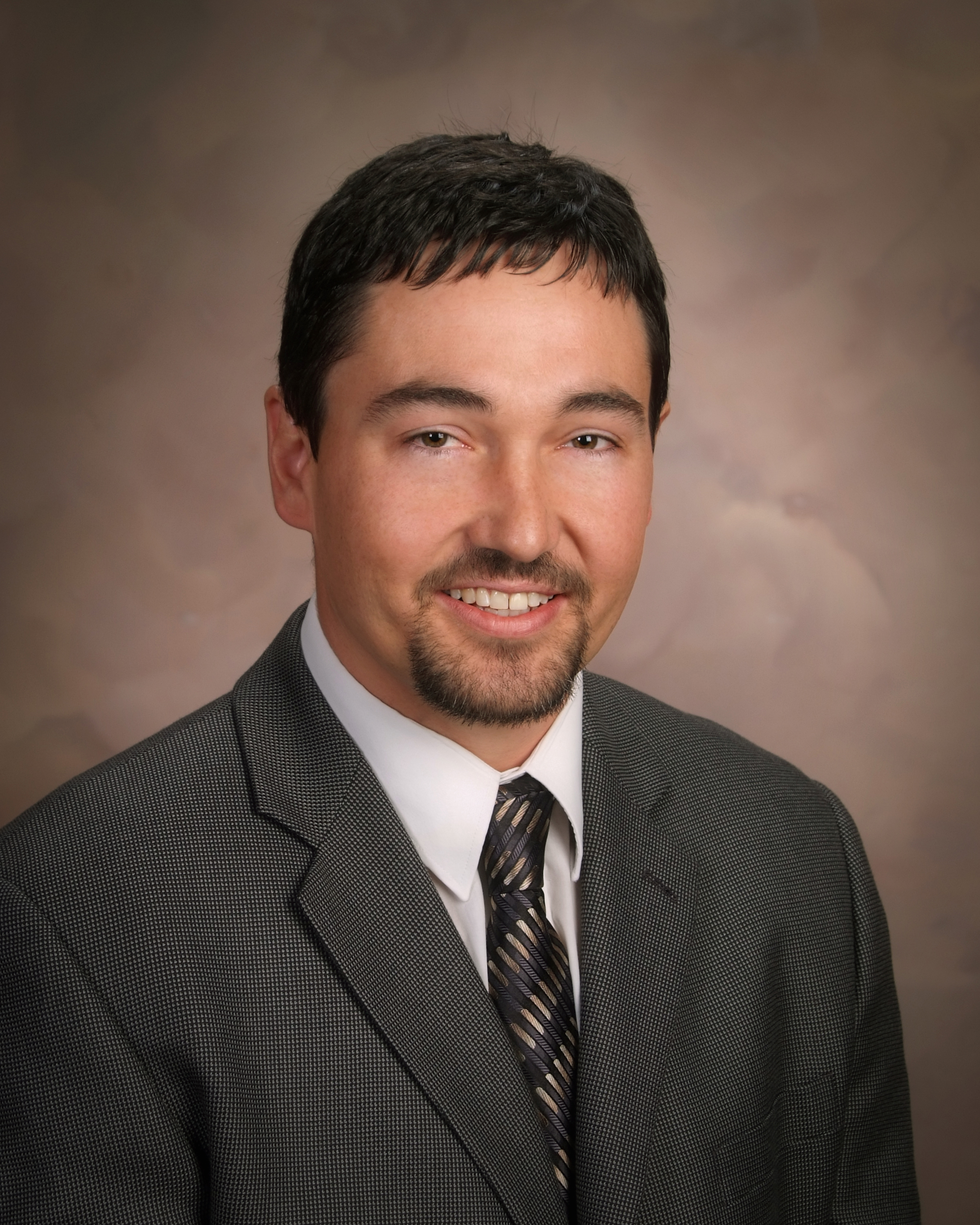
The news that a Kansas legislator is resigning mid-term for health reasons presents a good opportunity to think about the process that Kansas uses to fill legislative vacancies. This is probably not an enthralling topic to most, but it matters because that process is a rotten anachronism that unnecessarily mutes average voters.

Patrick R. Miller is an Assistant Professor of Political Science at the University of Kansas.

When Kansas legislators leave before their terms are completed, local precinct chairs from the same party as that politician choose their replacement. The governor approves their choice as a formality. This happens fairly frequently. Nearly a fifth of legislators in the 2017-2018 session, for example, originally entered the legislature by appointment.

Only three states use this same process. Most others fill vacancies via special elections, though others also use appointments of some type.

Voters elect precinct chairs in party primaries, but most chair slots are vacant and there is no competition for most who are elected. Thus, a few party activists who are likely unrepresentative of their districts can select new legislators.

Some recent examples illustrate concerns with this process.

When Governor Laura Kelly left the legislature, the Wichita Eagle reported that 100 of 166 Democratic precinct committee positions in her district were vacant, leaving just 66 activists to select her replacement for a district of over 70,000 residents.

As a moderate Republican, Insurance Commissioner Vicki Schmidt represented a swing legislative district that voted Democratic for governor and Congress in 2018, but narrowly went for Donald Trump in 2016. Rather than replacing her with another moderate who likely would have fit district voters better, activists chose a far right replacement.

In 2015, western Kansas Republicans rejected a local mayor and instead appointed someone who was serving as a school board member in Nebraska until days before his selection.

Beyond the fact that voters are competent enough to select legislators themselves, this process is troublesome for how it can decrease political competition. Most Kansas legislative races are already relatively uncompetitive given voter party preferences, the quality of campaigns, and widespread uncontested elections.

Politicians often get appointed to the Kansas legislature and subsequently face few, if any, electoral challenges, primary or general. Incumbency itself can discourage challengers, but once appointed, legislators can use the advantages of incumbency—fundraising, media coverage, and official party support, for example—to deter challengers.

Take, for example, former Representative Adam Lusker. Once appointed, the southeast Kansas Democrat served five years with no opponents before losing in 2018 when challenged for the first time. That’s a long time with zero electoral accountability.

Yes, legislators often win seats through the normal process and go years without opposition, but appointments discourage competition for voters when a seat is initially open, which is exactly when competitive elections are most likely to occur.

This is not a critique of parties per se. I firmly subscribe to E.E. Schattschneider’s famous quote that democracy is “unthinkable” without parties. Despite their flaws, parties organize government, structure elections, and promote electoral accountability. And yes, there is a role for party precinct chairs in ensuring strong local parties.

But in filling legislative vacancies, the party “middleman” and “middlewoman” should not intrude between voters and their elected officials. The process as is only serves activists and insiders with the right connections to the select few who make these appointments.

Absolutely, it is far cheaper to have these activists select our policymakers than to hold special elections. And it saves local election officials from having to organize these elections—even though that is their job. You get the democracy that you pay for, though, and easy democracy on the cheap is not necessarily democracy at its best.

Patrick R. Miller is an Assistant Professor of Political Science at the University of Kansas.

Bogue native, retired veterinarian and author to speak in McCracken

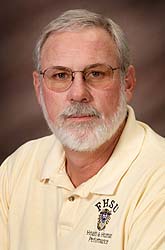
James Kenyon

MCCRACKEN — The McCracken Public Library will host guest speaker Dr. James Kenyon, DVM, and author of several books including Golden Rule Days, A Cow for College, and The Art of Listening to the Heart, on Sunday, August 4 at 3 p.m. at the McCracken city building, McCracken.

Everyone is welcome. Desserts and beverages will be available after the presentation with a free will donation.

James Kenyon was born and raised on a third generation family grain and livestock farm. He grew up caring for cattle, pigs, chickens and horses near the small town of Bogue, Kansas, population 300. It was natural for James to record the histories of small town schools and thus the life and times of communities. It took the whole town to raise a child. There were 6 students in his high school graduating class.

James served his community as a veterinarian for 35 years in a mixed animal practice in a beautiful Iowa college town. Through his mentoring, 18 students that worked for him went on to become veterinarians. He is a seven-time veterinarian for the Alaska Iditarod Dog Sled Race. He was named Iowa Veterinarian of the year and was the state president of the Iowa Veterinary Medical Association. He was the chairman of the Iowa Veterinary Medical
Examining Board.

Today, James continues the family tradition with 24 years of service on his community’s school board (President and Vice President). This made him the fourth generation (spanning three different centuries) of his family to serve as a school board member. The importance of team work and leadership learned in school have guided him through his adult years.

For more information go to www.jamesrkenyon.com.

— Submitted


HaysMed welcomes Potter to medical staff

Potter

Dr. Kirk Potter, plastic and reconstructive surgeon, has recently joined the medical staff at HaysMed, part of The University of Kansas Health System.

Dr. Potter received his medical degree from the University of Health Sciences, College of Osteopathic Medicine in Kansas City. He completed a residency in general surgery and fellowship in plastic and reconstructive surgery at Philadelphia College of Osteopathic Medicine.

Dr. Potter will be performing plastic and reconstructive surgeries at the hospital.

He will be maintaining a private practice in Hays.

2 SW Kansas men hospitalized after driver falls asleep

LANE COUNTY — Two people were injured in an accident just after 4:30p.m. Thursday in Lane County.

The Kansas Highway Patrol reported a 2002 Chevy Avalanche driven by Noel Leyva-Molinar, 35, Dighton, was eastbound on Kansas 96.

The driver fell asleep. The vehicle crossed the westbound lane, entered the north ditch and struck a culvert at Hickock Road.

Leyva-Molinar was transported to the hospital in Scott City. EMS transported a passenger Pedro Hernandez, 32, Dighton, to Wesley Medical Center in Wichita.

They were not wearing seat belts, according to the KHP.

Hep A and Meningococcal Vaccines to be required for 2019-20 School Year

Vaccine changes effective August 2

Kansas Department of Health and Environment

Two new vaccines will be required for school-age children for the 2019-20 School Year: Meningococcal and Hepatitis A. KDHE proposed changes to the vaccine requirement regulations earlier this year and held a public hearing concluding a 60-day public comment period in June. The regulations were approved by KDHE and will go into effect on August 2.

“We received many comments and input from all viewpoints,” KDHE Secretary Lee Norman said. “We listened and read all of the input and concerns submitted to us. We looked at the evidence. Both Meningitis and Hepatitis A illnesses are severe and preventable, and the safety profile of the vaccines is well-recognized. As an agency charged to establish policies that protect and improve the lives of Kansans, we felt the addition of the two vaccines was essential for the health and safety of our state.”

Changes for 2019-20 School Year

Students entering Kindergarten and Grade 1 for the 2019 -2020 school year now need two doses of the hepatitis A vaccine.
Students entering Grade 7 for the 2019-2020 school year need one dose of the meningococcal ACWY vaccine.
Students entering Grade 11 need one dose of the meningococcal ACWY vaccine if not vaccinated prior to their 16th birthday. They will need two doses if their first dose was before their 16th birthday.

Vaccine requirements for schools can be found online at: https://www.kdheks.gov/immunize/schoolInfo.htm.

About the Vaccines

Meningococcal ACWY Vaccine

The meningococcal ACWY vaccine protects against meningococcal disease. Meningococcal disease has two common outcomes: meningitis (infection of the lining of the brain and spinal cord) and bloodstream infections. The bacteria that cause meningococcal disease spread through the exchange of nose and throat droplets, such as when coughing, sneezing, or kissing. Symptoms include sudden onset of fever, headache, and stiff neck. With bloodstream infection, symptoms also include a dark purple rash. About one of every 10 people who gets the disease dies from it. Survivors of meningococcal disease may lose their arms or legs, become deaf, have problems with their nervous systems, become developmentally disabled, or suffer seizures or strokes.

Hepatitis A Vaccine

The hepatitis A vaccine protects against the hepatitis A virus. The virus is spread primarily person to person through the fecal-oral route. In other words, the virus is taken in by mouth from contact with objects, food, or drinks contaminated by the feces (stool) of an infected person. Symptoms can include fever, tiredness, poor appetite, vomiting, stomach pain and sometimes jaundice (when skin and eyes turn yellow). An infected person may have no symptoms, may have mild illness for a week or two, may have severe illness for several months, or may rarely develop liver failure and die from the infection. In the U.S., about 100 people a year die from hepatitis A.

Exemptions from Vaccines

There are exemptions to vaccines. In accordance with KSA 72-6262, legal alternatives to vaccination requirements include medical contraindications and religious beliefs. The medical exemptions signed by a medical clinician must be submitted on an annual basis by the family/guardian of the student. There could also be instances in which a person has a religious belief that prevents them from receiving a particular vaccination. The parent/guardian of the student must submit a written statement indicating they are adherent of a religious denomination whose religious teachings are opposed to such vaccination. The school board or governing body for nonpublic schools are responsible for ensuring compliance with the regulations and statutes.

Still time to enjoy Ellis County Fair; Demo Derby tonight

There is still time to enjoy the Ellis County Fair.

The Demo Derby is at 7:30 tonight at RPM Speedway.

The pits open at 3:30 p.m.

Monster trucks will take center stage at RPM at 7 p.m. on Friday and Saturday.

You can head out early and check out the exhibits in the air-conditioned Unrein Building and enjoy rootbeer floats at 5 tonight in the livestock arena sponsored by Midland Marketing.

DOC will take the Midway stage at 8:30 tonight.

Thursday night schedule.

5:00 p.m. Free Root Beer Floats – sponsored by Midland Marketing – Livestock Show Arena
5:00 p.m. 4-H Dairy Show – Livestock Arena, immediately following – 4-H & Open Class Bucket Calf Show, immediately following 4-H Beef Show
5:00-10:00 p.m. Commercial Exhibits open in Unrein Family Building
5:00-10:00 p.m. Face Painting-TMP Cheeleaders – Unrein Family Building
6:00-10:00 p.m. Jason D’Vaude – Modern Vadevillian – Midway
6:00-10:00 p.m. Totally Twisted Balloon Artist – Midway
6:00-10:00 p.m. Hays Hobby Shop, RC Cars open practice
6:00-10:00 p.m. Inflatable Carnival & Laser Tag $5 armbands
7:00-8:00 p.m. Happy Hour-Beer Garden
7:30 p.m. Demolition Derby – RPM Speedway
8:30 p.m. DOC @ Midway Stage

Friday

7:30 a.m.-10:00 p.m. 4-H Food Stand Open
8:30 a.m. Register for 4-H Livestock Judging Contest – Livestock Arena
9:00 a.m. 4-H Livestock judging contest begins
10:00 a.m.-10:00 p.m. Schenk Building open for public viewing
4:00-6:30 p.m. 4-H BBQ-Deutschfest Hall & Unrein Family Building
5:00-9:00 p.m. Commercial Exhibits open in Unrein Family Building
5:00-9:00 p.m. Face Painting-TMP Cheeleaders – Unrein Family Building
5:00 p.m. Pit to Monster Truck Show open
5:30-7:00 p.m. Monster Truck Pit Party
6:00 p.m. 4-H Champion Fitting & Showing Contest – Livestock Arena
6:00-10:00 p.m. Jason D’Vaude, Modern Vaudevillian – Midway
6:00-10:00 p.m. Totally Twisted Balloon Artist-Midway
6:00-7:30 p.m. Hays Hobby Shop, RC Car Races
7:30-10:00 p.m. Hays Hobby Shop, RC Cars open practice
6:00-11:00 p.m. Inflatable Carnival & Laser Tag by Grand True Value Rental
7:00 p.m. Monster Trucks – RPM Speedway
7:00-8:00 p.m. Happy Hour-Beer Garden
8:30 p.m. Paramount @ Midway Stage

Saturday

7:30 a.m. Superintendents & Assistants arrive to remove exhibits from display cases
7:30 a.m.-9:00 p.m. 4-H Food Stand Open
8:30-10:00 a.m. Release 4-H & Open Class Livestock not in 4-H Livestock Auction/Small Animals & clean up barns. Animals in sale will be released after the sale.
9:00-10:00 a.m. Release exhibits in Schenk Building
10:00 a.m.-finish Building clean up – everyone’s help needed
1:00 p.m. 4-H Food Stand closes – committee meets to clean up and close down
5:00 p.m. Pit to Monster Truck Show opens
5:30-7:00 p.m. Monster Truck Pit Party
6:30 p.m. 4-H Livestock Auction – Livestock Arena
6:00-10:00 p.m. Jason D’Vaude, Modern Vaudevillian – Midway
6:00-10:00 p.m. Totally Twisted Balloon Artist-Midway
6:00 -7:30 p.m. Hays Hobby Shop-RC Car Races
7:30-10:00 p.m. Hays Hobby Shop-RC Cars, open practice
6:00-11:00 p.m. Inflatable Carnival & Laser Tag by Grand True Value Rental
7:00 p.m. Monster Trucks – RPM Speedway
7:00-8:00 p.m. Happy Hour-Beer Garden
8:30 p.m. Radio-Active @ Midway Stage

Hays USD 489 online enrollment open

Online enrollment is now live for Hays USD 489. Click here.

You can access the online enrollment portal by using your PowerSchool log in information. If you don’t remember your PowerSchool password, there is an option on the login page to reset the password.

Families with new students and incoming kindergarten students must enroll at Hays High School on Wednesday, July 31 or Thursday, Aug. 1.

Please email Amy Arnhold at  [email protected] if you have any questions with the electronic enrollment process.

If wish to come to Central Enrollment: see the USD 489 website for all the details @ www.usd489.com
#onlineenrollment #usd489 #schooliscomingsoon

Below you will find links to school supply lists for USD 489 schools.

Lincoln Elementary List
O’Loughlin supply list
Roosevelt Supply List
Wilson Elementary List
Hays Middle School List
Hays High School

Former Tiger great returns to Hays

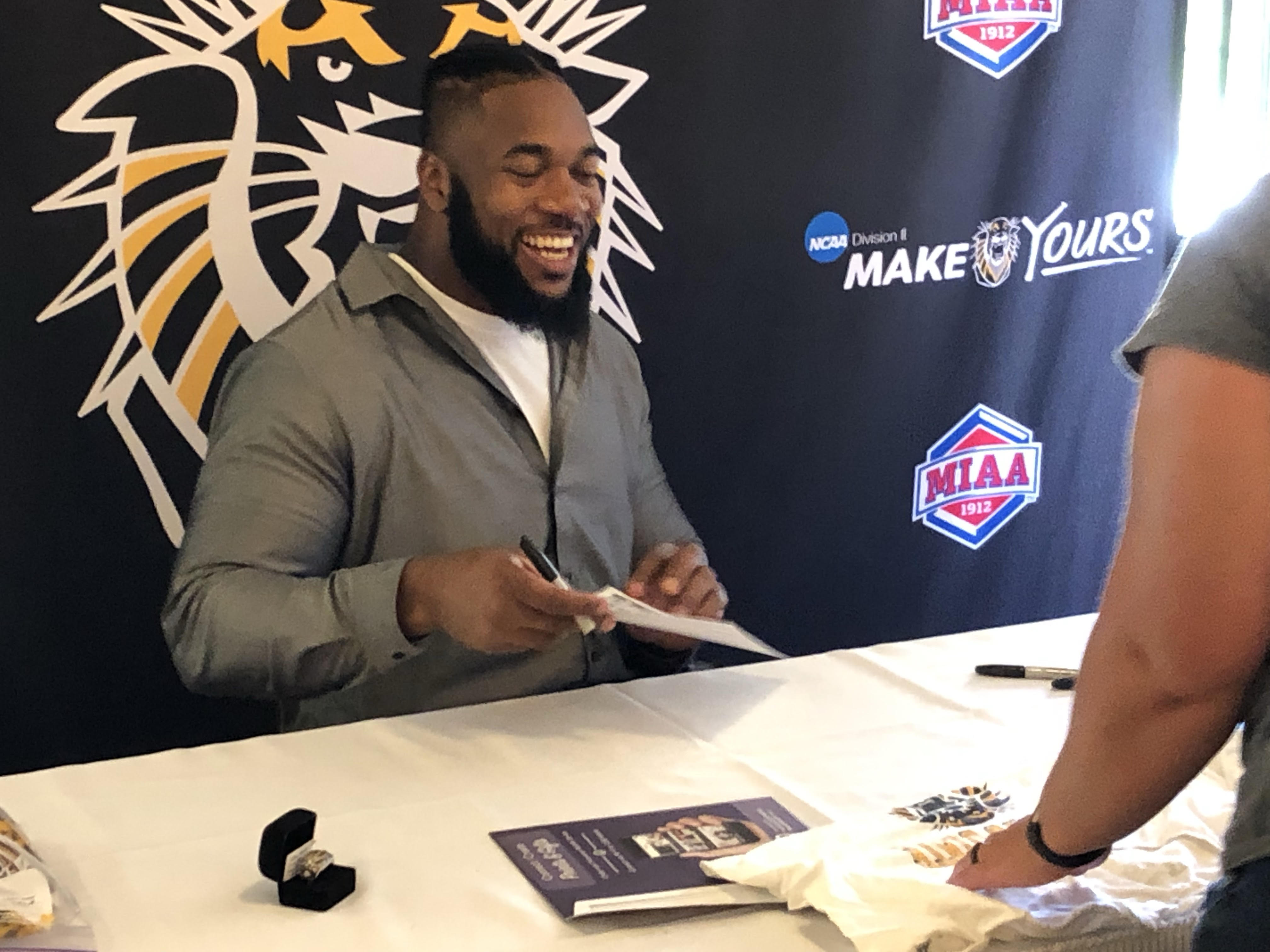
For three years, Nathan Shepherd called Hays and Fort Hays State University home. After sitting out of football for several years for financial reasons, the Ajax, Ontario, Canada, native took a chance a moved to northwest Kansas to jump start his dream of playing in the NFL.

Nathan Shepherd signs autographs Wednesday at Smoky Hill Country Club

After leaving an indelible mark on the Tiger program that included two bowl game appearances and the school’s first MIAA title, Shepherd realized his dream and was drafted in the third round by the New York Jets.

Nathan Shepherd

Now as he prepares to report to training camp prior to his second season in the NFL, Shepherd returned to Hays along with a television crew from TSN (Canada’s version of ESPN) to retrace his footsteps in Hays as part of a feature on the Canada native.

“You never realize how many people you’ve impacted and how you don’t always get to realize how many people have impacted you” Shepherd said after signing autographs and taking photos with Tiger fans Wednesday at the Smoky Hill Country Club.

“Looking back, there’s so many people, so many stories, so many thank yous to be given that maybe at the time while I was leaving wasn’t able to get done” he said. “This helps me to feel better to come back and give back in a way that I can and to show my gratitude for everything this town’s provided me with.”

Hays Sister Cities representatives visit China Sister City

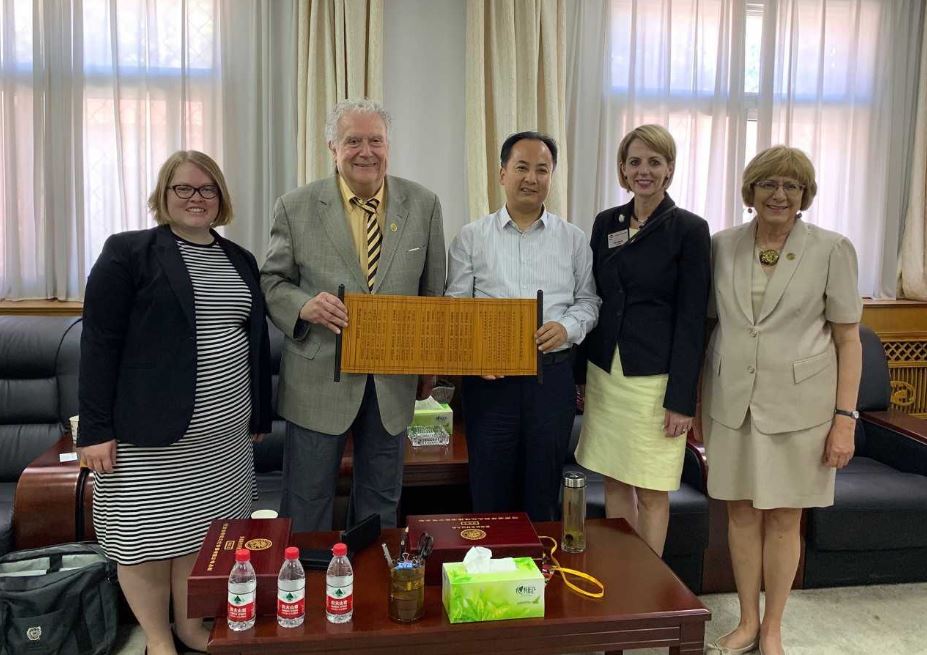
Meeting with Mayor Zhifeng Ma in Xinzheng, Henan Province, China are Brittney Squire, Hays Sister Cities/FHSU; Mehran Shahidi, Hays Sister Cities/FHSU; Mayor Zhifeng Ma, Xinzheng; President Tisa Mason, FHSU; Cindy Elliott, FHSU/Sister Cities International

In May 2019, two representatives from the Sister Cities of Hays, Kansas board joined the Fort Hays State University delegation on a trip to China. Sister Cities of Hays is a member of Sister Cities International, the oldest and largest organization of citizen diplomats in the nation. Hays’ sister cities include Santa Maria de las Misiones, Paraguay, and Xinzheng, China.

The purpose of this trip was to participate in the annual commencement ceremonies for Fort Hays State University’s partner institutions. This year marked a major milestone as the delegation celebrated 20 years of partnership with Sias International University.

Mehran Shahidi, director of intercultural integration at FHSU and Brittney Squire, Forsyth Library outreach specialist at FHSU represented Sister Cities and the city of Hays on this trip. During the visit, Shahidi and Squire, along with FHSU President Tisa Mason, and Cindy Elliott, FHSU Assistant Vice President for Global Partnerships and board member for Sister Cities International, met with members of the Xinzheng Municipal Government in the Henan Province of China.

There they met with the Mayor of Xinzheng, Mr. Zhifeng Ma. During this meeting, there was an exchange of information about the city of Hays, FHSU, and the city of Xinzheng. In a discussion about possible collaboration opportunities between the two cities, several items of interest were presented including cultural exchange programs, economic development, telemedicine prospects and artificial intelligence.

“Through this meeting and a previous one with Mayor Ma, I have really noticed the purpose of establishing friendships through one on one relationship — one individual and one community at a time. The conversation and the enthusiasm among all of us once again reminded me of President Eisenhower’s belief that friendship through individuals and communities would make the difference,” said Shahidi.

Shahidi and Squire also presented Mayor Ma with a proclamation from Hays Mayor Henry Schwaller. The proclamation reinforced the desire to maintain a positive relationship and cultural exchange between Hays and Xinzheng. Gifts were exchanged by both parties including items which are native to both areas.

“We were given such a warm welcome in China from our very first stop in Xinzheng. I was so impressed by the Chinese hospitality, and I only hope Hays, Kansas can return the favor one day soon by showing off our own Midwestern charm,” said Squire.

Mayor Ma was invited to bring a delegation to Hays. The Sister Cities board will continue to maintain communication with Xinzheng representatives in order to arrange a visit in the future.

Hays Sister Cities is a committee of local citizen volunteers with a passion for international collaboration. For information on Hays Sister Cities, email [email protected] or find the group on Facebook.

– SUBMITTED –

Low wages hamper DSNWK’s search for care staff

By CRISTINA JANNEY
Hays Post

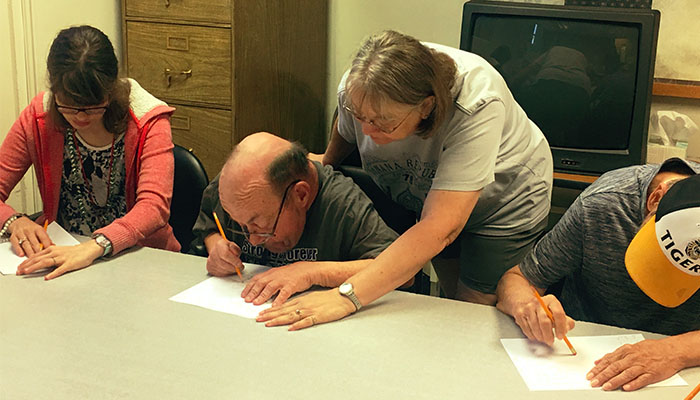
Nathan Young, lead paraprofessional at the Reed Development Center, aids a DSNWK client Wednesday,

Nathan Young works three jobs to support his family.

Even at full-time, he does not make enough at his job at Developmental Services of Northwest Kansas  to get by. He also works another 16 hours per week aiding another disabled individual as well as a semi-professional gamer.

Young, lead paraprofessional at the Reed Development Center, works with lower-functioning individuals. He helps his clients with basic care like feeding themselves, toileting and keeping themselves clean.

He said he loves his job, but he wishes he was paid more.

“The thing I like the most is not just the smiles I get everyday with everyday interactions. I am able to help someone to the fullest of my abilities. It just brightens their heart,” Young said.

Young, 31, as a direct support professional, is not alone in his struggles to make ends meet. He is one of many workers at DSNWK who work physically and mentally demanding jobs for low wages.

Jerry Michaud, DSNWK president, said because of state-set reimbursement rates, the wages DSNWK can offer direct care workers is low. This, coupled with low unemployment in northwest Kansas, means it is difficult for DSNWK to recruit and retain employees. The agency constantly has vacancies.

DSNWK has about 345 employees across its 18-county coverage area. As of the end of June, DSNWK had 27 open positions — mostly direct support professionals.

The overall unemployment rate for DSNWK’s coverage area is 2.84 percent, which is very low.

“It means there are not a lot of individuals out there in the workforce, so that is one challenge right off the bat,” Michaud said. “It is a challenge in all our communities, so I think that is something all employers are up against.”

A direct support professional helps a DSNWK client. Direct support professionals are paid only $9 an hour.

How much DSNWK is reimbursed for caring for disabled individuals is complicated. The state assigns disabled individuals to a tier system based on their needs, and then the state reimburses DSNWK based on that tier system. DSNWK serves people on all tiers.

The bottom reimbursement rate is $7.68 per hour. Minimum wage is $7.25. DSNWK recently raised its direct support professional starting pay to $9 an hour.

Michaud acknowledges $9 is not a high wage, but DSNWK still has to make up the difference between $9 an hour and the state reimbursement.

“I will tell you that the rates that are paid don’t cover the cost,” Michaud said. “That is in part of why we approach our counties to help us to fill the gap.

“What we ought to be paying is something different,” he added. “That is part of the equation we haven’t even broached. What is a prevailing wage in this community versus the next community? That is where it become more complicated to try to figure out what that is.”

Turnover is directly tied to wage, Michaud said.

Turn over is high among direct care professionals because of the difficult work and low wages.

“How do you live on a $9 a hour wage?” he said. “Can you find housing? Can you pay for your housing on $9 an hour alone? I am saying these things knowing it is a hard reality.”

The answer, in Young’s case, is you don’t.

Not only is Young working extra jobs, he has also had to reach out for state assistance.

DSNWK offers health insurance benefits to its employees. Young is able to purchase health insurance for himself through DSNWK, but he can’t afford the family plan that would cover his children. They are covered by state insurance.

Young said turnover can be a problem. He sees fellow employees come and go. It is a tough job for not much pay. He said the people who stay are like him — committed to the people who they serve.

“I would like more pay,” he said. “It would definitely financially aid me, but it is not about the money there. I love seeing my friends every day. I know I work for them. They are so much fun to hang out with and help them grow.”

Turnover definitely has an effect on the quality of care that the people DSNWK serve receive.

DSNWK celebrates its 50th anniversary. File photo

“Let us assume for a moment that I am the person who receives services, let’s just say I require personal services — using the restroom, toileting, showering, and those kind of things,” Michaud said. “If you have new people coming and going all of the time, helping you in some of those most personal times, that would be hard. I can’t sugarcoat that.

“It really solidifies making a change or making a difference so we can slow that revolving door and have greater stability. That is why we are doing what we are doing.”

Not only does turnover have ramifications on care, constantly training new employees is costly and time-consuming.

“When you go through that process and a person stays for a month or a few months, that is not necessarily a good thing,” Michaud said.

DSNWK employs university students in Hays. Although those students might not leave due to wage, they usually eventually leave due to graduation.

DSNWK has a capital campaign to address in part some of its employment challenges. However, long-term, Michaud said the reimbursement rates for care need to increase in order to deal with the direct support professional pay issue.

Michaud said increases in reimbursement rates have not kept up with inflation and neither have wages. From 2008 until a couple of years ago, state reimbursement rates remained flat.

“As a state, we’ve got to find a way to have a realistic funding structure that is practical as far as the ability to hire, recruit and retain a workforce that can provide these vital services. I think the state understands this,” Michaud said.

The state has had to increase wages on the institutional side at facilities, including Larned State Hospital and Osawatomie.

On a related issue, the state has tried to reduce the number of disabled individuals waiting for Medicaid-funded services. There are 107 people on that list in DSNWK’s coverage area and more than 4,000 people on the list statewide.

The Legislature this spring allocated more funding to decrease two of the Medicaid waiting lists. One-hundred seven people were removed from the wait list statewide with that funding. Only one of those people was from northwest Kansas.

Although the state needs to reduce the waiting list, it also needs to address the wage issue., Michaud said. If more people come into the system without increasing wages, DSNWK and other agencies like it in the state will have capacity problems, he said.

DSNWK is taking steps internally to fill its need for employees. This includes recruiting employees human resources believe will feel fulfilled working with people and tapping untraditional markets, such as retirees.

The agency is also engaged in a capital campaign it hopes will partially address the wage gap, Michaud said.

But for every step forward, there seems to be a step back. Due to a budget shortfall in Ellis County, the county cut $25,000 in funding for the DSNWK and another $10,000 in funding from ACCESS, general transportation, which DSNWK manages.

The ACCESS cuts also mean a loss in KDOT matching funds. The total loss to the agency will be $57,000 for the coming budget year.

Michaud said the DSNWK has limited means to address those funding cuts, and it definitely does not help its struggle to increase wages.

For those interested in employment with DSNWK, you can visit its website. If you are interested in donating to DSNWK click here.

Copyright Eagle Radio | FCC Public Files | EEO Public File