An assistant professor of education and colleagues at Fort Hays State University have been awarded a $476,015 grant from the National Science Foundation to develop an online professional development learning platform that will solve a continual challenge facing teachers who work in rural schools.
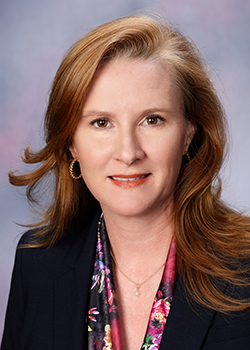
Dr. Brooke Moore, interim chair and assistant professor of the Advanced Education Programs department, will be the principal investigator on a three year research project that will take a successful face-to-face (in person) professional development program that trains and supports high school biology teachers and integrate it into an online format.
“We’re doing this because teachers in rural areas, particularly in Kansas, may not always have the opportunity to get high-quality, face-to-face, professional development training,” said Moore.
In the more traditional face-to-face format, teachers travel to a central location to attend a workshop and then return to their classrooms and try out the techniques covered. After an interval, the teachers gather again to share their stories of what worked and what didn’t and offer their suggestions for improvement.
“In an urban setting, this works,” said Moore, “but in rural schools there may only be one science teacher per school, teaching multiple grade levels.”
This makes it economically challenging for the teachers and for the school district to cover the costs of travel for professional development or for the professional development providers, such as FHSU, to send people to conduct the training in rural schools.
Moore will be working with Dr. Arvin Cruz, Earl Legleiter and a team directed by Dr. Andrew Feldstein, assistant provost of the Office of Teaching Innovation and Learning Technologies to develop, evaluate, and then compare the online platform with the traditional face-to-face professional development with high school science teachers.
The grant is budgeted for a three-year project. In the first year, Moore and her team will develop the online platform, adapting the “Towards High School Biology” curriculum to an innovative online learning modality.
For the second and third years, the researchers will test the online platform against a face-to-face setting. To do this, they will recruit 48 rural middle-school science teachers from Southwest Kansas who will be assigned randomly to the online or in-person professional development program.
“If it works for science,” said Moore, “it can work for any content – math, reading, history, even music.”
EDITOR’s NOTE: This essay on a topic in agriculture was researched and written by a student as part of a project in a senior animal science class at Fort Hays State University. The project director is Dr. Brittany Howell, associate professor of agriculture.
By MAKENNA FRITTS Ness City junior
We can sometimes hold on to something way past when we should have let it go. Many ranchers and cow/calf operators are guilty of holding on too long to cows that need to be culled. Perhaps it’s a young replacement heifer for the herd, a favorite cow that lost a calf or didn’t breed back, or that mean-tempered cow that’s put you over the fence at least once or twice. Whatever the reason, she’s costing money (feed, pasture rent, vaccine, or medical bills) without a return of income.
Culling cows comes down to a few basic issues such as age, health, breeding history, udder soundness, and mothering ability. Having good records on every cow makes the culling decision less of a guessing game and more about hard facts.
There’s a decline in the reproduction of a cow at 8-10 years of age and an even steeper decline at 12 years of age or older, according to a Drovers article titled “Proper Cow Culling Is Important to Your Business.” At 12 years of age the cow will also wean 25-percent less in a calf’s weaning weight than the previous year, said Dr. Kurt Vogel, DVM for Heritage Veterinary Services, Utica. Harlan Hughes in a recent Beef Magazine article referenced CHAPS (Cow Herd Analysis Performance System) and suggested 2.3 percent of cows are culled due to old age.
When it comes to the health of the cow, keep a close eye on the soundness of hooves, legs and eyes. A cow with foot rot infection, arthritic, or stifle joint issues won’t travel a pasture like they should, and their body condition score (BCS) is going to go down because of these mobility issues that reduce their capability to graze and travel to a water source.
Also according to Drovers, cancer eye is a big health problem due to the fact that it’s a leading cause for condemning beef carcasses. If the cow is culled when the cancer growth is small, before it engulfs the eyeball and invades the lymph nodes, the carcass can be used for a beef product and not be condemned as unfit for human consumption.
Some ranchers or cow/calf operators put less culling pressure on the breeding history of the cow. Vogel says a cow needs to raise a calf every year, or she needs to be sold. Pregnancy checking will eliminate feeding an animal that doesn’t have a calf at the end of the calving season.
CHAPS suggested that 5 percent of the cows culled are culled due to them being open (not pregnant), said Hughes. Depending on the rancher or cow/calf operator, a cow might be culled if she loses her calf, has calving difficulties, or if she aborts her calf. At the end of the day, if the cow isn’t producing and raising a calf, she’s not paying her way and she’s costing the operator time and income.
Udder soundness is important when it comes to weaning weights in the calves. A cow with big teats makes it difficult for new born calves to suck and get valuable colostrum needed for a healthy immune system, and cows with large, funnel shaped teats might indicate a previous case of mastitis (inflammation of breast tissue that sometimes involves an infection) and renders the quarter milk production, said Drovers. A cow with one bad udder quarter is going to wean 30 pounds less in calf weight, said Vogel. A cow with good udder health and good milk production makes for a healthy calf.
It’s vital that a cow displays good mothering ability. You don’t want a cow that gives birth to a calf and walks away, leaving it to get chilled during winter conditions or become vulnerable to predators. Inadequate mothering ability makes the rancher or cow/calf operators’ life just a little more difficult, because more man hours are required to get the cow/calf pair into a barn or corral and make sure the cow and calf bond. However, if the cow is too aggressive, the rancher or cow/calf operator has to determine if she’s too great a risk to the operator’s safety.
When culling any cow, make the most income. While a cow/calf producer’s yearly focus may be on annual calf sale revenue, 15-30 percent of a cow/calf operators’ yearly gross revenue comes from the sale of culled cows from the herd, according to Greg Henderson, in another Drovers article. Those percentages really put into perspective how important it is to cull the cow herd at the best time when the market is high.
Over the last 30 years, the best time to take cull cows to market is March through May, and the least opportune time to market them is November through January, said Drovers. Therefore, holding onto fall cull cows and selling at a later date might realize a higher profit by allowing the cows to gain weight and additional fat. Watching local cattle markets and timing sale decisions could make a difference in revenue for any size operation.
There are no annual revenue guarantees for ranchers and cow/calf operator. Every day has its challenges, but keeping accurate records on each cow in any operators’ herd is the key to making good culling decisions. Cows that fall short of culling management criteria should be considered for culling.
Makenna Fritts, a 2016 Ness City High School graduate, is a junior majoring in agronomy at Fort Hays State University. She is the daughter of Aaron and Stephanie Pavlu, Ness City.
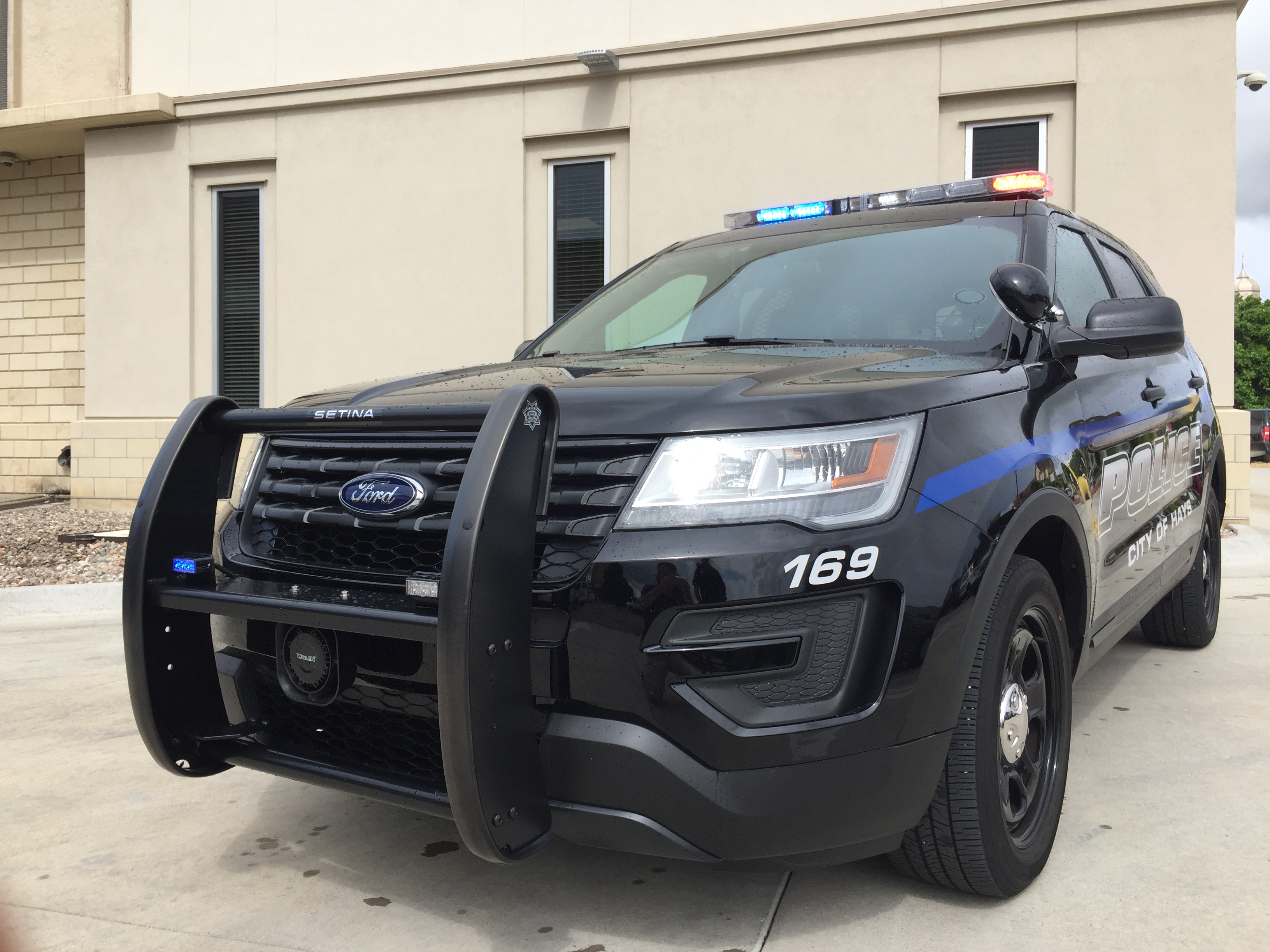
A chase that began near Hays led to the arrest of two individuals and the recovery of a stolen vehicle following a high-speed pursuit that ended in Ness County.
At 1:57 p.m. Tuesday, a Kansas Highway Patrol trooper attempted to pull over 2009 Chevy Impala on Interstate 70 near the Highway 183 Alternate exit, according to Kansas Highway Patrol Trooper Tod Hileman.
The Impala was clocked at 99 mph, and when the trooper ran a check on the license plate, it was found to have been stolen.
Initially, the driver of the Impala, Ian M. Sinnett, 39, Salina, stopped the vehicle on U.S. 183 Alternate. However, neither Sinnett nor a passenger in the vehicle, Valerie Jo Waggoner, 37, Salina, would comply with officer commands, and Sinnett again started driving south.
Waggoner
They traveled on U.S. 183 to County Line Road then began turning west and south on various county roads while being pursued until around 2:30 p.m. when the vehicle came to a stop at the intersection of GG Road and Kansas Highway 4, Hileman said.
After stopping, the suspects complied with officers and were taken into custody.
Sinnett was found to have two active warrants from Reno County and has a criminal history that includes theft and burglary dating to 2014.
In 2017, he was convicted of felony theft stemming from two separate felony cases that were charged against him after he tried to sell automotive parts that he had stolen to the brother of the victim.
He was released on parol on March 25, according to Kansas Department of Corrections records.
Along with the 2017 convictions, Sinnett was also found guilty of falsely reporting a crime in 2015 and theft in 2014.
The police pursuit is expected to lead to Sinnett being charged with allegedly fleeing and attempting to elude law enforcement, along with several traffic and speeding violations, according to Hileman.
“Two subjects, one male and one female that I met earlier in the day on the northeast side of Topeka, were staying at the Days Inn in Lawrence,” the report said.
“While I was in the bathroom, the female subject yelled that they were taking my car to go to McDonald’s. Before I was able to tell them no, they grabbed my keys from a table in the room and left with my car and did not return.”
The victim believed at the time they might be heading to Portland, Ore.
“The car was a gift from my father who passed away a little over two years ago,” the report said. “It was his pride and joy. I’m a disabled man with congestive heart failure.”
Rural Water District No. 1 Ellsworth County, Kansas (a/k/a Post Rock Rural Water District) is hiring a full-time Water Treatment Plant Operator.
To apply for this position, please submit a cover letter, resume and three professional references to Ms. Leslee Rivarola at [email protected] or by mail to Post Rock Rural Water District, 103 N. Douglas, Ellsworth, KS 67439.
The Kansas Bureau of Investigation, the Kansas Highway Patrol, the Ford County Sheriff’s Office, the Hays Police Department and the Ellis County Sheriff’s Office coordinated efforts to arrest a Hays man for suspected distribution of methamphetamine.
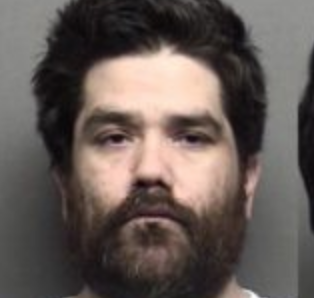
On Sunday, July 7, at approximately 1 a.m., Fernando Amezquita, 43, Hays, was arrested along U.S. Highway 56, west of Dodge City, after authorities reported finding approximately 6 pounds of methamphetamine in his vehicle.
Amezquita was arrested for distribution of methamphetamine, and three counts of child endangerment, since his three young children were passengers in the vehicle at the time of his arrest. He was then booked into the Ford County Jail. Bond was set at $150,000.
This operation represented a coordinated law enforcement effort to combat drug violence and reduce the accessibility of illegal drugs impacting western Kansas.
— HPD
A chase that began near Hays led to the arrest of two individuals and the recovery of a stolen vehicle following a high-speed pursuit that ended in Ness County.
At 1:57 p.m. Tuesday, a Kansas Highway Patrol trooper attempted to pull over 2009 Chevy Impala on Interstate 70 near the Highway 183 Alternate exit, according to Kansas Highway Patrol Trooper Tod Hileman.
The Impala was clocked at 99 mph, and when the trooper ran a check on the license plate, it was found to have been stolen.
Initially, the driver of the Impala, Ian M. Sinnett, 39, Salina, stopped the vehicle on U.S. 183 Alternate. However, neither Sinnett nor a passenger in the vehicle, Valerie Jo Waggoner, 37, Salina, would comply with officer commands, and Sinnett again started driving south.
Waggoner
They traveled on U.S. 183 to County Line Road then began turning west and south on various county roads while being pursued until around 2:30 p.m. when the vehicle came to a stop at the intersection of GG Road and Kansas Highway 4, Hileman said.
After stopping, the suspects complied with officers and were taken into custody.
Sinnett was found to have two active warrants from Reno County and has a criminal history that includes theft and burglary dating to 2014.
In 2017, he was convicted of felony theft stemming from two separate felony cases that were charged against him after he tried to sell automotive parts that he had stolen to the brother of the victim.
He was released on parol on March 25, according to Kansas Department of Corrections records.
Along with the 2017 convictions, Sinnett was also found guilty of falsely reporting a crime in 2015 and theft in 2014.
The police pursuit is expected to lead to Sinnett being charged with allegedly fleeing and attempting to elude law enforcement, along with several traffic and speeding violations, according to Hileman.
“Two subjects, one male and one female that I met earlier in the day on the northeast side of Topeka, were staying at the Days Inn in Lawrence,” the report said.
“While I was in the bathroom, the female subject yelled that they were taking my car to go to McDonald’s. Before I was able to tell them no, they grabbed my keys from a table in the room and left with my car and did not return.”
The victim believed at the time they might be heading to Portland, Ore.
“The car was a gift from my father who passed away a little over two years ago,” the report said. “It was his pride and joy. I’m a disabled man with congestive heart failure.”
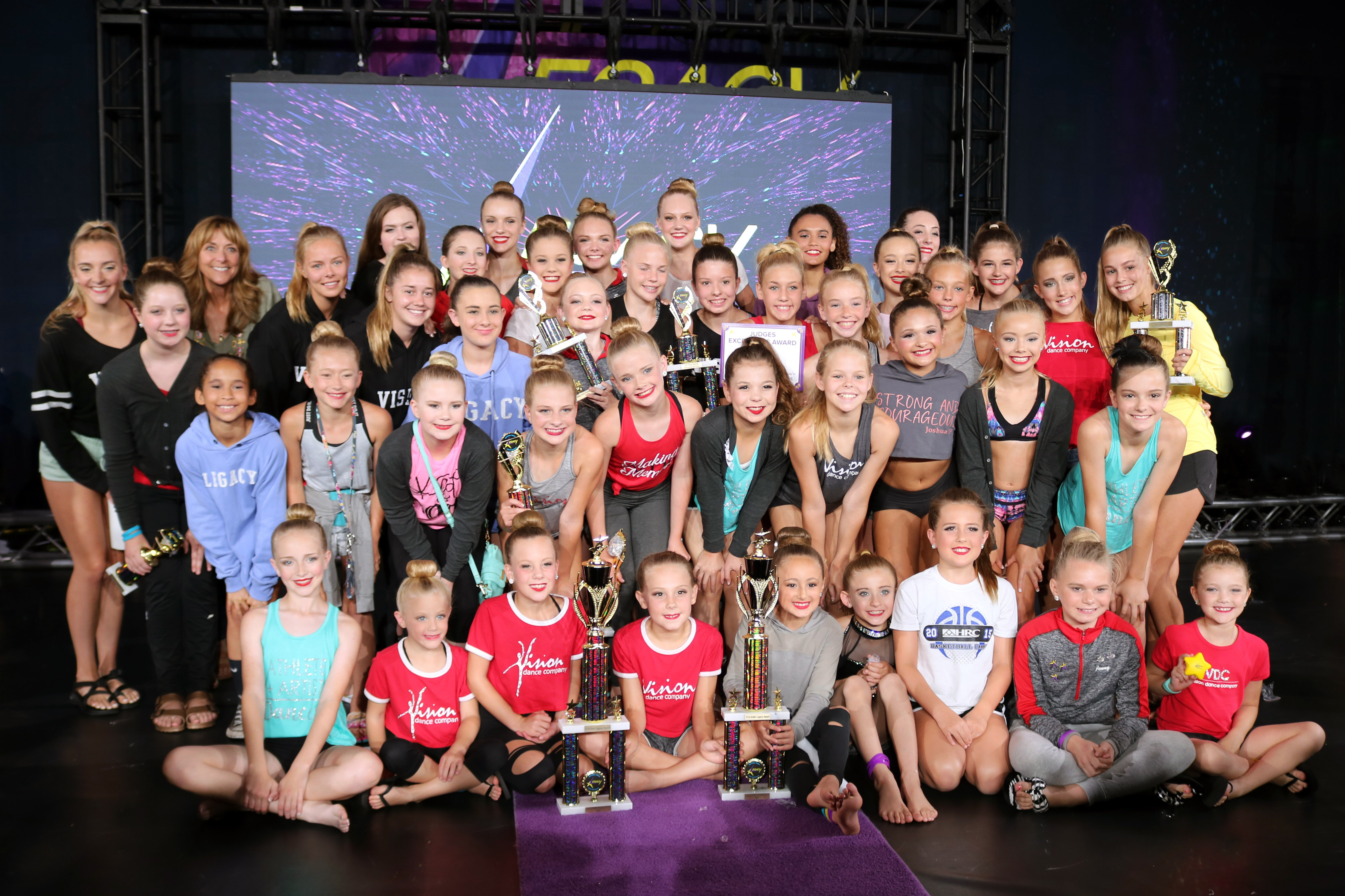
DALLAS — Dancers from Jackie Creamer’s The Dance Studio won numerous awards at the Legacy Dance Championships this week in Dallas.
Earning awards for their performances were:
First Overall Mini Duo, Hit The Road Jack: Anaya Creamer, Kenley Callahan
First Overall Junior Duo, Fabulous: Ruby Fields, Izabel Schmidt
First Overall Teen Duo, Two: Lauren Wagner, Adelyn Wagner
First Overall Senior Duo, Lay Me Down: Jenna Romme, Jillian Lowe
First Overall Mini Small Group, Expensive: Anaya Creamer, Kenley Callahan, Alexa Seib, Allie Gier, Jenny Molstad, Addison Karlin
First Overall Petite Small Group, Girls Will Be Girls: Anaya Creamer, Kenley Callahan, Delia Dixon, Alexa Seib, Arianna Ayarza
First Overall Junior Small Group, Awoo: Molly Buckles, Elizabeth Cunningham, Ruby Fields, Sienna Lummus, Lillian McGaughey, Annika Nichols, Leah Reed, Izabel Schmidt, Jaci Schmidt
First Overall Senior Small Group, Byegone: Avery Jones, Jillian Lowe, Jenna Romme, Ella Voth, Lauren Wagner, Kassidi Yost, Samantha Zimmerman
What Are You Looking At
First Overall Junior Large Group, Heavy In My Arms: Jenna Brull, Molly Buckles, Elizabeth Cunningham, Ruby Fields, Briley Haynes, Makayla Koerner, Katie Linenberger, Sienna Lummus, Lillian McGaughey, Mykayla Romme, Izabel Schmidt, Jaci Schmidt, Kyla Schmidt, Aliya Seib, Adelyn Wagner, Nevaeh Weigel
First Overall Teen Line, Game Of Survival: Hannah Durham, Ruby Fields, Avery Jones, Makayla Koerner, Katie Linenberger, Jillian Lowe, Sienna Lummus, Lillian McGaughey, Jenna Romme, Mykayla Romme, Izabel Schmidt, Jaci Schmidt, Kyla Schmidt, Adelyn Wagner, Lauren Wagner, Nevaeh Weigel, Kassidi Yost, Shyanne Yost
First Overall Teen Production, What Are You Looking At: All Company Members
These dances received the National Championship in the Showdown of the Legends.
• Mini Small Group, Expensive, National Champions
• Petite Small Group, Girls Will Be Girls, National Champions
• Junior Small Group, Awoo, National Champions
• Teen-Senior Line, Game of Survival, 1st Runner-Up
Jillian Lowe was named Miss Senior Legacy, and Adelyn Wagner was named Miss Junior Legacy.
The studio also was the Legacy Award for highest-scoring studio in both the 12 & younger and 13 & older categories.
In the Top Ten, The Dance Studio received 11 first overall, 10 second overall, four third overall, four fourth overall, two fifth overall, one sixth overall, two seventh overall, one eighth overall, one ninth overall, and one tenth overall, totaling 37 dances placing in the Top Ten in their category.
— Submitted / photos courtesy Jackie Creamer’s Dance Studio except where noted
Game of Survival / photo courtesy Jenne RommeAwoo / photo courtesy Christina SchmidtExpensive
2019 outside agency funding and 2020 requests / click to expand
By CRISTINA JANNEY Hays Post
Outside agencies that have traditionally received funding from Ellis County are feeling the county’s budget crunch this year in the form of cuts.
Although the county has not approved its final budget, commissioners recommended $124,000 in cuts for the 16 agencies that requested funds for the 2020 fiscal year.
Some of the agencies said they would attempt to raise more private funds. Others suggested they might have to cut staff or programming.
Hays Arts Council
Proposed county funding for outside agencies for 2020 with cuts
The Hays Arts Council requested $3,385, and its funding, along with the funding for the Ellis Jr. Free Fair, was cut entirely.
Brenda Meder, HAC director, said the agency’s funding from the county has been steadily decreasing over the last several years.
She said the agency has planned to make a push for more memberships in attempts to make up for the county funding cut. The HAC will also look at its reserve funds or adding a fundraiser, she said.
Meder said she was disappointed to see the funding cut completely.
“There is something to be said in being validated as a community entity that is truly there to serve the broadest needs of the community in regards to quality of life,” Meder said.
DSNWK
Two DSNWK clients weave as a part of the Collaborative Arts Project.
Developmental Services of Northwest Kansas had its funding reduced from $240,000 to $215,000. It also manages the community’s general public transportation service, ACCESS, which was cut from $60,000 to $50,000.
Because ACCESS funds are matched, the service will lose another $23,000 in matching funds.
Jerry Michaud, DSNWK president/CEO, said the agency is already stressed trying to make up the difference between the actual cost of services for community members with developmental disabilities and state reimbursement rates.
“We can’t go to the state and say we’ve lost $57,000 and can you help fill that gap,” Michaud said. “It is not the way it works. We have to figure out how do we stretch something that is already stretched. It’s a challenge.”
The agency is still required to serve the same number of people and provide the same level of services, but with less money.
Michaud said DSNWK will strive to not allow the cuts to affect staff or services.
“What we have is what we need, and [we] need more,” he said. “Potentially for crisis types of needs, we may look at donations as a way to supplement, but that’s not a long-term solution. Generally donors, I can’t speak for all, donors are not interested in paying for your light bill. They are not interested in paying for those types of things.”
Michaud mentioned in his presentation to commissioners that the agency has struggled to recruit and retain care professionals because of low wages and a shortage of workers in the labor pool. He said the county cuts will not improve the agency’s staffing challenges.
High Plains Mental Health
High Plains Mental Health received the second largest cut in terms of dollars. It received $281,646 in 2019 and will receive $260,000 in 2020 if the budget passes with the commissioners’ current recommendations.
The county is required to fund HPMH per an interlocal agreement; however, Director Walt Hill said the agreement does not specify the amount.
The county mental health agency recommends a dollar amount annually based on a formula that is in part based on the counties residents’ use of the High Plains’ services.
Hill said although the cut is significant, county funding from all of the counties the mental health agency only accounts for about 8 percent of the agency’s budget.
“One of the things we are headed to is focusing on individuals paying their share of the cost of services — making sure we focus on people paying their bills as they go,” he said. “Anymore as you go to the doctor’s office, you are asked to pay for the service for the day, and I think we may have to move more and more in that direction.”
About half of the clients HPMH sees have family incomes of less than $25,000 per year. HPMH offers a sliding-fee scale and allows clients to extend payments, so Hill said payment should not be a barrier to receiving services.
“Our budget won’t happen until December, so we will know what counties will do and then we work around what resources we have in terms of if we can give raises to staff, in terms of what we can afford in capital outlay next year,” Hill said.
Conservation District
The Ellis County Conservation District was so concerned about the effects of its cut of more than $17,000, it went back to the county commission to ask some of the funding be restored.
Sandra Scott, district manager, said the county cut would mean the district would have to eliminate a decades-long cost-sharing program that supports terracing and soil conservation efforts at local farms. The county money pays for an average of six projects per year, depending on the size of the projects.
The commissioners told district officials Monday night it would not reinstate any of the funding.
Humane Society
Humane Society of the High Plains shelter manager Betty Hansen said the Humane society was expecting the cut. It reduced its request from $4,500 to $3,000, and the commissioners recommended $2,600.
The agency will attempt another fundraiser to try to make up the difference in funding. They are planning an event with Defiance Brewing Co. in September.
“We work with what we are given is the way we look at it,” Hansen said.
The community has been responsive to the funding need. Several people have dropped donations at the shelter in a response to the news of the county cut, Hansen said.
Hansen said she was concerned about the long-term effects of funding cuts. The other alternative would be to charge for strays that are surrendered from the county.
The shelter is using the county money to pay for the care of strays. Shelter officials don’t want to charge people who surrender those animals because workers are concerned people will stop bringing in the strays, and the animals will be left to die or run wild.
“It is not that you have to pay,” Hansen said. “It is the animal needs help, and we are going to do it one way or the other. We will figure it out. If someone is kind enough to pick up puppies out of a ditch and bring them to us, we are going to take care of them.”
Although the Humane Society’s donors have been generous, Hansen said there is a limit to the amount of money any agency can raise, and all the nonprofits that requested funds from the county are being affected in the same way.
NWKP&DC
The Northwest Kansas Planning and Development Commission wrote the grant that secured $1 million in funding for a new pool in Ellis, but its funding was cut from $38,877 to $22,500.
Randall Hrabe, development commission director, said Ellis County will likely not be the only county that cuts the development commission’s funding for 2020.
He said the agency offers about $20 million in business loans across northwest Kansas as well as oversees low-income housing projects across the the region. Two homes are being prepared for sale in Hays through a development commission project.
“I would like to see everyone support it,” Hrabe said. “If Ellis County has to cut $2 million from its budget, somebody’s got to get cut.”
Grow Hays
Grow Hays did not receive any funds from the Ellis County last year. However, it requested $50,000 for 2020. Director Doug Williams told the commission, the economic development organization would no longer be able to operate after the 2019 fiscal year if it was not at least partially funded by local municipalities.
All economic development organizations in the state are at least partially funded by local governments with many of them funded 100 percent with taxpayer money.
Grow Hays requested $50,000 from the county, but the commissioners cut that to $27,500. The agency has also requested $100,000 from the city of Hays, $4,000 from the city of Ellis and $1,000 from the city of Victoria.
Williams said the agency’s budget will hinge on what the city of Hays comes back with in the next couple of weeks. He noted the city of Hays and Ellis County both provided more than $100,000 each to the the organization in the past. Those ties were temporarily cut during a recent reorganization. The organization, in the interim, has relied on reserves and private funding.
Williams said that model is not sustainable.
Williams said he thought Grow Hays is not only important to the economic health of Ellis County, but all of northwest Kansas.
“We face a lot of challenges out here in terms of population loss and trying to maintain the businesses we have and attract others. The funding of our organization to do those type of things is critically important,” he said.
Ellis County Historical Society
Area in one of the Ellis County Historical Society Buildings where plaster collapsed June 1.
Lee Dobratz, director of the Ellis County Historical Society, said she did not want to comment for this story.
However, she said during her presentation to the county commission, the historical society would have to cut a staff member if its funding was cut.
Dobratz raised concerns about the historical society’s facilities. Part of the historical society’s collection had to be temporarily moved recently when a section of plaster fell from a wall due to water damage.
She said the organization is working on a strategic plan, which could include a new building. The agency also hopes to begin fundraising for an endowment, Dobratz told the commissioners.
TO THE STARS: The Ad Astra Music Festival founder Alex Underwood had a vision.
In the month of July, his hometown of Russell, Kansas would be the setting of a music festival over three weekends that would attract both renowned musicians and young prodigies who would present old and new, rather highbrow works that locals could also be part of. The Kansas motto—Ad Astra Per Aspera—seemed a fitting mission statement.
While the vision has been realized, it has been difficult and accomplished through a lot of networking and pavement pounding. But the result is that each July the stars align in this prairie town as the Ad Astra Music Festival comes to life.
Theatre Kansas turns to Underwood, the artistic director, to tell the festival’s origin story and talk about the upcoming season.
TK: When did you start the Ad Astra Music Festival and why Russell, KS?
Alex Underwood
AU: I was born and raised in Russell and taught music at Russell High School for four years. I knew I would be spending the summer of 2014 at home and wanted to fill the summer with a few musical projects. That summer’s concert series was successful at which point we decided to name it the Ad Astra Music Festival and make it an annual affair.
TK: Russell plays a big part in the mounting of this festival. Can you explain?
AU: This festival is a massive undertaking for the people of Russell each summer. Volunteers pitch in by hosting our 40 guest artists, shuttling them to and from the Kansas City or Wichita airports, providing meals, donating gym passes, singing in the community choir, buying a celebratory round of drinks after a concert, ushering, organizing, lending us their performance spaces…..The list really could go on, but the point is, the community of Russell is the reason this festival is a success.
TK: You appear to try to appeal to a diverse audience and use a wide range of musicians. Is that accurate?
AU: Yes! We have singers, pianists, string players, jazz musicians, orchestra members—ranging from high school students, local volunteer musicians, local professional musicians, undergraduates selected from a national search, and professional musicians who work at some of the country’s most renowned performing arts institution. Then, our artistic team creates performances where the musicians can collaborate in different combinations to create impactful experiences for our audiences.
AU: 1) Our opening concert features our high school honor choir, our community choir, and our professional chamber choir. They’ll sing Brahms’ “Liebeslieder Walzer”(Love Song Waltzes) and Libby Larsen’s “Love Songs.” It’s a charming, light, and wonderful way to kick off our season. It’s also a celebration of choral music—which is central to the festival.
2) Jazz at the Barn. We’ve been doing this for four or five years now and it’s been such a success. Brad Dawson, a Russell native, is a fantastic jazz trumpeter who teaches at FHSU and gigs around the country. He invites four of his friends from the Kansas City jazz scene to collaborate with him on this program. It’s 10 miles out in the country from Russell at Granny Mae’s Barn. We serve popcorn and cocktails and have such a lovely time. It’s always one of our most popular events.
3) Anna Pidgorna is the composer we’re commissioning an opera from to be premiered in the summer of 2021. She was in Russell last summer doing some research and interviews as she and her fantastic sister (librettist) create this work about the life of influential Russell High School art teacher, Trudy Furney. This year, the festival is presenting an afternoon of her work—some of the music I fell in love with which compelled me to approach her about this project. I’m looking forward to sharing that with our community.
2019 Young Artists Christina Han, Queens, New York soprano; Grace Volker, Hays native mezzo-soprano; Bo Shimmin, Tucson, Arizona tenor; and Jacob Lay, Ellenwood, Georgia bass-baritone.
4) Each year, the festival selects four undergraduate singers from an international search to live in Russell for the month of July and perform. This year, their feature program explores perspectives from the US Civil War: Whitman and Lincoln texts set to music by living composers Richard Danielpour and Jennifer Higdon as well as songs from the time.
5) This year is the third year we’ve produced a fully staged new opera. We’ve selected Missy Mazzoli’s “Proving Up” about a Nebraska family struggling to prove to the U.S. government that they are capable of homesteading their land and thus obtaining the deed. Many Russell County family farms were acquired through this process. The opera is 65 minutes long and was co-commissioned by Columbia University, the Kennedy Center, and Opera Omaha.
6) Each year, the festival features Katelyn Mattson-Levy, one of my favorite mezzos on the planet who happened to live right here in rural [Sterling] Kansas. We also feature pianist Matthew Piatt who is an assistant conductor at Chicago Lyric and San Francisco Operas and happens to be from rural western Kansas. They collaborated last summer on a short song cycle, and I knew then that we had to pair them for a full concert this year. The program is an exploration of four archetypes of women: maiden, mother, enchantress, crone. Hearing brilliant music performed by unbelievably talented musicians is one of the most exquisite listening experiences and this will be just that.
7) What might be the surprise hit of the season is a performance by Unaccompanied – they’re an a cappella/vocal jazz group who met while students at Northern Arizona University. Some of them have been featured on Pentatonix albums, some are music educators, and some are aspiring opera singers. They arrange all of their own music and sound stunning.
We try to end each season with a big collaborative project. This year, we’re returning to our Handel oratorio series and are producing “Theodora.” It’s slightly obscure, but is a heart-wrenching story of faith and love. Handel’s dramatic genius is on full display setting some of the most sublime arias and thrilling choruses in his whole repertory. And we have world-class Baroque performers in to help this come to life.
9) Our final project of the season is a performance of an early-Baroque funeral work by Heinrich Schütz. We’ll perform this at St. Fidelis Basilica in Victoria—one of the “Seven Wonders of Kansas.”
Each ticket for a main stage event will cost $20, and each ticket for a chamber music event will cost $10. Season passes start at $100.