NORTON – A Norton man was killed late Tuesday evening as he walked on a Kansas highway.
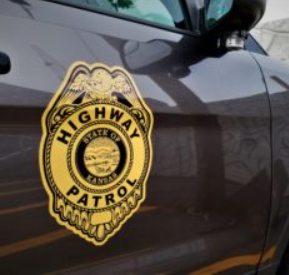
According to the Kansas Highway Patrol, Tyler J. Kuhn, 22, was walking on U.S. 36 when he was struck by an unknown vehicle in the eastbound lane. The accident occurred just after 10 p.m., the KHP reported.
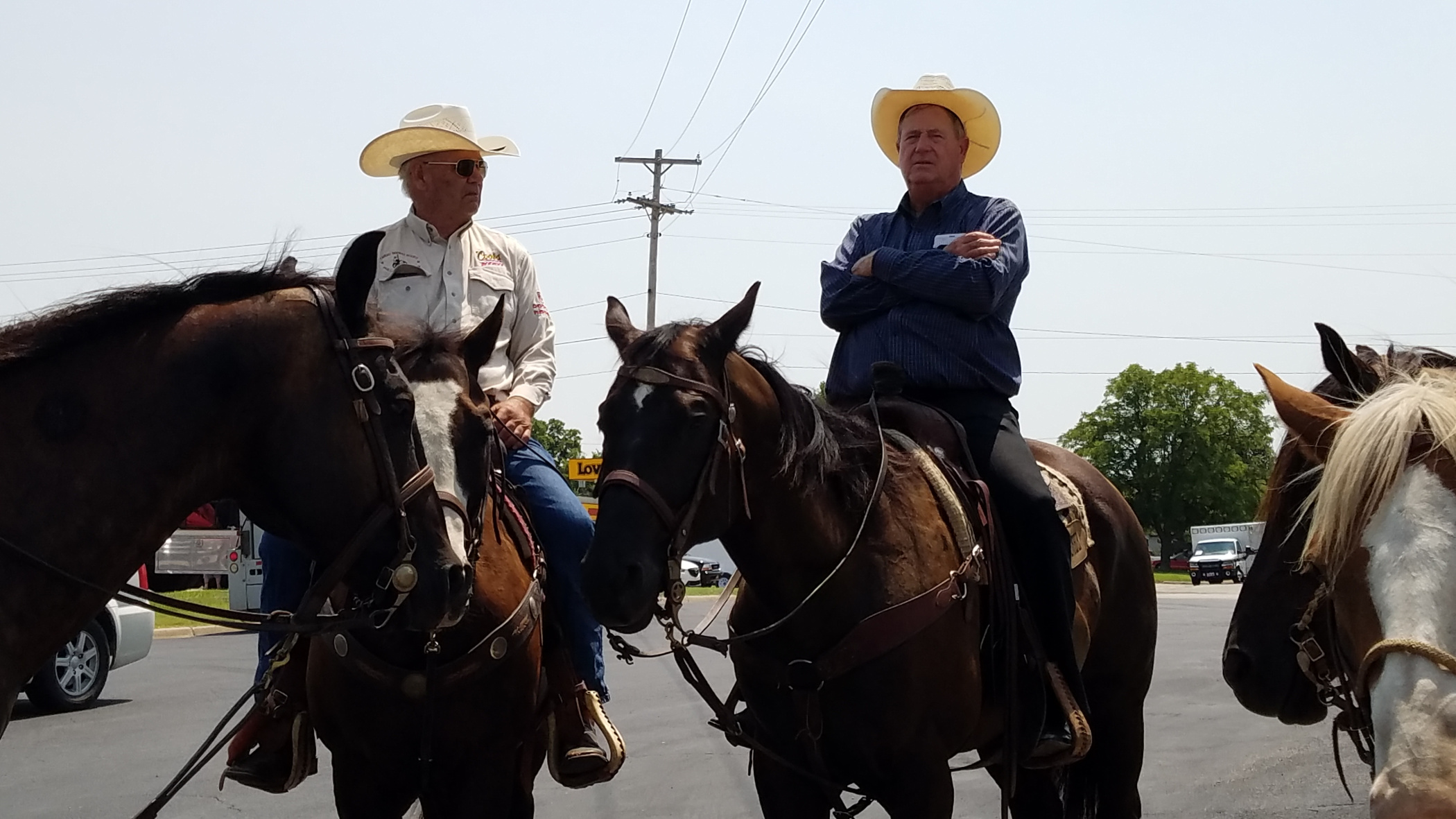
Rod Innes (on the left) is on horseback with stock contractor Bennie Beutler, waiting for the 2018 Phillipsburg rodeo parade to begin. Innes spent more than 35 years on the committee for the Phillipsburg rodeo.
PHILLIPSBURG – It takes dedicated volunteers, working long hours for no pay and little recognition, to keep rodeos going.
And the Phillipsburg rodeo has had some of the best.
One of those, Rod Innes, retired last year after serving on the committee for 38 years.
A Phillipsburg native who now lives in Olathe, Kansas, Innes followed in his dad’s footsteps. Guy “Doc” Innes served on the committee from 1947 into the 1960s, helping with the parking and concession stand.
Rod remembers, as a third grader, selling rodeo programs and being paid a nickel for every program he sold. Born in 1945, he missed only a few rodeos, from 1966 to 1973.
When he and his wife Mary moved back to Phillipsburg in the 70s, he didn’t get involved right away. But when the pump jack at the rodeo arena couldn’t keep up with the demand for water during the shows, Innes volunteered to donate two submersible pumps, if the committee would run a water line between the two wells at the rodeo grounds.
So they took him up on his offer, and Innes began as a rodeo volunteer and became a part of the committee in 1981.
During his tenure, which spanned nearly four decades, he has helped with many remodels, renovations and new facilities around the rodeo grounds. As a contractor, he had the expertise and the equipment as the committee moved the bucking chutes from the north side to the east side; tore down and replaced the wooden grandstands; redid the arena fence; built the south grandstands; added a bathroom facility on the west side; and an office, bathrooms and contestant area on the east side. Nearly all the work was done by committee men; before another electrician came on the committee, Innes did the electrical, plumbing and heating, while other volunteers did the framing, sheet rock and other work.
Innes considers one of his biggest achievements was getting city water to the rodeo grounds. It was a two-mile pipeline from city limits to the rodeo grounds north of town. “One of the best things that happened is when we ran a water line from town out to the rodeo grounds,” he said. It was in the late 1990s, and with the help of a state department of tourism grant and a Morgan Foundation grant, the water line got put in. Prior to city water, the rodeo operated off of two wells with water that was not fit to drink. To provide drinking water, the committee would bring in eight-foot stock tanks with spigots at the bottom, and fill them with water and ice.
He spent twenty-eight years as chairman of the rodeo, and he always strove to make it better. “There’s 89 years of this rodeo,” he said, last year, “and you always want to get bigger and better. We were always thinking about what project we would do next.”
He and Mary have six kids, five who volunteered alongside their parents. The girls: Valerie, Becky, Amy and Beth, were ushers. Son Chris, who lives in Chaska, Minn., helped in the concession stands. “During the rodeo, Shane Culbertson would work with Lloyd (Shane’s dad) on the west concession stands,” Chris said, “and I’d work with Cliff (Van Kooten) on the east side. We were gophers, moving food back and forth, to the side where it was needed.
“We were out at the rodeo grounds every evening in the summer, trimming and painting. It seems like we were always painting. Dad was there, wiring things, fixing things.”
The Phillipsburg rodeo was something Rod truly enjoyed, Chris said. “It’s always been his true passion. I think it was his release from work. He doesn’t have a whole lot of hobbies, and rodeo is his hobby. When he had free time, he was out there, working on something, helping improve it every year.” Innes retired from the committee after last year’s rodeo, and Chris said that was a tough decision for him. “The rodeo was one of the last things he hung onto in Phillipsburg.”
In addition to his time, Innes volunteered his help and equipment: his backhoe, crane and truck, tractor and the mower. Longtime friend Bob Quanz, who was also on the rodeo committee, said his wife, Mary, volunteered alongside her husband. He remembers her working in the concession stand and screwing on light switch covers during a remodel.
Innes has been involved in other civic organizations besides the rodeo. He served on the city council from 1987 to 2017 and served a term as mayor. He’s always been community minded, said Quanz. “He realized the importance of being involved in the community,” Quanz said.
And Innes always had the best interest of the rodeo in mind with whatever he did, Quanz said. “He always wanted to improve it and make sure everything went smoothly.
“He’s been a loyal trooper all the way through, for the community and the rodeo.”
The 90th annual Kansas Biggest Rodeo takes place August 1-3 in Phillipsburg, with performances starting nightly at 8 pm. Tickets start at $12 for kids and $16 for adults. Thurs., August 1 is family night; all kids ages 10 and under are free with the purchase of an adult ticket.
Tickets are on sale at Heritage Insurance in Phillipsburg and at the gate. They can be purchased over the phone by calling Heritage Insurance at 785.543.2448.
For more information, visit the rodeo’s website at www.KansasBiggestRodeo.com.
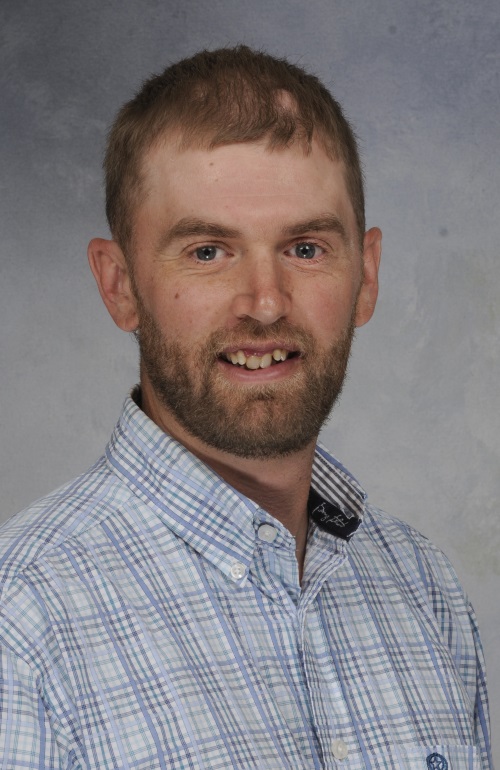
Craig Dinkel will join the Midway District staff as the Crop Production and Horticulture Extension Agent effective June 2, 2019. Dinkel is a graduate of Fort Hays State University with a Bachelor’s degree in Agronomy.
Craig’s past professional experience as a crop consultant will serve him well in his new role. He has experience working with producers in multiple crop production systems including corn, soybeans, wheat, milo, alfalfa and forage sorghum.
Dinkel also brings with him a background in vegetable production thanks to the time he spends assisting his cousins with their produce operation, Svaty’s Produce of Kanopolis.
“I am looking forward to assisting agricultural producers and residents in the Midway District solve issues related to crop-production and horticulture,” Dinkel said.
As a former Kansas 4-H member, Craig is excited about the opportunity to educate and influence 4-H members in a positive way.
“Teaching 4-H members about agricultural production and horticulture is something I am looking forward to, says Dinkel. There are multiple rewarding careers available in both agriculture and horticulture, and exploring those opportunities with our 4-H youth is exciting.”
In his free time, Craig enjoys pheasant hunting, fishing and spending time with his family. Please help us welcome Craig to Kansas State Research and Extension when you see him at Midway District events, or in the communities we serve.
If you have crop production or horticulture based questions Dinkel can be reached at 785-472-4442 in Ellsworth, or 785-483-3157 in Russell. You may also send him an email at [email protected].
The Fourth of July has always been my favorite holiday. My hometown of Pittsville, Wisconsin, has a population of 800 that easily quadruples for the festivities. We have a quintessential celebration with a parade, fireworks and numerous unique traditions. The event mixes community fun, with the ideals of service, democracy and freedom. Though I now live hundreds of miles away, I always look forward to going home for the festivities.
However, this year that was not in the cards. Last week as I watched combines roll through our wheat fields, my anticipation faded with the recognition that harvest would continue through the Fourth, and we would have to cancel our trip to Wisconsin.
That is the thing about farm life. It is incredibly unpredictable and often disappointing.
No farmer wants to be roused from a warm bed in the middle of a cold night in February, but she does it to care for the newborn baby calves who might not make it without her help. The farmer who invests time and effort to grow corn has no guarantee he will have a crop, but he balances that risk with his need to feed his family. Farm life encourages selflessness and annihilates entitlement.
Life on the farm is filled with frustration and disappointment. Countless nights when dinner gets cold because fieldwork took longer than expected. Trips canceled or attending events alone because an irrigator got stuck or a pump broke down. Waking up in the middle of the night because something on the farm needs attention and just can’t wait until morning.
In these moments of disappointment, I take a breath and try to get perspective. No life is easy or perfect. Why waste time and energy being upset about the things that go wrong. I am blessed in so many ways and this is the trade-off for the life we have dreamed about and are working to build.
Disappointment is not fun, but that is OK because it reminds us to appreciate the good things in life. I have learned to be grateful for the pain of failure, regret in rejection or the sorrow of loss. They keep me grounded, hungry for the next opportunity.
So many people seem petrified of disappointment. Parents work tirelessly to prevent their children from failing. Schools hesitate to recognize achievements of exceptional students because others might feel bad. Technology has created an expectation of instant gratification and easy access to information. We are working so hard to avoid disappointment that we are missing the important lessons that come from being disappointed.
As you fail, get frustrated or face challenges, choose to grow. People who learn from disappointment have empathy, gratitude, wisdom and humility. It makes us better, stronger and more resilient.
Life is not fair. We will suffer disappointment and heartache but those can become some of the most impactful moments.
When you find yourself faced with moments of disappointment, take a breath, get perspective and embrace it.
“Insight” is a weekly column published by Kansas Farm Bureau, the state’s largest farm organization whose mission is to strengthen agriculture and the lives of Kansans through advocacy, education and service.
EDITOR’S NOTE: This essay on a topic in agriculture was researched and written by a student as part of a project in a senior animal science class at Fort Hays State University.
By PATRICK KEPKA Dorrance junior
Do you like to help cows at bedtime? Late nights and early mornings are just an accepted part of life for farmers and ranchers. Of many things that can be done to help the betterment of the cattle and the farmer’s lifestyle, adjusting the cattle’s feed towards the evening or at night may do just that, especially in the months leading up to the calving period.
Cow-calf operations nowadays can get quite extensive. Two areas that reflect the success of a farm or ranch are optimization and efficiency. They often go hand in hand as better optimization often creates better efficiency and vice versa. Feeding cows at night will act upon these components while improving opportunities for a full night’s rest because calving episodes are more likely to occur during the daylight hours due to the time of feeding adjustments.
Operations have shifted from numerous small ranches to a more efficient outlook with larger being better in most cases. With the number of beef cattle dropping since the late 1970s, the efficiency aspect continues to grow in importance. Not to shock anyone, but farmers and ranchers are always looking for ways to improve financially, such as with their feeding programs, breeding programs, and labor management as well as the environment, price cycles, and community programs.
For example, these last three items deal mostly with external sources like unpredictability of weather events and also the cattle prices. Community programs can help build personal connections down the line like in 4-H and FFA that can positively affect one’s operation.
Feeding cattle at night opens up opportunities to improve efficiency via reduction in cow and calf mortality due to improved supervision, as shown by recent research. Cows being fed at night in the months leading up to the calving season showed a great increase in calves being born during the day rather than at night. This is called the Konefal Calving Method, after the first researcher to report this effect in the 1970s. A study done in Iowa of over 1,300 fed cows once daily near dusk and started multiple weeks before the calving season began. They found that 85 percent of the cows calved between 6 a.m. and 6 p.m. when fed near dusk compared to 49 percent of the cattle calving during the day when fed in the morning.
Another study by John Jaeger, of the Agricultural Research Center-Hays of Kansas State University, and co-workers involved two experiments, morning fed and evening fed cattle groups. Morning fed cattle were held at the University of Idaho and evening fed were held at the Agricultural Research Center.
The day for calving was broken down into six segments of four hours each. The morning-fed cattle were nearly evenly spread out among all six segments, but the evening-fed cattle had far more calve during the day rather than night. Breaking down into percentages, 52 percent of morning-fed calved between 6 a.m. and 6 p.m. compared to 85.4 percent for evening fed. Several other studies have been done showing similar results throughout the years.
Jaeger’s study also looked at calving time heritability between a dam and her daughter He found that “heifers appear to model their pattern of parturition to that of their dam.” One can use this to further select for cattle that will calve during the day outside of the feeding time adjustment.
The exact cause of the apparent increase in day-time calving from evening feeding is not known as of now. A hormonal effect may be involved, said Rick Rasby with University of Nebraska-Lincoln. Studies have shown feeding at night may cause intraruminal pressures, which need to be low for calving, to rise at night. Day-time calving will likely increase survival rates of calves as it might reduce deaths by dystocia, or difficult births, since ranchers or farmers can be around for assistance. In addition, for early spring calvers, calving in the heat of the day and not in the cold of night helps survival.
Feeding at night is by no means a perfect system. Some negative aspects go along with the positives. Feeding all the cattle in the evening may not be possible, so feeding earlier in the day must be done. First-calf heifers would be the first priority for evening feeding if this were the case.
In addition, stress on equipment and land can be much more impactful during the evening hours than morning hours, especially if the winter was wet. Frozen ground will not cause as much of issues as the slush that occurs if the temperature rises to above freezing during the day.
In the larger picture, whether to institute evening or morning feedings depends how one weighs the risks or rewards of each. There is a pretty good correlation of evening or night time feedings to cows calving during the daylight hours along with the benefits involved from it. Becoming more informed on the topic at hand is the first thing to do as one goes forward towards making a change in the operation.
Patrick Kepka, a 2016 Thomas More-Prep Marian High School graduate, is a junior majoring in general agriculture at Fort Hays State University. He is the son of Michael and Linda Kepka, Dorrance.
A 21-year-old Hays man faces the possibility of nearly five years in prison after being charged with having sex with an underage girl.
Michael Allen Epke was arrested last month and charged with aggravated indecent liberties with a child in Ellis County District Court on June 24.
According to Ellis County Attorney Tom Drees, Epke is accused of having sex with a 15-year-old from January to June 2019.
Drees said because Epke has no prior criminal history, he faces 59 months in prison if convicted of aggravated indecent liberties.
The filing of criminal charges are merely allegations of criminal wrongdoing, Drees said. The defendant maintains a presumption of innocence unless and until they are proven guilty in a court of law.
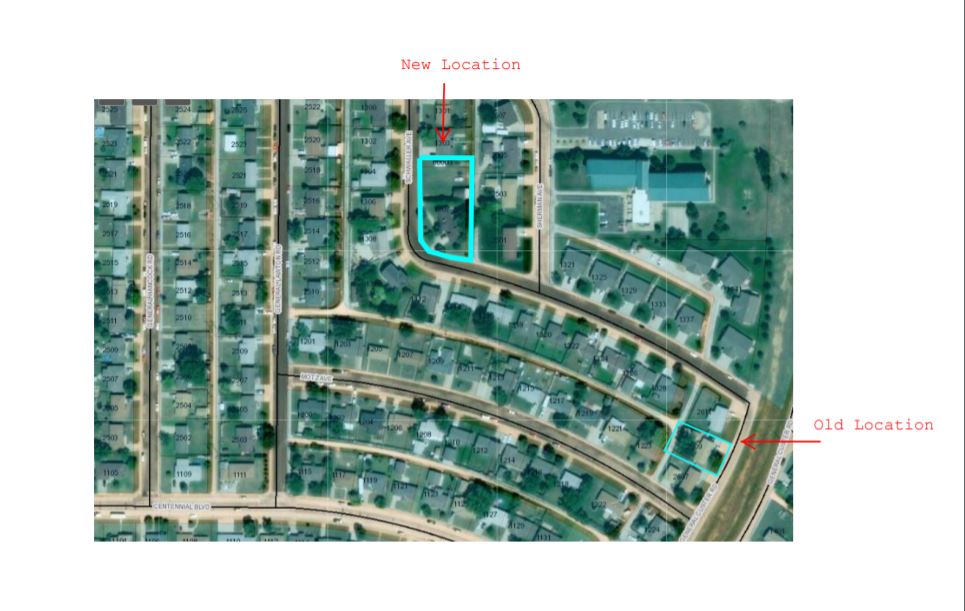
A public hearing will be held at 8:15 a.m. Wed., July 10 by the Hays Area Board of Zoning Appeals for a special use permit to allow a preschool on the property at 1307 Schwaller Avenue.
Applicants Curtis and Brooke Deines have moved from 2609 General Custer to 1307 Schwaller Avenue and want to also relocate their preschool.
According to information submitted to the board, the Schwaller Avenue street frontage is 300 feet in length compared to the 60 feet at the previous property, allowing more on-street parking. The property also has four off-street parking spaces required by code.
Schwaller Avenue is also wider than General Custer and has less traffic.
The subject property is zoned “NC.2” (Neighborhood Conservation Single-Family Detached). The area to the north is a commercial zoning district.
The agenda is available here. The meeting will be held in Hays City Hall commission chambers, 1507 Main.
Rural Water District No. 1 Ellsworth County, Kansas (a/k/a Post Rock Rural Water District) is hiring a full-time Water Treatment Plant Operator.
To apply for this position, please submit a cover letter, resume and three professional references to Ms. Leslee Rivarola at [email protected] or by mail to Post Rock Rural Water District, 103 N. Douglas, Ellsworth, KS 67439.
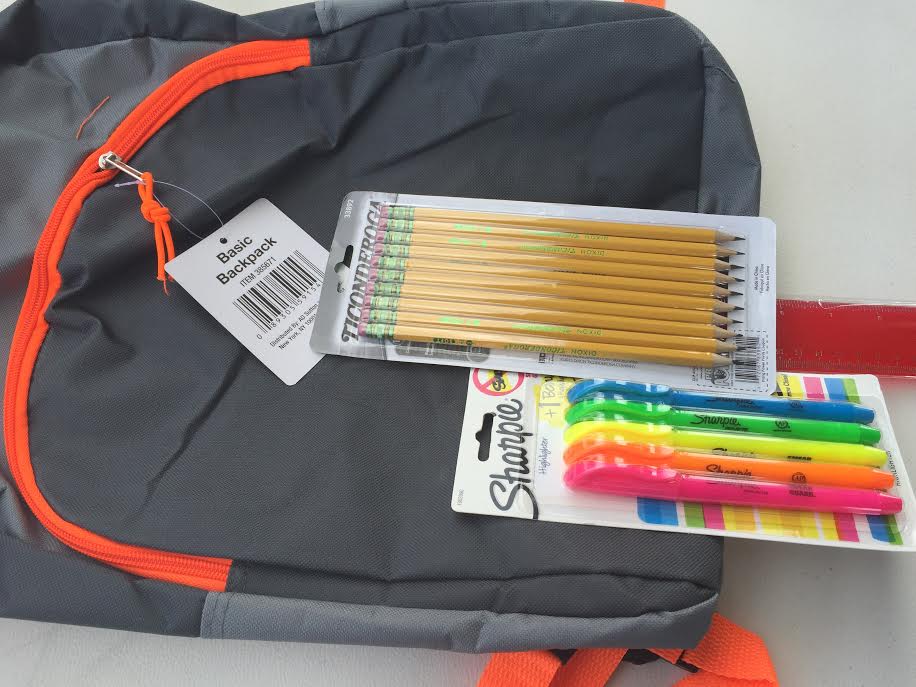
School may be out for the summer, but at First Call For Help we are busy preparing backpacks for the 2019-2020 school year.
Register today if you are an Ellis County resident in need or enduring a hardship. Students entering grades pre-k thru high school who reside and attend school in Ellis County are eligible to receive a free backpack filled with school supplies and a hygiene bag.
Our Backpack Distribution Day is Aug. 1, at the National Guard Armory, 200 Main St., Hays. Stop by and pick up your backpack anytime between 7 a.m. and 6 p.m.
Please contact Project Coordinator Laura Shoaff at First Call For Help if you have questions or are interested in volunteering to fill backpacks or assist on distribution day.
If you are not able to volunteer but would still like to get involved, donate some school supplies from the list or make a monetary donation. We appreciate the support of our community in making Backpacks For Kids possible.
Here are a few items that we are out of:
Wide-ruled filler paper
Wide- and college-rule one-subject, spiral notebooks