We have a brand new updated website! Click here to check it out!

Webster Lake now in Public Health Warning

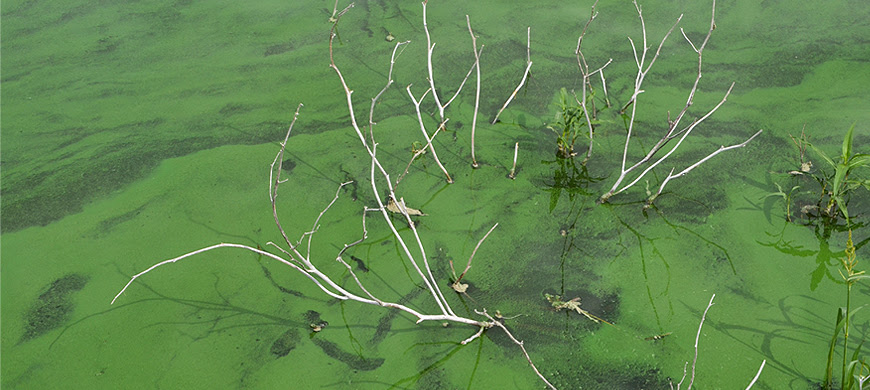
Algae bloom

KDHE

TOPEKA – The Kansas Department of Health and Environment (KDHE), in conjunction with the Kansas Department of Wildlife, Parks and Tourism (KDWPT), continues to issue public health warnings for six lakes due to blue-green algae. Three lakes are currently on watch status.

Current Warnings:

Big Eleven Lake, Wyandotte County (unchanged)

Jerry Ivey Pond, Saline County (unchanged)

Keith Sebelius Reservoir, Norton County (unchanged)

Marion Reservoir, Marion County (unchanged)

Gathering Pond near Milford (Hatchery Supply Pond), Geary County (new 6/27)

Webster Lake (Webster Reservoir), Rooks County (upgraded from Watch status 6/20)

Lifted Warning, No Watch Status: Overbrook City Lake, Osage County

When a warning is issued, KDHE recommends the following precautions be taken:

  • Lake water is not safe to drink for pets or livestock.
  • Lake water, regardless of blue-green algae status, should never be consumed by humans.
  • Water contact should be avoided.
  • Fish may be eaten if they are rinsed with clean water and only the fillet portion is consumed, while all other parts are discarded.
  • Do not allow pets to eat dried algae.
  • If lake water contacts skin, wash with clean water as soon as possible.
  • Avoid areas of visible algae accumulation.

Current Watches:

Lake Shawnee, Shawnee County (unchanged)

Marion County Lake, Marion County (unchanged)

Strowbridge (Carbondale East), Osage County (unchanged)

A watch means that blue-green algae have been detected and a harmful algal bloom is present or likely to develop.  People are encouraged to avoid areas of algae accumulation and keep pets and livestock away from the water.

During the watch status, KDHE recommends the following precautions be taken:

  • Signage will be posted at all public access locations
  • Water may be unsafe for humans/animals
  • Avoid areas of algae accumulation and do not let people/pets eat dried algae or drink contaminated water.
  • Swimming, wading, skiing, and jet skiing are discouraged near visible blooms
  • Boating and fishing are safe. However, inhalation of the spray may affect some individuals. Avoid direct contact with water, and wash with clean water after any contact.
  • Clean fish well with potable water and eat fillet portion only.

KDHE samples publicly-accessible bodies of water for blue-green algae when the agency receives reports of potential algae blooms in Kansas lakes. Based on sampling results, KDHE reports on potentially harmful conditions.

Kansans should be aware that blooms are unpredictable. They can develop rapidly and may float around the lake, requiring visitors to exercise their best judgment. If there is scum, a paint-like surface or the water is bright green, avoid contact and keep pets away. These are indications that a harmful bloom may be present. Pet owners should be aware that animals that swim in or drink water affected by a harmful algal bloom or eat dried algae along the shore may become seriously ill or die.

For information on blue-green algae and reporting potential harmful algal blooms, please visit www.kdheks.gov/algae-illness/index.htm.

Please note that due to the upcoming holiday week, the advisories listed above will remain in effect until July 11.
Election 2019: Hays City Commission candidate profiles, poll

Five candidates are running in the November general election for three open seats on the Hays City Commission.

If the vote were held today, which candidates would get your vote? (Vote for up to three.)

[crowdsignal poll=10351399]

Click below to learn more about each candidate:

Michael Berges: Berges files for Hays City Commission seat; cites need to ‘marshal large upcoming projects’

Ron Mellick: Mellick files for re-election to Hays City Commission

Mason Ruder: Hays native Mason Ruder files for city commission

Ryan Rymer: Concerned about West 37th plan, Hays resident files for city commission seat

Henry Schwaller IV: Schwaller files for re-election, saying it’s ‘critical to not add to local tax burden’

KDOT begins work on $38M Interstate 70 project in Gove Co.

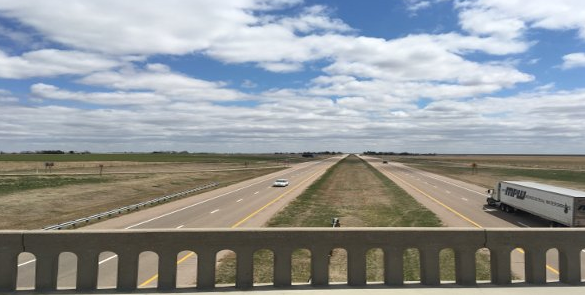
KDOT photo

The Kansas Department of Transportation has started work on a multi-year pavement replacement project along a stretch of I-70 in Gove County. The project area covers a 9-mile portion starting one mile west of the K-23 spur near Grainfield and ending approximately four miles east of K-211.

KDOT will replace the pavement on the eastbound lanes in 2019, followed by the westbound lanes in 2020. Project work will also include pavement replacement at the east and westbound rest areas near Grainfield, construction of new right-of-way fencing, lighting installation at exits 95 and 99 and reconstruction of the box structure carrying County Road 62 under I-70 into two new span bridges. Work is expected to be completed in November 2020, weather permitting.

Koss Construction of Topeka is the primary contractor for the $38.1 million project.

For more information on the project, including ongoing or upcoming road closures related to the work, click HERE.

— KDOT

SPONSORED: Thirsty’s hiring for server/waitstaff positions

Thirsty’s Brew Pub & Grill is now accepting applications for Server/Waitstaff positions. Thirsty’s team constantly works towards creating space for customers to relax, dine, drink and socialize in a warm, comfortable setting with multiple sports viewing options. WE ARE ALWAYS LOOKING FOR TEAM MEMBERS THAT CAN HELP US ACCOMPLISH THAT!

Thirsty’s is looking for energetic, fun, positive, organized people that have a drive for providing a great customer experience, each and every time!

We offer competitive wages, food discounts, flexible schedules, and a great group of people to work with that proudly represent our brand. No experience necessary, we train extensively. Applications are taken online by clicking HERE or by going to www.thirstysgrillandpub.com and clicking on the employment tab.

Police: Reported WWII explosives found in WaKeeney garage

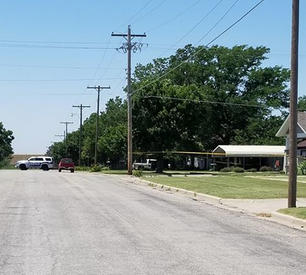
WAKEENEY — The WaKeeney Police Department is advising residents to avoid the 300 block of Warren after the discovery of World War II-era explosives in a residential garage.

The WPD announced the discovery in a social media post Thursday.

A spokesman from the WaKeeney Police Department told Hays Post a team from the Kansas Bureau of Investigation has been dispatched to the scene.

Check Hays Post for more as information becomes available.

Election 2019: USD 489 election candidate profiles, poll

Nine candidates are running in the November general election for four open seats on the USD 489 Board of Education.

If the vote were held today, which four candidates would get your vote? (Vote for up to four.)

[crowdsignal poll=10351424]

Learn more about each candidate here:

USD 489 election: Engel says bond should be smaller, include only needs

USD 489 election: Park seeks to build trust, involvement

Hertel enters Hays USD 489 board race; deadline to file June 3

Wellbrock will run for seat on Hays USD 489 school board

USD 489 election: Moffitt seeks to give voice to the community

USD 489 election: Pallister wants to maintain quality education for next generation

Local attorney Herman files for Hays USD 489 school board

Oborny files for re-election to Hays school board; other elections set for Nov.

Adams: Science background, passion for education will help 489 board

Cedar Bluff State Park to remain open despite bridge closure

KDOT

By CRISTINA JANNEY
Hays Post 

UPDATE 10:30 a.m. Thursday: Kansas Department of Transportation official Kevin Zimmer said slow deterioration led to the closure of the K-147 bridge at Cedar Bluff on Wednesday.

He said there is rust in the bridge deck that does not allow the bridge to move freely.

Zimmer said Kansas has a statewide backlog of bridges that need attention. The bridge replacement will be paid for with state funds. However, Zimmer said KDOT does not yet have cost estimates for the replacement.

Because this bridge has been closed, the bridge replacement will be expedited and is expected to be reconstructed in 2020.

He noted because this bridge is being moved to the front of the list for replacement, another project will probably be moved back as a result.

Zimmer also addressed the detour routes during the bridge’s closure. The official signed-detour will take drivers west on Interstate 70 to U.S. Highway 283 and then south to Kansas Highway 4 to reach the south area of the state park.

Although it will not be marked by official detour signs, local traffic can use local chalk roads off of K-147 to route around the dam and spillway.

————–

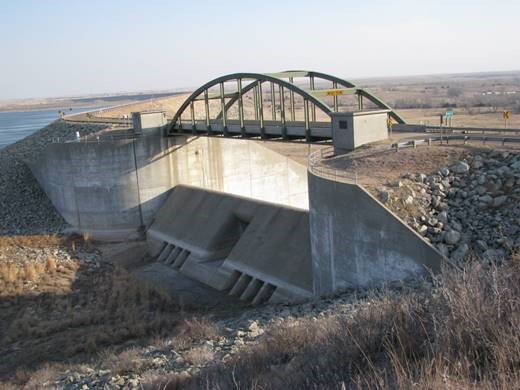
Although the Kansas Department of Transportation closed the bridge over the spillway at Cedar Bluff State Park on Wednesday, Park Ranger Kyle Burgoon said he did not think the closure would seriously affect the operations of the park.

He said Kansas Highway 147 will be closed over the dam and the spillway. However, park goers should be able to route around the closed section of the road to still reach the south side of the park via K-147 using chalk roads. The detour is about 10 miles one way.

The detour would route people east on U Road about 3 miles to 370th Road then south about 4 miles to Y Road and then back west another 2.5 miles to K-147.

The south side of the park can also be accessed via U.S. Highway 283 and Kansas Highway 4.

The road over the entire length of the dam will have to be closed, Burgoon said because there is no turnaround point on the dam.

The park is still expecting about 10,000 people over the Fourth of July holiday next week. All of the camping sites with utilities have been reserved, Burgoon said.

“Really, I would say have patience with it,” he said. “It may take a little bit longer to go from one side to the other, but in the long run, it is for everybody’s safety to basically get a brand-new bridge put in and it will last a lot longer.

“We’re still open. It is not going to affect us. Come on out to the park.”

Sport Haven is a convenience store, bait and marine shop at the north entrance of the Cedar Bluff State Park on K-147.

Sydney Parker, Sport Haven store clerk, said she is being optimistic about how the bridge closure will affect the store’s business. She said she thinks people will be able to route around the closed bridge, visit the business and enjoy the park.

“I know we are going to have a few unhappy campers, but once they spend some time here, it’ll get better,” Parker said.

Burgoon also urged people to not go around the barricades as the bridge at the spillway has been deemed unsafe.

Plans are being developed for an emergency bridge replacement project to be completed in 2020, according to KDOT.

— Cover photo courtesy KDWPT

YOUNKER: Using cover crops in prevented planting fields

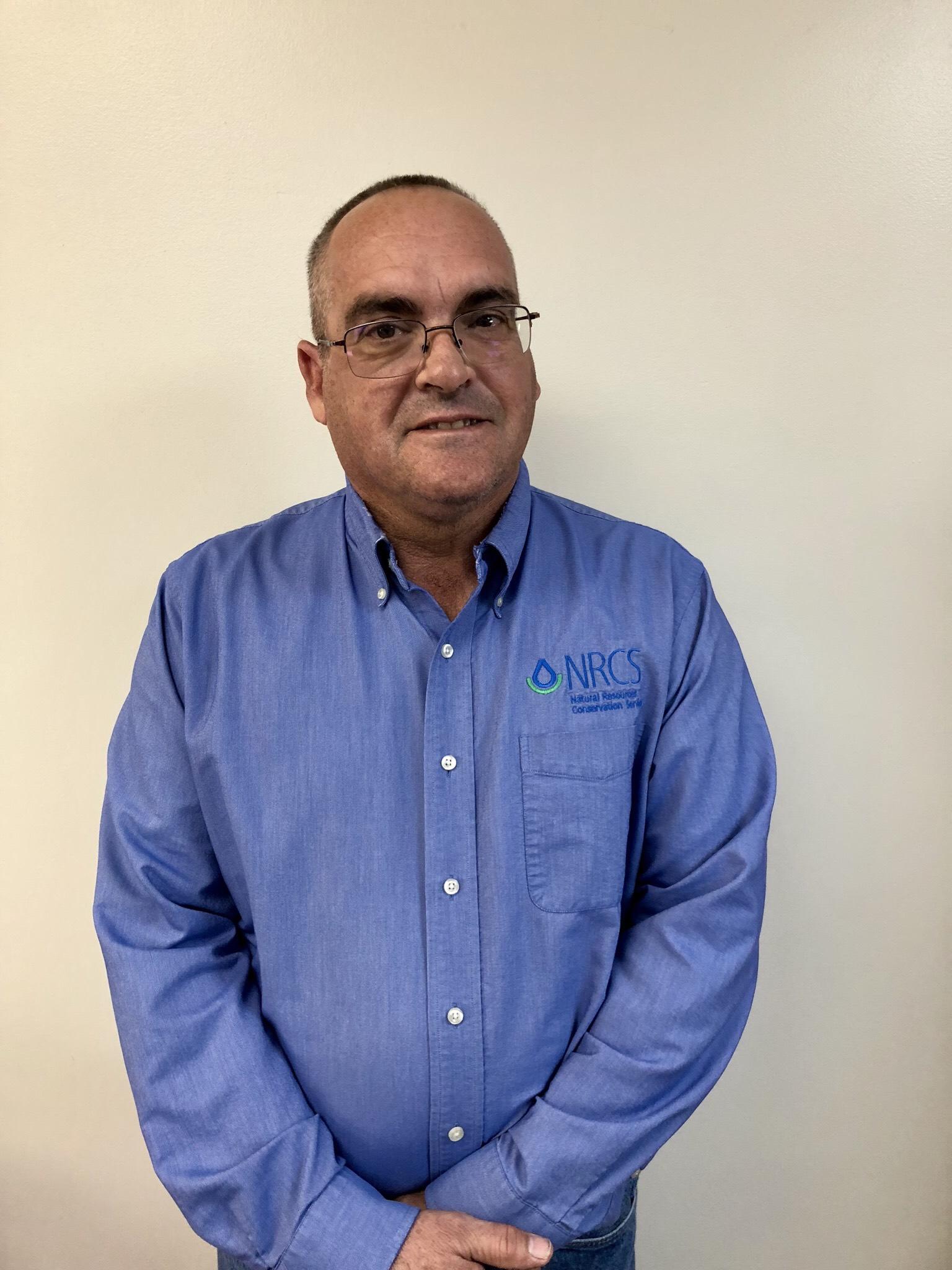
Dale Younker is a Soil Health Specialist with the USDA Natural Resources Conservation Service in Jetmore.

If you haven’t gotten the fall crops planted, you intended to plant because of the extremely wet conditions, and the Risk Management Agency’s (RMA) final plant dates have gone and past, you may be looking at taking a “prevented planting” crop insurance indemnity. When things dry up this may be a good time to plant a cover crop on those acres to ensure your fields’ soil health and long-term productivity. This may also be an opportunity to experiment with cover crops with very little financial risks.

Intense storm events have resulted in excessive soil erosion. Fields have been left with large gullies and areas where the topsoil washed away. A tillage operation may be needed for weed control, and to smooth out the field. A cover crop planted after that tillage pass will help cover the soil surface. This will help prevent additional soil erosion and additional loss of nutrients, carbon and residue.

A properly designed cover crop will have the potential to capture nutrients, fix nitrogen, build organic matter, suppress weeds, control erosion, provide livestock forage and provide other soil health improvement benefits. Typically, a mix with several different plant types and species would be used.

A summer mix should include forage sorghums, sorghum-sudans and/or millets. These species help feed the soil biology, such as mycorrhizal fungi and rhizobia bacteria. These organisms help build soil structure and tilth, which increases water infiltration and soil water holding capacity. They also provide a lot of above ground growth that shade the ground which helps with weed suppression and evaporation loss.

Legumes the mix, if properly inoculated, can fix nitrogen in the soil. The plants would need to be allowed to grow at least to the flowering stage to get the most benefit. There several warm season legume species to pick from that are adapted to Kansas that would reach the proper maturity level if planted in the next couple of weeks.

Brassicas and broadleaves, like radishes and sunflowers, have deep tap roots that can penetrate compacted soils and scavenge nutrients deep in the soil. Some of these species can also be great habitat for beneficial insects and pollinators.

Consider what herbicides you might have previously used on the field. Many pre-emergent herbicides provide long term residual weed control have long plant back restrictions. These herbicides could inhibit the germination and growth of many cover crop species. Always check your herbicide label and if in doubt consult with your supplier or crop advisor.

Before planting a cover crop on prevented planting acres always check with your crop insurance agent. Many of the haying, grazing and harvest restrictions have recently changed for the 2019 crop year.

For more information about this or other soil health practices you can contact me at [email protected] or any local NRCS office.

Dale Younker is a Soil Health Specialist with the USDA Natural Resources Conservation Service in Jetmore.

Copyright Eagle Radio | FCC Public Files | EEO Public File