An email phishing scam circulating online should be avoided.
Some Eagle customers might have received a request for password information from sender Eaglecom Support (see screen shots below) with the subject line “One Time Confirmation.” The emails are an attempt at phishing, where scammers pretend to be a reputable company in an effort to trick the recipient into handing over information such as password or financial information.
Eagle Communications reminds its customers that we will never contact you for password information and any requests for that or other private information via email should be ignored or deleted.
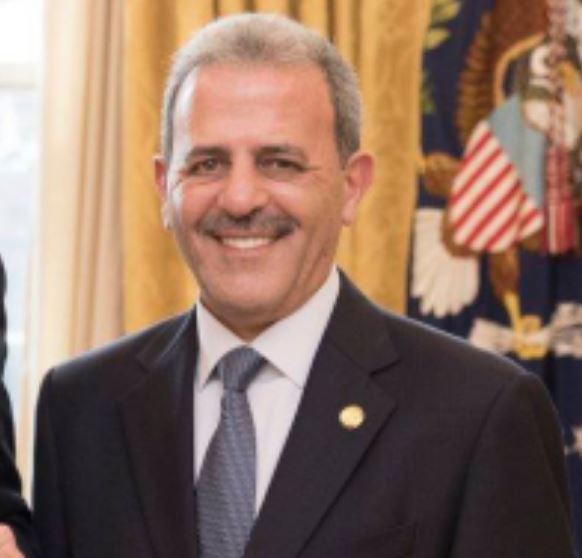
SMITH COUNTY — The ambassador of the country of Lebanon, Gabriel Issa, visited Lebanon, Kansas, this weekend for a Cedar-of-Lebanon Tree planting ceremony.
Click below for more from the Embassy of Lebanon in Washington.
Brenda Meder, Hays Arts Council executive director, hangs a Cally Krallman painting for the “Waterways & Byways of the Prairie” exhibit that will start Friday at the HAC.
The Hays Arts Council will feature two exhibits by Topeka artist Cally Krallman during the Summer Art Walk, which will be 6:30 to 9:30 p.m. Friday.
“Waterways & Byways of the Prairie” will be featured in the main gallery with “Along the Santa Fe Trail” in the Founder’s Gallery through Aug. 10. Krallman works primarily in oil and acrylic.
“It is all these incredible prairie scenes from different parts of the state,” Brenda Meder, HAC executive director, said of “Waterways & Byways of the Prairie.” “They are not of one particular place or representing one particular moment on the Kansas prairie or representing one particular season.”
For “Along the Santa Fe Trail,” Krallman visited locations along the historic Santa Fe Trail, including locations in Kansas. She created paintings depicting how those places look today. Visitors will be able to locate the scenes on a trail map that will be displayed with the exhibit.
Cally Krallman painting for the “Along the Santa Fe Trail” exhibit
Brief descriptions of the locations and their history associated with the trail will accompany the paintings as well.
The Santa Fe Trail was founded in 1822 and was an important north/south trade route between Franklin, Mo., and what would become Santa Fe, N.M. The trail came nearest to this area at Larned.
Visitors to the exhibit can see the topography change as they move from one painting to the next.
“If people want to take the time, they can follow that line. They can literally walk the Santa Fe Trail through the art in this room,” Meder said.
Cally Krallman painting for the “Along the Santa Fe Trail” exhibit
Brian Hutchinson, a member of the FHSU art faculty, guided an alternative-methods printmaking workshop this summer. Prints from that class will be on display in the Hays Arts Center Annex, 1010 Main St. Hutchinson also taught FHSU Secondary Art Education students this spring who worked with Hays High School students to create an installation project that will be in the annex.
Also in the annex will be photographs from the 16 HAC Summer Youth Photography class students and paintings and photography by Bruce Burkholder.
Although the spring and fall art walks are usually twice as large as the summer walk, Meder said the Summer Art Walk is still worth the time.
“Even though there are just 13 sites … it is the most delightful array of things to see and do — all focused on creativity, originality and the arts and design, but probably one of the most diverse and unique collectively that we have ever had,” she said.
Cally Krallman painting for the “Waterways & Byways of the Prairie” exhibit
John Makings, a psychotherapist from Great Bend, will bring his handcrafted drums for an impromptu drum circle at the Union Pacific Park and Pavilion. He is not a music therapist, but has used music therapy in his work.
“Drum circles are a very wonderful, creative, inclusionary kind of experience and something that is fun to engage in because of the simple rhythms and how [easy] it is to do. Music therapy is a wonderful,” Meder said. “So children or adults come and look at John’s drums and bang around a little bit and engage in a drum circle experience, but it is not something formal. It is not a concert. It is an interactive engagement experience in a collective community drum circle.”
Frank Werth will have Elvis Presley replica costumes on display at Couture for Men, 1111 Main.
“He is bringing in an array of his outfits, which are reproductions down to details of Elvis Presley costumes,” Meder said. “Costume design is an incredible art form whether it is for theater or movies or various stage shows.”
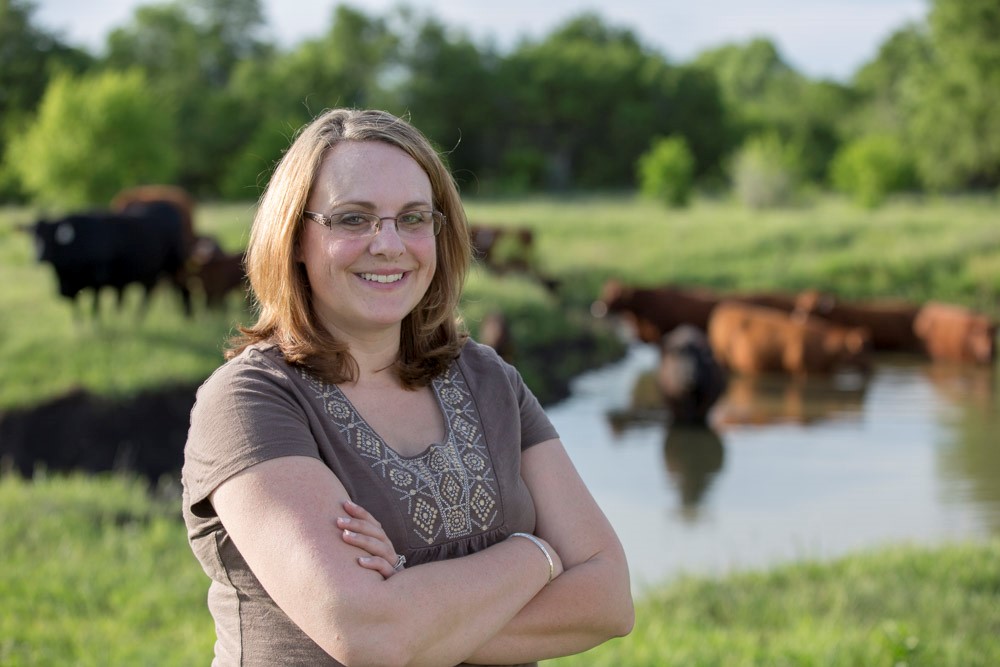
Mary Kay Schippers will be at Regeena’s, 1013 Main, to sign copies of her book, “A Year on the Family Farm.”
“I love it when we can incorporate the literary arts in some capacity,” Meder said. “We do recognize it as an awesome art form. The literary arts, the performing arts, the visual arts — they are all central to who and what the arts represent in our community.”
Cally Krallman painting for the “Waterways & Byways of the Prairie” exhibit
The Hays Community Theatre will feature five different artists (see the complete schedule below) as well as mermaid face painting by Alexandra Herrman to promote the HCT’s summer performances of “The Little Mermaid.” Meder described it as a mini art walk of its own.
eyeSMILE Vision and Dental, 1300 Main, will be a stop on the walk for the first time this summer. Visitors will be able to get a glimpse of the renovations that have been completed to that historic downtown Hays building that was once a service station.
The art walk will be extended into Saturday with a Summer Polka Party from 10 a.m. to 2:30 p.m. at the Hays Public Library. The Hot Shots polka band will play followed by the showing of the documentary “Herman Dinges: Colorado’s King of Christmas and Polka.” Dinges is originally from Schoenchen.
“He was also incredibly well known in Denver for his incredible, huge Christmas displays,” Meder said. “Before there was a Clark Griswold and ‘Christmas Vacation,’ there was Herman Dinges, and he is very proud of that.”
After several years away from education, former Washington Elementary School Principal Allen Park is seeking to return to Hays education as a member of the USD 489 school board.
Park, 56, joins a field of eight other candidates for four open positions on the board, including incumbents Paul Adams and Luke Oborny and newcomers Craig Pallister, Lori Hertel, Tammy Wellbrock, Alex Herman and Cole Engel.
Park has worked at all levels education preschool through college.
He started his career as a para at Washington Elementary School, then was a teacher at Hays High School and Kennedy Middle School. He spent the last 25 years of his education career as the principal at Washington Elementary School. He was a transition coordinator briefly before retiring in October 2015.
“I think with my experience and having children in Hays for over 25 years straight — I still have kids in Hays schools — that I have a unique perspective and maybe have some things that might be able to help,” he said.
Park was part of the first Leadership Hays Class in the early 1990s. He said that experience and a desire to give back to the community also led him to his decision to run for school board.
Park was part of the committees for the last two bond issues that passed in the 1990s. The district has had two failed bond issues in the last three years — in 2016 and 2017. The board is considering a third bond election in 2020.
“I think getting the community involved in all aspects of the planning stages and asking their opinions and helping all schools are areas that might be helpful,” Park said. “I think involvement is key and asking opinions and being inviting.”
He said getting teachers and staff more involved in planning a bond is also important.
Park said he supported the last two bond issues.
“I have always supported anything that helps kids,” he said. “We just need to look at all of the different angles to see what we need to improve facilities and make sure facilities are safe.”
He said voter turnout has been low during the last two bond elections.
“I think something as important as a bond issue, we need everyone to express their opinions,” he said. “That is something we need to look at to see how we can inform our public and get them involved.”
The current school board has discussed three projects for the next bond although it has not voted on them yet. Those projects include finishing upgrades to the HHS HVAC system, expanding the HMS cafeteria and renovating and expanding Roosevelt Elementary School.
“It is really sad that we need to take care of maintenance issues on a bond election, but maybe that is the only thing we can do to get those things taken care of,” Park said.
The USD 489 school board went to impasse with teachers during negotiations last year.
“Education and what is best for kids, you need to have a quality and a strong staff. We need to make sure we support them and help them in any way we can, but have high expectations and be accountable for results, he said.
In recent years, the board has also debated its one-to-one computer policy for students.
Thanks to grants, Washington school was one of the first schools to go to a one-to-one program.
“I think that is something that needs to be looked at and see what the teachers need, so they can be successful” Park said of computers, “and give them the training and in-service they need to make sure they can bring that technology to kids the best way possible.”
Park named a list of goals he would have if elected:
Achieve what is best for all kids in the community
Build trust and increase public involvement
Help ensure USD 489 has quality and safe facilities
Help the district be fiscally sound
Support local businesses
Build a positive and team atmosphere on the board
Use local and national data to help drive decisions on what works in education
Include the whole school community
“I think people care,” Park said, “but we need to be more inviting to get them at the board meetings whenever possible.”
Park is on the Student Development Committee for the Cottonwood Extension District and is a member of the Hays Sunrise Rotary Club where he is a chairman of the community basketball challenge. He continues to volunteer in USD 489, is on the Roosevelt Site Council and is involved in church activities.
Park has four children. They all have gone through Hays schools. His youngest child is a junior at HHS.
“I hope I can use my experience as a parent and an educator to help move USD 489 to the next level,” Park said.
By KIM BALDWIN McPherson County farmer and rancher
It’s beginning to look a lot like Christmas in my kitchen these days. Yes, I know it’s June. No, carols aren’t being sung, and we’re not decorating a tree. We’re beginning to bake massive batches of cookies and other goodies that will sustain our wheat crew once it’s time to harvest the grain. You see, Christmas and wheat harvest are really the only two times during the year when I do mass baking projects.
A major grocery run leads to dozens of eggs being stored in my refrigerator. Bags of chocolate chips fill my pantry. Flour ends up on the floor. Cooling racks cover my counters. Ziplock bags and my deep freeze are filled to the brim. And I set watch on my kitchen — monitoring my children and others who may dare to enter my territory to see what’s being created all in an attempt to sneak a few goodies out the door.
I take this time of year very seriously. I call in reinforcements, and we knock out the task at hand. I like to get ahead by baking in advance to avoid getting behind once harvest begins. After all, there will be plenty of meals to prepare daily once harvest starts. For me, it’s a matter of planning and organization, and not feeling overwhelmed.
Besides, I want to spread goodwill and good cheer to our harvest crew. They work hard every day during harvest trying to get the wheat out of the fields while the conditions are right. It’s hot. It’s dirty. It’s tiring. The least I can do is keep their bellies full of sweet treats.
There’s been a lot of talk around town, down the dirt roads and in fields lately. The main topic of conversation is all about when harvest will begin. I generally chuckle when this talk begins — although I am also guilty of participating. While we might like to believe we have our bullet-proof systems for prognosticating the start of wheat harvest, the fact remains we’re all just making predictions. To be honest, your guess is as good as mine.
Yes, we can make educated guesses based on the weather. We can narrow it down to single-digit days. But let’s be honest, just like Mother Nature can dupe the best meteorologist, so too can a farmer miss the mark. There are just too many factors that play into when wheat harvest will begin. The wheat might look ripe, but the ground might be too wet. Other farm tasks like planting soybeans and sorghum demand our attention. Mechanical breakdowns might stop a crew before it can even get started harvesting. Mother Nature might throw a pop-up rain shower that nobody was expecting, delaying the kick-off for another day.
Although we can’t pinpoint the exact day when we will fire up the combines and begin that rush to get the grain out of the fields, we know that wheat harvest is getting closer and closer every day. And just like when my kids mark down a calendar daily in anticipation of Santa making his visit, I too am mentally marking down the days. Anxiously awaiting the start of harvest. Until that day arrives, I’ll enjoy a few homemade cookies I’ve set aside from the mass baking operation in anticipation of the start of our wheat harvest.
“Insight” is a weekly column published by Kansas Farm Bureau, the state’s largest farm organization whose mission is to strengthen agriculture and the lives of Kansans through advocacy, education and service.
Stacy Campbell is Agriculture & Natural Resources Extension Agent for the Cottonwood Extension District.There have been calls again this year concerning chinch bugs coming out of wheat fields and moving into adjacent milo, and sorghum/sudan hay fields.
The overwintered adults emerge in early spring and fly into small grains where they mate and produce the first generation. Most problems in milo or feed occur when large groups of immature, wingless nymphs migrate from maturing wheat fields and invade adjacent sorghum or sorghum/sudan hay fields where they attempt to complete development. They typically do not infest the entire field but can damage or take out several rows of milo next to the wheat.
Problems with this insect were historically confined to eastern and central Kansas, with damage beginning in May or June, but in recent years, chinch bugs have become more of a problem further west in the state.
Second generation chinch bugs have been infesting emerging panicles and causing direct damage to grain over a much wider geographic area in the state. Control of second-generation chinch bugs on large plants is difficult to achieve with contact insecticides because of their habit of hiding behind leaf sheaths, and no systemic materials are labelled for this use.
The risk of first generation damage is greater where sorghum is planted next to thin stands of wheat. Seedling sorghum is most vulnerable, and 7 to 10 bugs per plant will cause stunting, poor root development, stand reduction and even the death of some plants. Larger plants can tolerate more bugs, but severe infestations can cause stunting, lodging, and yield loss. Since corn is planted earlier and is larger and more resilient at the time of nymphal migration, damage can be minimal and usually confined to border rows. Late-season damage is typically spotty, but heading sorghum can be infested behind the panicle sheath which can cause incomplete exertion of the head.
Chinch bugs puncture vascular tissues to extract plant juices and secrete digestive enzymes that cause the breakdown of surrounding plant tissues. Feeding punctures also can allow pathogens to enter the plant. Consequently, damaged plants present a variety of symptoms including stunting, yellowing, wilting, and necrotic lesions.
The effect nymphal feeding has on plants depends to a large degree on the health and nutritional status of the plants. Growth stage and water balance are critical because small or drought-stressed plants have less ability to tolerate or recover from chinch bug feeding damage.
Using seed treatments: clothianidin (Poncho), imidacloprid (numberous products) and thiamethoxam (Cruiser) at planting can potentially decrease chinch bug damage and may protect plants for up to 3 weeks, unless the migration is heavy. Growers can use follow-up sprays on border rows if protection wears off before the end of chinch bug migration.
Before spraying the border rows of an affected field, a key consideration is to determine the growth stage that most of the chinch bugs are in. Because the nymphs are the ones feeding on the plants causing the damage, the adults do not feed and will soon fly away to lay their eggs. So if the majority of chinch bugs are in the adult stage, the damage has already been done. Adults are small, black bugs about 1/8 inch long with white wings folded over the back. Immatures or nymphs, are tiny bright red after hatching or larger red-and-black, wingless bugs, then darken as they approach maturity. A white band on the upper side of the first abdominal segment is visible until wing buds grow to cover it.
Most often the damage is noticed only after several rows of sorghum or feed have been severely stunted or killed. An insecticide spray can be used over the affected rows and approximately an additional 100 feet beyond. Also, spraying about 100 feet into the wheat stubble is advisable if chinch bugs are still coming out of the wheat field. High gallonage, 20 to 40 gallons of water per acre ensures good plant coverage and enhances the movement of material into protected plant parts such as leaf sheaths. There are several insecticides labeled for the control of chinch bugs listed in the K-State Research & Extension publication “Sorghum Insect Management 2017 which can be found on our web site at www.ellis.ksu.edu
If you have any questions or need further information contact me at the Cottonwood District Extension Office in Hays at 785-628-9430.
ELLIS — As the Ellis City Council works to prepare its 2020 budget, five organizations presented budget requests at Monday’s city council meeting, totaling over $55,000.
Cheryl Kinderknecht presented first for the Ellis Alliance while their new executive director was unavailable.
“The main reason we need the funding is to take care of our building and our equipment,” she said.
The request from the alliance totaled $12,500.
Another $12,000 per year is collected through memberships fees from three business groups in the area, with another $2,650 from the Walter P. Chrysler museum for management services.
Pauleen Edmonds, president of the Ellis Community Foundation, presented next and shared with the council their request totaling $10,000.
“It’s the same as we requested in past years,” she said. “We are very proud of the projects we worked on. Everything we have done so far has made Ellis a better place to live.”
Maintaining the Ellis food pantry is among the top priorities with their budget request.
The pantry is open once a month to provide food to those in need.
The foundation also operates a backpack donation program and a children’s food program that operates over the summer months.
“Basically, we really want to make sure that program continues as one of our ongoing projects,” Edmonds said.
“A lot of the money we will get from you actually goes for the food pantry,” Edmonds said, noting the request only covers about half of the cost to operate the pantry. Donations cover the remainder of the cost.
“That is one program that we have a lot of donations from people out in the public because they feel it is such an important program,” she said.
Food for the program comes from the Kansas Food Bank and is purchased by the foundation.
While they also accept canned food donations, it is only a small part of what is given out during the open pantry.
During the presentation, Chad Pritchett presented the request for the Walter P. Chrysler Boyhood Home and Museum totaling $15,000.
Since 2016, the organization has not been able to cover expenses, Pritchett said, and has been forced to dip into savings.
“Right now, we have about four years worth of savings,” he said.
He noted the organization brings tourism into Ellis that is vital for the community and many visitors have shared their dismay the museum is not completely sponsored by Chrysler.
The Ellis Public Library also presented a budget request to the council that matched the amount of funds received last year totaling $16,500.
A portion of that total is earmarked for capital improvements.
“The average that you guys have been doing for us has been paying off in the long run,” said Steve Arthur, director. “This is the first time in 13 years that I have been here that I don’t have to worry about the library so much anymore.”
“The reason that we always ask for the kick in capital improvement is that when I finally leave I want to leave that place better than I found it,” he said.
He said the library is active right now and, in general, the programming the facility offers has drawn people back into the library.
The last organization to present at the meeting was Options. They are requesting $1,200 to continue to provide services in Ellis.
“We are a nonprofit, and we serve 18 counties in Kansas,” said Jennifer Hecker executive director. “Our mission is to provide help, hope and communion for victims and survivors of violence and abuse.”
The organization provides 13 core services, including 24-hour crisis intervention, she said.
The request this year will help offset the cost of the increase in demand for services.
“In this last year, services for domestic violence have increased 22 percent and the demand for our sexual assault victims cases increased an astounding 99 percent in a single year,” Hecker said.
The Ellis County Commission auctioned off two properties Tuesday morning in Ellis County District Court as part of a sheriff’s tax sale.
In all, there were six properties eligible for foreclosure because of lack of payment for three or more years.
The first property, 212 W. 10th in Ellis, previously owned by Refugio Delarosa, sold for $6,5000 Tuesday.
The other property that sold Tuesday was located at 119 Cheyenne in Schoechen for $5,700. The property previously was owned by Anthony Loreg.
A second property, owned by Delarosa at 208 W. 12th St. in Ellis, did not sell. A second property in Schoenchen owned by Loreg at 0 Church St. also did not sell.
Property at 1201 Ash in Victoria, owned by Candice Kay Funk-Loffredi, also did not sell.
Also in Ellis, the property at 1309 Fauteux also did not sell.
The buyers are responsible for back taxes in 2017 and 2018.
County Counselor Bill Jeter said the county plans to continue to have one tax sale a year going forward.
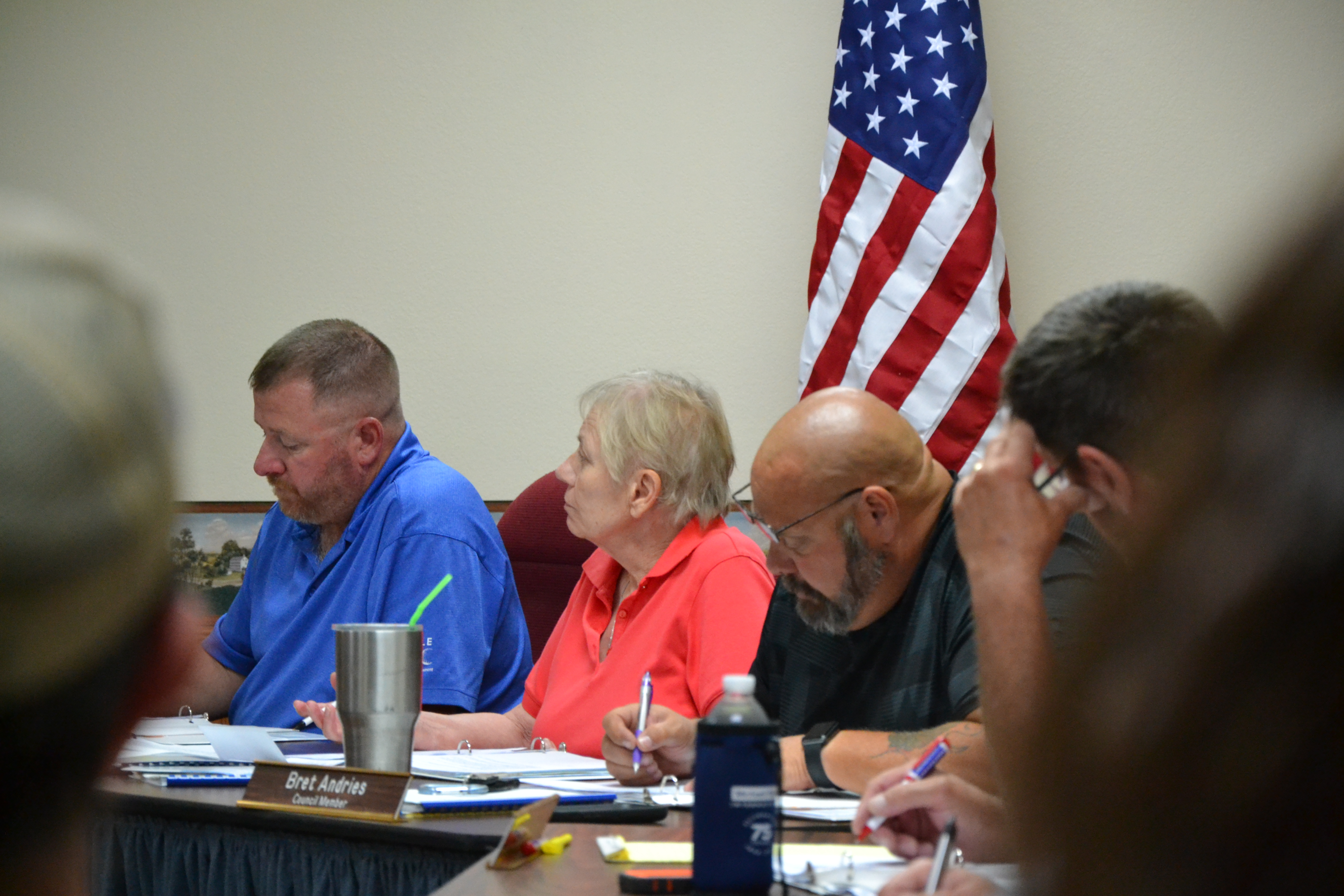
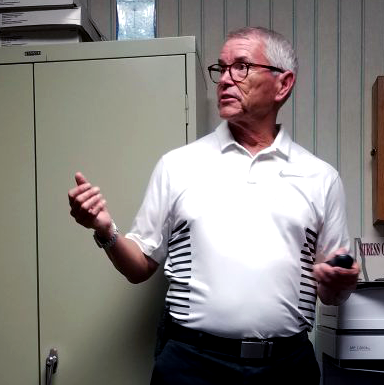
Doug Willams, director of Grow Hays, shared with the Victoria City Council the challenges facing Ellis County as the population is forecasted to trend significantly downward in the coming decades.
Population declines create more urgent need for business development, Williams tells council
By JAMES BELL Hays Post
VICTORIA — During Monday night’s Victoria City Council meeting, Grow Hays Director Doug Williams shared with the group a few of the challenges facing western Kansas as the area is forecasted to trend toward an older and small population.
“The reality is western Kansas is dying,” Willams said. “We have an aging population, we are not retaining our young people, we are attracting less and less outside investment, and we have diminishing natural resources. If we believe in 20 years we are going to be pumping as much oil in Ellis County as we are now, we fooling ourselves and it’s a slow, but steady progression.”
Williams noted population decline as a primary driver in the concerns facing the county, sharing with the council results of a Wichita State University population projection study.
Looking at 2024, the charts showed a much higher average age throughout western Kansas, increasing even higher in 2034 until, by 2064, the average age would be roughly the same as it is now, he said.
But at that point, the population of the area is projected to be significantly lower.
Many of the counties in the area, by that time, are expected to be 59 to 95 percent lower in population.
“Only one county on there projects an increase, and that is Ellis County,” Willams said.
“What’s happening is the counties out in western Kansas are dying. Those people are moving to Hays. They are moving here for health care or various reasons,” he said. “Or they are moving elsewhere.”
He then shared that while that might seem good for Ellis County when looking at the population of the trade area, the larger loss is concerning.
“The current population, of that trade area, is 80,000 people,” Willams said. “If you look at that worst-case scenario, they project that same trade area will be 52,000 people — or 35 percent fewer people — to come to Hays to shop, to eat and for kids to go to Fort Hays State.”
The best-case scenario is that the area population stays even, but even that is concerning when looking at a 40-year projection he said.
“We can be like Nero and play our fiddle and do nothing and let it happen or we can try to be positive and do some things about it,” Willams said.
He urged the council that if action is taken now, the trend could change, calling for a greater sense of urgency in addressing the problem through development and recruitment including long-term investments that may not have near-term returns.
“And we can have a good neighbor policy, which means we help Trego County, we help Rooks County, we help Phillips County, whatever the case may be, because we are all in this boat together,” Williams said.
Entrepreneurship is key to reversing the trend, Williams told the council. He detailed several Grow Hays programs being offered over the summer to help spark business development in Ellis County.
Those programs, he said, can help increase business interest in Ellis County, including a housing development program that helps buyers secure funds to rehab area houses.
Willams also asked the council for funding from the city.
“We haven’t requested public funding for the last couple of years, from any public agencies,” Williams said. “We were trying to get our act together and show we provide value.
“We feel like we are now and that’s why we have gone back to the public sector to ask for funding,” he said. “Victoria has been good enough to fund us in the past at a level and we would ask for that level to start again in your 2020 budget.”
Council members are expected to consider the funding request at their next meeting. In the past, Victoria has funded Grow Hays, formerly he Ellis County Coalition for Economic Development, at a $1,000 level.
As he was wrapping up his presentation, Williams shared a final thought with the council.
“We have to recognize we are in a battle and the clock ticks,” he said. “We have some time to do something about it, but if we don’t, there is a tipping point out there someplace where it won’t make any difference.”