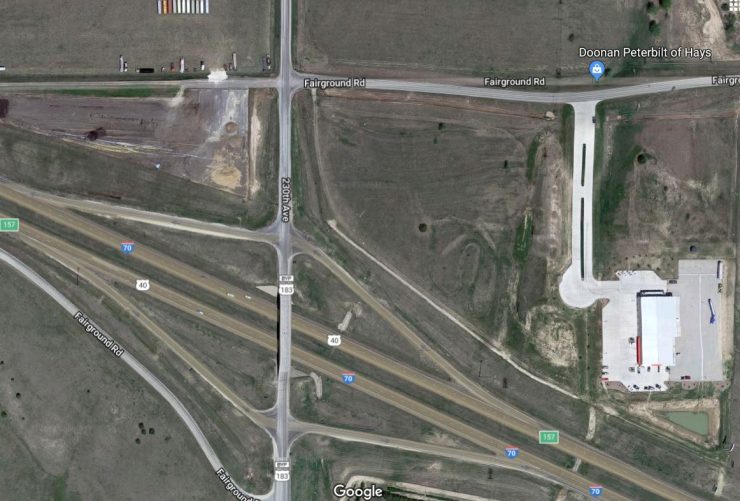
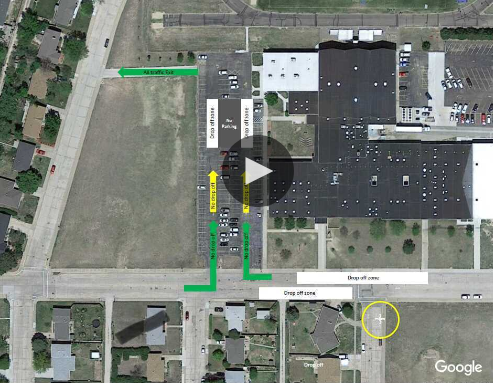
Due to the traffic congestion in the mornings and after school, Hays Middle School will make a change to the west parking lot driving pattern. This will take place beginning Tuesday morning.
The entrances to the west parking lot will become one-way both sides. The northwest exit will be the only way to exit the parking lot.
“Our intent is to help decrease congestion in the street, but we needed to wait until we could paint our parking lot to ensure student safety,” HMS Principal Tom Albers said in a message to parents Monday morning. “You will notice white parking/cross walk lines towards the gym entrance. We ask that you drop your student off in the drop off zone as well as pick your student up at the drop off zone on the west side of the parking lot. The drop off zone will allow students to be seen as there will be no parking in the white cross walk area. We ask that you please use caution and be very attentive while in the drop off zone to give right a way to any student walking in the zone. Once you have dropped off your student, please proceed to the northwest exit. There will no longer be any exit ability out of the west parking lot along 29th Street.
“If you enter the east side of the parking lot, it isn’t as important to drop off or pick up your student in the crosswalk as your student can walk to the sidewalk and then head to the gym entrance. Same thing for if you are picking your student up on the east side of the parking lot. We do ask that you do not stop and pick up your student until you have entered the parking lot and get past the Dumpster. ”
“Again, thank you for your patience and please help us as we proceed with this new transition to drop off and pick up the HMS students,” Albers said. “You may still drop off or pick up as you have in the past if you are dropping your student off on 29th Street, this is only for students who are being dropped off/picked up in the west parking lot. Thank you for helping ensure the safety of all HMS students.”
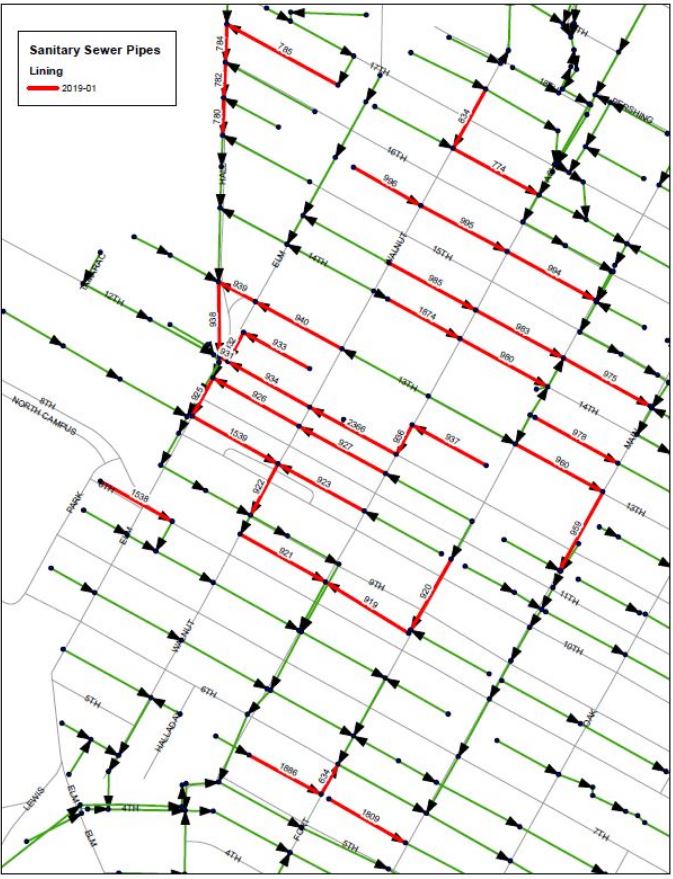
The city of Hays Water Resources Department has contracted with SAK Construction of O’Fallon, Missouri, to perform Cure In Place Pipe sewer lining at the locations shown on the map below.
Lining of the sanitary sewer lines notated in red, will begin Tuesday, November 5, 2019. SAK Construction estimates the work will be completed in four weeks, weather permitting.
Door hanger notices will be placed on homes and businesses affected prior to lining. Traffic control devices will be placed daily in the work areas.
For more information, contact Tim Higby with SAK Construction at 314-713-3317 or the Water Resources Department at 785-628-7380.
WICHITA – A woman from Mexico who was stopped in Kansas with 21 pounds of methamphetamine pleaded guilty today to a federal charge of drug trafficking, U.S. Attorney Stephen McAllister said Monday in a news release.
Maria Alonso-Espinoza, 30, pleaded guilty to one count of possession with intent to distribute methamphetamine. The Kansas Highway Patrol stopped her car on Feb. 26 on Interstate 70 near Russell. Her brother was driving, and she was riding as a passenger. She was the registered owner of the car.
Troopers found 21 pounds of methamphetamine hidden in the driver’s side rear quarter panel, McAllister said. Investigators learned Alonso-Espinoza was taking the methamphetamine from Colorado to Wichita for distribution, he added.
Sentencing is set for Jan. 27. She could face a penalty of not less than 10 years in federal prison and a fine up to $10 million. McAllister commended the Kansas Highway Patrol, the Wichita Police Department and Assistant U.S. Attorney Mona Furst for their work on the case.
Last week’s inspection results from the Kansas Department of Agriculture:
Cancun Mexican Grill 105 W. Second, Ellis – Oct. 29
A routine inspection found seven violations.
In the single-door Argus refrigerator, there was a container of reduced oxygen packaged tilapia fillets that did not have a slit in the packages.
In the single-door Argus refrigerator there was a container of raw bacon that was being stored on a wire rack directly above an opened container of cut tomatoes. No evidence of leaking was observed.
In the single-door Argus refrigerator, there was a container of raw beef that was being stored on a wire rack directly above an opened container of cooked chorizo. No evidence of leaking was observed.
In the single-door Argus refrigerator, there was a container of raw chicken that was being stored on a wire rack directly above an opened container of raw pork. No evidence of leaking was observed.
In the refrigerated prep table, there was an opened container of milk with no date on the container.
In the refrigerated prep table, there was a container of tamales that did not have a date of when they were made.
On the prep table, there was a meat tenderizer that had dried food residue present along the blades.
Clarity Consulting Group 230 E. Eighth, Hays – Oct. 29
A routine inspection found four violations.
In the bar area of the establishment, there was a bottle of Wild Turkey and a bottle of Ancient Age Whiskey that had flying insects present with the liquor.
In the north walk-in cooler, there was a container of cut tomatoes and cooked roasts with no date of when they were cut.
In the south walk-in cooler, there was an opened bag of cut cabbage with no date of when it was opened. In the north walk-in cooler, there was an opened container of smoked salmon that did not have a date of when it was opened.
In the bar area of the establishment, there was no handwashing sink present. The establishment is mixing drinks, pouring wine and beer at this location.
Dollar General 1208 E. 27th, Hays – Oct. 28
A routine inspection found two violations.
On the retail side of the establishment, there were four gallon containers of Top Job Cleaner that was being stored on the same solid shelf as eight packages of single-use plastic cups. No evidence of leaking was observed. In the infant section, there were two containers of hand foam sanitizer that was being stored on a metal shelf directly above 10 or more Pedialyte beverages. No evidence of leaking was observed.
In the back storage room, there was a case of Draino that was being stored directly on top of a case of aluminum foil. No evidence of leaking was observed.
Fairfield Inn 377 Mopar Dr., Hays – Oct. 28
A routine inspection found three violations.
In the single-door Kenmore refrigerator, there was a container of waffle batter that did not have a date of when it was made.
In the Kenmore single door refrigerator, there were open containers of milk and silk milk with no dates of when they were opened.
On the floor below the hand sink, there is a spray bottle that contains a blue liquid with no label of what the liquid is.
Osaki Japanese Restaurant 2522 Vine, Hays – Oct. 28
A routine inspection found five violations.
During the inspection, a cook had had one hand gloved and one hand not gloved. With his gloved hand, he had taken raw shrimp and placed it in the wok. He then proceeded to add other ingredients to the dish. The last ingredient was a raw shelled egg. He was holding this raw shelled egg in his bare hand, and cracking it on the counter and opening it into the wok. After this, he grabbed a clean plate with his bare hand.
On the table next to the cooking line there was a pan of fully cooked rice at the temperature of 114 F. The ambient temperature of the room was 69 F. All other cold holding temperatures are in compliance.
In the walk-in cooler, there was a container of cut garlic with oil being stored with no date of when the garlic was cut. In the three-door sushi refrigerator, there was cooked shrimp with no date of when they were cooked.
In the three-door sushi refrigerator, there were eight open containers of fully cooked imitation crab meat with no date of when they were opened.
In the back kitchen area, there was cooked sushi rice that was not marked with a time stamp.
The Hays Police Department responded to 7 animal calls and conducted 30 traffic stops Tue., Oct. 29, 2019, according to the HPD Activity Log.
Traffic/Driving Complaint–2800 block Indian Trl, Hays; 7:47 AM
Traffic/Driving Complaint–1800 block Ash St, Hays; 7:50 AM
Lost Animals ONLY–1000 block Reservation Rd, Hays; 9:42 AM
Animal Call–700 block Vine St, Hays; 10 AM
Theft (general)–2700 block Canal Blvd, Hays; 10:14 AM
Warrant Service (Fail to Appear)–1200 block Vine St, Hays; 10:20 AM; 10:40 AM
Sex Offense–2800 block Fort St, Hays; 12 PM
Animal At Large–800 block Commerce Pkwy, Hays; 1:41 PM
Dead Animal Call–100 block E 7th St, Hays; 3:44 PM
Animal At Large–400 block Lyman Dr, Hays; 3:33 PM
Suspicious Activity–700 block E 6th St, Hays; 6:27 PM
Animal Call–100 block E 23rd St, Hays; 6:51 PM
The Hays Police Department responded to 6 animal calls and conducted 25 traffic stops Wed., Oct. 30, 2019, according to the HPD Activity Log.
Abandoned Vehicle–400 block W 24th St, Hays; 5:14 AM
Abandoned Vehicle–400 block W 24th St, Hays; 5:14:49 AM
Found/Lost Property–100 block W 12th St, Hays; 9:06 AM
Animal At Large–100 block E 23rd St, Hays; 10:21 AM
Welfare Check–2700 block Vine St, Hays; 11:48 AM
Drug Offenses–Hays; 12:02 PM
Theft (general)–Hays; 12:23 PM
Criminal Damage to Property–300 block W 9th St, Hays; 2:45 PM; 4:06 PM
Warrant Service (Fail to Appear)–100 block W 12th St, Hays; 3:28 PM
Drug Offenses–1100 block Allen St, Hays; 4:17 PM
Animal At Large–27th Street and Augusta Lane, Hays; 5:10 PM
Animal At Large–14th and Oak St, Hays; 5:27 PM
Mental Health Call–2200 block Canterbury Dr, Hays; 6:45 PM
Mental Health Call–2100 block E 21st St, Hays; 7:58 PM
Mental Health Call–1400 block E 29th St, Hays; 11:26 PM
Studies show Americans are anxious about running out of money in retirement, but few have made an effort to determine what they will need in retirement. In this brief article, I will share the facts and figures facing all of us “in or close to retiring” and what you can do to change the course and retire with dignity.
We work forty years with expectations that we will be able to retire at the same income level as we had during our working years. However, the reality shows us that many “forgot” to save along the way. A recent survey from the Protected Lifetime Income Index (PLII) study shows that only 28% of non-retired Americans have made an effort to determine what their monthly income needs will be. Of those between the ages of 55 and 74, only 43% have made the calculation. So less than half of pre-retirees know “what their number is.” This is important because if you don’t “know what you’ll need”, then how do you “know what to save” to hit your goal. It is a common adage that people spend more time planning their vacations each year then they do in planning their finances!
The same study shows that 66% of Americans look forward to retirement with hope and optimism. Seeing it as an opportunity to enjoy the next season of life, with more travel, vacation homes, spending time at the lake, golf course, or purchasing that motor home to see the country. After all the years working and “living the American dream” the harshness of not being prepared for 25-30 years in retirement hits hard. Like a Joe Frazier left hook. In addition to not saving enough, medical expenses have dramatically risen, creating an even greater burden on those with limited (and reduced) income in retirement. A July 2019 study by the National Association of Plan Advisors found that a healthy 65-year old couple retiring in 2019 could expect to spend $369,000 in todays dollars over their lifetime for future health care. And if one of them lives beyond age 85, the estimated costs could be 250% higher than age 65. In addition to rising health care costs, basic living expenses for utilities, home maintenance, repairs are on the rise as well. Will these rising costs ever end? Probably not. So what does one do about it?
One of the first things to do is to do an inventory of all your investments, savings accounts, pensions, 401K’s etc and see what you’ve accumulated up to this point. Then do the same thing on your expenses and debts, see what they are and how fast you can pay down your debt and cut unnecessary expenses (do I really need all those cable channels and Sirius radio in all my cars?). According to the same PLII survey mentioned above 43% believe they have enough resources to live comfortably in retirement. This means about 60% of the people will not have enough money saved to retire in comfort.
The second thing you can do is make a commitment to start saving from 10-20% of your gross income and take advantage of employer sponsored plans such as 401k’s, Simple IRA’s, 403b and voluntary savings programs. If you have access to saving money first from your pay checks, then you have a greater chance of not “spending” more than you make. If you don’t have it in your checkbook, you won’t spend it. If you’re still spending more then you make, tear up your credit cards! But that’s a discussion for a later article.
The third thing you should do is visit with a financial planner who understands the dynamics of long term planning and has a wide range of services at his/her disposal to help you meet your goals thru the development of an “income based” retirement plan that will “guarantee” you a monthly income in retirement.
It’s not hard to do any of these, it just takes discipline and a commitment from you to change some old habits and create new ones. Athletes and artists have coaches or mentors to help improve performance. When it comes to something as serious as your retirement, so should you. There is much more I could write on the topic and will. In this short article, I’ve outlined one of the many financial challenge’s individuals are facing today. These are the types of challenges we at The Meckenstock Group have been helping our clients with for the last 82 years.
(Mr. Meckenstock is a registered representative offering securities and advisory services through IFG, a registered broker-dealer, Member FINRA/SIPC. The Meckenstock Group, MSA and IFG are separate and unrelated companies. The opinions expressed above are his and his alone).
PHILLIPSBURG — A report of suspicious activity at a local business Saturday led to the recovery of a stolen vehicle from Lincoln, Neb., and the arrest of two subjects.
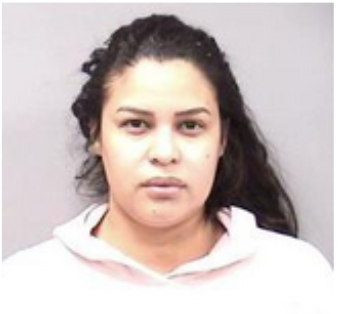
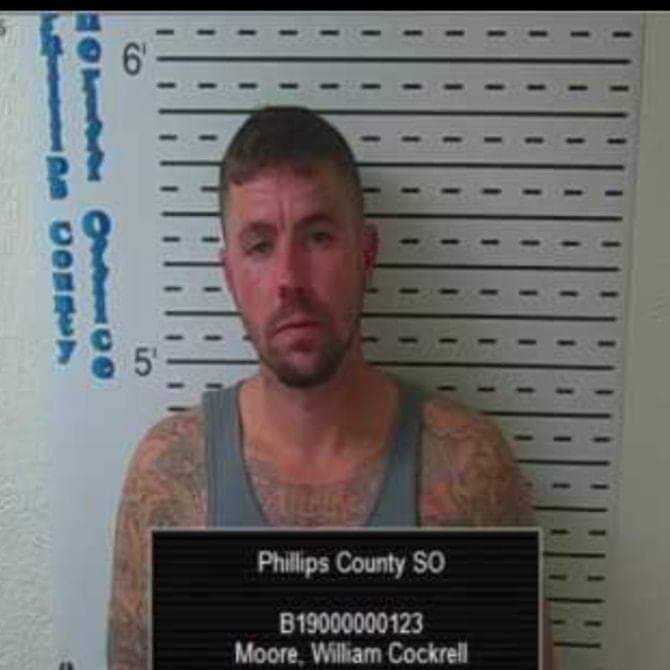
Arrested on suspicion of possession of stolen property were William C. Moore, 34, Texas, and Sarina L. Perez, 42, Georgia. Both remain in custody with bond pending, the Phillips County Sheriff’s Office said in a news release.
The vehicle was allegedly stolen from a car dealership employee by two acquaintances.
Perez / Phillips County photo
“This is another excellent example of something not seeming right and citizens taking the time to report what they’ve observed,” the sheriff’s office said.
The director of the community mental health center for northwest Kansas is concerned the closure of acute care psychiatric beds in Hays will create a barrier to treatment in western Kansas.
Children in western Kansas will have to travel as much as four to five hours one way to receive in-patient acute care.
Walt Hill, High Plains Mental Health director, said the closure of the only beds in western Kansas was breaking a promise made when those services were privatized 10 years ago.
Andy Brown, commissioner for Behavioral Health Services for the Kanas Department for Disability Services, said the closure of the acute care beds in not ideal, but children in Kansas have been traveling long distances for decades to receive treatment.
KVC has cited changes in Centers for Medicaid and Medicare regulations and issues with the space it rents at the Hadley Center for the closure. However, Brown said the decision to close the beds with made by KVC and was based on finances.
The acute care beds at KVC Hospital-Hays were the only acute care beds for youth in western Kansas. These placements were short-term stays for youth who are dangerously suicidal, aggressive or have made threats to hurt others.
Youth from Hays and western Kansas are being placed as far away as Denver, Kansas City or Kearney, Neb. New acute care psychiatric beds just opened in Wichita. However, Hill said it was his understanding that all the beds in Wichita have not opened yet.
Hill said the transportation of the children is complicated, because some of these children are threatening to jump out of vehicles, which makes parents frightened to transport the kids so far.
Hill also expressed concern the barrier of distance from treatment might discourage caregivers from seeking treatment for children or delay them from seeking treatment for kids.
Placing children so far from home might also interfere with their treatment, Hill said.
“It will be harder to do the type of family care that is needed often when children are in a psychiatric hospital,” he said. “How can you work with the family when the child and the treatment team is in Kansas City or Denver or Kearney or Topeka as opposed to here, relatively close by?”
HPMH has a 20-county catchment basin in northwest Kansas and refers 180 youth per year to acute psychiatric treatment. KVC-Hays’ catchment area includes all of western Kansas. Hill said Garden City has already had to send youth to Kansas City.
KVC had operated both a psychiatric residential treatment facility and acute care beds out of the Hadley Center in Hays since 2010. KVC, a nonprofit, was awarded a contract to provide youth acute care when the state closed juvenile acute care beds at Larned State Hospital. Juvenile psychiatric care is now privatized across the state.
In 2017, Brown said KDADS was informed that CMS was no longer going to allow residential treatment and acute care treatment to operate under the same license.
During a Joint Legislative Budget hearing on Oct. 2, Brown said CMS rules had been in place for a number of years, but Brown said KDADS was enforcing the rule now “because I am aware of it now,” and KVC had operated despite these rules by the “Grace of God.”
In that hearing, Brown said one of the concerns about commingling residential and acute care children was acute care children had become aggressive in the past and hurt residential children. However, he said he did not know an exact number.
KVC said none of these incidents had occurred at KVC.
KDADS sent a letter to KVC in February saying it would have to split the residential and acute care programs by April 2019. It did so, but opted to close the acute care beds in October and announced it would convert those beds to residential beds in the near future.
In its announcement of the closing of the acute care beds, KVC said it needed $1 million in renovations to keep the acute care beds open and suggested “legislators could create a line item in the governor’s budget, similar to funding provided for adult state psychiatric hospitals, that would assist with overhead costs and KVC would be open to exploring that as a sustainable operation.”
Hays Post asked KVC what specific renovations were needed and why these infrastructure needs had not been an issue earlier.
KVC responded, “The Class 1 psychiatric residential treatment facility (PRTF) regulations allowed different parameters for a facility than what is required to operate a standalone acute unit. Standalone acute units have higher levels of requirements.Over the past 10 years, we have made continuous enhancements to the space we lease in the Hadley Center to remain within compliance with these regulations and provide a safe and therapeutic environment for the children we serve.”
Hill, in his testimony at the budget hearing, said he was told there was an issue with a ceiling in the area of the acute care facility that did not meet standards and could be a hanging hazard.
However, Brown in the budget hearing said, “It’s not a matter of accommodations. It’s a matter of finances.”
He went on to say later in the hearing, “You could put it in terms of billing, the amount coming into the facility to cover the cost of the care was not sufficient in the eyes of KVC, to continue the facility as a split facility.”
KVC in its response Hays Post said “KVC is not able to financially sustain a standalone acute hospital unit in the western region.”
Hays Post asked what factors made providing care in western Kansas unsustainable. The Post specifically asked about cost of staffing, Medicaid and Medicare reimbursement rates, and the possibility of the center not operating at capacity.
KVC avoided answering this question directly saying, “The dual license was an innovative and necessary way to meet the psychiatric needs of children in the less populated areas of rural and frontier western Kansas where census numbers tend to be lower. It provided flexibility to meet different levels of need in a way that was sustainable for nonprofit providers such as KVC Hospitals.”
KVC also was asked how much money would be required to provide a sustainable acute care facility in western Kansas, but KVC would not assign a number to this question.
Hays Post asked KVC about the issue of distance.
KVC responded “At KVC, we believe it is beneficial for children to receive treatment as close to their families and support systems as possible. This is why it has always been our intent to maintain the license we have held since 2010, allowing us to provide acute services to children from Hays and surrounding areas.
“To further that effort, we opened a new hospital in Wichita to expand access to acute services for families in southwestern Kansas, due to many of these counties being nearly equal distance to Hays and Wichita.”
Hill said if the private sector can’t sustain acute care beds in western Kansas, it is the responsibility and duty under the state constitution to provide them. He suggested reopening juvenile beds at Larned Stated Hospital. He said instead of giving $1 million to remodel the Hadley Center, he said he would rather that go to Larned.
“It has always been the role of the state to provide that safety net for adults and children in the state,” he said. “The community-based services have their role for those people who don’t need to be in a hospital. Some would say the constitution of the state requires the state to take care of the welfare of the folks at that kind of level and the safety of the communities.”
Hill was very involved in the process of privatization.
“When the beds were privatized some 10 years ago, the commitment was made that there would be beds to replace those state hospital beds in western Kansas. We spent a lot of time with policy makers and local legislators, the city, talking about that,” he said. “I was very involved in those discussions. What I understood was that there was a commitment and a promise when the beds at Larned were closed, we would keep beds in western Kansas in some form.”
In his phone interview with Hays Post on Friday, Brown said the state was interested in providing acute psychiatric services in western Kansas, but no plans were in the works to do so. He said the juvenile psychiatric services were privatized nine years ago, because it was not sustainable for the state to offer those services.
The state is working on other treatment options he hoped would help keep children out of acute care. This includes crisis lines, mobile crisis units, peer support networks for parents and families, screeners who could come into people homes and other programs through the Family First Preservation Act.
KVC has announced it intends to convert its acute-care beds to 50 PRTF beds. This type of treatment generally lasts 30 to 90 days and is for youth who have been stabilized.
Hill said he was pleased more PRFT beds will be coming online. Kansas has about 200 children on a waiting list for residential treatment with a wait time of about five months. When all the acute care beds in Wichita and residential beds in Hays become available, Hill said there should be a net increase in psychiatric beds for youth in the state.
However, Hill said residential care “is really not helpful in the kinds of situations we are talking about where a youngster is talking about hurting themselves or somebody else or just out of control.”
Hill said community mental health centers do all they can do to keep children out of acute care. However, he said some kids need to be in the hospital.
TOPEKA — Abortion opponents appear divided on the best strategy to overcome the Kansas Supreme Court’s ruling that the state constitution guarantees a right to the procedure.
Two legislative committees, one most recently on Wednesday, have now recommended lawmakers take up the issue after they return in January. The stakes run high. Anti-abortion forces worry the ruling will knock down dozens of abortion restrictions already in Kansas law.
The divide comes over how far a proposed amendment should go. At a hearing Wednesday, some advocates said the state should approve what’s called a “personhood amendment” aimed at banning all abortions in Kansas.
“What the personhood amendment says is that we recognize the humanity of the unborn child from their earliest biological beginning,” said Bruce Garren, the chairman of Personhood Kansas.
Supporters of that approach contend that other strategies don’t go far enough. Garren said other responses would mire state abortion restrictions in ongoing legal fights.
Pat Goodson, a former lobbyist and founding member of Right to Life of Kansas, said lawmakers shouldn’t pursue any response that would allow some abortions to continue.
“I oppose any measure which would permit the taking of an innocent human life,” she said in testimony delivered to lawmakers. “A personhood amendment is the only way to legally counteract the evil of abortion.”
Some of the state’s largest groups fighting abortion want a simpler path, reversing the Supreme Court’s ruling by changing the Kansas Constitution to clarify it does not include a right to abortion.
Former state lawmaker Chuck Weber is now executive director of the Kansas Catholic Conference. He likes the idea of a personhood amendment, but said it’s not a practical response.
“A personhood amendment just simply has no chance,” Weber said. “We live in a real world, and it’s not going to happen.”
A constitutional amendment is a high bar to overcome. It takes approval from two-thirds of both the Kansas House and Senate. Then the issue would go on a ballot for a statewide vote.
Even if a personhood amendment passed, it likely wouldn’t survive a court challenge, said Jeanne Gawdun, director of government relations with Kansans for Life.
“We’re interested in making a difference, and not just a statement,” Gawdun said.
Gawdun said lawmakers have made a difference by approving restrictions that reduced the number of abortions in Kansas. An amendment clarifying there’s no right to abortion could preserve those laws and the ability for lawmakers to approve more of them in the future.
A committee Wednesday recommended lawmakers take up the issue over the objections of Democrats on the panel.
Democratic Rep. Stephanie Clayton, who supports abortion rights, cast a constitutional amendment as radical. If voters don’t like court rulings, she said, they can ultimately vote judges off the bench during retention elections.
“You can’t always come crying to the Legislature asking them to change the constitution,” she said. “You vote out your justices. Those systems are already in place.”
Planned Parenthood Great Plains, which provides abortion and other health services, also said lawmakers shouldn’t take up the issue. Lobbyist Rachel Sweet said any amendment on abortion would discriminate against women.
“The fundamental right to personal and bodily autonomy is too critical to be stripped from our state constitution,” she said, “or put to a popular vote.”
The divide among anti-abortion forces over how to proceed with a constitutional amendment adds more difficulty to an already complex issue. The split could bog down the discussion or ultimately cause a constitutional amendment to fail.
“One could outweigh the other, or they could just…hurt each other’s causes,” Republican Rep. John Barker said. “But, both sides may agree to a compromise.”
Stephen Koranda is Statehouse reporter for Kansas Public Radio and the Kansas News Service, a collaboration of KCUR, Kansas Public Radio, KMUW and High Plains Public Radio covering health, education and politics. Follow him on Twitter@kprkoranda or email [email protected].
GARDEN CITY — In 2017, an estimated 38,000 kids in Kansas didn’t have health insurance. That’s according to data recently released by the Kansas Health Institute.
The highest rates of uninsured kids live in the western and southwestern quadrants of the state, but large numbers of uninsured children also reside in the state’s more populous counties. The lack of Medicaid expansion could be contributing to the issue, but experts say it’s likely not the only reason.
Hina Shah, a senior analyst at the Kansas Health Institute*, said the nonprofit plans to look at the demographics of the uninsured children.
“Is it a certain race and ethnicity? Is it a certain socioeconomic class? Is it by family income? Is it a certain age group — is it the zero to five group or are (the children) a little older?” Shah said.
For the first time, KHI calculated that approximately 25,000 kids are eligible for the state’s Medicaid program, KanCare, and most of them live in western Kansas. Shah said research shows rural areas can be difficult for insurance navigators and outreach specialists to cover.
Kendal Carswell is a licensed master social worker, a licensed clinical addictions counselor and a professor at the Fort Hays State University. Credit Corinne Boyer / Kansas News Service
Kendal Carswell is a social worker, addiction counselor and professor at Fort Hays State University, and has worked with uninsured people in southwest Kansas. In his experience, kids without insurance may come from families who slip between the cracks; that is, they earn too much to qualify for Medicaid but not enough to purchase health insurance.
“There are a lot of working poor … because the threshold for where you’re considered poor … is so low that you can earn almost nothing and can’t get assistance,” Carswell said.
He added that sometimes undocumented immigrants whose children are eligible for KanCare forgo enrollment out of fear that their personal information could be shared with U.S. Immigration and Customs Enforcement.
Carswell has walked a few refugees through the federal health insurance exchange website, but said facets of health insurance like paying for monthly premiums and deductibles raised even more questions from people who are new to the U.S. health insurance system.
“And to them, it was like, well, a scam,” Carswell said.
In rural Sheridan County, an estimated 17.5% of children are uninsured. Becky Mullins, an insurance biller at Sheridan County Hospital, said she also sees a lot of people who are underinsured.
“We have a lot of people that bought into the ACA (Affordable Care Act) — the high deductible plan. And because of that they’ve got to pay $5,000 out of their pocket before their insurance is going to kick in,” Mullins said.
For families who can’t afford the out-of-pocket cost, Mullins said, the hospital has a financial assistance program that both uninsured and underinsured patients can apply for.
But Mullins said more people may have coverage in 2019 because over time people have learned more about the rules and regulations of the federal health insurance program.
“The process has evolved, (and has) kind of gotten all the bumps worked out,” Mullins said. “I do see uninsured families, and generally, I don’t see them go uninsured for long periods of time.”
“So thinking through partnering with local organizations, local coalitions and maybe thinking through strategies like that to facilitate enrollment may so that’s another area to explore,” Shah said.
*The Kansas Health Institute receives support from the Kansas Health Foundation, a funder of the Kansas News Service.
Corinne Boyer covers western Kansas for High Plains Public Radio and the Kansas News Service. You can follow her on Twitter @corinne_boyer or or email [email protected]. The Kansas News Service is a collaboration of KCUR, Kansas Public Radio, KMUW and High Plains Public Radio focused on the health and well-being of Kansans, their communities and civic life.
 Hays Middle School