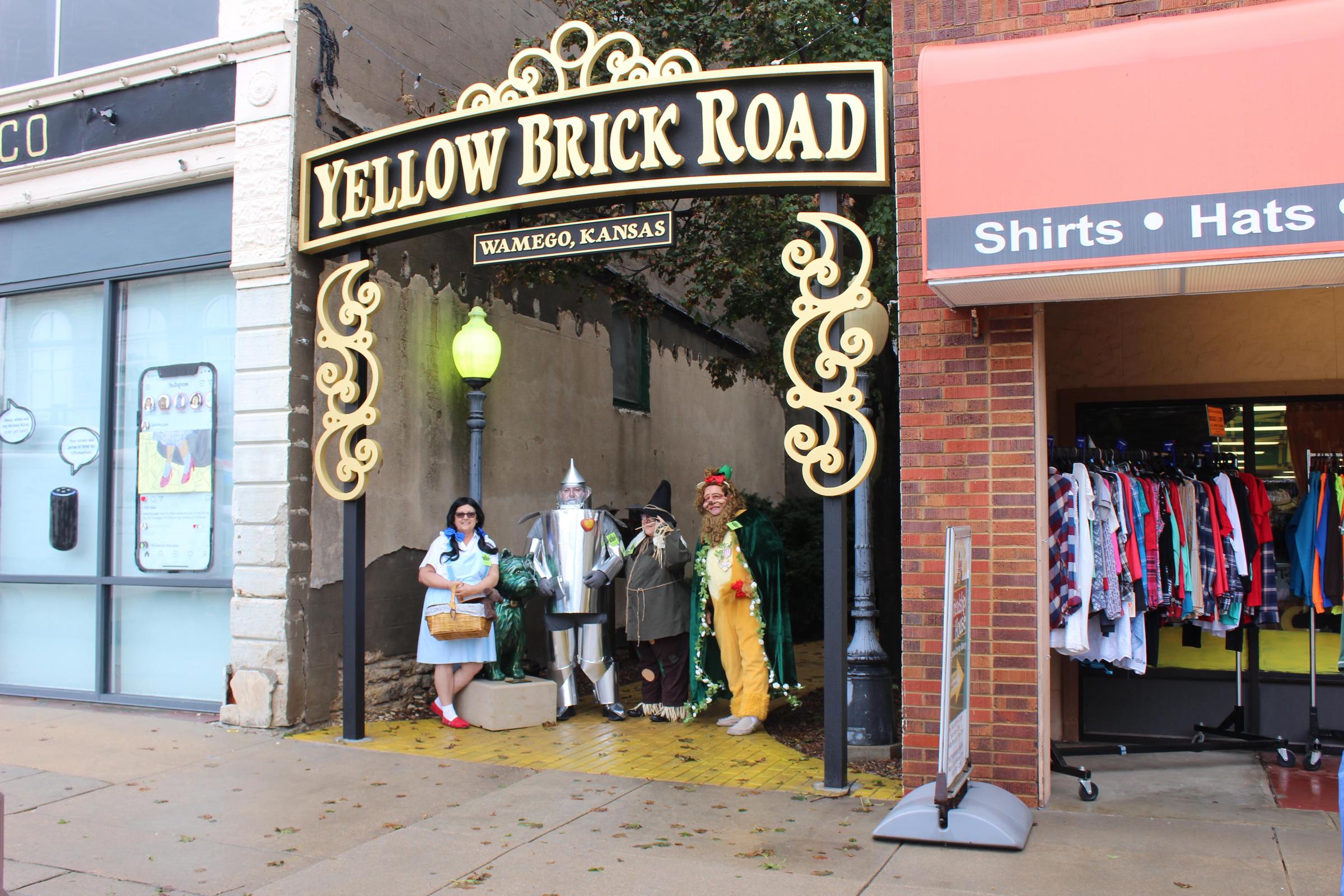
For the last 16 years, a tiny town in northeast Kansas has embraced the appeal of the MGM classic.
The Oz Museum, located downtown Wamego, draws 35,000 fans annually from all 50 states and 45 countries. It’s filled with all things Oz.
Carla Eckels / KMUW
Even a member of the Lollipop Guild was at one point a frequent visitor to the museum. Oz Museum curator Chris Glasgow says munchkin actor Jerry Maren left his mark on the venue.
“We have his handprints, footprints, and his signature in our Walk of Fame in front of the theatre,” Glasgow says. “Unfortunately, he passed away about two years ago, at the age of 98.”
Created in 2003, the museum contains the largest permanent public display of Oz artifacts in the world.
The Oz Museum has close to 18,000 pieces in its archives, which allows the musuem to change things out. Nearly 2,000 items are on display at any given time.
Earlier this year, Oz fans gathered inside the museum for the unveiling of a newly acquired artifact: an original winkie spear from the 1939 movie.
Oz Museum executive director Clint Stueve says the spear has been in circulation for 80 years.
Carla Eckels / KMUW
“It’s found a new home at the Oz Museum and we hope to take very good care of it and it brings joy to Oz fans for many years to come,” he says. “We are just very grateful that we have it here now.”
The winkie spear is among the original artifacts on display. Glasgow says set props weren’t always kept back when the film was made.
“They would use them over and over again until they fell apart,” he says. “Miss Gulch’s bike was used in movies until it was nothing but trash. Glenda the Good Witch’s dress was used in so many other movies which is why it’s hard to come by original artifacts from the film.
“So when we can find them we do everything we can to bring them into the museum permanently.”
The Oz Museum also includes other original artifacts such as eyeglasses worn by Miss Gulch, a one-of-a-kind jeweled brooch worn by Glinda the Good Witch, and two munchkin costumes worn by the Davis brothers in the iconic film.
Carla Eckels / KMUW
Although artifacts from the film are hard to come by, Oz historian John Fricke says the lasting impact of the film itself was felt long before the age of home video and streaming.
“As early as 1970, they were saying The Wizard of Oz had been seen by more people than any other entertainment in history,” Fricke says. “Just last year, it was voted by a panel of experts as the most influential movie of all time, that there are more references to The Wizard of Oz in other films than in any other picture.”
Lynda Yelnick fondly remembers going to see the movie when she was 5 years old, then years later, taking her own 5-year-old son. She said they both buried their faces during what she remembered as the scary witch scenes.
This year, Yelnick and her son finally made it to the Oz Museum. She wanted to be sure to come and celebrate the 80th anniversary of The Wizard of Oz.
Carla Eckels / KMUW
“I waited,” Yelnick says. “I wanted to come for the 80th. I always wanted to come here, and this to me is like, there’s no place like home, there’s no place like Oz, Wamego, and I’m thrilled.
“As old as I am, you never outgrow The Wizard of Oz.”
Carla Eckels is director of cultural diversity and the host of Soulsations. Follow her on Twitter @Eckels.To contact KMUW News or to send in a news tip, reach us at [email protected].
H. Edward Flentje is professor emeritus at Wichita State University.
Two justices of the Kansas Supreme Court recently announced their retirements, and well-established constitutional procedures are now underway to fill those vacancies.
In a desperate, preemptive strike anti-abortion activists interjected themselves into the selection process and declared two candidates under consideration ideologically unfit to fill a position on the Kansas Supreme Court.
Kansans should be assured, however, that this political dustup will not derail the constitutionally mandated process. For now, three candidates, including one of the targeted candidates, Chief Judge Evelyn Wilson of the Shawnee County District Court, have been properly screened, found to be qualified, and forwarded to Gov. Laura Kelly who must select one for final appointment to the Court.
The unusual, last-minute gambit comes as little surprise as abortion opponents have in recent years had their way with state lawmakers, specifically former Gov. Sam Brownback and Republican legislative majorities, in enacting numerous measures that restrict access to abortion.
However, these activists have tried but failed to bend the Kansas Supreme Court to their will. They have been blocked by the Kansas Constitution, which establishes an independent judiciary and prescribes that “qualifications” not politics should determine who sits on the state’s highest court.
Over 60 years ago Kansas voters overwhelmingly adopted a constitutional amendment designed to reinforce judicial independence and remove partisan political considerations from the selection of justices to the Kansas Supreme Court. That constitutional language provides for a “non-partisan” Supreme Court Nominating Commission to screen candidates and nominate “three persons possessing the qualifications of office” to the governor for consideration and appointment of one of those to the Court. Once appointed, each Supreme Court justice periodically stands before voters in a statewide retention election to determine whether the justice should be retained on the Court.
This constitutional procedure, often termed “merit selection,” has repeatedly been embraced by Kansas voters. Each of the 25 justices appointed based on qualifications has stood for retention on one or more occasions and been retained by voters. Each of the nine Kansas governors elected in this period—five Republicans and four Democrats—has appointed at least one justice to the Court.
These constitutional safeguards stand in the way of anti-abortion activists and their desire to realign the Kansas judiciary more to their political liking. Kansans for Life and its allies have sought to undo these provisions and have mounted repeated attacks on the Court. They have advocated abandoning merit selection of justices, conducted postcard campaigns to oust justices in retention elections, cheered lawmakers threatening the Court with budget cuts and impeachment, and now have tried to blackball prospective Court candidates. These actions have garnered headlines but to date have not altered the Court’s independence.
Earlier this year the Kansas Supreme Court ruled that the Bill of Rights in the state constitution guarantees each Kansan “personal autonomy” which includes “the ability to control one’s own body” and allows a woman to determine “whether to continue a pregnancy.” The Court’s decision potentially jeopardizes recently enacted abortion restrictions and gives new urgency to anti-abortion interests that seek to control the Court.
Kansans should rest assured that for now the selection of new justices for the Supreme Court will proceed steadily on the basis of merit. They should remain vigilant, however, as special interests such as abortion opponents make another push to politicize the Court and threaten the independence of the state’s judicial branch.
H. Edward Flentje is emeritus professor at Wichita State University and served with former Kansas Governors Bennett and Hayden.
Edward Cross is president of the Kansas Independent Oil & Gas Association
By EDWARD CROSS Kansas Independent Oil & Gas Association
Energy is so thoroughly woven into our daily lives that few ever question whether it will be there, or where it comes from. Oil-based products are likely the first thing you touch at the beginning and end of each day, whether it is your alarm clock, cellphone, or even the toothpaste and toothbrush you use to brush your teeth. As a key component in heart valves, seat belts, helmets, life vests, and even Kevlar, petroleum is saving tens of thousands of lives daily. Furthermore, oil and gas are key components in many medicines and antibiotics such as antiseptics, antihistamines, aspirin, and sulfa drugs.
The oil and gas industry has done such a good job of creating abundant, affordable, always-available energy that the world takes it for granted. Because energy is so reliable and available, some think we no longer require it. We encounter this paradox anytime we hear from those who want to end oil and gas production but still want to benefit from oil and gas based materials and fuels.
What Americans expect and deserve are the facts. And the fact is, recent history has disproved the false premise that economic growth and significant increases in energy production must, necessarily, come at the expense of environmental improvement.
Today, the U.S. is not only the world leader in energy production, but we have some of the cleanest air in the world. From 1970-2017, the six major pollutants monitored by the Environmental Protection Agency (EPA) have plunged 73%, while the U.S. economy grew by 60%. EPA Data also shows that from 2011 to 2017, methane emissions from oil and natural gas production in the U.S. decreased by 24%. The oil and natural gas industry has proven that over the long-term, we can lead the world in energy production and environmental stewardship.
What would it mean for consumers, the economy, and future job creation if we substantially limited exploration, development, and use of fossil fuels in America’s energy supply mix? A recent study by the Energy Information Administration indicates the average American family would see their energy costs increase by $4,550 per year. It could mean a cumulative loss of $11.8 trillion in the nation’s GDP and the loss of 6 million jobs. Recent studies indicate that if the U.S. eliminated all CO2 emissions immediately, it would avert 0.07 degrees of warming by 2050. If Kansas alone eliminated all CO2 emissions, it would avert 0.001 degrees of warming by 2050. How many lost jobs is that worth?
The U.S. has a unique opportunity to show the world how energy abundance can be used as a positive force to lift people up, which is different than a zero-emissions world. We should work to ensure more people have access to safe, affordable, and reliable energy. Because to rise out of poverty and enjoy health and safety, people need more energy, not less.
We should set aside the acrimony and division that has marked too much of past energy policy discussions and work together as one nation on a positive forward-looking energy future based on the understanding that our nation’s best energy future can only be achieved through a true all-of-the-above energy strategy.
Edward Cross is president of the Kansas Independent Oil & Gas Association.
A proposed rule issued by the Office of Federal Contractor Compliance Programs (OFCCP) of the U.S. Department of Labor, slated soon to be issued in its final form, has been billed by the administration as an enhancement of religious freedom. But, in fact, the rule would diminish protections of employees’ religious freedom and civil rights.
On Sept. 24, 1965, building on actions taken by previous chief executives, President Lyndon B. Johnson signed Executive Order (EO) 11246, which established requirements for non-discriminatory practices in hiring and employment on the part of U.S. government contractors. As subsequently amended, the order prohibits discrimination by federal contractors based on race, color, religion, sex, sexual orientation, gender identity or national origin. OFCCP is the agency responsible for assuring that federal contractors comply with these non-discrimination obligations.
In December 2002, President George W. Bush amended EO 11246 to allow an exemption for contracting religious organizations that permits them to discriminate “with respect to the employment of individuals of a particular religion to perform work connected with the carrying on by such corporation, association, educational institution or society of its activities.” This latter language closely tracks the religious exemption provision of Title VII of the Civil Rights Act of 1964 (the section of the Civil Rights Act dealing with employment discrimination). And, following the fashion in which Title VII has been applied, the exemption does not excuse contractors from complying with the other requirements of EO 11246, even on the basis of religious belief.
Adoption of the Bush amendment was not without controversy. Rather, it raised concerns over whether or not faith-based organizations that are awarded government contracts should be allowed to engage in religious discrimination, notwithstanding that these organizations would otherwise have the benefit of Title VII’s religious exemption. In contrast, proponents of the amendment maintained that the need to protect the autonomy of religious organizations with Title VII religious exemptions isn’t diminished simply because those organizations are government contractors.
At first glance, debate over the Bush amendment parallels debate over whether or not faith-based organizations that receive government grants to provide social services should have the benefit of religious exemptions from anti-employment discrimination provisions covering those grants. That parallel between federal contractors and grantees is complicated, however, by two key differences between government contracts and government grants, each of which alters the calculation in a different direction. On the one hand, the contractual relationship is more likely to be ongoing and intertwined with government in contrast to what may be a one-off grant, leading to the conclusion that it is more problematic to provide religious contractors with religious exemptions. On the other hand, the provisions of EO 11246 have more sweeping implications for religious contractors in that the executive order’s antidiscrimination provisions apply to the entire organization, not just, as is the case with many grants, the project for which funding is provided.
Whatever the merits of the underlying Bush amendment, the proposed rule constitutes a broad and ill-advised expansion — in the name of protecting religious freedom “to the maximum extent permitted” — of the fashion in which the Bush amendment has been applied[1]:
The proposed rule cannot actually change EO 11246; that would require another executive order. So in theory, workers remain entitled to the full protections EO 11246 provides (i.e., even an employer entitled to invoke the religious exemption cannot, by claiming a religious basis for doing so, engage in discrimination directed at members of another protected category). Nevertheless, through the manner in which it expands the scope and availability of the religious exemption, the proposed rule raises real questions regarding the extent to which employees of federal contractors will be adequately protected from religious discrimination, as well as from other forms of discrimination, most notably when discrimination is directed at LGBTQ people. The proposed rule is, in essence, an initiative about protecting the prerogatives of employers at the expense of employees;
The term “religious corporation, association, educational institution or society” is newly defined to encompass significantly more employers than under Title VII case law or the current EO 11246 — notwithstanding that OFCCP acknowledges that the religious exemption in EO 11246 should be understood to have the same meaning as in Title VII. Under the proposed rule, federal contractors would be able to invoke the exemption so long as they can pinpoint a religious purpose that is a public part of their mission and demonstrate that they engage in religious exercise to further that purpose. This interpretation, which allows for-profit corporations and nominally religious entities to claim the religious exemption, is without basis in Title VII case law, sends the wrong message to employers and may put employers at risk of civil rights lawsuits under federal and state law, even as they retain their status as federal contractors;
Even as the proposed rule purports to interpret EO 11246’s limitation of the religious exemption to allow a newly broadened category of organizations to prefer members of a particular faith, it adopts a more lenient standard for evaluating whether or not a claim of employment discrimination is based on religion or on another protected category. This makes it more difficult for employees to challenge discrimination on the grounds that religion has been used as a pretext for discrimination on other bases. Further, by incorporating a test that is more lenient for employers, the proposed rule signals to employers that so long as they can articulate what looks like a legitimate non-discriminatory basis for an otherwise discriminatory decision, they will be able to retain their federal contracts — a situation with particularly dire implications for LGBTQ people;
The proposed rule misappropriates the Title VII definition of “religion,” intended to protect workers against religious discrimination, enabling companies to discriminate against employees. Title VII defines religion broadly to protect both the beliefs and practices of employees and to require employers to provide religious accommodations. Unfortunately, and perversely, the proposed rule would use this definition of religion to protect employers, not their workers, by granting a wide range of employers who contract with the federal government broad authority to engage in discriminatory practices on the basis of religion against their employees. In one notable case, an employer was found to have violated Title VII when it required its employees to attend prayer services over their objections. Because it would allow for-profit or nominally religious employers to make employment decisions on the basis of religion, the proposed rule could open the door for employers to require employees to participate in such prayer services or Bible studies, i.e., the religious practice of the employer. At the least, the proposed rule would set up a conflict as to the applicable law on this issue;
The proposed rule relies on an exaggerated claim that OFCCP cannot even inquire about whether or not an employer’s assertion that it has made an employment decision on the basis of religion was instead an act of discrimination on the basis of race, color, national origin or sex, including sexual orientation or gender identity. While the government must avoid taking sides on questions of religious doctrine, it is not prohibited from deciding what is and is not “religion” for purposes of deciding when religious freedom protections come into play. The proposed rule’s approach undermines the very structure of the protections of religious freedom that are part of the Constitution and federal and state statutes.
In sum, OFCCP’s proposed rule’s harmful and unnecessary expansion of the existing religious exemption for employers endangers the religious freedom and civil rights of employees across the nation. Hopefully, OFCCP will take heed of the many comments urging that it reject the proposal.
[1] The following points draw on comments filed by the American Bar Association (ABA), opposing adoption of the proposed rule. The ABA was one of thousands of organizations and individuals to weigh in, pro and con. The author played a role in drafting the ABA’s comments.
Richard T. Foltin is a senior scholar of the Religious Freedom Center of the Freedom Forum Institute.Contact him via email at [email protected], or follow him on Twitter at @rfoltin.
How much did the spring and summer’s weather affect the feed value of your hay? You don’t know? Then forage test.
Nearly every bushel of corn has similar nutrient concentration, but with hay it varies considerably. Why does this happen? Well, there are many causes. For example, leafiness of the hay, or maturity of the plant when your hay was cut, or even how you handled the hay during raking and baling all can affect its feed value.
This year, weather conditions have made things more complicated. This spring’s floods and cool, wet weather caused many folks to delay first cutting or got rain-damaged hay. Leaf diseases, mature plants, and other factors made much alfalfa lower in quality. During summer, we had periods of hot and very humid weather that often caused plants to burn off their easily digested nutrients at night, leaving us with hay that looks really good but is high in fiber and low in energy.
Grass hay might be even more difficult to predict. Some fields had fewer seedheads than normal. This might give higher quality hay, but if harvest was delayed in hopes of increasing yield or if the heat affected grass quality like it affects alfalfa, grass hay quality might actually be lower. And when growth is stimulated by extra rain, plants use many nutrients for increased tonnage instead of quality.
And I haven’t even mentioned all the different forages used on prevented planting acres. Different species harvested late in the year; who knows what the protein and TDN levels are like.
So you see, this year, just like always, forage testing is important. It is the only way that you can find out for sure ahead of time what the feed value is of your hay.
So gather samples now for testing, before feeding your animals and before it’s too late.
If you have any questions, or would like more information, you can contact me by calling 620-793-1910, by email at [email protected] or just drop by the office located at 1800 12th street in Great Bend.
Alicia Boor is one of the Agriculture and Natural Resources agents for the Cottonwood District, which includes Barton and Ellis counties.
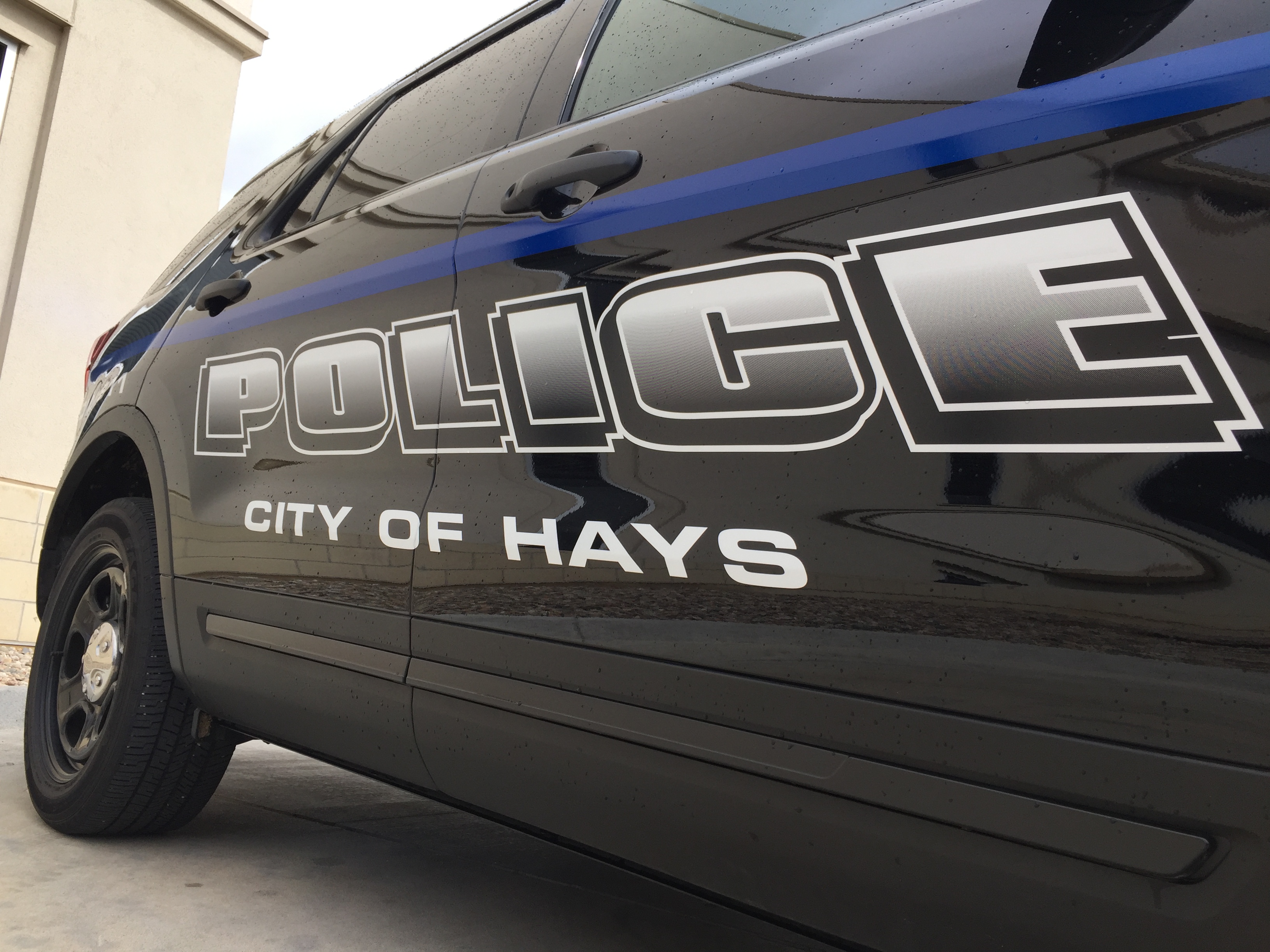
On Thursday, the Hays Police Department found an unconscious male in the middle of the street.
Witnesses reported that the male had been body slammed to the ground. The male suffered a severe head injury and was life-watched to Wichita.
Tyson Martinez was identified as the suspect and was located near the scene. Martinez was arrested for aggravated battery and was placed in the Ellis County Jail.
“The Hays Police Department would like to remind everyone that Martinez is presumed innocent until proven guilty in the court of law,” the HPD said in a news release Friday evening. “The Hays Police Department would like to thank the Ellis County Sheriff’s Office, Fort Hays State Police Department, and the Wichita Police Department for their assistance with this investigation. The Hays Police Department is requesting that anyone with any information or video of the incident contact the Hays Police Department at (785) 625-1011.”
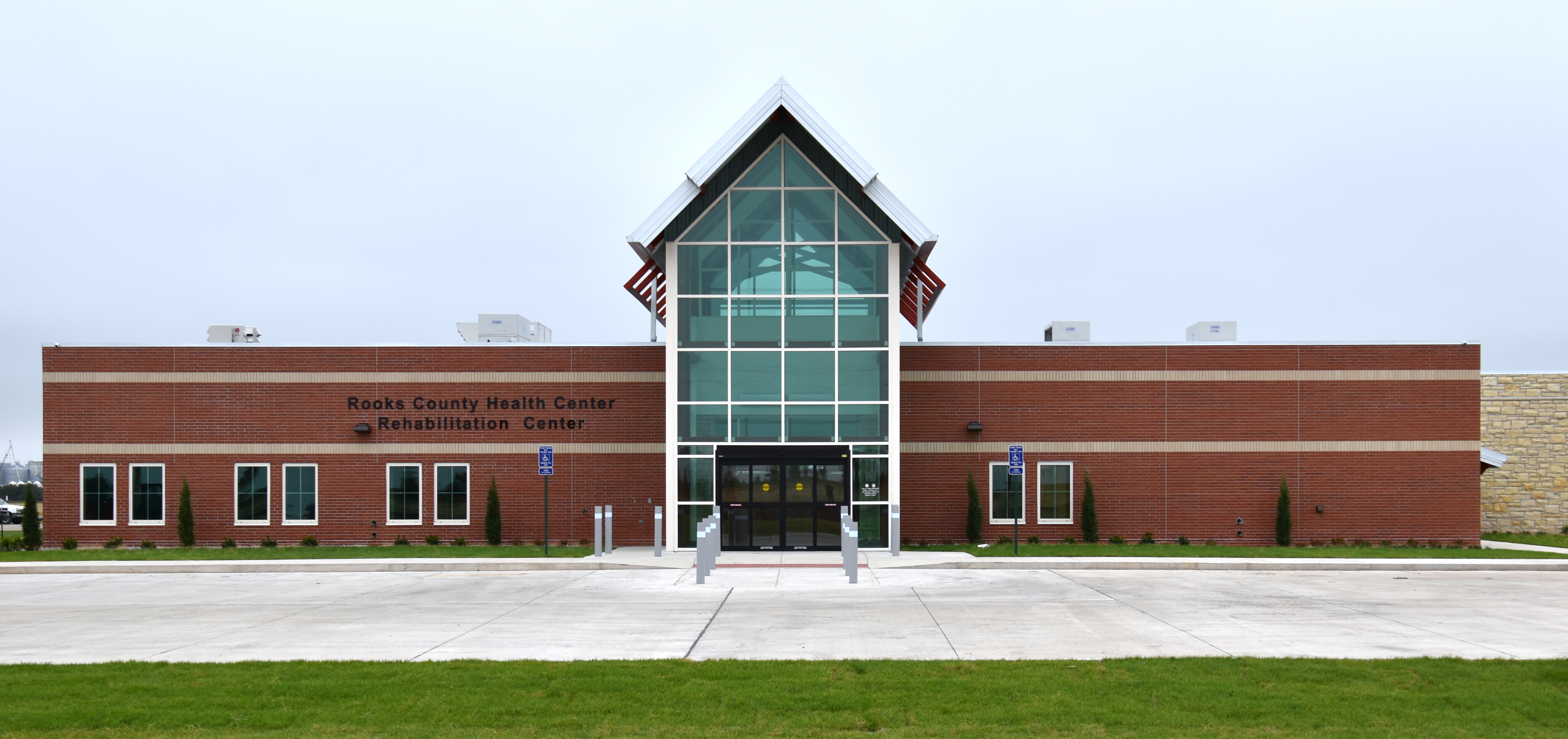
PLAINVILLE — Sunday marks the official opening of Rooks County Health Center’s new dedicated Rehabilitation Center and a key piece of the hospital’s two-phase expansion. RCH invites the public to attend an open house from 3 to 5 p.m. Sunday offering tours of the new facility, demonstrations and light refreshments. Visitors to the open house, as well as all patients attending rehabilitation appointments, are encouraged to use the new north-side parking lot and entrance for direct access to the new hospital wing at 1210 N. Washington.
After an 18 month construction process, RCH received its certificate of occupancy from the fire marshal’s office which enabled the Rehab department to start seeing patients in the new building on October 21.
“We moved all the Rehab equipment in as soon as we could after getting the OK from the fire marshal so that those attending appointments for Cardiac Rehab, Physical Therapy, Occupational Therapy and Speech Therapy were able to start using the space last week,” commented AJ Thomas, the CEO of RCH. “We still have some final touches before interior construction is completed but we can work around those areas for now.”
Visitors to the open house will see live demonstrations of the new zero-entry aquatic therapy pool with treadmill floor. The pool is the only one in western Kansas. Unlike most therapy pools which requires stairs or a hoist, RCH patients can walk or be wheeled onto the flat surface of the pool floor that then submerges to the desired depth for therapy work. According to Sumearll, aquatic therapy is desirable because it gets patients moving sooner and faster with less pain.
“Water supports the weight of the patient, lessening the force of gravity on the body, so that the prescribed therapy can work more efficiently on improving your strength and balance,” stated Scott Carpenter, RCH Rehabilitation Department director. The pool utilizes underwater cameras so that therapists can monitor a patient’s progress, while patients can observe how well they are responding to the therapist’s direction.
The spaces being vacated by the expansion will be renovated to provide expanded outpatient services, a larger cafeteria and two new conference rooms. This final phase of construction, scheduled for completion in April of 2020, will take the spaces formerly housing Cardiac Rehab, Physical Therapy, Occupational Therapy and Speech Therapy and transform them into their new roles.
The capital campaign being conducted by the Rooks County Healthcare Foundation to help fund the cost of this expansion will continue until the final $250,000 is raised to meet the original $2,000,000 goal.
More than 300 graduates will cross the stage at Fort Hays State University’s first-ever fall commencement ceremony. The event begins at 1 p.m. Friday, Dec. 13, in Gross Memorial Coliseum on the FHSU campus.
The ceremony is free and open to families of graduates and to all friends of the university. No tickets are required. All seats in Gross Memorial Coliseum are first-come, first-served and are normally filled one hour before the start of the ceremony. Graduates and faculty will be seated on the main floor of Gross Coliseum.
The doors to the coliseum will open to the public at 11 a.m. Persons other than degree candidates attending Commencement are asked to enter through the four coliseum gates and not through Cunningham Hall.
Graduates can pick up name cards, caps, gowns and tassels in Gross Memorial Coliseum from 11 a.m. until 12:15 p.m. Students will begin lining up in Cunningham Hall at 12:15 p.m. The procession will begin promptly at 1 p.m.
Individuals with disabilities should enter through Gates 2 and 3, on the northwest and southwest corners. Seating arrangements for the disabled are available on the main floor on either side in front of the stage. If necessary, one person will be allowed to accompany an individual in this seating area. A sign language interpreter will be available in Section C of the main floor.
Traffic in the Gross Coliseum area is generally extremely heavy for Commencement. Parking lots adjacent to Gross Coliseum typically fill up quickly, but ample parking is available on the main campus. In the event of rain or snow, unpaved lots near Gross Coliseum will be closed, making it necessary to park on the main campus.
Shuttle bus service will be provided between the campus and Gross Coliseum. The shuttle buses will stop in parking lots and wherever drivers see people walking to or from Gross Coliseum.
For more information about Commencement, visit: https://www.fhsu.edu/commencement/index
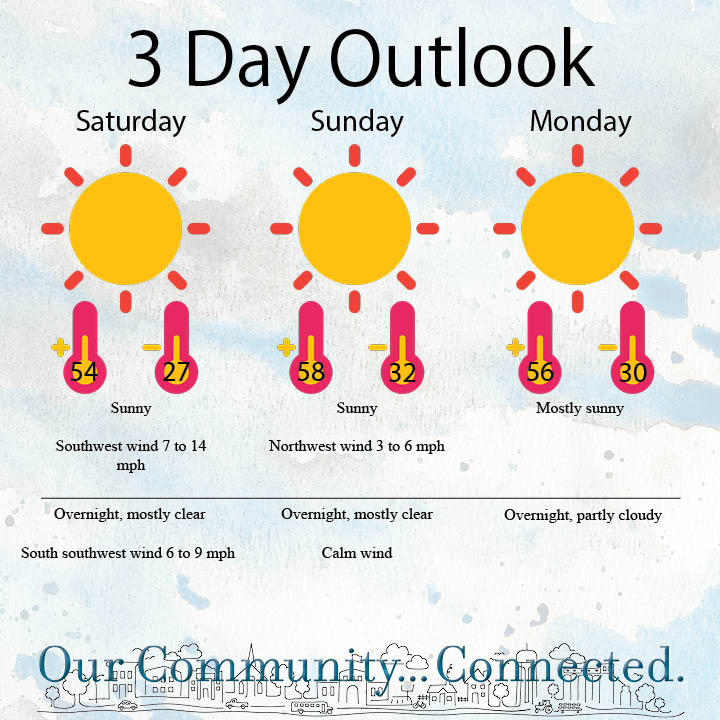
Hays set another record low Thursday of 15 degrees.
The previous record for Halloween of 18 degrees was set in 1991 and again in 1993. The high Thursday for Thursday was 50 degrees.
Hays also set a record low on Wednesday of 12 degrees.
The forecast for this afternoon is mostly sunny, with a high near 51. Breezy, with a north wind 16 to 23 mph, with gusts as high as 34 mph. The forecast for the weekend is for skies to remain clear with highs in the 50s.
Daylight savings time ends on Sunday. Don’t forget to turn your clocks back one hour. Sunrise on Sunday will be at 7:06 a.m. and sunset will be at 5:34.
We need new ideas in government. But we also need people that have been there and done it. New ideas combined with institutional knowledge is the best combination to help make local government successful.
Some of the candidates think there should be more new faces. And if the voters want, that could certainly happen. Hays is unique because voters can throw a majority of the Commission out every two years if wanted.
Why should we throw them out? From what I’ve seen, it’s because a small group of people are unhappy with a road project.
The Vine Street corridor project was first discussed with me when the city received word the Ambassador hotel may be closing. At that time, we started having discussions about what the city could do to ensure that the lot could be redeveloped. Even though it is in a desirable location, the access is very poor. Developers would need a protected left turn on to Vine.
A solution for North Vine traffic has been studied for decades but nothing has ever moved forward. Several ideas were pursued before getting where we are today, include a light at 37th/Vine (KDOT required a light removal at the interstate) reverse access roads (expensive, lots of property taken) among others.
Initially, I was not in favor of a roundabout solution. Not because I have a distaste of roundabouts, but because it was a lot of money and I didn’t believe that the problem was big enough to warrant a large expenditure.
As I thought about it more, I began to wonder if Vine has become the place you don’t want to stop because you can’t get back on I-70. I’ve worked in a lot of places in western Kansas, and I tried to think of some place where I don’t stop because of the access. The only place I could think of was the Kwik Shop in Salina on Schilling across from Walmart. Once you get in, you can’t get back out because you can’t make a left turn.
Has Vine become the Schilling Exit of western Kansas? I think it has.
And now we arrive at the upset 37th St. neighborhood. I am sympathetic to them. Change is hard and there’s no way around it, this is going to be a big change. But my sympathy doesn’t mean I agree.
A lot of candidates think we just need to “find a better solution.” I’m all for that. Please, find a better solution. If there is a better solution out there that will impact citizens and businesses less, I’m all for it. (I do enjoy politicians who say we need a better solution and yet never seem to provide a better idea…)
Here are some of the “solutions” that the 37th St. neighborhood initially wanted.
Just close 41st after the antique mall
Close 41st at Country Lane
Make 41st one way to the west only
There were more, but all of the ideas had a common thread of doing what was advantageous for their area while hurting people living on Country Lane or 33rd, not to mention the antique mall on 41st and traffic on 33rd or 41st.
Is traffic going to increase on 37th St? Absolutely. But how much? Looking at the facts, it’s clear to me it’ll be whatever combination of traffic from 33rd and 41st that now decides to use 37th. With multiple stop signs on 37th between Hall and Vine, it’s only going to be local traffic. Why would I use 37th and stop multiple times when I can use 33rd or 41st and not stop at all?
That’s the logical conclusion based on facts and evidence.
One candidate is upset because they, “weren’t listened to.” Well, the Commission did listen. You may have not agreed with their view or what they said, but they did listen.
I listened to a lot of people when I was on the Commission. I spent 3 hours with a room full of upset Realtors when we bought an option on land at Commerce Parkway. I listened to over 20 upset homeowners from around the Blue Sky addition. I listened to a group of upset homeowners on Thunderbird when two of their homes flooded and they believed it was the city’s fault. I listened to multiple people over the lane reductions on Canterbury.
But if a certain candidate is to be believed, I didn’t listen in any of these circumstances except the last, because that’s the only one where I did what the “majority” wanted.
I have no idea what has happened in our culture, but listening doesn’t mean agreeing or bowing down to the loudest. Listening means really reflecting what the other side is saying and then having a conversation. It means looking at the evidence and then coming to a logical conclusion based on that evidence.
Doing what the loudest group wants at the expense of everyone else around them is not leadership.
A Commissioner never acts alone. Elections in Hays are special because when you’re trying to get in the top three, it becomes a campaign about the candidate and what they can do for the whole community. It’s not a campaign against the other guy. Anyone who thinks they will get elected by trashing the other guy may not like it so much when they both get elected and he finds himself in a minority.
Any candidate who is telling you they can single handedly solve your problems while providing no solutions and trashing the other guy has a fundamental misunderstanding of how to get something done. If you just want a loud voice who causes a stir but accomplishes nothing, then that’s your candidate. But if you want real progress, find one who can work with others. When elected, you’re a Commissioner of everyone, not just one neighborhood.
It’s easy to forget how good people have it in Hays. Our sales tax is 8.25%. That compares to 9% in Colby, 8.95% in Garden City, 8.65% in Dodge City, 8.75% in Salina, 9.15% in Topeka, etc… We have the lowest mill levy of anywhere outside Johnson County.
The city has had the same number of employees for years without diminishing services. Hays is spending more than ever on general street maintenance and paying cash to do it. We’ve paid down debt and refinanced what little debt is left to lower interest costs. We have a credit rating in the top 2% of all municipalities in the nation.
The city is so well managed, candidates can now literally campaign on spending city tax dollars on county road projects. Seriously, stop and think about that.
Most importantly, we have city employees who truly care about the city and want to see it succeed. I would put them up against any of their peers in any other city. Hays is very blessed.
The Commissioners are not perfect. I can attest to that. I made a lot of mistakes. But until Jesus is on the ballot, at least consider voting for a candidate who looks at evidence and can work with a others to make a positive change. I know for sure two of those candidates are Henry Schwaller and Ron Mellick. Mason Ruder and Michael Berges appear to have that capacity.
May God Bless the City of Hays.
James Meier, Whitewater Former Hays City commissioner, mayor
Editor’s Note: The deadline for submitting letters to the Post regarding the 2019 election is noon Saturday.