We have a brand new updated website! Click here to check it out!

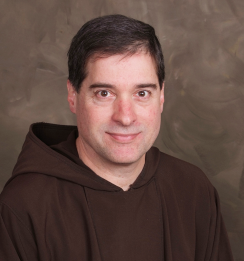
Olmitz native with TMP-M ties named Capuchin Provincial Minister

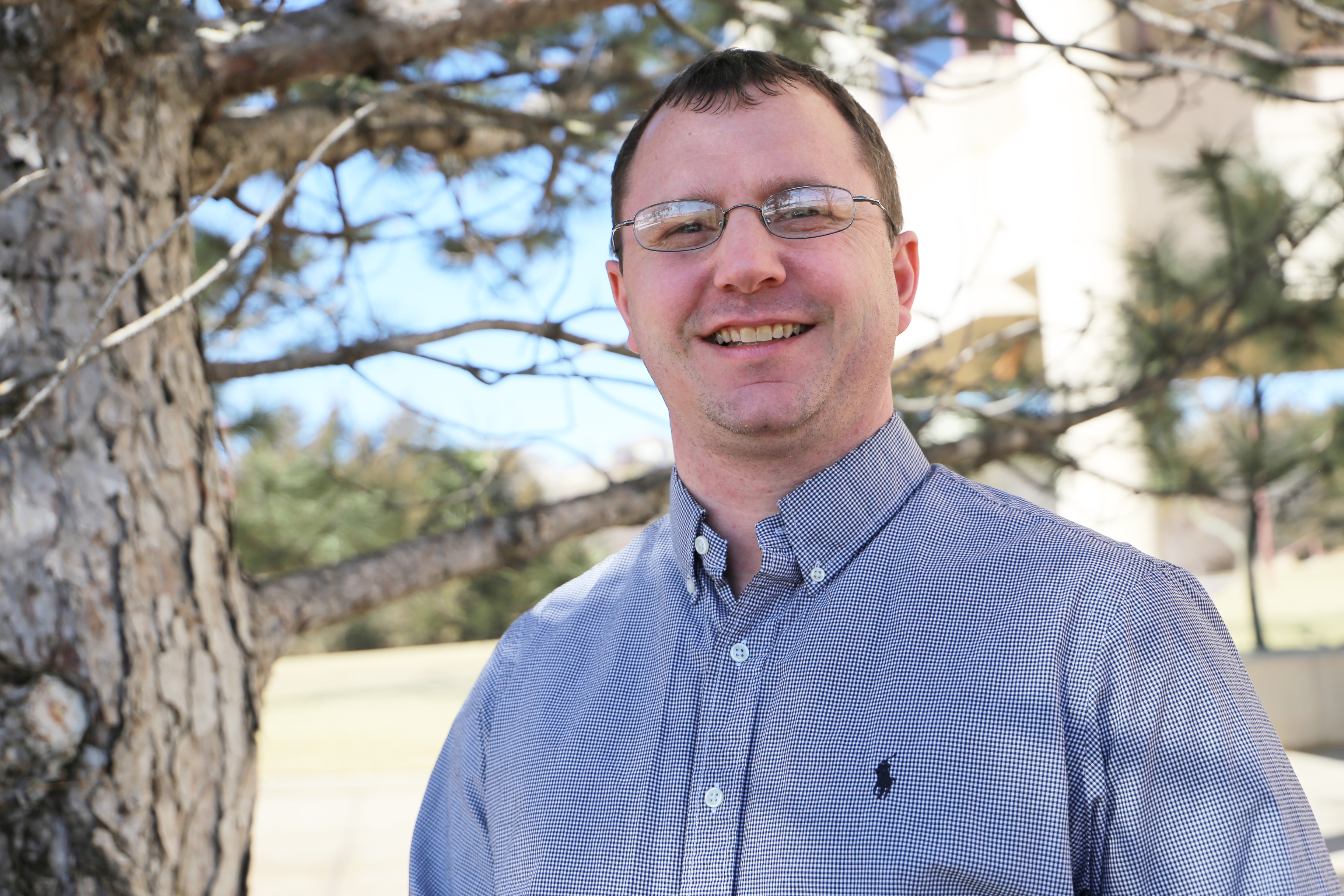
Brother Mark Schenk

Capuchins.org

VICTORIA — Over 70 Capuchin Franciscan friars gathered for the Province Chapter at St. Fidelis Friary in Victoria, KS from April 22-26, including representatives from Rome, India and Eritrea. The purpose of a chapter is for the friars to elect new leadership, and to reflect on the integrity of their vowed life of prayer, brotherhood, poverty and service to the poor.

In a historic election, the St. Conrad Province elected Br. Mark Schenk as Provincial Minister. Schenk is a native of Olmitz. This is the first time in the history of the Province that a lay brother has been elected to this position. In addition to the role of Provincial Minister, the friars also elected four friars to serve as his counselors.

Schenk attended Thomas More Prep-Marian in Hays from 1971 to 1975, returning in 1984 to teach religion, computer science and space science. He also served as campus minister, director of the religious vocations program, registrar and residency advisor, and area vocation director.

The Provincial Council sets the direction and focus of the province for the next three years.

Br. Mark previously served the Capuchins in an international capacity as General Definitor in Rome. As a General Definitor, Br. Mark traveled to English-speaking Capuchin territories throughout the world to ensure their commitment to the Capuchin charism and to serve as an ambassador on behalf of the General Minister. At the time of his election as a General Definitor, Br. Mark was also the first lay brother to hold that position.

The chapter provided an opportunity for the friars to spend time together in prayer, fraternal recreation and, most importantly, in looking at important questions and challenges they face. For the first time in over 20 years, so many friars were present at the chapter that some members had to find lodgings at the homes of local residents. This is due in large part to the increase in vocations in recent years as well as the presence of numerous brothers from other jurisdictions who are serving and studying in the province.

Bishop Vincke celebrated Mass with the friars

Bishop Gerald Vincke of the diocese of Salina joined the Capuchins on Wednesday afternoon to answer questions and to celebrate Mass. He expressed his gratitude and enthusiasm at the presence of the Capuchins serving in his diocese and hoped that additional friars might be sent to serve in future ministries there.

The chapter also provided an opportunity to celebrate the jubilees of several friars. Br. Earl Befort and Archbishop Stephen Reichert celebrated 50 years of priestly ministry, while Br. Cyrus Gallagher celebrated 60 years of religious profession.
Ellis County Commission tours roads

By JONATHAN ZWEYGARDT
Hays Post

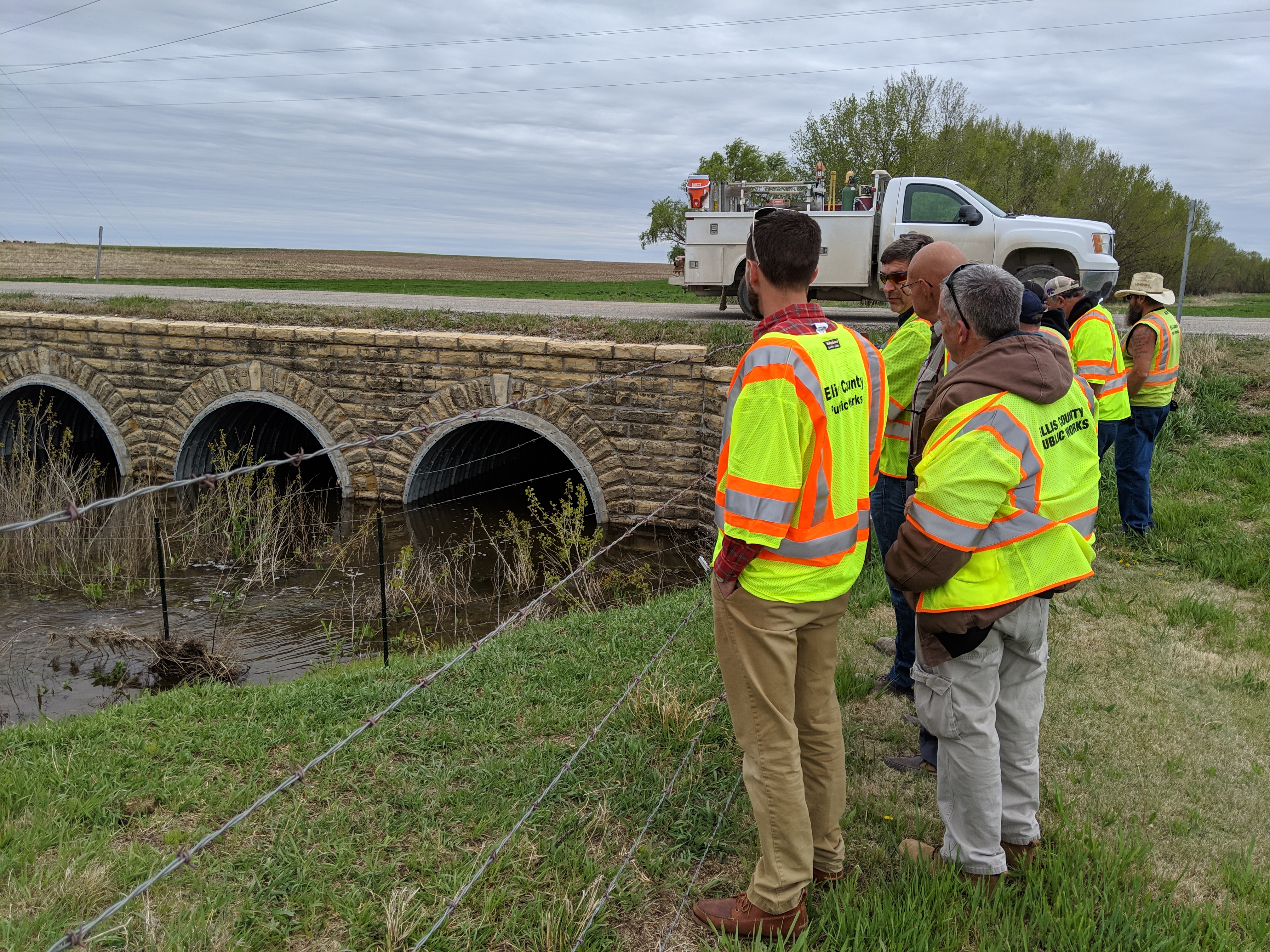
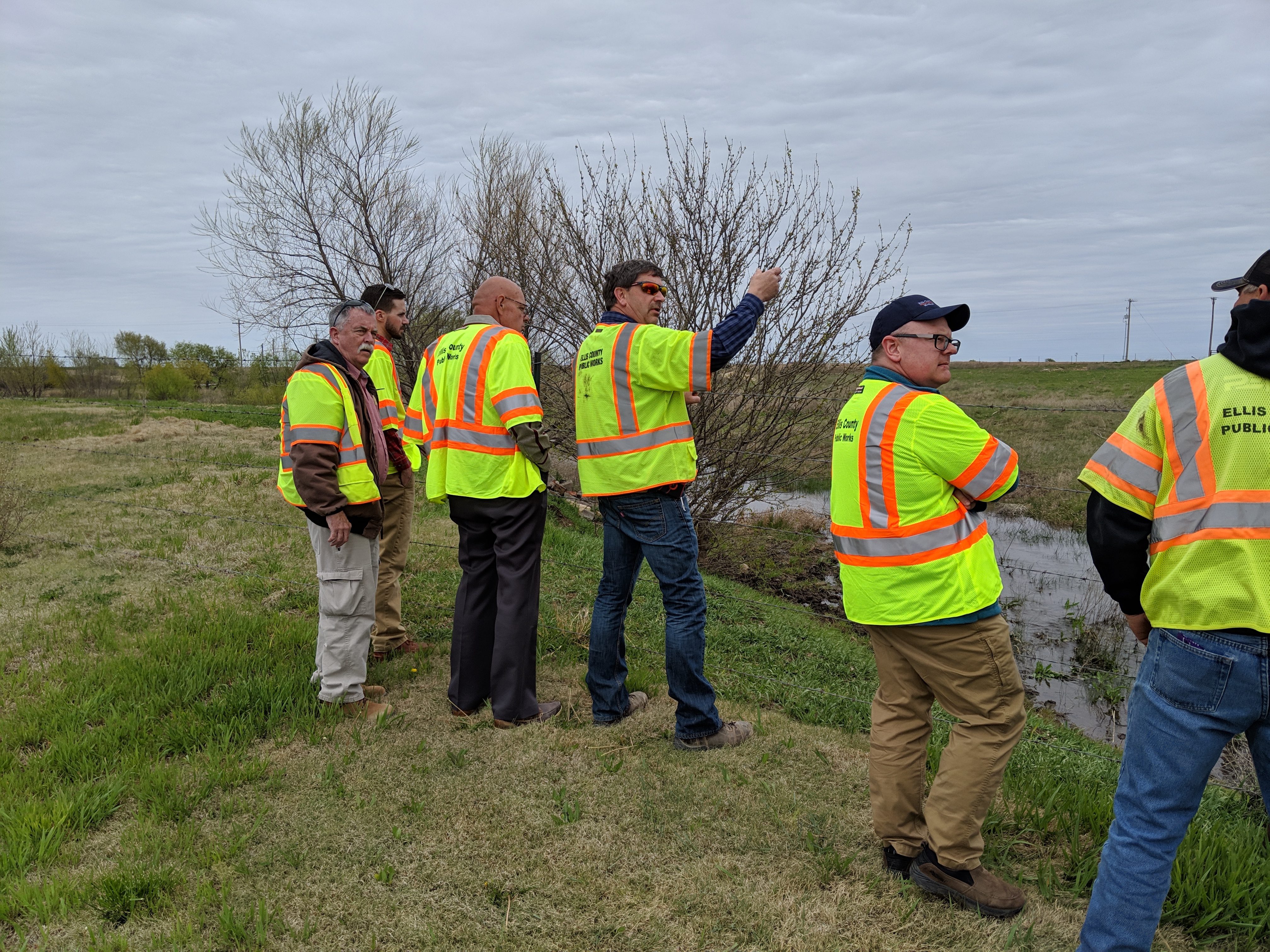
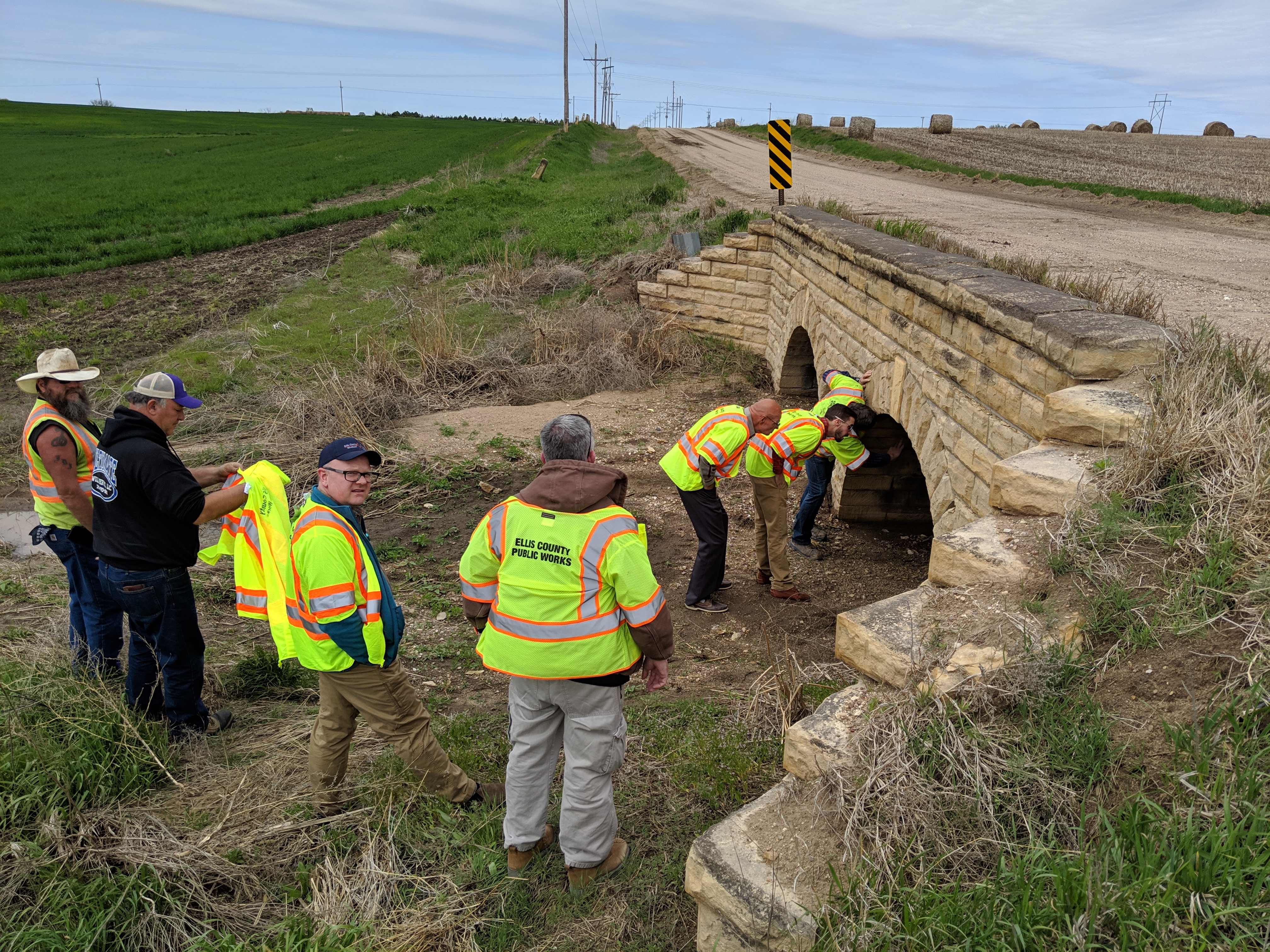
Members of the Ellis County Commission toured approximately 50 of the nearly 1,500 miles of Ellis County roads Monday as part of their annual road tour.

Along the way, commissioners and members of the Public Works Department took a look at bridges in need of repair, areas that have been flooded or washed out due to recent rains, and the condition of the asphalt on Feedlot Road — one of the key routes of the Northwest Business Corridor.

Ellis County Public Works Director Bill Ring said Monday the annual road tour is something that has been going on for several years and is an opportunity for the commissioners to see first-hand some of the infrastructure issues Public Works crews see on a daily basis. It is also a public meeting, which allows all three commissioners to take part in the tour together.

“We can openly discuss and have interaction with the three commissioners at the same time,” Ring said. “We can point out repairs, (and) we can point out potential issues.”

Commissioner Dean Haselhorst said this was his ninth road tour, but it was the first for new commissioners Butch Schlyer and Dustin Roths.

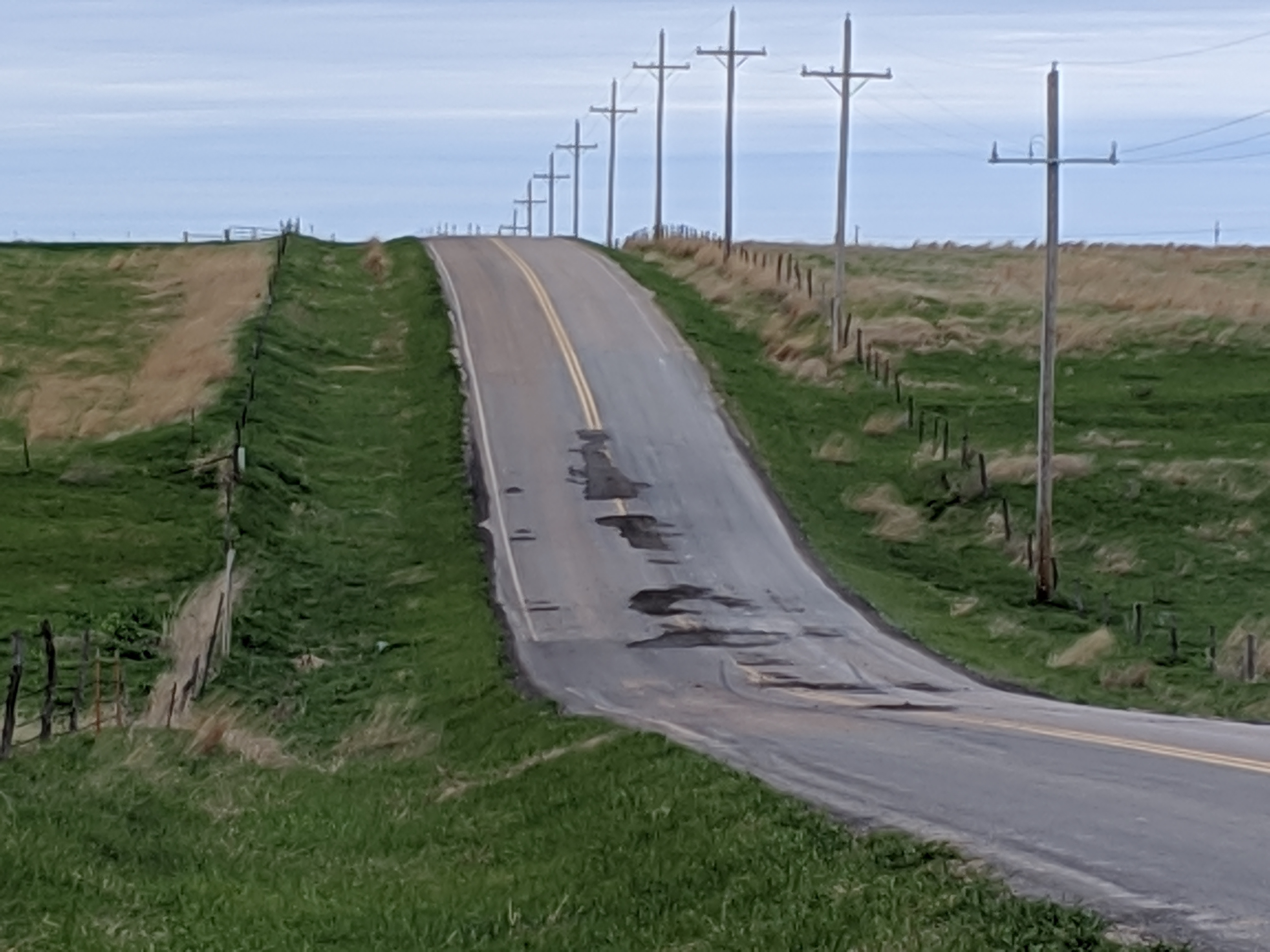
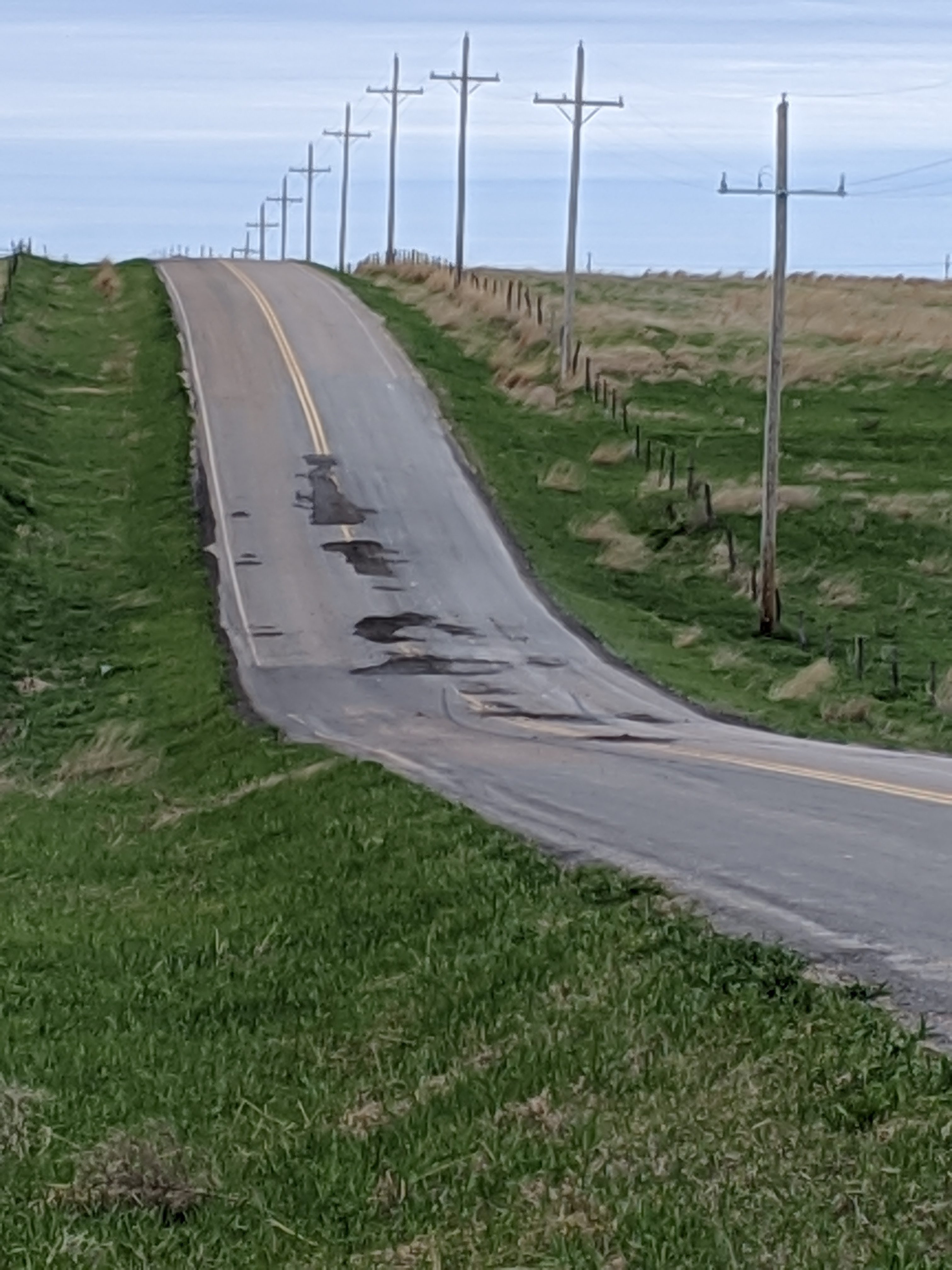
Several areas of Feedlot Rd. are deteriorating and in need of repair

“Commissioner Schlyer is a former county department head but he wasn’t out in the county that much because of his position running the Health Department and Commissioner Roths is brand new also,” Ring said. “He hasn’t had a lot of time in the county on the roads we went today.”

Among the areas the commission toured Monday was Feedlot Road from U.S. Highway 183 west to 210th Avenue.

The Northwest Business Corridor has been designated as the route between Feedlot Road from 230th Avenue to U.S. 183 and 230th Avenue between Interstate 70 and Feedlot Road.

In February, the commission approved $800,000 toward improvements in that area in hopes that other entities would also provide funds through grants and state funding. The county estimates it will cost more than $15.7 million to complete all three phases of the project.

In April, following a tour of the area the Kansas Department of Transportation pledged $1 million in matching funds for the project, contingent upon a grant from the Dane G. Hansen Foundation.

The commissioners confirmed Monday the Dane G. Hansen Foundation denied the county’s $2.2 million grant request, forcing a search for other funding sources.

Haselhorst said he believes the county should approach the city of Hays about helping fund improvements.

Feedlot Road is paved in the area of the business corridor, but the pavement is beginning to show serious signs of disrepair. Public Works staff said it will only get worse when construction of roundabouts on Vine Street begins in the near future. Traffic is expected to increase in the area with motorists attempting to detour around construction to reach Interstate 70 and the west side of Hays.

Haselhorst also said the county needs to contact U.S. Sen. Jerry Moran about the project after he helped the city of Hays get funding for the roundabouts project on Vine.

The area is home to Hess Services, an oilfield supply company that employs more than 200, Midwest Energy’s Goodman Energy Center and several other businesses.

Haselhorst said Monday that Hess Services is expanding and, after talking with the new owners of the feedlot, located between 210th and 200th avenues, he expects the feedlot to expand its operations in the coming months.

That will also result in an increase in truck traffic on Feedlot Road.

Curt Hoffman, the county’s road and bridge supervisor, presented the commission with two repair options to consider for Feedlot Road.

The first would be to mill the surface back to a dirt road and maintain it as needed for approximately $21,000. But he added he wasn’t sure how the residents in the area would like that because they would lose their paved road.

The other option presented to the commission was a prime and seal that would cost between $65,000 and $104,000.

Hoffman said a similar reclamation project was done in 2009 for $371,000. In the last two years, Hoffman said the county has spent more than $19,500 a year to patch the roadway.

During the tour, the commission also traveled to Victoria to look at Cathedral Avenue. The county is responsible for both Cathedral Avenue. and Washington Street in Ellis because they are main thoroughfares in the communities of less than 5,000 people.

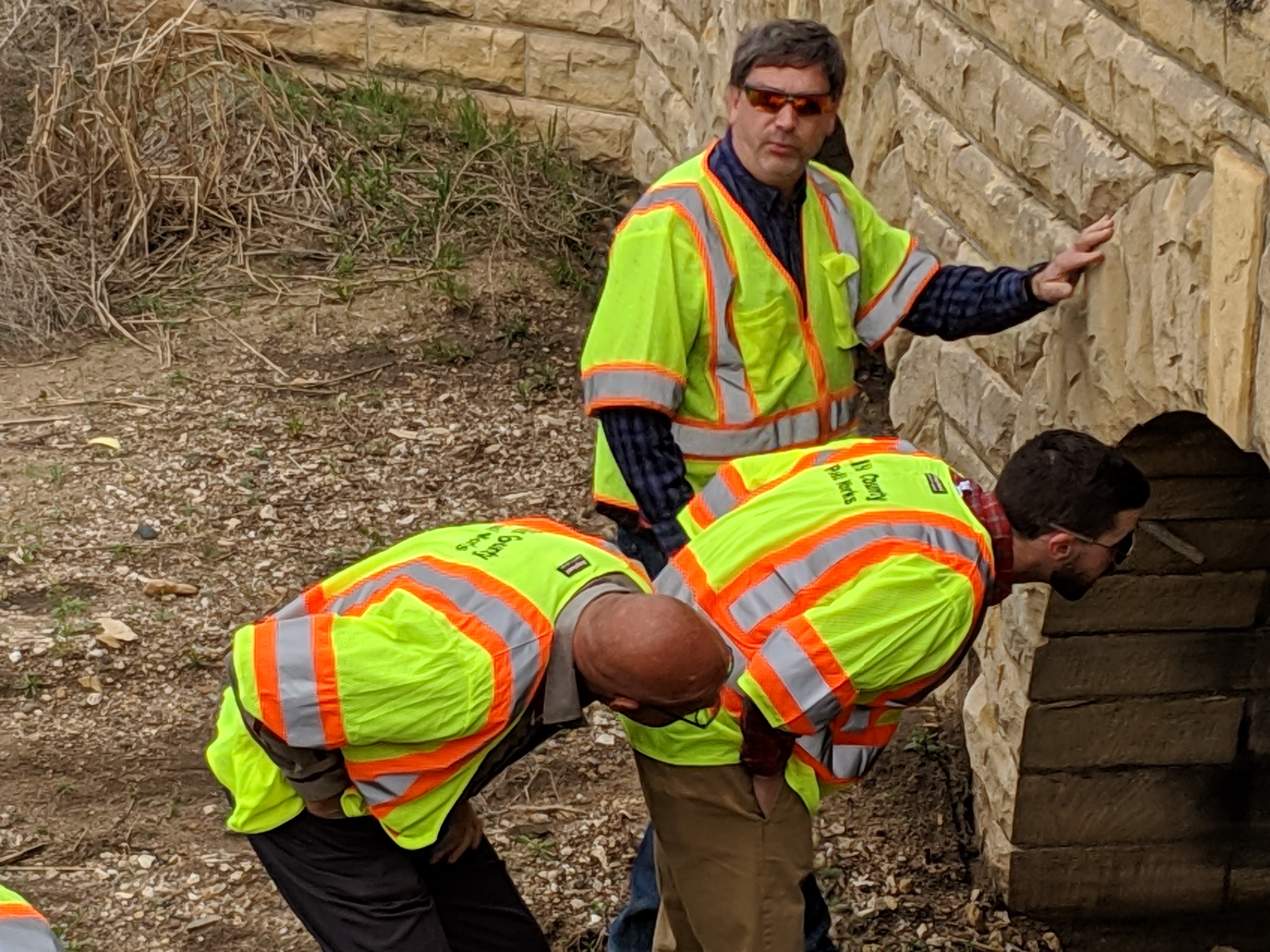
Road and Bridge Supervisor Curt Hoffman shows Commissioners Dustin Roths and Butch Schlyer the underneath side of a stone arch bridge

Cathedral is experience significant “crowning,” where the middle of the street is higher than the edges. The city of Victoria received a grant from the USDA to replace waterlines, and the lines run under and around Cathedral. Ellis County officials expect that when the lines are replaced, the county will have to do some work on Cathedral.

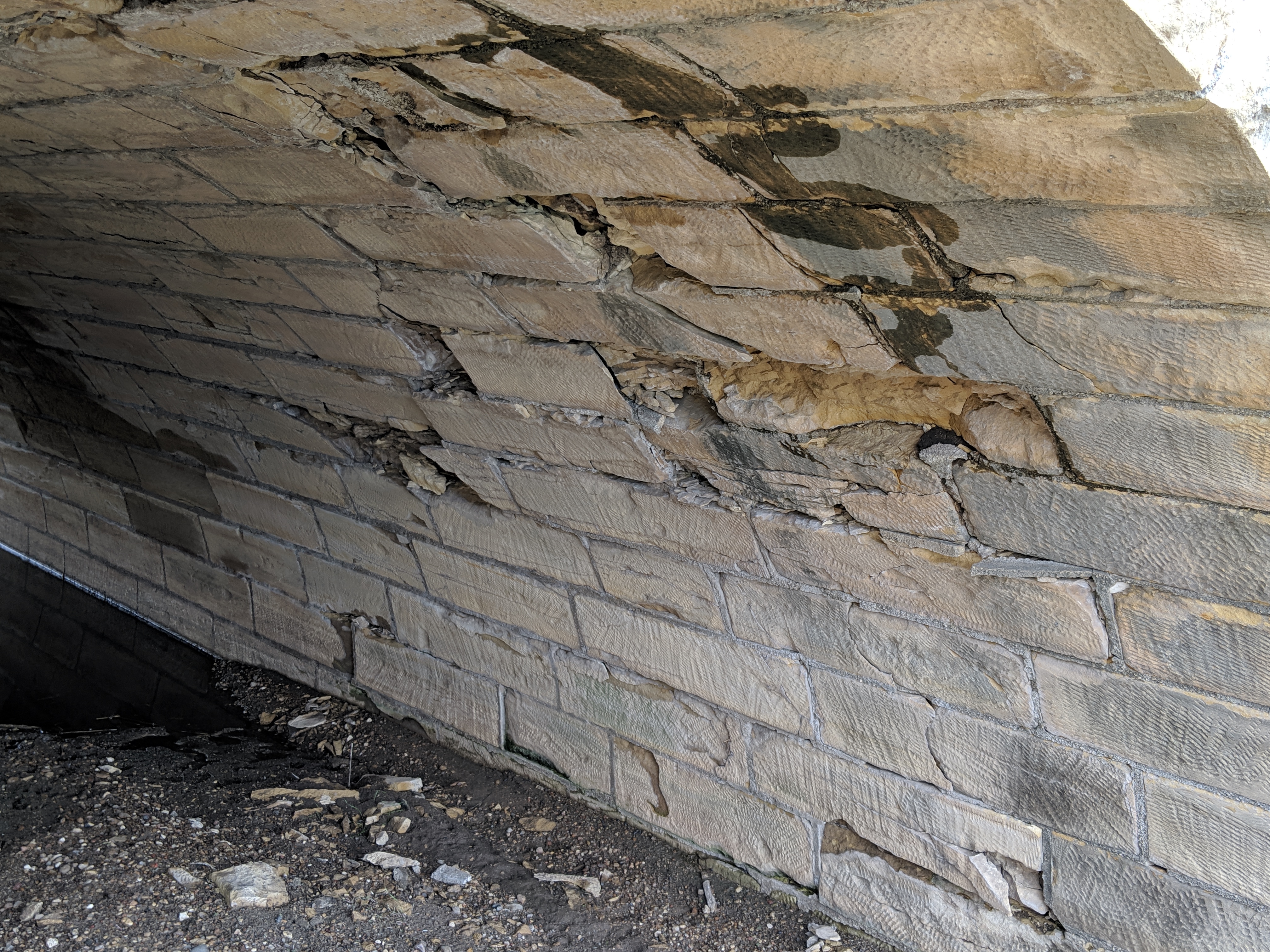
Two other stops along the tour included a stone arch bridge that is in need of repair and one that has been repaired. The bridges are built out of limestone and, when water gets into the areas of the bridge it will deteriorate. Crews use galvanized steel in the arches to repair the damage on the underside of the bridge, and a cap is put on the sides of the top where needed.

The commission also observed areas where residents have planted crops or placed items in the county’s rights of way. Public Works Director Bill Ring said if they are going to enforce the regulation that nothing is allowed in rights of way, then it must be done countywide. That includes trees, mailboxes and fences.

Both Schlyer and Roths also planned on touring other part of the county they were unable to get to Monday.

Hays USD 489 to receive about $1.3 M more in state funds in 2019-20

By CRISTINA JANNEY
Hays Post

The Hays school district is expecting to receive an additional $1.3 million in state funding in 2019-20 as part of a $90 million per year increase in statewide school funding approved by the Kansas Legislature this spring.

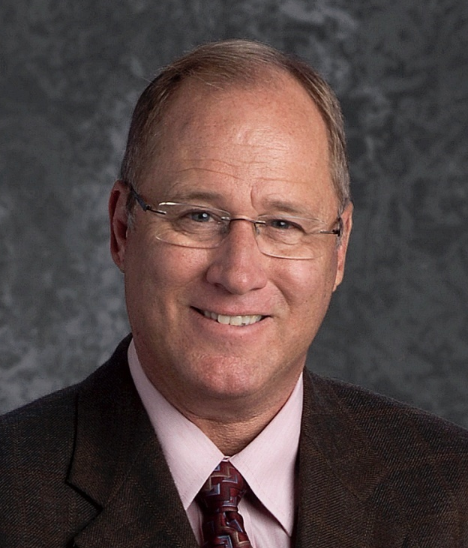
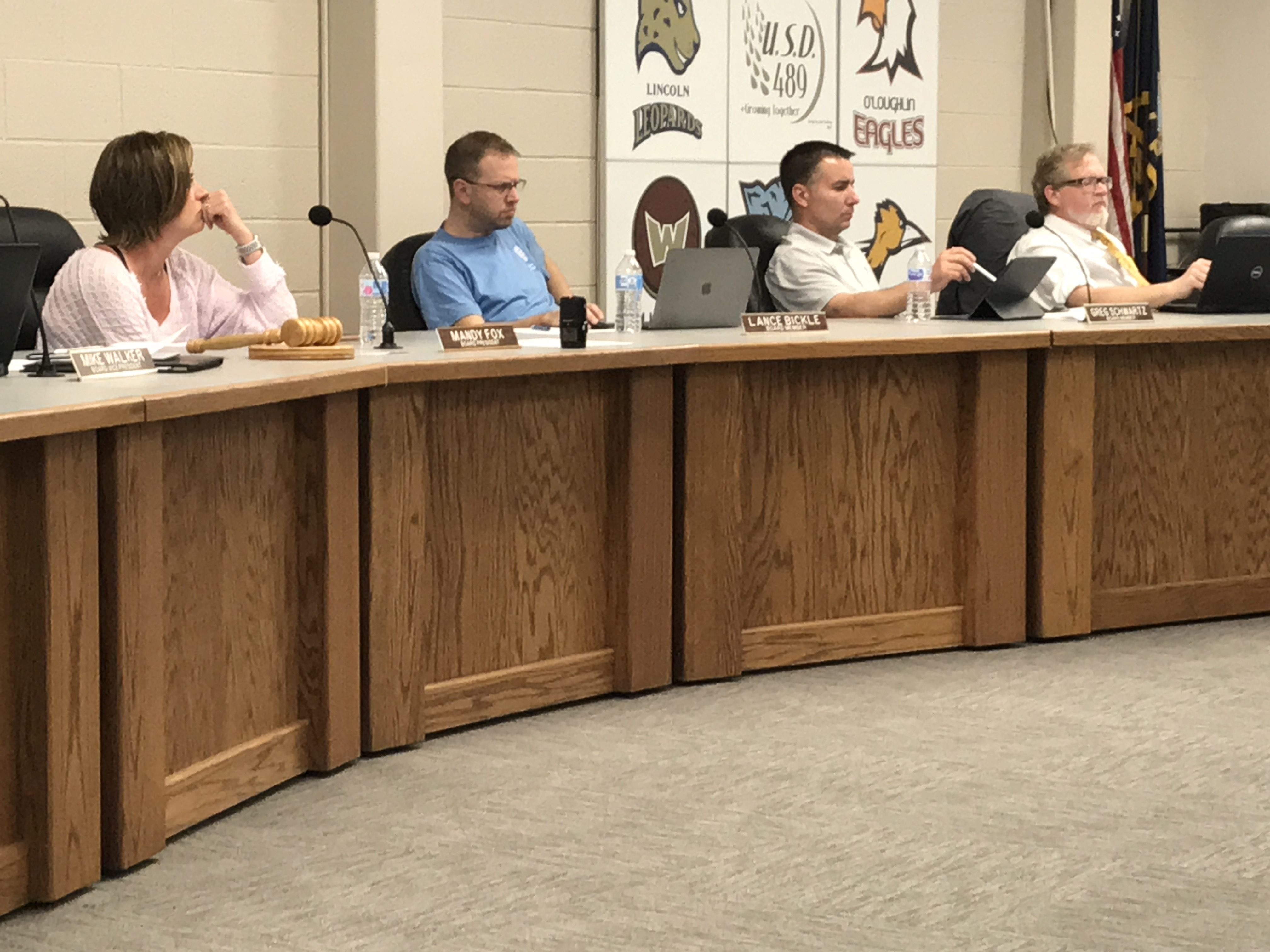
Keith Hall, USD 489 director of finance, announced the figure as part of a financial report at Monday night’s school board meeting.

Hall

However, as the evening progressed, multiple areas needing additional funding were discussed.

Hall said the district is still trying to recover from 2008 when the state starting reducing school funding.

He said this might be a good year to look at increasing balances in special funds, including the district’s contingency fund. The accounting recommendation is to have at least one month’s salary in reserve, which for Hays would be about $2 million. The district only has about $1 million in reserve now.

“We need to think about what our priorities are on money,” he said.

Assistant Superintendent Shanna Dinkel said the Legislature could place stipulations on the additional funds, including designating more money going to programs for at-risk students.

Current policy allows districts to use at-risk funds to pay for a portion of teacher salaries. However, she said that does not have a direct effect on increasing test scores.

Student fees

The administration has recommended reducing the student technology fee at the high school from $50 to $25. Superintendent John Thissen said he did not think as much money would be needed to make repairs on the district’s new computers. The district replaced computers at HHS at cost of $335,750 this fall.

Thissen

This would be part of a greater effort to reduce student fees, Thissen said. In 2017, the district reduced its textbook fee from $135 to $90.

However, in a report also given Monday night, Dinkel said the funds from the textbook fee go into the textbook/resources fund. A reduction in the fee has meant a reduction in the money going into the fund, yet the amount of money coming from the general fund into the textbook fund has not increased.

There have been times that money from general fund was transferred to the textbook/resource fund; however, most of the funding the past several years has come from the workbook/material fee collected at enrollment.

There is about $200,000 in the fund currently.

Dinkel said the district has funds to renew some of its subscriptions and buy supplemental materials, but does not have enough money to purchase any new curricula.

Maintenance salaries

Maintenance pay and benefits, $267,155 per year, are being paid out of the capital outlay budget.

The district has considered funding those salaries from the general fund, which would free up more money in the capital outlay budget.

See related story: USD 489 board president: Infrastructure plan is ‘triage list’

Paraprofessional insurance

Special education cooperative director Chris Hipp in his co-op update said recruiting and retaining paraprofessionals continues to be a challenge despite a pay raise of $2 per hour the board approved in 2018 for paras.

Most of the paraprofessionals are working part-time, which he said is not optimum.

“We have a whole of lot of part-time people who are stitching together and filling in to make the full-time positions that we need,” Hipp said.

The district has two benefit levels. Full-time employees on a single plan have 100 percent of their health insurance paid and family plans are highly subsidized. Part-time employees qualify for a plan, but it is considerably more expensive than the plans for full-time employees.

Hipp said moving paras to full-time would benefit the co-op operationally, but providing the same health benefits as full-time staff receive would cost the co-op $1 million — something it can’t afford.

Hipp suggested establishing a third level of benefits for paras that would pay less of a subsidy than full-time staff are receiving, but would be more affordable than the plan currently being offered to part-time staff.

The co-op is not planning any changes for the coming school year, but it continues to investigate the possibility of the change.

Classified pay schedule

Next year will be the first year the school district will not bargain with the custodian’s union. During its meeting Monday, the board discussed incorporating aspects of the custodian union’s contract, including items pertaining to pay, into the classified handbook.

Thissen said the district will have a pay study available in May. Administrators have discussed establishing a pay schedule for classified staff. It would be structure similar to the teacher pay schedule and include higher pay for experience and longevity.

Thissen said he believes implementing the pay schedule would take two to three years and cost $100,000 to $200,000.

The district has not approved a budget for next school year. Thissen said he would bring a list of recommendations for use of the $1.3 million to the board at an upcoming meeting.

Quinter brewer profiled by national association

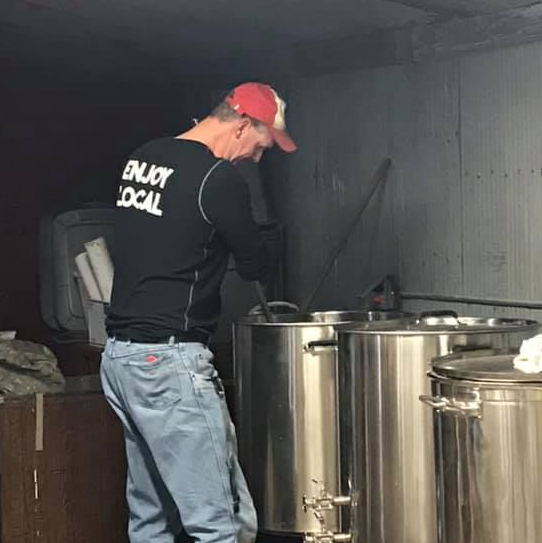
Brewer Steve Nicholson stirs a batch of the Center Pivot’s signature Cracked Pepper Cream Ale. Hays Post file photo

The Brewers Association, a nonprofit trade association that promotes American craft brewers, recently talked with Steve Nicholson, head brewer at Center Pivot Restaurant & Brewery in Quinter.

Click HERE to learn more about Center Pivot.

Click HERE to read Nicholson’s profile from the Brewers Association.

Kan. Farm Bureau Insight: Fire in the sky

Greg Doering
By GREG DOERING
Kansas Farm Bureau

While driving through the Flint Hills one evening recently I saw the most brilliant sunset. The day had been mostly overcast, with a gentle breeze from the northwest. It was a perfect day for prescribed burning in the nation’s largest patch of tall grass prairie.

I watched as flames licked at last year’s growth, stretching skyward as the sun dropped toward the horizon. The clouds broke, but the smoke-filled air dispersed purple, red and orange hues. It looked as if the burning prairie had ignited the entire sky.

It was a beautiful sight, and just a small part of the 2.5 million acres farmers and ranchers have ignited in the Flint Hills this spring. There are still a few days left in the season, which typically runs into early May.

Stretching from just south of the Nebraska border down into northern Oklahoma, the Flint Hills are home to the remains of an ecosystem that once covered much of the Great Plains. The rocky terrain saved nearly 10,000 square miles of tallgrass from being plowed under.

While I know the benefits of prescribed burning, it’s one agricultural practice that’s often misunderstood.

Fire is a vital tool to preserve this patch of grass. Without it, cedar trees and weeds take over robbing the grass of the nutrients and water it needs.

“We try to burn every year, so we have new fresh grass,” Lyon County rancher Jacquelyne Leffler said. “We do it for weed control, but we also want that fresh grass that gives us optimal gain for our cattle as well. We’re in the market to be profitable, too.”

Leffler and her family run a stocker operation that places 600-pound cattle on grass around mid-April.

“Hopefully when we pull them off in August, we’ll have around 2.2 to 3 pounds of gain per day,” Leffler said.

While fire is friendly to ranchers’ bottom line, it’s also good for the environment. Controlled burns kill weeds, nourish the soil, destroy parasites living in dead grass and help preserve the prairie ecosystem. Fire is vital to wildlife like prairie chickens and other grassland birds. Most of that can be achieved through other means, but Leffler said, those aren’t nearly as efficient as fire.

“It’s cheaper to be able to light a match and just have some water to control it,” Leffler said. “It makes it so our land is sustainable for the future generations that will be here.”

Safety is a key component of prescribed burns, Leffler said. And that starts with knowing where you’re burning.
“Our ground isn’t necessarily flat and smooth, so we try to make sure everybody knows where the bigger ditches are, Leffler said, noting that helpers also carry tools to cut fence if they need a quick escape route.

“We leave at least a 50-foot backburn anywhere we want the fire to stop.” she said. “Once we do that, we make sure everyone’s accounted for, and then we go into the process of lighting the head fire.”

Pushed by the prevailing wind, the head fire clears the land of cedars and other woody plants.

“That means more grass is going to be able to come up, so that means more feed for our cattle, which is going to contribute to those better gains,” Leffler said.

“Insight” is a weekly column published by Kansas Farm Bureau, the state’s largest farm organization whose mission is to strengthen agriculture and the lives of Kansans through advocacy, education and service.

NW Kan. airports among those receiving funds for improvements

TOPEKA – Forty-one projects totaling a combined award of $5 million have been granted for the Kansas Airport Improvement Program (KAIP) funding for planning, constructing or rehabilitating public use general aviation airports.

The aviation industry represents $20.6 billion economic impact and employs more than 92,000 Kansans. In addition, 94 percent of the state’s population is within 30 minutes of air ambulance operations.

Airports in Atwood, Hoxie, La Crosse, Oberlin, Quinter and St. Francis are among the grant recipients.

“We are proud of the collaboration between our department and airport sponsors to increase safety, enhance economic development and support the transportation needs of Kansans,” said Secretary of Transportation Julie Lorenz.

The KAIP program requires airport sponsors to share in project costs by paying a portion of the total project. The KDOT Division of Aviation, which manages the program, considered 119 project applications this year with a combined total value of more than $29 million.

“KAIP has not only funded key improvements at local airports, it has helped create a statewide aviation network that enhances both the health and economic wellbeing of the entire state,” said Bob Brock, KDOT Director of Aviation.

Communities selected for funding and the amount requested include:

Anthony – Airports Geographic Information Systems (AGIS) survey and flight check – $52,250

Atchison – Surface seal of runway – $56,925

Atwood – Update fuel card reader – $17,000

Augusta – Reconstruct apron access to community hangar – $76,500

Beloit – Airfield maintenance equipment – $16,250

Benton – 17/35 runway preservation – $321,867

Elkhart – Airports Geographic Information Systems (AGIS) Study – $76,000

Emporia – 1/19 runway sealcoat and preservation –$411,500

Fort Scott – Airports Geographic Information Systems (AGIS) updates and runway extension design – $152,000

Gardner – 8/26 runway/apron/taxilane pavement preservation – $90,000

Garnett – 1/19 runway seal and repair high severity cracks – $40,500

Hiawatha – 10/28 runway edge lighting design – $19,000; 17/35 runway edge lighting design – $19,000; taxilane renovation design and construction – $61,890

Hoxie – Phase II: runway rehab – $303,440

Independence – South apron runup area renovation – $721,500; fuel systems – $36,335

Kingman – Precision approach path indicator (PAPI) replacement – $182,963

Kinsley – construct tiedowns – $10,949

La Crosse – Operations support equipment – $45,000

Lakin – Automated Weather Observing System (AWOS) III – $176,250; 14/32 runway mill and overlay design and construction – $303,250

Liberal – Runway marking removal and replacement – $248,500

Oberlin – Height and hazard survey – $38,000

Ottawa – Pavement preservation on parallel and connection taxiway system – $173,250

Pittsburg –Replace Automated Weather Observing System (AWOS) ceilometer –$43,200; remove obstructing trees – $18,000

Quinter – Install Automated Weather Observing System (AWOS) III – $135,000

Rose Hill – Crack seal– $16,200; upgrade fuel credit card terminal – $14,875; mill and overlay runway 17/35 – $174,600

Salina – Phase II: ramp reconstruction – $720,000

St. Francis – Extend SE taxiway – $133,200

TMP-M art students take 46 awards at Fort Hays show

TMP-M

On Wednesday, April 24, art students participated in the Fort Hays Art Show. First on the agenda was to set up the art display with 67 other high schools. Each school is given one booth per teacher to display student art work. The art work in each booth was judged and certificates of merit were given to each student that the judges deemed excellent.

After the students set up their work and looked over the competitions work, participants headed over to the Art Department where FHSU put on a great day of activities, including a chalk in and demonstrations from all of the departments within their art department. Students gathered up their work at the end of the day of activities. In addition, participants picked up their awards. The students were awarded 46 awards in total.

Award winners are:

Olivia Kershner – Oil Painting & Pencil Drawing
Hannah Flynn – Pencil/Pastel Drawing & Colored Pencil & Ceramics
Emily Schulte – Colored Pencil & Colored Pencil
Samantha Zimmerman – Ink Drawing
Mariana Ramirez – Pencil Drawing & Ink Drawing
Emilee Lane – Pencil Drawing
Julia Meitner – Pastel Drawing
Alex Herrman – Colored Pencil & Oil Painting
Abby Rueschhoff – Pencil Drawing
Anna Wiesner – Pastel Drawing & Ceramics
Blayne Riedel – Pencil Drawing
Izzy Peine – Acrylic Painting
Shannen Chin – Oil Painting
Avery Werth – Acrylic Painting
Kali Hagans – Ink Drawing & Ceramics
Colby Dreiling – Ink Drawing
Morgan Olmstead – Watercolor Painting & Ceramics
Dylan Werth – Colored Pencil & Pencil/Colored Pencil Drawing
Daniela Terrazas – Ceramics
Hayli Meier – Ceramics
Lexie Gottschalk – Ceramics
Brandon Karlin – Ceramics
Julia Werth – Ceramics, Ceramics, Ceramics
Gracie Loftus – Ceramics
Katie Hale – Ceramics, Ceramics
Ethan Atherton – Ceramics & 2 Computer Graphics
Kylie Dreiling – Ceramics
Gracie Jo Stanton – Ceramics
Kamryn Hudsonpillar – Ceramics
Colton Viegra – Ceramics
Abby Heimerman – Oil Painting

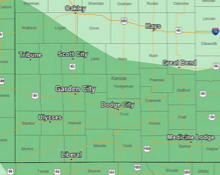
Partly cloudy, wet Wednesday

Wednesday A 20 percent chance of showers and thunderstorms after 3pm. Areas of fog before 9am. Otherwise, cloudy, with a high near 60. East northeast wind around 9 mph.

Wednesday Night Showers and thunderstorms likely, mainly between 7pm and 1am. Mostly cloudy, with a low around 42. Breezy, with a north wind 11 to 16 mph increasing to 18 to 23 mph in the evening. Winds could gust as high as 34 mph. Chance of precipitation is 60%. New rainfall amounts between a quarter and half of an inch possible.

Thursday Mostly sunny, with a high near 64. North wind 7 to 13 mph becoming east northeast in the afternoon.

Thursday NightA 50 percent chance of showers after 1am. Mostly cloudy, with a low around 43. East wind 5 to 9 mph.

FridayA 40 percent chance of showers before 1pm. Mostly cloudy, with a high near 68.

Friday NightMostly clear, with a low around 45.

Hays USD 489 school board approves special systems upgrade

By CRISTINA JANNEY
Hays Post

The Hays USD 489 school board Monday night approved a special systems upgrade at Hays High School.

The $129,000 project will replace the clock and intercom system as well as pay for pulling cable for a new phone system and security cameras. 

The clock system, which controls part of the HVAC system, failed earlier this year.

At its meeting April 8, the board rejected bids for special system. Board members asked for more information about how the project will fit into the larger capital outlay plan.

The five-year cost of replacement of the HHS phone system was estimated at between $150,000 and $214,000. The project will include 100 phones for HHS and 10 phone lines. Currently, not all classrooms have access to a phone, and this would remedy that, said Rusty Lindsay, director of building and grounds.

The phone system replacement has been budgeted for the next fiscal year, Lindsay said.

Estimates for the replacing the camera system started at $67,000. The district hopes to install a total of 51 cameras. This project is not scheduled for next fiscal year. It may need to be done over two years. However, the special systems project that was approved Monday installs the infrastructure that will be needed to complete the project as funds are available.

The board approved the special system upgrade on a vote of 6-0. Board member Luke Oborny recused himself becuase he works for the bid winner Nex-Tech.


HaysMed’s Farthing named president-elect of statewide association

Farthing
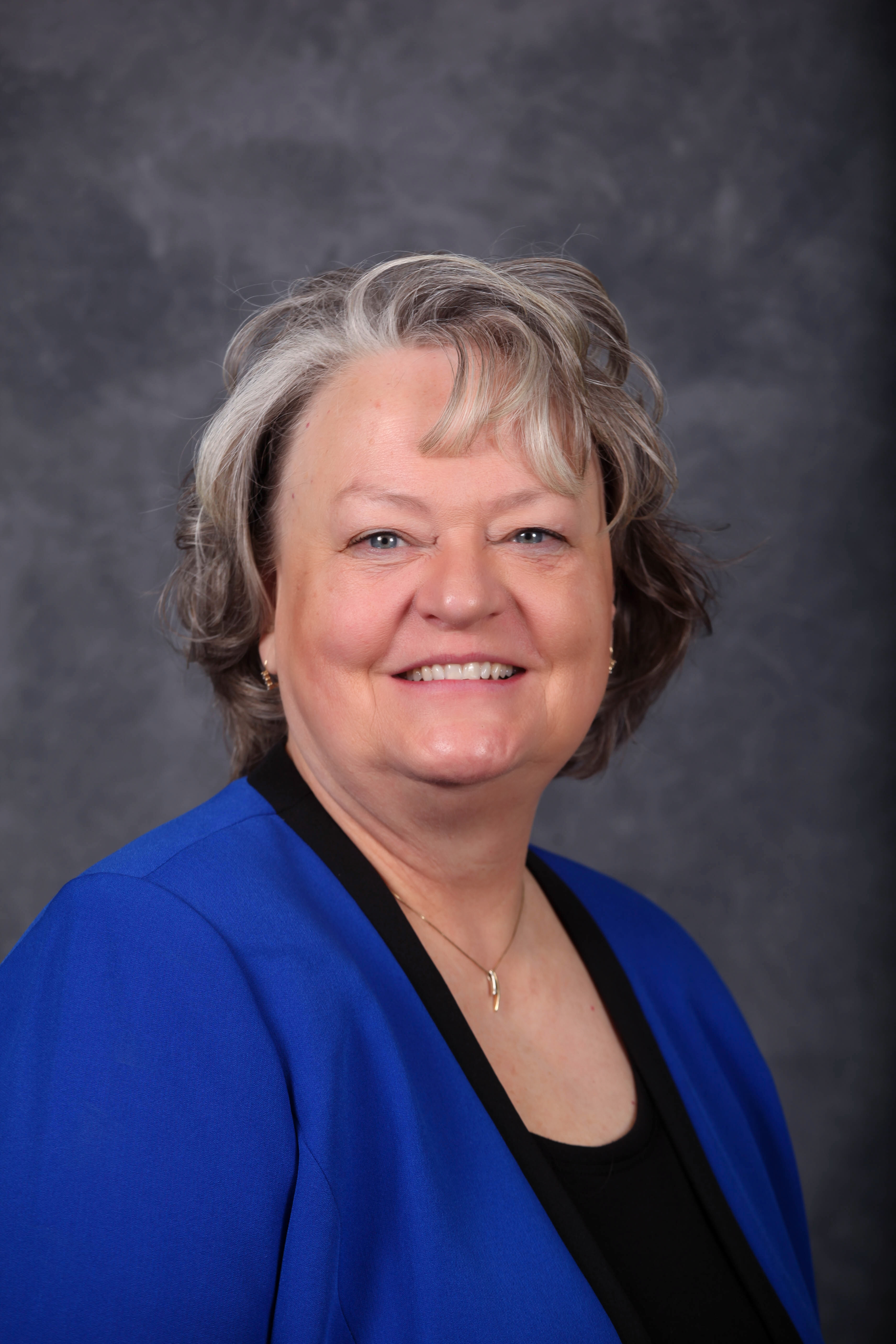
Deloris Farthing, director of health information management at HaysMed, part of The University of Kansas Health System, has been elected to the position of president-elect for the Kansas Health Information Management Association.

Farthing will assume her duties as president-elect on July 1 and will transition to president in July 2020.

The Kansas Health Information Management Association has over 1,000 members and is an organization of health information management professionals who provide guidance, best practices, education and advocacy for quality healthcare to improve health record quality in the effective management of health data and information.

Farthing has been an associate of HaysMed since 2003.

FHSU grad, Norton native named CEO of Nebraska hospital

Fisher

Fisher previously worked at HaysMed, as well as Norton and St. Francis organizations

CAMBRIDGE, Neb. — Tri Valley Health System Board of Directors has appointed Jessica Fisher as the new Chief Executive Officer and will begin duties on May 6.

A search was conducted in April for a permanent Chief Executive Officer and attracted 23 candidates. After three rounds of interviews including final interviews with input from senior leaders and the physicians, the board made the final decision to offer the CEO position to Fisher who was viewed unanimously by the Board as the best person to fill the permanent CEO position.

Fisher has a master’s of health care administration from Bellevue University, and she earned a bachelor’s and associate’s degrees from Fort Hays State University. She also has a certification in Leadership, Human Resource Management and is a certified Phlebotomist through the American Society of Clinical Pathology.

Fisher comes to Tri Valley with a wealth of health care experience. Most recently, she was the Director of Operations at Valley Hope Association, headquartered in Jessica’s hometown of Norton. Valley Hope is an organization that provides residential and outpatient addiction treatment in seven states and 16 service locations. Prior to that, she was the Human Resources and Education Director at Cheyenne County Hospital in St. Francis and was the Inpatient Clinical Services Manager at Hays Medical Center, while providing services to Pawnee Community Hospital in Larned, Kansas and St. Rose Medical Pavilion in Great Bend.

Fisher strongly believes in effective healthcare systems providing quality patient care with positive patient outcomes along with delivering cost-effective and affordable healthcare services.

“We will continue to focus on Tri Valley’s mission to be a model of continued excellence as a regional integrated health care system committing ourselves to provide quality, progressive care,” she said. “I am excited for this opportunity and the chance to work together with such a progressive and professional organization.”

Cambridge is located in south-central Nebraska, between Lexington and McCook.

— News release

🎥 Spring brings graduations and swimming pool openings

By BECKY KISER
Hays Post

May is a busy month in Hays as school calendars come to a close and graduation ceremonies are scheduled. Outdoor sports pick up and the two city swimming pools open for the season.

Melissa Dixon, Convention and Visitors Bureau executive director, has a preview of some of the spring activities.

An updated calendar of events is available on the Hays CVB website www.haysusa.net.

Man hospitalized after semi sideswipes pickup on I-70

GOVE COUNTY —One person was injured in an accident just after 3a.m. Tuesday in Gove County.

The Kansas Highway Patrol reported a 2016 Volvo semi driven by Daniel B. Messenger, 46, Henderson, TN., was eastbound on Interstate 70 just west of the Kansas 198 exit.

The driver did not see an eastbound 1995 Chevy pickup driven by Ralph D. Hembree, 71, Inglis, FL., that was having trouble and driving on the shoulder at a low rate of speed. The semi side swiped the pickup.

Hembree was transported to Gove County Medical Center. Messenger was not injured and not wearing a seat belt, according to the KHP.

Copyright Eagle Radio | FCC Public Files | EEO Public File