We have a brand new updated website! Click here to check it out!

Rural Kan. loves its hospitals, but keeping them open only gets harder


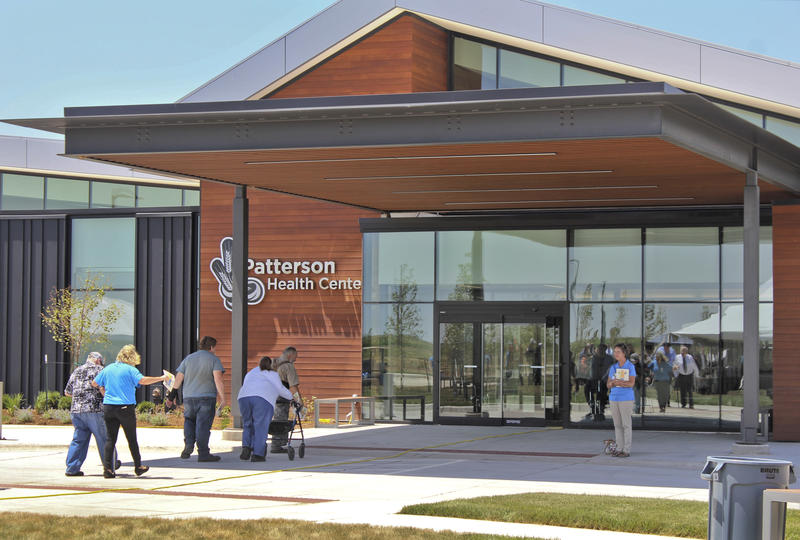
The Patterson Health Center opened only after the surrounding communities decided to shut down their competing, failing hospitals. And only with a large grant that insisted the communities team up. Chris Neal / For the Kansas News Service

By JIM MCLEAN
Kansas News Service

ANTHONY — Few things signal a rural community’s decline more powerfully than the closure of its hospital.

Like shuttered schools and empty Main Streets, an abandoned hospital serves as a tangible reminder of the erosive power of decades of population loss and unrelenting economic trends.

“Our rural communities are challenged and, because of that, our small hospitals are challenged as well,” said Tom Bell, the head of the Kansas Hospital Association. “It’s sort of a chicken-and-egg thing.”

In just the last 15 years, 160 of the nation’s rural hospitals have closed, including six in Kansas.

Many more are in danger of shutting their doors.

More than 80% of the state’s rural hospitals run at a loss, said Brock Slabach, a senior vice president of the National Rural Health Association.

“The operational difficulties (for rural hospitals) in our state are particularly problematic,” he said in a presentation to Kansas lawmakers earlier this year.

Shrinking populations mean fewer patients. Those who remain are typically older, poorer and sicker, making them more expensive to treat. Many people in rural areas also lack health insurance.

In some southwest Kansas counties, the uninsured rate approaches 19%, more than twice the statewide rate of 8.5%, according to the Kaiser Family Foundation.

Mismanagement along with state and federal policies also figure in the mix. Congress ordered cuts in Medicare payments in 2011 to trim the federal deficit and Kansas lawmakers have rejected the expansion of Medicaid the last several years.

People who run small hospitals argue expansion would provide coverage to thousands of low-income rural Kansans who now can’t afford to pay their medical bills.

Facilities known as Medicare Critical Access Hospitals are particularly vulnerable. Limited to 25 patient beds, they were designed in the 1990s to survive in remote areas. Kansas has more of them — 82 — than only Texas and Iowa.

Until recently, two of the state’s endangered small hospitals sat  in the neighboring towns of Anthony and Harper in south-central Kansas.

Federal rules restrict the location of those specially designated hospitals, requiring them to be at least 35 miles apart. But the hospital districts in Anthony and Harper got waivers allowing them to establish competing facilities just 10 miles apart.

In 2014, with both hospitals in serious financial trouble, consultants proposed a merger. A long-simmering rivalry triggered by a fight over the county seat in the 1870s made that a tough sell, said Martha Hadsall. She headed the Anthony hospital board.


Martha Hadsall played a key role on getting people in Anthony and Harper to join forces for a new hospital, and abandoning hopes for keeping one solely for their own town. Credit Chris Neal / For the Kansas News Service

“I would describe one of our first joint board meetings as a junior high dance,” Hadsall said. “We sat on opposite sides of the room and stared at each other.”

Then came a windfall. With strings attached.

The late Neal Patterson was a native of Harper County. He went on to make millions after founding Kansas City-based digital medical recordkeeper Cerner Corp. He promised to pay much of the cost of a new, state-of-the-art hospital — if the two towns agreed to share a single facility.

Hadsall, a resident of Anthony and a longtime elementary school teacher in Harper, used Patterson’s offer and trust she had built in both communities to keep the boards talking. It took about a year, but the rival sides agreed that a merger was the only way to keep any hospital going.

Still, the idea remained a tough sell with residents of both communities.

In a 2015 interview with the Kansas News Service, Harper resident Bonnie June Day said the people pushing for a merger should just “leave Harper alone.”

“Our hospital is doing fine without being consolidated with them (Anthony),” she said.

To move public opinion, Hadsall said, the boards called residents of both communities to a meeting at the high school they had shared since consolidation in 1971.

They shared the hospitals’ balance sheets and provided an estimate of how much property taxes would need to go up to fill the gap between revenue and expenses.

By the end of the meeting, Hadsall said, most of those in attendance were nodding “‘yes’ to what the boards had chosen to do.”

Shortly after that, Harper voters dissolved their hospital district.

On a scorching day this past July, the communities came together to celebrate the opening of the Patterson Health Center, a $41 million facility built between Anthony and Harper next to Chaparral High School.


People from the sometimes-rival towns of Anthony and Harper got together to celebrate the opening of a hospital they now share. Credit Jim McLean / Kansas News Service

Lindsey Patterson Smith, Neal Patterson’s daughter and the head of the Patterson Family Foundation, acknowledged that most communities with struggling hospitals don’t have a millionaire to rescue them. Still, she said, “we’ve learned a lot” that could benefit other towns looking for ways to collaborate.

“We want to take some lessons from it and go out and see what is going to work in another community,” she said.

Bell, the head of the state hospital association, said he thinks the ongoing threat to rural hospitals has made rural Kansans open to new ideas. That included, he said, the possibility of rethinking, maybe even shrinking, those critical access hospitals that Kansas has so many of.

“What that hospital looks like in the future may not be exactly what it looks like today,” Bell said.

The hospital association wants federal regulators to let Kansas experiment in rural areas, perhaps with something between a clinic and a hospital. Those facilities might offer emergency and out-patient care, but not the kind of around-the-clock care needed by critically ill patients.

Small hospitals, many of which average fewer than two patients a day, can no longer afford to maintain wings of rarely used in-patient beds, Bell said.

Rural hospitals rely heavily on Medicare. Often, more than half of their patients are 65 or older. Without special waivers from Washington, Medicare money wouldn’t be available to subsidize that niche between a doctor’s clinic and an multi-bed hospital.


A room in the Patterson Health Center, where a millionaire’s grant and a compromise of two towns came together. Credit Chris Neal / For the Kansas News Service

Kansas hospital administrators are also among the biggest advocates for Medicaid expansion. It could draw in nearly $1 billion a year in additonal federal tax dollars to the state. Most of that would flow to the state’s urban and suburban hospitals. Still, some rural hospitals could benefit even more because the dollars they received would constitute a bigger share of their budgets.

“It would play a very important role in stabilizing the finances of those rural hospitals,” said April Holman, director of the Alliance for a Healthy Kansas, a pro-expansion lobbying group funded by several Kansas-based health foundations, including those that help support the Kansas News Service.

Research, Holman said, shows that hospitals in the 36 states and the District of Columbia that have expanded Medicaid eligibility are six times less likely to close than hospitals in non-expansion states.

Kansas is one of 14 states that has opted not to expand Medicaid coverage to include more low-income adults.

Two legislative committees and a task force appointed by Democratic Gov. Laura Kelly are working on expansion plans ahead of the 2020 session that begins in January.

At least one of those approaches is being crafted to appeal to conservative Republicans who — fearing they no longer have the votes to stop expansion — want a less costly plan to consider.

Among other things, it would restrict Medicaid enrollment to Kansans who make too little to qualify for the federal subsidies that all-but-cover the cost of private coverage in the Affordable Care Act marketplace. But it would create state subsidies to cover those in the gap.

The effort to save struggling rural hospitals is as much about the economies of small towns as it the health of people who live in them.

Research offers a mixed picture on the impact of hospital closures on health. Some studies say when people are forced to travel longer distances, they often fail to get care that prevents nagging health problems from becoming more serious. Lack of ready access to emergency and obstetric services can also put people at risk.

But broadly speaking, studies haven’t found that the closure of a hospital leads to a measurable decline in people’s health.

However, the economic impact can be profound. Rural economists at Kansas State University recently calculated that every dollar of hospital income generates 59 cents for other businesses in a community..

So, when a hospital shuts down, towns get poorer. Per-capita income goes down and unemployment rates go up.

This is the fourth in a series of stories investigating the decline in rural Kansas and efforts to reverse it.

Support for this season of “My Fellow Kansans” was provided by  the United Methodist Health Ministry Fund, working to improve the health and wholeness of Kansans since 1986 through funding innovative ideas and sparking conversations in the health community. Learn more at healthfund.org.

Jim McLean is the senior correspondent for the Kansas News Service, a collaboration of KCUR, Kansas Public Radio, KMUW and High Plains Public Radio covering health, education and politics. You can reach him on Twitter @jmcleanks or email [email protected].
Book about naturalist with ties to western Kansas fossils to be discussed at Sternberg

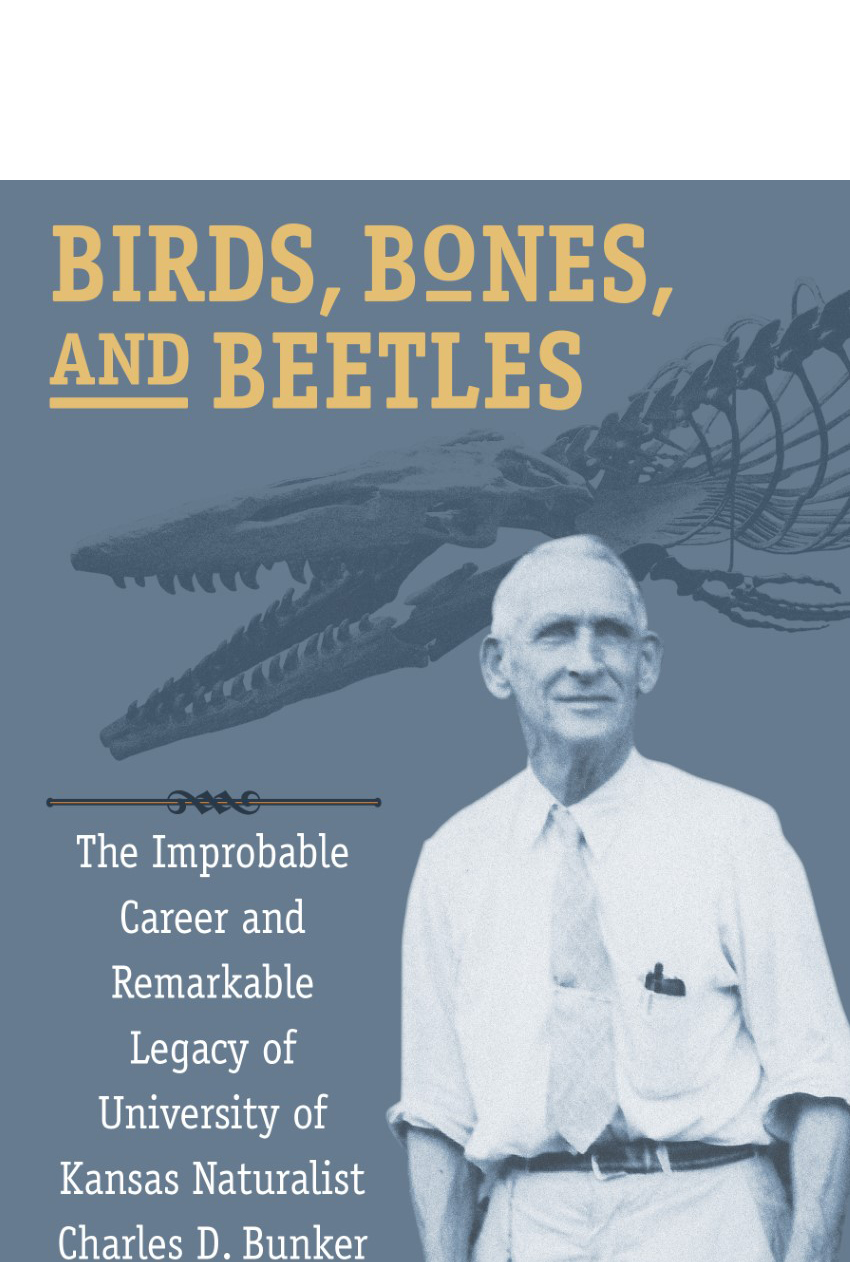
Come out to the Sternberg Museum of Natural History on Sunday, Nov. 3 at 1:30 p.m. to meet Chuck Warner. He will be discussing his new book “Birds, Bones, and Beetles: The Improbable Career and Remarkable Legacy of University of Kansas Naturalist Charles D. Bunker.”

The book spans the life and accomplishments of an early pioneer and naturalist at the University of Kansas Natural History Museum, who had important ties to the fossil fields of western Kansas.

Following Bunker’s field notes and university and community records, Chuck Warner wrote “Birds, Bones, and Beetles” about the extraordinary life of his grandfather, Charles Bunker. Bunker’s long career at the KU Natural History Museum began in 1895 as a lowly taxidermist.

Despite being naturally shy and possessing only an 8th-grade education, he went on to serve as the curator of the collections of birds and mammals for 35 years. His contributions include extensive work on the original installation of Panorama at the museum, developing a process to utilize beetles to efficiently clean skeleton for the museum collection, and training generations of students who went on to highly successful careers at prestigious institutions across the country.

This book was published by the University Press of Kansas in May of 2019 and has already received a recommendation from the Association of College and Research Libraries, a division of the American Library Association. This review will be published in the November 2019 CHOICE Connect and will recommend the book as “a valuable resource for those interested in the history of science.”

For more information, visit https://sternberg.fhsu.edu.

– SUBMITTED –

🎥 After 26 years, north Hays will see second water line added

By BECKY KISER
Hays Post

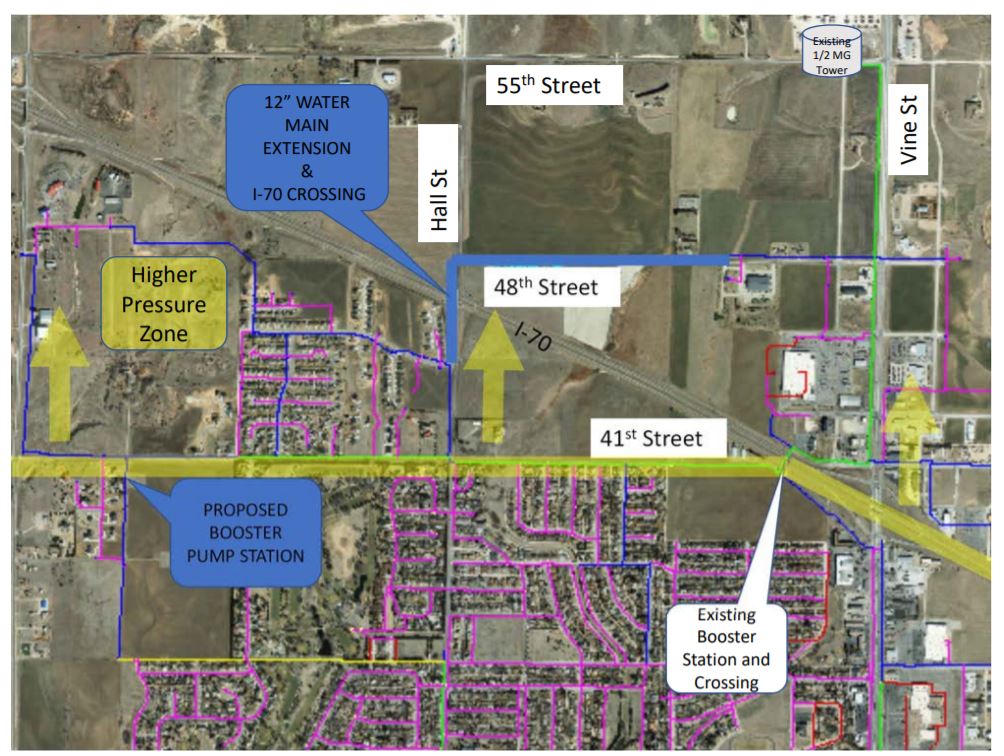
A second water line to serve Hays customers north of Interstate-70 will soon be installed underneath the roadbed, creating redundancy with a more reliable water loop.

There is currently only one 16-inch water line serving the area, which has seen considerable business growth since the line was installed in 1993.

Jeff Crispin, water resources director, told city commissioners Thursday night adding a line will also provide better fire protection and increase water pressure in the north zone.

“Typical water pressure in the area is probably 10-15 psi less than it is to the south,” Crispin said.

The commission approved the low bid of $769,678 from Midlands Contracting, Kearney, Neb., for a 12-inch water line plus a backup booster station.

Commissioner Ron Mellick asked why the new line will have a 12-inch diameter instead of 16 inches to match the existing line.

“We already have 12-inch lines that are located there and we’re just extending that. Creating that loop will supply us plenty of water in that area,” Crispin explained. “That was part of the study that was done and the recommendation was made to extend that 12-inch line. But once we create that loop, we’ll have a continuous supply of water that will be running through that area, through both lines and booster stations, and that’ll provide adequate pressure.”

A study by Bartlett & West Engineers in 2018 recommended crossing I-70 at Hall Street connecting a new 12-inch water main from 45th and Hall to an existing dead-end line along 48th Street at the west property line of Carrico Implement. The plan also called for installation of an above ground booster pump station on city-owned property along W. 41st Street just east of Post Road near a city water well.

Construction will begin soon and is to be completed by July 1 of next year.

The commission also approved renewal of the Blue Cross Blue Shield of Kansas health insurance for city of Hays employees in 2020.

Erin Giebler, human resources director for the city of Hays

The premium went down two percent, according to Erin Giebler, human resources director, who gave credit to the employees for the savings.

“Due to the city’s low utilization, the renewal showed a two percent decrease,” Giebler told commissioners. The city’s estimated cost would be $1,683,700 with an additional $120,000 to match employees’ Health Savings Account (HSA) contributions.

According to Giebler, 58 percent of employees choose a high deductible option.

This is the second consecutive year the premium has decreased. The city switched to BCBS in 2017 with three deductible options.

In other business, the commission approved annexation of property at 700 W. 48th Street, location of the now-closed-Mid Kansas Auto Auction.

Property owner Mark Ottley has changed business plans for this location which is contiguous to the existing city limits. He’s requested a zoning change from C-2 (Commercial General) to A-L (Agriculture) from the Planning Commission change of zoning from C-2 (Commercial General) to A-L (Agriculture) to allow uses within an A-L zoned district for a portion of the property.

“The property does have private water and septic,” Jesse Rohr, public works director said. “However, sanitary sewer will be extended by the owner from the Ottley Addition from the east.”  Water will be available to the property upon completion of the I-70 city waterline project approved by the city commission earlier in the meeting. Rohr previously told commissioners the Trego Rural Water District had been supplying the water.

The commission also heard an update from First Care Clinic.

When it opened in downtown Hays in 2008, its four employees saw 1,211 patients. Today there are 50 employees providing medical, dental and behavioral health services in one location. This year the clinic is on track to see 7,030 patients, reported Bryan Brady, CEO.

Dr. Christine Fisher, medical director, said the integrated care is filling gaps in Hays.

“If you don’t give affordable care, high-quality care, or accessible care, people will let their medical problems go and then you wind up with a very expensive or advanced problem.”

Dr. Christine Fisher, First Care Clinic medical director

Fisher noted that happens across the United States. “So we think it hopefully not only benefits the patient but then all of us as contributors to the cost equation,” she explained.

First Care Clinic recently remodeled the former Eddy Clinic in downtown Hays and has a $5 million dollar annual budget.

Two executive sessions totaling 35 minutes were called at the end of the meeting regarding right of way authorization for the North Vine Street Corridor Project.

At the September 26 meeting, City Manager Toby Dougherty was authorized to spend $390,020 toward the acquisition of right of way and easements associated with the project.

The city commission was later asked to consider administrative settlements that might be above the original city offers.

No action was taken.

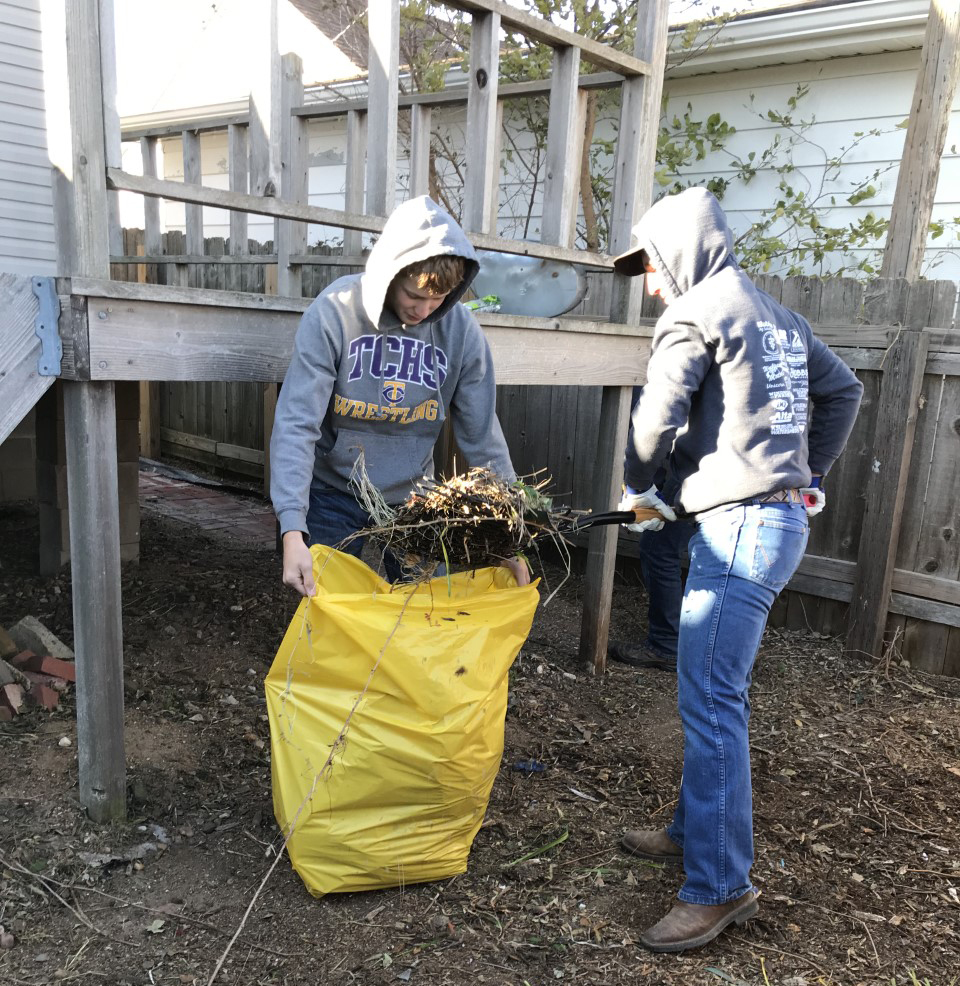
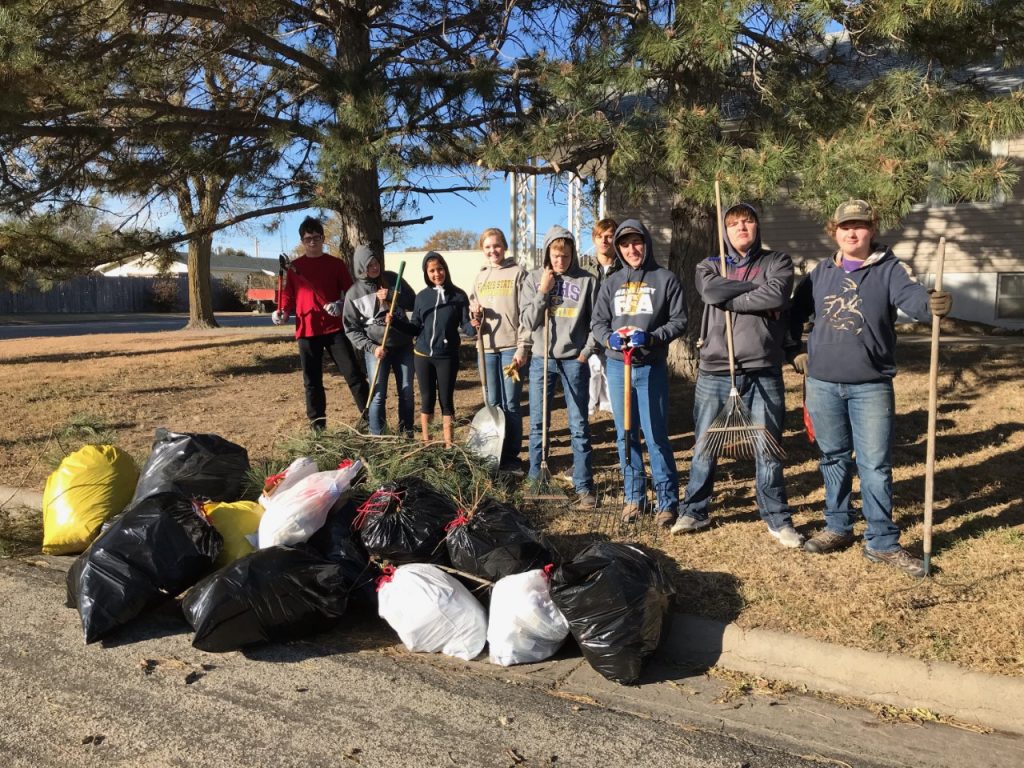
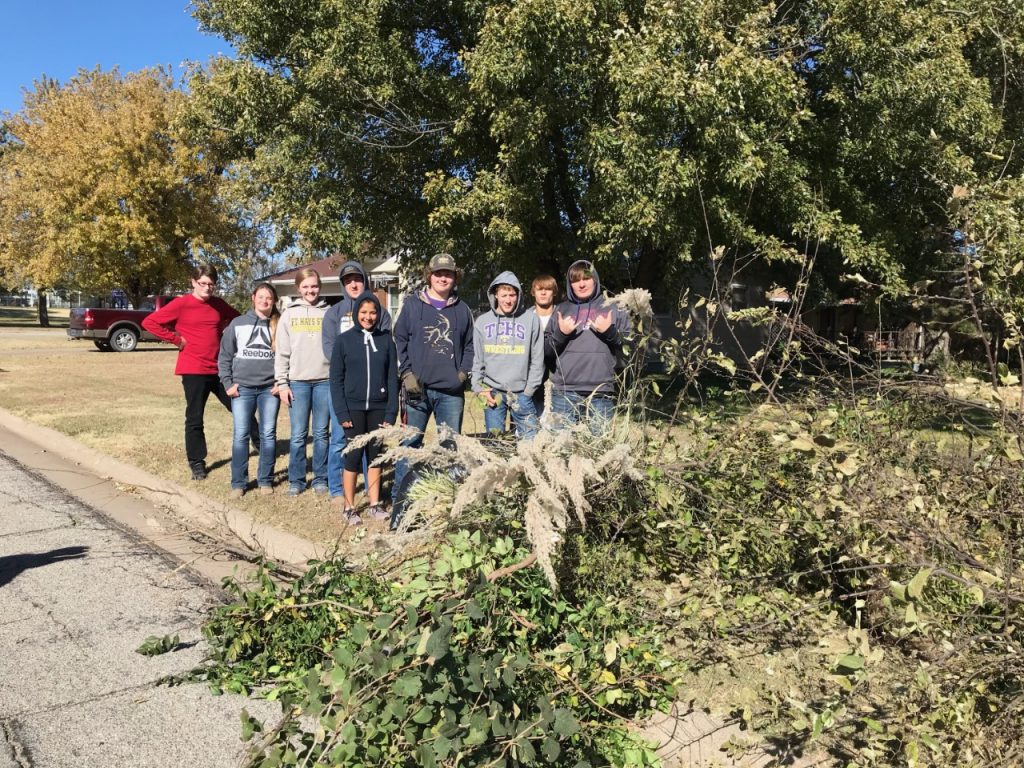
WaKeeney high school students spruce up the town for Community Appreciation Day

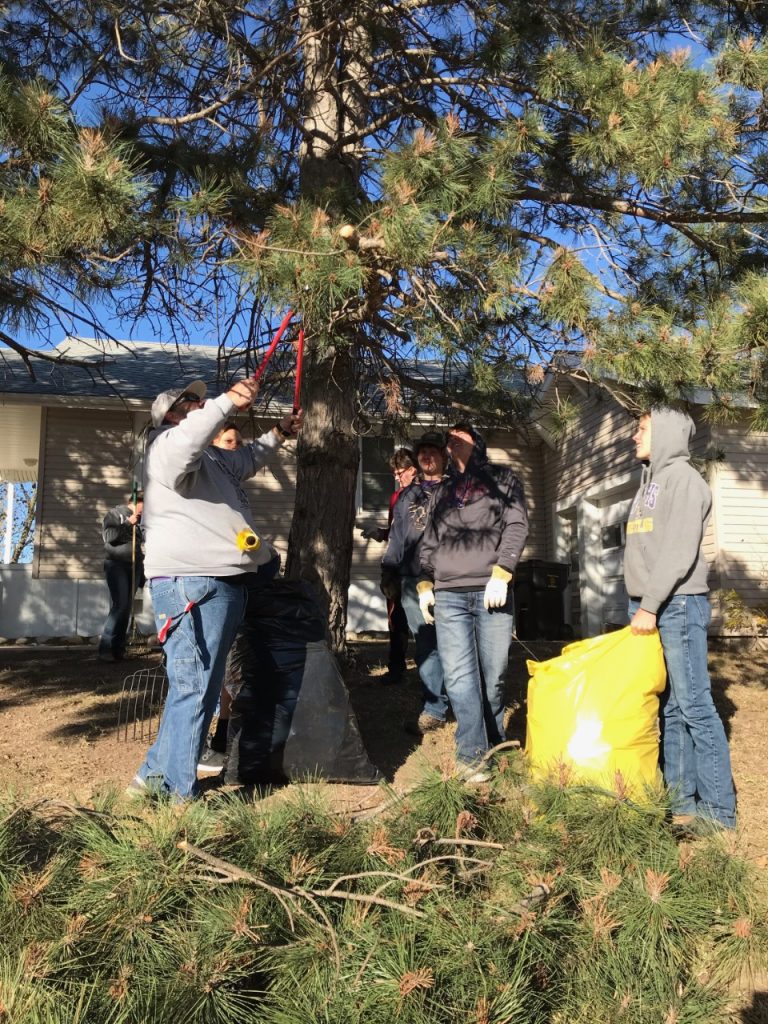
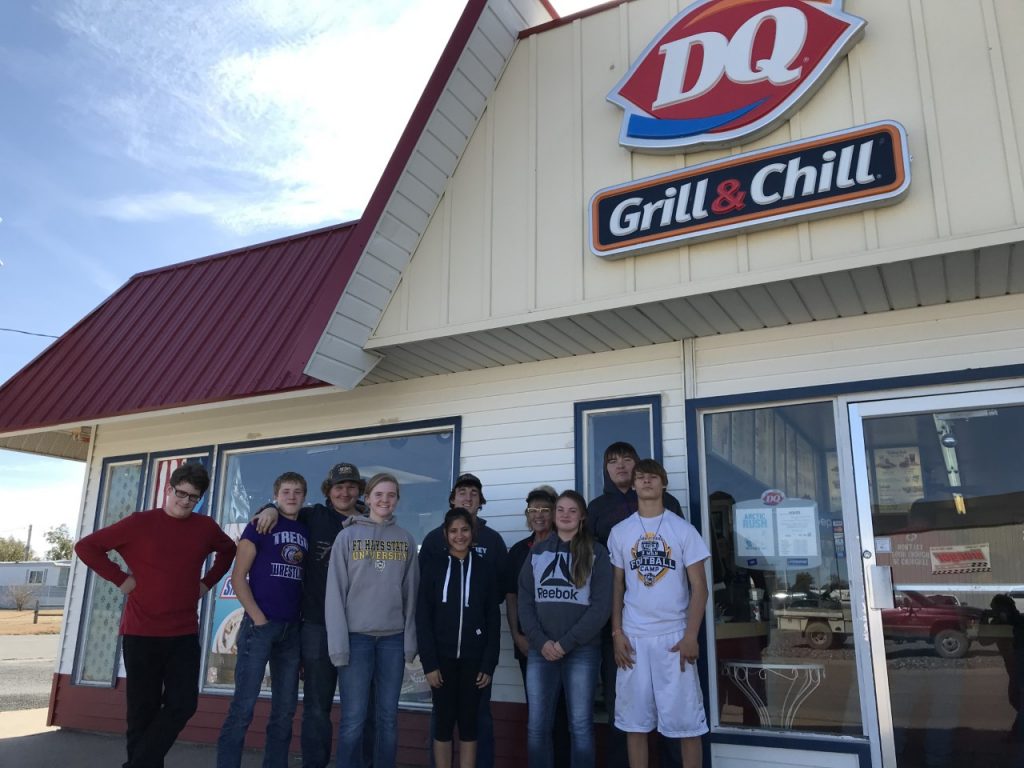
Perrin Trapp, Skylar Wittman, Isabel Escalante, Lili Shubert, Tanner Sells, James Kriegh, Carter Minson, Dillon Dunn, Fes Molitor

By BECKY KISER
Hays Post

WAKEENEY — Students at Trego Community High School in WaKeeney were out of the classroom Wednesday and out on the town as they participated in the school’s annual Community Appreciation Day.

“It’s a a way to say thank you to the community for supporting the school,” says project organizer and USD 208 counselor Joleen Schoenthaler. “We’ve done this for approximately 20 years.”

Community Appreciation Day was originated by former faculty member Brad Starnes. The entire high school participates in the project.

There were 45 jobs requested this year by WaKeeney residents and business owners.

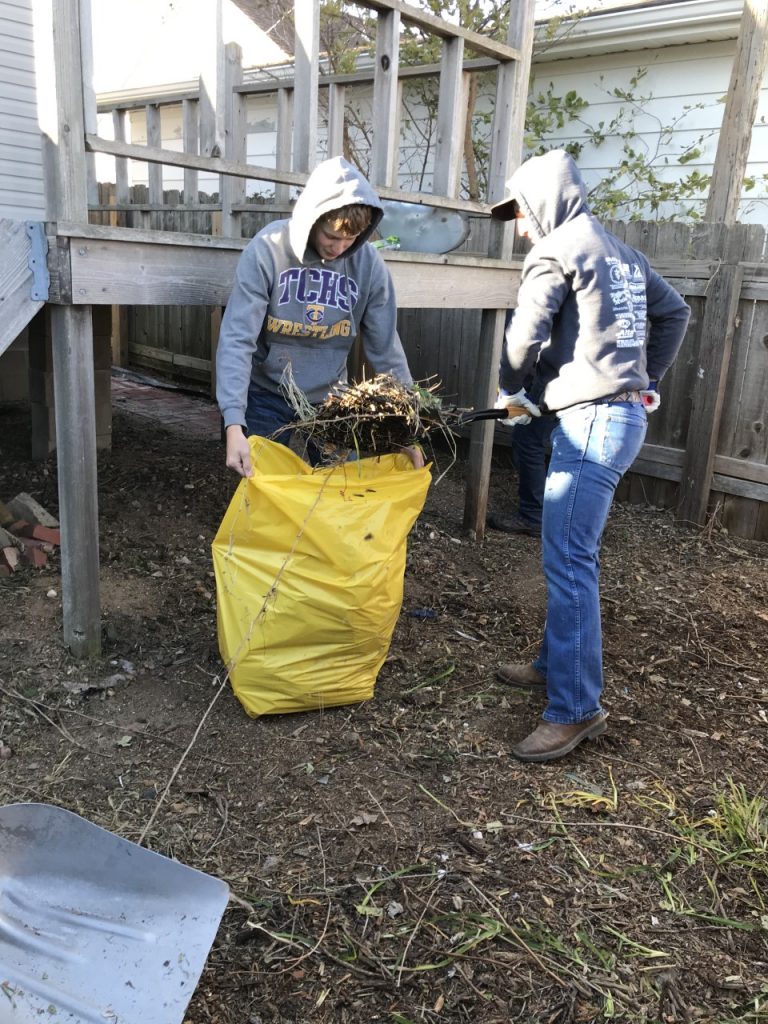
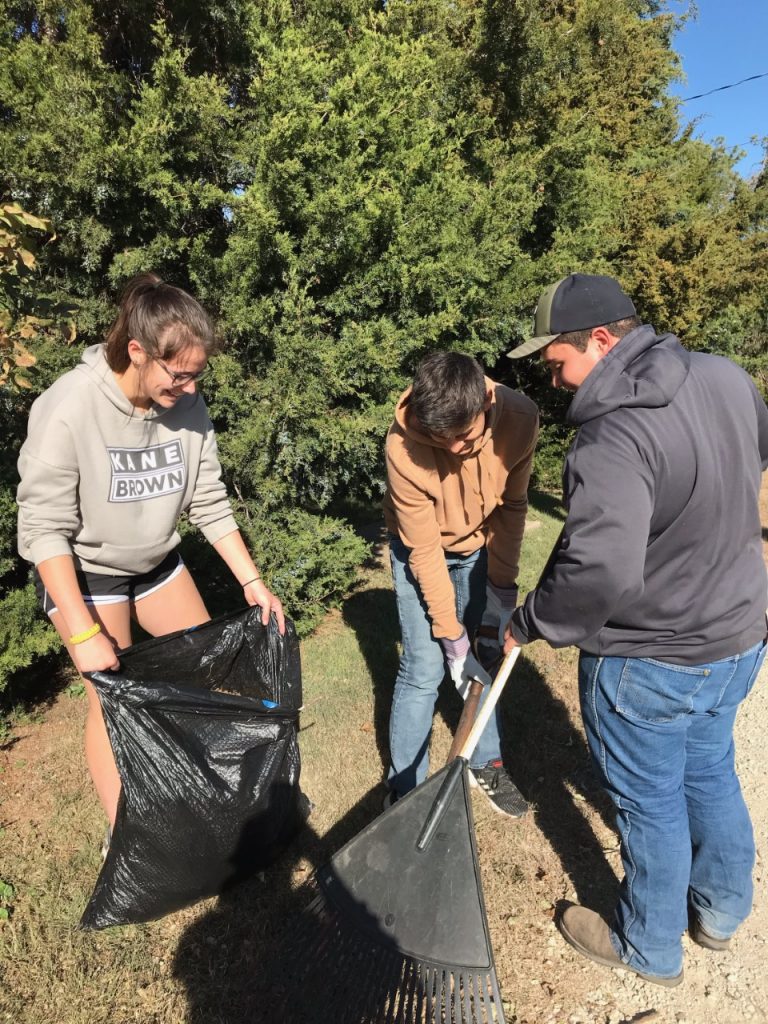
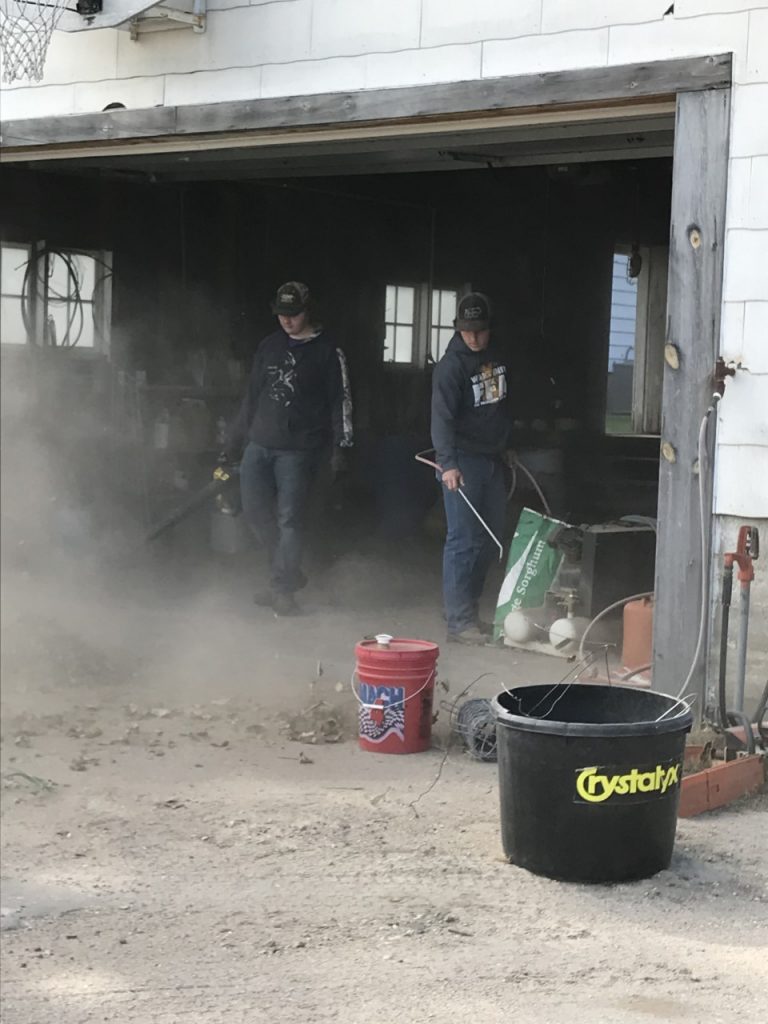
The 105 students, 14 teachers and 13 adult sponsors — most of them parents of the students — spent the day raking leaves, trimming trees, and doing other yard work. They also picked up trash, cleaned windows, and cleaned out basements, garages and sheds.

(Photos courtesy Stacie Minson)


Ellis Co. 4-H shotgun team takes fourth at state competition

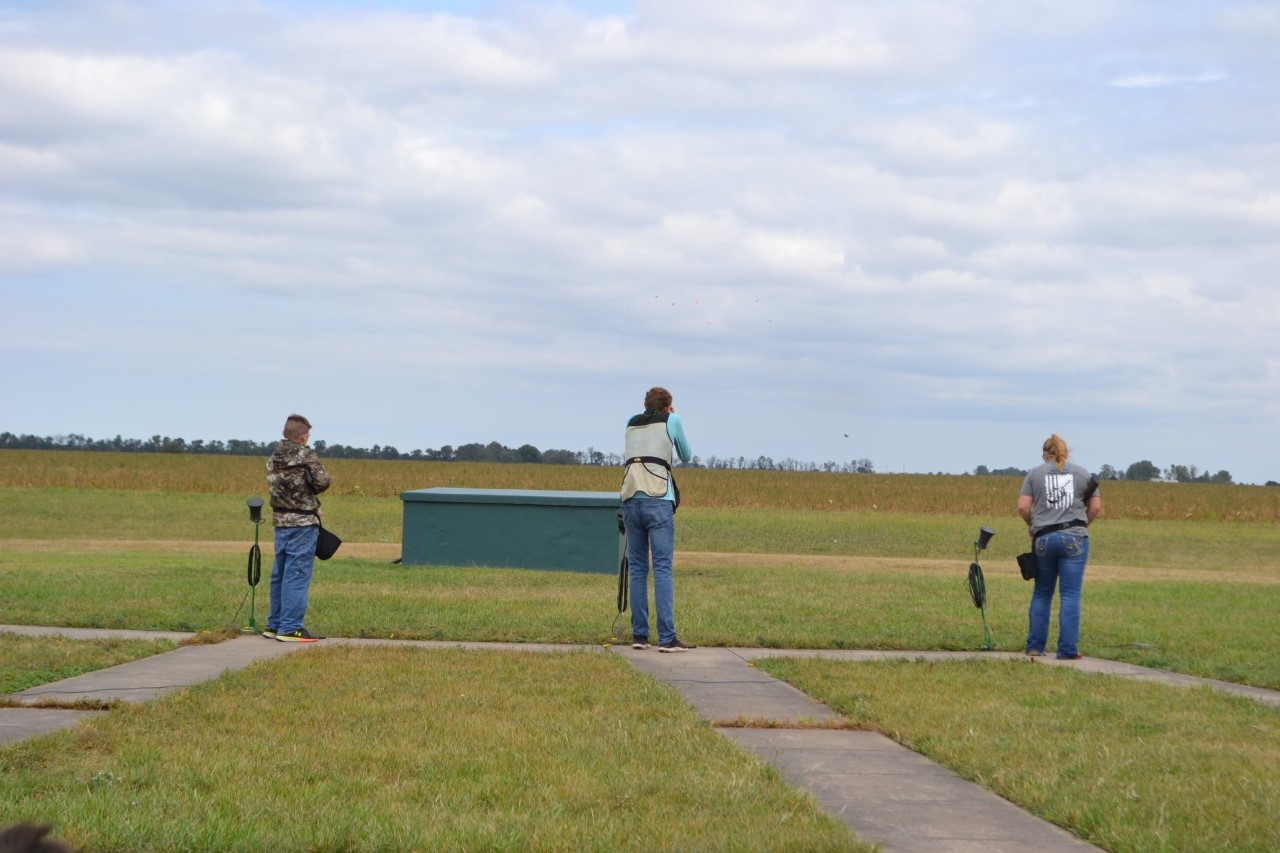
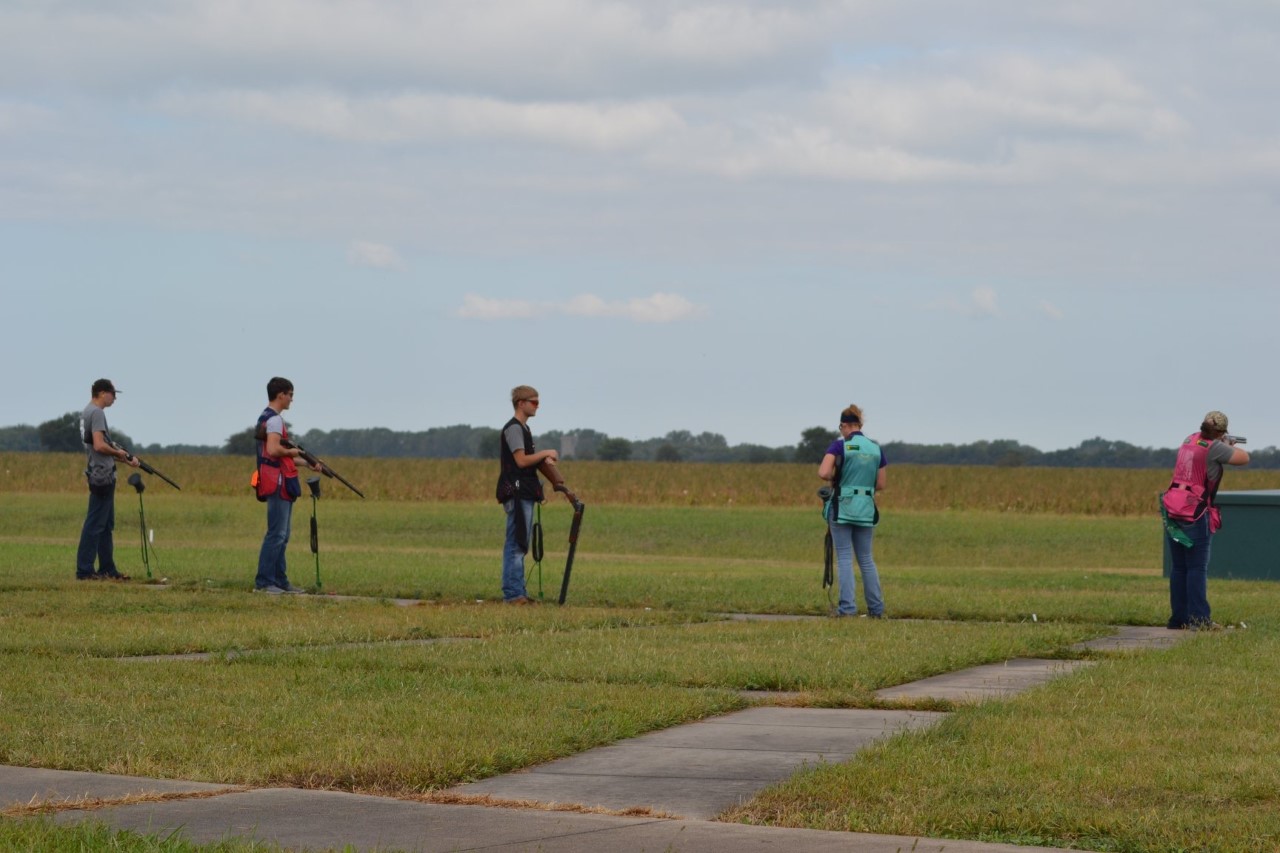
Eight members of the Ellis County 4-H shotgun team competed in the state 4-H competition October 5 and 6 in Sedgwick County.

The five-person team of  Jordan Hunsicker, Monique William, Trey Bitter, Cooper Shubert, and Madalyn William brought home a 4th place team award by hitting 569 targets over the two days of shooting.

Jordan Hunsicker also took home the Top Shot overall individual award for the second year in a row by breaking 141 out of 150 targets.

Hunter Shubert was the only junior member from the club who competed at the state competition and did very well by placing 9th overall in his division.

This year was also a first state competition for shooters Nolan Klaus and Kylie Dreiling, who did very well shooting trap.

– SUBMITTED –

City expects to continue passenger facility charge for airport projects

Hays Regional Airport

By BECKY KISER
Hays Post

The city of Hays plans to file a passenger facility charge (PFC) application with the FAA to impose and use the PFC at the Hays Regional Airport.

The additional $4.50 per enplaned passenger will fund the local share of certain PFC eligible airport improvements.

The PFC is expected to be effective February 1, 2020, through May 1, 2024, and generate an estimated $276,257.

Our last groups of projects is about to expire and so we have submitted a new group of projects to the FAA in order to justify the charge,” said Toby Dougherty, city manager.

Federal regulations require a public hearing prior to implementation to the PFC.

Dougherty says the process is more geared toward bigger airports such as Denver that “might have 25 different carriers that might want to come ask questions about it. We only have one carrier (United Express) and they’re well aware of our charge.”

A list of the PFC projects and the city’s share of the cost is shown below. Costs are split with the FAA which usually pays 90 percent of the total project amount.

A 30-day period is provided for filing of comments by the public. Comments must be received by 5 p.m. Monday, Nov. 25.

The Hays Regional Airport will hold an air carrier consultation meeting at 3 p.m. on Nov. 26 at the Hays Regional Airport conference room.

After the air carrier consultation meeting/public notice another 30-day period is provided for filing of comments. Comments must be received by 5 p.m. Dec. 26.

Comments may be submitted to:

City of Hays
Hays Regional Airport
Jesse Rohr, Director of Public Works
1002 Vine St.
Hays, KS 67601

UPDATED Oct. 27, 2019 to clarify the PFU would be a continuation of a previously approved implementation by the FAA. An air carrier consultation meeting, not public hearing, will be held Nov. 26.

KU announces summer 2019 graduates from NW Kansas

LAWRENCE — The names of 725 graduates from the University of Kansas this summer — representing 46 Kansas counties, 36 other states and 27 other countries — have been announced by the University Registrar.

Some graduates already have participated in KU recognition events, while others will choose to participate in KU’s 2020 Commencement ceremony. More Commencement information is available online.

Graduates are listed below by county, city and degree:

Ellis
Morgan James Mathews, Hays, Bachelor of Science in Geology
Taylor Mark Pfeifer, Hays, Doctor of Physical Therapy
Tina Tinkel, Hays, Doctor of Nursing Practice

Norton
Cassandra Russ, Lenora, Bachelor of General Studies in Liberal Arts & Sciences.

Russell County retailers invited to participate in Plaid on the Plains

RUSSELL — Select Russell County retailers will kick off the holiday shopping season with Plaid on the Plains, Nov. 29 through Dec. 1. Russell area shoppers will be encouraged to “put their money where their heart is”, by supporting local businesses. Plaid on the Plains promotes the many social and economic benefits of spending time and dollars with local small businesses during the holiday shopping season.

Plaid on the Plains kicks off on Nov. 29 with Plaid Friday, the small business alternative to Black Friday. Small Business Saturday, the American Express initiative, follows the next day. The three-day event wraps up with Sunday Funday.

Russell County retailers are encouraged to participate in Plaid on the Plains. There is no cost associated with the promotion, other than whatever discounts, sales or giveaways the retailer chooses to provide. Retailers are asked to complete a simple registration form no later than Friday, Nov. 15. This information will be compiled into the 2019 Shop Sheet which will be printed by Office Products, Incorporated (Russell) and distributed by Encore Antiques & Collectables/Veez Unlimited starting at 10 a.m. Friday, Nov. 29. Registration forms are available at Encore and Russell County Convention and Visitors Bureau.

This promotion is a partnership between Encore Antiques & Collectables/Veez Unlimited, Russell County Convention and Visitors Bureau, KRSL Russell Radio, and Office Products, Incorporated – Russell. For additional information, contact Encore Antiques & Collectables at 785-445-8480 or stop by 590 S. Fossil in Russell.

— Submitted

KDA: No changes for water use in GMD #5 following USFWS decision; no effect on R9 Ranch

KDA

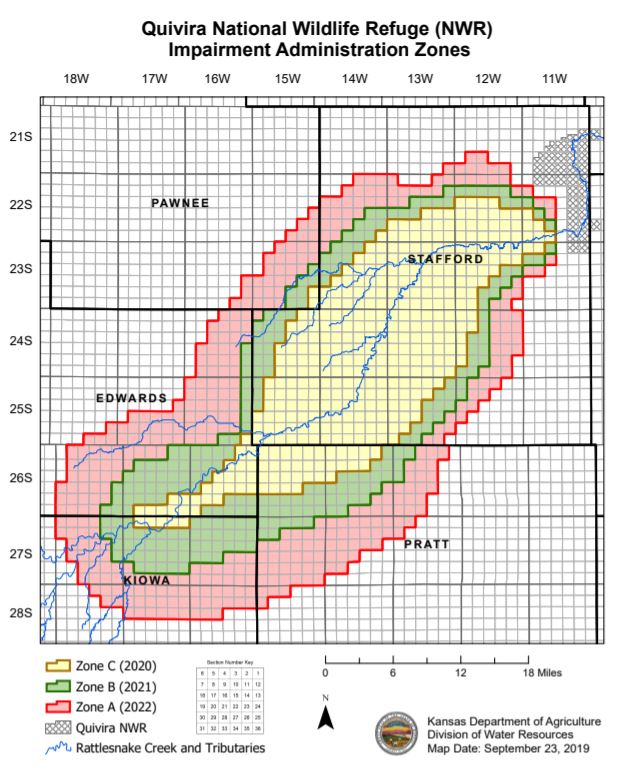
MANHATTAN — On October 25, The Kansas Department of Agriculture Division of Water Resources received notification of the official position of the Fish and Wildlife Service related to the impairment of the Quivira National Wildlife Refuge operated by the Service.

According to the notification, “The U.S. Fish and Wildlife Service will not make a request for water to the State of Kansas for Quivira National Wildlife Refuge in Fiscal Year 2020. Throughout the year, the Service will continue to work to find local, voluntary, collaborative and non-regulatory solutions, including augmentation, to address the water needs of the community and the wildlife conservation purposes of the refuge before determining if more formal measures are necessary to ensure the refuge’s water rights are secured. We look forward to working with the Kansas Department of Agriculture, the Kansas congressional delegation, and all water users to develop concrete milestones and lasting solutions.”

Based on this position, KDA-DWR confirms it will not issue any administrative orders regarding water use in Groundwater Management District 5 (GMD 5) for the 2020 growing season.

Part of the R9 Ranch in Edwards County, owned jointly by the cities of Hays and Russell as a long-term water supply, is located in GMD 5.

Prior to public meetings this week about the Quivira water impairment claim, Hays city manager Toby Dougherty said “only a small portion (few acres) of the R9 is in the Rattlesnake Basin. Whatever the result of the Quivira impairment claim, it should have little, if any, effect on the R9.”

Public meetings regarding this issue were held in St. John, Kansas, on October 21. At that time, the official position and timetable of the Service was uncertain, so KDA-DWR was unable to provide assurance there would be no water administration in 2020. This notification provides that certainty for farmers and ranchers in the Rattlesnake Creek Basin.

For extensive information on the Quivira impairment and all actions and public information surrounding the issue, visit www.agriculture.ks.gov/Quivira.

TMP-M cancer survivor honored at football game

Sophia Linenberger with her family before the TMP game Thursday night. Photos by Cristina Janney / Hays Post

Hays Post 

Sophia Linenberger, a sophomore at Thomas More Prep-Marian, was honored by the Thomas More Prep-Marian football team prior to their game against Ellsworth on Thursday night. 

Linenberger was diagnosed in January of this year, with Ewings Sarcoma Cancer.

The football players gave Linenbeger yellow roses as they ran on the field. She also participated in the coin toss.

Sophia’s family wrote the following statement that was read by the announcer during the opening ceremony at the game:

“Sophia Linenberger, a sophomore at TMP-Marian was diagnosed in January of this year, with Ewings Sarcoma Cancer. She has undergone six weeks, five days a week of radiation.

“Along with this, she has undergone three surgeries. She has had chemotherapy in Kansas City at Children’s Mercy Hospital each week since her diagnosis in January. Sophia has two more rounds of chemotherapy.

“Along with her and her family, tonight we want to announce to our Monarch Family, that Sophia is now in remission.

“After she finishes her remaining two weeks of chemotherapy, she will have a PET scan and a CT scan. If all goes well, she will then have the removal of her port surgery. She will be continuously and cautiously monitored with check-ups.

“She will also begin physical therapy to strengthen her legs to bring back her mobility to walk again.

“We would like to thank you for the cards, care packages, gift cards, donations, and above all, the continuous prayers. A special thank you to the Hays community and our TMP family. We ask that you continue to keep her in your prayers, as she still has a long way to go, before she will be fully recovered. God Bless and Go Monarchs! Sophia Strong.

“A special thank you of gratitude to Head TMP Football Coach, Jay Harris and the Thomas More Prep-Marian football team for the surprise of presenting Sophia with a yellow rose from each football player and every coach, to help her get through her last chemotherapy treatments.  

“A special thank you to TMP’s Mr. James Harris, we are humbled for all that he has done for Sophia and our family. 

“It was also a great honor for Sophia to be a part of the coin flipping for tonight’s game.”

Copyright Eagle Radio | FCC Public Files | EEO Public File