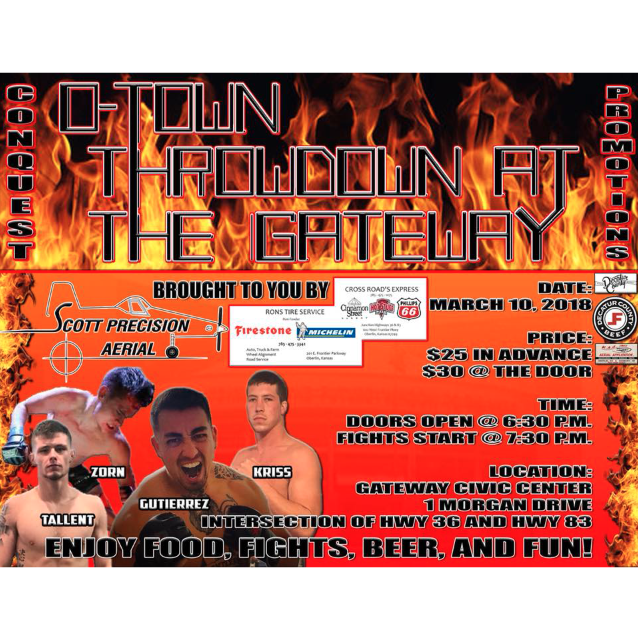
Enter for a chance to win a set of two FREE tickets to the O-Town Throwdown in Oberlin on Saturday, March 23.
Enter for a chance to win a set of two FREE tickets to the O-Town Throwdown in Oberlin on Saturday, March 23.
By JONATHAN ZWEYGARDT
Hays Post
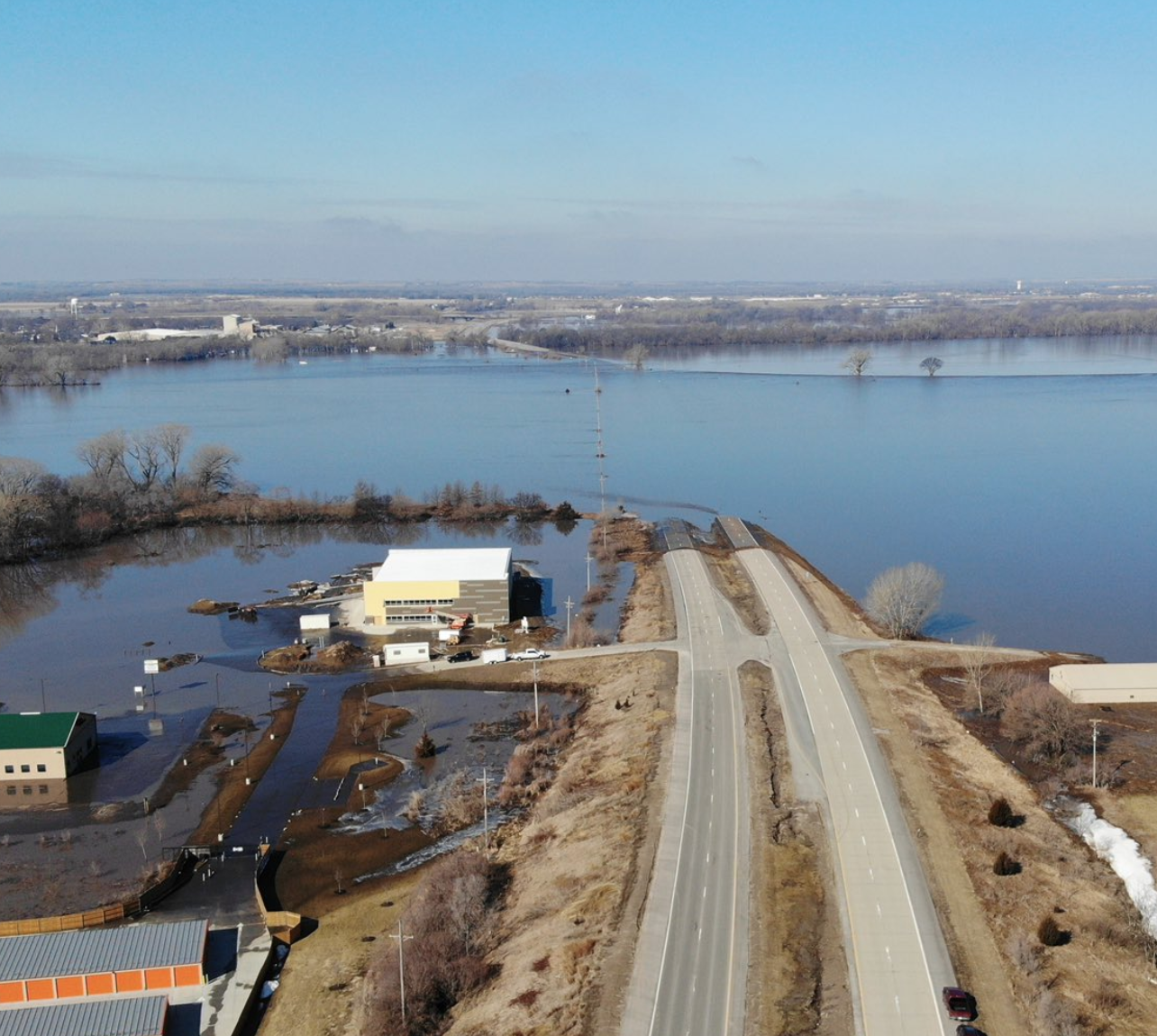
As Nebraska residents continue to recover from the devastating flooding, area residents are collecting donations in an effort to lend a hand.
Adam Brobst, a farmer and rancher in north-central Kansas, is leading an effort to collect and deliver donations to central Nebraska.
As of Tuesday evening, Brobst said he had a load of hay and a second and possibly third trailer full of donations ready to deliver to the Lincoln, Neb., area. Brobst said they will deliver they items to Davey, Neb., and then from there the items will then be packed back onto trucks and delivered to the region that needs them.
Brobst said he decided to put together the effort because many Nebraska farmers and ranchers lent a hand just a couple of years ago when many Kansans were in need during a string of wildfires.
“It thought it was our duty, and we needed to return the favor,” Brobst said. “because I know a lot of hay from Nebraska came down for the Kansas wildfires and Oklahoma wildfires.”
Brobst said anyone wanting to donate items in the Phillipsburg area can drop their items off at the Farmers & Ranchers Outlet in Phillipsburg. He will also pick up items at the co-op in Stockton and Midland Marketing in Plainville if anyone wants to leave donated items at either location.
RELATED: Floodwaters threaten millions in crop and livestock losses
They are currently collecting items to leave Phillipsburg at 8 a.m. Thursday and are planning a second trip to take a another round of supplies to the region next week.
Officials in Nebraska said they are currently in need of bottled water, non-perishable food, hygiene products and bedding, among other items. Farmers and ranchers are also in need of calf milk replacer, vet supplies, electric fence supplies and feed.
“They are going to send all the ag supplies to the west out of Davey, more toward central Nebraska where the majority of the ag stuff is affected and then north toward Columbus will go the household stuff,” Brobst said.
Brobst said he has friends in Nebraska who have been affected already by the flooding and others down river that could be affected in the coming days as floodwaters continue to move down river but said this disaster is going to hurt the agricultural industry across the board.
“There is a big area that’s been affected and its going to hurt the ag economy this year because you are talking billons of dollars of loss,” Brobst said.
Brobst said anyone wanting to make a donation can get in contact with him at 785-302-0621.
This is a massive amount of water and destruction. Again photos do not do it justice. This is Maple St going west towards Waterloo. #Flood2019 #NebraskaFlood2019 pic.twitter.com/D9OGgJUJjY
— Ofc. Mike Bossman (@OPDOfcBossman) March 17, 2019

By DIANE GASPER-O’BRIEN
FHSU University Relations and Marketing
Fort Hays State University students Gabe Warrick and Matt Hastings have been helping record Tiger athletic events for several years.
Last weekend’s NCAA Division II Women’s Central Region Basketball Championships might have topped them all.
Warrick is a senior from Larned, majoring in informatics with an emphasis in media studies. He is a member of the sports production crew for Tiger Media Network, FHSU’s convergent media hub.
Hastings, a native of Topeka, is working on a master’s degree in sport management and works as a graduate assistant in the FHSU Sports Information Office.
They are just two of hundreds of Fort Hays State students who helped make the regional tournament a success.
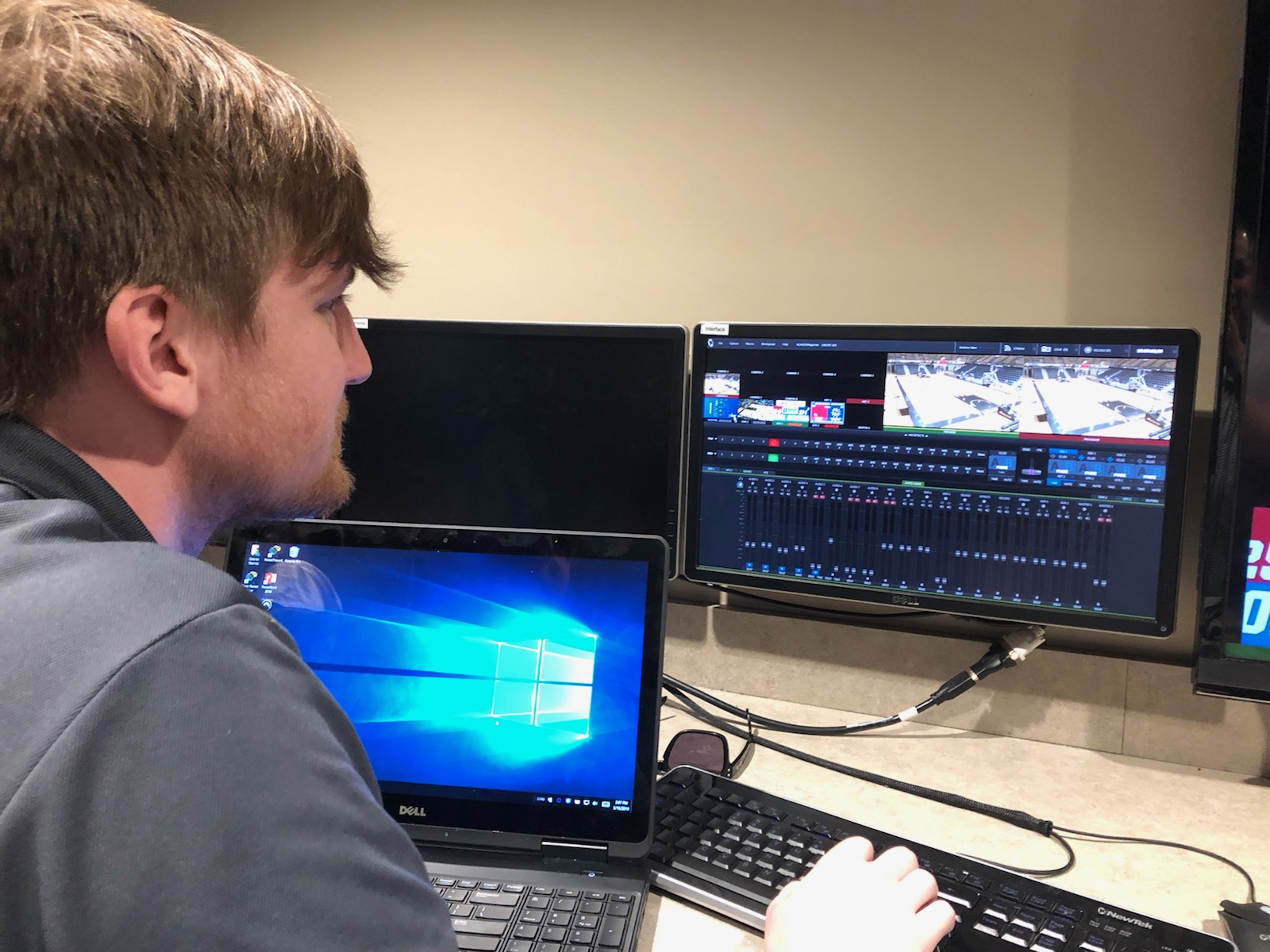
Warrick’s duties included camera operation, replay, directing, technical directing and graphics work, while Hastings put to good use his expertise in recording statistics, running the video board and generally making sure everything was running smoothly.
Some students returned to campus early from spring break week to work in several areas: concession stands, taking tickets, as parking lot attendants and ushers and with the maintenance crew. Also participating in the event were members of the Tiger pep band; the university’s dance team, the Tiger Debs; and the FHSU cheer squad.
“We rely heavily on student support for all of our operations. We simply wouldn’t have the manpower without them,” FHSU Athletic Director Curtis Hammeke said. “Not only is this necessary for our ability to put on these events, it also serves as great experience for these students moving into their future.”
And then, of course there were the students who returned from spring break in time to help cheer on the Tigers in Monday’s regional championship game. They added to the raucous crowd of 5,000-plus fans as FHSU battled Southwestern Oklahoma State University, which came out on top of the 88-77 score.
“Hosting an event like the NCAA Central Regional once again brings to light the tremendous community support we have here in Hays,” Hammeke said. “Visiting institutions and representatives from the NCAA are in awe of our crowd sizes and the support we have for facilitating such events.”
Warrick and Hastings are two students who felt privileged to help facilitate the regional tournament. They both are transfer students who chose Fort Hays State to continue their education following graduation from community colleges.
“This was a bigger production than what I was used to,” said Warrick, who came to FHSU in 2017 after two years at Hutchinson Community College. “I got a good start at Hutch, but when you have a building like Hammond Hall here at FHSU, where you have two studios and three different sets, it was really cool to come and see. It was a step up, and I was excited.”
Warrick was particularly intrigued with FHSU’s TriCaster, a product that merges live video, graphics, special effects, etc., into one polished production for viewers.
“The technology we have here is unrivaled,” he said. “Our production team and live-streaming I’d put up against any in the country.”
Warrick said he would even put FHSU up against Division I schools, where underclassmen have to wait their turn for hands-on experience.
“That’s the great thing about Fort Hays State,” he said. “You can come in as a freshman and start working with a camera right away. And it doesn’t matter what your major is. We have some in political science, geoscience, music, among others. If they want to come and help, we will teach them. We are here to help them learn.”
Warrick was one of 14 TMN students who helped with the three-day tourney, putting in approximately 25 hours while broadcasting seven games. All that came less than a week after many of the same students worked a six-day shift producing the MIAA tournament at Municipal Auditorium in Kansas City, Mo.
The students involved in the sports production elements of TMN are under the guidance of Russell Heitmann, news and sports director for the organization.
“The work these kids do is amazing,” Heitmann said. “Our crew comes from multiple academic backgrounds, majors and interests. However, they have been able to come together and put on numerous quality productions throughout the year. I am incredibly proud of the growth from the first home football broadcast to putting on an NCAA regional broadcast event.”
Hastings echoed Warrick’s thoughts on the real-life opportunities available for FHSU students early on in their college careers.
“As a D-II SID worker, I’ve been more exposed to all the sports,” said Hastings, who began working with SID Ryan Prickett during his junior year as an undergraduate student. “In D-II, I’m the guy who does a little bit of everything.”
A big share of Hastings’ duties are performed behind-the-scenes. He is responsible for accumulating statistics and writing stories for men’s soccer, men’s cross country, wrestling and baseball.
But when it comes to Game Day in GMC, Prickett calls on several student workers to help out.
For the Central Region Championships, Hastings could be seen working all around the coliseum, from running the video board to making sure the teams had everything they need, and everything in between.
“I want to make sure everything goes right,” he said, “so I become vested in it.”
Although FHSU lost the regional title game, the Tiger women will no doubt remember the tournament experience for a long time. So, too, will fellow FHSU students who had the opportunity to be a part of the event.
“Events like this are a great opportunity for kids to see what it takes to put on a high level tournament weekend,” said Brian Flax, an employee in the Athletics Department who is in charge of concessions. “It takes a lot of pieces falling into place, and the students are a big part of that. Besides getting to see their fellow athletes do well, they get the chance to be involved, too.”
After five years of working as a student under Prickett as an undergrad and graduate student, Hastings is set to graduate in May and hopes to continuing working in sports information at the D-II level. He said he is glad he attended FHSU because it gave him a completely different outlook of working at a D-II school than what he had growing up.
“Being from the Topeka area, I’m used to the big city, and a lot of people don’t know much about Washburn,” he said of Washburn University, a D-II school and a fellow MIAA member with FHSU.
“In Hays, everybody is fully vested in this university,” Hastings continued. “Farmers from around the whole area and people around town, everyone knows Fort Hays State. That’s one thing I really love about Hays. The community is so involved in the university and its athletic teams.”
Submitted
Grow Hays invites the public to the 1st annual Ellis County Youth Entrepreneurship Challenge (YEC) today at BriefSpace, 219 W. 10th in Hays.
Ellis County High Schoolers were invited to enter the Network Kansas YEC event earlier this year. There are 24 entries from Hays High and TMP-Marion competing for $2,400 in prize money.
First place receives $900 and will go on to compete at the Kansas Entrepreneurship Challenge (KEC) State Championship.
Additionally, Midwest Energy, Nex-Tech and Sunflower Electric are awarding $200 prizes for Best Trade Show, Ready to Launch and People’s Choice. Judging started this morning and winners will be announced at 1:30 p.m. The public is encouraged to attend the event.
During the 2018-2019 academic year, there have been more than 40 YEC events throughout Kansas. The winner of each event is invited to participate in the KEC State Championship, April 30 in Manhattan Kansas. The YEC series gives Kansas students hands-on experience thinking entrepreneurially.
If you have questions, you can reach Grow Hays at 785-628-3102 or at [email protected].
CITY OF HAYS
The city of Hays Fire Department will be inspecting and flow testing fire hydrants on March 20, 2019 in the area of Vine St. to Canterbury Dr. between 13th St. and 22nd St. This is part of a coordinated effort by the city of Hays to inspect all fire hydrants in the city and flush all water mains annually.

Inspecting fire hydrants ensures that the valves operate properly and that there is no damage or obstructions that will prevent or interfere with the prompt use of fire hydrants in an emergency. Firefighters are also checking the pressure and volume of water mains in each neighborhood for firefighting purposes.
The associated flushing of water mains allows chlorine to be distributed throughout the system to eliminate bio-filming in the water mains.
Slight discoloration of the water supply may be encountered although there will be no health risks to the consumer.
All reasonable efforts will be taken to minimize the inconvenience to the public.
Drivers are asked to avoid driving through water discharging from a fire hydrant during the short flushing period.
For more information please contact the Hays Fire Department at 785- 628-7330.

By JONATHAN ZWEYGARDT
Hays Post
A 34-year-old Ellis man has been charged with premeditated first-degree murder in the fatal shooting of a Hays man last month.
According to Ellis County Attorney Tom Drees, Ryan Paul Thompson was charged Tuesday in Ellis County District Court with allegedly shooting 26-year-old Diego Gallaway on Feb. 27 in the 2700 block of Indian Trail.
Thompson is alleged to have shot Gallaway in the back of the head while having him in a chokehold, according to Drees.
If convicted, Thompson faces a minimum of 50 years in prison for intentional and premeditated first degree murder.
Thompson was also charged with possession of methamphetamine with the intent to distribute. He allegedly possessed 23.9 grams of the drug. If convicted, he would face between 92 and 144 months in prison.
He was also charged with criminal possession of a firearm by a convicted felon. Thompson allegedly possessed a .22 caliber handgun. He was previously convicted of aggravated endangerment of a child in Russell County in 2018.
At preliminary hearing will be scheduled at a later date. Thompson is being held in the Ellis County jail in lieu of $750,000 bond.
The filing of criminal charges are merely allegations of criminal wrongdoing, Drees said. The defendant maintains a presumption of innocence unless and until they are proven guilty in a court of law.

By CRISTINA JANNEY
Hays Post
Attendees at the monthly FHSU Science Cafe learned Monday night how an egg that could fit in a easter basket could grow into a gigantic dinosaur.
Cat Sartin, FHSU instructor of biological sciences, presented “The Bare Bones About Dinosaur Growth.”
Sartin’s research has focused on the growth patterns found in fossilized dinosaur bones. Sartin studied hadrosaurs, which were a family of dinosaurs that are commonly known as duck-billed dinosaurs. They were herbivores, which meant they ate plants, and among the most common dinosaurs living during the late Cretaceous Period.

Sartin choose the hadrosaurs in part because they lived in herds with individuals of varying ages.
The eggs of a hadrosaurs were about the size of a potato, but the adults grew to up to 20 feet long.
Even the titanosaurs that grew to be 120 feet long started out from an egg that is only about 18 inches long.
“If dinosaurs were up and running around today, we could go out and measure them. We could look at what they were eating. We could put trackers on them. It would be great, but they’re not around,” she said.
Although researches can look to modern birds and reptiles for clues to how dinosaurs may have lived and grown, these animals don’t grow to near the sizes the dinosaurs did.
“We can’t go out and study them because all we have are the bones, and they are not even really bones. They are fossils, which means the bone material has been largely replaced by rock, so it is just a snapshot in time for each individual animal,” Sartin said. “Fossils don’t grow. They don’t exhibit behavior.”
Sartin analyzed thin sections of hadrosaurs bones under a microscope to evaluate their texture. Young individuals have an open or lacy texture to their bones to allow for more blood vessels to feed the rapid growth of the bones. As an individual ages to equivalent of elementary school child, its bone structure has more order. The collagen fibers in the bone lay down in layers almost like plywood.
Skeletally mature individuals bones are the most organized. These individuals have osteons, which are bone canals. These structures are good at stopping stress fractures in older creatures.
“When you are young, you do a lot of stupid things. We all do. It’s OK. Across the animal kingdom, animals do a lot of stupid things and take a lot of risks. They need really strong bones for all the stupid things they do,” Sartin said.
“As you get older, you get into a routine. You are doing the same things over and over again whether you are a human or a dinosaur. That means you are more likely to have stress fractures from that repetitive motion. That is what this is helping to stop.”
The texture, however, will not tell the age of the animal.
Dinosaurs lay down lines in their bones called lines of arrested growth. These lines can be counted like tree rings to determine age. The amount the animal grew each year can also be estimated by the amount of bone between each line.
Researchers used captive populations of animals, such as alligators and king penguins, to determine what triggered the animals to lay down the rings. They suspected the rings were laid down annually.
They turned to a small primate, commonly called a mouse lemur, that they housed in a lab. They changed the mouse lemur’s light cycles to 18-hour days instead of 24-hour days. After 365 of these 18-hour light cycles, the mammal laid down a bone ring.
Specifically of the hadrosaurs, Sartin choose to focus on a group of eolambia fossil that were found in Utah at the site where a river likely flooded.
The curators who held the eolambia fossils were not all that excited to have Sartin slice up their specimens, so she found isolated bone shafts that weren’t likely to be used for display in museums. She ended up with 20 some specimens to study.
By measuring the lines of arrested growth, Sartin determined these dinosaurs grew quickly for 10 to 12 years, and then their growth slowed.
“It makes good sense, because there are things out there that might want to eat you,” Sartin said, “and it might be helpful to grow a little quicker.”
From analyzing the texture of the bones, she also determined the group of individuals found in the Utah deposit were not skeletally mature. Sartin theorized that some of the teenage dinosaurs might be sexually mature and reproducing.
She also determined the first growth ring in the bones was fairly large, which meant they went from an egg the size of a baked potato to a middle schooler in one year.
Sartin again looked to modern animals to help her with her research. Ostriches go from an egg to a full-grown adult in 18 months.
“It is completely reasonable to think a little eolambia could go from a baked potato to yeah high in a year,” she said.
Eolambia did not have spikes or armor or plates for defenses, so growing quickly and living in herds were their defenses against predators.
Other herding herbivores have also shown similar rapid growth patterns.
Apatosaurus, which we used to know as brontosaurus, grew to adult size in 10 years. They had an average length of about 75 feet and weight of 16 to 22 tons. Most of the plant-eaters’ growth came in three years. Researchers are trying to determine how the animals could consume enough food to support that type of growth.
Theropods (meat-eating dinosaurs) also had quick growth spurts, but they were delaying their spurts to a little later in their youth.
“Theropods hang out as small little guys for the first three to five years of their lives. It is kind of cool and groovy to be little, and then they decide to go gangbusters and get really big, really quickly,” Sartin said.
Researches believe the meat eaters did not have to grow quickly for protection. This allowed them to learn hunting techniques from the adults in their family groups. They also may have been learning social cues from the others in their family groups or packs, Sartin said.
Based on these growth patterns and the family groups in which the meat-eaters’ fossils have been found, researchers believe the meat-eating dinosaurs parented their young, she said.

HaysMed
The annual HaysMed Service Awards Banquet was held last night at the Rose Garden Banquet Hall in Hays. The highlight of the banquet was the presentation of the Norman W. Jeter Humanitarian Award, the Sister Mary J. Mollison Nurse of the Year Award and the Vic Eddy, MD, Physician of the Year Award. These awards are the highest level of recognition that an associate of HaysMed, part of The University of Kansas Health System, can receive.
The Norman W. Jeter Humanitarian Award recognizes an individual’s human kindness and dedication to medical excellence. The award was presented to Andy Beck. Beck is the controller at the hospital and has been with HaysMed since 1994
Recipient of the Sr. Mary J. Mollison Nurse of the Year Award was Cheryl Glassman, RN. This award honors a nurse who displays excellence in the areas of job knowledge and performance, quality improvements, self-development and participation in hospital and community affairs Glassman is part-time chaplain at the hospital.

The Vic Eddy, MD, Physician of the Year Award was presented Dr. Lee Hodny, OB/GYN at HaysMed. The award recognizes a physician who displays a high level of clinical experience and an extraordinary dedication to improving healthcare delivery in the community.
The following service anniversaries were also recognized:
45 Year
LeAnn Keener
40 Year
Joyce Heffel
Paulette Kroeger
Maggie Leiker
Debra Miller
Cindy Robben
JoAnn Schauvliege
Stephanie Staab
35 Year

Kay Kruse
Debbie Linenberger
Susan Little
Dr. Kevin McDonald
Linda Waldschmidt
30 Year
Michelle Beyer
Vicky Sauer
Terry Siek
Donna Younger
25 Year
JoDee Altman
Chris Augustine
Wanda Augustine
Jamie Dinkel
Bonnie Jamieson
Deb Krier
Pam Mayers
Shawn Mulkey
Denise Pfeifer
Ann Robinson
Melanie Urban
20 Year
Holly Bittel
Sarah Dreiling
Tanya Fross
Courtney King
Lesa Klozenbucher
Patti Lane
Patty Larson
Pam Leiker
Kathleen McGinnis
Connie Mermis
Mandy Meyers
Nikki Mihm
Stephanie Niblock
Sue Noll
Leslie Olmstead
Chada Schleicher
Laura Schwindt
Diane Scott
Mary Selensky
Christy Stahl
Marsha Stremel
Carolyn Terry
Cammie Townley
Phyllis Vonlintel
Annette Voss
Lona Werth
Gayla Wichman
15 Year
Lindsy Allen
Steven Balthazor
Stephanie Banker
Amy Barnes
Kelly Brungardt
Dr. Ross Buckles
Shanna Carrillo
Sandy Cearley
LeAnn Dix
Deloris Farthing
Sarah Fischer
Joy Glick
Patrick Green
Sarah Green
Dr. Heather Harris
Traci Jacobs
Jason Livesay
Laura McCarter
Melanie McCoy
Cristina Meier
Kelly Myers
Crystal Raat
Cari Readle
Tara Roa
Amanda Schmidt
Warren Smith
10 Year
Kirsten Angell
Kim Befort
Kristina Befort
Charles Brungardt
Brenda Bryant
Willy Cadoret
Shawn Clark
Roxie Einsel
Tami Grover
Tara Harding
Dr. Anthony Hornick
Aubrey Jones
Shauna Keil
Carmen Keller
Jessica Koerner
Dustin Koster
Kalin Labarge
Lynn Leiker
Lori Lowe
Shelly Moeckel
Maggie Moeder
Laura Monroe
Jim Mortinger
Kathy Nieman
Andrea Paul
Carrie Pfannenstiel
Megan Pray
David Ranker
Brenda Reiff
Kaitlin Robben
Jennifer Schmidt
Glenda Schuetz
Mary Schumacher
Tiffany Scott
Cameron Stremel
Devere Walker
Amy Wasinger
Mackenzie Waugh
Sharon Wendell
Debra Wendland
Arlene Werth
Cindy Werth
Kimberly Wiles
Jennifer Williams
5 Year
Jennifer Anderson
Chelsea Angel
Donna Augustine
Camilla Ballinger
Stephanie Beougher
Jim Billinger
Kylee Bombardier
Michelle Braun
Shelbie Brooks
Michelle Chittenden
Jeffrey Droegemeier
Lindsey Fox
Ashley Garcia
Kylie Geist
Jenna Gilliam
Elizabeth Goetz
Tonya Grogg
Lydia Hynek
Dr. Mohammed Janif
Shannon Kibel
Leroy Kleinsorge
Holly Kraus
Desirea Long
Nancy Luecke
Katie McQueen
Kelly Miller
David Montgomery
Alison Nuttle
Emily Nuttle
Noelle Robinson
Beth Rohleder
Lesly Rupp
Travis Rupp
Meredith Sarver
Kelsey Schrant
Calie Sherman
Gwendolyn Sillmon
Abby Stenzel
Gaylene Thayer
Lisa Thummel
Kellie Werner
Kaylee Wilkens
Molly Wilkens
Nicole Winstead
Kathy Younger
 The Hays Larks are still looking for host families for the 2019 season.
The Larks are Hays’ summer-collegiate baseball team, with players staying with host families from late May through early August. The host families program started almost 30 years ago, and Larks manager Frank Leo, who will begin his 37th season as Larks manager this summer, said the host families program is integral to the team’s success.
“It is a tremendous part of our organization,” Leo told hayslarks.org in a story last summer. “We would not have this program – I don’t care if we had all the money in the world – if we would not have homes to put these players in. I can’t say enough times thank you to those people for what they do.”
Families interested in hosting a Larks player this summer should leave a message with their contact information at the team’s Facebook page.
The season opener is May 31. A First Pitch Dinner will be held at Thirsty’s Brew Pub & Grill on April 15 from 5 p.m. to 8 p.m. Burgers, hot dogs and fries for $10, with tickets available at Phaze 2, Meckenstock Group and Arnett Chiropractic Care, or at the door.

By JACKIE MUNDT
Pratt County farmer and rancher
The world today is quick to judge. A lurking mob stands ready to provide a sum judgement of a person’s character and worth based on a small sample of actions or choices.
Look at responses to any social media post made by an elected official. Even the most positive statements are used to air a grievance about non-related issues.
Opinions, and the arguments they inevitably bring, are divisive and fierce. Whom you voted for in the last presidential election or where you stand on a water issue will likely earn you enemies without ever meeting them. When we argue, call names and get ugly with each other, what do we gain?
I am not advocating for a shift away from conflict and criticism. When people give me honest feedback it gives me the insight needed to change and grow. Through the processes, I become better and stronger.
My plea is for people everywhere to learn how to disagree productively and exercise civil discourse, which does not aim to tear down but to build a better, stronger future.
Civil discourse is commonly defined as “an engagement in conversation intended to enhance understanding.” The concept is simple, but the effect is game changing.
Civil discourse starts with a basic but vital assumption of respect. Each person is entitled to an opinion and has the right to share their perspective.
No matter how much you disagree with a person’s viewpoint, try not to get emotional. Two people yelling at each other does little more than embarrass other people at the table.
Instead of getting angry, get interested. Why do they feel that way? How did they come to that conclusion? Am I missing something in my knowledge of the subject?
Taking the first step to seek understanding shows an important level of patience. When you seek first to understand others, you show respect for their opinion. Don’t worry about getting your point across. Showing respect will build trust; as trust increases, the conversation becomes more robust and opportunities will arise to bring in a different perspective.
This deference to another speaker also subtly acknowledges that your opinion is not the most important. Humility, which is often missing in disagreements, can diffuse emotional responses.
Humility can also help us to overcome very natural emotions. Do you approach an argument or disagreement with any acknowledgement that you might have your mind changed? Some people who answer this question honestly find they fear being wrong or may be disloyal to someone in the process.
If you aren’t open to changing your mind, why should anyone be willing to have you change his or her mind? Civil discourse has an implied social contract that both parties will equally work toward the best resolution. Try not to let pride and stubbornness prevent you from being an honest player in the conversation.
Listening to another perspective doesn’t make you disloyal to your ideals; it will give you a deeper understanding of the issue and confidence in your position. Play devil’s advocate and try to understand the opposing point of view. Having a truly open mind will make you more likely to ask the tough questions and strive to see the whole picture.
When you reach the end of a civil discourse, you and your fellow conversers may still maintain your original opinions, but you will likely have gained each other’s respect and trust.
“Insight” is a weekly column published by Kansas Farm Bureau, the state’s largest farm organization whose mission is to strengthen agriculture and the lives of Kansans through advocacy, education and service.
TMP-M
The Monarch Messenger is a student publication by Thomas More Prep-Marian Junior High students covering the news and events of the seventh and eighth grades.
WSU Strategic Communications
WICHITA — Fifteen Kansas high school seniors have been named as part of the newest class of Rudd Scholars, each receiving a 4-year scholarship to attend Wichita State University.
The scholarships cover all remaining tuition and fees, books and supplies, and room and board.
In addition to living on campus and carrying a full load of classes toward, scholars will receive mentoring and success coaching to help them graduate in four years. They will also participate in many developmental activities outside the classroom, network with leaders in their future professions, build strong relationships among themselves, and serve to help the next generation of scholars through an active and connected alumni association after graduation.
The 15 incoming Shockers are:
Wyatt Abell, Oakley High School
Darbee Chard, Chanute High School
Wendy De Loera, Wichita East High School
Storm Dial, Emporia High School
Brady Flesner, Medicine Lodge Jr./Sr. High School
Julie Gonzalez-Morales, Sumner Academy of Arts and Science
Maria Jimenez, Yates Center High School
Brooke Keith, Meade High School
Cali Keith, Meade High School
Codi Kentner, Quinter High School
Kennedi Meiers, West Franklin High School
Ronald Michel, Wichita County Jr./Sr. High School
David Nevarez-Saenz, Sumner Academy of Arts and Science
Lauren O’Donnell, Blue Valley High School
Ian Weaver, Hesston High School
In addition, five Kansas students received Rudd Scholarships to attend Emporia State University, and another five will attend Fort Hays State University. The expected value for all 25 winners over four years is $1.4 million.
“We couldn’t be more pleased with the exceptionally high-caliber, well-rounded students that were chosen for this year’s Rudd Scholarship,” said Peter Najera, president of the Rudd Foundation. “We expect them to maintain their grades and graduate in four years, and in return they will earn their degree debt free.”
The Rudd Scholarship is earned through a competitive selection process that requires grades, test scores, essays, letters of recommendation, and for the 50 semifinalists a personal interview. The process opened in the fall and drew hundreds of applications from all four corners of the state.
“Kansas high schools continue to produce very talented young men and women imbued with the Midwestern values of grit, determination and work ethic, and we are excited to make an investment in them through a college education,” said Najera. “These 25 recipients, in addition to the 19 previously selected, brings us to a total of 44 Rudd Scholars in college who will continue to support each other as they are groomed to strengthen the talent pipeline here in Kansas upon graduation.”
“In just two more years we will have nearly 100 Rudd Scholars on campus learning from one another,” said Najera, “and a few years after that they will all be networking with one another throughout the state as they continue on their trajectory of being positive contributors to our Kansas communities and society as a whole.”
About the Rudd Scholarship
The Rudd Scholarship is a renewable, 4-year program that covers any remaining cost of attendance after all other aid, grants and scholarships are applied to a student’s account. Cost of attendance includes tuition and fees, books and supplies, and room and board.
By removing financial barriers to a college education, chosen scholars are expected to achieve a high level of excellence on campus in preparing themselves to be leaders in their profession and in their communities after graduation.