WICHITA – AAA Kansas announced today that 41 law enforcement agencies – comprising 30 police departments and 11 sheriff’s offices – throughout the state are being honored with AAA Kansas Community Traffic Safety Awards for their 2018 work to keep roadways in their cities and counties safe through a variety of initiatives and programs.
The awards have been presented annually since 2011 by AAA Kansas to community law enforcement agencies for their efforts to successfully and cost-effectively improve local traffic safety. The agencies are scored and recognized for their efforts in multiple categories, including education, emergency medical response, enforcement and engineering.
“Our police departments and sheriff’s offices in Kansas do an excellent job in keeping motorists, cyclists and pedestrians safe in their communities,” said Shawn Steward, Public Affairs Manager for AAA Kansas. “We salute these 41 law enforcement partners for their commitment, hard work and, in many cases, creative community engagement, in delivering effective and successful traffic safety programs.”
The winning law enforcement agencies will be recognized by AAA Kansas with award plaques in their communities. The honored agencies and their award levels are as follows:
Agency
2018 Award Level
Andover Police Department
Platinum
Arkansas City Police Department
Platinum
Barton County Sheriff’s Office
Bronze
Bonner Springs Police Department
Platinum
Brown County Sheriff’s Office
Platinum
Caney Police Department
Platinum
Cherokee County Sheriff’s Office
Platinum
Cloud County Sheriff’s Office
Gold
Coffeyville Police Department
Silver
Dodge City Police Department
Platinum
El Dorado Police Department
Platinum
Fort Scott Police Department
Platinum
Franklin County Sheriff’s Office
Bronze
Gardner Police Department
Silver
Hays Police Department
Platinum
Hiawatha Police Department
Platinum
Horton Police Department
Platinum
Johnson County Sheriff’s Office
Bronze
Kansas City Kansas Police Department
Gold
Leawood Police Department
Platinum
Lenexa Police Department
Platinum
Linn County Sheriff’s Office
Silver
Lyon County Sheriff’s Office
Platinum
McPherson Police Department
Silver
Miami County Sheriff’s Office
Gold
Mission Police Department
Platinum
Olathe Police Department
Gold
Osawatomie Police Department
Platinum
Overland Park Police Department
Gold
Parsons Police Department
Platinum
Pittsburg Police Department
Platinum
Roeland Park Police Department
Platinum
Salina Police Department
Platinum
Sedgwick County Sheriff’s Office
Silver
Seneca Police Department
Platinum
Shawnee Police Department
Gold
Spring Hill Police Department
Platinum
Wellsville Police Department
Silver
Westwood Police Department
Platinum
Wichita Police Department
Gold
Wyandotte County Sheriff’s Office
Gold
Six Kansas law enforcement agencies have earned a AAA Kansas Community Traffic Safety Award in each of the eight years the awards have been given: Andover Police Department, Arkansas City Police Department, Cherokee County Sheriff’s Office, Olathe Police Department, Pittsburg Police Department and Shawnee Police Department.
AAA provides automotive, travel, and insurance services to 59 million members nationwide and nearly 346,000 members in Kansas. AAA advocates for the safety and mobility of its members and has been committed to outstanding road service for more than 100 years. AAA is a non-stock, non-profit corporation working on behalf of motorists, who can now map a route, find local gas prices, discover discounts, book a hotel, and track their roadside assistance service with the AAA Mobile app (AAA.com/mobile) for iPhone, iPad and Android. For more information, visit www.AAA.com.
Fort Hays State University’s Forsyth Library will feature guest speaker Angela Bates, executive director of the Nicodemus Historical Society and Museum, from 12:30 to 1:30 on Wednesday, Feb. 27 in the Forsyth Library South Study Area.
Bates will present “Nicodemus, KS: A Story of Black Migration to Western Kansas,” a story about migration to and from Nicodemus in the late 1800’s.
Each year, the Association for the Study of African American Life and History announces a Black History month theme to focus the attention of the public and explore historical issues of importance to those of African descent.
The theme selected for 2019 is Black Migrations which highlights the movement of freed slaves to new geographical regions and social realities. In the early 20th century, black migration patterns often included a move from the south to the Midwest region.
Nicodemus, located 54 miles from FHSU’s campus, is a National Historic Site under the U.S. National Park Service. Settled in the free state of Kansas in 1877, Nicodemus is the oldest and only remaining all-black settlement west of the Mississippi.
Bates, a descendant of original Nicodemus homesteaders, worked to get Nicodemus designated a National Historic Site and serves as a speaker for the Kansas Humanities Speakers Bureau.
As I walked my legislative district last year, one of the subjects people would ask me about is school security. My response was that we need to approach school security in several different ways, including implementing an anonymous student supporting system; installing classroom panic buttons; supporting mental health services; and creating a single point of entry/exit for school buildings.
Last Session, House Republicans put forward an initiative to keep the children of Kansas safe and secure at school that was signed into law in May 2018 . The Safe and Secure Schools Act requires the State Board of Education to work with other agencies to develop statewide standards for safety and craft security plans for each school district in the state. Since its enactment, the Kansas State Department of Education (KSDE) and the State Board of Education have worked on creating, refining, and adopting standards.
They also have looked through the funding requests from 156 USDs, as a total of $5 million was allocated in FY 2019 to help schools make their buildings more secure. The districts requested a total of $13 million in improvements, but unfortunately, the Governor recommended defunding this program entirely in her proposed budget for FY 20. I believe this is a step in the wrong direction.
For more info1mation on this subject go to the website KSDE created for schools to get more information on the Safe and Secure Schools initiative: https://www.ksde.org/Kansas-SafeSchools. The website provides a listing of the 9 adopted standards, free online courses, planning documents, and other resources to consult.
The cities of Hays and Russell have been told a Final Master Order for the R9 Ranch water project will be completed by Friday, March 1.
If not, the cities will “turn up the heat,” and 40th District State Sen, Rick Billinger, R-Goodlandm plans to intervene, according to Hays Mayor Henry Schwaller.
The cities submitted applications to the state in June 2015 for development of the R9 Ranch in Edwards County as a long-term water supply for Hays and Russell.
In May 2018, the Kansas Department of Agriculture Division of Water Resources released a draft master order approving an application to convert water use on the city-owned property from agricultural to municipal.
Following a public hearing in Greensburg in June, DWR Chief Engineer David Barfield began preparing the Final Master Order.
Hays Mayor Henry Schwaller updated the situation during a news conference Tuesday morning at the Hays Welcome Center after announcing last week the cities planned to increase pressure on the state to produce the order.
“We’ve had the input. The DWR has not released the document and there’s been considerable delay. We don’t know why,” he said.
Schwaller, along with Hays City Manager Toby Dougherty and Russell City Manager Jon Quinday, were in Topeka on Monday to visit with state officials about the plan status.
The trio met at the statehouse with newly elected Gov. Laura Kelly and Lt. Gov. Lynn Rogers.
“We had a very productive meeting with the governor,” Schwaller said, “quick and engaging. We shared our concerns, where we are in the process and the purpose of it.”
Both Kelly and Rogers are familiar with the project and Kansas water law, having served previously in the Kansas Legislature.
The group also met with Sen. Billinger and the new secretary of the Kansas Department of Wildlife, Parks and Tourism, Brad Loveless, the former conservation director of Westar Energy in eastern Kansas.
According to Schwaller, the last communication with DWR said the Final Master Order would be ready in two weeks. That information came Friday, Feb. 15.
“Sen. Billinger told us if we don’t have the Final Master Order by next Friday, he will personally go over and meet with the chief engineer of the Division of Water Resources,” he said.
Schwaller said Loveless, an avid hunter and fisherman, was not aware of the agreement with KDWPT to turn the 7,000 acre ranch into a walk-in hunting area as it’s returned to native grass.
“Because he’s new to the job, he didn’t know about this. He’s very excited. Loveless has actually seen the ranch when a friend took him there,” he said.
Melissa Dixon, Jeff Crispin, Jacob Wood, Toby Dougherty and John Braun listen to Hays Mayor Henry Schwaller Tuesday.
Dougherty also attended Tuesday’s news conference, along with Hays Water Resources Dir. Jeff Crispin, Project Manager John Braun, Assistant City Manager Jacob Wood and Convention and Visitors Bureau Executive Director Melissa Dixon.
“We’re going to keep the pressure on,” Schwaller added. “Commissioners are reaching out to other elected officials. We’re calling them. I’ll be sending letters.”
Hays employs a lobbyist for the R9 project, Sean Miller of Capitol Strategies LLC, who has been instructed to meet with the new Secretary of Agriculture, Mike Beam, Schwaller said. DWR, which issues the master orders, reports to the Kansas Department of Agriculture.
The cities of Hays and Russell are co-owners of the R9 Ranch. It was purchased in 1994 as a possible long-term solution to water needs for the towns. Hays owns 82 percent of the ranch; Russell owns 18 percent.
There was an “outcry” in Edwards County at first about “outsiders coming in to buy water that was theirs,” Schwaller said. He believes most of that has died down.
“We’ve also agreed to a substantial amount of reduction in the water we would take from the ranch.”
When operating as a ranch/farm, nearly all of the R9’s 7,800 acre-feet of water rights were being used in irrigation. Hays and Russell have voluntarily agreed to pump only 4,800 acre-feet per year — a 30 percent reduction — which is what modeling by project engineer Black and Veatch has determined is a sustainable yield that is naturally replenished.
“By not pumping the full water right for irrigation to farm, we’ve already done all our neighbors a huge benefit. Water will still be running in the aquifer. We’re not going to take our full water right,” explained Schwaller.
R9 proposed municipal wells (Click to enlarge)
The wellfield is being reconfigured to optimally locate each water well and reduce the total number of wells. There are also now monitoring wells on the property.
“There are a couple of owners in the area that are concerned this might affect their water rights. It will not. They can still pump their full water rights that they’ve been doing.
“What we’ve been doing will sustain the entire aquifer in the area. The Groundwater Management District (GMD) No. 5 has not been concerned. We have endorsement from the Kansas Livestock Association. The Kansas Farm Bureau has been neutral in the matter.”
Schwaller noted some recent objections have been raised by an outside group with a Utah engineer, but dismisses the research as having “no basis in Kansas water law. The outside concerns are out of left field and not scientific.”
The water would be moved from the Arkansas River Basin to the Smoky Hill River Basin in the Hays wellfield at Schoenchen. That would trigger the Kansas Water Transfer Act for the first time because the proposal is to move 2,000 acre-feet of water or more per year a distance of 35 miles or more from water basin to another.
The R9 Ranch is south of Kinsley and 78 miles from Hays. Ellis, Victoria and La Crosse have expressed interest in purchasing some of the water for municipal use.
By state law, once the Final Master Order is issued, the Water Transfer Act will be triggered. The act still requires approval within 18 months from a three-person panel consisting of the Kansas Department of Health and Environment Secretary or the KDHE Director of the Division of Environment, the head of the Kansas Water Office, and the chief engineer of the KDA/DWR.
Schwaller describes the relationship between Hays and Russell and DWR Chief Engineer Barfield as “very good and productive.”
“We’ve gotten along well. … I think he just wants to do the best job and we appreciate that. We also appreciate that sometimes there’s a difference between getting something done and flourishes. We don’t need flourishes. This is just a very simple document. He can sign it any time.”
Schwaller said the cities would not make any concessions about the amount of water to be pumped.
“If we don’t have a Final Master Order in two weeks, there are other steps we can take, but we don’t want to go down that path. They would be very harsh and affect everyone in that basin.
“It’s important for the counties of Ellis, Russell and Rush that we have this water,” Schwaller stressed. “We are a $2 billion annual economy and an important part of northwest Kansas. If we do not have this water, we cannot continue to move forward.
“We’ve waited long enough and we’re ready to move.”
Hays voters approved a half-cent sales tax in 1998 dedicated to financing the $80 million project.
In a recent letter to the editor, I pointed out that abortion is not a political issue. However, in just these past few weeks we have seen extreme legislation promoting abortion. New York passed legislation approving 3rd trimester abortion – up to the point of birth and then celebrating the fact with loud shouts of exaltation. This legislation included abortions being performed by non-physicians i.e. coat hanger abortions (this is caring for women and their health?). As a side note — today more black babies are aborted in NYC than are born — anyone thinking Margaret Sanger?).
Virginia proposed legislation that would not only allow 3rd trimester abortion but if the baby survived the abortion, the bill would allow the baby to be killed after being “made comfortable”, in the words of Virginia Gov. Ralph Northam (you can see that video @ https://www.youtube.com/watch?v=E6WD_3H0wKU.) And yes, Northam received $2M from Planned Parenthood(PP) during his campaign.
Archbishop Naumann of KCK speaking on the NY legislation said, “This legislation is evil, pure and simple. It shocks the conscience… greeted to raucous cheers and standing ovations. Most grieving to our Lord of Life is that those who advocate for abortion put their eternal souls in jeopardy.
Evil? What’s it like for a 3rd trimester infant? In 1977 Gianna Jesson burned alive for 18 hours in her mother’s womb from a saline abortion at PP (Planned Death is more like it!). She miraculously survived. “Women’s Rights? — As a human being, what were Gianna’s? What other hideous ways are they using to kill infants these days?
First babies in the womb, then babies born alive who survived abortions, then the elderly, then the disabled — sound familiar? That’s Nazi Germany – that’s dictatorship – that’s the loss of our basic freedoms – that’s a menace from within!
I beg all men and women of good will to vote for those legislators who support life from conception to natural death for they are the true social justice warriors! It’s that important — it’s not just one issue – it’s foundational. Without this “right to life” no other rights matter. That is why it is the first unalienable right listed in the Declaration of Independence.
Abortion underpins violence in society – for killing an innocent human infant is a very violent, brutal, horrific, gruesome act. Increased violence is coming — wake up America and act (vote) before it is too late! Love, peace and justice will then have a chance in America.
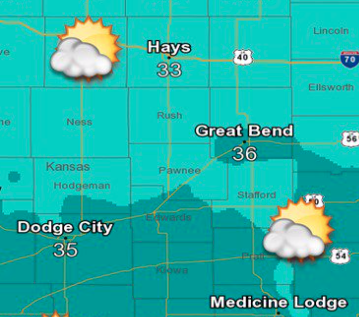
Wednesday Cloudy through mid morning, then gradual clearing, with a high near 33. Light west wind becoming west southwest 5 to 10 mph in the morning.
Wednesday Night Mostly clear, with a low around 16. South southwest wind around 7 mph becoming southeast after midnight.
Thursday Partly sunny, with a high near 41. Southeast wind 6 to 15 mph.
Thursday NightMostly cloudy, with a low around 28. Southeast wind 10 to 13 mph.
Friday A slight chance of freezing rain before 10am, then a slight chance of rain. Mostly cloudy, with a high near 43. Chance of precipitation is 20%.
Friday Night A chance of rain before 5am, then a chance of snow, freezing rain, and sleet. Mostly cloudy, with a low around 28. Chance of precipitation is 50%.
Saturday Snow, possibly mixed with freezing rain before 7am, then snow between 7am and 5pm, then rain, possibly mixed with snow after 5pm. High near 35. Breezy. Chance of precipitation is 90%. New precipitation amounts between a quarter and half of an inch possible.
The Ellis County Sheriff’s Office has received several reports from local citizens of phone calls related to a jury scam.
The basic jury scam is the caller identifies them self as a deputy sheriff or jailer and states there is a warrant out for failure to appear for jury duty. At times, the scammer will spoof a number to make it appear the call is coming from a law enforcement agency. The scammer states there is a fine and court costs that need to be paid to avoid being arrested.
Anyone receiving one of these calls should hang up on the caller. Do not pay any fine. Questions about jury duty can be answered by the Clerk of the District Court.
AURORA, Colo. — Arapahoe County prosecutors on Tuesday formally charged a Kansas man accused of kidnapping an Aurora woman and attempting to sexually assault another woman in Kansas days after he was released from prison.
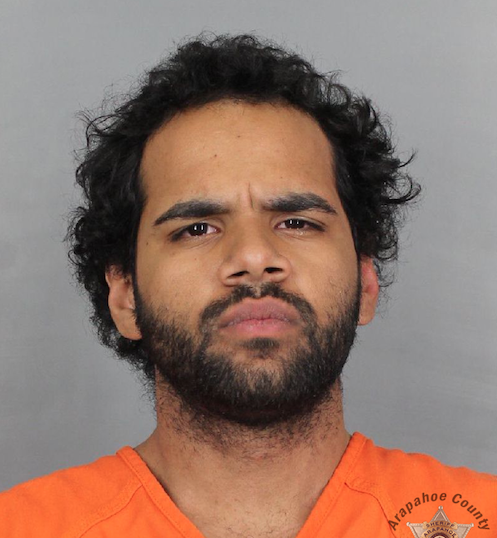
Prosecutors levied eight counts against Tre Carrasco, 23, on Tuesday morning, including felony kidnapping, robbery and motor vehicle theft.
Aurora police arrested Carrasco on Feb. 12 after local SWAT officers “conducted a high risk stop” on a vehicle the Kansas native was suspected to have stolen days earlier.
Police originally charged Carrasco with five felony counts, including carjacking and attempted kidnapping. Prosecutors have since tacked on additional charges.
Carrasco is accused of following a woman to her car at about 1:30 p.m. Feb. 7 in the parking lot of the 24 Hour Fitness near Abilene Street and East Florida Avenue, according to an arrest affidavit filed against him.
The 38-year-old victim told police a man believed to be Carrasco stood at the driver’s side door of her silver Toyota Camry and told her to “scoot over.” The man then entered the car before she could close the door and said “scoot over or I’ll kill you,” according to the affidavit.
Carrasco is described as being 5 feet, 9 inches tall and 180 pounds.
The woman “immediately began to try and open the door to get out of the car,” according to the affidavit. The man reached over the victim and tried to prevent her from fleeing, but the woman was quickly able to escape the car and went back inside the local gym to call police. She had dropped her cell phone in the car before the man drove away toward the south exit of the parking lot.
The victim was not injured in the incident.
The victim described the man who stole her car as “between dark and light skinned … resembling the popular musician ‘The Weekend,’ ” according to the affidavit.
That description helped the victim and investigators identify Carrasco in a police line-up on Feb. 12. In their reports, police “noted Carrasco does have a passing resemblance to the singer.”
Four days before the car theft outside the Aurora gym, investigators in Kansas say Carrasco tried to rape a woman at gunpoint in Hays.
Hays detectives contacted Aurora police on Feb. 3 alerting them Carrasco was likely in Aurora and “there was a credible, suspected threat” he would commit the same crime, according to the local arrest document.
Carrasco was in Colorado last summer after entering an “out-of-state post release” program, according to Kansas Department of Corrections records. He was later picked up on a parole violation.
Aurora police issued multiple alerts for Carrasco and the stolen car following the reported incident at the Aurora gym. An Aurora officer spotted the stolen Toyota Camry at about 6:30 p.m. on Feb. 11, and attempted to conduct a traffic stop, according to the affidavit.
But the driver and an unidentified passenger didn’t stop, and the Aurora officer didn’t pursue the car.
The arrest document did not specify why the officer did not follow the vehicle.
Carrasco was released from prison in Kansas on Feb. 1, according to Kansas DOC records and reports published in The Wichita Eagle newspaper.
Carrasco was sentenced to prison in April 2013 for several aggravated battery charges stemming from an incident in July 2011, according to Kansas DOC records.
Carrasco is a registered sex offender.
He incurred a litany of disciplinary infractions while in Kansas prisons between 2014 and 2018, including using stimulants, disobeying orders and disrespecting correctional officers.
Carrasco has not been arrested as an adult in Colorado prior to the incident this month, according to Colorado Bureau of Investigation records.
Carrasco is being held at the Arapahoe County Jail on a $150,000 bond, according to court records.
It is currently unclear if or when Carrasco could be extradited to face his charges in Kansas.
He is currently scheduled to appear in Arapahoe County District Court at 8:30 a.m. on March 8 to face a pair of felony charges for being a fugitive of justice and wanted by another agency, according to court records.
Carrasco is scheduled to appear for a preliminary hearing in his Arapahoe County case at 1:30 p.m. on March 12, according to Vikki Migoya, spokeswoman for the 18th Judicial District Attorney’s Office.
Ellis County commissioners directed county departments Monday night to decrease their budgets by 1.5 percent for next year to meet an estimated $1 million projected budget shortfall.
The commissioners also asked County Administrator Phillip Smith-Hanes to prepare the budget impacts of several other options including either a one mill tax increase or a half-cent countywide sales tax.
One mill in property tax would raise about $388,000. On a $175,000 home, that would equal about $20 per year.
Commissioner Dustin Roths said he did not think the county could move forward without increasing revenue.
Roths
“I hate asking for across the board,” Roths said of potential cuts, “but I think part of the problem of not asking for across the board is picking favorites and not expecting everybody to do their part in fixing this fiscal situation.
“As little as I would like to do it, I think we have to figure out a little bit of revenue. At that point, that is not popular, but I think it is something that will have to be done at the most minimum inconvenience to our citizens as possible”
Other cost-cutting moves included a proposal to decrease the county’s contribution to employee health insurance. It is currently 92.5 percent for family plans. Roths suggested that be decreased by 3 percent each year for three years.
He said he wanted county employees to bear the smallest burden as possible of the cuts.
“It is always tough to tighten your belt on things like that,” he said, “but as we have alluded to before, we’re losing control of that cost structure because we cover a percentage. When we cover a percentage, we don’t know what it is going to cost from year to year. It starts getting out of control, and I think that is what has happened now. I would rather compensate more in salaries and try to hire for these positions than be stuck with a financial compensation for health care.”
Commissioner Butch Schlyer suggested the county look at decreasing funding to outside agencies. The county currently pays $1.052 million to outside agencies. Schlyer suggested cutting that amount by as much as $300,000 and perhaps not funding some organizations the county is not statutorily required to fund.
Schlyer
About $281,000 goes to High Plains Mental Health, but the county has a legal obligation to provide funding to that agency, Smith-Hanes said.
“I don’t think our Ellis County government or its employees should just take the brunt of everything,” Schlyer said. “Those outside agencies are going to have to take a hit and a big hit.”
Commission Chairman Dean Haselhorst said he was on the same page as Roths and Schlyer.
He suggested department heads hold off on hiring to fill vacant positions.
“One employee with benefits is a lot of money,” Haselhorst said.
However, Smith-Hanes said he was not aware of many positions that would be opening up in the next six months.
The commission earlier in the meeting discussed what to do with about $1.4 million in excess county sales taxes that were collected to complete several county building projects.
The county directed administration to look at replacing the elevator in the law enforcement center and finishing the basement at the EMS services center so donated gym equipment could be placed in the area for use by first responders.
The elevator project was estimated to cost $250,000, and the workout room was estimated to cost about $31,000. Smith-Hanes said the elevator project would likely come in above that estimate, but finishing the basement might be able to be bid for less.
The commissioners said they wanted to retain the rest of the funds for use for future projects or transfer the balance to the general fund to make up for budget shortfalls in 2020.
Smith-Hanes said the commissioners’ direction Monday on the budget was a starting point and the department heads will appreciate the 1.5 percent in recommended cuts, compared to a 5 percent cut that would have been required if all of the $1 million shortfall came from county departments.
In other business, the commission:
• Approved the extension of the solid waste contract with the Finney County Landfill
• Approved the 2019 Noxious Weed Management Plan
• Approved change in hours at the transfer station to 8 a.m. to 5 p.m. Mondays through Fridays and 9 a.m. to 4 p.m. Saturdays. The change will take affect April 1.
• Heard a report from County Counselor Bill Jeter on foreclosure proceeding.
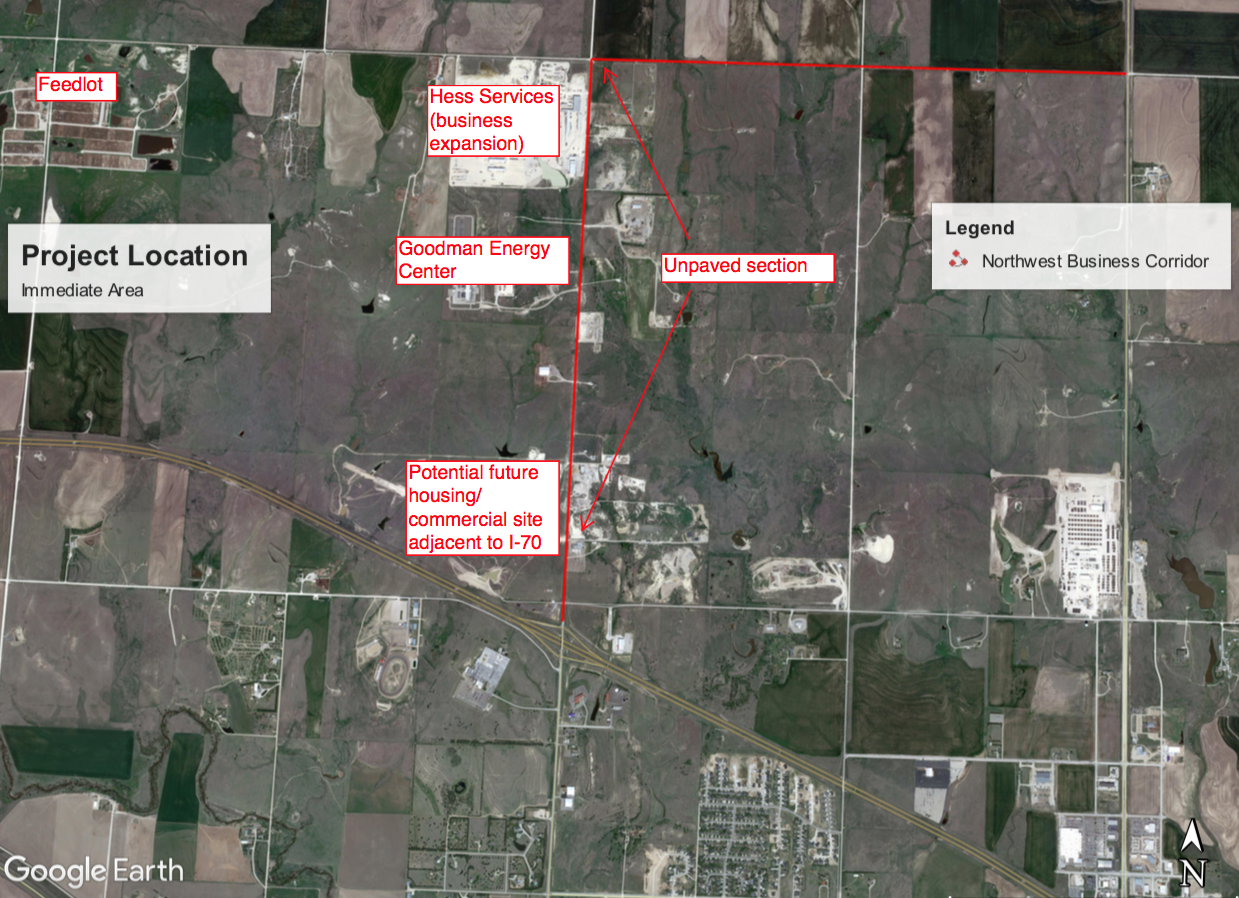
The Ellis County Commission approved $800,000 Monday night for improvements along the Northwest Business Corridor.
230th Avenue would be paved from just north of 55th Street to south of Feedlot Road. This would include improvements to the intersection of 230th Avenue and 55th Street.
The county hopes to leverage the county funds for the application of grants and state funding.
111th District Rep. Barbara Wasinger, R-Hays, together with 110th District Rep. Ken Rahjes, R-Agra, will host Kansas Commerce Secretary David Toland and Deputy Secretary of Transportation Lindsay Douglas in a tour of the area Friday. They will be joined by officials from Ellis County, the City of Hays, GrowHays and the Northwest Kansas Economic Innovation Center in meeting with business leaders from Midwest Energy and Hess Services.
The corridor has already seen significant development since 2011 with property values increasing by $25.4 million as of 2018. Expansions have occurred at Midwest Energy’s Goodman Energy Center, Celebration Community Church and Hess Services, with additional developments in various stages of planning at the corner of 55th and 230th as well as the Pertl Ranch Feeders feedlot.
The county broke down the project into three sections:
• Feedlot Road from 230th to Highway 183 — $5,018,081
• 230th Avenue from Feedlot Road to 55th Street — $4,375,807
• Intersection of 230th Avenue and 55th Street — $1,685,442
Click to expand
These three sections total $11,079,33. Additional improvements on 55th Street would bring the total amount up to $15,734,862.
The funds the county pledged Monday would come from cash on hand in the special road and bridge fund.
“We do have a number of other priority projects, but this one sees quite a bit of traffic, and I think this should rise to top of the list,” Phillip Smith-Hanes, county administrator, said.
County Commissioner Dustin Roths said he supported the project.
“I think this is probably the most important project we are looking at by far right now,” he said, “so I am happy to commit to it. As far as staff recommendation, as long as they feel comfortable with it, they can start shopping [for grants] with that commitment from us. I think this is critically important to northwest Kansas.”
Commissioner Butch Schlyer agreed with Roths.
“I do believe, as Dustin said, a very important project,” he said. “We do have to take some action to get something started on this road.”
In 2013, the county received an economic development grant from the Kansas Department of Transportation for $1.5 million toward the cost of the improvements at the intersection of 230th Avenue and 55th Street. This funding commitment, however, was contingent upon a development at that intersection that would serve travelers on Interstate 70.
During the past year, a private developer has approached the City of Hays about constructing such a development, but because municipal services are desired for the development, it is likely the city would annex the area around the intersection and the KDOT funding would go to the city for that project.
Dr. Robb Scott, assistant professor of teacher education at Fort Hays State University, has been accepted to present at the upcoming PanSIG conference at Konan University in Nishinomiya, Japan.
PanSIG is an event organized by many of the Special Interest Groups (SIG) of the Japan Association for Language Teaching (JALT).
Scott taught English in Japan from 1988 to 1992 and served on the executive committee of Tokyo JALT.
“I am honored and excited at the prospect of seeing old friends and familiar places in Japan,” said Scott.
Scott’s presentation will be in the conference track “Literature in Language Teaching” and his presentation is “Mono No Aware: Revisiting the Magic Bonsai Tree.”
This is the two-minute warning for the first half of the 2019 Kansas Legislative Session. Most of next week will be spent on the house floor all day debating and voting on the bills produced through the committee process.
With that being said, it is time for a round of legislative updates on Friday, March 1st. There will be a more detailed schedule next week also check on kenforkansas.com or my social media channels.
Now, let’s get to some of the big items this past week: On Thursday, February 14th, the House considered HB 2197, which would reamortize KPERS for thirty years. This bill was introduced by Gail Finney (D-Wichita) on behalf of the Governor. The bill is the cornerstone of the Governor’s budget proposal. It proposes to extend the time that KPERS is not fully funded and this refinancing frees up some short-term dollars to support the Governor’s proposed spending increases.
The bill received a public hearing in the Financial Institutions and Pensions Committee and opportunity was provided to debate and amend the bill. It was imperative to see if this bill had any support before considering the entirety of the Governor’s Budget. With one third of the session in the books, house budget committee members needed to know if this “crucial” part of the Governor’s proposal had support.
On a motion to advance HB 2197 to final action, the motion failed with a super majority opposing the measure, effectively killing the bill. The vote was 36 in favor and 87 against. I along with all the remaining Republicans voted against advancing the bill and they we were joined by four Democrat colleagues. Supporting reamortization would extend the time KPERS is not fully funded by 15 years and leave a debt legacy of $7.4 billion more just to fund the Governor’s spending increases today. Protecting our retirees, responsibly paying down debt, and ensuring that future Kansans don’t have to incur massive debt for current spending are all priorities for our members. We stood together in defense of those priorities and against bad policy that violated them.
Also, this past week, as a member of the House Appropriations Committee we heard the Governor’s Supplemental Budget bill, HB 2121. Appropriation adjustments to the current approved budget for FY 19 include: $9.3 million SGF for a one-time payment to the federal government for debt setoff settlement agreement; $2.2 million SGF for the KanCare Clearinghouse; $6 million for revenue shortfalls at the four State Hospitals (Osawatomie, Larned, Kansas Neurological Institute, and Parsons); and $1.4 million SGF for medical contract funding in the Department of Corrections. Additionally, the Supplemental bill reflects caseload adjustments.
Additionally, the Governor added language replacing current law on the Budget Stabilization Fund, modifying how deposits and withdrawals would be made to the Fund. She also set up an deposit/withdrawal arrangement for a Debt Repayment Fund. The Governor’s Supplemental bill also pays the Pooled Money Investment Board loan in full, eliminating planned transfers to pay the interest-free loan off in FY 20-FY 24. The Governor also eliminates the transfer from the SGF to the KPERS Trust Fund of up to $56 million if SGF receipts are above the April consensus estimates.
The other budget bill, the Mega bill, is HB 2122.
The House Appropriations Committee has begun the process of considering Budget Committee recommendations this week. Those recommendations and any changes made by the Appropriations Committee will eventually become a budget bill for consideration by the House. The last of the Budget Committee reports will be made to Appropriations on March 13. The budget bill will be finalized in Appropriations after that date.
And on Wednesday, a Joint meeting of the House and Senate Education Committees were held to hear the Dyslexia Task Force Report. The Task Force was created in 2018 Sub. for HB 2602, a bill crafted and worked by the 2018 House Education Committee. The Task Force met five times during the 2018 Interim. The four Subcommittees met for additional days.
The Legislation provided a charge of four areas to study: 1) Research and recommend evidenced-based reading practices to address dyslexia or characteristics of dyslexia for use by schools. 2) Research and recommend high-quality pre-service and in-service professional development activities to address reading difficulties like dyslexia, including identification of dyslexia and effective reading interventions to be used in schools and within degree programs, such as education, reading, special education, speech-language pathology, and psychology. 3) Study and examine current state and federal laws and rules and regulations, and the implementation of such laws and rules and regulations that affect students with dyslexia. 4) Identify valid and reliable screening and evaluation assessment and protocols that can be used and the appropriate personnel to administer such assessments in order to identify children with reading difficulties, such as dyslexia or the characteristics of dyslexia as part of an ongoing reading progress monitoring system, multi-tiered system of supports, and Child Find special education eligibility for students.
The leadership of the Dyslexia Task Force was Chairperson Jim Porter (State Board of Education) and Vice-Chairperson Rep. Brenda Dietrich (R-Topeka). The Task Force organized its recommendations around the structure of the four subcommittees that were created: Pre-Service and Inservice Professional Development; Screening and Evaluation Process; Evidence-based Reading Practices; and Current State and Federal Law. The recommendations did not include any proposed legislation but did recommend that the Legislature reappoint the Dyslexia Task Force to meet once per year for three years to monitor progress of implementation of the recommendations. Also included was that the Legislature provide funding for: school districts to train staff on dyslexia and to train college of education professors who teach reading. A bill to reauthorize the Task Force has not been introduced this session.
Nearly all the recommendations provided guidance to the State Board of Education. Specific recommendations included: requirements for standards; examinations of certain teacher candidates on the science of reading; and encouragement of colleges of education to develop a course of study with a specialization in dyslexia and dyslexia-like characteristics.
We had a great group from Norton at the capital this week, they met with several new cabinet secretaries and had lunch with a number of members of the house and senate including Lt. Governor Lynn Rogers.
If you come to Topeka during the session, my office is in Room: 149-S. My phone number is (785) 296- 7463 and email is: [email protected] and you can always try my cell number is (785) 302-8416.
I hope to see you at one of the legislative updates on March 1st. It is my honor to by your representative.
Rep. Ken Rahjes (R-Agra), is the 110th state representative and chairman of the Higher Education Budget Committee. House District 110 includes Norton and Phillips counties as well as portions of Ellis, Graham, and Rooks counties.
Yuchen Wang-Boswell of China with her husband, Korby Boswell, on the FHSU campus. The couple met as students.
By CRISTINA JANNEY Hays Post
FHSU student Yuchen Wang-Boswell wanted to go home to visit her family during the summer of 2017, but President Donald Trump was in his first year in office, and the new administration was coming down hard on immigration with his newly instated travel ban.
Wang-Boswell was in the country legally on a student visa, but with nationalist sentiments running high, Fort Hays State University’s international student office advised Wang to stay in the States.
Wang-Boswell went three years between visits with her parents. She has since married an American and is embroiled in what she admits will likely be a prolonged and expensive process of applying for permanent residency in the United States.
She said she did not think Americans understood the complexity of the U.S. visa and immigration system or what it means to students or immigrants like herself.
Wang, who will graduate in May, said she thinks the perceived change in attitude toward foreigners in the United States has resulted in fewer students deciding to study in the United States.
Carol Solko-Olliff, FHSU director of international student services, said although FHSU has not seen a significant decrease in international student enrollment, nationwide universities are reporting a dip in international student enrollment. Some are attributing the decrease to election of President Trump.
Nationally, international student enrollment in the U.S. dropped by 6.6 percent during the 2017-18 school year, and universities and colleges reported further declines as of the fall of 2018.
The university can help international students prepare their VISA applications, but it has no control over whether those visas are granted. Solko-Olliff said the university has also seen an increase in the number of student visas that have been declined since Trump took office.
Kingsley Udenze, a FHSU student from Nigeria, is a graduate student in cyber security.
Both Wang-Boswell and Kingsley Udenze of Nigeria, were approved for their visas on their first attempts. However, Udenze said of the 20 people ahead of him the day he interviewed for his visa at the U.S. consulate, all 20 were denied. One friend applied five times for a student visa before he was accepted.
Only a fraction of the FHSU’s on-campus student body is international students — 4.5 percent. Most of the university’s international students come from China, but the college has 32 countries represented on campus.
The school’s cross-border program has an enrollment of about 3,500 students in China. The university also has international students who take courses online. Solko-Olliff said she predicted the number of international students taking online courses will increase.
“Some of the immigration rhetoric is for the border and people who are coming across who aren’t documented, and so sometimes I think our international students who are documented get blurred into that conversation,” Solko-Olliff said.
Wang-Boswell said although she encountered many friendly people in Hays, she had also experienced stereotypes.
“The other thing I personally feel people think about foreigners is ‘You are an immigrant. You don’t have value.’ They underestimate your value and abilities. They think you are poor and uneducated that is why you escaped your original country to come to the states,” she said.
The international students Hays Post spoke to said choosing to study at FHSU was highly influenced by the quality of the programs at the university.
Udenze, who is pursing a a degree in cyber security, said his program of study is not offered in Nigeria, yet he sees it as an emerging industry in his country. He said he appreciated FHSU’s efforts to make him feel at home on campus.
Affordability, cost of living and safety were other factors that led the students to choose to study at FHSU.
Despite a dip in international student attendance in the U.S., the number of FHSU domestic students wishing to study abroad has remained strong, Solk0-Olliff said. Just as the United States has become more selective in issuing visas for international students, U.S. students wishing to study internationally are seeing more stringent requirements for their visas, Solk0-Olliff said.
She said she thinks this has arisen from a heightened concern globally over terror threats. Students, as well as visiting faculty and researchers, are monitoring closely by the government. Information on the students and faculty are entered into a federal database.
Solko-Olliff said she thought it is unfortunate international students are having more difficulty coming to the United States to study because of the benefits they receive from the experience and what they offer to their fellow FHSU students and the Hays community.
“I think our campus is open and embraces international students. Obviously in a community, they bring cultural diversity to our campus and to our classrooms,” she said. “We are very rural, and it is very important for our domestic students to have that interaction with people from other backgrounds and countries and cultures. That is part of that liberal arts education.”
International students also engage residents in the Hays community through speaking engagements and visits to schools and community groups.
“I think they are ambassadors for their countries so we can learn more about misconceptions that Americans have, for instance about China or South Korea, about different countries. Then it helps our students to learn America is not that bad of a place.
“I think that exchange and interaction people have is so important to dispelling misconceptions, which is why it is disheartening students are having a difficult time coming to the U.S. to learn more about America but also educationally. When they go back to their countries and they are in government or leadership, they can rely back on their experience in the U.S., which hopefully was positive, and hopefully make change in their countries.”
Not only is the visa process time-consuming and complex, but it also can be expensive. Students also have to consider travel and living expenses once they are in the United States to study.
“They come to the U.S. They are coming for either two years or four years depending if they are undergraduate or graduate. They have two suitcases, so they can’t bring everything with them. They bring what they can and then they are going to buy the other things they need. Aside from the vast cultural diversity they bring to campuses, they bring a large economic impact to communities and, quite honestly, to the state of Kansas because they have to buy things when they come here.”
A round-trip ticket home to Nigeria costs about $3,000. As a result, Udenze hasn’t been home since he started his program at FHSU. He missed his sister’s wedding, the birth of her baby, and his brother’s wedding.
Wang-Boswell had not intended to stay in U.S. when she applied to study aboard. She intended to return to China, but after three years of dating, her husband, a classmate, he popped the question.
Wang-Boswell is set to graduate from FHSU in May. She said people assumed after she married, she automatically became a U.S. citizen. This is not the case. There are many steps she has to take. First, she has to apply to change her status from a student to a permanent resident, an application that could be denied.
The application packets is several inches thick and she and her husband, Korby, have hired an immigration attorney to help with the application process. She said she and her husband both have graduate degrees, but they still find the application difficult to understand. She said she feels lucky she and her husband have the means to pay the application fees and for an attorney.
“Think about those people who have limited resources and limited education or who do not have money, and they have to leave their original country and move to the States for their own safety. How are they going to get it done?” she said.
Her decision to remain in the United States with her husband has been a difficult one for her family in China. She is her parents’ only child. She also will be facing more time away from her parents as she can’t leave the country during the residency application process.
“I think my mom is pretty chill and flexible about it,” she said. “I remember one year after I studied here, she said, ‘I think you are happier and you are doing what you want to do,’ which is awesome. But my dad was closed-minded. At the beginning, it was hard for him to understand. He was, ‘Why? What is the point? You are far away from home. We can’t take care of you. You can’t see us regularly.’ I think eventually they understood, and now are happy for me, and they think I am happy, and I am valued.”