We have a brand new updated website! Click here to check it out!

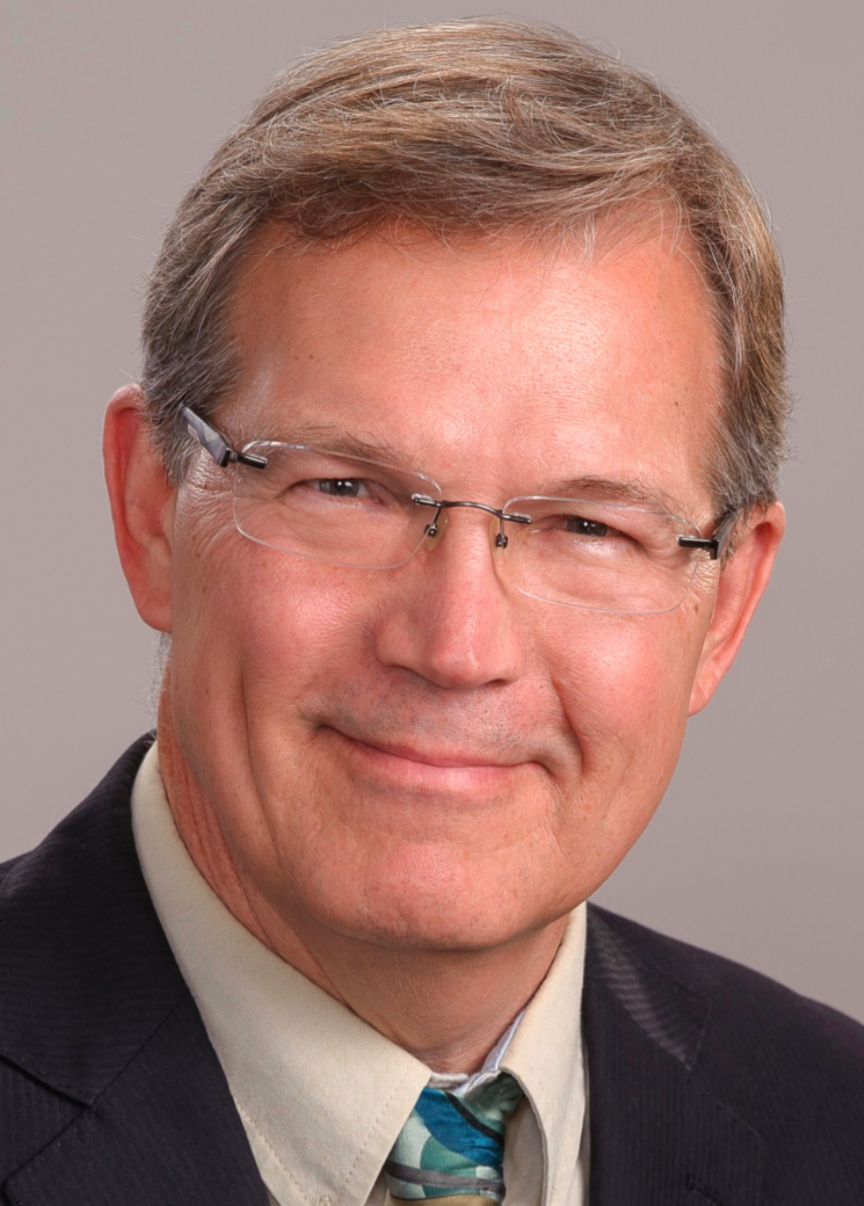
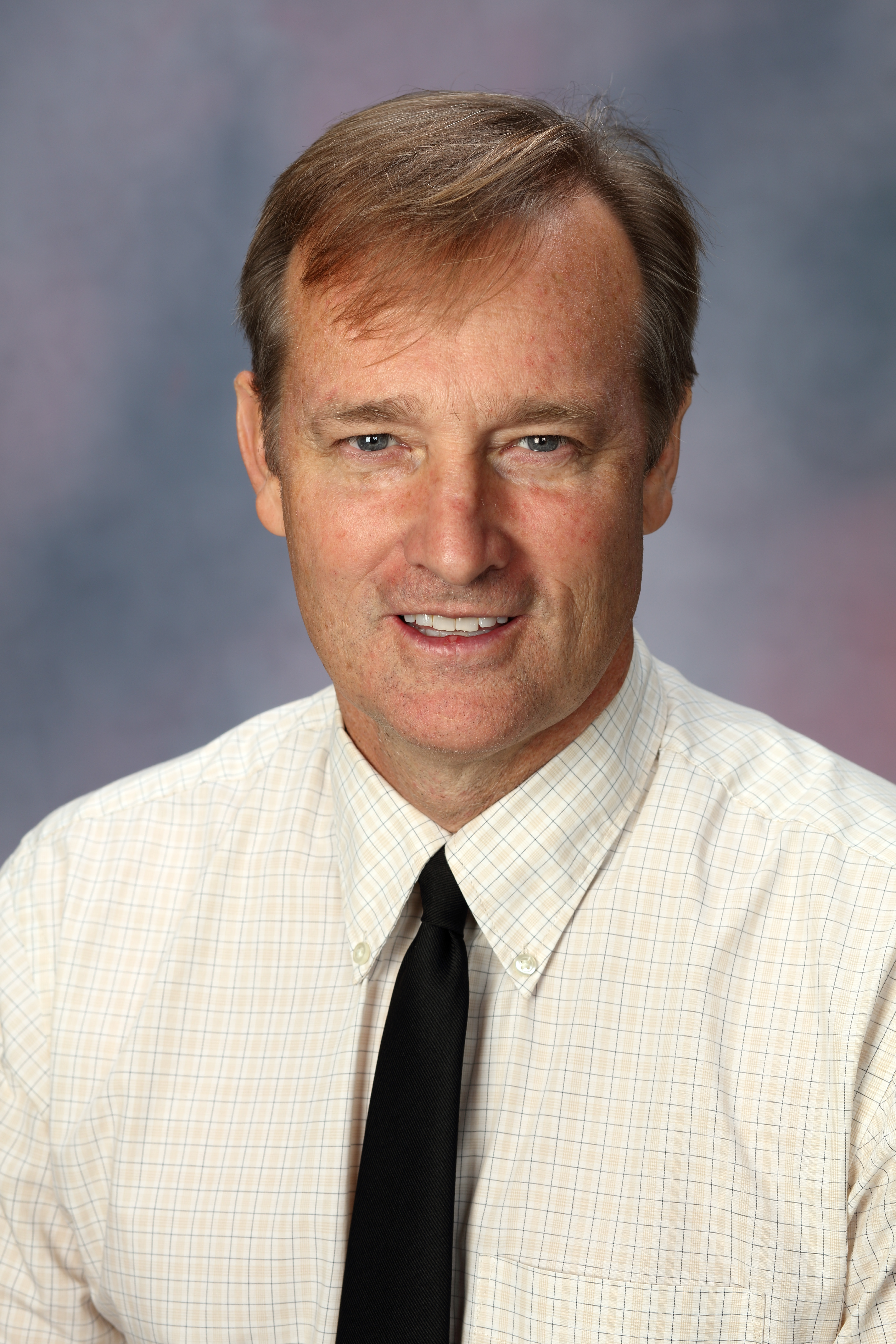
Hays USD 489 school board candidate: Allen Park

Allen Park

Age: 57  

Education: BS Industrial Technology Education and Elementary Education, Masters in Education Administration 

Do you have a student currently attending USD 489 schools?  

Yes, my son is a junior at Hays High School.   

Qualifications? 35 years in education and served USD 489 for 31 years. Worked as a paraprofessional, K-12 teacher, coach, migrant director, transition coordinator, and 25 years of that was the elementary principal. 

Do you support USD 489 trying for another bond issue? What do you think that bond should include? If you don’t support a bond issue, how do you think the school district should address its infrastructure needs?

The next board will need to use all avenues including a bond issue to raise funds to provide the necessary improvements needed to meet the current and future needs of the district. If a bond issue is to be attempted again, much work in involving and informing our community in all stages will be necessary. Our district needs to repair trust in our community. It must start in action steps that our community can see.  

All K-12 levels need improvement in facilities, but our K-5 schools have been the most affected by recent board decisions. Their environment needs to be addressed soon. I was part of two successful bond elections in USD 489 and that experience could help in this process.   

Our district needs to be creative. In past years teachers and administrators were encouraged and supported to help with facilities through substantial grants and donations. That culture has diminished and has not been encouraged or realized as often in our K-12 levels in recent years.  

In the meantime, we cannot not wait for a bond issue. The past decade we have heard the board say we need a 10-year plan and no plan is available. A systematic approach of preserving the resources we have and building for the future needs to start now.  

What would you do to secure the financial health of the school district?

My plan would be to work collaboratively together with the other board members to review all budgetary items as presented by the administration. Upon the review ask questions and make suggestions when appropriate.

The Hays school board is at impasse with its teachers for the second year in a row. What would you do to improve relations with teachers? 

It is unusual for school boards and teachers not agreeing on a contract two years in a row. Positive communication and a willingness to negotiate is necessary from both sides of the table. This process takes a commitment to invest many hours and allow the process to work.  

Fair and equitable pay and fostering a culture of teamwork and respect for the work that teachers do would go a long way toward improved morale. If teachers have confidence and trust in the board, employees have less stress and higher energy for their daily tasks. Quality teachers and other employees are recruited and retained by competitive salaries and benefits.   

Do you support the district’s current one-to-one technology policy? If not, what would you propose?

It is important to continue to provide the latest technology for our students and staff. By the time we purchase equipment it is often one or two years behind. We cannot afford to miss an update. Because technology is ever-changing, we need to provide inservice that is appropriate and valuable to the staff. Staff and administration spend many hours evaluating the latest technology that is appropriate for what they need. We need to listen and act accordingly. 

How would you support the district in its work to improve student performance?

Research shows that one of the best ways to ensure students’ performance is an experienced and qualified teacher.  We need to support all staff members and provide the tools they need to perform the task we ask them to do. Another way the board can help, is to be familiar with and show a strong support of (KESA) the Kansas plan for district improvement and provide inservice and time for teachers to implement the changes. The board plays a major role in creating a culture that fosters a positive learning and working environment.  

 Is there anything else you would like to add about you or your campaign?

“Kids and Families First” is the belief I will refer to on all decisions if I have the honor to serve on the USD 489 school board. My experience as an educator at all levels is to ask the question, “Is it best for kids?” If the answer is yes, correct decisions will follow.   

Our district has a long history of being leaders in the state and on the cutting edge of new trends and practices. We are now seeing many changes and opportunities to advance our district and provide all our students with the best education possible. I want to be part of that movement, and together we can make a difference.

RELATED STORY: USD 489 election: Park seeks to build trust, involvement
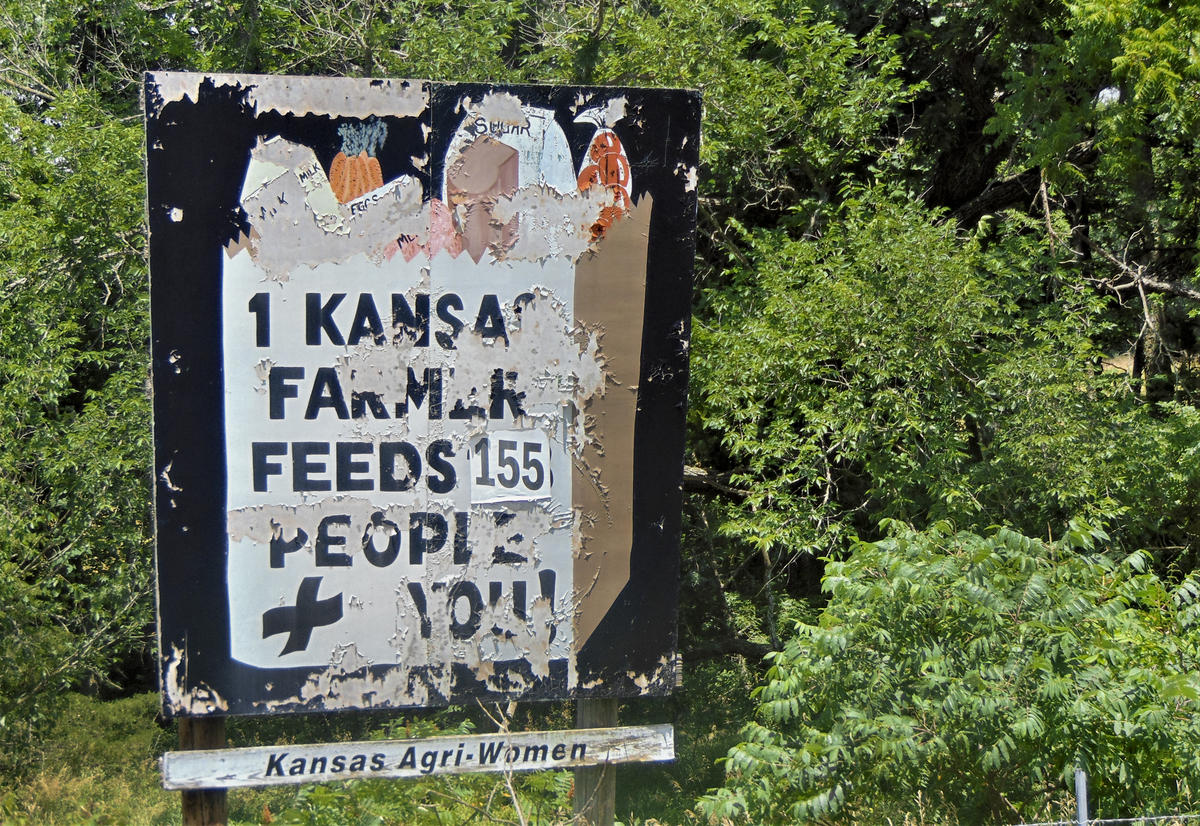
‘Get big or get out’ farming has left Kan. towns struggling for survival

Chris Neal / For the Kansas News Service

By JIM MCLEAN
Kansas News Service

DIGHTON, Kansas — A billboard along Interstate 70 boasting about the productivity of Kansas farmers may say more about what’s happening in agriculture than those who put it there realize.

The message seems simple and straightforward: “1 Kansas Farmer Feeds 155 People + You!”

A closer look reveals it’s been crudely updated — an indication that the tally changes with some frequency.

The steady escalation of the number of people fed by a single Kansas farmer — from 73 in the 1970s to 155 today — reveals how lots of small farmers have been replaced by large farmers intent on getting even bigger.

That trend threatens scores of small towns that sprouted on the prairie in a different time, when larger numbers of small farmers depended on them.

Many of Kansas’ small towns look weathered, worn and neglected after more than a century of exodus. Most rose up more than a century ago, to meet the basic needs of farmers. They established banks and churches. Grocery stores and implement dealers prospered.


This sign stands along Interstate 70 between Topeka and Manhattan.
Credit Jim McLean / Kansas News Service

Consider Atwood, the childhood home of former Gov. Mike Hayden.

The Atwood that Hayden knew growing up during the 1950s was a bustling town of about 2,000 people tucked into the northwest corner of the state. Well-kept shops lined Main Street. Hayden recalls six grocery stores, five car dealers, at least one pharmacy and a thriving local newspaper.

“It was,” he said, “Norman Rockwell’s America.”

Since then, the town lost nearly half its population. Most of those foundational businesses, Hayden said, “eroded away” and took the community’s core of civic leaders with them.

As governor in the late 1980s, Hayden spoke defensively about the decline of rural Kansas. A pair of East Coast academics — Frank and Deborah Popper — proposed returning expanses of rural Kansas and other Great Plains states to the buffalo as part of a massive nature preserve.

Hayden ridiculed the idea.

“I came out guns blazing,” Hayden said. “I thought the Poppers were off base and that they should perhaps go back east and we’d be just fine out here.”

He now says he was wrong.

“They were right about the out-migration they observed,” Hayden said. “In fact, it’s happening faster than they predicted.”

Several factors are responsible for the decline, Hayden said, including consolidation in the ag economy. He cited his family farm as an example.

In 1960, Hayden said, that farm supported 17 people. Most of them lived in and around Atwood. Today, it supports only three.

Today, that farm is bigger and churns out more grain than ever. But only one of the three people tending the land works at it full-time.

“My brother can do it all by himself,” Hayden said.

A report issued last year by the U.S. Department of Agriculture said that as recently as 1987, mid-sized farms between 100 and 1,000 acres covered nearly 60% of the nation’s cropland. By 2012, those midsize farms had lost about half their acreage to large farms — those of 2,000 acres or more.

Don Hineman’s western Kansas farm — located just south of Dighton — covered 3,000 acres when he returned from college in 1973 to help manage it.

It’s now 14,000 acres, or nearly 22 square miles, and still growing.


State representative and farmer Don Hineman has continually expanded the scale of his operation to keep pace with agriculture trends. Credit Chris Neal / For the Kansas News Service

“When you have opportunities for growth you’d better grab them,” said Hineman, a state representative who chairs the House Committee on Rural Revitalization.

Getting bigger, Hineman said, made him a more efficient farmer and a better steward of the land. He can afford the sophisticated equipment needed for the latest precision agriculture.

Those systems map fields in great detail and analyze nutrient levels in different patches of soil so satellite-guided planters and sprayers can deliver the smallest amount of seed and fertilizer to grow the most bountiful crops.

“It bothers me to some extent that what we’re doing on our farm is, in a way, contributing to the decline of the local community,” Hineman said. “But it’s a matter of self-preservation. You either get bigger or you get out.”

Gail Fuller contends that’s simply not true.

“We’ve been sold a bill of goods,” Fuller said.

He owns a small farm near Emporia and challenges the notion underlying much of U.S. agriculture policy that American farmers need to feed the world with commodity crops.

“We’re doing it at the expense of the climate, the environment,” Fuller said.

Large-scale commodity farming, he argues, puts farmers at the mercy of markets that often fail to return breakeven prices and saddles them with debt.

Fuller shrank his farm dramatically several years ago after a lengthy dispute over a crop insurance payment pushed him to the brink of bankruptcy.

“We’re a very diverse operation,” Fuller said, explaining that he grazes cattle on perennial grasses and grows only enough grain to feed his pigs and chickens.

Fuller markets pricey grass-fed beef and other products directly to consumers and said he’s just starting to turn a profit after years of being buried in debt.


Gail Fuller has turned away from commodity farming. Credit Jim McLean / Kansas News Service

“Most people hate paying income taxes,” he said. “I actually look forward to it after being beat up for 10 or 15 years.”

Even with farm bankruptcies on the rise, most ag economists say it’s unlikely that a significant number of Kansas commodity farmers will follow Fuller’s lead despite evidence that sticking with the status quo means the continued hollowing out of rural communities.

“We have seen these trends of population and economic decline going on for just about a century now,” said John Leatherman, a Kansas State University agricultural economist.

Those trends, Leatherman said, are being driven by major economic forces beyond the control of Kansas farmers, community leaders — or state policymakers.

Given that trajectory, Hineman, the state lawmaker and large-scale farmer, said he hopes that taxpayers in Kansas’ urban and suburban centers won’t tire of subsidizing rural communities as they fight for survival.

“We’re all in this together,” he said. “It’s unrealistic and unthinkable that urban Kansas would say, ‘Solve your own problems rural Kansas. We’re done with you.’”

This is the second in a series of stories investigating the decline in rural Kansas and efforts to reverse it. The next story looks at how communities can either shrink and whither, our find ways to thrive with a smaller population.

Support for this season of “My Fellow Kansans” was provided by the United Methodist Health Ministry Fund, working to improve the health and wholeness of Kansans since 1986 through funding innovative ideas and sparking conversations in the health community. Learn more at healthfund.org.

Jim McLean is the senior correspondent for the Kansas News Service, a collaboration of KCUR, Kansas Public Radio, KMUW and High Plains Public Radio covering health, education and politics. You can reach him on Twitter @jmcleanks or email [email protected].

Prairie Doc Perspectives: Suicide, a permanent answer to a temporary problem

Rick Holm

By RICHARD P. HOLM, MD

Years ago, a family brought a 25-year-old farmer into the emergency room with a gunshot hole over his heart and with no pulse or breathing for more than ten minutes. It was a self-inflicted wound and this young farmer would farm no more. The family was besides themselves with loud and sorrowful wailing that wrenched my soul. They told me that the impending harvest looked poor, the loan was coming due, and he had been isolating himself, drinking more and getting angry at every little thing. They had no clue he was at risk of suicide. Sure, he was a little down, but not this! He picked a permanent answer to a temporary problem.

Significant thoughts of suicide occur in one of four women and one of eight men. Although there are more attempts by women, more deaths occur by men. In 2017 there were 1.4 million attempts and 47,000 deaths due to suicide, and despite these high numbers, the money invested in depression and suicide research is sadly low.

Risk factors for suicide include family history or prior experience of depression or manic depression, a history of being abused or being an abuser, excessive use of alcohol, sleeping pills or substance dependence, a recent emotional loss or a significant medical illness. Also, there is higher risk during local epidemics of suicide in youth especially on reservations. Sometimes depression and suicide have no reason whatsoever.

How can any of us help ourselves or a person at risk? First, remember it never hurts to ask, “Are you thinking about suicide?” Those words will NOT bring it on but could encourage the person to find someone to give lifesaving assistance. If you sense there is an emotional downward change happening, encourage that person to get help. If depression is milder and NOT at the suicide level, nonmedicinal treatment can give relief. Examples abound such as daily 30-minute walks, regular interaction with friends and family and the regular opening of one’s heart to spiritual connectedness. If more help is needed, talk with your physician or care provider and consider medicines that effectively work for depression. Although two thirds of people with depression do not seek or receive help; when the one third who do get help are treated, four out of five of those folks are better in a month. Get help if needed.

Finally, if you are in crisis, call the Suicide Prevention Lifeline at 1-800-273-TALK (8255) which is available 24/7. Please don’t chose a permanent answer to a temporary problem.

Richard P. Holm, MD is founder of The Prairie Doc® and author of “Life’s Final Season, A Guide for Aging and Dying with Grace” available on Amazon. For free and easy access to the entire Prairie Doc® library, visit www.prairiedoc.org and follow Prairie Doc® on Facebook, featuring On Call with the Prairie Doc® a medical Q&A show streamed most Thursdays at 7 p.m. central.

BOOR: Fall is a good time for soil testing
 

Alicia Boor

Though we often think of soil testing as a spring chore, fall can
actually be a better time. Soil-testing laboratories are often very busy
during the spring resulting in a longer turnaround from submission to
recommendations.

Also, soils in the spring are often waterlogged, making
taking samples difficult. If your soil test suggests more organic
matter, fall is a much better season because materials are more
available than in the spring (tree leaves), and fresher materials can be
used without harming young tender spring-planted plants.

Begin by taking a representative sample from at least six locations
in the garden or lawn. Each sample should contain soil from the surface
to about 6 to 8 inches deep. This is most easily done with a soil
sampler.

Many K-State Research and Extension offices have such samplers
available for checkout. If you don’t have a sampler, use a shovel to dig
straight down into the soil. Then shave a small layer off the back of
the hole for your sample. Mix the samples together in a clean plastic
container and select about 1 to 1.5 cups of soil. This can be placed in
a plastic container such as a resealable plastic bag.

Take the soil to your county extension office to have tests done
for a small charge at the K-State soil-testing laboratory. A soil test
determines fertility problems, not other conditions that may exist such
as poor drainage, poor soil structure, soil borne diseases or insects,
chemical contaminants or damage, or shade with root competition from
 other plants. All of these conditions may reduce plant performance but
cannot be evaluated by a soil test.

If you have any questions, or would like more information, you can contact me by calling 620-793-1910, by email at [email protected] or just drop by the office located at 1800 12th street in Great Bend. This is Alicia Boor, one of the Agriculture and Natural Resources agents for the Cottonwood District which includes Barton and Ellis counties. Have a good week!

Hays USD 489 school board approves raises for clerical, nutrition staff


By CRISTINA JANNEY
Hays Post

Faith Lochmann, HR coordinator, presents data on a wage increases for clerical and nutrition staff.

The Hays USD 489 school board approved raises for clerical and nutrition staff at its meeting Monday night.

The school board was first presented a classified wage study on June 16. It found several classes of USD 489 employees are not making as much as their peers. The raises will help bring the wages for the staff in line with wages of their peers in the community and at other school districts.

Faith Lochmann, human resources coordinator, presented data from that wage study.

Entry-level wages for USD 489 clerical staff ranged from $9.81 to $11.42 per hour.

Comparable school districts pay an average of $11.08, and comparable cities pay an average starting wage of $13.45. FHSU’s starting wages ranged from $12.71 to $13.98.

HaysMed indicated its lowest starting wage for clerical staff is $10.39, but it hires off a schedule that takes into account years of experience and often hires new staff at higher than the minimum based on that schedule. The average of all the comparable positions was $11.14 to $12.31 per hour for starting wages for clerical staff.

“The district is not ready to implement a full-blown wage schedule,” she said, “but we recognize a strong need to level-set our current employees based on their years of experience with us and where they are being compensated.”

To level the wages will cost the district an average of 84 cents an hour for clerical staff. However, Keith Hall, interim director of finance, said not all employees will receive the same raise. No employee’s pay will decrease. Some employees’ pay could stay the same. Others will increase based on their current pay and years of experience.

Annual cost for clerical staff raises will be $23,642.

The district also approved raises for nutrition staff, which Lochmann said was experiencing high turnover.

Documents describing the raises for the nutrition staff were presented to the board. They were not discussed, and they were not made available to the media as of time of publication. Hall and Lochmann also had not returned calls as of time of publication.

Pay for technology employees was also shown to be lower than their peers, but those wages have already been adjusted.

The total cost for the raises will be $101,000 annually.

Although the agenda item was set for discussion only Monday night, board member Greg Schwartz suggested the board vote on the plan so the raises could go into effect starting in November.

“It seems to be if this is where we think we need to go, I don’t know why we need to wait, just implement it and move forward,” he said.

Board member Paul Adams said he was not opposed to the raises, but he would like to see more time to implement the plan. He ultimately was the sole dissenting vote on the motion.

“Because we have some pending negotiations out of the same pool of money,” he said, “I would like to be able to look at the total impact on what we have available, so I think it is premature without looking at it. I support coming back to it in two weeks, but not until we run some numbers on it.”

Hall said eventually the district would like to create a pay schedule for classified staff; however, he said the finance staff is not ready to roll out a salary schedule at this time.

Oak Park Complex

The former Oak Park Medical Complex was renamed the USD 489 Early Childhood Complex at the meeting Monday.

The four-building center was recently renovated with federal grant funds. It houses Early Child Connections and other district early childhood programs. A ribbon cutting for the complex will be at 10 a.m. Thursday with an open house from 3:30 to 4:30 p.m.

Munjor building

The early childhood program that was in Munjor has been moved to the renovated Early Childhood Complex. The district owns only a portion of the property. The Catholic Church owns the rest of the property. The board discussed turning the entire property over to the Catholic Church now the school district is no longer using the property.

Board member Lance Bickle said he wanted to make sure the district would not need the space in the future before it turned over the property.

Negotiations

The school board met in executive session Monday to discuss negotiations. Representatives from the school and teachers met with a federal mediator Thursday night, but were still unable to come to an agreement on a contract. The board is considering next steps, but took no action Monday on negotiations.

The teachers and board have said pay and health insurance have been the stumbling blocks in reaching an agreement.

Chrysler Boyhood Home balances budget by closing over winter months

Museum board president assures the city council it will reopen in the spring

By JAMES BELL
Hays Post

ELLIS — In an effort to alleviate continued budget woes, the Walter P. Chrysler Boyhood Home and Museum Board of Directors has decided to close over the winter — but assured the Ellis City Council that the closure is temporary.

“The rumor that the house is closing is just a rumor,” Gordon Solomon, museum board president, told the council at Monday’s regular meeting. “We want to ensure everyone that it is not permanently closing. It will be open in the spring.”

The move became necessary as the museum was unable to break even and was using reserve funds to pay staff over the slower winter months.

“We have been struggling, budget-wise for a couple of years now,” Solomon said. “By doing the closure, we should be able to close out the budget this year about equal.

“Like most people, we have to learn to live within our means,” he said.

He acknowledged the council was funding the museum as much as possible, but ultimately the savings made by closing was needed to put the budget on track.

“Our goal is to just meet budget and we realize the city can’t increase what you are already doing to assist the home,” Solomon said.

During the meeting, he said attendance over the winter months is low, so the impact on tourism would be minimal.

As an example, Solomon said total admissions and sales for the museum in January and February of this year was only $82.35 — while wages and payroll taxes equaled $1,404.

With those numbers, he said, “Obviously we are not meeting budget, even with your assistance.”

While the board was actively seeking solutions to balance the budget over the summer, museum employees gave notice to the board they would be leaving on Sept. 6, spurring the board to make a decision at a special meeting on Aug. 29.

“As a board, we decided that we would stay closed through the remainder of September and then we proposed to the board to mirror the schedule of the Ellis Railroad Museum,” Solomon said. “Our intent in the future is to open in March and close at the end of September.”

In January, he said the board would begin looking for a new employee.

Even with the budget concerns alleviated, for the time being, Solomon said the board is still actively seeking ideas to bring more people to the museum, including continuing to strengthen the partnership with the Ellis Railroad Museum.

“That’s our goal. We want to try to mirror each other and support each other,” Solomon said.

This would continue the trend of the two museums operating in a similar manner to one another.

“We tried to structure them the same — hours, fees, everything,” Ellis Mayor David McDaniel said.

Solomon said the board is also looking at a discounted rated for visitors who go to both museums, or offering a discount to people visiting the Ellis Lakeside Campground.

“There is a lot of people coming to town that obviously don’t visit,” Solomon said, noting the large influx of people at the campground, even while museum attendance is low.

People in the emptying parts of rural Kan.: ‘We’re not going to let them die’

Chris Neal / For the Kansas News Service

BY JIM MCLEAN
Kansas News Service

COURTLAND, Kansas — Rural Kansas has a storied past, but decades of population decline stand poised to turn many once-vibrant places into ghost towns.

The struggle for survival reveals itself in emptied Main Streets, shuttered factories and tired-looking neighborhoods dominated by houses built before World War II.

An exodus that started more than 100 years ago and gained momentum during the Great Depression has now thinned the population of most of the state’s 105 counties to fewer than 10 people per square mile.

“Quite a few counties peaked in the 1890 Census in terms of total population and have never recovered,” said Kansas historian Virgil Dean.

At 2%, Kansas’ population growth rate lags far behind the nation’s 6%. And it’s uneven. Most of it is concentrated in the state’s urban areas — Kansas City, Wichita, Lawrence, Topeka and Manhattan. A forecast by researchers at Wichita State University projects growth in less than a fifth of the state’s counties over the next 50 years.

Still, Kansans fighting the trends cling to a different vision. They insist that population isn’t the only measure of a livable community.

Credit Chris Neal / For the Kansas News Service

“Rural Kansas is going to survive,” said state Republican Rep. Ken Rahjes from Agra in north-central Kansas. “We have that sense of pride in our communities. We’re not going to let them die.”

It will take more than defiance to save them, said journalist Corie Brown, a native Kansan whose career has taken her to newsrooms across the country. She recently returned to write a magazine article: “Rural Kansas is dying. I drove 1,800 miles to find out why.”

“As I’m driving around to these small towns, I realized there’s no one here,” Brown told the Kansas News Service.

Brown’s April 2018 article painted a stark picture of decline.

“The small towns that epitomize America’s heartland are cut off from the rest of the world by miles and miles of grain, casualties of a vast commodity agriculture system that has less and less use for living, breathing farmers,” Brown wrote.

Dramatic changes in agriculture hollowed out rural Kansas, Brown argues. Specifically, she blames the decades-long trend towards bigger farms that yield ever more abundant crops of wheat, corn and soybeans. Those bountiful harvests often don’t return a breakeven price to farmers forced into debt to buy land and the sophisticated machinery needed to work more acres with fewer people.

“That image — abundance at the center of a depopulated landscape — sums up the reality of rural Kansas,” Brown wrote. “It masks a harder truth: Kansas’s plentiful grain crop has come at the expense of nearly everything else.”

The move toward bigger farms run by fewer farmers — along with other changes in the economy — threatens the existence of towns that sprouted up to support larger family operations and to supply workers for railroads, mines and homegrown manufacturers.

But like the economic factors that forced railroads to consolidate and sent many of America’s factory jobs to foreign shores, those driving change in the ag sector can’t be reversed, said John Leatherman, an agriculture economist at Kansas State University.

“There are economic forces at play,” he said, “that we can’t make go away.”

It’s not realistic, he said, to “turn back the clock” to a time when smaller family farms dominated the rural landscape.

Credit Celia Llopis-Jepsen

“That is going backward in time and that is not what happens in life,” he said.

Luke Mahin merely wants to slow the pace of decline. He hopes to give those fighting to save rural communities a chance to experiment with new strategies.

“I see more energy now, more coordinated effort,” said Mahin. At age 28, he returned to his hometown of Courtland, population 285, to run Republic County’s economic development organization.

Communities that competed against each other for generations, Mahin said, now join forces in desperate attempts to revitalize entire regions. They want to make them more inviting to people looking to return to their rural roots — particularly young people.

“We want to connect those dots for people who are looking for housing, looking for resources to start their business,” he said. “We know there’s more people out there who want to come back than we have opportunities for.”

It’s a tough sell. Measures of net migration typically rank Kansas in the bottom teir of states. One shows it losing 25- to 29-year-olds faster than any other state.

Still, Mahin and others working to stem the depopulation tide may soon get help from two new state initiatives. One launched by Democratic Gov. Laura Kelly, the other by the Kansas Legislature.

Credit Chris Neal / For the Kansas News Service

Soon after taking office in January, Kelly created the Office of Rural Prosperity in the Kansas Department of Commerce and put her lieutenant governor, Lynn Rogers, in charge.

Rogers crisscrossed the state over the summer on what he called a “rural prosperity listening tour.” He’s now working on a set of policy recommendations aimed at helping rural communities tackle some of their biggest challenges — spotty access to the internet, crumbling infrastructure, financially stressed hospitals and a shortage of affordable, modern housing.

“Now,” Rogers said, “we have to do something.”

This is the first in a series of stories investigating the decline in rural Kansas and efforts to reverse it. The next story looks into the role that changes in the farm economy have played in that decline.

Support for this season of “My Fellow Kansans” was provided by the United Methodist Health Ministry Fund, working to improve the health and wholeness of Kansans since 1986 through funding innovative ideas and sparking conversations in the health community. Learn more at healthfund.org.

Jim McLean is the senior correspondent for the Kansas News Service, a collaboration of KCUR, Kansas Public Radio, KMUW and High Plains Public Radio covering health, education and politics. You can reach him on Twitter @jmcleanks or email [email protected].

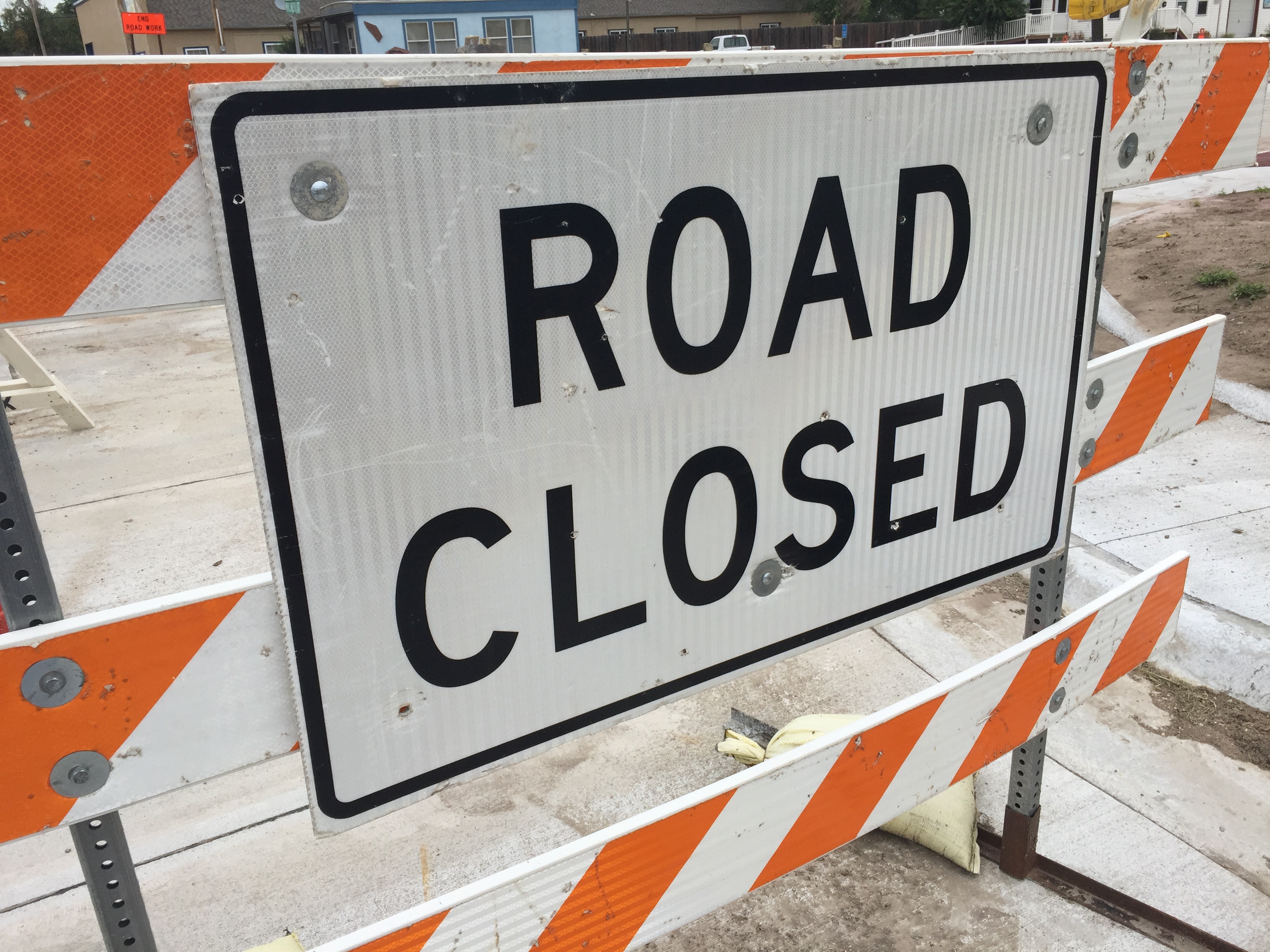
Southbound Allen Street closed at 12th and 13th streets

City of Hays

Southbound Allen Street will be closed south of 13th Street to just south of 12th Street in Hays beginning Wednesday until Thursday evening.

The northbound lane will remain open.

The work involves replacing concrete pavement.

The city of Hays regrets any inconvenience this may cause to the public. If there are questions, contact M&D at 628-3169 or the Office of Project Management at 628-7350.

Payday loans in Kan. can come with 391% interest


Kansans took out $267 million in payday loans in 2018. Some community and religious groups want to change the rules for those loans. Nomin Ujiyediin / Kansas News Service

Critics say it’s time for a change

By NOMIN UJIYEDIIN
Kansas News Service

Maria Galvan used to make about $25,000 a year. She didn’t qualify for welfare, but she still had trouble meeting her basic needs.

“I would just be working just to be poor and broke,” she said. “It would be so frustrating.”

When things got bad, the single mother and Topeka resident took out a payday loan. That meant borrowing a small amount of money at a high interest rate, to be paid off as soon as she got her next check.

A few years later, Galvan found herself strapped for cash again. She was in debt, and garnishments were eating up a big chunk of her paychecks. She remembered how easy it was to get that earlier loan: walking into the store, being greeted with a friendly smile, getting money with no judgment about what she might use it for.

So she went back to payday loans. Again and again. It began to feel like a cycle she would never escape.

“All you’re doing is paying on interest,” Galvan said. “It’s a really sick feeling to have, especially when you’re already strapped for cash to begin with.”

Like thousands of other Kansans, Galvan relied on payday loans to afford basic needs, pay off debt and cover unexpected expenses. In 2018, there were 685,000 of those loans, worth $267 million, according to the Office of the State Bank Commissioner.

But while the payday loan industry says it offers much-needed credit to people who have trouble getting it elsewhere, others disagree.

A group of nonprofits in Kansas argues the loans prey on people who can least afford triple-digit interest rates. Those people come from lower-income families, have maxed out their credit cards or don’t qualify for traditional bank loans. And those groups say that not only could Kansas do more to regulate the loans — it’s fallen behind other states who’ve taken action.

Payday Loan Alternatives

Last year, Galvan finally finished paying back her loans. She got help from the Kansas Loan Pool Project, a program run by Catholic Charities of Northeast Kansas.

Once Galvan applied and was accepted to the program, a local bank agreed to pay off about $1,300 that she owed to payday lenders. In return, she took out a loan from the bank worth the same amount. The interest was only 7%.

Now that she’s out, Galvan said, she’ll never go back.

She doesn’t have to. Making payments on that bank loan helped build her credit score until, for the first time, she could borrow money for a car.

“That was a very big accomplishment,” she said, “to know I have this need, and I can meet that need on my own.”

The project has paid off $245,000 in predatory loan debt for more than 200 families so far.

Claudette Humphrey runs the original version of the project for Catholic Charities of Northern Kansas in Salina. She says her program has been able to help about 200 people by paying off more than $212,000 in debt. But it hasn’t been able to help everyone.

“The Number One reason, still, that we have to turn people away,” she said, “is just because we have a limit.”

People only qualify for the Kansas Loan Pool Project if they have less than $2,500 in payday loan debt and the means to pay back a new, low-interest loan from the bank. The program doesn’t want to put people further in the hole if they also struggle with debt from other sources, Humphrey said.

“Sometimes, even if we paid that off, they would still be upside-down in so many other areas,” she said. “I wouldn’t want to put an additional burden on someone.”

Humphrey doesn’t think her program is the only solution. In her opinion, it should be lawmakers’ responsibility to protect payday loan customers the same way they protect all consumers — through regulating payday loans like traditional bank loans.

“Why are these companies not held to that same standard?” she said. “Why, then, are payday and title loan lenders allowed to punish them at such an astronomical interest rate for not being a good risk?”

Potential Changes

Catholic Charities is just one of the nonprofits pushing for tighter rules. The members of the coalition include churches and community organizations, said Shanae’ Holman, an organizer with Topeka JUMP, the group that is leading the push.

“There are other states who’ve implemented guidelines that sell you how much income… what percentage of your check can go to a payment,” Holman said. “Those are the types of regulations that we would like to see,”

She wants Kansas to require longer loan periods so borrowers aren’t hit with penalties when they can’t meet short payment deadlines.

Currently, the maximum period for a payday loan in the state is 30 days. In comparison, borrowers of small loans in Colorado must have at least six months to pay them back, with no maximum loan period. In Ohio, borrowers have between 91 and 365 days to pay back a loan. If the period of the loan is less than 91 days, the repayment must be less than 7% of the borrower’s net income.

Both states set annual interest rates near 30%. Some states regulate payday loans the same way they do other consumer loans. But Kansas is like most other states, allowing annual interest rates of 391%. That means a two-week loan of $500 at 15% interest can cost a customer almost $2,000 over the course of a year.

The group plans to work with legislators during next year’s session in Topeka.

It’s the first time that such a large group has organized around the cause, said Jeanette Pryor, a lobbyist for the Kansas Catholic Conference. Payday loan reform is a perennial topic at the Statehouse, she said, but it’s hard to convince lawmakers to increase regulations.

“That was something that I heard in the beginning. ‘Why can’t an adult make a rational decision on their own? Why do we have to legislate this?’” she said. “The larger the coalition, the more opportunities to educate legislators.”

Nick Bourke is the director of consumer finance at Pew Charitable Trusts. It pushes for reform of payday loan laws. He said reform is long overdue in Kansas, which hasn’t updated its payday loan laws since 2005.

“It’s possible to provide small-dollar credit, even to people with damaged credit histories, for much less money than what Kansans are paying now,” he said. “But Kansas laws are outdated.”

In 2014, Pew Charitable Trusts conducted research on payday loan usage in each state. The organization found that 8% of Kansas residents had used payday loans in recent years, higher than the national average of 5.5%. The typical income for a borrower was $30,000.

The Office of the State Bank Commissioner, David Herndon, which regulates loans and penalizes lenders for breaking the rules, refused to be interviewed in person or over the phone, but did answer questions through email. Deputy Bank Commissioner Tim Kemp said the agency only enforces existing law and doesn’t weigh in on proposed changes.

Attorney General Derek Schmidt’s office, which takes consumer complaints about payday loans, declined multiple requests for interviews and information.

An Option For Credit

Payday lenders say they offer affordable credit to the large proportion of Americans who don’t have enough cash to cover an emergency expense. The Community Financial Services Association of America, an industry group for small-dollar lenders, declined an interview due to scheduling conflicts, but sent a statement through email.

“Small-dollar loans are often the least expensive option for consumers,” said CFSA chairman D. Lynn DeVault in the statement. “Particularly compared to bank fees — including overdraft protection and bounced checks — or unregulated offshore internet loans and penalties for late bill payments.”

Some Kansas customers, like Keri Strahler of Topeka, say the loans are helpful.

Strahler doesn’t work, and most of her income comes from Social Security Disability Insurance. This year, she took out three payday loans to cover medical debt, and said she hasn’t had trouble paying them back.

She knows many people perceive the loans as predatory. But for Strahler, borrowing has alleviated more stress than it’s caused. Her credit cards were already maxed out, and the loans helped her avoid being taken to court or having to sell her furniture to cover her debt.

“I chose the payday loans because I wanted them immediately addressed,” she said. “It’s been very helpful.”

Humphrey, of Catholic Charities, acknowledges the loans can be helpful for some customers. The question is whether the state can keep others from being exploited.

“I’m not saying there’s not a place for them,” Humphrey said. “(But) is there a better way to do what they do so that it’s not devastating families?”

Nomin Ujiyediin reports on criminal justice and social welfare for the Kansas News Service.  Follow her on Twitter @NominUJ or email [email protected]

WaKeeney farmer pleads guilty to crop insurance fraud

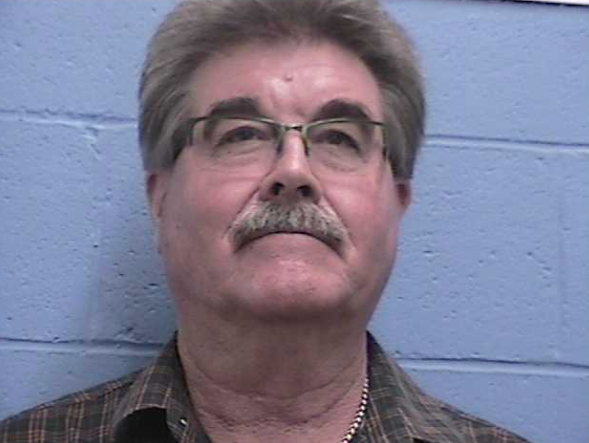
Kevin Struss, from a previous arrest in Trego County

WICHITA – A Trego County farmer pleaded guilty Monday to federal charges of crop insurance fraud and bankruptcy fraud, U.S. Attorney Stephen McAllister said in a news release Tuesday.

Kevin W. Struss, 63, Wakeeney, pleaded guilty to one count of defrauding the U.S. Department of Agriculture’s crop insurance program, which provides government insurance against unavoidable crop losses. He made false statements in which he under-reported his total 2015 corn crop by approximately 23,524 bushels, and his total sorghum/milo crop by 31,208 bushels.

He also pleaded guilty to one count of bankruptcy fraud. He falsely answered “no” to a question in his bankruptcy filing about whether he had transferred property to anyone else recently. In fact, he made two transfers of $150,000 and $320,000 to another person in 2018, McAllister said.

Sentencing is set for Jan. 21. He could face a sentence up to 30 years in federal prison and a fine up to $1 million on the crop insurance count. He could face a sentence of up to five years and a fine up to $250,000 on the bankruptcy count.

McAllister commended the U.S. Department of Agriculture and Assistant U.S. Attorney Alan Metzger for their work on the case.

Copyright Eagle Radio | FCC Public Files | EEO Public File