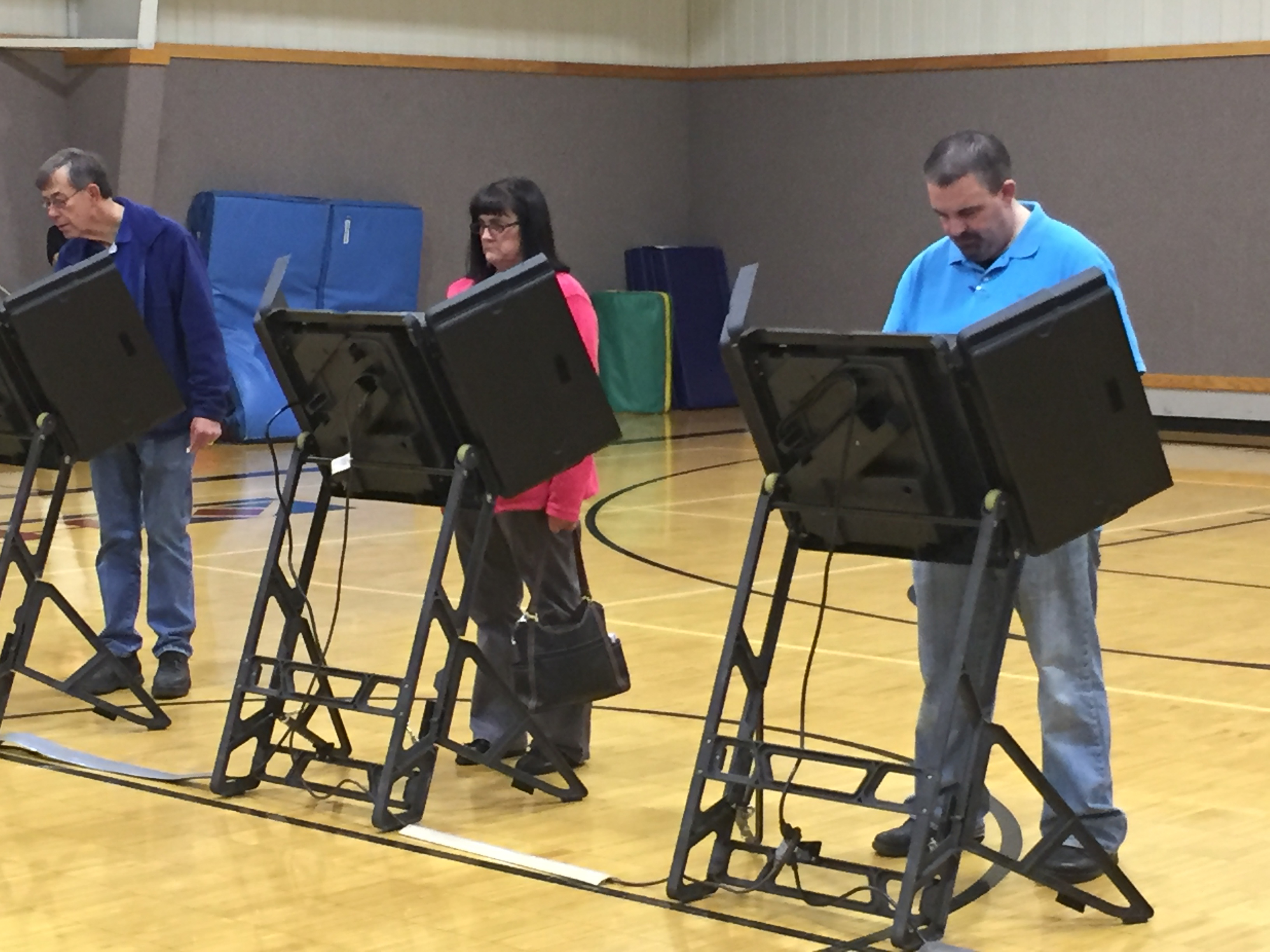
The Ellis County Election Office will start looking at new election equipment on Tuesday at the Administrative Center in the Ellis County Commission Chambers, 718 Main.
Election Systems and Software will demonstrate its election equipment for county officials.
In a news release, County Clerk Donna Maskus said the county is looking at new election equipment since Kansas Statute 25-3009 goes into effect this year. The law will require a post-election audit to be done before the canvass. The equipment in use now is not sufficient to handle the audit process.
“We are very pleased to state that all election results remained the same after the Nov. 20, 2018, recount canvass,” Maskus said. “We would like to share some facts on the Nov. 6, 2018, general election.”
All 69 lvotronic touch screen election machines went through the logic and accuracy testing, for the November 6, 2018 General Election. The calibration process was performed on all machines with no problems found.
Noted that no calls were received through the Ellis County Clerk’s Office on any type of malfunctions or problems with voting on the lvotronic touch screen voting machines.
Poll Workers never indicated any concerns from any voters on the November 6, 2018 Election.
Every voter was given the option to vote paper ballot or the electronic machine.
The County Clerk did close two lvotronic touch screen voting machines before the polls opened on election day, and when votes were gathered at the end of election night “no” votes were shown on these machines.
lvotronic touch screen election machines are stored at the Administrative Center building that has security. A maintenance schedule is provided through the vendor.
Would like to clarify that the Ellis County Clerk did not mail out any postcards notifying the provisional voter that they needed to attend the Nov. 15, 2018, canvass. We do apologize for any confusion it did cause but our office did not have anything to do with this mailing.
“We look forward to bringing new voter equipment for future elections and will continue the usual high standards with the election process.”
OAKLEY — Just after midnight Sunday, the Oakley Police Department responded to a theft in progress at the Western Kansas Wildlife Travel Center at 1001 U.S. 40, according to a news release from the police department.
Three individuals were arrested without incident and two semi-trucks and tractor trailers were confiscated in connection to multiple diesel fuel thefts at the Western Kansas Travel Center from December to January — totaling over $5,000 in value.
The individuals arrested are:
Alexander Aladier Cardenas, 45, Florida
Yenny Gabriela Justo, 35, Florida
Jose Saul Rodriguez Fajardo, 60, Florida
All three are currently facing criminal damage and felony theft charges in Gove County.
“The Oakley Police Department would like to thank the Kansas Highway Patrol for providing assistance in the arrests, Chief Daniel Cooper said in a news release. “The Oakley Police Department would also like to thank the employees at the Western Kansas Wildlife Travel Center for providing invaluable assistance to the Oakley Police Department during the weeks of investigation leading up to and after the arrests. The investigation is currently ongoing and no additional information will be released at this time.”
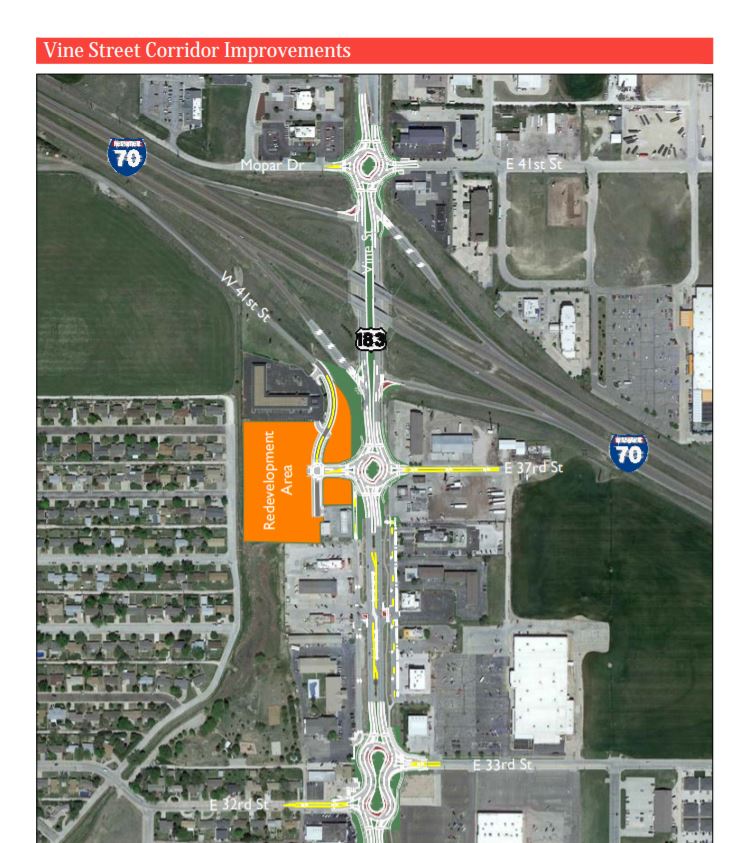
The City of Hays will host an open house to provide information to the public on Vine Street corridor improvements, including proposed roundabout solutions. The event will be held from 5:30 to 7:30 p.m. on Tuesday, Feb. 12, at The Venue at Thirsty’s, 2704 Vine. Refreshments will be served.
City of Hays staff and transportation engineers will be on hand to provide an opportunity for the public to learn about the North Vine Street Corridor Project. Detailed models of proposed changes will be on display to show the capabilities of roundabouts and how they improve safety for vehicles and pedestrians.
City of Hays staff and community leaders have been working to overcome the logistical challenges in the North Vine Street corridor for decades. The area between 32nd/33rd Streets and I-70 was not designed to accommodate the amount of traffic currently experienced.
City staff and engineers have been working with KDOT on a concept that would replace the traffic signals in the corridor with roundabouts in order to improve traffic flow, reduce the number and severity of accidents, allow for better flow to and from businesses, and accommodate future redevelopment in the area.
Vine Street corridor traffic simulation videos and traffic studies can be found at www.haysusa.com. For additional information on the open house event, contact City Hall at 785-628-7320.
The Hays Police Department is seeking information on a series of vandalisms in Hays overnight Thursday.
The HPD said several trailers and vehicles were spray painted, and several vehicles had their tires slashed. The incidents took place in the 2500 block of Marjorie, Henry and Felten.
The vandals used purple spray paint, leaving behind profane pictures and words.
“The damages are estimated to total several thousands of dollars,” the HPD said in a social media release. “If anyone has information regarding the tire slashings and graffiti spray painting of these vehicles, please contact the Hays Police Department at (785) 625-1030.”
Fort Hays State University is part of a project titled “Our Town, Our Kids,” aimed at helping prevent youth from entering the criminal justice system.
Rural counties in western Kansas are part of a study devoted to developing support systems for youth and families with the goal of providing services that maximize their chances of leading productive lives. The project was awarded funding by the Kansas Department of Corrections and the Kansas Advisory Group.
Dr. April Terry, associate professor in the Department of Criminal Justice at FHSU, said rural western Kansas is often overlooked. It is important to have a study in which 22 of the 23 counties are in rural areas of the state, Terry said. Ellis County is included.
“There is a big hole in rural criminology (research),” Terry said. “There is very little research in rural areas and juvenile(s). We hope that his project will result in a national initiative to look at other rural areas.”
Michael Walker
Also part of the study is Michael Walker, director of the Docking Institute of Public Affairs, which will collect and analyze data. Walker said it speaks well of the Docking Institute and FHSU for its involvement in the project.
“It’s good for us to be recognized as someone who should be part of the team,” Walker said. “We do have a good reputation. A lot of folks in western Kansas know who we are and affiliated with Fort Hays State.”
Over the next two years, project members will work with stakeholders in the 22 rural counties plus urban Wyandotte County, which was selected for comparative purposes. They will collect data and provide analysis in fostering community collaboration in support of youth and families.
Terry said it was important to have a presence from FHSU in the study.
“You are coming into Tigerland when you come to this part of the state,” Terry said. “It’s important to include Fort Hays State people. Fort Hays State people also are interested in their kids.”
FHSU’s involvement in the project shows the university’s commitment to its service area. “It shows an investment to the community,” Terry said. “It’s a focus on juveniles, but it impacts everybody. I think having local people invested in local issues is helpful.”
Walker said the Docking Institute chooses to work primarily with non-profit organizations and governmental entities. “The project is very important,” Walker said. “We are able to take on projects that are beneficial to overall society.”
As part of the effort to engage positive community support, the group plans to develop a tool kit to assist communities in serving the needs of their youth. The group’s website, https://ourtownourkids.org./, will have the tool kit made available. The group will issue a report at the end of the study.
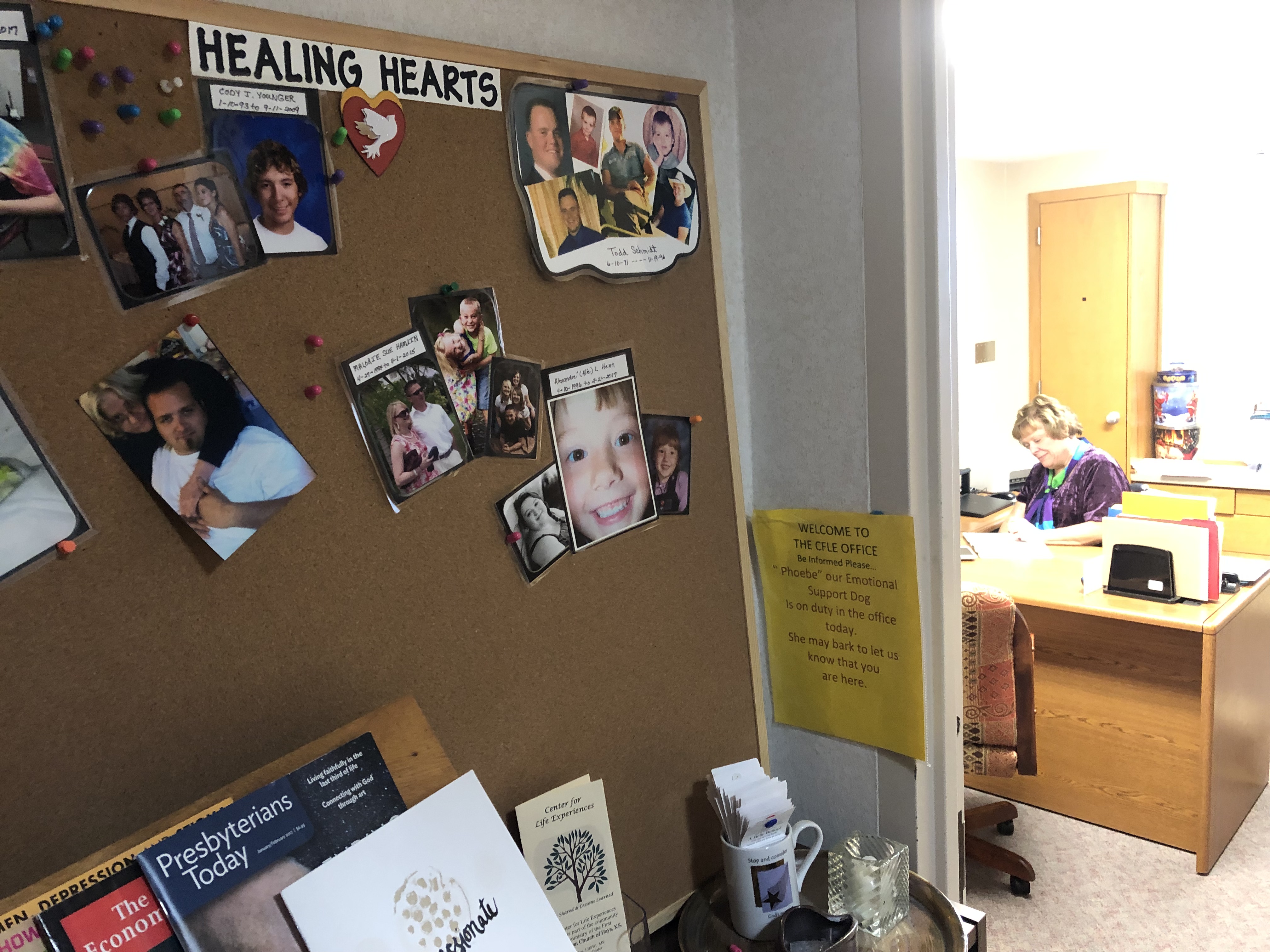
The Center for Life Experience has moved to the Hadley Center, 205 E. 7th, Suite 251, in downtown Hays.
By BECKY KISER Hays Post
The Center for Life Experience, Inc. (CFLE) has moved to a new location in Hays and is now a non-profit organization, but its purpose remains the same.
“We’re here to help people address those life challenges that come with grief and loss, and restoring healing and hope,” says Ann Leiker, CFLE executive director and a licensed social worker.
Through three core support groups that are a part of CFLE – Healing After Loss, Healing Hearts, and Healing After Loss of Suicide – participants learn that everyone grieves differently and adjusts to the loss of a loved one differently.
“We don’t stop when you’re mostly through the initial grief and loss phase. There’s another phase that can be very daunting and challenging, and that’s ‘who am I now without this person in my life?'”
People need to move forward with their lives and want to still honor those they’ve lost, Leiker says.
“We address things like going back to work, how to have the hard conversations, family changes, adjusting differently. We address all kinds of life challenges that come with grief and loss, not just grief and loss. That’s not something you see in many groups.”
Healing After Loss (HAL) deals with the loss of adults, including spouses, parents, siblings, and friends. Healing Hearts is for those who’ve lost a child of any age. Healing After Loss of Suicide (HALOS) brings together people who are surviving the loss of someone to suicide.
The fourth core group, “Healing Kids’ Hearts,” is in its fourth year.
It’s an annual daylong retreat for children ages 7-12 who’ve had a significant loss in their lives.
“Children grieve differently than adults,” Leiker stresses. “They don’t talk the same way as adults. They may want to grieve creatively, doing things like making a memory box with pictures and drawings.”
Children attending past retreats have made bird houses and memory stones to place in a garden.
Plans for the 2019 retreat in late March are to make kites along with memory boxes.
Each child is paired with an adult volunteer mentor for the day.
“They become friends and they just share. The kids come in pretty quiet and by the end of the day, they’re smiling and they have hope. They have memories of their loved one that they can share.”
CFLE also shares leadership with NAMI-Hays, the local affiliate of National Alliance on Mental Illness.
CFLE is the NAMI resource center for information about mental health issues. The NAMI-Hays support group meets at CFLE and educational programs are offered quarterly to the public.
All the groups meet at CFLE and are open to anyone at no cost.
Each meeting starts with the reminder that it is not a clinical therapy group.
“These are true support groups where we bring together people who’ve had similar experiences, where they can share and learn from each other. By listening to each other, they at least learn they are not alone. Others are dealing with the same issues although the outcomes may not be the same.”
The Center for Life Experience was launched 18 years ago in the Hays First Presbyterian Church, with donor funds specified to benefit the community, not the church.
Last May, the Session of First Presbyterian determined it could no longer financially support CFLE.
In November CFLE became a stand alone community-based not-for-profit 501(c)(3) and in late December, CFLE moved to the second floor of the Hadley Center in downtown Hays.
“We are extremely grateful and appreciative of the support we get from the community,” Leiker said, “because it allows people to just come and participate [in these groups] and feel welcome. They don’t have to worry about becoming a member or having to pay.
“They just come when they can, learn to celebrate the lost one’s life, and go on with the rest of their own lives.”
More information about CFLE is available by calling or texting 785-259-6859.
Jamie Wetig, candidate for Hays superintendent, said people matter.
The current Ashland Superintendent, Wetig showed this when his community was hit by a massive wildfire two years ago.
As the fire grew, the school was closed and the town was evacuated. The school district at that time was not part of the emergency management plan, but Wetig felt the district had something to offer in the crisis. He offered to serve lunch to the volunteers and firefighters.
The school district served lunch and then dinner and eventually offered its facilities as an emergency shelter. Over the better part of a week, the district housed 110 people and fed many more.
“All that started with one thought of how can I help,” he said.
Wetig said the fire was an opportunity to volunteer, build leadership and learn how to accommodate and be flexible.
“I think if asked what you learned form the Starbuck Fire, I think I would say the community is resilient,” he said. “What did we learn about the ag community during the Starbuck Fire, not just in Kansas, but all across the country? It is that everyone in the community comes together to support one another. Maybe that is where we are at with USD 489.
“We are in a situation where we have a great community, great teachers, great students, and we need to come together and look at the needs of our students. Because it is the needs of our students that drives what we need to do.”
Wetig said he thinks the district has great programs, but it needs to expand them to create more opportunities for students. He said in talking to teachers at Hays High School, he learned Pathways and electives are getting filled up and the programs have to turn students away.
“My question to administrators is, ‘What do you need?'” he said. “Staffing came up in every conversation. We need to have a counselors at every elementary school. We need to have additional electives so we don’t have to fight [for] our traveling teachers consistently and ask where are we going to put them in the schedule. … We need to have school nurses in our buildings. We need to have SROs. We need to address the people issue, because brick and mortar is nice when it is brand new, but it doesn’t teach our kids. People make a difference.”
Weitg, 43, is familiar with Hays. His father attended Fort Hays State University. He attended preschool at FHSU and kindergarten at Wilson Elementary School before his family moved to Ness City. His family later moved to Great Bend, where he graduated high school. He has a bachelor’s degree in education from Kansas State University, a master’s degree from Emporia State University and a administrative endorsement from FHSU.
Previously, Wetig served in Valley Center as intermediate principal from 2011 to 2013 and middle school assistant principal and activities director from 2013 to 2016. Wetig also served as the Atchison County elementary principal from 2008 to 2011.
He said he had not considered other jobs before the Hays superintendent position became available, but he has family in Hays, Russell and the immediate area.
“It would be taking over what I consider one of the marquee school districts in the state,” he said.
As the district comes back to discussions of a third bond issue try in three years, Wetig said the district needs to go back to the community, employees and staff members.
“When you have a bond issue and 1,700 people vote for it and you have 2,400 people who don’t vote for it, there is a disconnect somewhere. If the community is so supportive of our schools — its teachers and its programs, there is a disconnect somewhere. I think it means we need to start over and have conversations with our community, with our business leaders, with our parents and with our own staff.”
Ashland’s elementary and intermediate school are Gemni I schools under the state school redesign plan. The district focused on social, emotional and character development. Children were grouped for twice-a-month student-led character lessons. The district also increased its Career Pathways from three to 11. Students are doing internships and student-led conferences. The district is also considering flex scheduling and a genius hour during which students would pick the topic they wish to study.
He said he liked the Guided Personal Study program already in place at Hays High School.
“I think that we have hit on a lot of things in our school that are best practices, and we have made them better,” he said of the Gemini program.
Kathy Rome, KNEA UniServ director, was at the meet-and-greet with Wetig Thursday afternoon. The Hays school board came to impasse during negotiations for this school year over pay. A federal meditator had to be brought in to settle the dispute.
Wetig was a KNEA student president at K-State, and he said KNEA serves a positive purpose in advocating for education.
He said if a district receives new money, it should consider raises.
“I don’t know what the magic number is, but certainly you want to try to match the average percent increase in the state,” he said. …
“I think you take care of your people first and then your operations second.”
Wetig also said he would work to strengthen board unity.
“Disagreements need to happen behind closed doors, and you must always present a unified front,” he said.
Wetig is the second of four candidates the USD 489 Hays Board of Education will be interviewing.Keith Hall, USD 489 interim director of finance and support services, interviewed for the job on Wednesday. Two more candidates will interview Wednesday, Feb. 6 and Thursday, Feb. 7.
Each day the candidates will meet with parents and other members of the public from 3:30 to 4:30 p.m. in the Toepfer Room of Rockwell Administration Center. The names of those candidates have yet to be announced.
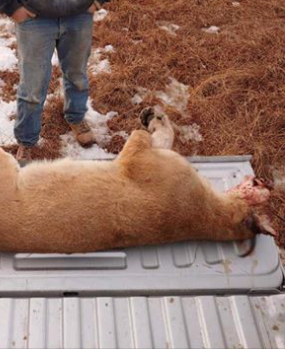
ROOKS COUNTY — A female mountain lion was found dead in Rooks County on Thursday by a group of upland bird hunters, according to a social media report from Kansas Game Wardens.
Photo courtesy Kansas Department of Wildlife, Parks and Tourism Game Wardens
The hunters immediately contacted the local game warden who responded to the scene.
SHERIDAN COUNTY — One person died in an accident just after 6p.m. Thursday in Sheridan County.
The Kansas Highway Patrol reported a 1999 Kenworth semi pulling an oversized load and driven by Johan Harder, Manitoba, Canada, was southbound on Kansas 23 four miles south of Hoxie.
The driver moved the semi over so it could clear the bridge. It struck a northbound 2012 Chevy Camaro driven by Betty L. Eisenhour, 84, Scott City, head-on.
Eisenhour was pronounced dead at the scene and transported to Leopold Funeral Home.
Harder was transported to the Logan County Hospital. Both drivers were properly restrained at the time of the accident, according to the KHP.
Two nationally recognized events will take place this week. One involves a bunch of men, who are paid entirely too much money to run, throw and kick an air-filled pig’s skin around a field. The other event revolves around a ground-dwelling varmint whose aversion to sunlight supposedly curses the land at this time each year, with six more weeks of winter. Growing up in Ohio, we had groundhogs there like we have prairie dogs in Kansas, so let me tell you a little about the star of Ground Hog Day, the groundhog.
Also known as a “woodchuck,” which comes from the Cree Indian word “wuchak,” a groundhog absolutely resembles an overstuffed prairie dog, from its large front incisor teeth, to its short stumpy tail. They are about the size of a badger, and live in deep underground burrows usually hidden it fencerows or in the edges of woodlots. They are herbivores, and are lethal to young green plants like corn and soybeans.
When I farmed, I could walk through fields of young row crops, and see row after row eaten off to the ground for several feet into the field. While not nearly as fierce as a badger, a groundhog can give a nasty bite with its big front incisor teeth, if cornered or barred from its burrow. We had one dog that was especially adept at killing groundhogs, and it was not uncommon to find old dried up groundhog carcasses around the barn during the summer. The dog would circle and maneuver itself to get them by the scruff of the neck, them shake them furiously until their neck broke.
I remember one summer day when the corn was nearly mature, we heard a horrible ruckus of growls, screams and thrashing cornstalks coming from somewhere in a cornfield near the house. By the time we found the source, that dog and a groundhog had flattened a patch of corn the size of a pickup, and once again, the groundhog had lost. I remember another time, when a neighbor’s dog named Wimpy, which was obviously not wise to woodchucks ways, ended up with one clamped onto his nose. It took several good wallops from a two-by-four to dislodge the critter. Groundhogs hibernate each winter in a special den dug just for that purpose. Research shows that during hibernation, a groundhogs body temperature falls to less than forty degrees, its breathing slows to an amazing one breath every six minutes, and its heart rate decreases to four beats per minute; the legend known as “Groundhog Day” centers around them awakening from this nearly dead state.
Punxsutawney, Pennsylvania was settled and named by the Delaware Indians as a campsite halfway between the Allegheny and Susquehanna Rivers. When German settlers arrived in the 1700’s, they brought with them a tradition known as “Candlemas Day,” celebrated in Germany on Feb. 2nd, which happens to be the midpoint between Winter Solstice and Spring Equinox, (winter and spring.) Tradition held that if Feb. 2nd were sunny, the last half of winter would be nasty and cold, and vice-versa. In Germany, for whatever reason, hedgehogs were observed to see if a shadow was cast. In Pennsylvania, given the absence of hedgehogs, groundhogs were selected to assume that role. An old German saying read: For as the sun shines on Candlemas Day, So far will the snow swirl until May; For as the snow swirls on Candelmas Day, So far will the sun shine until May.
Shutterstock.com
Pennsylvania’s first official celebration of Groundhog Day was in 1886, when the legendary groundhog was named Punxsutawney Phil, and the first trip to Phil’s mythical home on Gobbler’s Knob, was made the following year. Today Phil’s handler is local funeral director Bill Deely, who says that Phil currently weighs fifteen pounds, and thrives on dog food and ice cream in his climate-controlled home at the Punxsutawney Library. Each Feb. 2nd, he is carried up to Gobbler’s Knob and placed in a heated burrow beneath a simulated tree stump before being pulled out at 7:25 a.m. to make his annual prediction. Common sense says there have been several Phil’s since 1886, but no one has fessed-up.
Anyway, maybe we in Kansas can come up with our own figure-head to predict something, say a coyote for instance. We could call him Carl the Coyote and put him in a big pen in the middle of a CRP field where he’d be comfortable. We’d use his big fluffy tail to predict the weather. For example, if his tail was sticking straight out to one side, it was going to be windy; if his tail was wet, it’s raining, and if Carl was suddenly gone, there was probably a tornado and we’d just have to get another Carl. After all, we’ve got plenty of them! Continue to Explore Kansas Outdoors.
Steve Gilliland, Inman, can be contacted by email at [email protected].
Courtesy photoOAKLEY — Audiences and critics in North America, Europe and Australia agree – Africa’s Cirque Zuma Zuma is unlike anything they have ever seen before. Many describe it as an African-style Cirque du Soleil; such is the standard for the performers and the quality of the show’s live musical score. Among many accomplishments, the group has even competed as a 2011 finalist on America’s Got Talent. Today, approximately 120 performers in troupes of various sizes amaze audiences across the globe. Promising young Africans are trained at company schools in both Kenya and Tanzania.
Western Plains Arts Association is bringing internationally renowned Cirque Zuma Zuma to the Oakley High School Auditorium, at 3 p.m. CST, Sunday, Feb. 10. Admission is by WPAA season ticket or adults $20, students $10 at the door. This season’s performances are made possible through generous gifts by businesses and individuals throughout the area, including a special grant from the Dane G. Hansen Foundation, Logan, Kansas.
African Acrobats International, Inc., has established the ultimate African circus: the source for music, dance and ritual for all humanity. The thought of this rich continent brings in mind at once mysticism, magic and excitement. Some of the amazing entertainment audiences can expect from Cirque Zuma Zuma is: tribal dances, hula hoops, human pyramids, chair balancing, hoops diving, hand-to-hand balancing , foot juggling, poles, contortionist, tumbling and so much more. For additional information visit the group’s website: zumazuma.com.
One critic, Chris Griffin of DC Metro Theater Arts, wrote in April 2016: “As scientists continue to seek out new forms of alternative energy I would suggest they check out Cirque Zuma Zuma. From the time the troupe hits the stage they are dancing and don’t stop until their final bow….one of the things I really love about circus is when mere mortals do the seemingly impossible.”
There are two programs that are coming up in February I wanted to highlight this week. Registration deadlines are coming up fast, so call 620-793-1910 or email me at [email protected] if you would like to attend either program or both.
Winter Ranch Management
Kansas State University will host a series of meetings to help beef producers focus on management and profit strategies for the new year.
Bob Weaber, a K-State Research and Extension cow-calf specialist, said this year’s Winter Ranch Management series is titled “Production strategies to mitigate environmental factors impacting conception and pregnancy.” The meetings will be held at four sites in Kansas and will feature presentations and comments by extension educators on profit-enhancing strategies.
The meetings will also feature a popular ‘town-hall’ style question-and-answer session between Kansas’ cattle producers and extension specialists. Weaber said the series has a history of being a successful stretch of meetings.
Weaber, along with other state, district and local extension staff, will take part in the series to help answer producers’ questions. The specialists will answer a wide range of questions on beef cattle issues including animal health, nutrition, management, and reproduction.
Meeting topics include forage quality and availability impacts on beef cow-nutrition during late gestation and pre-breeding and also environmental factors affecting conception rates.
There will be a meeting on February 19th at the Township hall, 220 Union Street in Rush Center starting with registration at 5:30. Participants are asked to RSVP by either calling the Great Bend office of the Cottonwood District at 620-793-1910 or the Lacrosse office of the Walnut Creek District at 785-222-2710.
Burn Workshop
The past several years we have received a better than average amount of precipitation in the fall creating a large amount of grasses late in the season. These forages are now dry and have the ability to create the perfect storm for a wildfire. Prescribed burnings can reduce the amount of fuel that a fire has access to and help mitigate a massive wildfire.
K-State Research and Extension, the Midway District and the Cottonwood District are hosting a burn workshop on February 20th at Dole-Specter Conference Center, 1430 South Fossil in Russell, Kansas to help educate producers on burning. The program will begin with registration at 9 and will run until 2:30.
Participants will learn the basics of burning, and be able to run through scenarios to gain experience and confidence for creating their own burn plan to implement on their land.
This workshop is designed to help with the understanding of the nature and behavior of fire. Some of the topics that will be covered are reasons for burning, wildlife and prescribed burning, local and state regulations, fire weather, safety, liability, use of burn contractors, planning and conducting a burn. The workshop is designed to either prepare the participants to begin using prescribed burning or to update their knowledge and abilities.
To enroll for this workshop or for more information, please contact either the Midway District at 785-483-3157 or email Clint Laflin at [email protected] or the Cottonwood District at 620-793-1910 or email Alicia Boor at [email protected].
Alicia Boor is an Agriculture and Natural Resources agent in the Cottonwood District (which includes Barton and Ellis counties) for K-State Research and Extension. You can contact her by e-mail at [email protected] or calling 620-793-1910