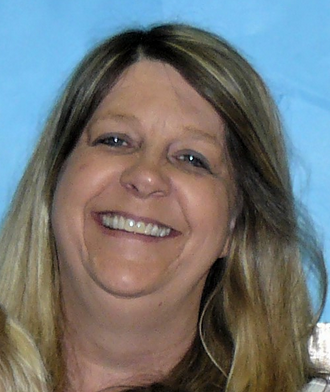
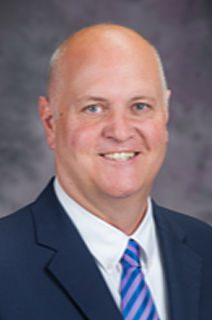
Gov. Laura Kelly on Wednesday appointed Glenda Susan Bowles, Laura Smith-Everett, Melissa Rooker and Liz Long to the Coordinating Council on Early Childhood Development Services.
The mission of the council is to solicit information and opinions from concerned agencies, groups and individuals on proposed policies and recommendations for the delivery of health, education and social services to families of young children—from birth through age five—who have or are at risk of having disabling conditions.
“Early childhood development is a major focus of our administration,” Kelly said. “The four Kansans appointed all have strong backgrounds in caring for our children, and I know they will be effective participants on this council.”
Smith-Everett, Shawnee, is an ELL teacher for the Shawnee Mission School District and the parent of a special-needs child. She received her undergraduate degree from William Jewell College and attended the University of Kansas for graduate school.
Rooker, Fairway, is the executive director of the Kansas Children’s Cabinet. She was appointed as a designee of the governor on the Kansas Interagency Coordinating Council.
Long, Mayetta, is the MCO reporting manager at KDHE Division of Healthcare Finance and has relevant Medicaid program experience.
The governor’s appointments are not subject to confirmation by the Kansas Senate.
MANHATTAN — A report detailing a 50-state comparison of rural schools reveals that many rural students face numerous inequities, and Kansas, like many other states, has both areas to celebrate and preserve as well as serious issues to address.
“Why Rural Matters 2018-19: The Time is Now” was published by the Rural School Community Trust in Washington, D.C. Jerry Johnson, chair of the educational leadership department and Lydia E. Skeen endowed professor in education at the Kansas State University College of Education, is one of the report’s authors. The full report can be viewed at https://www.ruraledu.org/.
Nearly one-quarter — 111,000 — of Kansas’ half-million K-12 students are in rural schools, and 46 percent of the school districts in the state are deemed rural by the U.S. Census Bureau. Nearly two-thirds of these districts — 66% — are considered small rural districts with enrollments below the national median for rural school districts. Nationally, there are 50.8 million students in public schools and about 20 percent are in rural schools.
“It should not be necessary to state the importance of the schools serving 1 in 5 U.S. public school students and argue that these schools and their communities matter — but it is,” Johnson said. “Meeting the needs of 9 million children is a challenge and a responsibility that deserves the attention of the nation, and this report points to key issues of policy and practice with the potential to make things better or make things worse.”
Overall, Kansas ranked in the top third in the nation and was in the top five of the percent of rural students enrolled in dual credit courses. However, the report revealed several areas for policymakers and education leaders to address.
Kansas — even when adjusted for comparable local wages — ranked last in rural teacher salaries and had the 11th highest rate of rural students with individualized education programs. In other metrics, Kansas had the nation’s fourth-lowest rate of rural students passing an AP exam, and slightly less than half of Kansas’ high school juniors and seniors — 47.8 percent — took the ACT or SAT.
J. Spencer Clark, associate professor of curriculum and instruction and director of the Rural Education Center at Kansas State University, said the report provides clarity.
“The Rural Education Center is strategically positioned to address many of the needs outlined in this report with our rural partners,” Clark said. “We’re heartened by the fact that we’re already focusing on college and career readiness for our rural Kansas students and are looking forward to meaningful discussions on ways to better prepare our students in light of the report.”
Rural schools are so vital to the success of their communities, the College of Education hosted the inaugural Rural Summit in 2019. Response was so favorable, Clark said the summit will be expanded to a regional event in 2020. Details will be forthcoming.
SHERMAN COUNTY— One person was injured in an accident just after 9p.m. Sunday in Sherman County.
The Kansas Highway Patrol reported a 2019 Chevy Silverado driven by Nancy Ann Wilson, 60, Aurora, Co., was eastbound on Interstate 70 pulling a homemade trailer near the Goodland exit.
For unknown reasons, the trailer came unhooked from the Silverado and rear-ended the pickup causing it to roll unknown amount of times. Both vehicles came to rest in the south ditch.
EMS transported Wilson to the hospital in Goodland. She was properly restrained at the time of the accident, according to the KHP.
It’s sign up time for Ellis Food Pantry free Christmas Food Boxes.
ELLIS – Residents of USD 388 Ellis who might want the help that a food box brings may sign up through the deadline on Friday, November 22, by calling 785-726-1278.
Those registered for boxes may shop for free Christmas gifts to give to their children ages 13 years and younger on either Saturday, November 23, or on Monday, December 2, from 2:00-4:00 p.m. at the Ellis Food Pantry, 210 Madison.
Pickup and/or delivery of the Christmas boxes will be Wednesday, December 18, from 2:30 to 6:00 p.m. at the Knights of Columbus Hall, 1009 Washington, Ellis.
One hundred years ago in Hays, on Nov. 17, 1919, a fire and resulting gas explosion killed six residents and two firefighters.
At least 42 people were hospitalized with severe burns, four in critical condition, and another 100 or so residents suffered injuries.
“Blast From Bursting Tank Imperilled [sic] Lives of Hundreds” reads the secondary headline of the Nov. 20, 1919 issue of The Ellis County News, which called the gasoline and oil fire at the Standard Oil Company “the most disastrous and tragic event in the history of Hays.”
The two firefighters, Nick Arnhold, 34, and Steve Tourtillotte, 44, are the only two personnel known to have died in the line of duty in the history of the Hays Fire Department, according to Ryan Hagans, fire chief.
(Courtesy National Fire Protection Association)
Much of the research about the disaster was done by two 30-year Hays firefighters, Richard Shubert, who died last year, and Ralph Burns, Jr., who passed away in 2008.
The men, aided by other volunteers, researched the history of the Hays Fire Department from its beginnings in 1878 through 1995 when the compilation was published.
“That’s how we, the members of the fire department, keep this event in the back of our minds,” says Hagans.
“You gotta know where you came from. The fire service is a family. Everybody likes to know their own family history, but it also teaches us the hows and whys of what we do today.”
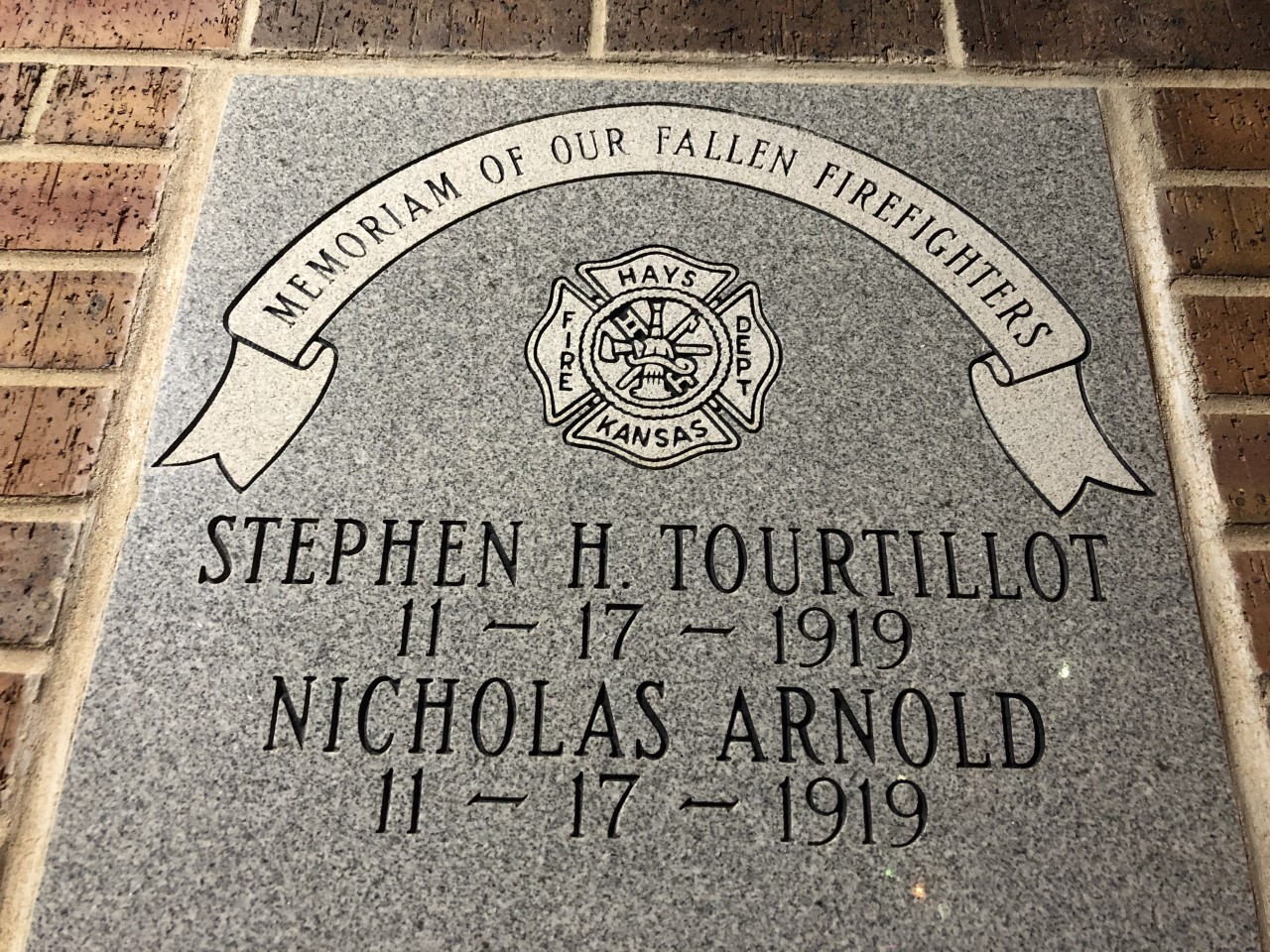
A memorial plaque on the side of the Hays Fire Department building, 1507 Main.
A memorial plaque honoring Arnhold and Tourtillotte was installed in 1991 on the south exterior of the Hays fire station on Main Street.
Several years ago each shift made a presentation about the event to teach the firefighters about it and why the department operates differently today, a section labeled “Lessons Learned.
“There are advancements in firefighting technology, changes in building construction, implementation of fire and life-saving codes, building codes, zoning regulations,” Hagans said.
“All of that comes into play now because tragedy happened.”
News reports from The Ellis County News and the Hays Free Press recounted the catastrophe three days later in their newspapers dated Nov. 20, 1919.
The fire was started shortly before 7:30 a.m. by a vehicle backfiring in the garage of the Standard Oil Company, located in what today is the 200 block of East 10th Street next to the railroad tracks in downtown Hays.
The fire spread to three gasoline storage tanks in the garage, which began exploding.
(Courtesy State Fire Marshal)
At 8:15 a.m., the final and biggest explosion sent a 200-gallon gasoline barrel flying two blocks to the north through the residential area, showering flaming oil and debris onto a crowd of spectators gathered to watch the spreading fire.
The nearby Farmers Cooperative Union Elevator, filled to capacity, was also completely engulfed by fire.
“Fire Threatened Entire Eastern Portion of City. Flames Visible More than Forty Miles” read a subheadline in the News.
The residents killed were Phillip Sargent, Mrs. Lewis Miller, Miss Elizabeth Buchholz, Mrs. Peter Heronime, Peter Rheim and Miss Mary Stressler.
Three homes were also destroyed.
Total property loss was estimated at $60,500.
Approximately 16 Hays firefighters responded to the scene with two hose carts and one chemical wagon. Mutual aid was provided by the Ellis and La Crosse fire departments.
The State Fire Marshal of Kansas, L.T. Hussey, issued a report about the fire within a 1919 annual Kansas fire statistics summary to Gov. Henry Allen.
A deputy from Hussey’s office was dispatched to the scene in Hays “while the ruins were still burning.”
“This fire, or fires, rather, was the result of the too common error of keeping automobiles in a building adjacent to oil storage tanks. … I am convinced of the need of stringent regulations regarding the location of gasoline and oil storage plants, also the handling of gasoline and oil from these plants,” the report read.
Hussey added that as a result of the Hays fire, his department was deluged with requests from all over Kansas for regulations covering the storage of large quantities of gasoline and oil near the residential or business sections of towns.
The National Fire Prevention Association changed its codes to require all flammable liquids storage tanks at all automotive service stations to be stored underground. Modern zoning regulations now keep industrial/business districts separated from residential areas.
Less than a year after the tragedy the city of Hays purchased its first mechanical fire truck on April 15, 1920. The first motorized fire truck, a REO Speedwagon, was purchased new in 1921.
The REO was tracked down by Shubert in Wichita Falls, Texas, and returned to Hays in July, 2016.
Among the advancements in the last 100 years is firefighting foam, which would most likely be used on such a fire today, according to Shane Preston, HFD deputy chief.
“We’d use a little bit of water, but we’re mostly going to foam now,” Preston says. “Technology in foam has advanced so much it does really help separate the fumes from the ignition source.”
Foam is carried on each of the department’s fire trucks.
Advanced technology is used in other areas including monitoring equipment, thermal imaging cameras and the trucks themselves.
Fire training is also more technical.
When Preston started his career 18 years ago, “we were taught you put the wet stuff on the red stuff,” he smiled. “That was Firefighter 101.”
“Now it’s more, we gotta look at what the smoke’s doing, what we’re going into, what the building is telling us, and knowing what kind of equipment we bring.”
The term firefighter is misleading, contends Hagans, who has more than 20 years experience. “We do so much more than fight fire.”
Hays firefighters spend more than 300 hours a year training.
In partnership with the Ellis County Fire Department, they learn specialized rescue techniques for situations including high buildings and trench and grain bin collapses.
The FAA mandates training at the Hays Regional Airport. HFD recently participated in a drill assessing emergency response to an airplane crash at the airport.
Fire inspections of buildings are conducted year-round as well as fire prevention education.
All Hays firefighters are also EMTs. The on-duty shift responds to calls with Ellis County Emergency Medical Services.
Another tribute will be made to Arnhold and Tourtillotte when a street sign is soon erected at the entrance of the new Hays Regional Fire/Rescue Training Facility in south Hays. A classroom is currently under construction.
Hays Fire Department personnel Lisa Beilman, Allison Friesen, and Ryan Hagans, along with City Attorney John Bird contributed information and research to this story.
CORRECTION at 8:20 a.m. Nov. 18, 2019: An earlier version of this story incorrectly stated this fire caused the only civilian deaths in Hays. Three Hays residents died in a house fire in 1997, according to information in the Hays Daily News. Hays Post regrets the error.
Medicare open enrollment sounds like a boring topic and many others have written on it. Some of you may be rolling your eyes just thinking about reading another article on Medicare. But, let me tell you about the 45 minutes that ended up saving me thousands of dollars.
Last year I was “forced” into Medicare. It is a long story and I will not go into it. Basically, when I turned 65, I was no longer eligible for the type of healthcare plan that I was on.
As a result, I enrolled in Part A, B and D of Medicare. Part A is the hospital portion, Part B is doctor visits and the like, and Part D is prescription drugs. Each Part has “deductibles.” There are different types of supplemental policies that help cover all or a portion of the deductibles.
When I was “forced” into Medicare B and D (Medicare A is free and you are eligible at age 65), I was advised to pick both a Medicare supplemental policy for my doctor’s visits and a Medicare D policy for my medication.
While I have virtually no medical expenses, I do have one expensive medication that I use. I needed to enroll in Medicare Part B and Part D because if I failed to do so, then I would be assessed a penalty in later years when I tried to enroll.
I also knew that I needed to acquire a supplemental policy because if I do so during that initial enrollment period (about the time I turned 65 or when I leave employer coverage), I am guaranteed coverage. If I do not enroll during that initial enrollment period and try to enroll later when my health has failed, I can be required to pay a higher premium or even denied coverage.
October 15 through December 7 is the only time you can change your Part D (prescription drug) coverage. My office was advising all of our families of those dates and urging them to have their Medicare D evaluated. Someone in my office suggested that I take my own advice and have both my Medicare Supplement B and D policies examined.
My wife and I met with an independent agent. Bottom line, we saved $3,000 a year on our supplemental policy. I then saved an additional $1,400 by changing my Medicare D plan.
This is a great opportunity for you to have your supplemental policy and Part D policy re- evaluated. I urge you to take some time to do it. You can go online to Medicare.gov, but I like dealing with a real person. I am glad that I did.
Please take time to check out your Medicare supplemental and Medicare D coverage. Like me, it could save you a lot of money and make you feel good about that 45 minutes that you spent with the agent.
Randy Clinkscales of Clinkscales Elder Law Practice, PA, Hays, Kansas, is an elder care attorney, practicing in western Kansas. To contact him, please send an email to [email protected]. Disclaimer: The information in the column is for general information purposes and does not constitute legal advice. Each case is different and outcomes depend on the fact of each case and the then applicable law. For specific questions, you should contact a qualified attorney.
BY DIANE GASPER-O’BRIEN FHSU University Relations and Marketing
Emma Ellerbee finds herself thinking, “No way this is happening,” a lot these days.
She shakes her head and tears roll down her cheeks as she talks about life-changing experiences at Fort Hays State University that could lead to her dream career. And she’s a freshman education major still a month away from the completion of her first semester.
First, Emma found what she thought was the ideal part-time job while looking for work her first couple weeks in Hays from Hastings, Neb.
She ran across an online ad for high school referees through the FHSU intramurals department. An avid sports fan whose dream was to coach major college football someday, Emma thought it would be the perfect opportunity to be on the field and learn more about the game at the same time.
Then one weekend when her grandparents were visiting from Hastings, Emma’s grandfather spotted a poster in the Memorial Union with Sarah Thomas’ photo on it. Thomas, the NFL’s first female official, was going to be the speaker for this year’s FHSU Presidential Series on Nov. 12.
It’s no secret in Emma’s family that Thomas has been her idol for several years, so her grandfather stopped to check out the poster.
“It says she’s coming to FHSU to speak,” Richard Johnson said. “No way,” was Emma’s reply.
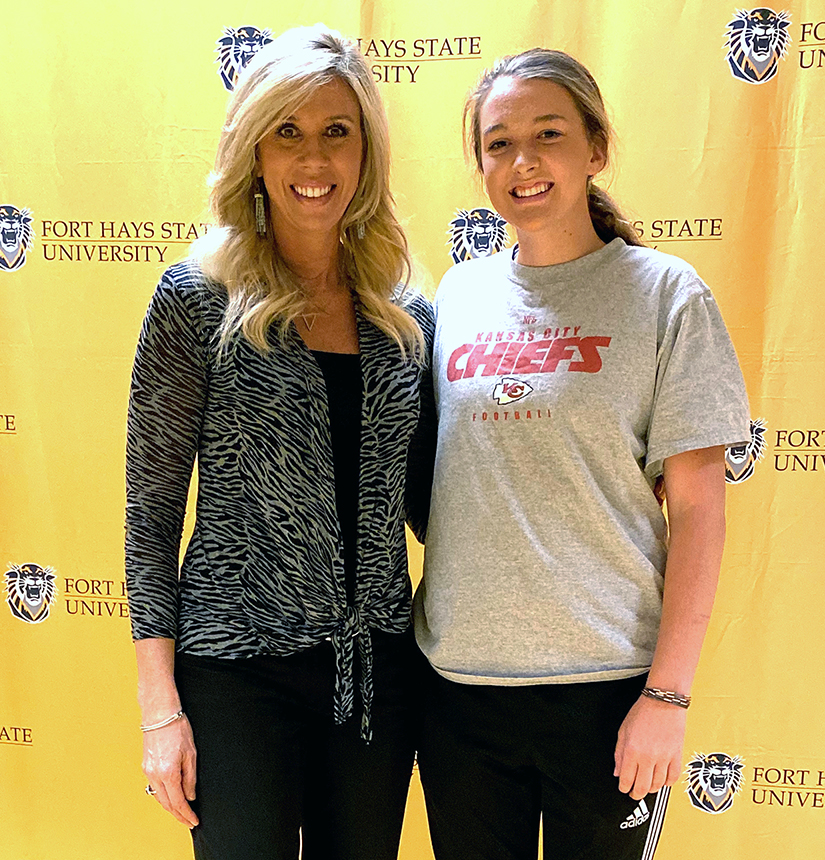
Emma promptly jotted the event down in her calendar to keep that day in November open. It couldn’t come soon enough. She was one of the first to take a seat during a question-answer session with Thomas and students in the Department of Health and Human Performance Department and the intramurals program.
Following Thomas’ visit with several student groups, Emma approached Thomas to take a photo with her. They got to chatting about sharing similar goals. Before she knew it, Emma had Thomas’ cell phone number, and Thomas promised to keep in touch and offered any help she could to Emma.
Emma was so moved by the afternoon’s events, she bypassed a night meeting in her residence hall to attend that night’s public presentation by Thomas.
Thomas entertained the audience with stories of challenges faced as a female in a male-dominated job, anecdotes of her career and balancing her profession with her family life with three children.
At least twice during the presentation, Emma shook her head in disbelief.
The first was when Thomas talked about her mother being a home economics teacher while growing up. Emma’s mom, Kate Portenier, teaches family and consumer sciences (formerly home ec) at Adams Central High School in Hastings.
Another was when Thomas flashed up on the screen two of the quotes by which she lives. They are also two of Emma’s favorites: “Be yourself, because everyone else is already taken” and “Comparison is the thief of joy.”
Emma thought – you guessed it – “No way!”
“With all the similarities, I just felt this connection,” Emma said. “It was super, super inspiring – just an amazing experience.”
So inspiring, in fact, that after sleeping on it, Emma decided the next day that she was going to pursue NFL refereeing, with coaching still available as a backup plan.
“It was like she hit me with a truck, it impacted me so much,” Emma said. “I love the game and love being on the field. I am so excited about keeping in touch with her.”
Emma’s passion for football began at a young age when she watched NFL and major college games on TV with her dad, A.J. Ellerbee. She was raised a Kansas City Chiefs fan, and her love for the game grew with each passing year.
By the time Emma was in middle school, she joined her school’s football team in Omaha, Neb., and played middle linebacker. Similarly, Thomas talked about playing on boys’ sports teams growing up.
Emma didn’t play high school football, but she still stayed involved. In an effort to bring the student body closer together, she created an organization called the Red Rowdies who created themes and dressed up for games to cheer on the athletes in different sports.
But her first love is football.
Sometimes in the fall, Emma can be found watching the sport either on TV or live six days a week. Now she has a goal of playing an even bigger part in her favorite sport.
It was almost too much to wrap her mind around this week. Was this really happening, or was it all a dream. Emma and Thomas have already texted back and forth, and Thomas sent a tweet about the two meeting to the NFL.
Wednesday morning, Emma woke up to reality. By noon, she was already working on her plan of following in the footsteps of the NFL’s first female referee, who was nearly as stoked about helping a certain 18-year-old college freshman at FHSU as Emma herself.
“The peak for me is to get to meet people just like me,” Thomas said.
Spencer Mohler, left, of Randall shakes hands with James Arnold, right. Mohler and his wife have donated the use of the camper to James, who was homeless.
Jewell Co. couple donates camper, RV park owner offers a place to live
By CRISTINA JANNEY Hays Post
James Arnold’s friend Preston Wolf said James was almost in tears when a stranger pulled in at Wolf Furniture Galleries on Friday morning with a camper — a camper that was going to be James’ new home.
James has been homeless for 16 years. About a year and half ago James moved into a makeshift shelter cobbled out of cardboard, shipping pallets and sheets of plastic behind the Hays furniture store
Caroline von Lintel, owner of the RV Village on Vine, read a story Hays Post about Arnold and offered a camper pad at her park with all fees and utilities paid.
She was looking for a camper when Spencer Mohler of Randall, Kan., contacted von Lintel after seeing the story about James on social media. He let her and Wolf know Arnold could use his family camper indefinitely.
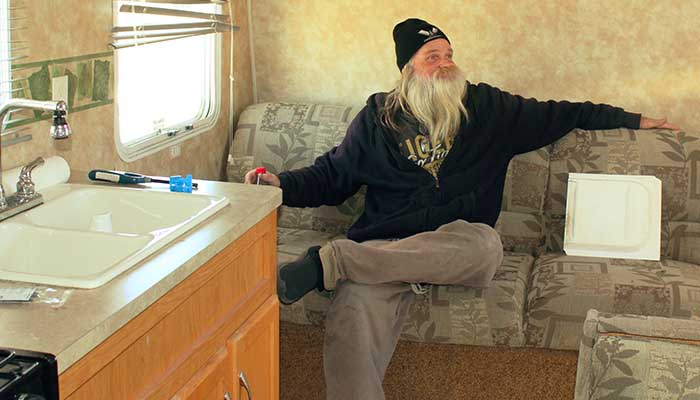
James Arnold in his new camper.
Mohler and his wife cleaned out the camper Thursday night, and Spencers drove the camper to Hays this morning for James.
“James was kind of peaking around the corner and tip toeing around, and when he found out that was his, it was if he just got issued a new lease on life,” von Lintel said. “There’s a spring in his step, and he said ‘I’m going to have a barbecue for everybody in the summer time.’ ”
The von Lintels also own the Wendy’s in town, and she said she would look into hiring him at the RV park or at Wendy’s.
“We want to get him in front of the people he needs to figure out where he’s at and what he needs,” she said. “Once we have that and feel he has his feet on the ground, we’ll just offer more opportunities as he is able to take it on.”
Now that James is no longer homeless he hopes to get a job and save some money.
Von Lintel has a history of working with homeless shelters, including Esther’s House and another shelter in Arizona.
“I’ve had some hard times myself. I’ll be honest with you,” she said. “When I read that, I know that feeling. I know what he felt. I just felt it. I said, ‘No, no, no, we are Hays. We can do this. Maybe Hays doesn’t have something in place now, but maybe this will create the synergy to get something in place. We are not a cold-hearted community. We care.’ ”
She continued, “People want to help. They just don’t know how. Hays is an amazing community. You don’t know how many calls I have got about clothes and food and bedding and whatever he needs.”
Von Lintel said she got more out of helping James than he did, because she knows now he can have some peace and start rebuilding his life.
“There is no one who needs to be homeless in Hays,” von Lintel said. “We can figure something out.”
Spencer Mohler, 26, said his family did not have much invested in the camper, were not using it and saw a chance to help someone else.
“I have never been homeless and I hope I never am homeless, but things do happen,” Mohler said. “I’ve been in lower places, and I know what it’s like trying to get out of whatever might be going on to get back on your feet and sometimes you need a little bit of help. I only had $1,500 in the camper, and that probably felt like $1 million to him.”
James’ former homeless encampment behind Wolf Furniture Galleries.
Mohler said they have opted to retain ownership of the camper for now, so James doesn’t have to pay the taxes.
When Mohler first brought up the idea of letting James use the camper to his wife, she said he was nuts. However, she read the story about James and the couple ultimately decided allow James to use the camper.
“If I can help someone who just a little worse off than I am, it’s all worth it,” he said.
Von Lintel and Wolf said they were flooded with calls and contacts of people hoping to help James in some way.
Someone donated an ACCESS bus pass. On the Rocks has offered him meals. Someone from LINK has offered to help James fill out paperwork to apply for assistance with medical needs.
James had few words Friday. He seemed overwhelmed, but happy and grateful. He talked about his goals of finding work and saving money. “Security,” he said excitedly. He knows know he has a place he and his belongings can be safe.
“I have knots in my stomach,” he said. “I have butterflies.”
Sitting on the couch in the camper, a huge grin curled over his wrinkled face.
“I ain’t homeless no more,” he said. “I have a home.”
John F. Kennedy changed the way politicians campaign in his historic run up to the the presidency, said Pulitzer Prize-winning author Thomas Oliphant.
Kennedy’s presidential campaign made a sweep through Kansas in 1959, which included a stop in Hays.
Thomas Oliphant, co-author of “Road to Camelot,” will be the keynote speaker at a banquet at 7 p.m. Nov. 20 at the former Kennedy Middle School, commemorating the 60th anniversary of JFK’s campaign trip to Kansas.
“What we discovered in our research that the collection of almost exclusively young people around him starting basically in 1956, they invented modern politics on the fly,” Oliphant said in an interview via phone with Hays Post.
“So many of the things we see today — for better and for worse — polling, how you organize in non-primary states, how you organize in primary states, the use of television advertising on a scale that had never been attempted before and on and on — the modern game that we watch today essentially begins in 1960.”
Oliphant said northwest Kansas at that time had a pocket of Democratic support despite Kansas over time being generally a conservative state.
Thomas Oliphant
“In the 1950s and in 1960, northwest Kansas for the Democrats was a sort of isthmus of strength or an island of strength. Getting out to where the Democrats were made all the sense in the world,” Oliphant said.
JFK also made stops during his trip in Wichita, Kansas City, Dodge City and Salina, but almost never made it to Hays, Oliphant said. Hays didn’t have an airport big enough at the time to accept his DC-3 airplane. A Hays resident flew to Salina in a small plane and picked up Kennedy and flew him back to Hays to land on what was then a grass landing strip.
JFK was greeted upon his arrival to Hays by the marching band from the local Catholic school, which would eventually became Thomas More Prep-Marian. Oliphant noted Kansas was not particularly Catholic at the time, either, but Hays and the surrounding rural communities were strongly Catholic, based on the settlement of Catholic Volga Germans immigrants in the area.
Kennedy was only in Hays five or six hours, but was here long enough for a fundraising dinner.
All 645 people in attendance in 1959 that Friday evening ate chicken fried steak except for one person who requested fish — JFK. Norbert Dreiling, the Hays attorney and Sixth Congressional District Chairman who was instrumental in bringing JFK to Hays, had the bishop grant a dispensation allowing Catholics in attendance to eat meat on a Friday. That provision was noted in the banquet program.
Oliphant said Kennedy had been running for president for three years by the time he made his trip to Hays. He was making about 15 stops a year, Oliphant said.
“You have a very practiced candidate by the end of 1959 just almost on the eve of all the amazing things that happened the following year,” Oliphant said. “By then, his travel routine was really settled. He generally would have eaten a quick meal that included meat although he wouldn’t have on this Friday. He would eat in his hotel room so he wouldn’t have to worry about eating at the event.”
Kennedy did not stay the night in Hays, but when he did stay overnight, his staff would ask his host for a long board to place under his bed to help with his back problems. Kennedy stayed earlier in the 1950s with Gov. Docking, and his family saved the board they used to support Kennedy’s bed.
Oliphant said politicians are still using Kennedy’s campaign model today.
“All the most important aspects of national politics were really invented during those four or five years when JFK put his operation together,” Oliphant said. “Essentially everything they did had never been done before, but the success of it created a whole new generation of copycats.
“In fact, four years later, the successful Republican campaign by Barry Goldwater was organized along the same lines that Kennedy had used. The guy who put together the Goldwater operation, partisan differences aside, was an avid student of the way JFK did politics, and if you look at the Goldwater campaign, you kind of see the ultimate compliment, which is imitation.”
In researching the book on Kennedy, Oliphant said he became even more interested in the former president.
“I had not understood how political he was,” he said. “This guy did a lot more everyday than just make speeches that were written eloquently. He loved the game. He understood politics as the process that supplies the grease in our society to get things done.
“I was struck over and over again in the research how minutely he followed this kind of approach and how down to the tiniest detail. He loved the tactical infighting, actually.”
Kennedy used the theme of a new frontier in his campaign.
JFK delivered at stump speech in Hays, Oliphant said. One of the big lines in that speech was his vow to get this country moving again. He based that theme on a detailed analysis of the country’s condition that came to the conclusion that at the end of the 1950s American life was a little stuck in the mud and there needed to be a new burst of energy, Oliphant said.
Oliphant said the more he researched Kennedy, the more fascinated he became.
“All his accounts of him in Hays were that he was very vigorous and engaged in the hours that he was there, but the feeling was mutual. This would have been the fifth stop on a two-day swing through Kansas and apparently he was alive and vigorous at the end of it as he was at the beginning of it and that is typical of him.”
Oliphant said JFK had a knack for connecting with the average voter. He said the ability to connect likely started in the Navy during the war.
“You know he ran for Congress before he ran for president,” Oliphant said. “His first campaign was in 1946 and it was for a seat in the House of Representatives. You don’t win one of those fights with eloquence. Yo win it with hard work — sometimes door-to-door. The process forced Kennedy to either learn to relate to people or to be a failure. ”
Oliphant and his co-author were stuck when they looked at Kennedy’s early Congressional campaigns about how he used retail campaigning, including meeting with small groups, going door-to-door and doing walking tours.
“The more he did it,” Oliphant said, “the more it became apparent to us, the more he liked it. … It really helps if you like people, if you like meeting people you’ve never known before. Kennedy turned into one of those. He didn’t come by it naturally, but the time he arrived in Hays, he had been a practicing national politician for 14 years — by then, behaving in ways that ordinary Americans could relate to was second nature to him.”
The Nov. 20 event is being organized by the Ellis County Democratic Party.
General admission tickets to the banquet are now on sale at $50 each. Tickets for the banquet may be purchased at 1500 Vine or online by clicking here.
Other activities commemorating JFK’s visit
At 7 p.m. Tuesday, Nov. 19, in the Fort Hays Ballroom, there will be a panel discussion about JFK’s trip to Hays, its impact, and the role of Norbert Dreiling, the Hays attorney and Sixth Congressional District Chairman who was instrumental in bringing JFK to Hays. Panelists will be longtime leader of local, state and national Democratic politics, Hays attorney John Bird; Larry Gould, chairman of Political Science Department at FHSU; and Randy Gonzales, who graduated in May from FHSU with master’s degree in history and who wrote his thesis on Kennedy’s trip to Hays. The event is free and open to the public.
At 3:30 p.m. Wednesday, Nov. 20, in the Memorial Union, Oliphant will answer questions at a historical commemoration of Kennedy’s news conference 60 years ago. The location will be adjacent to where JFK held his press gathering. The event is free and open to the public.
Forsyth Library on the FHSU campus opened an exhibit on Nov. 7 on JFK’s trip to Hays and on Dreiling’s role. It can be viewed in the south study area.
If you are still using Internet Explorer, please take note.
From the staff of Hays Post
Next week, Hays Post readers will notice a change to their local source for news, sports and information.
A website upgrade will be implemented, offering a more stable and secure experience for readers, significantly boosting the speed of the site, and offering an improved experience on mobile devices.
The current website has been virtually unchanged since 2014.
Technology has changed drastically in the past five-plus years, and we are evolving with it — and confident this change will give us a stable, secure and fast platform for years to come.
Some slight design changes will accompany the upgrade, but readers should expect to find the same local news, sports, information, weather and obituaries — with no paywall.
Keeping our Community Connected is what Eagle Radio does. And Hays Post is a big part of how we do it.
As part of the upgrade, Hays Post also will disable anonymous comments.
Comments were a way to stimulate conversation in a day when people were much less comfortable attaching their opinions to their names. However, the vast majority of engagement with Hays Post content has migrated from our on-site commenting system to Facebook, which sparked the change. We hope nearly a decade of offering our readers an open forum for ideas and commentary helped create a more open environment in our community.
Expect more changes in the coming months, as Eagle’s development team is creating new native apps for mobile devices, as well as integrations for other platforms, including Alexa-enabled devices.
Our goal is to deliver our content where readers and listeners are — whether that’s commuting in your car, checking Post at work or on your phone from the porch, or wanting to get caught up while you’re cooking dinner in the evening. Keeping you connected to the local information that matters to you — that’s what matters to us.
When the update is made, it could be as long as 24 hours before every device recognizes the change — and don’t be surprised if you see an occasional 404 Page Not Found redirect, especially if visiting off older links from social media.
Stories published prior to Nov. 18, 2019, will remain online at archive.hayspost.com, which will be active by the end of the week.
An important side note, the new platform will not be supported on Internet Explorer. Microsoft no longer supports Explorer and has advised Explorer users to switch to Microsoft Edge. Hays Post will be continually optimized for best use on Google Chrome, but is supported by most web browsers, including Firefox, Safari, Edge and most mobile browsers.