The city of Hays’ governing body will be reorganized during the Jan. 24 city commission meeting.
A new mayor and vice-mayor will be elected, followed by recognition of outgoing mayor James Meier.
The newly organized governing body will also adopt the Rules of Procedure for the Hays city commission.
(Click to enlarge)
Other agenda items include a decision on the request for rezoning of a lot on the southeast corner of 22nd and Wheatland Ave. and the north 20 feet of the adjoining lot from Neighborhood Conservation District (NC.3) to Commercial General District (C-2). The rezoning has already been approved, 6-1, by the Hays Planning Commission.
Property to the north, south and east is zoned residential, including general, single family and duplex, and multi-family.
The property across Wheatland Street to the west is zoned C-2 and is the site of the Kansas Dept. of Children and Families building.
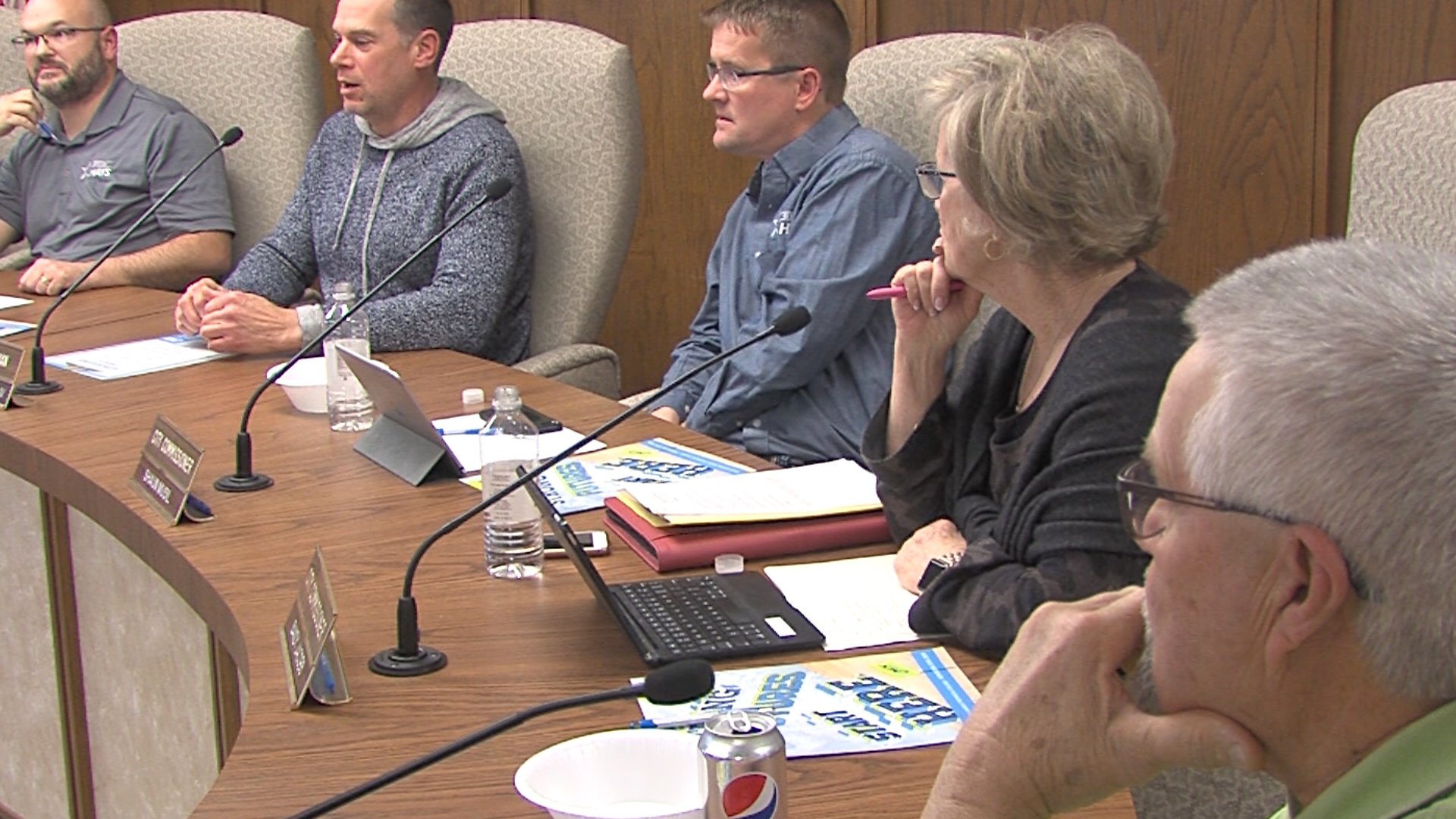
Vice-Mayor Henry Schwaller said last week city commissioners have been contacted by concerned people who live in nearby houses.
He said the C-2 commercial zone to the west “makes sense because it’s near the hospital and there could be ancillary doctors’ offices and other things that fit within that classification.”
“And that does make sense,” agreed Meier, “but that’s a bigger list than office buildings.”
C-2 zoning in the city’s Unified Development Code (UDC) allows the following uses:
o Alcoholic Beverage Sales
o Animal Grooming Facilities
o Animal Boarding or Vet Services
o Assisted Living Facility
o Drinking establishment
o Drive-In/Drive Through Facility
o Farmers’ Market
o Grocery Store
o Heavy Retail
o Hotel/Motel
o Mixed Use
o Nursery/Greenhouse, Retail
o Office, General
o Parking Lot, Parking Structures
o Group Day Care Center
o Medical Office/Clinic
o Non-Profit Institution
o Nursing or Convalescent Home
o Place of Assembly
o Pawn Shop
o Personal Services
o Recreational and Fitness, Indoor and Outdoor
o Restaurant
o Retail Sales and Service
o Showrooms
o Schools, Private
o Schools, Public
o Vehicle gas and fuel station
The UDC requires a bufferyard between C-2 and NC.3 zoning, noted Jesse Rohr, director of Public Works. Mandatory fences, walls, open spaces, landscaped areas, berms or any combination thereof, assist with development of properties adjacent to different zoning classifications and make them more compatible.
“In this case, the property owner would have to provide at least at 10 foot buffer on the south property line,” Rohr told the commission.
All city infrastructure and utilities are available at the location for connection.
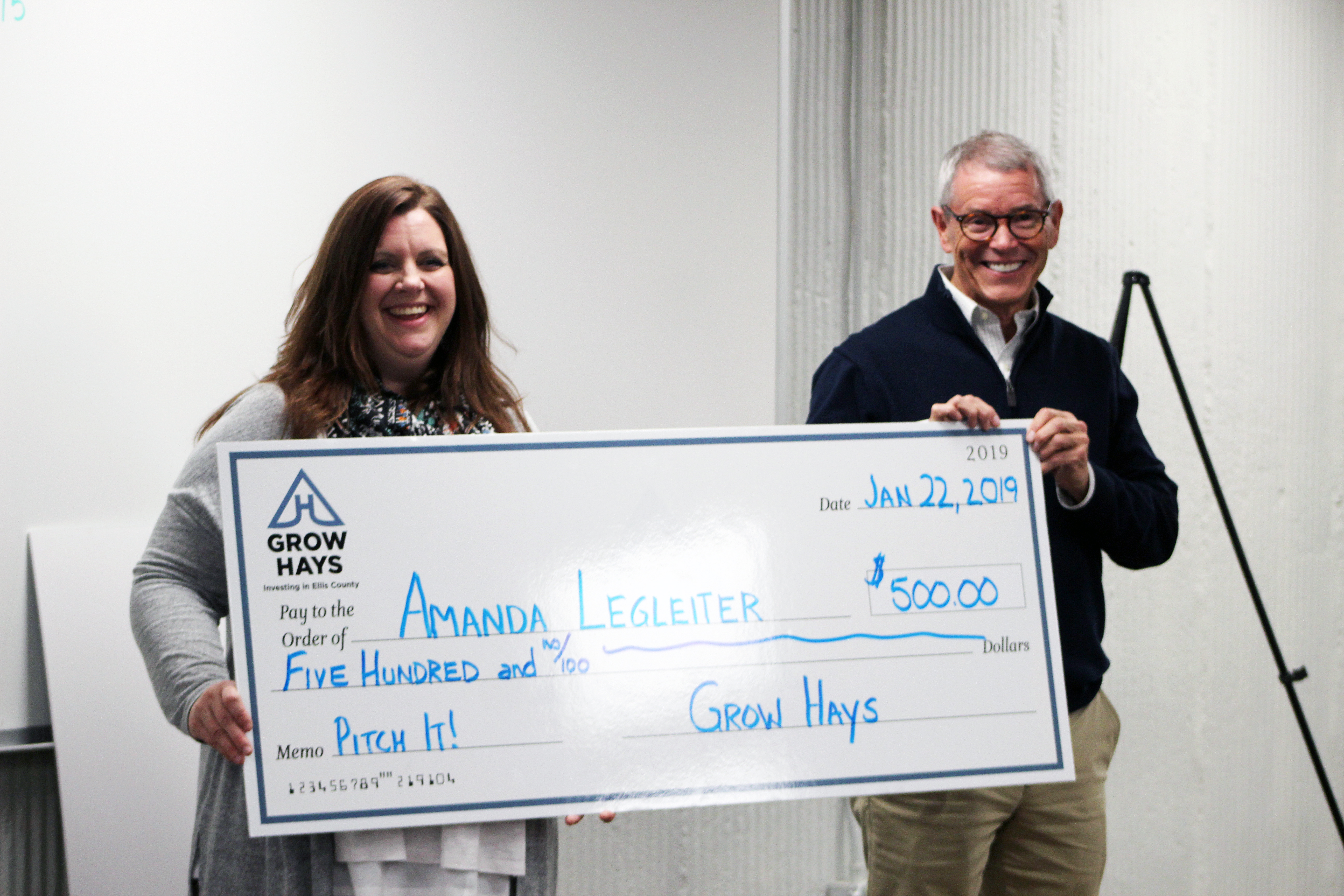
Amanda Legleiter, owner of Chroma Quilting, was the winner of first Grow Hays Pitch It challenge Tuesday night.
By CRISTINA JANNEY Hays Post
Grow Hays hosted its first “Shark Tank”-style Pitch It session Tuesday night at BriefSpace.
Competitors proposed a diverse range of products and services. A Fort Hays State University student proposed an app that could alert you to gunshots in the area. Another young man proposed building fire starters that use a chemical reaction. Other presenters included an art therapy nonprofit, a quilter, a service to help people increase their credit scores and a entrepreneur with his own line of vape juice.
Each presenter had five minutes to pitch with three minutes for questions from the judges. The winner went home with a $500 cash prize.
Chroma Quilting
Amanda Legleiter, owner of Chroma Quilting, was the winner of the challenge and took home the prize money. She hopes to move her business out of her basement and into a Hays storefront.
Legleiter uses a long-arm quilter to create throws, T-shirt quilts and complete other projects. She also would like to offer quilting classes. In the local market, Legleiter said she found there were long wait times at current quilting business and a large number of long-arm quilters retiring from the industry.
She said by creating more visibility she hopes to increase her client base.
SafetEaves
Hayden Hutchison
Hayden Hutchison, a Fort Hays State University student, proposed an app that would alert the user of a gunshot in the area.
The app is based on similar technology marketed by ShotSpotter, which is being used in neighborhoods by law enforcement to detect gunshots and increase response times.
Hutchison said gunshots have a unique audio fingerprint that is distinguishable from other similar sounds that might cause a false alert, such as the sound of a gunshot on a TV.
“It would give users time to take precautions and get to a safe environment,” Hutchison said.
The personal security market is growing and is expected to be about $29 billion by 2022. He said he and his partners plan to market the app on a subscription basis.
Hutchison and his partners are looking for a software engineer to help develop the app.
Surtr fire starter
Surtr fire starter
Parker Holterman pitched his Surtr fire starter. The device ejects and ignites a petroleum pellet with a single motion. Unlike other devices that only create sparks and require the user to tend kindling, the Surtr pellets remain lit in all weather conditions for several minutes. The device holds four replaceable pellets.
He has a patent on the device, but has yet to manufacture any of the devices.
Holterman has a company in Wichita that can manufacture the devices and a source for the fuel. His initial investment would depend on what type of quantity discount he could secure for his initial order.
The fire starter market in 2018 was worth $38 million and camping is on an upward trend.
Angels and Umbrellas
Mitch Lindeman of Norton wants to start a nonprofit called Angels and Umbrellas to offer arts instruction to people who suffer from mental illness.
Lindeman himself is a recovering addict and has mental illness. He said art and music has been instrumental in his recovery and he would like to offer that to others who have similar problems.
Mitch Lindeman
When he was in rehab, he played a piano in the center’s music room. Soon people were asking him for lessons. This inspired him to reach out to others through the arts.
“Our mission is to teach members coping skills through expressing themselves through art, music, poetry and creative thinking and to focus on the positive side of these illnesses and change the way we look at mental health,” he said.
Lindeman said he wanted to open a storefront with spaces for art, woodworking, music and other creative endeavors. He also wanted to launch a website that would allow people to share their creations and positive actions in their communities. He said he already has volunteers willing to teach arts courses. The non-profit would sell art projects its to help offset costs.
He has taken the first steps to creating his non-profit, but still needs to file paperwork with the federal government to become a 501(c)3.
Credit Repair Services
Robert Readle
Robert Readle, a local real estate agent, said he wanted to address the increasing problem of people with low credit scores.
A low credit score can affect the ability to obtain a mortgage and other types of credit. It can also affect interest rates.
“So many people underestimate what is going to take to fix this,” he said.
He said it can take months to get problems corrected and it is not a do-it-yourself project.
“Credit bureaus don’t make money by taking your call and fixing what is wrong on the report. They make money collecting data and reselling it, so you are really a thorn in their side. If you don’t know what you are doing, you can really mess it up,” he said.
Although there are some large national companies that offer similar services, Readle said he thought there was a niche for a local business who could offer a personal face-to-face touch.
He said he sees a couple of levels of service, including initial credit repair then a credit monitoring service. Software is available to aid in this type of work, but Readle said he needs a qualified partner, as he already works a full-time job.
“It would benefit our community with higher home ownership and less month-to month costs in budgets by lower interest rates on their loans,” he said.
Hazy Dayz Vapes
Donavan Rogers
Donavan Rogers is seeking a $50,000 investment to open his own vape shop in Hays — Hazy Dayz Vapes.
He has his own vape blend, Throat Punch Vape Juice. He would like to open a storefront in Hays from which he could wholesale or retail Throat Punch as well as sell other vape juices.
He told the group he already has the licenses in place to sell vape juices, but needs between $25,000 and $30,000 to order inventory.
The vape industry is booming, going from $4.2 billion in sales four years ago to $22.4 billion in sales today.
He told the judges his business plan projected he would be able to turn a profit within the first month and he saw room for growth regionally.
One of the judges asked about health concerns associated with vaping. Rogers used vaping to stop smoking and said he feels he is healthier than when he was a smoker.
Doug Williams, Grow Hays director, said he would like to have at least three more Pitch It events this year.
Corrected 12:55 p.m. Thursday, Jan. 24 for the spelling of Hayden Hutchison’s name.
Sophia Linenberger, a freshman at Thomas More Prep-Marian, recently underwent a surgery where a cancerous tumor was removed from her spine. Sophia had an additional surgery Jan. 16 to draw a bone marrow sample and to get the port put in that will be used for her chemotherapy.
In an effort to help Sophia and her family in their time of need, fundraising opportunity has been created to help raise funds for travel and medical expenses. Below is a link to order bracelets, T-shirts and hoodies to support Sophia. All funds raised will go directly to Sophia and her family.
Orders will be accepted until Sunday, Jan. 27, at 11:59 p.m. Contact James Harris with any questions at [email protected] or Redeem Designs @ (785) 621-7277.
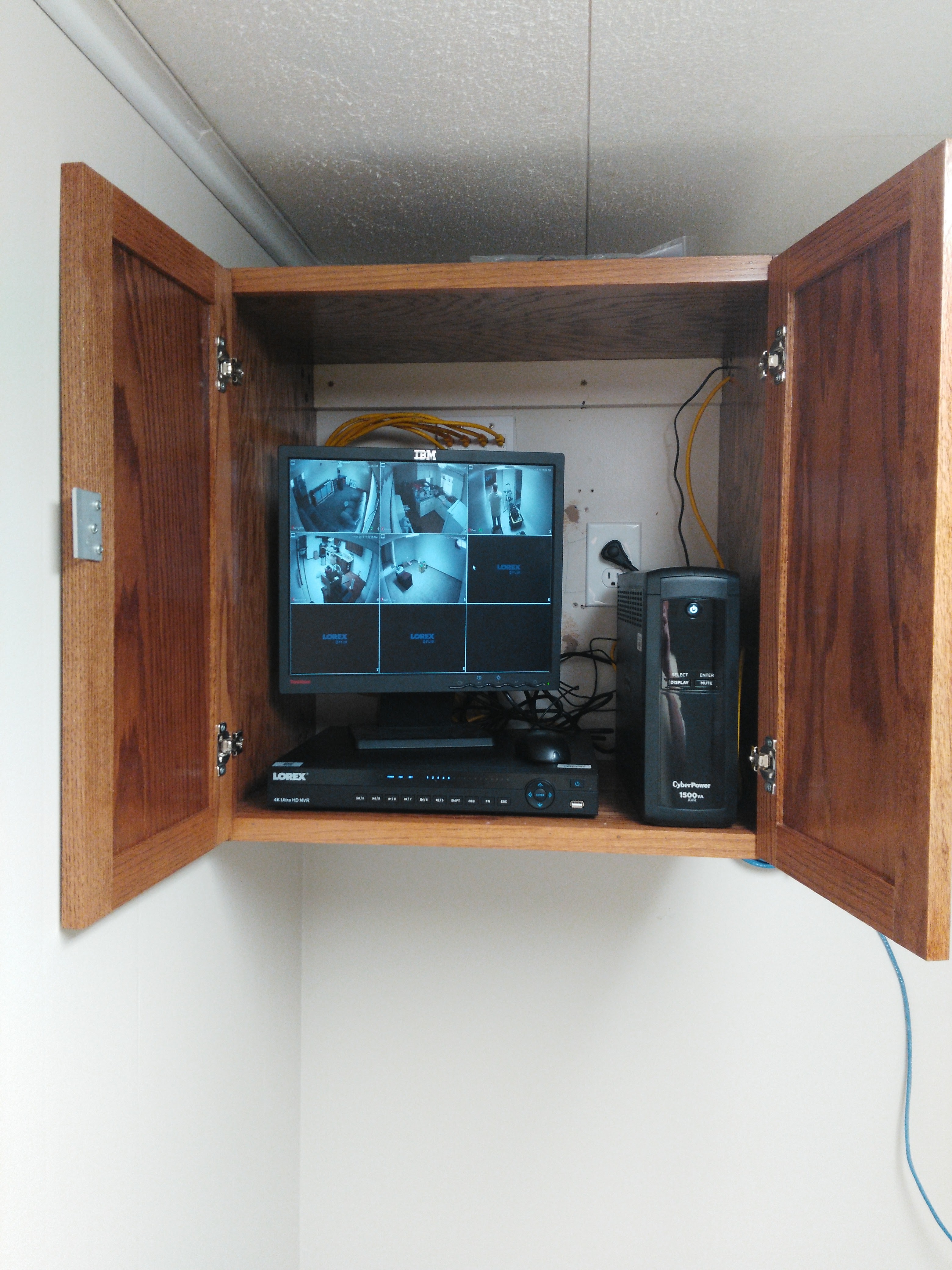
Cabinet for the camera system located in a group home in Hays. DSNWK
Camera systems will be placed at Developmental Services of Northwest Kansas locations in Atwood, Hays, Hill City, Hoxie, Norton, Stockton, and Russell with the help of community foundation grants and a $21,000 grant from The Beach Family Foundation, Derby.
The purpose of the cameras will be to observe behaviors of individuals with intellectual and developmental disabilities (I/DD) as needed, which will be used to help improve the quality of care and safety, and develop personalized health plans.
“Many persons with I/DD have challenges with verbal communication and so they often communicate through their behaviors,” said DSNWK President Jerry Michaud. “For example, aggressive behaviors could mean the individual is in pain.”
These camera systems that will be placed in community spaces of residential homes will provide an opportunity for staff to review recordings to better understand the complex behaviors an individual may be exhibiting, and to collaboratively work with the person’s team to create a personalized plan to address their needs.
“Disability programs must continue to change and evolve in order to sustain quality services, but a paramount principle to this, is the protection of individual privacy,” said Michaud. “The use of camera systems in residential homes is strictly defined in DSNWK policies. The seriousness of guarding and respecting the privacy and confidentiality rights of each individual is core to our services.”
At DSNWK, these camera systems will also help monitor facilities to provide improved security and safety of the facility, people coming and going, and the company vehicles. DSNWK provides services out of 26 facilities and residential homes agency-wide.
Community foundations that have helped to support this project are Sheridan County Community Foundation, Rawlins County Community Foundation, and Graham County Community Foundation. Roughly $4,500 is still needed to fully fund the project.
DSNWK is a 501c3 nonprofit with a mission to advocate with persons with disabilities and those who care about them by planning and supporting a life of dignity, interdependence and personal satisfaction in the community.
Jeremy Gill, a recent graduate of Fort Hays State University with master’s in history, will speak about aspects of his master’s thesis, “Cavalry to Campfires: The Politics of Preservation in Frontier Historical Park,” on Monday, Jan. 28, during the Ellis County Historical Society annual meeting. There will be a membership business meeting at 7 p.m. followed by Gill’s presentation at 7:45 p.m.
Doors open at 6:30 p.m. for membership and sponsorship renewals. Membership cards will be available during registration.
Both the meeting and presentation are free and open to the public.
Located at 100 W. Seventh, the Ellis County Historical Society, founded in 1972, collects, preserves, and exhibits items and documents that illustrate the history of Ellis County.
Three locations across Kansas offer comprehensive programs for producers
MANHATTAN — Three K-State Sorghum Production Schools will be offered in early February to provide in-depth training for sorghum producers and key stakeholders. The schools are sponsored by the Kansas Grain Sorghum Commission.
The half-day schools will cover a number of issues facing sorghum producers in eastern, central and western Kansas including risk management, marketing opportunities, weed control, crop production practices, nutrient management and soil fertility, and insect management.
“These schools are being offered with the concept that producers can attend one location to get all the updates ranging from issues that arose this past growing season to looking ahead to future growing seasons,” said Ignacio Ciampitti, K-State crop production and cropping systems specialist.
Registration for each school is at 8:30 a.m. Each program begins at 9 a.m. and concludes at 1:30 p.m.
Lunch will be provided courtesy of the Kansas Grain Sorghum Commission. There is no cost to attend, but participants are asked to pre-register by Jan. 29. Online registration is available at K-State Sorghum Schools or by emailing/calling the local K-State Research and Extension office nearest the location participants plan to attend.
The locations and dates for the three schools are:
Feb. 5 – Garden City
The Golf Club at Southwind
77 Grandview Dr.
Garden City, KS 67846
Contact: Jennifer Stoss, [email protected]
Feb. 6 – Hays
K-State Agricultural Research Center
1232 240th Ave.
Hays, KS 67601
Contact: Stacy Campbell, [email protected]
Feb. 7 – Salina
Saline County Expo Center
4-H Building
900 Greeley
Salina, KS 67401
Contact: Carl Garten, [email protected]
The 46th annual March for Life took place on Friday, January 18, 2019, on the National Mall, in Washington, D.C. Fifty-one students and fourteen sponsors made the trek to protect life.
A pilgrimage is never easy, which was displayed when one of the hired Village Tours buses broke down near St. Clairsville, Ohio. The bus driver was able to get the students and sponsors to a mall where they waited for 5 hours for another bus to pick them up so they could continue their journey. In pure TMP-M fashion, our students made the best of a bad situation and enjoyed a Hibachi restaurant where the food is cooked in front of you and flown through the air!
Activities in Washington, D.C, included the Arlington National Cemetery, Mass at Nativity Catholic Church, Union Station Tour, Monument Tour, National Basilica of the Immaculate Conception Tour and Mass in Crypt Church of the Basilica. All of these activities were in addition to the purpose of the trip, which was the March for Life on the National Mall. Exact crowd numbers are not available, but organizers planned for 100,000 people to participate. Later, leaders of the march said upwards of 200,000 people attended. Some estimates are as high as 300,000! This year’s speakers included Ben Shapiro, Abby Johnson, Ally Cavazos, Dr. Alveda King, and more. Even Vice President Mike Pence made a surprise visit to the event with his wife, Karen Pence.
Participants advanced up Constitution Avenue to the Supreme Court and Capitol Buildings. The same path taken since January 22, 1974, when thousands of pro-life individuals participated in the very first March for Life to stand up for the unborn. A great lesson for our students to witness a peaceful protest and exert their freedom of speech.
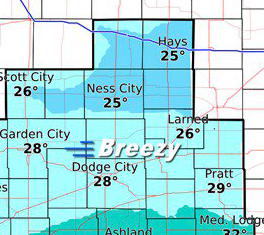
Thursday A 20 percent chance of snow showers before noon. Cloudy, then gradually becoming mostly sunny, with a high near 25. Wind chill values as low as 5. Blustery, with a north wind 10 to 20 mph, with gusts as high as 30 mph.
Thursday NightPartly cloudy, with a low around 18. Wind chill values as low as 5. Light and variable wind becoming southwest 8 to 13 mph in the evening.
FridayMostly sunny, with a high near 43. Wind chill values as low as 5. Southwest wind 8 to 13 mph becoming west northwest in the afternoon.
Friday NightMostly cloudy, with a low around 24. West wind 7 to 9 mph.
SaturdayMostly sunny, with a high near 44.
Saturday NightMostly cloudy, with a low around 29.
Welcome to the 2019 Session. The first day was filled with pageantry and ceremony of the inauguration of Laura Kelly as the 48th Governor of Kansas along with the swearing in of all 125 members of the Kansas House of Representatives. This year I will serve as a member of the Appropriations and Taxation Committees and will be Chairman of the Higher Education Budget Committee.
Also last week, Governor Kelly delivered her first State of the State address and budget proposal. It is a one year budget that she says can be handled without a tax increase. I will work with her to craft a budget that provides for the needs of our citizens and does it is a fiscally responsible manner.
Division of the Budget Director Larry Campbell provided details on the Governor’s Budget Report (GBR) to a Joint Committee of House Appropriations and Senate Ways and Means. The GBR can be found online at budget.kansas.gov.
Some of the highlights include: A one-year budget for all state agencies, with the exception of K-12 and the biennial budgets (Fee Boards), which are budgeted for two years. The K-12 budget is actually for two years and is proposed as a standalone piece that she would like to see enacted by the end of February in order to satisfy the Kansas Supreme Court. Although many of us want to see meaningful legislation discussed and passed early in the session, it will be a heavy lift to go through all the steps by the end of next month. Not only is the K-12 budget separated out, it includes an inflation rate of 1.44 percent from FY ’19 through FY ’23. This would be an increase of $363.6 million.
The long term plan call for the ending of State Highway Fund transfers by FY ’23, but there are $238 million in transfers from the fund to the State General Fund in her proposed budget. The Governor’s Budget does not address comprehensive transportation funding. There is also money for Medicaid Expansion and the Children’s Health Insurance Program known as CHIP. The federal government is reducing its participation in the CHIP program so if we want to keep this level of coverage, this is what is will take. Another proposal is to pay of the Pooled Money Investment Board (PMIB) loan 5 years early, requiring a revenue transfer of $264.3 million SGF to fully pay off the $317.2 million loan in FY ’19. While this is a noble idea, and I would like to see it happen, we may need to stay with the original payback terms. The GBR also restores remaining FY ’17 SGF allotment to the Board of Regents in FY 2020 at a cost of $8.9 million.
One proposal has received a lot of media attention and that is the reamortization of KPERS. I have also received many emails and phone calls regarding this issue: Reamortizing the unfunded actuarial liability over a new 30-year period would cost the taxpayers of Kansas an additional $7 billion with a short-term “savings” of $145 million. This is not a partisan issue. Governor Brownback proposed this also in a previous budget and it was soundly rejected by the legislature, I assume this time around it will not be well received by members of the house and senate.
There is more to talk about, we will do that next week. It is always good to see people from the district come to the capitol. Leah David from Norton and Jaden Smith from Almena were in town for a Citizenship Day through the Career Technical Student Organizations of Kansas. These young ladies are also NWKS FFA District officers.
If you come to Topeka during the session, my office is in Room: 149-S. My phone number is 785-296- 7463 and email is: [email protected] and you can always try my cell number is 785-302-8416.
I look forward to seeing you around the 110th District. It is my honor to by your representative.
Rep. Ken Rahjes (R-Agra), is the 110th state representative and chairman of the Higher Education Budget Committee.
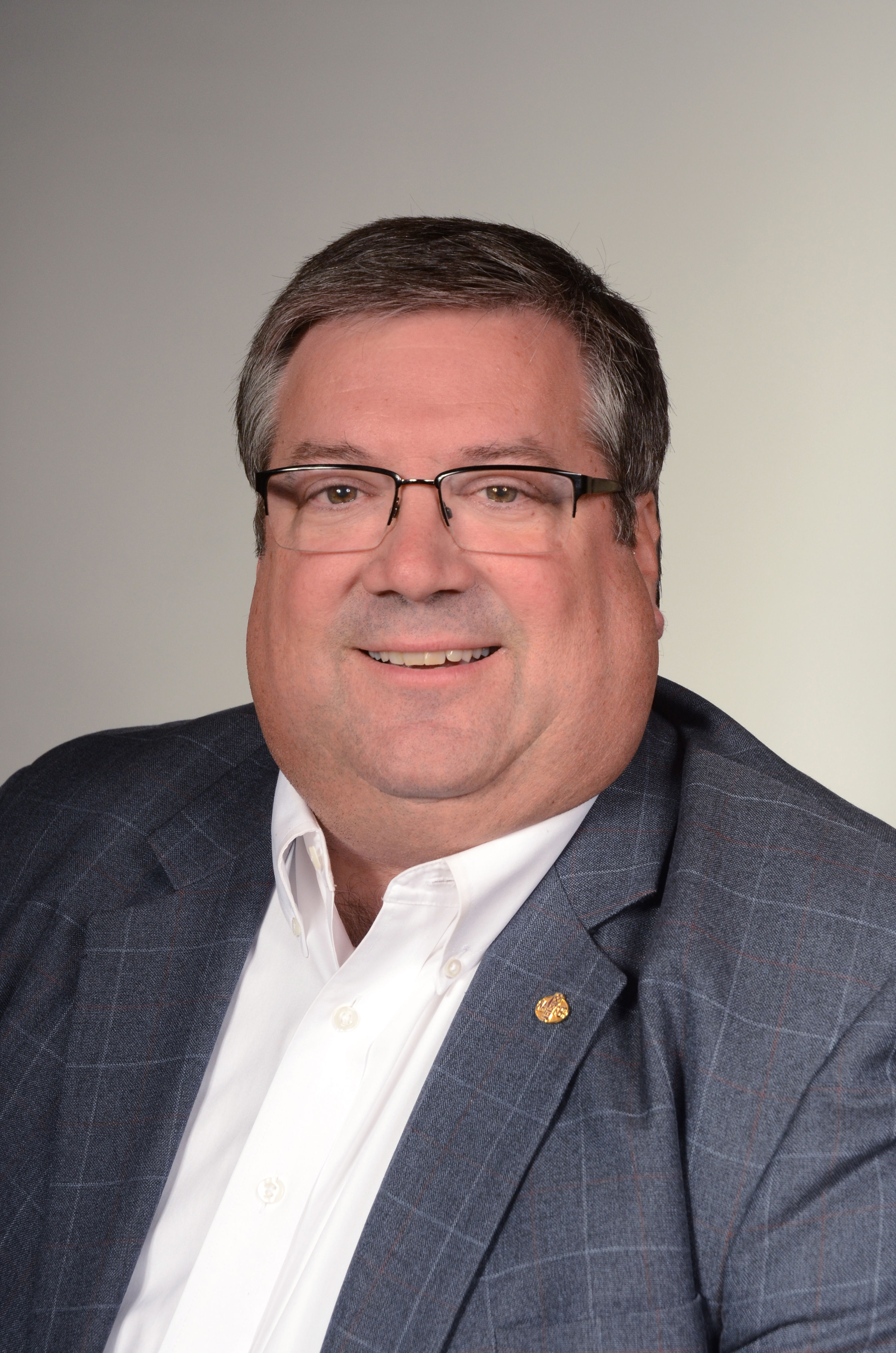
Edward Cross is president of the Kansas Independent Oil & Gas Association.
By EDWARD CROSS Kansas Independent Oil & Gas Association
Debate continues across the country on our nation’s energy future. What is our best energy policy going forward?
Few doubt that energy has improved lives and enabled human progress. Yet one of the biggest challenges facing the world is the polarized debate over the future of energy. Facts and economics are too often replaced with assertions and emotions.
Discussion about fossil fuels and alternative energy sources often degenerate into a battle to delegitimize the other side. This is a recipe for inaction. And it keeps billions of people trapped in energy poverty. Almost 40% of humanity has access to only rudimentary forms of energy and a very low standard of living. The world expects and deserves better.
Energy Policy – In the 1970s, many experts forecasted a permanent energy shortage in the U.S. Fast-forward to today and we see the U.S. is the top producer of oil and natural gas in the world. Technological developments and efficiency gains have resulted in U.S. oil production doubling since 2008. U.S. oil production is now projected to grow another 50% over the next decade. The energy shortage predicted in the 1970s has not come true. In reality, we did not have an energy shortage in the 1970s, but had a shortage of imagination and loss of confidence in our ability to innovate.
Concerns About Carbon – Fossil Fuels are needed throughout the world to lift people up, which is different than a philosophy of embracing a zero-emissions world. Over 80% of the energy that the peoples of the world use to survive come from fossil fuels, because that is the cheapest, most plentiful, most reliable source ever developed. Anyone who cares about our environment and climate recognize that cheap, plentiful, reliable energy is essential.
Burning fossil fuels to generate electricity or provide power necessarily releases carbon dioxide (CO2) into the atmosphere. Carbon dioxide is a gas we exhale every time we breathe. Erupting volcanoes, decaying trees, wildfires, and the animals on which we rely for food all emit CO2. This by-product, which is essential for plant life and an unavoidable aspect of human life, is at the center of today’s climate change controversies.
There is vigorous debate about the effects of carbon emissions. The United Nation’s Intergovernmental Panel on Climate Change (IPCC) released its latest climate change report in October 2018. In case you hadn’t heard, we are all doomed. Yet, the world mostly yawned. But an EPA report released later in October 2018 shows the world may not be ending after all. According to new EPA data, greenhouse gas emissions, mostly CO2, fell 2.7% from 2016 to 2017. This downward trend is occurring even as U.S. oil and gas production grows dramatically.
Beware of Crocodile Tears – All too often state and federal proposals to tax carbon directly or launch new carbon tax schemes have much more to do with raising revenue than helping our environment. For those who prefer higher taxation to spending cuts, having an entirely new source of revenue is appealing. However, taxing carbon only takes more resources from the private sector to support swelling state and federal government.
A recent study analyzed probable effects of a U.S. carbon tax that starts at $20 per ton and then rises 4% per year, which is in line with recent proposals. The study suggested that such a tax would decrease household consumption, due to the increased cost of goods. The average household would have to pay 40% more for natural gas, 13% more for electricity, and more than 20 cents per gallon extra for gasoline. Costs would rise even more in subsequent years.
Price hikes like these can only mean lower standards of living and less opportunity. Families that spend a bigger portion of their household income on transportation, utilities and household goods are hurt, not helped, by carbon tax schemes that make traditional forms of energy more expensive.
Taxing carbon to tackle climate change is one of those big ideas that have long held a bipartisan sway. However, recent polls continue to show climate change lagging behind health care, jobs, immigration, and the federal budget deficit among voters’ priorities. In addition, fuel-tax riots in Paris in December and the defeat of a carbon-fee ballot measure in the state of Washington in November shows the difficulty of getting people to support a levy on the energy sources that heat their homes and power their cars. Public support for climate action appears to be broad, but it is shallow. Addressing climate change enjoys widespread approval, until climate action comes with a tangible price tag.
Citizens around the world will continue to reject climate policies that cost them personally, either by direct taxation or by undermining the competitiveness of their own economies.
The good news is that recent polls show that the American voter clearly want policymakers to set aside outdated assumptions and partisan talking points and work together on safe, responsible, and fact-based energy policy that grows our economy, creates well-paying jobs, and maintains our nation’s global energy leadership. Voters’ clearly expect their elected leaders to place what’s best for our state and nation’s economy and energy future above partisan ideology and political posturing.
A Better Way – The energy policy choices our nation makes today are among the most important and far-reaching policy decisions we will make in the 21st century. If we are to continue our nation’s positive energy trends, we must implement energy policies based on current reality and our potential as an energy leader. American energy policy should focus on what’s important: American jobs, American energy security, and American global energy leadership.
The U.S. currently has a better, more sensible approach to energy development than any other country in the world, both short-term and long-term. Where government policy has been absent, free markets have filled the void with great success.
Energy prices affect all corners of the economy, and keeping up with demand is essential for maintaining a high standard of living. Thankfully, that doesn’t require abandoning efforts to protect the environment. The key is to avoid placing unnecessary political or legal obstacles in the way of innovation and expansion. Let America’s entrepreneurs continue modernizing our energy technology as they work to meet growing demand. That’s a prescription for economic prosperity and a cleaner environment.
Just a few years ago, no one would have imagined the U.S. could increase production of oil and natural gas while cutting carbon emissions, which are now the lowest they have been in nearly seven decades. The oil and gas industry has proven that over the long-term, it is possible lead in energy production and environmental stewardship. By focusing on more efficient use of energy, it is possible to lower emissions without imposing a carbon tax or even more environmental restrictions.
An American energy policy that values innovation over regulation can turn energy policy challenges into great opportunities for economic growth and energy security. This approach is not just good business, it’s good stewardship and a much better strategy for improving the quality of life for all.
The fact is our nation’s 21st century oil and gas renaissance has made domestically produced oil and natural gas economical and abundant. This market-driven success has helped our nation achieve significant emission reductions. The oil and gas industry has helped prove, conclusively, that oil and gas production and environmental stewardship are compatible.
Going forward into 2019, we need smart pro-growth energy policies. Americans support developing domestic energy resources and believe that can be done in a way protective of our environment. Policymakers at all levels should pursue energy policies that drives economic growth, lower costs for consumers, protects the environment, increases American competitiveness, and uses our considerable energy resources as a way to lift people up. For our part, the oil and natural gas industry will continue our high standard of environmental stewardship.
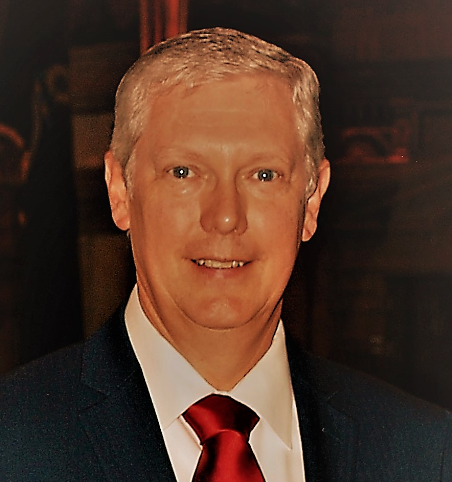
Edward Cross is president of the Kansas Independent Oil & Gas Association.
CASA of the High Plains is hosting its 9th annual Valentine’s Evening fundraiser from 5 to 10 p.m. Saturday, Feb. 9, at the Robbins Center at Fort Hays State University, One Tiger Place.
Help CASA celebrate its 30th anniversary serving as a voice for children. In 2016, there were about 100 children who needed CASA’s (Court Appointed Special Advocates) in the 23rd Judicial District. The district covers Ellis, Rooks, Trego and Gove counties. The CASA volunteers are assigned to the court cases for children who have been removed from their homes for abuse or neglect. CASAs serve as the voice for these vulnerable children in court.
The event will include dinner, an open bar, and silent and live auctions, as well as a wine toss and cupcake raffle.
Bid on a Kansas State Skydive adventure or Mountain-Top Family climbing trip, a Jayhawk signed basketball, a Bill Synder signed football and many other great auction items.
The Valentine’s Evening fundraiser is a fun, elegant way to treat your loved one and yourself while also supporting the important mission of CASA.
Tickets for the event are $60 each or a table of eight for $420. Tickets can be purchased at the CASA of the High Plains office, 107 W. 13th, or Commerce Bank, 2200 Vine.
Blue Cross and Blue Shield of Kansas has recognized HaysMed, part of The University of Kansas Health System, as a Blue Distinction Center+ for Cardiac Care as part of the Blue Distinction Specialty Care program.
Blue Distinction Centers are nationally designated providers that show expertise in delivering improved patient safety and better health outcomes, based on objective measures that were developed with input from the medical community and leading accreditation and quality organizations.
According to the American Heart Association (AHA), cardiovascular disease is the leading cause of death globally and is expected to claim more than 23.6 million lives annually by 2030. Blue Distinction Centers+ for Cardiac Care seek to empower patients with the knowledge and tools to find quality cardiac care.
To receive a Blue Distinction Center+ designation, HaysMed demonstrated expertise in delivering safe and effective cardiac care, focusing on cardiac valve surgery, coronary artery bypass graft (CABG), and percutaneous coronary interventions (PCI) episodes of care. Additionally, HaysMed also demonstrated better cost-efficiency compared to their peers.
Only those hospitals that first meet nationally established quality measures for Blue Distinction Centers are considered for designation as a Blue Distinction Center+.
“HaysMed has always been committed to providing cardiology services to people in western Kansas,” said Jeff Curtis, cardiology and administrative director of HaysMed Debakey Heart. “Twenty years ago we were the first and are still the only cardiology program in western Kansas to provide cardiology services including heart surgery. This distinction is recognition for the commitment we have made to making cardiology services available to all patients.”
Hospitals recognized with this designation are assessed using a combination of quality information supplied by hospitals and third-party data registries, and cost measures derived from Blue Cross and Blue Shield companies’ medical claims.
Since 2006, the Blue Distinction Specialty Care program has helped patients find quality specialty care in the areas of bariatric surgery, cancer care, cardiac care, cellular immunotherapy, fertility care, gene therapy, knee and hip replacements, maternity care, spine surgery, and transplants, while encouraging health care professionals to improve the care they deliver.
Research shows that compared to other providers, those designated as Blue Distinction Centers demonstrate better quality and improved outcomes for patients. On average, Blue Distinction Centers+ are also 20 percent more cost-efficient than non-Blue Distinction Center+ designated providers.
For more information about the program and for a complete listing of the designated providers, visit www.bcbs.com/bluedistinction.

 The UDC requires a bufferyard between C-2 and NC.3 zoning, noted Jesse Rohr, director of Public Works. Mandatory fences, walls, open spaces, landscaped areas, berms or any combination thereof, assist with development of properties adjacent to different zoning classifications and make them more compatible.