We have a brand new updated website! Click here to check it out!

Watch out for Bambi; 131 vehicle-deer crashes in Ellis Co. last year

KDWPT

TOPEKA – Mating season and the quest for more secure habitat have deer on the move this time of year, increasing the chances of deer-vehicle collisions.

Typically, the greatest number of deer-vehicle crashes are in mid-November when the rut, or mating season, peaks. In addition to the rut, deer are also on the move in mid-fall seeking new food sources and shelter as crops are harvested and leaves fall from trees and shrubs, leaving them less secure than in their summer habitats.

“Wet weather this year may cause some deer to cross roads in new places and the additional vegetation growth could make deer harder to see until they are in the road. The approaching breeding season increases deer movement, and the cooler weather, along with young deer dispersing to find new home ranges, mean more deer may be crossing the roads.” said Levi Jaster, Kansas Department of Wildlife, Parks and Tourism Big Game Coordinator.

According to the Kansas Department of Transportation, 10,734 (16.5 percent) of the 64,933 vehicle crashes reported in 2018 were deer-related (crashes in which a deer and vehicle actually collided, or the presence of a deer was a contributing circumstance). Although crashes involving deer occur throughout the year in every Kansas county, the highest number of crashes typically occur where there are the most vehicles. Sedgwick County had 418 deer-vehicle crashes reported in 2018, the most of any county, while Butler County followed with 384 reported deer-vehicle crashes.

Ellis County reported 131 deer-vehicle crashes.


“In addition to potentially causing human injuries and loss of life, deer collisions often cause significant vehicle damage that can lead to large expenses for the vehicle owner if not properly insured,” said Shawn Steward, Public and Government Affairs Manager for AAA Kansas. “Of the animal strikes reported by AAA Insurance policy holders during the five year period between 2014 and 2018, the average cost per claim was nearly $4,300.”

The Kansas Highway Patrol (KHP) cautions drivers to refrain from making exaggerated maneuvers to avoid a deer in the road, lest a bad situation become even worse.

“If you are unfortunate enough to have a deer enter the highway in front of your car, it is best to hit the animal and not swerve to avoid it,” said the KHP’s Lt. Adam Winters. “Often, we find more serious crashes occur when you swerve to miss the deer, potentially losing control of your vehicle, leaving the road or veering into oncoming traffic.”

The agencies recommend the following to help motorists avoid crashes with deer:

  • Be especially watchful at dawn and dusk, when deer are more active.
  • If you see one deer, watch for others, as they seldom travel alone.
  • Reduce speed and be alert near wooded areas or green spaces, such as parks and golf courses, and near water sources such as streams and ponds.
  • Deer crossing signs show areas where high numbers of vehicle/deer crashes have occurred in the past. Heed these warnings.
  • Use bright lights when there is no oncoming traffic and scan the road ahead of you to watch for deer.
  • Don’t swerve to avoid hitting a deer—the most serious crashes sometimes occur when motorists swerve and collide with another vehicle or run off the road and hit an obstacle.
  • Always wear a seat belt and use the appropriately-fitted child safety seats—they are your best defense should you be involved in a crash.
  • Honk your horn with one long blast. A long blast on your horn may frighten large animals, such as deer, away from your vehicle. The Insurance Information Institute (I.I.I.) advises against relying on devices such as deer whistles and reflectors, which have not been proven to reduce collisions with animals.

If you do strike a deer, here are some additional tips:

  • Slow down, move your vehicle to the shoulder if possible, and call for law enforcement. KHP dispatch can be reached at *47, Kansas Turnpike at *KTA, and local law enforcement at 911. Make sure you tell the dispatcher if the animal or your vehicle is still in the road.
  • If you hit a deer or other animal, do not worry about removing the animal. Law enforcement can remove the animal from the road when they arrive. Don’t go near a wounded animal. A frightened and wounded animal can be unpredictable.
  • Turn on your hazard lights and remain buckled up inside your vehicle. You are more protected this way, should a secondary crash occur.
  • If you must be outside your vehicle, make sure it is as far off the road as possible, and do not stand between your vehicle and another one. Keep children buckled, and in car seats in the vehicle. Be vigilant and watch traffic to ensure they aren’t getting close to you.

Anyone involved in a vehicle-deer crash resulting in personal injury or property damage that totals $1,000 or more is required to immediately report the crash to the nearest law enforcement agency. Failure to report any traffic crash is a misdemeanor and may result in suspension of driving privileges.

A salvage tag is required to remove a deer carcass, or any part of the carcass, from the crash site. Tags can be issued by KHP troopers, sheriff’s deputies, or KDWPT game wardens.
Hays USD 489 school board candidate: Luke Oborny

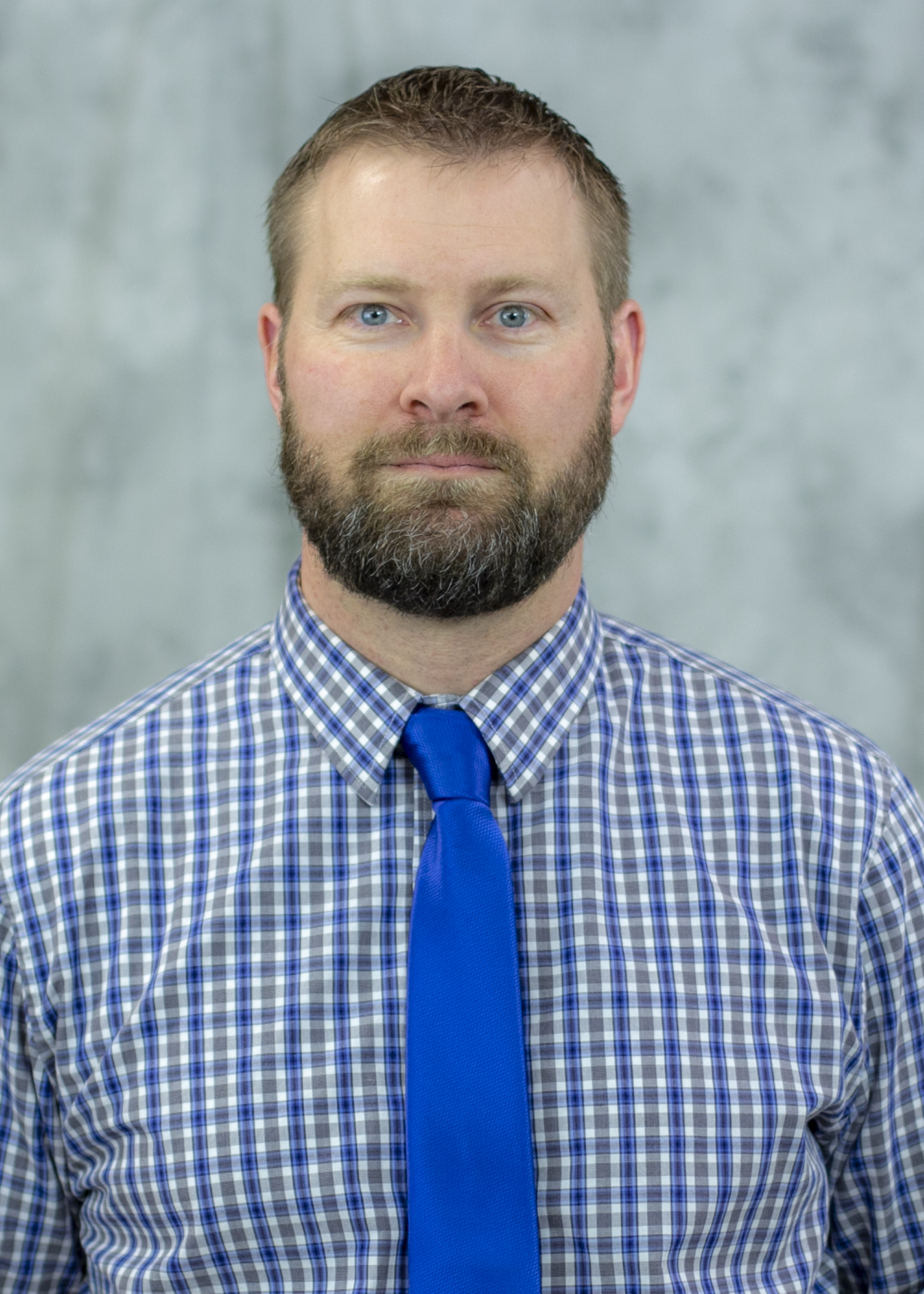
Luke Oborny

Age: 40

Education: Graduated from Fort Hays State University with a Bachelor of Arts degree in Communication with an emphasis on Public Relations and a certificate in Leadership.

Do you have a student currently attending USD 489 schools?

I have three children attending USD 489 school district. A third grader, seventh grader and a senior in high school.

Qualifications?

I have served on the USD 489 Board of Education for the past four years and have a good understanding of district needs and operations. Through my work experience, I’ve learned skills of budgeting, planning, sense of team, and accomplishing goals.  I also understand the value of every individual to reach those goals I feel my service record up to this point in time proves I am a man of integrity. My voting decisions are based on what I feel is the best decision for our children and our district. 

Do you support USD 489 trying for another bond issue? What do you think that bond should include? If you don’t support a bond issue, how do you think the school district should address its infrastructure needs?

I support a bond. What it should entail I leave up to the voters. A bond is the only way the district can address aging facilities and it is the process the state has developed specifically for projects like new buildings and major facility upgrades. Some support a large bond and fixing all issues for the next 20-30 years while others favor small bonds closer to $25 million (average cost of a new elementary building) and hopefully continuing these as they become paid off. Both concepts have advantages and disadvantages the decision should truly lie in the voters as to what direction they would like to proceed. My goal would be to encourage communication, feedback, and education with voters so we can begin to make progress.

What would you do to secure the financial health of the school district?

I am very pleased with changes that have already been made and feel the district is in a good financial situation. Knowing the dire financial position of the district was one of the reasons I sought election. If tough choices had to be made, I wanted to be a part of them. I have been very pleased with our overall budget the last few years, and we have been able to put money into our contingency fund. This has been achieved through increased funding from the state and following wise guidance and planning from our administration. Through a created culture of financial responsibility with staff we have been able to cut expenses and still meet the needs of the district. Just remember the district’s yearly budget was never designed or intended by the state to replace buildings. A bond process was designed to fill that need.

The Hays school board is at impasse with its teachers for the second year in a row. What would you do to improve relations with teachers?

Build trust! Treating negotiations as a legal proceeding where we both fight to gain something for our side continues to have the same outcome and strains relations. I would like to see us take a whole new approach and move back to interest-based bargaining. I see this as a difficult road since trust between the board and teachers just isn’t there, but even before this term is over, I hope to help move us in a whole new direction.

Do you support the district’s current one-to-one technology policy? If not, what would you propose?

As proven in my prior votes on the board, I support the district’s one-to-one technology policy. Technology is advancing so fast and is becoming such an intricate part of our day-to-day lives. Student success especially after high school requires an understanding of technology.  Whether students are moving into a career, college, military, etc. technology is a significant part of the daily job function. I feel removing technology would put our students at a disadvantage and removing a wonderful educational tool that can expand learning methods and opportunities.

How would you support the district in its work to improve student performance?

We already have some of best educators and administrative leaders in the state. As a board I feel our job would be to help define the goals or objectives in line with KESA standards and then let our team go to work and ensure that we don’t get in the way.

Is there anything else you would like to add about you or your campaign?

I would greatly appreciate your vote and support! I love quotes and one of my favorites is from Gandhi. “Be the change you wish to see in the world.” I originally sought election to the school board to bring about change. I feel we have a good start and am excited what the next four years could bring.  I encourage anyone whom might still have questions to reach out to me.

SEE RELATED STORY: Oborny files for re-election to Hays school board; other elections set for Nov.

Hays USD 489 board to again vote on Oak Park name

By CRISTINA JANNEY
Hays Post

The Hays USD 489 school board will try to come to an agreement on a name for the former Oak Park Medical Complex at its meeting on Monday.

The center on 13th Street was recently renovated using federal grant funds and early childhood programs, including Early Childhood Connections are now located in the four-building complex.

The public has submitted a list of about two dozen possible names.

The administration proposed naming the complex the Early Childhood Center, but that motion failed to pass on a vote of 3-1.

A ribbon-cutting ceremony and open house is set at the center on Thursday, Oct. 24.

The board will discuss negotiations in executive session, if needed. The board reached impasse with the teachers this year for the second year in a row. Representatives from the board and the teachers met with federal mediators Thursday night.

The stumbling block in negotiations have been teacher pay and health insurance.

The board will hear a presentation from the Hays High School Trapshooting Club.

It will also present USD 489 Making a Difference Award, USD 489 Student Spotlight Award and USD 489 Achievement of Excellence Recognition.

Exploring Outdoors Kansas: Zombie deer in Kansas

Steve Gilliland
Chronic Wasting Disease is a debilitating, fatal disease that attacks the central nervous system of whitetail deer, mule deer and Rocky Mountain elk, actually resulting in small holes developing in their brains.

CWD was first diagnosed in captive animals in Colorado and Wyoming in the late 1960s and 1970s, and was seen in free ranging animals in the early 1980s. Kansas’s fish and game officials have been testing hunter-harvested Kansas deer since 1996, and during the 2005 firearms season, the first documented case was discovered in a whitetail doe taken near the Cheyenne County town of St. Francis, in the northwestern corner of the state.

Later that year, KDWPT staff harvested 50 deer, 29 mule deer and 21 whitetails within a 15-mile radius of where the infected doe was shot. Tissue samples from each deer were collected at a field lab and sent to KSU for analysis, and all 50 dear tested negative for CWD. To date over 28,000 tissue samples have been tested, but sadly 216 Kansas deer have tested positive for Chronic Wasting Disease, with most found in Decatur, Rawlins, Sheridan and Norton counties in Northwestern Kansas.

In 2018, more than 350 tissue samples were tested from hunter-harvested Kansas deer, with the target area being the southwestern part of the state. Thirty-seven of those deer tested positive for CWD. Positive tests came from the counties of Cheyenne, Rawlins, Decatur, Norton, Phillips, Smith, Thomas, Sheridan, Gove, Rooks, Scott, Lane, Hamilton, Hodgeman, Ford, and Stafford, and sadly the counties of Haskell, Edwards, Pratt, Osborne and Reno were added to the list last year, showing that the disease is spreading south and east.

CWD appears to target animals older than I year, and it can be several months or up to two years before outward symptoms become apparent. Animals in advanced stages of the disease will seem listless, may walk in repetitive patterns with their head lowered, will probably exhibit excessive salivation and a blank expression, and will look to be in very poor overall health; in short, they will appear zombie-like. If you witness deer or elk with any of these symptoms, report it to a conservation officer immediately!

Despite ongoing research, there is currently no known cure for Chronic Wasting Disease, and quite frankly I don’t have a clue how a cure would ever be administered if one were found. To date, the only tool to prevent it’s spread is to restrict the transport of deer carcasses from areas where CWD is known to exist. Once an infective particle (a “miss-folded” protein called a prion) is deposited in the environment, either from an infected carcass or from a live infected animal, it may remain capable of infecting a healthy animal for decades. Other diseases of this same group are scrapie in sheep and goats and mad cow disease in cattle.

Although CWD is always fatal to infected deer or elk, humans have never been known to contract the disease. Cattle and other domestic livestock appear to be naturally resistant to CWD. Common sense should dictate not to consume any part of a known infected animal. Special precautions are also urged for hunters harvesting deer or elk from an area known to have produced an infected animal. All meat from these carcasses should be boned-out, and none of the brain, spinal cord tissue, eyes, spleen or lymph nodes should be consumed. Extra care should also be taken to thoroughly wash and disinfect hands and butchering equipment. Carcass waste should be left or buried on the property where the deer was taken or double-bagged and taken to a landfill. Online electronic check -in is available to allow hunters to transport boned-out deer harvested with an antlerless permit.

I like to end these columns with some snappy, witty comments, and I could get a lot of traction from the title Zombie Deer, especially near Halloween. But I can’t bring myself to go there this time, given the implications of Chronic Wasting Disease on the Kansas deer population and on Kansas deer hunting. Let’s pray that God allows research to find something to conquer this disease…. Continue to Explore Kansas Outdoors.

Steve Gilliland, Inman, can be contacted by email at [email protected].

Logan Business Machines to open location in Hays

By JAMES BELL
Hays Post

After expanding their trade area, Topeka-based Logan Business Machines is set to open a location in Hays in the next few weeks at Oak Plaza, 107 E. 27th.

The company primarily sells, services and supplies Sharp, Lexmark and HP printers, but also sells LED interactive displays and will offer marketing material printing in their newest location.

The Hays location will be the third for the third-generation, family-owned and operated business that began in 1972.

“This territory with Sharp became available and so we put in for it and got it — so really Hays is going to be our connection back to Abilene, Salina, Junction City and sometimes Manhattan,” said Chris Martin, LBM executive vice president and partner.

The Hays location will allow the company to provided faster service to areas where it already operated and will allow expansion west.

“It was kind of playing connect the dots with Hays,” Martin said of the expansion that will allow the company to provide service to Hays, Russell and as far west as Colby.

He said the company looked at Hays for around six months before deciding to open the location but believes it will be a good fit.

“We love it. We think Hays is growing,” Martin said.

He is also pleased with the location picked in Hays. After looking a locations in various areas of town, he said after speaking with the owner of Oak Plaza he was sold.

“She has a vision of this strip mall to become more than it is now and our company is all about being a part of change and helping the community,” Martin said. “It’s a great location, just off Vine.”

The majority of LBM clients are business to business, so Martin said he does not expect a lot of foot traffic, but having a location for looking at and testing equipment is important for business owners to make decisions on their equipment.

“For most small to medium businesses, the copy machine is a pretty good investment,” he said. “We want them to touch it and feel it and bring in some jobs where we can print their jobs off of the machine they are looking at and get them completely comfortable with the machine being able to fit into their environment. That’s really why we do this. We feel that helps small businesses a lot,” Martin said.

This location will also be a production facility where customers can print blueprints and do plotter printing along with standard walk-in printing.

They also plan to print marketing materials at some point in the future as well.

“Just about anything you can put your name on,” Martin said.

The location will open with a few employees, but Martin said he hopes to be fully staffed with a team of six in 18 to 24 months as the business grows.

While the Hays storefront is still being completed, he said they are already servicing clients and hopes to have the location open for customers soon. A Nov. 21 ribbon cutting with the Hays Area Chamber of Commerce is planned.

Hays USD 489 school board candidate: Jessica Ann Berg Moffitt

Jessica Moffitt

Age: 29

Education: Bachelor of Science in Public Health, emphasis: physical activity and exercise, certified health education specialist (est. 2016)

Do you have a student currently attending USD 489 schools? Not yet. Class of 2038, here we come!

Qualifications?

Evaluation of socioeconomics snd demographics of a region, needs assessments, grant writing, and program writing and evaluation. Educator, (soon-to-be) parent, community member.

 Do you support USD 489 trying for another bond issue?

Absolutely. If there is something that needs to be fixed, and we cannot do so within the current budget, then we must find the funding elsewhere, so that solutions can result, and we can continue to succeed.

What do you think that bond should include?

There are a multitude of answers for this question, depending on whom you ask. I find myself in a unique position to say that I have not attended public school in Hays, so I am entering with a fresh eye. I hear my community members mention concerns of nutrition, technology, building maintenance, and safety—but ultimately—it is up to the community to decide what the priority is or may be, and for us as board members to execute appropriately.

Scientific research states that a student must be an ideal state of mind, body, and spirit for the best form of retention of knowledge. Furthermore, a teacher must also be in this ideal state to be able to best facilitate said knowledge. Therefore, conditions such as classroom size, safety, thermoregulation, properly maintained furniture, etc., must all be of the highest priority, as well as access to quality nutrition, proper physical and mental breaks, and guarantees of safety at the building entrances.

My vision is for all of this to be possible, regardless of what facility surrounds the students and teachers. I will vote time and time again in favor of a bond that supports the success of our teachers and students—however, we must find a value for that bond that accurately represents the value for improvement set by the community. If we are wanting success of the bond at the values we have chosen in the past, we must convince our community that the value of improvement matches.

What would you do to secure the financial health of the school district?

Define financial health. What does it look like? Is it a school district that is self-funded from grants and scholarships? Or a school district supported solely by the state tax dollars allocated? Or perhaps it’s more than that. Perhaps the financial health comes from the value that is produced, regardless of the cost. There is a happy medium in all situations of finding balance between spending for an outcome, and the value of that outcome. To me, financial health is finding this balance between these two figures.

The Hays school board is at impasse with its teachers for the second year in a row. What would you do to improve relations with teachers?

We must respect and value the work that our teachers put in daily. This means verbally and financially thankful for their efforts. I have been in their shoes—where financial allocations did not go as planned. Rightfully so, it leaves a bitter taste in the mouths of individuals when they feel a lack of respect and gratitude. This must be the first step to finding a better solution—a reset, a fresh start. If the funds truly do not exist, then the gratitude must be given elsewhere—there’s no excuse for a lack of gratitude or respect.

Do you support the district’s current one-to-one technology policy? If not, what would you propose?

1-to-1 technology was intended to help increase student success through availability of books and other resources. If our school district is in a position where we are lacking fundamental resources for our students, that is impeding their ability to grow and learn, then there is a profound need and a valuable place for a 1-to-1 program. It is serving as a resource vital for student success. Should there be areas for improvement in the program (more than just a “keeping up with the Jones” need), we can collectively approach these as a community.

 How would you support the district in its work to improve student performance?

Everything we do as a school district, as members and representatives of the board of education and USD 489, and as a member of our community, should be to help improve student performance. It is not one sole action—but rather—the success or failure of all actions combined. We must address the smaller pieces of the puzzle in order to paint the larger picture. As promised again and again, I wish to hear the voices of our entire community—parents, teachers, students, community members—and to find solutions that remove roadblocks to the success of our students, and ultimately will help improve student performance.

Is there anything else you would like to add about you or your campaign?

While the majority of my decisions and views come from scientific research and community needs assessments, I hope that serving will allow me to be a part of growth within our community that will come from the success of the Board. Success that will be determined by the success of our students, their desire to stay in our community even after they graduate, and the desire for travelers to see us as a place for setting roots, raising a family, and building a legacy of their own. The possibilities are endless, and I look forward to contributing to their outcomes. 

SEE RELATED STORY: USD 489 election: Moffitt seeks to give voice to the community

What rural Kan. child care, cafes say about shrinking smart, rather than withering


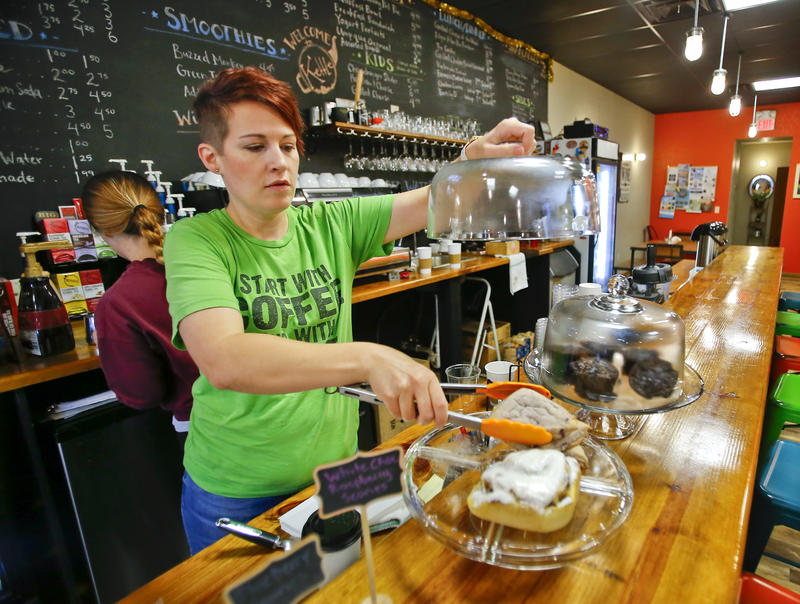
Mandy Fincham and her husband, B, run the Kettle in Beloit, Kansas. Some people think it’s quality-of-life initiatives like their cafe and wine bar make a difference between small towns shirking smartly or withering badly. Chris Neal / For the Kansas News Service

By JIM McCLEAN
Kansas News Service

PHILLIPSBURG — The opening of a child care center attracts little notice in a city or suburb.

In rural Kansas, it’s cause for celebration.

The focus on young families, and the hope that represents, is remarkably rare in small towns fighting for survival against forces largely beyond their control.

No matter how scarce, said Iowa State University social scientist Dave Peters, it’s an essential ingredient in what he and his research team refer to as a “shrink smart” town.  A place residents remain committed to improving even as it gets smaller.

“Shrink smart communities are those that saw faster than average declines in population but also had above-average gains in quality of life,” Peters said.

Small, rural communities can do little to reverse decades-long population trends, Peters said. But they can improve the quality of life for the people who stay. To start, they need a core group of people determined to confront challenges rather than letting nature take its course.

“That’s really what it takes,” Peters said. “You need a lot of people to step up and take a leadership role. It’s not going to happen otherwise.”

The research from Peters and his team confirms that shrink-smart towns are rare. Only seven of the 99 Iowa communities studied have earned the distinction. Far more common, Peters said, are places where people have all but given up. He said they tend to leave the heavy lifting to small groups of elected officials, whom they’re quick to blame when new problems develop.

“In these declining — or withering — towns, as we like to call them, once there’s a failed project, the community turns nasty,” Peters said. “Then, of course, nobody wants to take the risk of trying to do anything.”

Peters and his team haven’t studied any communities outside of Iowa. So, there are no verifiable “shrink smart” towns in Kansas. Still, some we visited while producing the “My Fellow Kansans” podcast appear to have at least some of the qualifying characteristics.

Phillipsburg, for example. It’s a town of about 2,400 in northwest Kansas where a couple of quality-of-life projects appear to be paying dividends.

One initiative addresses an urgent need for quality child care, said Nick Poels, the head of Phillips County’s economic development organization. The community made it a priority at the urging of business leaders, who, Poels said, kept getting the same question when interviewing job candidates: What’s the availability of day care in your community?


The new child care center in Phillipsburg, Kansas. Credit Chris Neal / For the Kansas News Service

Tired of not having a good answer, the community went to work. A cross-section of residents pitched in to transform an old convenience store into a child care center built to the state’s exacting licensure standards. To help with the costs, they hustled up a grant from the Dane G. Hansen Foundation, which exists solely to help pay for community improvement projects in 26 northwest Kansas counties.

“It was a no-brainer, we had to do a project like this,” Poels said.

The shortage of available child care is a common problem in rural Kansas. So, it wasn’t surprising when more than a dozen communities dispatched envoys to Phillipsburg in August to inspect the new center and get advice from Poels about how they might build their own.

Tammy Simons made the more than 400-mile round-trip from Leoti, a town of about 1,500 in west-central Kansas where a lack of day care slots hinders efforts to attract teachers, doctors and other critically needed professionals.

“We can’t attract the people that we need to keep the community running,” Simons said.

Credit Chris Neal / For the Kansas News Service

A second initiative is aimed at solving another common problem in rural Kansas — the loss of young people.

NexTech, a rural telephone company that’s grown into a communications powerhouse, is partnering with other businesses, the Hansen Foundation and its customers on a program that provides high school and college students with paid summer internships. In just eight years, participation in the program has ballooned from four to 84 students.

Jacque Beckman, director of the NexGen program, said the goal is to convince young people they don’t have to leave rural Kansas to find a rewarding career.

“If you’re a high school student, this may be your first opportunity to understand what’s available in your hometown,” Beckman said.

Recalling that she received luggage as a high school graduation gift, Beckman said parents and teachers in rural Kansas have been sending the wrong signals for decades.

“We’ve been in the habit of telling (young) people, ‘Hey, there really isn’t anything here for you,’” she said.

Several of this year’s interns said the experience changed their perceptions. It prompted them to at least consider the possibility of staying in rural Kansas, or perhaps returning after college.

“Definitely,” said Rachel Muirhead. “Before this internship, I probably would have said that I would never come back to Hays.”

But, Muirhead said, her work at the Hays Arts Council showed her that “Hays has a lot to offer, especially with the arts.”

Jillian Bohl said her internship at the Phillips County Hospital, reinforced what had been a tentative decision to return to Phillipsburg after medical school.

“This is where my roots are,” Bohl said. “I want to come back and take care of families.”

There are also signs of shrink-smart thinking in Beloit, a community of 3,800 about 80 miles southeast of Phillipsburg. A young couple — B and Mandy Fincham — thought the town needed a place where people could gather for coffee during the day or meet for a glass of wine or craft beer in the evening.

So, Mandy quit her grant-writing job to open the Kettle, a combination coffee shop, cafe, wine bar and music venue in a renovated building downtown.


B Fincham cooking at the coffee shop he’s opened with his wife, Mandy. Credit Chris Neal / For the Kansas News Service

“We just thought, we don’t want to be 80 and have regrets,” Mandy Fincham said. “So we decided to try it.”

The Kettle has loyal customers, but it doesn’t make a lot of money. So, the couple and their two children need the salary B Fincham earns as an elementary school teacher to make ends meet.

Even so, the Kettle meets the Finchams’ definition of a successful buisness because it fills a need in their community.

“Time and again,” B Fincham said, “people have told us we’re a cultural hub.”

Shrink smart towns depend on people like the Finchams and those who mobilized to build the child care center in Phillipsburg.

Too often, said Peters, the rural sociologist, communities fighting for survival overlook those opportunities. Instead, they focus on recruiting that one new business that can deliver dozens — perhaps hundreds — of new, good-paying jobs.

Spending money on incentives and industrial parks, he said, is a “risky strategy” because it precludes investments in quality-of-life initiatives that can be more effective recruitment tools. Communities can thrive more, Peters said, by investing in social needs so that they can sell themselves as good places to live and work.

“They see how progressive your town is,” Peters said. “That positions you better to go after a new firm.”

This is the third in a series of stories investigating the decline in rural Kansas and efforts to reverse it. 

Support for this season of “My Fellow Kansans” was provided by  the United Methodist Health Ministry Fund, working to improve the health and wholeness of Kansans since 1986 through funding innovative ideas and sparking conversations in the health community. Learn more at healthfund.org.

Jim McLean is the senior correspondent for the Kansas News Service, a collaboration of KCUR, Kansas Public Radio, KMUW and High Plains Public Radio covering health, education and politics. You can reach him on Twitter @jmcleanks or email [email protected].

Overnight sewer line cleaning set for Tuesday

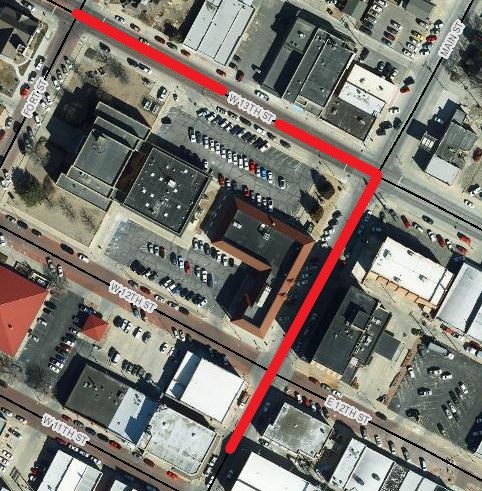
On Tuesday, Mayer Specialty Services will perform overnight sewer line cleaning and inspection of sanitary sewer lines near 13th and Main. These lines are being cleaned and inspected overnight to minimize disruption of traffic during daytime hours. It is not anticipated that streets will be closed. Please be aware of contractor equipment and signs when traveling the area.

See attached map for detailed locations of the sewer line cleaning area.

Door hanger notices will be placed on homes and businesses affected prior to cleaning.

During this process, you may experience a rumbling sound, in addition to the possibility of water entering your sink, bathtub and/or toilet. Sewer lines can develop air pressure or a partial vacuum from the cleaning process.

Should you have any questions or concerns, feel free to contact Mayer Specialty Services project manager at 316-640-4148 or the Water Resources Dept.at 785-628-7380.

Ellis County 4-H Ambassador team selected

By SUSAN SCHLICHTING
Cottonwood Extension Dist.

Each year, Ellis Co. 4-H invites 4-H teens to apply and interview for a position on the 4-H  Ambassador team. 4-H Ambassadors are responsible for promoting 4-H at events across the county and through media appearances.

These roles help them to build communication and teamwork skills as they work with youth and families in our local communities.

Selected to serve as 4-H Ambassadors for the 2019-20 4-H year are:

Rosston Eckroat, Buckeye Jr. Farmers
Wyatt Grabbe, Good Hope
Anna Kuhn, Big Creek Astros
Luke Montgomery, Buckeye Jr. Farmers
Kaleb Neher, Victoria Vikings
Karli Neher, Victoria Vikings
Colton Pfannenstiel, Good Hope
Jaiden Pfannenstiel, Good Hope
Taylor Weidenhaft, Buckeye Jr. Farmers

Rhiannon Corn and Jenna Schoenberger serve as advisors for this group.

They are willing to come to civic organizations to share about their 4-H experiences, as well as providing activities at community events and after-school programs. To schedule them for an appearance, contact Susan Schlichting, 4-H Youth Development Agent at the Cottonwood Extension Hays office at 785-628-9430.

Hays hotel recognized for outstanding quality standards

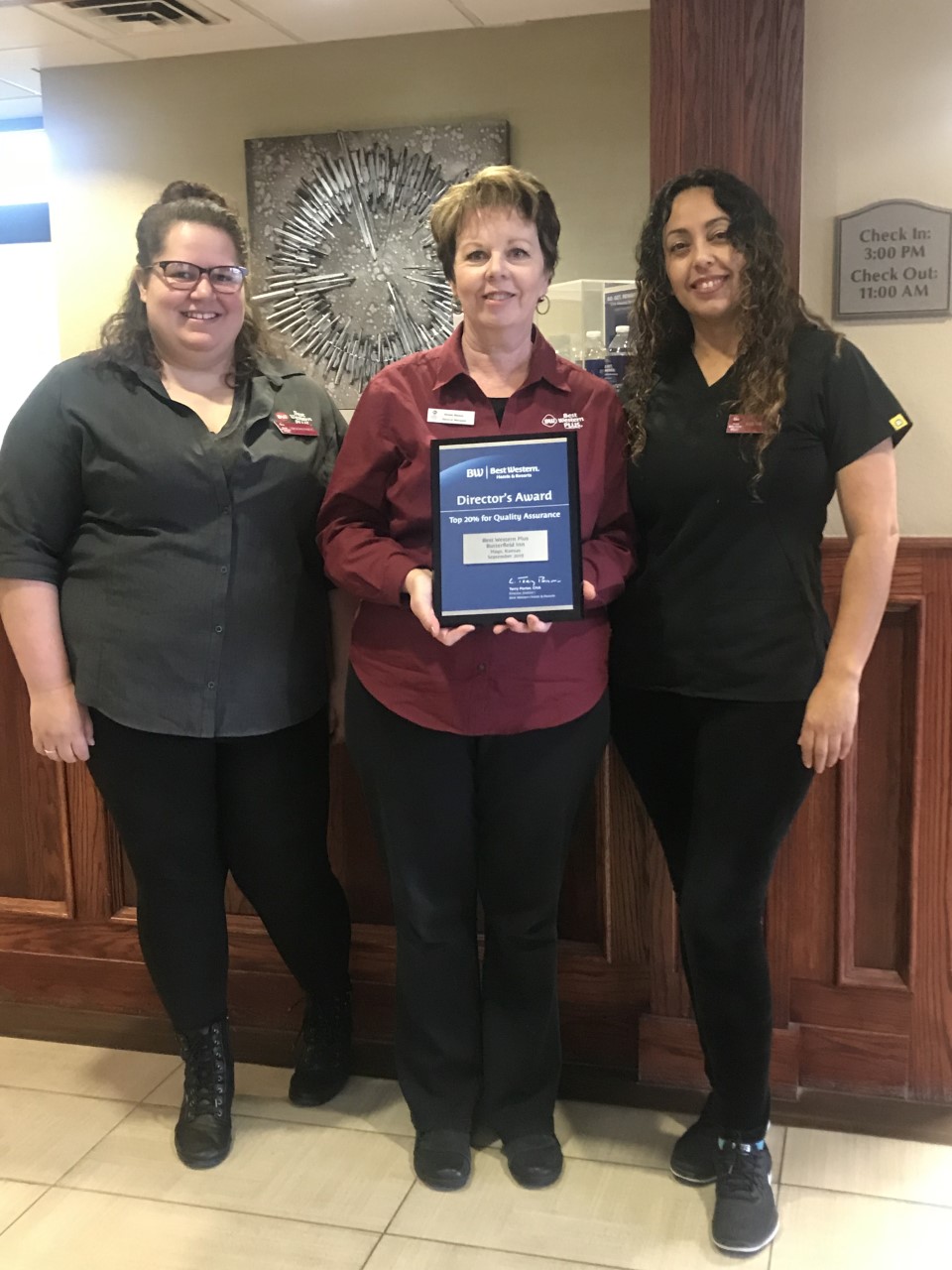
Courtney Marquez, Assistant General Manager; Elinda Mages, General Manager; Rocio Ramirez, Housekeeping Manager

The Best Western® Plus Butterfield Inn of Hays, Kansas, has received the Best Western Hotels & Resorts Director’s Award for yielding outstanding quality standards.

The Director’s Award recognizes Best Western hotels scoring in the top 20 percent of more than 2,100 North American properties in quality assurance scores. Hotels must also meet Best Western’s requirements for design and high customer scores to qualify for the distinction.

“We are honored to be receiving the Director’s Award, as it is a testament to our hotel’s commitment to excellence,” said Elinda Mages, general manager.

“The Best Western Plus Butterfield Inn’s exceptional amenities, combined with our staff’s dedication of superior service, are essential to delivering an outstanding customer experience. Our team of hotel staff go the the extra mile every day and this award is a reflection of the hard work they put in to make our hotel a success and our guests happy.”

Hays Best Western Plus Butterfield Inn, 1010 E. 41st

Located at 1010 E. 41st Street, the Hays Best Western Plus Butterfield Inn features 75 rooms and in indoor pool and hot tub, business center, easy access from Interstate 70 and is the #1-rated hotel in Hays by TripAdvisor.

ABOUT BEST WESTERN HOTELS & RESORTS

Best Western Hotels & Resorts, headquartered in Phoenix, Arizona, is a privately-held hotel brand with a global network of 4,200 hotels in more than 100 countries and territories worldwide. Each Best Western-branded hotel is independently owned and operated.

– SUBMITTED –

Copyright Eagle Radio | FCC Public Files | EEO Public File