We have a brand new updated website! Click here to check it out!

Veteran Service Representative schedule for Jan.

KCVA

Veteran Service Representative Schedule for January 2019

1st Tuesday 1/1/19 NEW YEARS DAY CLOSED

2nd Tuesday 1/8/19 Odd Months – LaCrosse; 9:30-11:30 a.m.

3rd Tuesday 1/15/19 MARTIN LUTHER KING DAY CLOSED

4th Tuesday 1/22/19 Phillipsburg – EMS Building; 9:30 – 11:30 a.m.
Smith Center – Courthouse; 1-3 p.m.

The Kansas Commission on Veterans Affairs assists veterans and authorized family members, free of charge, in matters pertaining to their VA claims and benefits.

All itinerants are on a first come first served basis. No appointment needed.

For more information contact:

Douglas Storie, VSR

Douglas Storie, VSR
Kansas Commission on Veterans’ Affairs
Veteran Service Representative
205 E. 7th Suite 107
Hays, KS 67601
Ph: 785-259-0364
e-mail: [email protected]

Cold, windy, Tuesday

…A WIND CHILL ADVISORY IN EFFECT UNTIL 9 AM
CST TODAY…

New Year’s Day
Scattered flurries before 10am. Cloudy and cold, with a high near 15. Wind chill values as low as -15. North wind 8 to 18 mph, with gusts as high as 28 mph.

Tonight
Mostly cloudy, then gradually becoming mostly clear, with a low around 7. Wind chill values as low as -3. North wind 5 to 8 mph becoming west southwest after midnight.

Wednesday
Sunny, with a high near 33. Wind chill values as low as -6. West southwest wind 7 to 10 mph.

Wednesday Night
Mostly clear, with a low around 15. West wind around 6 mph.

Thursday
Sunny, with a high near 41. West northwest wind around 6 mph.

Thursday Night
Clear, with a low around 22.

Friday
Sunny, with a high near 50.

Friday Night
Clear, with a low around 25.

Saturday
Sunny, with a high near 51.

SCHROCK: 2018 — The year in K-12 education

John Richard Schrock is a professor at Emporia State University.

The educational buzzword for this year is “personalized education.” This computerized revival of individualized instruction from the 1970s also wins the 2018 oxymoron award. Pitched by the techno-educational industry, so-called personalized education isolates a student in a digital world, progressing alone at their own speed, essentially the most “depersonalized” form of instruction possible.

If there was any bright light in the dark world of modern teaching, it was the demise of No Child Left Behind (NCLB). After over a decade of teaching-to-the-test to make Adequate Yearly Progress (AYP), the requirement that one hundred percent of students be proficient by 2014 was finally seen to be as unattainable as having one hundred percent of those who enter a hospital emerge completely cured. The best of doctors lose patients and the best of teachers lose students.

But its replacement (ESSA) has not restored teachers’ professional judgement or jurisdiction over classroom content and testing. External assessments remain. And AYP was replaced by AMD (annual meaningful differentiation) involving four different measures. It is applied building by building, rather than by district. The beancounting continues.

Veteran teachers continued to retire early or switch professions, often from assessment fatigue. Education Week reported the most common teacher had 15 years of experience in 1987-88, but today is in their first 3 years of teaching. Average age of a teacher was 55 in 2007-08, but is now in the mid-30s to mid-40s. Forty-four percent of new teachers continue to leave the profession within five years.

2018 data from Kansas regents universities show only 5,273 students are enrolled in programs leading to teacher certification, compared to 8,991 in 2011. An initial decline in students entering teaching that began with the introduction of NCLB in 2001 accelerated with the loss of teacher tenure in Kansas five years ago. In several states, including Oklahoma, where teacher salaries were very low and were significantly increased, college students have not returned to teacher-training programs. While the numbers of special education students nationwide has declined one percent, the number of special education teachers has fallen 17 percent.

Math scores on the ACT have dropped to the lowest level in twenty years, causing a call for major reform of teaching math nationwide. Scores fell for all subgroups, except Asian American students whose scores went up! Nevertheless, all blame was directed toward teachers and math curriculum without considering that the ethnic study-effort might be a factor. And while Asian-American students were a discussion point in the Harvard University affirmative action lawsuit, they are dramatically “over-represented” at the specialty science high schools in New York, leading Mayor DeBlasio to propose affirmative action against them at the secondary level.
Lumina and other educational policy groups have called for increasing high school graduation rates. Many school district administrations complied, raising high school completion from below 70 percent to the mid-80 percent and higher. However, many administrative actions resulted in passing students who were chronically absent or otherwise failing. Some schools are heavy users of “credit recovery” programs, computer-based easy click tests that are substituted for actual class achievement.

More Kansas high school students are taking dual credit courses that provide both high school and college credit. As of September of 2017, the high school instructors of such courses were to possess a masters degree including 18 graduate credit hours in the field taught. Since their courses awarded college credit, the Higher Learning Commission requires instructors to have one degree higher than the course being taught. Regents schools who accept those credits could apply for a time extension to get the high school instructors credentialed. However, some did not, and some Kansas high school students are continuing to take dual credit courses under non-qualified high school teachers. Neither the KSDE nor the KBOR polices these credentials. In addition, the Kansas Legislature has moved to increase funding to make dual credit available to high school students across Kansas whether they are college able or not.

The second most common reason for teachers leaving the public school classroom is student discipline problems. The continued movement toward “no touch” policies and “restorative discipline” talk sessions has caused some teachers to feel helpless to address physical misbehavior.

If tobacco use across America has gone down, the use of e-cigarettes or Juuling in schools is soaring. Vaping devices are particularly difficult to curtail; they are small and resemble recharge devices.

Meanwhile, use of opioids has caused life expectancy in the United States to actually decline, the only lifespan decline in a developed country in modern history. Meth addiction still remains a serious problem, contributing to an unprecedented need for foster homes. Combined with the growing rate of childhood poverty and homelessness, many more teachers find their job involves counseling, food distribution and much more than teaching.

But to end on a more sunny note, some middle and high schools are moving forward their start times to begin school after 8:30am. Initial reports suggest that their students are getting more sleep at home and improving their performance in classes and on assessments at school.

John Richard Schrock is a professor at Emporia State University.

Public hearing scheduled for industrial hemp research regs

KDA

MANHATTAN — A public hearing will be conducted at 10:00 a.m. Wednesday, Jan. 9, to consider the adoption of proposed regulations for the Industrial Hemp Research Program. The hearing will be held in room 124 on the first floor of the Kansas Department of Agriculture, 1320 Research Park Dr. in Manhattan.

Due to the passage of SB 263 by the 2018 Kansas Legislature, KDA is proposing the promulgation of new rules and regulations relating to the creation of the Industrial Hemp Research Program as authorized by the Alternative Crop Research Act, K.S.A. 2018 Supp. 2-3901 et seq. K.A.R. 4-34-1 through K.A.R. 4-34-21.

The regulations can be found at the KDA website, agriculture.ks.gov/ProposedRegs. Written comments can be submitted prior to the hearing at that web page as well.

All interested persons may attend the hearing and will be given the opportunity to express comments orally on the adoptions of the proposed regulations during the hearing. In order to give all parties an opportunity to present their views, it may be necessary to request that each participant limit any oral presentation to five minutes. Persons who require special accommodations must make their needs known at least five days prior to the hearing.

For more information, including special accommodations or a copy of the regulations, please contact Ronda Hutton, 785-564-6715.

It’s all about the clothes: How universities in Kansas dress students for success


Kansas News Service ksnewsservice.org.

Erin Wolfram at the University of Kansas Career Center with a closet full of interview suits made available to students. STEPHEN KORANDA / KANSAS NEWS SERVICE.

Erin Wolfram, with the University of Kansas Career Center, enters a small room in Summerfield Hall on the KU campus, where she is suddenly surrounded by hundreds of suits, dresses, shirts and ties filling floor-to-ceiling racks. The Professional House of Garments is filled with clothes waiting to help students dress for success as they prepare for job and internship interviews.

The P.H.O.G., a reference to legendary basketball coach Phog Allen, connects donated professional clothing with KU students.

The facility, housed at the University Career Center in Summerfield Hall, is aimed at combating a financial challenge many students face. Wolfram said students are often working part-time jobs or in unpaid internships that don’t leave them money to pay for much more than room and board.

“Clothing, especially suits, is not something that students are really thinking about that they’re going to have to pay for,” Wolfram said.

That poses a problem when it comes time to interview for a job or summer internship.

“All of a sudden they have an interview, they need something to wear and they don’t have it,” Wolfram said.

That’s where the clothing closet comes into play. The donated suits, dresses and more can equip students for a critical part of the job interview: the first impression.

Reporter Stephen Koranda, transformed by a suit. CREDIT KANSAS NEWS SERVICE

Wolfram said many employers can choose whether they want to pursue a candidate in as little as 30 seconds, and clothing is a big part of that.

“First impressions are huge in interviews,” Wolfram said.

More than 100 students have visited the clothing closet in recent months. It opened in 2011 and was based on a similar program at Kansas State University.

This time of year is a critical time for the clothing closet. Wolfram expects a rush soon as students prepare for career fairs in the early spring.

“We’re definitely looking for donations now to help replenish the closet for students who come in when they get back from winter break,” Wolfram said.

The P.H.O.G. accepts donations at Summerfield Hall, room 206, Monday through Friday from 8 a.m. to 5 p.m.

KU isn’t the only school in Kansas with this type of service. Similar clothing programs assist students at Pittsburg State UniversityEmporia State University and Kansas State University.

Tailored for Tigers

Fort Hays State University’s program is called Tailored for Tigers.

Stephen Koranda is Statehouse reporter for Kansas Public Radio, a partner in the Kansas News Service. Follow him on Twitter @kprkoranda.

News From the Oil Patch, Dec. 31

By JOHN P. TRETBAR

U.S. crude oil production is spiking again. The Energy Information Administration reports total production of 11.697 million barrels per day for the week ending Dec. 21, an increase of 99-thousand barrels per day over the previous week and 1.9 million barrels per day more than a year ago at this time.

The government reported U.S. commercial crude oil inventories remained virtually unchanged from the previous week. At 441.4 million barrels, U.S. crude oil inventories are about 7% above the five year average for this time of year.

EIA said imports averaged 7.7 million barrels per day, up by 233,000 barrels per day from week before. Over the past four weeks, crude oil imports averaged about 7.4 million barrels per day, 2.3% less than the same four-week period last year.

It’s been a bumpy ride for oil prices, which posted two percent losses last Thursday after gains of 8% on Wednesday. Those were the biggest price gains in two years. But the U.S. and international crude oil benchmarks have lost more than a third of their value since the beginning of October and are heading for losses of more than 20 percent for the year. At $35.50 per barrel last Friday, Kansas Common crude at CHS in McPherson has dropped more five dollars since the beginning of the month, and is about $20 lower than the price at the end of October.

Crude oil output has more than doubled in New Mexico over the last four years, but a change in state leadership to Democratic control in January has industry executives fearing tougher regulations and reduced revenues are on the way. The incoming Governor and State Land Commissioner plan to limit new leasing on state lands where drillers planned to tap freshwater aquifers. The incoming administration also has pledged to crack down on methane waste by flaring. The new Land Commissioner will oversee nine million acres of state land. She wants to increase the production royalty by at least a third, which would match Texas’ royalty rate and boost revenues for funding schools and hospitals.

An offshore oil platform toppled by Hurricane Ivan in 2004 continues to leak oil into the Gulf of Mexico off the coast of Louisiana. The company that has failed to end the 14-year-old leak is now suing to an order by the Coast Guard to design and install a containment system. A new estimate shows that between 10-thousand and 30-thousand gallons of crude oil are leaking into the ocean each day. Taylor Energy is trying to block an administrative order from October that includes daily civil penalties of up to $40,000 if it fails to comply.

Five conservation groups filed a lawsuit to block oil production from a proposed artificial gravel island in federal Arctic waters off Alaska’s north coast. The groups asked the 9th U.S. Circuit Court of Appeals to review an offshore production plan approved for the Liberty project in the Beaufort Sea that they say violates federal law.

The latest report from North Dakota shows another all-time record for oil and gas production and the number of producing wells. It also shows the state’s average gas-capture rate heading in the wrong direction. Preliminary numbers from the Department of Mineral Resources show total statewide oil production of more than 43 million barrels in October. That’s 1.39 million barrels per day, an increase of more than 32-thousand barrels per day over the month before. But North Dakota operators “flared,” or burned off, more than 20% of the natural gas produced at oil wells in the state, an increase of two percent over the month before. Last month the state announced it was “relaxing” its anti-flaring goals, which haven’t been met in years.

Oil-by-rail traffic continues to increase, as pipeline bottlenecks continue. According to the Association of American Railroads, petroleum and petroleum products filled more than 30-thousand rail cars, an increase of more than 27% over last year at this time. The cumulative total for the year, nearly 584-thousand rail cars, was up more than 17% through December 15, the latest numbers available. Canada filled more than 11-thousand tanker cars, up more than 31%. Canada’s cumulative total is up 22% for the year.

With pipeline and rail tanker-car shortages driving down Canadian crude-oil prices, a new technology has emerged that boosters say will improve safety and increase the country’s distribution options. Canadian National Railways says its scientists are mixing bitumen extracted in Alberta with plastic made from grocery bags, and then encasing it in more plastic. This makes it possible to use grain hopper cars to ship what appear to be little hockey pucks containing oil that fit in the palm of your hand. The pellets float, and are sealed in their protective plastic wrap, so they are not dangerous in an oil spill. They are a bulk commodity that can go in open rail cars and transported like coal or grain. In the event of a spill, they would simply need to be picked up.

The Canadian Government has unveiled a $1.19 billion financial package to support the country’s oil and gas industry, mostly in the form of loans. The government hopes to encourage efforts to find new export markets. Reuters reported Canada reached record output of 4.9 million barrels of oil per day recently, but struggled to move the crude oil to the US due to transportation bottlenecks.

Exxon-Mobil has withdrawn an export project in Canada from an environmental assessment. The move effectively signaling that the project in Canada’s British Columbia has been shelved. It was expected to produce about 15 million tons per year of Liquefied Natural Gas, with plans for further expansion up to 30 million tons per year.

Registration deadline extended for First Call for Help’s Amazing Race

Teams are now being sought for First Call for Help’s Amazing Race.

Build a team of four. Cost per person is $75.

The race will be Saturday, March 2.

Solve clues, walk, run or drive to local businesses and complete team challenges.

The team raising the most money will win the Ultimate Fundraiser Award plus a two minute head start in the race.

There will be time deductions for all teams that raise $500 or more. All proceeds go to First Call for Help.

Awards will also be given for Best Costume or Uniforms. There will be free T-shirts and snacks for contestants and volunteers.

Register online or for more information go to firstcallelliscounty,com/Amazing Race or call 785-623-2800.

The registration deadline will be Sunday.


Union Pacific investigating Oakley accident that claimed life of employee

Hays Post

OAKLEY — Officials from the Union Pacific Railroad are investigating an accident in Logan County that resulted in the death of a railroad employee.

UP spokeswomen Hannah Bolte said Monday the incident occurred just after 9 p.m. Sunday in Oakley near the crossing of U.S. 83 and East Front Street.

Bolte said she couldn’t go into detail about the incident because the investigation is ongoing and the company is making notifications to family.

“Right now, our thoughts and prayers are with that employee’s family,” Bolte said.

Check Hays Post for more as details become available.

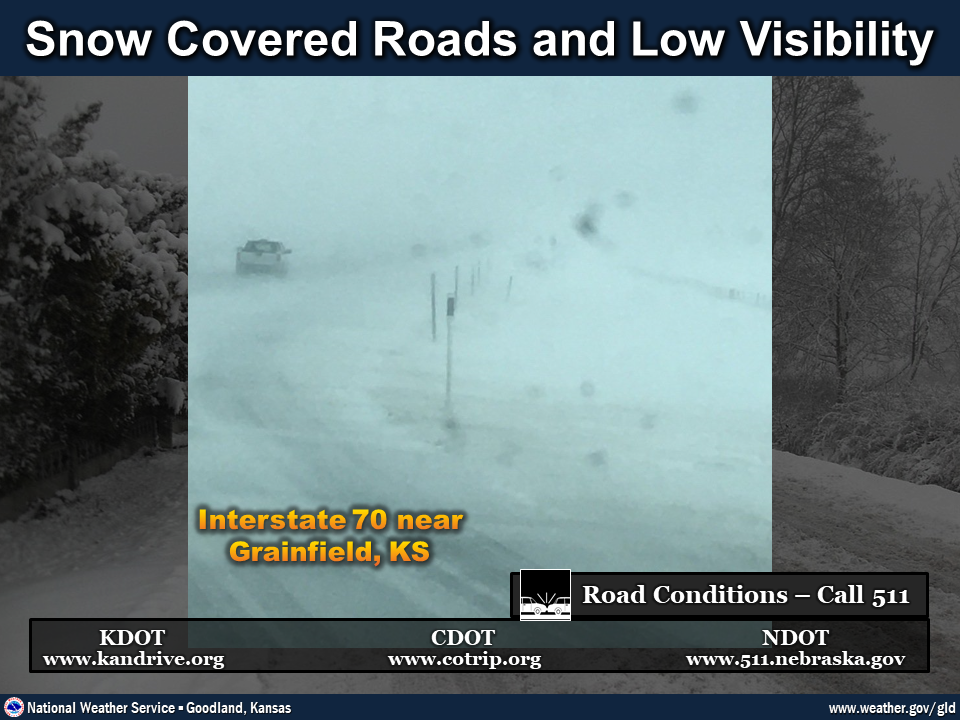
Hazardous travel conditions reported in western Kansas

With gusting winds up to 50 mph, blowing snow from last week and fresh snowfall, travel is being discouraged in Gove County.

The National Weather Service warned of hazardous travel conditions, and Trooper Tod Hileman of the Kansas Highway Patrol reported slideoffs and a vehicle vs. guardrail crash.

W. Kansans named to nominating committee for Appellate Court vacancy

OFFICE OF GOV.-ELECT

TOPEKA – Reaffirming her commitment to transparency, Governor-elect Laura Kelly Friday announced the nominating committee and applicants for the Appellate Court vacancy. The Nominating Committee will review, interview, and recommend applicants to the governor after she is sworn in.

“This bipartisan committee brings a wide range of knowledge and experience that will be critical in selecting a highly-qualified person to fill this important judicial position,” said Kelly. “They share a dedication to making this process as open and transparent as possible. I look forward to seeing the candidates they select and sharing those with the people of Kansas.”

The names and short biographies of the nominating committee members are listed below:

David Rebein (Chair) is a trial lawyer from Dodge City, Kansas. Mr. Rebein is a past president of the Kansas Bar Association and has served two terms on the Kansas Supreme Court Nominating Commission.

Tracee Adams is the President & CEO of Hawthorn Capital LLC. Investment & Wealth Management Firm. She is a resident of Wichita, Kansas.

Jennifer Cocking is Vice President and Associate General Counsel for Capitol Federal Savings Bank in Topeka. Previously, she was a research attorney for the Hon. Lawton R. Nuss, Chief Justice of the Kansas Supreme Court.

Lon Frahm is a 6th generation farmer in Colby, Kansas. He holds degrees in Agricultural Economics and Business from Kansas State University.

Eloy Gallegos is a native of Garden City, Kansas. He graduated from Washburn University School of Law in 2013 and is the owner of Gallegos Law, LLC.

Julie Menghini is a lifelong Kansan who served eight years in the Kansas House of Representatives. Menghini currently works for Pittsburg Community Schools.

Tom Niermann is an educator. He has taught in high schools and at the college level. He earned a PhD in American history from the University of Kansas and currently resides in Prairie Village, Kansas.

Tim Owens served in the Kansas Senate, the House of Representatives and the Overland Park City Council. Owens is a Vietnam veteran who now serves as a volunteer Attorney Emeritus at Kansas Legal Services and an adjunct Political Science Professor at Johnson County Community College.

Linda Parks has practiced law in Wichita for more than 35 years. She is the managing partner of Hite, Fanning & Honeyman LLP. She practices in banking, real estate and commercial transactions and is also a Chapter 7 Bankruptcy Trustee.

Judicial Applicants

The deadline to apply for the vacancy on the Court of Appeals was noon on Friday, December 28th. As of that deadline, the following Kansans had submitted their applications for consideration:

Joni S. Cole, Wichita
Jay D. Befort, Topeka
Christopher E. Biggs, Junction City
Sarah E. Warner, Lenexa
Jeffry L. Jack, Parsons
Steven M. Roth, Topeka
Marcia A. Wood, Wichita
Constance L. Shidler, Overland Park
Carrie E. Josserand, Shawnee
Aaron L. Kite, Dodge City
Teresa L. Watson, Topeka
Steven J. Obermeir, Olathe
Michael F. McCulloch, Olathe
Daniel Cahill, Kansas City
Angela D. Gupta, Lake Quivira
Carl A. Folsom, III, Lawrence
John P.D. Washburn, Tecumseh
Steven P. Smith, Wichita

For more information about the merit-based selection process, click here.

NW Kan. groundwater levels to be measured

KU

LAWRENCE — A crew from the Kansas Geological Survey, based at the University of Kansas, will be in western Kansas measuring groundwater levels the first week of January. Most of the measured wells are drilled into the High Plains aquifer, a vital source of irrigation, industrial and municipal water in the region.

“We get landowners’ permission to access the wells, which we measure annually to monitor the health of the aquifer,” said Brett Wedel, manager of the KGS’s water-level-data acquisition. “Most have been measured for years, even decades.”

The High Plains aquifer is a massive network of underground water-bearing rocks. The extensive Ogallala aquifer, which underlies parts of eight states, makes up a large portion of the High Plains aquifer. Two other units in the state are the Great Bend Prairie aquifer in west-central Kansas and the Equus Beds aquifer north and west of Wichita. About 10 percent of the measured wells tap deeper aquifers or shallower alluvial aquifers along creeks and rivers rather than the High Plains aquifer.

Weather permitting, the KGS crew will be working near Colby and Atwood on Jan. 2, Goodland and St. Francis on Jan. 3, Tribune, Syracuse and Ulysses on Jan. 4, Elkhart and Liberal on Jan. 5, and Meade and Dodge City on Jan. 6.

Groundwater levels in much of western Kansas have dropped as pumping increased over the past 70 years. Declines in some areas, particularly southwest Kansas, accelerated in the early 2000s when prolonged drought conditions led to increased pumping.

In 2018, precipitation over the Kansas portion of the High Plains aquifer was low in the early months, but by summer much of the region was receiving favorable rains.

“When we measure in January, we’re expecting to find decline rates in the aquifer that are, by and large, less than we’ve typically measured over the years,” said Brownie Wilson, KGS water-data manager. “There are a few counties in northwest Kansas where that may not hold true because they missed out on some of those summer precipitation events.”

The monitoring project is coordinated with the Kansas Department of Agriculture’s Division of Water Resources (DWR). Of the more than 1,400 wells monitored in 48 counties, the KGS will measure 581, and crews from DWR’s field offices in Garden City, Stafford and Stockton will measure 840. New wells are added to the program as older wells become inaccessible or to fill in spatial gaps in the monitoring network.

Most of the wells are within the boundaries of the state’s five Groundwater Management Districts, which are organized and governed by area landowners and water users to address local water-resource issues.

Groundwater levels are measured in December, January and February to avoid short-term declines caused by widespread pumping during the growing season.

Historical annual measurements for each well are available at the KGS’s website. Results of measurements made in January 2019 will be added in late February.

NW Kansas man dies after pickup rolls over in Thomas Co.

THOMAS COUNTY — One person died in an accident just after 2:30 p.m. Sunday in Thomas County.

The Kansas Highway Patrol reported a 2005 Ford pickup driven by Jarrod S. Taylor, 39, Colby, was southbound on Thomas County Road 11 eight miles north of Levant.

The pickup left the roadway to the left and the driver overcorrected. The pickup came back onto the roadway and rolled into the east ditch.

Taylor was transported to Citizen’s Medical Center where he died. He was not wearing a seat belt, according to the KHP.

Copyright Eagle Radio | FCC Public Files | EEO Public File