We have a brand new updated website! Click here to check it out!

INSIGHT KANSAS: Teach for America and the Kansas teacher shortage

Dr. Sharon Hartin Iorio is Professor & Dean Emeritus at Wichita State University College of Education.

The Kansas teacher shortage reflects a national trend. When classes started this fall Kansas was 612 teachers short, up 19 percent from last year. Some positions still remain open. Furthermore, the cost of recruiting high-quality teachers has risen and become controversial.

A recent furor involves the cost and effectiveness of a Kansas contract with the not-for-profit teacher recruiting and training organization, Teach for America.

The heart of the debate is not the final 2018 payment to TFA which, as of this writing, is unannounced or the efficiency of last year’s TFA recruiters, who after agreeing to 12, placed only three teachers in Kansas.

The underlying dispute is about the merits of TFA. It’s an organization not well known among Kansans but often criticized by some Kansas educators.

TFA was born as a 1989 undergraduate thesis written by Princeton student, Wendy Kopp. Her idea led to creation of a homeland Peace Corps where recent graduates, regardless of college major, would commit to teaching for two years in inner-city and rural schools throughout the United States.  

Today TFA has taught more than 50 million students. This year in the Kansas City area there are 120 TFA teachers with 13 of those in Kansas City, Kansas, but none elsewhere in Kansas.

The teachers receive the going rate for new teachers by the school district where they are hired.  

TFA members undergo five weeks of pre-teaching training and participate in mentoring and professional development after that. In Kansas, TFA teachers must meet a state requirement of being enrolled in a master’s degree program.  

With goals of promoting equity, offering students effective instruction and mobilizing young teachers to become future leaders, what’s not to like? Critics voice two major complaints:

• TFA teachers are inexperienced and most are not prepared by colleges of education.

• The two-year teaching model, rather than a transforming students’ learning is a résumé-boosting experience that results in disruptive teacher turnover.  

In recent years, TFA has worked hard to address those issues. Moreover, teacher shortages and dramatic increases in high-need student populations have altered perceptions about what is adequate teacher preparation.  

Consequently state requirements for teacher preparation and university teacher education curricula have become similar to or are fewer than TFA requirements.

Individuals with bachelor’s degrees may become Kansas classroom teachers with a summer preparatory course; then they complete licensure coursework or a master’s degree through online and campus options.  

At least one Kansas university offers a program where para-professionals (classroom teacher-aides) work toward an elementary education bachelor’s degree through online coursework and mentorship and can become classroom teachers after about one year of coursework.

Reports differ but TFA data show at the end of five years, retention rates similar to that of all teachers in high-need schools and about 70 percent of TFA completers continue in an education-related career—school administration, elected public office, educational media, etc.  

The recent TFA recruitment contract was meant to address the teacher shortage. Good intentions turned out to be an administrative issue for state government and a TFA problem of achieving contract objectives.

During almost 30 years, TFA has made substantial contributions in high-need schools. It’s time to move on, from current contract issues and concerns of the past about TFA’s value, to consider the benefits a restructured teacher-placement division of TFA could bring to Kansas.

Sharon Hartin Iorio is a professor and Dean Emerita of Wichita State University College of Education.
Hays to host Kansas endangered species meeting

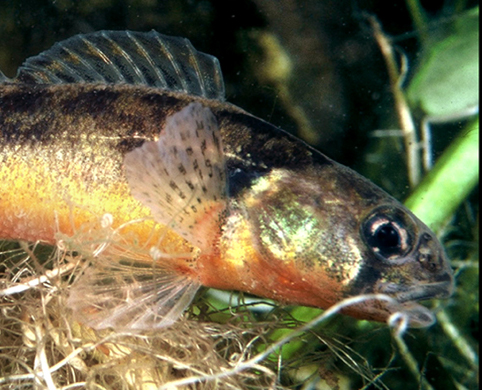
Arkansas darter

KDWPT

PRATT – Every five years, Kansas Department of Wildlife, Parks and Tourism (KDWPT) staff review the state Endangered, Threatened and Species-in-need-of-conservation (SINC) lists. These lists were authorized by the Nongame and Endangered Species Conservation Act of 1975 and are in KDWPT Regulations 115-15-1 and 115-15-2.

The review process begins with a request for petitions to change listings, which was initiated last February. A seven-member Threatened and Endangered Species Task Committee, made up of members representing various disciplines, including staff from state and federal agencies and state universities, then determines if petitions merit full reviews.

For the current five-year review, three petitions with supporting evidence were submitted that the Task Committee determined warrant a full review. The committee will review a petition to move the Arkansas darter from the Threatened list to the SINC List; a petition to move the cylindrical papershell mussel from the SINC list to the Endangered Species List; and a petition to remove the Wabash pigtoe mussel from the SINC list.

The full review process must also include informational meetings and consultation with a panel of experts who complete a numerical evaluation and provide input regarding any information overlooked in the petition. A final recommendation will be provided to the KDWPT Secretary and Commission based on scientific merit. After a 90-day public comment period, the Commission will vote on listing changes at a Public Hearing.

Informational meetings are scheduled for:

Topeka –Wednesday, January 16, 2019, 2 p.m., KDWPT Region 2 Office, Basement Conference Room, 300 SW Wannamaker Road

Pittsburg –Wednesday, January 23, 2019, 3 p.m., Pittsburg State University, Overman Student Center, Governor’s Room, 302 E Cleveland Ave.

Hays –Thursday, January 24, 2019, 3 p.m., Fort Hays State University, Sternberg Museum, 3000 Sternberg Dr.

Pratt –Friday, January 25, 2019, 11 a.m., KDWPT Operations Office, Basement Conference Room, 512 SE 25th Ave.

The Arkansas darter (Etheostoma cragini)is a small bottom-dwelling fish that inhabits clear spring-fed streams with aquatic vegetation where it feeds mostly on aquatic insects. The petition states that it is one of the more common fish species where it occurs and it is resilient to drought and poor water quality. Although it has disappeared from some watersheds due to lack of water, it has been documented for the first time in two other watersheds and its numbers are stable. The majority of the Arkansas darter’s range is in southcentral Kansas. The number of sites where it has been found has increased more than tenfold since it was first listed as Threatened in 1978.

The cylindrical papershell (Anodontoides ferussacianus) is a relatively short-lived (10 years) freshwater mussel that was formerly documented in most rivers of northern Kansas. Currently, it is found in limited reaches of the Smoky Hill and Saline rivers. Currently on the SINC list, it is petitioned to be moved to the state Endangered List, the most imperiled category. Mussel larvae (glochidia) require attachment to a fish host to metamorphose to the juvenile stage before dropping off. While the cylindrical papershell can use several fish species as hosts for its glochidia, the petition cites loss of flowing-water habitat and climate change as factors in the decline of this mussel.

The Wabash pigtoe (Fusconaia flava)is a heavy-shelled freshwater mussel found in the rivers of eastern Kansas. This mussel was petitioned for removal from the SINC list due to evidence of a healthy population in Kansas. At some locations, it is the most numerous mussel present and the population has increased significantly in the Verdigris River since the early 1990s. It is also considered common in other southeast Kansas rivers. It is apparently not limited by fish host availability because it uses shiners and minnows.


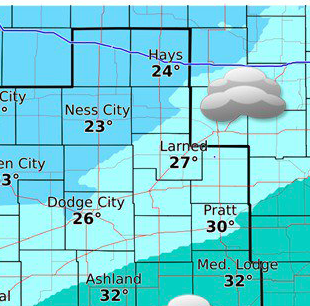
Partly sunny, cold Friday

Friday Partly sunny, with a high near 24. Wind chill values as low as 2. North northwest wind 13 to 17 mph.

Friday Night Mostly cloudy, with a low around 10. Wind chill values as low as 3. North wind 7 to 11 mph.

Saturday Mostly cloudy, then gradually becoming sunny, with a high near 29. Wind chill values as low as 4. Calm wind becoming southwest around 6 mph in the afternoon.

Saturday Night Mostly clear, with a low around 16. South southwest wind 6 to 9 mph.

SundaySunny, with a high near 40.

Sunday NightPartly cloudy, with a low around 22.

MondayA 20 percent chance of snow after noon. Partly sunny, with a high near 30. Blustery.

Kansas teen dead, 3 hospitalized after I-70 crash

LOGAN COUNTY — One person died in an accident just after 10a.m. Thursday in Logan County.

The Kansas Highway Patrol reported a 2018 Peterbilt semi driven by Goodine, Robert Charles Goodine, 50, Bartlesville, OK., was westbound on Interstate 70 ten miles east of Colby.

The semi rear-ended a 2018 GMC Yukon driven by Justin Blaire Buerge, 42, Overland Park. The collision pinned the SUV against the guardrail.

Buerge and passengers in the SUV Trisha Marie Buerge, 40, Jaxon Buerge, 16, and Maxwell Buerge, 9, all of Overland Park were transported to the Logan County Hospital were Jackson died.

Godine was not injured. All five were properly restrained at the time of the accident, according to the KHP.

Update: I-70 reopened both directions Hays to Colorado

Courtesy of Bill Ring Sr.

Update 4:36 p.m.: I-70 has re-opened in both directions from Colorado to Hays.

Update: 2:34 p.m.:  I-70 is closed from Colorado to Wakeeney eastbound only. I-70 still closed from Hays to Colby westbound.

Update 12:20 p.m.: Interstate 70 will be closing westbound between Hays and Goodland as of 12:30 p.m. Thursday.

——

The Kansas Highway Patrol has reported that Interstate 70 is now closed between WaKeeney and Goodland due to hazardous winter weather conditions.


Trego County opens warming center

Hays Post

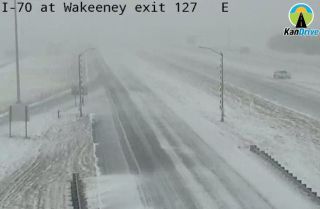
A warming shelter has been opened at the Trego County Fairgrounds Commercial Building by Tregp County Emergency Management for stranded motorists.

All motel rooms in WaKeeney are full, according Trego County Emergency Management.

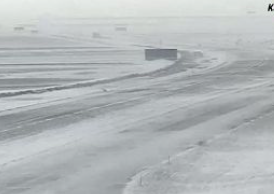
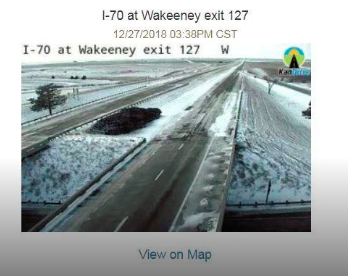
“Our crews are doing their best as they continue fighting blowing snow on parts of I-70. Here’s a look at a few of our trouble spots. Be patient, we’ll get it reopened as soon as it’s safe to do so! Stay updated at kandrive.org. #kswx,” Emergency Management said just before 4 p.m. Thursday.


KHP confirms fatal accident near Oakley

The Kansas Highway Patrol reported the following on its Facebook as of 12:56 p.m.

“We now have a confirmed fatality crash on I-70 by Oakley at mile post 75.

PLEASE avoid driving if you can, if you have to be out in this, SLOW DOWN!”

More information will be released on the Hays Post as it becomes available.


YOUNKER: Grazing cover crops can improve soil health, increase profits

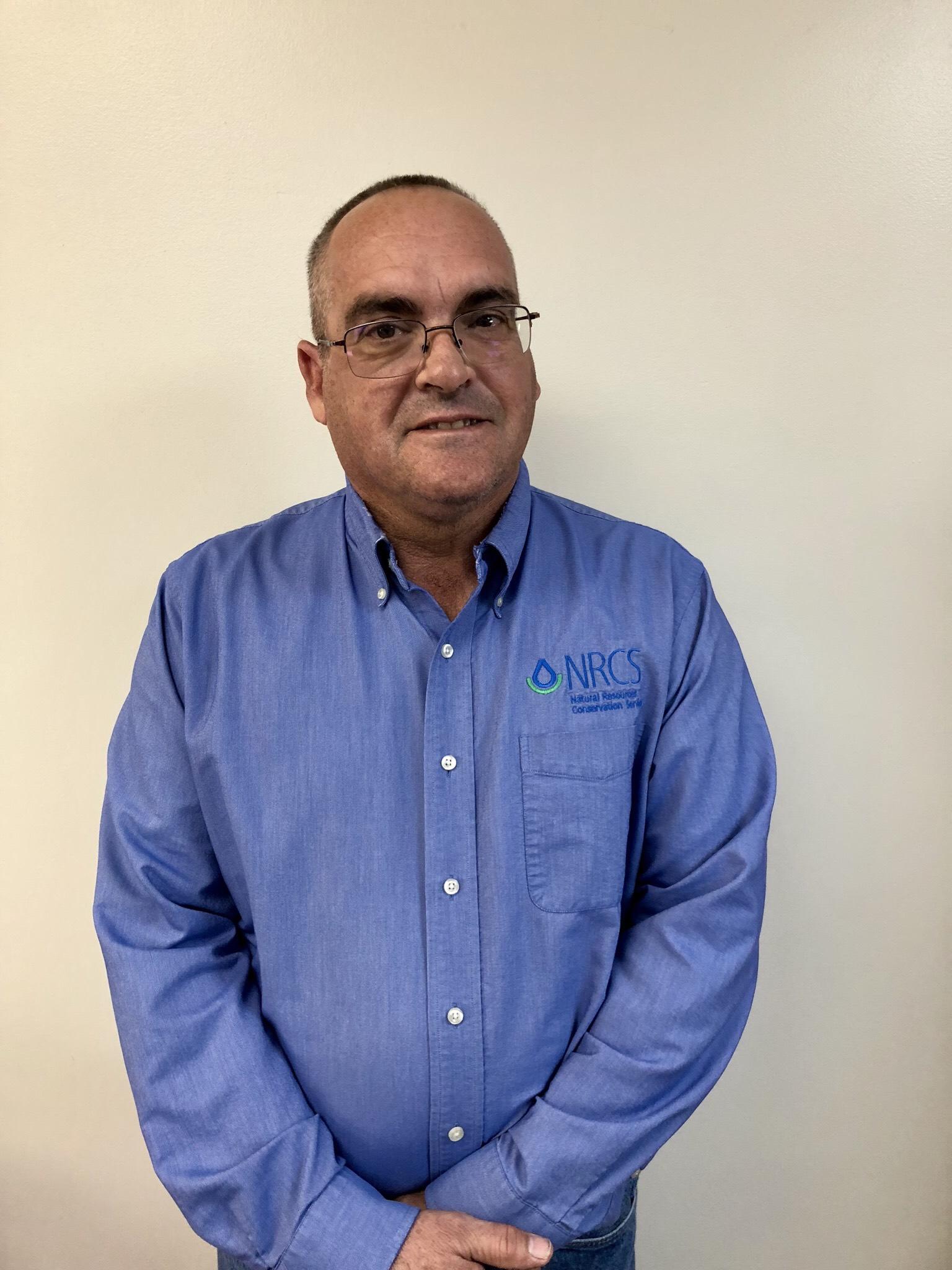
Dale Younker is a Soil Health Specialist with the USDA Natural Resources Conservation Service in Jetmore.

Adding livestock into an annual cropping system and grazing cover crops that are planted between cash crops is one way to potentially increase profit to a farm enterprise. If done correctly it can also improve soil health.

The manure and urine left after the livestock graze a cover crop helps speed up the nutrient cycling because the forage has already been processed once. This waste also helps feed the soil microbes which contribute to building stable soil aggregates. Better soil aggregation means more pores spaces in the soil which increases water infiltration and water holding capacity. As the microbes die they add organic matter to the soil which also increases water holding capacity and releases additional nutrients to subsequent crops.

Based on university research in western Kansas cover crop forage production is highly variable and dependent on the weather conditions from year to year. Dry matter amounts can range from over 3,000 pounds in favorable years to less than 1,500 pounds in unfavorable years. Because of this there needs to be a lot of flexibility in the grazing system and alternative forage sources need to be available if the cover crop field does not yield as expected or fails completely. To maintain adequate soil cover and provide a carbon food source for the soil microbes only about 25-40% of the total forage should be eaten by the livestock.
The cover crop seed mix should be tailored to the nutritional needs of the class of livestock grazing it. Most actively growing cover crops will provide enough crude protein to meet the animals’ needs, but other feed sources and supplements may have to be provided to meet other nutrient requirements. A forage sample should be collected and analyzed determine if anything else is needed in the diet. The analysis will also show if there are any potential toxicity issues, like high nitrate levels.

Other considerations would include having an adequate water source at or near the cover crop field for the livestock. The cost of hauling water for any distance at all can reduce potential profit margins significantly. Field location and how easy it is to access needs to be also be considered. If the field is a good distance away from the headquarters or doesn’t have any decent roads to get to it may not be feasible to graze. What type of fencing and how the field will be fenced also needs to be determined.

One question I often get is how much soil compaction is created by livestock grazing on the field. If managed correctly and if cattle are removed, or confined to a sacrifice area, when the soil is saturated the compaction should be minimal and only in the upper couple of inches of the soil. This is especially true on long term no-till fields that already have good soil structure. The freezing and thawing of the soil in the winter should mitigate the shallow compaction left by the livestock.

Grazing cover crops can be profitable and should something to consider. Especially if you already have the livestock, facilities and equipment already in place. But every producer, field and situation is different. All costs and potential income must be considered. Fortunately, there are several universities and others that have cover crop grazing budget templates posted on the web that can help you determine if grazing cover crops is right for you.

For more information about this or other soil health practices you can contact me at [email protected] or any local NRCS office.

Dale Younker is a Soil Health Specialist with the USDA Natural Resources Conservation Service in Jetmore.

United Way Days of Giving today through Sunday

Hays Post

Sherry Dryden, United Way executive director, will be on air on Eagle’s Hays area radio stations, 101.9 FM The Bull, 1400 AM KAYS, 103.3 FM The Mix, 99.5 K2 Country, and Hull Broadcasting’s 96.9 FM KFIX throughout the day today through Sunday for a push to make the agency’s fundraising goal.

The agency is only 50 percent to its $400,000 goal. It has extended its annual fundraising drive, which typically ends on Dec. 31, into January.

The agency fears funding will have to be cut to its partner agencies, which may mean the number of people served in the community and the number of services provided may have to be reduced.

See related story: Shortfall in United Way campaign could mean cuts to community services

In 2018, United Way supported local programs at 15 partner agencies.

These included the American Red Cross, Big Brother Big Sisters, Cancer Council of Ellis County, Catholic Charities, Center for Life Experiences, Cerebral Palsy Research Foundation, Court Appointed Special Advocates, Developmental Services of Northwest Kansas, Early Childhood Connections, First Call for Help, Hays Area Children’s Center, Options, Parents and Children Together, Salvation Army and Western Kansas Association on the Concerns for the Disabled.

There is still time to donate, and there are several ways to do so.

You can donate online, call United Way at 785-628-8281, send checks to P.O. Box 367, Hays, KS 67601 or make a donation or pledge in person at the United Way office at the Hadley Center, 205 E. Seventh St., Suite 111, Hays.

Winter storm causing vehicle slide offs in Hays area

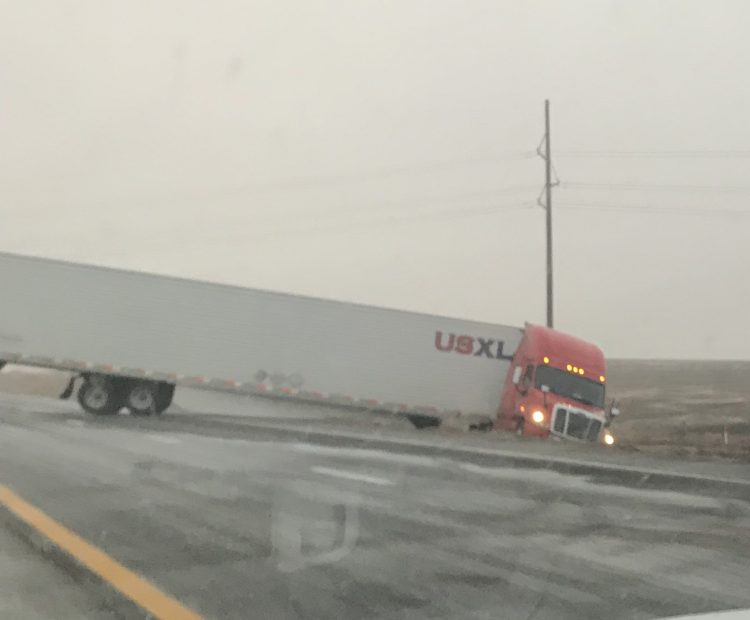
Semi slide off on I-70 between Hays and Ellis Thursday morning. (Courtesy photo)

By BECKY KISER
Hays Post

A winter storm is closing roads and knocking out power across parts of western Kansas.

The National Weather Service has issued a combination of blizzard warnings, winter storm warnings and winter weather advisories in about three dozen counties.

Forecasts are calling for ice and from 2 to 12 inches of snow Thursday. Wind gusts of up to 50 mph also are possible, creating whiteout conditions.

Ellis County is in a Winter Weather Advisory with 2-5 inches of snow predicted.

The Blizzard Warning includes Rawlins, Decatur, Norton, Thomas, Sheridan, Graham, Logan, Gove, Greeley and Wichita counties, where some businesses and government offices are closed for the day.

Soldiers from the Hays-based Army National Guard 997th Brigade Support Battalion left Wednesday night about 9 p.m. to stage in Sharon Springs as part of the state’s Stranded Motorist Assistance Teams after Gov. Jeff Colyer declared a disaster.

The Kansas Department of Transportation says Interstate 70 is completely snow covered west of Hays. At least two vehicle slide offs were reported this morning in the Hays area near Toulon. Another semi-truck was off the road blocking traffic at mile marker 151 between Hays and Ellis. At 8:45 a.m., I-70 remained open across the state.

Several highways in the southwest corner of the state are closed, including stretches of U.S. 50. About 2,500 Wheatland Electric Cooperative customers in southwest Kansas are without power.

For the latest road conditions, go online to www.kandrive.org or call 511.

For the latest local cancellations and postponements, check Hays Post.

Blood donations underway for Battle of the Badges

Trevor Willemsen, HPD (Courtesy HPD)
Brandon Hauptman, HPD (Courtesy HPD)

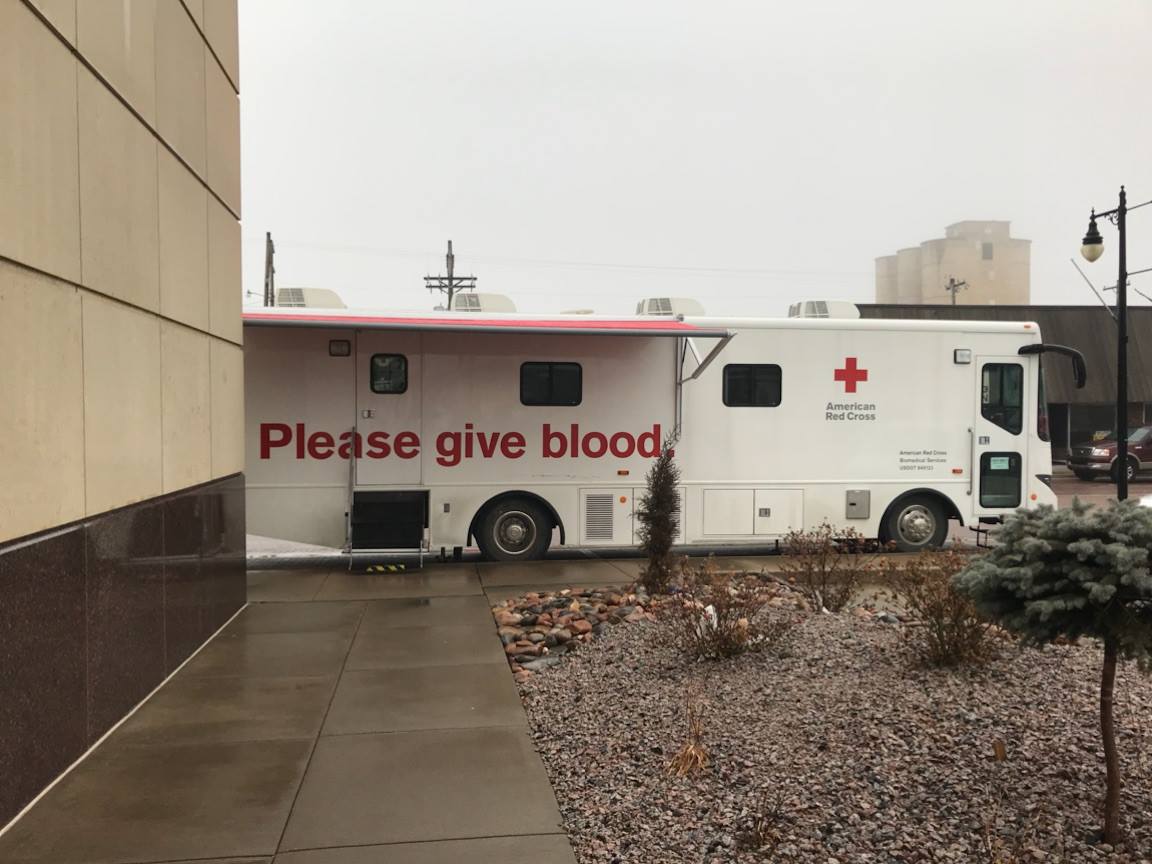
The Ellis County American Red Cross Battle of the Badges Blood Drive is underway. It’s sponsored by Hays High School JAG-K students.

Hays Police officers Sgt. Brandon Hauptman and Master Police Officer Trevor Willemsen gave blood Wednesday at the Ellis County Administrative Center in Hays.

The blood mobile will be at Midwest Energy, 1330 Canterbury, Thu., Dec. 27, 10 a.m.-4 p.m. and Big Creek Crossing, 2918 Vine, Sat., Dec. 29, 10 a.m.-4 p.m. The mobile unit will return to the shopping center Jan. 4 and 5 with hours from 11 a.m.-5 p.m.

Please donate blood today and don’t forget to vote for your favorite first responders.

Ellis Co. in Winter Weather Advisory; 2-5″ snow expected

NWS

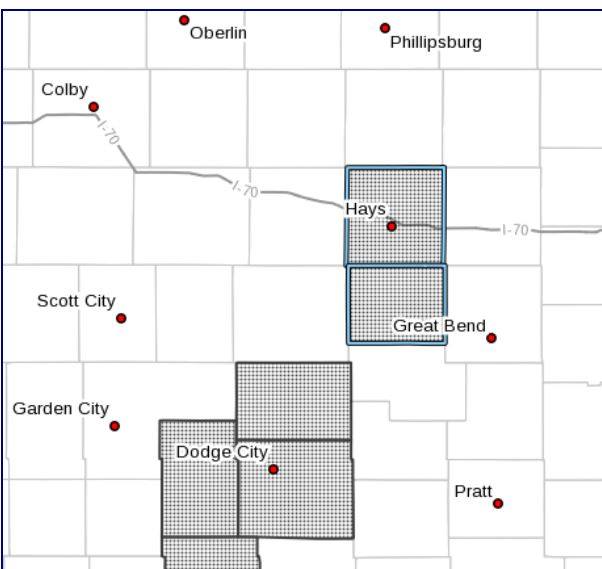
DODGE CITY – The National Weather Service in Dodge City has issued a Winter Weather Advisory from midnight Wed., Dec. 26 to noon Thu., Dec. 27., for Ellis, Rush, Hodgeman, Gray, Ford and Meade counties including the cities of PFeifer, Hays, La Crosse, Jetmore, Hanston, Cimarron, Montezuma, Dodge City, Meade, Plains City,
and Fowler.

Snow and blowing snow is expected to develop after midnight causing dangerous winter travel.

* WHAT…Snow expected. Total snow accumulations of 2 to 5 inches
expected. The heaviest snow is expected to fall in western
sections of the advisory area. Winds gusting as high as 45 mph.

* WHERE…Portions of central and southwest Kansas.

* WHEN…From midnight tonight to noon CST Thursday.

* ADDITIONAL DETAILS…Difficult winter travel is expected during
the Thursday morning commute. Expect snowpacked roadways and
reduced visibility in snow and blowing snow.

PRECAUTIONARY/PREPAREDNESS ACTIONS…

A Winter Weather Advisory for snow means periods of snow will
cause primarily travel difficulties. Expect snow covered roads
and limited visibilities, and use caution while driving.

The latest road conditions for the state you are calling from can
be obtained by calling 5 1 1.

Blizzard Warning in extreme NW Kansas

NWS

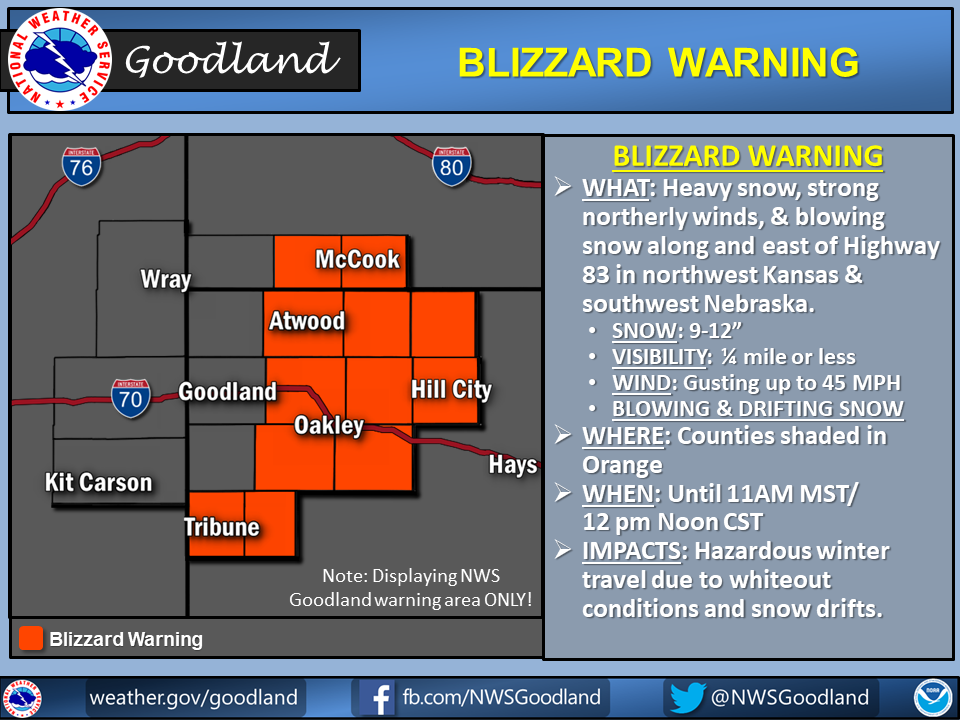
GOODLAND – A Blizzard Warning is in effect until 11 a.m. MST/12 p.m. CST for Rawlins, Decatur, Norton, Thomas, Sheridan, Graham, Logan, Gove, Greeley, and Wichita counties in NW Kansas.

* WHAT…Heavy snow, strong northerly winds, and blowing snow.
Snow accumulations will range from as little as 1-3 inches in
eastern Colorado to as much as 9-12 inches along and east of
Highway 83 in northwest Kansas and southwest Nebraska.

* ADDITIONAL DETAILS…Travel will become extremely dangerous or
impossible late tonight and Thursday. Blizzard conditions will
be possible Thursday morning, particularly along and east of
Highway 83 in northwest Kansas and southwest Nebraska.

* WINDS/VISIBILITY…Winds gusting 40 to 45 mph with visibility
down to one quarter mile or less creating whiteout conditions.

* SNOW ACCUMULATIONS…As much as 9 to 12 inches in northwest
Kansas and southwest Nebraska.

* MAIN IMPACT…Hazardous winter travel due to whiteout
conditions and snow drifts.

* OTHER IMPACTS…Heavy wet snow and strong winds will create
dangerous travel conditions. Expect snowpacked roadways,
reduced visibility, and blowing and/or drifting snow.

PRECAUTIONARY/PREPAREDNESS ACTIONS…

A Winter Storm Warning for snow means severe winter weather
conditions will make travel extremely hazardous or impossible. If
you must travel, keep an extra flashlight, food and water in your
vehicle in case of an emergency.

The latest road conditions for the state you are calling from can
be obtained by calling 5 1 1.

A Blizzard Warning means strong winds and falling or blowing snow
will produce whiteout conditions at times…with travel becoming
difficult or impossible. Monitor local forecasts before deciding
to venture outside. If you must travel and you become stranded…
stay with your vehicle until help arrives.

Copyright Eagle Radio | FCC Public Files | EEO Public File