We have a brand new updated website! Click here to check it out!

Colby named among the state’s safest communities

After analyzing data that included the rate of violent crime and property crimes, home security company Safewise has listed one northwest Kansas community among the state’s safest.

Colby — the only northwest Kansas city to make the list — ranked ninth in the study.

Mission Hills and Hesston were named the state’s two safest communities.

Click HERE for the complete listing.

Kansas WIC remains open during federal government shutdown

TOPEKA – The Kansas Department of Health and Environment is letting residents know during the federal government shut down, the Women, Infants, and Children (WIC) program would continue to operate. This would include providing nutritional food benefits, nutrition education, breastfeeding support and referral services.

WIC is the USDA funded nutrition program for low-income pregnant women, infants and children from birth to age 5.

“All eligible participants would continue to receive WIC benefits and new applicants would be certified and receive benefits,” said Rachel Sisson, MS, director of the KDHE Bureau of Family Health before the shutdown. “There are 350 stores in Kansas authorized to provide WIC foods to clients. During a shutdown, all stores would continue to process WIC transactions and would continue to be paid for food purchased by WIC participants.”

The WIC program is administered by KDHE through contracts with county health departments. There are 120 county WIC clinics in Kansas where eligible participants may apply for services.

 Information about the Kansas WIC program is on the web at www.kansaswic.org.

FHSU professor published in Journal of Applied Business and Economics

FHSU University Relations

Dr. David Snow, director of entrepreneurship at Fort Hays State University, wrote a manuscript which was published in the December issue of the Journal of Applied Business and Economics.

“Ecosystem Interrupted,” based on Snow’s research discusses the concept of the entrepreneurship ecosystem, which is concerned with the interaction of the organizations and individuals necessary to create an environment where entrepreneurship can thrive.

Snow analyzed the elements of the ecosystem in eastern Kentucky in order to explain the level of difficulty the region has experienced in developing local opportunity entrepreneurs and diversifying the economy.

“This research is important in that it identifies systemic problems the region must address to make any substantial, long-term impact,” said Snow. “Significant shifts in policy, culture, and education now can create an atmosphere to develop a thriving entrepreneurial ecosystem in the near future.”

He presented the research earlier this year at the United States Association for Small Business and Entrepreneurship® annual conference. The association is the largest independent, professional, academic organization in the world dedicated to advancing the discipline of entrepreneurship.

Natoma Elementary students experience STEM up close

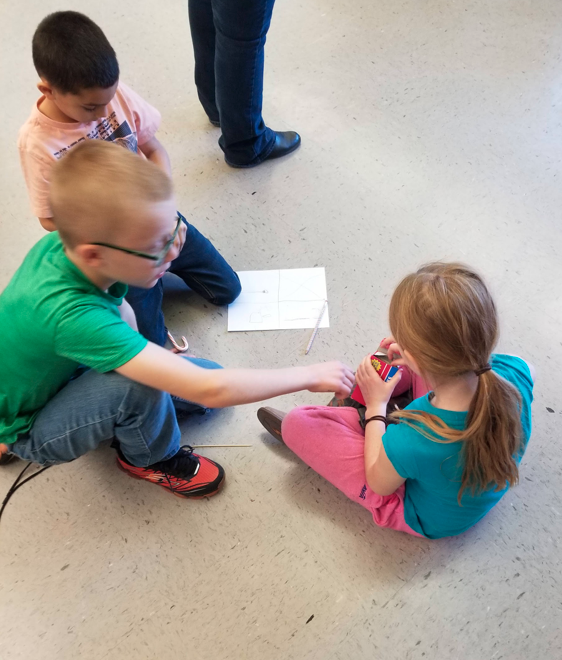
NATOMA — Kindergarten through fifth-grade students at Natoma Elementary School recently got hands-on experience with Science, Technology, Engineering and Mathematics — better known by the acronym STEM.

Educators in the district split up into pairs and created challenges for students to complete as they moved from room to room.

Students saw Christmas-themed challenges such as building Sleigh Gliders, Gingerbread Boat Floats, Santa’s Parachutes and Candy Cane Catchers.

Each group of students rotated throughout the afternoon to each set of teachers and spent time completing each challenge to the best of their abilities. Aside from abilities, each activity required collaboration between a student in a higher and lower grade.

Items for the challenges were made possible by a Walmart grant. Requisitions were made, and the supplies were picked up. Some of the items used during the challenges included toothpicks, coffee filters, Dixie cups, wooden skewers, straws, etc. The students enjoyed Christmas parties following the STEM centers.

— Submitted

Now That’s Rural: Crawford County fried chicken

Ron Wilson is director of the Huck Boyd National Institute for Rural Development at Kansas State University.

By RON WILSON
Huck Boyd National Institute for Rural Development

Some call it a major rivalry in Kansas. It was even mentioned by ESPNU announcers during a college football broadcast in fall 2018. But this wasn’t K-State versus KU. It was about fried chicken. These announcers were talking about the preferences of one football player who pointed out that there are lots of places to get good fried chicken in southeast Kansas, but people’s restaurant choices can get competitive. Some people like a restaurant called Chicken Annie’s. Other people prefer a restaurant called Chicken Mary’s. Whatever the preference, it all means that there’s great fried chicken in southeast Kansas.

The southeast region of Kansas, and particularly Crawford County, has long been known as a great place for fried chicken. Historic restaurants have helped establish this tradition.

According to the Kansas Guidebook 2 for explorers, written by Marci Penner and WenDee Rowe of the Kansas Sampler Foundation, the tradition goes back to 1933. In that year, a coal miner named Charley Pichler suffered a disabling accident in Yale Mine No. 13 near Pittsburg, Kansas. His wife Annie needed a way to support the family, so she started selling fried chicken dinners out of their home.  In addition to mouth-watering fried chicken, she offered German potato salad, German coleslaw, a strip of green pepper, and a slice of tomato.         

The response was so positive that it grew into a famous restaurant known as Chicken Annie’s. Annie’s descendants run the restaurant today.         

A similar situation led to the creation of another famous restaurant at Pittsburg. When Joe Zerngast was unable to work in the coal mines in the early 1940s, his wife Mary also started marketing meals to support the family. They began serving chicken dinners in their home, moved into an old mining camp pool hall in 1945, and have operated in their current location since 1966. This restaurant became famous as Chicken Mary’s and is also operated by family descendants.    

The restaurants are friendly competitors and neighbors, located near each other just north of Pittsburg. Just like a football team, each has loyal fans.  

One of those is K-State running back Alex Barnes. He grew up at Pittsburg, came to Kansas State and became the top running back in the Big 12. When ESPNU announcers visited with him before the Oklahoma State game, he let them know his preference of the fried chicken restaurants at his hometown. The announcers said on air, “(Alex) would like to let everyone know that, of all the great fried chicken places in southeast Kansas, Chicken Annie’s is the best.”  

This fried chicken rivalry took another turn, in a plot twist reminiscent of Romeo and Juliet. Chicken Mary Pichler’s granddaughter Donna married Chicken Annie’s grandson Anthony. Together, they opened Pichler’s Chicken Annie’s. Wow, make it a combo, please. 

The great fried chicken story doesn’t stop there. When the Kansas Sampler Foundation had a contest to select the 8 Wonders of Kansas, one of the entries in the cuisine category was a broad group called Crawford County Fried Chicken, which included both Chicken Mary’s and Chicken Annie’s plus more. The group won! Crawford County Fried Chicken was selected as one of the 8 Wonders of Kansas cuisine.

Not only does Crawford County include Chicken Mary’s and Chicken Annie’s, it also includes other restaurants such as Pichler’s Chicken Annie’s and others. In addition to the original restaurants in Pittsburg, one can get fried chicken in other restaurants in the county. These restaurants include Chicken Annie’s in Girard, Barto’s Idle Hour in Frontenac, and Gebhardt’s Chicken and Dinners in the rural community of Mulberry, population 519 people. Now, that’s rural.

For more information, see the Kansas Guidebook 2 for Explorers and the 8 Wonders of Kansas Guidebook.  Those are available in local bookstores or from www.kansassampler.org.

Some call it a major rivalry.  It even made it onto an ESPNU sports broadcast. But this rivalry is not about football, it’s about fried chicken. We commend all of the families and owners who are making a difference by continuing these traditions in Crawford County.  At dinnertime, regardless of the rivalry, we can now say, “Winner, winner, chicken dinner.”

 Planted wheat acres projected to hit 100-year low

By CHANCE HOENER 

The Hutchinson News

HUTCHINSON, Kan. (AP) – Over the past two years, the breadbasket of America has planted less and less wheat.

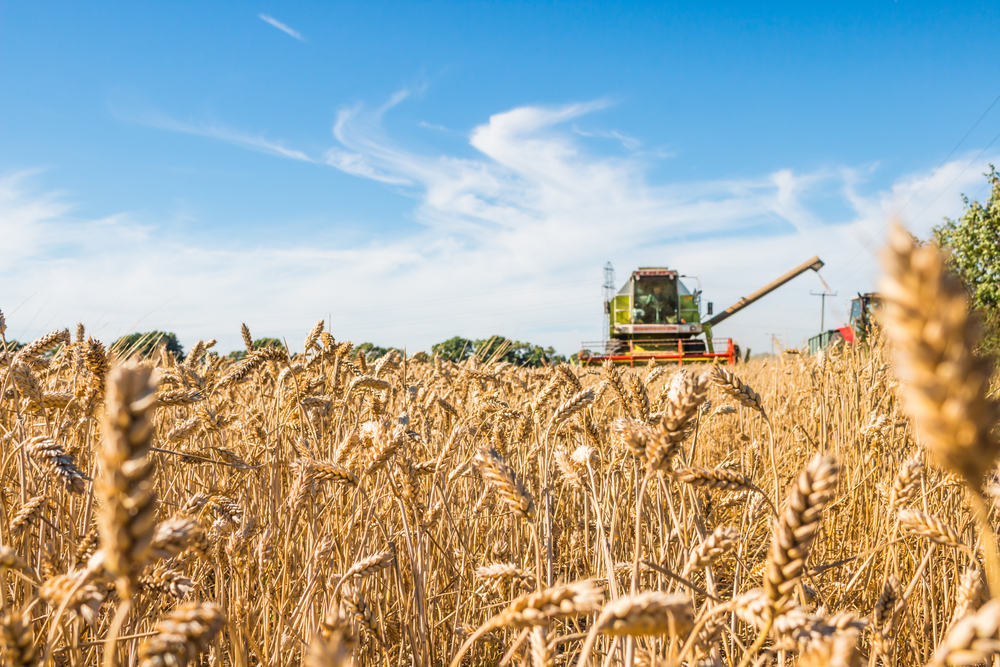
Acres planted to wheat in 2017 and 2018 neared 100-year lows, with last year’s 7.7 million wheat acres hitting the lowest point in 60 years. Low prices and a wheat surplus moved farmers away from the Kansas staple. This year, those problems combined with a delayed fall harvest and unfavorable weather to push wheat acres to what could be the lowest point in a century.

“Also this fall in addition to low prices, we had very wet weather, which delayed planting, and for many farmers, they simply could not plant wheat,” said Lane County wheat farmer Vance Ehmke.

Wet weather delayed planting in a couple of ways. It kept tractors and grain drills out of fields that were too soft, but also kept combines and grain carts out of the fields. Some farmers who planned to plant wheat following grain sorghum or soybeans didn’t have time to plant once harvest was over. Many were harvesting late into November.

Ehmke believes Kansas will see a 100-year low in planted wheat, because of delays from wet weather and the effects of the weather itself.

“My personal bet is that for the 2019 crop we will have the lowest acreage in over 100 years and will not harvest even 7 million acres,” Ehmke said. “We had fewer acres planted plus abandonment will be much higher than the normal 10 percent because many stands, especially in North Central, Central and South Central Kansas, are poor because of wet and cold weather.”

Unplanted acres that were meant for wheat won’t stay that way. Farmers will likely plant the fields to soybeans, grain sorghum or other fall harvested crops. Ehmke also expects to see a rise in triticale acres, a sort of wheat/rye combination. Ehmke said Kansas farmers planted 170,000 acres of triticale last year for hay, silage or grazing. He expects those numbers to increase in 2019.

“I guess everything I have said centers around the old saying that the cure for low prices is low prices,” Ehmke said. “If farmers don’t make any money doing something, they eventually quit doing it, and as is the case with wheat, when they cut back on production, surpluses disappear and prices go back up.”

While recent surpluses and low prices have driven Kansas farmers away from wheat, a report from a former Kansas State University Extension wheat marketing specialist outlined Western Kansas farmers have been losing money on wheat for some time.

Bill Tierney, who now works as a market analyst for Ag Resource in Chicago, authored the report using data from Agri Benchmark. Participants in the Agri Benchmark network use standard procedures to best replicate the “standard” farm in their country or region.

The data used by Tierney compares wheat growers in Western Kansas to those in Australia, Germany, Russia, Ukraine and more. The study looks at cost of production, yield and prices for the average farm in each country from 2013 to 2016.

The data shows that while Western Kansas enjoyed one of the highest prices for wheat — at around $5.41 per bushel — it also had one of the highest average costs of production over the four-year period at $5.69 per bushel.

Tierney said U.S. farmers may see better export prices due to cheaper freight costs.

“I think that overall, U.S. farmers enjoy relatively low total logistical costs (per mile to a Freight on Board terminal) compared to some other major exporters,” he said. “That means that the US farmer captures more of the FOB price paid for wheat.”

But with lower average yields and higher costs of production, the report notes from 2013 to 2016 the average Western Kansas wheat producer lost around 12 cents per acre — before low prices and unfavorable weather hit.

Ehmke doesn’t expect Kansas farmers to stop growing wheat. As there is less wheat, he expects prices to rise. Those prices could get very interesting in 2019, he said.

“A wise old man once told me that there is a reason why wheat goes to six dollars,” Ehmke said. “You ain’t got any!”

State of Emergency declared for winter storm; travel discouraged

OFFICE OF GOV. 

TOPEKA – Gov. Jeff Colyer, M.D. has issued a State of Disaster Emergency declaration for the state in response to the winter storm that will be impacting portions of western Kansas. The declaration authorizes the use of state resources and personnel to assist with response and recovery operations in affected counties.

The Kansas Division of Emergency Management will activate the State Emergency Operations center in Topeka today to a partial level starting at 7 p.m., to monitor the weather and coordinate any state emergency response operations that might be requested.

KDEM is coordinating with the Kansas National Guard to place Stranded Motorists Assistance Response Teams in four locations in the most heavily impacted areas. If the need arises the SMART teams will deploy to assist local public safety agencies with stranded motorists.

“It is important to be prepared when we see a winter event like this approaching, and we appreciate our emergency responders who stand ready to provide any aide that may be needed,” said Governor Jeff Colyer. “We hope that travelers will be wise by paying attention to weather alerts and not unnecessarily placing themselves in harm’s way as the storm moves through.”

“Kansans are urged to change or delay their travel plans in these areas until the storm moves through,” said Angee Morgan, deputy director of KDEM.  If you plan to travel, use caution and make sure your car emergency kit is stocked.”

Winter road conditions are accessible by dialing 5-1-1 from your mobile phone anywhere in Kansas; outside Kansas call 1-866-511-5368 (KDOT). Road conditions many also be viewed on the Kansas Department of Transportation web site at https://kandrive.org.

If you must travel, be sure your car’s gas tank is full and you have an emergency kit. Vehicle emergency kits should include blankets, flashlights, batteries, a cell phone charger, hand-warmers, high-energy food snacks, bottled water, necessary medications, a snow shovel, flares and other emergency supplies. Make sure your cell phone is charged and someone is aware of your itinerary, including expected time of arrival.

Information on winter driving tips is available from the Kansas Highway Patrol at https://www.kansashighwaypatrol.org/259/Winter-Driving-Tips. You can also follow the Kansas Highway Patrol on Facebook and Twitter at www.kansashighwaypatrol.org.

Outdoor pets are especially vulnerable to bitter cold and extreme wind chills. Bring outdoor pets inside if possible or ensure that they have a draft-free enclosure with straw-type bedding that is large enough for your pets to lie down, but small enough to hold in body heat if they must remain outside. Always make sure that your pets have access to food and non-frozen water.

For additional pet safety information, go to https://avma.org or https://www.aspca.org/pet-care/general-pet-care/cold-weather-safety-tips.

For a complete list of items for an emergency kit and general winter preparedness information, go to www.ready.gov.

W. Kansans honored for helping sustain rural culture

KSF

The Kansas Sampler Foundation (KSF) announced the recipients of the 26th annual We Kan! awards. The awards are presented as an appreciation for dedicated work in helping preserve and sustain rural culture.

Foundation director Marci Penner said, “It’s another who’s who list of people making special contributions around Kansas.” Presented at the Kansas Sampler Festival for many years, the awards are now given in surprise fashion, often with a flash-mob of local supporters in attendance.

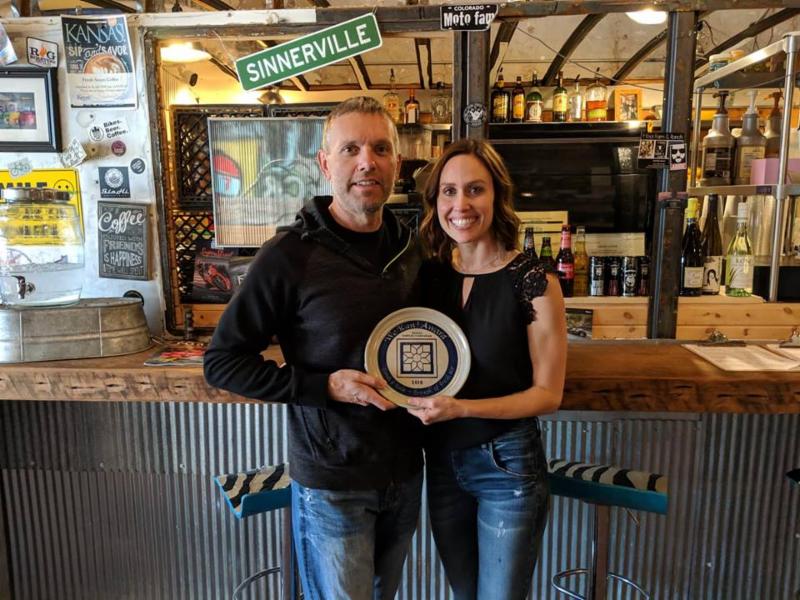
Heidi Plumb & Kale Dankenbring of Fresh Seven Coffee, St. Francis

The recipients for 2018 are:

Heidi Plumb and Kale Dankenbring, St. Francis (Breath of fresh air)

Mandy & B Fincham, Beloit (Giving Beloit a cool factor)

Shaley George, Concordia (Sharing stories with heart)

Kelli Hilliard, Topeka (Tourism friend to all of Kansas)

Kelly Larson, Lincoln (Passion for “building”)

Lori Lennen, Coolidge (Putting Coolidge on the map)

Luciano & Nancy Mottola, Mulvane (Providing great taste and class)

Jeanne Fisher-Roberts, Plains (Plain(s) Awesome

Jenny Russell, Courtland (Passionate rural-by-choice doer)

Rosslyn Schultz, Lucas (Sharing art in extraordinary fashion)

Jim Stukey, Burlington (Painting the town).

Penner said, “I can’t imagine Kansas without these people. They each add such a spark to their community or through their statewide efforts.”

The awards plates are made by Elk Falls Pottery. To see a list of all We Kan! award winners go to kansassampler.org.

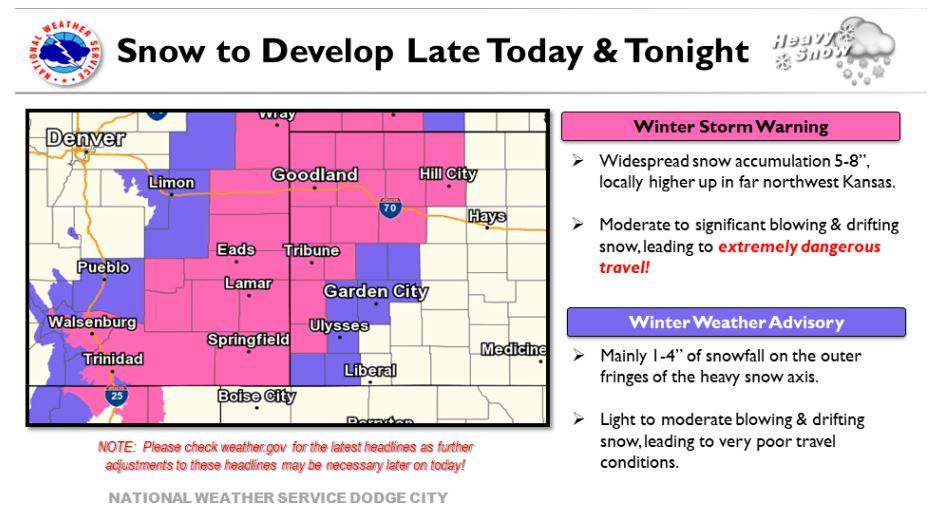
Winter storm system to impact western Kansas

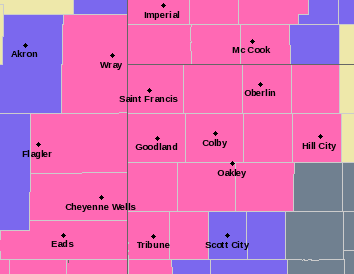
Counties in pink are in a Winter Storm Warning until 6 p.m. (CST) Thursday as issued by the National Weather Service in Goodland.

KDEM

TOPEKA – A winter storm system is forecast to impact portions of western Kansas with possible accumulating snowfall and gusty winds through the overnight hours of Thursday/early morning hours of Friday.  Portions of central and eastern Kansas are expected to receive rain.

The Kansas Division of Emergency Management will be monitoring the storm and is reminding Kansans to make sure their emergency supplies are ready.

“Although blizzard-like conditions are not currently expected, increased winds could cause blowing snow creating visibility issues,” said Angee Morgan, KDEM deputy director. “Just the same, road conditions may become snow packed and icy.  Kansans are urged to change or delay their travel plans if possible in these areas until the storm moves through.”

Winter road conditions are accessible by dialing 5-1-1 from your mobile phone anywhere in Kansas; outside Kansas call 1-866-511-5368 (KDOT). Road conditions many also be viewed on the Kansas Department of Transportation web site at https://kandrive.org.

If you must travel, be sure your car’s gas tank is full and you have an emergency kit. Vehicle emergency kits should include blankets, flashlights, batteries, a cell phone charger, hand-warmers, high-energy food snacks, bottled water, necessary medications, a snow shovel, flares and other emergency supplies. Make sure your cell phone is charged and someone is aware of your itinerary, including expected time of arrival.

Information on winter driving tips is available from the Kansas Highway Patrol at https://www.kansashighwaypatrol.org/259/Winter-Driving-Tips. You can also follow the Kansas Highway Patrol on Facebook and Twitter at www.kansashighwaypatrol.org.

Outdoor pets are especially vulnerable to bitter cold and extreme wind chills. Bring outdoor pets inside if possible or ensure that they have a draft-free enclosure with straw-type bedding that is large enough for your pets to lie down, but small enough to hold in body heat if they must remain outside. Always make sure that your pets have access to food and non-frozen water.

For additional pet safety information, go to https://avma.org or https://www.aspca.org/pet-care/general-pet-care/cold-weather-safety-tips.

For a complete list of items for an emergency kit and general winter preparedness information, go to www.ready.gov.

Christmas tree disposal site open

The Christmas tree disposal site is open through Jan. 14.

CITY OF HAYS

Citizens are encouraged to bring Christmas trees to the free disposal site located north of the Public Works building at 1002 Vine Street. This area is right next to the bathrooms at Speier ball fields. Place the trees inside the orange snow fence area.

Signs will be posted to direct citizens.

Please remove all plastic, ornaments, and lights before leaving the tree.

The disposal site will be open Tuesday, December 18, 2018 through Monday, January 14, 2019.

Midwest Energy will provide personnel and a wood chipper to chip the trees to make mulch. The mulch will be placed at the Parks Department on the Highway 183 Bypass and is available for pickup free of charge.

If there are questions, please call the Solid Waste Division at 785-628-7350.

Now That’s Rural: Richard Baker, Perspective

Ron Wilson is director of the Huck Boyd National Institute for Rural Development at Kansas State University.

By RON WILSON
Huck Boyd National Institute for Rural Development

Perspective. One’s perspective on how he or she sees things can make all the difference. Today we’ll meet a Kansas broadcaster who has shared an educational perspective with hundreds of students and thousands of listeners across our state.

Richard Baker is a longtime news director for the K-State Radio Network where he produced daily news plus a weekly radio program called Perspective. Richard is also an instructor in the Department of Communications and Agricultural Education.

Richard’s father was career military and served in World War II and Korea. Richard was born in the rural community of Seneca, population 2,039 people. Now, that’s rural. The family later moved to Manhattan when his father served at Fort Riley.

Richard Baker

Richard went to Manhattan High. As a kid, he mowed lawns, and that’s how he met a man named Ralph Titus who would become a lifelong mentor. Ralph worked for the K-State Radio Network.

Richard went to K-State but was unsure of his career choice. “I had not a clue,” Richard said. “I didn’t enjoy studying and I didn’t enjoy tests, but I loved learning things.”

One day a fraternity brother said to him, “You talk all the time. Have you ever considered radio?” With that inauspicious encouragement, Richard decided to give radio a try. He found he enjoyed it. He took some classes and in the summer, got his first radio job at KGNO in Dodge City for $85 a week. He later worked for KVGB in Great Bend.

Richard came back to northeast Kansas to take a job with KJCK in Junction City, where he was also able to finish his degree. He went on to graduate school at K-State and got a job as a student reporter doing news for the K-State Radio Network.
His next career step was a fascinating one. He went to work for a historically black music radio station in Omaha. “I’ve always loved soul music,” Richard said. He was typically the only Caucasian in the room, but he got to emcee concerts for groups such as The Spinners and Earth, Wind, and Fire.

In 1977, he returned to Manhattan where he joined the K-State Radio Network as news director. The university’s public radio station was called KSAC and was later called KKSU.

At this station, he was re-united with his mentor, the late Ralph Titus. “Everything I do was influenced by Ralph,” Richard said. “He had a way of asking thoughtful questions which really helped me improve.”

In addition to the one o’clock and five o’clock news on each weekday, Richard produced a weekly half-hour program called Perspective. This allowed a more in-depth exploration of key issues of the day.

Of all the interviews he has done through the years, which is his favorite one? “Every time I do an interview, it’s my new favorite,” Richard said. He has never lost that zest for learning.

In 2002, he took on the additional responsibility of teaching a communications class. “I try to incorporate diversity, management, and ethics into my classes,” Richard said.

In December 2018, Richard is retiring from K-State after 41 years. At 41 years times 52 Perspective programs produced weekly, that means he has produced more than 2,000 of those programs.

“There’s probably no one who has touched the lives of more Kansans than Richard Baker,” said Dr. Steve Smethers, associate director of K-State’s A. Q. Miller School of Journalism and Mass Communications. “Whether through local broadcasting or through extension’s radio outreach, Richard has been a longstanding voice in Kansas community journalism and he has provided information that has affected the lives of every man, woman and child in this state. Just as so many who have been part of K-State’s radio legacy, Richard was a valued voice of the KSAC/KKSU radio station, and he will never be forgotten.”

Perspective. It makes a huge difference in how we see issues. We commend Richard Baker for making a difference by keeping listeners informed and students enlightened about the key issues of the day. Through the years, his programming has provided a very important perspective.

Kansas big game permit drawing will be in January

Commission Big Game Permit Drawing in JanuaryPRATT – At a public meeting in Lawrence on Jan. 17, 2019, Kansas Wildlife, Parks and Tourism Commissioners will draw the names of seven conservation organizations that will receive special big game permits. The Commission Big Game Permit program allows eligible organizations a chance to draw one of seven big game permits, which can then be sold to raise funding for conservation projects.

Local chapters of nonprofit organizations based or operating in Kansas that actively promote wildlife conservation and the hunting and fishing heritage are eligible to apply. Organizations are not eligible to receive a Commission Big Game Permit more than once in a three-year period. Applications, which can be downloaded at ksoutdoors.com/KDWPT-Info/Commission, must be submitted by Jan. 1.

One elk, one antelope or up to seven deer permits are issued each year, depending on applicant preference. Deer permits are either-species/either-sex and are valid statewide during any season with legal equipment for that season; they do not count against other big game permits the license holder is eligible for.

Once the permit is sold, the cost of the permit, plus 15 percent of the total sale price, is subtracted and kept by the organization, while the remainder is remitted to the Kansas Department of Wildlife, Parks and Tourism with a proposal for a conservation project. When the project is approved, the money is returned to the organization to complete the project. An exception to this procedure would occur if Kansas Hunters Feeding the Hungry (KHFH) is drawn. In that case, KHFH keeps 85 percent of the funds to help pay for processing donated deer.

Copyright Eagle Radio | FCC Public Files | EEO Public File