We have a brand new updated website! Click here to check it out!

MARSHALL: Doctor’s Note Oct. 14

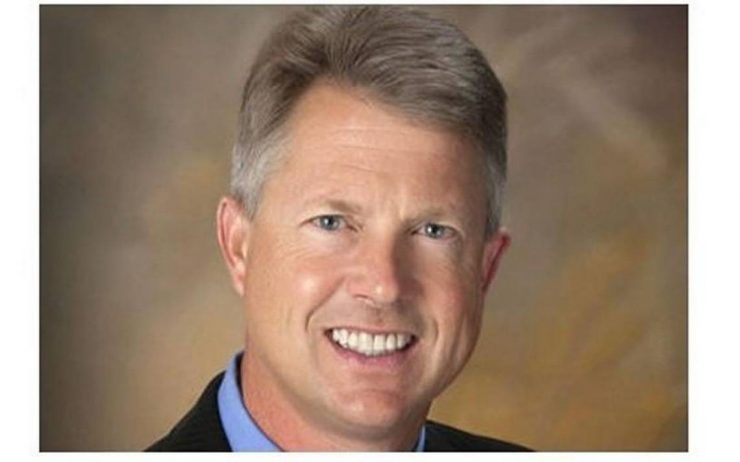
Dr. Roger Marshall, R-Great Bend, is the First District Kansas Congressman.

Friends,

Saturday was National Farmers Day, a day with deep roots where we take time to recognize and thank farmers for their hard work and contribution to the economy.

Agriculture is the largest economic driver in Kansas, accounting for 44.5% of the state’s total economy. The agriculture sector employs 13% of Kansas’ workforce through direct and indirect careers.

Kansas is the nation’s 7th largest agricultural exporting state, shipping $4.8 billion in domestic agricultural exports abroad in 2017. Agriculture in Kansas is not just about growing crops and raising animals, it includes renewable energy production, food processing, research and education, agribusiness and more. I am proud to represent the farmers of Kansas that provide the food, fiber, and fuel that sustain our great nation.

So make sure you thank a farmer?

Dairy Margin Coverage Program

Enrollment for the 2020 Dairy Margin Coverage (DMC) program has been opened by the USDA’s Farm Service Agency. The DMC was authorized by the 2018 Farm Bill and is a program designed to help producers manage economic risk brought on by milk price and feed cost disparities.

The DMC program offers reasonably priced protection to dairy producers when the margin between the all-milk price and the average feed cost falls below a certain dollar amount selected by the producer. So far in 2019 dairy farmers have earned more than $300 million from the program.

Enrollment is open until December 13, 2019. If you want more information on the program Click Here. You can also visit the USDA’s DMC program homepage Here.

Supporting Rural Transportation

U.S. Department of Transportation (DOT) Secretary Elaine Chao announced the Rural Opportunities to Use Transportation for Economic Success (ROUTES) Initiative, with a goal of dedicating discretionary U.S. DOT resources to improving the safety and usability of the nation’s rural infrastructure.

The roads in Kansas and other rural states are vital to the movement of goods and services across this country. But many of the rural transportation systems – roads, bridges, and highway-rail crossings – lack the investment necessary to keep them safe and usable.

U.S. DOT will assist rural stakeholders in better understanding and utilizing the grants and funding programs to identify critical rural transportation concerns and coordinate efforts among DOT’s different modal administrations. To learn now about the ROUTES initiative, Click Here.

Disaster Aid Coming to Kansas

The U.S. Department of Agriculture Office of Rural Development recently announced $150 million in additional funding to help communities hardest hit by adverse weather and natural disasters.
The counties included in the 2019 FEMA disaster declaration, highlighted in the graphic, can apply for funds through the Community Facilities Program to make improvements to buildings, infrastructure, and public facilities using USDA grant dollars.

The Community Facilities program can help rural communities in their recovery efforts by ensuring they have the facilities and infrastructure to support their residents and businesses.

Interested communities are encouraged to contact a USDA Rural Development Community Programs Specialist in Kansas. A list of specialists in Kansas can be found Here.

Combating School Violence

Morris County Public Schools has been awarded a grant of $452,913 by the Department of Justice’s Community Oriented Policing Services (COPS) office. Recipients were given the grants under the School Violence Prevention Program (SVPP) which granted $32.5 million dollars across 103 grantees.

The SVPP program provides funding directly to states and units of local government to be used to improve security at schools and on school grounds. Money can be used in a variety of methods, from coordination and training with local law enforcement to the placement of metal detectors, locks, lighting, and other deterrent measures. Thank you to the COPS office for their investment in the safety of the next generation of Americans.

USDA Roundtable

USDA Deputy Under Secretary for Food Safety Dr. Mindy Brashears and Food Safety and Inspection Services (FSIS) Administrator Carmen Rottenberg traveled to Kansas last week. They meet with small protein production facility managers and provide plant operators an opportunity to hear updates from FSIS leadership as well as ask questions about proposed changes and labeling requirements.

Under USDA Secretary Sonny Perdue’s leadership, the agency has placed a large emphasis on customer service and removing unnecessary regulations. Events like this week’s roundtable are part of the reason America has the safest and most affordable food supply in the world.

Following the roundtable, Deputy Under Secretary Dr. Brashears traveled to Manhattan to meet with veterinary medicine students at Kansas State University to discuss career opportunities within USDA.

National Co-Op Month

October is National Co-Op Month. Kansas is home to more than 525 co-op locations serving 600,000 members and generating millions of dollars for local economies.

These member-owned and member-driven organizations are an important part of the Kansas way of life, providing everything from farm credit to electric power.

For more than 100 years, these organizations have been serving communities across the district, and will continue to be vital to Kansas’ growth and success.

National 4-H Week

Last week was the Inspire Kids to Do National 4-H Week. From October 6th through the 12th counties all across the country have been celebrating everything 4-H and showcasing the incredible experiences that 4-H offers young people. The Inspire Kids to Do theme was chosen to highlight how 4-H encourages kids to take part in hands-on learning experiences in areas such as health, science, agriculture and civic engagement.

During my time in Congress I have had the opportunity to meet with many 4-H groups and am continually impressed with the leadership and drive that I see in these young Kansans. 4-H equips our youth with the skills they need to reach their full potential and I am proud to celebrate 4-H Week with them.

Rural and Independent Innovators Conference

The Kansas Small Business Development Center will be hosting one of their Rural & Independent Innovators Conferences (RIIC) at Fort Hays University on October 15th. These conferences are modeled around supporting Kansan entrepreneurs and innovators with information and education, with the goal of fostering connections and business opportunities.

Executive Director of Grow Hays, Doug Williams, will be the keynote speaker at this upcoming RIIC and will be speaking on “Growth Through Innovation.” There will also be presentations on business growth, market access, and raising capital. This is a great opportunity to network and learn, and I hope many of you have a chance to attend.  Additional information, along with registration details, can be found on their website Here.

Dr. Roger Marshall, R-Great Bend, is the First District Kansas Congressman.
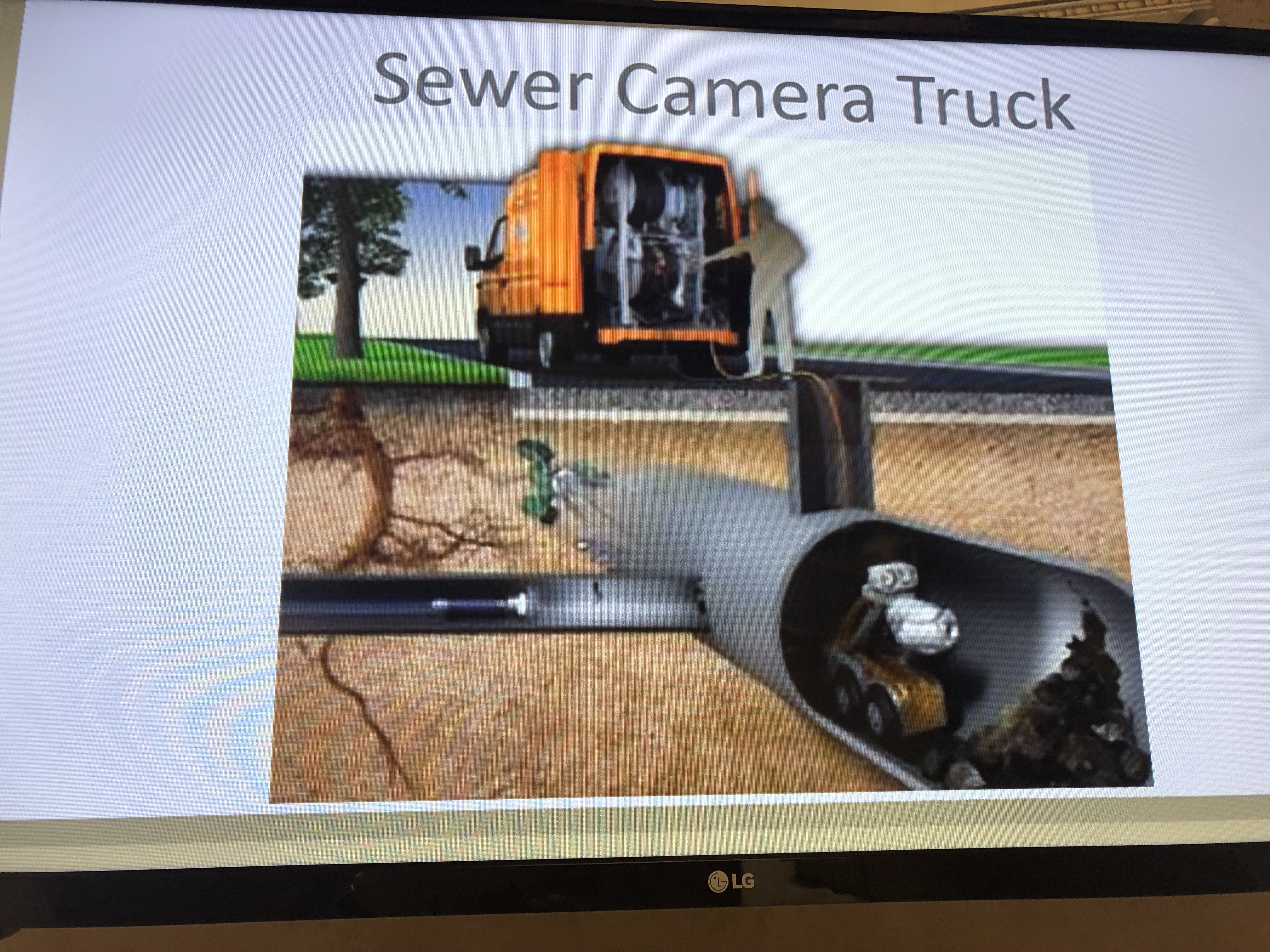
Sewer line inspection, cleaning begins in downtown Hays area

CITY OF HAYS

The city of Hays Water Resources Department has contracted with SAK Construction of O’Fallon, Missouri, to perform Cure in Place Pipe (CIPP) sewer lining at the locations shown on the map below.

In preparation for this project, Mayer Specialty Services, a sub-contractor for the lining project, will perform sewer line cleaning and video inspection of the work area.

Cleaning will begin Monday, October 14, 2019. Mayer Specialty Services should be completed with the cleaning and inspection project before November 8, 2019, weather permitting.

Door hanger notices will be placed on homes and businesses affected prior to cleaning. Work will begin at the north end of the project area and proceed south until completed. If you will not be home or on vacation during the time of sewer line cleaning, please protect your home by keeping your toilet lids down.

Should you have any questions, please contact Mayer Specialty Services project manager at 316-640-4148 or Water Resources Dept. at 785-628-7380.

Ash Street reconstruction continues

City of Hays

Beginning on Monday, the demolition of Ash Street in Hays will continue to the north.

Ash Street will be closed south of Fourth Street as the reconstruction of streets in this area continues. This area will remain closed for the next several weeks as Ash Street is reconstructed from Elm to 4th Street.

Signs will be in place to direct the traveling public. The traveling public should use caution and if possible avoid areas of construction.

The city of Hays regrets any inconvenience this may cause to the public. If there are any questions, please call the Office of Project Management at 628-7350 or the contractor, Morgan Brothers Construction at 432-3104 or 394-1777.

PREVIEW: Fall Radio Auction Oct. 17 & 18

The Eagle Radio Auction kicks off Thursday morning at 8 a.m. on radio stations 101.9 KKQY and 94.3 FM and 1400 AM KAYS.

BOS Motorsports 2018 Bobcat XRZ 48 SD Mower

There are thousands of items to bid on and buy, including a Bob Cat Zero Turn mower from BOS Motorsports.

Retail Price $5299

This brand new carry-over 2018 Bob Cat Zero Turn mower offers a 48″ deck with side discharge and a powerful Kawasaki FR651V engine for years of mowing service. Featuring an adjustable, high back seat with spring-dampened suspension and armrests. Mow longer between fill ups with a 6 gallon fuel tank and productive mowing with 21.5 horsepower and speed us up to 7 miles per hour. The Bob-cat CRZ also features a TufDeck, professional grad mower deck and the best warranty on the market with a 6 year or 600 hour warranty on the mower and 3 year warranty on the Kawasaki engine. See the great folks at BOS Motorsports to see this brand new 2018 Bob-Cat XRZ SD 48 inch Zero Turn residential mower or see BOS Motorsports, 1210 East 43rd street, 785-628-2525.


Avalon Advanced Health
$1500 Cool Sculpting Certificate

This $1500 certificate is good toward 4 or more CoolSculpting applications from Avalon of Hays. Transform your body with Cool Sculpting – a safe, non-invasive way to reduce fat in trouble areas, like the mid-section, that tend to be diet and exercise resistant. CoolSculpting targets and freezes fat cells causing their natural death. Most start to see results in 3 weeks, with dramatic changes in 1 to 3 months. 4 treatments or more are usually needed. For more information, visit avalonhays.com. Lose fat, look and feel better with these 2 Cool Sculpting Sessions from Avalon of Hays, located in the Eagle Business Plaza just off 27th and Hall in Hays.

Adopt-A-Cop creates positive relationships between officers, kids

By CRISTINA JANNEY
Hays Post

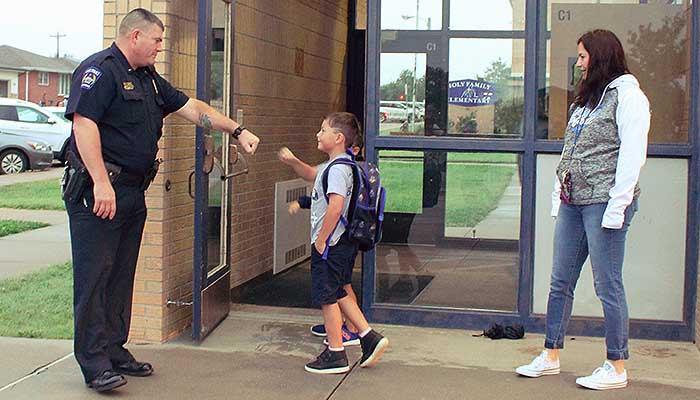
Lt. Tim Greenwood stood outside Holy Family Elementary School on a recent drizzly, gray morning, opening car doors for kids and giving high-fives and fist bumps.

It only takes about 15 minutes out of his day, but he said he thinks it is important for kids to see a police officer as one of the good guys.

Greenwood was part of the Adopt-A-Cop program when it began in Hays in 1998. The program was temporarily discontinued, but was resurrected about five years ago. Every school, public and private, in the city has at least one officer assigned.

“It is great when I am there and the kids smile and wave,” he said.

In addition to the welcomes in the morning, Greenwood periodically gives presentations to school on safety topics. Greenwood is also a veteran and the school invites him to lunch once a year to celebrate Veterans Day.

“I’m somebody those kids can look up to as a role model and not be afraid to reach out and say. ‘Hey, Officer Greenwood, how are you this morning?’ and develop a conversation or rapport that has served us professionally later on.”

The relationships he builds with the children has been useful as he has been called to tragedies and been able to calm a child because that child knew him from school.

Greenwood said Adopt-A-Cop has been one of his best assignments as a police officer.

“A young lady came up to me and asked if I remembered her, and I didn’t. It was a third grader that 20 years later had grown up and she still remembered I was her Adopt-A-Cop,” he said.

Sgt. Jason Bonczynski is assigned to Wilson Elementary School.

“I think the program has some really tremendous benefits for the kids” he said. “When I first started going, no one wanted to talk to me. There was a cop over there. They didn’t know what was going on. ‘He looks a little bit spooky.’ Once the kids realize I am there for the kids, they’re having fun and I’m handing out stickers and visiting and playing, they almost run me over for a sticker in the morning.

“Some kids have had experiences with law enforcement that might not pose us in the most positive light because we took a law enforcement action. They might be fearful of us. We have the opportunity to turn around those perceptions and let them know we are here for community service and to keep people safe.”

In his 21 years as an officer, he said there is nothing that puts a smile on his face and is more positive than being an Adopt-A-Cop.

“Who doesn’t like hanging out with kids?” he said.

HPD Deputy Chief Brian Dawson said the response to the program from schools, officers and the community has been positive.

“It helps build a rapport between the young people at schools and the officers as well as school staff and parents,” he said.

The HPD at one point had school resource officer program in Hays schools, but that program was discontinued.

“Silly Selfie” of some Wilson Elementary students and their Adopt-A-Cop Sergeant Jason Bonczynski. Courtesy of HPD Facebook

The current program amounts to 40 officer hours per year across the entire program. However, officers and the school officials said they thought the program offers maximum benefit for the amount of resources dedicated to it.

Lincoln Elementary School has two officers assigned to its school.

Lincoln Principal Kerri Lacy said having the officers welcome students in the morning one to three times per week has helped the children and parents feel more at ease with the officers. They have also visited the school and had lunch with the children.

“I think another benefit is our parents knowing we have Adopt-A-Cops,” Lacy said. “They see them out front in the morning and know we are keeping our school safe. Having the presence here is a great benefit.”

Lacy said she thinks the program helps change the kids’ perceptions of police officers.

“Our kids just think officers are scary, because that is all they know, so it is a good way for them to know officers are here to hep them if they need it and they are nice people and they are familiar with the school,” she said. “That way if they see an officer walking in the school they are not thinking, ‘Oh my gosh, there’s something wrong.’ They are here to be helpful.”

Tom Albers, Hays Middle School principal, said the idea behind Adopt-A-Cop is to have a police officer connected with the school.

The two officers assigned to the middle school open doors for students in the morning and greet them. They also walk the halls during the first part of the day, which is the school’s “Falcon time.”

Albers said he at times calls on the officers to give words of encouragement to students.

“They walk the building just talking to kids,” Albers said. “They are visible. They’re available for kids if they want to speak to them. They have very positive interactions with our students. It allows our kids to feel secure.”

Fenwicks give reading room to FHSU’s Forsyth Library

FHSU University Relations

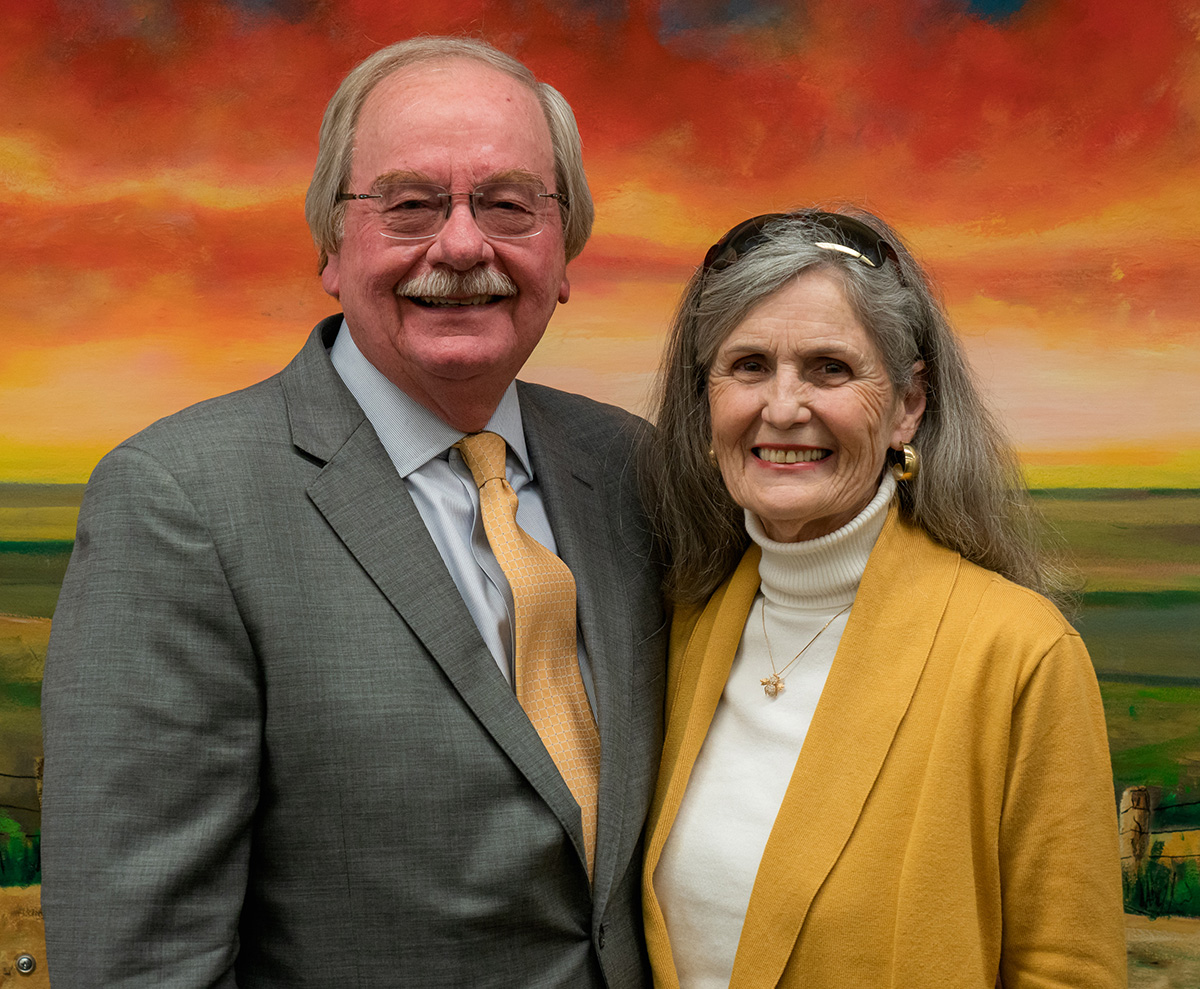
Larry and Lyn Fenwick started out as high school sweethearts who married their freshman year at Fort Hays State University. The couple was back on campus this week, more than 50 years later, to partake in FHSU’s Homecoming festivities and to be recognized for their most recent contribution to Fort Hays State.

Through their generous gift, the couple is making possible the Larry and Lyn Fenwick Reading Room in FHSU’s Forsyth Library. Due to their generosity, Forsyth Library will be able to construct a new reading room during scheduled renovations.
area
The Fenwicks were honored for their recent contribution Friday afternoon at FHSU’s Revisit the Past, Unleash the Future: A Library Showcase held at Forsyth Library.

“The Larry and Lyn Fenwick Reading Room is an important element of the renovation of Forsyth Library,” said Deborah Ludwig, Forsyth dean. The reading room is scheduled for completion in 2023.

“The future reading room will house, exhibit, and provide critical preservation of distinctive collections connected to Kansas and to our university, while also making these unique materials available to researchers for study in a secure setting,” said Ludwig. “On behalf of Forsyth Library and Fort Hays State University, we are deeply grateful to Larry and Lyn for their generous gift. With their help, we will keep important history alive and inspire future generations of researchers.”

Jason Williby, president and CEO of the FHSU Foundation, said, “Our university’s continued success is in large part thanks to alumni and donors like Larry and Lyn Fenwick, who remain engaged with the university and our programs. They believe in our mission and want to make a positive impact in advancing education.”

“The Larry and Lyn Fenwick Reading Room will foster an environment for hard work and learning,” he said. “Housing collections of unique artifacts along with individual and group study spaces, the new space will be a great resource for students at Fort Hays State.”

The Fenwicks, rural Macksville, graduated from FHSU in 1966 and, after years of being away from Kansas, they made their way back home to Lyn’s ancestral farm in Stafford County.

Larry graduated from FHSU with a B.S. in business administration and immediately joined the U.S. Air Force, serving as an officer with the Strategic Air Command stationed at bases in New England and on the island of Guam.

In 1971, he began a 32-year career in investments and management while living in Dallas, Texas, Atlanta, Ga., and Charlotte, N.C.

Lyn began as an art major at Fort Hays State, but earned her degree in elementary education. During Larry’s service in the Air Force, Lyn taught secondary English for four years in New York state and Massachusetts. She earned her doctorate in law from the Baylor University School of Law and practiced in Texas before shifting her focus to writing and publishing two books.

Currently, she has a weekly blog and is finalizing a manuscript about a Kansas homesteader and the Populist Movement.

When discussing her path through Fort Hays State, Lyn said, “Dream big! Dreams are terrific, but so is the hard work that it takes.”

With their recent gift, the couple hopes to encourage students at Fort Hays State to study hard, accomplish their goals, and dream big.

To learn how you can join the Fenwicks in supporting Forsyth Library, please contact the FHSU Foundation at 785-628-5620 or [email protected]. For additional information, please visit https://foundation.fhsu.edu .

BOOR: Now is the time to check forage for prussic acid

Alicia Boor
After sorghum harvest, many producers want to move their cattle onto milo stalks to graze. With an early hard freeze, it is a good idea to be aware of prussic acid in sorghum, and if you are concerned, have your forage tested. A quick test now can give you peace of mind when you turn your livestock out to utilize the stalks and grain that are in the field.

Below are some key considerations: 
 
1.  Prussic acid (HCN) poisoning is more of a concern when grazing sorghum than when harvested for hay or silage because HCN will dissipate in harvested forages if properly ensiled/cured. For grazing it is best to wait approximately seven days after the hard freeze to graze.
 
2.  Sorghum silage – Most of the HCN will dissipate within 72 hours following warm weather after a hard freeze. However, if HCN levels are high at the time of harvest, wait at least four weeks before feeding the forage. The HCN will volatilize during the fermentation and feed mixing process.
 
3.  Hay – The curing process for hay will allow the HCN to dissipate as a gas, reducing the HCN content to safe levels.
 
Testing for Prussic Acid
 
1.  If high prussic acid concentrations are suspected prior to grazing or at harvest, forage should be tested before grazing or feeding. There are quantitative and qualitative tests available to learn more about the potential for prussic acid poisoning in a particular forage.
 
2.  If HCN levels exceed 200 ppm on an ‘as-is’ basis or 500 ppm on a dry basis, the forage should be considered potentially toxic and should not be fed as the only source of feed to animals.
 
3.  Contact the forage lab that will conduct the HCN analysis prior to sending in samples so that proper handling procedures can be followed. 
 
To monitor the freeze conditions in Kansas, go to the Kansas Mesonet Freeze Monitor tool:  https://mesonet.k-state.edu/weather/freeze/
For more information on how to use the Freeze Monitor, please read the recent eUpdate article, “Fall has arrived and the Mesonet freeze monitor returns”, in Issue 712.

If you have any questions, or would like more information, you can contact me by calling 620-793-1910, by email at [email protected] or just drop by the office located at 1800 12th street in Great Bend. This is Alicia Boor, one of the Agriculture and Natural Resources agents for the Cottonwood District which includes Barton and Ellis counties. Have a good week!

FIRST FIVE: Protecting religious freedom has a domino effect

Benjamin P. Marcus

By BENJAMIN MARCUS
Freedom Forum Institute

Earlier this month, thousands of people gathered in Houston to mourn the death of Harris County (Texas) Sheriff’s Deputy Sandeep Dhaliwal. Dhaliwal, who was shot dead during a routine traffic stop in a non-hate crime-related ambush, not only served and protected his community as a law enforcement officer — he also served his religious community and country as a champion of religious freedom.

In 2015, Dhaliwal became the first turbaned Sikh law enforcement officer in Harris County after the county added a religious accommodation policy to its uniform regulations. The change was made thanks to advocacy by the Sikh American Legal Defense and Education Fund (SALDEF), the Sikh Coalition and Dhaliwal’s colleague, Deputy Navdeep Singh Nijjar. Previously, on-duty officers could not have a beard or wear a turban — forcing some Sikhs, including Dhaliwal, to make the heart-wrenching decision between their careers and their articles of faith.

Dhaliwal and his colleagues’ success in Texas had a domino effect: the same year Dhaliwal was finally allowed to come to work as his whole self — turban, beard and all — the New York City Police Department (NYPD) reached out to Harris County Sheriff Adrian Garcia to find out how the NYPD could change its own policies to better accommodate observant Sikhs.

But members of minority religious communities have not always been invited enthusiastically to serve without comprising their convictions. Shared experiences of exclusion from public spaces bind marginalized communities together in an “inescapable network of mutuality,” borrowing a phrase from the Rev. Dr. Martin Luther King Jr.

Richard Foltin, senior scholar at the Religious Freedom Center, explains: “Just as Sikhs are confronted with workplaces that place obstacles to their wearing a turban and beard, even though their dress and grooming presents no real impediment to the performance of their jobs, so also observant Jews sometimes face the danger of losing or being denied jobs because they are obligated to wear a yarmulke or a beard or, in a more frequent situation, must take days off from work in observance of the Sabbath or holy days.”

Indeed, an observant Jew pushed down a domino on behalf of religious freedom before Dhaliwal. In 1986, the U.S. Supreme Court ruled in Goldman v. Weinberger that a Jewish Air Force officer did not have a constitutionally protected right to wear a yarmulke while on duty and in Air Force uniform.

In response, Congress included a provision in the 1988 version of the annual National Defense Authorization Act that permits “a member of the armed forces to wear an item of religious apparel while in uniform, except when the secretary of the military department concerned determines that: (1) the wearing of the item would interfere with the performance of military duties; or (2) the item is not neat and conservative.”

Nevertheless, some members of minority religious communities are still forced to decide between serving their country and honoring their religious identities. According to the Sikh Coalition, the U.S. Air Force, Marines and Navy still have policies that prohibit Sikhs and others from wearing certain articles of faith.

But the dominos set in motion by Goldman and Dhaliwal continue to fall. After Dhaliwal’s death, 98 former and current Sikh service members and law enforcement officers delivered letters to the U.S. Department of Defense and national police agencies to advocate for policy changes that would allow members of minority religious communities to serve with dignity.

We all benefit when our workplaces — public or private — become more diverse. In fact, research shows that Americans who personally know someone from a religious community express warmer feelings toward members of that community and they answer more questions correctly about that community on a religious knowledge survey. And as the American Academy of Religion argues, decreasing religious illiteracy can decrease the bigotry and prejudice that plague our communities and fuel violence.

That’s why we need people like Dhaliwal, who fight for everyone’s right to participate fully in public life. In the words of Arsalan Suleman, the Muslim-American president and chair of America Indivisible: Dhaliwal’s story “is significant because he made the Harris County Sheriff’s Office better — better because it had him on the team, better because their policies now were more consistent with U.S. constitutional protections and better because the sheriff’s office became more welcoming to and representative of Houston’s diverse residents. His service, and his triumph, also made his city of Houston better and our country better — because every time there is a triumph like Dhaliwal’s, as a society we get closer to that more perfect ideal to which we aspire.”

On Friday, Sept. 27, America lost a First Amendment hero who reminded us that we serve our entire country when we stand up for our rights. Do you feel a gentle nudge? That’s Deputy Dhaliwal’s legacy pushing you to knock down barriers against religious freedom for the next generation.

Benjamin P. Marcus is religious literacy specialist at the Religious Freedom Center of the Freedom Forum Institute. His email address is: [email protected].

4 hospitalized after rear-end crash of disabled vehicle on Kan. highway

HODGEMAN COUNTY — Four people were injured in an accident just before 9p.m. Sunday in Hodgeman County.

The Kansas Highway Patrol reported a 2008 Chevy Impala driven by Samantha Lobmeyer, 28, Garden City, was eastbound on Kansas 156 fifteen miles east of Jetmore.

The Chevy rear-ended a 2009 Pontiac G5 driven by Makentzee R. Chappel, 20, Garden City, that was disabled and partially in the lane of travel after hitting a deer.

EMS transported Benjamin R. McCaffery, 19, Calahan, Colorado to a Wichita Hospital.
EMS transported Lobmeyer, Chappel and Hunter E. Coronel, 21, Brighton, Colorado, to the Hodgeman County Health Center.

McCaffery and Coronel had been in the Pontiac but were standing outside the vehicle at the time of the accident

Sign up for Run/Walk to Help Children Talk

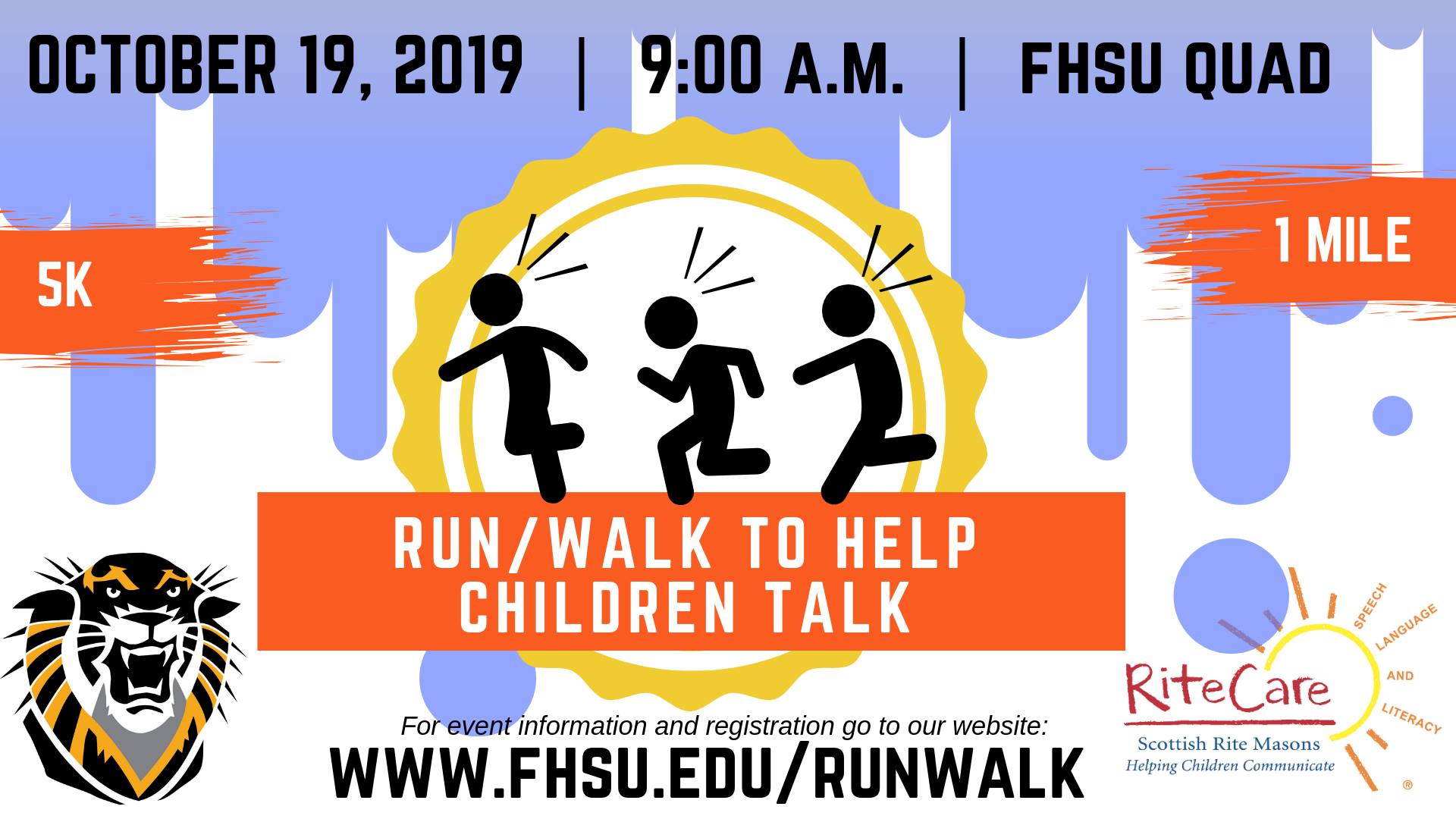
Join us October 19 for the 7th annual Run/Walk to Help Children Talk charity event.

This event will be held at the Fort Hays State University quad outside of the Memorial Union.

Registration begins at 8:15 a.m. with the races beginning at 9:00 a.m.

Prices for early-bird registration are $15.00 for FHSU students, $20.00 for adults, and $10.00 for children. Add $5.00 for registration after October 4, 2019.

Proceeds from the 5K run/walk and 1-mile fun walk will provide client scholarships to children in need of speech/language services and support the purchase of clinic materials for the FHSU Herndon Clinic.

The Run/Walk event is sponsored by the Salina Valley Scottish Rite Masons and the FHSU National Student Speech-Language-Hearing Association.

For event information and registration, please visit our website www.fhsu.edu/runwalk.

– SUBMITTED –

Copyright Eagle Radio | FCC Public Files | EEO Public File