Last week we covered the fall planting of trees and shrubs that come in containers. If, however, you are transplanting a tree or shrub from one location in your yard to another, fall is also a great time to take on this project. The first thing to remember is to wait until the plants in question begin losing their leaves for winter, that is, if they’re deciduous. Below is a list of procedures, or a guide if you will, for transplanting procedures.
Before you begin, determine if the plant you are going to transplant will do well in the new location. Ask yourself if it will get too much sun or shade, will have enough space to grow as it matures, and how much water it is going to require. Also keep in mind whether or not there are local, city or state codes that would determine the location of the transplant.
Be sure to dig the new hole before you dig up the plant that will be relocated. Remember, be ready to get the plant out of the ground, and back in as soon as possible. The longer it is out of the ground, the less of a chance for its survival. Your tree will lose a significant amount of its root system during transplanting. So make sure it’s well-hydrated before the transplanting process begins.
When the digging commences, do not start right at the base of the tree or shrub. Rather, start digging about 3 feet out from the base, all along the perimeter. Get a feel for where the main mass of roots lies. Also think about what the weight of the plant, roots and soil clinging to roots will be. You might need some help to lift it. Tie up any low hanging branches to prevent damage to them while the tree/shrub is being dug. Use a sharp shovel to make clean cuts in the root system to prevent further damage. One standard for the size of the root ball of a tree is to have at least 10 inches radius and depth of the root ball for every 1 inch of trunk diameter. Shrubs should have 10 inches out from the base of the plant for every 18 inches of height.
The width of the new hole should be twice that of the root-ball. The depth should be kept a bit shallower, to avoid puddling and consequent rotting (especially if your soil has a lot of clay in it). When you reach the bottom of the new hole, resist the temptation to break up the soil beneath, as this may cause the plant to sink deeper later on.
Once you have removed enough soil from around the sides of the plant, you will eventually be able to slip your shovel under it and begin to loosen the plant’s grip on the soil below it. After it is loose, spread a tarp on the ground nearby and gently move the tree or shrub onto the tarp.
Drag the plant over to the new hole using the tarp as a transporting medium. Carefully slide the plant into the hole, and then set it straight. Shovel the excavated soil back into the hole all around the root ball. Place the hose into the hole, and water it as you are back filling it. This will help to eliminate air pockets, and allow good contact between the root ball and the surrounding soil.
Mound up the soil in a ring around the newly transplanted tree or shrub, forming a berm that will hold water like a basin. This will help keep the new transplant’s roots well-watered, until it becomes established.
Rip Winkel is the Horticulture Agent in the Cottonwood District (Barton and Ellis Counties) for K-State Research and Extension. You can contact him by e-mail at [email protected] or calling either 785-682-9430, or 620-793-1910.
TOPEKA – The Kansas Department of Health and Environment’s (KDHE) Bureau of Family Health (BFH) and the Kansas Health and Environment Laboratories (KHEL) have been awarded a grant to add at least one new condition to the standard newborn screening panel.
The Centers for Disease Control and Prevention (CDC) funds total $254,486, and will go to the purchase of new instrumentation, staff training and database updates for reporting. The grant will also fund BFH’s Follow-Up Program to develop education materials, train providers and birthing facilities about the new condition(s) and enhance KDHE’s database to provide accurate and timely follow up for abnormal results. With this funding, Kansas can take the necessary steps to expand the panel to include testing for spinal muscular atrophy (SMA) by September 2020.
“The Newborn Screening Program serves every child born in the state, by providing screening, education and referrals for 31 medical conditions. These are conditions that families would not otherwise know their child had, until it was too late,” said KDHE Secretary Jeff Andersen. “We are pleased to focus on expanding and improving these services to families and health care providers in Kansas.”
The Kansas Newborn Screening program is a collaborative effort between public health, hospitals, providers and the parents of the infants screened. Screening is a public health service. Since 1965, it has been available to all Kansas infants and is done shortly after birth. Kansas newborns are screened for 31 conditions recommended by the Secretary of the U.S. Department of Health and Human Services.
Angie Schreiber sees it time and again: dyslexic students failing to learn to read through traditional teaching techniques.
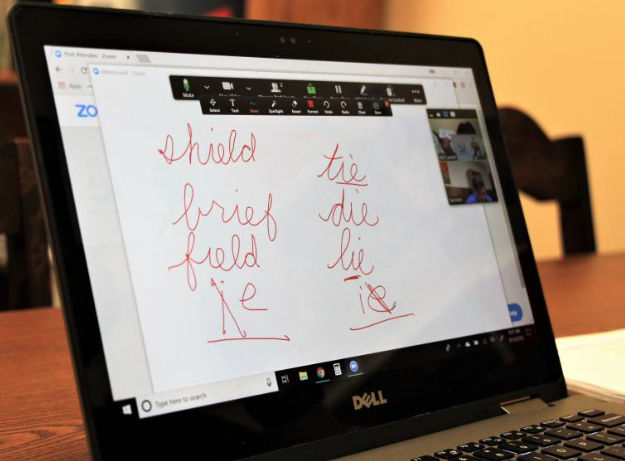
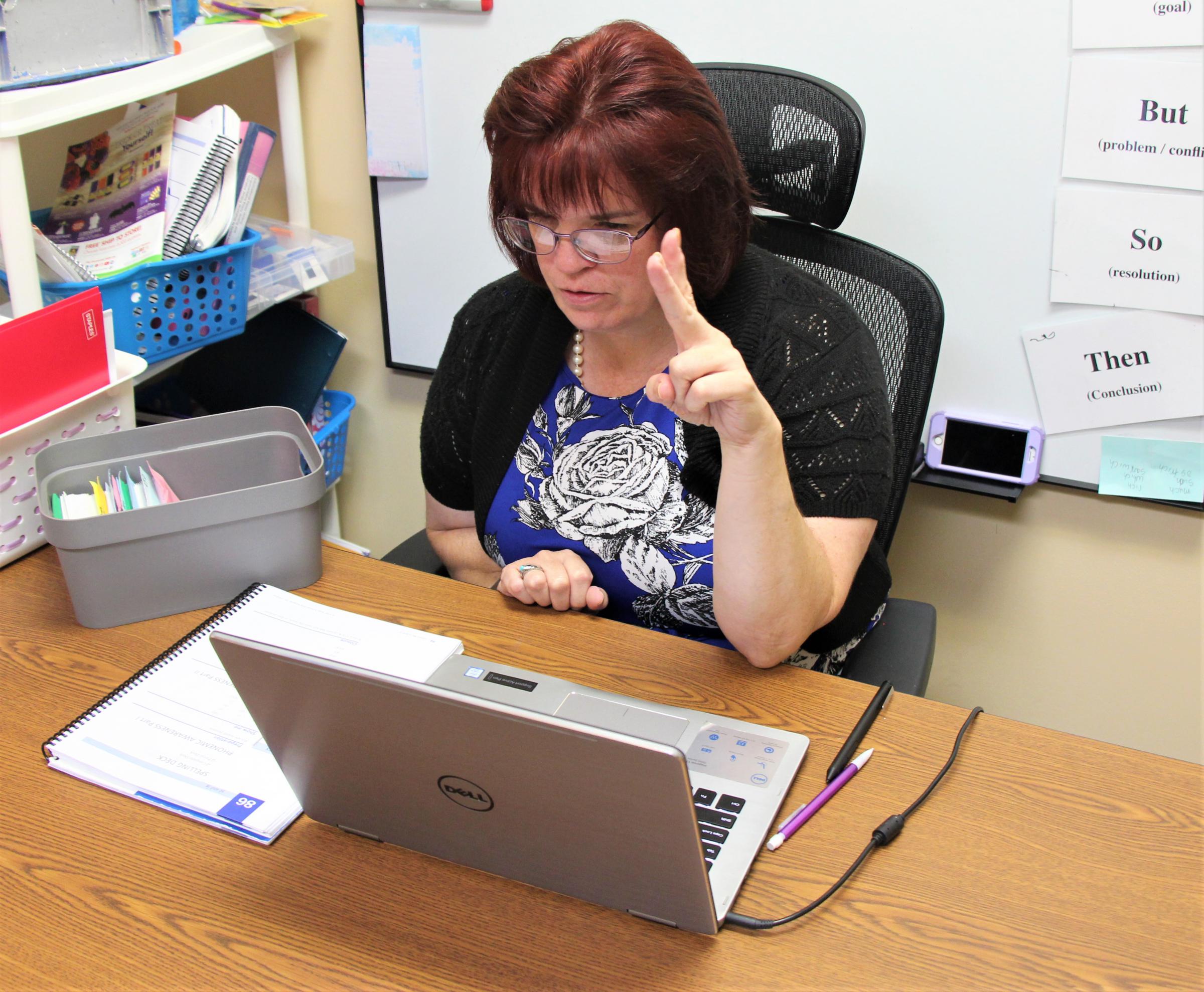
A computer screen shows some of the tricky spelling rules that Ann Lawyer, a teacher at Cradle to Career Literacy Center in Emporia, shared with one of her students during a recent online lesson. CELIA LLOPIS-JEPSEN / KANSAS NEWS SERVICE
But she says she knows how they can flourish.
Schreiber’s private teaching service in Emporia uses an approach known as structured literacy. The method drills students on myriad rules of English sound and spelling that most of us never learned consciously.
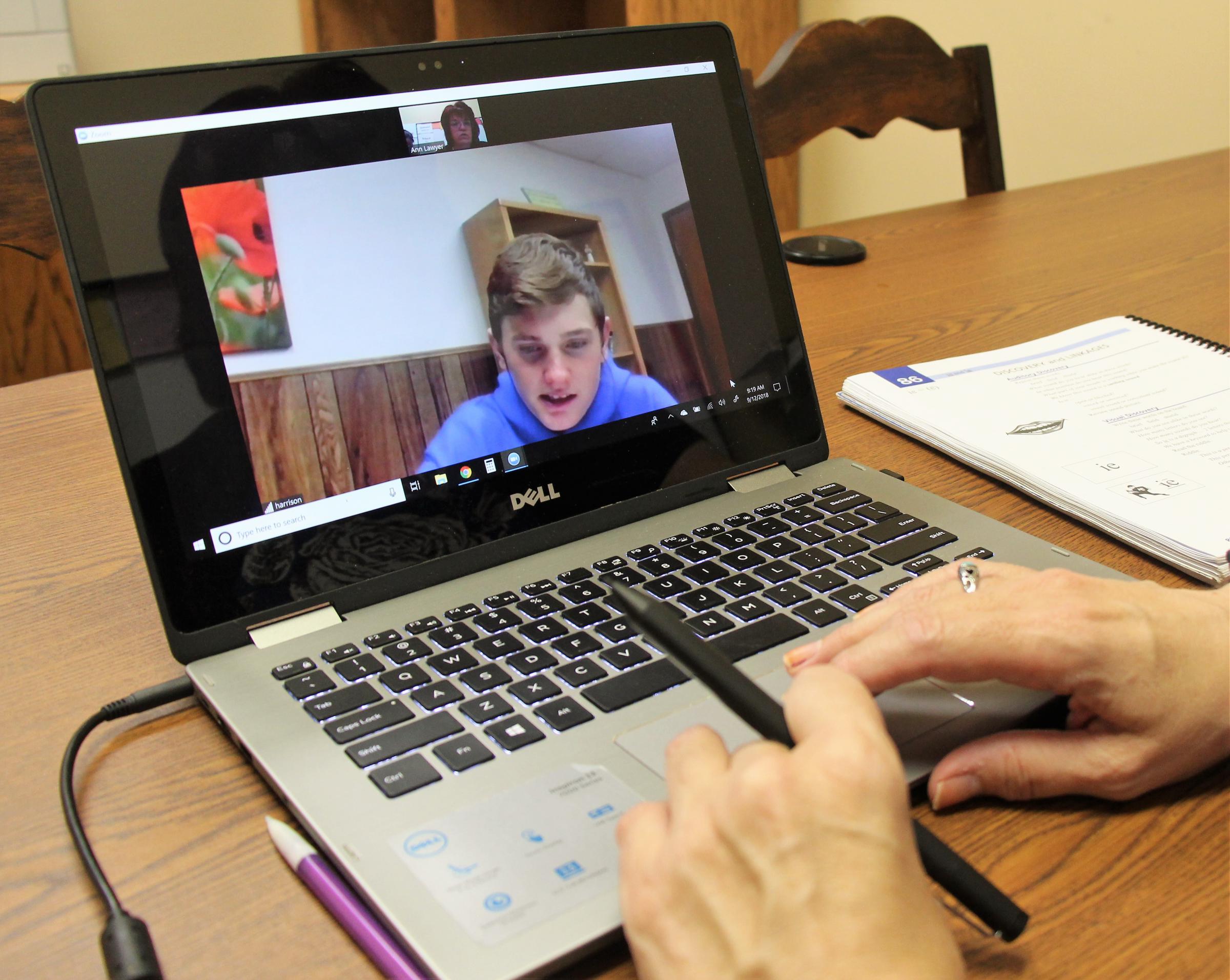
On a recent Wednesday, one of her instructors fired up a laptop for a lesson with Harrison Leniton, an eighth-grader in the southeast Kansas school district of West Elk.
“If I have the ‘kuh‘ sound,” special education teacher Ann Lawyer asked him through their remote video connection, “and I’m using that with an A, O, U — or another consonant — what do I use?”
Harrison: “C.”
Lawyer: “Excellent.”
West Elk eighth-grader Harrison Leniton reviews advanced phonics rules with his teacher, Ann Lawyer.
CREDIT CELIA LLOPIS-JEPSEN KANSAS NEWS SERVICE
For years, dozens of parents of children with dyslexia have gone to the Kansas Legislature with stories of students who don’t get what they need in school — or get it years late, when catching up is many times harder.
Many want the type of lessons Harrison receives.
Now, a state task force could make that happen — with potential, and controversial, effects for how schools teach all children to read.
Skeptics of that structured literacy approach watch uneasily. The state’s colleges of education — where proponents of a different kind of instruction dominate — barely show up on the roster for the task force that could determine the next generation of reading instruction in the state.
Ken Weaver, dean of the Teacher’s College at Emporia State University, says literacy professors were left out by design.
“That is a purposeful mistake,” he said, “to ensure that that voice is not heard.”
Rote rules and reading
The structured literacy classes that Harrison takes can feel like “i before e except after c” for grad students.
Harrison spent the past year catching up multiple grade levels in reading. To do that, he memorized many explicit guides to the maddening world of English orthography. His lessons are peppered with advanced phonics terms. Digraph. Diphthong. Dieresis.
“We take them back to the beginning and say, what we need is to show you a different way to learn to read and spell,” Schreiber said.
Emporia-based teacher Ann Lawyer counts as her student, Harrison Leniton, parses out individual phonemes, or sounds, in a list of words.
CREDIT CELIA LLOPIS-JEPSEN /KANSAS NEWS SERVICE
Many children fret when they fall behind their classmates, even though studies show students with dyslexia are as smart as their peers without it. When schools don’t offer structured literacy, its proponents say, reading drifts farther and farther out of reach. Children with dyslexia pay the price in anxiety, depression and higher dropout rates.
In the past six years alone, American Public Mediasays, more than 30 states have passed laws meant to address concerns that children with dyslexia don’t get help, or even diagnosed.
Some of those laws require teachers colleges to teach structured literacy or the basics of dyslexia. Others make schools screen for the disability and offer intensive phonics. Still others mandate annual dyslexia training for educators.
Kansas doesn’t have any such state law or regulation — yet.
The reading gap
A staggering number of students in the U.S. struggle with reading, whether they’ve been diagnosed with dyslexia or not.
In Kansas, more than half aren’t likely to be able to handle college-level complexity by the time they finish high school. More than a quarter are so far behind they’re not even reading at grade level.
Poor academic outcomes often get attributed to demographic factors, such as poverty. But dyslexia researchers argue the disability — and the way it often goes untreated — likely contributes to a large chunk of the problem.
“The nation has to recognize this is one of the major things holding back millions of children,” said Sally Shaywitz, a professor of pediatrics at Yale University.
The co-founder of the Yale Center for Dyslexia and Creativity, she says one in five people has dyslexia. That translates to a handful of children in any given classroom — a strong argument for training teachers and screening students.
But other sources peg the prevalence of dyslexia at possibly fewer than one in 20. Those figures have some educators concerned that a national movement of vocal parents is pushing schools to overdiagnose children, or focus too much on what is just one of a wide range of student issues that teachers juggle, from childhood trauma to autism.
More phonics?
Then there’s the second big rift that makes conversations between parents and schools difficult: The fight over how children best learn to read.
Literacy specialists at colleges of education today largely push balanced literacy, an approach that relies more on learning through context and deduction, less on detailed lessons in sounds and orthography.
Dyslexia advocates say decades of well-settled research shows that being more explicit benefits all children, not just those with dyslexia. They say it could mitigate the nation’s literacy problems.
The International Literacy Association and International Dyslexia Association have sparred over the matter. (Read their arguments here and here.)
Annie Opat, a literacy expert at Emporia State, said she attended some of the teacher training that structured literacy advocates favor. She wasn’t impressed. Rather, Opat worries that drilling students takes away the enjoyment and context that stimulate learning.
“They’re learning this letter and it’s not related to meaning,” she said. “So that, to me, is not the optimal way for the brain to take on new learning.”
Instead, Opat said, children need to see significance in what they learn.
“If you’re going to learn the letter ‘A’ and my name is ‘Annie,’ that ‘A’ would mean something significant to me knowing it’s part of my name,” she said. “As human beings, if we enjoy something, we’re going to get better at it with more practice.”
That view rankles parents of children with dyslexia, who say context and interest aren’t enough to flip a switch in a brain that’s wired differently. The rules that some teachers dismiss as arcane and tedious can be the difference between whether or not a kid will ever make it through Seuss or Salinger.
Lori McMillan, a Topeka mother whose 8-year-old, Wyatt, has dyslexia, worried when he continued to struggle with basic words in first grade. She recalls writing “the” on a cue card and studying it with him at home.
“By the end of about 20 minutes, you know, he was picking it out of paragraphs,” she said. But 20 minutes later, after practicing the next word, “is,” McMillan showed Wyatt “the” again.
“It was like he’d never seen it before in his life.”
What finally worked for Wyatt, McMillan says, was the explicitness of structured literacy.
The building blocks
On a recent Monday, a few children learned one-on-one with the staff at Pittsburg State University’s Center for Research, Evaluation and Awareness of Dyslexia in southeast Kansas.
The center serves children from multiple states, like 8-year-old Dylan Brooks, of Missouri.
“‘King’ without ‘kuh,’” Courtney Hensler prompted Dylan. “Ing,” he replied. “‘Man’ without ‘mmm’?” she followed up. “An,” came his answer.
Structured literacy drills aim to stimulate sound awareness in children with dyslexia. Doing the mental calculation of deleting a word’s first sound requires an awareness that those individual sounds exist, and can be pulled apart that way.
But the brain pathways that make this connection don’t seem to function the same way in people with dyslexia, researchers say. Helping them hear and manipulate phonemes like “mm” and “kuh” are a first and crucial step to pulling the curtain back on symbols “M” and “K.”
“If you don’t understand that words are made up of sounds,” Pitt State psychology professor David Hurford said, “then when you get to the point where you’re decoding words, that makes no sense to you.”
Hurford leads his college’s dyslexia center and is the sole professor on Kansas’ new dyslexia task force, created by the Legislature last spring.
But academics who teach balanced literacy — the other side of the debate — aren’t convinced their approach is so lacking in the skill sets that Hurford says their colleges should teach.
“Phonemic awareness, sound-symbol associations, decoding,” said Debbie Mercer, dean of the Kansas State University College of Education. “Our program is very strong there. Our students take more coursework in reading methodology than anything else.”
Changes likely
Pitt State’s dyslexia center offers discounts for low-income families, but in other parts of the state, parents say they can’t find such options — if they can find dyslexia specialists at all. Private-practice specialists can cost hundreds of dollars a month.
The state’s dyslexia task force wants to address the lack of access through schools.
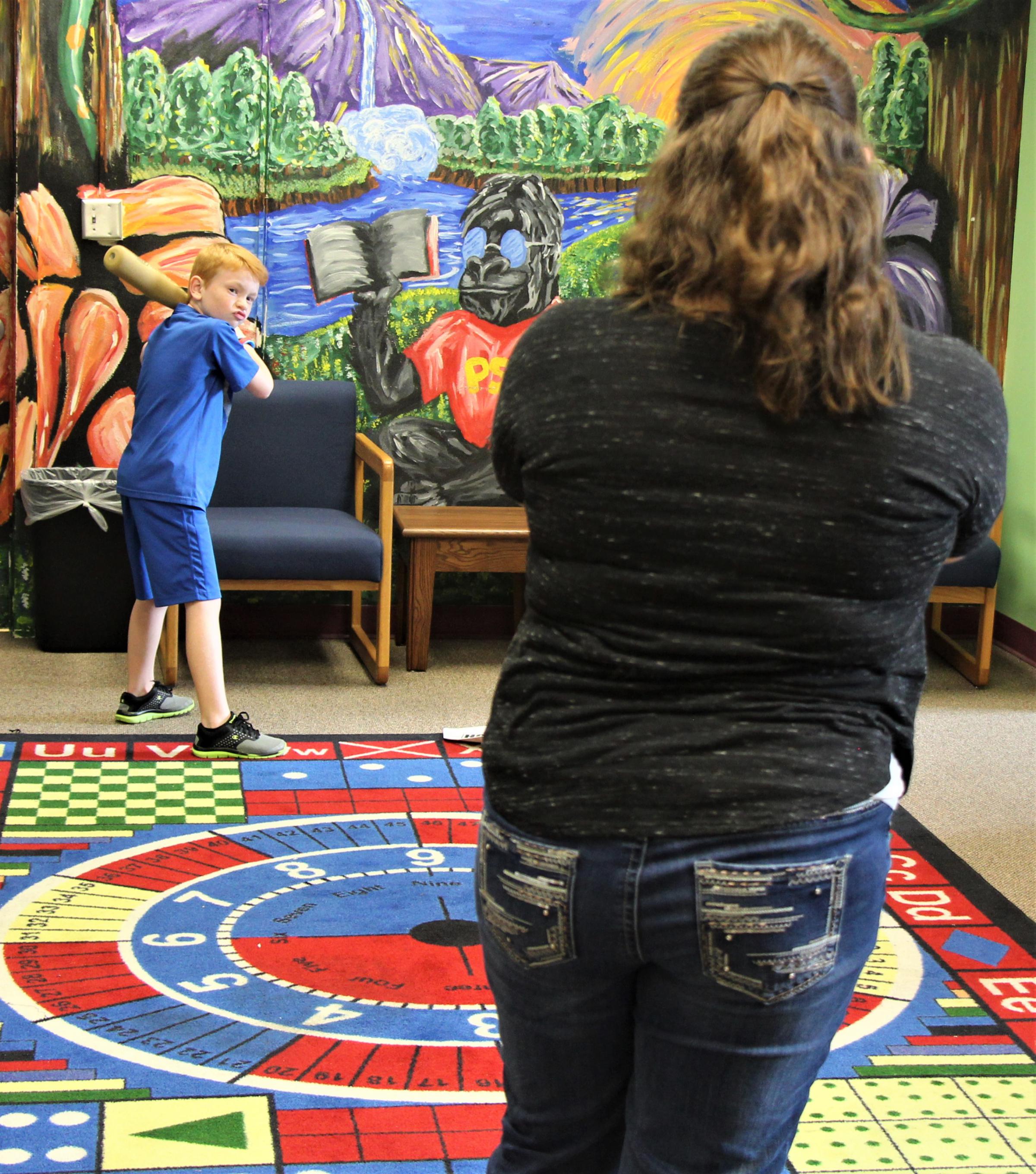
Dylan Brooks and his teacher, Courtney Hensler, take short breaks for fun during his after-school reading lessons. Here Dylan aims to hit a ball with a foam bat.
State board chairman Jim Porter, who also heads the task force, believes his colleagues there will be eager to act.
“There are students,” he said, “whose needs are not being met.”
But education groups wary of overregulation — and a proposal last spring to require dyslexia screening — told lawmakers that Kansas teacher colleges already prepare teachers to help struggling readers. Kansas classrooms, meanwhile, should already be monitoring children for academic deficits and giving stragglers extra help.
The state’s associations for school boards and special education administrators agreed.
But Harrison’s mother, Cynthia Leniton, says structured literacy classes changed her son’s outlook. Now, she says, he sees college as a possibility.
“The education system didn’t know what dyslexia really was,” she said, recalling how she moved him to a different school district in search of better help and signed him up for private lessons in structured literacy.
When it seemed to work, she showed his new superintendent the results and found him willing to offer the remote lessons at school.
The remote lessons cost about $2,500 per student per year. West Elk is now spending about $11,000 for three of its teachers to learn the technique.
The task force exploring whether to roll out dyslexia or structured literacy training on a broader scale hopes to calculate statewide cost estimates for doing so by January.
That could mean training not for three teachers, but for thousands.
Celia Llopis-Jepsen is a reporter for the Kansas News Service. You can reach her on Twitter @Celia_LJ.
PRATT – If you have a fish, turtle, bird or other small pet that you can no longer care for, you may think releasing it at a local lake or park is the most humane thing to do. However, if the release doesn’t end up as a death sentence for your pet, it can lead to new populations of harmful aquatic nuisance species – species not native to Kansas that can threaten native species and habitat.
Through the “Don’t Let it Loose” program, the Kansas Department of Wildlife, Parks and Tourism (KDWPT) is partnering with locally-owned pet stores to provide a safe alternative for families needing to rehome small pets, especially fish. By visiting www.dontletitloose.com, pet owners can view a list of nearly 30 locations across the state willing to help pet owners find the animal a new place to thrive.
In past years, exotic fish species such as pacu, arowana, and the ornate bichir – all non-native species – have turned up in Kansas waters, likely because of aquarium releases. Once a non-native species is introduced into an area, a host of unwanted – and in rare cases, irreversible – effects can occur.
Help protect all animals; don’t release pets into the wild.
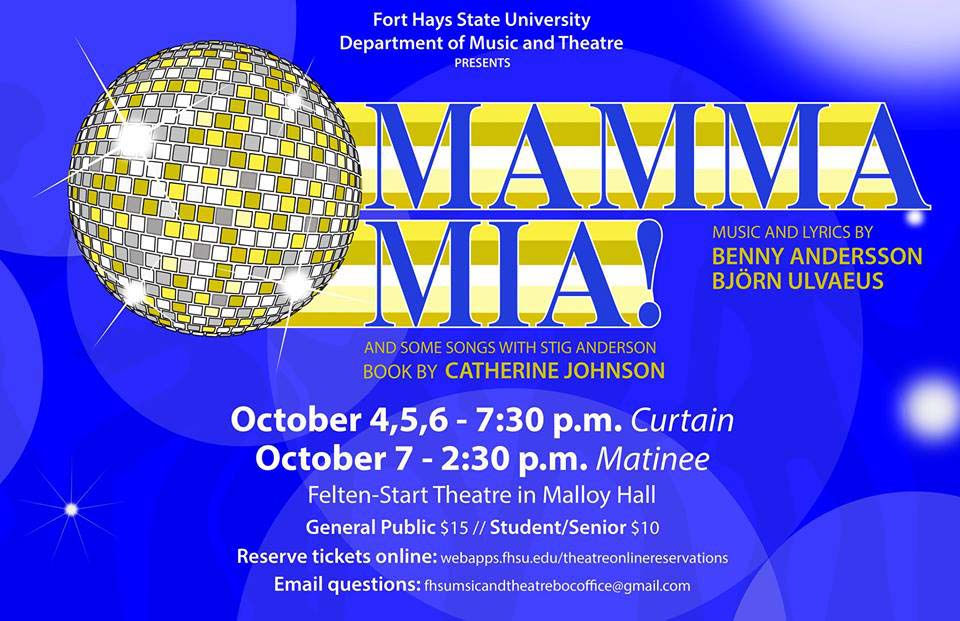
“Mamma Mia!,” a funny, lighthearted tale set in a Greek island paradise, will begin the 2018-2019 theatre season at Fort Hays State University.
The musical comedy romance revolves around a girl’s desire to find her birth father to walk her down the aisle in her approaching wedding. To do so, she secretly invites three of her mother’s former lovers to the wedding.
The first of four performances is at 7:30 p.m. Thursday, Oct. 4, in Felten-Start Theatre in Malloy Hall on the Fort Hays State campus. Other 7:30 performances are Friday, Oct. 5, and Saturday, Oct. 6. A 2:30 p.m. matinee performance will be on Sunday, Oct. 7.
Written in 1999 and featuring music from the 1970s Swedish pop group ABBA, “Mamma Mia!” was made into a hugely popular movie in 2008 starring Meryl Streep, Pierce Brosnan and Amanda Siefried.
Three other offerings are on the season schedule, two plays and an opera. All performances will be in Felten-Start. Complete listings for music and theatre performances are available on the Department of Music and Theatre website, fhsu.edu/music-and-theatre/arts-calendar.
Tickets are $15 for the public and $10 for students and senior citizens. Season tickets are $50 for the public, $25 for students and $30 for senior citizens.
Seats for individual plays can be reserved in three ways:
In the season’s second production, Thursday, Nov. 15, through Sunday, Nov. 18, the comedy turns darker with “Rancho Mirage” by Steven Dietz, a look at the secrets of three suburban couples, all longtime friends, when they gather at a dinner party in their affluent subdivision. Secrets and conflicts start coming out in a black comedy that is a satire on life in a gated American community.
Performances are at 7:30 p.m. Thursday through Saturday with a 2:30 p.m. matinee on Sunday.
On a lighter note, the next production is Tony Award winning play from 1963, “Barefoot in the Park” by Neil Simon. The play features newlyweds Paul, a buttoned-down lawyer, and Corie, an impulsive, enthusiastic romantic. Honeymoon over, they begin life in their first apartment. The complications begin with the clash between Paul’s career and Corie’s feelings, and deepen when Corie sets up her widowed mother with a neighbor.
Performances are at 7:30 p.m. Thursday, Feb. 28, through Saturday, March 2. A Sunday matinee is at 2:30 p.m. March 3.
Wolfgang Mozart’s comic opera “The Marriage of Figaro,” written in 1786, closes the season. The opera follows the adventures of servants Figaro and Susanna succeed in getting married despite the schemes of their aristocratic employer, Count Almaviva, who has designs on Susanna. Figaro, Susanna, the county and the counts wife, and the action of the opera is conducted among the competing schemes of the cunning servant and the philandering count.
Performances are at 7:30 p.m. Thursday, April 4, through Saturday, April 6, with the Sunday matinee at 2:30 p.m.
Today
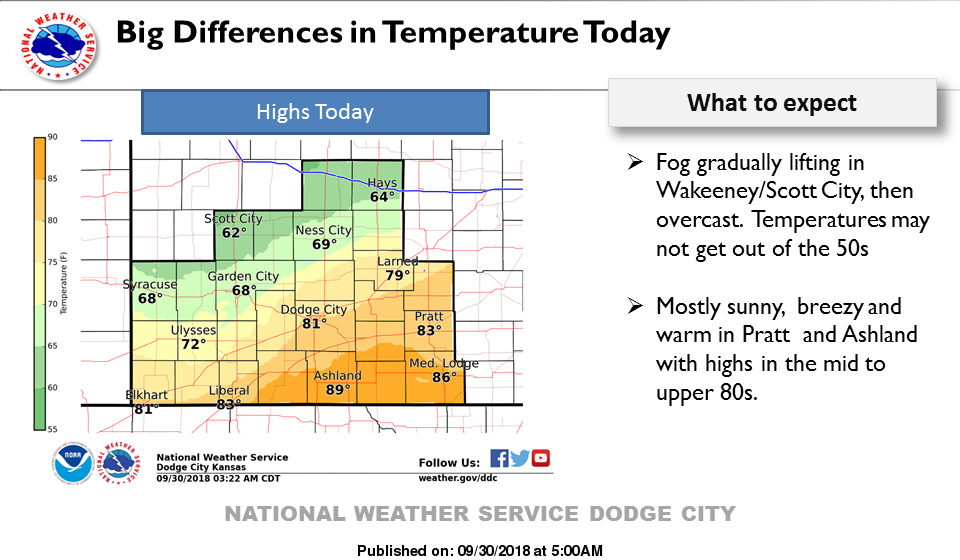
Patchy drizzle after 8am. Widespread fog, mainly before 8am. Otherwise, cloudy, with a high near 64. East northeast wind 6 to 11 mph increasing to 12 to 17 mph in the afternoon.
Tonight
Patchy fog after 1am. Otherwise, mostly cloudy, with a low around 55. North northeast wind 7 to 13 mph becoming southeast after midnight.
Monday
Partly sunny, with a high near 76. South southeast wind around 8 mph becoming west in the morning.
Monday Night
Partly cloudy, with a low around 59. East northeast wind around 8 mph becoming southeast after midnight.
Tuesday
Mostly sunny, with a high near 86. Windy, with a south wind 7 to 12 mph increasing to 21 to 26 mph in the afternoon. Winds could gust as high as 37 mph.
Tuesday Night
Partly cloudy, with a low around 70. Breezy.
Wednesday
Sunny, with a high near 91. Breezy.
Wednesday Night
Partly cloudy, with a low around 63.
Thursday
A 20 percent chance of rain after 1pm. Mostly sunny, with a high near 78.
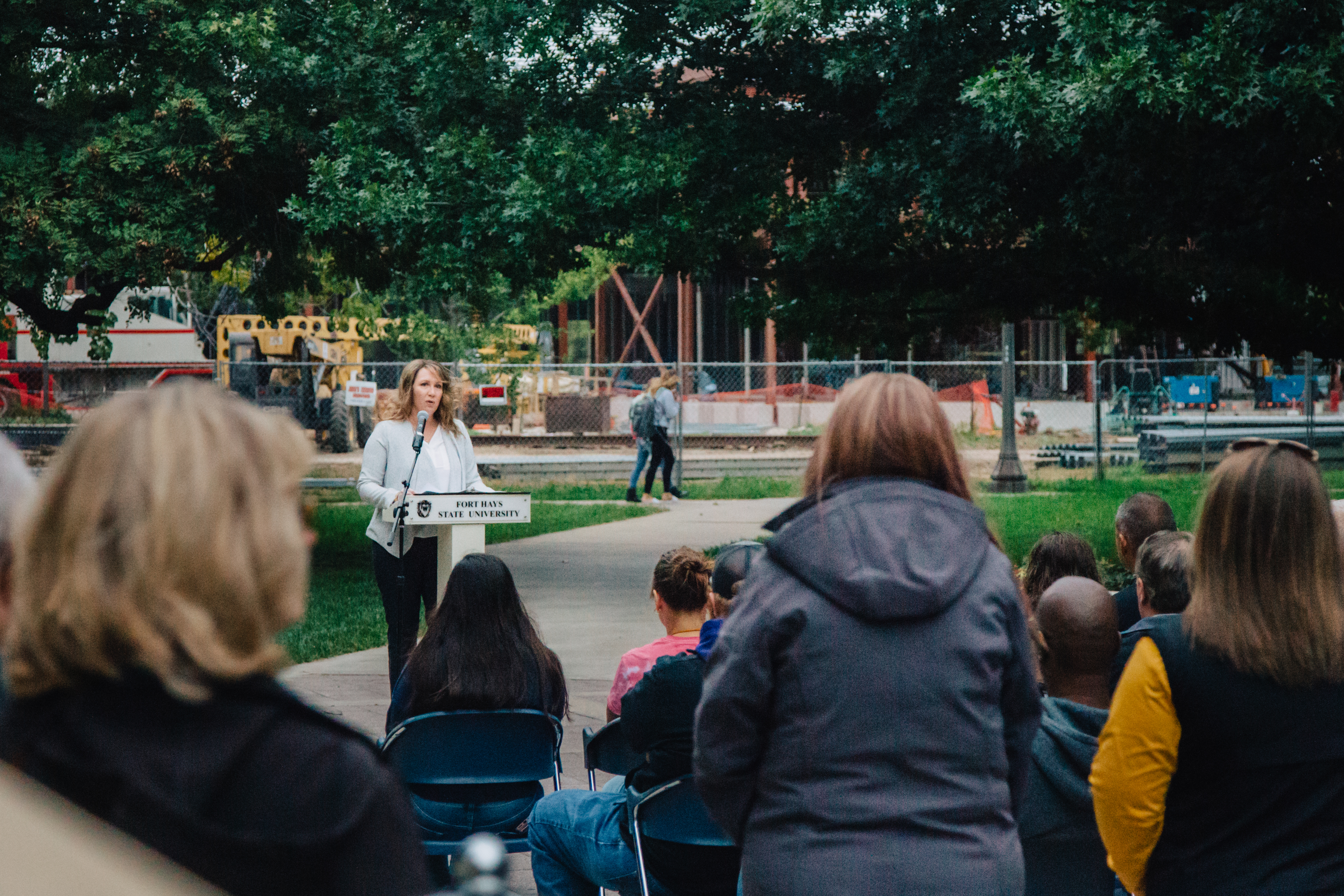
Karrie Simpson Voth, chair of the Department of Art and Design at Fort Hays State University, speaks to a crowd of people gathered Friday morning for a construction preview of the new art and design building. PHOTO by Kelsey Stremel
By DIANE GASPER-O’BRIEN FHSU University Relations and Marketing
Karrie Simpson Voth has been dreaming for 15 years of watching students create and learn in a new, state-of-the-art space.
The reality is unfolding right before her very eyes is sometimes hard to grasp.
“I’m hopefully optimistic, and I kept telling Dr. (Paul) Faber it’s going to happen,” said Simpson Voth, chair of the art and design department at Fort Hays State University. “Now I can see it, and I enjoy looking at it every day. It’s like Christmas in September.”
On a breezy, chilly morning Friday, Simpson Voth got her first chance to publicly show off the new art and design building going up on the site of the former Davis Hall.
With the noise from construction equipment behind them, Simpson Voth joined an art and design student and FHSU President Tisa Mason in speaking on the northeast patio of the Memorial Union at a preview of the new building – part of the activities of Homecoming 2018.
Construction on the two-story, 43,000-square-foot facility began last summer and is scheduled for completion in summer 2019, in time for the 2019-20 school year. The facility will be home to all Department of Art and Design programs, with the exception of the sculpture program, which is housed in the CAT.
The building features two separate sections thats are connected by a two-story commons area that will allow students to gather outside the classroom for “collaboration, study sessions and brainstorming,” Simpson Voth said. An 1,800-square-foot addition will provide space for storage and art collections.
The art and design department currently is housed in cramped quarters in Rarick Hall.
MaKinlie Hennes, a senior graphic design student from Downs, said she is excited for the opportunities the new facility will offer students. She will graduate in May and won’t get the opportunity to study, work and create in the new building. However, she said the new space will just be an extension to an already excellent department.
“If there is one thing that I hope to accomplish before I graduate, it would be to bring awareness to this amazing department,” she said, “and to educate others on how this university, these professors and the graphic design program changed my life.”
Hennes said she will be forever grateful for the support system she has received at Fort Hays State, and she knows that the environment created on first floor Rarick Hall – the current home of the Art and Design department – will be carried on to the new building.
“The new space will unite classes, create greater opportunities for collaboration among the arts and provide students with advantages that previous classes never received,” Hennes said.
“This new building will have state of the art facilities that will take creation to a whole new level.”
The facility will provide numerous lab spaces for the various art and design programs as well as department office space, a multi-purpose lab, computers, classrooms, woodshed, studios, commons area and a ceramics kiln yard.
A major theme throughout the building is glass.
“With this new design, we are breaking out of the traditional four walls and surrounding ourselves with glass, which will allow art and color to spill into the hallways and natural light into our classroom,” said Simpson Voth, in her 20th year at Fort Hays State. “This new building is going to take what we do as artists, designers, students, faculty and programs to a whole new level of excellence.”
Mason agreed that surroundings can make a difference in the quality of learning.
“It is well documented that place matters,” she said. “There is a strong connection between students’ quality of effort and the quality of facilities and opportunities that make that effort worthwhile. Indeed, this new building creates spaces for engagement and learning – spaces that honor our mission and propel us forward in preparing our students to succeed as educators, leaders and artists.”
The new building will connect to the 5,000-square-foot former power plant, which will be renovated to provide gallery space. It will be named the Moss-Thorns Gallery in honor of former department chairs Joel Moss and John Thorns.
“At the heart of everything is people,” Mason said. “We cannot adequately celebrate this day without expressing our deep gratitude to all those who have built both the program and the buildings – old and new.”
Simpson Voth said that “every day, the first floor of Rarick Hall is alive and buzzing with creativity, innovation and inspiration,” and those same positive characteristics will be carried to the new building.
“Our future home is a place where dreams will come alive, grow and develop,” Simpson Voth said, “and will eventually go out into the world, carrying the name of Fort Hays State University with them wherever they land.”
“That is what I call success,” she said. “This new building is going to be a game changer.”
There are numerous naming opportunities for the new art and design facility. Mason thanked Joseph and Jodi Boeckner, Nate and Sara Meder, and Dolores Borgstadter as the first donors to name spaces in the new building. Donations for those spaces are part of the Journey Campaign through the FHSU Foundation, which can be contacted at 785-628-5620 or [email protected].
HAYS, Kan. – Dante Brown kicked a record five field goals, Jacob Mezera set a new career pass completion record and the Fort Hays State defense had their first shutout since 2008 as the Tigers win their homecoming game 15-0 over Central Oklahoma in front of 7,140 at Lewis Field.
The Tigers (4-1) last shutout came 116 games ago in their season opener against New Mexico Highlands on August 28th, 2008. It’s the first time UCO (2-3) had been held scoreless since a Sept. 17, 2011 by Angelo State.
Chris Brown Postgame Press Conference
Jacob Mezera Postgame Interview
Colt Trachsel Postgame Interview
Game Highlights
Brown connected on field goals from 21, 39, 30 and 25 in the first half to give FHSU a 12-0 halftime lead. His 44-yarder late in the third quarter pushed the lead to 15-0 and would the final points of the night. Brown missed on a 45-yard attempt with a little under four minutes to play.
The Tiger defense was locked in from the start forcing three and outs on the Bronchos first six possessions. UCO only first down of the first half came on a 40-yard pass from Chandler Garrett to Ronald Monroe late in the second quarter but Alex Quevedo missed a 46-yard field goal.
Ian Nordell sacked the UCO quarterback on fourth down on the Bronchos only trip into the redzone early in the fourth quarter. The Tigers forced an incomplete pass on UCO’s next possession to preserve the shutout.
Doyin Jibowu picked off a pass midway through the third quarter. Connor Shedeed picked off another, his third interception of the season, on the Bronchos final possession to seal the win.
The Tigers held UCO to 59 yards rushing and only 234 yards for the game.
Charles Tigner rushed for 101 yards on 24 carries for his second straight 100-yard game. Jacob Mezera completed 18 of 31 passes for 201 yards to become FHSU’a all-time completion leader, now with 556.
LOGAN – Although taken for granted by many social and art historians, the apron is the subject of a fascinating reevaluation in this exhibition. Apron Strings: Ties to the Past, opened on September 14, 2018 at The Dane G. Hansen Museum and features fifty-one vintage and contemporary examples that review the apron’s role as an emotionally charged vehicle for expression with a rich and varied craft history that is still viable today.
Using aprons dating from the late 1930s through the present, the exhibition chronicles changing attitudes toward women and domestic work. It also surveys the wide range of design and craft techniques apron-makers have used to express themselves, while still working within creative venues traditionally available to women. Today, artists continue using aprons to explore cultural myths and realities as well as their individual experiences with American domesticity.
Apron Strings: Ties to the Past reevaluates the apron’s varying roles over time in an artistic and cultural manner. The exhibition is toured by ExhibitsUSA, a national program of Mid-America Arts Alliance. ExhibitsUSA sends more than 25 exhibitions on tour to more than 100 small- and mid-sized communities every year.
Apron Strings: Ties to the Past will remain on display through October 21, 2018, at the Dane G. Hansen Museum located at 110 W. Main Street, Logan, Kansas. Museum hours are Monday through Friday 9-12 and 1-4; Saturday 9-12 and 1-5; Sunday & holidays 1-5. We are handicapped accessible and thanks to the Dane G. Hansen Foundation, there is never an admission fee. For more information, please contact Shari at 785-689-4846.
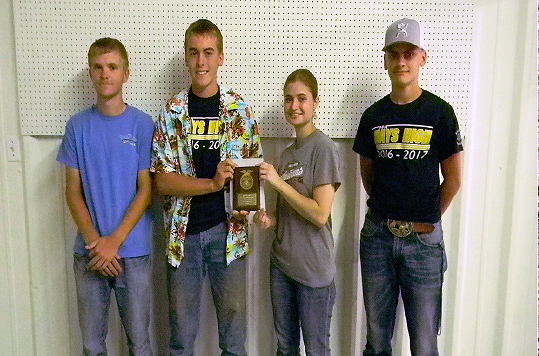
HHS FFA students recently competed at the Kansas Northwest District Land & Homesite Competition.
Six students placed in the top 20 at the competition, including: Zoe Buffington—second; Jordan Hunsicker—third; Colton Vajnar—fourth; Alex Miller—10th; Tanner Haselhorst—17th; Quentin Rupp—20th.
Overall 80 students competed in the competition. Students also competed in the national qualifying competition on Wednesday, Sept. 19 and successfully qualified for the National Land and Homesite Career Development Event in Oklahoma City, in early May.
Ron Wilson is director of the Huck Boyd National Institute for Rural Development at Kansas State University.By RON WILSON Huck Boyd National Institute for Rural Development
“Be a good neighbor.” That advice and other words of wisdom from his father have helped this Kansas dairyman be a positive force in his community and the dairy industry.
Steve Strickler is owner of Strickler Holstein Farm near Iola. He follows in the footsteps of his father, a longtime leader in the dairy industry.
Steve grew up on the farm which milked 120 cows at the time. Steve studied dairy science and technical journalism at K-State. After graduation, he worked for a dairy cooperative in Wisconsin and then for a national magazine, Hoard’s Dairyman, which took him coast to coast in the U.S. and beyond. He enjoyed the work but the thought of the family dairy farm drew him back home.
“The calling of the farm was too much,” Steve said. In 1979, he returned to the farm and eventually took over the operation from his father. Now Steve has three kids and four grandchildren of his own.
Steve’s siblings are also in the Iola community. Brother Tom is a banker and brother Doug does the cropping operation, while Steve has expanded the dairy. They credit their father, Ivan Strickler, with leadership and inspiration.
“My dad was a real visionary,” Steve said. The first commercial cow embryo was implanted in 1976. The Stricklers started using that breeding technology in the same year.
As artificial insemination became more common as a way to improve quality and production in dairy herds, bulls were kept at breeding services or stud farms. The Stricklers’ genetic line was very popular. “In 1985, we sold more bulls to bull studs than any other registered Holstein breeder,” Steve said.
The farm continued to expand. In 1999, the Stricklers purchased the Alta Genetics Natural Bull Sales program, which expanded their business from coast to coast. Today the Stricklers milk some 400 Holsteins. By the way, they pronounce the name of the breed Hol-stine because that is the way it was originally pronounced in Europe.
Farmer-owned milk marketing cooperatives represent a way for many dairy farmers to work together and share the costs of handling, hauling, processing and marketing milk.
“Dad was a huge believer in cooperatives,” Steve said. “He and others started a dairy co-op named Mid-America Dairymen.” Ivan Strickler eventually was elected Mid-Am President and served 13 years. Mid-America Dairymen grew through the years. In 1996, leaders from Mid-America Dairymen and other regional cooperatives met to discuss strategies for dealing with changes in the industry. In 1998, they came together to form Dairy Farmers of America or DFA, the nation’s largest dairy cooperative.
One of the current members of the Board of Directors of DFA is Steve Strickler. “I’m quite proud of DFA,” Steve said. He’s also proud of his father’s vision.
“He was so prophetic,” Steve said. “He would say that the biggest challenge to the dairy industry is in educating the consuming public. With each generation becoming even more removed from the farm, many consumers have no idea where their food comes from.”
For decades, the community of Iola had conducted an annual farm-city day to build relationships between urban and rural cousins. “About five years ago, that event almost died,” Steve said. He hated to see it lapse as a vehicle for urban-rural communication, so the Stricklers decided to host it at their farm every year. It is an opportunity to showcase to the public how farmers are using technology and achieving sustainability to conserve resources for the future.
The Strickler Holstein Farm is located near the rural community of Iola, population 5,454 people. Now, that’s rural. Steve wants his neighbors to understand the importance of the production of milk and other farm products.
“Be a good neighbor.” That advice from pioneering dairyman Ivan Strickler has served his son Steve well, along with his other sons Tom and Doug. We commend the Strickler family for making a difference by leading the dairy industry and cooperative businesses. It’s the neighborly thing to do.
And there’s more. Another Kansan serves on the Board of Directors of the Dairy Farmers of America, and we’ll learn about him next week.
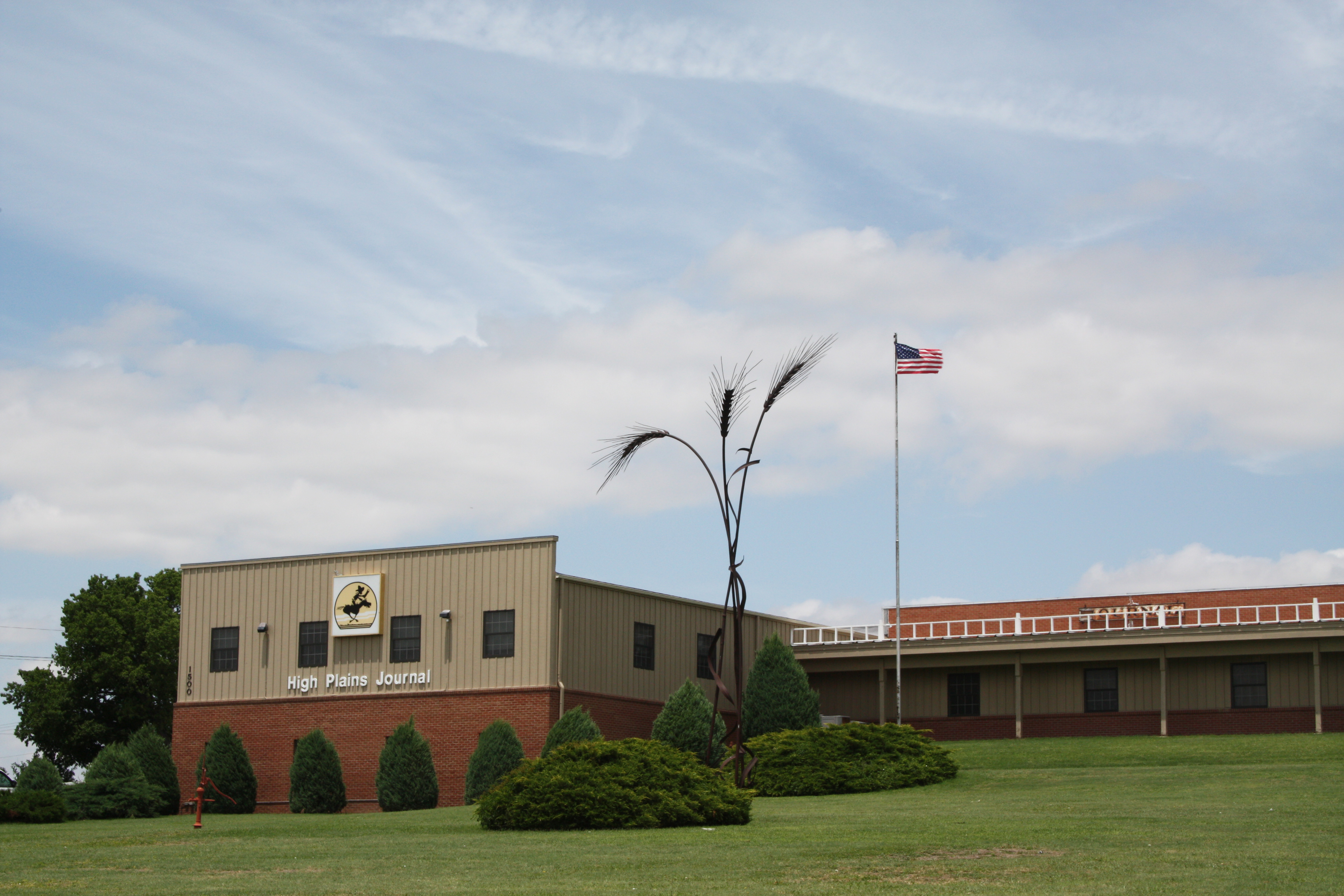
DODGE CITY — High Plains Journal, a weekly trade publication for farmers and ranchers with roots extending back to 1883, has been purchased by the owners of The Waterways Journal. It will continue to be headquartered in historic Dodge City, Kansas, and will operate under a new entity named High Plains Journal, LLC.
“High Plains Journal, known as the ‘Farmer’s Bible,’ has an incredible reputation, talented staff and a dedication to farmers and ranchers that is unequaled,” Nelson Spencer, Jr., publisher of The Waterways Journal said. “The Waterways Journal serves commerce along the U.S. inland and intracoastal waterways. Agriculture is a major customer of the barge industry, and we are honored to have this new link to an industry that we have always admired,” Spencer said.
Both publications feature paid circulation and weekly delivery. The two companies will both benefit from shared expertise in publishing, event management, digital media and the production of custom solutions.
“High Plains Journal’s commitment to farmers and ranchers and helping them succeed remains our highest priority and is now strengthened by working with another company that has such a long-standing commitment to serving its readers, as well,” Holly Martin, publisher and editor of High Plains Journal, said.
The integrity of the HPJ brand will remain intact, while a few improvements are to be expected. High Plains Journal announced that it has outsourced its printing operations to a Midwest printer. The new printer offers more options for advertisers. New events are being planned, as well as improved digital media offerings.
“Our goal is to increase the publication’s value for both the subscriber and the advertiser, while being a strong advocate for the industries and area that it serves,” Spencer said.
“We are very excited about the new opportunities this will bring our High Plains Journal readers and clients,” Martin said.
Paul Hurst, long-time national account rep for High Plains Journal, said he is excited about the partnership. “They really ‘get’ HPJ, being a family-owned company that has the same values that have made HPJ successful.” Zac Stuckey, sales director for HPJ, agreed. “What excites me the most about the change in ownership is HPJ is better positioned to respond and accommodate the needs of our advertising partners while also offering an improved experience for our readers.”
High Plains Journal serves farmers and ranchers in the Interior Plains of the United States from its offices in Dodge City, Kansas. High Plains Journal has a focus on the High and Great Plains regions, while High Plains Journal/Midwest Ag is its regional for the Central Plains and Midwest. Prior to 1949, it was called The Dodge City Journal with a history dating back to 1883. In 1949, the title grew to serve agriculture interests throughout the region. Today, the trade publication has websites, newsletters, events and a robust digital marketing program to serve its 42,000 subscribers.
The Waterways Journal Inc. serves the commercial marine industry with trade magazines, trade shows, directories, websites and related communications. It is a family-owned business operating in St. Louis, Missouri, since 1887. Through its division, Ripple Custom Media, it also produces consumer titles and provides custom publishing services.
Through a generous grant from the Dane G. Hansen Foundation, 30 paid internships are available for Fort Hays State University students during the 2018-19 academic year (including the summer 2019 term).
FHSU will partner with employers in the Hansen Foundation’s 26-county service area in northwest Kansas to create these part-time internships. The employer invests $500 toward the student intern’s wages, and the remaining funding is provided through the Hansen Foundation grant.
Each internship is for one semester. The intern will work 15-20 hours per week, up to 240 total hours. Internships are open to FHSU students in any major or academic area of study.
While this program has been in existence for several years, the administration of the internships has changed. Formerly housed in the College of Business and Entrepreneurship, it is now overseen by Career Services. Increased funding made it possible to double the number of internships.
“The Hansen Internship program is a tremendous opportunity for FHSU students who want to expand their knowledge and gain on-the-job experience in preparing for their future career. We are grateful to the Hansen Foundation for making possible these internships,” said Lisa Karlin, internship coordinator and career advisor.
Both employers and students will be chosen through a competitive application process. Applications are currently being accepted.
Interested employers should go to the Career Services page on the FHSU website (fhsu.edu/career/employers/hansen-internship-program) to learn more about the program and complete the application. The employer must also provide a detailed job description for the internship. The priority deadline is Oct. 5 for employers to apply for a fall 2018 intern.
Students may apply for an internship through their Handshake account at fhsu.joinhandshake.com. The internship is posted under the Jobs tab and can be found by searching the keywords “Hansen Internships.” Students should apply by Oct. 5 to receive priority consideration for a fall internship.






 Today
Today