
[polldaddy poll=10116009]
Category: Local
Hays USD 489 school board to discuss vehicle purchases
By CRISTINA JANNEY
Hays Post
The Hays USD 489 school board will discuss new vehicle purchases at its meeting Monday.
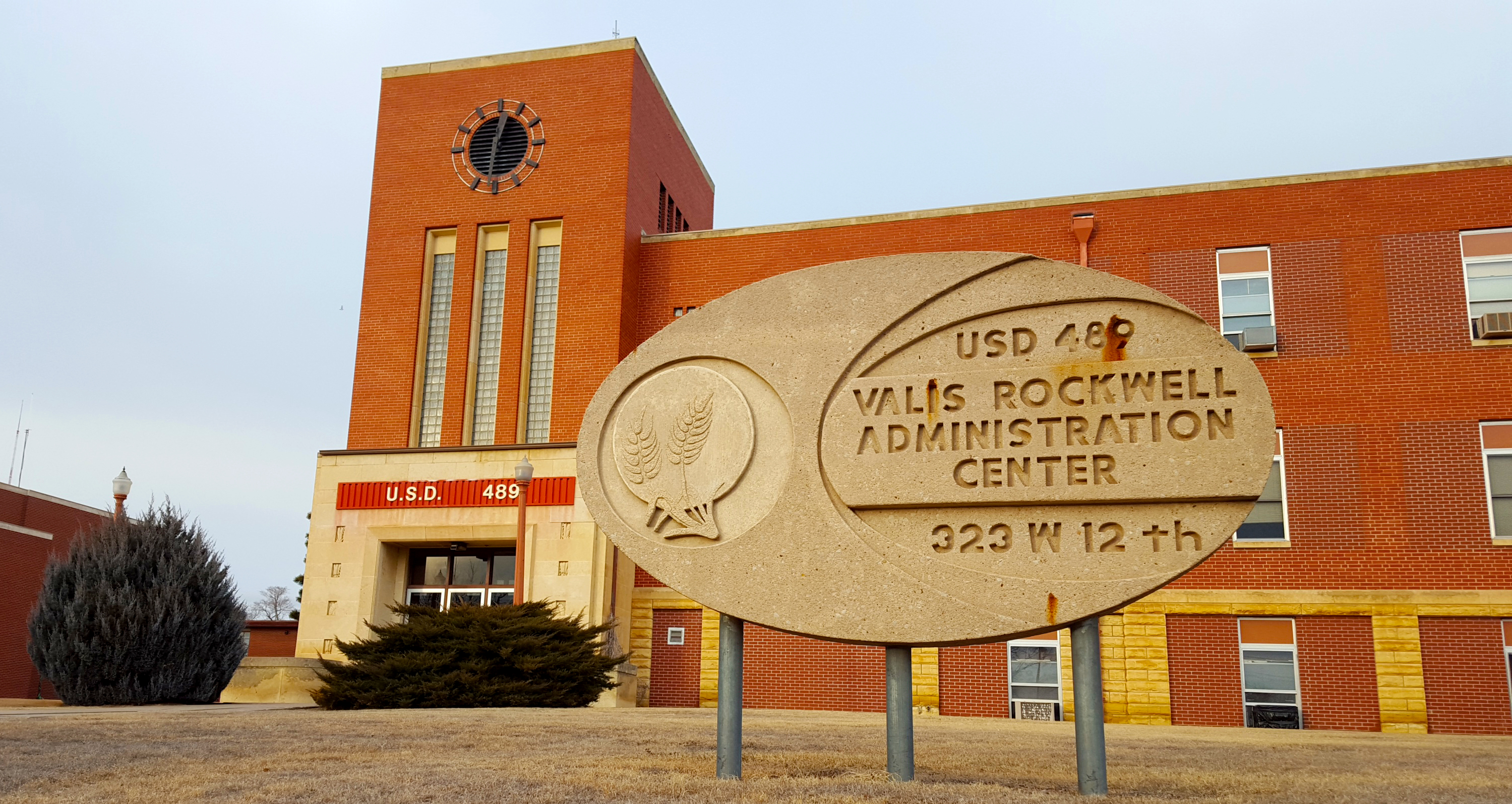
The board will meet at 6 p.m. at the Rockwell Administration Center.
The transportation purchasing schedule calls for the replacement of a gas bus and a yellow activity bus.
The bid for the gas bus is $87,669. District staff requested a bid that was about $400 over the low bid, because it had the engine the district wanted.
The bid for the activity bus is $143,975, which was the low bid. Both bids were from Kansas Truck.
The district is also considering a purchase of an Impala for $38,952 and a Suburban for $21,194.
The total would be $291,790, which is less than the $304,000 that was budgeted for the purchases.
The board also will continue to refine goals during its meeting.
At its last meeting, it narrowed goals to the following:
• Design a stable financial structure that allows the district to accomplish its educational mission.
• Create an educational improvement guide utilizing the Kansas Educational Systems Accreditation process.
• Develop a plan to prepare the district for the future.
The board will also meet in executive session to discuss non-elected personnel and teacher negotiations.
Ellis Co. youth to participate in Kansas Junior Livestock Show

KJLS
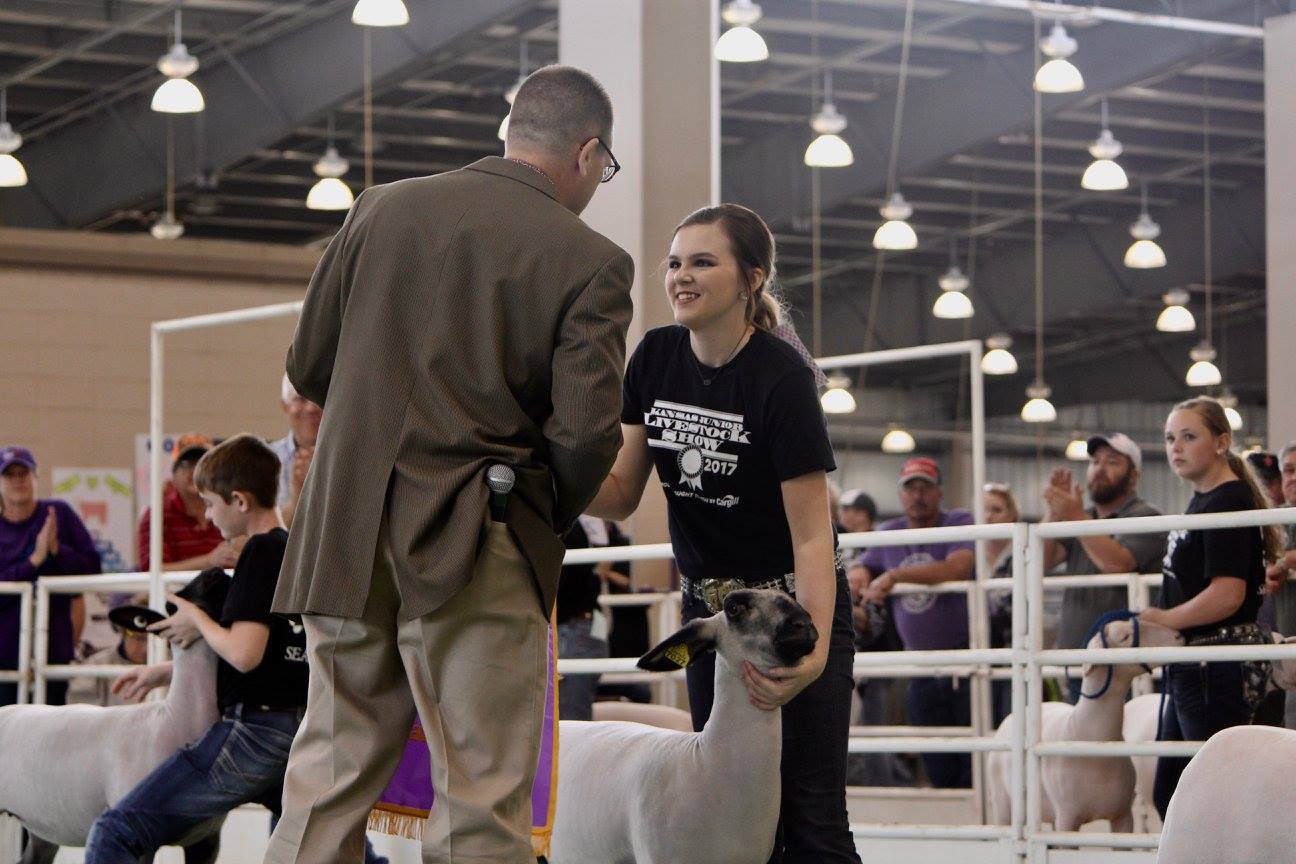
HUTCHINSON – More than 800 youth from 93 counties, including Ellis County, have entered 2,026 head of livestock in the 86th annual Kansas Junior Livestock Show (KJLS). The total includes 125 market steers, 363 breeding heifers, 245 market hogs, 313 breeding gilts, 308 market lambs, 294 breeding ewes, 203 market goats and 175 commercial doe kids. The statewide event will be held October 5-7 at the Kansas State Fairgrounds in Hutchinson.
For the fifth consecutive year, Douglas County leads the state with the most exhibitors, 34, and the largest number of total livestock entries, 90. Youth from Douglas County also have entered the most breeding gilts, 20, and market lambs, 20. Douglas and Montgomery counties are tied for the most market hog entries at 17. Linn County has entered the most steers, six. The largest number of heifers, 27, was entered by Pottawatomie County. Miami County competitors have entered the most market goats, 14, and the largest number of breeding ewes, 16. Elk County has the most commercial doe kid entries at nine.
KJLS will award cash to exhibitors of the top five animals in both market and breeding shows in all four species. Direct cash payouts will range from $4,000 to $500 for steers; $1,000 to $300 for heifers; $2,000 to $500 for market hogs; $750 to $250 for breeding gilts; $2,000 to $300 for market lambs; $500 to $50 for registered ewes; $500 to $100 for commercial ewes; $2,000 to $400 for market goats; and $750 to $200 for commercial doe kids.
KJLS will present scholarships to exhibitors during the show who have excelled academically, in community service and in 4-H/FFA. This is the 26th year for the scholarship program, which has awarded a total of $431,000 to 313 exhibitors since 1993. Last year, a total of $20,000 was awarded to eight exhibitors.
Separate from the selection of species champions, a showmanship contest will be held. The top showman in the junior, intermediate and senior divisions of each species will receive a silver belt buckle. Prizes also will be awarded for second through fifth place in each division.
KJLS will again offer the LEAD Challenge, which is an educational and advocacy event that provides an opportunity for exhibitors to learn about current industry issues and apply that information in a competitive environment. Exhibitors will be divided into three age divisions: junior, intermediate and senior. All will participate in the LEAD Listen & Learn, showmanship, skills stations and an interview. There are 23 juniors, 47 intermediates and 31 seniors entered in this year’s challenge.
The Kansas Livestock Foundation (KLF) again will sponsor a club calf show and sale during KJLS. Steer and heifer prospects from some of the top club calf producers in the Midwest will be consigned. The event will take place October 6. Sale commission proceeds will go toward KLF Youth in Agriculture scholarships.
The Mid-America Classic Collegiate Livestock Judging Contest will be held October 5 in conjunction with KJLS. This event, which has been held for more than 30 years, provides competitors the opportunity to sharpen their livestock evaluation skills; develop their critical thinking and decision-making abilities; and refine their public speaking skills.
KLA and Kansas State University serve as the major sponsors of the show. Additional sponsors include Cargill, Merck Animal Health, Seaboard Foods, Kansas Farm Bureau and Farm Bureau Financial Services, Friends of KJLS, the Kansas Department of Agriculture and American AgCredit.
ELLIS COUNTY ENTRIES
Cranwell, Amanda Hays AOB Heifer
Cranwell, Amanda Hays Beef Showmanship
Cranwell, Megan Hays Chianina Heifer
Cranwell, Megan Hays AOB Heifer
Cranwell, Megan Hays Beef Showmanship
Dickinson, Abigail Gorham MainTainer Heifer
Dickinson, Abigail Gorham MainTainer Heifer
Dickinson, Abigail Gorham Market Lamb
Dickinson, Abigail Gorham Market Lamb
Dickinson, Abigail Gorham Commercial Comm
Dickinson, Abigail Gorham Beef Showmanship
Dickinson, Abigail Gorham Sheep Showmanship
Neher, Ella Pfeifer Commercial Doe
Neher, Ella Pfeifer Commercial Doe
Neher, Ella Pfeifer Goat Showmanship
Neher, Esther Pfeifer Commercial Doe
Neher, Esther Pfeifer Goat Showmanship
Neher, Kaleb Pfeifer Commercial Doe
Neher, Kaleb Pfeifer Commercial Doe
Neher, Kaleb Pfeifer Goat Showmanship
Neher, Karli Pfeifer Commercial Doe
Neher, Karli Pfeifer Commercial Doe
Neher, Karli Pfeifer Goat Showmanship
Pfeifer, Konnor Ellis Commercial Gilt
Pfeifer, Konnor Ellis Commercial Gilt
Pfeifer, Konnor Ellis Swine Showmanship
Pfeifer, Kylee Ellis Commercial Gilt
Pfeifer, Kylee Ellis Commercial Gilt
Pfeifer, Kylee Ellis Swine Showmanship
Scheck, Heather Gorham Shorthorn Plus Heifer
Scheck, Heather Gorham Commercial Heifer
Scheck, Heather Gorham Beef Showmanship
Scheck, Lindsey Gorham Market Steer
Scheck, Lindsey Gorham Beef Showmanship
Schmeidler, Jacob Hays Angus Heifer
Schmeidler, Jacob Hays Simmental Pct Heifer
Schmeidler, Jacob Hays Simmental Pct Heifer
Schmeidler, Jacob Hays Beef Showmanship
Fort Hays State grad among finalists for Mich. city manager position
By DAVID PANIAN
The (Adrian, Mich.) Daily Telegram
ADRIAN, Mich. — Four candidates will be interviewed next week to be Adrian’s next city administrator.
The four candidates are from in Michigan and out of state and have varied experiences in city government. They are:
— Nathan Burd, village administrator and clerk in Wolverine Lake.
— Natasha Henderson, past city administrator in Flint.
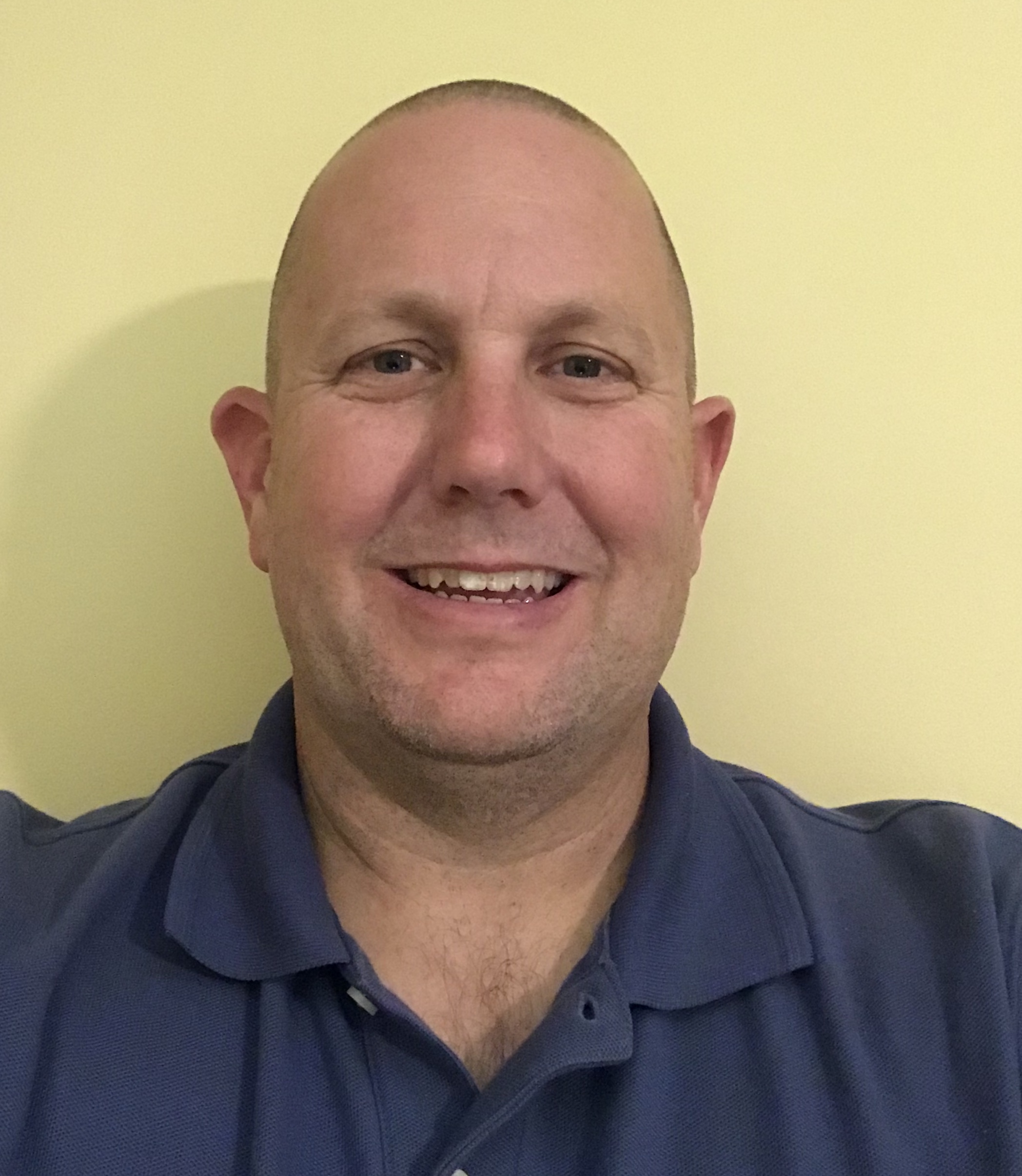
— Peter Olson, town manager in Yorktown, Indiana, and Fort Hays State University graduate.
— Jeffrey Watson, community services manager in Federal Way, Washington.

The interviews will take place Monday, Sept. 24, at the city chambers building, 159 E. Maumee St. Olson will be first at 4:15 p.m. followed by Henderson at 5:30 p.m., Burd at 7:15 p.m. and Watson at 8:15 p.m. The meeting will open at 4 p.m., according to the agenda released Thursday by the city. There will be a break between Henderson and Burd.
Olson’s interview will be by videoconference. The others will interview in person.
The candidates’ résumés were included with the agenda as were their responses to a hypothetical scenario presented to them as part of the application process. They were asked how they would address a
situation where some employees were found to have been receiving bonuses for several years based on receiving advanced degrees that were later discovered to have been from a nonaccredited university.
Burd has been village administrator and clerk in Wolverine Lake since 2016. He said in his résumé that there are 16 full-time employees and the village’s annual budget is $2.8 million.

Before going to Wolverine Lake, Burd was the director of public service in Reynoldsburg, Ohio, which has a population of 36,711. He managed the service, water, street, building and maintenance departments there with a budget of $17 million. Before being public service director, he was a city council member.
He also was deputy director of the Franklin County, Ohio, Board of Elections and was a legislative aide in the Ohio House of Representatives.
Burd also worked for three years as the executive director of the Franklin County Republican Party and was director of international program and public policy of Heartbeat International, which is a faith-based association of nonprofit pregnancy centers and maternity homes.
He has a bachelor’s degree from Ohio State University and a master’s degree in management from Mount Vernon Nazarene University in Mount Vernon, Ohio.
Henderson currently is a management consultant, but from 2015 to 2016 was the city administrator in Flint, reporting to the mayor, city council and the receivership transition advisory board appointed by Gov. Rick Snyder. She oversaw 500 city employees and a $150 million operating budget. She also led “organizational restructuring to ensure effective fiscal management of the City’s resources, implementing best practices policies such (as) developing a purchasing policy that ensured transparency and streamlined the process,” according to her résumé.
She also led development of a five-year, $125 million water distribution infrastructure capital improvement plan. She was involved in several aspects of the city’s work to return to providing safe drinking water and led the city’s incident management team during the state of emergency regarding the lead-tainted water.
She previously was city administrator in Muskegon Heights and was director of quality assurance and public relations for Texarkana, Texas.
She has a bachelor’s degree from the University of Arkansas-Pine Bluff and a master’s degree in business adminstration from Texas A&M University-Texarkana.
Olson has been town manager in Yorktown since 2009, according to his résumé. He said Yorktown is a city of about 14,000 people with 35 city employees, 35 volunteer firefighters and an annual budget of about $10 million. He previously was deputy town manager in Yorktown; city manager of Union City, Indiana; and city administrator in Sutton, Nebraska.
He holds a bachelor’s degree from Fort Hays State University in Kansas and a master’s degree in public administration from the University of Nebraska.
Watson has been community services manager in Federal Way since 2014. The city is a suburb of Tacoma and Seattle. He previously was housing and community services division manager for Snohomish County, Washington, and held several positions, including assistant director for community services in Douglas County, Colorado.
Watson has a bachelor’s degree and a master’s degree in urban planning from the University of Colorado and a master’s degree in public administration from the University of Washington. He has also attended the Program for Senior Executives in State and Local Government at Harvard University’s John F. Kennedy School of Government.
🎥 Eagle TV Forum: Nancy Jeter
Exploring Outdoors Kansas: The Road Kill Game


The rules of the game are really quite simple; a point value is assigned to all manner of animal carcasses, and the first player to spot and identify the carcass gets the points. The game begins when the vehicle leaves the driveway, allowing less skilled players to accumulate quick points for spotting easily seen casualties on city streets or in your driveway. We’re still tweaking the rules, so I’m not sure how something will score that you back over as you exit the driveway. If it’s the neighbor’s cat or a friendly neighborhood squirrel, it may be a deduction; after all we’re not monsters! Points are assigned according to a very scientific set of parameters, and the person riding shotgun will be the judge and have final say in any and all appeals.
The point values all depend on the degree of difficulty. In the Olympics, the diver who merely manages to enter the water headfirst without doing a belly-flop will score fewer points than the diver who twists and summersaults in every conceivable direction and texts a greeting to their mother on the way down. So it is with points in the Road Kill Skills game; the more easily identifiable the carcass, the fewer the points. Several factors should be considered when determining point values per carcass.
First determing factor will be the size of the carcass; the smaller the carcass, the more points it will be worth. For example, a large carcass of a Holstein cow will garner the player far fewer points than that of a possum or a squirrel.
That brings us to the second determining factor, the condition of the deceased. The better condition the remains, the fewer the points. Again, an intact deer corpse not yet gnawed by coyotes will score far fewer points than that of a rabbit that’s in several pieces along the highway. That brings us to easily identifiable markings. Road killed skunks and raccoons which have tell-tale markings (or scents), no matter their condition, will be worth fewer points than rabbits or possums, simply because they should be a slam-dunk to identify even by the novice city-slicker. As a side note here, in the case of a skunk you can award bonus points to the first “smeller.”
In the real estate world, it’s all about Location, Location, Location, and another important factor determining point value of roadside carrion should be the body’s location. During the course of the game, you will probably travel a mix of four lane highways, single lane blacktop main roads and gravel side roads. In accordance with the criteria above, the harder roadside remains are to spot, the more points they are worth.
While discussing points for location of the carcass, perhaps a special category should be added to address point values of critters actually run down during the course of the game by the vehicle in which one is riding. Although drivers are not encouraged to participate while they drive, I’m of the opinion they should receive gratuity points if they run over a critter during the game and can correctly identify what they hit. Again, the smaller the varmint, the more points it should be worth. East side rules can apply here, as every situation will be different. For instance, if the driver has to back up to see what was hit, it might be seen as a deduction.
But if something is actually run over while backing up to see what was hit, it could mean double bonus points. If the driver has to stop and pry the carcass from beneath the car, maybe the rules should automatically suspend the match while the driver calls the insurance company.
The “location” category would not be complete without awarding points for the remains of road-killed carrion still on the road. Here the rules can get fuzzy; until now, the larger the body, the fewer the points. But it seems only fitting to award bonus points for large carcasses still on the roadway, as the driver might have to execute some Dale Earnhardt maneuvers to keep from running over them.
And if the players in the car are able to correctly identify the remains while careening down the road like passengers in a tilt-a-whirl gondola, their skills should be aptly rewarded. A word of warning to players here, please don’t ever remove your seatbelts during the game, as we must stress safety at all times! Bear in mind all the above suggestions are for matches played during daylight hours, so points awarded to participants after dark should be increased appropriately.
Nothing says family vacation fun like an enjoyable game to pass the time while in the car, and a lively game of Road-Kill-Skills might just be the ticket. Come up with your own point values, develop your own categories and rules or simply follow the suggestions above. Levels of achievement can be set just like in Candy Crush. Points can be redeemed for Dairy Queen treats, McDonalds cheeseburgers or for those with stronger stomachs, beef jerky at gas stations stops.
What a great way for the entire family to get off the couch and enjoy the great outdoors!
Steve Gilliland, Inman, can be contacted by email at [email protected].
Success in Diversity: Agritainment and U-pick yield surprising results

Second in a series of five farmer feature profiles distributed by the Kansas Rural Center
By JENNIFER KONGS
Kansas Rural Center
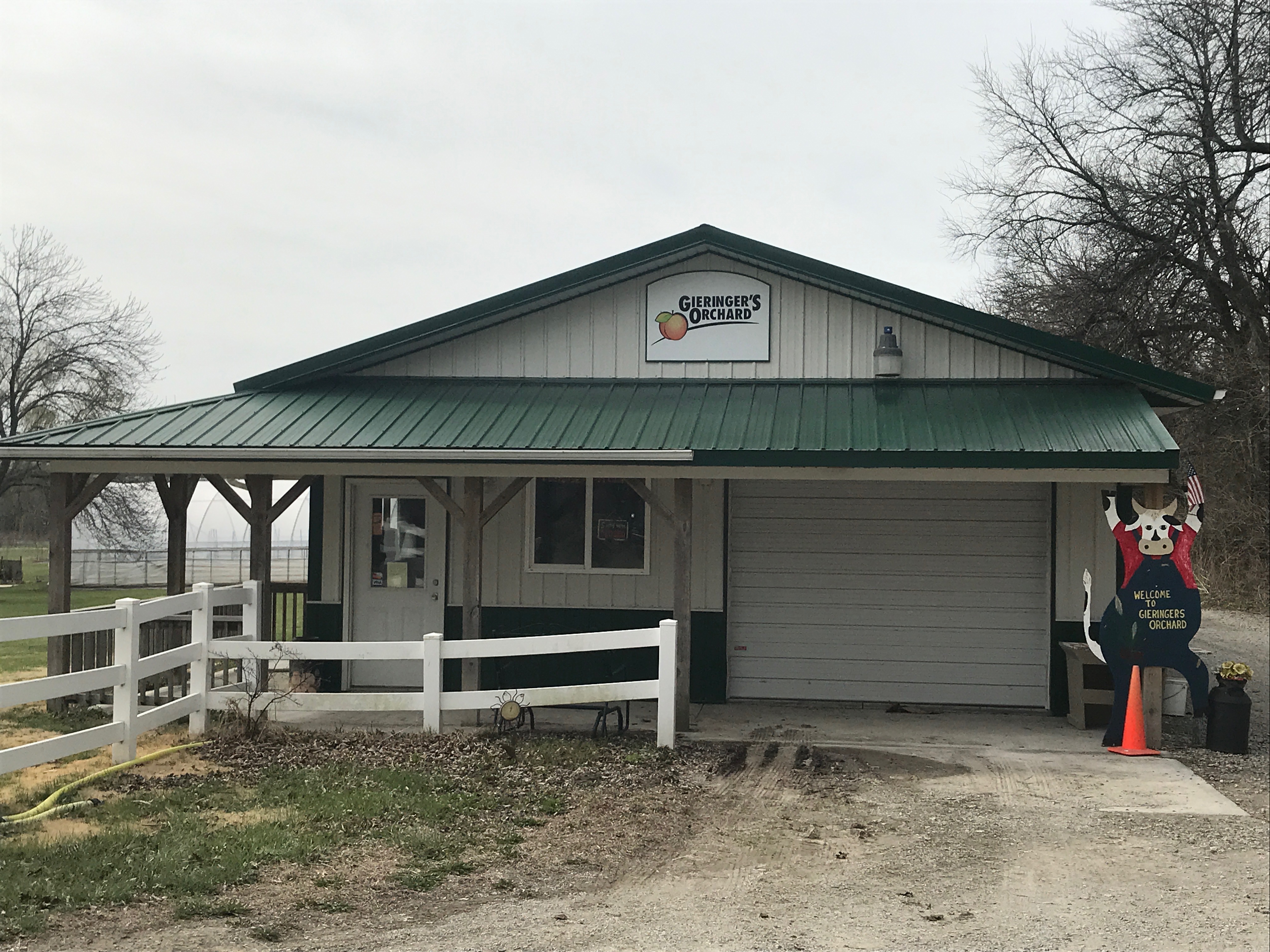
EDGERTON — Frank Gieringer was raised in Edgerton and started farming outside of town when he graduated from high school. “I started with hogs,” Gieringer says, “but got out of that business in the ’80s, when things went downhill.” Fast forward to today, when he and his wife, Melanie, own 160 acres, own an additional 80 acres with their son, Bryson, and farm more than 1,000 acres. They raised row crops for years, then about 11 years ago, began to diversify.
KRC toured Gieringer’s Orchard and Berry Farm on a cool April day last spring, following a weekend with unusually low temps that reached into the teens. The Gieringer’s peach trees were just blooming—and survived the late frost—and the hoop houses were full of fledgling tomato plants and cauliflower.
The Gieringers started growing in hoop houses a little more than a decade ago. This year, the farm has planted about 400 tomato plants in each of five hoop houses. The sixth hoop house is home to the purple and cheddar cauliflower, a popular add-on buy when people come to pick strawberries.
“We’ve found a design we like from Stuppy Greenhouse in Kansas City. It is a greenhouse frame that has bigger, stronger pipe and drop-curtain sides,” Gieringer says. “We typically get our plastic and other building supplies from FarmTek. I hired someone to make custom ends with wooden frames, which probably cost us $1,500. The ends are more permanent and anyone on the farm could handle closing them if a storm is coming in. We found the zippered ends that come with the FarmTek kits to be too difficult to work with. We’ve had nine years with these custom hoop house ends.”
“We’re probably raising too many tomatoes at this point. We’re going to try to steer away from growing quite so many in future years. We’re no longer moving all the tomatoes off the farm or at the farm, likely because people come out here for fruit, and I don’t want to sell wholesale.” Gieringer says. “Having the tomatoes early brings people to our farmers market stand, but come August, we can’t move much volume because everyone has them.”

The family has a stand at the Overland Park farmers market, where, in addition to tomatoes, they sell vegetables and any fruit excess from the u-pick operation (which isn’t much). The family also uses this time with customers as a marketing tool to invite people to come to the farm for the u-pick experience.
“If you’re wanting people to come to your farm, you have to grow something that puts a little fire in their britches,” Gieringer says. “Peaches, strawberries, things like that. They may buy tomatoes or cauliflower while they are here, but they won’t drive here just to get those items.”
The u-pick and agritainment features have become the biggest focus for growth for the Gieringers. “We built our first building to sell u-pick peaches right by our house, and we are now trying to move to the adjacent 80 acres we bought down the road,” Gieringer says. “That’s where we’re trying to move to agritainment,” Franks says. The farm has a food truck for lemonade and strawberry donuts, a playground space, and offers u-pick strawberries, raspberries, blueberries, blackberries, pumpkins, and, soon, apples. In the fall, the farm adds a haystack maze for the pumpkin-patch visitors.
The family has 9.5 acres of peach trees, home to about 1,000 trees of multiple varieties. In recent years, the family added farm-to-table dinners in the orchard. “We string lights in the trees and set up tables between the rows of peach trees,” Gieringer says.
The family still raises conventional corn and soybeans, and has adapted over the years to a no-till system. “In our row-crop side, we are all no-till. We are able to do that because we grow GMO varieties and we have greatly reduced our pesticide use. We still use an herbicide to do the no-till, but we have seen a major reduction in our spraying.”
Gieringer says the diversification has been worth the work and change of mindset. He says 2017 was the first year the diversified, specialty-crop business beat out the conventional crops in net income. This new focus, and the shared buy-in to the additional acreage, was part of Bryson choosing to come back to the farm and putting real skin in the game.
“It is an incredibly expensive undertaking to expand into what we’re growing into. We’re doing bigger-scale stuff and we’ve borrowed more money, and up until now we’ve grown organically,” Gieringer says.
Take, for example, the newest expansion underway: a high-density, trellised apple orchard. “The orchard technique is largely planted in Honeycrisp on Geneva dwarfing rootstock, planted on 2-foot centers,” Gieringer explains. “The goal is to get a fruiting wall by tying the tree up a trellis, and once it reaches 10 feet, let it fruit and fill the space.” This keeps the trees narrow, meaning the aisles in between are open and the trees are more easily pickable, right at eye height. “Most orchards will be going to this, but it is incredibly expensive,” Gieringer says.

Or consider the plasticulture strawberry operation. The family has about 56,000 plants, replanted and rotated annually, on black plastic in rows with wide, mowed paths in between, covering about 5 acres. “We’ve got about 25 acres of deer fence, which was put up in late summer 2017. We needed it up for the strawberries, and we were tired of moving temporary fence every year we rotated our strawberries. Decided to bite the bullet and do it right,” Gieringer says.
He estimates with the deer fence, labor, plugs, irrigation, black plastic, covers, fungicide, fertilizer and harvest boxes, a farmer will invest about $10,000 an acre the first year. “But, if you following the Plasticulture Strawberries handbook out of Ohio State and do it exactly by the book — without skipping steps and each step on time — you will be successful.” Gieringer estimates you should get 1 pound of berries per plant on average. At about $3.50 per pound, you can start to estimate a payback period on the investment.
Their farm is largely supported by the large, nearby population center of Kansas City. On the highest-volume day last year, Gieringer estimates 2,200 people came out for u-pick strawberries. Subsequent years are much less investment-intensive, however, labor costs will continue to be an issue. In truth, labor costs are one of the Gieringer’s most limiting factors.
“In January, we sent out 52 W2s, most of whom are high school temps. We have four full-time people right now,” Gieringer says, “and just hired our first ‘inside’ help to handle accounting, FSMA, etc.” On one strawberry weekend this year, he says his wife sent out $1,200 in paychecks.
Another concern, as shared by other specialty-crop growers, are the regulations and FSMA. But, Gieringer says, “Anybody who’s going to do this full-time and is going to be serious needs to be FSMA compliant, because even people who are exempt will be held accountable if they have an incident. It’s going to kick out a lot of the older producers who won’t go through the process, but it will present more opportunity for somebody who is willing to go through the steps and bear the expense.”
The family is no stranger to adapting to change when necessary. For example, they modified their parking when the operation took off and began to think more about customer flow. “We had consultants come in and help us design our operation so we could handle thousands of people at a time,” Gieringer says.
With their continued growth, innovation and prime location, thousands of customers each weekend from strawberry season to the end of apple season isn’t much of a stretch of the imagination.
Jennifer Kongs is a freelance writer with Bark Media in Lawrence, Ks. who produced this story as part of KRC’s Specialty Crop Block Grant funded by the Kansas Department of Agriculture through USDA’s SCBG Program.
2018 Prairie Festival upcoming at The Land Institute

‘Economic Transformations for an Ecological Civilization’ is this year’s theme
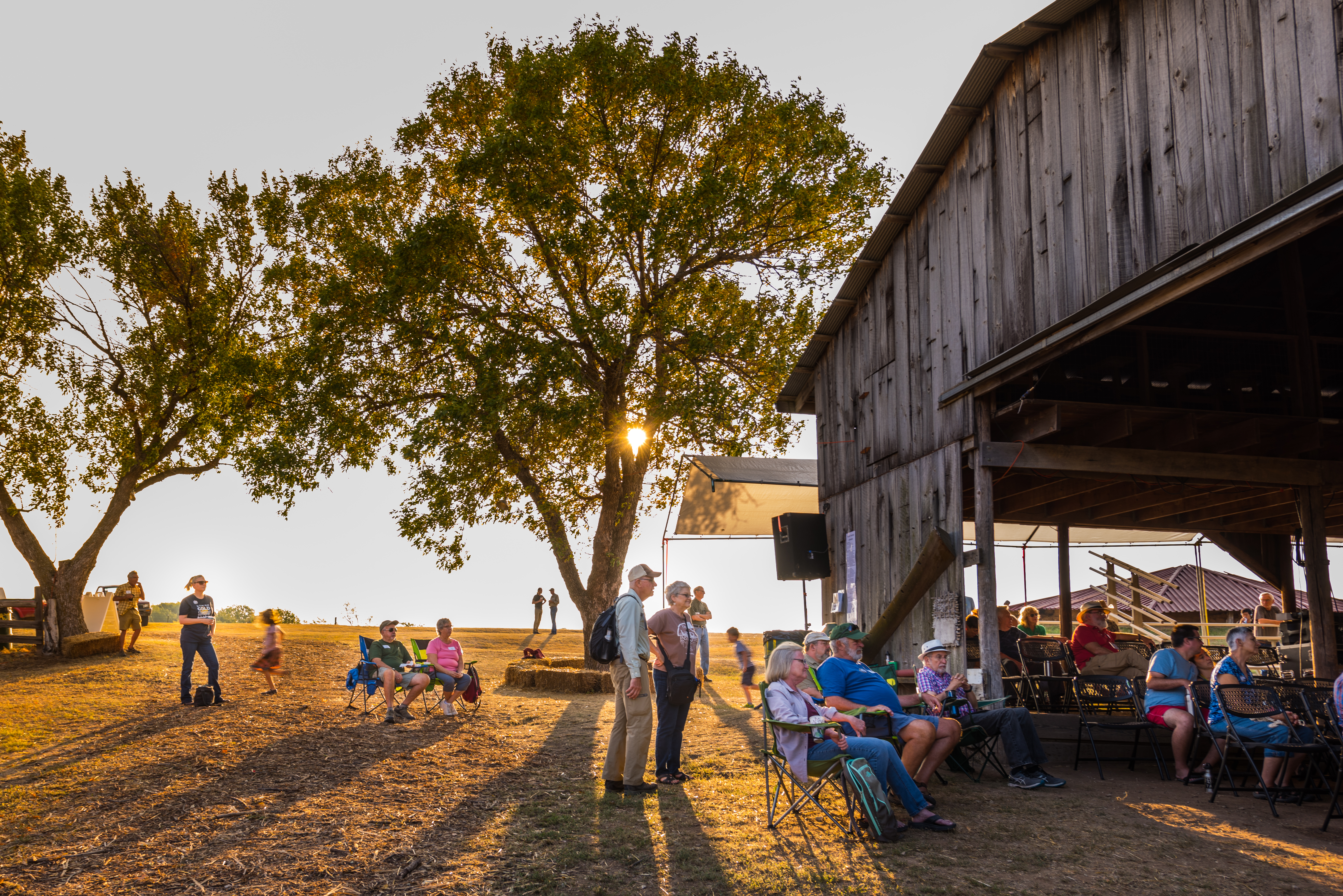
SALINA — The Land Institute’s signature annual event, Prairie Festival offers a unique opportunity to interact with some of the world’s most compelling authors, thinkers, artists, and advocates focused on agriculture, food, the environment, science, sustainability, and social and environmental justice. This year’s speakers include: Liz Carlisle, Mary Berry, Wes Jackson, Loka Ashwood, Matthew Derr, David Bollier, Ceara Donnelley, Brooke Hecht and Taylor Keen.
The Institute’s science staff provides research plot tours and an in-depth update on current plant breeding efforts, ecology work and partnerships. There will be food trucks, live music, a Friday night Barn Dance, sunrise yoga, and more. Come to the event that The New York Times called an “intellectual hootenanny” and what has become a remarkable can’t-miss event on the prairie.
For more information about the Festival, see https://landinstitute.org/news-events/prairie-festival/ or contact us at 785-823-5376/[email protected].
HaysMed completes successful hospital surveys
HaysMed recently completed two successful hospital surveys by national accreditation DNV GL Healthcare surveyors.
For the second year in a row HaysMed was certified as a center of excellence in the Management for Infection Risk (MIR) because of their low infection rates. Their infection rates are consistently lower than the state and national averages. They first earned certification in 2017.
“HaysMed goes above and beyond current standards to prevent patients from acquiring an infection while they are hospitalized,” said Kim Koerner, MSN, RN,CIC Infection Prevention Officer/Associate Health Nurse. “Every department here works to decrease infection risk by reviewing processes and practices.”
The second survey was conducted on the overall hospital which covers everything from medical records, clinical procedures, environmental factors, facilities, quality and safety. HaysMed was first accredited by DNV in 2008.
“DNV GL – Healthcare, which operates in more than 100 countries, surveys HaysMed annually,” said Mandi Dotts, RN, BSN, HACP, Risk/Accreditation Manager at HaysMed. “Achieving certification shows commitment to excellence and it helps demonstrate to the community that we are performing at the highest level.”
— HaysMed
Now That’s Rural: FHSU grad Stephanie Eckroat, Kansas Dairy Association

By RON WILSON
Huck Boyd National Institute for Rural Development
Got milk? If so, it is because some dairy farmer milked a cow, and a bunch of other people worked hard to get it to you. In the 1990s, dairy farmers in Kansas brought themselves together to promote the dairy industry more effectively than ever before. Today we begin a series about the dairy industry in Kansas.
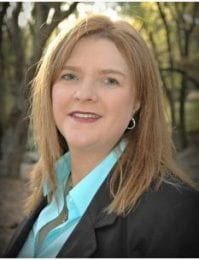
Stephanie Eckroat is executive director of the Kansas Dairy Association and Kansas Dairy Commission. She is a self-described Army brat, but her father retired in eastern Kansas after leaving the Army. Stephanie went to high school at the rural community of Colony, Kansas, population 408 people. Now, that’s rural.
Stephanie enjoyed her agricultural education classes and participated in FFA judging contests for various types of livestock, including dairy cattle. She was on the livestock judging team at Allen County Community College and at Fort Hays State University where she got a job working at the university dairy. Eventually she became the manager of the dairy. She and her husband and family now live near Hays.

The Kansas Dairy Association began in 1994, when dairy farmer Allen Schmidt and others around the state wanted to bring together an organization to provide a unified voice for Kansas dairy farmers. K-State dairy science professors Ed Call, Dick Dunham, and Jim Morrill were among the original advisors for the group. The organization’s first executive director was Chris Wilson, who would later serve as deputy secretary and general counsel for the Kansas Department of Agriculture. Kerri Ebert and Janet McPherson provided staff support. Chris was later succeeded as dairy association director by Mike Bodenhausen.
The Kansas Dairy Association pursued the establishment of a producer-funded check-off promotional program, as other commodities have operated under. In 1996, the Kansas Legislature passed legislation to implement the program. The Kansas Dairy Commission was established to oversee the use of such funds. Similar to other producer groups, the association and commission now operate under separate farmer-elected boards with unified management.
The association works on legislative policy and advocacy, while commission funds are used strictly for research, education and promotion. In April 2014, Stephanie Eckroat succeeded Mike Bodenhausen as executive director of the Kansas Dairy Association and Kansas Dairy Commission.
The Kansas Dairy Association maintains a legislative presence at the Capitol in Topeka. KDA also operates the Dairy Bar at the Kansas State Fair, which annually attracts some 350,000 people. Ice cream sales there are a major revenue source for the association.
The Kansas Dairy Commission conducts activities in research, education and promotion, such as grants for dairy research at Kansas State University. The commission helps sponsor KSU Dairy Days and a high school educational program called Dairy U. The commission also provides scholarships for students, helps sponsor dairy shows, provides grants for the purchase of dairy products for special events, and supports the six-times-a-day live milking demonstrations at the Kansas State Fair. Even before joining the association and commission, Stephanie led the daily state fair milking demonstrations.
As mentioned, both the association and the commission operate under farmer-elected boards. “These organizations are grass-roots driven by farmers in the state,” Stephanie said. “These guys are awesome.”
As in other parts of agriculture, the dairy industry is seeing fewer and larger farms. The state’s overall milk production has boomed with the advent of large dairies in western Kansas, beginning in the 1990s.
Technology has also changed. “We have three robotic milking dairies in the state now,” Stephanie said.
More information can be found at www.ksdairy.com.
Got milk? Thank goodness for the dairy farmers, handlers, processors, and marketers who bring us fresh milk every day. We commend Stephanie Eckroat and all those involved with the Kansas Dairy Association and Kansas Dairy Commission who are making a difference by providing leadership in the dairy industry. They are helping make sure that we’ve got milk.
And there’s more. One of the members of the Kansas Dairy Commission board worked for a national dairy publication before returning to the family farm in Kansas. We’ll learn about him next week.
NEW ECONOMY: Tech students trade up to higher pay with less debt

Editor’s note: This is the third in series about technical training for a new workforce.
By CRISTINA JANNEY
Hays Post
Nineteen-year-old Braden Mahin of Lincoln wants to work on electric cars.
He came to Hays to study auto mechanics at North Central Kansas Technical College right out of high school with no real experience working on cars.
“I have always had an interest in cars ever since I can remember,” he said. “I just wanted to know how they worked, and I never had anyone to teach me, so I thought coming here I would learn everything I needed to learn.”

Mahin is one of many students who are skipping college in favor of a technical education.
NCK Tech officials say the demand for their graduates is high — and their stats prove it. The technical college has been No. 1 in the nation in student placement two years in a row.
Richard Cox, auto instructor and former NCK Tech student, has worked for years to cultivate relationships in the auto industry and boasts of a 95 percent placement rate for his students.
Eric Burks, NCK Tech president, said enrollment at the technical school has remained steady, but insists there is a strong demand for trade skills now and will be in the future.
“We train in programs [and] jobs that are needed right here in Hays and in the communities these students come from. They have been needed for a long time, and I think they are going to continue to be needed for a long time. I think it is just the technology within those trades that is going to change,” Burks said. “The tools they use to do those jobs are going to change, but we are always going to need a plumber, we are always going to need a nurse, we are always going to need someone to fix our vehicles.”

The economy is demanding skill sets, Burks said.
“Knowledge is great, and we want people who are very knowledgable, but at the end of the day, what can you do with that knowledge?” Burks said. “Just knowing it is one thing, but you have to be able to actually apply it. That is where these technical skills really become the difference maker for someone who not only has the knowledge of it, but the working ability to apply that knowledge.”
Sandra Gottschalk, dean of the Hays campus, said students learn their skills by doing.
“It’s a lot of hand-on practice,” she said. “With that hands-on practice, they get more skilled and they get more confident and more proficient. They learn the fundamentals in the course, but it is that hands-on experience that is what ties it together.”
RELATED: NEW ECONOMY: Lack of skilled workers biggest barrier to Ellis County growth
NEW ECONOMY: Public education opens paths to trade careers
Burks and Gottschalk said as they work with high schools, they are seeing a shift to more focus on technical education.
“I think it is because that is where the jobs are,” Burks said. “Not to keep going back to that job placement, but we have no trouble helping our students find jobs They have to meet a few requirements, but we guarantee placement, and that is because they are in such high demand.”
Burks said K-12 schools are seeing not everyone is headed to a four-year college.
“There is definitely that push toward technical because that’s what is needed, and it is also going to give our economy the boost that it needs,” Burks said. “If we push everyone into those four-year degrees, then we are not going to have enough people to do the other things that really need to be done, and they are high-paying jobs. It is not people who are living on the other side of the tracks. These are [people] living next door to four-year graduates. The quality of life is right there the same.”
As Burks addresses high school students he tries to dispel myths about vocational training.
“They are not choosing a lesser life if they go this route,” Burks said. “They may choose less debt if they just go through two years. A lot of these trades are highly sought after, and if they are skilled, they can get paid very well and very comparable to a four-year degree. …

“Obviously, it is going to depend on their skill and how hard they work at it, but the sky is limit for someone who is disciplined, like we talked about earlier, and talented.”
Costs continue to rise for four-year degrees. Students going to a technical school are likely looking at less debt and being able to enter the workforce in their field sooner.
Most students graduate in nine to 18 months with tuition, tools, and room and board costs ranging from $5,900 to $15,000 per year. Costs usually drop for subsequent semesters as students do not need to repeat tool purchases.
Burks said we often think of education as linear, but for many students it is not. He said he thinks recent legislation and articulation agreements with universities like Fort Hays State University are making it easier for students to continue their education at a later date.
“Maybe they got some skills through their high school credits, and they want to go out and work for a little bit. Then they realize, ‘I need to upgrade my skills if I want to up my wages,'” he said. “So they will come to us for a year, go back and work in the field for a little while, and they will come back for another year and get some more skills and go back. We have tried to build this system, so if they want to do it linear and go one year after the next, great, but that is not how all students are going to work through this.”
Because NCK Tech is a technical college, students can start with NCK Tech and go on to a four-year college.
FHSU saw the growing need for trade leaders and constructed the new Center for Applied Technology on its Hays campus.
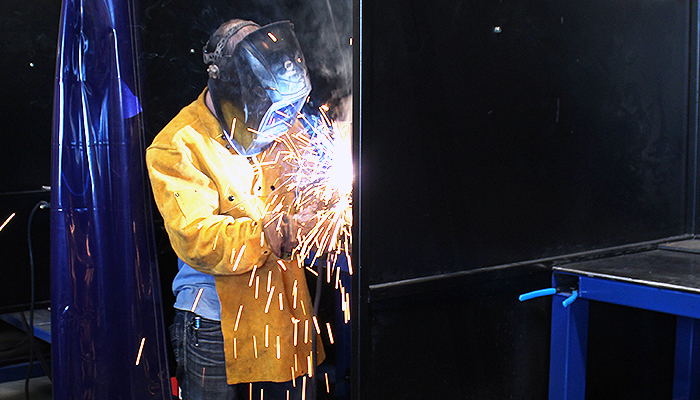
The building is housing students from both NCK Tech for classes, such as welding, and FHSU students who are training for applied technology degrees to be tomorrow’s managers and foremen.
FHSU has a bachelor of science in technology studies and a bachelor of science in technology leadership. These degrees are between technical degrees and engineering science degrees at a Division I school, said Kim Stewart, FHSU’s Department for Applied Technology chairman.
Students go on to be construction managers, project managers, superintendents, 3-D modelers or building information systems managers.
Just as NCK-Tech sees a blend of traditional and non-traditional students, so doses FHSU’s Department for Applied Technology.
In the department’s leadership program, students can transfer 40 hours from a technical or community college degrees and plug them into the bachelor’s degree program at FHSU. General education credits can also be applied.
The FHSU program is interdisciplinary with business, communication and leadership classes. This is an all online degree because most of these students have already developed their technical skills and are working and have positioned themselves to move up in their companies, Stewart said.
FHSU has had articulation agreements with other institutions for years, but it is recently revisiting those and making it easier for students to see and understand how courses they are taking at vocational or community colleges will fit into bachelor’s degrees at FHSU.
“I think it is going to open up avenues, based on students being able to see the path that is going to take to get to their educational goal,” Stewart said.
Stewart is seeing a growing demand for the department’s program’s and its graduates. Five years ago, the college started its construction management program with two students, and now it has 50. Many students are being recruited as juniors during their internships.
“There is a demand for labor people,” Stewart said, “and the more labor people that we have — those that have technical skills — means that we need more people to manage those people. So our niche is to create those people who can go out and be the project managers and superintendents — the people who work with the engineers.”
Misael Banderas is a 2016 FHSU graduate in construction management. He started working on construction sites when he was in high school and currently works as a senior project engineer for McCown Gordon Construction of Kansas City, Mo.
He said he was able to pick a company where he thought he could thrive professionally and personally.
“I think the biggest misconception that a lot of students have within the region is that they have to go to a KU or a K-State or an OSU for you to have the position that I have,” he said. “I can assure you based on opportunities that have come up for myself, I am driving my own career. I have been blessed with multiple, very exciting opportunities from the world’s No. 6 company in the world.”
He said his hands-on experience allows him to better relate to the people he now manages.
“My memories were all started with a shovel,” he said.
Banderas said he is proud to be a FHSU graduate and is now trying to open doors for other FHSU students at his company.
“I reached out to our talent development team and took a trip to recruit out of Hays,” he said. “I think moving forward we are going to have a partnership where we are reaching out every summer to try to have students as interns. If they work out, if they use every opportunity to grow, hopefully [we can] bring them on board when they graduate.”
Partly sunny, mild Monday
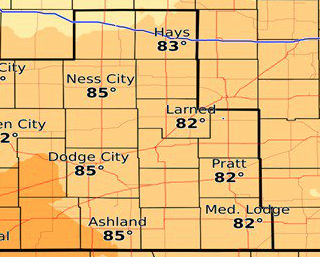
Today Cloudy through mid morning, then gradual clearing, with a high near 82. South wind 9 to 13 mph.
Tonight A 20 percent chance of showers after 1am. Increasing clouds, with a low around 58. East southeast wind around 8 mph becoming northeast after midnight.
Tuesday A 30 percent chance of showers before 1pm. Partly sunny, with a high near 70. Windy, with a north wind 13 to 18 mph increasing to 20 to 25 mph in the morning. Winds could gust as high as 36 mph.
Tuesday Night Partly cloudy, with a low around 46. North northeast wind 5 to 11 mph.
WednesdayMostly sunny, with a high near 69. North wind around 7 mph becoming south in the afternoon.
Wednesday NightMostly clear, with a low around 48.
ThursdaySunny, with a high near 74.
Thursday NightMostly clear, with a low around 49.
FridayA 20 percent chance of showers. Mostly sunny, with a high near 66.
The Art of Peggy Wambold exhibit at Deines through Oct. 27

 DCC
DCC
RUSSELL – The next exhibition at the Deines Cultural Center in Russell is The Art of Peggy Wambold: A Solo Painting Exhibition. Wambold’s passion for art has been a life-long pursuit.
She graduated from Fort Hays State University in 1971 with a Bachelor’s in Art and began teaching in McCook, Nebraska in 1972. She has taught art at all grade levels, Kindergarten through college in three states. Wambold retired from teaching in 2010 and currently lives in Newton, Kansas.
Wambold’s current focus is on the pursuit of beauty in Nature. Inspired by French Impressionism, she studied painting in France in 2016. She is a member of the Carriage Factory Art Gallery in Newton and frequently shows in galleries around Kansas.
The Art of Peggy Wambold will be on exhibition September 21 through October 27, 2018 with an opening reception on Friday September 21 from 5-7 p.m. Admission is free and open to the public.
The Deines Cultural Center is located at 820 N. Main in Russell, Kansas. Call 785-483-3742 for information.