We have a brand new updated website! Click here to check it out!

INSIGHT KANSAS: Trump places rule of law on the ballot

Will the “Trump effect” carry Kris Kobach and Republican congressional candidates to victory this November?

Some commentators believe that an endorsement by President Donald Trump represents a powerful force in winning state and local elections, but the president’s mounting and careless disregard for the rule of law should nullify the Trump effect with Kansas voters.

H. Edward Flentje is professor emeritus at Wichita State University.

Kris Kobach claims that Trump’s last-minute endorsement gave him the winning edge in the razor thin Republican primary race for governor. Sources in the Colyer campaign agree: “It was all Trump.”

Of course, there was little doubt about the president’s preference in that contest. Kobach had endorsed Trump early in the 2016 presidential campaign and was considered for a top job in the administration. Donald Trump, Jr., made two fund-raising trips to Kansas for Kobach this past year. Kobach campaign commercials prominently featured Trump.

Republican officials in Kansas certainly believe that Trump endorsements give their candidates a boost. National Committeeman Mark Kahrs contends, “Trump is very popular in the state.”

Kansas election results from 2016 back up this contention. Trump carried the state with 57 percent of the vote, a 20-point margin over Hillary Clinton. He carried every county except for Douglas and Wyandotte, with margins in 40 rural counties exceeding 80 percent of the vote.

That, however, was nearly two years ago. Kansans have since seen what it is like to have a loose cannon in the White House, one who mocks the rule of law with impunity.

Just last week, Michael Cohen, Trump’s long-time lawyer and fixer, pleaded guilty in federal court to eight felonies, including two in which he verified that he broke the law at the direction of candidate Trump. Those instances involved illegal payments in the closing months of the 2016 election of hush money to two women claiming affairs with Trump. Trump dismissed Cohen’s felonies as “tiny ones” or “not even crimes.”

Also last week, Trump’s former campaign manager, Paul Manafort, was convicted by jury in federal court of eight felonies involving financial fraud. Trump responded Manafort was “brave” and did not “break.”

Five close Trump associates have now been found guilty of serious felonies. Two more have been granted immunity in further investigations of wrong-doing.

Kobach responded to the convictions: “I’m very pleased and honored to be associated with President Trump.” In contrast, the silence of Republican congressional candidates has been deafening.

After a series of presidential taunts undermining professional law enforcement, U.S. Attorney General Jeff Sessions warned against politicizing the administration of justice: “While I am attorney general, the actions of the Department of Justice will not be improperly influenced by political considerations.” Trump tweeted in response with a list of political enemies he wants investigated.

Kobach’s own litigious antics mirror those of Trump in disregarding the rule of law. He wasted over seven years in state office pursuing specious claims of “pervasive” illegal voting and came up short—leaving a trail of courtroom defeats and contempt citations. Kobach was recently found in contempt of court for disregarding a federal court order and fined $26,000—which he wants Kansas taxpayers to pay. He was earlier fined for “patently misleading representations” in federal court.

Over the weekend the president unleashed another tweet storm again mocking Sessions and the Department of Justice while threatening to become personally involved in FBI investigations.

Trump has placed Kansans’ belief in the rule of law and professional law enforcement on the ballot this November. Any candidate who endorses Trump’s reckless disregard for the rule of law or remains silent should suffer the consequences.

H. Edward Flentje is professor emeritus at Wichita State University and served with Kansas Governors Bennett and Hayden.

Ellis student will be honored by Tractor Supply Co. at Kansas State Fair

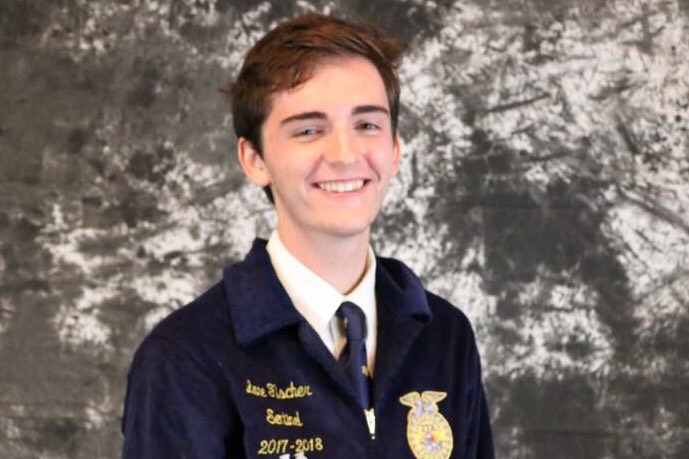
Lane Fischer

4-H and FFA youth to be recognized at ceremony on Sept. 8

HUTCHINSON — Fair season is back and Tractor Supply Company’s “Follow Us to the Fair” Tour is making its way to the Kansas State Fair. From Friday, Sept. 7 to Monday, Sept. 10, fairgoers will have the opportunity to visit the 2,000 sq. ft. experience and join Tractor Supply in recognizing Hutchinson-area 4-H and FFA youth who are making a difference in their communities.

Now in its fourth year, the “Follow Us to the Fair” Tour is embarking on an 11,000-mile cross-country journey to state and county fairs, making 24 stops in 14 states over six months

In addition to family-friendly activities and opportunities to win prizes, the “Follow Us to the Fair” Tour will celebrate more than 100 4-H and FFA youth through Tractor Supply’s second annual “Great Neighbor” Essay Contest. This year’s competition encouraged youth to submit a short essay detailing how a memorable 4-H or FFA experience has influenced their development as a great neighbor in their community.

Local winners will be honored during a special ceremony at the Tractor Supply booth at the Kansas State Fair on Saturday, Sept. 8 at 2 p.m. In addition to a commemorative plaque, winners will walk away with a special Tractor Supply gift pack.

The students being acknowledged are Zoe Barta of Ellsworth, Lane Fischer of Ellis, Maddison Patry of Maize, Serenity Radford of Wichita and Katie Sinclair of Paola.

“Fairs have a longstanding tradition of bringing people of all ages together to celebrate the local community and the key role that agriculture plays within it,” said Christi Korzekwa, senior vice president of marketing at Tractor Supply Company. “The ‘Follow Us to the Fair’ Tour seeks to preserve this tradition while adding family fun to the experience. The ‘Great Neighbor’ Essay Contest also lets us recognize the incredible work 4-H and FFA youth are doing in their communities.”

In addition to the ceremony on Sept. 8, the traveling exhibit will give fairgoers the opportunity to experience the excitement of “Life Out Here” through a variety of entertainment options, including music, interactive games and ways to win prizes. Attendees will have the chance to test their abilities on a strength game, have their free photo taken on a bucking bull, race to “feed the animals” in a bean bag toss, take home huge prizes and participate in fun, educational activities.
To view the complete list of state and county fair stops and corresponding dates, please visit TractorSupply.com/FairTour. To stay up to date on the “Follow Us to the Fair” Tour, follow Tractor Supply Company on Facebook.

— Submitted

NW Kansans learn about local food, health initiatives at Norton event

Courtesy photo
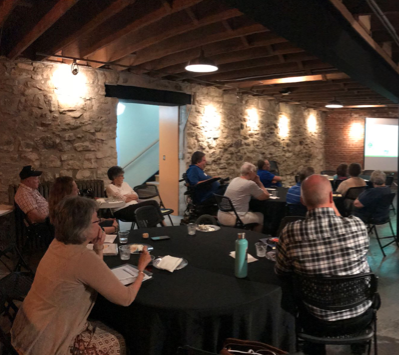
NORTON – Kansas Rural Center (KRC) held a Dinner and Dialogue town hall meeting on August 14th. At the event, nearly thirty area citizens enjoyed a locally sourced meal prepared by Destination Kitchen using ingredients from the High Plains Food Coop.  Following the dinner, a series of local, regional, and statewide speakers discussed programs and initiatives they are currently working on.

Local/Regional Organizations who presented included: Northwest Kansas Economic Innovation Center, Western Prairie Food Farm and Community Alliance, Kansas Appleseed, Kansas League of Women Voters and Kansas Rural Center.

The speakers and organizations fielded questions from attendees covering Supplemental Nutrition Assistance Program (SNAP) benefit recipient requirements, self-sufficiency education (e.g. cooking, gardening, food preservation classes), upcoming technology development opportunities, the need for more open communities, and collaborative regional partnerships. These topics surfaced through an open dialogue session highlighting local and regional needs and concerns.


One of the projects presented during the evening included an alternative model for produce distribution. Northwest Kansas Economic Innovation Center (NKEICI) started the research project through a HERO grant funded by the Sunflower Foundation, and included surveys of regional growers, grocers, and distributors in a 26- county region. As a result of the research, Scott Sproul of NKEICI initiated ongoing collaborative discussions with regional distributors in solving transportation challenges for growers and grocers. “There are great opportunities for northwest Kansas and an especially great opportunity for the High Plains Food Coop to grow,” noted Scott Sproul.


This event was the first in a series of evening “town halls” that KRC is hosting around the state to provide information and analysis on federal and state level food and farm policy and programs. Within the broader context of state budget and revenue issues and the need for greater citizen engagement, the town halls focus on local and regional level efforts to strengthen community access to food, resources for farmers, healthcare, and education. A round table dialogue at each meeting reaches deeper into the issues and highlights how to get involved or take action.   

These forums are part of KRC’s “Community Food Solutions for a Healthier Kansas” initiative and Integrated Voter Engagement project, working toward better incorporating Kansas farms and communities into the state’s healthy food supply chain. Individuals and organizations attending are encouraged to continue to share information, and reach out to their neighbors and other citizens to work on local and regional issues and encourage grassroots engagement.

The mission of KRC, founded in 1979, is to promote the long-term health of the land and its people through community-based research, education, and advocacy that advances an economically viable, ecologically sound, and socially just food and farming system in Kansas. For more information, visit kansasruralcenter.org.

— Kansas Rural Center

AAA: Relief at the pump likely this fall

2018 AAA Gas Watchers Guide Provides Tips to Conserve Fuel and Save Motorists Money
TOPEKA – AAA forecasts that the national gas price average will drop to $2.70 this fall and has the potential to drop even more. That is 14-cents less per gallon compared to today’s $2.84/gallon national price and more than a quarter cheaper than this year’s recorded high of $2.97 set in May.
Translating those projected price declines locally, Kansas could see an average gas price of about $2.50/gallon this fall, down from the current $2.64, AAA Kansas says.
“Cheaper-to-produce gasoline and relatively stable crude oil prices in August, combined with an anticipated drop in consumer gasoline demand post-Labor Day, means consumers will see savings when they fill up at the pump this fall,” said Shawn Steward, AAA Kansas spokesman. “However, several outliers can reverse this forecast, including crude oil prices, geopolitical tensions and the mere threat of a hurricane that could interrupt refining and distribution operations.”
Nationally, 2018 gas prices have been significantly more expensive than 2017. In fact, the year-to-date-national gas price average ($2.71) is 41 cents more than January-August of last year. Trends for year-over-year state averages include:
  • Kansas’ 2018 year-to-date gas price average is $2.54, up 37 cents from the $2.17 in the first eight months of 2017.
  • The state with the largest year-over-year difference in gas price average is California (+57 cents), while Nebraska (+35 cents) had the smallest change.
What will drive pump prices down this fall?
Part of the anticipated drop in fall pump prices is due to the switchover to winter-blend gasoline in mid-September. The difference between summer- and winter-blend gasolines involves the Reid Vapor Pressure (RVP) of the fuel. RVP is a measure of how easily the fuel evaporates at a given temperature. The more volatile a gasoline (higher RVP), the easier it evaporates. Winter-blend fuel, which is cheaper to produce, has a higher RVP because the fuel must be able to evaporate at low temperatures for the engine to operate properly, especially when the engine is cold.

In addition, the arrival of fall historically means a drop in consumer gasoline demand as summer road trips and vacations subside.
What could prevent cheaper gas prices from coming to a pump near you?
  • Crude Market Volatility: Much of 2018 has brought volatility to the domestic and global crude markets, as market watchers try to glean insight into forces that will shape global supply this fall. These forces include:
    • Venezuela is a major crude producer for the Western Hemisphere, but its collapsing economy could halt its crude production.
    • Organization of Petroleum Exporting Countries (OPEC) announced an increase in production over the summer, but slower-than-expected production growth could contribute to higher crude prices during the second half of the year.
    • Geopolitical uncertainty in the Middle East and around the globe could disrupt vital crude flows.
  • Iran Sanctions: When President Trump announced that the U.S. would withdraw from the Iran Nuclear Deal in May, the decision sent the crude markets into upheaval. In August, the first round of re-imposed sanctions on the country, which target Iran’s financial sector, went into effect and led to a brief uptick in crude prices. The next round of sanctions, currently scheduled to take effect in November, will target Iran’s energy sector – including its crude exports – and will likely have a more sustained impact on crude prices. If and when those sanctions take effect, crude prices will likely surge over an expected reduction in Iranian crude exports and increased tension in the region that could destabilize global crude flows.
  • Updated Hurricane Forecast: The National Oceanic and Atmospheric Administration’s Climate Prediction Center predicts a total of 9–13 named storms (winds of 39 mph or greater of which 4-7 will become hurricanes) including up to two major hurricanes (winds of 111 mph or greater). An average six-month hurricane season produces 12 named storms, of which six becomes hurricanes, including three major hurricanes. The mere threat of a hurricane in the U.S. would cause pump prices to spike, likely regionally, due to constrained supply and delivery challenges.
AAA 2018 Gas Watcher’s Guide
In time for fall, AAA is releasing the 2018 Gas Watcher’s Guide with tips for conserving fuel, saving money and maintaining fuel efficiency. The guide offers these tips – and many more – for motorists to keep in mind as they fill-up at the pump:
  • If your vehicle’s engine does not require premium or mid-grade fuel, don’t buy it. Using anything other than regular grade is simply a waste of money.
  • Don’t top off your gas tank. Stop filling after the automatic nozzle shuts off the second time.
  • If you have to replace a gas cap, make sure it is the right one for your car. An ill-fitting cap will increase emissions and trigger the “check engine” light.
  • Keep track of gas mileage. If you notice a sudden decrease in fuel economy, have your vehicle checked by a technician to ensure it is operating properly.

2 adults, teen dead after I-70 rear-end crash and fire

ELLSWORTH COUNTY — Three people died in an accident just after 1p.m. Wednesday in Ellsworth County.

The Kansas Highway Patrol reported a 2007 Chevy Silverado driven by Reginald A. Miller, 32, Arthur, Ill., was westbound on Interstate 70 one mile east of the Kansas 14 Junction. The pickup rear-ended a semi’s trailer.  The pickup then veered off into the north ditch and caught fire.

Miller and passengers  Darrin W. Stutzman, 20, Arthur, and Matthew Lynn Herschberger, 16, Arcola, Ill., were pronounced dead at the scene and transported to Parsons Funeral Home.

The semi driver Curtis Lee Garrison Jr, 43, Vaughan, Miss., was transported to the hospital in Salina.

The KHP did not have information on seat belt usage in the pickup.


Meier disappointed on opioid response during D.C. mayors conference

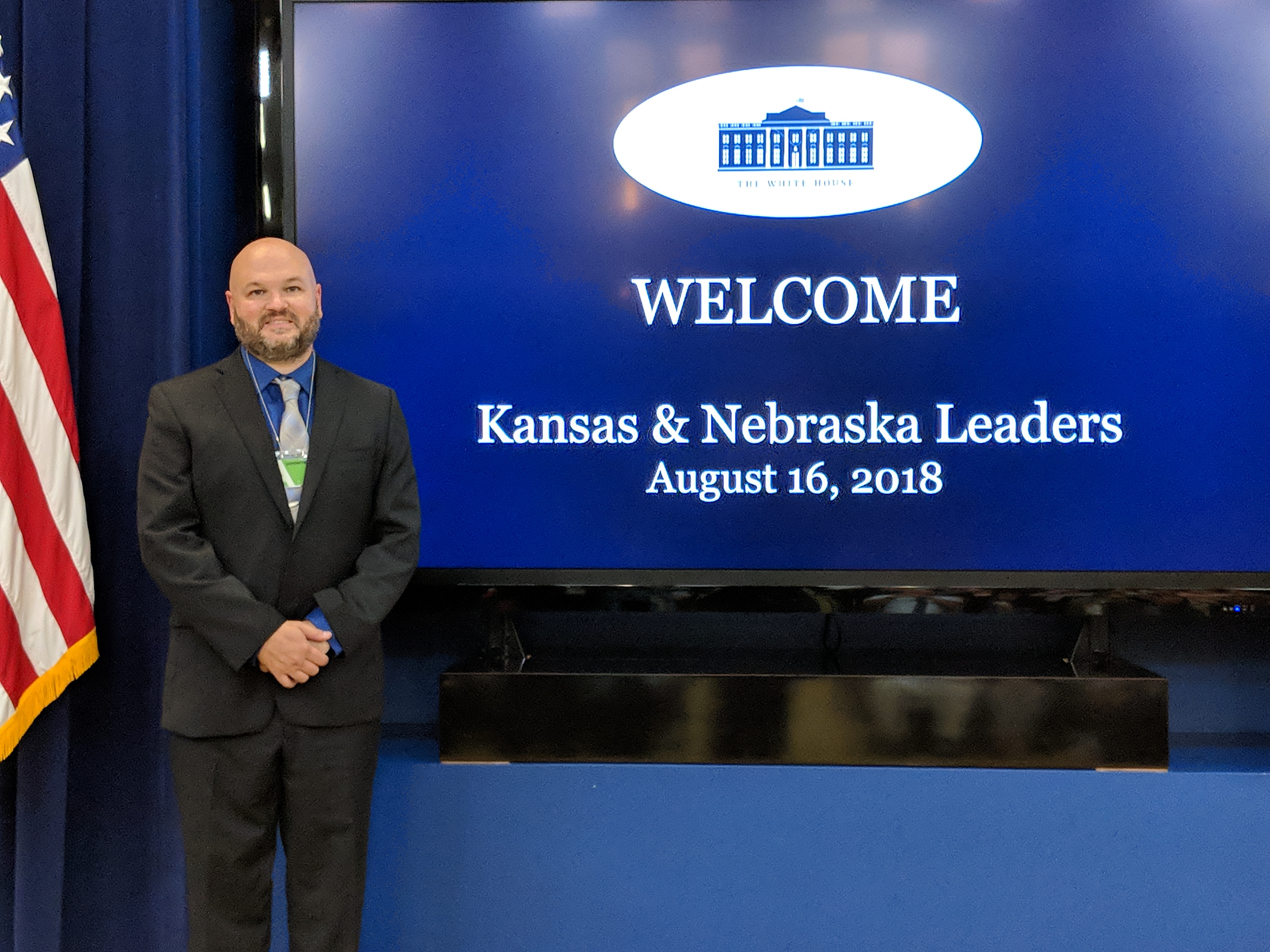
Hays Mayor James Meier at a conference for local leaders at the White House.
By CRISTINA JANNEY
Hays Post

Hays Mayor James Meier attended a White House conference for Kansas and Nebraska mayors and county officials on Aug. 16.

He heard from Cabinet-level leaders about issues facing local governments.

Although he thought the experience was a good networking opportunity, he said on one point the speakers did not go far enough—that was the opioid crisis.

Trump adviser Kellyanne Conway spoke to the group on the opioid crisis.

Although the Conway acknowledged the growing epidemic of opioid abuse and its effects on local government, Meier, a pharmacist, said Conway fell short of admitting the federal government’s culpability in the rise of the crisis.

“They had a good message. They realize the federal government has to get involved. The state government has to get involved. The local governments have to get involved,” Meier said. “They had a good message, and I think they realize that there is not a magic bullet. There is not one plan that is going to fix everything. But I think it is important to recognize why it is happening, so we can plan appropriately.”

He explained during the 2000s, the medical community encouraged providers to treat pain as a sixth vital sign.

“You were supposed to go into a patient’s room and say, ‘OK, rate your pain on a scale from 1 to 10,” Meier said. “If a patient said 10, even if they outwardly had no signs they were in any pain, you were supposed to treat them as if their pain was a level 10 and treat the pain because nobody should ever be in pain. That was the whole mantra.”

This was a part of health care accreditation process.

If a patient ranked their pain as a 8 or 9, they knew they were going to receive opioids, Meier said.

“We hear about the opioid crisis, but we never hear about why it’s happening,” Meier said. “I think the federal government has a real part to play in why this is happening in the first place. … What I did not hear was that the federal government was part of the problem to begin with, and I think they need to recognize they were a part of the problem.”

Conway gave the example of someone going to the dentist for a chipped tooth and receiving seven days of opioids and all of a sudden they are hooked. Meier said those things do happen.

Because of the crisis, the pendulum has started to swing back the other way. Doctors are afraid to prescribe opioids for anything for fear patients will become addicted, Meier said.

Meier works with cancer patients.

“I am really scared that five or 10 years down the road, people who really need opioids will not be able to access them,” he said.

Meier said he wanted to hear the federal officials say they are trying to work toward a happy medium.

“There are probably some commonsense things that we need to be putting in place to ensure that doesn’t happen, and I think those will be put in place,” he said of people becoming addicted. “We have to have a happy balance between those people who need short-term pain control from the dentist or for a broken arm and those people who have cancer that has metastasized to their bones and they need very high doses of morphine throughout the day just to be able to function.

“I don’t have an answer,” he said, “It just seems we are going from one extreme to another.”

The conference was organized by the Office of Intergovernmental Affairs. Other speakers at the conference included Ben Carson of Housing and Urban Development, a representative of the Department of Agriculture, assistant director for the Department of Education, representative of the EPA, and a representative from the International Trade Administration.

“I do think that this group that is in the White House right now is interested in ensuring local control,” Meier said. “I do think that is a theme that came through (the conference) that they think local control is best.”

Meier also was able to meet Vice President Pence.

“You got to shake the vice president’s hand. It doesn’t matter who it is, that is kind of neat thing to say you did,” Meier said.

Meier said he also benefited from being able to speak to mayors from other Kansas and Nebraska communities. The Kansas group visited Sens. Moran and Roberts during their time in D.C. He said he thought it was important to attend to give northwest Kansas a voice in Washington. He passed on information on the R9 Ranch water project.

The group also discussed a bill in Congress that would allow telecom companies to put infrastructure in local right of way without consulting the local municipality or paying a franchise fee. This has become an issue in the Kansas City area where companies are trying to upgrade to 5G.

Meier said the bill would be very applicable to Hays as well.

“Any city wants to be able to control its right of way and be sure things are being placed in an appropriate place and there is a fair playing field as far as paying franchise fees and things like that,” he said.

The senators also talked about commodity prices and trade, but had no details about how and when the president’s $12-billion aid package to farmers was going to be distributed.

Partly sunny, warm Thursday

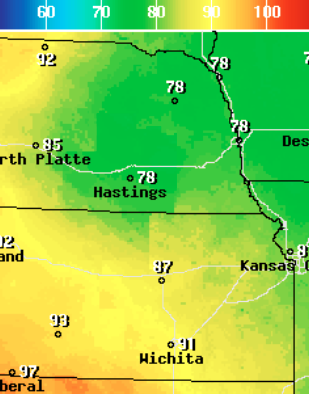
Today A 20 percent chance of showers and thunderstorms before 8am. Patchy fog before 9am. Otherwise, cloudy through mid morning, then gradual clearing, with a high near 91. Southeast wind 7 to 15 mph.

Tonight Partly cloudy, with a low around 73. South southeast wind 8 to 11 mph.

Friday Sunny, with a high near 99. Southwest wind 11 to 17 mph, with gusts as high as 28 mph.

Friday Night A 20 percent chance of showers and thunderstorms. Mostly cloudy, with a low around 70. South wind 7 to 13 mph.

Saturday A 30 percent chance of showers and thunderstorms after 1pm. Partly sunny, with a high near 89. Southeast wind 6 to 9 mph.

Saturday NightShowers and thunderstorms likely, mainly before 1am. Mostly cloudy, with a low around 68. Chance of precipitation is 60%. New rainfall amounts between a quarter and half of an inch possible.

SundayA 20 percent chance of showers and thunderstorms after 1pm. Partly sunny, with a high near 87.

One hospitalized after driver falls asleep, rear-ends semi on I-70

GOVE COUNTY — One person was injured in an accident just after 7a.m. Wednesday in Gove County.

The Kansas Highway Patrol reported a 2015 Toyota Camry driven by Karl A. Warcup, 17, Houston, Texas, was westbound on Interstate 70 just west of the Grinnell exit in the driving lane. The driver fell asleep and rear-ended a semi.

A passenger in the Toyota Janice Garcia, 20, Fort Myers, Fla., was transported to the Logan County Hospital.

Warcup and the semi driver Lawrence J. Meiar, 62, WaKeeney, were not injured. All three were properly restrained at the  time of the accident, according to the KHP.

MASON: Organized for success through inclusiveness, collaboration

Dr. Tisa Mason
I find myself thinking a lot about leadership these days. I really like the perspective of Simon Sinek, the famous and highly popular motivational speaker, who once tweeted, “Leadership is not about being in charge. Leadership is about taking care of those in your charge.” Taking care of the people, and nurturing the university to fulfill its potential, is indeed a heavy responsibility.

I also know how blessed I am to be surrounded by so many talented colleagues. Indeed, nowhere else will you find a faculty and staff as dedicated and willing to give 150-percent effort to the FHSU mission. I rely on those talented colleagues to help shape university decisions both through formal and informal processes.

Essential to this work is a commitment to building a culture of trust, establishing clarity on how we define success, doing our best to make decisions based on knowledge rather than opinion, and creating nimble and well-defined processes (many voices with clarity regarding who is accountable for specific areas of decision making). These commitments help our university think and act strategically as we provide accessible, quality education to Kansas, the nation and the world.

As simple as those commitments may appear, to be successful, they require intentionality, focus, and practice. At Fort Hays State University, I work on a daily basis through four key groups to practice those commitments: President’s Roundtable, Executive Leadership Team, Senior Leadership Team, and Cabinet. Briefly, the purpose of each of these structures are as follows.

The President’s Roundtable consists of the presidents of the Faculty Senate, the University Support Staff Senate, and the Student Government Association. Besides me, these are the elected leaders of three primary elements of the university’s universe. Fort Hays State is so successful because we support each other and work together. In this group, we talk about our work, explain our priorities and share our perspectives. In this way, we create opportunities for collaboration and enhance our communication.

The Executive Leadership Team (the ELT) is the vice president for academic affairs, the vice president for administration and finance, the vice president for student affairs, and the president of the FHSU Foundation. This group brings together the executives responsible for leading the primary operational and financial divisions of the university. They serve in an advisory role to the president to help guide and shape the vision and strategy within which the larger university community can practice the innovation and creativity that makes the university great.

The Senior Leadership Team comprises the ELT plus the associate provost and the deans; the directors of university relations, athletics, alumni and governmental relations, and facilities planning; the chief information officer for technology; the general counsel; and the assistant vice president for student affairs and enrollment management.

The members of this group serve as consultants and coordinators for the executive team, widening the perspective of campus so that it includes both the trees and the forest. The experience ranges from academics and alumni to facilities and technology, giving leadership a view of how policy and strategy affects people throughout the university.

The Cabinet is the largest group with whom I meet regularly, and it has representatives from the broadest cross-section of the university population. Its membership includes the Roundtable, the ELT and the senior leadership as well as people who report to the vice presidents and the president of the faculty bargaining unit, the American Association of University Professors.

In this body we evaluate, discuss, create and shape the policies that guide work and life at Fort Hays State. We share information across campus and identify – and work to fill – gaps in our information and communication.

These four organizational structures are supplemented by a variety of other teams, committees and task forces that work across the university for the collective wellbeing of Fort Hays State. The people on these teams work tirelessly and deliberately to fulfill our mission by focusing on the core commitments of leadership – trust, clarity, knowledge-based decision making, and clearly-defined processes for making those decisions. Inevitably we face challenges, but we do so together, and we continue to press on and grow together.

The strength of mind and spirit, the innovation and the experimentation that are hallmarks of education at Fort Hays State are not accidents. They are the fruits of hard work in every area of the university.

I am truly fortunate to be surrounded by strong leaders who care deeply about one another and about our close-knit community; whose resolve is as firm and steady as our century-old limestone buildings; whose drive to achieve pushes students to be their best; and who understand that our students’ success is the community’s success, the region’s, the nation’s, the world’s, and ours.

News report: KBI investigation in Phillips Co. focused on deputies’ actions

By KIRBY ROSS
Phillips County Review

PHILLIPSBURG — In the run-up to his being elected Phillips County sheriff in 2016, Charlie Radabaugh campaigned on promises of accountability, transparency, and equal enforcement of the law no matter who is involved.

With a controversy unfolding in Phillipsburg in recent weeks, Sheriff Radabaugh is now having the opportunity to put his commitment to those principles on display.

Throughout August reports have circulated in Phillips County that at least two Phillips County sheriff’s deputies have been the subject of a criminal inquiry initially led by Sheriff Radabaugh, who has now brought in agents of the Kansas Bureau of Investigation.

The Phillips County Review has learned from sources with knowledge of the investigation that Phillips County deputies are alleged to have entered a northwest Phillipsburg house without a warrant and without permission on multiple occasions when the resident was not home.

According to these sources, the resident noticed a door had been breached and, as a result, set up a surveillance camera, expecting to perhaps see a past romantic interest or other aquaintance in the act of entering the residence. Instead, according to these sources, the camera allegedly afterwards filmed unauthorized entries by deputies.

In addition, video of the alleged entry or entries is reported to have circulated at a recent social gathering in Phillipsburg.

In a Facebook post last Wednesday, Sheriff Radabaugh addressed an onslaught of coffee shop talk by acknowledging that he had become aware of rumors in recent weeks and assigned a deputy to investigate them.

According to Sheriff Radabaugh, that investigating deputy was then “implicated” in the allegations within an hour of being assigned to look into them.

In his Facebook post Radabaugh says that as a result, he then contacted the Kansas Bureau of Investigation and asked them to become involved.

Following the Sheriff’s Facebook post the story has gathered statewide and even national notice, with reports appearing in the Wichita Eagle, the Associated Press, U.S. News & World Report magazine, the Hutchinson Post, the Salina Post, the Hays Post, KWCH12-TV Wichita, KFDI-FM Radio Wichita, the Bristol (Va.) Herald Courier, the St. Joseph (Mo.) News-Press, and Kansas Public Radio.

Below is the complete Aug. 22 Facebook statement posted by the Phillips County Sheriff’s Office:

“We hear we’re the talk of the coffee circles again. Rumor has it, the Phillips County Sheriffs Office is being investigated by the Kansas Bureau of Investigation.

“Unfortunately we must report that this rumor is partly true. A couple weeks ago, Sheriff Radabaugh and Undersheriff Stephen became aware of allegations against a former employee. They assigned a Deputy to investigate the allegation and within an hour, that Deputy was also implicated in the allegation.

“Sheriff Radabaugh then contacted KBI and requested their assistance and that they take over the investigation.

“KBI agents have been in Phillips County and have interviewed witnesses. We expect them to return soon and complete their investigation.

“As you may recall, Sheriff Radabaugh has said many times that the laws apply to everyone and will be enforced as such. Should the allegations prove to be true, appropriate personnel action will be taken and the case will be forwarded to the County Attorney for charges against the individuals.

“We will update everyone on KBI’s findings, either good or bad, when they complete their investigation. Until that time, any further statements will be issued by the Kansas Bureau of Investigation.”

— Republished with permission

Ellis County Drug Court aims to fix broken system

By JONATHAN ZWEYGARDT
Hays Post

As the number of felony drug cases in Ellis County and the state of Kansas continues to rise, officials in Ellis County have created a drug court in an effort to change a system that isn’t working.

The court, which begins this week, is designed to target offenders who are considered high-risk of having a drug problem that has gotten them in legal trouble and help them overcome their addiction while serving as an alternative to jail.

According to the Kansas Sentencing Committee, the number of felony drug cases in Ellis County increased from 91 in 2013 to 159 in 2017 — an increase of 42.7 percent. Kansas has also seen a similar increase in drug offenses during that time, and drug offenses are ranked the top most frequent offenses, according to the sentencing committee.

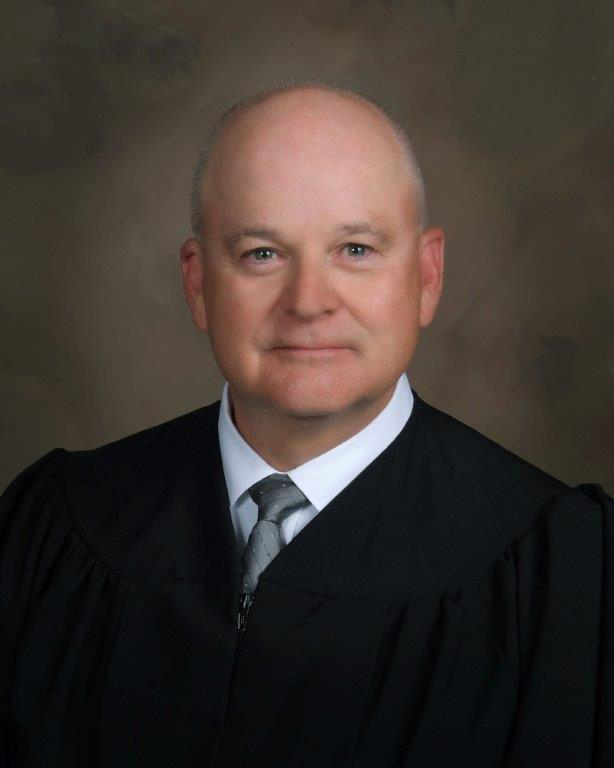
Chief Judge for the 23rd Judicial District and Drug Court Judge Glenn Braun said local officials with the Hays Police Department, Ellis County Sheriff’s Department, Court Services and Ellis County Attorney’s Office began exploring the idea of implementing a drug court when construction was completed and all departments were moved back in to the Law Enforcement Center.

Braun, along with Court Services Officer and Drug Court Coordinator Teresa Greenwood and the other core members of the drug court team, attended training over the last year and has observed similar drug courts in Saline and Lyon counties and has designed Ellis County court similar to those.

Greenwood said non-violent offenders sentenced for drug possession will be ordered to drug court, and the program will target offenders who are considered “high-risk” of having drug issues. Even if an offender is not sentenced for a drug crime, if authorities determine they have an underlying drug issue, they can also be assigned to the program.

The program will be a minimum of 18 months and consist of five phases, according to Greenwood.

Participants will have supervision from their probation officers, random urinalysis (UAs) and substance use treatment. They will also be provided mental health and medical services if they need them.

Currently, when a defendant is sentenced and placed on probation the high-risk, high-need offenders go to community corrections where they have intensive supervision, according to Braun.

“After I sentence them, I don’t see them again until or unless they have accumulated a whole string of offenses. So by the time I see them, my options really are prison, whether it’s a 120, 180 (days) or a full revocation to serve the balance of their term,” he said. “I really don’t have a lot of other options.”

But with drug court, they will go before Braun every other week and will talk with the judge about the issues they are having and will be held accountable.

“They know they are going to have to face the judge and they are going to have to do it every two week,” said Braun. “If they’re messing up, the judge is going to know about it because Community Corrections and Teresa (Greenwood) are going to tell me before I ever see them — every screw-up they’ve had.”

There will also be small incentives available to participants who successfully complete various steps along the way. Greenwood said Community Corrections used grant money to purchase small gift cards that will be used. They will also get incentives for completing phases and when they complete drug court there will be a graduation.

“Recognition that a lot of the participants haven’t had before just for simply following the program and a little bit of an incentive to going and keep doing well,” said Greenwood.

But Judge Braun said the perception that this amounts to “coddling” these individuals is not true.

“The drug court program is probably more difficult for most of those people than just straight probation,” Braun said. “It’s something they probably haven’t experience before, in their lives and (its) just a little something to say, ‘there is a benefit to this’ beside sobriety.”

The drug court officials will also help with the participants getting out in the job market, the area of housing and, if they are involved in child in need of care cases with their children, they can begin to help remediate those issues.

The courts also have a benefit for the community. According to the Nation Association of Drug Court Professionals (NADCP), the courts save up to $13,000 for every person served.

The national completion average for treatment courts is almost 60 percent, and 75 percent of graduates do not reoffend, according to the NADCP.

Green said they expected 11 individuals to take part in the first court on Thursday, but they will continue to add more people every month.

Copyright Eagle Radio | FCC Public Files | EEO Public File