We have a brand new updated website! Click here to check it out!

SCHLAGECK: Have another slice of cheese

          What would a sweltering summer day be like without an occasional stop at the local ice cream parlor for a couple scoops?

          Can you imagine eating piping hot chocolate cookies without a frosty glass of milk?

          Imagine sipping a buttery glass of chardonnay without a couple of pieces of aged cheddar.         

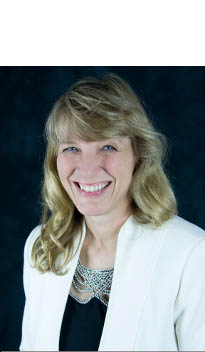
John Schlageck is a leading commentator on agriculture and rural Kansas. Born and raised on a diversified farm in northwestern Kansas, his writing reflects a lifetime of experience, knowledge and passion.

Every day in this great country of ours we can partake of these wholesome, nutritious dairy products; but if there were no dairy farmers, dairy cows or dairy industry, there would be none of these tasty treats.   

Dairy products remain a major source of nutrients in our daily diets. If they’re not, they should be.

          To find another source for the 300 milligrams of calcium found in either an eight-ounce glass of milk, a cup of yogurt or 1 ½ ounces of natural cheese, the average person would have to graze on eight cups of spinach, six cups of pinto beans or two and one-half cups of broccoli, according to the Midwest Dairy Association.

          The primary nutrients found in milk and other dairy products are calcium, vitamins A and D, carbohydrates, phosphorus, magnesium, potassium, riboflavin and high-quality proteins.

          U.S. dairy farmers provide an estimated $140 billion annually to this nation’s economy. Dairy farmers help sustain rural America. Even considering this nation’s continuing economic challenges, dairy farmers and companies are a lifeline to 900,000 jobs in this country.

          Dairy is local. Dairy farm families are business owners. Every glass of milk and each dairy product produced by these family businesses brings vitality to local and state economies.

          Kansas farms generate approximately $537 million in milk sales annually. In Kansas, the average dairy cow produces about seven gallons of milk per day. That’s more than 2,585 gallons of milk over the course of a typical year.

          Growth in the Kansas dairy industry means economic growth and access to safe dairy products for local communities and the state. The Kansas ag growth dairy strategy has identified the expansion of the influence, presence and professional standing of the Kansas dairy industry as a priority.

          This development has been fueled by the arrival of large-scale dairy operations, primarily in western Kansas. Milk production has doubled since 1994 and grown more than 25 percent in the last five years. There are now about 290 dairies in the state, milking 154,000 cows. It takes about 48 hours for milk to travel from the farm to the dairy case.

           As in nearly every sector of the agricultural industry, the United States has more milk production than any other country in the world. This country has six major breeds of dairy cattle: Holstein, Jersey, Brown Swiss, Guernsey, Ayrshire and Milking Shorthorn.

          Dairy cows begin producing milk after they calve, when they are about two years old. Most cows are milked twice a day in modern milking facilities that incorporate gentle machines attached and removed by dairy farmers.

          Today, all milk sold in grocery stores is pasteurized during processing. During pasteurization, milk is briefly heated to a temperature high enough to destroy bacteria without affecting its flavor or food value.

          Yes, since the first cow arrived in the Jamestown Colony back in 1611, America’s dairy farmers have been helping provide a healthy, nutritious food product. So, fill your glass with milk every day. Dip a couple scoops of vanilla ice cream on that piece of apple pie. Cut another slice of cheese for a summer snack. And give thanks to Kansas and America’s dairy farmers.

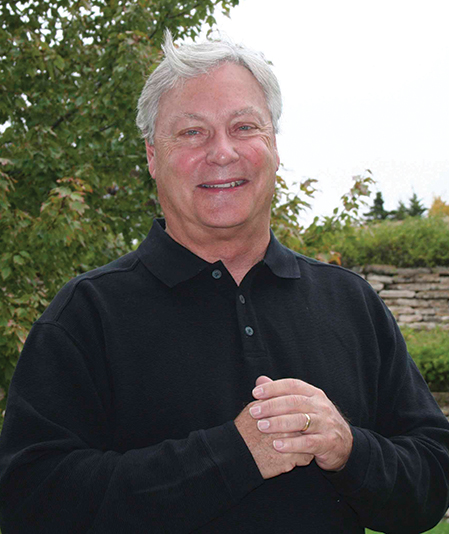
          John Schlageck is a leading commentator on agriculture and rural Kansas. Born and raised on a diversified farm in northwestern Kansas, his writing reflects a lifetime of experience, knowledge and passion.                                    
News From The Oil Patch, Aug. 27

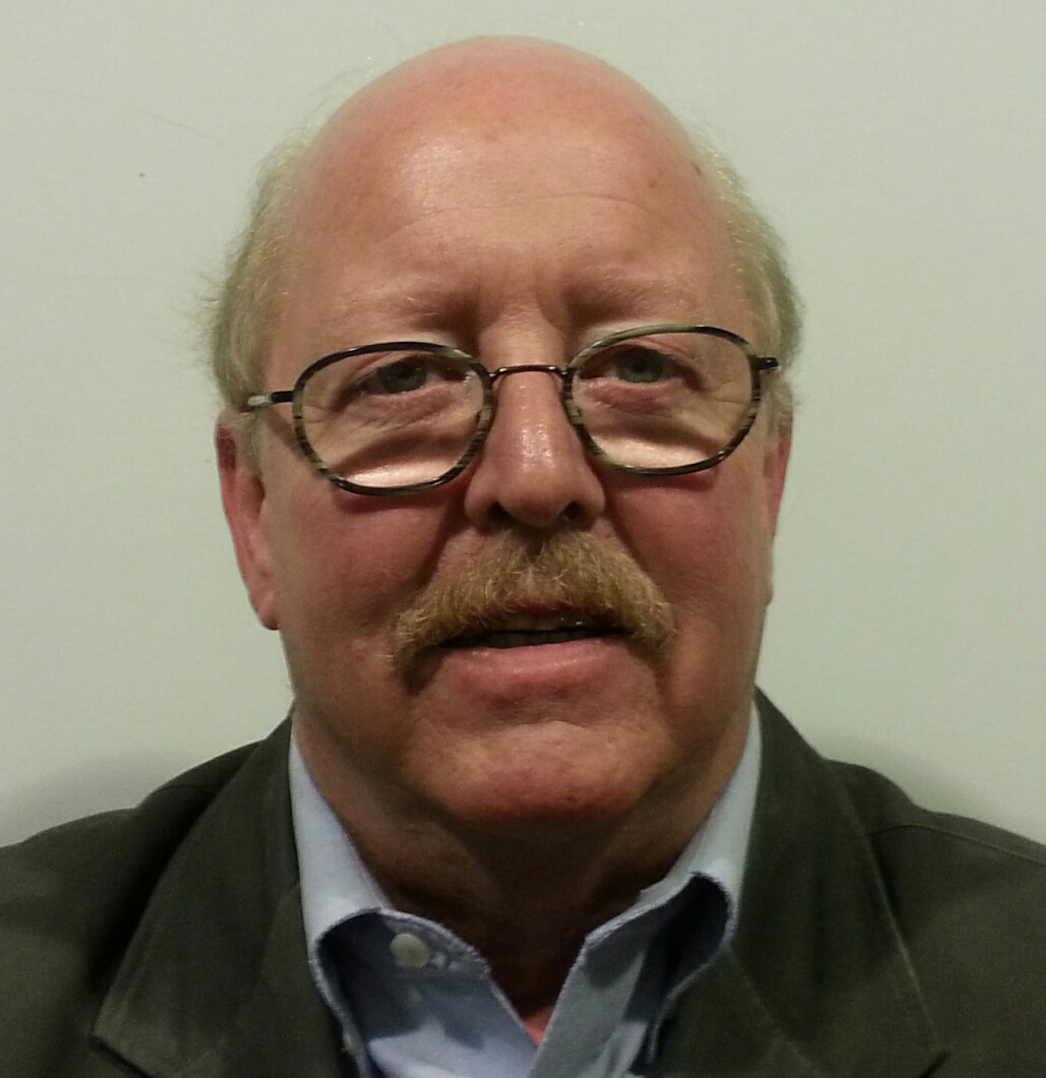
John P. Tretbar

Kansas gasoline prices have dropped nearly three cents per gallon in the last week, prompting AAA to list the state #8 among the nation’s top 10 largest weekly price changes. At $2.618, we’re down more than a nickel from a month ago, but we’re still paying 40 cents more than last year at this time. We’re still seeing $2.63 per gallon in Great Bend, and $2.62 most retailers in Hays. Triple-A reported the national average on Monday was nearly $2.84/gal.

Reuters is reporting the king of Saudi Arabia stepped in to block the initial public stock offering at Saudi Aramco. King Salman reportedly met with family members, bankers, and senior oil executives, including a former Aramco CEO, and heard warnings about tough new disclosure requirements possibly undermining, rather than helping, the kingdom. By late June the king pulled the plug on the IPO, but Reuters reports preparations were already slowing down. By April, Aramco stopped paying retainer fees to some of the banks working on the deal.

The Financial Times reports Aramco’s concession agreement with the state has now been limited to 40 years, from a previous contract that gave it access in perpetuity. The move came as part of the kingdom’s preparations for the now delayed stock market flotation of the company.

Rig counts plummeted across the U.S., but are on the increase here in Kansas. Independent Oil & Gas Service reported a 13% increase in the number of active drilling rigs across Kansas, 17 east of Wichita, up three, and 33 in the western half of the state, which is also up three. Operators report drilling underway at one site and drilling ahead at two more in Barton County. They’re about to spud two wells in Stafford County. And, completion activity is underway at two wells in Barton County, five in Ellis county and one in Stafford County. Baker Hughes reported 1,044 active U.S. drilling rigs, a drop of nine oil rigs and four seeking natural gas. Louisiana was down seven rigs, which the count in North Dakota was down four. Texas added three rigs. The count in Canada was 229 active rigs, up 17 for the week.

Kansas operators have filed 1,134 new permits so far this year, including 31 last week. There are 12 new drilling permits east of Wichita and 19 in western Kansas, including two in Stafford County.

Independent Oil & Gas Service reported 46 new well completions for the week, 12 east of Wichita and 34 in western Kansas. That brings the total to 996 so far this year. Of the 34 newly-completed wells west of Wichita last week, 14 were dry holes. There was one completion reported in Barton County, two dry holes in Ellis County, a dry hole in Russell County and one in Stafford County.

The U.S. Energy Information Administration is for the third time reporting all-time high domestic crude oil production of eleven million barrels per day, up from 10.9 million a week ago.

The government said also said U.S. crude-oil inventories dropped 5.8 million barrels, and are now down to the five-year average for this time of year. Imports were down 1.5 million barrels. Gasoline inventories were up another 1.2 million barrels and are about six percent above the five-year average

The Oklahoma energy industry is fighting back in Kingfisher County, where commissioners in May banned the practice of moving produced and treated water for oil and gas operations through temporary pipes in ditches along county roads. The county still allows those pipes, but only to transport fresh water. The Oklahoma Oil and Gas Association filed suit, asserting that state law gives the Corporation Commission exclusive jurisdiction over oil and gas operations. The Daily Oklahoman reports the change could add millions of dollars in costs, significantly increase truck traffic and increase the use of fresh water when companies previously relied on recycled oil-field water.

The State of Texas is asking the federal government for at least $12 billion for a nearly 60-mile “spine” of concrete seawalls, earthen barriers, floating gates and steel levees…flood protection in anticipation of more and bigger storms along the Gulf Coast. The project would stretch from the Louisiana border to the industrial enclaves south of Houston, one of the world’s largest concentrations of petrochemical facilities, including nearly one-third of the nation’s refining capacity. Last month, the government fast-tracked an initial $3.9 billion for three separate, smaller storm barrier projects to protect oil facilities.

Operators are using ever-increasing amounts of water to fuel the fracking boom in the Permian Basin. A study out of Duke University found that the region’s water use in hydraulic fracturing went from nearly two Olympic-sized swimming pools (4,900 cubic meters) per well in 2011, to 42,500 cubic meters per well in 2016 — an increase of almost 800 percent.

A candidate for Governor of New Mexico is calling for that state’s first toll roads to serve the New Mexico side of the booming Permian Basin. One of the most productive oil and gas areas in the world also boasts some of the most dangerous roads. Steve Pearce told a group of business leaders his plan would be financed by private companies, without taxpayer dollars, and would ultimately be maintained by tolls. Pearce estimates the initial run of 130 miles of toll roads would cost about $260 million, and hopes it could be done in two years, according to reporting in the Hobbs (New Mexico) News-Sun.

ConocoPhillips says it has reached an agreement with Venezuela to recover nearly $2 billion awarded for assets seized by the government a decade ago. State-owned PDVSA has agreed to recognize the judgment and make the first $500 million payment within 90 days. The rest would be paid out over a period of four years. In exchange, Conoco agrees to suspend its legal efforts to seize a refinery and other assets in the Caribbean.

HAWVER: Kelly’s campaign a low-key and business like one

Martin Hawver

Well, they’re now officially off to the campaign.

That’s basically what happened this weekend, with the annual summer Democratic convention getting the message that Sen. Laura Kelly, of Topeka, is going to be a candidate without the adrenalin of Republican Secretary of State Kris Kobach and without the attacks on incumbents of independent candidate Greg Orman.

That’s the general message that Democratic insiders—those who are willing to spend two days on internal party activities—got this weekend in Wichita.

It’s a rather low-key, businesslike campaign Kelly promised, with emphasis on telling Kansans the policy choices she thinks they are likely to want, such as continued adequate financing of public schools, expanding access to health care to the poor through Medicaid (KanCare) expansion, and less cumbersome access to ballots.

A lot didn’t happen at Demofest in Wichita. There was no public endorsement of Kelly by the two most prominent candidates who fought her for the gubernatorial nomination. Former Wichita (that’s hometown) Mayor Carl Brewer and former Rep./Kansas Secretary Agriculture Josh Svaty didn’t show up for that classic “we lost, and we support Kelly” photograph that would have sealed the party support for Kelly. Might have been that she won so dramatically, with Kelly’s 52% of the Democratic primary vote to Brewer’s 20 percent and Svaty’s 18 percent.

But the clear message that Kelly sent—in her effort to create that “Blue Tide” for Democrats to boost their number on the public payroll—is that she’s going to talk about running Kansas government. She’s talking basic duties of government, not flashy issues like immigration or driving around in Jeeps with machine guns on them, as does Kobach, or just tossing out experienced public workers and administrators, as is Orman.

That might make the fall interesting because Kansans tend to be—and like to remind others—that they are businesslike. Take care of the basic state government obligations to its citizens. That’s the job of the governor.

But, does that sell, err, get votes?

The gubernatorial campaign took an expected but so far relatively un-definable step last week when Orman was granted a slot on the November ballot. He’s talked about the “insiders” of the two major political parties running government, leaving the unaffiliated, or maybe just not very interested, at their will. It’s been mostly Republicans in recent years with that control, but he’s not assessed very publicly just what a governor without the backing of either of the largest groups of voters can accomplish.

And Kobach has continually talked about the Supreme Court—not elected legislators—determining just what is “adequate” in state aid for K-12 schools from border to border, high property valuation and low property valuation districts.

Kobach’s incessant campaign slamming what he calls loose immigration policy hasn’t really been defined for those who in urban areas need roofs reshingled, or in rural areas fences built, and in the livestock industry cattle reduced to pan-sized cuts of meat. Yes, those are industries in which immigration is economically necessary.

So, does Kelly turn the basic business of government into a key issue that will see Kansans look for a journeyman governor who knows from the inside—and the budget—just how state government works? It’s going to put a new, very basic, not-flashy platform before voters. And the real issue is, will it sell?

Now there are other Democrats on the ballot seeking statewide positions—insurance commissioner, treasurer, secretary of state—but those aren’t jobs that tend to galvanize voters. Anyone leave your car out in the heat to vote for state treasurer?

This may become a relatively dull, technical campaign. Or…not…

Syndicated by Hawver News Company LLC of Topeka; Martin Hawver is publisher of Hawver’s Capitol Report—to learn more about this nonpartisan statewide political news service, visit the website at www.hawvernews.com

🎥 Wastewater treatment plant rebuild at halfway mark, ahead of schedule

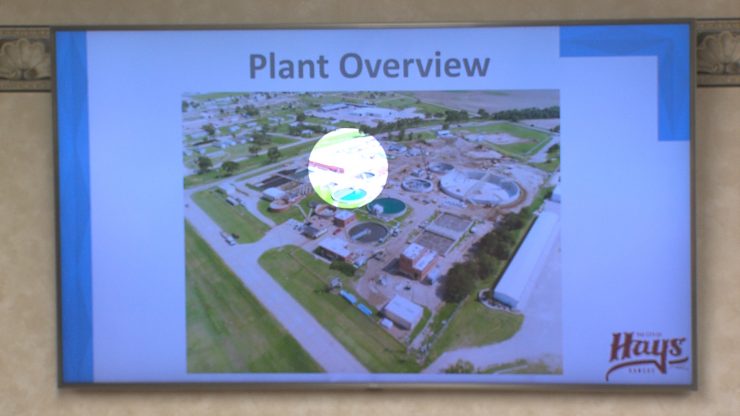
HDR Engineer Eric Farrow shows an aerial view of the wastewater treatment plant rebuild.

BY BECKY KISER
Hays Post

Reconstruction of the Hays wastewater treatment plant has reached the halfway mark, underway for 13 months and another 13 months to go.

A progress update was presented Thursday night to the Hays city commission by Eric Farrow, HDR on-site engineer at the facility.

“We kicked off the project May 31, 2017, with the notice to proceed and final completion is set for Sept. 15, 2019,” reported Farrow.

It may be finished before then.

“We continue to get schedule updates from the contractor monthly and the most recent schedule we have is July 15th next year, less than one year.”

“That’s wonderful,” interjected Commissioner Sandy Jacobs.

Farrow also noted there have not been any change orders to date in the $28.4 million plan.

Within a couple of months, new wastewater will be flowing into the new structures on the plant site, 1498 E. U.S. Highway 40 Bypass, and begin the start up.

“We’re not quite to the point where we’re testing the equipment out yet. We’ve tested the tanks and the pipes and things to make sure those are within specification. The process equipment will be one of the next items [to be tested.]”

Farrow expects to have the liquid equipment train of the plant improvements tested and started up by his next report to the commission on October 25. “Beyond that is the solid train, and I’m sure we can share some of that with you then,” he said.

The rainy summer has not slowed the work at the plant site, according to Farrow, but it’s a different story at the Fort Hays Municipal Golf Course.

This pond at the municipal golf course will provide additional storage capacity for reuse water and ultimately, irrigation to the golf course.

The pond will provide additional storage capacity for the reuse water and ultimately, irrigation to the golf course.

“The golf course is in great shape but that also means the pond where we need to do some work is full of water,” Farrow said. “The city has made multiple attempts to pump down the water. With some dry weather, we hope to get out there. The contractor, M&D, just needs one to two weeks to get things in a position where we can start putting the final touches on the pond expansion.”

Farrow also talked about how the project is starting to work between the design/builder and the city.

“The infrastructure is my favorite thing to present an update on and it looks nice but we’re getting to the point where we have things like operational and maintenance manuals being developed. We have SCADA, which is the controls to the plant, getting developed.

“The city has been very forward in what its ‘asks’ are. I think the design/builder has delivered on that so far, just general operations and layout of the plant, so that staff is trained when we have that liquid start up going and then they are prepared when the first maintenance item comes up. I’m sure they’re excited about that,” Farrow joked.

“It’s coming together in that sense as well, both at the construction level and on the final operations side too,” he concluded.

The Burns and McDonnell/CAS Constructors team is design/builder for the project’s second phase for construction.

Hays initially had a Jan. 1, 2018, deadline to have the new wastewater treatment plant operating.

However, problems with CDM Smith, the Wichita firm hired for Phase 1 Design services and development of a GMP (Guaranteed Maximum Price) to rebuild the aging plant, caused a delay in the process. The city terminated that arrangement Aug. 18, 2016, after the Phase 1/Design portion of the contract was completed and awarded the Phase 2/Construction contract to Burns and McDonnell/CAS.

The Kansas Department of Health and Environment agreed to extend the completion deadline to Sept. 1, 2019.

The city was fined $18,000 in 2012 by the Environmental Protection Agency (EPA) for excessive levels of phosphorous and nitrate. The current wastewater treatment facility was built in 1953. The plant must be upgraded to meet stricter KDHE and EPA permit requirements.

Resurfacing project begins on K-27 in Wallace County

KDOT

Starting this week, the Kansas Department of Transportation will begin work on a mill and overlay project along K-27 in Wallace County.

Project work includes a 2 1/2-inch mill and inlay followed by a 1 1/2-inch overlay beginning at the Sherman County line and moving south to the Greeley County line. Traffic will be reduced to one lane and controlled by flaggers and a pilot car during daylight hours. Minor delays not exceeding 15 minutes should be anticipated. Work is expected to be complete by end of October.

Shilling Construction of Manhattan is the primary contractor for the project with a total contract cost of $4.5 million.

Hays student to perform in Cornhusker Marching Band

Courtesy photo

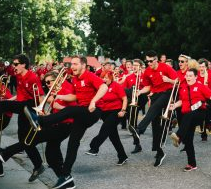
LINCOLN, Neb. — Alex Crowley of Hays is part of the University of Nebraska-Lincoln’s 300-member Cornhusker Marching Band, which will make its 2018 debut Sept. 1 at Memorial Stadium with pregame and halftime performances at Nebraska’s football season opener against Akron.

Crowley, a senior music education major, plays trombone.

This year’s band includes representatives from nearly every region of the country, though 80 percent of the students are from Nebraska. Twenty-five percent of the students are music or music education majors. The rest are studying in more than 70 other degree programs across campus. Each band member passed two auditions to gain admittance to the group.

Crowley

Anthony M. Falcone, associate director of bands in the Glenn Korff School of Music, is the director of the Cornhusker Marching Band. Douglas W. Bush is the assistant director of bands and assistant marching band director. Carolyn Barber, Ron and Carol Cope Professor of Music, is director of bands. Other band staff members are graduate teaching assistants Sarah Aymond, Christopher Brandt and Ruben Gomez. Leon Zajimovic is the percussion instructor, and Michaela Vestecka is the color guard instructor. Rose Johnson is the administrative technician, Jan Deaton is the office associate, and Nolan Schmit is the “voice” of the band.

The drum majors for the 2018 marching band are junior Jacob Coughlin of Omaha, senior Rachel Hoffman of Beatrice and junior Ethan Millington of Cortland. The twirlers are junior Hannah Kollmann of Oshkosh, Wisconsin, and freshman Kimberly Law of La Quinta, California.

The Cornhusker Marching Band, which resides in the Korff School, was founded in 1879 as an ROTC unit and is one of the oldest marching bands in the nation. The band has received many honors throughout its 139-year history, including a Distinguished Recognition Trophy presented by John Philip Sousa in 1927 and the John Philip Sousa Foundation’s Sudler Trophy in 1996. The Sudler Trophy is the highest honor given to collegiate bands.

The “Pride of All Nebraska” has been seen by millions of viewers on television. The band was the first collegiate ensemble to perform at all of the major football bowl games: Rose, Orange, Fiesta, Sugar and Cotton. The full marching band will travel to the Nebraska at Wisconsin game on Oct. 6.

For the full list of band members, visit https://go.unl.edu/xd07.

Tour aims to find the next wave of Kansas rural innovators

Hunt for Opportunity Tour to kick off on Sept. 20 in Colby

FHSU University Relations

TOPEKA – The Kansas Small Business Development Center Tech Innovation Center has announced Encountering Innovation: The Hunt for Opportunity Tour, which will kick off Thursday, Sept. 20, in Colby.

Ralph Lagergren, serial inventor and businessman, will represent the SBDC Tech Innovation Center and lead the charge to find rural Kansas inventors, patent holders, and business owners who have an idea with potential for commercialization.

Lagergren has developed successful products across several industries, but is probably best known for selling a grain-harvesting combine design to John Deere. In several hour-long sessions open to the public throughout the tour, Lagergren will share his own stories of moving ideas from concept to production. Topics include how to sell, manufacture, license, develop, prototype, and patent.

One-on-one sessions will be made available and provided at no cost to the innovators interested in confidential business advising. To attend the public events or to schedule business advising, innovators are encouraged to contact their local Kansas SBDC centers at https://www.kansassbdc.net/kansas-sbdc-locations/.

In addition to speaking with prospects about moving ideas through the innovation lifecycle, Lagergren will be promote Encountering Innovation: Delivering Innovation to the DoD and Beyond – a week-long event that starts Monday, Oct. 8, at the Kansas SBDC at Johnson County Community College in Overland Park.

This is the second year for Encountering Innovation. Innovators from across the Midwest are invited to the October event to pitch their ideas to technology scouts from the U.S. Department of Defense. Innovators are also invited to share “public BLUFs” aka “Bottom Line Up Front” with attendees during a poster board event on Tuesday. For more information, contact https://www.encounteringinnovation.com.

On Tuesday, Oct. 9, the Encountering Innovation conference will be open to the public. Innovators, incubator managers, venture capital managers, intellectual property attorneys, SBIR applicants, and others are encouraged to attend.

Registration to the conference is open at https://ce.jccc.edu/courseDisplay.cfm?schID=10481

Supporting Data
In Kansas, small business innovators and universities build value by connecting with government contractors and securing intellectual property. The U.S. Patent and Trademark Office, Rocky Mountain Regional Office in Denver, Colorado, serves the state of Kansas.

According to the USPTO website:
•        4,597 utility patents have been issued to Kansans since June 2014.
•        Kansas innovators registered 1,927 trademarks in 2017.
•        The 3 biggest patent areas for Kansas are telecommunications (US patent classification 455), multiplex communications (class 370) and financial, business class data processing.

Supporting Data
At the October 2017 Encountering Innovation event:
•        U.S. Department of Defense Tech Scouts expressed interest in 44 of the 57 technologies they were introduced to during the event.
•        Twenty-seven of 57 innovators connected with a DoD contact.
•        Seventeen of 57 innovators were referred to another federal agency.
•        Five additional innovators received a referral or recommendation that could help move their product forward.

About Kansas SBDC
The Kansas SBDC is a statewide advising, consulting, and training service for small business (typically less than 500 employees) funded by federal, state and local partners. Funding allows the Kansas SBDC to provide advising and training (i.e. financial analysis, marketing, and management) to businesses across the state at low or no cost. Kansas SBDC is an accredited member of America’s SBDC, the most comprehensive small business assistance network in the United States.

To learn more, visit https://www.kansassbdc.net or call 877-625-7232.

For more information on the Kansas SBDC, contact Lisa Roberts, 785-296-6514, [email protected]

Warm, windy Tuesday

Today Mostly sunny, with a high near 82. North wind 10 to 16 mph.

Tonight A 20 percent chance of showers and thunderstorms after 1am. Mostly cloudy, with a low around 59. North northeast wind 8 to 14 mph.

Wednesday Mostly sunny, with a high near 80. North northeast wind 7 to 9 mph becoming east southeast in the afternoon.

Wednesday Night Partly cloudy, with a low around 63. Southeast wind 6 to 9 mph.

ThursdayA 20 percent chance of showers and thunderstorms before 1pm. Mostly sunny, with a high near 91. South wind 8 to 14 mph.

Thursday Night Partly cloudy, with a low around 72.

Friday Mostly sunny, with a high near 97.

Ellis County receives $130,000 grant for outdoor warning sirens

Submitted

The Dane G. Hansen Foundation, based in Logan, notified Ellis County Fire and Emergency Management of approval for a grant from the foundation for $130,000.

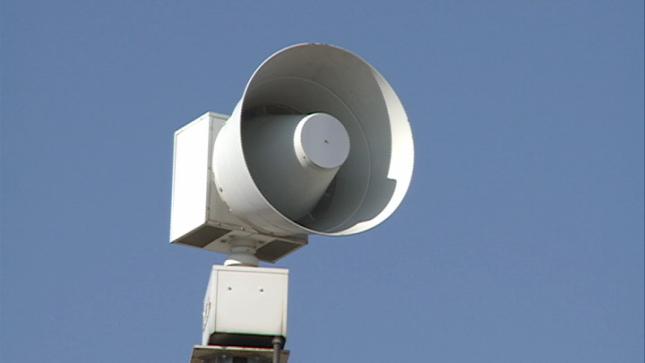
The grant was submitted to assist in the purchase of new outdoor storm warning sirens throughout Ellis County.

The grant will directly help reduce the costs of sirens purchased for Antonino, Catharine, Ellis, Munjor, Pfeifer, Prairie Acres, Schoenchen, Victoria, Walker, and an area east of Hays.

The new weather warning system will replace storm sirens that are about 40 years old and are meeting the end of their expected lifespan.

The new system will allow the outdoor sirens to more adequately alert Ellis County residents in the event of a tornadic emergency.

The sirens will be linked to monitoring system, which will automatically notify officials if there is a maintenance issue with a siren.

Also, this new weather warning system will automatically activate the sirens after a tornado warning has been issued by the National Weather Service.This additional time is passed to the residents during the tornadic event to take shelter.

Finally, the new sirens will be installed with battery back-ups to allow the sirens to still activate during power outages.

This new computer system will allow partnerships between the Ellis County weather warning system with local businesses, schools, assisted living facilities or any others who are interested. This will allow those interested to purchase indoor devices which would be linked to the Ellis County system to alert residents who are indoors with devices similar to a fire alarm.

As a reminder, outdoor warning sirens are designed to only notify residents who are outdoors and not those who are inside a structure.

This project also includes assistance from Midwest Energy to install utility poles and provide electrical service to the sirens. Midwest Energy is providing these services at a lower cost to help lower the expense of this project.

“Ellis County greatly appreciates the support from the Dane G. Hansen Foundation as well as their continuous support for northwest Kansas projects,” a press release said.

Kan. Sen. Bowers elected to lead national women’s legislative board

36th Dist. Sen. Elaine Bowers (R-Concordia)

CONCORDIA- Kansas Senator Elaine Bowers (R-Concordia, 36TH Dist.) has been elected as the President of the Executive Board of the Women’s Legislative Network of the National Conference of State Legislatures (NCSL).

The Women’s Legislative Network is dedicated to promoting the participation, empowerment, and leadership of women legislators in the 50 states and U.S. territories. There are currently 1,875 women serving in state legislatures across the country. Every female legislator is a member of the Network by virtue of her service, and the organization is governed by a bipartisan, regionally-balanced board of 15 directors. Recently, the Network has been tackling issues such as women’s leadership, women in the workforce, workplace culture, STEM education, social media, and civic education.

Senator Bowers was elected on August 2nd at the Women’s Legislative Network annual business meeting during the NCSL Legislative Summit in Los Angeles.

“It is an honor for me to represent Kansas and lead the Women’s Legislative Network,” Bowers said. “I look forward to working with female leaders throughout our country as we aim to promote the participation and empowerment of female legislators.”

The Executive Board of the Women’s Legislative Network is made up of a president, president-elect, vice present, past president, eight regional members, two at-large members, and a representative from the National Order of Black Elected Legislative Women.

– SUBMITTED –

GILLILAND: Xtreme Wildlife Rescue

My wife has gotten hooked on a couple British TV shows that are all about rescuing wildlife, and the British take that VERY seriously. Thing is, they rescue wildlife that don’t need or really shouldn’t be rescued. In one particular segment of the show they repaired the broken leg of a robin. Really? Now I like robins as well as the next guy, but I’ll bet the money spent on that operation could have bought real guns for a few of their “Bobbies” to carry instead of just nightsticks! If only the Brits’ put as much effort into finding a new phrase to replace “Bloody Hell!”

Steve Gilliland

Some of the things they rescue on the shows are huge boa constrictors and pythons that have evidently been turned loose by disenchanted owners who possibly awoke one morning to find the beast wrapped around one of their body parts, prepping them as a snack. They bag them and take them back to their rehab center, where they weigh, measure and check them over to assure they are healthy. Now I’m a snake guy and snakes don’t bother me, but if I came across a snake like that, the rescuers would find it VERY unhealthy when I delivered it. And then there’s the question of what to do with them. Unless they plan to UPS them back to Africa where they belong, they can’t just turn them loose in the neighbor’s hayfield. I wonder if British homeless shelters accept snake meat.

Then there are the badgers. The British version of a badger looks slightly different than ours, and they don’t seem to be mean at all, but they’re everywhere! Not an episode of the show goes by that they don’t scoop up a badger from someone’s flower garden. They have an entire commune of badgers back at their facility that will eventually be released back into the wild. If word ever got out that I caught and released a badger in these parts, I’d be the one needing rehab! And heaven forbid one of them should appear a little sickly; if so, it’s all hands on deck and the animal ER springs to life!  And if one of the little beggars happens to expire on their watch, it’s Katie-bar-the-door and the whole staff appears to need grief counseling. I’ve come to wonder if they’ll shed as many tears at their “mum’s” passing.

Bob the Vulture

A couple years back the North American Falconry Association (NAFA) held its annual convention in Hutchinson, KS.  Amongst all the exotic birds of prey from all around the world sat Bob the Turkey Vulture. Now Bob was regal in his own way, but setting there on his perch with his wings all fanned out, he looked like Goofy in a room full of Snow Whites. Bob’s story begins with falconers Mario and Brandi Nickerson from Ft. Worth, TX who also run Nature’s Edge Wildlife Rescue, specializing in rescuing (there’s that word again) reptiles and birds of prey. Some years back they got some calls about an errant buzzard in town, and one evening they were told the thing was waltzing around in the middle of the football field while practice was in session. Can you imagine; to a football field full of city boys that must have seemed like the stone gargoyle had come down from the front of the court house. The local animal control people were afraid to approach Bob, probably fearing he was Dracula in disguise and would pounce on them for a snack.  When they arrived, Bob was on the roof of the house next door, so they retrieved a dead squirrel found stuck in the fence and tossed it near the house. Bob unceremoniously flew on down and began gnawing on their offering. With tarps, nets, an open pet crate at the ready and EMT’s on standby they surrounded ole’ Bob, expecting a rodeo, but he again called their bluff and simply waddled into the crate with his treat in his mouth.

Back at the Nickerson’s home, the crate containing Bob was put temporarily in their kitchen till they could figure out Bob’s story. Maybe a vulture in your kitchen is the Texas equivalent of a garbage disposal? I’m thinkin’ that to the British wildlife “rescuers,” having a buzzard in your kitchen would put you right up there on a pedestal with the Queen mum herself. Anyway, Brandi said that the next morning when the cage door was opened and she stood there with Bob’s breakfast (one can only guess what that might have been) he charged out the door and across the kitchen aggressively for his hand-out. Long-story-short, they were pretty sure that given Bob’s reaction to humans and other physical characteristics they saw, he had been raised by humans and recently turned loose to fend for himself. I’m not sure what someone was thinking when they took in a turkey vulture chick as a pet. Did they not consider that one day it would grow into a full-grown buzzard?  Would walking him through the park on a Sunday afternoon get as many girls as a puppy? I suppose you could always fly him like a kite.

The Nickerson’s credentials allow them to keep ole’ Bob for educational purposes which is good. I can only guess what goes through a first grader’s mind when seeing a live turkey vulture close up.  Although not really considered a pet, can you imagine the conversation starter Bob would be?  And would you list him in your profile on an online dating site? “Outdoors loving animal rescue hero with pet turkey vulture looking for gal who likes black and has always wanted a pet buzzard in her kitchen” Anyway, I’m glad ole’ Bob has found a good home, and who knows, maybe he can be trained to start the dishwasher and run the vacuum cleaner once-in-awhile!

Steve can be contacted by email at [email protected].

Copyright Eagle Radio | FCC Public Files | EEO Public File