We have a brand new updated website! Click here to check it out!

SCHLAGECK: Shop smart

John Schlageck writes for the Kansas Farm Bureau.
While food remains a bargain in the United States, the average American household spends more on food each year. What’s even more interesting is the average American may soon spend more on dining out than buying groceries.

In 2016, the average American household spent approximately $600 a month on food, according to the Bureau of Labor Statistics. Nearly 44 percent of that was spent in bars and restaurants.

If your budget is tight, eating at home can be a great way to save some extra cash. Buying groceries, instead of eating out can present the average consumer with a lot more flexibility than fixed costs like rent, fuel, electricity, etc.

Almost every shopper has compiled a list of cost-cutting ideas of his or her own. The following list is by no means complete but contains effective ways to save at the supermarket.

Begin saving money by planning meals one week at a time.

Shoppers should know what they are buying. With thousands of items in the modern supermarket, product information is essential in selecting the best buy.

Like all education, this requires some reading, listening and studying. For example, the product label is a source of information on nutrition, menu use, quantity and quality of the food item.

Next, cost-conscious shoppers must buy when and where the price is right. There are many times to buy on special, buy store or generic brands or to buy in quantity. They key is keeping abreast of the price practices of our highly competitive supermarkets.

Shopping regularly at two different stores is an informative practice and leads to savings because different stores usually specialize in different items.

Accurate record keeping has become an important part of a smart shopping routine. Money-saving ideas take time but result in time well spent. One-half hour of planning before each weekly shopping trip can result in savings.

If you’re not already using coupons, consider doing so. By collecting coupons for an hour each week, shoppers can save as much as $200 a week.

Cost-conscious shoppers influence the entire food industry. If shoppers do not check prices, retailers may display items that sell by saturation advertising or gimmick packaging. Both add to food costs.
Smart shopping can result in satisfaction instead of frustration. Initially this satisfaction results from actual savings in the family’s food budget. Secondly, the wise shopper realizes intelligent buying keeps our food industry the best in the world.

Securing the most for your food dollar is significant to every consumer in this country. It is also well worth the effort.

John Schlageck, a Hoxie native, is a leading commentator on agriculture and rural Kansas.
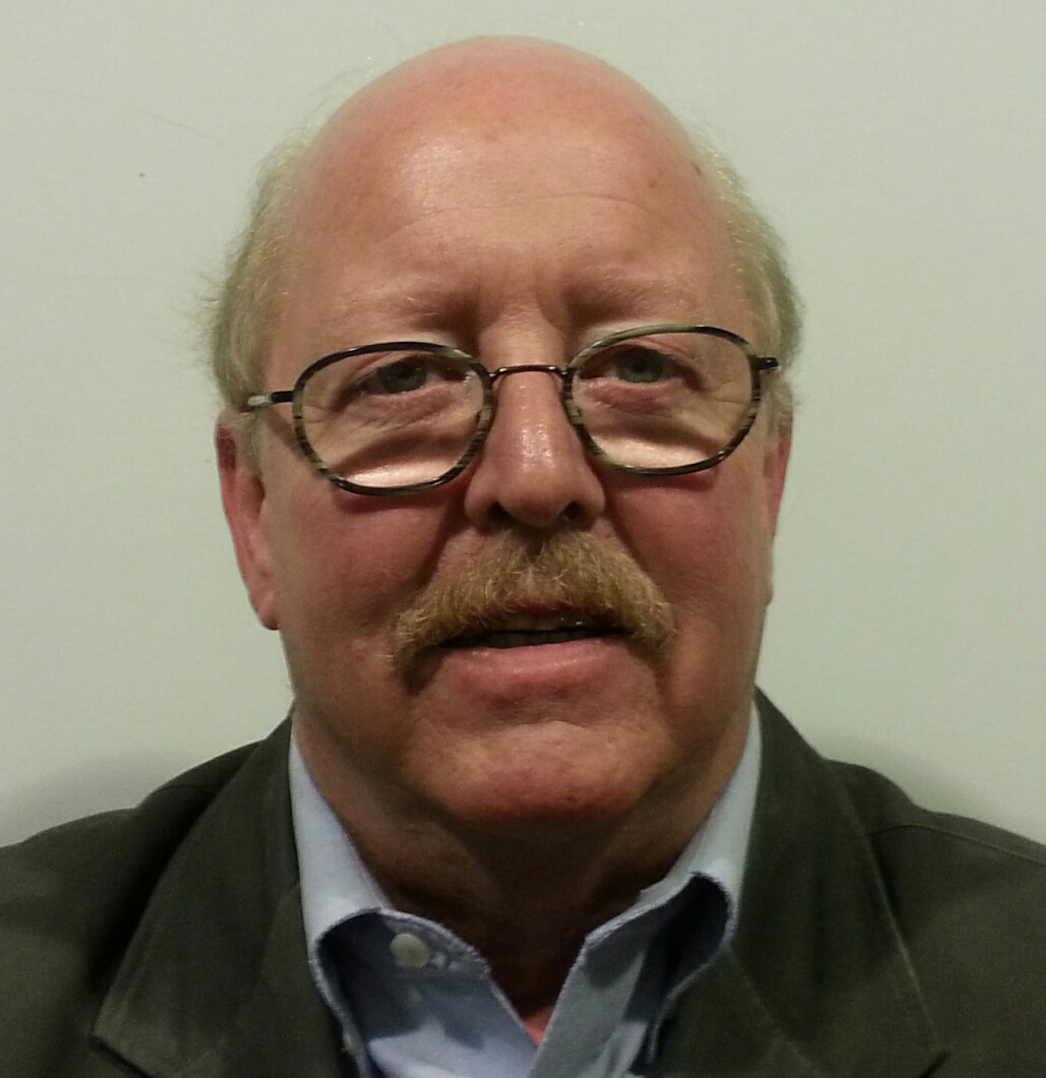
HAWVER: Reports document Kan. candidates’ friend list

Martin Hawver
OK, we all remember mom’s advice: You can tell a lot about a person by knowing who his/ her friends are.

That’s the basic, very simple message most of us grew up with, and it is probably still good advice now that we’re old enough that we’re not sizing up potential school friends by the type of bicycle they ride or the group they huddle with in front of the hallway lockers.

Well, as a person who once wandered into a tavern one hot summer day and quickly discovered I was the only guy there without a do-rag on his head, and everyone else was wearing a black leather jacket…it can be the crowd that someone runs with and identifies with that gives us some sense of just how good a friend they are going to be.

Now…it’s just a dab different in the Legislature. The Republicans tend to hang out with Republicans, Democrats tend to hang out with Democrats, and there are those who just hang out with everyone, trading jokes, talking about bills, suggesting amendments.

We can’t go on the floor of the House where all 125 representatives stand for election or re-election this fall, but we can take a look at who those candidates’ friends and supporters are…

That “behind the scenes” look at legislative candidates may just begin with a peek at their campaign finance reports…which this week become public record for state office seekers. The reports are on-line at the Kansas Governmental Ethics Commission website under the “Campaign Finance heading” and the subhead “View Submitted Forms & Reports.” (Here’s the link: https://ethics.kansas.gov/campaign-finance/view-submitted-forms-and-reports/ ) Some reports, due July 30, came in early; some will trickle in over a few days.

You just go to that list and can look at statewide election campaign finance reports plus reports for House and Senate and State Board of Education races—and yes, down a couple lines, the finance reports of PACs and other contributors.

So…what do you find?

Well, you find a list of everyone who has made a $25 or more contribution to a campaign. And that’s where you find out who a candidate’s friends are, and just how much money each of those friends chipped in toward the yard signs and bumper stickers and campaign flyers that sprout in the days before the Aug. 7 primary election.

Find your legislative district’s candidates, click on the last item on the line with their names and you’ll see just who their friends are. Just like Mom said to do.

What do you folks with enough time to scour the list of campaign contributors look for? Well, it depends on what you want to learn.

First, of course, is how much money the candidate has for his/her campaign. And then you find out where it came from.

Individual contributions? A lot of them probably mean that the candidate has a lot of friends, which is generally good. Small contributions from neighbors? Probably means that the candidate is the one who will rush to the store for ice during a neighborhood cookout. Or that the candidate keeps his/her yard tidy and buys scout cookies from the neighborhood children.

Or…it could mean none of the above and that the neighbors would be willing to contribute, or even vote, for a candidate just to get him/her out of the neighborhood and into the Statehouse for 90 days a year.

Those business and political action committee contributions? Well, they probably mean that a candidate is on board with the issues that the PACs represent. Is that good or bad? Some of both, but it will tell you something about how the candidate is likely to vote on legislation.

Mom was right. It does come down to whom his/ her friends are…

Syndicated by Hawver News Company LLC of Topeka; Martin Hawver is publisher of Hawver’s Capitol Report—to learn more about this nonpartisan statewide political news service, visit the website at www.hawvernews.com

Hays PD will conduct tactical training this week

The Hays Police Department will be conducting training on July 31 between the hours of 3 and 7 p.m. at 317 East Fifth.

Police officers will be training with special tactical equipment. This training is being done with great care and safety.

As a homeowner, you may see law enforcement officers move through your area. There is no need to be alarmed. The officers are merely conducting a realistic training exercise and there is no danger to the community.

If you have any questions or concerns, you may contact the on-site supervisor (Team Commander Tim Greenwood or Team Leader Aaron Larson), or Chief Scheibler at 785-625-1030.

SouthWind CrossFit expands into new space, plans new classes for youth

A fitness class at SouthWind CrossFit does wall balls during a recent workout.

By CRISTINA JANNEY
Hays Post

Tucker and Jill Mall and Josh Beiker recently realized their dream of owning their own building with the move of their business SouthWind CrossFit to the former Fire and Ice Club, 229 W. 10th, in downtown Hays.

“We had always envisioned owning the location that we are in, and we had actually tried to buy our old location,” Tucker Mall said.

The former club, with its 8,000 square feet of mostly open floor plan, was ideal for the workout facility. The move increased SouthWind’s space by about 3,000 square feet. SouthWind was formerly at 2005 General Custer.

The high ceilings at the new location also lend themselves well to the gym’s 15-foot rope climbs and workouts, such as wall balls in which participants throw a weighted ball and try to hit a mark on the wall near the ceiling.

SouthWind CrossFit is still waiting on some padding for the floor of their new space at 229 W. 10th St. The building used to be a night club.

Although the Malls and Beiker were not specifically looking to locate downtown, Tucker said they have been very welcomed by the downtown community.

Tucker said SouthWind will be expanding its offerings in its new location. This includes an expansion of its CrossFit Kids program and addition of CrossFit Teens.

CrossFit can be appropriate for a variety of ages and fitness levels. SouthWind also offers a Legends class for more mature or deconditioned athletes. Tucker’s parents participate in CrossFit, and they are over 60.

“My dad asked me, ‘When does it get easier?’ and I said, ‘When it gets easier, we’re not doing our jobs because we want to challenge you all of the time,’ ” Tucker said. “I have been doing this a little over six years now, and I keep coming back for more because there is always something more challenging, and it never gets stale, and it never gets old.”

CrossFit is defined as constantly varied, functional movement performed at high intensity. The workouts try to simulate movements that you would do in an average day, such as running, jumping and lifting. The wall ball workout, for instance, is a similar motion to Tucker tossing his child in the air at home when they are playing.

“We want to mimic everyday life and make your body more functional,” he said. “Eventually, we want you to have general physical preparedness. Your are generally physically prepared for anything that life can throw at you.”

Jill Mall works out at SouthWind CrossFit with one of the gym’s classes.

Jill Stecklein of Hays has been doing CrossFit for four years, a year and of half of which has been at SouthWind. She switched to CrossFit from primarily running, which was hard on her joints and she thought put her at risk for injury.

“I really like to do CrossFit because it has a wide variety of workouts that you get to do,” she said. “You get to work on strength training, flexibility, endurance. The classes are really greatly organized by all the coaches, and you’re led on how to do the movements. Throughout the workout, people are watching your form for you. The programming is really solid, so it helps me to get a workout really efficiently in an hour.”

Stecklein said an efficient workout is important to her because she is a mom and works.

Stecklein, 29, modified her workout and continued her CrossFit classes through her pregnancy with her son, Kolbe, who is 1 and a half.

“Also I really like the community of CrossFit,” she said. “Going to class with other people who have the same goals really helps to inspire you to really work toward your best and really work on your fitness goals.”

Tucker said he and Jill have tried to build a community at SouthWind CrossFit. Class sizes are small from between five and 20 people.

“The people you are working out with here are not just accountability partners, they are friends,” he said. “It is a family here. Everyone knows your name when you walk in the door. That is more powerful than anything else we have to offer here.”

SouthWind offers personal training. However, Tucker said coaching is strong even within the classes. SouthWind also requires all new members to participate in a program called On Ramp, which is four one-on-one classes that prepare you for group classes. Cost for a monthly membership is $90, which Tucker said is less than the average personal trainer.

SouthWind offers classes in the early morning, at noon and in the evening. More details can be found on their website.

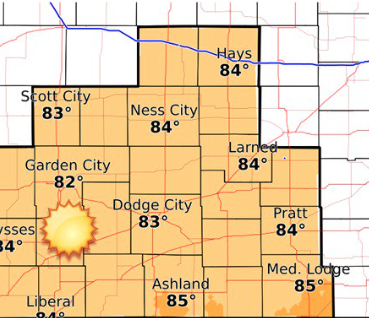
Sunny, mild Tuesday

Today Sunny, with a high near 83. Northwest wind around 6 mph becoming northeast in the afternoon.

Tonight Mostly clear, with a low around 58. East northeast wind around 6 mph becoming southwest after midnight.

Wednesday Sunny, with a high near 89. Southwest wind 6 to 9 mph.
Wednesday NightMostly clear, with a low around 63. Southeast wind around 7 mph.

Thursday Sunny, with a high near 91. South southwest wind 7 to 11 mph.

Thursday Night Mostly clear, with a low around 68.

Friday Sunny, with a high near 92.

News From the Oil Patch, July 30

By JOHN P. TRETBAR

The total Kansas rig count is up 30% from last year at this time. Independent Oil & Gas Service reports 14 active drilling rigs in eastern Kansas, down five, and 33 west of Wichita, which is up three for the week. Drilling is underway at two leases in Ellis County, and three in Russell County. Operators report drilling ahead at sites in Ellis and Stafford counties. They’re moving in completion tools at three wells in Barton County and six in Ellis County.

Last week’s national rig counts from Baker Hughes showed 1,048 active drilling rigs nationwide, down one gas rig but an increase of three rigs searching for oil. The count in Louisiana was down four and in Oklahoma the total dropped by one. Totals in New Mexico and Texas were each up one. Canada reports 223 active rigs, up 12.

Kansas operators filed 49 new drilling permits last week, 23 east of Wichita and 26 in western Kansas, including three new permits in Barton County, eight in Ellis County, and one in Stafford County. That’s 955 permits for drilling at new locations across the state so far this year, compared to 741 at this time last year.

Independent Oil & Gas Service reports 45 newly-completed wells for the week. That’s 898 so far this year, nearly 100 ahead of last year at this time. Operators completed 31 wells in eastern Kansas and 14 west of Wichita, including one in Barton County.

The government’s weekly inventory reports have gone from the biggest draw-down in years to an unexpected increase to another big draw-down. The government reported inventories of 404.9 million barrels for the week ending July 20, which is down 6.1 million barrels for the week and about 3% below the five-year average. U.S. crude oil imports dropped by more than 16%. Gasoline inventories dropped 2.3 million barrels last week but remain about 4% above the five year average for this time of year

For the second week in a row, U.S. producers pumped record amounts of crude oil last week. The U.S. Energy Information Administration reports 11 million barrels per day for the week ending July 20. (The totals are rounded to the nearest 100,000 barrels)

A jury verdict in a Texas court against an oilfield services company may have set the record for the largest civil penalty ever handed down in an accident involving a truck. The jury awarded a Texas man an eye-popping $101 million in damages from a 2013 DWI crash involving the illegal driver of a truck hauling fracking sand. The verdict against FTS international is believed to be the first-ever nine-figure, truck-related, personal injury award. Of the $101 million, about $75 million were punitive damages levied against FTS, which, according to the plaintiff, had plenty of chances to pull the driver off the road but never did.

The sale of the Trans Mountain oil pipeline will be finalized with the Canadian government as the new owner, after a deadline passed that would have allowed them to flip it prior to closing. Bloomberg reports Canada will seek a new buyer without Kinder Morgan’s help, amid fears of legal and political delays. The government’s $3.4 billion purchase gave it until Sunday to co-market the pipeline with an eye to selling it to a third party. About a dozen parties have signed on as potential buyers, and the project could wind up being bought by a Canadian-led consortium, as opposed to a single buyer. The pipeline would move oil from Alberta to Canada’s west coast, an effort by Canada to tap markets in east Asia.

There were no injuries or oil spills, but attacks on two tankers in a key shipping lane in the Red Sea prompted Saudi Arabia to temporarily halt oil shipments along the route. Two vessels belonging to the Saudi National Shipping Company were attacked by militias from Yemen.

The Wall Street Journal reports the five largest Western oil companies are set to generate about $90 billion a year in excess cash in 2018 and 2019, exceeding records set in 2008 when oil sold for nearly $150 a barrel. Exxon Mobil said second-quarter net income rose to $4 billion, up 18% compared to the same period a year ago. Profits at Chevron more than doubled to $3.4 billion and the company announced plans to begin buying back about $3 billion in shares of stock per year. French oil major Total said its net profit nearly doubled in the second quarter on higher prices and production to $3.72 billion, compared with $2.04 billion a year earlier. Royal Dutch Shell said its profits nearly tripled to $5.2 billion, and announced an anticipated $25 billion stock buyback. Norway’s Equinor, formerly known as Statoil, lagged behind expectations because of maintenance costs, but the company has already raised its dividend this year.

K-State professor: Questions outnumber answers in USDA’s tariff relief plans

K-State economist advises producers to communicate
their concerns about complex proposals

K-State Research and Extension

MANHATTAN – Along with producers across the heartland, agricultural economics experts have many questions about a world where tariffs threaten to upend the marketplace for crops and livestock.

Among them is Art Barnaby, professor of agricultural economics at Kansas State University, for whom the questions far outnumber answers right now.

On Tuesday, July 24, U.S. Secretary of Agriculture Sonny Perdue announced the U.S. Department of Agriculture will take several steps to assist farmers in response to economic damage from the current international tariff battle.

Barnaby

Chief among the steps USDA will take is providing $12 billion in relief via the Market Facilitation Program, which will provide incremental payments to producers of soybeans, sorghum, corn, wheat, cotton, dairy and hogs – markets that all have representation in Kansas.
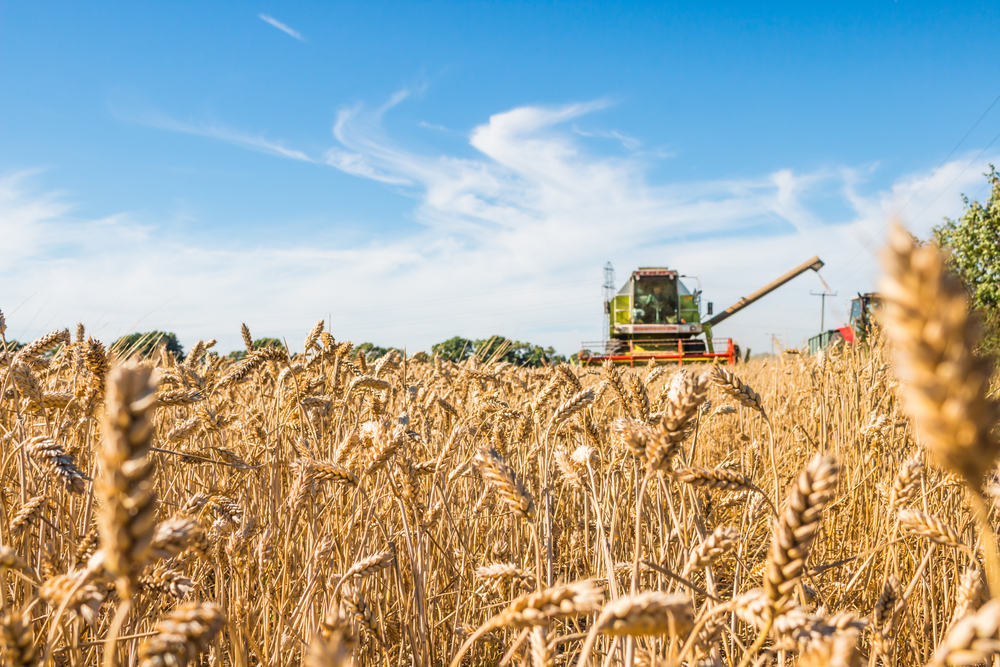
Details about how the process would work for crop producers are under development, which is a concern for Barnaby, a K-State Research and Extension risk management specialist.

He said the most important step producers can take right now is to make their voices heard.

“The (USDA) said in their announcement that they are going to ask for producer input into these decisions, which means it’s going to come through the commodity groups,” Barnaby said. “So if you’re a member of the wheat growers (association), you will want to talk to your representatives about how some of these decisions are going to be made.”

Questions about one decision lead to numerous follow-up questions, he added, showing just how tricky designing these relief programs will be.

“At this point the impression is that they’re going to calculate the cents-per-bushel lost and then multiply that times your 2018 production,” Barnaby said in an interview on the Thursday edition of Agriculture Today, a daily radio program produced by K-State Research and Extension.

“First of all, how much was the actual loss due to the trade changes? Was it $0.20 a bushel or was it $0.50 a bushel?” Barnaby asked. “I’ve already talked to a few economists that are probably going to be involved in trying to estimate that number, and they’re really shaking their heads because this is going to be a very difficult number to defend.”

Along with the ensuing disagreement over those numbers will come disputes about how much ought to be assigned to different crops. “You’re going to have the problem of, ‘Well, did soybeans drop by fifty cents but only cut corn by 10?’” Barnaby said.

Those questions assume a crop that wasn’t affected by drought, as much of Kansas was.

“The way this is being designed at this point, it works well if you’re in the corn belt with a good crop,” Barnaby said. “If you’re not, it may not provide nearly the kind of cash that you thought it was going to do when it was announced.”

Taking the questions to the next logical step, he said it’s unclear whether the $12 billion in MFP payments would include the estimated $5 billion that will go to Agriculture Risk Coverage and Price Loss Coverage payments, also distributed through the Farm Service Agency. “Or is it on top of those payments?” he asked. “That’s not really been clarified at this point.”

More questions abound:

How might crop losses affect payouts?
What about farms with below-normal yields that have been salvaged via grazing or silage?
And for those fields, could farmers be paid on appraised yield versus a full harvest?
What about payment limits?
How might all of this affect discussions about the 2018 Farm Bill, especially if urban congressional representatives view this as a bailout?

Barnaby noted that tariffs are political – and these are self-inflicted. “This is not a risk that you think about insuring,” he said. “It’s not even really insurable, and so to call it bailout, I think, is a little harsh.”

While it’s important to identify what this process is not, what’s even more important for producers is to participate in defining what it is.

“Get with your commodity groups,” Barnaby said. “Make sure your voice gets heard in these decisions.”

To ensure that no one is overlooked, he stressed that all groups need to speak up, because “you’re talking about folks that are inside the Beltway, and they never thought about these possibilities, yet they are affecting real farmers out here in the middle of the country.”

LETTER: Shultz the right choice for Kan. Insurance Commissioner

Kansans need an experienced advocate in the Insurance Department working to protect consumers. Clark Shultz has the experience and expertise to step right into the job. Clark has served consumers for the past three and a half years in the Kansas Insurance Department as the Assistant Insurance Commissioner. Prior to the working for the department Clark served in Kansas Senate and House of Representatives, serving as Chairman of the House Insurance Committee for nine years. I served with Clark in the House and sat behind him on the House floor. Clark was a thoughtful, principled legislator that held the respect of legislators across the ideological spectrum. Clark was also a licensed insurance agent and spent over a decade as an auditor, making sure insurance companies follow both state and federal law.

Clark has worked tirelessly for the people of Kansas and has made sure the Insurance Department’s top priority is to ensure that consumers are protected. He worked to increase transparency and efficiency in the department and provide Kansans with the highest quality service at the best cost.

Clark is not only the experienced choice in the race for Kansas Insurance Commissioner; he is also the conservative choice. Clark is 100% pro-life and has been endorsed by Kansans for Life. He is also endorsed by the KSRA and the NRA and earned the NRA’s coveted, “A+” rating. He was even awarded the KSRA “Legislator of the Year” award for his work shepherding an important carry bill through the legislature. Meanwhile his opponent, Vicki Schmidt, has a lifetime “F” rating. She has opposed every important gun issue for over a decade going back to repeatedly voting against concealed carry in 2006. What do gun rights and pro life issues have to do with the Insurance Commissioner? Recently the department investigated and fined an insurance company $70,000 for breaking a pro-life insurance law. Concerning guns, while the anti-gun crowd has failed repeatedly to push gun control by democratic means they have moved on to other ways to hurt law abiding gun owners. Recently they have pushed banks to stop processing gun sales and stop loaning money to gun related businesses. But the next big attack on gun rights could be from insurance companies.

Writing for TTAG John Dingell III writes, “Insurance is one of the most regulated industries in America, but its regulation is almost entirely at the state level. That regulation extends to the risk profiling of insureds, due to the various mechanisms to buy and sell risk amongst insurers. The most important mechanism governing the risk profiling of insureds is the acceptance of policies by risk pools. Thus, insurance companies don’t revise risk profiling standards at will; it’s a glacial process unless state regulators issue a diktat. This is probably why insurance companies haven’t already hit gun owners. But the idea for assessing the risk of gun ownership when pricing insurance policies is gaining traction.” We need an insurance commissioner who will push back on these attempts to circumvent Kansans’ right to self defense by pricing them out of being able to do so.

I hope you will join me in voting for Clark Shultz for Kansas Insurance Commissioner on August 7th.

Former State Rep. Travis Couture-Lovelady

Latin America becomes increasingly important market for Kansas wheat

By KAITLYN VICKER
Kansas Wheat

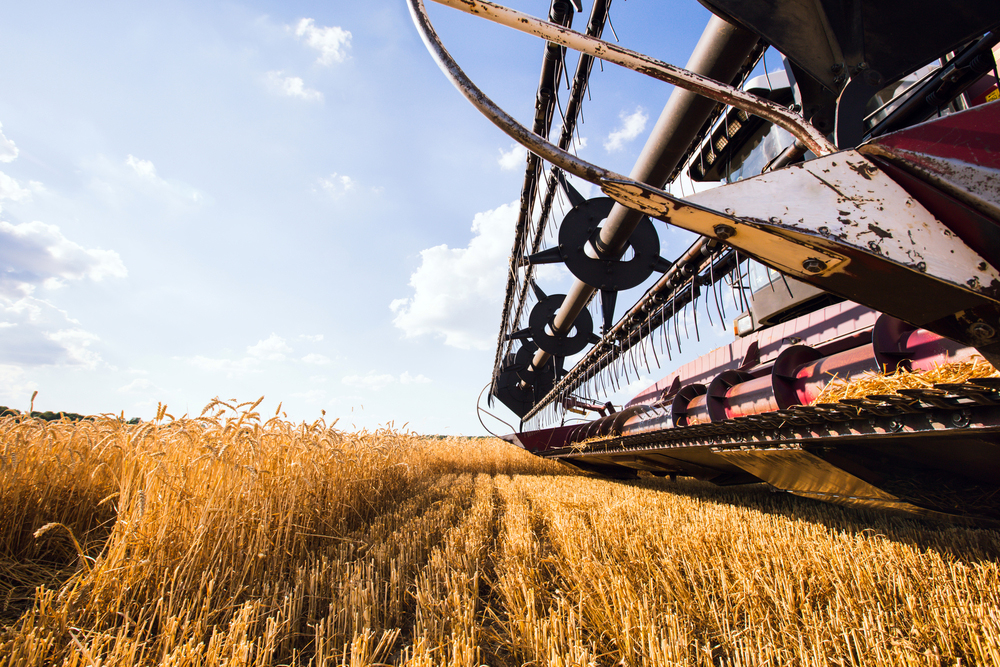
The Latin American region of Mexico, Central America and South America imports nearly one billion bushels of wheat annually, with 368 million bushels coming from the United States. Imports from the U.S. are expected to increase to more than 500 million bushels by 2050.

Fostering relationships with this expanding market has been a long-term priority of U.S. Wheat Associates (USW), the export market development organization for the U.S. wheat industry. USW holds a Latin American Buyers Conference every other year.

Attended by 97 participants representing 16 countries, this year’s conference was held July 18-20 in Brazil, as a way to nurture relationships between U.S. wheat farmers and buyers in the region.

“It’s significant that the conference was held in Brazil this year because Brazil is one the world’s leading wheat importers,” said Kansas Wheat CEO Justin Gilpin.

At the forefront of this year’s conference was the apprehension of a growing number of trade policy concerns. This was quickly replaced with the excitement and abundance of opportunities available from U.S. Wheat Associates and the 2018 U.S. wheat harvest.

USW President Vince Peterson illustrated the changing dynamics of global wheat trade and increased competitiveness from Russia and other non-traditional importers into the region. Mark Fowler, Vice President of Overseas Operations, followed up by highlighting the need for providing increased value for our U.S. wheat customers through additional technical service.

“U.S. Wheat Associates continues, with the variety of quality provided by the six classes of U.S. wheat available, to remain the best choice for our customers in Latin America,” said Fowler. “As the market becomes more competitive and our customers strive to differentiate their products to their customers, our ability to provide the technical service and product development assistance becomes even more vital to our success.”

Dr. Romulo Lollato, Extension Wheat Specialist at Kansas State University, spoke on “The Role of Agricultural Extension on Wheat Quality: A Case Study For Hard Red Winter.”

According to Gilpin, Lollato was able to communicate to buyers about what Kansas wheat farmers are putting into their crops for both management and quality.

“Buyers have a better understanding of what goes into the production and management of Kansas wheat for quality,” Gilpin said. “This will help differentiate us in a competitive marketplace.”

Aaron Harries, Vice President of Research and Operations for Kansas Wheat, said this conference is a chance for farmers to meet these buyers face to face, show their appreciation for their business and to allow them ask questions of the people who grow the wheat they are buying.

“I hope that the buyers and attendees appreciate the transparency we show,” Harries said. “We fully disclose information about the crop, even in years when our wheat crop isn’t that good. I hope they come away from the conference knowing that if they seek any information or expertise, we have that readily available for them.”

Harries said his biggest takeaway was that the emerging and expanding markets for Kansas wheat are going to be in Central and South America, because logistically it a lot easier to ship wheat from the United States to South America. It’s becoming cost prohibitive to ship U.S. wheat halfway around the world.

“Meeting with international wheat buyers in Latin America is important because we export half of the wheat that we grow every year. It is important for farmers to have those markets,” Harries said. “We try to continue fostering relationships with the buyers. Currently, the Latin American region imports 25 million metric tons (918.6 million bushels) of wheat annually, which is expected to increase to 35 million metric tons (1.286 billion bushels) by 2050. The U.S. enjoys 40 percent of that market share.”

SPONSORED: Open house, fall classes at Jackie Creamer’s The Dance Studio

Fall classes begin the week of August 20th. If you danced at Jackie Creamer’s The Dance Studio last year, bring a friend who didn’t dance last year and both get 1st semester for 1/2 price.

Join us for an open house and dancing with Vision Dance Company members August 10th from 5-7pm. Come and go and grab some cookies and lemonade. Enjoy getting to know the teachers and the studio and enroll for fall classes.

Click HERE for more!

Vision Dance Company auditions are August 7th-9th.

For more information, contact [email protected] or 785-623-1939.

Exploring Outdoors Kansas: Charlie and the salesman

Steve Gilliland

One of my nieces raises hogs, and just this week my sister (her mom) brought to my attention that the hog show at our county fair is Sunday if we want to go. That reminded me of the following story from our youth. So make yourself a sausage sandwich and sit back and enjoy “Charlie and the Salesman.”

We were about ten miles from the nearest large town, and our farm set at the end of a gravel lane nearly one-tenth of a mile long. Though we weren’t quite in the middle of nowhere, we could see it from our front porch. There was always livestock of some variety around because we five kids were all active in 4-H and FFA.

One of the resident animals was a big red Duroc boar hog named Charlie. Even though Charlie, at over four hundred pounds, was just a big pussycat, that’s still a lot of pussycat, so Charlie came and went pretty much as he pleased. This was before the days of one-piece fence panels, and woven wire fence was barely a challenge to him. We soon learned that the rule of thumb was, if Charlie could get his nose through something, the rest of him would soon follow! We had tried electric fence with equal results. If he got as much as a snout hair under the electric wire before he felt the jolt, it just incited him to continue forward taking several feet of the electric fence with him. The bottom line here is that Charlie pretty much had the run of the place and ruled the roost.

As I remember, the reason we put up with him was because he didn’t root or tear things up like you’d expect a four-hundred pound hog to do, and since our place sat so far from the road, and Charlie being a hog and all, he evidently didn’t have the ambition or drive to navigate his big carcass clear to the road and get into any trouble there either. He’d get out in the morning, graze around the barnyard and loll in the shade all day, then find his way back in again at night; quite unusual to say the least. All he seemed to require of us was his feed at night and a good belly scratch each time we passed him.

Mom had an upholstery shop built onto our house, and did a goodly amount of business, so there was a lot of traffic in and out of our long lane. Evidently, enough of her customers were from surrounding farming communities that if Charlie happened to be wandering about, they paid him no mind. Even the UPS drivers had learned to ignore Charlie when he greeted them from the middle of the drive. Occasionally, however, she’d get a visiting salesman from one of her fabric companies out of state, and these guys usually came straight from the “big city.”

One particular day, while working away in her shop, she suddenly heard a vehicle horn blaring from the driveway. Looking out the window, she saw one of the big city salesmen sitting in his van in front of her shop, one hand smashing the horn button as he peered frightfully out the driver’s side window. “Odd,” she thought. But even stranger was the fact that the whole van was rocking and wobbling as if being shaken by an earthquake.

This is probably as good a place as any to stop the story and tell you a little bit about our mom. Mom was about as big around as a minute and weighted about as much. She was a small spitfire of a lady who always had a cup of coal-black coffee in her hand (probably explaining her feistiness.) She loved nothing more than creating elegant pieces of furniture for people in her upholstery shop, but all the while remained as common as a dandelion. She loved to laugh and joke and would rather listen to the rock and roll songs my buddies and I played than anything. In fact she once told me she wanted a certain song by the rock band Three Dog Night played at her funeral.

So there sat the big-city salesman with an expression on his face like his whole life was passing before him, his eyes as big as hubcaps, in his van that was rocking and reeling like one of those old coin operated kiddy rides in front of the grocery store. Mom walked into the yard to unravel the mystery, and as she rounded the front of the van, there were all four hundred pounds of Charlie gleefully scratching himself on the front bumper! I’d love to have heard the conversation around the water cooler the first day that salesman was back at his company. “Come on guys, I’m serious! I really was trapped in my van in the middle of nowhere by Hogzilla! It was a huge, beastly red thing that weighed fifteen hundred pounds and could look through the windshield right into my eyes! If you don’t believe me go look at the red hair on the bumper.”

Now, knowing my mother, that salesman sat there for a while longer; not on purpose mind you, but it would be tough to chase away a four hundred pound hog and roll with laughter at the same time.

So goes the story of Charlie and the salesman. I don’t remember what ever happened to Charlie, but he probably died of old age as he may have even been too tough for sausage. And no, probably much to mom’s chagrin, we did not play Three Dog Night at her funeral. I hope this story gives you a chuckle or two, and thank you for allowing me to stray slightly from the usual outdoor shenanigans I try to bring you here in Outrageously Outdoors.

Steve Gilliland, Inman, can be contacted by email at [email protected]

MADORIN: Bird show at the water hole

Native Kansan Karen Madorin is a local writer and retired teacher who loves sharing stories about places, people, critters, plants, food, and history of the High Plains.

When public pools were first built during the WPA years, I am sure naysayers complained about wasting water and effort. However, during days of summer temperatures registering in the 90s or better, cool town water parks draw young and old like a magnet draws iron filings. On our hilltop, we’ve created the equivalent of the public pool for our resident birds.

As heat builds, wicking away moisture and leaving dusty creek beds, we place pans of water under nearby trees and bushes for our chickens. I expected local birds would visit, but the crowds approach Disney tourist proportions. These are especially a haven for adult birds parenting just-fledged adolescents. Their crazy behaviors lead to funny scenes at the local “pool.”

Young robins with mottled coloring and spindly bodies remind me of 6th and 7th graders who’ve reached adult height but haven’t yet filled out. Their parents come to drink and groom circumspectly. Their offspring come to quench their thirst and end up splashing half the water out of the container.

Orioles behave more cautiously regardless of age. Mature birds and adolescents come to the water alert and prepared to flee at the least disturbance. When juvenile robins join them, the bright orioles leave immediately. House finches and sparrows also tend, like their kin the orioles, to be businesslike in their drinking habits, focusing on function and skipping frivolity.

A flicker youngster and its mother refreshed themselves yesterday and discovered tasty insects in a nearby elm. Watching mom teach her baby to crawl up the coarse bark and pick out insects consumed at least 15 minutes of my morning.

Mom successfully pecked gourmet delights out of the rough texture. However, her offspring hunted without victory until the mother regurgitated insect chunks into its wide-open beak. I imagine she’ll be glad when that full-size child finds its own dinner.

To add to the entertainment, raucous blue jays are a rowdy bunch at the waterhole. They never come one or two at a time. A gang soon follows the first jay landing on the dish’s edge. It’s the equivalent of neighborhood kids agreeing to meet at the pool at the same time. Once these troublemakers arrive, even the chickens back off.

These pretty but noisy birds are the equivalent of bullies who push and dunk everyone else. By the time they finish splashing around, I have to rinse feathers out of the remaining water and refill the container.

Ironically, one little visitor challenges the blue jays to the water. We have a juvenile squirrel who sunbathes by the water pans. He doesn’t mind the other creatures who come to drink as long as the family dog is secured inside the house.

No matter how wild and crazy the robins and jays splash, that little squirrel lays outside the dish, preening like he’s in the shower. Between feathered visitors, he pulls himself up on the pan’s lip to slurp his fill.

While these water dishes aren’t permanent like a WPA pool, they serve the same purpose of providing refreshing breaks from summer heat. The lady watching from inside an air-conditioned house enjoys plenty of entertainment as well.

Native Kansan Karen Madorin is a local writer and retired teacher who loves sharing stories about places, people, critters, plants, food, and history of the High Plains.

Copyright Eagle Radio | FCC Public Files | EEO Public File