We have a brand new updated website! Click here to check it out!

CROSS: What’s our best energy policy going forward?

Edward Cross is president of the Kansas Independent Oil & Gas Association.

By EDWARD CROSS
Kansas Independent Oil & Gas Association

Debate continues across the country on our nation’s energy future. What is our best energy policy going forward?

Even during periods when much of the world suffers economic stagnation, most of us would agree that we still have a very high standard of living. Compared to previous generations, we are wealthier, healthier, have better technology, more mobility, and many more opportunities for a better life.

Several factors contribute to a higher standard of living, but one of the most important is access to reliable and inexpensive energy. Affordable energy is essential for almost every aspect of our modern lives. Affordable energy is needed to run the hospitals and laboratories that improve our health. Affordable energy is required to deliver electricity to our homes and put fuel in our vehicles. And it supports the millions of jobs associated with all of these things.

Concerns About Carbon
In general, the most affordable forms of energy come from fossil fuels, such as oil, natural gas, and coal. Compared to these energy sources, alternative fuels such as solar and wind power are considerably more expensive and less reliable.

Burning fossil fuels to generate electricity or provide power necessarily releases carbon dioxide (CO2) into the atmosphere. Carbon dioxide is a gas we exhale every time we breathe. Erupting volcanoes, decaying trees, wildfires, and the animals on which we rely for food all emit CO2. This by-product, which is essential for plant life and an unavoidable aspect of human life, is at the center of today’s climate change controversies.

There is vigorous debate about what effects carbon emissions may or may not have on our future climate. Recent studies suggest that future warming is likely to be substantially lower than computer model-simulated projections on which many climate scientists rely. The Intergovernmental Panel on Climate Change (IPCC) said eliminating all CO2 emissions in the U.S. would only reduce global temperatures a negligible 0.08o Celsius by 2050. But the damage to our economy and the well-being of American families would be enormous.

Those who believe that increased CO2 emissions inevitably lead to global warming believe this change is directly attributable to the widespread use of fossil fuels. Because they believe further warming will have catastrophic effects, they have waged a war on carbon for many years. They advocate restricting carbon-based fuels in favor of subsidized alternative energy and encourage policymakers to make fossil fuels more expensive in hopes of discouraging their use.

If the goal is really to reduce carbon emissions, it’s worth noting that the U.S. is already doing a good job of achieving that goal. A recent Energy Information Administration study indicates the U.S. emitted 23% fewer energy-related CO2 emissions in 2015 than in 2005. Furthermore, ozone concentrations have dropped by 17% since 2000.

Beware of Crocodile Tears
All too often state and federal proposals to tax carbon directly or launch new carbon tax schemes have much more to do with raising revenue than helping our environment. For those who prefer higher taxation to spending cuts, having an entirely new source of revenue is appealing. However, taxing carbon only takes more resources from the private sector to support swelling state and federal government.

A recent study analyzed probable effects of a U.S. carbon tax that starts at $20 per ton and then rises 4% per year, which is in line with recent proposals. The study suggested that such a tax would decrease household consumption, due to the increased cost of goods. The average household would have to pay 40% more for natural gas, 13% more for electricity, and more than 20 cents per gallon extra for gasoline. Costs would rise even more in subsequent years.

Price hikes like these can only mean lower standards of living and less opportunity. Families that spend a bigger portion of their household income on transportation, utilities and household goods are hurt, not helped, by carbon tax schemes that make traditional forms of energy more expensive.

Fossil Fuels are needed throughout the world to lift people up, which is different than a philosophy of embracing a zero-emissions world. Over 80% of the energy that the peoples of the world use to survive come from fossil fuels, because that is the cheapest, most plentiful, most reliable source ever developed. More than a billion people around the world face challenges for adequate food, clean water and protection from heat and cold due to a lack of access to energy. Anyone who cares about our environment and climate recognize that cheap, plentiful, reliable energy is essential.

A Better Way
As the oil and gas industry has shown, there is a better way. Just a few years ago, no one would have imagined the U.S. could increase production of oil and natural gas while cutting greenhouse gas emissions, which are now near 25-year lows. The oil and gas industry has proven that over the long-term it is possible to lead in energy production and in environmental stewardship. By focusing on more efficient use of energy, it is possible to lower emissions without imposing even more environmental restrictions. An American energy policy that values innovation over regulation can turn energy policy challenges into great opportunities for economic growth and energy security. This approach is not just good business, it’s good stewardship and a much better strategy for improving the quality of life for all.
Ness County woman hospitalized after ATV rolls

NESS COUNTY — One person was injured in an accident just after 1a.m. Saturday in Ness County.

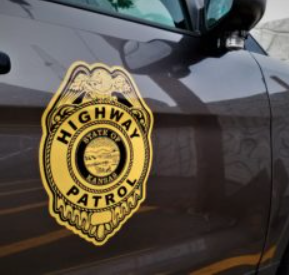
The Kansas Highway Patrol reported a 2016 Polaris ATV driven by Tristan Lynn McVicker, 21, Ness City, was doing donuts in the intersection at 140 Road just east of R Road one mile north of Ness City.

The ATV left the intersection eastbound in the westbound lane, traveled off the roadway to the left and rolled.

A private vehicle transported McVicker to the Ness County Hospital.

In Case You Missed It: Eagle Morning Show 7/16-7/20

It was another busy week on the KAYS Eagle Morning Show. Here’s what you missed!

Monday

Cortney Dale – Bob Schwarz Financial

Tuesday 

Ellis County Commission Meeting Recap with Jonathan Zweygardt: County administrator Phillip Smith-Hanes and county commissioner Dean Haselhorst

Wednesday

Protect & Serve: Fort Hays State University Police Department – Officer Kody Ellis

Officer Ellis joined the show to talk about the busy summer on campus at FHSU and ordering parking tickets before the fall semester start

Brenda Meder – Hays Arts Council Executive Director

Brenda was on the show for her monthly visit to talk about art in Hays:

Thursday 

No guests

Friday

Sara Bloom – Downtown Hays Development Corporation Executive Director

Sara made her monthly visit on the show to talk about what’s going on in downtown Hays!


Here’s what’s coming up next week on the Eagle Morning Show:

  • Travis Grizzell – Director of “The King & I” community play
  • USD 489 Superintendent John Thissen
  • Stacy Campbell – Cottonwood Extension District Ag Agent
  • Bob Schwarz – Bob Schwarz Financial
  • City Commissioners


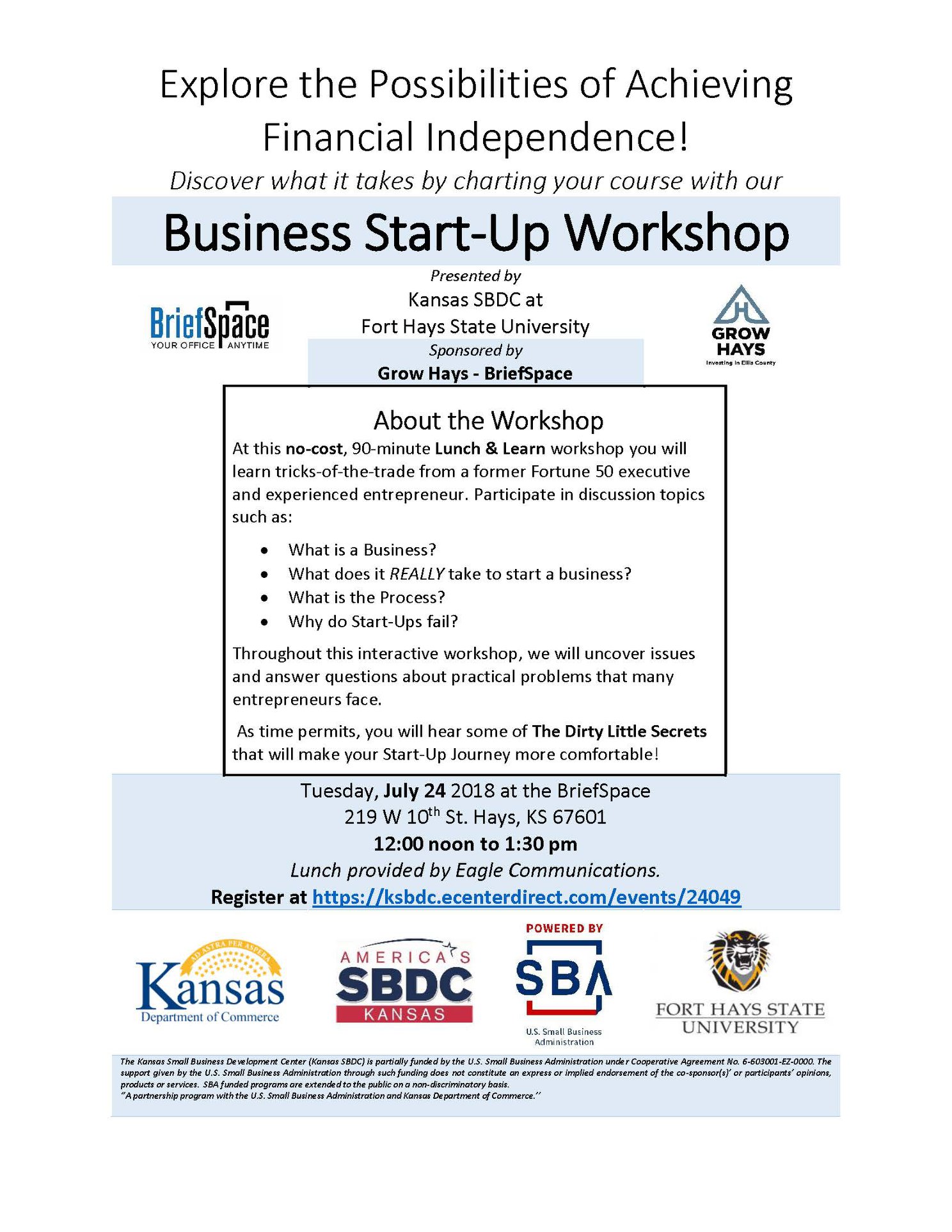
Free business startup workshop offered July 24 at BriefSpace

The Kansas Small Business Development Center (SBDC) at Fort Hays State University is presenting a free Business Startup Workshop for people who are interested in starting their own business.

This no-cost Lunch and Learn workshop It will be held at the BriefSpace, 219 W. 10th St., Hays, 12-1:30 p.m., Tue., July 24.

We will identify issues and answer questions about how to keep track of business finances for your Start-Up or even an established business.

This interactive workshop will help take the confusion out of your efforts and allow you to avoid costly mistakes and unnecessary stress.

We discuss:

  • Why should we manage money
  • Types of financial statements and what they mean
  • Where to obtain financial statements
  • How to know if your business is on track

To register go to https://ksbdc.ecenterdirect.com/events/24049.

9th Annual Bricks, Broncs & BBQ in Russsell

RUSSELL MAIN STREET

RUSSELL – Bricks, Broncs & BBQ is the can’t miss event of the year in Downtown Russell. The two-day event takes place from October 5 through October 6.

The event kicks off at 8 a.m. on Friday, October 5 with the arrival of the BBQ Teams. The public is invited Downtown at 5 p.m. on Friday October 5 to try out the award winning BBQ. During the BBQ Buck Sale, the Beer Garden will also be open at that time.

The 3rd annual Cornhole Tournament will also take place on October 5. Registration will begin at 5:30 p.m. and the tournament will begin at 6:30 p.m. Mike Parsons Productions will provide DJ Entertainment in the tent during the Cornhole Tournament.

On Saturday, October 6 the BBQ Competition, Kids Zone, Pie Baking Contest, vendors on Main Street, Main Street Beer Garden, Flatland Car
Show, and Brew Me (microbrew and wine festival) will take place.

The BBQ contest will begin at 11 a.m. and end at 12:30 p.m. with awards at 2 p.m.

Kids Zone is a place for all things kids, this will take place from 10 a.m. to 2 p.m.

The Pie Baking Contest will begin at 11 a.m. and end at 1 p.m. This year the Pie Baking Contest will take place at Espresso, Etc. After the Pie Contest we will have our annual Used Pie Sale.

Vendors will be set up on the sidewalks of Downtown Russell from 10 a.m. to 2 p.m.

The Main Street Beer Garden will be open all day on Saturday.

Flatland Car Show, organized by Rotary, will also take place on Saturday from 8 a.m. until 3 p.m.

Brew Me, microbrew and wine festival will conclude the event. Brew Me will take place from 5 to 8 p.m. with VIP Session from 5 to 6 p.m. and General Admission from 6 to 8 p.m. VIP tickets are 40 dollars. General Admission tickets are 25 dollars before the event and 30 dollars at the door.

For more information contact Russell Main Street, Inc. at 785-483-2897 or visit https://rmsi92.wixsite.com/brewme. Also, find our event page on Facebook at Bricks, Broncs & BBQ.

FHSU Alumni Association to host golf tourney in Colby for scholarships

FHSU University Relations

The Fort Hays State University Alumni Association will host a golf tournament Friday, Aug. 3, at Meadow Lake Golf Club, 1085 East Golf Club Dr in Colby. Golf enthusiasts are invited for a relaxing day on the greens while raising funds in support of Fort Hays State University student scholarships.

The tournament begins with registration at 8 a.m. followed by tee time at 9 a.m. Registration fees are $90 per golfer or $300 for a team of four.

Special guest FHSU Athletic Director Curtis Hammeke will offer an update on Tiger athletics and the university after the tournament. Non-golfers are invited to stop by the golf course at approximately 1:30 p.m. to hear the latest in FHSU news.

For more information and to register for this event, visit www.goforthaysstate.com/events, email [email protected] or call 785-628-4430 or toll free 1-888-351-3591.

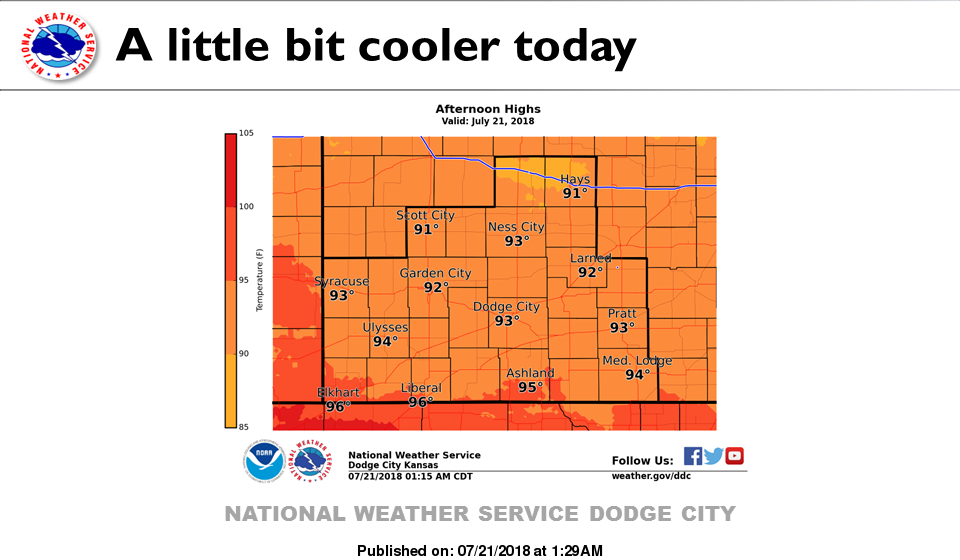
Sunny, warm Saturday

Today
Sunny, with a high near 90. East wind 6 to 10 mph.

Tonight
Partly cloudy, with a low around 69. East southeast wind 6 to 10 mph.

Sunday
Mostly sunny, with a high near 91. Southeast wind 9 to 13 mph.

Sunday Night
A 30 percent chance of rain after 1am. Partly cloudy, with a low around 69. Southeast wind 5 to 10 mph becoming northeast after midnight.

Monday
A 20 percent chance of rain. Partly sunny, with a high near 87. Northeast wind around 7 mph.

Monday Night
Mostly cloudy, with a low around 67.

Tuesday
Mostly sunny, with a high near 90.

Tuesday Night
Partly cloudy, with a low around 67.

Wednesday
A 20 percent chance of rain before 1pm. Mostly sunny, with a high near 88.

Ellis County Desert Storm veteran receives Quilt of Valor

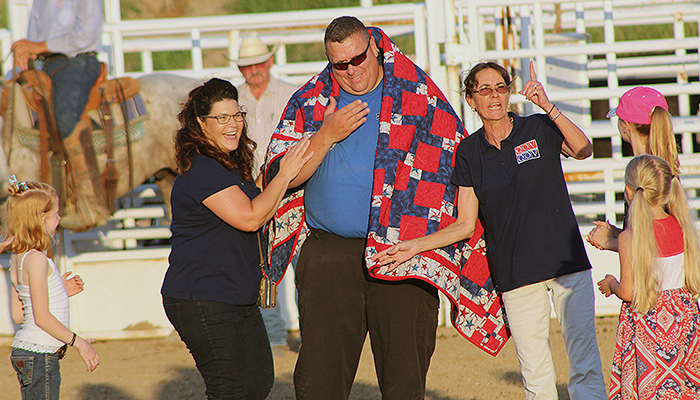
Children from the 4-H quilters group along with Connie Haselhorst, middle left, of Quilts of Valor, award Scott Wasinger of rural Ellis County with a Quilt of Valor Wednesday night at the Ellis County Fair rodeo.

By CRISTINA JANNEY
Hays Post 

Veteran Scott Wasinger, in front of packed stadium at the Ellis County rodeo Wednesday night, had a special quilt in bright red, white and blue colors draped over his shoulders.

He patted his heart before the cheering crowd to signal how it had touched him.

Wasinger said he was surprised and humbled by the gift and did not know his sister-in-law had nominated him to receive the quilt to honor his military service. His niece helped sew the quilt as part of a 4-H quilters group project.

Wasinger, of rural Ellis County, entered the Army Reserve in 1986. He was called to active duty during Operation Desert Storm. He earned the rank of sergeant and left the service in 1996.

Scott received the quilt through a joint project with the 4-H quilters and the local chapter of Quilts of Valor, which makes quilts for both veterans and active service personnel who have been affected by war.

Quilts of Valor just started a new chapter in Hays, and this was the first quilt the group awarded.

Quilts of Valor is a national organization that was founded in 2003 by Catherine Roberts whose son, Nat, served in Iraq.

Roberts, who was a quilter saw the gifts as a means of healing for those veterans who had been affected by war. Almost 192,000 quilts have been given to veterans and active service personnel since the organization’s inception.

Connie Haselhorst, Kansas Grateful Stitchers Chapter organizer, was in 4-H with Scott. Scott has been active supporter of 4-H and a member of the fair board.

Haselhorst said Scott was very humble about his service both in the Armed Forces and to the community, but was very deserving to be honored with a quilt.

“He is quiet, laid-back guy, who never takes the front seat” Haselhorst said. “He is always there helping but never wants any glory. This will be a little different for him.”

The Kansas Grateful Stitchers became involved with the 4-H quilters group, a group of about 12 youth, because of Haselhorst’s background in 4-H. Scott’s, niece, Marisa, 11, was one of the youth in the 4-H quilters group. Amy Wasinger, Marisa’s mother and Scott’s sister-in-law, nominated Scott to receive the quilt.

“I think the reason why he came to my mind is that he is pretty humble and he doesn’t think he deserves a lot of credit, but he served for 11 years in a difficult, high-stress combat situation,” Amy said. “He has always been in 4-H, so I thought it would be neat for 4-H kids making a quilt for someone who had been in 4-H himself, and it was our family.”

Marisa said of why she thought her uncle should receive a quilt, “He was in the Army, and I am proud of him.”

The 4-H quilters group made quilt blocks and then sewed those together to make Scott’s quilt, but women in Kansas Grateful Stitchers each individually work on a full quilt for someone who has served. Haselhorst said she was very impressed with the work the children did on Scott’s quilt. When they completed it, they all signed the quilt in one corner.

The other 4-H quilters said they wanted to repay Scott for his service.

“I think it is a nice thing to do because they gave to our country, and we should give back to them,” said Mariella Dreiling, 10.

Eva Betz, just 6, said of making the quilt, “It was fun, and it was nice.”

Keeli Kimzey, 10, said, “I just think it would be nice. They do a lot for us, keeping us safe and stuff, so I think we need to do something to show our appreciation for them.”

Haselhorst has been a long-time quilter and thought Quilts of Valor would be a way to give back.

“I love to quilt, and I think that if everybody does just a little bit, you know the worlds just gets a little bit better,” she said. “A friend of mine was telling me about this Quilts of Valor, and I thought this would be a great way to do more for everybody.”

Haselhorst urged other families to nominate friends and loved ones for quilts. If a veteran or active duty service person lives in another community or state, someone from a chapter in that area will be charged with making a quilt. The Kansas Grateful Stitchers serve Ellis, Rooks, Rush and Russell counties.

To nominate someone for a quilt, go to the Quilts of Valor national page and click on Request a Quilt of Valor under the Take Action tab. You can also donate using credit card or PayPal through the website.

Money for the materials for the quilts, which are usually done in patriotic patterns and colors, are purchased with locally donated funds.

The Kansas Grateful Stitchers chapter will be awarding more quilts during the RPM Speedway Military Appreciation night on Aug. 25.

If you would like to join the group, you can connect with the Stitchers on Facebook. They meet once a month on a Monday at Quilt Corral in LaCrosse. The group is looking for a second location to meet once a month on a Saturday.

High-speed chase spans three counties, results in arrest

Russell County Sheriff’s Office

At approximately 7:50 p.m. Thursday, Russell County Dispatch received numerous calls regarding a grey vehicle acting suspiciously and attempting to steal fuel in the Fairport and Natoma areas.

Shortly after these calls came in, a Kansas Highway Patrol trooper spotted the vehicle traveling at a high rate of speed near Gorham. The vehicle refused to stop for the trooper and the chase entered Ellis County for a period of time. The chase returned to Russell County on Interstate 70 and continued east to the Wilson exit in Ellsworth County.

While in Ellsworth County, a female passenger jumped from the vehicle and was taken into custody by law enforcement officers. The chase continued north on Highway 232 and entered Russell County once again.

Two Russell County Sheriff’s officers deployed stop sticks near the Lake Wilson dam and struck three tires. The driver of the vehicle continued to flee on gravel roads and was eventually taken into custody south of Waldo.

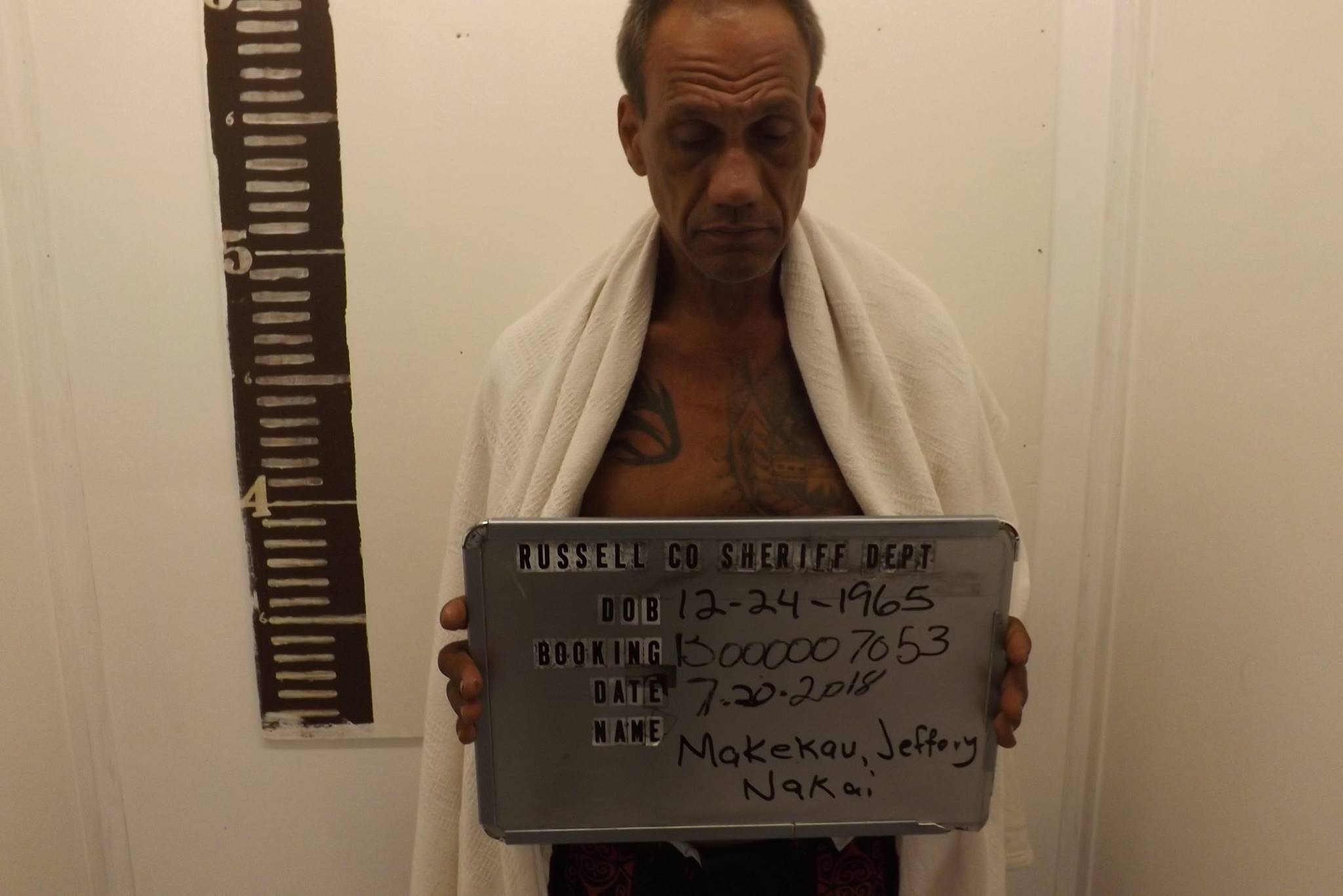
The driver of the vehicle was identified as Jeffery Nakai Makekau of Hawaii. Makekau was transported to the Russell County jail for booking. He was arrested on suspicion of felony flee and elude, driving under the influence and reckless driving.

“The Russell County Sheriff’s Office would like to thank the alert citizens who reported this vehicle and all law enforcement agencies who assisted in the capture of this individual without injuries and minimal property damage,” the Russell County Sheriff’s Office said in a social media posting Friday.

NW KS identified as moderate risk for West Nile Virus; half of state at high risk

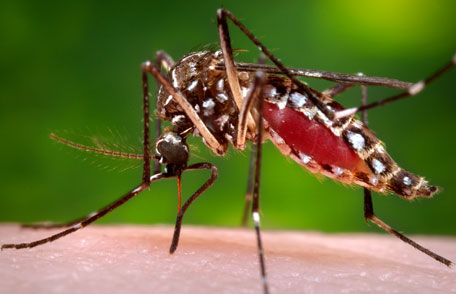
When used as directed, insect repellents are the best way to protect yourself and family members from getting sick from mosquito bites, according to the CDC.

KDHE

TOPEKA – The Kansas Department of Health and Environment (KDHE) has issued a high-risk warning for West Nile virus infections (WNV) for northcentral, southcentral, and southwest Kansas. Northeast, southeast, and northwest Kansas are at moderate risk for WNV infections.

West Nile virus can be spread to people through mosquito bites, but it is not spread from person to person. About one in five people who are infected develop a fever and other symptoms. About one out of 150 infected people develop swelling of the brain or brain tissue, that in some cases, can result in death. There are no vaccines or medications to treat WNV. People who have had WNV before are considered immune.

“Know your risk and take action to prevent mosquito bites to protect yourself and your family against West Nile virus”, said Dr. Greg Lakin, State Health Officer.”

KDHE recommends the following prevention measures:

  • Visit the KDHE WNV website weekly to learn about the current WNV risk level; https://www.kdheks.gov/epi/arboviral_disease.htm
  • When you are outdoors, use insect repellent containing an EPA-registered active ingredient on skin and clothing, including DEET, picaridin, oil of lemon eucalyptus, or IR3535. Follow the directions on the package.
  • Many mosquitoes are most active at dusk and dawn. Be sure to use insect repellent and wear long sleeves and pants at these times, or consider staying indoors during these hours.
  • The elderly or those with a weakened immune system should consider limiting their exposure outside during dusk and dawn, when the Culex species mosquitos are most active.
  • Make sure you have good screens on your windows and doors to keep mosquitoes out.
  • Get rid of mosquito breeding sites by emptying standing water from flower pots, buckets and barrels. Change the water in pet dishes and replace the water in bird baths weekly. Drill holes in tire swings so water drains out. Keep children’s wading pools empty and on their sides when they aren’t being used.
  • Horses can also be infected with WNV. Talk with your veterinarian about vaccinating your horse to protect them against WNV.

Most WNV infections occur in the late summer and early fall. Although there have been no cases of WNV reported to KDHE in 2018 there have been more than 600 cases of the most severe form of WNV and 30 deaths in Kansas from 1999-2017.

The Centers for Disease Control and Prevention provides this webpage with additional information about West Nile virus and preventing mosquito bites:https://www.cdc.gov/features/StopMosquitoes/.  For questions about West Nile virus or other Arboviral diseases contact the KDHE Epidemiology hotline at 877-427-7317.

Backpacks for Kids registration deadline is Monday

FCFH

The final day to register for a free school backpack through the Backpacks For Kids program at First Call for Help (FCFH) in Hays is Monday, July 23.

Registration is available online at https://firstcallelliscounty.com/Backpacks-for-Kids or call FCFH at 785-623-2800.

The backpacks are available to students K-12 who reside in and attend school in Ellis County. Children who attend the STAR classroom at Roosevelt Elementary School in Hays are also eligible.

Donations for the backpacks are still being collected.

According to project coordinator Laura Schoaff, there is an extra need for 1 subject spiral notebooks in wide or college-rule, 2-pocket folders, 4 oz. washable school glue, 3″ x 5″ ruled index cards, large pink erasers and shampoo.

Backpacks will be distributed Thu., Aug. 2, 7 a.m. to 6 p.m. in the Hays Armory, 200 Main Street.

For more information, contact Schoaff at 785-623-2800.

🎥 Decreased DHDC funding from city of Hays debated again

By BECKY KISER
Hays Post

(Click to enlarge)

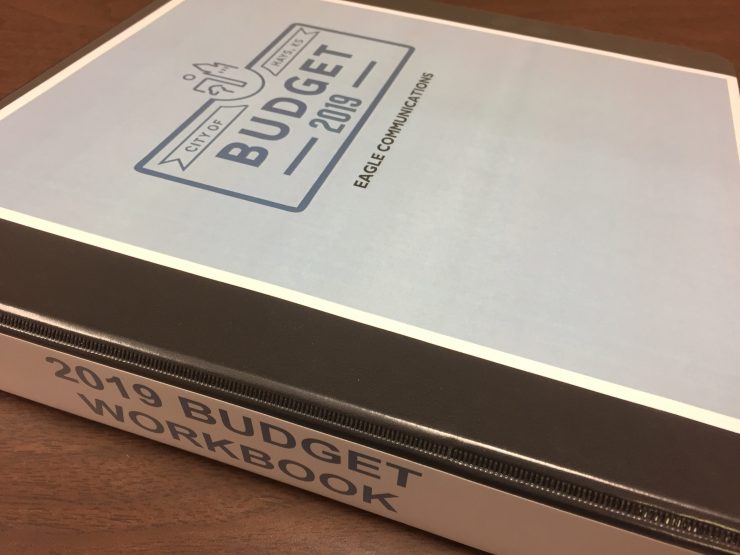
A second discussion by Hays city commissioners of the draft 2019 budget Thursday focused on funding to outside agencies, specifically the Downtown Hays Development Corporation (DHDC).

The 501(c)3 group has received $53,655 in city funds each year since 2015 and is requesting the same amount for 2019.

Vice-Mayor Henry Schwaller opened the conversation by saying city funding is “not an entitlement for any of the outside agencies” and DHDC has become a “victim of its own success.”

“It’s doing so well with its fundraisers that I really think it’s time that the little bird gets out of the nest,” Schwaller said.

He noted the city commission began funding DHDC with $100,000 in “seed money” that morphed into an annual appropriation. “And every year we say, this is temporary funding and at some point you won’t get it any more…we’ve never gotten further with that discussion.”

Commissioner Ron Mellick agreed with Schwaller, comparing the situation to “a parent still paying a grown, married child’s cell phone bill.”

“We’ve tried in the past to reduce it by 10 percent each year and we haven’t carried through on that,” added Mellick, who previously served on the commission from 2007 to 2015. He was recently appointed to fill the unexpired term of Chris Dinkel.

“The city is kind of paying DHDC’s day-to-day operations,” Mellick said. “I think ‘tough love’ is going to have to appear and they be slowly weaned off or back at least.”

Mellick and Schwaller both clarified they weren’t proposing any cuts to DHDC funding for 2019 but “next year, we’re definitely going to have a take a much harder look at it,” Mellick added.

Commissioner Shaun Musil, a downtown business owner for a little more than a year, said he’d been “thinking long and hard on this the last couple weeks.”

“I personally think the DHDC board is one of the best volunteer groups in our community (he served one year on the DHDC board) and there’s people from all over this community on that board.”

Still, Musil admitted to having some concerns as a business owner.

“Their events no doubt affect this community, and not only downtown. They stay in the hotels, go to the bars. People love their events. I am kind of concerned about their day-to-day (operations). I think sometimes they’re too focused on the events.

“But I’ve talked to longtime downtown business owners who’ve said if you don’t have something going on down there, they believe a lot of stuff won’t happen and it will have an effect on our sales tax coming in.

“This is such a small part of our budget. I think we should focus on the very, very positive things this group does,” Musil concluded.

Participating in the work session via telephone, Commissioner Sandy Jacobs cited increased collaboration between DHDC, Fort Hays State University and the city for her support of funding DHDC for the foreseeable future.

Mayor James Meier said he was looking at return on investment.

“I don’t think anybody is entitled to money forever,” Meier said, “but if we were to take that $56,000 and invest it in another group or in advertising, I don’t think we’d get the same return that we’re getting right now.”

The downtown area is the top draw to Hays according to Melissa Dixon, CVB exec. dir.

Melissa Dixon, executive director of the Convention and Visitors Bureau, sitting in the audience alongside DHDC executive director Sara Bloom, addressed the commission.

“I believe downtown is our top attraction,” Dixon told commissioners. “(CVB) supports and markets those DHDC events and when the funding comes straight out of our budget, I believe it is money well spent.”

Commissioners are scheduled for a final budget review at their July 26 meeting where they will set a public hearing for August 9.

(Click to enlarge)

In other business, commissioners heard from Public Works Director Jesse Rohr about the Crawford Addition request for annexation, rezoning and final plat.

The property site, at the northwest corner of 48th and Roth, is being considered as a location for a new Tractor Supply Company retail store.

The city commission will vote next week on the requests which have already been approved by the Hays Area Planning Commission.

KDWPT: Sternberg Museum ‘great resource’ about KS venomous snakes

KDWPT

PRATT – While the odds are very low that you will be bit by a venomous snake in Kansas, that’s little consolation for anyone who ends up with a bite.

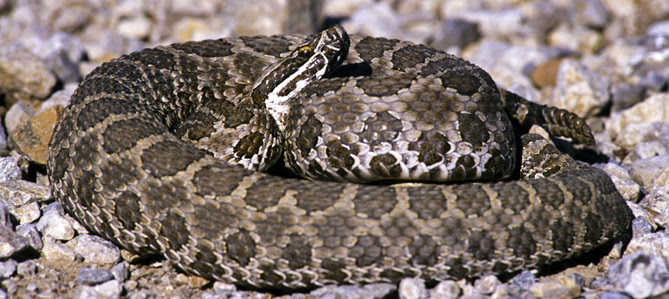
Of the 42 species of snakes in Kansas, there are only four native venomous snakes you might encounter: the prairie rattlesnake – found in the western half of the state; the massasauga rattlesnake – found in the eastern two-thirds of the state; the timber rattlesnake ­– found in the eastern fourth of the state; and the copperhead, found in the eastern third of the state. Cottonmouths are very rare in Kansas. Just two specimens of the northern cottonmouth have been recorded in the Spring River drainage in the far southeastern corner of the state. Western diamond-backed rattlesnakes were introduced, but are not widespread and have been recorded in only a few central-Kansas locations.

All venomous snakes found in Kansas are pit vipers, meaning they have heat-sensitive pits in front of each eye to help locate prey. Their venom is hemotoxic, causing internal bleeding and tissue damage.

Snakes are active during the warmer months between late March and November – the same time when people are most active outdoors. Most snakes are found in rural or semi-rural areas where there is suitable habitat and prey. They may be found in woodlands and shrubby areas; brush, log or rock piles; around water; in tall grass; around rocky outcrops or ledges; or even under ornamental shrubbery and gardens. Kansas’ venomous snakes feed primarily on rodents, but their diet may also include insects, frogs, toads, lizards, small birds and other snakes. Snakes cannot regulate their body temperature internally, so when it’s hot, they may be more active at night, retreating to shady areas or under rocks and logs during the day. When it’s cooler, they tend to be more active during the day.

Hiking, camping, fishing, or hunting may put you in areas where you could encounter a snake, so be snake-savvy and snake-aware. Venomous snakes are generally shy and aren’t looking for a fight, but they will bite in self-defense if you step too close, step on or provoke them. Learn how to recognize them. They are well-camouflaged, so watch where you walk, and don’t go barefoot or wear flip-flops or sandals, even on established trails or around campgrounds. Instead, wear sturdy leather shoes or boots. To help protect your legs, wear long pants or jeans rather than shorts. Special snake chaps and tall leather boots are available if you’ll be working in brushy areas where you suspect venomous snakes live. Wear leather gloves when handling brush, and never reach into an area you can’t see. Don’t try to handle or tease a snake.

Snakebites in Kansas are rarely fatal and effective treatment is available. If you think you’ve been bitten by a venomous snake, stay calm to slow the spread of the venom. Keep the site of the bite quiet and below the level of your heart. Call 911 or get to a hospital as quickly as possible, but do not try to drive yourself.

It is not necessary to catch or kill the snake because a single type of antivenom is used to treat all pit viper bites in the U.S. Do not apply a tourniquet or ice, and never attempt to cut the bite marks and suck out the venom. Do not drink alcohol or caffeinated beverages.

There are usually one or two puncture marks. If the snake injected venom (they can choose whether to inject venom and about 25 percent of bites are “dry”), there may be burning pain along with redness, and swelling around the bite that may progress along the limb. Nausea and vomiting can occur. Your vision may be affected and breathing can become labored. Other symptoms may include increased salivation and sweating and numbness or tingling around your face and limbs.

Nationwide, venomous snakebite deaths are rare, but bites can be very painful and cause serious tissue damage. Always seek immediate medical attention if you think you have been bitten. Learn about our venomous snakes so you’ll know where they live and how to recognize them.

A great resource is the online Kansas Herpetofaunal Atlas hosted by the Sternberg Museum of Natural History, Fort Hays State University: https://webapps.fhsu.edu/ksherp/default.aspx. There you’ll find color photos, descriptions, life history, range maps and a calendar of peak activity.

You can reduce the risk of venomous snakebite by learning all you can about snakes and our wild areas, taking a few simple precautions, and being aware at all times.

– KS DEPT. OF WILDLIFE, PARKS & TOURISM –

Copyright Eagle Radio | FCC Public Files | EEO Public File