BriefSpace, a new co-working space in downtown Hays, will offer a sneak peek from 5:30 to 6:30 p.m. Thursday.
BriefSpace offers a shared working environment for work at home professionals, start-up entrepreneurs and traveling business owners/employees and consultants.
The project, primarily funded by a grant from the Dane G. Hansen Foundation, is located at 219 W. 10th.
ELLIS — The Ellis-area community is teaming up to support the Burton family.
Corey Burton, Ellis High School principal, recently was diagnosed with leukemia and is undergoing treatment in Kansas City.
To show support for the Burton family, a group of Ellis residents will be selling #BurtonStrong T-shirts. The order form is attached below or can be picked up at the Ellis Alliance office or the Ellis Jr. Free Fair.
Orders can be mailed or dropped off at Ellis Jr./Sr. High School.
“The response has been overwhelming,” said Maria Mick, Ellis Jr./Sr. High School secretary.
MachenKANSAS CITY, Kan. — Quinter’s Michael Machen was honored recently as the 2018 Kansas Family Physician of the year by the Kansas Academy of Family Physicians during a ceremony in Overland Park.
Machen graduated from the University of Kansas in 1977 and from the KU School of Medicine in 1983. After a residency in family medicine at the University of Oklahoma, Tulsa Medical College, the Concordia native has spent the last 33 years practicing medicine in the northwest Kansas town of about 900 people.
“It’s the people,” said Machen, who is a partner at Bluestem Medical and on staff at Gove County Medical Center. “The people are your patients, and they become your friends. It might sound cliché, but you’re taking care of the salt of the Earth. These are people who work hard, and they love life and look out for each other. They would give you the shirt off their backs and ask for nothing, just because it’s the right thing to do.”
Machen has a seemingly boundless commitment to the next generation of medical students, whether it’s serving as network site director for KU Medical Center in Northwest Kansas or his association with the Scholars in Rural Health program. Machen has helped turn his corner of the Sunflower State into a place to be for medical students. So much so that there is a waiting list of students who want to serve preceptorships in the 15 to 20 towns that take part in the program. During his time in Quinter, more than 150 students have spent time in northwest Kansas.
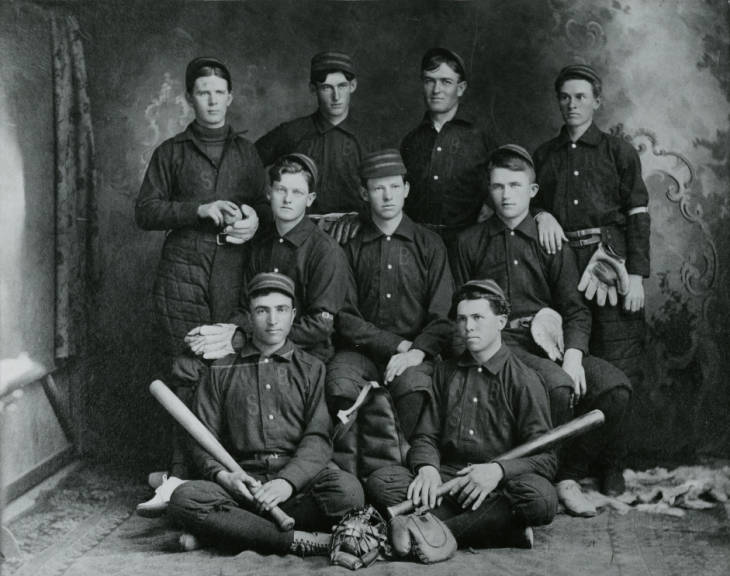
1903 Western Branch of the Kansas Normal School baseball team
FHSU University Relations
The Fort Hays State University community and alumni, baseball fans and researchers across the globe can now access the history of FHSU Tiger baseball through a digital collection of photographs.
The collection, created by Elizabeth Chance, digital curation librarian at Forsyth Library, features photographs of the Tiger baseball teams beginning in 1903 and continuing through 1999. Included in the collection are photos of individual players, team photos and action shots depicting how baseball has evolved over the decades at FHSU.
“I tackle large digitization projects to make items in the University Archives globally accessible through Forsyth Digital Collections,” said Chance. “I am excited for the collection to be live because it’s a great collection with lots of interest.”
1998 Fort Hays State University baseball team
The collection showcases the history of the baseball program at FHSU when the institution was known as the Western Branch of the Kansas Normal School 1902-1914, Fort Hays Kansas State Normal School 1914-1923, Kansas State Teachers College of Hays 1923-1931 and Fort Hays Kansas State College 1931-1977.
With the construction of metadata by Holley Perkins, Forsyth Library student employee, each of the 170 digital images includes information such as year and names of players, making it possible for viewers to search using keywords and filters.
“Digital collections such as these come together as part of a sustained team effort bringing together the Digital Collections, University Archives and Special Collections teams,” said Chance.
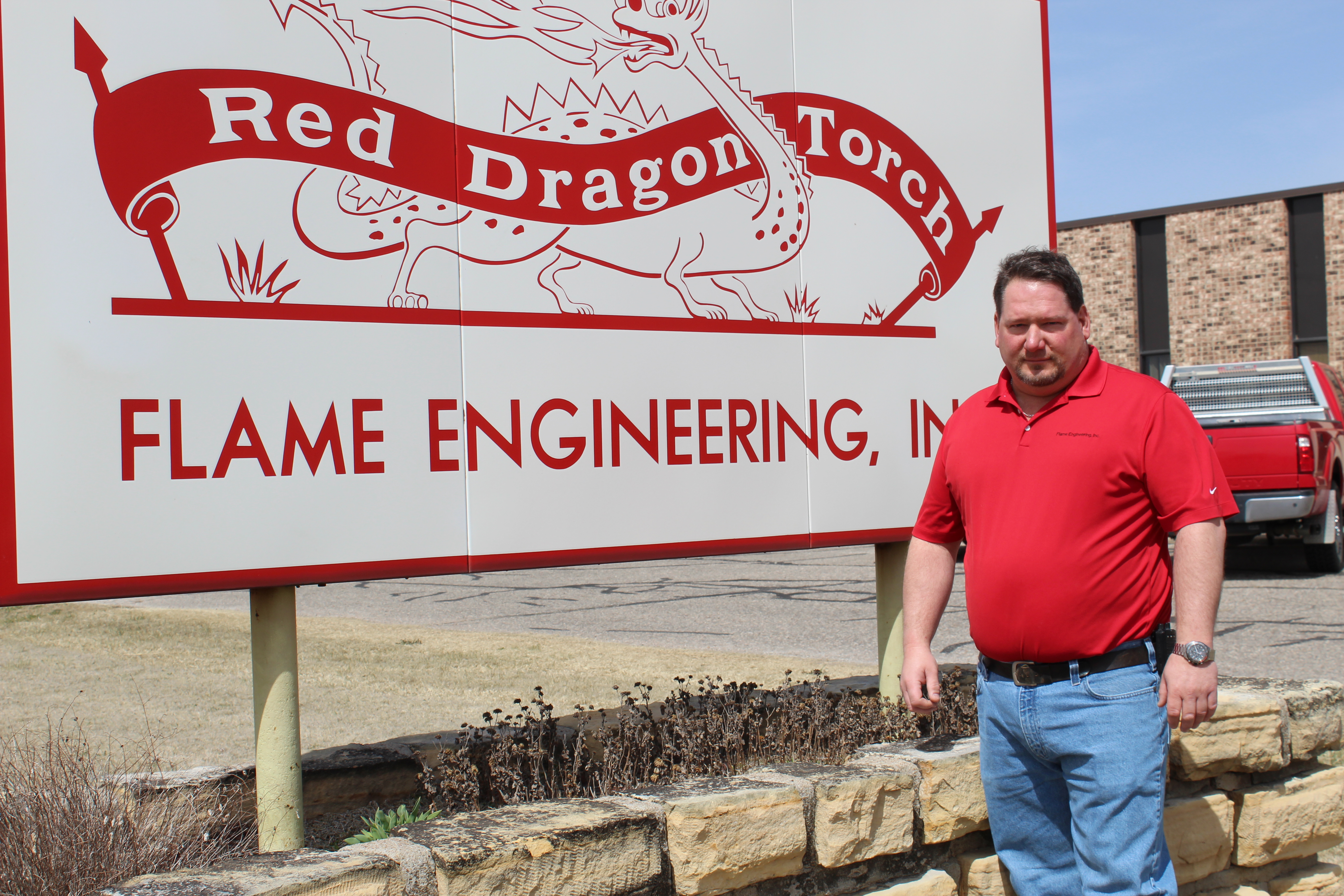
Jason Pivonka is the current vice president of the Flame Engineering.
LA CROSSE—Flame Engineering Inc of LaCrosse achieved 17 years with no loss-time accidents on June 22.
Lost-time accidents implies a non-fatal accident that causes any loss time from work.
Flame manufactures LP gas equipment. This includes torches for home, agriculture and tar roofing. Flame Engineering has been operating in La Crosse since the late 1950s and now sells all over the world.
Jason Pivonka is the current vice president of the company. His father and grandfather founded the company, and his son is the fourth generation to work at Flame Engineering.
“Everyone at Flame Engineering works hard to maintain a safe work environment,” a news release said.
Flame Engineering has also been part of the Safety & Health Achievement Recognition Program (SHARP) since October 2000, a designation which remains in effect today.
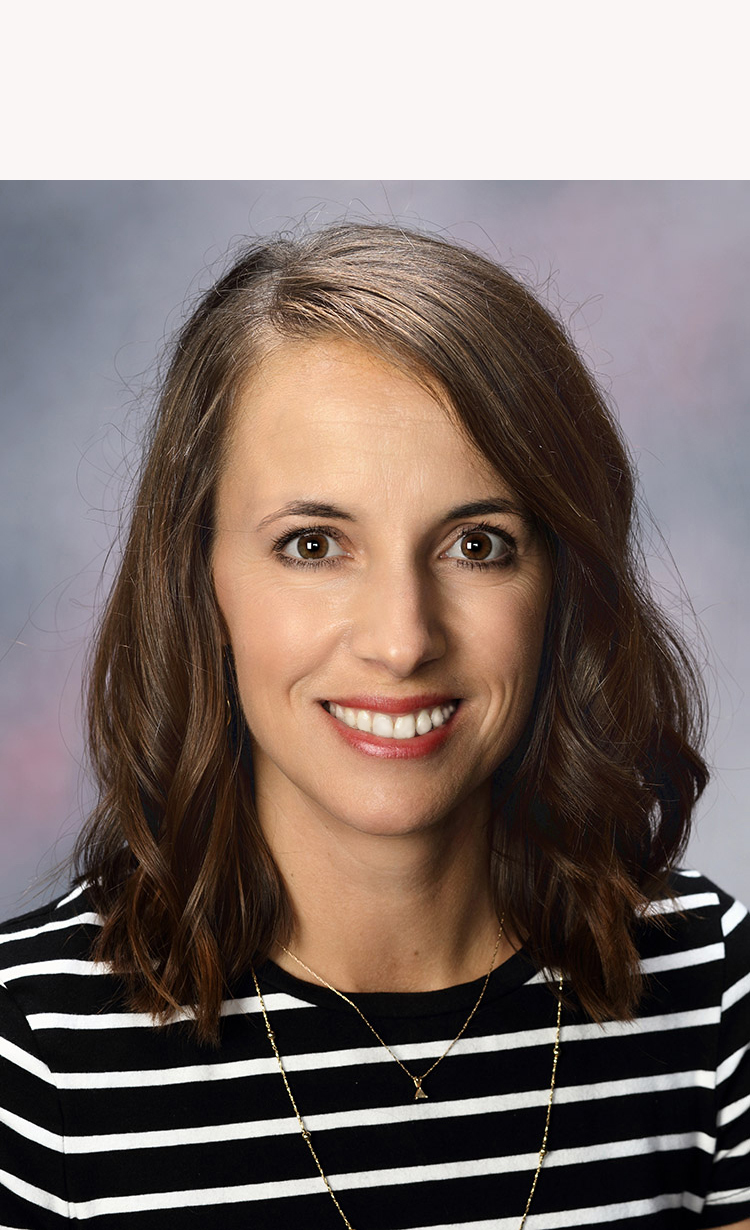
Megan Purinton, Hays, recently joined the Fort Hays State University Alumni Association as the program coordinator for alumni engagement. She will serve the association as the primary event coordinator working with alumni volunteers to facilitate alumni engagement opportunities throughout the United States and beyond.
Prior to joining the FHSU Alumni Association staff, Purinton worked as a project administrator for Excel Constructors Inc. in Overland Park. She is also the owner of Inspired Design by Megan Purinton, a home painting business serving Hays and the surrounding area for over eight years.
“I’m thrilled to be part of the FHSU campus community,” said Purinton. “There is an excitement within this college atmosphere and I look forward to sharing it with Fort Hays State alumni and friends everywhere.”
Purinton is a 2004 graduate from Kansas State University, Manhattan, with a bachelor’s degree in marketing. She lives in Hays with her husband, Royce, and their four kids, Chloe, Isaac, Amelia, and Caroline.
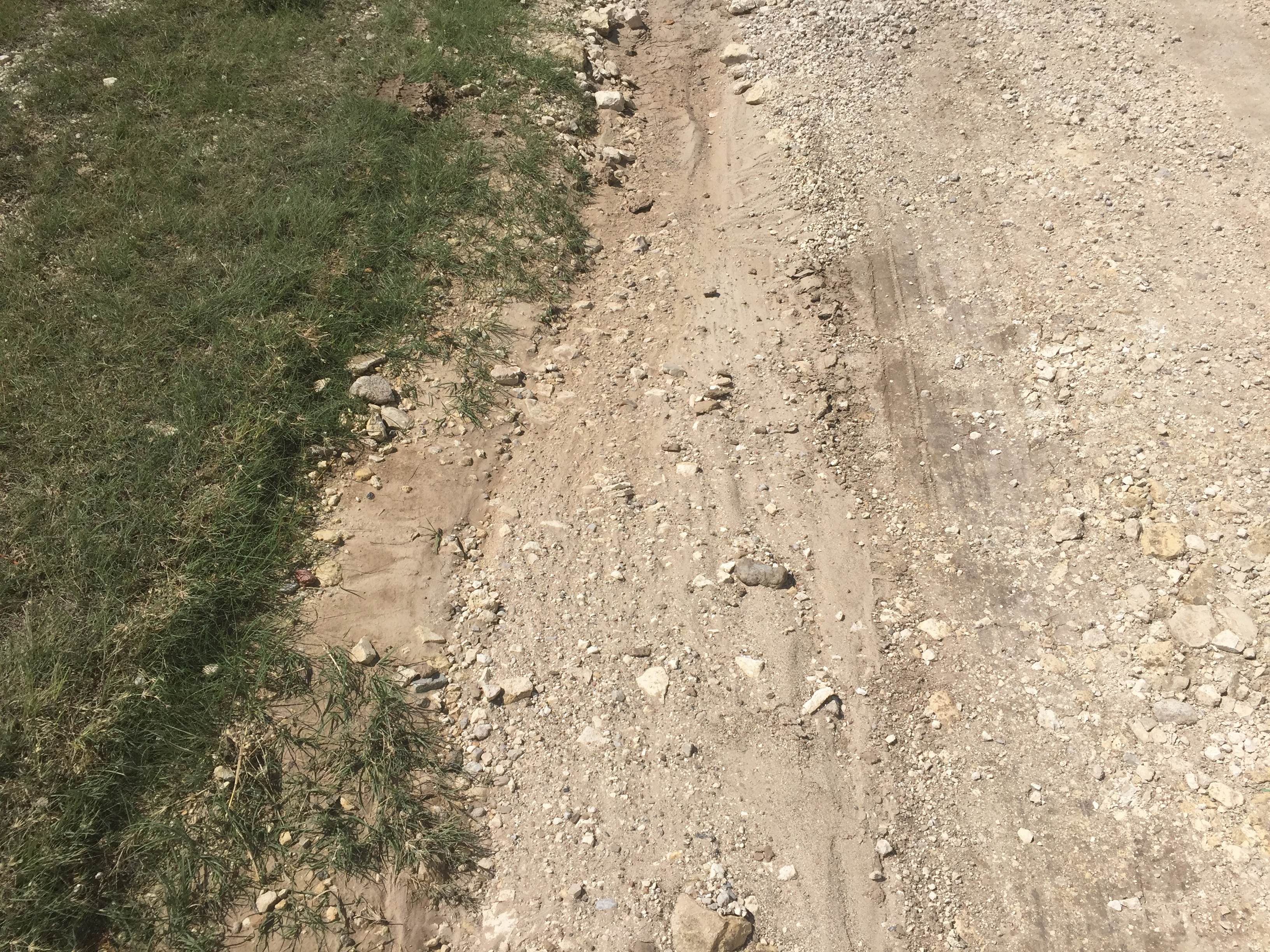
Recent heavy rains have deteriorated some Hays alleys.
By BECKY KISER Hays Post
Most Hays residents are very happy when it rains.
But the past few weeks have brought multiple inches of rain falling hard and fast, causing flooding in portions of Hays on July 6.
These most recent rainstorms, on top of late spring rains, have also resulted in some messy alleys.
Public Works Director Jesse Rohr is well aware of the less than ideal conditions and says his employees are working to improve the situation.
“The stormwater and flooding have washed and eroded many of city’s alleys and they require maintenance, some more than others,” Rohr said Tuesday. “Public work staff is working on the alleys as schedules allow and will continue to do so over the next several months. The worst alleys are at the top of the priority list and will be worked on first.”
This work is in addition to the department’s annual alley maintenance program concentrated in in the fall and winter months.
“Our solid waste crews obviously use the alleys every day so they’re letting us know where they have difficulties getting through the alleys and we’ll address the worst of them. Eventually, we’ll get to all of them again,” Rohr declared.
“There’s also a lot of people who use alleys for rear-yard access to get to their detached garages in the back. And, a lot of alleys have utilities in them – electric, gas, phone, communications – and the utility companies need to get back there.
“The alleys do get a fair amount of traffic in them so they need to be accessible to the best extent possible.”
Alleys susceptible to erosion have a soil base with a limestone rock or crushed concrete topping. In many areas of Hays, alleys convey stormwater.
“That’s led to erosion in certain areas, typically along the sides,” Rohr explained. “After heavy rains, a lot of the aggregate on top of the alley will wash into the streets.” The city will move the rock topping back onto the alleys and rectify the erosion, all of which requires a motor grader.
“We still have other projects on the schedule,” Rohr noted, “so we appreciate the public’s patience and understanding. Please know that the conditions of the alleys will improve as additional time can be devoted to their maintenance.”
Residents with questions or concerns should call the Hays Public Works Department at 785-628-7350.
A big get for first-year Fort Hays State volleyball coach Jessica Wood-Atkins. Kayla Vitztum, who had signed a letter of intent last November with Newman University in Wichita, has been released from that commitment and will play at Fort Hays State this fall.
The multi-sport standout who helped TMP-Marian win the 3A state championship this past season, tweeted about the move Wednesday.
A 5-10 outside hitter, Vitztum was a three-time KVA All-State selection, picking up first team honors as a senior after earning honorable mention accolades as a sophomore and junior. She led the Monarchs to the 2017 Kansas Class 3A state championship, wrapping up the year with a 42-3 record. Vitztum was named first team all-league three times, helping the Monarchs to four-straight MCL league titles. She is the MCL all-time leader in kills, compiling 1,040 kills in her career. Vitztum’s career numbers include a .301 attack percentage, 116 blocks, 750 digs and 147 aces. She was selected to play in the 2018 KVA All-Star Game and served as the varsity team captain as a senior. Vitztum totaled 471 kills, a .334 swing rate, 34 blocks, 304 digs and 55 aces in her standout senior season.
In addition to earning four letters in volleyball, she played four years of basketball, four years of soccer and two years of track and field. She was a three-time All-State selection in basketball and once earned the honor on the soccer pitch. Vitztum competed in seven state championships as a Monarch, including three in volleyball, three in basketball and one in soccer. Vitztum’s brother, Jared, is a member of the Tiger men’s basketball team.
Rip WinkelTomatoes often have problems with cracking (sometimes called “growth cracks”), which are caused by pressure inside the fruit that is more than the skin can handle. Cracks are usually on the upper part of the fruit and can be concentric circles around the stem, or radiate out from the stem. We don’t know everything about tomato-cracking yet, but here is what we do know.
Tomato plants can crack when they absorb too much water too fast. They tend to have a root system that is very dense and fibrous and is quite efficient in picking up water. Having said that, there are various times when the size of the root system may be unbalanced with the amount of vegetative growth on top. Early in the season tomato roots may be somewhat undeveloped in relation to the plant size that is above ground resulting in blossom-end rot. And, as was discussed in my article three weeks ago, blossom-end rot is a dark-round, ugly formation located on the bottom of the developing fruit. This usually appears when the weather is hot and dry, and the plant cannot absorb sufficient amounts of calcium.
Later on, however, those same roots may be so efficient at absorbing water that they can actually provide too much water, especially when there is ample rainfall or heavy irrigation after a dry spell. A tomato’s interior grows quickly as it absorbs water from this abundant source, expanding too fast. The tomato skin cannot stretch to accommodate the extra fluid, causing internal pressure. Hence, cracking of the skin alleviates this pressure.
How can you prevent your tomatoes from cracking? One way is to maintain an even and consistent watering schedule throughout the growing season. Tomato plants need 1-3” water a week (including rain.) During dry spells, water tomatoes deeply so that subsequent rain won’t shock skins and lead to unnecessary cracking – use a drip hose or other irrigation system.
Mulching will also help because it moderates moisture levels in the soil. However, you can do everything right and still have problems with cracking in some years. Still one more way to prevent cracking is to plant “crack-resistant” tomato varieties that have a more elastic skin (the more pliable the skin the more resistance to cracking). The old variety Jet Star has been the most crack resistant of any we have tested including the newer types. Unfortunately, Jet Star is an indeterminate variety that puts out rampant growth. Newer varieties with more controlled growth are often more attractive to gardeners. Mountain Spring, Mountain Pride, Mountain Fresh, Floralina and Sun Leaper are smaller-vined types that have shown good resistance to cracking.
Rip Winkel is the Horticulture agent in the Cottonwood District (Barton and Ellis Counties) for K-State Research and Extension. You can contact him by e-mail at [email protected] or calling either 785-682-9430, or 620-793-1910.
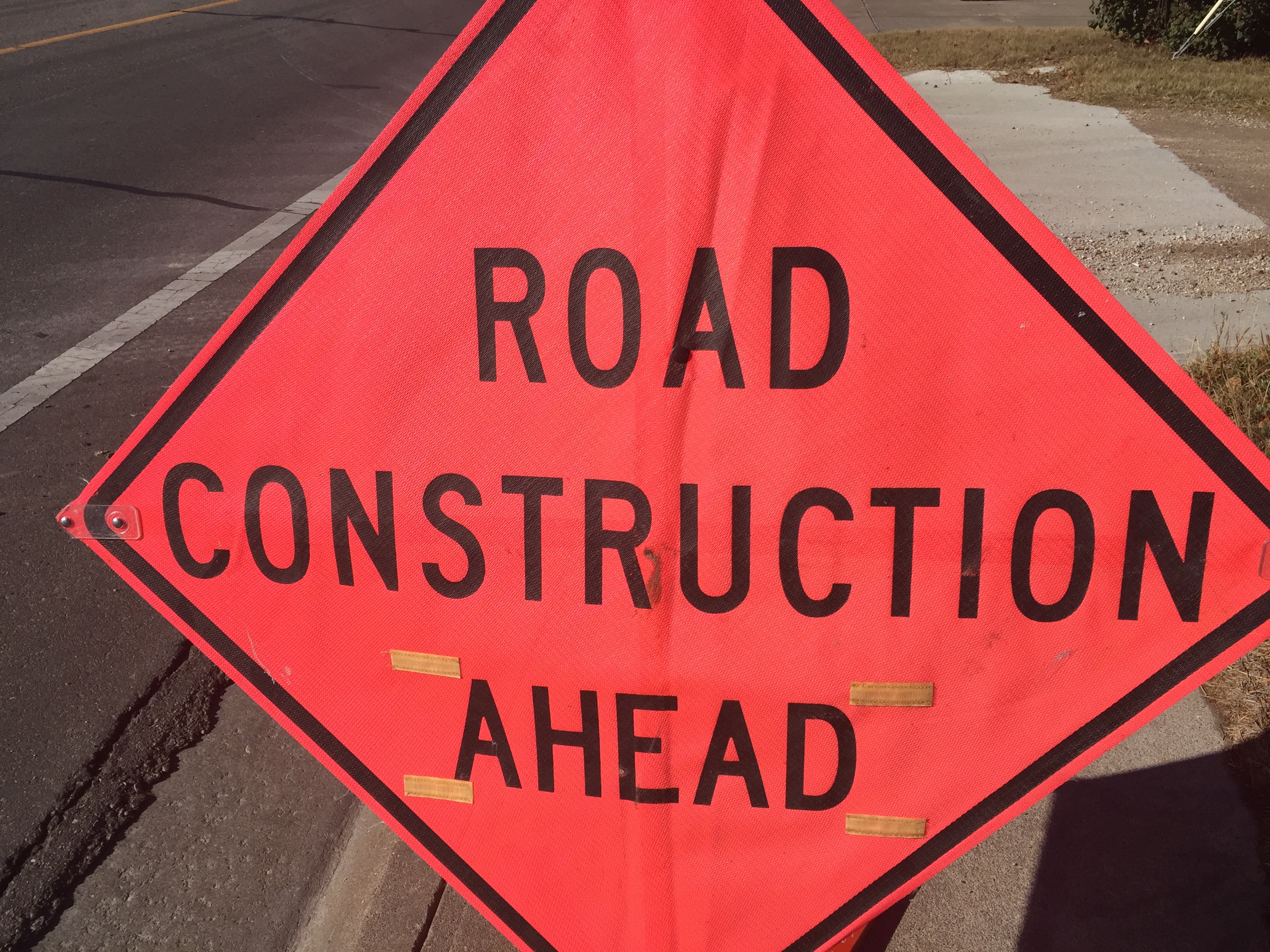
The Kansas Department of Transportation expects to begin a resurfacing project on a portion of U.S. 283 in Graham County the week of July 23.
The construction area will start approximately 3 miles north of the Trego County line and extend 12 miles north, ending near the South Fork Solomon River bridge south of Hill City. Traffic will be reduced to one lane and directed through the work zone via flaggers and a pilot car during daylight hours. Minor delays not exceeding 15 minutes should be anticipated.
KDOT expects work to be completed by the end of August, weather permitting. Bettis Asphalt and Construction is the primary contractor for the project with a total contract cost of approximately $911,000.
For more information on the project, contact KDOT area construction engineer Nick Rogers at 785-625-9718 or [email protected].
The Kansas Small Business Development Center (SBDC) at Fort Hays State University is presenting a free Business Startup Workshop for people who are interested in starting their own business.
This no-cost Lunch and Learn workshop It will be held at the BriefSpace, 219 W. 10th St., Hays, 12-1:30 p.m., Tue., July 24.
We will identify issues and answer questions about how to keep track of business finances for your Start-Up or even an established business.
This interactive workshop will help take the confusion out of your efforts and allow you to avoid costly mistakes and unnecessary stress.
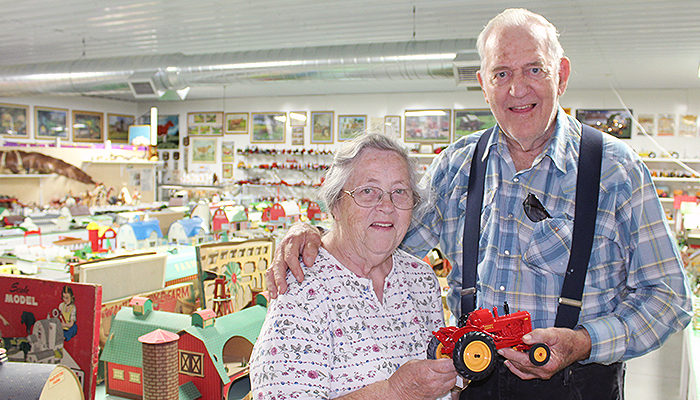
PFEIFER — In a nondescript metal building in rural Pfeifer is a child’s dream.
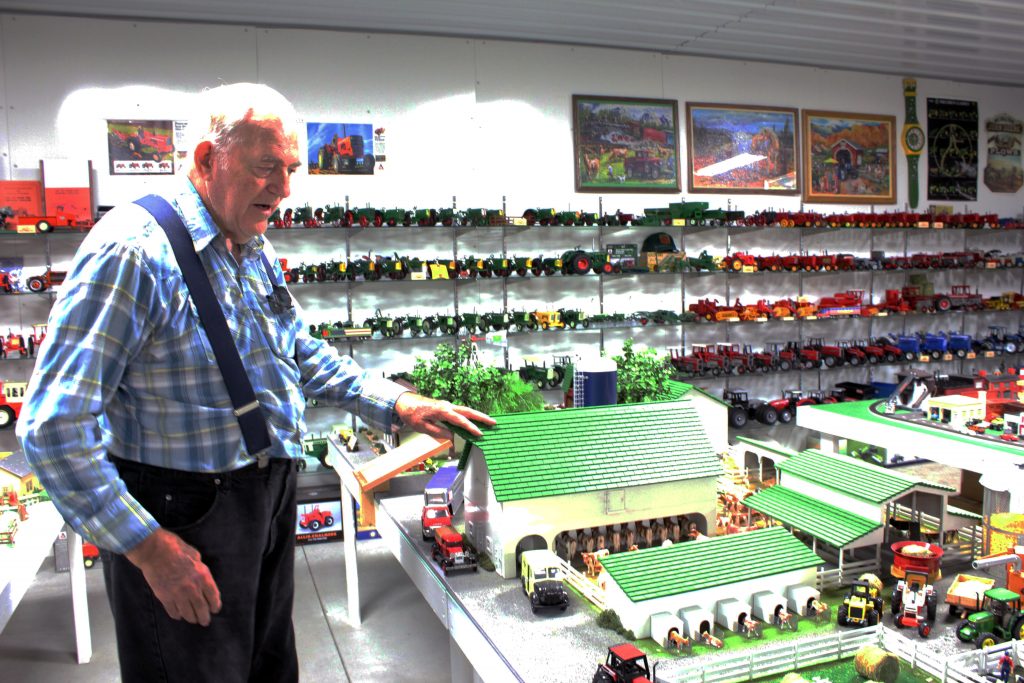
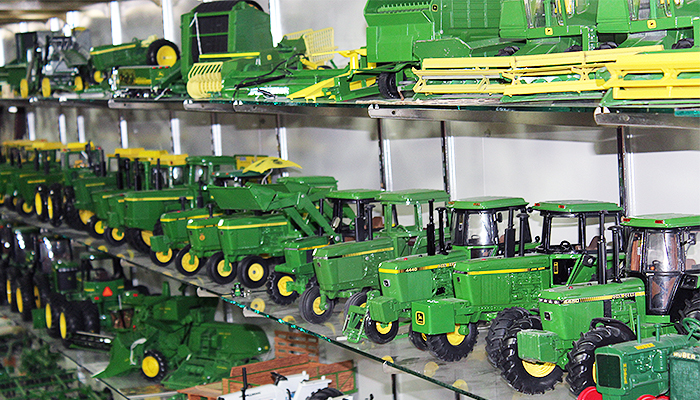
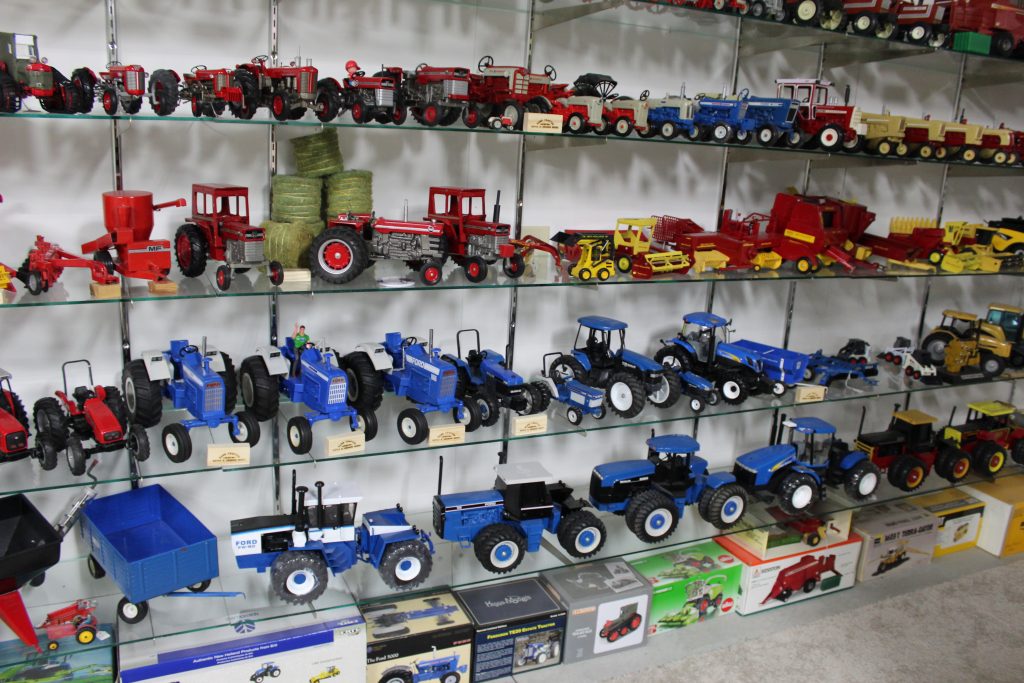
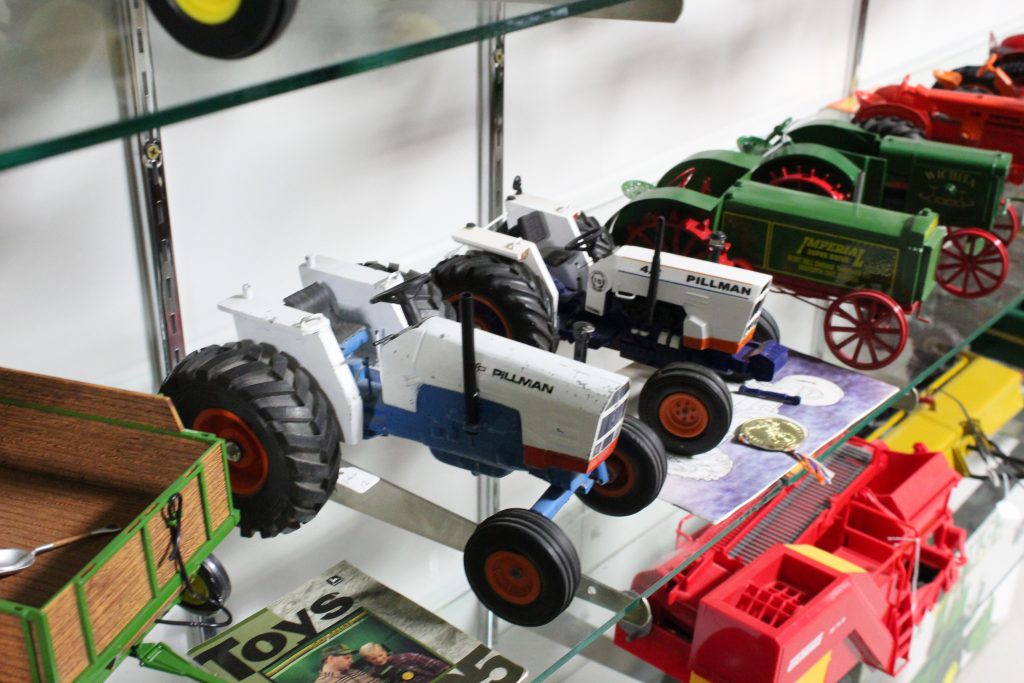
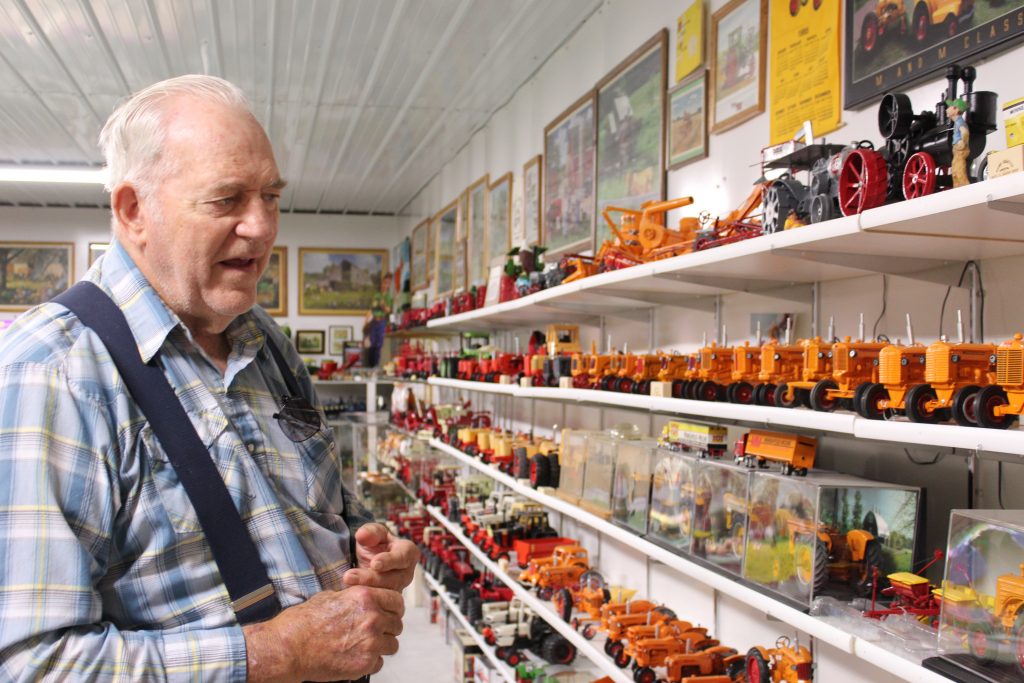
Doyle Neher’s Harmony Toy Farm Museum has more than 1,000 toys — 900 tractors and more than 100 farm sets. The collection has been accumulated over almost three decades.
Behind every toy in that collection, some hand crafted by Neher, is a story.
Neher, 81, started collecting in 1991 when his oldest grandchild was 3 years old.
Doyle Neher, 81, talks about some of his toy tractors at his Harmony Toy Farm Museum in Pfeifer.
“We were discussing what to get them for Christmas, and I thought that every kid needed a toy tractor. We went to Tractor Supply and picked them out a tractor. We went to Tractor Supply, and they had an A-Farmall model in there. That was the first tractor my dad bought, and the tractor that I learned to drive first. I was standing there looking at it, (my wife) says, ‘If you want it, go ahead and buy it.’ I bought a toy tractor in 1991, and this is what has happened since,” Doyle said motioning to the room filled floor to ceiling with shelves lined with toy tractors of all makes and models.
Doyle grew up on a hatchery and dairy near Oswego and then ran a dairy farm near Hutchinson until his retirement in the 1990s. He had toy tractors when he was a kid, but those are all long gone.
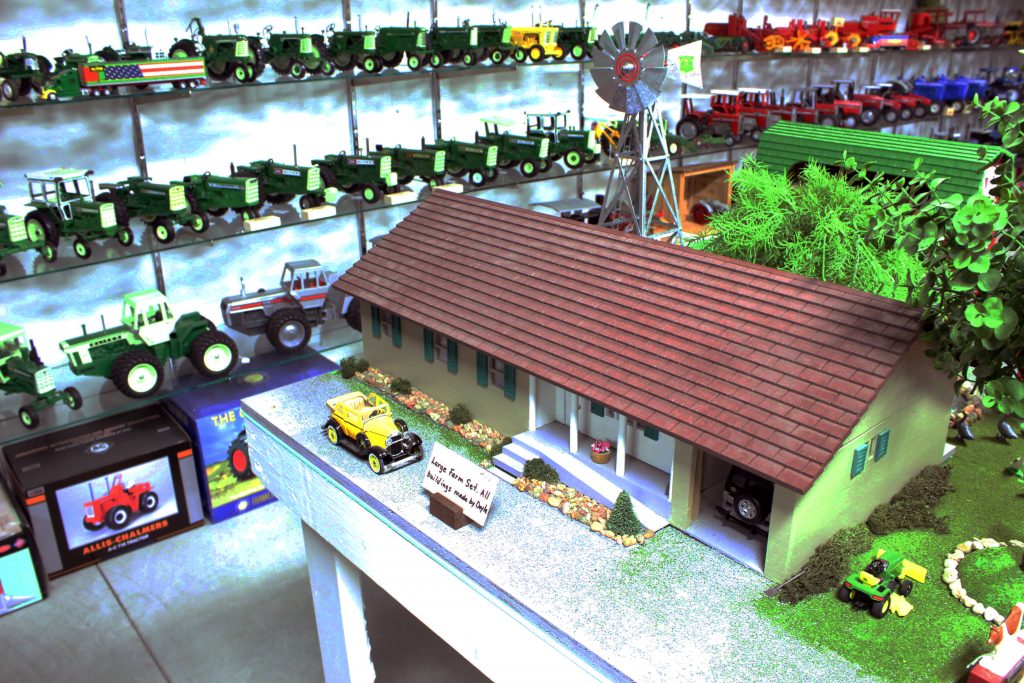
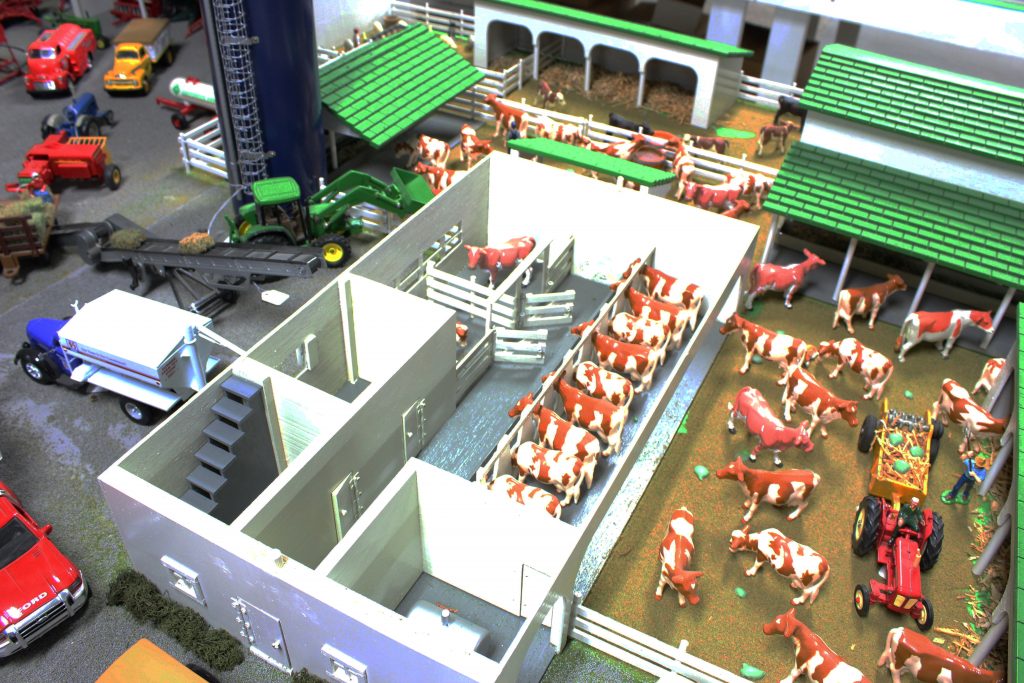
In honor of a lifetime of farming, he create a model of his father’s farm and his and his wife’s Sharon’s home in Hutchinson.
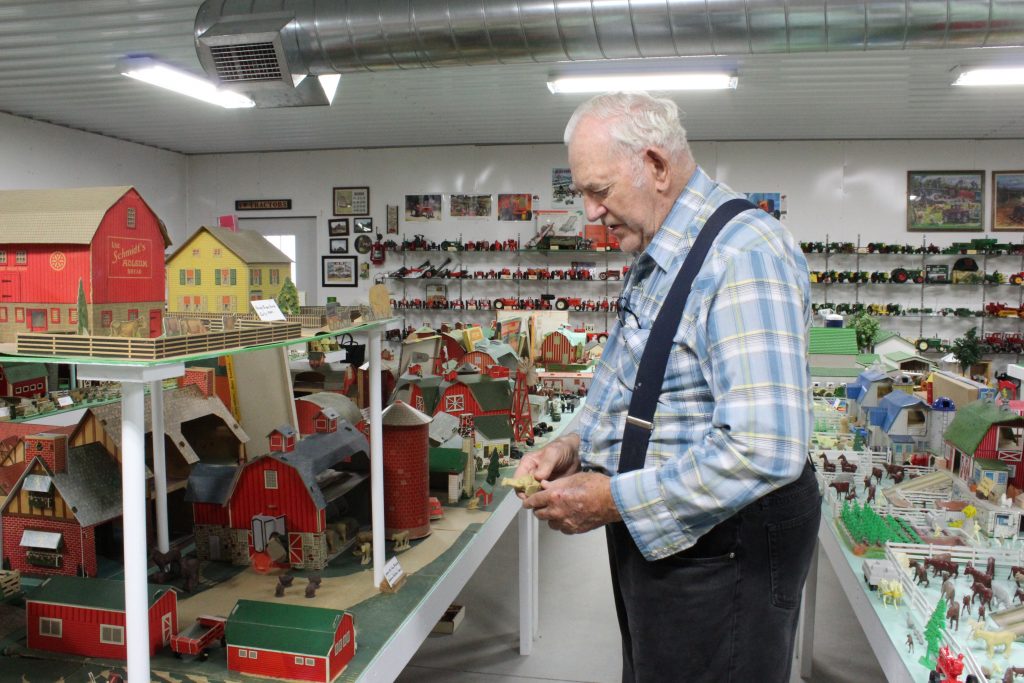
A replica Neher built of the dairy farm he grew up on.
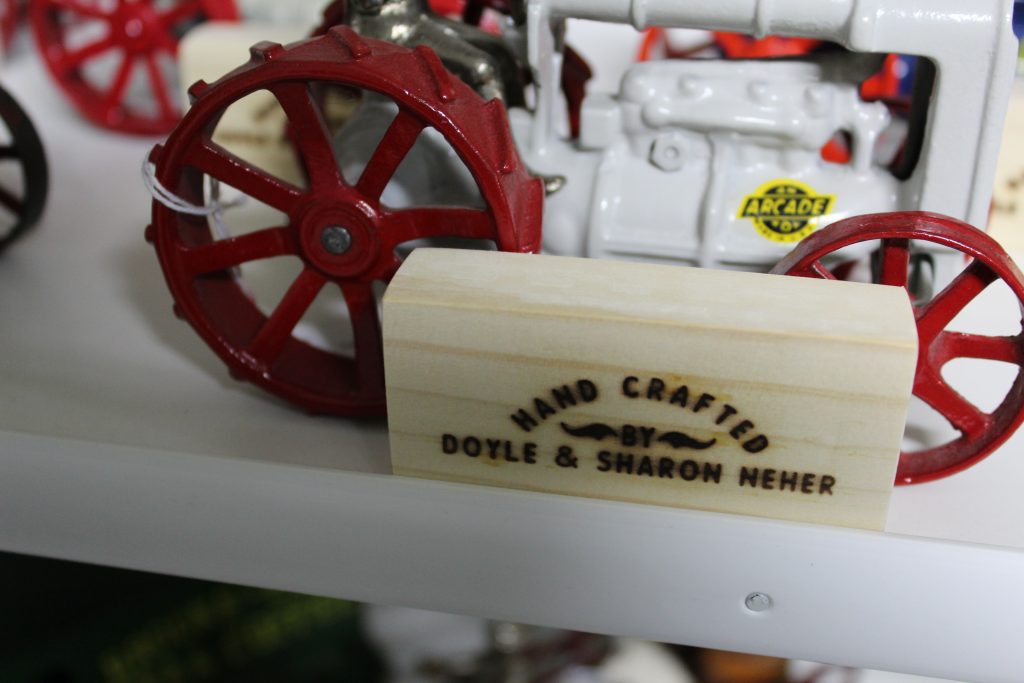
Doyle as a farmer was used to working with machinery and working with his hands. If you visit the museum, you will see dozens of toys with small wooden blocks in front of them. All of these toys, mostly tractors, are ones that he made, restored or customized. In many instances, he took toy tractors that were mass manufactured and altered them to look like the life-size equipment that ran in the fields. He made multiple copies of some of these original models and sold to other toy collectors.
“My favorite part is finding old tractors and restoring them and making them look nice,” he said. “I have restored over 100 pieces in here. … The second thing would be meeting the people.”
As Doyle has gotten older, his wife has helped him with some of his work on the toys. She helps place small pins and screws that Doyle doesn’t quite have the dexterity to manage anymore.
Of his collection, Sharon said, “I just tell him to go for it.”
However, Sharon acknowledged she was pleased Doyle had his own building to house the toys and her house is no longer taken over by the collection.
Doyle has a small workshop in the rear of the museum where he still works on the tractors, constantly making new creations.
One of his latest projects is to add a second railroad track to the H-O gauge he has in a farm scene displayed in the middle of the museum.
Neher finds his tractors and farm sets all over. He goes to garage sales, auctions, flea markets, antique stores and toy shows.
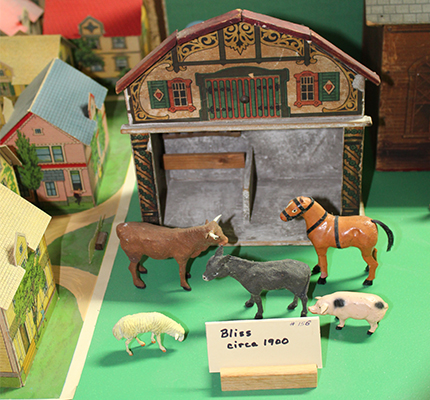
His oldest farm set was built in about 1900. He found the set at an antique store in Iowa.
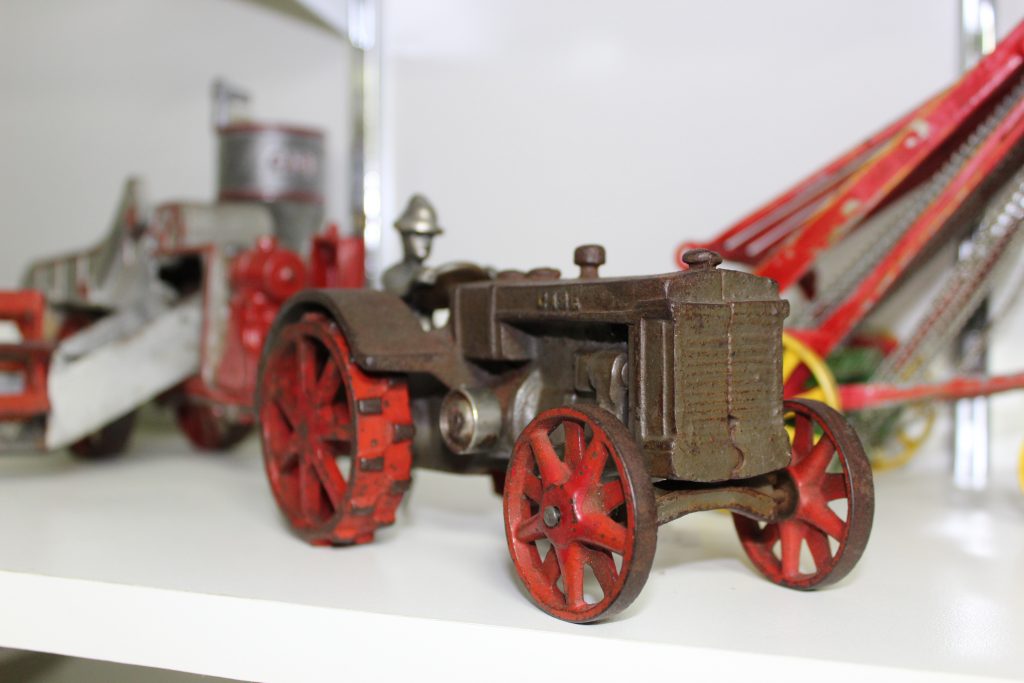
A cast iron tractor from the 1920s.
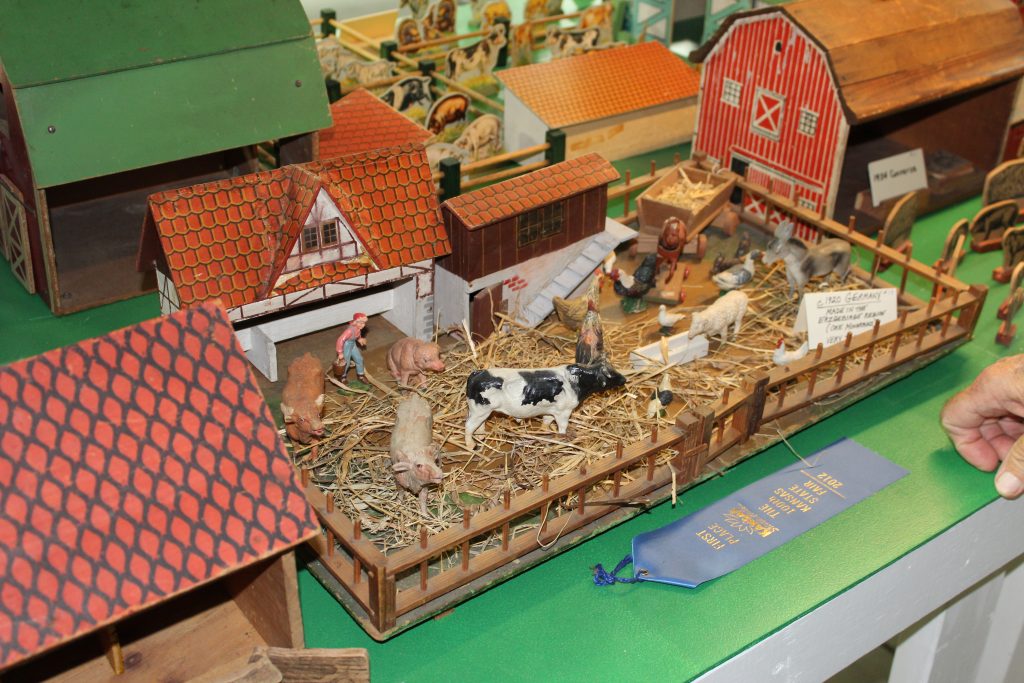
Another set was made in Erzgebirge region of Germany in 1920. Neher had a friend from McPherson who was visiting his daughter in Maryland. The friend saw the farm set in an antique store during the visit and sent a picture to Neher. He called the antique store, made a deal and secured the set for his collection.
He has a paper set that came as a reward in 1948 Quaker Oats puffed rice and puffed wheat cereal. Eight cards were available to collect in the set.
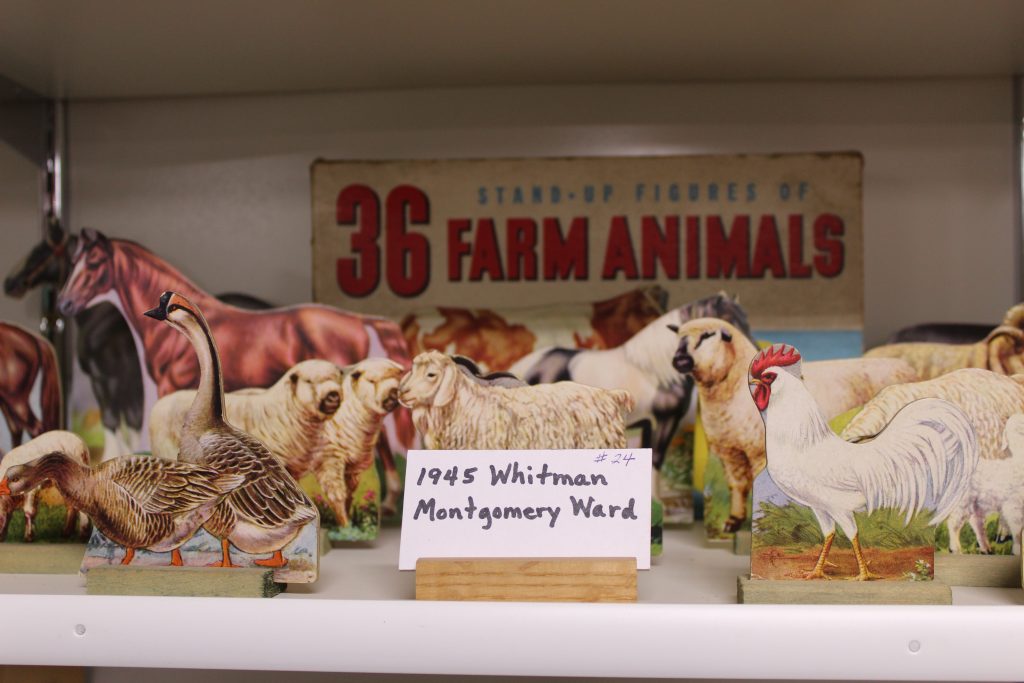
One of his favorite farm sets is a 1945 Whitman set that was sold by Montgomery Ward. The 36 cardboard figures each had the description of the animals printed on the back. He collected many of these sets and sold them at toy shows.
A toy farm set from the 1920s.
The first farm sets were made out of wood. Animals in the 1930s were made from rubber. When World War II broke out, the animals were made from the same molds but out of clay because rubber was essential to the war effort. After the war was over, they went back to rubber. In the 1950s, the barns started being made out of tin.
The early tractors were made of cast iron. His oldest toy tractor dates back to the 1920s. After searching for years, he drove to Kansas City to buy this rare tractor from a flea market vendor. Neher said he went into a garage in a nice residential area, and it was packed floor to ceiling with boxes. With great anticipation, he made his way through a narrow path to a table in the back of the garage where the toy was sitting. He made the deal and took home the tractor.
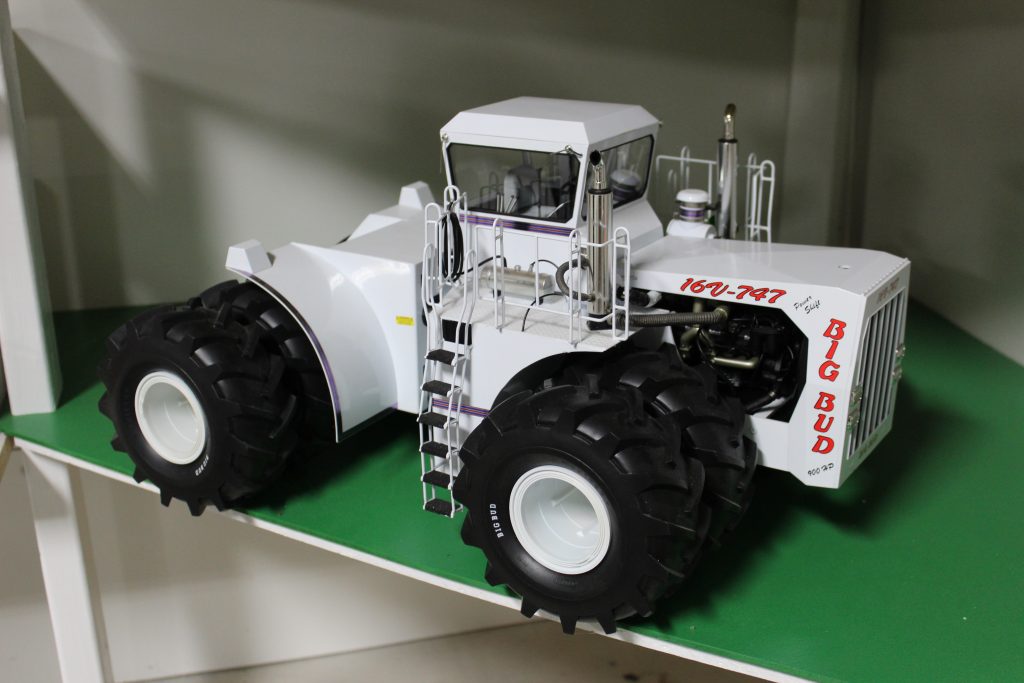
Neher also has a scale replica of the largest tractor every made — Big Bud, which was powered by a 16V, 747 engine. During a rebuild, the tractor was increased to 900 horsepower. Only a limited number of the toys were manufactured. The life-size tractor is currently on display at a museum in Clarion, Iowa.
A replica of Big Bud, the largest tractor built.
Neher shared a little bit of tractor trivia as he surveyed his collection of Ford tractors. The first mechanical farm equipment was driven by steam. Henry Ford came out with a smaller, less expensive gas-powered F-series tractor to replace the bulky steam-powered implements. The F-series was very popular with farmers, so General Motors bought the Sampson Company and came out with a tractor similar to F-series.
GM couldn’t beat Ford on price. They tried to make the tractors less expensive, but the product was so bad, almost all the tractors that were manufactured ended up back with GM on warranty. Neher has a couple of models of these rare tractors in his collection.
“That was the end of General Motors being in the tractor business,” he said.
Doyle and Sharon have met many friends through Doyle’s toy collecting through toy shows and selling and farm sets and tractors.
Neher voice began to shake and his eyes began to gloss over with tears as he talked about a particular tractor he received from a man he never met.
The man was from Pennsylvania, and he sold him a couple of farm sets through the mail.
“He kept writing back, saying that when he got better he was joining to do such and such and when I got a mate (toy) I’ll send you one,” Neher said. “Well, he never got better. He died. I got that tractor in the mail one day from his wife. She said he wanted you to have that tractor. … That is something really special for someone to give you something — something from someone you never met.”
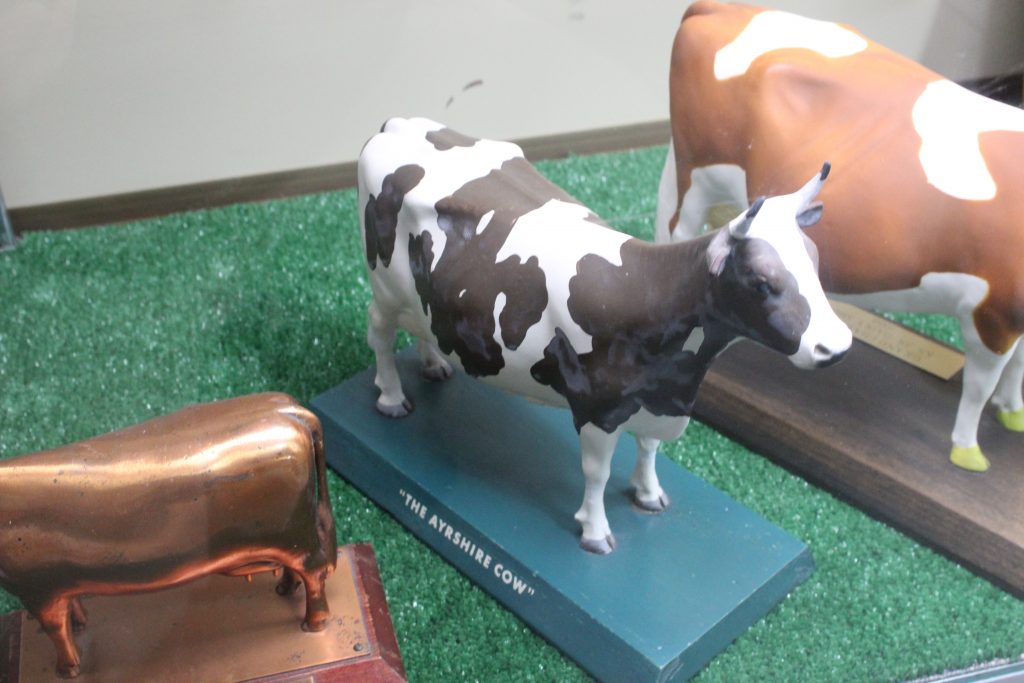
A rare model of a Ayrshire cow that Neher restored.
Another woman from Vermont sent an Ayrshire cow model to Neher. The models are rare. They were awarded at the state fair for grand champion cow. However, the Ayrshire headquarters burned down and it is unknown how many of the models were manufactured before the fire.
Neher searched for 10 years for the model. The woman from Vermont found the prized cow model in a box of things she bought at a garage sale. He restored the cow, which had one ear, both horns and the tail broken off.
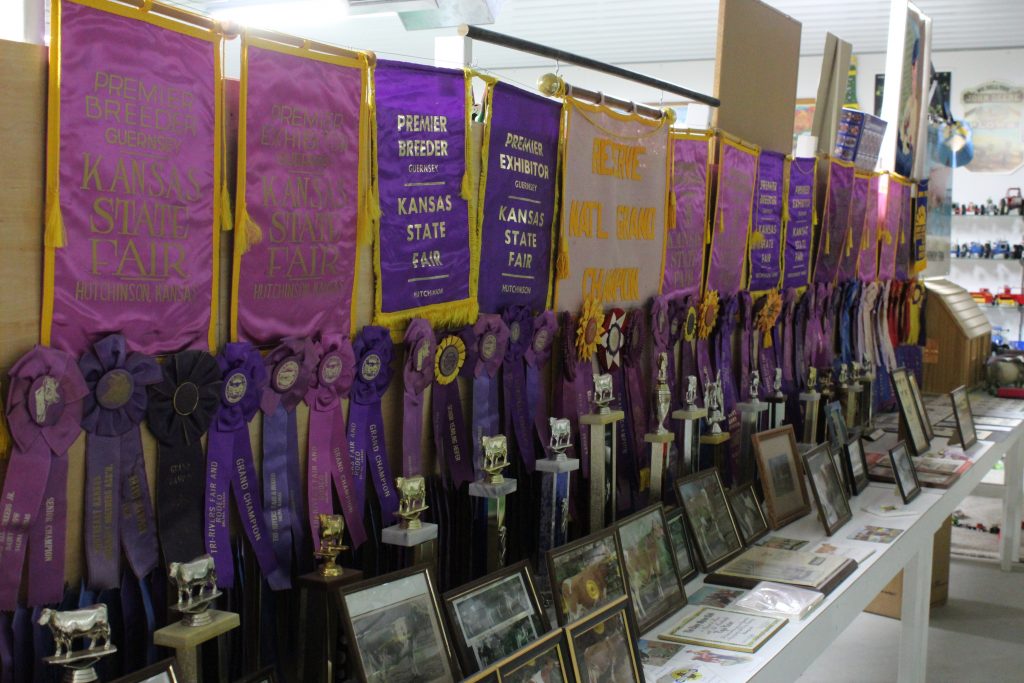
Another long table in the museum is hung with dozens of blue and purple ribbons from the livestock the Nehers showed at fairs. The family stood first in the class over 300 times and was premier breeder and exhibitor 20 times at the state fair. They had a reserve national grand champion in 1978. In 1985, they had a best breed cow known exhibitor at the national show in the 2-year-old and 3-year-old category.
Doyle and his son, Jeff, also collected baseball cards at one time. They have sold all of them except one complete set from 1953. This includes Satchel Paige, Willie Mays, Mickey Mantle and Jackie Robinson.
In addition to this set, he also has a card for a pro player who was born in 1922 in Pfeifer — Monty Basgall. He was a second baseman for the Pittsburgh Pirates. Later in his career, he was a coach for the Dodgers under Tommy Lasorda.
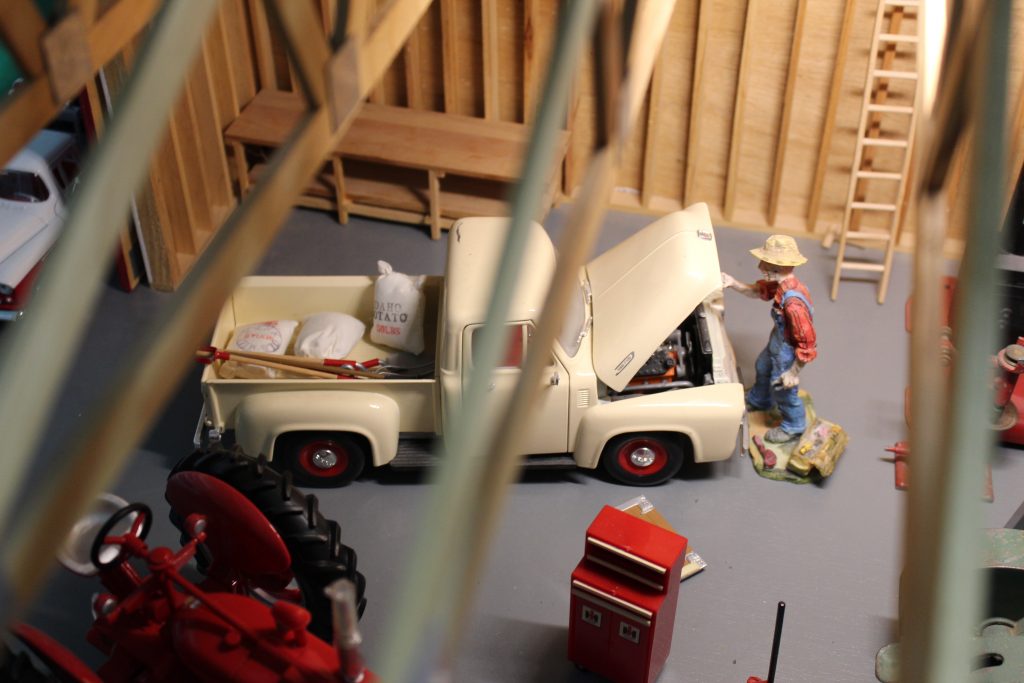
Jeff is a pastor and is busy with a large family and a goat farm in Pfeifer. However, Jeff had a role in his dad’s collection. One Christmas break when he was home from college, the farther and son made a farm shed equipped with an old truck and farm tractors. The set even has a tiny jack, air compressor and mechanic’s tool box.
Doyle said his older grandchildren, who are teenagers, are not interested in the toy collection anymore, and Jeff is too busy to be very involved. Doyle and his wife made a little carpeted corner in the museum where the smallest grandchildren, Joshua, 4, and Tucker, almost 2, can play with some of their own less collectible toy tractors.
Doyle said he is not sure what will happen to his collection, but he hopes the youngest grandchildren will eventually take interest in the toys and catch the collecting bug.
“It will be our children’s problem,” Sharon said.
The Harmony Farm Toy Museum is open for tours by appointment. Call 620-662-7592 or email [email protected].
Doyle Neher talks about the replica of his father’s dairy farm that he built.
A replica of the Nehers’ home in Hutchinson.
toy museum
toy museum
A replica of the dairy farm that Neher grew up on.
toy museum
A farm set circa 1920. Neher’s oldest
toy museum
Toy tractors from South Africa.
Ribbons from the Nehers’ cattle that were show at the state fair.
A rare model of a Ayrshire cow that Neher restored.
toy museum
A model of a farmer’s shop that Doyle and his son made.
A model of Big Bud, the largest tractor made.
Neher and his wife customized or refurbished dozens of tractors in his collection.

 BriefSpace, a new co-working space in downtown Hays, will offer a sneak peek from 5:30 to 6:30 p.m. Thursday.