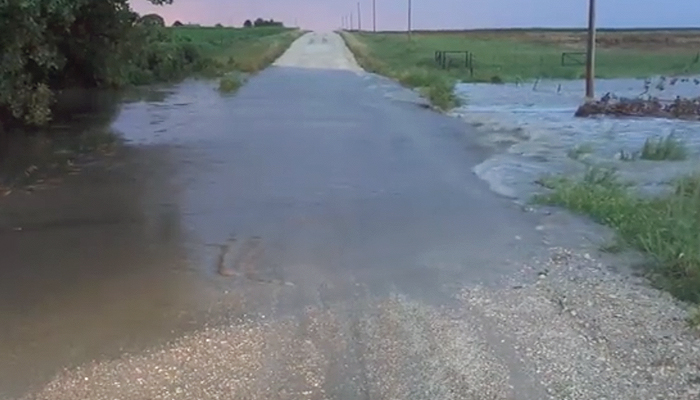
Northeast Ellis County experienced flash flooding Monday morning after a storm dumped 5 inches of the rain on the area.
Bill Ring, Ellis County public works director, said he was called out about 4:30 a.m. by deputies who reported water running over roads in the county.
Ring and the sheriff’s office said as of 9 a.m. the water was quickly receding. No roads were reported closed, but some portions of roads could be blocked with cones.
Ring said drivers should continue to be cautious as streams could still cause problems as runoff funnels into waterways. He also said some roads could be damaged because of the flood waters. He urged local residents to call the county public works department at 785-628-9455 to report damage.
No major property damage was reported and no one was injured, Ring said.
The official rain report for the last 24 hours for Hays from the K-State Research and Extension station was a trace of rain.
Ring urged drivers to continue to always follow the motto, “Turn around, don’t drown.”
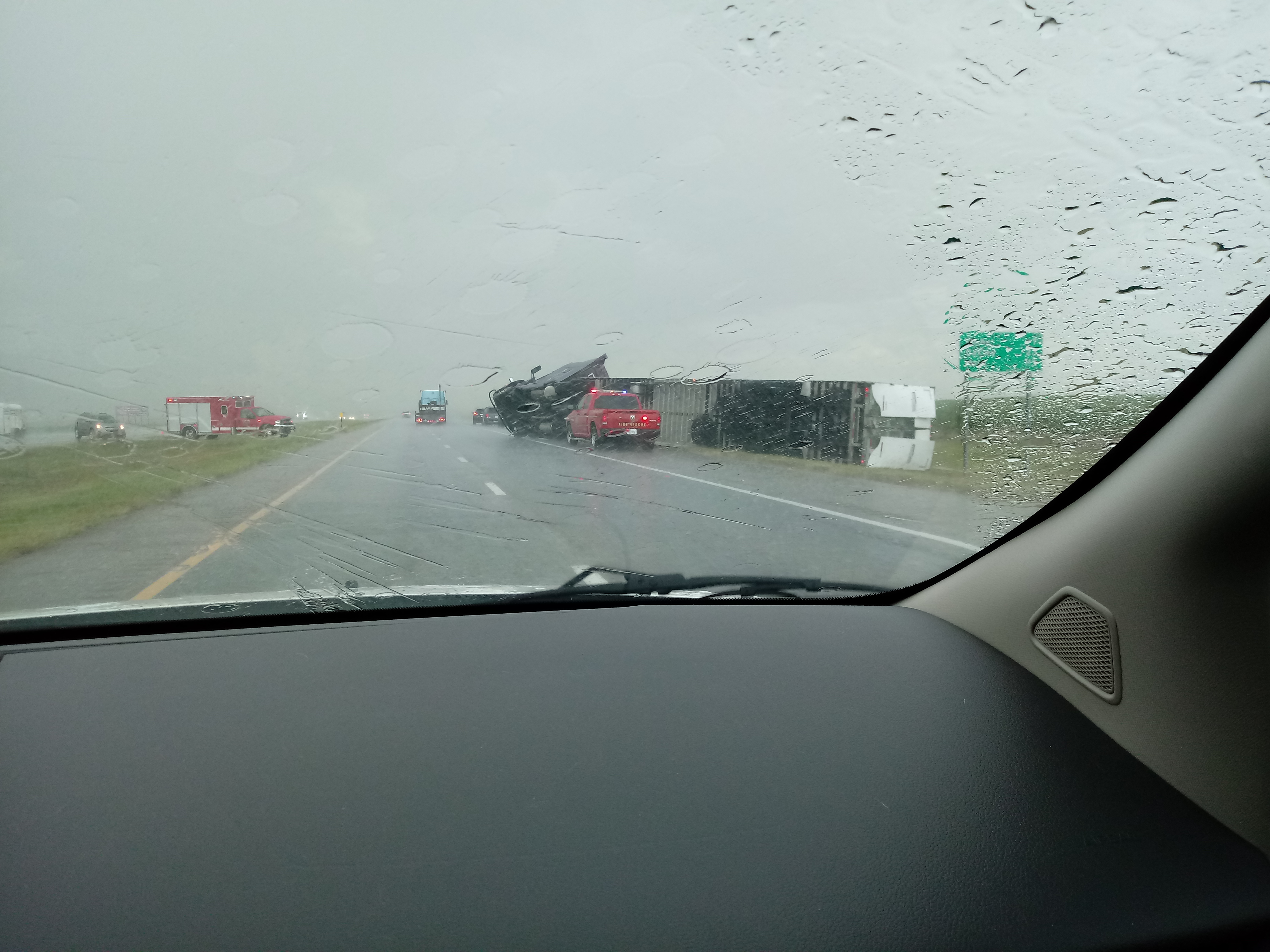
THOMAS COUNTY — Three people were injured in an accident just after 2:30p.m. Sunday in Thomas County.
The Kansas Highway Patrol reported a 2018 Hyundai SUV driven by Robert S. Krupp, 67, Concordia, MO., was stopped on the right shoulder of I-70 two miles east of the Levant exit due to heavy rain.
An eastbound 2018 Peterbilt semi driven by Cavarggio M. Thompson, 29, Mauldin, MO., was passing when the wind caught the truck and trailer and blew it over onto the Hyundai.
Krupp, Thompson and a passenger in the semi’s sleeper compartment Joseph Carson, 42, Mableton, GA., were transported to the hospital in Colby.
All were properly restrained at the time of the accident, according to the KHP.
Before I begin this week’s rant, I have offer a big OOOPS pertaining to last week’s column about Tweety the Catbird. Not only did I get the man’s name wrong, (it’s JOHN Paulson, not Don) but I also got the name of his business wrong. It is Gravel & Concrete Inc., at Nickerson, KS.This week’s column is a repeat from a couple years ago, but given the early and overly hot spring and summer we’ve had, it was just too apropos not to use again.
This week’s column is a repeat from a couple years ago, but given the early and overly hot spring and summer we’ve had, it was just too apropos not to use again.
The only reason I put up with summer in Kansas is… well, because I have to! My only alternatives are to move or die. The first takes too much energy, and the second, well, let’s just say I’ll put up with summer! (Although as I get older door number 2 looks less ominous all the time) I’ve spent the last few weeks trying to complete several outdoor projects, working early mornings and late evening to beat the heat, so I present to you a little trivia about the “dog days of summer.”
The term “Dog Days of Summer” has always intrigued me. This term was long ago given to the hottest and muggiest part of the summer, which someone has determined to be between July 3 and August 11.
Stars and constellations played a big part in the lives of the ancients. Two such constellations, Canis Major and Canis Minor, were said to resemble dogs. The brightest star in Canis Major is named Sirius, “the dog star,” and also happens to be the brightest star in the night sky. It is in fact so bright, that ancient Romans believed the earth received heat from it. During our summer, there is a period when Sirius rises and sets with the sun, and it was believed that during this period, the Dog Star actually added its heat to the sun, creating a period of extra hot and muggy weather now known as “the dog days.”
So what can we “dog days haters,” who think it’s even too hot to fish, do to scratch our “outdoor sportsman’s itch” during this time? Frog season started here in KS July 1st and is a great nighttime sport. We hunted frogs a lot when I was a kid and thought nothing of walking a couple hundred yards across someone’s pasture in the middle of the night just to get to a pond full of frogs. Now days it’s not quite so much fun sloggin’ around a pond in pitch black darkness in soaking wet jeans and old sneakers, but the sweet taste of fried frog legs is still the same!
Now’s also a fine time to browse the Cabela’s, Bass Pro, and in my case, trapping supply catalogs to get a jump on your fall hunting and trapping wish list. This begins by going over your equipment and clothing, looking for equipment needing repaired or replaced. You know how clothing seems to “shrink” a little each season! Also order that new equipment you want to experiment with this year. Mail ordered merchandise can take considerable time to receive, and ordering early also gives you time to make returns and exchanges if needed. The large trapping supply dealers are busy with conventions in late summer and when trapping seasons start in the fall, so now is a prime time to get trapping supplies mail-ordered. So carry the catalogs from the bathroom to the easy chair and get started!
I guess when it’s 105 degrees in the shade, it’s hard to think about deer hunting, but the dog days are also a good time to begin garnering hunting and trapping permission. Unless you already have a standing agreement in place with landlords, hunting and trapping permission is often first come-first served. This can be done over the phone, but I prefer a more personal touch and like to drive to the owner’s home and talk to them in person. Remember, the early bird gets the worm (or the pheasant, the deer or the coyote.)
Also this is a great time to start gathering unwanted apples from under people’s trees to feed to the deer by dumping them on the ground in front of your corn feeders. A friend at church tells me his apples are falling very prematurely this year (maybe because of the early heat) and rotting almost immediately.
Now is a great time to brush up on your hunting and trapping skills or learn new ones by reading “how to” books and magazine articles. Think back about the things that didn’t go as planned last season and search out the resources to correct them, be that books, magazine articles, tapes & DVD’s or fellow sportsmen.
So pour a glass of iced tea, settle into your recliner, surround yourself with all your wish books, magazines, DVD’s and the TV remote, and for these next few “dog-day” weeks, continue to Explore Kansas Outdoors, even if it’s from your living room!
Steve Gilliland, Inman, can be contacted by email at [email protected].
Native Kansan Karen Madorin is a local writer and retired teacher who loves sharing stories about places, people, critters, plants, food, and history of the High Plains.
Recent heavy rains have done more than make grass grow. Bugs like this moisture, and they’re reproducing at record rates and sponsoring insect gatherings in town and out. Not only are humans swatting and smacking at bugs torturing fleshy landing pads on arms, legs, foreheads, and more, beasts are busy dodging biting and stinging creatures as well.
During a visit to Mom’s in Wakeeney, we decided to drive about to see what effect these downpours have had on roads, streams, pastures, and fields. We didn’t need to look long before we saw washed out rural routes and fields, brush hanging off highest fence lines or dangling from tree branches bordering creeks and streams, shallow ponds drowning once thriving wheat, and cow herds massed tightly into fence corners.
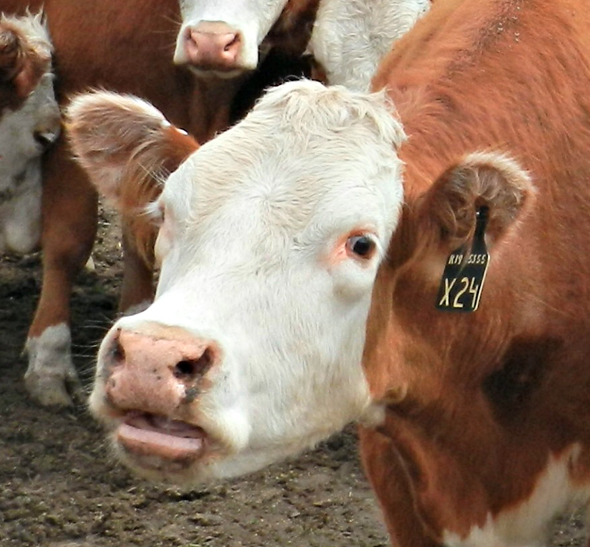
When I first saw those bovines grouped like junior high girls at their first dance, I thought about the old saying that cattle gathering in corners predicted impending storms. I was puzzled because I’d checked the weather channel that morning, and, while it’s not always accurate, it had forecast clear days ahead. Why, then, were these girls and their calves snuggled tight enough you couldn’t count them on a hot day?
I couldn’t imagine that they wanted to be positioned nose to tail or side to side so close that nothing could make its way through that herd without major rearranging. Then a fly bit me at the same time a mosquito announced its irritating presence with an obnoxious whine. Aha, those cows had united to protect themselves and one another from noisy, hungry, flying hordes.
While humans use hands to swat, flatten, or wave away these aggravations, cows don’t have that option. All they have is a tail—a nice switchy device with a knot of hair at the end, but it’s hardly adequate to address swarms of starving bugs. Their problem-solving strategy impressed me. No dumb animals here; these girls did not intend to be passive victims.
Such close proximity might have forced less than hygienic cattle to not only smell but absorb body odors emerging from various, slimy orifices. However, I doubt that’s a real concern for creatures that start life nursing directly underneath their mother’s tails. Nope, these gals and their babes got up close and personal, leaving tails free to swipe and slap each other’s pests.
While making sure I observed at a distance far enough away to avoid inviting their six-legged tormentors to land on me, I noted that mamas and babies chewed cuds, stomped feet, and swished perfectly designed fly swatters in such a rhythm that it kept those blood suckers from landing on them or any nearby bovine. An army of agitated insects hovered overhead in a hangry cloud. I’m sure if I’d been closer, I’d have heard audible complaints.
I enjoyed cruising the countryside to view Mother Nature’s recent activity. Even more, I appreciated watching the wrastling match between cattle and insects. It’s good to know that bovines can deal effectively with airborne forces possessing nasty stingers and sharp chompers. I’m definitely pleased that I come with hands that can use a flyswatter.
Native Kansan Karen Madorin is a local writer and retired teacher who loves sharing stories about places, people, critters, plants, food, and history of the High Plains.
RUSSELL – The Ad Astra Music Festival colors central Kansas with classical music during the month of July.
Bringing over 60 artists from all around the country, Ad Astra is a unique music festival, spanning three weekends in July and integrating emerging young artists, community members, and professional musicians.
The second weekend of performances includes The Elementson July 20, Cannonballs Fly on July 21, and Semiconsciousness and Bach Cantata 70on July 22.
2018 Young Artists Victoria Lawal, Alexandra Galla, Logan Barat and Cooper McGuire, who is a Kansas State University senior.
The Elements features the 2018 Young Artists and captures the essence of Franz Schubert’s music with selections about wind, earth, fire, and water. The recital will also feature local Kansans’ art to accompany the music of Schubert.
Cannonballs Fly explores pieces about war and peace, featuring the 2018 String Quartet. Notably, “Black Angels,” by George Crumb, is one of the most terrifying string quartets of all time, depicting the brutal violence and political unrest at the height of the Vietnam War.
Semiconsciousness, a concert comprised of only music composed in the last decade, wrestles with dreams, memory, and inner monologue. Brilliant New York-based soprano Madeline Healey will join Yale voice teacher Gene Stenger and San Francisco Opera’s Adler Fellow in collaborative piano César Cañón in this daring and thrilling concert.
To close the weekend, the Sunday Evening Series presents Bach Cantata 70, bringing the music of the Lutheran home to St. John Lutheran Church in Russell. To learn more about our performances, please visit adastramusicfestival.org/calendar.
By DIANE GASPER-O’BRIEN FHSU University Relations and Marketing
Josh Stark was learning about science on a day-to-day basis before he even started kindergarten.
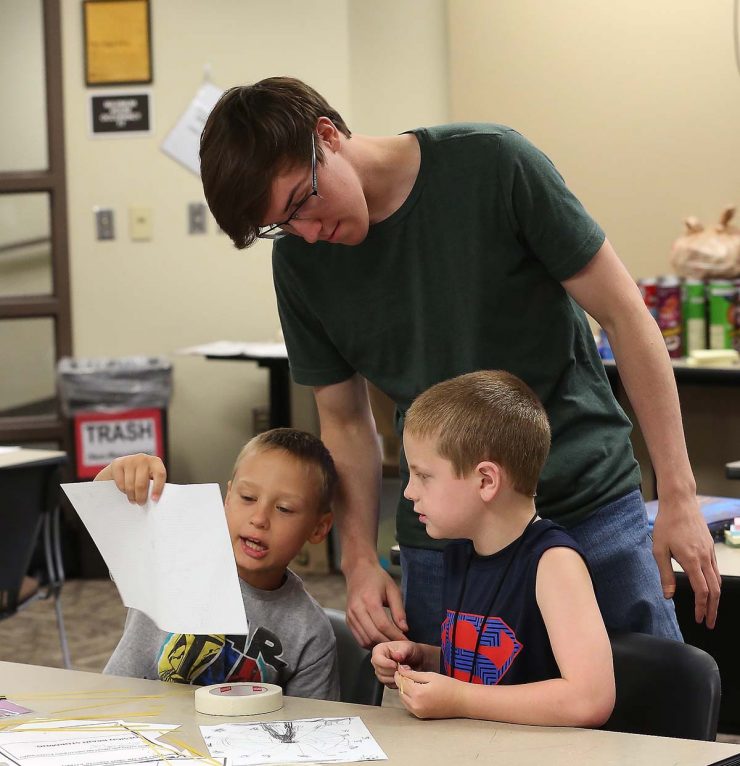
Now a junior in college, Stark is passing on to other youngsters his passion for learning all he can about science while working toward a bachelor’s degree in chemistry education.
Stark is one of five Fort Hays State University students who were named Noyce Summer Scholars to help with FHSU’s Science and Mathematics Education Institute (SMEI) youth camps this summer.
The Noyce Summer Scholars, as well as the Noyce Teacher Leader program, is made possible because of a large grant from the National Science Foundation. In addition to being chosen for the summer scholars program, Stark also was one of eight Fort Hays State students awarded a $13,000 Noyce Teacher Leader scholarship, given to junior or senior students majoring in a science or mathematics field of study.
Stark is the middle sibling of five children of Dr. Bill Stark, FHSU professor of biological sciences. Stark came to FHSU in 1998, when Josh was only a month old, and Josh remembers a lot of teaching moments even in his early years.
“My dad has been a really good role model for me all my life,” the younger Stark said. “He would always take us on field trips whenever he could. He was always pointing out what certain things were.”
Stark – whose mom, Bev, has a degree in secondary education from FHSU – was firmly set on teaching at the high school level. That is, until he worked with the elementary school children this summer.
“I used to think there was no way I would teach middle or elementary school. I wanted to work at the high school level,” he said. “But now, I think I could teach middle school. I realized you learn a lot from these kids. You never know what’s going to work with them, so you’re always thinking ahead.”
Fort Hays State has been offering these camps for youngsters entering second through eighth grade for more than a decade with the goal of sparking an interest in the fields of science and math.
Several of the camps include sets of siblings, including the “Building with Math” camp where students learned about George Washington Ferris Jr. Ferris created the original Ferris Wheel for the 1893 Chicago World’s Columbian Exposition.
Hays residents Agoni Smolarkiewicz, 10, and his younger brother, 7-year-old Kiros, tried an SMEI camp for the first time this summer, attending the “Building with Math” section.
“They weren’t sure what to think the first day, being their first time,” said the boys’ father, Jared. “But by the time they got to the constellation day, they were all into it. This is a great opportunity for kids. The more hands-on you make math and science, the better they will learn.”
Ann Noble, financial administrator for SMEI, said her granddaughter looks forward to coming to the camp from Olathe each summer. This year, 8-year-old Laney Velleca brought along her younger brother, 7-year-old Cooper, to the “Building with Math” camp.
“What I like the best is when I pick them up from camp, they tell me what they learned that day,” Noble said. “It’s such a fun environment, they don’t even realize they are learning.”
On Day 1 of the “Building with Math” camp, FHSU’s Kate Westerhaus read the students a story on Ferris’ life. They then split up into small groups and built small Ferris wheels of their own.
“This is so awesome; I finally get to teach,” said Westerhaus, a junior biology major from Junction City.
Westerhaus is one of the Noyce Teacher Leader scholarship winners for the 2018-19 school year along with Stark. And like Stark, she has family in education. Her dad, Matt, is athletic director at Junction City High School, and her mom, Gretchen, is a second-grade teacher.
Westerhaus is majoring in biology and was going to go the medical route because “biology has always been my passion.” However, she changed her major to education early in her college career and hasn’t looked back.
“I like doing anything with kids, and I fell in love with education,” she said.
Westerhaus in particular liked the idea of reading to the children first to give them some history of the project they were about to tackle.
“We like to do a lot of incorporating children’s literature in math,” said Dr. Janet Stramel, associate professor of teacher education, who was in charge of the “Building with Math” camp. “It makes math fun.”
“When I taught in the classroom, I taught using projects that we use every day because it makes sense,” Stramel added. “If you can see it in the real world, it makes it more interesting, and you can understand it better.”
“I got to put to use so many basic skills here,” Westerhaus said. “I love teaching.”
It’s a win-win situation for all involved, Noble said.
“The young students coming to the camps can be in a fun learning environment having a good time – but learn something, too,” she said. “They soak up so much information.”
Other subjects during the “Building with Math” camp week included building suspension bridges, geometry in the night sky, and designing and building a playground.
Other camps this year ranged from building robots with Legos and programming those robots, to making DNA models to learning about crime scene investigation, and experimenting with engineering and nanotechnology.
The need for science and math teachers is at an all-time high in a lot of districts in Kansas. The Noyce Summer Scholars program is open to any freshman or sophomore in the Peter Werth College of Science, Technology and Mathematics “to give them the opportunity to see if they might want to be a teacher,” Noble said.
“We have had some of our students change their majors to teaching after the summer program,” she added.
Other Noyce summer scholars this year were Jaxon Crawford, a physical education major from Kit Carson, Colo.; Ethan Shippy, biology education, Hays; and Lauren Zerr, math education, Larned.
Noble meets with the Noyce scholars every week during the five-week SMEI summer program.
“It was so exciting to hear Ethan Shippy say every week, ‘I learned something from the kids,’ ” Noble said. “It was a lot of fun for me to watch those five students grow and interesting to hear what they learned, too.”
Lata NottThe majority of Americans are supportive of the rights guaranteed by the First Amendment, but are also unaware of exactly what those rights are, according to the recently released 2018 State of the First Amendment survey by the First Amendment Center of the Freedom Forum Institute.
When asked if the First Amendment goes too far in the rights that it protects, more than three-fourths of Americans disagree. That’s fairly good news, but it’s somewhat tempered by the fact that a third of Americans cannot name a single freedom guaranteed by the First Amendment. Another third can only name one. Only one survey respondent out of a sample of 1,009 could name all five. And 9 percent of Americans think that the First Amendment guarantees the right to bear arms. (For the record, that’s the Second Amendment.)
But does it really matter that Americans don’t know exactly what the First Amendment says? After all, while no one’s done a survey on the state of the Third Amendment, I’d wager that most Americans have no clue what rights that one guarantees and I’m not losing any sleep over that. (In case you’re curious, the Third Amendment says that no one can force you to quarter British soldiers inside your home. The issue doesn’t come up much these days.)
But First Amendment issues do come up a lot (just look at the number of First Amendment-related decisions the Supreme Court made this term). And the fact that Americans are generally aware that the First Amendment gives them the right to express themselves but are pretty fuzzy on its actual details is problematic. As any teacher can tell you, a little knowledge can be more dangerous than no knowledge at all. In this case, it leads to people passionately invoking the First Amendment in some circumstances and ignoring its existence in others.
So, for a quick review, the First Amendment grants us five freedoms: religion, speech, press, assembly and petition. All of these freedoms are interconnected. The freedom of religion prevents the government from establishing its own religion, and from favoring one religion over another. It also keeps the government from interfering with the way people practice their religious beliefs. Religious freedom is a powerful thing, even if you yourself are not religious. It essentially grants each individual the freedom to develop their own conscience and their own values. The government doesn’t get to tell you what your values should be — that’s for you to decide.
Freedom of speech protects your right to express those values, even if that expression is critical of the government. Freedom of the press guarantees your right to uncensored information about the world around you and especially information about what your government is doing. And if you don’t like what the government is doing — if its actions contradict the values you cherish — you have the freedom of petition, which is the freedom to ask for the laws you want, and the freedom to assemble a group of like-minded people to give that request some political heft. We need all five of these freedoms to have a democracy that ensures comprehensive protection of the American citizenry.
As a country, we’ll probably always disagree about what the precise limits of the First Amendment should be. People will certainly always invoke the First Amendment in a self-serving manner, championing some of these freedoms while discounting others — think of Milo Yiannopoulos presenting himself as a defender of free speech but calling for vigilante squads to target journalists. Yes, it’s his First Amendment right to make tasteless comments. But hopefully one day Americans will understand the First Amendment well enough to recognize how disingenuous it is to treat it like an a la carte menu.
Lata Nott is executive director of the First Amendment Center of the Freedom Forum Institute. Contact her via email at [email protected], or follow her on Twitter at @LataNott.
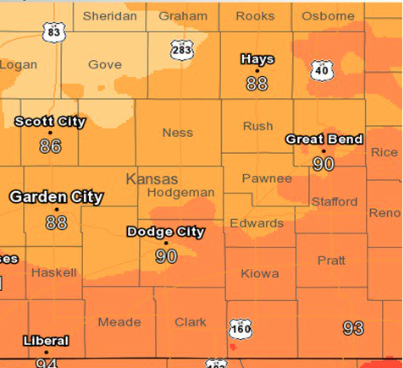
Today A 30 percent chance of showers and thunderstorms, mainly after 1pm. Partly sunny, with a high near 88. North northeast wind 5 to 8 mph becoming east in the afternoon.
TonightA 40 percent chance of showers and thunderstorms. Mostly cloudy, with a low around 70. East southeast wind 6 to 9 mph.
TuesdayA 40 percent chance of showers and thunderstorms. Partly sunny, with a high near 88. Southeast wind 6 to 11 mph.
Tuesday NightA 40 percent chance of showers and thunderstorms. Mostly cloudy, with a low around 68. East southeast wind 8 to 11 mph.
WednesdayA 20 percent chance of showers and thunderstorms before 1pm. Partly sunny, with a high near 90.
Wednesday NightMostly clear, with a low around 68.
It’s not often that Hays hosts a musical group whose concerts – by law – must be free and open to the public.
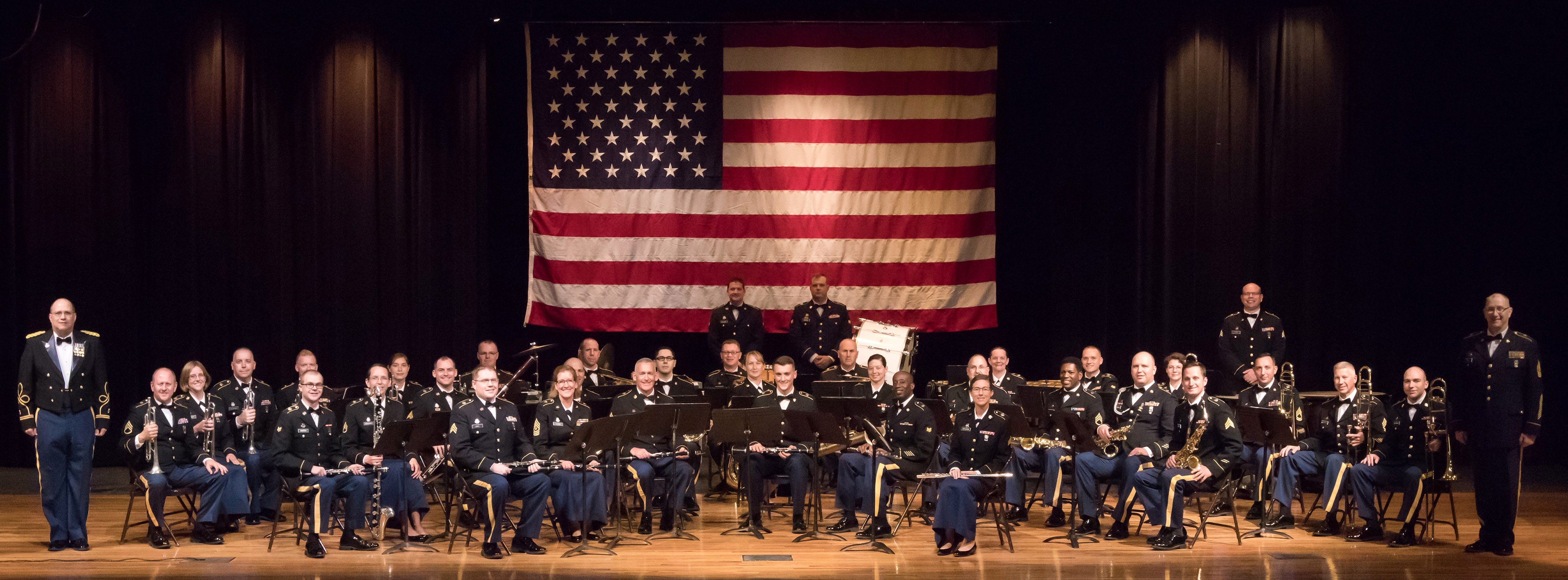
That is the case with the 35th Infantry Division Army Band, based out of Olathe, Kansas.
Sergeant First Class Nathan Fabrizius, a Fort Hays State University graduate, schedules performances for the group. “I’ve been trying to get them out to Hays for a while,” said Fabrizius, who plays piano for the group’s jazz combo and trombone for its concert band.
The 35th Infantry Division Army Band, established in 1922, is a unit of the Kansas Army National Guard and is made up of 37 citizen soldiers. Members from Kansas, Missouri, and Nebraska meet one weekend a month to practice and 2 weeks in the summer.
While the band performs at community events and military ceremonies throughout the year, summer is their primary touring season.
The unit divides into smaller groups including a rock band, two brass quintets, a woodwind quintet, a small brass band, and a jazz combo. The band’s main group is its concert band which plays concert music, pop, classical, and big band selections.
The band will perform multiple free concerts in Hays, with the largest being the concert band performance at 7 p.m. Monday, July 16, at Beach/Schmidt Performing Arts Center on the FHSU campus.
The full schedule is as follows:
Bullseye Brass Quintet
July 16, Noon
Hays Public Library, Schmidt Gallery
Concert Band
July 16, 7 p.m.
Beach/Schmidt Performing Arts Center
Jazz Combo
July 17, Noon
Hays Public Library, Schmidt Gallery
Heartland Brass Quintet & Prairie Winds Quintet
July 18, 11 a.m.–1 p.m.
Historic Fort Hays Site
Hard to Handle: Military Rock Concert
July 19, Noon
Hays Public Library, Schmidt Gallery
Events at the Hays Public Library will include free lunch for the first 30 guests.
For more information on the 35th Infantry Division Army Band performances, call or text Nathan Fabrizius at (913) 634-4356.
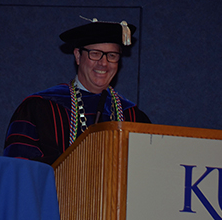
LAWRENCE — The University of Kansas Alpha chapter of Phi Beta Kappa academic honor society has initiated 125 new members.
Meagan Patterson, president of KU’s Phi Beta Kappa chapter and professor of educational psychology, presided at the May 13 ceremony immediately before university commencement. David Slusky, vice president of the chapter and professor of economics, welcomed and congratulated the new initiates as they received their Phi Beta Kappa certificates.
Chancellor Douglas A. Girod was inducted as an honorary member of the chapter. He gave an address titled “A Complete Education.”
Toni Rufledt, senior in psychology and sociology, who was inducted last year as a junior and served as a student co-president of the chapter, gave the student response address.
Election to Phi Beta Kappa recognizes a student’s high academic achievement while pursuing a broad and substantive liberal arts curriculum, including language study. To be eligible for consideration for membership, most students must have senior status and a minimum grade-point average of 3.65 on a 4.0 scale. Students elected as juniors must have a 3.8 grade-point average.
Sana Cheema
Phi Beta Kappa, the oldest national academic honorary society, was founded Dec. 5, 1776, at the College of William and Mary in Williamsburg, Virginia. KU’s Alpha chapter, founded in 1890, was the first chapter west of the Mississippi and is one of 286 Phi Beta Kappa chapters nationwide. About 10 percent of institutions of higher learning in the United States have Phi Beta Kappa chapters. Secretary-Treasurer of the KU Chapter is Anne Wallen, Program Director of the Office of Fellowships in Undergraduate Studies.
Sana Cheema, a senior from Hays, is among the new members.
WICHITA — More than 1,900 students completed degrees at Wichita State University in spring 2018.
Undergraduate students who have attained a grade point average of 3.9 out of a possible 4.0 received the summa cum laude award; those with an average of 3.55 received the magna cum laude award; and those with an average of 3.25 received the cum laude.
WSU enrolls about 15,000 students and offers more than 50 undergraduate degree programs in more than 150 areas of study in six undergraduate colleges.
The following northwest Kansas students earned degrees:
Agra, KS
Sherri L Skupa, Bachelor of Arts, Field Major Sociology
Colby, KS
Kaitlyn R Flanagin, Bachelor of Science, Dental Hygiene, Cum Laude
Downs, KS
Jaqueline Lopez Tellez, Bachelor of Arts, Psychology
Ellis, KS
Stacey D Robb, Specialist in Education, School Psychology (MEd to EdS)
Hays, KS
Kaley N Rodriguez, Master of Education, Special Ed-Early Chlhd Unified
Bobbi J Rubeck, Master of Music Education, Instrumental Conducting
Hoxie, KS
Lisa J Johnson, Master of Music Education, Instrumental Music
Kensington, KS
Joann L Yoxall, Bachelor of Arts, Social Work
Norton, KS
Erin N Deaver, Master of Arts, Communicatn Sci and Disorders
Dustyna Roman, Doctor of Physical Therapy, Physical Therapy
Oakley, KS
Rhonda A Palmer, BS in Nursing, Nursing-RN-to-BSN, Magna Cum Laude
Saint Francis, KS
Alyssa M Schlepp, Bachelor of Arts, Commun-Integrated Marketing, Magna Cum Laude
Sharon Springs, KS
LaKaya K Bieker, Specialist in Education, School Psychology (MEd to EdS)
Victoria, KS
Brooke A Schmidt, BS in Nursing, Nursing, Magna Cum Laude
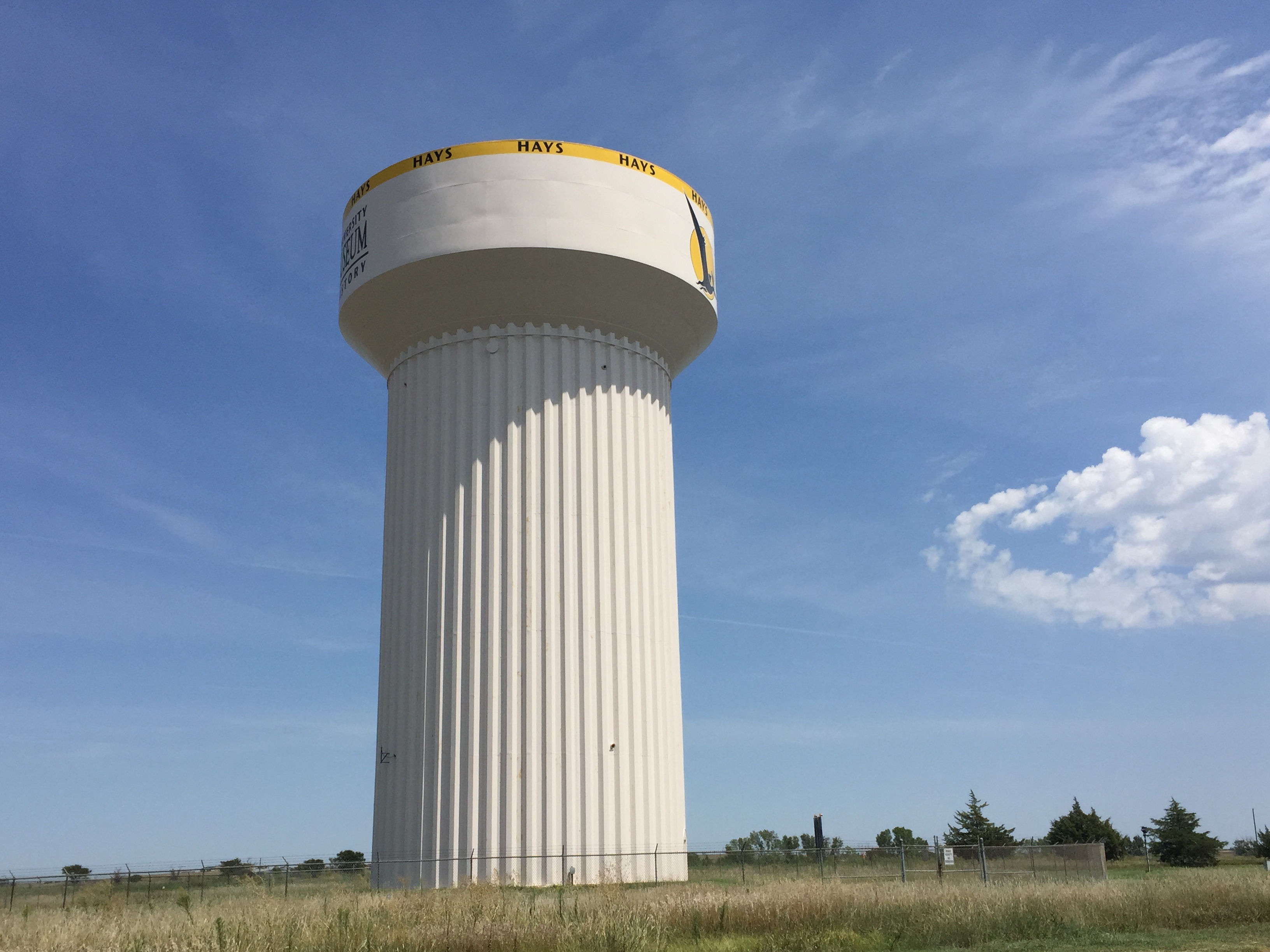
Beginning Sunday, July 15, 2018, the remediation and painting of Hays’ 1 million gallon water tower next to Sternberg Museum, 3000 Sternberg Dr., will begin.
This project should take approximately 6 weeks to complete, weather pending. Crews may be working outside business hours and during the night if wind conditions are not favorable for this type of project to be working on during business hours.
Customers may notice changes in their water pressure system during the scope of the project.
The city of Hays regrets any inconvenience this may cause to the public. If you have any questions please do not hesitate to call the Department of Water Resources at 785-628-7380.
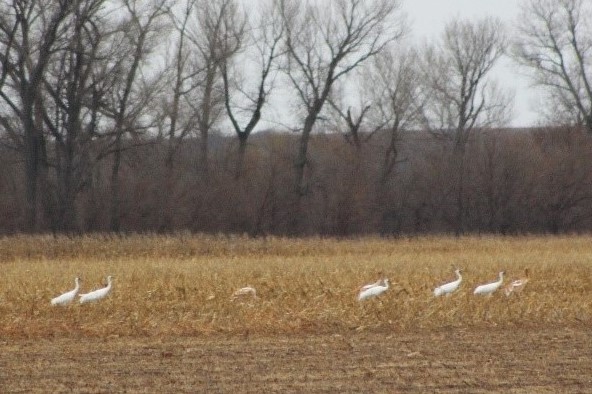
A flock of whooping cranes stop to feed and rest in a field at the U.S.Army Corps of Engineers Kanopolis Lake during their fall migration. In 2017, conservation efforts in the U.S. and Canada have seen the population increase to an estimated 431 birds.
USACE
KANSAS CITY – The U.S. Army Corps of Engineers announced Tuesday the signing of a Memorandum of Understanding with the Friends of the Wild Whoopers to assist in the recovery of endangered whooping cranes.
Per the MOU, USACE and Friends of the Wild Whoopers will jointly assess whooping crane migration stopover habitat at USACE water resources development projects. The assessments will be used by USACE to develop work plans that maintain and improve existing habitat and create additional habitat for this critically endangered bird as part of USACE Environmental Stewardship Program.
The whooping crane is one of the most endangered bird species in the world and is commonly seen as America’s symbol of conservation. Standing 5 feet tall with a wing span of 7 feet, it is the largest bird in North America.
Once fairly common, the species was reduced to just 16 birds by 1943. Market hunting and indiscriminate shooting along with habitat loss led to the decline of the species. Conservation efforts in the United States and Canada have seen the population increase to an estimated 431 birds in 2017.
The Aransas-Wood Buffalo population of whooping cranes nest and rear their young in Wood Buffalo National Park, Alberta/Northwest Territories, Canada, during spring and summer. After the chicks fledge, they migrate 2,500 miles through six states in the midsection of the United States to the U.S. Fish and Wildlife Service’s Aransas National Wildlife Refuge on the Gulf Coast of Texas where they spend the winter.
Cranes must stop 15-20 times to rest and feed during their migration. Radio telemetry conducted by the U.S. Geological Survey and direct field observation has documented many times that these migration stopovers are made on USACE-managed water resource development projects in the migration corridor.
“Our efforts with USACE will allow us to focus on whooping crane habitat assessment and management recommendations on lands under USACE jurisdiction,” said Chester McConnell, president of Friends of the Wild Whoopers. “We are looking to determine if any suitable areas could be managed or appropriately developed to provide migration stopover habitat for whooping cranes. Additional habitat may be needed to support the migration, especially in drought years when surface water is reduced and areas adjacent to USACE multipurpose reservoirs become even more important.
“Ensuring that ongoing management of these areas is conducive to whooping crane use during migration is the primary goal of our partnership,” added McConnell.
Whooping cranes from the Aransas-Wood Buffalo population have consistently been documented using areas at several USACE-managed projects within the established 2,500-mile-long by 200-mile-wide primary migration corridor according to USACE officials.
“The annual migrations of the Aransas-Wood Buffalo population of whooping cranes cross portions of our Omaha, Kansas City, Tulsa, Fort Worth and Galveston districts,” said Jeremy Crossland, Land Uses and Natural Resources Program Manager at USACE Headquarters here.
“There have been a few rare instances where whooping cranes were observed on USACE project lands outside the established migration corridor. Our management and restoration efforts on these areas provide important feeding and resting areas for whooping cranes during their migration. These efforts typically provide benefits to numerous other species of native wildlife including waterfowl and shorebirds,” Crossland added.
USACE biologists and team members with Friends of the Wild Whoopers have begun to make assessments of areas that whooping cranes have traditionally used and are assessing habitat management actions to maintain these areas and improve additional habitat.
“Our preliminary assessments of areas on USACE-managed lands has confirmed our initial belief that these areas do currently provide important migration stopover habitat and with some minor habitat management actions those benefits can be increased,” said McConnell.
This partnership is consistent with USACE’s responsibilities under the Endangered Species Act, which states that federal agencies may use their existing authorities to assist in the recovery of listed species said Crossland.
For information on the Friends of the Wild Whoopers visit their website at: www.friendsofthewildwhoopers.org. Information on the U.S. Army Corps of Engineers Environmental Stewardship Program can be found at: www.usace.army.mil.